Showing posts with label Short Works. Show all posts

Sunday, June 26, 2022

Lit List Short Reviews: Deus Ex by Miles Watson; Echoes in the Dark by P.L. McMillan; Healthy Fashion: The Deeper Truth by Alyssa Couture

 Lit List Short Reviews: Deus Ex by Miles Watson; Echoes in the Dark by P.L. McMillan; Healthy Fashion: The Deeper Truth by Alyssa Couture

By Julie Sara Porter

Bookworm Reviews


Deus Ex by Miles Watson


Miles Watson, the current master of short fiction, is at it again. This time, he crafted a short story that reads like  a Greek Tragedy. It is about Magnus Antonius Magnus, a dictator that has conquered the world. Now he faces the inevitable rebellion and regime change as forces conspire against him.


Normally, I am a huge fan of expanding a work. In this case, letting us know how Magnus became a leader, what happened with the previous regime that he wanted toppled, and how Magnus became paranoiac against his competitors and former allies. There is enough of a potential backstory to make a three part novel series. 

It would be great but that's not what the story is about. It's not about Magnus' rise or what he did to become a dictator. It's about his fall. It's about the leader who realizes too late that they won but lost their soul. In fact, one doesn't have to read the entire story of Magnus' life to know what happened. We just have to read the biographies of real life dictators. They all had the exact same trajectories.


Speaking of dictators, it is nice that Magnus is based on the old Roman Imperial Leaders and not anyone specifically current or more like he is a composite of all of them. It's too easy to point at a leader from another country or political party or any following and say "This is him." It's much harder to say "In similar circumstances and mindset, that could be me." Anyone with even the best of intentions could later use them for selfish and malicious purposes and counter the ideals that they once held, becoming the thing that they despise. 


Then once that happens, they can see it all come crashing down around them.


Echoes in the Dark by P.L. McMillan


P.L. McMillan's Echoes in the Dark is a short 16 page horror anthology. It's like a nightmare. It gives you short scary fragments that you remember and those are usually the most memorable parts of the dream. You remember the scariest parts.


There are only four stories. They are:

 "Family Roots"-This is about that reclusive family that everyone in a small town spreads rumors about. Weird things happen like enemies ending up missing or dead, family members who might be a little too close to each other, and a history of suspicion and magic surrounding them.

In this case the family in question are the O'Mearas. In the 60's the mayor challenged them abd was later found dead of a heart attack. In the 80's five mem corners matriarch Molly O'Meara, a few days later all five fell in a two foot deep river and drowned.

 Mallory Shaw, the narrator, goes on a date with Mitch O'Meara. When her father protests their relationship by going on a shooting rampage, Mallory has to make an important decision over whose side she is on.

This a powerful story with a twist ending that shows that sometimes those who spread rumors can be just as monstrous as those they accuse. Sometimes family isn't always who you were born into,,it can be who you feel closest to.


"Unseen Cost" This is a very brief story about Kyle, a formerly visually impaired young man going through a surgery to give him sight. Throughout his life, his best friend ,Alex has been there to encourage him and now she is there during his surgery.

This story reveals the cost that comes with regaining ones senses. Sometimes they have to face the world the way everyone else does.  They may not like the world in which they are exposed to and are forced to accept as normal.


"Affirmations" -This story shows that affirmations and positive words have power of their own as sometimes they strengthen anembolden the person on the receiving end. But sometimes those ends are not always comforting.

Mary is unhappily married to Bob, an alcoholic. The chalkboard has messages like "You can do it," "Your life matters " and "Hello witch." Bob certainly did not do it as his abuse shows. He could care less about her feelings. Mary didn't do it. The words just…appear. But they are filled with strength and courage that help her stand up to Bob's cruelty.

Things become terrifying when she takes the words to a darker conclusion. It shows when someone is backed in the corner, they will do anything to get out.


"Warm"- The last story is a flash fiction, only a paragraph long about a man investigating a woman's grave

It's uncertain what is actually going on. But the setting description gives a creepy atmosphere. You just know something terrible happened or is about to happen.


Healthy Fashion The Deeper Truth by Alyssa Couture

Alyssa Couture 's Healthy Fashion: The Deeper Truth proves that if you are what you eat, then you are also what you wear. A person's clothing style can and should reflect their commitment to physical, mental, emotional, and spiritual health. It is an interesting concept and shows that the paths to holistic wellness don't always begin and end with diet and exercise.


The first part of the book discusses how fashion should be beneficial to the body, mind, emotion, and spirit. Mostly she encourages wearing plant based fabrics and naturals materials such as cotton, hemp, linen and so on. Encouraging plant based manufacturing welcomes textile manufacturers from around the world and creates a greener industry that protects rather than pollutes the environment.

This type of fashion gives back to the Earth what is taken from it by encouraging biomimicking or adapting to nature. 


Mentally, universal fashion encourages diversity and understanding and erases racism, prejudice, class, and hierarchy in fashion. Couture suggests adapting and changing fashion trends to encourage more diversity and thought into clothing rather than just appealing to wealthy buyers who encourage conformity. More archetypes reflecting personality, and less stereotypes reflecting societal expectations, she writes. (For instance someone with an innocent outlook may want to wear bright cheerful colors or a Sage personality wearing thoughtful colors.)


"Fabrics are like crystals," Couture writes. Like crystals, fashion is a reflection of a person's emotions. (Of course is it emotions that reflect the clothes or the other way around is the question. When a person is depressed, do they want to wear bright yellow or red?) Since fashion can be a form of visual art with its attention to color,ntextile, and style, it stands to reason that fashion could be a form of art therapy. Some of this therapy includes wearing clothing that invokes good memories, personal connections, and comfort. 


Spiritual fashion is not religion, Couture says. Instead it is wearing clothing that exudes a positive energy. Synthetics for example could exude more negative energy because of their mass production, and their form of holding too tightly to the skin and not allowing air to come inside. The clothes that are more spiritual wear allow for breathability, and are less restrictive in movement and size. In some ways, they reflect the individual wearer and not force the wearer to conform to a specific size and body type to fit the clothes. One of the ways to be more spiritually centered is to wear galactic inspired fashion and accessories, such as celestial and prismatic prints or galactic codes that reflect sacred geometry. It helps the wearer connect to a more universal level that goes beyond Earth and into the universe or metaverse.


Understanding what fashions help the body, mind, emotion and spirit shows that clothes really do make the person. They might make them whole.


Friday, December 10, 2021

Lit List Short Reviews Blight and The Blarney by Rosemary J. Kind; The British Marine Engineer Poems and Stories by Lianna Margiva; Don't Floss by Deleon DeMicoli; Left by Stefanie Hutcheson; Requisite Records of a Misplaced Hero by Envy Mercury

 Lit List Short Reviews Blight and The Blarney by Rosemary J. Kind; The British Marine Engineer Poems and Stories by Lianna Margiva; Don't Floss by Deleon DeMicoli; Left by Stefanie Hutcheson; Requisite Records of a Misplaced Hero by Envy Mercury


Blight and The Blarney (The Tales of Flynn and Reilly) by Rosemary J. Kind

Blight and The Blarney by Rosemary J. Kind is a detailed and heartbreaking novella about a family faced with poverty, starvation, and some very tough decisions during the Irish Potato Famine.


In 1852, the Flynn Family was impoverished and on the brink of starvation. Potatoes no longer grow well in Ireland because of a blight and the English government evicts several Irish tenants and are extremely slow in responding with aid. Family patriarch, Michael is milling an offer from his landlord (one of the few kind ones) to move himself and his family to America. Of course it means saying goodbye to everyone and everything that they ever knew so it's a giant step. Things get even more complicated when Michael's brother, brother in law, and their families get evicted turning a homestead with barely enough to feed four into an overcrowded house of twelve. It doesn't help that Michael's brother in law, Seamus, is getting fed up with the mistreatment and looking towards more politically active and violent means to fight against the English.


Even though The Blight and The Blarney is short, it packs quite an emotional punch. Enough of a punch that any longer and it would be overdone. The most heart wrenching moment occurs during the death of one of the central characters. The illness is long term so it's not a surprise when it happens. But the build up and loss are moving and tug at every emotional fiber that the Reader has. 

The book is also good at showing different ways people react to difficult times without judgment or saying which way is the best way. Some like Michael opt for more peaceful resolutions like taking care of their family first and sometimes move on to another place. Others like Seamus fight against the circumstances that cause this misfortune and against those who profit off of it. Neither way is looked at as wrong or right and sometimes those choices lead to harder ones later on.


Unfortunately, the end of the novella suggests even more strife for the Flynn Family and the title of the next volume, New York Orphan, suggests there will be much more heartbreak and tougher choices to come.


British Marine Engineer Poems and Stories by Lianna Margiva

Liana Margiva's British Marine Engineer Poems and Stories is a dark, moving, depressing, and sometimes disturbing anthology about love and loss.


"The British Marine Engineer" is a moving story about lost love and second opportunities that arrive almost too late. Lorena, a Russian woman, falls for Douglas, a widowed British marine engineer. The two engage in a love affair and exchange passionate letters despite cultural differences and physical separation. They make plans to get married but are separated by circumstances beyond their control.

The love story between Douglas and Lorena is moving. Since they are in their 60's and 80's respectively, one gets the idea that since they are so much older, this may be their last chance for love. The letters that the two exchange are romantic but filled with an awareness of loss and sadness. This makes their separation all the more emotional because this was a couple who waited their whole lives for this kind of happiness only to have it snatched away.


"The Witch" is a twisted tale of revenge and obsession. After she learns that her husband, Marco, has been cheating on her with her friend, Emily vows to get revenge. An elderly woman, Granny, discovers that Emily is a fellow witch so Emily uses her new found abilities to get even.

"The Witch" is a strange tale with an even stranger protagonist. Many could understand and relate to Emily's anger about being betrayed but some of her actions are questionable. Most alarming is when she entices a young woman dying from a venereal disease (implied to be AIDS) to sleep with Marco purposely to infect him. She cares very  little for this woman's welfare, only what she can do for her. Involving Marco and Emily is one thing, but pimping out and destroying an innocent party's short life is another.

What does save this situation is that the story shows that Emily's desire for revenge ruins her. It seems to turn on her own health and personality (perhaps a visual representation of the beliefs that some Wiccans have over the Rule of Three: What you send out to the universe returns to you threefold). Both Emily and Marco end up as miserable people and somehow get the most acceptable deserving punishment in the end.


"Vincent Island" is a story of a troubled relationship in a beautiful setting. In the lovely Vincent Island, newcomer Ofra and local Spartacus fall in love. Unfortunately, their love is tested by rumors of infidelity and an affliction that consumes the island's residents.

"Vincent Island '' spends a great deal of time describing the setting as a beautiful vacation spot with sunny beaches, easy going people, and unique customs. It's the kind of place where one would think nothing could go wrong which of course means that it is going to. The dichotomy between setting and character is intentional as the beautiful Paradise location can't contain the dark souls that inhabit it.

Of the stories in this anthology, this probably has some of the lightest moments partly because of the setting but also the writing. Ofra makes friends with a woman named Desdemona who talks about her exes Othello and Hamlet (Someone not only brushed up their Shakespeare but they mixed him up as well.) The mostly light tone makes the ending somewhat jarring and out of place but it is also well written.

There are foreshadowing hints throughout the story that Ofra and Spartacus are not destined for a good ending. The island's residents have some regulations regarding the end of the relationship and Ofra receives hints from others that her relationship is not as strong as she believes it to be. The ending suggests that their end is inevitably likely to end badly.


The anthology also contains shorter poems and essays. All of them, like the stories, carry a somber feeling that love and loss unfortunately go together. 


Don't Floss by Deleon DeMicoli

Deleon DiMicoli's Don't Floss is a very broad parody about a renegade gang of dentists who plot to take over the world (Yeah you read that right). It almost reads like a Month Python sketch or an animated cartoon with its odd premise and over the top farcical characters.


Divorced private investigator Hugo Picoli is hired by a woman named Farrah to look for her missing dentist husband, Jolly. The last anyone saw Jolly was when he got rough with a teenage boy who harassed his mother. The first place to ask questions is Crowns Social Club, a hangout for all the prominent dentists. Of course they aren't exactly forthcoming with information.

 Oh yes and  Hugo's ex wife, Frida, a social activist and Beef, a reality show star/ex football player get involved. That's not to mention the secret behind dental floss. The plot gets convoluted and more confusing as it goes along


The plot and characters are broad and farcical to the point where it's hard to take anything in the book seriously. Since it's a short work, it's hard to see beyond the face value of parody. One could believe that the ridiculous idea of a conspiracy involving dental floss and an organization of dentists could be making fun of real life conspiracy theories. Those theories are just as arbitrary and sound just as ridiculous as the real life ones so much so that it's hard to tell what's a parody and what's real.


There are some moments of genuine suspense like a kidnapping attempt and a few chase scenes which show people getting hurt and worrying about the consequences. But most of the writing is played for laughs and with a short length that's all it has or needs.

Sometimes with a parody you can search for meaning. Sometimes you can search for laughs. With Don't Floss, it's definitely the latter.


Left by Stefanie Hutcheson

Stefanie Hutcheson's George and Mabel trilogy is a series of sweet and moving stories about a lovely middle aged couple who are happily married and spread that love towards others. Her follow up, Left could be described as the "Anti-George and Mabel." It is about a married couple on their last nerve who are miserable either together or separate.


An unnamed husband and wife are to say the least having the mother of all marital troubles. One day the wife just leaves her husband at a convenient store leaving him to walk home alone. Most of the book consists of the husband at home in denial about the decline of his marriage and struggling to commit to his daily activities and the wife's time of self proclaimed freedom in hotels which are not free from loneliness or guilty feelings.


Left spends a lot of time deconstructing the couple's marriage and shows that while the end is a surprise to the somewhat oblivious husband, it's not to the wife. It comes after years of silence, small talk, tolerating annoying habits, and having little to do with each other. In her eyes, it's not the decline of their marriage that is a surprise, it's the way that it happens. She second guesses herself not for leaving him at all but leaving him at the convenience store (which is admittedly pretty low. She couldn't have driven him home and left him afterwards?) 

The husband and wife are the ultimate can't live with them can't live without them pair. As the husband goes through his shock and denial, he realizes that yes his marriage wasn't as perfect as he remembers and yes they had flaws that neither could live with. Meanwhile, the wife's guilt over the faltering marriage takes over her independent life in hotels. Their feelings reverse as the separation strengthens him but weakens her.


Left ends on a heartbreaking but unfortunately inevitable note as the couple who had so little to say to each other, so little in common except some exchanged vows said years ago, are finally deprived of the chance to actually talk, reconcile, or find any sort of closure. 

George and Mabel they're definitely not.


The Requisite Records for a Misplaced Hero by Envy Mercury

Though brief, Envy Mercury's The Requisite Records of a Misplaced Hero is a unique voice in the Epic Fantasy genre. It takes the Chosen One story to a different level by showing what happens to the Chosen One after the legend is over, the foe is vanquished, and the hero returns to the normal world older but maybe no less wiser.


About twenty years after he rescued a fantasy kingdom, saved a princess, and returned to the ordinary world, Beck finds himself coasting along in said ordinary world. He is stuck in a job that he hates, is addicted to drugs, has PTSD, and has huge gaps in his memory that occurred during his fantasy life which he doesn't remember. 

One day he passes out and finds himself surrounded by anthropomorphic humanoid creatures. He is referred to as Rezner, Prince of Darkness, and is either welcomed back or cursed because of his return. Sure enough Beck is back in the fantasy world in which he left behind previously and has to fight former enemies out for revenge while reuniting with former allies like the demon familiar, Mecci and Princess Valentine, his former love interest.


This is a short work that can definitely be longer. While it makes sense to skim over Beck's previous adventure (after all it would be the standard paint by numbers epic fantasy), Beck's return and adult life could use more dissection. Here we have the life of a hero after the return. Beck is someone who is floating along in the real world because he doesn't feel a part of it. Even though he doesn't remember his time there, he is haunted by those missing memories. He loses himself in drugs and apathy so he can reach a place that is in the far reaches of his memory. He knows it but he can't quite see it.

Of course no sooner are we introduced to Beck than he returns to the world and reunited with the friends that he doesn't quite remember. Because his memories are misplaced, he has to practically be carried along by the more self assured stronger characters like Mecci. Everything is a new, or rather familiar but not quite, experience so he really doesn't know what he's doing. His decision to stay is made less for altruistic reasons to help out and is more because there is no one to miss him in the real world where he is considered a loser. He would rather be in a world where people admire, befriend, and some would fight and die for him. Of course his journey strengthens him and reopens talents and experiences that were never gone, just hidden.


The Requisite Records for a Misplaced Hero is a unique voice in the sometimes overdone epic fantasy genre. It's a brilliant idea that needs more exploration.


Friday, October 1, 2021

Lit List Short Reviews; Cycling The Silk Road: From Shanghai to London in Thirty-Six Weeks by Chaewon Yoo, The Girl With A Golden Heart by Achal Kumar, Not Him or Her Accepting and Loving My Non Binary Child Here's What You Should Know by Michelle Mann, The Numbers Game by Miles Watson, One Night in Paris A City of Light Novella Book 1 by Juliette Sobanet, Wiccan The Truth About Wicca and Witchcraft A Witch's Bible by Julia Steyson

 Lit List Short Reviews; Cycling The Silk Road: From Shanghai to London in Thirty-Six Weeks by Chaewon Yoo, The Girl With A Golden Heart by Achal Kumar, Not Him or Her Accepting and Loving My Non Binary Child Here's What You Should Know by Michelle Mann, The Numbers Game by Miles Watson, One Night in Paris A City of Light Novella Book 1 by Juliette Sobanet, Wiccan The Truth About Wicca and Witchcraft A Witch's Bible by Julia Steyson

By Julie Sara Porter

Bookworm Reviews

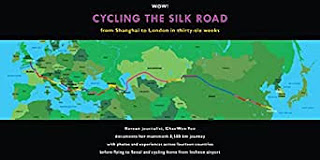
Cycling The Silk Road From Shanghai to London in Thirty-Six Weeks by Chaewon Yoo


Korean journalist, Chaewon (Eva) Yoo knows how to plan and plan big.

From June, 2018-January, 2019, Yoo traveled 8,567 kilometers along the Silk Road between Shanghai and London via bicycle. Her book, Cycling The Silk Road covers that journey. It's a short book but is illustrated with eye catching photogtaphs and described with engaging anecdotes and good advice for any interested traveler.


The Silk Road was a network of trade routes that connected the East and West to the 18th century when industrialization resulted in expansion in local productivity, Enlightenment values, and affordability for the masses. Silk, paper, and gunpowder were among the goods traded on the route. The Bubonic plague and other diseases were also spread creating worldwide pandemics. Yoo had a strong sense of history by traveling this route and an awareness of the modern world as she interacted the people who lived in the different countries.


Yoo's writings are brief, but she captures her experiences with warmth and humor. As she cycled through the asphalt, chalk powder, and dust in Yingshang, she was bemused to find a hotel that "looked like something from a Western movie or a desert in Arizona, U.S.A. when (she) was ten."

While in Italy, she recalls the friendly people that she met such as people performing in a Christmas play in traditional Provincial clothing. She also remembers the wine, most of it on tap. At a tavern, she only wanted half a liter, but the assistant filled her drink up to the brim.


There are various moments where Yoo was pleased to observe the nature around her. While rafting on a banana boat along the Dan River, Yoo lay on the boat and looked up at the sky, observing the clouds moving at different height.

Sometimes, her descriptions of nature uplifted what could have been a trying time. A difficult time of traveling uphill in the rain in Edessa, Greece became an eye catching moment when Yoo observed a 50 meter waterfall with strange rock formations made even more impressive by the rain.


Yoo brilliantly describes the homes and people. Her encounters with the residents are some of the highlights.

While in Yevlax, Azerbaijan, Yoo stayed in an old house with a cow barn. She described "every yard with a plastic cover and a sink to wash fruit, vegetables, and your teeth." She described the food and drink that was offered, such as tea with honey dipped berries served in intricately designed glass holders and sugar and candy inside glass containers.


While in Milan, Italy, Yoo experienced the kindness of strangers. Her bike was stolen so she purchased a secondhand one. The theft coincided with a seminar. Yoo posted her map and asked if anyone would attend. She met 15 people who wanted to hear her story.

In France, Yoo's hosts guided her to various events such as a hypnosis meeting, a January festival, and a potluck dance complete with accordion music. Yoo described France "as the most hospitable country on (her) trip."


The photographs in the book are filled with delectable food, lovely landscapes, and friendly people. They help provide images to Yoo's words. In fact, the short length makes the photos the main focus of the book so the Reader can experience the trip the way Yoo did.


 Cycling The Silk Road is a wonderful account of a trip that is memorable in words and pictures.


The Girl With A Golden Heart by Achal Kumar


Achal Kumar's short novel, The Girl With A Golden Heart is a moving and spiritual story about a woman who finds justice through fighting an enemy and self-actualization by helping the people of her village.


In the beginning, we are introduced to Shivani, an Indian woman who is one of the ten women entrepreneurs in the country. She is powerful and dedicated and has a reputation for honor and philanthropy, particularly with her woman care trust which helps poor girls and women pursue education and gain self-employment in their own villages.

One night, she returns to her home village of Madhurpura and remembers the circumstances that led her to depart and pursue this life path.


Most of the book occurs in flashbacks when Shivani was a young woman. After a flood, Bharat, Shivani's impoverished father sought help from Baccha Babu, a criminal who behaves like a mob boss. He appoints thirty associates who engage in robbery, kidnapping, smuggling, and stealing land grants from poor farmers. 

Using threats, manipulation, and intimidation, Babu ultimately ends up owning Bharat's farm. 

Shivani is raped by one of Babu's loathsome sons. The rape leaves her traumatized especially since she can't report it to the police. (Babu owns the police.) The further escalation of violence and Babu's tighter grip on Madhurpura leads Shivani to lose some family members. She desires revenge against Baccha Babu, the man who stole her family's farm and destroyed her village, reputation, and family.


The book is impactful as Shivani and Babu engage in their one on one war. Babu appears ahead with his thugs, intimidation tactics, and money. However, Shivani's determination to bring him down, her clear-sightedness in researching and analyzing his business properties for weaknesses, and kindness in gaining allies rather than threatening them prove to be assets.


In Karmingar, she falls in love with Altaf, a man who helps her in her war against Babu. Even though she puts him in dangerous situations, she is concerned for his well being enough to sacrifice her life for him. Also, her business acumen helps put his family in a better financial situation than they were before.

She finds a sanctuary in the home of a progressive politician who empathizes with her plight and treats her like his own daughter. Ultimately, he helps mentor Shivani on her part towards a better future.

Babu's plans create division between Muslims and Hindus and results in more violence and economic trouble including for him. It's almost karmic justice that Shivani's kindness brings her forward while Babu's greed brings him down.


The Girl With A Golden Heart is a moving parable about someone who thrived despite great adversity. Then she used that privilege to help others in the same situation.


Not Him or Her Accepting and Loving My Non Binary Child Here's What You Should Know by Michelle Mann


Not Him or Her Accepting and Loving My Non Binary Child Here's What You Should Know by Michelle Mann is a good book that covers an important topic, how to raise a non binary child in a world that isn't always understanding.


Mann brings forward an important topic that has been very controversial lately. She humanizes the conflicts that many non binary children and their cisgendered parents go through within their own families and society. It also shows that the most important keys in such families are understanding and acceptance.

Parents and others can be inclusive by exhibiting proper characteristics like using the right preferred pronouns and defending the child in front of others.


 The personal stories add a great touch to the book, especially in revealing the diversity of parents and their children's experiences. Various situations are covered, such as Simone having to take excess time to explain to a dental assistant that her child was nonbinary. They show how many of the simplest procedures could produce stress because of a judgemental society.


The book covers different age groups of non-binary children from early childhood, to teenagers, to adulthood. This counters the whole myth that "It's a phase. They'll outgrow it." Mann openly counters such myths and assumptions and how they contribute to a lack of acceptance within the child.


Not Him or Her shows how devaluing and demeaning those myths are and how gender identity is often influenced by parental and societal views that either encourage or demean the child.

Bottom line: If the child is old enough to recognize gender in society around them through toys, advertising, and adult perspective, then they are old enough to recognize the gender identity within themselves.


Not Him or Her reminds the Readers that the most important thing that they can do for their child is to understand, accept, and unconditionally love them.


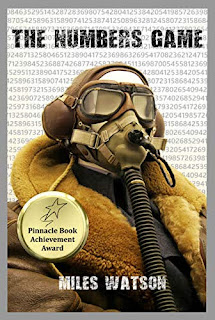
The Numbers Game by Miles Watson


Miles Watson's novella, The Numbers Game is a tight, suspenseful, and character driven book about a WWII pilot with a unique gift that helps him survive but could overpower him.


Pilot Officer Maurice Mickelwhite is a mathematical genius. (Fun Fact: Maurice Mickelwhite is also the real name of actor Michael Caine. This appears to be a coincidence.)

His potential life of teaching calculus and algebra while living only for numbers is interrupted by the War. As he participates in the Battle of Britain, Maurice is able to use his talent for numbers to calculate the probabilities of survival, not only for him but the other members of his squadron. He knows the likelihood in which each pilot is going to die and is quite often right. Unfortunately, his own numbers are very close to coming up.


The Numbers Game is a brilliant character study about someone who goes to war but doesn't really want to.

Maurice is not exactly a flag waving jingoist ready to die for King and Country. 

In fact, he had dreams of teaching math in school and being left to "his numbers, his tobacco, and his copy of the Journal of the London Mathematical Society.

Instead, he got the war."

Maurice wouldn't have minded using his mathematical genius to work in the London office but instead he is in the RAF as a pilot. (There was even a rumor that the RAF refused "as a matter of principle" to let anyone do anything that they showed an interest or talent in.) 

This attitude is counter to the popular culture image that RAF's were brave heroic patriotic fliers with their own colorful language and daring to kick the German fighters out of England. 

The Numbers Game shows that it was often made up of men who were there by force and would rather be doing anything else. 


In many ways, Maurice is similar to characters like Yossarian from Catch 22 or Hawkeye Pierce in MASH. He gets through the madness of war by holding onto a sardonic sense of humor. He scoffs at those who insist that skill and abilities are factors in determining when someone is going to die. He thinks, "The numbers formed a path which you were doomed to walk-a path ending in a scaffold….The more you flew, the greater your risk of dying. It was just that simple."


Because of his certainty about death, Maurice has a very fatalistic behavior when his fellow pilots die. Even when others disagree with him and die anyway, he is neither grief stricken nor smug about being proven right. He is matter of fact because he saw it coming. He comes across as cold at times, but Maurice is almost like someone with precognitive abilities. They have a tremendous talent that allows them to see what is to come so they are not surprised when it happens. The events just confirm what he already knew. 


Since the narrative is short, there isn't a whole lot of time to focus on Maurice's character but that adds to the suspense. The brief length allows tension to build as the pilots approach the end of the short novel and their lives. Every moment is quick as the Reader waits for the inevitable conclusion.


The Numbers Game reveals that war is not always defined by victories or ideologies, sometimes it is just a matter of numbers.


One Night in Paris: A City of Light Novella Book 1 by Juliette Sobanet


One Night in Paris, Juliette Sobanet's novella is an enchanting and lovely time travel fantasy with a brilliant sense of time and place.


Ella, a modern woman has had enough of her controlling and abusive husband, Dave. On her way to fly to Paris to visit her dying grandmother, she announces that she is leaving him and wants a divorce.

In Paris, Ella's grandmother shows her pictures from the 1920's of herself and her best friend, Lucie. She also gives her a request. She can't rest until Ella goes back and stops Lucie from marrying a man named Max and dying at the young age of 23. Grandma invites Ella to wear one of her flapper dresses and a brooch. After she puts them on, Ella finds herself transported to 1927 Paris and standing in a jazz club face to face with Grandma's friend, Lucie.


One of the most delightful traits that this novella possesses is its setting. 1927 Paris is depicted with all of the color and excitement that comes to be expected in a work about the Roaring Twenties. Ella is drawn by the excitement of jazz, free living, drinking, and the flapper lifestyle. It's exciting and gives her a chance to liberate herself from her modern worries and her unhappy marriage. 


One Night in Paris is also a magical story about love and friendship. During her time in 1927, Ella encounters Leo, a charming American writer. Their night of passion and bliss could be an inspiration for Leo's writing. It's almost cliche for a brief romance to be set in Paris, but Sobanet makes it work. Ella and Leo's romance is touching without being overdone or maudlin. It's fairy tale like as Jazz Age Paris is almost a fantasy land capturing the romantic and fantastic elements of the people who dwell within it.


However, One Night in Paris is more than a love story. There is a strong theme of female friendship and empowerment. When she observes Lucie and her verbally abusive boyfriend, Ella thinks about her loveless marriage. She tries to rescue Lucie from her potential end and transforming from a happy go lucky independent free spirited woman to a timid frightened abused wife under her future husband's thumb. 

In their quick meeting, Ella develops a bond with Lucie. She is at first confused about her assignment but willing to help Lucie to honor her grandmother's wishes. However, as she gets to know Lucie, she wants to protect her on her own. She wants to save Lucie from the same situation which she had just left.


One Night in Paris is a beautiful romantic novella of love and friendship. It's pure magic.


Wiccan: The Truth About Wicca and Witchcraft A Witch's Bible by Julia Steyson


Julia Steyson wrote the perfect beginner's book for those who are interested in Wicca.

The first part introduces the Reader to the history of Paganism. Steyson includes lists of various mythologies and figures that Readers might be interested in communicating with like Odin, Norse God of Wisdom or Venus, Roman Goddess of Love. It is a good introduction to show that Paganism has a long history to be understood and respected.


The second and third parts go into modern times and the various tools, rituals, and some sample spells for practicing Wiccans. The lists of elements, crystals, herbs, and other tools can be confusing but it is helpful to know what can be used for specific purposes. Of course, none of these things are necessary. The tools are meant as guides. Sometimes, all you need is your brain and a quiet time and place to think.


One of the most interesting parts are the seven paths of spiritual practice including coming into presence, awakening intention, sustaining awareness, transcending self interest, deepening remembrance, expressing gratitude and wonder, and radiating blessing. These paths show that Wicca can be a vibrant bright ever changing exchange between the WIccan and Spirit. 


Wicca The Truth About Wicca and Witchcraft is a great start to a wonderful open minded, spiritual path.


Monday, September 6, 2021

Lit List Short Reviews Be A Successful Maverick Vol. 3 How Ordinary People Do It Different to Achieve Extraordinary Results Edited by Paul Finck, The Machine Murders Island Buoys The Manos Manu Series by C.J. Abazis, A Novel Crime: St. Marin's Cozy Mystery Series by ACF Bookens, Salvage Trouble: Black Ocean Galaxy Outlaws Mission One by J.S. Morin

 Lit List Short Reviews Be A Successful Maverick Vol. 3 How Ordinary People Do It Different to Achieve Extraordinary Results Edited by Paul Finck, The Machine Murders Island Buoys The Manos Manu Series by C.J. Abazis, A Novel Crime: St. Marin's Cozy Mystery Series by ACF Bookens, Salvage Trouble: Black Ocean Galaxy Outlaws Mission One  by J.S. Morin


Be a Successful Maverick Vol. 3: How Ordinary People Do It Different to Achieve Extraordinary Results Edited by Paul Finck


Be a Successful Maverick Vol.3 How Ordinary People Do It Different to Achieve Extraordinary Results is a brilliant anthology of various essays by entrepreneurs and other businesspeople to help others get through their difficulties and indecisiveness to become better in their personal and professional lives.

Maverick Millionaire, Paul Finck shares his own personal struggles and what it taught him. His wife Deborah had a tumor in her pulmonary artery. The surgery was successful and she recovered. Unfortunately, he was not permitted to visit Deborah on account of Covid restrictions and his professional life took a hit as 80% of his sales went down.

 Looking back on that experience taught Finck a lot about how to deal with stress and how people consider how they got in that situation. Finck recalled the human factors from what he dubbed the Ultimate Maverick Success including Intelligence Quotient, Social Quotient, Spiritual Quotient, Emotional Quotient, and Adversity Quotient. Finck realized that Deborah's health and troubled sales were testing his Adversity Quotient. He built new systems and attracted new customers and spent as much time as he could with his family as well as contacting his wife to remind her that he was there for her.


Some of the stories deal with personal struggles and what the author learned from them. Forbes Riley, CEO of SpinGym recalled a time when she took a test in college, got every question right, and still got a C. The professor told her that his A students went beyond the test answers. They did extra credit, additional reading, and projects at the bottom of the syllabus. They go beyond what is expected of them. This advice led her down her path of hosting infomercials, building a  state of the art TV studio, and greeting various guests like Deepak Chopra, Grant Cardone, Les Brown, Sharon Lector, Jack Canfield. She also co-hosted the original X Games and worked with Body By Jake to create a reality cable series called Fit-TV, resulting in her getting inducted into the National Fitness Hall of Fame. 

Riley learned a much harder lesson when Dexter, a boy that she helped raise, was shot by a gang member for wearing blue, a target color. The randomness of the shooting and the intense grief she felt after Dexter's death, led Riley to come to the conclusion that "Life happens for you, not to you." She misses Dexter but still continues to inspire and teach, gaining a stronger empathy from this difficult loss.


Some of the chapters aren't always personal stories. Others are words of advice and encouragement. Rae Ann Hall, author, speaker, facilitator, and podcast host of The Optimistic Choice offers a Call to Action with her essay, "The Resilient Warrior-How to Warrior Up in Life." Using all caps, exclamation points, and bold print, Hall motivates her Readers. She writes a process that includes "Know Yourself: STRONG," "Pain to Purpose: BRAVE," "Face it and Forge Ahead: EXPERIENCED," "Optimistic Outlook Does Influence Outcome: RESILIENT," "Action, Belief, and Consistency: DETERMINED," and "Act, Do Not React: PROACTIVE.


Technically, Be a Successful Maverick, isn't telling their Readers anything new. These words of advice can be found in many self help books but in times of great stress, when we need inspiration and encouragement the most, that's when a book like this comes along to provide that.


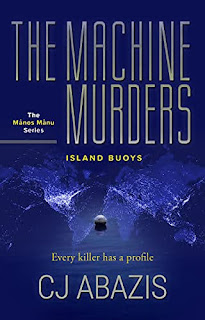
The Machine Murders Island Buoys The Manos Manu Series by C.J. Abazis


The Machine Murders, part of C.J. Abazis's Manos Manu series, tells a suspenseful mystery in a beautiful setting but also offers interesting conflicts between various law enforcement agencies over the different ways to catch criminals.

Manos is on the island of Mykonos, Greece to attend a friend's wedding. Unfortunately, a serial killer also happens to be working at the same time. The latest murder victim is Bill Casey, an Instagram influencer, is found dead with a chain running through his insides. Manu, a data analyst with Interpol, is naturally dragged from his vacation to get to work.


The suspense and setting work really well for the book. There are many tense chapters with characters chasing various leads before the killer finds his next target. There is a particularly creepy passage when a character is caught by the killer and struggles for their life while he attempts to drown and disfigure them.

The irony is that all of this set on a beautiful island during what should be during a happy time. The descriptions are filled with scenic beaches and clear water that is perfect for swimming. The attractive setting serves as a contrast to the dark actions of ome of the characters.


The most interesting aspects to The Machine Murders are the various approaches that characters take to crime solving and how they clash. There are people like Lena, a profiler, who prefer to analyze behavioral patterns and use psychological methods to learn the killer's identity. Then there are those like Manos who prefer the more technological approach like investigating social media accounts, hits, views, purchases and any information obtained on the Internet. Of course there is also the opinion of those like the Mykonos police department, just going around town, asking questions, and chasing suspects. All methods are used and none are seen as ridiculous even if the characters argue over which method is best. Eventually, they all come to the same conclusion: the identity of the killer.


Besides being suspenseful and beautiful, The Machine Murders shows us that law enforcement like, every other occupation, is in a stage of transition, one that has its flaws but its merits as well.


A Novel Crime: St. Marin's Cozy Mystery Series by ACF Bookens

A Novel Crime is a short but engaging cozy mystery in which a divorcee loses a husband but gains a new career and a penchant for amaterur crime solving.


Harvey divorces her husband, Trevor, the same day that she finds a dead body. Well the divorce is bad but not unexpected. They had been having problems for years and even when a terrified Harvey calls Trevor about the body, he takes several hours to show up.

The body fills her thoughts more. It is that of Juan Ortega Montague, a property dealer. Partly to block out painful associations with the divorce but also to satisfy her curiosity and imagination nurtured by reading many books, Harvey looks into the case herself butting heads with the police.


A Novel Crime covers all of the usual beats of a cozy mystery: violent but not too violent crime, protagonist with a career outside of law enforcement but a tendency to find themselves in dangerous situations, beautiful location with odd locals, in this case San Francisco, a loyal group of friends to help the protagonist, and an obvious murderer. It's very predictable. Even the killer's identity is easy to guess because of a conversation in which the killer followed the old "revealing too much about the case that only the killer would know" trick.


There are some interesting parts such as when Harvey gets glamorous and attends an upscale charity event with a pro athlete/potential love interest. It's also nice to read that even though the divorce hit Harvey emotionally she still makes plans to move on to New England and open her own bookstore.


While A Novel Crime is an average mystery, its main purpose is clearly to set up the situation where Harvey decides to move and open her bookshop, fulfilling a lifelong dream and finding more trouble. On that respect, it works.


Salvage Trouble Black Ocean Galaxy Outlaws Mission One by J.D. Morin

J.D. Morin's novella, Salvage Trouble is for people who love watching space travel science fiction shows like Star Trek, Battlestar Galactica, and Firefly. It's about a space crew fighting enemies and taking on new passengers as they learn to adjust to living and working together in space or as they refer to it, 'Black Ocean." It doesn't present anything new to the genre but it provides an interesting and combative crew who argue and bicker with each other as much as they fight with enemies.

Capt. Carl Ramsey of The Mobius travels outer space to look for salvage and transport passengers and cargo to different locations. It's not a glamorous job like exploring space for scientific discoveries or creating diplomatic relations with other worlds, but someone has to do it. He isn't alone. He has a loyal but also argumentative crew at his side. They include: Tanny, a sharp tongued former marine and Carl's ex wife, Mort, a spiritual minded "tech wizard", Chip, a likeable computer wiz, Roddy, a simian looking alien who is a strong fighter and big drinker, and Mriy, a quiet feline-like alien whose job is rather mysterious (but when she is called to fight or defend her crew, there isn't much of the enemy left). While on a salvage mission that ends badly especially for one of the crew members, Carl and Co pick up two new passengers: Adam, a mysterious precocious young boy who was part of a genetic experiment and Sister Theresa AKA Esper, a priestess/teacher who sought to free Adam from his guardian's rigorous and mind altering training.


Salvage Trouble is a delightful tribute to various science fiction movies and shows. The most obvious being Firefly with its sardonic but good hearted blue collar captain living on the outer edges of space and an immensely talented mysterious kid with their protective guardian. There are also some clever references to other sources. The alien characters could have fit in at the Mos Eisley Cantina from Star Wars. The fact that the alien that is primate in appearance is named Roddy is clearly a tribute to Roddy McDowall, the star of Planet of the Apes. These references will interest science fiction lovers of various generations.


The plot is mostly a lot of fights with various characters with some interesting twists towards the end (more on that later). However, Morin gives us a fascinating crew to follow on this journey mostly because they behave like people who have to spend a long monotonous traveling time together. They aren't going to get along or always like each other but when outside forces threaten, they have each other's back.

I mean when one of the crew members is the Captain's ex spouse, personality conflicts are bound to happen. Besides the awkwardness between Carl and Tanny, there are also other clashes found within the novella's short length. Esper and Carl start to develop feelings for each other and Tanny is deep in grief over the loss of another crew member that is clearly beyond friendship. Esper and Mort get into some science vs. spirituality debates. Adam also has an intriguing back story that makes him a mystery to everyone including himself. 

The story moves along briskly with some twists. One twist in particular was upsetting for me  because I liked this character. However, reluctantly I will admit that it made sense and was brilliantly foreshadowed without being too obvious. 


Salvage Trouble is short but it definitely makes the Reader want to book another voyage with the Mobius crew across the Black Ocean.


Thursday, July 1, 2021

Lit List: Short Reviews: The Girl from Colombia by Julian Rodriguez, Neoliberalism, Globalism, Income Inequality, Poverty, and Resistance by Renaldo C. McKenzie, The Bedwetter Journal of a Budding Psychopath by Lee Alan Howard

 Lit List: Short Reviews

By Julie Sara Porter

Bookworm Reviews


Spoilers: I want to apologize for being so scattered with my reviews lately. First, I house sat for my sister while she and her family were in Florida. I was able to get plenty of work done because of their great WiFi but not all projects were completed.

Second, when I returned I had a series of neck and shoulder problems which prevented me from being on the computer for so long. They are gone but now I have a slight ear infection.

Third, the power went off in our house at the same time that my charger was destroyed. The power is back but I still need a new charger so right now I am working on limited time doing as much as I can before the battery goes and I have to borrow someone else's. Let's just say it's been a busy stressful month.

Because of that I have had to condense three reviews into shorter ones similar to what you would find in Amazon or Goodreads. I prefer my longer, more analytic reviews but when pressed for time, it's better than nothing. I may do this from on for shorter works like novellas, poetry books, and short stories. Anyway, here are my three reviews. Hopefully, I should get a new charger by tomorrow and be up to my regular form.


The Girl From Colombia by Julian Rodriguez

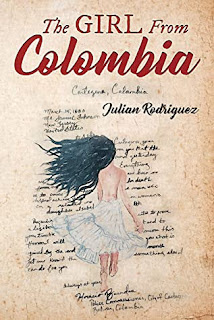
Julian Rodriguez's historical fiction novel, The Girl from Colombia is that rare book that writes a love triangle right by giving the Reader three compelling characters so that the emotional investment is on all parties.

In the late 19th century, Joseph Johnson's wealthy cruel father, Samuel is ill. Joseph is set to inherit and marry Elizabeth, an heiress. However, a young mysterious woman from Colombia named Isabel lives in a cottage by the beach. Joseph's curiosity gets the better of him when he finally meets this bewitching beauty. The two fall in love leading to potential scandal and estrangement should they be discovered.


The three characters are very well written. Joseph is someone who has had to suffer under the thumb of a dictatorial father and is torn between his  duty to his family legacy which is largely built on exploitation and deceit and his responsibilities to himself and the people around him. With Isabel he becomes very protective and recognizes a better nature in seeing someone who suffered under the decisions that his father made. His struggles raise the questions in whether a legacy should be preserved when it's built by someone else's cruelty and living off of the backs of others.

Isabel is a very passionate emotional vibrant woman, the most interesting character in the book. She is kept hidden from the Johnsons for a long time as if to deny what Samuel did to her and her mother. However, as Isabel grows she makes her presence known. Her first chapter shows her attempting to enter the Johnson house, knife in hand. When she indulges in her affair with Joseph, she sees someone who is also wounded by Samuel's behavior and is kept hidden in his own way.

Elizabeth is a nice surprise. Usually, love triangles are skewered in one person's favor by making the other as horrible or as boring as possible. Rodriguez is smarter than that. Elizabeth not only is a nice person but she actually befriends Isabel on her own. In fact, she comes up with an idea that could benefit all three parties. If not for plot circumstances, it may have even worked.


The Girl from Colombia not only provides a well written love triangle but shows how sins from past generations can ruin the lives of subsequent generations.


Neoliberalism, Globalism, Income Inequality, Poverty, and Resistance by Renaldo C. McKenzie

Renaldo C. Mackenzie's book Neoliberalism, Globalization, Income Inequality, Poverty and Resistance is a sobering account of how the economic and sociopolitical controversies affect the United States and the Caribbean countries, particularly Jamaica.


People who are interested in global and financial transactions between nations will find a lot to read and think about in this book. McKenzie explains how income inequality has shaped the outlook of these countries and how Jamaica's flattened economic growth has been a factor in the poverty of its citizens. McKenzie also states Neoliberalism restructuring has caused a decline in Jamaica's economics. Sometimes the theory has produced chaotic and uneven results. A decrease in a country's economy also leads to increases in illegal activity such as drug manufacturing, selling, and usage, breakdowns in family structure, and increased violence and hate crimes. 

McKenzie also discusses how racial controversies in the United States have bled into struggles in other countries. Such controversies as The Black Lives Matter protest, racial profiling, and critical race theory taught in education has altered the views that many have had over other countries that had been colonized by white Europeans but inhabited by indigenous people and people of color. Slave revolutions occurred in Jamaica before the Civil War and in the late 19th century many descendants of slaves moved in an African diaspora to Jamaica. Similar to current struggles in the United States and South Africa, the current status of the Caribbean countries can be learned by owning up and acknowledging the racism in the past and how systemic racism remains.


Neoliberalism, Globalization, Income Inequality, Poverty, and Resistance gives Readers a chance to understand how the problems in one country carry over and parallel the problems in another.


The Bedwetter: Journal of a Budding Psychopath by Lee Alan Howard

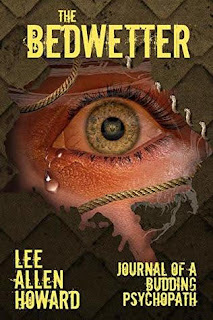
Lee Alan Howard's psychological thriller The Bedwetter: Journal of a Budding Psychopath lives up to its name. It is a dark absorbing look into the transformation of a troubled young man into a potential murderer.

Russell Pisarek has a long list of problems. He has nocturnal urinations and is embarrassed by it. He has flashbacks of a manipulative and abusive mother. He works in an animal testing lab but has has a history of dealing and using drugs. Right now he lives with his nagging sister who is concerned about the influence Russell has over her son.

Most of the time he spends playing video games like Call of Duty and muttering under his breath how much he hates everyone else. His only friend is Connors, a man who runs an army surplus store in which Russell buys knives and other weapons. The general impression that Russell gives off is someone who is antisocial and angry but keeps all his worst thoughts to himself but is waiting for the day to explode.


Throughout the novel it becomes clear that Russell is a ticking time bomb. The smallest things like a nasty Craigslist response or having to clean the rabbits cages at work send him off. Most of the time he responds by calling the people around him demeaning nicknames (He calls his mother, Melanie, Melanoma) and using his first person narration to mentally cuss them out. (When his mother mocks him in public, Russell tells the Reader "You're my witness-SHE STARTED IT!")

 So far his behavior seems innocuous but it becomes more worrisome the longer the book goes on. He has violent fantasies about a woman in which he is infatuated.  He steals ketamine from work to feed an addiction. After his father dies, he remembers his indifference and participation when his mother abused him and can't muster up any sadness or empathy. It takes a long time for Russell to commit violence but when he does, it's not a surprise that it happened just that it took so long.

Howard writes a character teetering on the edge of sanity rather well. We already sense something is going to happen before it does, we are just waiting for the moment that it does. It's like looking outside on a cloudy day, watching the sky turn green, hearing the thunder and seeing the lightning get closer, and watching the rain turn to hail. You just know that a tornado is coming so that by the time it shows, you are relieved because you have been waiting and expecting it for so long.

When Russell finally commits violence, it's not exactly a moment of triumph but it is seen as an inevitable conclusion. The Reader has been reading his dark obsessive thoughts, has seen his fantasies become more unhinged, and his enemy list become longer. We have been expecting this outcome for sometime and are almost relieved that it finally does.

The Bedwetter is a fascinating look at a troubled individual who gets worse. It is among the closest many of us can ever get into the mind of a psychopath and probably the closest many of us want to.