Showing posts with label Miles Watson. Show all posts

Sunday, December 24, 2023

Lit List Short Reviews: Exiles by Miles Watson; The Kuiper Rogue by C.P. Schaefer The Mango-Lion: The Mangoes Have Fallen by J'yren Christenvie

 Lit List Short Reviews: Exiles by Miles Watson; The Kuiper Rogue by C.P. Schaefer; The Mango-Lion: The Mangoes Have Fallen by J'yren Christenvie


Exiles (The Chronicles of Magnus) by Miles Watson 


Spoilers: Miles Watson’s previous short work, Deus Ex, was a gripping story about the dramatic fall of tyrant Magnus Antonius Magnus. In my review, I suggested that there was enough interest to write another installment or even a full series set in this universe. Apparently, Watson thought so too. The follow up is Exiles which tells of Magnus’ reign of terror from two people who are right in the thick of it. One is an outsider in every sense of the word and the other  was the ultimate insider, the one who helped turn Magnus into the tyrant that he later became.


Marguerite Bain is the pirate/smuggler captain of the ship, Sea Dog. Her crew despises her for being a woman but they follow her anyway. She is hired by an anonymous employer who wants her to deliver supplies to a man who is exiled on a small remote abandoned island. She is not to interact with him nor allow him anything with which to communicate. However, her curiosity gets the better of her and she enters the cabin to see the Exile. Upon arriving, Marguerite wakes the Exile and runs in surprise. While inspecting the return cargo, Marguerite finds a notebook that tells of the Exile’s life story. The Exile explains who he is, Enitan Champoleon, and how he changed history by fighting against the Order and allying with an idealistic young man named Magnus Antonius Magnus who had his own sights set on leadership.


Through Marguerite and Enitan, we get the full account of life under Magnus’ rule and the government before it that Magnus fought against and took over. Marguerite is someone who may have lived most if not all of her life under Magnus' governance. She knows no other life. She had been abused, abandoned, left in squalor, and sold into prostitution and smuggling. She has been forced to survive on her own in a world of corruption, tyranny, and abuse. 


Marguerite is part of an organization called the Brotherhood, but that name appears to be a mere suggestion rather than demonstrating anything resembling allyship or brotherhood. In fact, she is warned that one of her crew members is a spy and potential assassin. She has to ferret out the traitor amongst her band of misogynistic murderous scum while learning about how Enitan helped put the Lead Scum in charge.


Marguerite’s story is that of the outsider, the effects of Magnus' reign and how it affected the lowest level of people in this society. Enitan’s story is from a different place. He is the one who has been there and shaped history. His actions are the cause, the one who helped Magnus obtain power and saw the tyrant that emerged from the front row.


Enitan recounts a life of intellect but also abandonment, where he had a great mind but little opportunity to use it. The only way he can use his mind is to read escapist adventure novels that mentally take him places that he wants to go. (In one of the saddest reveals, Enitan confesses that he still has those books, even in exile, because all he has left is the imaginary world that was nothing like the real one that he helped change). 


Enitan goes AWOL from the military and runs into a group of activists protesting the current government, The Order. They claim that the Order must end and they are the Solution. At first, Enitan sees a quick way to earn money and gives a stirring speech to open up activists’ hearts and especially wallets. He doesn't really believe in the rebel cause, though he hates the Order. He just sees some people who can keep him safe and earn him money.


Enitan changes his tune when he meets the eloquent, firy, idealistic Magnus. The man who wants to put an end to the old Order. Like many rebels before and since, Magnus has a just cause when he sees people getting hurt and being degraded as second class citizens. His far reaching vision promises a better future and his active aggressive personality shows that he's not afraid to fight alongside the soldiers. Enitan is sold, especially when Magnus is impressed by his friend's intelligence and strategic thinking. Unfortunately, that strategic thinking is unable to see the future tyrant's manipulative nature and true ambition until it's too late and Enitan realizes the full scope of what those plans lead to and how much Magnus has changed or rather how much he kept hidden until his true nature emerged. To quote The Who’s “Won't Get Fooled Again,” Enitan “meets the new boss same as the old boss.” Spending years in exile on this tiny island, Enitan feels the weight of remorse and regret for the world that he helped create.


While Deus Ex gave us a glimpse into the Magnus dictatorship, Exiles strengthens it by showing us the people who suffered through it. History is often written on the blood of those who were crushed under the dictator's boot and those who gave the dictator power to do the crushing.


The Kuiper Rogue by C.P. Schaefer 

C.P. Schaefer's The Kuiper Rogue is a tech heavy Hard Science Fiction novel that is perfect for that type of Science Fiction fan. Those who are more interested in character and world building, well there is some of that too.

On the Gaia 3 Titan Moon Base, hopes are high for a new Earth based space colony. There have already been bases established on Earth’s moon and on Mars. Saturn’s moon is the latest. However, something in the sky might put those plans to a screeching halt. Will Vandoloh, astronomy prodigy and son of Margaret, Gaia 3’s captain, sees a curious object in a computer simulation. An enormous comet passes through Saturn and triggers a chain reaction of catastrophic events including oxygen depleting on the base, crew members acting delirious and succumbing to insanity, and radiation levels rising to fatal levels. Worse, this comet is heading for Earth and even worse according to ancient writings from Earth’s history, this happened before and the results weren't good. It may lead to the extinction of not only Titan’s population, but maybe Earth’s as well.

The technical details in Kuiper Rogue are plentiful. They are very reminiscent of a Star Trek episode where one of the crew members, like Spock or Data, will go into a long winded explanation of what is going on and what if anything can be done to stop it.
For the tech heavy Sci-Fi fan, there is a lot of talk about orbital singularities and the schematics of the Gaia 3 project. Sometimes those passages can be a bit dense and unwieldy for the less scientific minded. 

The most memorable aspects of the book are the rare moments of characterization underneath all of the science hardware. There are some chilling chapters when the crew goes insane because of the high radiation, low oxygen levels, and the comet’s arrival. One appears to be eating human flesh and another’s eyes glow red and face distorts into a very monstrous appearance. It's like a horror movie in outer space.

Some of the best moments are between Margaret and Will. Margaret is the tough as nails strong willed head of her crew but also a loving mother. There are many times when she has to walk a tightrope between those roles, worried about the danger that her son is in but knowing that he can help save the rest of the crew.
Will is a brilliant young man who finds his niche in examining space and working on other worlds. He also wants to make his mother proud. The duo’s love for each other is paramount throughout the whole book.

While the technical detail in The Kuiper Rogue is massive, so is the human element, particularly the family ties between mother and son.

The Mango-Lion: The Mangoes Have Fallen by J'yren Christenvie.

J’yren Christenvie’s book, The Mango-Lion: The Mangoes Have Fallen, is one of the strangest allegories that I have ever read. It is about the youth and maturity of a mango. Yes, a mango, the fruit. Once you get past the odd premise, you will find an uplifting story about growing up and striving for one's goals.

Liligu is a young mango spending his days on a tree with his mango family and friends. His mother tells him that one day, he will become a big beautiful mango tree. Before he can ask how, the tree is invaded by humans, called “bigmouths.” They eat some of Liligu’s friends and family and pluck him, carrying him away from the tree and his mother. He is then given to a human girl named Lilibeth and through her and the new friends that he makes, Liligu learns exactly what he needs to become a big beautiful mango tree.

Liligu starts out like a small child. He is curious but afraid of everything. He wants to become a tree but is afraid of the Bigmouths. Left on his own, he is scared, uncertain, shy, and nervous about everyone around him. 
He befriends two stuffed animals, a giraffe named Girigu and a pig, Piligu. Because their memories come from being made in factories alongside their “brothers and sisters” (other stuffed pigs and giraffes), Liligu gives them his memories of having a mother and being close to family. 
He also learns to trust some bigmouths. They aren't all bad. Lilibeth is very kind to him and treats him like a favorite toy or pet. Through her, Liligu learns to trust those even if they are part of people that he thinks that he won't like.

During his journey, Liligu obtains knowledge. He has dreams of his mother and wants to know what they mean. He wants to be educated. He receives wisdom from Mr. Wateru, a watermelon, Dr. Uki, an apple, and Bozero, a dog who advise him based on their own experiences. They only give him some information, which while helpful, is incredibly limiting. It takes his friendship with an orange named, Orange where he learns about love, sacrifice, independence, and what it takes to fulfill one's dreams. 
Liligu learns that it takes growing up, experiencing the world, and making a positive choice to make it better.


Thursday, August 24, 2023

Lit List Short Reviews: Authenticity: Poems by Lesley Day; Wolf Weather by Miles Watson; Reflections in My Magical Mirror: Lessons of Love from the School of Life by Ivan Figuero-Otero, M.D.; Jane Austen's Totally Unexpected New York Adventure by Robin Robby; Abraham Lincoln Tribute: His Life and Legacy by Zaki J. Doudak

 Lit List Short Reviews: Authenticity: Poems by Lesley Day; Wolf Weather by Miles Watson; Reflections in My Magical Mirror: Lessons of Love from the School of Life by Ivan Figueroa-Otero, M.D.; Jane Austen's Totally Unexpected New York Adventure by Robin Robby; Abraham Lincoln Tribute: His Life and Legacy by Zaki J. Doudak 


Authenticity: Poems by Lesley Day

Lesley Day's book of poems, Authenticity, explores many emotions like depression, grief, loneliness, fear, and solitude. She captures them all with raw, naked, and honest confessional poems that dare the Reader to feel what the Speaker is feeling.

From the first poem, "Nothing More Than A Prick," Day reveals her ability to capture those feelings through life changing moments. The Speaker reads through diary entries from when she was younger. The entries are from a 14 year old's perspective revealing her first experience with what she perceived as heartbreak.

The Speaker mocks her naivete and realizes that as an adult, she has experienced real loss and heartbreak.Day writes, "Who knew the flowing streams of tears, in reality, were only puddles?/Who knew the stones that weighed me down were only tiny pebbles?/Who knew I would one day envy feeling so strongly over something so trivial?" Now that she felt real sadness as an adult, the Speaker realizes that what she felt as a teenager was a mild mere pinprick compared to how she feels now.


Many of Day's poems deal with specific moments that cause great stress and grief and elicit strong emotional responses. The poem, "I've Been Here Before" deals with The Speaker's lover's suicide. Day transitions the lover's point of view from second to third person. In doing so, she wants to compartmentalize his troubled symptoms and the rest of his personality.

In one stanza, she says that "he" aimed a gun at her head. Then she changes perspective by saying, "Now I know that wasn't you/And I'm not saying that's what I think you'll do/But/Eyes,looks, tone of voice, and the rambles of a mind that is temporarily not your own/Triggers something inside/I see it flash before my eyes/Only this time?/He's not in my line of sight/It's you.." She wants to believe that the person with the gun, the one who ended his life, was a different person than the one that she fell in love with. She knows however that they were one and the same. The Speaker is struggling with her own complex feelings of guilt and blame over his death.

Day's poems reveal the various symptoms of depression and grief and how they affect those who have to endure them. "She Comes at Night" explores one of the Speaker's"enemies": insomnia. Day personifies insomnia as a clever enemy, something that sneaks into the Speaker's thoughts, races like a train, keeps her awake, and inspires her. The Speaker knows that this is unhealthy and the energy that insomnia temporarily gives her tapers off. Day writes, "Thoughts are no longer clever, and they make less and less sense/As the days drag on/My mind is foggy and overworked/I'm drowning, as I grasp for sleep/I'm sinking/Waiting for unconsciousness to save me."

The Speaker's battle with insomnia is an ongoing struggle in which she keeps fighting for her mind's sake.As many who have Depression can tell, it's not always dealt with or expressed in the same way. Some people take to their beds and can barely move. Others try their best to hide it. "Functional" describes someone who hides her depression behind function. The Speaker goes out, works, and interacts with others. Many would believe that she doesn't have it. She even tells herself that she's fine, but knows that it's there. She lies to herself until she no longer can. She refers to her depression as "controlled claustrophobia." "You know it's there," Day writes. "You recognize its presence/You feel the itch of panic tingle its skin/But you will yourself to breathe/And tell yourself that you will be okay/You don't allow yourself to scratch the itch/Because it will only make it spread."

Besides being functional,The Speaker describes her depression as a "sometimes " thing. She doesn't always have the symptoms, but when she does, they hit hard. Perhaps The Speaker's depression is so powerful because she doesn't always feel that way. If depression was always there, perhaps it could recede into dullness whereas when it comes and goes, it comes on sharp, fast, and painful.

While Day's poems can seem bleak, they also present ways of coping with stress and depression. The poem, "Quiet in the Spaces," gives the Speaker the comfort of solitude. It says, "I don't enjoy the rush of life/Not rush as an emotion/But rush as in not enough time/You see/I need time/I need it to savor the quiet moments/The ones found in the spaces/Between the significance of a day." Day reminds the Reader that sometimes the most chaotic minds need those quiet times and safe spaces to reflect and just be.

Another positive coping mechanism can be found through reading and writing. In "Addiction to Lines," the Speaker reveals her addiction to "blank journals." With those journals, she can share her thoughts, express herself, and confide her troubles like a friend. The poem says, "They sit in a pile at my shelf/And when I look at the different colors melding together, I feel safe/Their silent presence is comforting/I'm no longer anxious about running out of lines/I feel confident that there will be enough for my thoughts to sleep." The Speaker is able to put her thoughts and emotions into her journals so they can provide some comfort and even control over them.

The book, Authenticity, puts emotions, especially the hardest ones to feel,together to create a whole soul. The poem, "Painted Colors" compares the soul to a painting that displays the various colors of emotions. Each one is painted in, carefully and precisely. It's an ongoing process which changes each time. The poem says, "Strokes of color do not come easy/Nor do they come quickly/But all it takes/Is one small blink/To paint black over all the colors/And drench this soul in darkness." This poem reveals what's inside the mind and soul of a person with depression. There will always be a bit of black inside them that will never truly disappear and can sometimes feel overpowering. However, that's not all there is. There are other colors, other emotions, that surround the soul and make it complete and authentic.


Wolf Weather by Miles Watson

Miles Watson's latest short work is a chilling atmospheric Dark Fantasy Horror that shows that there can be much to be feared in the cold woods during winter.

Crowning, a soldier of the Empire's Legion. Since Dagamin the Restless obtained the throne after conflicts between warring kingdoms. Dagamin decided to expand his kingdom far into the North. There isn't anything out there but wolves, he insists.

Unfortunately, they aren't just any wolves as the human-like howling and the wolves walking around on hind legs can attest. Then Crowning's fellow Legionnaires keep disappearing and the wolves' numbers increase. 

Wolf Weather is not long, only 62 pages, but like Watson's other works like The Numbers Game, The Devils You Know, and Deus Ex, he is an expert at capturing a really tense moment with plenty of atmosphere and not a lot of exposition. Aside from the bit of information about the preceding wars, and the current empire, we aren't told much about the political climate. We get some implications especially towards the end that all may not be well in this empire and that's all we need.

This is told from the point of view of Crowning, a Legion soldier, the type who follows orders. He doesn't see anything wrong with the Empire until he is faced with the possibility that encroaching on other lands might not be a good idea especially when the locals are not happy about it. 

The book is filled with descriptions that highlight the tension and isolation that Crowning feels during this story. The North seems cut off from the rest of the world because of the cold snowy landscape. Even when he is with the Legionnaires, there is a feeling of loneliness and despair. It gets worse as the other soldiers disappear and Corwin is literally and metaphorically cut off from everyone and everything that he knows.

One of the more interesting aspects is how Wilson writes werewolves. Their links between their human and animalistic natures are revealed and actually are even balanced. In most werewolf tales, the human side is not in control, usually not remembering or regretting their actions. Here the werewolves know what they are doing and why. It is almost seen as a reclamation between humans and nature that these half-human half-wolves have accepted their wild natural side and live their lives away from the structured human world. 

Corwin's encounter with the werewolves changes his outlook. He struggles to retain his humanity and his identity as a Legionnaire. However, his encounter with the werewolves causes him to question his loyalty, his placement in society, his own natural instincts, and the Emperor's ambitions. It culminates in a climax when Corwin has to face the truth of who he really is and what he really wants.

Wolf Weather is a short work but an interesting one with great atmosphere, characterization, and an interesting outlook at magical creatures who have been sidelined long enough.


Spirituality 104: Reflections in My Magical Mirror Lessons of Love from the School of Life by Ivan Figueroa-Otero, M.D.


I haven't read the other books in Ivan Figueroa-Otero's School of Life books so that would probably make his book, Spirituality 104: Reflections in My Magical Mirror Lessons of Love from the School of Life more comprehensive and expansive. However, Reflections in My Magical Mirror, is a short book that captures various lessons and advice from the previous books. Without the other books, the chapters are very thin and shallow with the content.

However they are also helpful and easily digestible if the Reader wants to read an uplifting quick chapter that reflects a problem that they are going through. 


Each chapter is the same. It begins with a quote from one of the previous School of Life Books. Then Figueroa-Otero continues with an interpretation of the quote from a spiritual perspective. Finally, he offers an exercise based on the quote in the chapter. It's formulaic but easy for Readers to determine which chapter may fit their particular situation.


For example Chapter 15 focuses on the quote: "We are like rivers that always flows (sic) to God's greatest ocean of love." Figueroa-Otero then compares the quotation to holograms where an original image can be replicated by its parts. The information is stored into each part to create the whole image, so each part makes a whole.

He also uses natural imagery to articulate the quote. With the one mentioned in Chapter 15, Figueroa-Otero compares us, humanity, to individual rivers flowing into the great ocean of the Universe. We are not separated. What affects our individual rivers affects the ocean and vice versa. 

The exercise encourages the Reader to visualize love flowing through them like water from a river into an ocean. It is designed to remind us that we are a small part of the universe and that we should share our love with those around us. 


Reflections in a Magical Mirror is slanted towards a more Biblical perspective. Figueroa-Otero uses quotes from the Bible such as "Whatever you did for my brothers and sisters of mine, you did for me" (Matthew 25:40). However, the emphasis is not on Christian Salvation, so much as it is on helping others and being kind. It is easy to replace the Christian rhetoric with any other spiritual path that talks about kindness, generosity, love, selflessness, and feeling spiritually centered. 

Reflections in My Magical Mirror is not a long book but it is one that is very helpful when you want a few minutes to clear your mind and fill your spirit.


Jane Austen's Totally Unexpected New York Adventure by Robin Robby


Robin Robby's novellette, Jane Austen's Totally Unexpected New York Adventure is a humorous and slightly romantic science fiction in which Jane Austen takes a trip to the future.


In 2061, New York, Fred, his friend, David, and fiancee, Clara have access to a time machine. So where to go? Well Clara is a huge Jane Austen fan having read her books several times and played Marianne Dashwood in a stage production of Sense and Sensibility. So for Clara meeting Jane Austen would be like meeting a favorite rock star. Plus, she died in 1817 at the age of 41 of either Addison's Disease or Hodgkin's Lymphoma. So the trio decided to dress in their Regency best and meet Austen at her home as she is beginning her final novel Persuasion, take her to the future where she can be treated with modern medicine, and return her to live a full productive life. Unfortunately, they don't count on Austen's overwhelming curiosity for this new futuristic world or Fred's growing affection for a certain English Regency era novelist.


The highlight of this Sci Fi Rom Com is Austen herself. She stands out from everyone else with her much more elevated speech patterns. When they ask her about her health, Austen replies "If I had not been suffering from such an annoying back pain, yes, I would turn back and bid you good day. But you have gauged my curiosity to no end. Whatever ends the pain."

In fact her manner of speech stands out that when others, particularly Carla, emulate her speech, it intentionally seems fake. They are playing a role while Austen lives it.


Among the more delightful moments are when Austen observes the future. She is like an amazed child on their first Christmas morning. The lights, the people, and the modern buildings. No wonder she is "quite intoxicated." She is also amazed at the sociopolitical change of women in occupations that weren't dreamt of in her day, such as doctors, attorneys, and academics. Even Austen herself had to take credit for her own books as "A Lady." She is amazed and flattered that people from the future would know and admire her so much that they would want to see her (after she recovers from the initial shock that people from the future could travel to the past in the first place). She knows that her life was not in vain and that her "sketches" will be remembered.


It is her amazement and spirit that attracts Fred. At first he is cynical but willing to go along with the trip to impress Clara and one up David who built the machine. (In fact, he gets tired of David bragging about building the machine). The more time he spends with Austen, the more he sees someone who hides a rebellious nature behind a prim exterior. One who uses her works to satirize and ask direct questions about relationships hidden under convention. One who now sees those imaginative efforts and her legacy pay off. One who observes human nature and is able to put those observations into her works, especially her final finished posthumous work, Persuasion.


Jane Austen's Totally Unexpected New York Adventure is not just a fun time travel story. It's a love letter to an author who inspired and moved many.


Abraham Lincoln Tribute: His Life and Legacy by Zaki J. Doudak 


Zaki J. Doudak's Abraham Lincoln Tribute His Life and Legacy is not a dry account of Lincoln's life complete with important events and timelines. Instead, it is more of an inspirational tribute about why Lincoln's legacy is still so important and what it means for people today.


The book begins with two important quotations during Lincoln's political career, portions of The Gettysburg Address and quotes from his debate with Stephen Douglas. It also includes a chapter about Mary Todd Lincoln's life after her husband and son's deaths including her interest in Spiritualism and struggles with mental illness. The final third is an opinion essay by Doudak which explains the importance of Lincoln's legacy and its meaning in subsequent times when racism and division is still very much alive.


Lincoln's words have been repeated often but this book gathers some of the most stirring. Quotes like "The brave men, living and dead, who struggled (at Gettysburg) have consecrated it, far above our poor power to add or detract. The world will little know nor long remember what we say here, but it can never forget what they did here" remind us why Lincoln was known as a master orator. In giving this address, Lincoln takes attention away from himself and towards the soldiers that died and sacrificed. It also reveals how important it is for the United States to remain one union, so the soldiers would not have died in vain.


Mary Todd Lincoln's widowed life is the subject of many psychological studies. Doudak describes her as someone who suffered tremendous loss and wanted to hold onto her family connections and find some peace of mind. Doudak wrote, "That (Mary Todd Lincoln) was welcome in the arms of the unliving says much of the state of human beings in the 19th century. That death was not merely a way to be at peace, but a way to offer peace to those that needed it." He sees her as a woman who used her belief in life after death to give her peace during her troubled later years.


Most of the book, "A Celebration of Life" is an almost poetic essay that recognizes what Lincoln's life meant. It reminds Readers that they could be an inspiration and stand up for equality and unity. Doudak writes, "That there is an ebb and flow and a push and pull says more about human beings than it does on Earth. That there are changes, perceptions, and dreams to fulfill only underpins our desire to maturate in this world. That we do live up to our responsibilities depends on how we choose to view our role as caretakers."


Doudak's writings suggest that the many struggles today reveal that division is still rampant. We can come together as a union when we see each other as equals and express our highest human traits like kindness, understanding, and empathy.

History judges those who made changes and sacrifices for others. That is the legacy that people like Abraham Lincoln stood for. That there are certain causes and people that will sacrifice everything for and freedom, unity, and equality are among the most important. 


Sunday, June 26, 2022

Lit List Short Reviews: Deus Ex by Miles Watson; Echoes in the Dark by P.L. McMillan; Healthy Fashion: The Deeper Truth by Alyssa Couture

 Lit List Short Reviews: Deus Ex by Miles Watson; Echoes in the Dark by P.L. McMillan; Healthy Fashion: The Deeper Truth by Alyssa Couture

By Julie Sara Porter

Bookworm Reviews


Deus Ex by Miles Watson


Miles Watson, the current master of short fiction, is at it again. This time, he crafted a short story that reads like  a Greek Tragedy. It is about Magnus Antonius Magnus, a dictator that has conquered the world. Now he faces the inevitable rebellion and regime change as forces conspire against him.


Normally, I am a huge fan of expanding a work. In this case, letting us know how Magnus became a leader, what happened with the previous regime that he wanted toppled, and how Magnus became paranoiac against his competitors and former allies. There is enough of a potential backstory to make a three part novel series. 

It would be great but that's not what the story is about. It's not about Magnus' rise or what he did to become a dictator. It's about his fall. It's about the leader who realizes too late that they won but lost their soul. In fact, one doesn't have to read the entire story of Magnus' life to know what happened. We just have to read the biographies of real life dictators. They all had the exact same trajectories.


Speaking of dictators, it is nice that Magnus is based on the old Roman Imperial Leaders and not anyone specifically current or more like he is a composite of all of them. It's too easy to point at a leader from another country or political party or any following and say "This is him." It's much harder to say "In similar circumstances and mindset, that could be me." Anyone with even the best of intentions could later use them for selfish and malicious purposes and counter the ideals that they once held, becoming the thing that they despise. 


Then once that happens, they can see it all come crashing down around them.


Echoes in the Dark by P.L. McMillan


P.L. McMillan's Echoes in the Dark is a short 16 page horror anthology. It's like a nightmare. It gives you short scary fragments that you remember and those are usually the most memorable parts of the dream. You remember the scariest parts.


There are only four stories. They are:

 "Family Roots"-This is about that reclusive family that everyone in a small town spreads rumors about. Weird things happen like enemies ending up missing or dead, family members who might be a little too close to each other, and a history of suspicion and magic surrounding them.

In this case the family in question are the O'Mearas. In the 60's the mayor challenged them abd was later found dead of a heart attack. In the 80's five mem corners matriarch Molly O'Meara, a few days later all five fell in a two foot deep river and drowned.

 Mallory Shaw, the narrator, goes on a date with Mitch O'Meara. When her father protests their relationship by going on a shooting rampage, Mallory has to make an important decision over whose side she is on.

This a powerful story with a twist ending that shows that sometimes those who spread rumors can be just as monstrous as those they accuse. Sometimes family isn't always who you were born into,,it can be who you feel closest to.


"Unseen Cost" This is a very brief story about Kyle, a formerly visually impaired young man going through a surgery to give him sight. Throughout his life, his best friend ,Alex has been there to encourage him and now she is there during his surgery.

This story reveals the cost that comes with regaining ones senses. Sometimes they have to face the world the way everyone else does.  They may not like the world in which they are exposed to and are forced to accept as normal.


"Affirmations" -This story shows that affirmations and positive words have power of their own as sometimes they strengthen anembolden the person on the receiving end. But sometimes those ends are not always comforting.

Mary is unhappily married to Bob, an alcoholic. The chalkboard has messages like "You can do it," "Your life matters " and "Hello witch." Bob certainly did not do it as his abuse shows. He could care less about her feelings. Mary didn't do it. The words just…appear. But they are filled with strength and courage that help her stand up to Bob's cruelty.

Things become terrifying when she takes the words to a darker conclusion. It shows when someone is backed in the corner, they will do anything to get out.


"Warm"- The last story is a flash fiction, only a paragraph long about a man investigating a woman's grave

It's uncertain what is actually going on. But the setting description gives a creepy atmosphere. You just know something terrible happened or is about to happen.


Healthy Fashion The Deeper Truth by Alyssa Couture

Alyssa Couture 's Healthy Fashion: The Deeper Truth proves that if you are what you eat, then you are also what you wear. A person's clothing style can and should reflect their commitment to physical, mental, emotional, and spiritual health. It is an interesting concept and shows that the paths to holistic wellness don't always begin and end with diet and exercise.


The first part of the book discusses how fashion should be beneficial to the body, mind, emotion, and spirit. Mostly she encourages wearing plant based fabrics and naturals materials such as cotton, hemp, linen and so on. Encouraging plant based manufacturing welcomes textile manufacturers from around the world and creates a greener industry that protects rather than pollutes the environment.

This type of fashion gives back to the Earth what is taken from it by encouraging biomimicking or adapting to nature. 


Mentally, universal fashion encourages diversity and understanding and erases racism, prejudice, class, and hierarchy in fashion. Couture suggests adapting and changing fashion trends to encourage more diversity and thought into clothing rather than just appealing to wealthy buyers who encourage conformity. More archetypes reflecting personality, and less stereotypes reflecting societal expectations, she writes. (For instance someone with an innocent outlook may want to wear bright cheerful colors or a Sage personality wearing thoughtful colors.)


"Fabrics are like crystals," Couture writes. Like crystals, fashion is a reflection of a person's emotions. (Of course is it emotions that reflect the clothes or the other way around is the question. When a person is depressed, do they want to wear bright yellow or red?) Since fashion can be a form of visual art with its attention to color,ntextile, and style, it stands to reason that fashion could be a form of art therapy. Some of this therapy includes wearing clothing that invokes good memories, personal connections, and comfort. 


Spiritual fashion is not religion, Couture says. Instead it is wearing clothing that exudes a positive energy. Synthetics for example could exude more negative energy because of their mass production, and their form of holding too tightly to the skin and not allowing air to come inside. The clothes that are more spiritual wear allow for breathability, and are less restrictive in movement and size. In some ways, they reflect the individual wearer and not force the wearer to conform to a specific size and body type to fit the clothes. One of the ways to be more spiritually centered is to wear galactic inspired fashion and accessories, such as celestial and prismatic prints or galactic codes that reflect sacred geometry. It helps the wearer connect to a more universal level that goes beyond Earth and into the universe or metaverse.


Understanding what fashions help the body, mind, emotion and spirit shows that clothes really do make the person. They might make them whole.


Wednesday, January 26, 2022

Weekly Reader: Devils You Know: A Collection by Miles Watson; Short Creepy and Graphic Anthology About A Variety of Devil's


Weekly Reader:  Devils You Know: A Collection by Miles Watson; Short Creepy and Graphic Anthology About A Variety of Devil's

By Julie Sara Porter

Bookworm Reviews


Spoilers: There is a familiar saying that it is better to deal with the devil you know than the devil you don't. In other words, it is better to engage in conflict with someone because you know their motives and weaknesses rather than someone you don't because they are an unknown entity. 

Unfortunately, Miles Watson's anthology, Devils You Know, reveals that known entities can still produce many shocks and unpleasant surprises to say the least.

As he demonstrated with The Numbers Game, Watson shows that he can craft a masterful short work of suspense and tension, often with unpleasant characters. The Devils You Know takes that talent to frightening several graphic and chilling short stories with some creepy characters who don't mind inflicting supernatural or human terror and violence on the people around them.


The best stories are: 

"Nosferatu"

"The Nazi Vampires" sounds like the plot of a cheesy B horror film. That's not necessarily true. In this case, the story was clearly inspired by classic not at all cheesy A horror films. Since the Nazi Party and the German Expressionism Film Genre were formed during the Weimar Republic, they are often intertwined like some strange twisted destiny that mixes violent prejudicial hatred disguised as politics and art that embraces the dark and shadows. 

This story combines those two elements as Hannibal Raus, an artist and SS officer is afflicted with strange fever dreams while recuperating in a hospital. Upon being told he had plenty of blood, his thoughts turn towards the silent films of his past, particularly Nosferatu, the Dracula silent film directed by F.W. Murnau and starring Max Schreck. The final scene of Raus seeing what he believes is Nosferatu among the Nazi soldiers is eerie. Art and politics combine as it becomes hard to tell the real monsters from the fictional ones.


"The Adversarial Process"

This story is one long extended monologue in which a character rails against God. The Narrator becomes more unhinged as he calls the Deity out for the Biblical inconsistencies and if he could bring Lazarus to life couldn't He do the same to his deceased wife? The Narrator's words become more fierce and angrier as he rails against the silent walls reflecting in his mind an uncaring universe that allows people to die for no reason. 

The Narrator's misotheism is present as he is compelled to commit violence to get God's attention and perhaps find significance in a random disconnected world.


"Pleas and Thank Yous"

The theme of showing true villainy being willing to do what the other person won't is present in this anthology, but it is especially in this story. 

The Narrator witnesses his fellow gang members torturing a victim. After confessing that he always favored the underdog in cartoons (like Tom in Tom and Jerry or Wile E. Coyote), he insists on letting the victim go despite objections from the others.

What seems to be a simple sympathetic move becomes more complex as The Narrator reveals his own lust for violence and proves that he is no different from, and in many ways, worse than his fellow captors.


"A Fever in the Blood"

It's obvious that there are many nowadays who are sitting on the edge filled with stress and anxiety from everyday living. It doesn't take much for someone to finally fall over the side and give into the rage that had been building up.

That is what happens in this haunting and unfortunately all too realistic story. A man starts a chain reaction of violence when he destroys a woman's cell phone. This moment causes others to lash out towards those around them: friends, family, and complete strangers erupting into a riot. The hatred and violence behaves like a virus that catches everyone around them until they turn into a vengeful mob. 

Watson's depersonalization and detachment towards the characters reveal that this is not a justifiable situation, just one that spirals out of control once stress and frustration is unleashed and people give into the anger that they buried.


"The Action"

Similar to "Nosferatu" this story also deals with Nazis, but instead of supernatural horror it veers towards reality. While on duty, an infantry soldier looks after his cousin, Fritz who is at first described as a gentle intellectual.

Among the suspenseful passages describing shootings and military strategies, the real dark heart in the story is how much Fritz changes, according to his cousin. In the final chilling sentences, The Narrator sees the detached murderer that Fritz has become. Maybe here, he realizes that among the many horrors that the Nazi Party inflicted, turning people into monsters was one of them.


"Identity Crisis"

In this day and age of finding one's identity and disposable fame, there are some who want to be known no matter what the cost. This story is a strong example of that.

Billy Verecker reflects on his life while standing outside a YMCA prepared to commit violence. He looks at his life, thinking of his various interests and relationships, trying to find his identity and significance in his life. He never feels like a whole person wondering if these outside trappings reveal the real person underneath.

This existential crisis and bitter and jealous rage drive him to do anything to make his name known. He always felt that he was standing outside and was never really seen or noticed. Well this time will be different, he vows.

This story is drenched in irony as violence is committed, but Billy fails to get the recognition that he desired. Instead his existence ends up becoming the punchline in a cosmic joke.


"The Devil You Know"

How bad is the world when the Devil himself considers packing it in and giving up? That's the question in this story that is a two person conversation between Luke and The Narrator, one of whom is implied to be The Devil.

Far from an evil soul devouring villain, The Devil is written as weary, cynical, and fed up. He is somehow understanding as he considers humanity to be far worse than he could ever be (and judging by the characters in the other stories, he's not wrong). He leaves saying that "humanity doesn't need (him) anymore" that their greed, selfishness, hatred, and violence have surpassed his need to tempt those to do them. It is a truly biting tale to end this graphic book on but fits the tone and theme of the anthology. We don't need to look for the Devil to steal our souls when we willingly give them away.


Friday, October 1, 2021

Lit List Short Reviews; Cycling The Silk Road: From Shanghai to London in Thirty-Six Weeks by Chaewon Yoo, The Girl With A Golden Heart by Achal Kumar, Not Him or Her Accepting and Loving My Non Binary Child Here's What You Should Know by Michelle Mann, The Numbers Game by Miles Watson, One Night in Paris A City of Light Novella Book 1 by Juliette Sobanet, Wiccan The Truth About Wicca and Witchcraft A Witch's Bible by Julia Steyson

 Lit List Short Reviews; Cycling The Silk Road: From Shanghai to London in Thirty-Six Weeks by Chaewon Yoo, The Girl With A Golden Heart by Achal Kumar, Not Him or Her Accepting and Loving My Non Binary Child Here's What You Should Know by Michelle Mann, The Numbers Game by Miles Watson, One Night in Paris A City of Light Novella Book 1 by Juliette Sobanet, Wiccan The Truth About Wicca and Witchcraft A Witch's Bible by Julia Steyson

By Julie Sara Porter

Bookworm Reviews

Cycling The Silk Road From Shanghai to London in Thirty-Six Weeks by Chaewon Yoo


Korean journalist, Chaewon (Eva) Yoo knows how to plan and plan big.

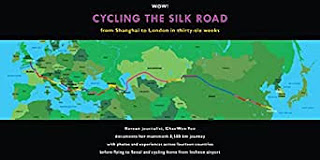
From June, 2018-January, 2019, Yoo traveled 8,567 kilometers along the Silk Road between Shanghai and London via bicycle. Her book, Cycling The Silk Road covers that journey. It's a short book but is illustrated with eye catching photogtaphs and described with engaging anecdotes and good advice for any interested traveler.


The Silk Road was a network of trade routes that connected the East and West to the 18th century when industrialization resulted in expansion in local productivity, Enlightenment values, and affordability for the masses. Silk, paper, and gunpowder were among the goods traded on the route. The Bubonic plague and other diseases were also spread creating worldwide pandemics. Yoo had a strong sense of history by traveling this route and an awareness of the modern world as she interacted the people who lived in the different countries.


Yoo's writings are brief, but she captures her experiences with warmth and humor. As she cycled through the asphalt, chalk powder, and dust in Yingshang, she was bemused to find a hotel that "looked like something from a Western movie or a desert in Arizona, U.S.A. when (she) was ten."

While in Italy, she recalls the friendly people that she met such as people performing in a Christmas play in traditional Provincial clothing. She also remembers the wine, most of it on tap. At a tavern, she only wanted half a liter, but the assistant filled her drink up to the brim.


There are various moments where Yoo was pleased to observe the nature around her. While rafting on a banana boat along the Dan River, Yoo lay on the boat and looked up at the sky, observing the clouds moving at different height.

Sometimes, her descriptions of nature uplifted what could have been a trying time. A difficult time of traveling uphill in the rain in Edessa, Greece became an eye catching moment when Yoo observed a 50 meter waterfall with strange rock formations made even more impressive by the rain.


Yoo brilliantly describes the homes and people. Her encounters with the residents are some of the highlights.

While in Yevlax, Azerbaijan, Yoo stayed in an old house with a cow barn. She described "every yard with a plastic cover and a sink to wash fruit, vegetables, and your teeth." She described the food and drink that was offered, such as tea with honey dipped berries served in intricately designed glass holders and sugar and candy inside glass containers.


While in Milan, Italy, Yoo experienced the kindness of strangers. Her bike was stolen so she purchased a secondhand one. The theft coincided with a seminar. Yoo posted her map and asked if anyone would attend. She met 15 people who wanted to hear her story.

In France, Yoo's hosts guided her to various events such as a hypnosis meeting, a January festival, and a potluck dance complete with accordion music. Yoo described France "as the most hospitable country on (her) trip."


The photographs in the book are filled with delectable food, lovely landscapes, and friendly people. They help provide images to Yoo's words. In fact, the short length makes the photos the main focus of the book so the Reader can experience the trip the way Yoo did.


 Cycling The Silk Road is a wonderful account of a trip that is memorable in words and pictures.


The Girl With A Golden Heart by Achal Kumar


Achal Kumar's short novel, The Girl With A Golden Heart is a moving and spiritual story about a woman who finds justice through fighting an enemy and self-actualization by helping the people of her village.


In the beginning, we are introduced to Shivani, an Indian woman who is one of the ten women entrepreneurs in the country. She is powerful and dedicated and has a reputation for honor and philanthropy, particularly with her woman care trust which helps poor girls and women pursue education and gain self-employment in their own villages.

One night, she returns to her home village of Madhurpura and remembers the circumstances that led her to depart and pursue this life path.


Most of the book occurs in flashbacks when Shivani was a young woman. After a flood, Bharat, Shivani's impoverished father sought help from Baccha Babu, a criminal who behaves like a mob boss. He appoints thirty associates who engage in robbery, kidnapping, smuggling, and stealing land grants from poor farmers. 

Using threats, manipulation, and intimidation, Babu ultimately ends up owning Bharat's farm. 

Shivani is raped by one of Babu's loathsome sons. The rape leaves her traumatized especially since she can't report it to the police. (Babu owns the police.) The further escalation of violence and Babu's tighter grip on Madhurpura leads Shivani to lose some family members. She desires revenge against Baccha Babu, the man who stole her family's farm and destroyed her village, reputation, and family.


The book is impactful as Shivani and Babu engage in their one on one war. Babu appears ahead with his thugs, intimidation tactics, and money. However, Shivani's determination to bring him down, her clear-sightedness in researching and analyzing his business properties for weaknesses, and kindness in gaining allies rather than threatening them prove to be assets.


In Karmingar, she falls in love with Altaf, a man who helps her in her war against Babu. Even though she puts him in dangerous situations, she is concerned for his well being enough to sacrifice her life for him. Also, her business acumen helps put his family in a better financial situation than they were before.

She finds a sanctuary in the home of a progressive politician who empathizes with her plight and treats her like his own daughter. Ultimately, he helps mentor Shivani on her part towards a better future.

Babu's plans create division between Muslims and Hindus and results in more violence and economic trouble including for him. It's almost karmic justice that Shivani's kindness brings her forward while Babu's greed brings him down.


The Girl With A Golden Heart is a moving parable about someone who thrived despite great adversity. Then she used that privilege to help others in the same situation.


Not Him or Her Accepting and Loving My Non Binary Child Here's What You Should Know by Michelle Mann


Not Him or Her Accepting and Loving My Non Binary Child Here's What You Should Know by Michelle Mann is a good book that covers an important topic, how to raise a non binary child in a world that isn't always understanding.


Mann brings forward an important topic that has been very controversial lately. She humanizes the conflicts that many non binary children and their cisgendered parents go through within their own families and society. It also shows that the most important keys in such families are understanding and acceptance.

Parents and others can be inclusive by exhibiting proper characteristics like using the right preferred pronouns and defending the child in front of others.


 The personal stories add a great touch to the book, especially in revealing the diversity of parents and their children's experiences. Various situations are covered, such as Simone having to take excess time to explain to a dental assistant that her child was nonbinary. They show how many of the simplest procedures could produce stress because of a judgemental society.


The book covers different age groups of non-binary children from early childhood, to teenagers, to adulthood. This counters the whole myth that "It's a phase. They'll outgrow it." Mann openly counters such myths and assumptions and how they contribute to a lack of acceptance within the child.


Not Him or Her shows how devaluing and demeaning those myths are and how gender identity is often influenced by parental and societal views that either encourage or demean the child.

Bottom line: If the child is old enough to recognize gender in society around them through toys, advertising, and adult perspective, then they are old enough to recognize the gender identity within themselves.


Not Him or Her reminds the Readers that the most important thing that they can do for their child is to understand, accept, and unconditionally love them.


The Numbers Game by Miles Watson


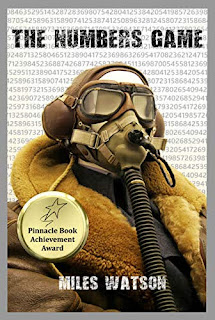
Miles Watson's novella, The Numbers Game is a tight, suspenseful, and character driven book about a WWII pilot with a unique gift that helps him survive but could overpower him.


Pilot Officer Maurice Mickelwhite is a mathematical genius. (Fun Fact: Maurice Mickelwhite is also the real name of actor Michael Caine. This appears to be a coincidence.)

His potential life of teaching calculus and algebra while living only for numbers is interrupted by the War. As he participates in the Battle of Britain, Maurice is able to use his talent for numbers to calculate the probabilities of survival, not only for him but the other members of his squadron. He knows the likelihood in which each pilot is going to die and is quite often right. Unfortunately, his own numbers are very close to coming up.


The Numbers Game is a brilliant character study about someone who goes to war but doesn't really want to.

Maurice is not exactly a flag waving jingoist ready to die for King and Country. 

In fact, he had dreams of teaching math in school and being left to "his numbers, his tobacco, and his copy of the Journal of the London Mathematical Society.

Instead, he got the war."

Maurice wouldn't have minded using his mathematical genius to work in the London office but instead he is in the RAF as a pilot. (There was even a rumor that the RAF refused "as a matter of principle" to let anyone do anything that they showed an interest or talent in.) 

This attitude is counter to the popular culture image that RAF's were brave heroic patriotic fliers with their own colorful language and daring to kick the German fighters out of England. 

The Numbers Game shows that it was often made up of men who were there by force and would rather be doing anything else. 


In many ways, Maurice is similar to characters like Yossarian from Catch 22 or Hawkeye Pierce in MASH. He gets through the madness of war by holding onto a sardonic sense of humor. He scoffs at those who insist that skill and abilities are factors in determining when someone is going to die. He thinks, "The numbers formed a path which you were doomed to walk-a path ending in a scaffold….The more you flew, the greater your risk of dying. It was just that simple."


Because of his certainty about death, Maurice has a very fatalistic behavior when his fellow pilots die. Even when others disagree with him and die anyway, he is neither grief stricken nor smug about being proven right. He is matter of fact because he saw it coming. He comes across as cold at times, but Maurice is almost like someone with precognitive abilities. They have a tremendous talent that allows them to see what is to come so they are not surprised when it happens. The events just confirm what he already knew. 


Since the narrative is short, there isn't a whole lot of time to focus on Maurice's character but that adds to the suspense. The brief length allows tension to build as the pilots approach the end of the short novel and their lives. Every moment is quick as the Reader waits for the inevitable conclusion.


The Numbers Game reveals that war is not always defined by victories or ideologies, sometimes it is just a matter of numbers.


One Night in Paris: A City of Light Novella Book 1 by Juliette Sobanet


One Night in Paris, Juliette Sobanet's novella is an enchanting and lovely time travel fantasy with a brilliant sense of time and place.


Ella, a modern woman has had enough of her controlling and abusive husband, Dave. On her way to fly to Paris to visit her dying grandmother, she announces that she is leaving him and wants a divorce.

In Paris, Ella's grandmother shows her pictures from the 1920's of herself and her best friend, Lucie. She also gives her a request. She can't rest until Ella goes back and stops Lucie from marrying a man named Max and dying at the young age of 23. Grandma invites Ella to wear one of her flapper dresses and a brooch. After she puts them on, Ella finds herself transported to 1927 Paris and standing in a jazz club face to face with Grandma's friend, Lucie.


One of the most delightful traits that this novella possesses is its setting. 1927 Paris is depicted with all of the color and excitement that comes to be expected in a work about the Roaring Twenties. Ella is drawn by the excitement of jazz, free living, drinking, and the flapper lifestyle. It's exciting and gives her a chance to liberate herself from her modern worries and her unhappy marriage. 


One Night in Paris is also a magical story about love and friendship. During her time in 1927, Ella encounters Leo, a charming American writer. Their night of passion and bliss could be an inspiration for Leo's writing. It's almost cliche for a brief romance to be set in Paris, but Sobanet makes it work. Ella and Leo's romance is touching without being overdone or maudlin. It's fairy tale like as Jazz Age Paris is almost a fantasy land capturing the romantic and fantastic elements of the people who dwell within it.


However, One Night in Paris is more than a love story. There is a strong theme of female friendship and empowerment. When she observes Lucie and her verbally abusive boyfriend, Ella thinks about her loveless marriage. She tries to rescue Lucie from her potential end and transforming from a happy go lucky independent free spirited woman to a timid frightened abused wife under her future husband's thumb. 

In their quick meeting, Ella develops a bond with Lucie. She is at first confused about her assignment but willing to help Lucie to honor her grandmother's wishes. However, as she gets to know Lucie, she wants to protect her on her own. She wants to save Lucie from the same situation which she had just left.


One Night in Paris is a beautiful romantic novella of love and friendship. It's pure magic.


Wiccan: The Truth About Wicca and Witchcraft A Witch's Bible by Julia Steyson


Julia Steyson wrote the perfect beginner's book for those who are interested in Wicca.

The first part introduces the Reader to the history of Paganism. Steyson includes lists of various mythologies and figures that Readers might be interested in communicating with like Odin, Norse God of Wisdom or Venus, Roman Goddess of Love. It is a good introduction to show that Paganism has a long history to be understood and respected.


The second and third parts go into modern times and the various tools, rituals, and some sample spells for practicing Wiccans. The lists of elements, crystals, herbs, and other tools can be confusing but it is helpful to know what can be used for specific purposes. Of course, none of these things are necessary. The tools are meant as guides. Sometimes, all you need is your brain and a quiet time and place to think.


One of the most interesting parts are the seven paths of spiritual practice including coming into presence, awakening intention, sustaining awareness, transcending self interest, deepening remembrance, expressing gratitude and wonder, and radiating blessing. These paths show that Wicca can be a vibrant bright ever changing exchange between the WIccan and Spirit. 


Wicca The Truth About Wicca and Witchcraft is a great start to a wonderful open minded, spiritual path.