Showing posts with label India. Show all posts

Saturday, December 7, 2024

Traumatization and Its Aftermath: The Systemic Approach to Understanding and Treating Traumatic Disorders by Antonieta Contreras: The Candid Odyssey: Exploring India and The Philosophy of Life by B Johny;


Traumatization and Its Aftermath: The Systemic Approach to Understanding and Treating Traumatic Disorders by Antonieta Contreras

Antonieta Contreras’ book Traumatization and Its Aftermath: The Systemic Approach to Understanding and Treating Traumatic Disorders is an in depth look at trauma, how it affects our lives, and what can be done to treat it.

While there is some confusion over what trauma is and isn't, Contrera describes trauma as “the effects of the activation of the innate survival circuits that are designed to protect the individual from the possibility of dying after a severe reaction to a threatening occurrence.” 

It's good to separate what trauma is (long term, creating barriers between self and an event to keep from experiencing it again or dying) and what trauma isn't (short term, emotional distress or disappointment without extensive change in lifestyle or behavior). The means of understanding what trauma actually is helps define, identify, and ultimately recognize and treat it.

Contreras identifies the various stages of traumatization by using a lightning strike as an example. The lightning that appears in the sky and scares the person is called traumatic. The trauma process officially begins by a traumatic event for example getting struck by lightning and becoming aware of the danger. 

Traumatization starts when the person becomes shocked and scared. Survival circuits are activated by reacting in fear, perhaps filled with anxiety and fear of loud noises. The reaction dissipates info defeat as the survival mode is depleted. When this final stage is met, the mind and body react with long term lasting injuries and complications which reignite the traumatization long afterwards. The stages help Readers recognize the patterns in their own lives and where they may lie within that cycle. 

The book also goes into detail about the effects that trauma has on the body particularly the brain and emotions. It focuses on how external traumatizing agents like abuse, neglect, and systemic adversity can create internal agents like distorted perception, shame, guilt, fear and defeat. Mechanisms like the Fight-Flight-Freeze-Fawn response are also explored. Traumatization is an ongoing continuous process which can be physically, mentally and emotionally troubling. 

The book uses medical and psychological terms to analyze and systematize trauma. Some of it can be dense and hard to follow but the basic approach is to show how a person lives with trauma and how it affects their lives and relationships with others.

Contreras like many authors uses case studies to prove her point but unlike many authors who name several specific examples, Contreras uses one study of one specific individual spreading their story across several chapters to give an in depth look on how trauma can continue for years even decades after the first traumatic event.

Contreras tells the story of Michaela who was drugged and raped by an acquaintance. This traumatic event grew as Michaela tried to seek counseling but received a lack of empathy and a lot of insulting questions towards her ethnicity. The rape and the questions led her to feel fear, shame, and an inability to articulate or share her trauma. 

Michaela then developed PTSD from the ordeal. She avoided people and situations that reminded her of the rape or her rapist. She had negative thoughts about herself, blamed herself, and lost interest in things. 

After therapy and self reflection, Michaela realized the rape wasn't her only bad experience. She realized that she was abused in other ways by previous relationships though she did not recognize it as abuse at the time. She dealt with them by dissociating herself. 

She also recalled a neglected childhood from a mother who was herself abused when she was young. Michaela also had a contentious relationship with a brother who ran away from home when she was a child. 

Michaela recognized these earlier events and patterns contributed to the post trauma from her rape. Understanding and naming the trauma gave her the awareness and courage to work through it. Michaela’s story is an example for us all.

Traumatization and Its Aftermath brings trauma to the forefront so it can be seen, analyzed, understood, treated, and maybe someday ended.


The Candid Odyssey: Exploring India and The Philosophy of Life by B. Johny

B. Johny’s The Candid Odyssey: Exploring India and The Philosophy of Life is a detailed and descriptive trip through India and we're all invited. Well sort of.

That's because Johnny writes the book in first person plural using “we”, Instead of “I.” While people often travel in groups and Johnny could very well be referring to his actual traveling companions, the pronoun may have been chosen for stylistic reasons. It's a way to draw the Reader in so they can vicariously enjoy the trip alongside Johny.

From August 20 to October 22, 2022 Johny travelled to India to recover from a bout of depression and for a journey of self-discovery. During that time, Johny visited many places, encountered many people, and reflected on many things. 

Johny describes his experiences rather well in a way that invites Readers to picture them in their heads. He describes Horniman Circle Garden in Mumbai as “filled with people enjoying their time in peace. Some read quietly, others nap on the grass, and some engage in deep discussions….As we rest near a tree, we observe small rats scurrying about in search of food.” Johny wants us to experience everything in India, the beauty and ugliness, the rare and commonplace, the familiar and unfamiliar. 

Johny finds meaning in various experiences on his trip. He describes passing through a tunnel as “we feel a sense of joy, knowing that at the end of the darkness lies light. Witnessing that light is a satisfying experience….We only realize the presence of light when we go through the darkness. Similarly, life is filled with peace and happiness, which we appreciate only after experiencing some conflict and sorrow.”

Even hardships on the trip lead to valuable life lessons. When Johny came down with a fever, he recognized the importance of being sedentary even while traveling and scheduling an extra week for just such an occasion. “Just like race cars need a pit stop, it's time for a pit stop in our journey….A day to rest, rethink, replan, and refresh. Such pit stops are applicable throughout our lives. This long journey itself is a pit stop in life.”

Since this is a journey of self-discovery, spirituality is often discussed. Johny found a deeper connection to spirit in various people, places, and things. He describes a train ride as one of the best meditation techniques. “When we gaze out of the window, countless thoughts arise, often unexpectedly. The very thoughts we had been seeking….The interesting thing is that we gradually transition between locations, making it difficult to recognize the differences easily. This mirrors life itself; we gradually transition through ages, and it's not always apparent how we’ve changed as we grow older. Recognizing who we are requires self-reflection. Ultimately, our consistent self-reflection leads to self-realization, a deep pursuit of knowing ourselves. By being mindful of our actions, words, and intentions we can effectively navigate this journey.”

Just as we can through life.


Friday, October 1, 2021

Lit List Short Reviews; Cycling The Silk Road: From Shanghai to London in Thirty-Six Weeks by Chaewon Yoo, The Girl With A Golden Heart by Achal Kumar, Not Him or Her Accepting and Loving My Non Binary Child Here's What You Should Know by Michelle Mann, The Numbers Game by Miles Watson, One Night in Paris A City of Light Novella Book 1 by Juliette Sobanet, Wiccan The Truth About Wicca and Witchcraft A Witch's Bible by Julia Steyson

 Lit List Short Reviews; Cycling The Silk Road: From Shanghai to London in Thirty-Six Weeks by Chaewon Yoo, The Girl With A Golden Heart by Achal Kumar, Not Him or Her Accepting and Loving My Non Binary Child Here's What You Should Know by Michelle Mann, The Numbers Game by Miles Watson, One Night in Paris A City of Light Novella Book 1 by Juliette Sobanet, Wiccan The Truth About Wicca and Witchcraft A Witch's Bible by Julia Steyson

By Julie Sara Porter

Bookworm Reviews

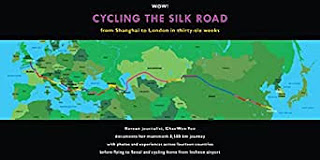
Cycling The Silk Road From Shanghai to London in Thirty-Six Weeks by Chaewon Yoo


Korean journalist, Chaewon (Eva) Yoo knows how to plan and plan big.

From June, 2018-January, 2019, Yoo traveled 8,567 kilometers along the Silk Road between Shanghai and London via bicycle. Her book, Cycling The Silk Road covers that journey. It's a short book but is illustrated with eye catching photogtaphs and described with engaging anecdotes and good advice for any interested traveler.


The Silk Road was a network of trade routes that connected the East and West to the 18th century when industrialization resulted in expansion in local productivity, Enlightenment values, and affordability for the masses. Silk, paper, and gunpowder were among the goods traded on the route. The Bubonic plague and other diseases were also spread creating worldwide pandemics. Yoo had a strong sense of history by traveling this route and an awareness of the modern world as she interacted the people who lived in the different countries.


Yoo's writings are brief, but she captures her experiences with warmth and humor. As she cycled through the asphalt, chalk powder, and dust in Yingshang, she was bemused to find a hotel that "looked like something from a Western movie or a desert in Arizona, U.S.A. when (she) was ten."

While in Italy, she recalls the friendly people that she met such as people performing in a Christmas play in traditional Provincial clothing. She also remembers the wine, most of it on tap. At a tavern, she only wanted half a liter, but the assistant filled her drink up to the brim.


There are various moments where Yoo was pleased to observe the nature around her. While rafting on a banana boat along the Dan River, Yoo lay on the boat and looked up at the sky, observing the clouds moving at different height.

Sometimes, her descriptions of nature uplifted what could have been a trying time. A difficult time of traveling uphill in the rain in Edessa, Greece became an eye catching moment when Yoo observed a 50 meter waterfall with strange rock formations made even more impressive by the rain.


Yoo brilliantly describes the homes and people. Her encounters with the residents are some of the highlights.

While in Yevlax, Azerbaijan, Yoo stayed in an old house with a cow barn. She described "every yard with a plastic cover and a sink to wash fruit, vegetables, and your teeth." She described the food and drink that was offered, such as tea with honey dipped berries served in intricately designed glass holders and sugar and candy inside glass containers.


While in Milan, Italy, Yoo experienced the kindness of strangers. Her bike was stolen so she purchased a secondhand one. The theft coincided with a seminar. Yoo posted her map and asked if anyone would attend. She met 15 people who wanted to hear her story.

In France, Yoo's hosts guided her to various events such as a hypnosis meeting, a January festival, and a potluck dance complete with accordion music. Yoo described France "as the most hospitable country on (her) trip."


The photographs in the book are filled with delectable food, lovely landscapes, and friendly people. They help provide images to Yoo's words. In fact, the short length makes the photos the main focus of the book so the Reader can experience the trip the way Yoo did.


 Cycling The Silk Road is a wonderful account of a trip that is memorable in words and pictures.


The Girl With A Golden Heart by Achal Kumar


Achal Kumar's short novel, The Girl With A Golden Heart is a moving and spiritual story about a woman who finds justice through fighting an enemy and self-actualization by helping the people of her village.


In the beginning, we are introduced to Shivani, an Indian woman who is one of the ten women entrepreneurs in the country. She is powerful and dedicated and has a reputation for honor and philanthropy, particularly with her woman care trust which helps poor girls and women pursue education and gain self-employment in their own villages.

One night, she returns to her home village of Madhurpura and remembers the circumstances that led her to depart and pursue this life path.


Most of the book occurs in flashbacks when Shivani was a young woman. After a flood, Bharat, Shivani's impoverished father sought help from Baccha Babu, a criminal who behaves like a mob boss. He appoints thirty associates who engage in robbery, kidnapping, smuggling, and stealing land grants from poor farmers. 

Using threats, manipulation, and intimidation, Babu ultimately ends up owning Bharat's farm. 

Shivani is raped by one of Babu's loathsome sons. The rape leaves her traumatized especially since she can't report it to the police. (Babu owns the police.) The further escalation of violence and Babu's tighter grip on Madhurpura leads Shivani to lose some family members. She desires revenge against Baccha Babu, the man who stole her family's farm and destroyed her village, reputation, and family.


The book is impactful as Shivani and Babu engage in their one on one war. Babu appears ahead with his thugs, intimidation tactics, and money. However, Shivani's determination to bring him down, her clear-sightedness in researching and analyzing his business properties for weaknesses, and kindness in gaining allies rather than threatening them prove to be assets.


In Karmingar, she falls in love with Altaf, a man who helps her in her war against Babu. Even though she puts him in dangerous situations, she is concerned for his well being enough to sacrifice her life for him. Also, her business acumen helps put his family in a better financial situation than they were before.

She finds a sanctuary in the home of a progressive politician who empathizes with her plight and treats her like his own daughter. Ultimately, he helps mentor Shivani on her part towards a better future.

Babu's plans create division between Muslims and Hindus and results in more violence and economic trouble including for him. It's almost karmic justice that Shivani's kindness brings her forward while Babu's greed brings him down.


The Girl With A Golden Heart is a moving parable about someone who thrived despite great adversity. Then she used that privilege to help others in the same situation.


Not Him or Her Accepting and Loving My Non Binary Child Here's What You Should Know by Michelle Mann


Not Him or Her Accepting and Loving My Non Binary Child Here's What You Should Know by Michelle Mann is a good book that covers an important topic, how to raise a non binary child in a world that isn't always understanding.


Mann brings forward an important topic that has been very controversial lately. She humanizes the conflicts that many non binary children and their cisgendered parents go through within their own families and society. It also shows that the most important keys in such families are understanding and acceptance.

Parents and others can be inclusive by exhibiting proper characteristics like using the right preferred pronouns and defending the child in front of others.


 The personal stories add a great touch to the book, especially in revealing the diversity of parents and their children's experiences. Various situations are covered, such as Simone having to take excess time to explain to a dental assistant that her child was nonbinary. They show how many of the simplest procedures could produce stress because of a judgemental society.


The book covers different age groups of non-binary children from early childhood, to teenagers, to adulthood. This counters the whole myth that "It's a phase. They'll outgrow it." Mann openly counters such myths and assumptions and how they contribute to a lack of acceptance within the child.


Not Him or Her shows how devaluing and demeaning those myths are and how gender identity is often influenced by parental and societal views that either encourage or demean the child.

Bottom line: If the child is old enough to recognize gender in society around them through toys, advertising, and adult perspective, then they are old enough to recognize the gender identity within themselves.


Not Him or Her reminds the Readers that the most important thing that they can do for their child is to understand, accept, and unconditionally love them.


The Numbers Game by Miles Watson


Miles Watson's novella, The Numbers Game is a tight, suspenseful, and character driven book about a WWII pilot with a unique gift that helps him survive but could overpower him.


Pilot Officer Maurice Mickelwhite is a mathematical genius. (Fun Fact: Maurice Mickelwhite is also the real name of actor Michael Caine. This appears to be a coincidence.)

His potential life of teaching calculus and algebra while living only for numbers is interrupted by the War. As he participates in the Battle of Britain, Maurice is able to use his talent for numbers to calculate the probabilities of survival, not only for him but the other members of his squadron. He knows the likelihood in which each pilot is going to die and is quite often right. Unfortunately, his own numbers are very close to coming up.


The Numbers Game is a brilliant character study about someone who goes to war but doesn't really want to.

Maurice is not exactly a flag waving jingoist ready to die for King and Country. 

In fact, he had dreams of teaching math in school and being left to "his numbers, his tobacco, and his copy of the Journal of the London Mathematical Society.

Instead, he got the war."

Maurice wouldn't have minded using his mathematical genius to work in the London office but instead he is in the RAF as a pilot. (There was even a rumor that the RAF refused "as a matter of principle" to let anyone do anything that they showed an interest or talent in.) 

This attitude is counter to the popular culture image that RAF's were brave heroic patriotic fliers with their own colorful language and daring to kick the German fighters out of England. 

The Numbers Game shows that it was often made up of men who were there by force and would rather be doing anything else. 


In many ways, Maurice is similar to characters like Yossarian from Catch 22 or Hawkeye Pierce in MASH. He gets through the madness of war by holding onto a sardonic sense of humor. He scoffs at those who insist that skill and abilities are factors in determining when someone is going to die. He thinks, "The numbers formed a path which you were doomed to walk-a path ending in a scaffold….The more you flew, the greater your risk of dying. It was just that simple."


Because of his certainty about death, Maurice has a very fatalistic behavior when his fellow pilots die. Even when others disagree with him and die anyway, he is neither grief stricken nor smug about being proven right. He is matter of fact because he saw it coming. He comes across as cold at times, but Maurice is almost like someone with precognitive abilities. They have a tremendous talent that allows them to see what is to come so they are not surprised when it happens. The events just confirm what he already knew. 


Since the narrative is short, there isn't a whole lot of time to focus on Maurice's character but that adds to the suspense. The brief length allows tension to build as the pilots approach the end of the short novel and their lives. Every moment is quick as the Reader waits for the inevitable conclusion.


The Numbers Game reveals that war is not always defined by victories or ideologies, sometimes it is just a matter of numbers.


One Night in Paris: A City of Light Novella Book 1 by Juliette Sobanet


One Night in Paris, Juliette Sobanet's novella is an enchanting and lovely time travel fantasy with a brilliant sense of time and place.


Ella, a modern woman has had enough of her controlling and abusive husband, Dave. On her way to fly to Paris to visit her dying grandmother, she announces that she is leaving him and wants a divorce.

In Paris, Ella's grandmother shows her pictures from the 1920's of herself and her best friend, Lucie. She also gives her a request. She can't rest until Ella goes back and stops Lucie from marrying a man named Max and dying at the young age of 23. Grandma invites Ella to wear one of her flapper dresses and a brooch. After she puts them on, Ella finds herself transported to 1927 Paris and standing in a jazz club face to face with Grandma's friend, Lucie.


One of the most delightful traits that this novella possesses is its setting. 1927 Paris is depicted with all of the color and excitement that comes to be expected in a work about the Roaring Twenties. Ella is drawn by the excitement of jazz, free living, drinking, and the flapper lifestyle. It's exciting and gives her a chance to liberate herself from her modern worries and her unhappy marriage. 


One Night in Paris is also a magical story about love and friendship. During her time in 1927, Ella encounters Leo, a charming American writer. Their night of passion and bliss could be an inspiration for Leo's writing. It's almost cliche for a brief romance to be set in Paris, but Sobanet makes it work. Ella and Leo's romance is touching without being overdone or maudlin. It's fairy tale like as Jazz Age Paris is almost a fantasy land capturing the romantic and fantastic elements of the people who dwell within it.


However, One Night in Paris is more than a love story. There is a strong theme of female friendship and empowerment. When she observes Lucie and her verbally abusive boyfriend, Ella thinks about her loveless marriage. She tries to rescue Lucie from her potential end and transforming from a happy go lucky independent free spirited woman to a timid frightened abused wife under her future husband's thumb. 

In their quick meeting, Ella develops a bond with Lucie. She is at first confused about her assignment but willing to help Lucie to honor her grandmother's wishes. However, as she gets to know Lucie, she wants to protect her on her own. She wants to save Lucie from the same situation which she had just left.


One Night in Paris is a beautiful romantic novella of love and friendship. It's pure magic.


Wiccan: The Truth About Wicca and Witchcraft A Witch's Bible by Julia Steyson


Julia Steyson wrote the perfect beginner's book for those who are interested in Wicca.

The first part introduces the Reader to the history of Paganism. Steyson includes lists of various mythologies and figures that Readers might be interested in communicating with like Odin, Norse God of Wisdom or Venus, Roman Goddess of Love. It is a good introduction to show that Paganism has a long history to be understood and respected.


The second and third parts go into modern times and the various tools, rituals, and some sample spells for practicing Wiccans. The lists of elements, crystals, herbs, and other tools can be confusing but it is helpful to know what can be used for specific purposes. Of course, none of these things are necessary. The tools are meant as guides. Sometimes, all you need is your brain and a quiet time and place to think.


One of the most interesting parts are the seven paths of spiritual practice including coming into presence, awakening intention, sustaining awareness, transcending self interest, deepening remembrance, expressing gratitude and wonder, and radiating blessing. These paths show that Wicca can be a vibrant bright ever changing exchange between the WIccan and Spirit. 


Wicca The Truth About Wicca and Witchcraft is a great start to a wonderful open minded, spiritual path.


Saturday, August 21, 2021

New Book Alert: Kalkota Noir by Tom Vater; Mystery Noir Peers Into Kalkota's Past, Present, and Future


New Book Alert: Kalkota Noir by Tom Vater; Mystery Noir Peers Into Kalkota's Past, Present, and Future

By Julie Sara Porter

Bookworm Reviews


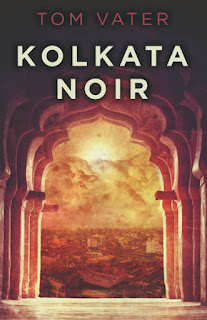
Tom Vater's Kolkata Noir is a tribute to the city of Kolkata told in the style of a murder mystery noir novel. It's a three part structure in which two detectives, Madhurima Mitra and Becker, solve mysteries in the West Bengal capital over the course of forty years. Each mystery shows how Kolkata changes over the course of four decades. 


The first part "1999-Calcutta" is a murder mystery that could take place in an episode of an English cozy mystery. Richard Dunlop, an English expatriate, turns up missing and a Calcutta businessman, Abir Roychowdhury is reported murdered. Mitra and Becker interview potential suspects including Abir's widow, Paulami and brother, Kishore, and chase various leads that take them right into the homes of Kalkota's elite to get to the bottom of this case. 

The resolution of the mystery is pretty obvious but the characterization and milieu stand out in this section. Mitra in particular is an admirable lead protagonist. She is a bright ambitious young woman wanting to get ahead in a male dominated field in a country still set in a patriarchal society. She also has a family legacy to live up to: She is the niece of Feluda, the Bengali detective star of the novels by director/author, Satiyajat Ray. His reputation is legendary and Mitra wants to make her mark for her own benefit as well as fill his very large shoes. (Feluda's character is so prominent in Indian literature that it would be the equivalent of a young British detective trying to carry on the legacy of their Uncle Sherlock Holmes or Aunt Jane Marple.)

This section also reveals an India that even though it has been an independent nation since 1947, still holds onto the English class system and caste system from the Hindu religion. This part is an intended pastiche to the English drawing room mystery as a reminder of those days. Mitra and Becker visit the homes and interrogate Kalkota's wealthiest citizens who live in a separate isolated world from the people below them. There are still barely concealed hostilities between the English and Indian populations but mostly it's depicted with racist remarks and an entitled nature that claims dominance over others. The poorer areas are hidden away in the margins as though they live in a place far away and remote from the palatial mansions and marital troubles of the Roychowdhuries and the people around them.


The second part, "Kolkata-2019" takes place in those margins that were left behind by the elite of Part One. Becker is called back to India because an Englishman wants him to go to Kalkota to retrieve his wayward sons, Aubrey and Magnus Bilham-Rolls and bring them home. Aubrey and Magnus are not exactly receptive to the idea. The brothers have a sweet scam going on in which Aubrey assumes the role of Farangi Baba, a guru who claims to have a direct pipeline to Nirvana. Magnus handles the promotion and money while Aubrey wins over the crowd and reveals his version of the secrets of the universe, particularly where Mother Theresa hid her money. This particular story catches the attention of an impoverished public, several nationalistic groups, and violent people who would like to do away with the brothers and take the money for themselves.

Instead of the wealth experienced by the characters in Part One, Part Two shows the crippling poverty experienced in the poorer sections of Kalkota. The community is riddled with unemployment, homelessness, addiction, and various people who are without any sort of hope. It's no wonder that Aubrey and Magnus can so easily sway a crowd that is desperate for a miracle and need something to relieve their hard troubled existence. We also get a sense of people driven to violence and hatred directed at the various immigrants. They have been pushed around by the people on top and now they are pushing back violently if need be.

We also see how the years have changed Mitra and Becker. The two were briefly partnered but shared a mutual affection for each other. Now twenty years later, both have found professional success, Becker as a detective settled in England but acting as a liasion to India and Mitra has successfully climbed the ranks and became known as well as her uncle. Their personal lives are also marked by their previous case. Becker never married (except to his job) because he never forgot his beautiful and strong willed partner. Mitra however is married with an adult daughter but still carries a torch for her once partner. Their resumed romance adds on to the crime caper aspects experienced by the Billham-Rills Brothers in Part Two.


"Part Three: Killkata-2039" is the most influenced by the noir genre. It has a plot similar to a 1940's film but has a near futuristic science fiction setting  surrounding it. Becker receives a call from Davi, Mitra's daughter that her mother needs to leave Kolkata which is now largely underwater thanks to climate change caused flooding. Not only that but her father, Mitra's husband is missing. As a Muslim, he has been the target of several hate crimes and may have been kidnapped by an Anti-Muslim religious sect.

The Killkata setting shown in Part Three is one that has fallen into ruin. The city is ruined by environmental catastrophe. Besides the flooding, decades of chemical poisoning and radiation from war have taken their toll on the people. Those that haven't died from the poison have ended up with physical and psychological abnormalities such as a family of orphaned siblings that includes one sister with a large amount of testosterone that gives her a full beard and a hermaphrodite sibling. Racism has taken over as Anti-Muslim laws have prevented Muslims from finding employment and many ethnic groups are murdered in the streets. The wealthy have already abandoned the city leaving behind those who are too poor, too sick, or too protective of those that remain to leave.

While the setting is dystopian future, Mitra and Becker's romance and their plot is old Hollywood at its finest. There are dark shadowy figures who could be informants or assassins. There is a world weariness and cynicism as the detectives journey through the mean streets looking for any leads or suspects. This cynicism is played into their romance as the duo are no longer the young idealists that they once were. They have been hardened by the dark times and their profession. Justice is a faint memory and they no longer see the world as us vs. them black vs. white morality. Instead it's a gray world of mere survival. 

However, the duo still retain their selflessness and dedication to others as they prove in an ending clearly reminiscent of Casablanca. One of the pair leaves Kalkota forever while the other remains and continues to fight for the new surrogate family that they have formed.


With its engaging couple and detailed setting, Kalkota Noir is a brilliant mystery that exposes India's past, present, and future.


Tuesday, January 26, 2021

New Book Alert: The Unexpected Leader by Joel Sadhanad; Inside Look at Corporation, Leadership, Rivalries, and Artificial Intelligence


 New Book Alert: The Unexpected Leader by Joel Sadhanad; Inside Look at Corporation, Leadership, Rivalries, and Artificial Intelligence

By Julie Sara Porter

Bookworm Reviews


Spoilers: It's an understatement to say the the corporate business world as we know it is dealing with great change. With a global pandemic putting jobs and lives at risk, automation and remote working making offices superfluous even unnecessary, even well known brands struggling to find consumers, and changes in regulations, standards, sustainability, goals, and structures that affect everyone from the highest CEO to the lowest level worker, businesses are at a level of uncertainty on how to look towards their future.


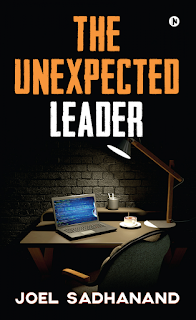
Joel Sadhanad's novel, The Unexpected Leader, looks at the changing look at businesses in this transition period. Sadhanad expertly gives us an insider look at the world inside these corporations and the strategies, rivalries, leadership, and wide reaching decisions that affect businesses and the people that work within them on the eve of a certain pandemic.


The book is set in 2019 as WHO is murmuring warnings about the potential for a global pandemic and the need for emergency preparedness. The plot involves various characters throughout India who intersect through their involvement in the business world, showing that despite jokes and assumptions, corporations are not soulless entities. They are made of people, people who distribute, sell, and provide goods and services and others who purchase and rely on them.


There is Bhagwan Das, a senior editor and journalist is keeping one eye on this potential pandemic crisis and one eye on the business world around him. Aryan Rajput, a sales associate attends a demonstration of frighteningly human androids and learns a new trendy buzz word "leadfluencer" (achieving results through relationships and removing the problems that prevent team members from performing their jobs effectively.)

 Ajith Ramprasand,CEO of Good Morning, a fictitious coffee empire,  contemplates placing automation in his coffee shops instead of "burning money" by hiring inefficient middle managers. Anil Ramprasand, Ajith's younger brother doesn't mind engineering Big Brother's removal from Good Morning and taking his place.

Neha Singh, an ambitious young assistant regional manager, dreams of getting promoted, owning her own franchise of coffee shops, and getting married in that order. 


Sadhanad does an excellent job of humanizing these characters and offering their alternative points of view. No one is necessarily seen as right or wrong in their views and the majority of the characters make valid points with their words and are completely understandable within the context of their background and personalities. The Ramprasand Brothers for example differ on the directions that they want to take Good Morning. Anil is somewhat avaricious and duplicitous in his methods (like poaching Ajith's entire management team) but he doesn't want to ignore the human elements towards business. Ajith is fascinated with Artificial Intelligence, partly because of the cost in hiring and firing human employees, but he is a benevolent employer. He trains Neha to head a new franchise and personally walks her through a speech.


Aryan and Neha are the two most interesting characters in the book. Aryan tries to implement many of the leadership goals into his daily life and notices when others,like the Prime Minister, seem to lack them. He is fascinated by how AI has evolved to the point that a neural network can be created of a person's personality and mindsets. He is also understandably nervous about the implications of humans being replaced. He is also a family man who is protective of his daughter who has Wilson's Disease.


By far the standout character in this ensemble is Neha. A feminist whose fiance has very backwards views towards women, Neha is determined to do her best at her job. When she is given her own franchise, later dubbed Warm Hugs, she is naturally excited about the prospect but nervous about the new responsibilities. She and Ajith have a sweet mentor-protegee relationship as he helps her prepare for her first meeting. She is the voice of any job seeker who is waiting for that big break and becomes a bundle of nerves when they receive it. However when given the chance, she brims with confidence and bright ideas that cause her to excel.


Of course The Unexpected Leader opens up about the terrifying clouds on the horizon including the possibility of artificial intelligence replacing everyone even those on the top administrative positions. If they get replaced, then there is no hope for the people on the bottom level. Then the whispers of a virus from China get louder, especially when some of the characters take a trip there and Aryan's daughter develops a troubling fever.


The Unexpected Leader shows the Reader the crossroads which businesses found themselves and are still inside. Sadhanad shows a world that is in the process of great change and will probably never be the same again.

Monday, January 27, 2020

Weekly Reader: Losing Gemma by Katy Gardner; The Ever Changing Nature Between The Reader and The Book


Weekly Reader: Losing Gemma by Katy Gardner; The Ever Changing Nature Between The Reader and The Book

By Julie Sara Porter

Bookworm Reviews


PopSugar Reading Challenge: A book featuring a protagonist in their 20's.


Spoilers (I can't stress this enough, BIG HUGE SPOILERS): I have a unique relationship with the novel, Losing Gemma by Katy Gardner. It was among the first books that I reviewed for the University of Missouri-St. Louis student newspaper, The Current and therefore one of the first books in which I reviewed for publication.

I still have the original review copy.

Because I read it so long ago at the age of 23-24, I was the same age as the deutragonists and felt like a contemporary. I was captivated by the adventures of Esther Waring and Gemma Harding, two college-age Englishwomen who long to flee from their lives in rural Stevenage and go backpacking in India. Like them, I was fascinated with the idea of international travel and often read enviously about students who worked abroad and participated in programs like Semester at Sea. I covered the concerts, lectures, and exhibits offered by UMSL's International Studies and longed to see these other countries for myself. Sure, I visited Italy and Greece in 1999 with Jefferson College's Educational Travel Group. Sure, I was an Air Force brat who lived in Germany and traveled cross country through the United States three times with my family, but I was thirsty for more.

That travel bug consumed me so much that when I first read Losing Gemma, I focused on the travel. I was captivated by how Gardner described every street, every forest, and every train station in India picturing the captivating setting in my head. I snorted with laughter as Esther and Gemma broke several basic traveler rules such as leaving their documents inside a locker and telling a total stranger about their travel plans instead of family members or the Embassy like all of the guidebooks and travel magazines tell you. I attributed that to the haste of travel and foolish naivety that Esther admits.

I understood the characters particularly the shy bookish Gemma being carried along by Esther, her more adventurous friend. I was Gemma, nervous and uncertain, but I wanted to be more like the bold active Esther. I wanted to be the girl who walked through Europe for a year, worked at various jobs to pay my way, and visited the places tourists never saw.

I was enchanted by the magical realism in which the duo and their eccentric new friend, Coral may have encounter a spiritual vision during their visit to Agun Mazir, a Muslim shrine. Then five years after her original trip to India, a more weathered sedate Esther, no longer the once brash intrepid traveler, returns and receives what could only be described as an experience akin to Enlightenment in learning the real purpose of her original journey. Looking for a spiritual identity and "comparison shopping" between faiths, this aspect of the book fascinated me as well.


Well that was almost 20 years ago. It is now 2020 and I am 42. I understand now that travel is not really what the book is about. Losing Gemma is still a good book, sort of. The aspects are still there: the travel, the spiritual journey, and interesting characters. Gemma and Esther are still there making the same mistakes and learning the same lessons. They didn't change.

What changed was me. I'm not the same college girl that I was when I reviewed the novel for the first time at The Current. I am no longer a contemporary. I am almost 20 years older than they are and now think of them like younger sisters or, dare I say it, daughters. I shake my head and roll my eyes in cynicism and irritation at the troubles that they endure, mostly that they bring on themselves because of their own thoughtless actions, reckless behavior, and egocentrisms. Their tour becomes less like a fulfilled goal and more like a journey of arrogance and assumption.


Admittedly, Esther realizes this herself. After all the opening paragraph explains, "This is the story of me and Gemma and how I lost her." Many times Esther calls herself out on her arrogance such as when Gemma wants to give money to a homeless girl and Esther warns her about that causing a decline in the country's economy citing an anthropology paper that she wrote in which she received an A. Five years later, when Esther returns to India, she sees homeless children and thinks of her youthful snobbery with shame.

She recalls the many locals who warn them not to go to Agun Mazir, which Esther slights as they go. Esther even pays no attention to her own common sense and instincts when after a fight, Esther leaves Gemma alone with Coral and then returns to find both girls gone and a body near the shrine.

Even the suggestion to go to Agun Mazir is one of recklessness. Instead of going to the usual touristy spots like the Taj Mahal or the beaches of Goa, Esther throws the travel book into the air and they will visit wherever the pages land on. Esther even admits, "I could have stopped it. I could have flipped a few pages and changed everything but in total ignorance. I let the book fly."


That is Esther's behavior throughout the book. She is youthful arrogance incarnate, the attitude one has in their early 20's fully grown but still immature. We read a few books, went to college, latched onto a cause and now we know everything about it. Come on, we've all been there. We knew everything and by the Gods, we expected the world to sit up and pay attention. Then, we got annoyed when it didn't.

There is nothing wrong with that passion and arrogance. It's there for a reason. It helps you understand the world and enables you to become an active participant in it.
There is also nothing wrong with backpacking travel. It helps open your eyes to another part of the world that you never would have seen.
Sometimes, those experiences can be channeled into activism or a career that inspires, leads, and learns about the ways to change the world. But that change must also come from within as well, understanding your role in the world and becoming more understanding of those around you.

That change never comes within Esther or rather it does, but too late. Instead of being a fully formed character, she is a symbol of that youthful energy: part of the world but not really understanding, accepting, or becoming involved in it. Instead she believes that visiting some out of the way local place, far from the tourist crowd for a few days, makes her a true citizen of the world. When all it does is just makes her another tourist.


Coral also becomes a symbol as well. She is a person who unlike Esther is more experienced about visiting India but she only accepts her superficial view of it. When we first meet her, she is running across the streets of Delhi, high, and we later learn that she stole Gemma's money belt. After befriending Esther and Gemma, Coral invites them to smoke marijuana and blathers on about "transbutation", "and letting your pranic energy" flow as someone who studies them without understanding what they mean. As they enter Agun Mazir, Coral wears fancy costumes and goes on about the spiritual energy within fire. She isn't interested in spirituality so much as she is interested in something new and different, something that shocks people. She is less like a budding guru and more like an excited kid playing dress up or a daredevil looking for the ultimate thrill.

Esther is right when she describes Coral as "getting off on Exotica" as is Gemma who at first is fascinated with Coral but then become irritated with "her elaborate costumes, frantic postures, tangled up bizarre thoughts, and foolish f#$@&d up fantasies about India." Coral becomes a stereotype and that's who she is supposed to be. If Esther is a symbol of the young tourist who studies a place or an ideal without really engaging with it, Coral is a symbol of the white tourist who is swept up into their own vision of what a place or experience is supposed to be like, perhaps seen through the lens of Hollywood films or books written by tourists. She really isn't interested in India because she is looking for Enlightenment or a sense of belonging. She is interested in India because it's cool and daring. She participates in rituals for the wrong reasons and she ends up paying the price for her assumption that she knows what she is doing.

Unlike the other two, Gemma is the most well rounded character. She is also a symbol of the soul who is sincerely looking for acceptance and belonging. However, there is a darkness in her journey as well as her final destination that cheapens that acceptance and makes one wonder how sincere she really is.

Esther often refers to Gemma in derogatory terms. She criticizes her friend's full figure, naivety, bookishness, and neediness. Esther empathizes with Gemma's sad childhood in which her father ran off with another woman and her depressed mother ignored her. Esther pities the young woman who was once the scholarly hope of their school but got stoned and failed her A Levels. Gemma was then rejected by universities so instead she stayed home and read all day while Esther got a Bachelor's in Anthropology from University of Sussex. Esther feels sorry for Gemma as she dates men out of her league including her latest, Steve, who is so far out of Gemma's league that Esther steals him. While Esther has grown to be annoyed by Gemma, in respect to their old friendship she remains her friend.

Once we enter Gemma's thoughts, we see that she's not as needy as she appears. She inwardly bad-mouths Esther and is full aware of Esther's romance with Steve. She laughs about how after months of hinting, she convinced Steve to get her a promise ring and manipulated Esther into inviting her to come to India. She is a sharper and stronger person than Esther gives her credit for and she is at first content to remain that way, carried along and inwardly snide but outwardly complacent.

When Gemma and Esther arrive in India, Gemma sees people like Zack, a guru whom she describes as "(her) angel." People who live without fear, she feels the sense of belonging that she always needed. Gemma's narration changes the focus from being a novel about a foolish and arrogant woman (Esther) who loses her best friend because of her foolishness and arrogance and instead becomes a novel about a lost and hopeless woman (Gemma) achieving maturity at the end of a spiritual journey. When Esther encounters Gemma five years later as the co-leader of a Buddhist ashram, stronger, braver, and better than she was, it should be a moment of triumph that she has achieved Enlightenment and is in a higher level spiritually. But is it a truly happy ending and is she really a better person?


First off there is Gemma's account of how she, Esther, and Coral parted ways. Her escape involves much deception and violence. She never feels remorse for any of it, considering it part of a higher plan. She also bears some responsibility for cutting ties off from friends and family without a word, considering those attachments as superficial. Third, she also hasn't changed much in her subtle manipulation. When she mentions that Zack runs the ashram, she can't resist adding that she lets him think he runs it.

Gemma is still an interesting character, but not a truly changed one. She is interested in what India did for her, and how it got her away from her family and moved her to becoming a leader in her own right. However, she hasn't truly let go of her personal attachments nor of her ego believing that the journey is all about her. She could come through her initial ego and become a better more enlightened leader. However, the darker possibility is that she sees the ashram followers as an extension of herself and that she has the makings of a cult with herself as the Goddess figure.


Losing Gemma is all about being in ones 20's and only half understanding the world and taking from it only what fits for you. It is about experimenting and finding one's path in life. It is about that arrogance of believing you know everything and assuming you are always right, and the shame when you learn that you are not. Above all it is about being in ones 30's and 40's and understanding that youth within oneself, laughing or crying about it, and accepting it as an inevitable part of growing into the person you were.


42 year old me accepts 23 year olds Gemma, Esther, and Julie. That being said, 42 year old me still wants to travel someday.