Showing posts with label Female friendship. Show all posts

Wednesday, March 26, 2025

Lunch Ladies by Jodi Thompson Carr; A Pleasant Dining Experience With Lovely Characters on The Side


 Lunch Ladies by Jodi Thompson Carr; A Pleasant Dining Experience With Lovely Characters on The Side

By Julie Sara Porter 

Bookworm Reviews 

Spoilers: Jodi Thompson Carr’s Lunch Ladies is a tasty delightful treat that pays tribute to the unsung heroes of every school dining experience, the cafeteria workers. Through their cooking, serving, and cleaning up, they make sure that every kid has at least one hot meal a day. Now with Free Lunch programs being held under scrutiny, their role within academic settings is even more important and should be all the more recognized. This book is a lovely pleasant experience of a few weeks spent exploring the inner lives of various characters, particularly three protagonists who work at the Hanley School District’s lunch department in Hanley, Minnesota.

It's almost time for the 4th of July festivities during the Bicentennial of 1976 and the women of the lunch department are preparing for this event while serving daily meals and dealing with their own problems.

Crystal has an unusual hobby. She scours obituaries mentally matching the recently deceased up with the living, therefore creating couples in her imagination. Her active fantasy life and imagination is a distraction from her conflicts with her aging grandmother and troubled niece.

Coralene is happily married to her husband, Jasper. Her simple life is about to become complicated when her wayward nephew, Tanner moves in.

Sheila lives a life of routine, eating at the same places, watching the same shows, and indulging in her independence and predictability. That predictability goes through a severe change when she reunites with a former acquaintance only to find herself falling in love with him.

Lunch Ladies is one of those types of novels that isn't really about anything. Well no, it's about various things like love, separation, family, and death but the focus is not so much about what happens than who is affected by these circumstances. It's a few months in the lives of these characters as they deal with the various shake ups in their lives. There's enough quirky charm and harsh drama to make the Reader like, even love, these characters as they go through these shake ups.

It's the kind of book that has details that are almost too precious to be ignored like character names for example. Coralene and most of the female members of her family have names that are variations of Cora-Cora, Coralene, Coravelle, DeCora, etc.-I would comment some more but the names “Edsel” and “Jean” are frequent on my mother's side of the family, the Riopelles. 

Crystal’s late mother's name was Pearl and she had a twin sister named Ruby. Crystal's grandmother and niece lucked out by being named Leonora and Darcy respectively. (Too bad, Emerald and Sapphire or Diamond and Amethyst would have been pretty.)

There are three sisters on the Bicentennial parade committee nicknamed, Hi, Lo, and Glad. Sheila catches the attraction of a named Tom Downlane (He joked that he's “Tom who lives Down the Lane.”) One of Crystal's obituary projects is named Roger Squirrel. The names reveal the idiosyncrasies of the characters.

The characters have little traits and quirks that make them stand out and Readers infer and learn who these people are just by their thoughts and mannerisms. Crystal's obituary reading/matchmaking is certainly very strange but leads to much speculation. Perhaps she is a firm believer in life after death and wants some sign that it's possible. Maybe she is obsessed with death and wants to meet it head on. The strongest possibility is that she is in search of a story. 

Crystal is unable to take any type of charge in her life. She works at a hard job with little recognition or pay. Her mother and aunt died. Her grandmother is losing her faculties. She is at odds with her niece, Darcy who calls her out on her lack of attention to the real world around her. Crystal’s only means of escape are inside the little matchmaking fantasies inside her head. They are the only ways that she can connect and truly feel like she contributed something to someone. Inside her head is where she finds freedom and involvement.

While Crystal’s headspace is where she finds comfort, Coralene looks more outward. She wears loud printed pants suits to be seen as more modern, willing to change but still do her job. She is a very central force within her family and community. She is a warm nucleus that draws others in, particularly Tanner.

Tanner has had a difficult life with his neglectful parents. He can be polite and soft spoken but also carries a lot of anger and resentment. This attitude plus his dubious reputation adds some strife into Coralene 's home, life, and marriage. He has never been close to someone who has natural warmth like Coralene so he doesn't know what to do with it, nor does she know how to react to him. However, Coralene and Tanner are both decent enough people that the love is present even when they are at odds.

Sheila is the oldest of the trio and probably the most regretful. She is a former English teacher who had a previous romance but now has a rigid private life. She goes to the same Denny's every day to the point that she befriends Lexi, the young server. She corrects the girl’s grammar, answers her questions about life and love, and gives her anecdotes from her teaching career. That she has a close intergenerational friendship with someone who would normally be a casual acquaintance shows Sheila’s awareness that her independent life comes with strings like loneliness and emotional instincts that are aching to be filled.

Her late in life romance should be a breath of fresh air, a late flaming roar of passion. Instead it unnerves and confuses her, asking more questions than answers. It forces her to confront her feelings of love and mortality. For a woman whose life became rigid routine and living vicariously through acquaintanceship with others, Sheila can't handle the deep emotional chasms, the countering attachments, and rapid disruptions that this relationship brings to her.

The Hanley setting leads a lot to the book’s characterization. It's a small town where everything, even the seemingly most minor issues become big deals. Everyone is involved with the Bicentennial from designing floats, preparing catering services, planning themes. The changes in the lunch department becomes a source of conflict as Sheila wants to survey students and faculty over the food choices and portions. This book shows that line between networking and annoyance where it's nice to have a support system when one needs help but it can also be suffocating because everyone is in everybody's face and in everybody's way. 

Also while Hanley looks idyllic, that might be on the surface. Some characters like the slow pace and friendly neighbors but others are just used to it. Characters like Crystal, Coralene, and Sheila are so used to their routines, hobbies, and mindsets that they don't have any desire to aspire for something different. Why dream of getting away? There are bills to pay, shows to watch, kids to raise, committees to join, lunches to cook, and obituaries to read. Hanley is a comfort zone that they benignly accept. It's not a bad place, just ordinary, regular, typical, nice, and pleasant.

There is an edge to the book that keeps it from being too copying or schmaltzy. That edge is hinted at in some of the character's subplots though not deeply explored until late in the book. Something terrible happens that jolts the characters out of their complacency and personal conflicts. It seems to come unexpectedly though, it was subtly hinted throughout the book.

 This incident forces the characters to come out of those benign comfort zones that they built around themselves, to make great changes, and to reshape their lives. Like many hard times, the characters’ strength and resilience comes through because of the events around them.

Lunch Ladies is filled with memorable characters and a setting that can be sweet and harsh, funny and tear jerking, vulnerable and strong, charming and realistic, beautiful and tragic. It is a delectable feast of great emotion.


Monday, July 26, 2021

Weekly Reader: A Spell in The Country by Heide Goody and Iain Grant; Wonderful Witty Web of Witches Weighs The Terms "Good" and "Wicked"


Weekly Reader: A Spell in The Country by Heide Goody and Iain Grant; Wonderful Witty Web of Witches Weighs The Terms "Good" and "Wicked"

By Julie Sara Porter

Bookworm Reviews


Spoilers: For obvious reasons, I have always been drawn to witches both real and fictional. Once I got over my childhood fear of Halloween, images and stories of witches fascinated me such as the arrival of Glinda The Good Witch of the North and Elphaba The Wicked Witch of the West in the Wizard of OZ, the animated sequence when The Wicked Queen turns into the elderly peddler in Snow White and the Seven Dwarfs, and the various fairy tale collections filled with memorably magical female characters. I collect Halloween witch figures and memorabilia and keep them in my room all year round. When I read fantasies, my favorite characters are always the magic users: fairies, sorcerers, sorceresses, witches, wizards, mages, clerics, Jedi etc. Many times if a book is about a witch or a magic user, I will give it a read. (Oddly enough, even though I love novels about witches, I am not a fan of  Harry Potter. I will explain why in a future review.) 

The Witch has been an archetype that has been a huge part of my life and since 2002 (wow almost 20 years!) I have walked that path as a Solitary Wiccan. 

Right now I am paying tribute to this archetype by reviewing six books about witches. Three reviews have been completed: The Mind Witch by Nicole Demery, Mother: A Mother Gothel Tale Witches of Grimm by C.M. Adler, and Tales From The Hinterland by Melissa Albert. There are three more on my list that pay tribute to these wonderful magical characters.


The latest of my witchy reviews is A Spell in The Country by Heide Goody and Iain Grant. It's a strange combination of fantasy about a coven of witches learning about their history and power and workplace/friend sitcom about different types of women living and working together while tolerating each other's personalities and oddities. A Spell in the Country also plays on the concepts of "good" and "wicked" and finds that the terms are mere constructs and are fuzzier than many think that they are.


The main three witches that we are introduced sit on different sides of the good vs. evil fence. Dee Finch considers herself not only a morally good witch but good at what she does. She works at the Shelter for Unloved Animals and is always ready to help others both human and animal. She uses her magic to transform potions and repair things, adding a magical touch to the ordinary.

Caroline Black hovers on neutral but in her words "(she) is an awesome witch!" A server, she has the gift of glamour both in attractiveness and manipulation. She is able to control others' thoughts to get them to do anything she wants. (However, as she notes, being a hedge witch cannot necessarily make you a hedge trader and being an awesome witch does not pay the bills, hence working at a cafe.) 

Jenny Knott, who is between jobs, is a wicked witch but as she notes, not by choice. She resists all wicked traits, such as suppressing her urge to use spells for hexes and curses. She however has Jizzimus, an annoying sex crazed imp who serves as her familiar. 

The three women are invited to go to the country for a series of courses in which they will become acquainted with other women of their kind and learn how to use their abilities on a larger scale.

In the country, the trio encounter other witches including: Effie, the former Flower Child turned course leader whose wardrobe choices reveals that she is still stuck in the '60's, Norma, the crotchety older member of the group, Shazam, a dizzy younger member who gets all of her information from the Internet and social media, Sabrina, the latest in a magic using family, Kay, a runaway teen rescued by Jenny and Dee, and Natasha, the course founder who spends more time running her spa and beauty product empire than being a witch.


The motley crew of witches are a fascinating bunch as they navigate their way through their lessons and learn to get along with each other. The structure of the book is similar to Neil Gaiman's The Graveyard Book in which there are various subplots spread throughout the book but each chapter reads like a short story with separate assignments that lead to a beginning, middle, and end. 

The adventures are exciting and humorous as the gang use their powers in various tasks and assignments. These assignments make the characters stand out in wonderfully witty and wickedly funny ways.


Their first assignment, to locate a hidden magical amulet, gives Jenny the advantage by finding it. But she also earns Effie's dislike for finding it by herself since part of the assignment was to work with her teammates, Dee and Caroline, to locate it.

Another assignment involves the witches creating a product to sell by using magic, so witchcraft can benefit the women financially. (After all, as Effie points out, witches are often called on to help sell products. Silicon Valley has its own tech savvy coven and what about that "Secret" blend of eleven herbs and spices?) Many of their products go humorously awry. Shazam's hair tonic has very hairy animalistic results and gets in the way of a love triangle between Caroline, Jenny, and a handsome handyman, George.


Even a day off produces some interesting trouble. In her desire to discover wicked witches, Dee practices with Norma, a seasoned veteran in the battle against such witches. They create and bring to life a dummy with the "heart stopping and chilling" name of Lesley-Ann Faulkner. ("It's a name," Dee diplomatically says after Norma eschews traditional names like Elphaba or Bellatrix and favors the Faulkner moniker. "It's definitely a name.").

 Lesley-Ann gets loose and interferes with Jenny and Jizzimus trying to exorcise a ghostly presence in the water and Caroline trying to show Kay how to win friends and manipulate people.


Despite the spell casting shenanigans, the plot veers towards the dark and disturbing as we get to the heart of a conspiracy involving some of the characters. It comes to light that Kay, who up until then was just an innocent bystander playing along with her new older friends' witchly ways, is more involved with the magical arts than many of them suspected. 

Various characters' motives and true characters are revealed and called into question. We find that characters who were thought to be good are the worst kind of wicked and those believed to be wicked are the most morally upstanding. Each character turns out to be more than originally perceived and much deeper and richer through the writing.


A Spell in the Country is a wonderful witch of a book. It is definitely worth sitting down for a spell and becoming enchanted by the great writing and bewitching characters.


Monday, January 27, 2020

Weekly Reader: Losing Gemma by Katy Gardner; The Ever Changing Nature Between The Reader and The Book


Weekly Reader: Losing Gemma by Katy Gardner; The Ever Changing Nature Between The Reader and The Book

By Julie Sara Porter

Bookworm Reviews


PopSugar Reading Challenge: A book featuring a protagonist in their 20's.


Spoilers (I can't stress this enough, BIG HUGE SPOILERS): I have a unique relationship with the novel, Losing Gemma by Katy Gardner. It was among the first books that I reviewed for the University of Missouri-St. Louis student newspaper, The Current and therefore one of the first books in which I reviewed for publication.

I still have the original review copy.

Because I read it so long ago at the age of 23-24, I was the same age as the deutragonists and felt like a contemporary. I was captivated by the adventures of Esther Waring and Gemma Harding, two college-age Englishwomen who long to flee from their lives in rural Stevenage and go backpacking in India. Like them, I was fascinated with the idea of international travel and often read enviously about students who worked abroad and participated in programs like Semester at Sea. I covered the concerts, lectures, and exhibits offered by UMSL's International Studies and longed to see these other countries for myself. Sure, I visited Italy and Greece in 1999 with Jefferson College's Educational Travel Group. Sure, I was an Air Force brat who lived in Germany and traveled cross country through the United States three times with my family, but I was thirsty for more.

That travel bug consumed me so much that when I first read Losing Gemma, I focused on the travel. I was captivated by how Gardner described every street, every forest, and every train station in India picturing the captivating setting in my head. I snorted with laughter as Esther and Gemma broke several basic traveler rules such as leaving their documents inside a locker and telling a total stranger about their travel plans instead of family members or the Embassy like all of the guidebooks and travel magazines tell you. I attributed that to the haste of travel and foolish naivety that Esther admits.

I understood the characters particularly the shy bookish Gemma being carried along by Esther, her more adventurous friend. I was Gemma, nervous and uncertain, but I wanted to be more like the bold active Esther. I wanted to be the girl who walked through Europe for a year, worked at various jobs to pay my way, and visited the places tourists never saw.

I was enchanted by the magical realism in which the duo and their eccentric new friend, Coral may have encounter a spiritual vision during their visit to Agun Mazir, a Muslim shrine. Then five years after her original trip to India, a more weathered sedate Esther, no longer the once brash intrepid traveler, returns and receives what could only be described as an experience akin to Enlightenment in learning the real purpose of her original journey. Looking for a spiritual identity and "comparison shopping" between faiths, this aspect of the book fascinated me as well.


Well that was almost 20 years ago. It is now 2020 and I am 42. I understand now that travel is not really what the book is about. Losing Gemma is still a good book, sort of. The aspects are still there: the travel, the spiritual journey, and interesting characters. Gemma and Esther are still there making the same mistakes and learning the same lessons. They didn't change.

What changed was me. I'm not the same college girl that I was when I reviewed the novel for the first time at The Current. I am no longer a contemporary. I am almost 20 years older than they are and now think of them like younger sisters or, dare I say it, daughters. I shake my head and roll my eyes in cynicism and irritation at the troubles that they endure, mostly that they bring on themselves because of their own thoughtless actions, reckless behavior, and egocentrisms. Their tour becomes less like a fulfilled goal and more like a journey of arrogance and assumption.


Admittedly, Esther realizes this herself. After all the opening paragraph explains, "This is the story of me and Gemma and how I lost her." Many times Esther calls herself out on her arrogance such as when Gemma wants to give money to a homeless girl and Esther warns her about that causing a decline in the country's economy citing an anthropology paper that she wrote in which she received an A. Five years later, when Esther returns to India, she sees homeless children and thinks of her youthful snobbery with shame.

She recalls the many locals who warn them not to go to Agun Mazir, which Esther slights as they go. Esther even pays no attention to her own common sense and instincts when after a fight, Esther leaves Gemma alone with Coral and then returns to find both girls gone and a body near the shrine.

Even the suggestion to go to Agun Mazir is one of recklessness. Instead of going to the usual touristy spots like the Taj Mahal or the beaches of Goa, Esther throws the travel book into the air and they will visit wherever the pages land on. Esther even admits, "I could have stopped it. I could have flipped a few pages and changed everything but in total ignorance. I let the book fly."


That is Esther's behavior throughout the book. She is youthful arrogance incarnate, the attitude one has in their early 20's fully grown but still immature. We read a few books, went to college, latched onto a cause and now we know everything about it. Come on, we've all been there. We knew everything and by the Gods, we expected the world to sit up and pay attention. Then, we got annoyed when it didn't.

There is nothing wrong with that passion and arrogance. It's there for a reason. It helps you understand the world and enables you to become an active participant in it.
There is also nothing wrong with backpacking travel. It helps open your eyes to another part of the world that you never would have seen.
Sometimes, those experiences can be channeled into activism or a career that inspires, leads, and learns about the ways to change the world. But that change must also come from within as well, understanding your role in the world and becoming more understanding of those around you.

That change never comes within Esther or rather it does, but too late. Instead of being a fully formed character, she is a symbol of that youthful energy: part of the world but not really understanding, accepting, or becoming involved in it. Instead she believes that visiting some out of the way local place, far from the tourist crowd for a few days, makes her a true citizen of the world. When all it does is just makes her another tourist.


Coral also becomes a symbol as well. She is a person who unlike Esther is more experienced about visiting India but she only accepts her superficial view of it. When we first meet her, she is running across the streets of Delhi, high, and we later learn that she stole Gemma's money belt. After befriending Esther and Gemma, Coral invites them to smoke marijuana and blathers on about "transbutation", "and letting your pranic energy" flow as someone who studies them without understanding what they mean. As they enter Agun Mazir, Coral wears fancy costumes and goes on about the spiritual energy within fire. She isn't interested in spirituality so much as she is interested in something new and different, something that shocks people. She is less like a budding guru and more like an excited kid playing dress up or a daredevil looking for the ultimate thrill.

Esther is right when she describes Coral as "getting off on Exotica" as is Gemma who at first is fascinated with Coral but then become irritated with "her elaborate costumes, frantic postures, tangled up bizarre thoughts, and foolish f#$@&d up fantasies about India." Coral becomes a stereotype and that's who she is supposed to be. If Esther is a symbol of the young tourist who studies a place or an ideal without really engaging with it, Coral is a symbol of the white tourist who is swept up into their own vision of what a place or experience is supposed to be like, perhaps seen through the lens of Hollywood films or books written by tourists. She really isn't interested in India because she is looking for Enlightenment or a sense of belonging. She is interested in India because it's cool and daring. She participates in rituals for the wrong reasons and she ends up paying the price for her assumption that she knows what she is doing.

Unlike the other two, Gemma is the most well rounded character. She is also a symbol of the soul who is sincerely looking for acceptance and belonging. However, there is a darkness in her journey as well as her final destination that cheapens that acceptance and makes one wonder how sincere she really is.

Esther often refers to Gemma in derogatory terms. She criticizes her friend's full figure, naivety, bookishness, and neediness. Esther empathizes with Gemma's sad childhood in which her father ran off with another woman and her depressed mother ignored her. Esther pities the young woman who was once the scholarly hope of their school but got stoned and failed her A Levels. Gemma was then rejected by universities so instead she stayed home and read all day while Esther got a Bachelor's in Anthropology from University of Sussex. Esther feels sorry for Gemma as she dates men out of her league including her latest, Steve, who is so far out of Gemma's league that Esther steals him. While Esther has grown to be annoyed by Gemma, in respect to their old friendship she remains her friend.

Once we enter Gemma's thoughts, we see that she's not as needy as she appears. She inwardly bad-mouths Esther and is full aware of Esther's romance with Steve. She laughs about how after months of hinting, she convinced Steve to get her a promise ring and manipulated Esther into inviting her to come to India. She is a sharper and stronger person than Esther gives her credit for and she is at first content to remain that way, carried along and inwardly snide but outwardly complacent.

When Gemma and Esther arrive in India, Gemma sees people like Zack, a guru whom she describes as "(her) angel." People who live without fear, she feels the sense of belonging that she always needed. Gemma's narration changes the focus from being a novel about a foolish and arrogant woman (Esther) who loses her best friend because of her foolishness and arrogance and instead becomes a novel about a lost and hopeless woman (Gemma) achieving maturity at the end of a spiritual journey. When Esther encounters Gemma five years later as the co-leader of a Buddhist ashram, stronger, braver, and better than she was, it should be a moment of triumph that she has achieved Enlightenment and is in a higher level spiritually. But is it a truly happy ending and is she really a better person?


First off there is Gemma's account of how she, Esther, and Coral parted ways. Her escape involves much deception and violence. She never feels remorse for any of it, considering it part of a higher plan. She also bears some responsibility for cutting ties off from friends and family without a word, considering those attachments as superficial. Third, she also hasn't changed much in her subtle manipulation. When she mentions that Zack runs the ashram, she can't resist adding that she lets him think he runs it.

Gemma is still an interesting character, but not a truly changed one. She is interested in what India did for her, and how it got her away from her family and moved her to becoming a leader in her own right. However, she hasn't truly let go of her personal attachments nor of her ego believing that the journey is all about her. She could come through her initial ego and become a better more enlightened leader. However, the darker possibility is that she sees the ashram followers as an extension of herself and that she has the makings of a cult with herself as the Goddess figure.


Losing Gemma is all about being in ones 20's and only half understanding the world and taking from it only what fits for you. It is about experimenting and finding one's path in life. It is about that arrogance of believing you know everything and assuming you are always right, and the shame when you learn that you are not. Above all it is about being in ones 30's and 40's and understanding that youth within oneself, laughing or crying about it, and accepting it as an inevitable part of growing into the person you were.


42 year old me accepts 23 year olds Gemma, Esther, and Julie. That being said, 42 year old me still wants to travel someday.


Sunday, August 26, 2018

Weekly Reader: A Simple Favor by Darcey Bell; An Engaging But Deeply Flawed Psychological Thriller About A Toxic Friendship


Weekly Reader: A Simple Favor by Darcey Bell; An Engaging But Deeply Flawed Psychological Thriller About A Toxic Friendship

By Julie Sara Porter

Bookworm Reviews


Spoilers: How well do we know the people we term our “best friends?” Do we know their childhoods and if there were any traumas that caused them to be the way they are now? Do we know if there are any oddities or issues in their current lives to cause them to do seemingly crazy things? How far would we go to help them?


These questions are asked in Darcey Bell’s engaging and thought provoking but at times flawed novel, A Simple Favor. Stephanie is a widowed “mommy blogger” who posts entries about the pleasures and difficulties of raising children. One day picking up her son, Miles from school she meets Emily, the mother of Miles’ best friend, Nicky.


Emily is everything that Stephanie isn't. Where Stephanie is casual and naive, Emily is refined and elegant. While Stephanie spends her time in Connecticut blogging advice to other moms about quality time with children and keeping them entertained in the summer, Emily works for a fashion designer in Manhattan. While Stephanie mourns her deceased husband, Davis and her half-brother,Chris who was her “best friend”, Emily appears happily married to Sean, a British architect.


Despite their differences, Stephanie and Emily retain a close friendship until one day when Emily calls Stephanie for a simple favor: could Stephanie pick up Nicky from school and keep him at her place until Emily comes and gets him? Stephanie agrees and waits for Emily. And waits. And waits.

Emily is eventually declared officially missing and the plot follows briskly along through several questions. Where did Emily go and is she coming back? What about that life insurance policy that Sean took out in her name? What about that dead body at Emily and Sean's cabin? Was it Emily and if so how did she die?


While the plot is pretty suspenseful, the strongest suspense is found in the characters particularly Stephanie and Emily. The female deuteragonists are experts at acting in one way and behaving differently.


While Stephanie appears to be a bubbly naive former housewife in her blog, the chapters which report her thoughts give a different portrayal to her public persona. She announces to her fellow moms in her blog that she and Sean have decided to move in together. She states “the heart wants what it wants” and that she and Sean want to give Miles and Nicky some stability. What she fails to tell her blog readers but tells the novel’s Reader is that she has been in love with Sean since Emily's disappearance and they slept together many times before they made it official.


The strongest difference between Stephanie's public and private persons deals with her feelings for her late husband, Davis and half-brother, Chris. She posts a half-truth on her blog that the two had an argument and drove off to the nearest steakhouse when they were killed in a traffic collision.

What Stephanie doesn't tell her blog readers is that she and Chris had a sexual affair from the time they met as adults and realized they had the same father but different mothers. (Even weirder part of the reason, she is so fond of Sean is he reminds her of Chris.) She also recalls that Davis found out about the incestuous affair and planned on killing Chris taking himself with him.


Emily also keeps her true feelings concealed to all but the novel's Readers. She is much like Amy Elliot Dunne in Gone Girl in that she is a maestro at manipulating people into doing what she wants. She appears to have had s cultured sophisticated background free of any close family members. However, the Reader learns she had abusive parents and a weak-willed drug addicted sister that Emily loves but doesn't mind using for her personal needs.

While Emily compliments Stephanie to her face calling her solid and dependable, privately she thinks she's witless and boring but the perfect unseeming patsy for her schemes. She is skilled at using people to get what she wants: independence, freedom, money, and eventually custody of Nicky.


While A Simple Favor is strong in terms of characterizing it's two lead characters, it falters in many ways. When we find out about the reason behind Emily's disappearance, it is hoary and clichéd, and is extremely familiar to viewers of film noir and detective novels of the ‘20’s and ‘30’s. (That's how long this plot angle has been around.) While Stephanie's incestuous affair does a good job of capturing her character, there is no resolution to it. It just becomes a red herring and a missed opportunity to the point it was almost unnecessary.


The ending also leaves something to be desired as another dead body is found and more questions are raised. There is no finality as once again Emily and Stephanie open up new revelations about themselves that have no time to be resolved.

Friday, February 9, 2018

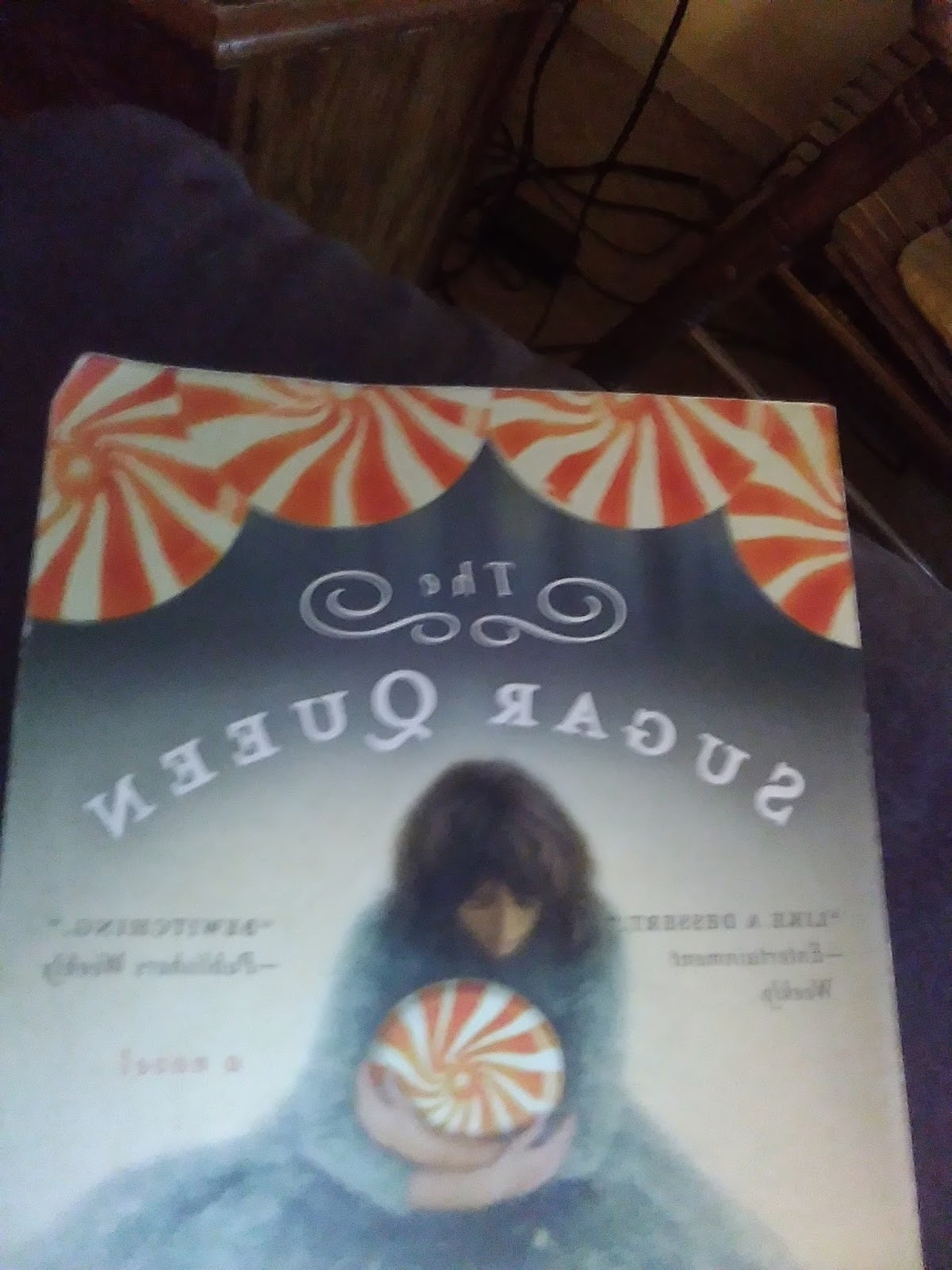
Weekly Reader: The Sugar Queen By Sarah Addison Allen; A Sweet Magical Chick Lit/Romance That Goes Down Like Fine Candy

Weekly Reader : The Sugar Queen by Sarah Addison Allen: A Sweet Magical Chick Lit/Romance That Goes Down Like Fine Candy
By Julie Sara Porter,  Bookworm Reviews

Spoilers: The Sugar Queen is one of those books that's not for the cynical of heart. It's drenched in strange sweet little magical touches that bring a smile to the Reader's face: touches such as books that appear out of nowhere, favorite clothing that inspire romance, and advice from a very unusual woman that suggests one thing but lead to deeper resolutions. When all of this is done, the Reader is left with some sweet memories and a happy ending.

The very unusual woman with odd advice is Della Lee Baker, a tough talking waitress who arrives inside the closet of heiress, Josey Cirrini. Josey is naturally confused about why Della Lee is hiding inside her closet, reading Josey's carefully hidden romance paperback novels and indulging herself in Josey's hidden candies and chocolate snacks. After Della Lee explains she is on the run from her abusive boyfriend, she decides to make Josey into her personal project by giving her advice to make friends, have romance, an independent life, and to improve herself.

Josey is at first reluctant to follow Della Lee's advice and scoffs at her with some clever repartee ("I hear the closets at the Holiday Inn are fabulous. You should try them. "). But she also realizes that she could use some help.
At 27 years old, Josey feels metaphorically imprisoned by Margaret, a verbally abusive mother. Margaret wants to control every aspect of her life such as her clothing (Margaret insists that she should never wear red "because she looks horrible in it" even though it's Josey's favorite color), her weight and reading interests (Hence the hidden romance novels and snacks. Margaret thinks of her daughter as a fat daydreamer.), and her schedule. (She must always be on hand to chauffeur her mother around to her "emergency appointments" like trips to the manicurists, tea parties, weekly social events, etc.).
Josey also suffers from the reputation of her late father, Marco Cirrini, the man who built her hometown of Bald Slope, North Carolina and has an almost demi-god reputation of many who thought he could do no wrong (Though many women who had been at the opposite ends of his philandering would argue with that assessment.). When her father was alive, Josey was given to temper tantrums people still remember and call Josey to task on them even though they were over twenty years ago. This reputation causes Josey to retreat further into herself so any assertiveness could never be mistaken as a spoiled childish tantrum.

 Because of her reputation as a once spoiled brat of a charming philandering father and an emotionally abusive Southern Belle mother, it is no wonder Josey needs all the help she can get. Thanks to Della Lee's influence, Josey begins to wear her favorite red sweater which draws Adam, the handsome mail carrier whom she long admired from afar. The two start to talk, resulting in a date.
 Many Readers with parental problems and extremely introverted but longing personalities can understand Josey's growing frustration with her family, subtle acts of rebellion, and desire to escape. Maybe some Readers long for someone to come along and help shake them out of their dull complacent lives as Della Lee does for Josey. The two make for a wonderful team as Josey provides shelter from Della Lee's problems and Della Lee gives Josey a way out of hers.

Another chatacter who glows because of the friendship between Della Lee and Josey,  is Chloe Finley, a diner waitress. Chloe has problems of her own, some typical one not so typical. Her typical problems consist of a long -time boyfriend who confessed to an affair and now wants to get back together,  an attraction to a handsome but dangerous man whom Della Lee knows personally, and her desire to buy a specific dream house but little money to purchase it.

Chloe's not so typical problem would no doubt make her the envy of her Readers. Books follow her everywhere she goes. They appear out of thin air, newly made, usually when Chloe is at an emotional crossroads. The books pertain to whatever predicament that Chloe is in. After a fight with Chloe's boyfriend, Jake, a book appears titled Finding Forgiveness. After consulting with the home owners of her dream house, another book arrives: The Complete Home Owner's Guide.
Books appear as a conscience to Chloe giving advice to her, as Della Lee does for Josey. Sometimes Chloe is annoyed by their presence ("I said go away, " Chloe yells at one of her books in Josey's presence.) But Chloe's relationship with her books,  as well as her new friendship with Josey, points to potential solutions to her predicaments.

Josey, Della Lee, and Chloe are a terrific trio of protagonists that become closer because of some interesting revelations that seem to come out of nowhere, but make sense the more the book continues as the Reader learns about the characters and their relationships.
The Sugar Queen is sweet, sugary, and filled with magic found in every day life, magic of reading, color, romance, and friendship.  This is the type of book that goes down like fine candy, good to the last bite.


Thursday, February 8, 2018

Forgotten Favorites: Amethyst by Mary-Rose Hayes: A Strange Unforgettable Novel About Prophecy and Fulfillment

Forgotten Favorites: Amethyst by Mary -Rose Hayes: A Strange But Unforgettable Novel About Prophecy and Fulfillment
By Julie Sara Porter, Bookworm Reviews

Spoilers: February's birth stone is the Amethyst and it's birth sign is Aquarius until the 19th when the zodiac sign changes over to Pisces. People who are born under these signs are supposed to be intelligent, eccentric, and have a fascination with and involvement in the psychic world.
Victoria Raven, one of the four protagonists of Mary-Rose Hayes' novel, Amethyst seems to possess all of these attributes and more as she enters the lives of her classmates Jessica Hunter, Catriona Scoresby, and Gwyneth Jones and ends up changing their lives far greater than they ever would have imagined in this very odd but very unforgettable story.

The story of the four women begins at the end where the Reader learns that all four live successful lives-Jessica as a painter, Catriona as a hotel magnate, Gwyneth as a supermodel, and Victoria as a foreign correspondent/journalist.
Jessica, Gwyneth, and Catriona are contemplating their next steps in their careers and with the men in their lives when they receive a call from Victoria's brother, Tancredi telling them to come to the Ravens' estate home in Scotland because Victoria "needs them." This urgent request sends the trio sprinting from their homes in Mexico, New York City  and rural Southern England where they recall their strange friendship.

The three girls meet Victoria Raven in 1968 at Twyneham, a girl's boarding school that seems to specialize in training rich young girls to become the wives of wealthy men. At least that's the plan for the wealthy Catriona Scoresby who dreams of being the wife of upperclass, Jonathan Wyndham. Jessica Hunter, a daughter of nobility, also plans for an arranged marriage and to occasionally dabble in painting. Gwyneth Jones, a scholarship student, plans to coast by as a kindergarten teacher with an amiable friendly personality but little prospects.

When Victoria arrives, she impresses the girls with her backstory of being one of two illegitimate children of a Scottish earl, her platinum hair and witchy appearance,  her strange words which are meant to confuse and provoke them (such as when Victoria tells Gwyneth that as a kindergarten teacher she could also "study and design children's clothes"), and her strange amethyst ring which she claims predicts the future.

During a seance with Victoria's depraved and deceased father and using her ring as a planchette, the girls discover different paths than what their families and social backgrounds have dictated. Jessica "will travel to another country to see more clearly. " Catriona will marry Jonathan "but at great cost and must trust (her) resources to find happiness." Gwyneth will "become a millionaire before she's 30 because of impeccable bones. " The most chilling prediction that is made is that the quartet will be reunited on that date (June 30)  tweny years later but will be one less person.

To tell of the four's successful independent lives in the first chapter then featuring their less assured school days in the second leaves little room for suspense or surprise revelations. ( Except that "one less" prediction rings over like a death knell in all of their lives and explains why Jessica,  Catriona, and Gwyneth are so anxious about Victoria's condition after Tancredi's call. )
However, the narrative style prepares the Reader to understand the journey that transforms the protagonists from complacent class-conscious schoolgirls to independent confident women. The book also gives us four brilliantly written characters to experience this narrative. Instead of the plot traveling in a straight line, it travels in a circle, like Victoria's amethyst ring, where the beginning and end are known but not the middle, not the "how it happened."

The journies that the women make to reach fulfillment through their friendship and individualities are wonderful reads.
Jessica and Gwyneth's chatacters evolve as they move to California and find their purposes.
Jessica becomes a sexually active pot-smoking hippie who begins to take her art seriously. Gwyneth goes from working as an au pair for distant cousins, to a secretary for an advertising agency, to a model advertising hair care products.
The two women find complications in their love lives as their careers begin to soar. While painting landscapes that hang "in banks, hotel foyers, and in offices," Jessica leaves behind one unhappy love affair in London and considers marrying a wealthy mentally disabled man whom she does not love because she is sorry for him and is befriended by his eccentric parents.
 Gwyneth becomes recognized as "the Tawny Tress girl" and a cover model, but  she is abused by a controlling maniuplative photographer-boyfriend who pushes her into anorexia nervosa until her agent is forced to give her an intervention.

Far from the free-spirited America experienced by Jessica and Gwyneth, Catriona's retreat into uppercrust English society is no less complicated. While she marries Jonathan, she doesn't find the happy ever after she imagined. Instead she finds a snobbish and highly critical mother-in-law, constant requests to her self-made millionaire father to rebuild and refurnish her in-law's family home, and Jonathan, whom she discovers is having an affair...with a man and not just any man, but Victoria's brother,  Tancredi. (with whom Gwyneth also falls in love after a one-night stand.)
Catriona at first is the weakest character of the quartet as she responds to her unhappy marriage by crying, denial, and trying fruitlessly to win her husband's affections including giving birth to two children.  It is only after she is threatened by bankruptcy and death does she come into her own and opens her parent's estate and her in-laws' manor as luxury hotels.

Victoria's journey is the most mysterious as Gwyneth, Jessica, and Catriona occasionally reunite with her to touch base and answer their own questions about Victoria's precognitive abilities.  When they don't  reunite with her and Victoria gives spot-on advice based on their current dilemmas, she is often reporting from dangerous spots-Vietnam during the War, Central America during government conflicts, or the Middle East during terrorist activities and hanging with sinister characters like Carlos Ruiz, who might be a terrorist or might be Victoria's bodyguard and lover.
Victoria's ability to enter dangerous spots and come out of them relatively unscathed makes the three others question her further. Is she psychic and able to use supernatural means to see into the future? Is she a master manipulator programming people to subconsciously follow her orders? Is she simply a good reporter with a natural nose for news? Is she a terrorist who is more involved in world events than just reporting on them? While the narrative has Victoria admit one possibility, the final pages offer more alternatives that leave Jessica, Catriona, Gwyneth, and the Reader with more questions and theories and continue to make Victoria more fascinating.

Books that feature female leads that enphasize romance, female friendship and empowerment, often feature weak male characters. (Perhaps in retaliation for many of the older novels that feature intriguing well developed male characters and superficial female love interests.) Hayes thankfully did not do this and all three of Jessica, Catriona, and Gwyneth's final male love interests are just as fascinating as their ladies.

There's Dr. Rafael Herrerra,  a Mexican surgeon who shows Jessica "the real Mexico" of beautiful beaches but also poor families and bandits and also shows Jessica his "art" of surgery after Jessica shows him hers of painting. Alfred Smith, a Cockney artist captures Gwyneth's heart when he not only demonstrates a strong artistic talent but a rakish second career as a fence, receiver a stolen goods. While Catriona's affair with British agent, Shea McCormick begins rather abruptly, he develops as a srong protector and devoted lover to Catriona to the point that he is concerned about her safety because of her friendship with Victoria. Rafael, Alfred, and Shea demonstrate when the women find themselves and their independence, then the right people will come along and accept them for themselves.

The strongest male character is Tancredi Raven, Victoria's brother. Like his younger sister, he is also fascinating. He weaves in and out of the novel as a professional gambler and card counter and breaker of hearts such as Gwyneth's and Jonathan's. He is seen as someone who callously seduces and abandons lovers, sometimes taking delight in his cruelty.
However,  Tancredi shows some honesty and vulnerability in the strangest of places such as when he calls Jessica, Catriona, and Gwyneth because he is aware how valuable these women are to his sister.

The Raven Siblings are the catalysts for change in the other characters. In school,  Victoria pushes Jessica, Catriona, and Gwyneth to pursue their own interests and gain their independence. As adults, Tancredi brings them together to confront and let go of their past and create better futures.