Showing posts with label Weekly Reader. Show all posts

Thursday, July 30, 2020

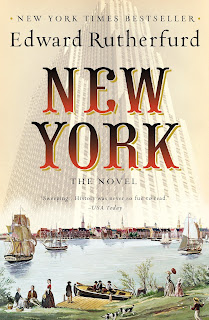
Weekly Reader: New York by Edward Rutherfurd; Another Epic Rutherfurd Success, But With Some Missed Opportunities


Weekly Reader: New York by Edward Rutherfurd; Another Epic Rutherfurd Success, But With Some Missed Opportunities

By Julie Sara Porter

Bookworm Reviews


PopSugar Reading Challenge: A book with the same name as a movie or TV show, but is unrelated to it (New York, New York)


Spoilers: I suppose after writing about Sarum, London, The Forest, Ireland, Russia, and would later write about Paris, Edward Rutherfurd decided to write about New York because he figured that if he could write about there, he could write about anywhere. (Apologies to John Kander and Fred Ebb for the paraphrase.)

New York is yet another of Rutherfurd's sprawling epics which cover the families of one location over the course of several centuries. This time, the English author takes his act on the road to the United States and New York. He does it with his usual grand style that captures these important historical moments, but makes it personal by showing us the individuals who exist in those turbulent fascinating times.


Rutherfurd deserves a lot of praise for writing an American city very well. He captures the various buroughs, streets, locations, accents, ethnicities, and the character of the city expertly. For example, he captures the various speech patterns of the characters without resorting to stereotypical dialect. He tells the points of view of people of various ethnicities and social status, as citizens, but maintains their individual struggles and personalities.
Rutherfurd captures New York so well, that it's easy to forget that he's not an American.

Once again he covers various families and reveals how they relate to the world around them. They are:


The Van Dycks/Masters-The European-American family traces their roots from Dutch lineage back when the territory was New Amsterdam. They eventually married with the English immigrant, Master family. They exemplify the old money families who are often in charge of the stock market, the big Fortune 500 companies, and names that are on guest lists of high society and philanthropic donations. They are present in every chapter from the beginning.

The Hudson/Rivers-The African-American family begin as slaves to the Van Dyck family. They are very prevelant before and during the Revolutionary War as the members argue over whether or not to aid the white Americans. They appear sporadically, but unfortunately their lineage is cut short during the 1863 Draft Riots when one of their members is lynched.

The Whites-A working class family that contrasts with the wealthier Masters. They have a long animosity towards the wealthy family. Their most important role is during the Revolutionary War when they are staunch Patriots and fight for the working class Americans. In subsequent chapters, they take on various occupations like police officers and fire fighters.

The Albions-A family of wealthy English expatriates. They appear mostly as a staunch Loyalist family during the Revolutionary War. Eventually, they return to England but maintain a friendship with the Masters.

The O'Donnells-An Irish-American family that emigrated to New York in the 1840's to escape the Irish potato famine. They begin in the impoverished area of Five Points and work mostly in service. Later, some of the family members gain prominence because of their involvement with Tammany Hall. The O'Donnells gain social success until by the late 20th century, one is an upwardly mobile attorney.

The Kellers-A family that emigrated from Germany in the mid-1800's and are close friends with the O'Donnells. They mostly work as tailors, artisans, and shopkeepers. Later family members develop creative talents, as one becomes a professional photographer and another becomes a caterer.

The Carusos-A family that emigrated from Italy through Ellis Island in 1901 (no relation to the opera singer). They eventually move to the Lower East Side. They experience various important moments from the Triangle Shirtwaist Factory Fire of 1911, to the creation of the Mafia (as one joins), and the construction of important buildings like the Empire State and the Chrysler Building. Like the O'Donnells, they too move upwards, as their final family member becomes a doctor.

The Adlers-A Conservative Jewish family from Flatbush, Brooklyn that appears in New York by 1955. They are mostly seen through the eyes of Sarah, their daughter, an art gallery owner. She gets involved with the Bohemian lifestyle and becomes more Liberal and secular and defies her family traditions..

The Campos-A Puerto Rican family that resides in El Barrio, Spanish Harlem. They appear in 1977, the final family in the book. Like the Adlers because they arrive so late, they are mostly seen through one character, Juan. Juan experiences the poverty of many black and Latino New Yorkers in the 1970's when the city is about to declare bankruptcy. He later becomes an advocate for the poor communities.

Because the book covers roughly four hundred years of history, a short time for a Rutherfurd book, Rutherfurd was able to write it similar to London. He inserted several characters into multiple chapters, so the Readers can see their experiences over many decades and see how they evolve with the times. The Revolutionary War doesn't happen until 11 chapters in. The 19th and 20th century cover 9 and 7 chapters respectively. It's a purposely slow moving process, but like London is the better for it.


Once again there are some excellent characters including:

Dirk Van Dyck-A Dutch immigrant trader in 17th century New Amsterdam, who has a loveless marriage but escapes from it to father a Lenape girl called Pale Feather. She makes the ongoing symbol that is passed from generation to generation, a wampum belt.

Quash-The first, and so far only, first person narrator of a Rutherfurd book. A slave, Quash recounts the transformation of New Amsterdam to New York and he eventually receives his freedom and becomes a shopkeeper.

John Master-One of the first in his family to carry the Master name. When New York is still considered a backwater location, he has a rocky meeting with his wealthier cultured Bostonian cousins (to show the difference between New York and Boston) and an unfortunate courtship. He then has a better marriage with Philadelphian Quaker, Mercy Brewster.

Charlie White-A working class man who was a childhood friend of John Master's only to be snubbed by his family. Later, he becomes a fervent Patriot who organizes protests and resistances against the British government.

James Master-Son of John who is educated in England and marries Vanessa, a well-to-do Englishwoman. Despite, or because of this, James becomes an outspoken Patriot. He leaves his wife and returns to New York. He then raises his son, Weston, as a single parent.

Hetty Master-Introduced in 1849, she is the wife of Frank Master, Weston's son. Despite her intense wealth, she is passionately involved in various social causes like abolition, women's suffrage, and labor unions.

Mary O'Donnell-The first of the O'Donnell family, she gets hired as a maid to the Masters. Later, she becomes Hetty's companion and best friend.

Theodore Keller-The youngest of the immigrant Keller family. By 1863, he becomes a photographer. He shows an artistic eye as he snaps portraits, graphic scenes of war, and landscapes. He becomes a well known artist after death.

Salvatore Caruso-The son of the Italian immigrant family, his sister is killed in the Triangle Shirtwaist Factory Fire and his brother is killed working for the Mafia. He becomes a construction worker and is involved in a love triangle with his brother, Angelo and girlfriend, Teresa.

Rose Van Dyck Master-The female head of the Master family by the early 1900's. She is something of a name dropper, referring to her friend Mrs. Astor, and a snob. However, she has enough financial insight to save her family from the 1929 stock market crash.

Charlie Master-Rose's dilletante son, he becomes involved with the Village scene of the 1920's of artists, writers, and theater types. Later he becomes an aging hippy and becomes involved with a younger woman. He writes about that experience in a semiautobiographical novel, Verrazano Narrows.

Sarah Adler-The daughter of the Jewish family. She owns an art gallery and has very liberal values that put her at odds with her traditional family. She is the woman that has the affair with Charlie Master and inspires his novel.

Juan Campos-An idealistic Puerto Rican immigrant who becomes an advocate for the poor families of color. He begins in the 1970's when New York saw an increase in poverty, union struggles, and crime.

Gorham Master-An investment banker in the 1970's and '80's. While he has the family name and success, he wants more meaning to his life. Ultimately, he assists Juan with a foundation to help others.

Maggie O'Donnell-Gorham's wife, and Mary's descendant, a yuppie attroney. She is pleased to have it all, a good career, husband, and children.

As with Rutherfurd's other works, the characters are an engaging bunch. We see them encountering big issues like the Revolutionary War, the Civil War, the creation of Niagara Falls and the Brooklyn Bridge, the Blizzard of 1888, New York's rise to being one of the largest and most important cities in the world, the Financial Panic of 1901, the Stock Market Crash of 1929, and September 11. So many important events are covered.

Rutherfurd also captures many personal moments for the characters. Frank's proposal to Hetty at the Croton Aqueduct produces fond memories even after they have friction in their marriage. Hetty later befriends Frank's mistress, Lily de Chantal and they conspire to overpower another mistress, Donna Clipp.

Mary lies about her family's connection to Tammany Hall to work as a maid for the Master family. By the time the truth comes out, decades later, Hetty is just grateful to have a long time friend.

One of Theodore Keller's photographs is named, Hudson River. Not because of the River, but because he captures Hudson River, the characters,' death. This photograph ends up being his most popular and infamous.

While Salvatore is working on the Empire States Building, he is so incensed by Angelo and Teresa's affair, that he contemplates killing him. A lucky accident spares his life and he becomes a devoted uncle and godfather.

Gorham Master spends many years feeling unfulfilled by his life of gain. He consults headhunters and weighs other opportunities before finally doing something positive with his wealth by aiding Juan Campos.

The final recipient of the Master family wampum belt is none of the Masters, but Sarah Adler as a gift from her lover, Charlie Master. She wears it when she is trapped inside the World Trade Center just as it is attacked and she is killed.

There are however plenty of missed opportunities. The most important is probably the too early departure of the African-American family, the Rivers. For the first time in Rutherfurd's books, we get a first person account with Quash. He reports of the change from New Amsterdam to New York and the English encroachment on the island of Manhattan. He also talks about his marriage to Naomi, his love for his son, Hudson and his friendly relationship with Dirk, his master who promises to free him on his deathbed. Hudson is eventually sold to a ship captain, but Quash obtains his freedom and opens a store. With that strong beginning and a first person departure from the other books, one would expect Quash's family to be prominent from beginning to end.

Unfortunately, that is not the case. During the Revolutionary War, Quash's son, Hudson raises concerns when his son, Solomon, joins the Sons of Liberty. Once Solomon's son, Hudson is sold, the family does not reappear, until they escape through the Underground Railroad. Then as I said earlier, their final descendant Hudson River is lynched and hanged during the Draft Riots of 1863.

That's it. It is great that Rutherfurd opens up this shameful period in America's past and telling it through a family that suffered through it. However, they should have continued in later chapters. The Rivers could have been actively involved in the Civil Rights Movement, the Harlem Renaissance, redlining, and the Great Migration. Heck, a later Rivers descendant could have been a fellow activist alongside Juan Campos. Many events and perspectives are lost when the Rivers's story ends prematurely.

The Rivers aren't the only ones. It's clear that while the book is another Rutherfurd ensemble, the main family involved is the Masters. They are present in every chapter and get the lion's share of points of view. This leaves a lot of families out of key events.

The White's introduction is very powerful and the book appears that to reveal another multi-generational family feud ala The Wilsons Vs. Shockleys in Sarum. Unfortunately, the White family takes a diminished role after the Revolutionary War and only receives minor appearances in later chapters. The Whites, as well as the Rivers, are the only families to not reappear in the final chapters that focus on 9/11.

Rutherfurd reveals the various immigrant families that make up New York, showing how America is made up of different people. It shows that we all come from somewhere else. Unfortunately, many of these immigrant families are spread out, some taking more prominent roles than others. The O'Donnells, Kellers, and Carusos have strong introductuons but by the mid-20th century, they disappear only to reappear for the finale. There are a few missteps where we could have seen more sons and daughters.

The book also leaves out some key events. The most important events that are short changed are The Great Depression and WWII. The book skips from 1929 to 1955. It seems odd that a book that chronicles the American experience so faithfully would leave these out. We don't get to see how poverty and joblessness affected the families in question. We don't get to see their opinions about the New Deal and their feelings towards Franklin D. Roosevelt (and he's a New Yorker at that. Seriously they left him out?).

We don't get to have the characters experience Pearl Harbor or see the male characters enlist. Nor do we experience the female characters working (many outside the home for the first time.). One of the families is Jewish and they don't even touch on the Holocaust or reveal that one of the Adlers is a survivor. Rutherfurd could have easily introduced two more chapters to cover these events. That he didn't is a real shame.

While the book has some missed opportunities, New York is another wonderful experience in time travel thanks to Rutherfurd. Reading about the people of New York and the way that has changed over the centuries, fills the Reader with a sense of pride in the city and how well Rutherfurd caught it.

Tuesday, July 28, 2020

Weekly Reader: Call Numbers: The Not-So-Quiet Life of Librarians by Syntell Smith; Sharp, Funny, and Deep Look At Rivalries and Relationships Inside A Public Library


Weekly Reader: Call Numbers: The Not-So-Quiet Life of Librarians by Syntell Smith; Sharp, Funny, and Deep Look At Rivalries and Relationships Inside A Public Library

By Julie Sara Porter

Bookworm Reviews


Spoilers: Syntell Smith's Call Numbers: The Not So Quiet Life of Librarians, could be considered the library equivalent of Joshua Ferris' Then We Came to The End. Both are humorous workplace satires about the wacky hijinks of employees and are also used to make important serious points about their societies. However, they are very different in many ways. Then We Came to The End was about an office set at an advertising agency facing the early 2000's economic crisis dealing with the fear of layoffs and possible workplace violence from an unhinged fired employee. Call Numbers is about the staff of a New York Public Library branch in 1994, that have to deal with budget cuts, an underprivileged neighborhood, and racial tension between staff members and the people around them.

Robin Walker, library clerk, is a transfer to the 58th Street Branch of the New York Public Library, from the Ft. Washington branch. As soon as he enters his new workplace, he is surrounded by conflict. He may be able to memorize the locations of various books by the call numbers, recognizes the lion statues in front of the Central Branch by name, and knows the Procedures of Conduct by heart, but that doesn't stop him from making a few enemies the second that he enters the doors.

His first enemy is Sonyai Yi, Branch Senior Clerk. She doesn't trust Robin's friendly but obstreperous behavior. However, that is not the only reason that she doesn't like him. Sonyai is in charge of the four young pages and she promised the next clerk position to high school student, Janelle Simms. Janelle needs the promotion because she's pregnant and the only ones who know are Sonyai and the other three pages.


Another enemy is Tommy Carmichael, another clerk and Sonyai's protege. Tommy doesn't like Robin, mostly because Sonyai doesn't. He isn't above playing juvenile pranks to force his authority over the newbie.

Yet another enemy is Ethel Jenkins. She and Gerry Coltraine are the only two African-American clerks at the 58th Branch until Robin comes along. Gerry bonds with him partly out of solidarity and partly to show Sonyai up. (He wants to become Senior Clerk in her place). Ethel however is suspicious of him for a personal reason. He is lighter skinned than she and she can't resist mocking him every chance she gets. She gets a page, Alex Stevens, to go along with the snide attitude until Alex takes a prank too far.


Oh yes and there are other plots going along with Robin and his Not-So-Merry Team of Rivals. Library Director, Augustus Chavez constantly vies with Heywood Lerner, Information Assistant, for movie nights and philanthropic donations, but has a loyal supporter in Zelda Clein, Librarian, who acts like a pit bull defending her boss.

Angie Trueblood, Information Assistant, is trying to earn her Associates in Library Science degree. However, she discovers some shady things about Augustus.

Meanwhile the youngest staff member, 14-year-old, Lakeshia Seabrooke develops a crush on Robin. She gets some off color advice from fellow page, Tanya Brown, who also has to deal with some bullies at school. The library staff of the 58th Branch may want their patrons to shush for the good of other patrons, but this staff is anything but silent.

There are some situations that are so broad that they are almost farcical. One is the hazing ritual that Sonyai and Tommy put Robin through in which he is faced with checking patrons out during the closing rush. Unfortunately, this ends in a fist fight between the two clerks to be broken up by Zelda and the police.

Another situation involves the extremes that Heywood goes through to prevent Blazing Saddles from being loaned out to 58th Branch for an upcoming Mel Brooks Film Festival.


Then there's the crash course on sex that Tonya gives Lekeshia complete with The Joy of Sex as a manual. (They borrowed the book under Tanya's name and oops, it's past due. Of course, Tanya's parents get a phone call.)

There is also the bar where library employees from different branches meet and compare notes about the awful people that they work with and conspire against them. They may be information professionals, but sometimes their immaturity shines through as much as or more than their willingness to offer books and other sources of knowledge to the New York public.

While the book is very broad at times, there are moments that Smith makes the Readers see the real characters inside the goofy hijinks. The characters show a lot of depth that take them beyond sitcom stereotypes. While Robin instantly goes on the defensive when he arrives at 58th, making enemies with his blunt attitude, he also shows a vulnerable side. He cares for his ailing grandfather, who has long been hearing impaired, and remains estranged from his superstar half-sister and stage mother.

He also has a friendly relationship with Gerry where the two quiz each other on call numbers. Once he and Tommy get past their testy initial dislike, their relationship cools down to frienemies who like to tease, but will defend each other. Robin also helps Tanya with her bully situation and agrees to go out with Lakeshia while letting her down gently by reminding her that he is an adult and it would be illegal for them to be together.

Even the more antagonistic characters show real depth and strengths both inside and outside the library. Just when we are ready to write Sonyai off as a domineering bitch, she shows a maternal side to the four pages. She treats them like wayward daughters giving them advice and lecturing them. She dislikes Robin mostly because of her protectiveness towards Janelle and the girl's situation.

In one of her best moments, she stands up for Janelle when her parents are furious about her impending pregnancy. She even gains a grudging respect towards Robin by the end.

The pages have their own girl squad. They act like sisters who disagree but help each other. Even when they are split about Robin, Lakeshia and Tanya like him and Alex and Janelle don't, it doesn't end their friendship with each other.

Augustus shows an antagonistic side as he cuts corners, sucks up to wealthy donors, and kills anything that would resemble negative publicity. The latter particularly at the expense of the staff's welfare. However, he makes it clear that he loves his library and would do anything to make sure that it remains operational and gets all of the new equipment, releases, and technology that they need. Even if he might have to commit potentially questionable and possibly illegal deeds to do it.

Some of the characters shine best in their home lives away from the library. Tommy has a loving interracial marriage with his pregnant wife, Sarah, which still bears some animosity from their families.

Angie shows a lot of spunk in her information science classes and exhibits knowledge that rivals her professors (and probably most of the staff). The conservative nerdy, Heywood gains an appreciation for grunge music, thanks to a friendship with a female musician who is mourning for a friend and fellow musician who recently committed suicide. (It's 1994, guess who?)

Ethel learns that she has a medical condition which could cause complications for her future career plans. Even characters like Zelda who seem to not have a life beyond the library show how important their jobs are to them and how hard they work to give people the information that they need. These moments show these characters' many facets. They can be selfish jerks, sarcastic wisecrackers, wacky goofballs, sympathetic friends and family members, and well-rounded individuals.

There is a serious undercurrent of racial tension that moves along as a theme throughout the book. Many characters suffer from comments or stereotypical remarks about their race creating a Mutual Animosity Society.

In one passage, a racist patron asks Angie for a librarian. She puts him in his place by not only telling him that she is an information professional and in two years will be a librarian, but also sharply reprimands him for his dismissive attitude towards her for being Native American. Many other characters like Sonyai and Robin respond similarily to racist comments while others like Augustus and Zelda turn a blind eye, trying to keep the library free of bad publicity.

Many characters are aware of the undercurrent of tension and how it affects their relationship with the other staff members and the public. When Robin is met with hostility on his first day, he responds back with further hostility. This tension leads to some violent encounters such as Tommy and Robin's fist fight.

The worst encounter is a final prank in which Alex writes an obscene message inside the library before opening, one that she knows will get under Robin's skin. Robin responds as violently as expected. This prank causes all the undercurrents to explode and come to the forefront.

In 2020, this prank would end up on social media and there would be a firestorm so big that no one could contain it. The encounter wouldn't slide and for better or worse, there would be some serious questions and a restructuring of the library and its staff.

However since the book is set in 1994 and they have a library director who is obssessd with giving the library a good facade, that doesn't happen. He only suspends Robin and Alex and practically cajoles and bribes them not to make it public. They agree but it is painfully clear that this tension isn't over.

With a second book on the horizon, those undercurrents will become stronger and what simmered will explode. What was once funny may no longer be. There are some hints that the comedy will stop when reality steps in and takes center stage. The 58th Street Branch staff are a pretty humorous character driven bunch now, but what happens next may take the humor out and show the real characters.


Tuesday, July 21, 2020

Weekly Reader: Murder in Montague Falls by Russ Colchamiro, Sawney Hatton, and Patrick Thomas: Graphic Violence and Murder in a Small Town


Weekly Reader: Murder in Montague Falls by Russ Colchamiro, Sawney Hatton, and Patrick Thomas; Graphic Violence, Murder, and Psychological Terror Haunt Three Generations of A Small Town

By Julie Sara Porter

Bookworm Reviews


PopSugar Reading Challenge: A book by an author who has written more than 20 books (Patrick Thomas, 40+ books and over 150 short stories)


Spoilers: Anyone who lives in a small town can tell you that violence and murder can happen there just as well as in any city. Anywhere people live will always have violent arguments, jealous quarrels, drug deals, domestic violence, child abuse, jealousy over possessions, and death. That's probably why small towns make such enticing settings in mysteries. The authors and creators love to poke holes into the whole "nothing can happen here" attitude and reveal these small town residents as often violent, bloodthirsty, arrogant, judgemental, hypocritical, and just as ready to pick up a gun or knife and do away with someone just as much as their urban counterparts.

The three-part novella series, Murder in Montague Falls, explores the concept of murder in a small town. Three authors, Russ Colchamiro, Sawney Hatton, and Patrick Thomas, capture three generations of secrets, gaphic violence, psychological terror, and murder in the small town of Montague Falls.

The stories are unrelated to each other. Two stories are told from the criminals' perspective and one from an amateur detective's.

No characters make appearances between the three works. One references another story in one line, but that's it. Somehow that elevates the stories to an even more sinister level. There is no suggestion that one story influences another or that the characters are destined to take a violent path. Instead it suggests that violent natures exist in anybody and that murder can occur randomly in any time and under any circumstance.

"Red Ink" by Russ Colchamiro- This story captures a youthful excitement in having an overactive imagination and shows what happens when, uh oh, those youthful fantasies turn out to be true.

Isaac Fuller, a young newspaper deliverer, finds some excitement in his tedious part-time job by pretending he's a young secret agent. He imagines that his neighbors are Communist spies and he is on their trail. (It is the '80's after all). Tension mounts between Isaac's reality and fantasy when he sees a dead body inside one of the houses and what appears to be a murderer standing over the body. Suddenly, his once wild imagination may not be so wild after all.

This novella captures that energy that is found in those kid adventures like The Goonies or The Monster Squad where it is up to the kids to face some nasty villains and save their world. It's no coincidence that "Red Ink" is set in the 1980's when those adventure films were popular.

There are also some Hitchcockian moments that hearken back to earlier more adult adventures. There is some suspense when the body is removed, the suspect provides an alibi, and no one believes Isaac's crazy story. Some psychological background is provided with the death of Isaac's baby sister and his determination to protect others. Above all, the most suspenseful passage is when Isaac learns that not only are his spy fantasies real, but he is alone with the murderer. He quickly learns that reality is a lot bloodier and more painful than his dreams.

"The Devil's Delinquents" by Sawney Hatton-If "Red Ink" is a tribute to the kid adventure films of the '80's, then Sawney Hatton's "The Devil's Delinquents" is a tribute to the '90's psychological horror films and the Goth culture which led to a lot of Generation Xers feeling like misfits and outcasts from society.

Three of those misfits are Derry Rhodes, Cal Virgil, and Natalie Glantz. Derry and Cal are in an alternative band that sing songs invoking Satan. However, these two are just pretenders compared to Natalie. She calls herself a dark witch, holds rituals, and claims to have a dead fetus of her child by Satan kept in a jar. When Ntalie gets the duo involved in her ritual, she demands a blood sacrifice....human sacrifice.

I would say that the trio are stereotypes,but that's the point. They are almost comical in their Satanic worship that they study from movies, metal music, and books. It's all based on the appearances that they see. They are basically dumb pathetic idiots playing dress up, but extremely violent idiots make no mistake about that.

They want to solicit Satan's help as a way out of their pathetic sad lives and obtain fame, attractiveness, and acceptance that they don't have at home. They are misfits that will commit even the darkest deeds to get that notice and acceptance.

There is a darkness that was so prevalent in '90's culture of suspicion, horror, and psychological thrill that this novella captures.
In a twist that is almost worthy of Quentin Tarantino, the violence is carried out in a way that is deliberately over the top. In a moment of being careful what one wishes for, one of the characters does get their fame and acceptance in the most horrific way possible.


"A Many Splendid Tthing" by Patrick Thomas-The final novella, "A Many Splendid Thing" is more of a tribute to an older genre than the previous novellas. While the book is described as noir, this story is the one with the strongest claim to the genre. "A Many Splendid Thing" hearkens back to the noir films like Double Indemnity and The Postman Always Rings Twice in which a sexy femme fatale entices a poor shmo to commit murder. Then after the murder happens, the two conspire against each other.

In this variation, the poor shmo is high school senior, Jethro. He doesn't have much luck with the ladies or anyone else for that matter until he captures the interest of Rosa Carmine, his Science teacher, the aforementioned femme fatale. Rosa provides Jethro with some ,ahem, hand's on tutoring before she confesses that she is being abused by her husband and needs one little favor from her boy toy.

While all the stories are great, this is by far the best of the three because of the almost old school glamor that in which it pays tribute. Even setting the story in the 1950's reveals those Old Hollywood sensibilities that "A Many Splendid Thing" acknowledges. While violence is present and bloody, it's not as important as the aftereffects and how it resonates with the characters.

Once the violent act is committed, the novella becomes a tug of war as Jethro and Rosa turn on each other very quickly and vie to outsmart each other. The ending is brilliant and clever as both parties have one final gambit to play, even beyond death.

Murder in Montague Falls is an excellent book that honors different genres in the author's unique styles. The three works reveal the worst and the darkest aspects that exist inside those cute little houses around those slow moving streets. It reminds us that just because everybody seems to know everybody does not necessarily mean that they aren't hiding a knife behind their friendly greeting.

Saturday, July 11, 2020

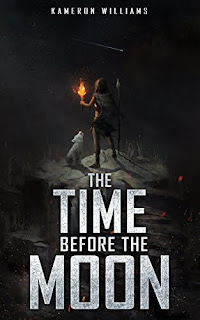
Weekly Reader: The Time Before The Moon by Kameron Williams; Prehistoric Fiction With Very Modern and Timeless Themes


Weekly Reader: The Time Before The Moon by Kameron Williams; Prehistoric Fiction With Very Modern and Timeless Themes

By Julie Sara Porter

Bookworm Reviews


Spoilers: I admit even though I usually love to read historical fiction, I was never fond of reading Prehistoric Fiction. I tried to read Clan of the Cave Bear once and found it boring. I was just never interested in reading about Neanderthal and Cro Magnons. However, I found an exception to this genre in which I was never fond. The Time Before The Moon by Kameron Williams is a prehistoric fiction that has very modern and timeless themes of conformity, group think, rebellion, and freedom.


Omi is a young villager who has come of age. He does his part participating in hunts and fights with local villagers to gain prominence and respect. Everyone does their bit and has a role to play in this village from the Quarrymen to the Hunters, to the Healers. They are ruled by The Seer, an enigmatic elderly leader who receives visions from the gods to declare laws and regulations for the village. He is surrounded by beautiful young ladies, his Priestesses who interpret his laws. If anyone disobeys they are threatened with a cleansing.


Omi acts like an obedient villager mostly. He takes part in ceremonial rites and doesn't mind much when the Seer requests sacrifices. Omi's rebellions are mostly minor. He gets into fights with the Seer's bullying grandson. He als gets high off of the joyplant with his potential love interest, Agatha. The Seer forbids ingestion of the plant as well as pairings that he did not arrange himself.


Most of Omi's rebellions are slights and harmless until he witnesses some things that cause him to question the Seer and his motives. First, he sees the Seer practically rape one of his Priestesses and realizes what their real purpose is: to service the Seer's desires. Second, even though he is in love with Agatha, The Seer arranges her marriage to his grandson to give him more power. The final straw is when Omi sees what a cleansing entails: a ritual in which the guilty party is blinded and ostracized from the village. All of these events opens Omi's eyes to the Seer's cruel and despotic nature and he runs from the Seer's autocratic ways.


The book carries a prominent theme of rebellion against conformity. When Omi leaves the village behind, he leaves the aunt and uncle who raised him, the woman he loves, and his closest friends some who follow the Seer's commands to find him. The price of his rebellion is complete ostracism with only a Wolf pup, called originally Pup, as a companion. In this distant time when community meant survival and the elements and animal life are so uncertain that being outside could kill you. When only a community can protect you, that is a huge price and it is one that Omi is willing to bear. That is how he much he distrusts the Seer and knows that he has become a dictator.


Freedom becomes important to Omi and his leaving causes a ripple that grows larger within the community as other villagers are clued into the Seer's tyranny and begin to abandon the village. Just like in modern times, one person questioning the system creates a chain of others who begin to see the errors as well. It isn't before too long that Omi has his own community of outcasts.


There is also a theme of exhibiting true leadership. Omi must ensure that his village is not run like the old one nor that he becomes like the Seer. He wants his village to carry on the ideas of freedom and live beyond the rules set by the Seer. He strives to make his village a more democratic peaceful place and to show mercy and charity, even in one particular surprisingly heartwarming moment, to his enemies.


The Time Before The Moon may take place in prehistory, but we can see these themes echo throughout not only history but in modern times as well.

Wednesday, July 8, 2020

Weekly Reader: I Love You To Pieces by Lori Flynn; Mystery and Mental Health Drama Does Not Mix Well


Weekly Reader: I Love You to Pieces by Lori Flynn; Mystery and Mental Health Drama Does Not Mix Well

By Julie Sara Porter

Bookworm Reviews


Spoilers: It's ironic that Lori Flynn's novel, I Love You to Pieces is about a protagonist with Dissociative Identity Disorder. Because the lead character isn't the only one who is confused about her identity. The tone of the book is uncertain whether it wants to be a murder mystery with an obvious twist or a dramatic story about a young woman's illness being used as a coping mechanism from an abused childhood. The two shifting tones show that the DID diagnosis is so paramount and obvious that it should have served as the main plot point instead of spending so much time trying to hide the secret from the Reader when they know what the secret is.


Olivia Harding is the wealthy Floridian daughter of a loving father and an abusive mother. Her father Alexander adores her but he dies in a plane crash when she is nine. Her mother, Elizabeth, is a cruel horrible woman. She kills Olivia's lovebirds and cat out of malicious spite then breaks her arm in a fit of rage. After her father's death, Olivia moves in with Catherine, her loving grandmother, and gets some semblance of peace. However, she suffers from PTSD and has blackouts of events that she can't remember.

There is a haunting moment when Olivia is trapped by Elizabeth inside a storage room. Catherine receives a phone call from a small but threatening voice saying that "Elizabitch" has locked Olivia up and could she get her out. This passage foreshadows how Olivia's illness served as a protector against her mother, but then became a hindrance for her living a full life.


Olivia grows into a loving young woman who decides to create fundraisers for her family's non-profit shelter for rescue dogs. Catherine is still a loving feisty presence in her life. She has two female friends, Jill and Melody, who also have personal and psychological problems. She befriends and becomes romantically involved with Ben, her family's young attorney. She seems to be adjusting to life.

Unfortunately, she still has her psychological disorders that she doesn't want anyone to know about. She still has blackouts and can't remember certain things like going through a procedure to get an IUD inserted inside her. Nor can she explain the expensive clothes or the marks on her body that suggests sexual acts in which Olivia does not remember taking part.

Then there are the chapters which are told from the point of view of Delia, a wild foul mouthed escort to wealthy visitors to Florida. She does her bit but constantly wants to "be free" and needs to get to her place by a certain time. It becomes evident that Delia and Olivia are the same person and that Olivia has DID with Delia serving as an alternate personality.


If the book had introduced us to Olivia's DID from the beginning, it would function well as a general fiction book about a woman struggling with an illness that she barely understands partly because of her blackouts and the confusion of the people around her. She could have seen a psychiatrist through Catherine and been diagnosed early on. We could have had many chapters of her trying to reconcile her personalities with herself and her life. The book could have chronicled her recovery and reconciling herself with her other personalities as well as confronting Elizabeth with what she caused.


But no what could be a realistic story of living with Dissociative Identity Disorder becomes a hoary murder mystery/psychological thriller, as theatrical as Shutter Island by using DID as a plot twist instead of an illness. There is the usual subplot of Delia committing violence and Olivia being accused of it. The confusion among friends and other characters when she is suddenly not herself when it is clear to the Reader why she is not herself. The mystery is not even that convincing since we know who did it.

Because the revelation of her illness occurs halfway through the book, Olivia's recovery is glossed over into the final couple of chapters. We are given a late third personality to learn about before that happens. We are given very little insight of what it is like to live with such an illness when it is used as merely a plot point instead of an actual illness that many people struggle with in real life.


I Love You to Pieces could be a better book, but unfortunately the pieces don't fit together to make a complete whole.


Wednesday, June 24, 2020

Weekly Reader: Djinn by Sang Kromah; Modern Fantasy Enchants With Interesting Twists On Magical Creatures and Characters


Weekly Reader: Djinn by Sang Kromah; Modern Fantasy Enchants With Interesting Twists On Magical Creatures and Characters

By Julie Sara Porter

Bookworm Reviews


PopSugar Reading Challenge: A book written by a WOC


Spoilers: Of the magical fantasy creatures, the djinn are among the ones with the least amount of pop culture attention in the Western world. When they are shown, they are usually restricted in one form: as the magical wish granting genies. One of the most popular images are Barbara Eden, as the curvaceous beauty (but no visible navel) found inside a bottle, that served Major Tony Nelson (Larry Hagman) in the sitcom, I Dream of Jeannie. Another is Robin Williams as the lovable big blue Genie, the creature of a thousand laughs and even more impressions from Disney's Aladdin franchise.


However, in legend the djinn are a lot more fascinating, powerful, and sometimes terrifying than their Hollywoodized images suggest. These magical creatures originated in legends from pre-Islamic Arabian countries. They were portrayed as elemental spirits and shapeshifters, very powerful beings. They were technically immortal, but could be killed in combat. However, it is very difficult to catch one, especially when they are invisible. Like their Western counterparts, the faeries, the djinn were often blamed for physical and mental illnesses. However, they could be reasoned with and become powerful allies.

When Muhammad established the Islamic religion, he integrated the folklore of the djinn into the Qaran. Muhammad was seen as a prophet to both human and djinn communities. King Solomon reportedly had the ability to control the djinn and the Queen of Sheba was believed to have djinn ancestry. With the religion of Islam, the djinn's status was downgraded from nature spirits to demons in league with the Devil.


Sang Kromah's enchanting fantasy, Djinn aims and succeeds in freeing the djinn from their demonized reputations and Hollywood images. This brilliant fantasy focuses on a teen girl whose peculiarities and strange abilities add up to one thing: she is in fact a djinn.


Bijou "Jewels" Fitzroy, a biracial 16-year-old girl has led an increasingly bizarre life. She never knew her father and her mother died in childbirth. She has been raised by her beautiful, but at times rigid grandmother, Gigi on the run, never staying in one place long, and constantly being homeschooled. She has some strange abilities that she can't explain. She can sense the emotions of some people that she calls Typicals, sometimes looking into their eyes and seeing their deepest secrets. Then there are other people, that she calls The Others, people that she can't see their emotions but sees their strange, hidden, and ethereal often beautiful appearances.

She also sees strange creatures such as a faceless boy, who may only exist in her dreams, but has been her playmate since she was a kid. She also sees a terrifying hooded man that fills her with an intense sense of evil and terror. To block out these emotions and images, Bijou shuffles a deck of playing cards as a coping mechanism.


Despite the past weirdness in her life, Bijou longs for a life of normalcy so when she and Gigi move to Sykesville, Maryland, Bijou finally convinces her grandmother to let her go to a regular public school, to make friends and have a social life, like other teenagers. On her first day, she catches the suspicion of Mythology and Folklore Teacher, Mr. Jennings, the ire of local mean girl, Mandy DeVoe and her Girl Squad, and the friendship of Sebastian and Amina Sinjin, a pair of twins relocated from Australia.

Bijou hopes to live a typical teenage life, but her new life is far from typical. Her empathic abilities are heightened especially when she is around the twins. The twins can also see the dangerous hooded man and know that he's trouble.

Bijou discovers new talents such as breathing underwater and the ability to swim fast, even though she has never taken a lesson. A local eccentric recognizes her, even though Bijou has never seen her before in her life. Then there are the matter of six girls who have gone missing, all around the same age and all have the same birthday, June 21st, the same birthday as Bijou's. Also what's the deal with Gigi? She has been acting strange. One minute aloof and suspicious of everyone around her and the next welcoming people that she says are distant relatives that Bijou has never met before. Everything is weird lately and seems to be getting weirder.

Bijou ultimately discovers the truth that she is a djinn, and not just any djinn: she is the daughter of two powerful djinn who were members of royalty and her birth was heralded in prophecy. Kromah does some interesting things with her magical characters that play in, wink at, and sometimes dismiss the regular known fantastic lore associated with such creatures.

First off, fairies, elves, gnomes etc. were the names humans gave them. Their names always were the djinn, thereby restoring the pre-Islamic Arabian folklore back into prominence when referring to these fascinating creatures.

Just like their legendary original versions, the djinn in this book are capable of doing elemental magic. Two djinns that serve as Bijou's protectors demonstrate tremendous aptitude in fire and water magic.

Kromah also has fun playing on existing myths and legends by including them in her world building. Such figures as changelings (human babies swapped for djinn babies), Lilith (the demon from Hebrew lore who kills newborn babies), and The Fairy King and Queen make appearances in unique and startling ways that update them to the current Readership while staying true to their mythological roots.

One fairy literature that takes an interesting path in this book is A Midummer Night's Dream. The Shakespeare play of fairies and mismatchmaking becomes a lot darker. The argument between Oberon and Titania in the play becomes a divorce between Alieu and Lilith (the real names of the djinn king and queen in this book). The divorce spills into a war between the djinn and causes dissension and natural catastrophe in the human world as well. Puck, the mischievous but harmless Trickster from the Shakespeare play and seen as a charming antihero in other portrayals since (notably in Disney's animated series, Gargoyles), is a terrifying demonic creature here who seems to like bringing about destruction and chaos for their own sake.


Bijou is also a brilliant lead in this strange tale. She discovers the origins of her abilities and as the book continues, her powers grow exponentially to almost terrifying proportions.

Thankfully, Bijou is not a perfect heroine of infinite goodness. She has a bad temper and is often prone to impulsive acts, such as accidentally revealing too much about herself and her powers during fights. Because of her isolated and homeschooled background, she is incredibly socially awkward when she talks to people, such as making up stories about her former best friend, "Willow" obviously referring to the character in Buffy the Vampire Slayer not thinking that anyone would notice.

When she finds out the true scope of her abilities and what she is supposed to do, like many teenagers considers running from her responsibilities. However her good heart reins in and when it comes time to choosing between flight or fight, she chooses fight.


There are moments of betrayal and double cross. By the end of the book, no one is who they say they are. They practice the djinn ability of shapeshifting to perfection to fool Bijou and just about everyone else including the Reader. By the end the Reader, suspects every character of being something that they are not. (Which would make a sequel highly entertaining as the Reader will expect and look for betrayal and shapeshifters in every character. They will expect twists when there isn't one.)

The real identities and allegiances between characters are fascinating, but kind of confusing. It takes a few rereadings of the chapters to get right who is who, what their abilities are, who they work for, and where they fall in Bijou's life and the prophecy.

Djinn is a memorable magical book that focuses on some magical creatures that do more than pop out of lamps and bottles and grant wishes. Much more.

Sunday, June 14, 2020

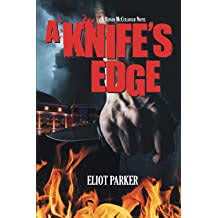
Weekly Reader: A Knife's Edge: A Ronan McCullough Novel by Eliot Parker; Suspenseful Tense Mystery Shows Heroism, Justice, and Most Of All A Loving Same-Sex Family


Weekly Reader: A Knife's Edge: A Ronan McCullough Novel by Eliot Parker; Suspenseful Tense Mystery Shows Heroism, Justice, and Most Of All, A Loving Same-Sex Family

By Julie Sara Porter

Bookworm Reviews


PopSugar Reading Challenge: A Medical Thriller


Spoilers: Eliot Parker's A Knife's Edge is another book that is the ultimate escape in the difference between fiction and reality. In reality, confidence in the police force is at an all time low and with good reason, as incidents of systemic racism have increased between police forces and black civilians. Cries of protest and defunding the police are at an all-time high.


In fiction, Ronan McCullough, a good heroic cop can wade through murdered bodies, starting with one inside a vehicle that plowed through a medical center, and baffling clues, like another body inside the trunk of the vehicle. All clues lead to a point, such as missing records of blood samples leading to evidence of a conspiracy. Suspenseful chases may end in injury, but still allow the protagonist to walk away, battered but alive. Heroes and villains are clearly defined as we root for Ronan to take on the drug dealers and crooked business people who order the murders and create a conspiracy that marks others for death. We can applaud Ronan as we question the behaviors and motivations of his real life counterparts and how they relate to the people that they are trained to protect and serve.


During Pride Month and on the anniversaries of the Pulse Nightclub Shooting and the Stonewall Riots, the Trump Administration scaled back protection for health services for transgender people. States are considering banning same sex marriage and adoption and protection for LGBT victims of hate crimes. Never have LGBT rights been more threatened since before the Obama Administration.


In fiction, we are shown Ronan at home with his loving boyfriend, Ty Andolino, who provides his emotional center. While the two keep their relationship a secret from homophobic eyes, they offer each other unconditional love and support. They also unofficially adopt Ronan's nephew Nick, becoming wise, but stern father figures to the teen.


If you can get past the real world that surrounds A Knife's Edge, you will find it an enjoyable read. It is suspenseful with leads and clues that make sense and plenty of moments when our heroes are in danger. The tension is tempered with sweet moments in the McCullough-Andolino household that offer a save haven from the dangers in the rest of the plot.


In fact as exciting as the mystery plot is, the real heart of the book lies in the relationships between Ronan, Ty, and Nick. There are many moments where Ronan tries his best to protect his boyfriend and nephew by warning them from becoming too involved in the case, especially when one of the murder victims was a friend of Ty's and Nick's girlfriend's aunt. Both of them have to remind Ronan that as long as they are in his life, they are involved and he can't get rid of them that easily.


Unlike many other detective-spouse relationships, Ronan and Ty's chapters don't fall into the tedium of the "lonely-cop-embittered-ex" cliche or the "why-aren't-you-home-more-often" arguments that are so predictable. They are a couple that I enjoy reading about as much as the mystery itself. In one moving moment, Ty, a nurse, expresses the worry that any loved one of a police officer would have, when he scans gurneys and stretchers and worries every time that he will see Ronan carried in on one.


Ronan is equally committed into his relationship with Ty. He keeps their sexuality a secret so they can avoid harassment. One of the more heart warming moments is when an antagonistic colleague not only reveals that he knows the two are lovers, but that he approves and almost envies their emotional connection. When he comes home, Ronan knows that Ty will be there with an understanding word, a shoulder to cry on, and a warm pair of lips just as he is for him.


The two also form a loving bond with Nick. The two lecture him when they find out that he has a girlfriend. They give him the safe sex talk. (and are pleased to learn that he hasn't slept with her yet.) They also are concerned when he appears to be in danger, becoming the loving parental figures that he needs. He also treats them like a sometimes exasperated, but always loyal son.


While the mystery is tight and suspenseful, it is the love between Ronan, Ty, and Nick that makes this story. It is nice to know that a loving family, any type of loving family, can shine during the darkest times in both fiction and reality.


Thursday, June 4, 2020

Weekly Reader: Star Wars Legends: Tales From The Mos Eisley Cantina Edited by Kevin J. Anderson; Memorable Stories About Fascinating Characters In Iconic Scenes From The Star Wars Franchise


Weekly Reader: Star Wars Legends: Tales of the Mos Eisley Cantina Edited by Kevin J. Anderson; Memorable Stories About Fascinating Characters In Iconic Scene in the Star Wars Franchise

By Julie Sara Porter

Bookworm Reviews


PopSugar Reading Challenge: A book with a made-up language (Huttese, Rodian, etc.)


Spoilers: A Long Time Ago In A Galaxy Far Far Away….

…..There was a great disturbance in the Force. Prequels and Sequels were yet a dream or a glimmer of an idea. The fandom had yet to explode into the Intergalactic Civil War. In fact Star Wars fans were united in their desire to hear more about that franchise. So, a small band of freedom fighters, uh Science Fiction authors, took it upon themselves to continue the saga in various forms. Through books, graphic novels, video games, and other outlets, the Expanded Universe, now known as Legends Series, was created and even though the movies have continued the canon saga, the Legends series has its share of fans and still has appreciation as a continuation and Alternate Universe of the well known and at times polarizing franchise.


One of the more interesting aspects that the Legends gave to the fans was how they served as continuations within the original trilogy. They filled the blanks between A New Hope, Empire Strikes Back, and Return of the Jedi showing that the characters that we already knew had other adventures when we weren't looking. They also gave more depth to supporting characters that most people would not have even remembered otherwise such as Wedge ("Look at the size of that thing!") Antilles, Mon ("Many Bothan spies died to give us this information.") Mothma, and Admiral ("It's a trap!") Akbar. In fact, some of the characters who only had a brief glimpse or a line or two in the movies were finally given their say and a chance in the spotlight in the Tales Anthology series. These anthologies took those extras from specific notable scenes in the movies and made them the main characters in their own stories.

One of the most iconic scenes in the entire series is Mos Eisley Cantina, "the wretched hive scum and villainy" on Tatooine from A New Hope where Luke Skywalker and Obi Wan Kenobi first encounter Han Solo and Chewbacca The Wookie (and this Reader's favorite scene from her favorite movie in the franchise). The intergalactic answer to Rick's Cafe Americain from Casablanca is filled with strange alien assassins, spies, thieves, mercenaries, murderers, and a crabby human bartender who does not like droids. Their stories are covered in the anthology, Tales from the Mos Eisley Cantina, and it demonstrates the wonder of these books by giving more depth to that iconic scene by revealing the strange and rich characters that inhabited it.


The stories are all wonderful and imaginative in how they explore the various ways these characters survived in a dictatorship that spread throughout the entire galaxy. Some joined the Rebellion, others became card carrying Imperials. Still others took the lawless route and survived by entering lives of crime. Even though it is a science fiction setting, and one of the most well known at that, there are parallels to the situation in these series and how we Earthlings survived during dictatorships in our own history such as Nazi Germany and Stalinist Russia.


They are well written brilliant stories with a colorful cast of characters. Among the best stories are:

"We Don't Do Weddings: The Band's Tale" by Kathy Tyers

Certainly among the most memorable moments in the Mos Eisley Cantina is the bouncy tune that plays as soon as Our Heroes enter the scene, the tune played on space age jazz instruments by similar looking bulbous headed creatures with wide dark eyes. The tune that gave Earthlings ear worms for decades. Well not many people know that the band is Figrin Da'n and The Modal Nodes and even less people know that jaunty tune is called "Mad About Me."
This humorous story deals with the conflict between Figrin, the firey tempered leader and compulsive gambler and Doik Na'ts, the more serious deadpan second in command. The two butt heads as they are removed from their original gig at Jabba's Place (future workplace of Jedi's musicians, The Max Rebo Band.) and are assigned to play at the wedding of Lady Valerian, a Whiphid and Jabba's strongest rival. 

The band has misgivings at playing at weddings in the first place (As Doik explains "A wedding gig lasts two days ,(three days with some species, plus the time it takes to learn new music.) You're treated like a recording told to repeat impossible phrases and lengthen the usual processional and ordered to play a final chord as the nerve wracked principal's arrive central stage... if they arrive. Someone always brings a screaming neonate. Then the reception where they inebriate themselves until no one hears a note. All this for half pay and full satisfaction. You helped perpetuate a species.") But to play for Jabba's worst rival is nothing short of suicidal, but the pay is good and for Figrin, the gambling tables are a plus so on they go.

Things turn to a very expected violent head between the wedding party and The Modal Nodes have no choice but to play a very familiar venue. The irony is underneath the bouncy exciteable tunes that the band plays, they are in fear every moment that either Jabba or Valerian will send their assassins. They are literally playing as if their lives depended on it. This final image of Doik scanning the crowd for any potential killers adds a sense of darkness to the joyful music that the band plays.


"A Hunter's Fate: Greedo's Tale" Tom Veitch and Martha Veitch

I am not going to go into the tired cliched "Who shot first" argument, because this is Greedo's story. The green bounty hunter that met the business end of Han Solo's blaster is revealed to be a young naive cocky punk in over his very large snout.

Greedo's is revealed to be part of the Rodians, a race of aliens who have been on the run when other Rodians started hunting one another for blood sport. Greedo however is fascinated by the thought of becoming a bounty hunter and inadvertently puts his widowed mother and younger brother in danger by one of his assignments. Left alone, he is trained by the conniving Dyyz Nataz and Warhog Goa in bounty hunting. Eventually, they are lead to the ever lovable Jabba the Hutt who orders a bounty on, guess who, Han Solo.

Greedo's arrogance is felt throughout the story as well as his determination to become the best bounty hunter. It is that arrogance and naivete that blinds him to the obvious fact that Goa and Dyyz are taking advantage of him and that Han would prove to be a formidable adversary.


"Hammertong: The Tale of The 'Tonnika Sisters'" by Timothy Zahn

One of the more intriguing aspects that each story has is how the characters observe the events from A New Hope from the droids being ordered outside, to Obi Wan cutting off Ponda Baba's arm, to Han's confrontation with Greedo. Similar to the audience in a play, the characters view these events from different angles and have different perspectives. Two of these characters that observe the events are Shada and Karoly, two mercenary warriors posing as Brea and Senni Tonnika, two con artist sisters. The two ladies study the statistics of the various cantina crawlers to solicit smugglers to assist them. The duo were hired to steal a strange weapon called the Hammertong and need a good smuggler/pilot to aid them in getting it off of Tatooine quickly. Unfortunately, their adventures cross with Luke Skywalker and Han Solo's and they end up in big trouble with the local Tatooine law.

The standout in this story is Shada, an idealist turned cynic who joined The Mistryl, a fabled group of heroic warrior women who over time lost their heroics and became mercenaries for hire. Shada longs to recapture the selfless heroism of legend but has to survive in a dark cynical Galaxy. Eventually, Shada finds that heroism within the Rebellion and realizes that she can use her warrior training for another better cause.


"The Sand Tender: The Hammerhead's Tale" by Dave Wolverton

One of the more unique looking aliens is Momaw Nadon, AKA Hammerhead. He was even one of the Mos Eisley Cantina gang that was made into an action figure.

His story puts him beyond the reputation of strange looking extra. In fact, his is among the saddest in the book. Nadon is a former priest who had a psychic connection with plants in which he honors the Law of Life. Unfortunately, an Imperial Captain Alima threatened to destroy the plants if Nadon did not reveal their technological secrets. Nadon caved, feeling the psychic pain of his plants. His actions exiled him from his home planet onto Tatooine where he works as a spy passing information for the Rebels and hoping for the chance to meet Alima again and kill him.

It's an emotional tug of war as Nadon has to reconcile his once peaceful nature with his hatred for Alima and all that the Imperials stand for. For the first time, he encounters a brutal savage side within himself and it threatens to consume his connections to his plants and the Law of Life. Fortunately, Nadon discovers a way to get revenge in his own way and to continue respecting the Law of Life.

"Empire Blues: The Devaronian's Tale" by Daniel Keys Moran

Among the narrators, one of my favorites is Kardue'sai Malloc AKA Labria, a devil looking character with sharp teeth. Malloc is a former Imperial soldier that after a bloodbath resigned and headed for Tatooine where he lost himself in booze, music, and regrets.

Malloc is a very sarcastic narrator with plenty of one liners. (He remarks that Wuher the Mos Eisley Cantina bartender, whom he describes as his best friend, dressed formally: "He changed his shirt.") He also has a passion that transcends the Empire or Rebellion: that of music.

Malloc has a large collection of recording chips of his favorite bands and singers. His recall of many of the musicians' histories recount what often happens when a dictatorship occurs. In any Galaxy, it is the artists who suffer and are arrested. Many of Malloc's collection consists of musicians who are arrested, dead, or missing, and their music has been banned by the Empire.

However, Malloc will do anything to hear his favorite groups. We learn that Malloc's story is tied to the Modal Nodes' story in that Malloc arranged for the band to perform at Lady Valerian's wedding and then get them hired to perform at the Cantina. Malloc's story reveals the desperation when one has very little to live for and holds onto it as the only thing to keep them going.


"When The Desert Wind Turns: The Stormtrooper's Tale" by Doug Beeson

Before the prequels revealed that the Imperial Storm Troopers were clones and the sequels retconned that into revealing to them as recruits selected from birth, this story reveals that they were recruited like any other soldier. This process is seen through the eyes of Davin Feith, a young rookie whose basic training is nothing short of torturous. He is trained to march and run the ATAT Walkers (He is the one who discovers the flaw that smaller fighters can tie their legs sending them to the ground). The threats are very real and life as a stormtrooper is very short.

Besides being a military story, "When The Desert Wind Turns" is also one of redemption. When Feith is one of the Troopers assigns to look for the droids, his eyes are opened to Imperial cruelty. In some of the saddest moments we see the actual scenes when the Jawa sand crawler is attacked and Luke's Uncle Owen and Aunt Beru are killed making these throw away scenes from the movie even more heart breaking.

In the end Feith must make a choice between remaining on his stormtrooper path or following his conscience and become a Rebel.


"One Last Night in the Mos Eisley Cantina: The Tale of the Wolfman and The Lamproid" by Judith and Garfield Reeves-Stevens

In the Star Wars Legends Series, other characters are capable of using the Force. In fact in subsequent books, Luke opens up a Jedi Academy specifically to find and educate those who are Force sensitive.

This love story gives us two characters who are bound by the Force and their love for each other. Lak Sivrak and Dice Ibegon meet on that memorable day in the Cantina just as the droids are forced out the door. They begin a relationship as they join the Rebel Alliance, and fight in the Battle of Hoth, ending in Dice's death.

The strange story jumps Sivrak from the Battle of Endor, to Hoth, to the Cantina independent of time and space. His memories of Dice are out of joint as they know the things that are going to happen before they do and appear to be on different time streams. Finally, Dice gives her lover one last chance to escape their life together and his subsequent grief and to change his future. Sivrak has to consider if a life with a love that is lost is better than a life without love at all.

The lovely final moments show that love and sacrifice are worth fighting for in here or in any other galaxy.


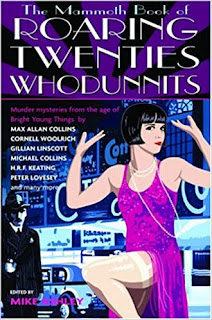
Weekly Reader: The Mammoth Book of Roaring Twenties Whodunnits Edited by Mike Ashley; Jazz Age Mysteries Shine In This Colorful Fascinating Anthology


Weekly Reader: The Mammoth Book of Roaring Twenties Whodunnits Edited by Mike Ashley; Jazz Age Mysteries Shine In This Colorful Fascinating Anthology
By Julie Sara Porter
Bookworm Reviews

PopSugar Reading Challenge: A book set in the 1920's

Spoilers: The 1920's. The Jazz Age. The Bright Young Things. The Lost Generation. This fascinating wild decade conjurs up images of free spirited flappers, smooth, but violent gangsters, jazz music, Prohibition, the Charleston, and noted celebrities like Calvin Coolidge, Charles Lindbergh, Al Capone, Rudolf Valentino, Babe Ruth, Clara Bow, and Charlie Chaplin. Authors like Ernest Hemingway, F. Scott Fitzgerald, James Joyce, Gertrude Stein, T.S. Eliot, Langston Hughes, and Dorothy Parker explored new frank ways of writing that captured the violence, sexuality, and free expression this time allowed. The world of murder mysteries also had its big names. British authors, Agatha Christie and Dorothy Sayers, gave the world their genteel cultured sleuths Christie's Miss Jane Marple and Hercule Poirot and Sayers' Lord Peter Wimsey. In America, The Black Mask literary magazine made its debut and introduced those hard boiled detective genre authors,  Dashiel Hammett and Raymond Chandler. The 1920's were a fascinating decade and one that demands to be explored. 

The Mammoth Books are a series of anthologies which explored various literary genres. They produced some of the best collections of historical mysteries, featuring mysteries set in different time periods. One of these anthologies explores the 1920's in depth with The Mammoth Book of Roaring Twenties Whodunnits. It is a fascinating collection of short stories featuring some of the most exciting murder mysteries, clever sleuths, and fascinating murderers set in this colorful time.

Among the best stories in this anthology are:

"Timor Mortis" by Annette Meyers
The 1920's saw a resurgence in women's independence. Women were granted the right to vote in 1920 and many young women celebrated their freedom in other ways. Many bobbed their hair, wore short A-line skirts, smoked in public, talked openly about sex, and finally got rid of the restraining corsets. They were able to live independently and earn their own money without worrying about marriage. 
Annette Meyers explores that freedom with her protagonist, Olivia "Oliver" Brown, a poet/private investigator who lives in Greenwich Village, among the other artists, writers, and activists. She lives a colorful life with some eccentric friends so when she encounters death, it is bound not to be in a conventional way. She is recruited to look for a friend's missing cousin at the same time as the local masquerade ball. During the ball, Death makes a guest appearance as one of the party goers is stabbed to death while the party goer is dressed in multi-colored feathers and rides on the back of a white stallion. 
Aside from the unique crime scene, the mystery itself is solid with enough clues to point to an obvious finish. What makes this story, however, is its lead character. Oliver is a free spirited independent woman who has an artistic outlook and a very observant eye. She is the embodiment of the 1920's New Woman who lives for herself and her own goals.

"Someone" by Michael Collins
Underneath all of the glitz and glamor, the 1920's had a dark side. It was the time of Prohibition and the gangsters. While many of them such as Al Capone, Bugsy Siegel, and Meyer Lansky achieved antiheroic status and many thought of them as smooth, charming, goodfellas, in truth they were a violent bloodthirsty bunch. 
Michael Collins explored the past of his regular protagonist, Dan Fortune in this short story. Fortune remembers his father, Casey, a police officer who tried to have an honest career. However, honesty means very little when he makes some dangerous acquaintances such as corrupt New York Mayor, Jimmie Walker, Bobby Astor, the so-called "black sheep" of the wealthy family, and mobsters, Owney Madden and Arnold Rothstein. (Rothstein is particularly infamous for being one of the men who fixed the 1919 World Series by bribing eight players in the Chicago White Sox to throw the series, hence the Black Sox Scandal.) 
Casey Fortune becomes mired in his acquaintances' duplicitous dealings and realizes that he can't keep his head above the crime around him. His allegiances and the brutal crimes in which he witnesses consume him and destroys his family forever.
While technically, there isn't a specific mystery, this story shows how a life of crime can affect a family for generations to come and how Innocents can fall because of the actions of the guilty.

"Thoroughly Modern Millinery" by Marilyn Todd
One of the things that I like the most about The Mammoth Historical Whodunnits is that I discover new authors and characters. Many like Peter Tremayne's Sister Fidelma, Steven Saylor's Gordianus The Finder, and Margaret Frazier's Dame Frevysse have become favorite detectives of mine. Another favorite is Claudia Serferus, the saucy Roman noblewoman/amateur detective of Marilyn Todd's I Claudia mystery series. 
In this story, Todd creates another interesting female detective this time for the Jazz Age: Phyllis "Fizzy" Potter, a freelance magazine illustrator with a sense of justice. While names like Fizzy, Bubbles, Squiffy, and Catspaw suggests a lighthearted P.G. Wodehouse-esque comedy, this story can be as dark and grim as the rest. The plot focuses on blackmail, drug addiction, and the lengths people will go to protect family members and keep secrets. There is also a theme of Abstract Art, the popular art trend in the 1920's which allowed artists to express themselves in more outlandish and emotional ways than the concrete clear examples of the past.

"The Hope of the World" by Mat Coward
The 1920's was also a time of great revolt. After the Russian Revolution began in 1917, many in the United States and Great Britain were terrified that the same thing would happen in their countries. Labor Unions went on strike and many activists embraced Socialistic principles. This is the milieu of the story, " The Hope of the World" by Mat Coward.
This story plays on the familiar mystery trope of the dinner party murder in which a party, usually in Britain, is rudely interrupted by the death of one of its members. Of course, anyone could be a suspect. In this case, most of the party guests are Communists and Socialists. While the constant addresses of "Comrade This" and "Comrade That" can be confusing, the story reveals why many of these people looked to these philosophies. Many were disillusioned after WWI. Others saw income inequality and sought to change it. Others saw better opportunities for women. This was a group that may have had a common goal but were also suspicious and mistrustful and with good reason. They were often held under suspicion by authorities. This revolutionary zeal and mistrust is the perfect brew for violence and sure enough in this story, it happens.

"The Broadcast Murder" by Grenville Robbins
Technology saw a massive upswing in the 1920's. Automobiles became mass produced. While airplanes had been in use since before WWI, Charles Lindbergh's trip across the Atlantic Ocean showed what those flying machines were really capable of. Another popular technological source was the radio.
In Greenville Robbins' "The Broadcast Murder" (one of the few short stories in this anthology that was published in the 1920's), the radio becomes not only a source of news, shows, and music, it is also a source for murder. In a play on the locked room mystery, Charles Tremayne, radio announcer, is murdered live on air in his broadcasting booth with hundreds of listeners hearing his final words. The premise is intriguing as the narrator wades through the potential leads. The solution is also pretty clever as it plays on what people think they hear and don't hear as well as what goes on behind the scenes when the radio is on.

"For The Benefit of Mr. Means" by Christine Matthews
One of the most infamous Hollywood scandals was the 1921 murder of actress, Virginia Rappe. The prime suspect was movie comedian, Roscoe "Fatty" Arbuckle. Arbuckle was found not guilty, but the court of public opinion ruined his career forever. 
In this reimagining of Arbuckle's post movie career, he teams up with another scandal maker, Gaston Bullock Means, an author who wrote an expose called The President's Daughter. Arbuckle and Means solve a murder at a party attended by some very familiar faces.
While the mystery is excellent and Means and Arbuckle make a great detective duo redeeming their names in pursuit of justice, the real highlights are the dizzying array of real person cameos. Matthews fills her story with such notables as F. Scott and Zelda Fitzgerald, Dorothy Parker, W.C. Fields, Bing Crosby, and Ramon Navarro. These characters bicker, chatter, and  bounce off each other cleverly and the notable names put Jay Gatsby's parties to shame.

"I'll Never Play Detective Again" by Cornell Woolrich
One of the darkest real life crimes in the 1920's was the murder of 14 year old Bobby Frank by two young men, Richard Loeb and Nathan Leopold. What was most disturbing about this case was the motive behind the murder. The two men killed the boy simply to prove that they could do it, to show people that they thought that they were above such concepts as legality and morality.
The Leopold-Loeb Case was certainly the inspiration for this disturbing tale. At an engagement party for his friends, Dick Walsh, a wealthy young New Yorker investigates the death of the bride's kid sister when the girl succumbs to a poisoned flower. Dick finds himself discovering some troubling things about the bride and groom, people he thought that he knew for years.
The resolution is terrifying as Dick is forced to confront someone with a truly evil heart and intent that goes beyond cold blooded murder. The ending to this story makes this not only the most disturbing story in Roaring Twenties Whodunnits, but among the darkest and most disturbing short stories of the entire Mammoth Book Anthologies.

Wednesday, June 3, 2020

Weekly Reader: The Rome of Fall by Chad Alan Gibbs; Biting Novel About Small Town Life, School Days, '90's Nostalgia, and Memories Good and Bad

Weekly Reader: The Rome of Fall by Chad Alan Gibbs; Biting Novel About Small Town Life, School Days, '90's Nostalgia, and Memories Good and Bad
By Julie Sara Porter
Bookworm Reviews

PopSugar Reading Challenge: A book that features social media 

Spoilers: This is a book that fills me with so many memories, that it almost scares me. I went to a rural high school and graduated in the '90's (Grandview R-II, Ware, Missouri, Class of '96.) So I remember so much of it, the Friday night football games especially Homecoming, the pre-social media age of card catalogs, AOL, and chat rooms, X Files on Friday then Sunday nights, and Alternative and Grunge music from the greats like Nirvana, Pearl Jam, Garbage, Sound Garden, Alice in Chains, Jane's Addiction, and many others. Chad Alan Gibbs' The Rome of Fall reopens those days so well, that he makes me wonder if he had a camera installed at my high school at the time, just so he could take notes for a future novel. (Or more than likely remembered his own high school years, which is the more logical theory.)

Marcus Brinks is a new kid at Rome High School in Rome, Alabama in 1994. He loves Alternative music and wants to front his own band but right now he's an outcast new kid who is bullied, particularly by quarterback, Deacon Cassburn. He goes through the typical teen hijinks such as making friends with fellow outcast, Jackson Crowder with whom he shares a mutual love of Weezer and his crush on pretty girl, Becca Walsh.
Rome is a school that takes its football team seriously. Very seriously. Pep rallies are scheduled every Friday afternoon and the football games are packed every night. The students go to the games and meet for pizza afterwards. It's a time honored tradition that everyone partakes. Even those with no athletic abilities or interest, like Marcus, engage in the social activities of attending the games and get caught up in the whole "us vs. them" mentality. Why Marcus even has a Friday Night Girlfriend in Becca. (Her real boyfriend is Deacon, but since he plays football, she needs someone to accompany her to games or take her out when he goes to the away games.)

If you didn't live in a rural school, or any school which was practically dependant on its athletic teams, and weren't interested in sports and had other options on Fridays, then you probably don't understand what football season is like in high school. The Rome of Fall is not exaggerating. If anything, it understates how big it is to some schools.
 It's easy to get excited during those Fridays during the pep rallies when cheerleaders lead spectators in cheering on the team as well as your class (Seniors usually got the biggest cheers). Even the most non-athletic students (such as this one who was a shy socially awkward bookworm with very few friends) could get swept up in the excitement and belonging. It didn't matter if the team won or lost. (My years, they got as far as district my freshman year then suffered a tremendous losing streak afterwards.) You were there in your school colors (ours were black and gold), created posters and mascot designs for spirit week (Grandview Eagles), and used those days as a time to socialize, have fun, and act as a unit. In rural schools with little options of alternate things to do on a Friday night, football games could often be the highlight of the week. Gibbs conveys that milieu rather well.

After graduating high school, Marcus becomes the lead singer of an indie rock band, Dear Brutus. They manage to release one album called The Beige Album, reportedly inspired by Markus' relationship with an ex-girlfriend and Lois Lowry's Newbery Medal novel, The Giver (more '90's Nostalgia. Who didn't read that in school or repeatedly see it advertised in book order forms or Scholastic Book Fairs?) The Beige Album sold 500,000 copies, certified gold, and received unanimous praise from critics. The group received instantaneous success until Marcus walked off stage during a concert in 1999 and the group disbanded. Marcus then spent some time in the Caribbean in isolation and solitude.

While the musical trajectory of Dear Brutus is traditional, almost cliched with the instant success, internal problems, and break up, it adds to the nostalgia for those of us who remember the music of the 1990's. Songs as varied as Nirvana's "Smells Like Teen Spirit," Pearl Jam's "Even Flow," Sound Garden's  "Black Hole Sun," Alice in Chain's "Man in the Box," Lisa Loeb's "Stay (I Missed You)", Melissa Etheridge's "Come To My Window," Jewel's "Who Will Save Your Souls?", Sheryl Crow's "All I Want To Do," Tom Cochrane's "Life is a Highway," Blind Melon's "No Rain," Faith No More's "Epic," Green Day's "Basket Case",  and Smashing Pumpkins' "Vampire" and many many others were the soundtracks of many of our teen years. Chances are if the music was stripped down, the vocals were either mournful and melancholy or screaming and angry, the lyrics brutally honest, and the performers were upfront about their personal problems and sneered at corporate commercialism while at the same time welcomed it, then by all the Gods and Goddesses, it was our music. 
That's how Gibbs writes Dear Brutus, a sometimes satirical but an affectionate tribute to the music of the 1990's. The Readers nod in recognition comparing the fictional Dear Brutus with many of their own favorite real life favorite groups and singers.

The Rome of Fall alternates between Marcus' past as a high school student and as a rock musician and his present as he returns to 2017 Rome. Unemployed, caring for his ailing mother, and almost 20 years removed from his rock star fame, he accepts a position as an English teacher at Rome High School. While some believe that you can't go home again, that doesn't really apply when those you knew never left.
His old rival Deacon is part of the Quarterback Club. His former girlfriend, Becca Walsh teaches sixth grade. The biggest change is in his former best friend, Jackson. Once a fellow rock fan and social misfit, Jackson is a coach, town hero, and practically owns Rome. He has also transforned into a complete jerk who hides a sleazy, cheating, illegal nature underneath a "God-and-Country-Family-Values" community leader image.
 Those who would find it unrealistic that so many of Marcus' old high school acquaintances still live in town should check their former classmates' social media accounts and realize that true to life, many of them do stick around where they grew up and went to school.

Returning to Rome forces Marcus to confront his past. He can't hide from his former rock fame when his students have access to Wikipedia, Spotify, and other social media apps and waste plenty of class time reminding him of it. He also can't hide from terrible things that he did in high school, one that changed the trajectory of his, Deacon's, and Jackson's lives forever. 
He also has to confront the reality of his relationships with those he knew and wonder if he really knew them at all. Was Becca the sweet lost muse of his imagination and lyrics or was she just using Marcus and is continuing to use him? Did Jackson change and get a swelled head over the years or was he always a jerk and Marcus just didn't notice? Marcus' past is colored through rose tinted reminisces about the good old days, until they bleeds over into the present and he has to see them as they really were.
 In the present  Marcus finds himself caught between his former friend and rival, discovering that some resentments haven't changed and some emotions have only gotten stronger as he and those around him have gotten older. Once he faces the lives of those in the present, is he able to confront his past and come forward about things that he did and in which he turned a blind eye.

The Rome of Fall is the type of book that on the surface brims with nostalgia. However, it also forces us to look at those old days with a more critical eye, what really happened, how we behaved, and the troubles we faced. We will see that we did horrible things, that times were hard, that life wasn't perfect. We may still like the music, or watch the movies. We may even still go to the local football games, but that doesn't mean that life was better or more perfect. Only our memories distorted them to make them seem better than they were. Adults look at their youths as carefree and wonderful when they weren't. People in the 2020's look on past decades with fondness and longing that no one would have had at the time. (Though considering how stressful 2020 already is, who can blame them?) 

The Rome of Fall is a biting commentary that shows that nostalgia is simply a trick of the memory. There were no good old days, just days.