Showing posts with label Libraries. Show all posts

Saturday, June 7, 2025

Ismene and The Voice by Juniper Calle; Fanciful and Profound Fantasy About A Mysterious Library and The Woman Who Loves It


Ismene and The Voice by Juniper Calle; Fanciful and Profound Fantasy About A Mysterious Library and The Woman Who Loves It

By Julie Sara Porter 

Bookworm Reviews 


Spoilers: It's been awhile since I completely identified with a book character and now, I have found one. She is Ismene, the protagonist of Ismene and The Voice by Juniper Calle, an Epic Fantasy novel about a fracturing kingdom, a wise and sentient library, and a woman whose power comes from reading and sharing knowledge and wisdom with others.

Ismene is one of three characters who explore The Castle, a mysterious building which houses The Library, a collection that contains most of their world's knowledge. The other two characters are Lady Harmonia, Ismene's wealthy, spoiled employer and the daughter of the most powerful man in their lands and Eryx, a scholar whom Harmonia’s family sponsors and is a secret activist. Each woman has her own reasons for going on this journey. Harmonia wants to find and research texts and statistics that portray her lineage in a good light. Eryx wants to find forbidden knowledge and share it with fellow rebels that challenge Harmonia's family’s rule. Ismene wants to collect and share information with others. In other words, Ismene wants to be a part of The Library.

Calle superbly balances the setting and characters by giving us a fanciful and profound location and engaging and brilliant characters who are affected by it. Of course the most important setting is The Castle and Calle is not sparse with the details.

The Castle is described as remote and intimidating. It must be crossed by climbing a very steep mountain. If it takes a struggle to reach it, then you know it must have something greatly valuable within. The remoteness is the point as The Castle is a mere observer to the political struggles, familial conflicts, and wars underneath, neither good nor evil. It is merely a neutral force that records and keeps information, leaving the people down below to decide what to do with the information that they are given.

One of the most intriguing aspects of The Castle is that it's alive. It is often personified as a living creature that breathes, listens, and thinks. Books immediately appear at request and words light up on the pages so the Reader can locate the right information and sources.Many characters like Ismene speak to it like penitents to a divine being, something powerful and worthy of respect even worship. 

There are also servants called The Hands that attend to visitors' needs like giving them books, fixing their beds, and delivering food and messages. They appear in and out of the walls and shadows as though they are automatons that are physically attached to the Castle and operate only when needed.

By far the most intriguing aspect of The Castle is The Voice, the Castle’s spokesfigure. They are completely covered by androgynous clothing and veils. No one knows who they are, their real name, appearance, gender, age, even whether or not they are human. All that is known is that they live at The Castle and are its Head Librarian. They control who enters the library and who has access to the Library’s knowledge. They seem to be mentally and emotionally connected to the Castle even to the point of feeling its illness and pain.

 One can say if The Castle is a computer the hardware of monitor, screen, keyboard, and endless indecipherable streams of data, then The Voice is The Central Processing Unit (CPU) that runs the software, directs and interprets the flow and transfer of data, and coordinates the information process. They are connected to The Castle and retain all of the Library’s knowledge in their head. They have no identity except they are The Library.

The Library and its surrounding Castle is a curious and imposing setting but it retains probably the largest and most valuable treasure in the land. Nothing is more important than information and knowledge and an educated and knowledgeable population is not an easy one to control. 

Harmonia and her family understand this. She borrows and presents books that offer positive opinions about her family. She doesn't want to keep the people ignorant. In fact, she makes a big show of encouraging education and patronizing scholars and academics. But she does want to control what they read and how they interpret what they read.

 If books are negative, critical, or question her family’s authority they are banned and the people are denied access. Since information can only be obtained by going to The Castle, this leaves out critical thought and independent research. If they are not told about any problems, then they won't be aware that they exist and will obey Harmonia's family without question.

 Harmonia is similar to political, government, and religious authority figures. They want to restrict certain types of books under the guise of “age appropriateness” and control what people read rather than interfere with the act of reading itself. People can learn to read but these censors will tell them what they can read and learn. They can't question the norm if they are never told what the alternatives to the norm are. For Harmonia The Library is a means of control.

Harmonia is an authority figure that represents the system that Eryx and Ismene fight against in their own way. Eryx is the fiery rebel. She is grateful for the scholarship gift that Harmonia has given her but she is not blind to the limitations, flaws, illegal actions, and misdeeds that people like her and her power thirsty father do. 

Eryx is idealistic and passionate about her causes and wants to educate the people to act. She borrows forbidden books and shares them with peasants, servants, and resistance cells. She is a member of a Scholars Guild and organizes resistance movements through that.

Eryx is reminiscent of activists, warriors, protestors, and revolutionaries. They are people who use that information to support their causes. They check and research laws and statistics to support their claims so they can make crucial arguments and presentations. It's not a matter of just acting by committing random acts of violence or quoting generalities. It's finding solutions to the problem of an autocratic society and possibly the means of creating a more egalitarian society in its place. For Eryx, The Library is a means for change.

While Eryx uses The Castle’s knowledge to spread revolutionary ideals that Harmonia wants to suppress, Ismene believes that the very actions of giving information is revolutionary in and of itself. She isn't as outwardly rebellious as Eryx but she fights in her own way by keeping information and spreading it herself. When Eryx shows her that she borrowed forbidden books, Ismene shows her stacks of several books that she kept over the years.

That's why I find her so relatable and consequently she is my favorite character. Knowledge is what's most important to her, not the results of power. She lives in a world of books and reading. She, like the Castle, is an outsider and observer of all around her. But unlike The Castle and The Voice who are neutral, Ismene has her opinions about the world around her. She just prefers to fight smarter and quieter than people like Eryx and Harmonia.

 While Ismene considers Eryx a friend and at one time respected Harmonia, she has no romantic interest and is possibly Asexual. She loves The Library and books the way other people love their families, lovers, friends, their country, or power. It holds her strongest emotional, physical, mental, and spiritual connection. 

Ismene reads, keeps the knowledge in her head, and shares it with others. As she learns more, the information is stored in her mind and brings her closer to becoming a part of the Library. She is practically a Priestess and The Library is her deity. 

Ismene is like many people whose loyalties lie in her chosen form of expression and wisdom. The educators, the creatives, the artists, the thinkers, the philosophers, the journalists, the writers, the researchers, the academics, and intellectuals. Those who autocrats often go after and arrest first because they know the truth. 

These deep thinkers can find the pertinent knowledge in that endless stream of information and empower people around them to act on that knowledge. In doing so, they become empowered by the wisdom and truth that they hold, learn, and share. For Harmonia and Eryx The Castle is a means to achieve their goals. For Ismene The Castle is the goal. For her, The Castle is.



Sunday, October 24, 2021

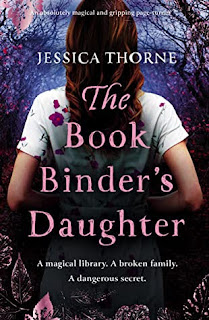
New Book Alert: The Bookbinder's Daughter by Jessica Thorne; Enchanting Special Collections Library Is Backdrop For Year's Best Fantasy


New Book Alert: The Bookbinder's Daughter by Jessica Thorne; Enchanting Special Collections Library Is Backdrop For Year's Best Fantasy

By Julie Sara Porter

Bookworm Reviews


Spoilers: Through this blog, we have seen book lovers and collections that have magic, not the traditional kind where a love of reading and a great imagination can send a Reader anywhere they want with the turn of a page. I mean real magic. From books that literally talk to Readers, books that appear to provide answers when someone is at an emotional crossroads, books that pull Readers inside their magical world, literary characters taking breaks from their storylines to hang out and chill with Readers, and libraries that hold every book that has or will be written and where characters congregate between reads and sometimes wait to become characters in a new work or taking over for other characters.

These Book Worlds could be a dream for me and my fellow Bookworms. 


That network of magical libraries and book keepers can add another member: The Ayredale Special Collection from Jessica Thorne's enchanting modern fantasy novel, The Bookbinder's Daughter.

 On the surface, it looks like a typical special library with a learned scholarly staff that know their collection and the knowledge it contains, researchers who come in to study the contents, comfortable chairs, a fireplace, and a very cozy, quiet, and welcoming atmosphere. It seems normal, but it's not.


 Sophie Lawrence knows this. She and her father left the Special Collection after her mother disappeared when she was a teenager. Now, Sophie is an adult whose father has died and she is in a loveless relationship with a verbally abusive boyfriend. She has constant dreams of walking around a tree that reaches the sky and a voice that calls to her. Her only comfort is her job as a bookbinder. She repairs and builds books with the care of a doctor to her patients.

Sophie is visited by her uncle, Dr. Edward Talbot who sends her an official job offer to become a conservator and specialist binder at the Ayredale Special Collection. Because of the trauma of her mother's disappearance and the blocked memories of her time in Ayredale, Sophie is extremely reluctant but as soon as she reenters the library and meets its odd staff, she feels a sense of being drawn in and welcomed. She also feels a surge of energy surrounding the library, something ancient, powerful, hypnotic, and potentially dangerous.


The characters and setting are what makes The Bookbinder's Daughter truly magical. There are so many great touches that enchant and draw the Reader into this spellbinding world of deep magic, knowledge, and wisdom.

Once Sophie enters the Special Collection, it becomes apparent that the collection and staff are one of a kind. The Ayredale staff are an eccentric unique bunch. Many of them practice some form of magic or what they call, The Art.

There's Uncle Edward who comes and goes on a whim always insisting that the "family must always return to the library." Will Rhys, Sophie's childhood best friend has grown into a handsome young man that sees himself as a protector of the library and Sophie. Professor Hypatia Alexander, the Keeper, never misses a thing but is looking for a replacement. Arthur Dee, Will's half brother has an obsession with the darker aspects of the collection. Villus, the library cat has his own sense of self importance. Delphine, one of three young library assistants (the other two are named Hannah and Meera), sets her amorous sights on the available and important men in the library. 

Then there's my favorite character, Tia, a flamboyant and flashy archivist who has a tragic past and powerful abilities behind her flowing red hair, glamorous appearance, and fashionable wardrobe. (Sort of like if Maggie Smith's earlier character Miss Jean Brodie had the knowledge of her later character Professor Minerva McGonagall.) The staff fills Sophie with a sense of welcome with their mostly kind nature but unease as the collection's real value becomes apparent.


And what a value that collection is. There are some very old magic books with a lot of power. One of them has leaves, no not leaves like pages, actual golden leaves written with words. This book is written in a strange language that none of the staff can decipher, except Sophie. Sophie, who has dyslexia and often has a hard time understanding written language, completely understands this book and many others. It appears that Sophie has her own untapped Art that needs to be put into practice. She has been  called to this job by outside forces and she does her job well.

The collection has a history that goes back to John Dee, Queen Elizabeth I's astrologer, advisor, and sorcerer who allegedly knew and wrote about various magical ancient languages. 


If the books aren't enough, there's the very large tree that stands in the center of the rotunda. A tree that contains much knowledge that can be transferred just by looking at it. It's a tree that is familiar to followers of various myths and religions. (Of course since books come from trees, it makes sense that the books and their original source would be together.) The books and tree are now in the care of the Ayredales who protect them from being misused even as they are pulsing with power and draw the unsuspecting, unwary, curious, avaricious, and greedy.

Of course, greed and opportunism set in and the collection is misused and opened wide. Dangerous things happen and many characters are revealed to be something else, something more frightening and deadly. Sophie finds out some truths about her family and the people that she works with and slowly has begun to regard as a second family.


The Bookbinder's Daughter is one of those type of books that draw a Reader in so much that they are immersed in the world and lost in the setting and characters. That magic  makes The Bookbinder's Daughter one of the best books and certainly the best fantasy of 2021.


Tuesday, July 28, 2020

Weekly Reader: Call Numbers: The Not-So-Quiet Life of Librarians by Syntell Smith; Sharp, Funny, and Deep Look At Rivalries and Relationships Inside A Public Library


Weekly Reader: Call Numbers: The Not-So-Quiet Life of Librarians by Syntell Smith; Sharp, Funny, and Deep Look At Rivalries and Relationships Inside A Public Library

By Julie Sara Porter

Bookworm Reviews


Spoilers: Syntell Smith's Call Numbers: The Not So Quiet Life of Librarians, could be considered the library equivalent of Joshua Ferris' Then We Came to The End. Both are humorous workplace satires about the wacky hijinks of employees and are also used to make important serious points about their societies. However, they are very different in many ways. Then We Came to The End was about an office set at an advertising agency facing the early 2000's economic crisis dealing with the fear of layoffs and possible workplace violence from an unhinged fired employee. Call Numbers is about the staff of a New York Public Library branch in 1994, that have to deal with budget cuts, an underprivileged neighborhood, and racial tension between staff members and the people around them.

Robin Walker, library clerk, is a transfer to the 58th Street Branch of the New York Public Library, from the Ft. Washington branch. As soon as he enters his new workplace, he is surrounded by conflict. He may be able to memorize the locations of various books by the call numbers, recognizes the lion statues in front of the Central Branch by name, and knows the Procedures of Conduct by heart, but that doesn't stop him from making a few enemies the second that he enters the doors.

His first enemy is Sonyai Yi, Branch Senior Clerk. She doesn't trust Robin's friendly but obstreperous behavior. However, that is not the only reason that she doesn't like him. Sonyai is in charge of the four young pages and she promised the next clerk position to high school student, Janelle Simms. Janelle needs the promotion because she's pregnant and the only ones who know are Sonyai and the other three pages.


Another enemy is Tommy Carmichael, another clerk and Sonyai's protege. Tommy doesn't like Robin, mostly because Sonyai doesn't. He isn't above playing juvenile pranks to force his authority over the newbie.

Yet another enemy is Ethel Jenkins. She and Gerry Coltraine are the only two African-American clerks at the 58th Branch until Robin comes along. Gerry bonds with him partly out of solidarity and partly to show Sonyai up. (He wants to become Senior Clerk in her place). Ethel however is suspicious of him for a personal reason. He is lighter skinned than she and she can't resist mocking him every chance she gets. She gets a page, Alex Stevens, to go along with the snide attitude until Alex takes a prank too far.


Oh yes and there are other plots going along with Robin and his Not-So-Merry Team of Rivals. Library Director, Augustus Chavez constantly vies with Heywood Lerner, Information Assistant, for movie nights and philanthropic donations, but has a loyal supporter in Zelda Clein, Librarian, who acts like a pit bull defending her boss.

Angie Trueblood, Information Assistant, is trying to earn her Associates in Library Science degree. However, she discovers some shady things about Augustus.

Meanwhile the youngest staff member, 14-year-old, Lakeshia Seabrooke develops a crush on Robin. She gets some off color advice from fellow page, Tanya Brown, who also has to deal with some bullies at school. The library staff of the 58th Branch may want their patrons to shush for the good of other patrons, but this staff is anything but silent.

There are some situations that are so broad that they are almost farcical. One is the hazing ritual that Sonyai and Tommy put Robin through in which he is faced with checking patrons out during the closing rush. Unfortunately, this ends in a fist fight between the two clerks to be broken up by Zelda and the police.

Another situation involves the extremes that Heywood goes through to prevent Blazing Saddles from being loaned out to 58th Branch for an upcoming Mel Brooks Film Festival.


Then there's the crash course on sex that Tonya gives Lekeshia complete with The Joy of Sex as a manual. (They borrowed the book under Tanya's name and oops, it's past due. Of course, Tanya's parents get a phone call.)

There is also the bar where library employees from different branches meet and compare notes about the awful people that they work with and conspire against them. They may be information professionals, but sometimes their immaturity shines through as much as or more than their willingness to offer books and other sources of knowledge to the New York public.

While the book is very broad at times, there are moments that Smith makes the Readers see the real characters inside the goofy hijinks. The characters show a lot of depth that take them beyond sitcom stereotypes. While Robin instantly goes on the defensive when he arrives at 58th, making enemies with his blunt attitude, he also shows a vulnerable side. He cares for his ailing grandfather, who has long been hearing impaired, and remains estranged from his superstar half-sister and stage mother.

He also has a friendly relationship with Gerry where the two quiz each other on call numbers. Once he and Tommy get past their testy initial dislike, their relationship cools down to frienemies who like to tease, but will defend each other. Robin also helps Tanya with her bully situation and agrees to go out with Lakeshia while letting her down gently by reminding her that he is an adult and it would be illegal for them to be together.

Even the more antagonistic characters show real depth and strengths both inside and outside the library. Just when we are ready to write Sonyai off as a domineering bitch, she shows a maternal side to the four pages. She treats them like wayward daughters giving them advice and lecturing them. She dislikes Robin mostly because of her protectiveness towards Janelle and the girl's situation.

In one of her best moments, she stands up for Janelle when her parents are furious about her impending pregnancy. She even gains a grudging respect towards Robin by the end.

The pages have their own girl squad. They act like sisters who disagree but help each other. Even when they are split about Robin, Lakeshia and Tanya like him and Alex and Janelle don't, it doesn't end their friendship with each other.

Augustus shows an antagonistic side as he cuts corners, sucks up to wealthy donors, and kills anything that would resemble negative publicity. The latter particularly at the expense of the staff's welfare. However, he makes it clear that he loves his library and would do anything to make sure that it remains operational and gets all of the new equipment, releases, and technology that they need. Even if he might have to commit potentially questionable and possibly illegal deeds to do it.

Some of the characters shine best in their home lives away from the library. Tommy has a loving interracial marriage with his pregnant wife, Sarah, which still bears some animosity from their families.

Angie shows a lot of spunk in her information science classes and exhibits knowledge that rivals her professors (and probably most of the staff). The conservative nerdy, Heywood gains an appreciation for grunge music, thanks to a friendship with a female musician who is mourning for a friend and fellow musician who recently committed suicide. (It's 1994, guess who?)

Ethel learns that she has a medical condition which could cause complications for her future career plans. Even characters like Zelda who seem to not have a life beyond the library show how important their jobs are to them and how hard they work to give people the information that they need. These moments show these characters' many facets. They can be selfish jerks, sarcastic wisecrackers, wacky goofballs, sympathetic friends and family members, and well-rounded individuals.

There is a serious undercurrent of racial tension that moves along as a theme throughout the book. Many characters suffer from comments or stereotypical remarks about their race creating a Mutual Animosity Society.

In one passage, a racist patron asks Angie for a librarian. She puts him in his place by not only telling him that she is an information professional and in two years will be a librarian, but also sharply reprimands him for his dismissive attitude towards her for being Native American. Many other characters like Sonyai and Robin respond similarily to racist comments while others like Augustus and Zelda turn a blind eye, trying to keep the library free of bad publicity.

Many characters are aware of the undercurrent of tension and how it affects their relationship with the other staff members and the public. When Robin is met with hostility on his first day, he responds back with further hostility. This tension leads to some violent encounters such as Tommy and Robin's fist fight.

The worst encounter is a final prank in which Alex writes an obscene message inside the library before opening, one that she knows will get under Robin's skin. Robin responds as violently as expected. This prank causes all the undercurrents to explode and come to the forefront.

In 2020, this prank would end up on social media and there would be a firestorm so big that no one could contain it. The encounter wouldn't slide and for better or worse, there would be some serious questions and a restructuring of the library and its staff.

However since the book is set in 1994 and they have a library director who is obssessd with giving the library a good facade, that doesn't happen. He only suspends Robin and Alex and practically cajoles and bribes them not to make it public. They agree but it is painfully clear that this tension isn't over.

With a second book on the horizon, those undercurrents will become stronger and what simmered will explode. What was once funny may no longer be. There are some hints that the comedy will stop when reality steps in and takes center stage. The 58th Street Branch staff are a pretty humorous character driven bunch now, but what happens next may take the humor out and show the real characters.