Showing posts with label Murder Mysteries. Show all posts

Wednesday, July 3, 2024

Conduit to Murder (A Belfast Murder Mystery Book 6) by Brian O'Hare; Conduit to an Excellent Mystery

Conduit to Murder (A Belfast Murder Mystery Book 6) by Brian O'Hare; Conduit to an Excellent Mystery

By Julie Sara Porter 

Bookworm Reviews 

Spoilers: A conduit is someone or something that conveys, protects, and sends things like information, goods, money, and ideas. When it comes to crime, a conduit could send information, order, or bribery money to various criminals and can be beneficial in creating an organized network of such individuals.

Brian O'Hare’s latest Belfast Murder Mystery, Conduit to Murder is a thrilling murder mystery in which Inspector Thomas Sheehan and Co. have to find a conduit to a large criminal network.

Sheehan and his team investigates the murder of an antiques dealer/politician found bludgeoned to death and who is part of a sinister criminal network. They discover someone has been leaking information about the case to the press. They receive alarming death threats that escalate into violent attacks and kidnapping. There appears to be a spy on the police force but who? How large is this network anyway and who are they? Above all, who is the conduit who is conveying information and payments to the various members and bringing all of these people together? 

This is a solid mystery all around. Many of the frequent tropes found in O’Hare's series like corrupt rich people, conflict within the team, suspenseful moments when one or several of Sheehan's team are in danger, are dialed up in this volume. This makes it a winning installment in the Belfast Murder Mystery series.

Many of the best moments are those that concern Sheehan's team and their close proximity towards danger. In one chapter, Sheehan and his wife, Margaret, are almost run off the road by a violent driver who is not only expressing road rage but is tied to their investigation. The incident causes Sheehan to put Margaret into hiding and their separation is heartfelt.

In another chapter, Sheehan's partner Denise Stewart and her boyfriend, Sergeant Tom Allen go undercover as a vacationing couple while chasing a lead to the South of France. Unfortunately, their targets are aware of their presence and people are killed. It's a very violent graphic trap and shows the long reaches that their antagonists possess.

The mole in the police force subplot is well played and dips into suspicion almost to the point of paranoia. It's tense reading about every word that the team says even in confidence, every lead that they investigate even if they are red herrings, and their homes and loved ones used as collateral. It really brings home the thought of constant surveillance and what happens when you can't even trust those you see every day.

Also the mole reminds the characters and Readers how wide this crime ring is and how their power and influence surrounds everyone and everything. In fact, this is only one of many crime ring conspiracy groups in the entire series. These groups are made of rich influential people who believe that they are above the law and feel entitled to do anything that they want including theft, rape, assault, forced prostitution, human trafficking, and murder without repercussion. They are insulated in their own worlds and think that those under them are theirs to play with, ethics, laws, or basic human decency be damned. 

It seriously makes one wonder if these various groups in each volume are connected as one large supergroup and there is some mysterious head pulling all of the strings that has yet to be revealed. 

Conduit to Murder is tightly put together with its clues, investigation, witness questioning, suspect interrogation, and resolution. It's not the type that relies on twists except for the mole reveal. Mostly it focuses on this war between the crime ring and Sheehan's team. This is a conduit into an excellent mystery.


Sunday, May 12, 2024

The Twisted Road (A Barrister Perris Mystery) by A.B. Michaels; Historical Mystery Develops the Progressive Era


 The Twisted Road (A Barrister Perris Mystery) by A.B. Michaels; Historical Mystery Develops the Progressive Era

By Julie Sara Porter 

Bookworm Reviews 

Spoilers: A.B. Michaels’ Barrister Perris Mystery, The Twisted Road, is one of those Historical Mysteries that knows how to bring the past to life: warts and all. Set in 1907 San Francisco, it takes shots at labor struggles, gender roles, class division, artistic expression, political unrest, immigration conflicts, all of the things that made the Progressive Era a fascinating and difficult time in history.

Jonathan Perris, a barrister who emigrated from London, finds himself in a bind when his girlfriend, Lena Mendelssohn is found murdered and Jonathan was the last one to be seen with her. While trying to prove his innocence, Jonathan and his team peer into Lena’s life and discover more layers and deception into the late Austrian socialite than Jonathan initially thought. 

This book is a great combination of a detailed historical mystery and has a memorable team to explore it. The effective team begins with their leader. Jonathan Perris is a protagonist with many mysteries of his own to unravel and fits in well with this year’s theme of “Troubled Historical Detectives.” An aristocrat, he is in possession of some second sight abilities that are inherited from his mother that he calls “the cadeau” (French for “the gift”.) While the second sight could veer this book into supernatural mystery territory so far it’s not overdone and seems to be written as deep intuition and deductive reasoning, traits that make Jonathan good at his job. He has ongoing questions of his own in wondering where his mother disappeared to and is possibly just as afraid of learning the answer. He is also estranged from his titled brother and is still reminded of the scandals of his frere’s past, some of which were instrumental in Jonathan leaving England for California. He is a troubled man who helps others so he doesn’t have to look at the conflicts in his own life. 

Jonathan is good at his job in being a barrister and helping his clients but he is also adept at picking an efficient team and they get as much attention and convey as much interest as their boss. One of Jonathan’s more progressive attributes is recognizing talent in those who society would have otherwise overlooked, such as Cordelia Hammersmith. Cordelia is a sharp tongued strong willed attorney who is ready to prove herself in the legal field. She is someone who takes excellent notes and is ready for a saucy comeback when others call attention to her gender. She wants to let her qualifications and expertise speak for themselves so she gets irritated when Jonathan overcompensates by overly defending her as he does at a party. She fits the archetype of the New Woman that was so present in the time period in which she lives. 

Cordelia is hired to defend Emmett Barnes who has been accused of murder during a labor union protest and has to use her sharp wits and observational skills to not only investigate this case but Lena’s when she learns that the two are linked. 

Dove Davydov is an investigator who also offers his own unique stamp to the firm. A sketch artist, he doodles his information as much as Cordelia writes and Jonathan senses. He grew up on the rough side of San Francisco and is unafraid to visit the bars, brothels, fights, and violent rallies that his higher class more sophisticated colleagues would be uncomfortable visiting. He has many contacts within the underworld and a shady past which suggests that he is familiar with the opposite side of the law. 

Dove first investigates Aunt Susie’s, the brothel where Lena worked. He is then led to an art class and a Socialist organization. Using his working class experience and his somewhat rebellious sardonic nature, he is able to bond with and glean information from the various people in Lena’s life who might be put off by Jonathan’s class and sophistication or Cordelia’s gender and abrasiveness.

The group is rounded out by Oliver Bean, a naive new partner and Althea, the motherly office manager. They don’t get as much mention in this book as the others but they have some memorable moments. Althea has a running gag that while her colleagues run around chasing leads, she remains in the office to “obfuscate.” Oliver has a delightful bit at Aunt Susie’s where Dove uses his familiarity with the ladies to ease through interrogation sessions, Oliver is overwhelmed by the attention from the plethora of beautiful women. By the time they are ready to go, poor Oliver is completely surrounded and leading them in a game of Three Card Monte much to his coworker’s amusement.


The mystery leads Jonathan and his team through various facets of early 20th Century San Francisco. Like many Historical Mysteries, The Twisted Road is a time capsule of the period in which it is set. In investigating Lena’s death, Jonathan and the others chase connections through a class of iconoclastic artists, a Socialist organization whose plans are moving beyond peaceful protests, a prostitution ring with an intercontinental stream of high profile clients, and a recent labor strike that resulted in a gruesome death and Barnes’ arrest. These different leads show what the Progressive Era was all about and what it represented within that  history.


Mostly, the Progressive Era was a time when the status quo of wealthy white American men was being challenged. Immigrants, unions, women, and many others were speaking out loud and making their voices heard through action, speeches, protests, art, volunteering, and social work. It was a time that looked for great change and sometimes change involved violence and deaths. Sometimes unscrupulous types took advantage of those who needed help and wanted to do the helping, causing more problems in the long run. Sometimes people were so enamored with their causes that human life became secondary and they were willing to put lives on the line just for their dream society to be realized, a society that may not be as perfect as the one they visualized (especially if they have to commit violence to achieve it).


The Twisted Road shows that transition in American history when people called for change and that change started to be made.


Saturday, February 10, 2024

Death in the Holler (A Luke Ryder Book 1) by John G Bluck; Troubled Alcoholic Protagonist is the Highlight of Somewhat Muddled Murder Mystery


Death in the Holler (A Luke Ryder Book 1) by John G Bluck; Troubled Alcoholic Protagonist is the Highlight of Somewhat Muddled Murder Mystery

By Julie Sara Porter

Bookworm Reviews 


Spoilers: 2024 so far looks to be the year of the “Troubled Mystery Investigator.” Between the friendship of cop/criminal duo, Vincent Bayonne and Kane Kulpa unraveling  in Journeyman by Indy Perro and the team of Ingrid Barker and Miles McLeod surrounded by an abusive husband, a dysfunctional family, and their own mental health issues in What Happened at the Abbey by Isobel Blackthorn, it seems that solving mysteries is the least of their problems. Instead, they could use some of that time investigating themselves rather than crime. We can now add Luke Ryder to that list. He is the protagonist of John G. Bluck’s Death in the Holler, a mystery that takes an intense look at its problematic perplexing protagonist.


Luke Ryder is a former Game Warden whose frequent alcoholism cost him his job. His sympathetic friend, Sheriff Jim Pike recruits him to lend his expertise to a murder investigation. Farmer Joe Ford has found an unknown dead body. Since it's muzzleloader deer hunting season and Ryder had previously investigated an incident in which a doe was killed on Ford’s property during the off season, Ryder is called to offer his expert advice on the murder weapon, potential identity of the victim, and identity and motive of the killer. As Ryder peers into the questions, he discovers that the case is wider than he thought. He comes face to face with drug dealers, organized crime, street gangs, a local psychopath, and his own addictions and tormented past. 


Bluck has a strong understanding towards his lead character and the conflicts and struggles that surround him. His past with parents who succumbed to their own dependencies reveals an inherited addictive personality which makes him susceptible to following his parent's path towards potential self-destruction. He destroyed relationships, friendships, and a career that he worked hard to obtain. This is a man who is stumbling towards rock bottom. In fact, Pike reveals that he wanted Ryder's help not necessarily as an expert but out of loyalty to give his oldest and best friend one final chance to turn his life around before it's too late.


Despite his addiction, Ryder proves his ability as an investigator. He has a good sense of how the criminal mind works as he develops an acquaintenceship with a gang member. He shows a protective side towards a prostitute and her child. He follows various leads to their conclusions. Perhaps his desire to solve this case is a barrier from his addiction. As long as there is a problem to solve or a mystery to investigate, he doesn't have to look at the mess that his personal life is in.


Ryder stands out from the somewhat muddled mystery. It is incredibly convoluted and sometimes difficult to follow. Many of the leads are arbitrary and have a very tangible connection to the initial investigation. Some subplots such as that of the young psychopath could be promising but aren’t as compelling as they could be. It is more interesting to see Ryder interact with the suspects than figuring out what they have to do with the murder. 


Luke Ryder is the most important aspect of this book and it shows in the writing. Bluck appears not as interested in the mystery than he is about Ryder's personal journey from debilitating addiction to a second chance to help others and save himself. 


Sunday, July 2, 2023

Weekly Reader: Evil Alice and The Borzoi (A Cleo Cooper Mystery) by DK Coutant; Beautiful Island Setting Hides Ugly Secrets and Murder


Weekly Reader: Evil Alice and The Borzoi (A Cleo Cooper Mystery) by DK Coutant; Beautiful Island Setting Hides Ugly Secrets and Murder

By Julie Sara Porter

Bookworm Reviews


Spoilers: I have said it before and I will say it again: Setting is a vital part of murder mysteries. Well technically setting is an important part of any book. But with Murder Mysteries, setting can add to the suspense and terror because of the harsh natural element (Indecent Exposure: A Father Hardy Murder Mystery by Jonathan Thomas Stratman), the corrupt socio political system (Under the Volcano: Quito Murder Mysteries by William Graham), as an unusual fantastic or science fiction based setting that comments on the progress and problems that plague us in our world (The Angela Hardwick Science Fiction Mysteries), or serves as an ironic counterpart to the violence because of either the small town atmosphere (Murder in Myrtle Bay by Isobel Blackthorn) or the beautiful nature (The Canary Island Mysteries also by Blackthorn) surrounding it.


DK Coutant's Evil Alice and The Borzoi A Cleo Cooper Mystery is one of those murder mysteries that counters the beautiful natural setting with the brutal violence and criminal activity. This is set in Hilo, Hawaii, the 50th state, known for its tropical climate, gorgeous beaches, scenic locations, and its frequent tourists. However, Hawaii also has a dark side which Coutant is not afraid to explore.


Cross-cultural psychologist, Cleo Cooper is assisting her boyfriend, Ben's marine research class when they discover something that usually isn't part of marine life or isn't supposed to be: a human body. The body is Alice "Ali" Bacunawa, an acquaintance of Cleo and Ben's, and the girlfriend of Ben's research assistant, Kai. Unfortunately, Kai is arrested for Ali's murder and Cleo and Ben are determined to solve the murder and prove that Kai is innocent. After all, they are almost 90% certain that Kai didn't do it.


What steals every moment in this book is the setting and Coutant describes it thoroughly. The day after Ali's body is discovered, Coutant writes "It was raining. It rained a lot here. Last year it rained 275 out of 365 days….Hilo rains were usually gentle and came in the early morning and evening as the trade winds pushed rain clouds up Mauna Kea as the sun rose and down the mountain just after dark. The waterfalls and jungles were worth the price of admission. On the occasional sunny day, Hilo was the most beautiful place on the planet. 

Today was not one of those glittering days."


Yes, Hawaii is present in all of its beauty. There are plenty of moments of outdoor activities like studying marine life, swimming, canoeing, surfing, and catching some rays. The characteristics of many locals are also portrayed such as that many arrive on "Hawaiian Standard Time" (15 to 45 minutes late). They also use pidgin dialect and local colloquialisms for certain terms like "tita" for a strong willed, opinionated, take-no-crap-from-anybody type of woman or "Auntie" which could mean a blood relative or simply an older woman in someone's life who takes a maternal role, like a friend or a teacher. These characteristics help bring not only Hawaii's natural landscape to life but its people as well. 


Being a murder mystery allows this book to open up and acknowledge the dark side of Hawaii, the one that tourists don't want to know about and the tourism and hospitality industries do not want to promote. According to statistics, Hawaii's poverty rate is at 10.9 percent and is one of the states with the highest cost of living.  In 2019, 44,270 crimes were reported in the Aloha State making it the 10th state with the highest crime rate. In fact, Hilo itself has a crime rate that is 70% higher than the average and has 83% more property crime than the entire country. 


All of these numbers give a dark and sinister look at a state that is often recognized for its scenic vacation spots. 

This is what Evil Alice and The Borzoi isn't afraid to show, the dark and light or living in such a place. The killer waves and the drug use. The nature trails and the domestic fights. The fancy hotels and the poor people who work in them. 


Evil Alice and The Borzoi explored the dark side of Hawaii so much that she reveals characters with understandable desires to leave it. That's how Ali is portrayed. She wanted to get out far away from her drug dealing family and hopeless situation. She wanted to go anywhere and by any means and those means may have gotten her killed.

While Cleo has grown to love Hawaii, considering it her home after moving from North Carolina, she also wants to travel to other places. Ben however has bought into the paradise ideal and has no intention to travel or leave Hilo. This is one of many disagreements that the two have had that are simmering under the surface like one of Hawaii's many volcanoes and is about to erupt. It wouldn't be a surprise that as the series continues, Cleo will be single-o.


Evil Alice and The Borzoi shows that inside every paradise, there is pain. It reminds us that for every beautiful postcard or Instagram shot exploring natural beauty, there may be someone suffering a few feet away from it.


Saturday, July 1, 2023

Weekly Reader: Murder in Myrtle Bay (Ruth Finlay Mysteries Book 1) by Isobel Blackthorn; Secrets, Affairs, Lies, and Murder Surround a Small Town


Weekly Reader: Murder in Myrtle Bay (Ruth Finlay Mysteries Book 1) by Isobel Blackthorn; Secrets, Affairs, Lies, and Murder Surround a Small Town 

By Julie Sara Porter

Bookworm Reviews


Spoilers: We spent some time in the Atlantic exploring the history, current events, and legends of the Caribbean. Where to next? Why explore the danger and violence found in the Pacific Ocean of course. We saw a bit of the Pacific in Adrian Deans' Asparagus Grass beginning in New South Wales Australia but mostly it was the start of an around the world and into the stars trip.

This and the next book that I am going to review are murder mysteries set in the Pacific Islands of Australia and Hawaii respectively with the locals at their best and worst.


Cozy Mysteries usually show the best of small towns with friendly helpful residents, cute shop names, and, okay there's murder going on but there are many who want to solve it with the help of many eccentric families.

What makes Isobel Blackthorn's Murder in Myrtle Bay Ruth Finlay Mysteries Book 1 stand out is while it shows that charm and eccentricities of small town life, it isn't afraid to show these towns at their worst: the judgemental attitudes, the years long feuds, the clannish snobbishness when someone new comes along, the socioeconomic and sometimes racial divides that puts certain people in specific categories, and of course the strong emotions which result in violence and murder.


Friends, Ruth Finlay, and Doris Cleaver, are visiting the Factory, a now closed factory which has become an antiques and collectibles market. The duo find the dying David Fisk, who looks like he was hit on the back of his head and insisted that "he didn't do it" before expiring. This leaves Ruth and Doris with many questions. Who attacked David? What didn't he do? Who would dare attack him in broad daylight in an open market? How did they manage without anyone noticing? Ruth and Doris saw many friends and acquaintances that day, so which one is guilty?


Murder in Myrtle Bay is in many ways a typical cozy mystery with the usual tropes: murder in a small town, a victim with plenty of enemies and few friends, and an interesting detective, or in this case detectives, that takes their Reader through the mystery. That doesn't make Murder in Myrtle Bay, a lousy book. In fact, it's a lot of fun. It's the type of book that you want to read on the beach or on a warm summer night with a cold drink in hand.


Part of what makes this book are the lead characters themselves. Ruth and Doris are a fun fascinating duo who stand out as they try to solve the mystery of who killed David Fisk.


Ruth and Doris are an attraction of opposites. Ruth is a magazine writer in her 30's or 40's with an aging father. She grew up in Myrtle Bay, at least since high school, but she is something of an outsider, partly because of her standoffish personality and occupation as a journalist. This murder investigation also involves her asking a lot of personal questions to people that she has known for a long time making her even less liked. This scrutiny often makes her self conscious and overly serious at times.


While Ruth feels like a self conscious outsider, Doris knows she is an outsider and doesn't care. In fact, she dramatizes it. A senior, Doris dresses flamboyantly and can be very outspoken. Doris is also quite a gossip and knows the family histories in town and is even related to some of the noted families. She gives Ruth some much needed background information over who feuded with whom and who cheated on whom. Doris makes a strong presence whether it's getting a local to do some landscaping or to admit previous affairs with other women. While Ruth shies away from people, Doris is up front and center.


The mystery that Ruth and Doris find themselves in is pretty solid especially since it happened in open public and both admit that they saw friends and acquaintances coming in and out of The Factory meaning the murderer is more than likely someone that they know. 


Among the difficulties of living in a small town is that almost claustrophobic feeling of everyone knowing everybody. You go to a store and you see regular staff members or customers. You might see old school friends. Old friendships might be rekindled but also old grudges, rivalries, and fights may resurface. It's hard to live in the moment when there is someone always reminding you of your past.


Another aspect that Blackthorn's writing opens is the sharp lines that are often drawn among people in such towns. As Doris reminds Ruth of the different family rivalries and love triangles, it's clear that the two women are surrounded by a hierarchy and system where some people are on top and some are on the bottom. While that's true in most places, that's usually an abstract. In small towns, the people on top are known, usually families with a lot of wealth and connections. If not families, then institutions like the local churches or associations that shape the towns in their own images. If you are considered the wrong income bracket, live on the wrong side of town, the wrong skin color, the wrong religion, the wrong sexuality or gender identity, or become a subject of scandal, you could be made a pariah.


This claustrophobia and hierarchy is what Ruth and Doris have to muddle through as they get to the truth. There are many people, especially from certain families, that want to keep their image and reputation intact and won't let something like a dead body and a murder investigation get in the way of that. 


Murder in Myrtle Bay is a reminder that just because an area is rural doesn't mean that it isn't filled with hatred, prejudices, and violence. If anything, it's often worse than an urban landscape because Death could be wearing a familiar and even once friendly face.


Monday, December 13, 2021

Weekly Reader: Murder By The Coven (A Belfast Murder Mystery Book 3) by Brian O'Hare; Supernatural Unnecessarily Brought In For Otherwise Thrilling Police Procedural Murder Mystery


 Weekly Reader: Murder By The Coven(A Belfast Murder Mystery Book 3) by Brian O'Hare; Supernatural Unnecessarily Brought In For Otherwise Thrilling Police Procedural Murder Mystery

By Julie Sara Porter

Bookworm Reviews 


Spoilers: Granted, I have only read two books in Brian O'Hare's the Belfast Murder Mystery Series, so it's hard to tell which is the weird one: Murder by The Coven for openly involving the supernatural or Murder on the Dark Web which is a police procedural which does not. Judging by the description of the other three books in the series, Murder by The Coven is the most likely outlier. Because of that, it is nowhere near as powerful and graphic as Murder on the Dark Web.

Now don't get me wrong, I love supernatural mysteries. I love when the protagonist has psychic abilities along with massive powers of deduction in their arsenal. I love when "murder by dark magic" could logically be considered as a means for murder. I don't even mind when genres mix. However, in a long term series it has to do it from the beginning. To throw supernatural demonic influences on a mystery series which was fine being a typical police procedural with human murderers and pedophiles is jarring at best and sends mixed messages at worst.


Maybe I am particularly hard on Murder By The Coven because I loved reading Dark Web Murders so much. In fact it was one of my favorite mysteries that I read this year so the follow up was bound to be lacking in comparison. Murder on the Dark Web subverted the ideas of heroes and villains, good and bad, by making the murder victims reprehensible and guilty of crimes in which they were never caught nor charged because of their wealth and power. The murderer was victimized by these horrible people and seeks vengeance the only that they can. However, the fact that they take it too far and harm innocent people makes the murderer a bit hard to root for though understandable. The subversion is ever present and was what made The Dark Web Murders so great.


Murder by the Coven also has some of those same themes. When it explores that theme, it is very exciting and thrilling.

The prologue is set in 1995 and takes place during a terrifying ritual. A woman is brutally murdered in a sacrifice by a Satanic cult. The cult members are hooded and unidentified. Twenty one years later, an older couple is murdered. Meanwhile, Sheehan and his team investigate the skeleton of a woman that has been dead for over 20 years. After some investigating, the team learns that there is a connection among the skeleton, the couple's murders, and the Satanic coven which is alive and well.


Murder by the Coven is similar to Murder on the Dark Web which the rich and powerful's crimes are buried because of names and connections. Many people are left suffering in their wake and one seeks vengeance because of a lifetime of suffering from actions that have gone unpunished. Some of the murderer's actions are unconscionable and their overall personality is very different from the previous murderer of the Murder on the Dark Web. Many times they are just as cold blooded and methodical as the coven of Satanists. The Satanists created the circumstances in which the murderer acts and the murderer takes it to a higher level. The Satanists are the cause and the murderer is the effect.

There is some heart stopping suspense and a nice subplot involving coroner, Andrew Jones and Selena Carrington, a young woman involved in the investigation. When Murder by the Coven is set in the procedural world, it works.


That is how this book should be, unfortunately it isn't always like that. In the last book (and from reading the descriptions of the other books), faith is a strong theme throughout the series. Sheehan is a die-hard Catholic and in Belfast, the struggles between Catholics and Protestants are still present. In fact, the book is set against the backdrop of The Twelfth, an important day in Ulster history honoring William of Orange, the Protestant King of England. The Twelfth is still a day of contention between the Christian denominations in Northern Ireland. Sheehan and his team put their own religious divide and personal animosity to keep the peace. Faith and spirituality is important to the series but it has always been in the background until Murder by the Coven.


What doesn't work is that the book takes a hard left into the paranormal. One of the coven members invokes a demon to curse Sheehan and his crew. Suddenly,this awesome police force and their loved ones act like bickering and whining children accusing each other of infidelity, police corruption, and sloppy investigation tactics. If these were presented as legitimate concerns that the characters have had over the years that manifested itself into internal suspicion, petty bickering, or even joking asides or disagreements, it could be symptomatic of buried resentments now coming into focus because of a stressful case. But no, instead one minute they are acting as a team and the next they can't stand to be in the same room together. It takes the work of an exorcist to break the curse.

This subplot could have worked as a maybe magic maybe mundane situation where coincidences or hidden circumstances that could be attributed to otherworldly forces but it is so blatant here and seems to come from The Exorcist rather than a realistic crime drama.


This passage almost sends the book to an unnecessary detour into the supernatural. The Sheehan series seemed to exist in a regular real world where human beings sometimes did despicable hateful

things to other human beings. They didn't need demonic influences to act. Sometimes the darkest hearts can be with humanity itself and they get justly punished for their actions. Inserting paranormal forces into a series that didn't occur before is like throwing a dragon into Ed McBain's 87th Precinct series. It may shake things up and it was probably O'Hare's intention to do something different with this book. But it comes across as awkward and in this case contradicts messages from the other books.


Murder by the Coven seems to imply that the coven got where they were: rich, powerful, and corrupt because of their pact with Satan. It's the old "Devil Made Me Do It" defense that demonic influence, not human behavior, is the real enemy. So in this world if the Devil influences characters, does that work for the rest of the series? (I hope not. That club in Murder on the Dark Web are complete human a$#@_&es who definitely didn't deserve such an out.) Putting demons in a series that previously didn't have it removes the thought that ultimately humans are responsible for their actions for good or bad.


In a different book, the supernatural might have been an interesting addition to a crime drama series, but not in this one which operates and depends so much on real world issues and real world laws. Perhaps instead O'Hare could do a supernatural based series which directly involves such diabolic vs. angelic conflicts but not in a 

police procedural series and, volume in particular, which worked just as well without it.


Monday, September 6, 2021

Lit List Short Reviews Be A Successful Maverick Vol. 3 How Ordinary People Do It Different to Achieve Extraordinary Results Edited by Paul Finck, The Machine Murders Island Buoys The Manos Manu Series by C.J. Abazis, A Novel Crime: St. Marin's Cozy Mystery Series by ACF Bookens, Salvage Trouble: Black Ocean Galaxy Outlaws Mission One by J.S. Morin

 Lit List Short Reviews Be A Successful Maverick Vol. 3 How Ordinary People Do It Different to Achieve Extraordinary Results Edited by Paul Finck, The Machine Murders Island Buoys The Manos Manu Series by C.J. Abazis, A Novel Crime: St. Marin's Cozy Mystery Series by ACF Bookens, Salvage Trouble: Black Ocean Galaxy Outlaws Mission One  by J.S. Morin


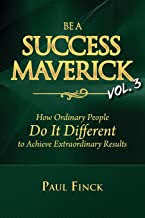
Be a Successful Maverick Vol. 3: How Ordinary People Do It Different to Achieve Extraordinary Results Edited by Paul Finck


Be a Successful Maverick Vol.3 How Ordinary People Do It Different to Achieve Extraordinary Results is a brilliant anthology of various essays by entrepreneurs and other businesspeople to help others get through their difficulties and indecisiveness to become better in their personal and professional lives.

Maverick Millionaire, Paul Finck shares his own personal struggles and what it taught him. His wife Deborah had a tumor in her pulmonary artery. The surgery was successful and she recovered. Unfortunately, he was not permitted to visit Deborah on account of Covid restrictions and his professional life took a hit as 80% of his sales went down.

 Looking back on that experience taught Finck a lot about how to deal with stress and how people consider how they got in that situation. Finck recalled the human factors from what he dubbed the Ultimate Maverick Success including Intelligence Quotient, Social Quotient, Spiritual Quotient, Emotional Quotient, and Adversity Quotient. Finck realized that Deborah's health and troubled sales were testing his Adversity Quotient. He built new systems and attracted new customers and spent as much time as he could with his family as well as contacting his wife to remind her that he was there for her.


Some of the stories deal with personal struggles and what the author learned from them. Forbes Riley, CEO of SpinGym recalled a time when she took a test in college, got every question right, and still got a C. The professor told her that his A students went beyond the test answers. They did extra credit, additional reading, and projects at the bottom of the syllabus. They go beyond what is expected of them. This advice led her down her path of hosting infomercials, building a  state of the art TV studio, and greeting various guests like Deepak Chopra, Grant Cardone, Les Brown, Sharon Lector, Jack Canfield. She also co-hosted the original X Games and worked with Body By Jake to create a reality cable series called Fit-TV, resulting in her getting inducted into the National Fitness Hall of Fame. 

Riley learned a much harder lesson when Dexter, a boy that she helped raise, was shot by a gang member for wearing blue, a target color. The randomness of the shooting and the intense grief she felt after Dexter's death, led Riley to come to the conclusion that "Life happens for you, not to you." She misses Dexter but still continues to inspire and teach, gaining a stronger empathy from this difficult loss.


Some of the chapters aren't always personal stories. Others are words of advice and encouragement. Rae Ann Hall, author, speaker, facilitator, and podcast host of The Optimistic Choice offers a Call to Action with her essay, "The Resilient Warrior-How to Warrior Up in Life." Using all caps, exclamation points, and bold print, Hall motivates her Readers. She writes a process that includes "Know Yourself: STRONG," "Pain to Purpose: BRAVE," "Face it and Forge Ahead: EXPERIENCED," "Optimistic Outlook Does Influence Outcome: RESILIENT," "Action, Belief, and Consistency: DETERMINED," and "Act, Do Not React: PROACTIVE.


Technically, Be a Successful Maverick, isn't telling their Readers anything new. These words of advice can be found in many self help books but in times of great stress, when we need inspiration and encouragement the most, that's when a book like this comes along to provide that.


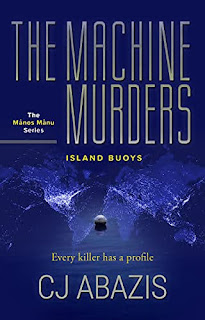
The Machine Murders Island Buoys The Manos Manu Series by C.J. Abazis


The Machine Murders, part of C.J. Abazis's Manos Manu series, tells a suspenseful mystery in a beautiful setting but also offers interesting conflicts between various law enforcement agencies over the different ways to catch criminals.

Manos is on the island of Mykonos, Greece to attend a friend's wedding. Unfortunately, a serial killer also happens to be working at the same time. The latest murder victim is Bill Casey, an Instagram influencer, is found dead with a chain running through his insides. Manu, a data analyst with Interpol, is naturally dragged from his vacation to get to work.


The suspense and setting work really well for the book. There are many tense chapters with characters chasing various leads before the killer finds his next target. There is a particularly creepy passage when a character is caught by the killer and struggles for their life while he attempts to drown and disfigure them.

The irony is that all of this set on a beautiful island during what should be during a happy time. The descriptions are filled with scenic beaches and clear water that is perfect for swimming. The attractive setting serves as a contrast to the dark actions of ome of the characters.


The most interesting aspects to The Machine Murders are the various approaches that characters take to crime solving and how they clash. There are people like Lena, a profiler, who prefer to analyze behavioral patterns and use psychological methods to learn the killer's identity. Then there are those like Manos who prefer the more technological approach like investigating social media accounts, hits, views, purchases and any information obtained on the Internet. Of course there is also the opinion of those like the Mykonos police department, just going around town, asking questions, and chasing suspects. All methods are used and none are seen as ridiculous even if the characters argue over which method is best. Eventually, they all come to the same conclusion: the identity of the killer.


Besides being suspenseful and beautiful, The Machine Murders shows us that law enforcement like, every other occupation, is in a stage of transition, one that has its flaws but its merits as well.


A Novel Crime: St. Marin's Cozy Mystery Series by ACF Bookens

A Novel Crime is a short but engaging cozy mystery in which a divorcee loses a husband but gains a new career and a penchant for amaterur crime solving.


Harvey divorces her husband, Trevor, the same day that she finds a dead body. Well the divorce is bad but not unexpected. They had been having problems for years and even when a terrified Harvey calls Trevor about the body, he takes several hours to show up.

The body fills her thoughts more. It is that of Juan Ortega Montague, a property dealer. Partly to block out painful associations with the divorce but also to satisfy her curiosity and imagination nurtured by reading many books, Harvey looks into the case herself butting heads with the police.


A Novel Crime covers all of the usual beats of a cozy mystery: violent but not too violent crime, protagonist with a career outside of law enforcement but a tendency to find themselves in dangerous situations, beautiful location with odd locals, in this case San Francisco, a loyal group of friends to help the protagonist, and an obvious murderer. It's very predictable. Even the killer's identity is easy to guess because of a conversation in which the killer followed the old "revealing too much about the case that only the killer would know" trick.


There are some interesting parts such as when Harvey gets glamorous and attends an upscale charity event with a pro athlete/potential love interest. It's also nice to read that even though the divorce hit Harvey emotionally she still makes plans to move on to New England and open her own bookstore.


While A Novel Crime is an average mystery, its main purpose is clearly to set up the situation where Harvey decides to move and open her bookshop, fulfilling a lifelong dream and finding more trouble. On that respect, it works.


Salvage Trouble Black Ocean Galaxy Outlaws Mission One by J.D. Morin

J.D. Morin's novella, Salvage Trouble is for people who love watching space travel science fiction shows like Star Trek, Battlestar Galactica, and Firefly. It's about a space crew fighting enemies and taking on new passengers as they learn to adjust to living and working together in space or as they refer to it, 'Black Ocean." It doesn't present anything new to the genre but it provides an interesting and combative crew who argue and bicker with each other as much as they fight with enemies.

Capt. Carl Ramsey of The Mobius travels outer space to look for salvage and transport passengers and cargo to different locations. It's not a glamorous job like exploring space for scientific discoveries or creating diplomatic relations with other worlds, but someone has to do it. He isn't alone. He has a loyal but also argumentative crew at his side. They include: Tanny, a sharp tongued former marine and Carl's ex wife, Mort, a spiritual minded "tech wizard", Chip, a likeable computer wiz, Roddy, a simian looking alien who is a strong fighter and big drinker, and Mriy, a quiet feline-like alien whose job is rather mysterious (but when she is called to fight or defend her crew, there isn't much of the enemy left). While on a salvage mission that ends badly especially for one of the crew members, Carl and Co pick up two new passengers: Adam, a mysterious precocious young boy who was part of a genetic experiment and Sister Theresa AKA Esper, a priestess/teacher who sought to free Adam from his guardian's rigorous and mind altering training.


Salvage Trouble is a delightful tribute to various science fiction movies and shows. The most obvious being Firefly with its sardonic but good hearted blue collar captain living on the outer edges of space and an immensely talented mysterious kid with their protective guardian. There are also some clever references to other sources. The alien characters could have fit in at the Mos Eisley Cantina from Star Wars. The fact that the alien that is primate in appearance is named Roddy is clearly a tribute to Roddy McDowall, the star of Planet of the Apes. These references will interest science fiction lovers of various generations.


The plot is mostly a lot of fights with various characters with some interesting twists towards the end (more on that later). However, Morin gives us a fascinating crew to follow on this journey mostly because they behave like people who have to spend a long monotonous traveling time together. They aren't going to get along or always like each other but when outside forces threaten, they have each other's back.

I mean when one of the crew members is the Captain's ex spouse, personality conflicts are bound to happen. Besides the awkwardness between Carl and Tanny, there are also other clashes found within the novella's short length. Esper and Carl start to develop feelings for each other and Tanny is deep in grief over the loss of another crew member that is clearly beyond friendship. Esper and Mort get into some science vs. spirituality debates. Adam also has an intriguing back story that makes him a mystery to everyone including himself. 

The story moves along briskly with some twists. One twist in particular was upsetting for me  because I liked this character. However, reluctantly I will admit that it made sense and was brilliantly foreshadowed without being too obvious. 


Salvage Trouble is short but it definitely makes the Reader want to book another voyage with the Mobius crew across the Black Ocean.


Friday, August 27, 2021

Weekly Reader: From The Ashes (A Ravenwood Mystery) by Sabrina Flynn; Engaging Historical Mystery Looks Like The Beginning of A Beautiful Partnership


Weekly Reader: From The Ashes (A Ravenwood Mystery) by Sabrina Flynn; Engaging Historical Mystery Looks Like The Beginning of A Beautiful Partnership

By Julie Sara Porter

Bookworm Reviews


Spoilers: Sabrina Flynn's The Ravenwood Mysteries are sort of like what would happen if Sherlock Holmes died for real and John Watson and Irene Adler teamed up and took over the consulting detective business at good old 221B Baker Street.

The book, From The Ashes, is an engaging mystery which gives us two protagonists taking separate journeys on opposite sides of the law.


San Francisco detective Atticus James Riot has returned after a three year absence following the death of his partner and mentor, Zephaniah Ravenwood. Ravenwood's death cut Riot deeply and he is not sure that he can or should continue. However, like a police officer called to take one last case before retirement, Riot is called back into the fold. His associate, Tim, refers him to the case of Isobel Amsel Kingston, wife of attorney Alex Kingston who is reported missing while on her way to visit her family in Sausalito. Riot reluctantly takes the case.

 While Riot is investigating Isobel's disappearance, we also get to peer into what is going on with Isobel. She has managed to flee her kidnappers and other potential assailants. It eventually becomes clear that she isn't missing so much as she is escaping which calls into question her marriage to Kingston.


Isobel and Riot's stories do not physically converge until towards the end so that gives both characters chances to take charge of their own story and develop into interesting characters. Riot is a great detective, both intelligent and physically active, but he has a huge inferiority complex. He isn't afraid to dig and ask complicated questions until he finds out the truth. His first encounter with Kingston shows him as someone who isn't afraid to ask tough questions to anyone, no matter how rich, powerful, privileged, or intimidating that they are.

Riot also shows understanding and kindness to many of the economically disadvantaged and minorities as when he discovers Old Sue, an impoverished alcoholic is dead. She is his only link between Isobel's disappearance and her former life in Sausalito. He is upset about that missed opportunity but also treats Sue like a human being whose life had value. There are some implications that his dislike of the wealthy and powerful and concern for women, minorities, and the poor stems from his childhood, particularly something concerning his mother. This reason is not fully elaborated upon but helps explain a lot of his character and why he does everything that he can to make sure true justice is meted out to those who need it and who can't always trust the police or Pinkerton's (the latter of which Ravenwood and Riot once worked for) to bring justice forward.


One of Riot's biggest hindrances is not with a suspect or Isobel's family or husband. It's within himself. He is still haunted by Ravenwood's presence. Sometimes literally since the deceased detective appears in his dreams to criticize Riot's handling of the case or to offer suggestions. Now Riot could be haunted by Ravenwood's ghost (considering the other books that I have read that is a distinct possibility.), but more than likely that may not be the case. 

Ravenwood's presence is still strongly felt by Riot and those who knew him. The detective agency is still in his name. (Heck the mystery series is named after him even though he's been dead three years before this book begins.) Riot is insecure about following up to that legacy which is why he wants to retire after this case. Ravenwood's suggestions may not be messages from the dead but are instead steps that Riot already knows and doubts himself to follow. Ravenwood's visitations might be his own subconscious judging and advising him.


Besides Riot, we also follow Isobel's adventure and we do not see a damsel in distress. She is a pretty tough, competent and strong woman. In her desire to escape her marriage, she has many plans. She evades kidnappers in a clever and resourceful way and disguises herself to avoid being found. 

She also has many contacts who will help and lie for her if need be. One of them is her twin brother, Lotario. Isobel continued to maintain contact with him after he was revealed to be gay. That link between siblings makes him an ally that provides a helpful escape route for Isobel. Like Riot, her ability to treat others well particularly outsiders or those on the outer margins of society proves beneficial. 


Isobel's background as the only girl of several brothers in a wealthy but outdoorsy family allowed her much freedom. This childhood freedom gives her the opportunities to spend most of the book on her own avoiding capture by the police, Kingston, and Riot. During her escape, she proves to be smarter and more capable than many of the people around her. Sometimes, her decisions prove to be a detriment but she always has a second option in mind. The conflict of Isobel escaping and Riot trying to find her is like a chess or tennis match where both parties are evenly matched.


Isobel and Riot's plots are so well developed that it's actually enjoyable when they do meet and unite and combine their talents. There isn't much in the way of romance so much as a sharing of equals who could be a great team.

To paraphrase the famous closing line of Casablanca, this looks like the start of a beautiful partnership.


Monday, February 15, 2021

Weekly Reader: The Colours of Death: Sgt. Thomas' Casebook by Robert New; Mystery Anthology Is Bright With Color Theme


Weekly Reader: The Colours of Death: Sgt. Thomas' Casebook by Robert New; Mystery Anthology Is Bright With Color Theme

By Julie Sara Porter

Bookworm Reviews 


Spoilers: The color of death might be black as the symbolic color of mourning like seen on the robes of the Grim Reaper. It might be red, the color of blood when it comes outside of a body. In some cultures, the traditional color of mourning is white. However, according to Robert New's The Colours of Death: Sgt. Thomas' Casebook, death comes in a variety of colors.


Colours of Death is a suspenseful mystery anthology with an interesting premise: each short story takes the theme of a specific color. The colors in the title are revealed as a symptom of the murder (blue skin revealing that the victim has been poisoned as seen in "Blue: Blue Bloods" ) or a specific trait about the murderer or victim in question. (One of the characters has flaming red, almost orange hair, in the short story, "Orange: The 11th Killer.") 


The stories fall into a mostly predictable pattern. A murder occurs somewhere in Perth, usually seen through the perspective of the potential victim or one of the eyewitnesses. Something odd happens or some unidentified character with a unique trait appears to make what the character sees even more bizarre. Then Sgt. Brad Thomas and his colleagues are called in to investigate the crime. The color element is introduced during the investigation describing either the cause of death or the victim or killer's appearance. Thomas interviews suspects and searches the scene of the crime to gather evidence and find probable solutions. He also discusses the case with others including his mentor, Prof. Engels, forensic pathologist, Sally Summers, and his fiancee, Amy Stevenson. Thomas uses his deductive skills or intuitive reasoning to come up with a Eureka moment, connected to the color. He discovers the killers' identity and gets them to confess in a final interview. Thomas is then left contemplating his dangerous career and upcoming marriage to Amy.

While the stories are formulaic by nature, the colors are made to explore all of the interesting ways and possibilities in which a murder can occur. New does a brilliant job of making each story unique in execution, connecting the story with the rest of the anthology, and also allowing the story to stand on its own as an interesting case in its own right.


The stories run an interesting gambit of murderous possibilities. In "Black: Black Death," Thomas investigates the murder of Johnny Smyth, a man who had his bones broken, organs damaged, and had been beaten so much that the bruises on his skin appeared black. ("It's like he was sandwiched between two trucks or fell from the sky from a parachute," Sally observes.) Thomas uses information that he gathered investigating images and memories from his own rural background to reason that Smyth had been killed and dropped into a mine that was owned by Athol "The Fugue" Fugate, a local crime boss posing as a legitimate businessman and reoccurring antagonist in Thomas' series. This is among the more gruesome cases, but it stands out because of the one on one struggle between the opposite sides of the law. Those sides are found in Thomas' Sherlock Holmes-like deductive reasoning and empathy towards the crime victims vs. Fugate's smooth ability to do away with his enemies and making his name known and feared by the general public while literally getting away with murder.


Thomas has a fascination with psychology and criminal profiling. That profiling comes into play in "Orange: The 11th Killer." Thomas engages in a conversation with Paul over an investigation in which 47 different hair samples are found around a series of dead bodies. Thomas reasons that the person is obsessed with hair. Perhaps he could be bald or has a unique hair color in which he was noticed or mocked for. (The orange in the title refers to hair color.) Thomas also notes that the killings occurred on the 11th of each month as an important date in the killer's life. Of course he is found to be right. There is almost something psychic about this approach to crime solving and the short length makes Thomas' observations a bit too quick and obvious. However, this story reveals how crime solvers get into the killers' minds to learn what they are obsessed with and what compels them to take such a dangerous path.


Another brilliant case is "Yellow: The Storyteller." Aaron Stevenson, Thomas' future brother in law, is contacted by a local serial killer known only as The Storyteller. In Jigsaw like fashion, the Storyteller kidnaps a family member of the chosen target and then calls them to tell them that they have exactly 45 minutes to solve three riddles or said family member would perish in a fire that the Storyteller would start. (Yellow as in flames. Thomas and co.'s only possibility is that the Storyteller is a firefighter because they know the exact time of fire progression.) During a tense three way conversation, Aaron,Thomas, and Engels reason their way through the riddles to save the life of Aaron's son, Jethro. The three men use their vast knowledge to determine the solutions. One example involves the clue "Franklin's 51st theft stole the credit for this." Instead of the more obvious choice of Benjamin Franklin, Engels comes up with the theory that the clue refers to Rosalind Franklin, whose photo fifty one revealed the helical structure of DNA and who was not given credit for the discovery until after her death. The story is almost a process of figuring out who is smarter: the criminal who gets people to play their games or the officers who are trying to end the game.


One of the more heartbreaking cases in the anthology is that in "Blue: Blue Bloods." A toxin is released during an awards ceremony at Sangre Azul School causing hundreds of deaths, most of them children. The blue in the title is a double meaning revealing the blue skin which is a symptom of the toxin and that the school's name is French for "blue blood." This is another case that is largely dependent on Thomas' rural background and knowledge of poisons, but what stands out is the emotional tone of this story. It is matter of fact but carries a sense of sadness about the realization that a whole school full of children, almost a generation, will never graduate and ascend to college, never be with their families, or never hang out with their friends, because of one person's hatred and vile actions. Hundreds of families are greatly affected by this tragedy including parents and siblings. The short story calls to mind real life mass murders such as the Sandy Hook Elementary School shooting in which the majority of the victims were children.


New captures the senses well with his writing. The colors themselves capture sight and the many of the murders affect the victim's senses of smell and taste. 'White: Sting'' is one that activates the sense of touch not only in the victim but subconsciously in the Reader. Sally investigates the body of Grant Dillon. The cause of death was a self inflicted gunshot to the head but what confuses Sally is the body's appearance. Why was Dillon hairless all over and why was his skin red raw as though it had been waxed several times? Why was their one folder in his medical cabinet marked "Pain" which contained several receipts for prescribed and over the counter pain medication and alternative treatments? Dillon was clearly under a lot of pain that may have resulted in his suicide but what?

After talking to his doctor, Sally learns that Dillon had been infected for a year because of the stings from the white hair of the Gympie Gympie Tree, native only to Queensland. The hairs of the tree can embed in the skin and cause unbearable pain that can last for up to two years. ("It's like being burnt with hot acid and electrocuted at the same time," Dillon's doctor states.) Someone clearly wanted Dillon to suffer. 

Readers with a low tolerance for pain or are extremely touch sensitive to rashes and bruises are advised to read only with plenty of aloe gel nearby to soothe the psychosomatic pain that will inflict in becoming too involved into this story.

Besides an interactive sensate experience thanks to New's description, the characterization in this story stand out. Both Dillon and the person who contributed to his death are written very sympathetically. Unlike many of the previous stories, there is a clear motive and understanding towards why someone would want to cause such suffering. 

Also Sally emerges as a real hero in this story. In most of the previous stories in this anthology, Sally's role is to be Thomas' sidekick just to provide forensic analysis and be amazed at Thomas' observations and solutions. This time Thomas is in the back seat, preparing for his wedding and giving only a few suggestions to propel her investigation in certain directions. Refreshingly, "White: Sting" gives Sally a chance to do some real legwork, interview suspects, and come up with a solution based on her own medical expertise.


The Colours of Death is an anthology that reveals that death cannot only wear many faces, but it can be many colors as well.