Tuesday, October 5, 2021

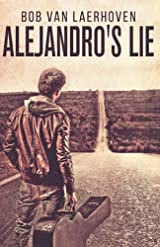
New Book Alert: Alejandro's Lie by Bob Van Laerhove; An Honest and Absorbing Look At Imprisonment and PTSD In A Latin American Dictatorship


 New Book Alert: Alejandro's Lie by Bob Van Laerhove; An Honest and  Absorbing Look At Imprisonment and PTSD In A Latin American Dictatorship

By Julie Sara Porter

Bookworm Reviews

Spoilers: M.G. Claybrook's satirical children's book for adults The Voyages of Gethsarade has the biting but very true line, "All revolutions begin the same way by not being paid."

Gethsarade, Claybrook's furry squirrel musician-turned-folk-hero protagonist, would find a revolutionary partner in Alejandro Juron, who would share that same sentiment. Alejandro is the (human in this case, not squirrel) protagonist of Alejandro's Lie, Bob Van Laerhoven political thriller about revolution in a Latin American country. It shows what happens when the marching, protests, and rebellions stop and the rebel is left older and alone with their thoughts.

It is 1983 in Valtaigo, Terreno, a fictional Latin American country. Alejandro has just been released from a prison that is so notorious that it is nicknamed The Last Supper, because "supper was the only meal that they gave you on your execution." Alejandro was the guitarist in the folk band, Aconcagua, led by the fiery and charismatic Victor Perez. 

Alejandro struggles to adjust to life on the outside, refamiliarizing himself with places like the 'pigsty', Vaitago's slums and living under the military junta that has strict control over Terreno (with funding from the United States). He reunites with old friends, like Cristobal Vial, a former firebrand playing it safe as a university librarian and makes new friends, like Beatriz Candalti, a feminist who is separated and planning to divorce her abusive husband.

Alejandro's imprisonment has given him PTSD and a bitter cynical outlook. He also feels guilty about his own motives for becoming a musician/revolutionary and his actions that led to Vincent's arrest, imprisonment, and death.

Alejandro's Lie is an absorbing look at how a dictatorship affects the people and places surrounding it. Terreno is a fictional location but the impact of living under a tyranny can be clearly felt in the real world. This impact has been experienced by people from real Central and South American countries that have been ruined by dictators who have used various political leanings from Capitalism to Communism and backing from more powerful countries as means for control. 

One character describes the situation in Terreno as "The wealthy are dancing the rumba in luxurious nightclubs, the poor grab leftovers in the garbage dumps….Terreno is a country of contradictions a d teeming with underground parties and resistance groups…rebel groups are smuggling in arms from Cuba...the middle class hesitates; the oligarchy has resolutely sided with the junta." It's a world that has been teetering on an abyss for a long time and barely needs a slight push before it falls off.

Alejandro's Lie is the type of book in which the author avoids making the setting beautiful to focus on the ugliness surrounding the characters. There are some detailed descriptions of nature, particularly when Beatriz flies a plane to a mountain location. However, they are very few. Most of the action is in Valtaigo, possibly a deliberate move by Van Laerhoven. The focus is on the dictatorship, so much so that everything in the country is centered around it. Even nature's beauty is tainted by the corrupt people in charge who want to destroy it. Terreno is a country filled with loss, regret, guilt, and forced complacency.

Those feelings overwhelm Alejandro as soon as he leaves The Last Supper and exacerbates his already growing PTSD. He suffers through the nightmarish memories of his imprisonment including starvation, torture, and manipulation. After leaving prison however, his experiences get worse. 

Alejandro left a country that was devastated by a dictator. What he finds is a ruthless government still in power. The people's rights have only diminished further. Unfortunately, it has been so long that most people have lost the will to fight. There are some resistors, as Beatriz is involved in just such a cell. But they are the minority. Most people such as Beatriz's father and at times Cristobal have traded rebellion for conformity and are less concerned with ideologies and more worried about survival. It makes one wonder what the point of rebellion is if the people aren't going to follow through on it.

The complacency of the people and his own dark memories drive Alejandro. He questions everything, even his own motives for joining Ancocagaua. His motives for becoming a folk musician and betrayal of Victor eat away at his soul. He believes that his own motivations to join a political folk band had more to do with fame, money, and sleeping with willing women than it did with singing against the system. This puts a more cynical and world weary outlook at the  rebellious idealistic image that others saw in him. Alejandro also has to contend with his mental anguish over Victor's imprisonment and his blame in turning Victor in not for political reasons but because he had an affair with Victor's wife.

Alejandro recognizes the lie within himself and can't do anything to ease that remorse. He turns to music, drink, old friends, even a stint as a professional barrio wrestler to earn money. But these things only make the void in his life worse. The only emotion that he has left is rage for an old enemy. This rage causes him to engage in a pretty reckless plan to seek vengeance and retribution.

Alejandro's Lie is a book that explores the long term impact that a dictatorship and imprisonment has on the soul and how they lose everything: their home, families, lovers, strength, and fighting spirit. Truth be told, Alejandro's Lie is a somber but still intriguing and completely honest book.


Friday, October 1, 2021

Lit List Short Reviews; Cycling The Silk Road: From Shanghai to London in Thirty-Six Weeks by Chaewon Yoo, The Girl With A Golden Heart by Achal Kumar, Not Him or Her Accepting and Loving My Non Binary Child Here's What You Should Know by Michelle Mann, The Numbers Game by Miles Watson, One Night in Paris A City of Light Novella Book 1 by Juliette Sobanet, Wiccan The Truth About Wicca and Witchcraft A Witch's Bible by Julia Steyson

 Lit List Short Reviews; Cycling The Silk Road: From Shanghai to London in Thirty-Six Weeks by Chaewon Yoo, The Girl With A Golden Heart by Achal Kumar, Not Him or Her Accepting and Loving My Non Binary Child Here's What You Should Know by Michelle Mann, The Numbers Game by Miles Watson, One Night in Paris A City of Light Novella Book 1 by Juliette Sobanet, Wiccan The Truth About Wicca and Witchcraft A Witch's Bible by Julia Steyson

By Julie Sara Porter

Bookworm Reviews

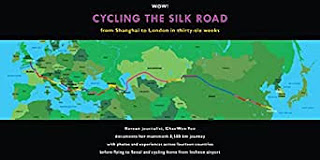
Cycling The Silk Road From Shanghai to London in Thirty-Six Weeks by Chaewon Yoo


Korean journalist, Chaewon (Eva) Yoo knows how to plan and plan big.

From June, 2018-January, 2019, Yoo traveled 8,567 kilometers along the Silk Road between Shanghai and London via bicycle. Her book, Cycling The Silk Road covers that journey. It's a short book but is illustrated with eye catching photogtaphs and described with engaging anecdotes and good advice for any interested traveler.


The Silk Road was a network of trade routes that connected the East and West to the 18th century when industrialization resulted in expansion in local productivity, Enlightenment values, and affordability for the masses. Silk, paper, and gunpowder were among the goods traded on the route. The Bubonic plague and other diseases were also spread creating worldwide pandemics. Yoo had a strong sense of history by traveling this route and an awareness of the modern world as she interacted the people who lived in the different countries.


Yoo's writings are brief, but she captures her experiences with warmth and humor. As she cycled through the asphalt, chalk powder, and dust in Yingshang, she was bemused to find a hotel that "looked like something from a Western movie or a desert in Arizona, U.S.A. when (she) was ten."

While in Italy, she recalls the friendly people that she met such as people performing in a Christmas play in traditional Provincial clothing. She also remembers the wine, most of it on tap. At a tavern, she only wanted half a liter, but the assistant filled her drink up to the brim.


There are various moments where Yoo was pleased to observe the nature around her. While rafting on a banana boat along the Dan River, Yoo lay on the boat and looked up at the sky, observing the clouds moving at different height.

Sometimes, her descriptions of nature uplifted what could have been a trying time. A difficult time of traveling uphill in the rain in Edessa, Greece became an eye catching moment when Yoo observed a 50 meter waterfall with strange rock formations made even more impressive by the rain.


Yoo brilliantly describes the homes and people. Her encounters with the residents are some of the highlights.

While in Yevlax, Azerbaijan, Yoo stayed in an old house with a cow barn. She described "every yard with a plastic cover and a sink to wash fruit, vegetables, and your teeth." She described the food and drink that was offered, such as tea with honey dipped berries served in intricately designed glass holders and sugar and candy inside glass containers.


While in Milan, Italy, Yoo experienced the kindness of strangers. Her bike was stolen so she purchased a secondhand one. The theft coincided with a seminar. Yoo posted her map and asked if anyone would attend. She met 15 people who wanted to hear her story.

In France, Yoo's hosts guided her to various events such as a hypnosis meeting, a January festival, and a potluck dance complete with accordion music. Yoo described France "as the most hospitable country on (her) trip."


The photographs in the book are filled with delectable food, lovely landscapes, and friendly people. They help provide images to Yoo's words. In fact, the short length makes the photos the main focus of the book so the Reader can experience the trip the way Yoo did.


 Cycling The Silk Road is a wonderful account of a trip that is memorable in words and pictures.


The Girl With A Golden Heart by Achal Kumar


Achal Kumar's short novel, The Girl With A Golden Heart is a moving and spiritual story about a woman who finds justice through fighting an enemy and self-actualization by helping the people of her village.


In the beginning, we are introduced to Shivani, an Indian woman who is one of the ten women entrepreneurs in the country. She is powerful and dedicated and has a reputation for honor and philanthropy, particularly with her woman care trust which helps poor girls and women pursue education and gain self-employment in their own villages.

One night, she returns to her home village of Madhurpura and remembers the circumstances that led her to depart and pursue this life path.


Most of the book occurs in flashbacks when Shivani was a young woman. After a flood, Bharat, Shivani's impoverished father sought help from Baccha Babu, a criminal who behaves like a mob boss. He appoints thirty associates who engage in robbery, kidnapping, smuggling, and stealing land grants from poor farmers. 

Using threats, manipulation, and intimidation, Babu ultimately ends up owning Bharat's farm. 

Shivani is raped by one of Babu's loathsome sons. The rape leaves her traumatized especially since she can't report it to the police. (Babu owns the police.) The further escalation of violence and Babu's tighter grip on Madhurpura leads Shivani to lose some family members. She desires revenge against Baccha Babu, the man who stole her family's farm and destroyed her village, reputation, and family.


The book is impactful as Shivani and Babu engage in their one on one war. Babu appears ahead with his thugs, intimidation tactics, and money. However, Shivani's determination to bring him down, her clear-sightedness in researching and analyzing his business properties for weaknesses, and kindness in gaining allies rather than threatening them prove to be assets.


In Karmingar, she falls in love with Altaf, a man who helps her in her war against Babu. Even though she puts him in dangerous situations, she is concerned for his well being enough to sacrifice her life for him. Also, her business acumen helps put his family in a better financial situation than they were before.

She finds a sanctuary in the home of a progressive politician who empathizes with her plight and treats her like his own daughter. Ultimately, he helps mentor Shivani on her part towards a better future.

Babu's plans create division between Muslims and Hindus and results in more violence and economic trouble including for him. It's almost karmic justice that Shivani's kindness brings her forward while Babu's greed brings him down.


The Girl With A Golden Heart is a moving parable about someone who thrived despite great adversity. Then she used that privilege to help others in the same situation.


Not Him or Her Accepting and Loving My Non Binary Child Here's What You Should Know by Michelle Mann


Not Him or Her Accepting and Loving My Non Binary Child Here's What You Should Know by Michelle Mann is a good book that covers an important topic, how to raise a non binary child in a world that isn't always understanding.


Mann brings forward an important topic that has been very controversial lately. She humanizes the conflicts that many non binary children and their cisgendered parents go through within their own families and society. It also shows that the most important keys in such families are understanding and acceptance.

Parents and others can be inclusive by exhibiting proper characteristics like using the right preferred pronouns and defending the child in front of others.


 The personal stories add a great touch to the book, especially in revealing the diversity of parents and their children's experiences. Various situations are covered, such as Simone having to take excess time to explain to a dental assistant that her child was nonbinary. They show how many of the simplest procedures could produce stress because of a judgemental society.


The book covers different age groups of non-binary children from early childhood, to teenagers, to adulthood. This counters the whole myth that "It's a phase. They'll outgrow it." Mann openly counters such myths and assumptions and how they contribute to a lack of acceptance within the child.


Not Him or Her shows how devaluing and demeaning those myths are and how gender identity is often influenced by parental and societal views that either encourage or demean the child.

Bottom line: If the child is old enough to recognize gender in society around them through toys, advertising, and adult perspective, then they are old enough to recognize the gender identity within themselves.


Not Him or Her reminds the Readers that the most important thing that they can do for their child is to understand, accept, and unconditionally love them.


The Numbers Game by Miles Watson


Miles Watson's novella, The Numbers Game is a tight, suspenseful, and character driven book about a WWII pilot with a unique gift that helps him survive but could overpower him.


Pilot Officer Maurice Mickelwhite is a mathematical genius. (Fun Fact: Maurice Mickelwhite is also the real name of actor Michael Caine. This appears to be a coincidence.)

His potential life of teaching calculus and algebra while living only for numbers is interrupted by the War. As he participates in the Battle of Britain, Maurice is able to use his talent for numbers to calculate the probabilities of survival, not only for him but the other members of his squadron. He knows the likelihood in which each pilot is going to die and is quite often right. Unfortunately, his own numbers are very close to coming up.


The Numbers Game is a brilliant character study about someone who goes to war but doesn't really want to.

Maurice is not exactly a flag waving jingoist ready to die for King and Country. 

In fact, he had dreams of teaching math in school and being left to "his numbers, his tobacco, and his copy of the Journal of the London Mathematical Society.

Instead, he got the war."

Maurice wouldn't have minded using his mathematical genius to work in the London office but instead he is in the RAF as a pilot. (There was even a rumor that the RAF refused "as a matter of principle" to let anyone do anything that they showed an interest or talent in.) 

This attitude is counter to the popular culture image that RAF's were brave heroic patriotic fliers with their own colorful language and daring to kick the German fighters out of England. 

The Numbers Game shows that it was often made up of men who were there by force and would rather be doing anything else. 


In many ways, Maurice is similar to characters like Yossarian from Catch 22 or Hawkeye Pierce in MASH. He gets through the madness of war by holding onto a sardonic sense of humor. He scoffs at those who insist that skill and abilities are factors in determining when someone is going to die. He thinks, "The numbers formed a path which you were doomed to walk-a path ending in a scaffold….The more you flew, the greater your risk of dying. It was just that simple."


Because of his certainty about death, Maurice has a very fatalistic behavior when his fellow pilots die. Even when others disagree with him and die anyway, he is neither grief stricken nor smug about being proven right. He is matter of fact because he saw it coming. He comes across as cold at times, but Maurice is almost like someone with precognitive abilities. They have a tremendous talent that allows them to see what is to come so they are not surprised when it happens. The events just confirm what he already knew. 


Since the narrative is short, there isn't a whole lot of time to focus on Maurice's character but that adds to the suspense. The brief length allows tension to build as the pilots approach the end of the short novel and their lives. Every moment is quick as the Reader waits for the inevitable conclusion.


The Numbers Game reveals that war is not always defined by victories or ideologies, sometimes it is just a matter of numbers.


One Night in Paris: A City of Light Novella Book 1 by Juliette Sobanet


One Night in Paris, Juliette Sobanet's novella is an enchanting and lovely time travel fantasy with a brilliant sense of time and place.


Ella, a modern woman has had enough of her controlling and abusive husband, Dave. On her way to fly to Paris to visit her dying grandmother, she announces that she is leaving him and wants a divorce.

In Paris, Ella's grandmother shows her pictures from the 1920's of herself and her best friend, Lucie. She also gives her a request. She can't rest until Ella goes back and stops Lucie from marrying a man named Max and dying at the young age of 23. Grandma invites Ella to wear one of her flapper dresses and a brooch. After she puts them on, Ella finds herself transported to 1927 Paris and standing in a jazz club face to face with Grandma's friend, Lucie.


One of the most delightful traits that this novella possesses is its setting. 1927 Paris is depicted with all of the color and excitement that comes to be expected in a work about the Roaring Twenties. Ella is drawn by the excitement of jazz, free living, drinking, and the flapper lifestyle. It's exciting and gives her a chance to liberate herself from her modern worries and her unhappy marriage. 


One Night in Paris is also a magical story about love and friendship. During her time in 1927, Ella encounters Leo, a charming American writer. Their night of passion and bliss could be an inspiration for Leo's writing. It's almost cliche for a brief romance to be set in Paris, but Sobanet makes it work. Ella and Leo's romance is touching without being overdone or maudlin. It's fairy tale like as Jazz Age Paris is almost a fantasy land capturing the romantic and fantastic elements of the people who dwell within it.


However, One Night in Paris is more than a love story. There is a strong theme of female friendship and empowerment. When she observes Lucie and her verbally abusive boyfriend, Ella thinks about her loveless marriage. She tries to rescue Lucie from her potential end and transforming from a happy go lucky independent free spirited woman to a timid frightened abused wife under her future husband's thumb. 

In their quick meeting, Ella develops a bond with Lucie. She is at first confused about her assignment but willing to help Lucie to honor her grandmother's wishes. However, as she gets to know Lucie, she wants to protect her on her own. She wants to save Lucie from the same situation which she had just left.


One Night in Paris is a beautiful romantic novella of love and friendship. It's pure magic.


Wiccan: The Truth About Wicca and Witchcraft A Witch's Bible by Julia Steyson


Julia Steyson wrote the perfect beginner's book for those who are interested in Wicca.

The first part introduces the Reader to the history of Paganism. Steyson includes lists of various mythologies and figures that Readers might be interested in communicating with like Odin, Norse God of Wisdom or Venus, Roman Goddess of Love. It is a good introduction to show that Paganism has a long history to be understood and respected.


The second and third parts go into modern times and the various tools, rituals, and some sample spells for practicing Wiccans. The lists of elements, crystals, herbs, and other tools can be confusing but it is helpful to know what can be used for specific purposes. Of course, none of these things are necessary. The tools are meant as guides. Sometimes, all you need is your brain and a quiet time and place to think.


One of the most interesting parts are the seven paths of spiritual practice including coming into presence, awakening intention, sustaining awareness, transcending self interest, deepening remembrance, expressing gratitude and wonder, and radiating blessing. These paths show that Wicca can be a vibrant bright ever changing exchange between the WIccan and Spirit. 


Wicca The Truth About Wicca and Witchcraft is a great start to a wonderful open minded, spiritual path.

Monday, September 27, 2021

New Book Alert: My Gift To The World: 24 Inventions & Ideas To Eradicate Poverty, Disease, Death, & The Energy Crisis by Kaloyan Valentin Danchev; The Start of Some Great Ideas


New Book Alert: My Gift To The World: 24 Inventions & Ideas To Eradicate Poverty, Disease, Death, & The Energy Crisis by Kaloyan Valentin Danchev; The Start of Some Great Ideas

By Julie Sara Porter

Bookworm Reviews


It's amazing how often an idea has a huge impact on the entire world. The idea of combining soap with clean water helped to improve hygiene and eradicated many diseases. Sir Alexander Fleming's accidental discovery of penicillin led to the creation of antibiotics and vaccines that improve our health and help us live longer. 

Charles Babbage and Ada Lovelace's invention and programming of the first computer, Tim Berner-Lee's creation of the World Wide Web, and Hedy Lamarr's invention of spectrum technology, the ancestor to WiFi, allowed us to scan information, be entertained, and make ourselves known to the world and even some to work from home to avoid office politics and filling already overcrowded traffic congested cities. 

The automobile and airplane as well as things like traffic lights, stop signs, and air traffic control radar allow us to travel long distances and get there safely in one piece.

Devices like electricity, appliances, heating and air conditioning allow us to make our homes easy, clean, and comfortable places to live in.

For better or worse, our lives have changed by invention and every invention begins with a simple idea.


Entrepreneur and author, Kaloyan Valentin Danchev certainly believes this. That's why he not only has written the book My Gift To The World 24 Inventions & Ideas To Eradicate Poverty, Disease, Death & The Energy Crisis, but he is also presenting a contest for anyone who has such an idea or invention. Details and rules for the contest can be found at www.mygifttotheworld.org .*


Danchev's book presents the germs of his ideas in this thoughtful and intriguing book. The ideas presented vary from Vehicle, Aircraft, and Recreation Safety, to Media, Apps, and Gadgets, to Clothing and Hygiene, to Subscription Based Consumer Models, to Interactions of the Future. It's a wide variety of interesting possibilities.

Each chapter follows the same format. Danchev introduces two scenarios. One features a character with a problem. The other features another character with the same problem but using the idea or invention as a means to fix or improve the situation. Danchev then introduces statistics concerning the main concern and why this idea or invention could help. In a way, it's as though Danchev is pitching the product and us Readers are the panelists who have to decide on whether it could work or not.


The "Instant Vehicle Braking System" chapter is one such example. Danchev describes a scenario of a collision between a minivan driven by a harried mother and a Sedan with faulty brakes driven by a distracted driver. To contrast, he presents another scenario in which a driver's Instant Vehicle Braking System allows his car to stop within a few inches of hitting a tree. Then there are a few statistics of death and injuries in automobile accidents caused by faulty or neglected brakes. He then reveals his idea for a braking system that automatically goes into effect rather quickly.


Many of the Inventions and ideas are so obvious that it's a wonder why they weren't invented sooner. It makes perfect sense for a person's swimwear, athletic, and everyday wear to have "Instant Flotation Deployment Swimwear" installed into them especially, if they are visiting a beach or a lakeside or live near a swimming pool and are concerned about accidental drowning. Why wouldn't someone wear "High Heels Adjustment Modification" so they can adjust their footwear to be fashionable and professional for a job interview and comfortable and safe on their way to and from the interview?


Some of the best ideas come from the use of Media and Technology. The "Real News Network (RNN)/Good News Network (GNN)" is a much deserved lighthearted hopeful approach to the usual depressing landscape that surrounds the News. GNN would focus on helpful contributions that people have done to treat disease or provide services to the impoverished, or have won accolades for those achievements. These feel good stories would be the main focus of the network rather than be forced into the final five minutes of the nightly news program.

The chapter entitled "Cemeteries" suggests a more personal approach to the cold often times generic funeral industry. Danchev suggested that recorded messages, such as heartwarming anecdotes, birthday greetings, and sound advice could be put into the cemeteries so the bereaved can have personal conversations with their deceased love ones.


While Danchev presents some good ideas in theories, the practice might lead to further questions. After all, everything has positive and negative consequences. A "Data Pool App" for example could be useful in rating a person's good and bad behavior, but it also raises questions about lack of privacy and the motives of the person doing the rating. If someone doesn't like somebody, say a local celebrity or a person who is not politically affiliated with them, could they then be suspicious of that person's even good intentions purposely to give them a low behavioral rating? Does that give a potential interviewer even more power by giving them yet another reason not to hire somebody (as if searching their credit history, social media apps, and so on didn't give them enough information)?

Not to mention an episode of the Netflix Science Fiction anthology series, Black Mirror had an episode called "Nosedive" which explained why rating people online can be detrimental and do more potential harm rather than good.

I suppose Danchev is only presenting the idea and the negative potential options could be ironed out by further research, study, and interviews with focus groups.

But sometimes the idea itself could be called into question and that should be what potential Readers and especially  contestants for this contest need to put into consideration before they present their ideas.


Despite the potential consequences, My Gift To The World is good for its purpose. It presents an idea for people to consider, think about, discuss, and maybe put to fruition. Maybe it will lead to more.


*The reviewer in no way is affiliated with nor endorses the My Gift To The World contest. I am only posting the link for informational purposes towards potential entrants.


New Book Alert: Behind The Veil by E.J. Dawson; Sinister and Spooky Supernatural Horror Straddles Between Madness and Sanity


New Book Alert: Behind The Veil by E.J. Dawson; Sinister and Spooky Supernatural Horror Straddles Between Madness and Sanity

By Julie Sara Porter

Bookworm Reviews

Spoilers: E.J. Dawson's Behind The Veil is among the best Horror novels that I read this year. It is a genuinely terrifying account of both paranormal and real life fear with a protagonist who hovers between frightening visions and her own fears which could develop into paranoia and insanity

Letitia Hawking is a 1920's widow who emigrated from her native Britain to California. She is trying to bury the grief of losing her husband, a miscarriage, and a traumatic encounter with a Spiritualist that left her scarred and institutionalized. 

Since Letitia herself has ghostly visions and Spiritualism is on the rise, Letitia offers herself as a medium who is able to peer into the deceased's last days.

Her visions are both sad and eerie as she sees how a person died and their final thoughts. The book begins with her seeing a sickly man who is grateful to die so he can get away from his loveless marriage but worried about how his wife will treat their child and his mother now that he is gone.

 Letitia's visions are complex as she sees deep sadness, frustration, anger, fear, and sometimes relief to get away from the cruelty of the world around them. Many of her clients are grateful to hear the loving final thoughts of their friend or family member. Some are in denial that their behavior was a contributing factor to the deceased's decline and death, as a very stern father is when he sees the final memories of the troubled son whom he threw out.

However, because of the emotions connected with natural death alone and her own trauma, Letitia is reluctant to take on cases where someone was murdered. She fears that she may lose her own mind in the recall of a violent act or that experiencing the trauma second hand may end up killing her.

Besides her frightening second sight that stalks her, Letitia also has to contend with more human persistence. She is constantly followed by the very wealthy Alasdair Driscoll who uses threats and intimidation to take on a personal case for him. At first, Letitia refuses citing previous commitments and her own concerns about what he wants her to do. She also sees a dark presence surrounding him, one that forms a barrier trying to keep Letitia away.

But finally moved by the pleading of his sister, Mrs. Imogen Quinn, Letitia agrees to help him. She meets Quinn's daughter and Driscoll's niece, Finola and sees the real reason for their interest in her. Finola is alive but like Letitia she is gifted or rather cursed with second sight supernatural abilities. And as they did for Letitia when she was younger, Finola's visions are harrowing and threaten to eat away at her sanity.


Behind the Veil is scary for the supernatural and human haunting that surrounds the novel. The horrors that Letitia sees through Finola's eyes become more troubling for her. It's similar to someone becoming blinded by seeing something twice as bright or losing their hearing because a stereo system is cranked way too loud. Letitia and Finola's visions become worse because they are shared between them. When she goes inside Finola's head, Letitia sees spectral images of murder,violence, sexual assault, and pedophilia. She particularly sees a crime affecting several young girls that until now was left unsolved. Letitia continues to see the dark spectral presence becoming larger and more powerful. 


 Because of these dangerous thoughts, Finola is left alone in her room unable to socialize for fear that she may lash out violently. Driscoll and Quinn are so anxious about their young relative, that they are considering putting her away in an asylum.

The more Letitia probes into Finola's mind, the more that she sees echoes of her own past. She too was institutionalized by people who didn't understand her abilities. She even doubted them herself. The passages describing Letitia's time in the asylum are actually more horrifying than her supernatural premonitions. While in the asylum, Letitia was subjected to the ice cold bath treatment, early versions of shock therapy, neglect and abuse from employees, and isolation. What is more frightening is that her memories are not the results of some dark unexplained presence. They are the results of those who were all too human, a system that puts the mentally ill away to forget about them rather than helping them or discovering why their minds are the way they are. It's no wonder why Letitia becomes protective of Finola. She doesn't want her to suffer the same fate that she did.


Behind the Veil is a sinister novel that asks the question about which is scarier: the supernatural world that exists beyond human consciousness and is only experienced by the very few or the real world that surrounds and haunts us every day.


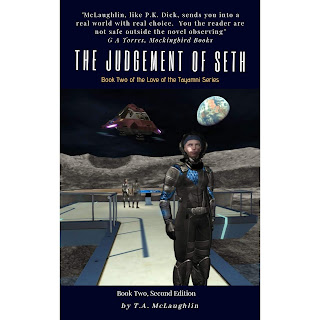
Weekly Reader: The Judgement of Seth (The Love of The Tayamni Book 2) by T.A. McLaughlin; The Struggle Among Tayamni, Tlaloc, and Potacas Gets Wider and More Intergalactic


Weekly Reader: The Judgement of Seth (The Love of The Tayamni Book 2) by T.A. McLaughlin; The Struggle Among Tayamni, Tlaloc, and Potacas Gets Wider and More Intergalactic

By Julie Sara Porter

Bookworm Reviews


Spoilers: The first book of The Love of the Tayamni series took what could be complex themes of Intergalactic space travel, prejudice, fate, and destiny and simplified them into a straight narrative. It was about a woman who was part of an ancient race of aliens sent to Earth and was thrust forward into 1960's Mississippi to protect a child who was destined to become the next Matriarch, head of the community.

It was a good way to draw the Reader into the world created by T.A. McLaughlin and to follow the story and themes. The simplicity of the first volume paves the way for the complexity of the second, The Judgement of Seth.


McLaughlin opens up the universe that she established in the first book. She introduces a larger cast of characters, new worlds and alien species, and expands on the original concepts that were previously introduced in The Love of The Tayamni. In fact, as a sign on how large this book is, most of the main characters from the previous book are reduced to minor roles. 

Batresh, the time traveling protagonist assigned to protect the future Matriarch is initiated into her role as Matriarch after her mother's death (or rather Interim Matriarch until the future one comes of age). Denny, said Future Matriarch, is still a child in 1960's Mississippi, but is beginning to remember their past life and experiencing flash forwards. They are also coming to terms with feeling like an outsider because of a toxic masculine father who insists that Denny should act like a boy. Jerry, Batresh's love interest from the first book, was let in on Batresh's secret identity and mission. He is currently living on Lunar Base and watching over Denny.


While Batresh, Denny, and Jerry are safe and snug in their own subplots (or just barely living in their subplots.),much of the heavy lifting is done by other characters. Now the Tayamni are fighting against rival alien species, the Potacas and Tlalocs. The Tayamni see that this one time private war is threatening other worlds. So many of the characters are dispatched to recruit other planets to join in the struggle.


McLaughlin really gets a chance to explore different types of planets and species. Some are mammalian and human in appearance. Others are cyborgs. Still others resemble other beings. One planet is mostly water and has aquatic beings living in this mostly liquid environment.


 Allowing the core Tayamni characters to interact with new characters shows how large this problem is. In fact, most of the action is set in space or in other worlds. The overall effect is to show that Earth is not the center of the universe (sorry fellow Earthlings). In fact, it's almost like Tatooine in Star Wars. It's far away and remote from the most important decisions made by the higher powers, yet it still ends up in the thick of the action. 


The interactions between old and new characters allows them to open up and build relationships. Kirashi, a Tayamni, develops a romantic relationship with E5, a cyborg. 

She also relates the backstory of the First Ones, the ones who came to Earth and merged their DNA with Earthlings. They were once the Nine but now they are the Eight when Seth broke from the others and killed his brother. (A story that is also known in Egyptian mythology. Remember Set and Osiris?) It is implied that Seth got the Tlalocs and Potacas the power and will to fight the Tayamni. Kirashi's story gives the characters an understanding about why this struggle will eventually affect everyone and why allies are needed.


Batresh's sister, Namazu has a large important character arc. She ascends to the rank of Supreme Commander and takes the lead in fighting against their enemies. She, as many of the characters do, questions the Tayamni Code which encourages love towards everyone, even their enemies. Since Namazu is at the forefront of most of the fighting, she is the most conflicted between the code that she was raised to believe and the current drive to bend and even break it. She also finds and loses love on a personal level as she is mourning the death of colleagues while falling fo someone who is borderline obsessive.


For most series, the second book often feels like filler. The first book introduces us to the world, characters,and conflicts. The third is the final battle where everything gets resolved. Therefore, the second is often filled with personality clashes and side quests that are only meant to fill up pages and not carry any weight in the end. The second book introduces a meeting point for the third book to catch up with in 1977, but everything in the book feels important. Instead of distracting the Reader, The Judgement of Seth, expands on their previous knowledge and helps this universe grow and deepen.


Weekly Reader: The Illustrated Colonials: Home Fronts by Tom Durwood; The Colonial Six Come Home Enlightened But Are They Ready?


 Weekly Reader: The Illustrated Colonials: Home Fronts by Tom Durwood; The Colonial Six Come Home Enlightened But Are They Ready?

By Julie Sara Porter

Bookworm Reviews


Spoilers: On the last exciting episode of Tom Durwood's The Illustrated Colonials,six teens from around the world were recruited to attend the School for Young Monarchs in Alsace-Lorraine. They were Jiayi Mei Ying from China, Prince Mahmoud from the Ottoman Empire, Sheyndil from Russia, Leo from Germany, Will from the Netherlands, and Gilbert du Motier from France. Despite their class and social differences, the sextet learned the school's values of enlightenment, liberty, and equality. They used their talents in commerce, leadership, engineering, military strategy, agriculture, and scholarship research to promote those ideals. Through their education and friendship, they formed a tight bond. In the face of old enemies, they defended each other and formed a pact to always be there for each other. If one is in trouble, the other five will come to their aid.


In the second volume, Home Fronts, we experience their lives before and after their education. One of the characters is examined before they enter the school. Afterwards, the characters return to their homes and are met with suspicion and praise.


Mei Ying's early story fills in some blanks that the previous book left out. In the previous volume, we experience the moment when the other five hear about the school and discover their motives for attending whether by family pressure, patronage, or just looking for something to do. In Mei Ying's introductory chapter, we see her disinherited by her grandfather. But we don't learn about how she knows about the school or what motivates her to attend. In fact when some of the other characters enroll,they already hear about "the girl from China" who is attending.


Mei Ying's section in Home Fronts shows her with all of her arrogance and strength, both of which are detrimental and helpful to her subsequent studies. She is reluctant to cooperate with Westerners. ("Why must I learn to speak German and French?," she complains."When will that become useful?".) At times, she develops a diva-esque attitude such as when after getting in a bad mood, she howls that China does not outlaw moods.


However, Mei Ying shows a lot of courage and strength even before she joins the school. In one chapter, she faces a pack of wolves practically single-handed. (One of my favorite illustrations is an almost anime style drawing of Mei Ying facing against the wolves.) When she learns of an attack on a village by mercenaries, she curses the man who led them there by telling him that his cowardice will be known. This glimpse of Mei Ying's pre-school life reveals a lot about her character and what she needed to learn before being accepted as one of the gang.


Besides  Mei Ying's prologue, we also see the kids return to their home countries and try to fit what they learned into the worlds in which they were raised. They quickly learn that it's all well and good to gain new perspectives and to learn new things and put them into practice. But it's hard when the people aren't ready to accept the new way of thinking.


The subsequent return to their home countries is mostly experienced by Prince Mahmoud. He raises many eyebrows when he first arrives. He tells the servants to stop prostrating themselves on the ground. He tells them that they are human and have free will. This is not the spoiled brat from the previous volume who insisted that servants were happy just being servants and would not even think of the word "slaves."

To put his respect for the servants to action and not just hollow words, Mahmoud uses his new found talent in engineering to improve the piping in the servant's quarters so they can enjoy hot baths.


The distance between Mahmoud and his upbringing is painfully illustrated during a conversation between the young Prince and his father, The Sultan. After the Sultan asks what he learned among the "Franks."(Westerners), he goes into a well worn tirade about his kingdom that Mahmoud heard many times before. However, the Prince realizes that his father is shaped by Ottoman Anti-Western views that he has held onto without really wondering, reading about, or questioning them. Where once Mahmoud may have thought of those words as wise, he now sees them as trite. Where he once saw his father as a heroic man beyond reproach, he now sees a man who if not wrong is certainly misguided. 

Mahmoud sees that he changed but the world around him has not and he is uncertain about what he should do about it.


As for the others, well they also learn some new things which challenge their former roles in society. Sheyndil was once a meek peasant who believed that she was not permitted to have a voice. Now she is willing to physically fight and verbally spar against assailants, including Russian soldiers who in the past would have bullied her without a second thought. 

Will was once the much derided second son passed over in the family business for his older brother, Casper. However, the business acumen that he learned and the contacts that he made (particularly with a certain Ottoman Prince and a Chinese woman whose family practically owns the Yunhe canals and harbor), he is able to save his family from trade routes being cut off and potential bankruptcy.

As for the pact that they had made, well one of their own gets in trouble. The final pages show that soon it will be time for the other five to spring into action and honor that vow.


Home Fronts builds on the concepts that began in the first book and shows how the characters evolved. It also shows a world that is on the brink of evolving with those characters, whether it is ready or not.


New Book Alert: The Family Man: Getting Away With Murder by Anna Willett; Efficient and Engaging Psychological Thriller About Cold Unsolved Crimes Finally Becoming Warm and Solved


 New Book Alert: The Family Man: Getting Away With Murder by Anna Willett; Efficient and Engaging Psychological Thriller  About Cold Unsolved Crimes Finally Becoming Warm and Solved

By Julie Sara Porter

Bookworm Reviews


Spoilers: No matter how long ago a crime occurred, there will always be a demand for it to be solved.  A deceased John or Jane Doe finally has a DNA match and is reburied under their real names. A murderer or pedophile who long ago escaped justice is finally held under scrutiny, has their day in court, and victims are finally vindicated. Sometimes it takes many years for a cold case to get warm.


Anna Willett's The Family Man: Getting Away With Murder shows just such a situation. It is an engaging and efficient psychological thriller about the resurrection of a long ago kidnapping and murder case that has been screaming to get a resolution and how that resolution is finally answered.


Married couple, Marcy and Dustin just moved into a new house. While cleaning out the attic, Dustin sees an old VHS tape. The curious couple watch and are horrified by what they see. No it's not a home video of an embarrassing Christmas or a Tommy Wiseau film. It's much worse.

What they see are four people, two men and two women, bound, hooded, and dressed in their underthings. Three of them recite the same lines and the fourth is defiant to her captors. It doesn't matter. The results are the same. The screen goes dark and it doesn't leave much to the imagination as to what happens to them.


Marcy and Dustin turn the VHS into the police. DS Veronika Pope leads the investigation. They immediately find out that the house once belonged to Thomas Malicourt, a deceased businessman with a wife, April, and daughter, Hannah. To all intents and purposes, he was the ideal family man. But this tape opens up another darker side to him, one that is depraved and violent. 

Unfortunately, Malicourt is dead and has been for sometime. But this case is far from over. The four victims are not identified. There is also a good chance that Malicourt had an accomplice that is not identified and is wandering around unchecked and not caught, looking for a new opportunity to feed off their lust. 


The Family Man intensely pits Veronika's courage and dedication to her job against Malicourt's violent tendencies and sociopathic ability to cover his crime even after two decades. 

Veronika is presented as an interesting lead character without her personal life taking over her role of solving this case. She is a single mother of a teenage son. Both she and her son live with her mother who helps look after the boy when Mom is on duty. Being both a police officer and a mother, Veronika feels very strongly about this case especially after the victims are identified and some of them were only a few years older than her son. This protectiveness allows her to focus on the case at hand until it is solved.


The more Veronika and her colleagues peer into Malicourt's private life, the more that they see what a sick sadistic person that he really was and spent much time hiding that depravity behind an unimpeachable good name. It turns out that the name was all that was good about him. 

Besides using DNA, the police have to rely on old articles and reports of missing people in the Perth area. (Interesting fact: this is the second suspense thriller  that I reviewed this year that is set in Perth, the first being Robert News' The Colours of Death: Sgt. Thomas's Casebook.)

They also interview friends,coworkers, and family members of Malicourt and the victims. The quiet unassuming man of their descriptions becomes a violent unrepentant monster the more that his private life is investigated.

Some witnesses and interview subjects are grateful to finally see justice done and receive answers to the disappearance of their loved ones. Some like Malicourt's daughter, Hannah, are openly hostile and don't want to reopen bad memories. Ultimately, it's Hannah and her family that become the catalysts that result in a break in the case. 


The Family Man is the type of book that reminds their Reader that sometimes it takes time, but justice will be met.