Showing posts with label Psychics. Show all posts

Sunday, August 18, 2024

Debunked by Beth Perry, Discover Your Natural Gifts: Connect With Your Natural Genius, Discover Your Niche, and Transform Your Life Using Gifts From Your Ancestors by Barry D. McCollough, French Turquoise Echoes by Carola Schmidt

 Debunked by Beth Perry, Discover Your Natural Gifts: Connect With Your Natural Genius, Discover Your Niche, and Transform Your Life Using Gifts From Your Ancestors by Barry Douglass McCollough, French Turquoise Echoes by Carola Schmidt 


Debunked by Beth Perry 

This is a brief review. The longer version can be found at LitPick.

Debunked is an engaging Supernatural Thriller/Occult Mystery about possessing intuitive abilities and using them as well as releasing long buried guilt. It is a fascinating conflict between skeptics and intuitives that has a lot of parallels with real life.


Craig Herbert is the executive field producer of The Debunkers Challenge, a top rated reality program that exposes fraudulent psychics. The twist is the show will offer money if they can prove their abilities in front of the skeptics.


Craig visits Tennessee upon the advice of a colleague’s relative to visit Betty Ann Crawford, a clairvoyant with an uncanny success rate. The more Craig interviews the woman, the more bemused and mystified he is. Either she is an excellent con artist or she really is psychic.


The Debunkers Challenge is clearly based on the challenge created by James Randi.

Betty Ann is probably not based on one specific person but probably an amalgam of different famous psychics and mediums such as Dorothy Allison, Sylvia Browne, Tyler Henry, Allison Dubois, and Uri Geller. Readers will love the inside references and the themes of science vs. superstition, skepticism vs. belief, the physical world vs. the supernatural world. 


This is also a very tight efficient Occult Mystery which plays all of the right notes within the subgenre. Craig has a tragic past with his own brush with death and unsolved crimes. His encounters with Betty Ann build on those memories as he receives horrific visions and flashbacks connected with his past. 


The final chapters taking place during the filming of the episode in which Betty Ann is the spine tingling climax. Betty Ann makes some chilling revelations that are genuine plot twists that were properly built up but enough of a surprise once they were finally told. 

Debunked is a brilliant chilling Occult Mystery that challenges the Readers with what they believe in and what it would take to question those beliefs.


Discover Your Natural Gifts: Connect With Your Natural Genius, Discover Your Niche, and Transform Your Life Using Gifts From Our Ancestors by Barry Douglass McCollough

Barry D. McCullough’s Discover Your Natural Gifts is a brilliant inspirational book that encourages Readers to discover and build on natural talents in Leadership, Management, Math, Art, and Science.

Each chapter follows the same formula. It explains the origins of the gifts and how they evolved through time. They then cite examples of famous people who exhibited those traits as well as many of the others. They then discuss strengths, limitations, and keywords of those gifts and how the others balance them out.

Among the most interesting sections are the ones that describe specific people who exemplify those gifts and how they used them to help create a better world around them. Mohandas K. Gandhi was an example of a Natural Leader by creating a specific vision and inspiring large groups of people with his words and calls to action. He led many to embrace his ideals of nonviolence and civil disobedience and became a symbol of India’s fight for independence from Great Britain.

Another fascinating section is one which describes the gifts in great detail, particularly their keywords. A Natural Manager for example would be adept in observation, analysis, organization, planning, discipline, calculation, restraint, utilizing, making decisions, allocation, and assigning and delegating responsibility. They falter in gaining control, manipulation, judgment, accepting and rejecting certain people and views, being too commanding, and sometimes practicing discrimination. 
They show that every gift has positive and negative attributes and how important it is to balance them with the other gifts so the person doesn't become too rigid and short-sighted in their roles and views.

Discover Your Natural Gifts is an interesting way to explore and nurture one's abilities and maybe gain some new ones.


French Turquoise Echoes by Carola Schmidt 

Carola Schmidt’s short work “French Turquoise Echoes” could be seen as a modern day adaptation of Charlotte Perkins Gilman’s “The Yellow Wallpaper.” Like its predecessor, it explores the fine line between sanity and insanity. It also asks some really tough uncomfortable questions about the real reasons behind this psychotic break, the person experiencing it, and the world surrounding them before and during this episode.

Janet Danvers is a retired psychologist/youth volunteer.spends her days staring at her French turquoise wallpaper which is decorated with a floral pattern. Throughout her days, she interacts with a variety of characters who could be either products of an overactive imagination, repressed memories of people in her life, or visual and auditory hallucinations. As her conversations with them become more intense. Janet is forced to come to terms with various past traumas that may have manifested themselves into the forms of her companions.

“French Turquoise Echoes” is reminiscent of those classic Gothic short stories which take place in a small enclosure and where every object is filled with meaning and metaphor. The wallpaper for example could stand for Janet’s fractured mindset. Flowers normally symbolize life, youth, peace, and growth but in case they mean something different. The flowers on the wallpaper seem to be metaphors of death and hidden truths. Instead of reminding her of good pleasant times, they are covered in her blood as she strips away the paper. They force her to peer into her subconscious and come to terms with things that she mentally concealed.

Her companions are deceptively written to be engaging and a welcome presence.. Such characters as the curious Margaret, the calm Antonio, the sardonic Robert, the elegant Lilac comment on and become almost as multifaceted as Janet herself. Even some characters like Gwen, Janet’s daughter, and Otto, a young boy put in Janet’s care, have an air of mystery to them. It is purposely left ambiguous whether they are actually real or a part of this gang. 

At first, they appear to be a sort of protection from the real world, a means for Janet to express herself in a creative manner. They represent facets of her personality and allow her to examine those traits inwardly. They also could just be someone that she can talk to on a daily basis. However, as the story continues they become more forceful, manipulative, and possess violent and self-destructive impulses. On the one hand, they want Janet to learn the truth but they don’t mind hurting her to make her see it.

As I mentioned before, “French Turquoise Echoes” is a post-modern adaptation of “The Yellow Wallpaper.” Both are commentaries on the line between sanity and madness and how society treats the people involved. Gilman’s story was a criticism of the treatment of women in a patriarchal society. Women who had depression and other illnesses were prescribed rest cures, were deprived of outside stimulation, and reduced to an infantile state. 

“French Turquoise Echoes” is a meditation on loneliness and the plight of the elderly. Janet once felt useful, a large part of a thriving community. She had a successful career to look back on with pride,loyal friends, and a loving family. Now, she lives a solitary life detached from the world around her. She is forgotten by the society around her, so she retreats within herself inside her own head. Is it any wonder that she has such an active fantasy life when her reality is so disappointing? 
Unfortunately. Janet used her fantasy life as a deflection and a shield from her traumas. However, the more she tried to hide from them the more they appeared until she couldn’t hide any longer. Her fantasy and reality, once separate world are forced to become one.


Tuesday, March 12, 2024

Echoes of Ballard House (Simone Doucet Book 3) by E. Denise Billups; Real Life Unsolved New Orleans Mystery Combines with Simone Doucet’s Dark Supernatural World

Echoes of Ballard House (Simone Doucet Book 3) by E. Denise Billups; Real Life Unsolved New Orleans Mystery Combines with Simone Doucet’s Dark Supernatural World

By Julie Sara Porter

Bookworm Reviews 


Spoilers: In the annals of unsolved mysteries, The Axeman of New Orleans is certainly a memorable and terrifying one. Between May 23, 1918-October 27, 1919, a serial killer stalked the streets of New Orleans brandishing their victims with an ax. There were twelve victims, most of them Italian immigrants or Italian-Americans, attributed to the Axeman. On March 13, 1919, a letter reportedly from the Axeman was published in several newspapers which promised more killings but had a unique request. Since the Axeman loved jazz music, on the following Tuesday night, they declared that they would spare any home that had jazz music playing from inside. Jazz musicians were hired and played in hundreds of homes that night. It appeared to work as there were no reported killings during that time. However, three subsequent killings later that year were attributed to the Axeman. The murders apparently stopped for unknown reasons after the final murder on October 27, 1919. The Axeman was never identified and no formal suspicions or arrests were made. To this day, the case remains unsolved. 


This eerie New Orleans legend is featured prominently in E. Denise Billups’ third Simone Doucet Supernatural Mystery, Echoes of Ballard House. It effectively combines a real life murder mystery with Simone's dark interior world of ghosts, visions, and demonic forces that trap the unwary and angry.


Simone is house sitting in a spooky manor called Ballard House, for her friends. Gisele and Theo, while researching information on her ancestors, Antoine and Bleu (introduced and featured prominently in the previous book, Wicked Bleu). While looking after the place, she experiences psychic visions of a bloody murder and an angry spirit. Simone studies the history of the house and one previous owner, Jensen who sold the house to her friends under mysterious circumstances. These circumstances are tied to disturbing family secrets and a bloody murder that took place during the Axeman’s reign of terror. 


Between the two books in the Simone Doucet Series, Wicked Bleu has the stronger sense of characterization particularly dealing with the life, death, and afterlife of Bleu, a Storyville prostitute who had been victimized by racism, misogyny, and abuse and carried those scars beyond death. Echoes of Ballard House, however, is the better of the two in terms of shocks, scares, and the overall unease that comes with reading a horror book. 


The opening reveals that ominous dark psychic energy right away. An unidentified Narrator wanders through the house while jazz is played to appease the Axeman. This figure wanders through Ballard House filled with hate and revenge against their own family members. They want  to kill them and frame the serial murderer for it. There are dueling evils within the house as the Axeman takes life for unimaginable cravings to satisfy bloodlust and sadistic pleasure. But there is something just as bad if not worse about the other character who is plotting to do away with their own family members for personal reasons. The Axeman is killing people that they don’t know but this mysterious Narrator is inflicting the same horror on people that they do know and presumably once loved. One, the Axeman is inhuman, someone that most people can’t imagine what that feels like. Another, the Narrator, is all too human, someone that some might be afraid of becoming. One argument too many, one lost temper, one careless display of weaponry, or buried resentment that boils over. That person could be just as, if not far more, dangerous than any serial killer.


Suspense carries over into the present as the first few chapters explore Jensen, the previous Ballard House owner before Gisele and Theo. He inherited the house from his late aunt, but he learns that the house was obtained under false pretenses. Even though Jensen attempts to right this previous conflict and return the house to the rightful heirs, there is a dark undercurrent that will not be silenced, at times literally. Whispers come through the house about the owners and the crimes that occurred. There is also a startling revelation that causes Jensen to withdraw his ownership of Ballard House. It is a genuinely unexpected twist that provides a disturbing mental image for the Reader to mull over for a few days. 


By the time Simone house sits, Ballard House is completely festered with spirits that affect her physical and psychological well being. She suffers from vivid nightmares, chronic fatigue, migraines, and dizzy spells. In one harrowing chapter, she passes out and has a visualization in which she witnesses the murders in the prologue first hand. The mindset of a psychic can be a troubling one and this chapter is an example of that. 


Simone is on high alert for any dark presences almost to the point of paranoia. She becomes suspicious of the people that surround the house: a pool cleaner, a neighbor and Jensen who befriends the young psychic and may have romantic feelings towards her. Simone’s heightened suspicions also transfer towards Gisele and Theo, long time friends, with whom she never had conflict before. Her visions and fears affect her perceptions so much that she can’t tell friend from enemy. 


The supernatural world is a terrifying one as dark almost demonic presences are driven by rage, desire, insanity, and sins past. But what the Simone Doucet Series excels at is showing the real terror are the human beings that we encounter every day. The racist who dehumanizes those around them so they can justify their attacks.The misogynist who longs to own and use women for his sexual pleasure. The killer who murders without conscience. The family member whose anger towards their relatives turns into homicide. Those are the true terrors. Their actions cause the supernatural disruption proving that humans are more monstrous than any ghostly apparition can ever be.


Monday, September 27, 2021

New Book Alert: Behind The Veil by E.J. Dawson; Sinister and Spooky Supernatural Horror Straddles Between Madness and Sanity


New Book Alert: Behind The Veil by E.J. Dawson; Sinister and Spooky Supernatural Horror Straddles Between Madness and Sanity

By Julie Sara Porter

Bookworm Reviews

Spoilers: E.J. Dawson's Behind The Veil is among the best Horror novels that I read this year. It is a genuinely terrifying account of both paranormal and real life fear with a protagonist who hovers between frightening visions and her own fears which could develop into paranoia and insanity

Letitia Hawking is a 1920's widow who emigrated from her native Britain to California. She is trying to bury the grief of losing her husband, a miscarriage, and a traumatic encounter with a Spiritualist that left her scarred and institutionalized. 

Since Letitia herself has ghostly visions and Spiritualism is on the rise, Letitia offers herself as a medium who is able to peer into the deceased's last days.

Her visions are both sad and eerie as she sees how a person died and their final thoughts. The book begins with her seeing a sickly man who is grateful to die so he can get away from his loveless marriage but worried about how his wife will treat their child and his mother now that he is gone.

 Letitia's visions are complex as she sees deep sadness, frustration, anger, fear, and sometimes relief to get away from the cruelty of the world around them. Many of her clients are grateful to hear the loving final thoughts of their friend or family member. Some are in denial that their behavior was a contributing factor to the deceased's decline and death, as a very stern father is when he sees the final memories of the troubled son whom he threw out.

However, because of the emotions connected with natural death alone and her own trauma, Letitia is reluctant to take on cases where someone was murdered. She fears that she may lose her own mind in the recall of a violent act or that experiencing the trauma second hand may end up killing her.

Besides her frightening second sight that stalks her, Letitia also has to contend with more human persistence. She is constantly followed by the very wealthy Alasdair Driscoll who uses threats and intimidation to take on a personal case for him. At first, Letitia refuses citing previous commitments and her own concerns about what he wants her to do. She also sees a dark presence surrounding him, one that forms a barrier trying to keep Letitia away.

But finally moved by the pleading of his sister, Mrs. Imogen Quinn, Letitia agrees to help him. She meets Quinn's daughter and Driscoll's niece, Finola and sees the real reason for their interest in her. Finola is alive but like Letitia she is gifted or rather cursed with second sight supernatural abilities. And as they did for Letitia when she was younger, Finola's visions are harrowing and threaten to eat away at her sanity.


Behind the Veil is scary for the supernatural and human haunting that surrounds the novel. The horrors that Letitia sees through Finola's eyes become more troubling for her. It's similar to someone becoming blinded by seeing something twice as bright or losing their hearing because a stereo system is cranked way too loud. Letitia and Finola's visions become worse because they are shared between them. When she goes inside Finola's head, Letitia sees spectral images of murder,violence, sexual assault, and pedophilia. She particularly sees a crime affecting several young girls that until now was left unsolved. Letitia continues to see the dark spectral presence becoming larger and more powerful. 


 Because of these dangerous thoughts, Finola is left alone in her room unable to socialize for fear that she may lash out violently. Driscoll and Quinn are so anxious about their young relative, that they are considering putting her away in an asylum.

The more Letitia probes into Finola's mind, the more that she sees echoes of her own past. She too was institutionalized by people who didn't understand her abilities. She even doubted them herself. The passages describing Letitia's time in the asylum are actually more horrifying than her supernatural premonitions. While in the asylum, Letitia was subjected to the ice cold bath treatment, early versions of shock therapy, neglect and abuse from employees, and isolation. What is more frightening is that her memories are not the results of some dark unexplained presence. They are the results of those who were all too human, a system that puts the mentally ill away to forget about them rather than helping them or discovering why their minds are the way they are. It's no wonder why Letitia becomes protective of Finola. She doesn't want her to suffer the same fate that she did.


Behind the Veil is a sinister novel that asks the question about which is scarier: the supernatural world that exists beyond human consciousness and is only experienced by the very few or the real world that surrounds and haunts us every day.


Thursday, August 26, 2021

Weekly Reader: The Eidola Project (An Eidola Project Novel) by Robert Herold; Historical Horror Brings The William James Gang Together Again-For The First Time


Weekly Reader: The Eidola Project (An Eidola Project Novel) by Robert Herold; Historical Horror Brings The William James Gang Together Again-For The First Time

By Julie Sara Porter

Bookworm Reviews


Spoilers: Earlier this year I reviewed Moonlight Becomes You by Robert Herold. It was a historical supernatural mystery in which William James, co-founder of the American Society for Psychical Research, forms The Eidola Project which investigates unusual phenomena in post-Civil War America. Accompanying him are Annabelle Douglas, James' assistant, Sarah Bradbury, a medium and former carnival performer, Dr. Edgar Gilpin, an African-American scientist and inventor, and  Nigel Pritchard, a Confederate vet with precognitive abilities. In Moonlight, the quintet investigated a series of werewolf attacks in a small Virginia town while also fighting the KKK, mistrust from locals because of their multiracial and unisex makeup, and their own suspicions, prejudices, and biases. 


The Eidola Project, the first book in the series, takes us back in time to the James Gang's first meeting and their backstories that created those suspicions and biases. They also investigate the home of Lenore Hutcheson, a reclusive heiress whose home is haunted by malevolent spirits. 


There are some very creepy moments spread throughout the book. Sarah and Nigel's visions are terrifying. Most notable is Sarah's vision of practically drowning in a pool of blood and Nigel offering her his hand (resulting in their meeting with Nigel). The ramifications are even more eerie when the vision comes true and involves a trip between worlds and a face to face with scary creatures. 

There are plenty of scary spirits as soon as the Eidolas enter the Hutcheson household, some that do physical and psychological harm to our protagonists. Sarah gets possessed by a ghost and almost tricks herself and her friends to jump off a cliff. Another apparition gets into a fight with Nigel causing him to harm himself. That's not even going into the ending when one of the characters is caught alone with the Big Bad of the story.


As with Moonlight Becomes You, The Eidola Project uses supernatural horror as a metaphor for real life conflicts in 19th century America. In Moonlight Becomes You, racial issues are upfront with the presence of the KKK, segregation, and the arguments between Nigel and Edgar. Race is important in this book, particularly since it shapes Nigel and Edgar's feelings towards each other. There is a powerful dialogue between the two where Edgar reveals his past as a former slave and Howard University graduate that shows that even though Nigel believes that he is Edgar's superior because of his skin color, Edgar is much better in terms of character and intelligence.


This time the focus is on gender. Annabelle and Sarah's backstories are elaborated upon and show the forced limitations that they have been given and why they make the choices that they have made.

Annabelle is a highly intelligent woman who is just as dedicated in the pursuit of psychical science as James. However, she can never be regarded as highly as him. In this time period, she has very few chances to become a scientist or researcher in her own right.

Not only that, but Annabelle feels the stigma of being labeled a "spinster" which resurfaces with memories, possibly visitations from her late mother. She also harbors an infatuation with the very happily married James. She suppresses her emotions as tightly as women were required to in her day but her visions become a window to her tortured soul, opening up her fears and insecurities. It's no wonder that by the second book, Annabelle acquires an addiction to laudanum.


Sarah has baggage of her own. Her spiritualist skills come about when as a child, she heard the voice of a recently murdered girl. Most people fear her or think she's crazy, particularly her own family.

She ends up kidnapped and sold to a carnival. Sarah feels like an outsider among so-called normal people so she befriends the sideshow performers. Madame Tsuritsa, a fortune teller, takes her in hand and becomes a mentor to her. 

Sarah is used by many around her for her abilities. In many ways, she is similar to the real life Fox Sisters, two sisters that professed to have medium abilities and kick started the Spiritualist Movement. They were used and abused by many around them, particularly their older sister, Leah. One of the sisters confessed to faking the communications with the dead but the Spiritualists continued into the 20th century and today. Lily Dale, NY is the home of many spiritualists, even now.

Like the Fox Sisters, Sarah was exploited by the people around her. The carnival owner, Dodgerton, collects the money while she works and after Tsuritsa's death sexually assaults her. By the time Sarah meets the Eidola Project, she feels abandoned and used by nearly everybody, not to mention she possesses abilities that frighten her and could eventually drive her insane. 

Similar to Annabelle, Sarah's powers overwhelm her and could be destructive, but they also give her a measure of power and recognition. She may not have had those without her ability to communicate with the dead. She is able to free many of the repressed feelings that Annabelle, an ordinary woman of her era, has to bury.


Similarly, Lenore is also limited by her gender and physical characteristics. She has albinism so can barely leave her house and she is restricted by her status as a wealthy woman. She is also very religious and because of this is made to feel as though she is a worthless sinner. Like Annabelle and Sarah, Lena longs to find an escape and emotional release. There are too many spoilers connected to her but let's just say, her only companions are ghosts and that can certainly drive a person into rage.


The Eidola Project is a book filled with scares but the most frightening aspects are how many people, particularly women, are constrained and held by the roles and expectations that society holds for them. It takes the power of the dead to bring the real people underneath those constraints to come forward.


Thursday, March 4, 2021

New Book Alert: Moonlight Becomes You (An Eidola Project Novel Book 2) by Robert Herold; Supernatural Horror Covers Spiritualism and Racism in Post-Civil War USA


 New Book Alert: Moonlight Becomes You (An Eidola Project Novel Book 2) by Robert Herold; Supernatural Horror Covers Spiritualism and Racism in Post-Civil War USA

By Julie Sara Porter

Bookworm Reviews


Spoilers: William James (1842-1910) is a prominent name in the worlds of psychology and parapsychology. The elder brother of author Henry James, William was a well established psychologist and philosopher, even considered the "Father of American Psychology." He was a firm believer in the pragmatic school of thought that the value of truth was dependent on the person who held it. He was also interested in the field of metaphysics and Spiritualism and was a founding member and vice-president of the American Society of Psychical Research. James observed mediums, notably Leonora Piper and evaluated 69 reports of her mediumship. He also contributed studies on mental telepathy. Even though many challenged his research, James' work was a contributing factor that paved the way for parapsychology to be treated as a legitimate science. 

Well with that real life background, William James would be a perfect candidate for a historical mystery horror series and well he is.


William James is one of the ensemble cast of The Eidola Project, Robert Herold's series in which James and his crew investigate supernatural occurrences in the Post-Civil War United States. The other project members consist of: Annabelle Douglas, James' second in command, a hypnotist with a secret addiction to laudanum, Dr. Edgar Gilpin, an African-American physicist and somewhat of a skeptic who is a frequent target of racism, Sarah Bradbury, a former sideshow/vaudeville medium who allows ghosts to speak through her and gets psychic impressions by touching those around her, and Nigel Pickford, a Confederate Civil War veteran and recovering alcoholic who has terrifying precognitive abilities but is cursed to never be believed. This is a group that not only witnesses terrifying things but are equally haunted by their own troubled past, secret vices, and their recent acquaintanceship with each other which still carries a great deal of mistrust and suspicion.


The latest case, Moonlight Becomes You, causes much of that mistrust and suspicion in house to explode while the Eidola members investigate a series of graphic murders. After African-American doctor, Joseph Curtis becomes the latest to be mauled to death by a werewolf in the segregated town of Petersburg, Virginia, Rev. Green calls on the Eidola Project to investigate these odd attacks. 

The James Gang not only has to deal with this monstrous creature who will tear its victims to pieces as soon as look at them, but they also have to deal with racists and the Ku Klux Klan, mistrust within the Petersburg community, and their own infighting before they can function as a team and take on the werewolf.


Moonlight Becomes You is a terrific book that captures both supernatural and real horror. The werewolf attacks are extremely violent and bloody. This is not a corny Hollywood cheese fest. When a person is attacked by the werewolf, they are ripped apart with blood and vital organs exposed. The attacks are not to be read unless the Reader has a strong stomach. The werewolf also lives off of pure animal instinct and will attack someone that they know and love just as easily as someone that they despise, leaving its human form to be tormented by intense guilt with only a slight comprehension of what they have done.

Along with the werewolf attacks, supernatural horror can be found within the Eidola Project members themselves and the people that they encounter. Marie, a vodou priestess is tortured by her fear of the werewolf and is institutionalized. In one of the creepiest passages, she commits self-harm by beating herself in the head while strapped in the asylum. 

Another creepy character is Monique, a witch and former lover of Nigel's. After their union ended in disaster, Monique leaves him with 

a curse as a parting gift. This curse ends up filling his thoughts and dreams so that he not only sees visions of the future but is tortured by hauntings of the people in the past that he couldn't save. Monique gets a sadistic delight out of driving her ex to alcoholism and near insanity.


Speaking of which, Nigel and Sarah's abilities are pretty terrifying as well. Throughout the book, Nigel suffers from PTSD hearing the voices of the men in his regiment accusing him of letting them die. He also has images that he can't always explain of things that will happen and even though sometimes there might be a cast change in those visions, they still happen (for example he dreams that Edgar will be attacked by the werewolf, but Edgar survives only for someone to get attacked in the same way). So Edgar's visions are inevitable and nothing can stop them.

Sarah's abilities also provide some scary moments. When she touches the late Dr. Curtis's sleeve, she sees the full attack with herself as Curtis. Another time she performs a seance and talks in the low baritone voice of an African-American man who reveals a secret known by his bemused and frightened friends. Both Sarah and Nigel are mentally scarred by their abilities that drive them to depression, anxiety, exhaustion, fear, and an inability to connect with anyone else because of what might happen to them.

These books suggest that having these supernatural abilities is not a pleasant experience and if not properly trained and understood could result in exploitation, insanity, and addiction to control them.


Unfortunately, the horror doesn't end with the otherworldly. There is enough fear found in the physical world as well, one that the Eidola Project faces firsthand. Many question the group's interracial and unisex makeup. They are also the frequent targets of the Ku Klux Klan. Edgar is met with hostility and physical and verbal attacks from the Klan. When he falls in love with Saphne, a local woman, the

Klan attacks increase especially, when he learns that she had been frequently raped by her white employer.

One of the chapters that perfectly reveals the racial tension that surrounds the novel is early in the book before Dr. Curtis is killed. Curtis tends to a white woman in labor who unfortunately dies in the process. Even though Curtis did everything that he could, she still died. Curtis knows that her husband, a long standing Klan member, would accuse him of murder even though he tried to help her. He is not surprised when he is surrounded by the white robed Klansmen.

While there technically is no correlation between the werewolf attacks and the Klan's presence, there is a possibility that the disruption of racism and hatred found in the physical world plays just as much damage as the supernatural attacks from the werewolf. That this hatred in the physical world bleeds into the disruption in the metaphysical world.


Along with the human and metaphysical world, the Eidola Project members are conflicted within themselves. James tried to act as a loving and sometimes exasperated father figure to four very dysfunctional and troubled adults.

Annabelle and Nigel both suffer from their addictions to laudanum and alcohol respectively. James is concerned that these addictions could affect their minds and abilities and tries to cut them off. However, subsequent final chapters show both reaching for the bottles in private suggesting that climbing out of their addictions will be long and painful.

Nigel and Edgar both have to deal with racial tension as well. Nigel represents the former white Confederacy, one who spent his life looking at black people as inferior. He simmers with distrust toward Edgar, a black man who represents everything he isn't: educated, eloquent, even tempered to a point. He resents having to treat Edgar like an equal. 

Likewise, Edgar represents the black men and women after the Civil War. Though Edgar was free and acquired an education, he is still looked upon with mistrust and has to jump through twice as many hoops as his white colleagues to receive even a fraction of acceptance from them. Through both men's conflicts with each other, we see the figurative ghosts of the past of slavery and war and how they still leave scars on their present psyche. Though some moments such as when the two save each other from the werewolf and when they refer to each other as a friend during an argument with locals, suggest that friendship and acceptance may be in the near future.


Moonlight Becomes You is part of a very brilliant series that covers how both the physical and metaphysical world can be haunted and healed by our actions.


Wednesday, December 23, 2020

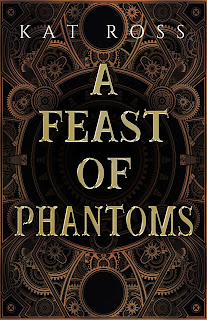
New Book Alert: A Feast of Phantoms: Lingua Magika #1 by Kat Ross; Magical, Terrifying, and Mesmerizing New Steampunk Dark Fantasy


New Book Alert: A Feast of Phantoms: Lingua Magika #1 by Kat Ross; Magical, Terrifying, and Mesmerizing New Steampunk Dark Fantasy

By Julie Sara Porter

Bookworm Reviews 


Spoilers: It's kind of weird to review not one, but two dark fantasy/horror novels for the Holiday season. But when one stops to think about it, it's not that weird at all. Of course there is the simple scheduling that I just happened to be reviewing these books this time of year. But the connection between horror, fantasy, and the holidays is actually deeper than most people are aware.  

When the harvest year died down and winter appeared, many of the ancient Pagan cultures like the Viking and Celts would tell stories of their deceased ancestors as a means to keep their spirits alive and to reassure that they have moved onto better places where they will be remembered. Even when Christianity dominated the European landscape, the idea of telling ghost stories during the Yuletide was not an unheard of concept. Some of the most famous works of European literature like Hamlet and, naturally, A Christmas Carol hearken back to that tradition.

That tradition continues to modern day. The song "The Most Wonderful Time of The Year" refers to "scary ghost stories." Many of our most popular Christmas books and movies like Christmas Carol, It's a Wonderful Life, The Polar Express, and my personal favorite, The Life and Adventures of Santa Claus, deal with that brush of the magical, supernatural, and sometimes fearful spirits and visions that appear just when days get shorter and night is the longest. And who can forget that lovable and cuddly creature from German folklore, Krampus, whose idea of a good time is to punish naughty children by putting them in a sack and beating the ever loving daylights out of them?


In keeping with that tradition of giving the Holidays a supernatural, spiritual, and spooky bent I give my Readers, A Feast of Phantoms by Kat Ross, the first of her Lingua Magika series which combines a Steampunk Western with Dark Fantasy and creates a terrifying out of mesmerizing world that is brilliant to experience and immerse oneself into.

Ross' attention to detail and world building is beyond astounding. It's one of those literary worlds that one falls into and lives in, not just reads. The setting is filled with the Western tropes with out of the way dusty towns, like Lucky Boy, the one horse town that is the residence of protagonist, Deputy Ruth Cortez. There are also references to another town called Three Bars, which was destroyed by a tornado. (Don't you just love these Western small town names?)


By contrast, there is Carnarvon City, a city of industrialization and growth. It is headed by the Carnarvon Family, a mother and her children, who seem to have their fingers in every institution in town. They don't mind stretching those fingers to the rest of the state, maybe the whole country, despite rivalries with the equally wealthy but so far unseen Braga Family.

Where the small towns like Lucky Boy and Three Bars come out of the Western tradition, Carnarvon City is built on Steampunk. There are steam trains and airships, even a few experimental automobiles, the finest in late 19th century early 20th century technology. Of course the aesthetic would not be complete without gears, telescopes, goggles, top hats, and velvet. 


What makes this setting isn't just the Steampunk aesthetic combined with Western theme. It's the fantastic aspects. This is not only a book where magic exists, but it is commonplace. So commonplace that phantoms are alive, well, and very active.

Ross clearly thought a lot about how to write about the phantoms and it shows. She provides little twists that show depths of the creatures such collective nouns (a group of Phantoms are called a feast) and classifications. There are lesser phantoms like Ruth's partner, Doc, who resides inside the deputy's gun and aids her when she requires information or defense. Then there are the larger classification level phantoms who can efficiently destroy a city in a matter of seconds.


Obviously, these phantoms are dangerous and uncontrollable. The hapless humans need help from those who can communicate and control these spirits. There are linguists, humans that can speak a few of the phantom's languages. Then there are savants, humans who can speak several of the phantom's languages. But, savants are not perceived as the sanest or trustworthy of humans as Ruth discovers when she is hired to leave Lucky Boy to guard apprehended savant, Lee Merriweather (not the actress). 


Lee has been captured by Marshall Sebastian Hardin who is acting under orders from Calindra Carnarvon, matriarch of the powerful Steampunk Carnarvon Family. At first, Ruth willingly goes along with Lee's transfer to be tried by the Carnarvons' reps in a potential kangaroo court. However, after Lee escapes, Ruth questions just what exactly the Carnarvons' and Hardin are planning. 


A benefit is that many of the characters are multifaceted and understandable, so that the Readers don't know who to side with. Ruth remains pretty likable and heroic throughout, but the others surrounding her are a curious bunch. Lee alternates between sinister and charismatic. There are also familial ties that he is protective of while others use him for their purposes.


Even Hardin and the Carnarvons who are the main antagonists show fascinating depths in character. Hardin and Ruth share a lot of chemistry implying that if they aren't yet a couple, then they will be. Calindra Carnarvon shows a lot of strength as a business minded woman in the Old West. Her children befriend Ruth possibly for genuine reasons, but just as possibly to keep a potential enemy closer.


Of course, the phantoms are also interesting characters as well. Doc is a deadpan snarker who will help Ruth at the slightest moment but not before getting the last word in. Another demon is terrifying in its powers and ability to hide in plain sight.


A Feast of Phantoms is a great and creepy world to fall into. It's creepiest to read when the nights are at their longest. It is a very commendable movable feast.


Monday, December 14, 2020

Weekly Reader: Winter's Origins: Winter Black Series The Prequel by Mary Stone; Brief But Confusing Tale Especially To Newcomers To The Winter Black Series


 Weekly Reader: Winter's Origins: Winter Black Series The Prequel by Mary Stone; Brief But Confusing Tale Especially To Newcomers To The Winter Black Series

By Julie Sara Porter

Bookworm Reviews


Spoilers: Normally, I don't mind reading a book that is part of a series. I am good at catching up and figuring what happened beforehand. But sometimes, there are books that are hard to follow if you don't know what happened before and since. Mary Stone's short novel, Winter's Origins is that kind of book


It's very well written and has a decent protagonist and genuine moments of suspense, but it clearly calls back and refers to characters and situations that the Reader should know about. It's not Stone's fault, really it's mine. I feel like I dropped in the middle of an A-B conversation, and everyone is looking at me and telling me to C my way out.


What saves this short novel is its lead character. Winter Black is a great protagonist. She is traumatized by the deaths of her family and is determined to become an FBI agent to find closure in their deaths as well as to spare other families from going through the same experiences that she went through.

As true in many of these types of stories, Winter has supernatural abilities to help her on her journey (don't they all?). She is psychic and has images usually before and after a violent crime happens. These visions help provide clues to catching the criminals and prove to help make some pages pretty dark in this story. Unfortunately, her abilities don't always work as shown with her family's death. This fills her with guilt as she pushes herself to succeed in her chosen career path.


There are some really great moments that demonstrate the difficulties of being a woman in the FBI. Winter is constantly questioned by her colleagues and shifted around to various departments. She is purposely made uncomfortable by male colleagues and suspects. 

There are also genuine moments of real suspense throughout, such as when Winter's visions allow them to pursue a particularly nasty character and she has a tense chase pursuing him. The tension is brief but written in a way that captures suspense in the short text. It is a short novel where the action is perfectly spaced within the characterization.


What makes this short novel confusing is the amount of pre-knowledge that the Reader should have before going in. There are moments of exposition that are done in a way to throw names and situations that no doubt the average Reader of The Winter Black Series will get. For example when one character asks another if they are trying to atone for not catching "The Preacher" without any explanation, this Reader thinks "Yes, yes very sad, tragic. Who the heck is The Preacher?"

Since this is supposed to be a prequel, even called Winter's Origins, there shouldn't be that many references. This book should serve as a way to tell Readers what happened before, not confuse them further.


The truth is there is enough that with some editing, Winter's Origins could be a stand alone book and would certainly be better that way. But trying to connect to the other books only creates a blizzard of confusion instead of a nice flurry of excitement.


Friday, December 7, 2018

New Book Alert: Dead Dreamer: To Dream Is To Die by Sarah Lampkin; Dark Fantasy Features Unique Abilities and World


New Book Alert: Dead Dreamer: To Dream Is To Die by Sarah Lampkin; Dark Fantasy Features Unique Abilities and World

By Julie Sara Porter

Bookworm Reviews


Spoilers: What happens when we die? Do we go to our particular versions of the Other World? Do we hover around this world with unfinished business? Do we fade away into nothingness?

Even more mysterious are near death experiences, those who have been to the Other Side only to return with tales of bright lights, relatives telling them their work isn't finished, and a new purpose when they return to share their story and make the world a better place.

Sarah Lampkin's book, To Dream Is To Die which is part of the Dead Dreamer series is a unique take on near death experiences. The Dark Fantasy novel offers us a college freshman who wakes from a coma to discover that she has unusual abilities and must use them to help others.

When she was a teenager, Brenna Harp got into a severe car accident which temporarily killed her. She was restored to life but received some unusual powers in the process. When Brenna sleeps, her spirit travels outside her body and she can also see and hear spirits and other magical creatures during astral projection.

Besides having these supernatural abilities, Brenna also has to deal with the problems of a typical college freshman including maintaining her independence from overprotective parents, suffering through a large class load, arguing with her party girl roommate, and befriending a couple who though are nice often cause her to feel like a third wheel.

To Dream is To Die is in the grand tradition of “Young Person With Abilities Saves The World” but what makes this take stands out is the commitment that Lampkin gives in creating an original power and world that Brenna inhabits.

During her somnambulist jaunts, Brenna, who is called a Dreamer, enters a place she calls The Fade where she can see the dead and other beings. Spirits, including her college's late President, often give her cryptic comments leaving her to guess what their motivations are.

Besides the Spirits, Lampkin also rewrites Demons and Fairies in her books. While common consensus features demons as hateful monsters who torture humans for fun and Fairies as mischievous but ultimately helpful creatures, Lampkin reverses the stereotypes. Instead Demons are the more helpful creatures while Fairies are the ones Brenna definitely does not want to mess with. This is particularly important when Brenna infiltrates a secret organization that is so determined to destroy all demons that they won't let little things like murder or the sacrifice of a child get in the way of that goal.

Lampkin doesn't make her protagonist perfect. Brenna has limitations to her abilities. Because her spirit travels during sleep, her body doesn't actually rest so during the day, she is often fatigued, bad tempered, and sarcastic. Also her body is defenseless when she travels so she is at the mercy of dark spirits who possess her or roommates who play practical jokes on her. Thankfully she is helped by her friends, Damon, a Watcher who can sense ghosts and his girlfriend, Aeria who, though doesn't have any such abilities, is a good friend and as protective of Brenna and Damon as a tigress to her cubs.

The mystery that surrounds Brenna in her first year of college is solid. There are passages such as early conversations which require the Reader to pay attention as they provide intriguing clues. There are also some genuinely frightening moments such as Brenna's encounters with a female spirit who delights in physically and mentally torturing her human victims. Most importantly Brenna discovers the back story of her abilities and discovers other people are Dreamers. She also learns of a wider conspiracy and more frightening creatures on the horizon just waiting for her or another Dreamer to close their eyes.

The ending is completely open ended and purposely sets us up for a sequel. If this book is any indication, then it should be another interesting, unique, and terrifying trip to the Other Side.