Showing posts with label Dreams. Show all posts

Tuesday, July 1, 2025

The Fallen Dreamer: The Seers Storyteller Edition by Kevin G. Broas; Philosophical and Metaphysical Themes Are Highlights of Magical Kids Novel


 The Fallen Dreamer: The Seers Storyteller Edition by Kevin G. Broas; Philosophical and Metaphysical Themes Are Highlights of Magical Kids Novel

By Julie Sara Porter 

Bookworm Reviews 

Spoilers: Okay yes, Kevin G. Broas’ The Fallen Dreamer: The Seers Storyteller Edition, is another book in which teenagers obtain supernatural powers and explore the consequences and responsibilities that are tied to them. But there are some deep philosophical and metaphysical questions, details, and themes that are intrinsic to the book and keep it from being a hoary superhero/magic user plot.

Johnny is a teen who emerged from a cave collapse possessing extraordinary abilities such as flight, precognition, and clairvoyance. They are activated by Johnny manipulating clusters of invisible blue energy strands around his body. Excited by this discovery, Johnny shares the news with his best friend, Jake and girlfriend, Brooke who also gain those abilities. As the trio become more powerful, they discover darker purposes for these powers. Not only that but others become involved. Other people also possess these gifts. Supernatural creatures, called Spooks and another creature called The Taker absorb their powers by destroying the human body. Then there's Johnny who is acting stranger and more unpredictable the longer he has these powers.

This is a Contemporary Fantasy about kids discovering magical powers that isn't afraid to get deep and touch on various themes such as the ego, human nature, dreaming, the subconscious, the notions of good and evil, and what it means to truly have godlike powers inside a human body with its vulnerabilities, frailties, and best and worst personality attributes.

Johnny explains that they have to shift the blue energy strands that surround their clusters to harness these abilities. The key he says is in learning control and not letting worries, distractions, and anxieties or other thoughts and emotions drain their energy. Most importantly, it involves killing the ego and foregoing material and physical trappings. That includes relationships which feed the ego and binds the soul to the illusion of the physical world. 

Once the ego falls, so does the energy that holds them to the physical world. They are able to then access a higher metaphysical existence and manipulate forces outside their limited experiences. It requires a lot of self-examination and reflection before the strands can be accessed and those powers can be used.

Once Johnny, Brooke, and Jake become acquainted with the idea of seeing and using clusters, they see them everywhere and in everything (though because of their practices, theirs are stronger and brighter). Seeing the clusters surrounding other people gives the trio a rare opportunity to control others. In one chilling chapter, Jake tests his powers by moving a bully’s strands so he is severely injured with headaches, nose bleeds, and temporary loss of breath. This causes a slippery slope as they discover that they can use these powers for nefarious purposes like creating hallucinations or telekinetically fighting someone. 

Johnny, Jake, Brooke and the other characters are teenagers. Teenagers by nature are argumentative, surly, emotional, unpredictable, immature, and intolerant. Now give someone with that attitude the powers of a god or goddess and it makes sense why they do what they do with their strands. 

Many people like to think that if they had any type of magical superpowers they might do good things with it like stopping crime or helping people. They might but more than likely they would use it to their advantage the way these kids do to defend themselves against bullies, receive a passing grade, or to win a football championship. In a meritocratic society where we are told to use our talents and win at all costs, many would use whatever advantage that they have to succeed even if it is an otherworldly advantage. 

As they control their strands, they gain higher perspectives. The usual teen talk, high school social hierarchy, dates, and material possessions that once identified their placement in society become mere distractions. It’s practically an ascension into a higher plane of existence. 

Part of this elevated ascension involves altering time and space. One of the most interesting aspects of the book is the continuous references to dreams and astral travel. The characters explore The Dreamer's World which is exactly what it says in the title. It is a vast endless land of silver sand dunes and aurora borealis filling the night sky. This land exists out of time and space and looks like a world before awareness and consciousness. It appears to be barren as though waiting to be filled with memories, fears, moments, the things that dreams store and decode.

The land in the Dreamer’s World shifts as they are faced with challenges like climbing cliffs, fields of grass, and seemingly endless seas. The world is connected to their subconscious and alters itself accordingly. 

The Dreamer’s World is also where The Spooks and The Taker emerge from. They represent their fears, insecurities, all of the ego trappings that had been removed from them. They haunt the protagonists so they can torture them psychologically before they ruin them physically. The fact that they strive to drain Johnny and the others of their powers before destroying their bodies is highly significant. They weigh them down with the egos that they once held so they descend into their human states before they are faced with their mortality. 

In one terrifying chapter, The Taker becomes so powerful that it becomes a natural storm that obliterates Johnny, Jake, and Brooke’s school. This happens during a very key moment as the characters are questioning their own loyalties, allegiances, and self worth. The Taker is fueled by their worst emotions and this threat spills out into the world around them. It changes the physical as well as metaphysical world and creates schisms within both.

Besides the supernatural creatures that threaten the protagonists, they also face threats from within. Some characters take frightening turns with their strands and become intoxicated with power. They use different means from violence to mental manipulation to sway events in their favor. Because of their detached ascended nature, they no longer respond to emotions like empathy, trust, understanding, friendship, or love. They may have removed their egos but they also stripped themselves of their humanity. 

The Fallen Dreamer may be a Fantasy about kids embracing the magic around them, but it also reveals a lot about the constant struggle to achieve awareness and enlightenment while also retaining one’s humanity and the reason that they began this ascension in the first place.

Tuesday, June 25, 2024

The Unholy Trinity: A Collection of 99 Stories by L. Marie Wood; Horror Anthology Delivers on Shocks, Scares, Twists


 The Unholy Trinity: A Collection of 99 Stories by L. Marie Wood; Horror Anthology Delivers on Shocks, Scares, Twists 

By Julie Sara Porter 
Bookworm Reviews 

Spoilers: L. Marie Wood’s Horror Anthology, The Unholy Trinity: A Collection of 99 Stories is practically Tales From The Crypt in book form. So much so that I expected a wisecracking skeleton puppet to pop up from the pages and start quoting ghoulish puns. 

Well that didn't happen but The Unholy Trinity carries many of the same great qualities that Crypt does: easy digestible stories of fears brought to life with spine tingling plots, graphic images, and engaging twists. These stories combine Wood's three previous horror anthologies, Caliginy, Phantasma, and Anathema. They are written to raise that slight chill in the back of the mind, the one that tells you that despite knowing that you are alone in the house while you read this book that maybe you should give that window, or that closet, or the door locks a second look. They remind us that watching horror is a fun and interesting pastime but reading horror lets your imagination fly off into dark and forbidden dimensions that turns your sleep into an unpleasant one.


All of the stories are terrifyingly well written and are certain to scare and delight the Reader but the best are: 


“A Bat Out of Hell”-Right out of the gate, the first story is a mesmerizing thrill ride of shocks, scares, and screams of fright. Carly goes to the County Fair with her boyfriend and just can’t resist the roller coaster called A Bat Out of Hell.


This story draws the Reader right in with its atmosphere that promises fun and adventure but hints at something else. The Fair should be fun but there is darkness. The description and tone remind the Reader that these rides may be exciting but they also dare riders to defy death by going too high or too fast inside metal contraptions put together and inspected by people that may not be entirely trustworthy. 


As if the regular suspense of a theme park isn’t bad enough, the roller coaster itself is far worse. The demonic Goth motif hints at its true intentions. There are bits of foreshadowing like the blood red seats and screams that sound less like the “fun to be scared” screams and more like the “being tortured and begging to be let go” screams. The final pages deliver the gore that reveals that this ride was literally meant to scare the Hell into you. 


“The Dance”-“The Dance” mixes subtlety and eroticism. Gillian, the Narrator is mesmerized by a seductive dancer named Vanessa who fills her with desire especially after the two dance together.


This story is filled with descriptions of Vanessa and her dancing. She is beautiful and otherworldly. Her hair, body, face, and figure give off the impression that she is almost too perfect. Gillian feels stirrings within her that she ignored because of fears of being outed but they are brought forward  the more she and Vanessa interact. 


 Vanessa awakens those longings that Gillian put away, the longings to be with someone without judgment, to be pleasured sexually and emotionally, and to feel that rush that one individual can bring to another individual. It is a truly erotic story that also serves as a metaphor for fulfilling one’s longings and living authentically. 


“The Inn By the Cemetery”- This is a delightful, creepy, and surprisingly romantic story about the past haunting the present. Modern couple Sharon and Mitch go on a romantic weekend getaway to historic bed-and-breakfast. While visiting a cemetery, Sharon picks up an old bracelet. Meanwhile, Mitch has unexplained dreams of the past and visions of a ghostly woman. 


This is a haunting, beautiful, and almost wistful story that delivers feelings of sorrow and uncertainty rather than fear. Sharon’s imagination is activated as she researches the past of the town for a book. The research consumes her to the point that she has trouble separating herself from the past. 


Meanwhile Mitch’s encounters with the past are found by esoteric means. The images of the ghostly woman aren’t really scary. They emphasize her sadness and isolation from the world of the living. She inspires empathy rather than scorn. The couple’s visit practically makes them the unwanted intrusions instead of the ghost.


“The Black Hole”-As many know some of the best anthology stories are ones that like to offer social commentary inside a memorable story. In this story, a group of young African-American men are invited to a paintball tournament by one’s white co-workers. The true intentions of the night are revealed as the men find themselves running for their lives.


This story is very reminiscent of Jordan Peele’s movies by turning a supernatural occurrence into an insightful commentary on racism. The players are evenly divided in strength and athleticism but the white players have advantage over their black counterparts because they know the true meaning behind the game. The weapons become more realistic and the game becomes bloodier and more violent as we peer into the dark hearts of those playing it. 


The black men try to strategize and work together to survive the night and maybe even fight their assailants. It’s truly gut wrenching as they get taken out one by one because they live within a system that does not value them as people. They are regarded by their hunters as nothing more than targets meant to be slaughtered. 


“The Keeper of Souls”-This story is similar to a dark fairy tale that personifies Death as an actual being. The Narrator has been haunted by a creature that he calls The Keeper of Souls. Now at age 88, he fears that the Keeper is coming for him.


The Keeper’s dark clothing and silent demeanor deliver a slight chill. The overall impression is that of a character that you can barely see out of the corner of your eye and swear he was there a second ago. Then upon closer inspection, he’s gone at least according to your eyes. But somewhere in your heart, you know he’s still there watching and waiting. 


The Keeper is like one of those fair folk who operate on their own rules and standards. He collects souls, that’s what he does. He no more has any feeling or compunction about it than he does about the heads that he carries. He is not someone who can be reasoned with, challenged, or argued against. He just is. 


“Dear Monique”-This story is brilliant at subversion and shifting the Reader’s thoughts towards and then away from the characters. A long letter recounts the friendship between Monique and the narrator, Christine. 


Christine’s narrative starts out sweet and nostalgic. She captures various moments that solidified the friendship between the two women through school, marriage, and motherhood. There is at first a sisterly bond between them that appears unbreakable. It’s sweet until we remember that sisterhood can have negative qualities as well as positives. For every March Sisters there are also Cinderella and her Wicked Stepsisters.


The letter takes a severe turn as Christine’s memories become more fragmented, darker, and more accusatory. Buried resentment and envy come forward and the two friends confront one another in a tragic conclusion. At first, it seems abrupt and jarring but upon closer inspection, the letter reveals that there was always something brewing under the surface of this friendship. Their end isn’t a surprise as it is inevitable.


“Baie Rouge”-This story is a continuation of and sequel to “The Dance” by carrying many of the same themes of sexual attraction and undying love. Sandra remembers her relationship with Vickie and still mourns her death. One night during her grief, Sandra gets a surprise visitor that completely changes her outlook.


The couple are very close and Sandra’s memories are pleasant. She recalls Vicki’s positive and negative qualities cherishing those former times as a means of holding onto her deceased lover. Sandra makes Vicki a real person and not a caricature or a model of perfection. That makes her death all the sadder. 


The resolution is easy to predict but at the same time intriguing. Because of what we are told about their relationship, the results are not something to be feared. Instead it is seen as a triumph. 


“To Die A Fool”-Like “The Black Hole,” this is social commentary wrapped inside an engaging story. Only this time religion is given this bitter satiric treatment. A religious man finds his  beliefs tested when confronted with his own mortality.


This story is a savage and brutal takedown of religion and the willful blindness that it sometimes brings. The Narrator spends the first few pages trying to convince the Reader that his faith is constant and unyielding. He arrogantly describes his devotion almost to the point of parody.


The final pages counters the Narrator’s view and give him an ironic hell. It’s a complete contrast to what he talked about without understanding. It forces him to look at himself and learn that his religious behavior was just simply surface without substance. 


“Last Request”-Some of the darker stories in this anthology takes the Readers into the mind of characters who are human and far more dangerous than any supernatural entity. Willie Dean Campbell sits on death row awaiting his last meal and execution.


Campbell’s story is one of using violent means to satisfy one’s cravings and desires. He is written as someone who has a hunger that needs another thrill to satisfy it. Those thrills start out minor and then get progressively worse. He is inhuman as he looks at his victims as simply means to satisfy those longings.


The most troubling aspects of this story are revealed when Campbell admits that he didn’t come upon his homicidal tendencies on his own. In fact, they were drilled into him by his mother. She created the desire and the cravings and got him started on the path. Campbell just simply followed it to its obvious conclusion. 


“One Night Stand”-Some of these stories are flash fiction and have only one page or even a few sentences to capture a mood. In this one, a woman contemplates the aftereffects of a murder.


Despite the short length, Wood manages to capture a truly diabolical situation. The description is extraordinarily graphic and evocative in its violence. In a few short sentences a nightmare is created.


The final sentence is meaningful enough to be a twist ending. In this brief story, we learn as much about the characters and their situation as we would have if we had been given more pages. 


“Issue”-This story is one that many authors may relate to, especially when their characters seem so real. While writing his latest mystery novel, Maurice White seems to feel the presence of Charlie Carver, his protagonist. 


The story begins with many creepy moments like when Maurice begins speaking in the accent that he gave Charlie and taking on some of his mannerisms. He is afraid to look in the mirror or go about his daily activities because he thinks that he will see Charlie appear to him.. As the snippets of Maurice’s novel are meant to keep his readers in suspense, Maurice’s journey does the same to us. The Reader isn’t sure if Charlie’s fears are justified or we are reading the thought process of a paranoid schizophrenic. Is Charlie a fictional character or an alter ego that Maurice tries to suppress but is begging to come forward. Or more than likely could both be simultaneously true?


The ending spins the story in a different direction from entering the mindscape of a writer to blurring the lines between the real world in which they live and the fictional world that they create. Charlie Carver takes on a more demonic persona as he confronts his author. He is unfinished because his story is and he demands a resolution. This story shows that people, authors especially, can create their own demons and are often at their mercy. 


“Noon”-This story takes a trip into panic during the end of the world. The Narrator searches through a zombie apocalypse for his brother, Corey.


The story captures the panic and tension that one would have in a situation where their entire world has ended. The Narrator recalls the moments when  the creatures attacked the humans and chaos ensued. He’s still in shock and denial trying to reconcile the world that he once knew with the one before him. This leaves him defenseless when he isn’t adequately prepared for the new normal. All he can do is find his brother and hide. 


The tension contrasts with the Narrator’s feelings towards Corey. His memories of the two raising each other and sticking together through hardships fill him with hope. He hangs onto those memories because they are all that he has. He wants to think of Corey as the man that he once was and not a corpse or worse. That hope turns to despair and fear when he realizes that the times have changed his brother too.


“Patty”-Unlike many of the stories in the anthology that  cannot be found in reality, this one explores a monster that is very human and unfortunately very common. In this one, Patty recalls her unhappy and abusive marriage to her husband, Troy and the violence that ensued from it.


Who needs ghosts, demonic roller coasters, and zombie apocalypses when the fear of domestic violence is all too present and real? Patty’s marriage starts out badly even before the ceremony when she overhears Troy make disparaging comments about  her appearance. Troy’s abuse towards Patty escalates from sharp criticisms, to outright insults, to gaslighting, to physical and sexual violence. The characters fall into a pattern that is frequently echoed in reality. 


The worst part about the abuse is the toll that it takes on Patty. When we read about her, she is a faded withered woman who is deprived of the ability to think for herself because of the erosion of her self-esteem. She wears clothing, fixes her hair, and manages the household in ways that he approves of. She is not even allowed the privacy of her own thoughts without his domineering voice and harsh hands entering her mind. As with many abuse victims, she has lost the ability to fight him and in this case her obsession to please him takes on violent proportions. However, the story makes us side with her because Patty is not the monster. Troy is. He took her identity, mind, independence, self-respect, and left behind an empty shell. He did far more damage than any zombie ever could.


“Idol”-Many of these stories are at their core about obsessions, but none explore that concept more than this one. In a long monologue, Iris recounts her obsession for a famous woman to the point that she wants to look like her and goes to desperate lengths to achieve her goal.


The story straddles the line between darkly comic and extremely grotesque,  Iris talks about her injuries and body mutilations like they are a day at the spa. She is alarmingly nonchalant about the fact that her complexion is burnt to a crisp,, that her hair and eyebrows are gone because of disastrous dying techniques, and parts of her skin has been hacked off to trim the fat. It’s terrifying and pathetic to imagine this poor woman putting herself through such torture to look like her idol.


This story is a commentary on the beauty industry and the lengths that people, especially women, go through to look perfect. In a world where eating disorders, plastic surgery addiction, compulsive shopping, and images and videos that exploit insecurities in the name of beauty are all too common, are Iris’ actions really that far off? Many destroy themselves to obtain a perfect image that doesn’t exist, that never existed. They just don’t do it as graphically as Iris does. 


“Abstract”-If Art can capture life, then it can capture death too and that is what is explored here. Matthew and Cameron go to an art exhibit from a controversial artist whose paintings leave quite an impression on those who observe them.


The story starts out like one of those urban legends. Matthew and Cameron debate about the stories that they heard that they swore happened to a friend of a friend. Like other urban legends, this set up opens up a real fear but puts a story around it that is hard to believe. We may not believe the legend, but it scares us all the same. 


Things take a turn when the duo look at the painting. It is not described very much, just in splashes of colors. It’s an abstract which one may look at in any museum and  ponder its meaning, but leave it behind in pursuit of other works. With this one, it’s not so much the painting itself but how it makes the viewer feel. There is a haunting creeping coldness that symbolizes death. It can’t be expressed into words and barely into visuals beyond an abstract. It can only be felt and as it is felt, it remains. 


“Skin”-”Folie a deux” means shared psychosis and is particularly felt among two or more people who work together to commit crimes. In this story, Karen, a former psychiatric nurse, recalls her troubled obsessive relationship with Jeremy, a patient.


Karen and Jeremy are like many killer couples, most notably The Joker and Harley Quinn. They fill a need for each other and those needs often end in murder. Jeremy lives for his obsessions and addictions that are only satisfied by killing and devouring his enemies. He lives on emotion and impulse and doesn’t care who he hurts. 


Karen on the other hand is smarter and more methodical and calculating. She delivers certain things and pays favors to Jeremy to earn his trust. Then when she has it, she becomes an accomplice to his deeds. While Jeremy is not personally invested in the people he attacks, Karen is. She has a specific target in mind and puts them right in Jeremy’s path. In some ways, that makes her worse than Jeremy. He may live totally in darkness but she can control it. 


“Worthington Court”-This is reminiscent of those old ghost stories or campfire tales about that person or that area in town which are cursed. In this story, the cursed area is Worthington Court and the only person who knows its dark devastating secret is Alma Roberson, a 96 year old resident who reveals the secret to Henry Goode, a skeptical historian.


There is a nostalgic old world quality to this story, the kind which is shared by a storyteller to their listeners. Alma tells the story with a compelling narrative that captures both history and horror. She tells it in a way that makes you want to listen even though you are afraid of the ending. 


The story has a parallel point of view from Henry. After Alma finishes her story, he researches it to determine the veracity. He  methodically and thoroughly searches archives, town records, newspaper articles, census reports. He is convinced that he knows the truth. He forgets that there is something out there that resists being researched and can’t be analyzed or understood by academic means. 


“Detour”-This story has one of the usual stock endings found in horror but the journey to get there can’t be missed. Stuck in traffic, Cheryl takes a detour along the mysterious Palatial Lane only to get the fright of her life. 


“Detour” is almost hypnotic as it describes the long drive with the roads and endless traffic. It’s meant to put the Reader and Cheryl into a false sense of monotony during an everyday situation in which we are all too familiar. 


Palatial Lane is purposely the opposite of its name. Cheryl expects a wealthy road with big mansions, manicured lawns, and fancy cars. Instead, she finds an unkempt wood, old houses, dead grass, and an overall sense of abandonment. It is a place that fills her with fear and loathing and only towards the end does she realize that her fears are justified. 


“The Morning After’-This is another flash fiction which takes two sentences to capture a mood, a thrilling creepy mood. A woman hears a singer’s voice on the radio and it causes her mind to wander to a specific memory.


In the brief time in which we are given, we are told what we need to know about the woman, the singer, and what happened. The information that we are given gives us the important details and lets our minds wander about the rest. We don’t know who they are, the motives, or what led to it. That is left to the imagination. All that is known is something horrible happened and the Woman is not at all remorseful. In fact, she is jubilant.


“A Glimpse”-This is a very strange story which leaves a lot to the imagination. A woman is frightened by the appearance of a stranger but there may be more to this stranger than she thought.


We aren’t given a long story, just a few paragraphs. Most of it is devoted to the woman’s theories about this figure so it’s hard to tell what is real and what isn’t. This adds to the ominous feeling throughout. 


We are led to believe one thing, but then we are told something else that pivots us into another direction. In the end we aren’t given any clear answers and are left with the unknown. In a way that’s what makes it scarier. We are left to our own interpretations and to make our own conclusions. 

Friday, May 31, 2024

Tipani Walker and The Nightmare Knot by Jessica Crichton; A Dream Come True for Fantasy YA Lovers


Tipani Walker and The Nightmare Knot by Jessica Crichton; A Dream Come True for Fantasy YA Lovers  

By Julie Sara Porter 

Bookworm Reviews 

Spoilers: Now, we come to the second Jessica Crichton novel, Tipani Walker and the Nightmare Knot. If possible, it is actually better than Dr. Fixit’s Malicious Machine, particularly in terms of setting. character, most notably with its protagonist, Tipani Walker, and themes about the difference between living in fantasy or accepting reality. 

12 year old Tipani Walker has a difficult home life. Her father is in a coma. Her mother falls into a drug addiction which is provided by a man that Tipani calls The Spoon Man. She is frequently bullied and made the victim of a cruel prank at her school Science Fair. She stops inside an antique store and meets its eccentric owner, Piper, who gets her interest by appealing to her talents of making complex knots. After experiencing vivid dreams and some strange encounters with mysterious creatures, Piper reveals that Tipani is a Weaver able to travel through Time and Space into what Piper calls the Day Knot (memories) and the Night Knot (dreams). As a Weaver, her job is to protect people’s dreams. During her dream travels, Tipani encounters various characters both friendly and unfriendly, most notably Cassie, a girl who may or may not be part of a dream or a real person, may be in a lot of trouble, and might need Tipani’s help. 

This book is a veritable feast for the imagination. While Dr. Fixit’s Malicious Machine subverts Children’s Book expectations by giving us a very grim dark parallel universe, Crichton puts us right into those expectations of a magical fantasy world and weaves an excellent challenging story around it. I am someone who is fascinated by dreams, dream psychology, dream interpretation, and astral travel so this book definitely appeals to those interests. 

The Dream Worlds that Tipani visits alternates between whimsical and terrifying, beautiful and horrible, fantasy and horror. They’re mutable and constantly change landscapes, characters, and situations depending on what either she or the Dreamer is going through. The longer Tipani stays in a dream, the scarier and weirder it becomes. This is symptomatic of when a Dreamer enters different levels of REM sleep, they have less control over their dreams and their subconscious thoughts and fears manifest themselves. 

There are many chapters that show this. In one trip, Tipani and her guide, a doll named Chicken, encounter the Spoon Man who is transformed into a monster. He is terrifying by playing into Tipani’s fears and insecurities about abandonment and loneliness. Then upon escaping, Tipani and Chicken meet Wynken, Blynken, and Nod, the characters from the eponymous poem by Eugene Field. The poetic trio are charming, kind, and helpful. Their wooden shoe boat sailing among the stars is the stuff of childhood nostalgia while the Spoon Man is the stuff of childhood fears. Exploring the dreams is a trip into Tipani’s mind and discovering what comforts and frightens her, what she hopes for and what she wants to run away from. This book is a fascinating psychological study wrapped inside an engaging YA novel. 

Crichton’s characters are as rich as the setting. There is the kind and helpful Piper who is a wise teacher and a potential father figure. Chicken gives plenty of assistance with a touch of sardonic humor. Cassie is in a quandary of her own, forced into playing a role in which she is unhappy to play and only able to truly be herself within her own mind and through her friendship with Tipani. The Spoon Man is a monster who knows what those around him fear and worry about and doesn’t mind using it against them. 

Tipani by far is the most intriguing character and is a brilliant protagonist. Since she is 12 years old, she is certainly an angst filled adolescent who at times cops a bad attitude but with her difficult home life, it’s easy to understand why. After all, if you are facing some of the most difficult years of your life, your father is ill, mother stopped caring, and you are surrounded by classmates who want to fight you if they so much as look at your direction, you would probably not be in the best of moods either. 

Tipani is also a very intelligent and persistent girl. Once she is introduced to the concept of being a Weaver, she is curious and willing to participate. She recognizes the responsibilities that she has in helping people through their dreams and fighting their inner fears. In fact, when she befriends Cassie through her dreams, she wants to find her in the real world to see if she needs help in her waking life as she does in her dreams. 

Tipani's intelligence is already realized even before she becomes a Weaver. Her interests lie in creating complex knots like the Not Knot (unable to be untied except by the one who tied it) and learning to undo other knots like the Rapunzel Knot (long and wrapped in braids). This gives her the ability to analyze and recognize patterns, a talent that is helpful when she recognizes patterns within the dreams. This knowledge comes in handy when she has to stand up to the monsters that torture Cassie and herself. 

For all of its monsters, fears, magic, and whimsy, Tipani Walker and the Nightmare Knot is a very powerful story with some very strong things to say about the nature of dreams and reality. Sometimes our lives are terrible and we want to live inside our dreams. There we live the way we want and if things don’t work out, we can always wake up. But it’s not enough to live inside of dreams and memories. Tipani realizes that she has to take action to find and rescue Cassie, to encourage her to live her truth, and for herself to fight her own battles. Once dreaming is over, it’s time to start doing. 

With a memorable setting, commendable characters, and brilliant themes, Tipani Walker and the Nightmare Knot is a definite dream of a YA novel. 

Monday, November 28, 2022

New Book Alert: Life Between Seconds by Douglas Weissman; Beautiful Moving Novel About Living After Loss


New Book Alert: Life Between Seconds by Douglas Weissman; Beautiful Moving Novel About Living After Loss

By Julie Sara Porter

Bookworm Reviews


Spoilers: Douglas Weissman's novel, Life Between Seconds is a beautiful, meditative, and lyrical novel about people trying to live after suffering tremendous loss. It can be very emotional with the realistic portrayal of sadness, grief, and depression. Then there are parts that become very fanciful as it enters characters' imaginations and dreams. It's hard to place it as a realistic contemporary fiction or a fantasy or even a mixture of both. 

Whatever it is, it is a beautiful and unforgettable work.


The book focuses on two people, Peter and Sofia. We first encounter them during their early years. Peter is a young child having an outing with his mother, Sam. Sam tells Peter stories about his father and paints pictures of places like Machu Picchu and San Francisco, that she promises that he will see one day.

Meanwhile, Sofia is with her husband, Gadton and their newborn daughter, Valentina. She soothes the baby to sleep with all the promises that Valentina will one day live a wonderful life: go to university, have a beloved career, meet a wonderful man that will adore her, and so on.


In both chapters, we are given glimpses of the protagonists in the happiest times of their lives when they were in perpetual innocence. They make plans that they don't yet know won't come to fruition. These moments become important because they symbolize the last time that Peter and Sofia were happy.


After those chapters are finished, we return to Peter and Sofia years later. Peter was once a bright imaginative child. Now, he's a jaded and embittered adult. He has lost both of his parents and now feels rootless in the world.

He works as a janitor in a science children's museum and frequently travels. He has trouble making emotional connections, always assuring himself that no matter how bad things get, he has a ticket to somewhere else (right now Nepal) in his pocket. His once childlike desire for travel has now taken over his life.


Meanwhile, Sofia is alone. She has lost her husband and daughter. Unlike Peter's wanderlust, she is content to remain inside her apartment going out only according to a regular schedule. She avoids communications with those from her past but still her memories overpower her. She maintains friendship and cooks food, like Argentinian empanadas, but like Peter has trouble making deep communications.


The strongest characterization can be found within the relationship between Peter and Sofia. They are neighbors who at first maintain casual conversations but slowly become closer once they learn that they share mutual loss. They don't develop a romantic connection but one of friendship, perhaps filling the parent-child voids in their lives. That friendship allows them to break from their loneliness and move towards others.


Life Between Seconds is mostly a dark but ultimately uplifting novel but one that is mostly set in reality. However, some of the most intriguing parts are the strange detours into magical realism. Peter's opening chapters with Sam for example weave the reality of their situation with fairy tales that Sam tells Peter about his father and future adventures that they will take with Peter's teddy bear, Claus.


Sofia's adult memories of Gaston and Valentina consume her so much that she has trouble separating fantasy from reality: what she believes happened to Gaston and Valentina and what actually happened to them. While Peter travels to escape his memories, Sofia remains in place and keeps trying to relive and change hers.


By far the strangest chapters are the ones that take Sam on a fantasy sea voyage with a now talking Claus. The symbolic imagery such as the boat being described as tub-like or that the ocean seeming endless suggests some things without coming right out and revealing them in the text.

While it's more than likely a vision, dream, or hallucination it's hard to tell whose, Sam or Peter's. If it's Sam's, it could be what is flashing through her mind before she makes her final choice 

If it's Peter's, it possibly details a wish fulfillment of what he hopes happened to her. 

This suggests a deep creative connection between mother and son as art, literature, and storytelling were touchstones that they shared as communication.


Life Between Seconds is a book that makes the Reader think about life and death and how they cope with such loss. It is a meditation on what legacy is left behind for others to remember and take with them.


Friday, October 28, 2022

Weekly Reader: Kaleidoscopic Shades Within Black Eternity by Dave A. Neuman; A Surreal Bizarre Fantastic Trip Through Nightmares, Bad Memories, and Other Strangeness


Weekly Reader: Kaleidoscopic Shades Within Black Eternity by Dave A. Neuman; A Surreal Bizarre Fantastic Trip Through Nightmares, Bad Memories, and Other Strangeness 

By Julie Sara Porter

Bookworm Reviews


Spoilers: Dave A. Neuman's Kaleidoscopic Shades Within Black Eternity is one of those types of books that is almost too surreal to be believed. There are moments that seem so disconnected from the reality of the pages of a book that I wasn't sure whether they were actually in the book itself or I dreamt it as being part of the book. 

It's a strange bizarre trip of a narrative but it is impossible to forget once it's over. It's one of those types of books that you will mull about for days wondering about the various moments and what they meant.


In 2011, solar flares drove South Australia, particularly the town of Adelaide into near chaos. Communication was down, electricity was erratic, and strange almost supernatural things happened. Among the people who lived through that strange event are Bob and Sue Triplow. 

After the weirdness passes, the two move to Corona, California, have a son named Joshua, and become regular members of the community. Twelve years  after the solar flares, weirdness follows the Triplows and everyone else, I mean everyone around the world. 


This introduction is fascinating as it draws from many unexplained phenomena stories that suggest that the solar flare encounter and what happens in the book are only the latest events in a long string of things that happened over time that are somehow linked together. 

Before we read about the Adelaide Solar Flares, we are told about a man in the Victorian Era who stepped back into Medieval Europe. It makes one wonder if in this Universe, many of these phenomena are part of this situation. Can we attribute the Bermuda Triangle, creatures like Bigfoot, Time Slips, UFOs, alien abductions, and ghost sightings to these events? The plot widens the scope and gives reason to the strange bizarreness, making these seemingly random global events not so random.


After the introduction, we get the first strange event in the narrative proper. Joshua and several of his schoolmates have tense nightmares of a strange man in a dark suit observing them. The nightmares are so prevalent that Joshua and his peers suffer through the day. They move sluggishly, are afflicted with dark circles under their eyes, and have no energy. They look and act like they went several rounds with Freddy Krueger during the night.


What is particularly compelling about these nightmares is that the mysterious man in black never does anything physical to these kids. He never even talks to them (except Josh begins to hear taunting in his head that might be from this nightmarish apparition). He sits next to them and takes notes as though he is studying and observing them for some unknown reason.

His presence is just enough to terrify them. It's sort of like the child who swears that the Boogeyman is in their room. Then Mom and Dad come in and say no that's just a pile of clothes, but he's not convinced

Only in this book's case, the pile of clothes really is a terrifying monster.


This by any means isn't the only strange thing that is happening. As the book continues, we are subjected to a lot of weird incidents around the world that seem unconnected but we later find out really are.

An Englishwoman spontaneously combusts. A township in Brazil just vanished. A house with a strange old man with a love of Louis Armstrong appears and disappears in California. An old man is mysteriously flattened to death. Around the world, people see these strange balloons and hear the sound of bells. Bob is tortured by memories of his abused childhood that seem to become real.


It gets to the point where while reading each page, the Reader is just waiting for the next strange thing to happen. It's like a surreal journey into a dream which starts normal and gets progressively weirder the deeper into sleep you go. Kaleidoscopic Shades Within Black Eternity is one of those works that isn't so much a book as it is an experience. You have to dive right in and immerse yourself into what is going on.


Eventually, an explanation is given that is compelling and opens up other possibilities about alternate worlds, alien species, and science experiments gone awry. However, the explanation does little to help those that have to live with these disturbing events. 

Bob and Joshua in particular find themselves surrounded by a world that becomes so strange and nightmarish that it's hard to tell what is real and what isn't. 


Neuman deserves high praise for taking his Readers on this surreal journey that confuses and disturbs them almost as much as the characters. It's completely unforgettable and is one of the best books of 2022.


Saturday, April 2, 2022

New Book Alert: The Last Keeper (Book One of The Warminster Series) by J.V. Hilliard; Gripping Epic Fantasy About a World Coming To An End or At Least a Transformation


New Book Alert: The Last Keeper (Book One of The Warminster Series) by J.V. Hilliard; Gripping Epic Fantasy About a World Coming To An End or At Least a Transformation

By Julie Sara Porter

Bookworm Reviews


Spoilers: When an Epic Fantasy begins, usually it shows a slightly lighter world. It introduced us to the plucky characters at the start of their adventure. They are going through their daily lives ignorant of what monumental changes are going to affect their world.

Rare is the epic fantasy that starts out dark and just stays that way throughout the entire series.


J.V. Hilliard's The Last Keeper, book one of The Warminster Series is that book. When the first chapter begins with a character painfully transforming into a demonic creature then you know we are in for quite a somber ride and all of the elven creatures, magic spells, and sword fights aren't going to change that.


This is the typical Epic Fantasy in which there are several characters involved in this disturbing quest. However, there are three main protagonists.

There is Daemus Alaric, a member of the Keepers of the Forbidden, scribes who write and protect arcane historical archives. Besides having a tremendously important profession, Daemus also has a gift of prophetic dreams. Lately, he has been dreaming of a demonic figure in the mist who calls him by name and taunts him.

Another important protagonist is Sir Ritter Valkeneer, a warrior. Half-elven and half-human, Ritter and other human/fantasy creature hybrids are called by the derogatory term, Trollborn. Despite the slurs, Ritter is a greatly respected knight and warrior. Normally, they battle cryptid creatures. However, now he and his fellow knights have to take on a more otherworldly magical foe.

The third protagonist is Addilyn Elspeth, a noblewoman and daughter of an ambassador. She also has dreams but her dreams are more symbolic than those of Daemus. She dreams of a herd of tetrine, ten foot tall black unicorns. To dream of a tetrine signifies death and destruction and judging by what's been happening to the rest of the world, that dream is spot on. Daemus, Ritter, and Addilyn's stories eventually converge when they realize the depths of their antagonist's dealings in murderous dark magic and how many will suffer.


There are many moments that bring fear forward that transform an Epic Fantasy into a Supernatural Horror in a Fantasy world. The dreams of tetrines are not of a herd of majestic pure unicorns. Instead, they are more like the steeds of the Hundred Riders of the Apocalypse. It's easy to see why Addilyn and others are fearful of this nightmare and what it represents. In a world which takes dreams and omens seriously, this is a disturbing one.


It doesn't get any better after that. The Reader and characters are subjected to various violent scenes. In one harrowing encounter, a shape shifting assassin kills the relative of one of the main characters. The grief is insurmountable and puts the character into a severe depression that motivates their actions through the rest of the book transforming their personality immensely. While many are determined to catch this murderer, there is a realization that this is a hard task because the assassin is a shape shifter. By definition, they could hide anywhere and become anyone. Justice may take awhile to be met, if indeed it can ever be.


There is also a visible darkness within characters as well. We learn the backstory of the main antagonist. They are not some god or demon. Instead this person is all too human. Just someone whose ambition and passion got in the way of common sense and reason. It's frightening because this character is so relatable. In a fantasy world, their villain could be any one of us.


We also see a more troubling nature in characters who believe that they are on the side of good. At one point, Daemus goes on the run and encounters a group of friendly and helpful outlaws. Unfortunately, when they return to Daemus' home and his wealthy noble family, his family doesn't want to have anything to do with the people who saved their son's life. They cite rivalries and family grudges, but the truth is they are prejudiced against these people and want them arrested.

 Not to mention the term Trollborn is meant to convey many of the slurs that are heard in modern day. Those like Ritter can be as heroic as anyone, even be held up as Legends but to some that won't matter. They only see their appearance or family lineage.

The Last Keeper is one of those fantasies that makes real world commentary in a fantasy setting and does it well.


Sometimes with Epic Fantasy, darkness spills into a formerly light world making the characters wait for the light to return. However with The Last Keeper, the demons both outside and within the characters, the light may never appear. The darkness may remain for a long time, even forever.


Thursday, December 16, 2021

New Book Alert: Dreams of Darkness and Desire B.L. Cagle; Dreams Are Highlight of Somewhat Questionable Supernatual Romance Between Witches and Warlocks


New Book Alert: Dreams of Darkness and Desire B.L. Cagle; Dreams Are Highlight of Somewhat Questionable Supernatual Romance Between Witches and Warlocks

By Julie Sara Porter

Bookworm Reviews 


Spoilers: The highlights of B.L. Cagle's Dreams of Darkness and Desire are the dream sequences. They take a large chunk of the book and they purposely confuse the protagonist, Kira and unsettle the Reader. 


The dreams are prophetic and sometimes metaphorical. Kira's first vision involves her falling and being introduced to a handsome man. She is surprised to see that man moving into a house near hers. The man, Blake, instantly captivates the young dance student in her fantasy and in reality.


The dreams are the types that cover full chapters so the Reader can't tell what is real and what isn't.  There are some pretty intense fantasies that are sprinkled throughout the book. One of the more frightening passages is when Kira dreams that she and Blake are at a carnival. The action takes almost Twilight Zone levels of fear as the two encounter an ancient enemy that doesn't spell good for either Kira or Blake.

Another chapter carries on the whole idea of "dream within a dream" when Kira foresees a confrontation between Blake and her alcoholic soon to be ex boyfriend, Colin. Kira visualizes a couple of different scenarios in which the two engage in violence before it happens. The dream sequences make it hard to tell where fantasy begins and where it ends, inviting the possibility that the entire book may be one extended dream.


Unfortunately, while the book's dream sequences are top notch, the romance is unfortunately lacking. With Kira, Cagle creates a well written female character. Both of Kira's adopted parents died so she lives with her friend, Kat. Colin, her boyfriend, is becoming an alcoholic and keeps making excuses for his bad behavior, including sleeping with other women. Besides her personal life, Kira is a dancing student pushing herself to succeed. Also her dreams and other burgeoning abilities reveal that she is not only a witch, but one of the most powerful witches in the world.


While Kira comes across as a decent character, Blake does not. He is the typical brooding antiheroic character seen in these types of books. He and his friends are part of a group of warlocks and magic hunters. 

They perform a ritual on a young witch that seems like something between a transorbital lobotomy and a ritual sacrifice. It's pretty brutal, making it hard to root for these guys who seem easy going romantic fun loving guys one minute and resorting to such violent actions in another. They also have a very questionable relationship with a group of witches and there seems to have been more than an understanding between the warlocks and Kira's birth mother, another powerful witch (which leads to some very unfortunate implications between Blake and Kira's future).

It's also important to mention that in most supernatural fantasies where witches and warlocks are the main characters, magic hunters are usually the antagonists. Blake and Co.'s behavior doesn't help that reputation. True we find out the reasons that they are doing this and in the last few pages Blake seems to genuinely like Kira rather than trying to assess her abilities as he has been doing through most of the book. But these revelations come too little too late for Blake and Kira to become a couple worth rooting for. In fact, Kira seems to be going from one troubled relationship to another one.


After Dreams of Darkness and Desire, I can only dream about a better romance.


Tuesday, January 19, 2021

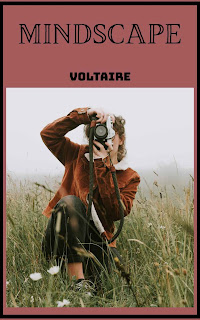
New Book Alert: Mindscape by Voltaire Von Gogh; Fascinating, But Flawed No Nonsense Self-Help Book On Achieving One's Dreams in Entrepreneurship


 New Book Alert: Mindscape by Voltaire Von Gogh; Fascinating, But Flawed No Nonsense Self-Help Book On Achieving One's Dreams in Entrepreneurship

By Julie Sara Porter

Bookworm Reviews


Voltaire Von Gogh's book Mindscape is sort of what would happen if Stephen Covey's 7 Habits of Highly Effective People and Mark Manson's The Subtle Art of Not Giving A F$#@k were stuck in a blender and mixed together (aside from ruining a perfectly good blender by sticking books inside of it.). It has the tough love and sarcasm of Manson's book with the practical and far reaching advice of Covey's.

The results are a slightly uneven, but always helpful book about going over barriers and achieving one's dreams by becoming effective entrepreneurs.


The book offers a very realistic, almost conversation style to the writing. In The opening, Von Gogh asks who The Readers are and answers, "You are the 'common man.' But some wild fantasies and some shining dreams. Now you are just imagining and imagining what else could have been. Or you could have tuned up to be a very ambitious person. Kudos, you are like millions….You have dreams and problems. That's you. All have dreams and problems...No, there's not a single person who has either of those things."

This description sets the stage over what kind of book is in store for Readers of Mindscape. It's very plain spoken and no nonsense laying out exactly what problems that the Reader might have and how they can be resolved.


At times this no nonsense approach comes across like Von Gogh is a drill sergeant to a very large army. Von Gogh discusses how the word, Practicality, slowly killed dreams of childhood forcing us to become conformist adults. He writes, "Practical is another word for incapable. So, Sir, if you have forgotten your dreams, if you are just a living dead, if you have nothing to fight for in your life... I'm not interested in you." I could almost picture Von Gogh yelling "Alright maggots, you are going to live your dreams! Now drop and give me twenty!"

This tough love approach in self-help books could be difficult for some Readers. They may not make it to the good advice when they feel like they are being insulted. Others may enjoy this more realistic approach of someone who lights a fire under them to keep them moving. It depends on what one is looking for in advice. 


Once you get past the drill sergeant opening, there is some good solid advice that any Reader can follow, even ones who aren't going to be entrepreneurs. Advice like Dream Big ("Have dreams, large life, large people, large story. F%\k the world."), Begin ("The only thing that is stopping you is YOU!"), and Starting Small ("Put the seed in the soil. Water it. Wait. It will germinate. Take care of it, it will grow into a plant, add manure in soil, fulfill its needs.")

While the emphasis is on potential entrepreneurs, this advice is helpful for anyone who wants to find their dream job, pursue their artistic passions, or do other things that they have long held on the back burner.


Von Gogh focuses mostly on potential business owners and people who want to turn their interests into business success. He goes through the various stages and suggestions like Planning. Within Planning he breaks down other subjects like Defining Objectives, Developing Premises, Evaluating Paths, Analyzing Resources, Finalysing (sic) Methods, Writing Possible Outcomes, Solving Problems, Securing Additional Cooperation, Making Schedule, Framing Values, and Deciding the Start. 

He evenly distributes these steps recognizing their importance in starting one's own business. Each subject is emphasized in their own section. For example the section, Developing Premises, goes into great details about creating the foundation of a plan and analyzing the  initial objectives. Von Gogh writes that "The factors on which the development of your premises depend must include the full consciousness of your objective, your interests, and full set of skills."


Many of the advice that Von Gogh provides pertaining to one's own self image as well as getting along with others. One of the chapters is titled, "Be A Self-Motivated Person." In it, Von Gogh emphasizes that the Reader must seek motivation within themselves if they want to move ahead. He writes, "Do not seek motivation out there in the world, in videos, audios, or lectures. The dreams, the reasons are all yours. Grow motivations inside you. Have fervor all the time about all the things that you are doing. If you are losing motivation, if you are losing enthusiasm, it means that your dreams are not big enough or to don't imagine them frequently enough. Just having goals is not enough. Imagine them every day, every moment, if you want to have fervour, if you want to go on forever."

It is encouraging when a self-help author tells you not to trust self-help programs (even potentially their own) and reminds you that change must come from within. Ultimately, we are the authors of our own fate. 


A business can only work if the owner is willing to recognize the needs of their customers. To do that, the potential entrepreneur must build relations and network with those around them. Building relations requires the business owner to ask questions about others' needs, make people curious about them, share dreams, and add something new that they can offer and no one else can. Together, business owner and potential customer bring those discussions to common objectives and beliefs. 

Von Gogh writes "Bring the discussion on the conclusion that you two must be together in order to achieve what you both want. Don't say it directly. Just put the idea in your mind. Tell that you have solutions to some of their problems and that they too have solutions to some of yours. And if you both work together, problems can be solved and both of you can achieve whatever you want. Just put this idea in their mind and let them think."

These chapters reveal that despite the bootstrap myth, no one really achieves success on their own. They depend on others to work for them, to work alongside them, to obtain their goods and services, to network with other, and to recommend them to others. It is important to build those relations and obtain a healthy network.


There are many themes that are prominent throughout the book. The most important one is found in the title: Mindscape. It is defined as "life is more or less about going through yourself." This ideal reminds the Reader that when they are feeling tired and stressed, and discouraged about their path, that they should sit, relax, and look at things from another perspective. Von Gogh writes "Don't just think outside the box. Think what to do with the box. Have many perspectives and look from each of them. What you see doesn't decide what you do. You can think differently. You really have a lot of choices more than the existing if you widen your mind, pause, and look at it from different perspective and just think."

This seems like a simple concept, but sometimes we get so caught up with our problems to the point that we are overwhelmed and want to give up. This chapter reminds us that solutions can be found if we think about them logically and analytically. The solutions can be found if we relax and look at new options.


While the book is honest in its advice for business owners, it is also honest in why start up businesses fail. In one chapter, Von Gogh examines the various reasons start up businesses fail. Among the top 20 reasons, found by Forbes Magazine, are: Product Mis-timed, Ignore Customers, Poor Marketing, Need/Lack Business Model, Poor Product, Pricing/Cost Issues, Get Out-Competed, Not the Right Tram, Ran Out of Cash, and No Market Needed.

Each reason is explained and summarized clearly. The reason "No Market Needed" reveals that start ups sometimes fail because their product isn't needed. If it's not needed, then it won't be sold. 

"This shows lack of research and lack of market understanding in founders. They don't know where the customers are heading, where they are suffering….If you don't know the current situation of the market and you aren't really solving a problem worth solving-You'll be kicked out of this world…..Test the your product, ask for reviews, do surveys, showcase it before bulk manufacturing, and observe results."

This chapter is good at not only explaining the reasons that start ups fail, but offers probable solutions for the Reader to avoid them and refine their business so they don't fall into these traps.


Entrepreneurship is an ongoing process that doesn't take a week or a month, or even a year to develop. The final section of Mindscape offers 54 activities enough for each week of the year to help the Reader continue to focus on their dreams and businesses. These suggestions include "Passion Makes Up Position", "Work Hard, Hard Like Hell," "Consider Confidence," and "Be Brave Enough."

Each week, the Reader is encouraged to practice and activity or think about some issue concerning their business. 

For example Week 16's theme is "Let Your Mind Run Free Through The World." It encourages entrepreneurs to get their minds off their business and don't limit their thoughts to that exact thing. 

Von Gogh writes "Spend this week in searching new things, doing new things, and skills. This is not a break from the general schedule, that is an addition to your general routine. It's like building a hilltop garden where you can wander while having a cup of coffee."

The weekly schedule allows the Reader to take apart the hard job of creating a new business piece by piece into smaller increments. These incremrmud in turn allow the Reader to focus on one thing at a time.


Mindscape is mostly a good self-help book but has flaws, particularly in tone and formatting. The overall tone is jarring to go from the tough love approach to the kind helper. The drill sergeant introduction can put Readers who are expecting the nice words off. Likewise, the Readers who relate to the introduction may find the rest of the book soft. A self-help book should find one specific tone of voice and stick with it. The author should find out what Readers that they want to read their advice and cater to them.

The formatting is also a bit troublesome, especially in some bold or bullet point sections. Many are not broken off into paragraphs giving the overall impression that the writing rambled on until a point is finally made.


A huge problem can be found in quotations. Many self-help books love to provide examples and quotes of people who triumphed or failed despite adversity. They subtly tell the Reader, "This happened to them, it could happen to you." Mindscape is no exception.

There are many inspirational quotes like J.R.R. Tolkien's "Not all the time those who wander are lost."

However, Von Gogh chooses one of the most awkward and ill informed books to quote from: Mein Kampf. It is not wise, to say the least, to quote Adolf Hitler when you are writing a book about potential business owners. There are many other people to choose from that are better examples than the genocidal dictator responsible for the deaths of six million people. People will not pay attention to what you are saying if they can't get past that name (unless the point that the author is trying to make is "don't be like Hitler.").


The changing tone, awkward formatting, and unfortunate quotes are problems to the book. But the overall structure presents some fascinating, no nonsense, common sense advice for Readers to make their own dreams come true.