Showing posts with label Steampunk Science Fiction. Show all posts

Tuesday, February 25, 2025

Shadow Runner (Shadow Series)by K.J. Fieler; What Victorians Do in The Shadows


Shadow Runner (Shadow Series)by K.J. Fieler; What Victorians Do in The Shadows 

By Julie Sara Porter

Bookworm Reviews 

Spoilers: K.J. Fieler’s Shadow Runner novel uses shadows as a frequent motif. Characters appear and disappear into shadows. Mentors hide their true selves from students. People discover hidden secrets about Victorian London's elite. Everything and everybody is concealed by some veil of secrecy, hiding who they are, and showing their dark sides, their shadow selves.

Ada is from a wealthy upper class Victorian home who was once spoiled and coddled and now no longer is either one. Her mother died in childbirth along with her newborn baby brother. Her father, once loving and wise, has now withdrawn into himself and avoids her entirely. Besides grief, Ada is tormented by strange clouds and creatures that come in and out of the shadows at night. She is afraid especially after one of those creatures kidnaps her. It is revealed to be Nadine, a human woman, who exposes some ugly truths about the girl's father. She is part of an organization called The Shadow, a team of thieves, spies, and assassins who are capable of fighting, killing, and turning practically invisible. Finding that she no longer has a home to return to, Ada takes Nadine up on her offer to join the organization and begins a rigorous training where she learns to outfight, outwit, and outlast any opponent and to treat everyone like an enemy including those closest to her.

This book presents a fascinating look at a young girl who has to be stripped down to her barest minimum before she recognizes the hidden strength and adaptability that she needs to survive in the world. Ada starts out as an object of beauty living an ornate existence of opulence and artifice, almost a doll-child made of porcelain in a doll house. If she has questions about marriage, position, social class, her role as a woman in society, and other important issues they are all dismissed, repressed, and just flitted away. 

Ada’s life is summarized as pretty to look at but don’t touch or express any feeling or deep emotional connection.That will cause the entire house to crack, flaw, and break under its fragility. Her family life stands, as did many wealthy homes in the Victorian Age, a monument to propriety, beauty, ennui, and comfortable ignorance. People who will never want for anything because they have everything. 

Ada’s only sense of authenticity is when she plays chess with her father and shows profound intellect and analysis in playing the game. Besides showing her intelligence, her chess games prove useful in her Shadow career. However, at this point, it’s still confined to a game with rules in which one side wins, another loses, and there is no collateral damage. It's also one of the few moments of real bonding between Ada and her father. It is a time to out play and outsmart each other. However, Ada never realizes that she has already lost and her father had a checkmate in a game in which she didn’t even play.

The artificial existence that Ada lives in changes after the deaths of her mother and brother and her kidnapping by Nadine. For the first time, she is swept up in grief, loss, and the reality that comes with them.These emotions overwhelm her because she is so inexperienced with them. She is in torment as her once idyllic seemingly perfect world’s cracks have become more visible. She is a stranger to her father and while she still is close to some of the servants, they are dismissed by him. Ada thought that she had another family. For the servants though, it was just a job, a job that they can walk away from anytime, either by choice or by force. 

Ada realizes that she is invisible in this house, a fact made clear during a bizarre multi page sequence where she actually turns invisible in the presence of the servants. She shows no reaction during it or after things return to normal and she is noticed once again. She has been pampered and petted as a pet or an ornament but is never acknowledged or seen for her true self in any way that mattered. She has been invisible and replaceable her whole life. She just didn’t realize it until now.

 It is no coincidence that Ada joins The Shadows after she finds out some disturbing motives from her father. She is faced with the truth that the opulent surface that she lived in was a complete fabrication, one in which she was exalted only to be knocked down and replaced like a shiny bauble that has lost its value. Once she is shut out from that life, and she feels the despair, anger, and hatred that simmers inside, she is ready for her new life as a Shadow.

Ada’s training as a Shadow is both disturbing and mesmerizing.The Reader wants to simultaneously look away but at the same is drawn to reading what happens to her and how this experience changes her. The training is like the worst kind of bootcamp imagined and to think this is happening to children younger than thirteen, some as young as seven. The trainees are shorn of their hair, deprived of their clothes and made to wear uniforms. Some are given new names and identities. They are trained rigorously in various fighting and defense techniques and frequently challenge one another in fights to the death. They are given limited rations and are often beaten, assaulted, and verbally abused. They are brought to their lowest and most aggressive instincts and are pushed into using them for a means of survival.

The physical training of the Shadow is triggering enough, but the psychological training is also captivating and troubling. Ada and the other Trainees are not only stripped of their identities but any sense of family, friendship, or belonging. They are drilled not to trust anyone, especially not one another or their handlers. They are told things about their families that may or may not be true but certainly puts them in an air of suspicion towards those who they left behind. The trainers intentionally encourage competition and infighting among the recruits so friendship does not form within the Shadows and they see one another as enemies. This even carries over as Shadows ascend within the organization and gain recruits of their own. They then have to use those same techniques on any new trainees continuing the cycle. 

The Shadow’s strongest ally in their battle against the world is the environment that surrounds them. While on assignments, they are either told to wear uniforms or period appropriate clothing to blend in and disappear within a household, sometimes impersonating servants or houseguests. At night, they also wear ghoulish disguises and masks so when they attack, they remain unidentified and can appear to be unreal like an ominous spectre or a figment from a nightmare. Then they disappear just as suddenly as they appear with no one the wiser about where they came from, where they disappeared to, their real names, or in some cases if they ever existed at all.

It is fitting that they call themselves The Shadows, because that is their most prominent weapon. They use shadows to sneak in and out of streets, alleyways, houses, and nature. They conceal themselves as they extract information and kill those whom they are assigned to. They do this to avoid emotional and mental connections with their targets and because they are not within that outside world any longer. They no longer trust it. Instead they are hidden, secret, observing a world in which they are no longer a part of except to take something from it at the behest of someone else. 

Ironically as Ada remains hidden like her colleagues, her true, most honest, most authentic self emerges. Before she was living a shallow existence in a luxuriant shell. She was never honest with herself, always playing the perfect and dutiful daughter as her parents were playing the loving and proper caregivers. As a shadow, she is able to use tremendous strength and agility in fighting opponents. Her chess training allows her to strategize so she can solve problems and find solutions that result in victory. Her literacy and education helps her to visualize possibilities and research pertinent information that prove useful on assignments. As a Shadow, she is able to use skills and knowledge that would not have been possible in her previous life.

Despite all warnings. Ada’s biggest drawback is that she develops a conscience and begins to genuinely care about certain people. As her body and mind develops as a Shadow, so ironically does her heart. She becomes attached to a younger Shadow and while they engage in vicious battles and backstabbing, she withdraws from actually killing her even though she has plenty of opportunities to do so. On an assignment where she poses as a governess for an employer whom she has to steal some documents from, she bonds with the young girl that she teaches, perhaps seeing her younger self or a more assertive version in this child. She stands on the edge of a romance with the girl’s brother until Ada does something unforgivable in the name of her assignment, something that closes her connection to the outside world forever.

The strongest bond that Ada develops oddly enough is with Nadine. Despite subjecting her through physical and psychological stress that tests her endurance and ability, Ada feels a strange emotional bond with her. Call it Stockholm Syndrome. Call it codependency. Call it BDSM. But something develops between the two women that becomes mentor-student, mother-daughter, sister-sister, friend-friend (maybe lover-lover?). It is one in which the two hide much from each other but ultimately reveal the true depths of their love and loyalty. A love and loyalty that far superseded and exceeded the love that Ada and her parents, especially her father, shared.  

In being rejected from the bright and beautiful but dishonest world in which she lived, Ada had to find herself in a world of honesty and authenticity, a world of tough choices and real emotions, a world of courage, stamina, thought, and sacrifice, a world of darkness and of shadows. 


Wednesday, June 26, 2024

The Word Thieves by Carol Riggs; The Prince and The Pauper as Steampunk Women


The Word Thieves by Carol Riggs; The Prince and The Pauper as Steampunk Women

By Julie Sara Porter

Bookworm Reviews


Spoilers: Mark Twain’s The Prince and the Pauper has been adapted and parodied for a long time.  Just about everyone from Guy Williams, Erroll Flynn, Oliver Reed, Dan Aykroyd, Eddie Murphy,  Mary Kate and Ashley Olson, Raven Symone, Vanessa Hudgens, Mickey Mouse, Garfield the Cat, Rowan Atkinson as Edmund Blackadder, Davy Jones from The Monkees, Kimber Benton from Jem, Wishbone, Barbie, Candace from Phineas and Ferb, and many others have taken stabs at this story of a royal or wealthy person switching places with a commoner or poor person either of their own volition or because of the schemes of others. It’s a familiar story that is easily recognizable and is ripe for many to put their own stamps and interpretations of it. As with many overused adaptations, it can come across as trite and cliche. Anyone taking on a variation of such a familiar story needs to do something with it. Luckily this latest version has.


The Word Thieves by Carol Riggs takes the familiar story of The Prince and the Pauper and does some things, particularly in terms of world building and characterization that make it stand out from many of the other variations. 


The city of Noviston, is ruled by the Golden Monarch. His daughter, Eliana is concerned about an approaching threat to their city and curious about how their rules and taxes affect the common people. During a disastrous outing which almost turns into a riot, Eliana bumps into Taylen, an impoverished factory worker who resembles the princess. The duo’s striking similarities shine the proverbial lightbulb over Eliana’s head. She and Taylen will switch places for a day so Taylen can live in luxury for a while and Eliana can do her research. Unfortunately, complications ensue and the two find themselves dealing with various conflicts both within and outside of Noviston.


For a familiar story, Riggs surrounds it with a detailed and imaginative setting. Noviston is a world that hovers between Medieval/Renaissance Fantasy and Victorian Steampunk, with more emphasis on the latter. Metallurgy is an important part of their way of life. Metals are mined, prepared in the factories, and shipped out to other kingdoms. They are so important that the city is rigidly separated into districts named after them, such as the Gold District where the royals and the clergy live, Silver District where the nobles and business tycoons live, and Tin District where the workers live. This goes into the strict class system where the people from different classes live in their own world without acknowledging or interacting with others. That division makes it easier for the Gold District to do horrible things to the poorer people that they never see and allows for protestors like Taylen’s Robbing Hood group to form and fight against them.


Along with metals, Noviston is populated with what they call mechanicals. They are used as security, companionship, and other means. (Though oddly enough not menial labor. They still use humans for that). There is an army of mechanicals run by Avery, who is part inventor and part sorceress. Avery gives her mechs the ability to extract not only taxes in coin but in words. 


The mech orders their victim to say a select number of words and they mentally remove them from that person’s mind. The victims not only forget the word but any definition or concept behind it. If for example someone chooses “courage” the mechs turn that person into a nervous coward. If they remove “love” that person turns into a bitter misanthrope. The psychological horror is terrifying to imagine. The mechs leave behind a population that is forcibly ignorant and easy to control.


The consistency of mechs also plays into Taylen and Eliana’s gifts. Eliana has a talent for building and repairing mechs. All she has to do is look at something to find out what’s wrong and fix it. It’s a talent not  many women of her station would have (and those like Avery who do guard it jealously). However, it shows her as someone who is willing to get her hands dirty and do the actual work instead of sitting in the palace and waiting patiently for others to do the work for her. 


Taylen also has a unique power too, even more impressive than Eliana’s. She can mentally communicate with mechs. This telepathic ability comes in handy especially when she’s in the Golden Palace. She learns secrets about Avery, the Gold Monarch, and their real goals in fighting the upcoming battle. She also communicates with a feisty little mech pet that is able to sneak around the palace and provide intel to her and Eliana. 


Riggs also counters the hoary narration of The Prince and the Pauper adaptations with great characterization and plot points which challenge not only the narrative of this particular story but the genre in which it is in. Taylen and Eliana are both well written protagonists that gain empathy and understanding through their journey and become more effective leaders. Taylen was emotional and acted on impulsive anger. She led the Robbing Hoods to help others but mostly to stick it to a system in which she felt marginal and oppressed. Even if no one knew that she was behind it, it was a way of sticking it to those in charge. As Eliana, Taylen  learns to be a more strategic thinker and planner and recognize the long term impacts that each decision makes. She becomes more clear headed and compassionate in her approach particular offering and accepting forgiveness when a mole is discovered within the rebellion.


Eliana was involved and compassionate, for a royal. Her early involvement stemmed from naivete and a lack of understanding over how the people live. The rigid class division kept her from seeing the people let alone understanding them. It is worth noting that she suggested the increase on word taxes not realizing the impact that it would have on the people. When she offers to switch places with Eliana, she treats it more like a lark and a fun game rather than the serious situation in which they could be punished (and Taylen imprisoned and maybe executed) if caught. Her time as Taylen gives her a chance to interact with the people that she never met and understand them. She becomes more empathetic and in turn a better leader when she sees where the people are coming from.


The book does some interesting things with the framework of The Prince and the Pauper playing with and challenging the IP as well as conventions that are found in Science Fiction and Fantasy. I don’t want to necessarily say it’s better for it but it at least makes things different. For example there are early hints of an actual reason for Eliana and Taylen’s similarities but the book never really follows through with them and chalks it up to a massive coincidence. It somewhat stretches credibility that two women who look alike live in the same district and just happen to run into each other one day without there being any sort of back story to it. But in a way, that makes the plot refreshing that there doesn’t always have to be an important story to it, It just happened. 


Another interesting point is how the plot resolves itself. I don’t want to give too much away but it doesn’t end the way most novels of this type do. The emphasis is not on destruction or rebellion but on compromise and collaboration. A new world is created from the old and yes the old one shows signs of its demise. Ultimately the new world is created by separating and declaring independence from the old. Sometimes that’s the only way to gain true understanding and freedom.


The Word Thieves takes a familiar story and builds on it. In some ways, particularly in terms of setting, character, and plot, it improves it.


Wednesday, December 14, 2022

New Book Alert: The White Pavilion by Ruth Fox; World Building and Protagonist Elevate This Science Fiction Novel to Brilliance


New Book Alert: The White Pavilion by Ruth Fox; World Building and Protagonist Elevate This Science Fiction Novel to Brilliance 

By Julie Sara Porter

Bookworm Reviews 


Spoilers: When I read a Science Fiction novel, especially one set on another planet, I look for how it approaches world building. How different this new world is from Earth. Whether the characters are unique in appearance, personalities, society, culture or whether they are just Earthlings on another planet. Science Fiction is large in technology and science, as compared to Fantasy. But there must also be a strong sense of creativity and imagination from the authors as much as (and I would argue more) than from Fantasy.

Some recent examples of Science Fiction that I read with brilliant world building include: What Branches Grow by T.S. Beier, Merchants of Knowledge and Magic by Erika McCorkle, Moon Deeds by Palmer Pickering, The Descendants by Destiny Hawkins, The Angela Hardwicke Science Fiction Mysteries by Russ Colchamiro, Cooper's Ridge by Ian Conner, Dusk Upon Elysium by Tamel Wino, Fancy Fanciful Fantasticality by Francessca Bella, Fearghus Academy by I.O. Scheffer, The Love of the Tayanmi by T.A. McLaughlin, Hades Forest by Simon Elson, Salvage Trouble Black Ocean Galaxy Outlaws Mission by J.D. Morin, The Sun Casts No Shadow by Mark Richardson, Pride of Ashna by Emmanuel W. Arriaga, One If: A Virago Fantasy by Carol R. Allan, Suzy Spitfire and the Snake Eyes of Venus by Joe Canzano, Demons of Time by Varun Sayal, Canvas of Time by Amelie Pimont, Bound by P.L. Sullivan, Centricity by Nathaniel Henderson, Orange City by Lee Matthew Goldberg, VanWest by Kenneth Thomas, Behind Blue Eyes by Anna Mocikat, Life is Big by Kiki Denis, Star Wolf by L.A. Frederick, Star Wars: Tales From the Mos Eisley Cantina Edited by Kevin J. Anderson, The Girl Who Found The Sun by Matthew S. Cox, Multiverse Investigations Unit by R.E. McLean, Joshua N'Gon: Last Prince of Alkebulahn by Anthony Hewitt, Dragon's Destiny by Carl Cota-Robles, Zodiac States by William Stalker, Sapphire and Planet Zero by Christina Blake, The Thursday Next Series by Jasper Fforde, Slaughterhouse Five by Kurt Vonnegut, Agents of the Nevermind by Tantra Besko, World Shaken: Guardians of the Zodiac by J.J. Excelsior, Cloud Atlas by David Mitchell, Imajica by Clive Barker, A Wrinkle in Time by Madeleine L'Engle, and The Martian Chronicles and other works by Ray Bradbury.


To that illustrious list, I include The White Pavilion by Ruth Fox. This is a top notch Science Fiction novel which captures a planet whose people pay homage to Earth cultures but make their own. This book also has well thought characters, particularly the protagonist to dwell in it.


Imre is a dancer from the highly regarded White Pavilion in Tierra Major. Tierra Mejor is a planet that is populated by people whose ancestors fled what is now called Old Earth. That was many centuries ago so the Tierrans are far removed from their former lives on Earth and have their own way of thinking and doing things.


One of the most intriguing aspects of Tierra Mejor is how its residents capture the Earthling culture but up to a point. Imre lives in a society that seems to be based on Medieval and Renaissance Italy and Spain. There is a monarchy that has the main power like La Reina, the ill queen whose son, Thaniel, is the Principe Regente in all but name. They speak Spanish and English in tribute to their Earthling ancestry. There is a strong appreciation and acceptance for art and music to the point that dancers like Imre are highly revered and invited to perform certain dances representing different stages in life and the planet's history. There are some people who live a monastic lifestyle in which they transcribe history, pray to their religion, and have tremendous hold over the royal family.


Besides Medieval and Renaissance eras, we find that Tierra Mejor also captures the Victorian Era, specifically Steampunk. There are automatons but aren't very sophisticated like many robots and AIs found in most Science Fiction works. Instead they are more like clunky clockwork mechanicals that serve as drivers, clerks, and servants.

Speaking of clockwork, the whole planet runs on clockwork, literally. Instead of being a naturally made planet, it is operated by a giant wheel built inside the core. So Tierra Mejor is a human made mechanical planet from creation. People help run the wheel and work in an assembly run manner reminiscent of steelworkers, sweatshop workers, and coal miners during the Industrial Era.


Fascinatingly enough, Tierra history doesn't go further than Victorian in appearance. Perhaps, they realized the toll Progress took on Old Earth that they don't want to go any farther involved in science and technology. They want to choose a stopping point and try not to destroy this world as the old one was.


If the White Pavilion ever becomes a movie, it would be fascinating to see how the Production Design team would capture this society that is sort of like Earth but not quite. The architecture, costumes, and lighting would be a challenge to mesh these time periods together at once. Imre for example, at first could dress in flowing elegant feminine Renaissance era gowns at first then slowly as her situation changes, she wears more strident industrial androgynous Steampunk style trousers and shirtwaists. It would be a fascinating thought about how this world could be visualized.


The Tierrans have a unique sense of religion. Because the planet is run by a clockwork wheel, everyone tries to keep their world going in a strict formation called the Pattern. They worship the Pattern. Everyone works in a timely manner and knows their place in society. Everything has to run smoothly and the Pattern cannot be disrupted in any way.

If it is, then disaster could erupt.

Imre learns this during what should be the most important moment of her life. She and her fellow dancers perform the Dance of a Thousand Steps, a heavily mythologized and idealized version of how people traveled from Old Earth to Tierra Mejor. Imre has the coveted role of the Crane which took the people from the old world to the new (more than likely a starship). Unfortunately, during her performance Imre stumbles, falls, and hurts her ankle.


The fall is not her fault (in fact we later find out it was deliberate on someone else's part), but that doesn't matter. As far as everyone around her is concerned, she broke the Pattern. Subsequent earthquakes and a pandemic is enough evidence for them. Imre then finds herself a pariah and then just as quickly taken to the palace to be a dancer/courtesan for the Principe Regente.


The world of Tierra Mejor is a fascinating creation and what makes it even stronger is the characterization. Imre in particular is a standout. When she is first introduced, she is happily situated in her role as a lead dancer. She was sent to the Pavilion at a young age leaving behind a drug addicted prostitute mother. During her time at the Pavilion, she finds her talent. She works hard at her dancing and understands that the dances that she and her colleagues perform symbolize important life events like birth, life, love, and death. It's a form of entertainment for the audience and also an artistic way of revealing their society's culture. 


Imre also finds a surrogate family. She refers to her instructor in maternal terms and her fellow dancers as sisters. 

That makes her rejection after her fall all that more upsetting. Instead of supporting her, assuring her that we all make mistakes, or encouraging her to try again, they turn their backs on her. They don't visit her as she is recovering. Her instructor is satisfied to get rid of her.

Imre goes through so much suffering and maturity that later when she is later given the opportunity to return to the Pavilion, she sees her former sisters as silly, uninformed, and thoughtless and knows that she would never fit in with them.


Imre's time away from the White Pavilion, particularly at the Palace and even more so at the Wheel enlightens her and opens her eyes to how this world is really run. She finds love and lust with a few characters that arouse her sexually or reaches her emotionally. She goes to the library and studies the history of Old Earth and the creation of Tierra Mejor. 

She comes in close contact with the interior workings of Tierra Mejor and what really goes on inside the world that thought she knew. 


Most importantly, Imre gets to know Thaniel, the Regent. She sees him as a young man trapped by his role of being a figurehead but not being able to do anything proactive to help anyone. He is sheltered and protected by relatives and advisors which act like they have his best interest in mind, but really are looking out for themselves. 

Imre sees Thaniel not as a symbol or a figurehead but a human being, a friend, and later a love interest. 

Imre's relationship with Thaniel and the knowledge that she obtains outside of the White Pavilion causes her to see Tierra Mejor as it really is and realize that there are people who will manipulate the Pattern for their own desires.


The White Pavilion is elevated into sheer brilliance because of its memorable protagonist and world building.


Wednesday, August 25, 2021

Weekly Reader: Champagne Charlie and The Amazing Gladys by B.G. Hilton; Steampunk Science Fiction Delivers Crazy Good Fun


 Weekly Reader: Champagne Charlie and The Amazing Gladys by B.G. Hilton; Steampunk Science Fiction Delivers Crazy Good Fun

By Julie Sara Porter

Bookworm Reviews


Spoilers: B.G. Hilton's historical fiction novel, Champagne Charlie and The Amazing Gladys is sort of what would happen if a Steampunk Convention spilled all over the place. There are top hats, goggles, gears, telescopes, 19th century costumes, early aircraft, submarines, hot air balloons, mad scientists, illusionists, music hall performers, amateur noble detectives, and aliens from the Moon and Jupiter everywhere as far as the eye can read. It's a cornucopia of Victorian Adventure Steampunk fun. It flies off the rails and things get extremely crazy but it's one of the most enjoyable books that I read this year.


Edward "Champagne Charlie" DeCharles is the son of Admiral DeCharles late of the Royal British Navy and his wife, a society matron with a colorful past. On one of his nights out of carousing and drinking, Charlie strikes up a conversation with the hansom cab driver who later that night turns up murdered. Charlie takes it upon himself to investigate the murder.

Meanwhile, "The Amazing" Gladys Dunchurch, a magician's assistant's boss, Abu bin Abdulla, better known by his real name, Gruffydd Pritchard, is missing. It might have something to do with his wand which both Gladys and Gruffydd insist is really magical. 

After that, well, it gets a bit complicated to explain. Just that there are Irish pirates, an insane nobleman who wants to destroy the moon, and space aliens who look like a combination of humans and bats get involved. Charlie and Gladys team up for their separate investigations which actually end up tied together while being caught in the middle of all of this oddball weirdness.


This book is extremely crazy like Hilton wanted to throw as many plot points and tropes into the book to see what sticks. It should be a mess but somehow it works together. The messy convoluted plot adds to the charm and oddity to the book. It echoes the Victorian Adventure Novels of the era so effectively that one could swear it was written then. Remember the books like Around the World in 80 Days, War of the Worlds, Lost World, The OZ books, and Alice's Adventures in Wonderland are pretty out there. Champagne Charlie and The Amazing Gladys fits right in with those works perfectly.


The book is a great read with a lot of thrilling exciting details. It's the type of book where a priest joins in interrogating a kidnap victim. Sounds like a typical suspense until he flexes his bat wings and you remember what a weird world that you are reading about.

The book is filled with such touches like when an aristocrat monologues about his plan to destroy the moon. Of course logic dictates that would be impossible during the time period. (Not to mention how such a conquest would destroy the lunar cycle, weather, and result in the deaths of billions on Earth.) But evil villains bent on destruction don't exactly think logically about their plans do they? 

Much of the book involves the strangest stories spread during the Victorian Era. For example, the subplot involving Bats and Badgers like aliens actually was inspired by an article which described aliens on the moon that looked like badgers and bats. The article went viral but was later proven to be a forgery. 

Champagne Charlie and The Amazing Gladys is written to be the good kind of weird reading where the plot makes it seem like it could have happened in history. You just missed reading about it in school


Part of the reason that the book works so well is the lead characters. Charlie and Gladys have a winning relationship that develops throughout the strangeness. Despite being surrounded by odd plot developments, they are written so believable like these things happen to them all the time. A day flying on an early biplane to face pirates bent on taking Ireland from the English and stopping alien Bats and Badgers from conquering England is just a typical Tuesday for them.

Charlie and Gladys are on opposite sides of the economic scale. Charlie is a titled nobleman surrounded by wealth and privilege. Gladys is an Australian immigrant who would rather work in the Halls than accept the few menial jobs that a poor woman could do in the 19th century such as service. 

The duo get into arguments but build a friendship that builds on their strengths. Charlie may be as much of an upper class twit as Bertie Wooster but like Bertie, he has a large heart. How many aristocrats would go through such trouble to find the murderer of a cab driver? 

Gladys hasn't had as many advantages as Charlie has and they contribute to her cynical mistrustful nature. She has been held back by her illiteracy, but she is a brilliant woman whose sheer gutsiness and observational skill contrast with Charlie's kindness and connections to higher circles.

Refreshingly, Charlie and Gladys do not become a romantic couple. In fact they get involved with other people (both also good characters in their own right). They are more like a brother and sister which adds to their constant teasing but eventually loyal repartee. 


Besides the plot and characters, the theme of illusion plays a strong part in the book adding to the strangeness. Magic and science fiction combine as if they were the same energy, which technically they are. The science aspects are technological in a way that an old novel or sci fi movie are. That's why Gruffydd's wand proves to be necessary to the Bats and ultimately to the mission. Energy is energy and whether it's science or magic works. It's part of the illusion that science can be mistaken for magic and vice versa.

The constant theme of illusion runs throughout the book where no one is what they seem. The Bats and other aliens disguise themselves as typical English citizens, some more successfully than others.  One of the characters was an amateur detective and has settled into upper class respectability. 

As part of his magic career the Welsh Gruffydd assumes the role of a Middle Eastern sorcerer, Abu bin Abdullah. This is no doubt based on William Ellsworth Robinson, a white English stage magician that pretended to be a Chinese sorcerer, Chung Ling Soo, who died onstage during the bullet catching trick (which involved him catching a bullet with his teeth-gee I wonder what went wrong?). 

 Gruffydd hiding his ethnicity and sexuality (he is gay and has clandestine affairs with men) adds to the characters pretending to be something that they are not.


Champagne Charlie and The Amazing Gladys is a great book with a bizarre plot, great characters, and a winning theme. Combined these facets make it just like Gladys, amazing.


Wednesday, December 23, 2020

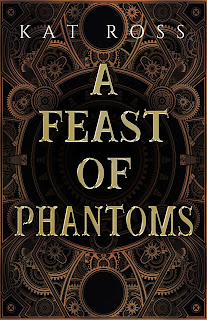
New Book Alert: A Feast of Phantoms: Lingua Magika #1 by Kat Ross; Magical, Terrifying, and Mesmerizing New Steampunk Dark Fantasy


New Book Alert: A Feast of Phantoms: Lingua Magika #1 by Kat Ross; Magical, Terrifying, and Mesmerizing New Steampunk Dark Fantasy

By Julie Sara Porter

Bookworm Reviews 


Spoilers: It's kind of weird to review not one, but two dark fantasy/horror novels for the Holiday season. But when one stops to think about it, it's not that weird at all. Of course there is the simple scheduling that I just happened to be reviewing these books this time of year. But the connection between horror, fantasy, and the holidays is actually deeper than most people are aware.  

When the harvest year died down and winter appeared, many of the ancient Pagan cultures like the Viking and Celts would tell stories of their deceased ancestors as a means to keep their spirits alive and to reassure that they have moved onto better places where they will be remembered. Even when Christianity dominated the European landscape, the idea of telling ghost stories during the Yuletide was not an unheard of concept. Some of the most famous works of European literature like Hamlet and, naturally, A Christmas Carol hearken back to that tradition.

That tradition continues to modern day. The song "The Most Wonderful Time of The Year" refers to "scary ghost stories." Many of our most popular Christmas books and movies like Christmas Carol, It's a Wonderful Life, The Polar Express, and my personal favorite, The Life and Adventures of Santa Claus, deal with that brush of the magical, supernatural, and sometimes fearful spirits and visions that appear just when days get shorter and night is the longest. And who can forget that lovable and cuddly creature from German folklore, Krampus, whose idea of a good time is to punish naughty children by putting them in a sack and beating the ever loving daylights out of them?


In keeping with that tradition of giving the Holidays a supernatural, spiritual, and spooky bent I give my Readers, A Feast of Phantoms by Kat Ross, the first of her Lingua Magika series which combines a Steampunk Western with Dark Fantasy and creates a terrifying out of mesmerizing world that is brilliant to experience and immerse oneself into.

Ross' attention to detail and world building is beyond astounding. It's one of those literary worlds that one falls into and lives in, not just reads. The setting is filled with the Western tropes with out of the way dusty towns, like Lucky Boy, the one horse town that is the residence of protagonist, Deputy Ruth Cortez. There are also references to another town called Three Bars, which was destroyed by a tornado. (Don't you just love these Western small town names?)


By contrast, there is Carnarvon City, a city of industrialization and growth. It is headed by the Carnarvon Family, a mother and her children, who seem to have their fingers in every institution in town. They don't mind stretching those fingers to the rest of the state, maybe the whole country, despite rivalries with the equally wealthy but so far unseen Braga Family.

Where the small towns like Lucky Boy and Three Bars come out of the Western tradition, Carnarvon City is built on Steampunk. There are steam trains and airships, even a few experimental automobiles, the finest in late 19th century early 20th century technology. Of course the aesthetic would not be complete without gears, telescopes, goggles, top hats, and velvet. 


What makes this setting isn't just the Steampunk aesthetic combined with Western theme. It's the fantastic aspects. This is not only a book where magic exists, but it is commonplace. So commonplace that phantoms are alive, well, and very active.

Ross clearly thought a lot about how to write about the phantoms and it shows. She provides little twists that show depths of the creatures such collective nouns (a group of Phantoms are called a feast) and classifications. There are lesser phantoms like Ruth's partner, Doc, who resides inside the deputy's gun and aids her when she requires information or defense. Then there are the larger classification level phantoms who can efficiently destroy a city in a matter of seconds.


Obviously, these phantoms are dangerous and uncontrollable. The hapless humans need help from those who can communicate and control these spirits. There are linguists, humans that can speak a few of the phantom's languages. Then there are savants, humans who can speak several of the phantom's languages. But, savants are not perceived as the sanest or trustworthy of humans as Ruth discovers when she is hired to leave Lucky Boy to guard apprehended savant, Lee Merriweather (not the actress). 


Lee has been captured by Marshall Sebastian Hardin who is acting under orders from Calindra Carnarvon, matriarch of the powerful Steampunk Carnarvon Family. At first, Ruth willingly goes along with Lee's transfer to be tried by the Carnarvons' reps in a potential kangaroo court. However, after Lee escapes, Ruth questions just what exactly the Carnarvons' and Hardin are planning. 


A benefit is that many of the characters are multifaceted and understandable, so that the Readers don't know who to side with. Ruth remains pretty likable and heroic throughout, but the others surrounding her are a curious bunch. Lee alternates between sinister and charismatic. There are also familial ties that he is protective of while others use him for their purposes.


Even Hardin and the Carnarvons who are the main antagonists show fascinating depths in character. Hardin and Ruth share a lot of chemistry implying that if they aren't yet a couple, then they will be. Calindra Carnarvon shows a lot of strength as a business minded woman in the Old West. Her children befriend Ruth possibly for genuine reasons, but just as possibly to keep a potential enemy closer.


Of course, the phantoms are also interesting characters as well. Doc is a deadpan snarker who will help Ruth at the slightest moment but not before getting the last word in. Another demon is terrifying in its powers and ability to hide in plain sight.


A Feast of Phantoms is a great and creepy world to fall into. It's creepiest to read when the nights are at their longest. It is a very commendable movable feast.


Wednesday, December 4, 2019

New Book Alert: Sand and Smoke (Dragon Destiny) by Carl Cota-Robles; Fantasy Novel Brilliantly Combined With Steampunk Science Fiction and Westerns


New Book Alert: Sand and Smoke (Dragon Destiny) by Carl Cota-Robles; Fantasy Novel Brilliantly Combined With Steampunk Science Fiction and Westerns

By Julie Sara Porter

Bookworm Reviews


Spoilers: If you want to write an Epic Fantasy series and are bored with putting it in a Medieval-esque setting with kings, feudal lords, elves, and sorcerers, you may wish to combine it with other genres. Science Fiction works, giving a scientific explanation to all of the magical goings-on. An Urban Setting could be interesting turning your Fantasy, into a Magical Realism story. Or you could do what Carl Cota-Robles did.

He put in a dash of magical Fantasy with dragons, a cup of Steampunk Science Fiction, and mixed it well with Westerns to give a book that is a very strange mixture of ingredients but is certainly a very creative attempt at building a new hybrid Fantasy world.

The Western/Science Fiction Steampunk portion of the story is provided by Al Hardin AKA The Silver Bandanna. Al is a young cowpoke living in a desert-like area on a planet in the year 4717. He disguises himself as The Silver Bandanna- a Lone Ranger type who protects the poor downtrodden people from the “Punchers”- corrupt thieves who steal money and land from honest folk. Sometimes he is hired for big projects to take down the corrupt governments that control the Punchers.

Al, however, has one ability that many other western heroes lack: he can control the winds with his hands. He doesn't know where he gets the power from, only that it is useful. In fact, it is so useful that many recognize the Silver Bandanna by that ability as much as they recognize the eponymous bandanna that he uses to cover the lower half of his face.

Al is going to need all of his abilities for his latest assignment. Joel Forquid, a rich idealist, recruits the Silver Bandanna to destroy a weapon that his father financed and will destroy many. Along the way, Al and Joel encounter other people to aid them on their journey as well as face gun fights and double crossing. Oh did I mention that there are dragons flying overhead and some are protecting the weapon?

While the dragons veer Al's story firmly towards Fantasy, they are upfront in the other story, that of Maya Samoralt. Maya's half centralizes the more fantastic and magical elements. Maya is a brilliant, and at times arrogant swordswoman, who is selected to be a student at a Hogwarts-esque school that teaches young people to become dragon riders.

While waiting for her big chance, Maya and the other students go through various trials to demonstrate their skills such as sword fighting and locating items as well as learning about meditation, reading ancient texts, and working with a partner. Maya also has to deal with a bullying snobbish classmate who also happens to be her partner. However, Maya makes a new friend in Cuicao, a young Shapeshiftter dragon with a reputation for rule breaking within her draconian community.

Meanwhile we get a look into the world of dragons as two races of dragons battle preparing to erupt into a Civil War.

Until late in the book, these stories almost never converge. The only link that they share is the existence of dragons and a few derogatory comments about people from their sides of their world. I wonder if Cotas-Robles had three ideas in mind in writing his book and he couldn't decide which one to write, so he combined all of them.

They could have gone just as well as three separate books in the same series, however the function of separating gives us a wide scope of what this world is like. So often, with books that take place on a different world, it is assumed that all of the residents live in the same environment, are under the same government, and have the same sociopolitical structure and issues. When you think about it, it is kind of ludicrous. As if the people of Earth were expected to look alike, worship the same deity, have the same sociopolitical structure, and live in the same small area of the planet.

In separating the stories, the Reader gets an idea over how vast their world is. They live different existences and it shows in the competing narratives.

Al lives in an arid mostly agrarian community where corruption takes the form of avaricious officials, robber barons, thieves, and land developers. Maya lives within a structured classicist society in which people are identified by the gemstones on the foreheads such as gold for wealthy merchants, silver (like Maya and her family) for artists and educators, copper for laborers, and obsidian for dragon riders. The dragons are arranged in a clan-like structure with plenty of infighting. The fact that these three stories don't converge until later into the narrative shows Cota-Robles’ gift of not only building a world but the many different facets of it.

Cotas-Robles is also effective in filling his world with memorable characters. While Al is certainly patterned after the heroic characters found in Westerns, he is well-defined in his motivations and goals. His dislike for Punchers comes from a clear place and his personal code on what he does and doesn't do as the Silver Bandana are made aware.

Maya is also well-written and established. She is both bookish by revealing her interest in the school's library and active in her interest in sword fighting. She shows a duplicitous at times argumentative nature such as her confrontations with her partner, Nikita and her admission over how she got accepted at the school. She also shows a great deal of kindness in her conversations with Cuicao treating her like a friend rather than a dragon.

Even supporting characters show a lot of depth. Joel is driven by the large picture of stopping the weapon. Jin Bell, a Puncher hired by Joel to help out with the mission is ruthless and could back stab the team at a moment's notice but shows compassion and protectiveness towards Fin, his partner and unofficial adopted son.

The dragons are also given plenty of character as well. Cuicao is an impetuous little spitfire but is very devoted to Maya once they bond becoming the best friend that both need. A dragon, Hans is devastated when his son, Johan turns against his family further illustrating the divisive precarious nature among the dragons.
With Sand and Smoke, Carl Cotas-Robles gave us a wonderfully detailed world of memorable characters. It would be a great world to return to for the next adventure.