Showing posts with label Musicians. Show all posts

Monday, November 16, 2026

A Tale of Three Musicians: Ballad to the North Wind by Liz Barak; Song to the Siren by Barb Lien and Park Cooper; Mixed Tape by Geoffrey Wilson

A Tale of Three Musicians: Ballad to the North Wind by Liz Barak; Song to the Siren by Barb Lien and Park Cooper; Mixed Tape by Geoffrey Wilson 
By Julie Sara Porter
Bookworm Reviews 


Spoilers: Every year certain topics, tropes, and themes dominate the books that are reviewed on the blog. This year is no exception. We discussed sea travel as one topic. Now we move onto another more tuneful one. This time the subject that many authors liked to explore this year are music and musicians.

This year I reviewed The Girl From Melodia by Jonathan Toussaint, Where the Wave Broke by Robert Rooks, The Travel Man, and Rock Kills by Michael DiLauro. They featured inside looks at music groups with their inspirations, tours, personal struggles, and conflicts within the music industry. We Spread by Iain Reid and the  The Campaign by Evette Davis feature prominent musician characters. One of the lives sampled by Nora Seed in The Midnight Library by Matt Haig is that of a rock star (plus she works in a music store).

Well now we can add not one, not two but three books in which music and musicians play a huge part. Since they are reviewed so closely together, I decided to put them all in one entry. Each one uses a different style, literary genre, and musical inspiration to tell these stories of extremely talented and gifted people struggling with love, life, choices, fame, self-awareness, and identity. The lyrics might be different but the songs are still the same. They are about people wanting to be heard and use their appreciation or talent for music to express themselves.


Ballad to the North Wind by Liz Barak 

Ballad to the North Wind by Liz Barak deals with the stormy love life of a musician and how it inspires her creative work, affects decisions for her future, and creates emotional conflicts for decades to come. 

It's a wistful nostalgic early romance where the best emotional moments and development occur in the past. However, the present is marred by poor decisions and plot contrivances. 

Years ago indie singer/songwriter, Layla and Erik, an engineer, entered a meaningful romantic relationship despite different ages, backgrounds, interests, opinions, and future outlooks. The romance left a lasting impression on both long after it ended. 

Unfortunately the romance is recalled years later when Layla's daughter Naomi introduces Layla and her husband, David to her boyfriend Julien and his parents. Surprise, Julian's father turns out to be Erik! Don't worry, Naomi and Julian are not biologically related but that doesn't make this meeting any less awkward when Layla and Erik reunite and confront old feelings and emotions.

Most of the book is set in the past and that's where Barak shines the most. She took two characters that probably would never have encountered each other. She explored the highs and lows of their relationship and made them a loving couple at first.

Layla and Erik are a very diverse couple. Layla is a Jewish woman whose family emigrated from the Middle East. Erik is from a Protestant Glasgow background. Layla has a family history of dysfunction, neglect, abandonment, and lack of emotional closeness. Erik is from a close loving but intrusive family particularly a meddling sister. 

Layla is a young woman who had close romantic relationships but is single. Erik is approaching middle age and has one divorce in his past. Layla has an artistic creative outlook on life. Erik’s is more mathematical and analytical. They shouldn't have anything in common but they do and they share a strong love for each other.

The couple's romance is revealed through various moments of affection, conflicts, and choices that reveal much about their characters and journeys as individuals and a couple. They are shaped by their lives both before and during their union.

For example, Erik's previous marriage makes him cautious to enter another one. He is very clear about his intentions towards Layla and his future goals and how he doesn't want to have another marriage. He isn't even sure if he believes in the institution of marriage at all. 

However, the more that they get to know each other the more Erik’s resolve softens. He has to weigh whether his cynical views towards the concept of marriage itself can be altered for Layla. Maybe the institution wasn't wrong but the woman was. Maybe he just had the wrong previous partner at the wrong time. 

Unfortunately, these questions get answered in unsatisfactory ways that change his and Layla's life forever. Unfortunately, his later life leads to disappointment and more cynicisms that destroy the possibilities that might have held.

The characters also shine in their individual flashback chapters. Layla in particular fascinates during her music career and pursuit of artistic recognition. Even her name, Layla (not her birth name but given to her by an ex), comes from an old Persian romance, “Layla and Majnun” about a poet driven to madness by his forbidden love. 

Fun fact: Eric Clapton also used the story for the title of his own hit song of unrequited love for his own muse and future wife Patti Boyd. This connection among ancient romance, contemporary rock music, unrequited longing, and artistic inspiration echoes in Barak’s Layla’s own paths through love and music. 

Layla pours out her lonely childhood and unhappy relationships in her poems and songs and shares that truth with her audience. Her music is a way of revealing her deepest thoughts and emotions. Erik becomes Layla's own muse that opens her creativity. 

One of the darker aspects of her character is when she reveals that she has to suppress her musical interests to enter the mundane reality of marriage and family. She used her music as a cry for freedom and happiness. Now, life and adulthood have put a cage around her musical aspirations.

As young people, the characters are nuanced and subtle as they enter a meaningful romantic relationship that alters their perceptions of family, aspirations, friendships, and love. Unfortunately those subtleties and nuances disappear in the present when it comes to Erik, Layla, and the next generation.

The disappointment of maturity is realistic as Erik and Layla navigate disappointment and missed opportunities. They are affectionate towards their children but have regretful marriages. It's a good start in addressing regrets and disappointments but the present interactions are nowhere near as good as they were in the past. 

The subtle individual journeys and nuanced development are replaced by implausible sitcom-like hijinks that Layla and Erik fall into to keep their former relationship a secret. The interesting characters that started out so strong make foolish decisions and become less likeable in their ridiculous dishonesty.

There are implausible moments that Erik and Layla use to cover up their previous romance. Instead of just admitting that yes they knew each other upon the initial meeting when their children unite their two families, they act like they never met before. 

 Erik and Layla could have passed each other off as acquaintances, even former friends to soft peddle their former relationship and that would have been believable. Instead they act like they never met before and waste a lot of time denying any connection at all even after they reunite in private and discover their former feelings are still there. It is an unnecessary veil of secrecy when the truth, even a half-truth would have been better.

The modern situation becomes even more unbelievable when Julien and Naomi’s circle widens to include people known by their parents, people who knew Erik and Layla as a couple. Various friends and relatives for no particular motive or real reason to help them cover up their previous relationship do so causing more trouble. It's a situation that strains the reader's tolerance especially when the one person who knew they were a couple but doesn't know their kids are romantically involved or the secret conspiracy from their spouses happens to show up in the wrong place at the wrong time.

Erik and Layla started out as understandable and likeable but the present story strips that away. Instead they become two people who are in danger of hurting their children and themselves with unnecessary deception. A romance that began in the sweet rhythm of nostalgia ends on a sour modern note.


Song to the Siren by Barb Lien and Park Cooper 

Song to the Siren is a mesmerizing Paranormal Horror about the intoxicating world of rock music, fame, obsession, and the line between sanity and madness, passion and obsession, reality and illusion.

Ryan Torres and Brandon Hawkins, two documentary filmmakers, are investigating the mysterious life and death of Reed Sinclair, indie rock singer and musician and front man of the band, Big Carnival. They get a coveted interview with Samantha “Sam Mac” McNamara, photographer and Reed's life partner. She sits the filmmakers down and tells the story of her consuming, devoted, but toxic relationship with Reed and the darker separate path that he took, a path of madness and fear as he feels haunted by Belle, a beautiful mysterious creature that he believes has cursed him since childhood. 

Song to the Siren straddles a fine line between fantasy and reality. It stands as both a realistic all too human story about the rise and fall of a rock star and a dark fantasy about an alluring demonic being gaining complete control over a helpless mortal victim. This book succeeds brilliantly at both aspects combining these two different themes into one whole work. 

The narration is an offbeat choice that actually works. Most authors would tell the book through Reed's point of view and it would work. We would get to the root of his obsession, artistic inspiration, relationship with Sam, and his journey through the highs and lows of the rock music scene. It would be fine but Lien and Cooper choose to tell the story from an outside perspective with Sam’s narration instead.

Normally it would be off putting to read the perspective of the main protagonist’s observer, a friend, or love interest instead of their own. But it actually works in this case because it keeps us physically and emotionally separated from Reed. We are learning about Reed at the same time as the filmmakers. 

Sam is protective of her partner in life and death and is clearly worried about how others will perceive him. She gives us the pertinent information about Reed when she is good and ready to give it and not a moment sooner.

We see Reed as Sam sees him and how their relationship developed over the years. As children, they saved one another from loneliness. Reed's dysfunctional family closed off after the death of his older brother in Vietnam. Sam was too tomboyish and brash for her more traditional mother. Reed and Sam became a surrogate brother and sister. 

The surrogate sibling relationship between Reed and Sam fills the void that their families didn't always provide. Reed finds a best friend that he can share most of his private thoughts and secrets with. Sam finds someone who respects her appearance and personality and doesn't try to change her. They share their artistic pursuits, his for music and hers for visual arts and eventually photography, as means of expressing themselves and building bridges of understanding between them. 

As Sam and Reed grow up, that relationship deepens. They become each other's confidant, sounding board, muse, secret keeper, best friend, lover, and soul mate. Through Sam’s narration, we see her and Reed's relationship evolve profoundly especially as Reed's obsession with Belle overwhelms him. 

Sam's narrative purposely keeps Reed separated from us and from Sam as well as she tries to understand his troubled mind especially as far as Belle is concerned. Since Reed doesn't tell most of the story, we don't get a full picture of who Belle is. Sam catches glimpses of a red haired woman but she can't tell if it's real or not. The closest that we get is a portrait of a beautiful red haired fairy that hangs in the Sinclair home. It is a portrait of “La Belle Dame Sans Merci,” John Keats’ poem about a beautiful siren-like creature that lures men to their deaths and for which Belle herself is named. 

 Sometimes when Sam and Reed are alone, Reed suddenly yells at something invisible and orders it to go away. In one chilling chapter, a confrontation between Reed and his invisible assailant ends with him falling from a tree in a suicide attempt to end the mental torture.

Sam isn't even sure if Belle is real or whether Reed is mentally ill. He is a musician after all and don't many creatives have mental health issues and explore darker themes? Could that be what's at play here? We don't know and since we are hearing about Reed from Sam's perspective and not his, we can't ask him We are forced to guess whether Reed is haunted by a mythological creature or the terrors of his own mind

The other reason that the narration works is because it plays into the whole idea of creative inspiration. This creativity served as potential answers about Reed's condition. It's no coincidence that the interviews are centered around an upcoming documentary film.

 It gives Ryan and Brandon opportunities to share their own musical memories of Big Carnival. They wonder about the meaning and inspiration behind Reed's lyrics and the creative process that led to his music. Sam gives her own perspectives and interpretations on where his music came from. 

Anyone who has listened to a song, read a book, watched a movie, or looked at a painting brings their own interpretation and meaning to the work. They search for symbols, motifs, and themes that connect with their interpretation. Maybe they have a personal experience or a memory associated with the work. 

That is what is happening between Sam and the filmmakers. As Sam untangles the story of her, Reed, and Belle, she demystifies Reed's songs and gives them context of what he was going through when they were written.

 It's an emotional trajectory into Reed's mindset that starts out energetic, light, and soft. Eventually when Belle becomes more of an obsession, Reed's songs carry themes of dark fantasy, black magic, imprisonment, and a splintering mind unable to separate the fantasies that Belle represents from the reality that Sam lives in.

 Sam can't see or talk to Belle but she can see that Belle's fingerprints are all over Reed's soul and art. All Sam can do is hear the music, understand the lyrics, interpret their meaning, and recognize the cry for help when Reed gives it. 

It's worth noting that in mythology, characters like Belle, usually fairies, sorceresses, shapeshifters, mer creatures or other types are known for their bewitching beauty, leaving their mortal lovers insane or depressed, and inspiring artists. That is what Belle does.She draws Reed through her presence, drives him to madness and suspicion, and becomes a source for his music. 

Whether Belle actually exists or not is immaterial. If she's real then she's following that process of “La Belle Dame” perfectly. If she's not, then Reed's mind is devoured by a character that he himself created from myth and legend. 

There is a deeper subtext with Belle. She could also be a personification of the creative impulse that exists within all artists. The one that inspires them to work on their chosen art form and forego family, friends, and loved ones.

This impulse is consuming, obsessive, and keeps the artist working constantly. Nothing is more important than feeding it. Sometimes that creativity comes with extra baggage like addiction, mental illness, dysfunction, burn out, and an early death. 

That creative impulse draws you in, envelopes you, and if you aren't too careful it can swallow you whole. 


Mixed Tape by Geoffrey Wilson 

Unlike the other two books, Will, the protagonist of Geoffrey Wilson’s Mixed Tape, is not a musician but he grew up during a time when he was surrounded by pop and rock music that he related to his own struggles. In fact, music is a surrounding theme throughout the book as Will struggles with his sexuality and identity during the AIDS crisis of the 1980’s.

AIDS first enters the conversation during a car ride with his friends on New Years Eve 1981 when a brief news report mentions that a new virus has been found and identified in the United States that seems to affect only gay men or drug addicts. Will’s classmates dismiss and ignore it but the news worries him. He is struggling with his own erotic thoughts about male celebrities and classmates. Even though he hasn't dated anyone, he knows that he is attracted to guys. The last thing that he wants is a virus singling out people like him and making looking for love harder.

Will is a compelling lead for such a bildungsroman. He starts out so uncertain of himself that he can't even summon the words to say that he's gay. He stammers, hides, and runs away to avoid confronting his true feelings. He finds the closet to be too confining but too secure for him to come out of it.

From 1982-1990, AIDS spread and claimed victims numbering in the thousands. Will ages from high school to college and has to come to terms with being gay during a time of illness and rigid Conservatism. Besides those fears, Will also has anxieties of becoming romantically involved and entering a long-term relationship. Then there is his worry over whether any sexual encounter could result in long term illness or at the time a death sentence. 

These fears cause Will to retreat inward and wordlessly concede and capitulate to situations that he shouldn't. He bites his tongue when his father expresses disgust that Canadian public health care should go to “those people to fund their lifestyles” (unaware that his own son is one of those people). He works for a time for a Conservative MP and regrettably steps aside when his boss's policies affect people like him personally. He lives in a self-imposed prison of shame and self-loathing that is manufactured by an intolerant world. 

Despite being in the closet, Will has collected newspaper clippings of the HIV virus since 1982. Besides keeping him informed of this deadly virus, it becomes a link to people like him and an aide to help him understand the struggles that other gay men face. Later as AIDS is spread through his native Canada and affects him personally does he realize that keeping the clippings gives life and meaning to people who would otherwise have been ignored by people. Without realizing it, he had been paying tribute to the gay community all along.

He also develops a pretty active social romantic life despite being in the closet. His potential dates with girls fail miserably because he feels like a fraud who is lying to them and won't compromise his hope for a romantic long term relationship. He lusts after his roommate despite his heterosexuality. In one chilling chapter, he is practically raped by a colleague in Ottawa who won't take no for an answer.

By far Will's strongest relationships are with two different men: Chris and Tom. They represent different possibilities for his future. Chris inspires a romantic side in Will that he finally finds someone to open his heart to and be honest. Tom is an LGBT+ and AIDS awareness advocate. Through him, Will sees someone who isn't afraid of being himself, someone with courage that he denied for himself.

As previously mentioned, this book is filled with music. Each chapter title is named for a song that is associated with Will's various struggles. For example Tina Turner’s “What's Love Got to Do With It?” appears as Will tries to protect his health and heart from being hurt by not dating seriously. The Eurythmics’ “Would I Lie To You?” is the chapter title in which Will lies to a potential date, his father, friends, and himself about whether or not he is gay. Cyndi Lauper’s “True Colors” is the chapter where Will realizes that he is falling in love with Chris.

Chris also makes Will a mixed tape of songs that he connects with their relationship. The chapter titles and references to the songs on the mixed tape suggest that the reader is shown a soundtrack of Will's inner soul and private thoughts. These, the AIDS newspaper clippings, and the relationships between Will and other men are the only times when Will truly feels honest with himself. These become gateways to Will's journey from the closet to self-awareness, understanding, and personal freedom.


Sunday, March 8, 2026

Tracey's Calling by Rob Santana; The Mantis Continuum (The Mantis Gland Series Book 4) by Adam Andrews Johnson and Where The Wave Broke by Robert Rooks, The Travel Man


Tracey's Calling by Rob Santana, The Mantis Continuum (The Mantis Gland Series Book 4) by Adam Andrews Johnson and Where The Wave Broke by Robert Rooks, The Travel Man 

By Julie Sara Porter
Bookworm Reviews 

Tracey's Calling by Rob Santana 


Tracey's Calling by Rob Santana is a tense psychological suspense short novel about trauma and its chilling aftermath on two people, the victim and the perpetrator.

Tracey is left traumatized after being sexually assaulted by Phil, a married husband and father. She is angry and filled with vengeance but she doesn't want to just have him arrested or kill him. She has a more long-term goal. She manipulates her way into his home, befriends his wife, Patsy and daughter, Joy, and blackmails Phil into financially providing her escape from her abusive family.

This book is essentially a two-person story between Phil and Tracey, the abuser and his sexual victim, the blackmailer and her financial victim. They both have plenty of depth and layers in their one-on-one combat.

 Tracey is very methodical in planning and executing her revenge. She decides to become a haunting presence in Phil’s life instead of taking the easy way out and killing him. It's a way of disarming Phil and leaving him as vulnerable and uncertain as he was. She may have been physically underneath him then but she is figuratively on top of him now.

Phil is also an interesting albeit antagonistic character. His memories of that night are filled with the graphic violence that he inflicted and his weak attempts at justifying it. He is not understandable at all here.

However, there are points where the safety of his family is compromised and the Reader's thoughts shift to Patsy and Joy's welfare and how Phil will be affected by their losses. It allows Readers to understand and even be concerned about the husband and father without defending or condoning the violent actions that he did.

Also, Patsy and Joy’s subplots are handled well. Patsy sometimes acts as the comic relief by rehearsing weather girl monologues and being preoccupied with an upcoming job interview at a news TV station. However, she also shows awareness with Tracey’s presence and the circumstances of her arrival by going from empathy, to suspicion towards her, then distrust towards Phil.

Joy is an effective foil to Tracey. She was a sheltered girl thrown into violent catastrophic circumstances which Tracey knew about practically since birth. She acts like a spoiled brat at times, but is also a very realistic teenager with emotions, hormones, and irritation at everyone else around her. She follows Tracey into some dangerous circumstances without thinking of the consequences.

This is a cold calculated tale of revenge in which much is lost and there are very few victors.


The Mantis Continuum (The Mantis Gland Series Book 4) by Adam Andrews Johnson 

No matter how good an ongoing book series seems, not every volume is going to be a winner. The first three books of Adam Andrews Johnson’s The Mantis Gland Series told a captivating series about a world where some people called Shifts have mutations because of a gland called the Mantis Gland. These people develop extraordinary abilities like flight, telekinesis, elemental control, super strength, impervious skin, or remote viewing.

 The Shifts are targeted by the Messiahs, a religious cult that has a great deal of power and influence. They perform ritualistic murder on the Shifts so they can swallow and absorb the glands. In each volume, the Shifts gather together in Teshon City where they form a resistance aided by a Demifae,a person who studies magic, called The Mystic and others who fight against the Messiah’s influence. The first three volumes tell a streamlined story and introduce new characters with the goal of bringing them together. They have a definite beginning, middle, and end. 

The fourth volume in The Mantis Gland Series, The Mantis Continuum is by far the weakest book in the series. It has some interesting passages of character development that push some forward into new relationships, abilities, positions, and self-awareness. However, there are too many characters and subplots to tell a comprehensible or compelling story. It’s a case of doing way too much at once.

Some of the new characters and subplots aren’t bad. After the murder of their mother, twins Thech and Jzuna flee to Teshon City with an entertainer named Bivon. A trio, Kosephaji, Relliduna, and Pelipi have to escape via boat after Relliduna becomes seriously injured. Meanwhile a group of former Messiahs whose bodies have completely altered into monstrosities by consuming too many Mantis Glands are heading straight for Teshon and they are hungry.

When the book slows down, it captures some pretty decent moments. Thech and Jzuna have a loving sibling relationship. The sweet but dim Thech is the more physical one while the bright eloquent Jzuna provides the brainpower. Jzuna is a maternal influence on her brother’s life while Thecha brings out her more empathetic side. 

Another winning relationship is that of Kosephjai and Relliduna. As their lives are in danger, they evolve from best friends to lovers. With the constant threats to their lives and feeling out of focus because of the suspicion towards Shifts, there are very few people that they and Pelipi can rely on. These stressful situations bring out their most vulnerable emotions, cause them to evaluate their feelings towards each other, and move their relationship forward. 

The problems occur when the action moves to Teshon City where the new characters meet the old ones. There are way too many characters to focus on and it’s hard to remember who is whom, what their significance is, which book they debuted in, or even their powers. 

If you notice in my previous paragraphs, I mentioned some of the character developments that I liked but not their powers, it's because I don't remember them. There wasn't anything that made their abilities stand out or differentiate from the older characters.

There are times when the chapters read like one giant roll call by showing brief scenes of characters in their current setting but don’t do anything important with them. It was almost like Johnson said, “See this character? Yeah they are still alive. Move along.” With that many introductions or reintroductions, it takes a long time for them to actually do anything.

Even an interesting plot point that was introduced in the previous book of Messiahs whose bodies have become distorted by their addictive consumption of the Mantis Gland, isn't as compelling as it was in the previous book. They leave a creepy disturbing presence, enter Teshon City with unending appetites, kill a few Shifts, and anticlimactically meet their end. They were much more intimidating as a cult.

Perhaps Johnson should have ended the series at Book Three or, as much as I like the new characters, just developed the original ones instead of inserting new ones. This book shows that there is a time to write and build on a new series but there is also a time that it should end. There is a fifth book, The Mantis Synchronicity. Here's hoping that it's better.


Where The Wave Broke by Robert Rooks, The Travel Man 


This review is also on Reedsy Discovery.

Where The Wave Broke by Robert Rooks is a short novel about a touring music group that is long on atmosphere but not on plot or thankfully music group cliches.

Two years after they break up, the band Borrowed Light has re-formed to go on a tour of several European cities. Drummer Giada, bassist Julian, and the guitarist Narrator endure long days going from one place to another, long nights of performing, playing at various clubs, and facing fans, owners, executives, on and on.

Let's explain what this book doesn't have. No love triangles though they had some romantic entanglements in the past. No drug addiction fights or onstage meltdowns. No slow climb to success followed by a rapid fall thanks to personnel disputes and the soulless music industry. No internal conflict between the member who is full of themselves and the others. Not much of the usual music tropes, which actually makes this a great short novel.

The biggest strength in the book is the atmosphere. The opening describes the trio’s travels as “The map matters only because sound behaves differently from where you stand. Amsterdam’s wood, Paris’ velvet, Brussels’ take, Montreux’s morning light, Valencia’s warm air, Stockholm’s clean edge, those spaces shaped our tempos more than adrenaline ever could.” 

The book is a constant stream of wearying movement, travel, faces running together, frustration with last minute changes and bookings, the exhilaration of a performing high, and the languid exhaustion afterwards. 

The clubs are filled with smoky air, tight compacted space, argumentative organizers and club owners, and customers either enraptured by the music or bored with life. Only faces and names change. The music draws the band, their listeners, and club employees for one moment before it ends and they trudge along to their separate lives.

The tone explains perfectly why this book doesn’t go into the usual tropes and cliches about music groups, It tells the truth about that kind of life. Julian, Giada, and The Narrator don’t fall into those typical hijinks because realistically they don’t have time to. They travel to different places, check into hotels, inspect the clubs, negotiate with owners and executives, put up their instruments, sound check, play a few sets, close, thank everybody, pack up, maybe have a few drinks or talk to customers, stagger off to bed, sleep, wake up the next day, check out, and then go on to the next city. 

Any conflicts that occur between them is not because of rock star ego. It’s because they are tired and snippy from constant travel and are getting on one another’s nerves, 

There is a simplicity within these characters and how they accept the music and travel lifestyle as just a part of their lives. They leave complicated love lives, conflicts with family members, and their own insecurities and self-esteem issues behind to play. Also their personalities mesh well with Giada’s no nonsense leadership and organization skills, Julian’s flash and outgoing personality, and The Narrator’s rationality and poetic observation. 

The band gives them a chance to use their musical talents and personality traits to good use by contributing to their chosen art, openly and honestly expressing their emotions, seeing different places and meeting different people, and despite the hardships having a good time, and making exciting memories to look back on.

In fact their tour isn’t really seen as a means to become discovered and sign on with a bigtime record company. It’s just something that they get to do once in a while as friends and musicians and then return to normal life afterwards. . 


Wednesday, February 25, 2026

The Girl From Melodia by Jonathan Toussaint; The Toxic Musician and The Troubled Muse


The Girl From Melodia by Jonathan Toussaint; The Toxic Musician and The Troubled Muse

By Julie Sara Porter 

Bookworm Reviews


This review is also on Reedsy Discovery.

Spoilers: The relationship between an artist and their muse is one that has been discussed, studied, analyzed, argued about both for and against, critiqued, defended, parodied, and recognized. The Artist, usually a man but these days any gender will do, is a tortured soul driven by emotion and is inspired by The Muse, often a woman but again that has changed, who is the source of their art and possibly the breadwinner while they go through their artistic funk. The model for the portrait. The name in the catchy rock song. The disguised protagonist or love interest of the novel. The unattainable unrequited love of the romance film. Despite being named for the Greek goddesses who were the sources of the arts themselves, oftentimes the modern Muse takes a secondary role in creation. 

Think Camille Claudel for Auguste Rodin, Gala for Salvador Dali, Aline Bernstein for Thomas Wolfe, Leila Waddell for Alesteir Crowley, Yoko Ono for John Lennon, Patti “Layla” Boyd for George Harrison and Eric Clapton, Charlotte Gainsborough for Lars Von Trier, and Uma Thurman for Quentin Tarantino. While many muses have had careers of their own, the stereotypical assumption towards them is that the Muses are just required to shut up, stand there, passively inspire, and not actively create their own art. Often if the Artist is a Narcissist, they will agree with that assumption. That is what is at play with Johnathan Toussaint’s novel, The Girl From Melodia.

 The Girl from Melodia is like a folk song. It's about two people who are looking for their authentic voices and are consumed by a passionate love, a love that ends badly. It speaks about truth, love, art, obsession, and unhappiness all of the things that make a perfect tragic love song, but a very crappy real life incompatible relationship.

Martyn Lockhart is the son of famed English folk singer/songwriter, John Lockhart. He is proud of his family legacy and his father’s reputation but he also wants to come out of his father’s shadow and be known as his own person. In 1992, Martyn encountered Francoise, a French woman at the Tulle Music Festival. To Martyn, the Artist, Francoise is the Muse. She inspires him and the two begin a very passionate romantic love affair that continues when returning to Martyn’s native England. Unfortunately just as quickly as the romance and creativity are set afire, they fizzle out when the reality of commitment, artistic temperament, financial and practical woes, and professional and personal insecurity set in.

It cannot be overstated how unhealthy this relationship is. Martyn is the archetypal Artiste. He is creative, passionate, reckless, iconoclastic, argumentative, self-absorbed, and Narcissistic. Everything is material for his music. His first encounter with Francoise leads him to his latest song and concept album, The Girl From Melodia. 

Melodia is a fictional country that Martyn created as a child that he could mentally retreat to in his imagination when things got tough for him. In many ways, Martyn never left that fantasy and still remains in Melodia even as his real world falls apart around him.

He possesses a romantic ideal of Francoise at first. She inspires him with her looks, carefree attitude, lively spirit, and vulnerability. Like him, she is also a passionate writer particularly in her journal which she describes the headlong sexual and romantic emotions of being near each other and the intellect of two creatives sharing ideas. She is also a musician and songwriter and just as she inspires him, Martyn inspires her.

These are the days of the early lyrics and first juvenilia poems which describe the youthful innocence of plunging feet first without thinking or caring about what comes next. Francoise fills that Melodia fantasy so well that Martyn tries to remain there. He wants to hold Francoise to the fantasy world and image that he created. But he considers Melodia and Francoise as his works and there is only room for one writer and artist in that fantasy.

That all changes when they move to England and their real natures, especially Martyn’s, emerges. Because just like Martyn has all of the positive aspects of an artist like creativity and passion, he also has many of the negative aspects. He is the kind of guy who diss tracks like “You’re So Vain,” “You Oughta Know,” or most of Taylor Swift’s catalog were written about.

Martyn is the type of guy who excites, fascinates, and blinds one with his talent, charm, looks, and artistic fire at first. Then his true nature is revealed to be controlling, absent, egocentric, jealous, volatile, immature, and self-indulgent. Suddenly, his love interest is left with a broken heart, a diminished soul, and a cynical outlook on love to fill at least hundreds of discographies.

One of the ways the narcissism is manifested is when Martyn suffers through writer’s block. As his creative well runs dry, Francoise is activated. She writes, rehearses, and performs. There are even hints of a record deal which makes Martyn furious. 

It is very reminiscent of stories like A Star is Born, which is a film that I thoroughly despise no matter the adaptation for reasons that I won’t go into, despite the original screenplay being written by Dorothy Parker, one of my favorite writers. Martyn feels that he is supposed to be the creative one, the musician, the poet and Francoise is the creation, the inspiration, the model. He can’t live with his partner’s success if it is at the expense of his own and doesn’t have the enlightened foresight to take pride in it. 

To Martyn, the muse is not supposed to drink from the artistic poetic well. She is supposed to guide him to the well and provide him with a cup. He was once interested in her talent when it was hers, but now that’s in direct competition of his own, he sees it as a threat. He behaves irresponsibly, withdraws from Francoise, belittles her, and in one of the worst chapters destroys her demo recordings that she worked hard on for months.

Her songs and journal entries show that she is just as driven, just as passionate, and cares about her music just as much as he does. She shapes Melodia into her own fantasy and Martyn doesn’t want to share it.  

To his credit, I suppose Martyn recognizes these attributes in himself. In the prologue, as he goes over his relationship with others, particularly Francoise, he realizes that he is to blame. He compares himself to a vampire sucking on Francoise’ energy and creativity to survive.

 The novel reveals that she wasn’t the only one who suffered from his egotism and his previous partnership with a former friend produced violent results because of Martyn’s conceit and insecurities. Looking back with regret and harshly obtained wisdom, he comments in the narration with lines like “This still haunts me,” and “I know that I shouldn’t have done this, but..” He knows that he screwed up so has some humility and remorse over it.

Some of those negative attributes can be attributed to his upbringing by his folksinger father, John. John also possessed a similar artistic temperament, penchant for violent behavior, and self-destructive coping mechanisms. Those mechanisms led to the decline of his relationship with Martyn’s mother. 

Martyn saw the creative sparks and emotional decline from the front row. But he only connects to his father through their music. He wanted to achieve the artistic, professional, critical acclaim, and audience adulation that his father had. Unfortunately, he got that and everything that came with it: the temper, the addiction, the mistreatment of partners and didn’t realize it until it was too late.

One could say that Martyn’s regret is more self-indulgence and that he hasn’t truly repented. That may be true. He might find another toxic relationship to inspire then anger him. But he may also see this as a wake up call and finally gain the maturity to improve not only his life but his music as well. 

Tuesday, October 5, 2021

New Book Alert: Alejandro's Lie by Bob Van Laerhove; An Honest and Absorbing Look At Imprisonment and PTSD In A Latin American Dictatorship


 New Book Alert: Alejandro's Lie by Bob Van Laerhove; An Honest and  Absorbing Look At Imprisonment and PTSD In A Latin American Dictatorship

By Julie Sara Porter

Bookworm Reviews

Spoilers: M.G. Claybrook's satirical children's book for adults The Voyages of Gethsarade has the biting but very true line, "All revolutions begin the same way by not being paid."

Gethsarade, Claybrook's furry squirrel musician-turned-folk-hero protagonist, would find a revolutionary partner in Alejandro Juron, who would share that same sentiment. Alejandro is the (human in this case, not squirrel) protagonist of Alejandro's Lie, Bob Van Laerhoven political thriller about revolution in a Latin American country. It shows what happens when the marching, protests, and rebellions stop and the rebel is left older and alone with their thoughts.

It is 1983 in Valtaigo, Terreno, a fictional Latin American country. Alejandro has just been released from a prison that is so notorious that it is nicknamed The Last Supper, because "supper was the only meal that they gave you on your execution." Alejandro was the guitarist in the folk band, Aconcagua, led by the fiery and charismatic Victor Perez. 

Alejandro struggles to adjust to life on the outside, refamiliarizing himself with places like the 'pigsty', Vaitago's slums and living under the military junta that has strict control over Terreno (with funding from the United States). He reunites with old friends, like Cristobal Vial, a former firebrand playing it safe as a university librarian and makes new friends, like Beatriz Candalti, a feminist who is separated and planning to divorce her abusive husband.

Alejandro's imprisonment has given him PTSD and a bitter cynical outlook. He also feels guilty about his own motives for becoming a musician/revolutionary and his actions that led to Vincent's arrest, imprisonment, and death.

Alejandro's Lie is an absorbing look at how a dictatorship affects the people and places surrounding it. Terreno is a fictional location but the impact of living under a tyranny can be clearly felt in the real world. This impact has been experienced by people from real Central and South American countries that have been ruined by dictators who have used various political leanings from Capitalism to Communism and backing from more powerful countries as means for control. 

One character describes the situation in Terreno as "The wealthy are dancing the rumba in luxurious nightclubs, the poor grab leftovers in the garbage dumps….Terreno is a country of contradictions a d teeming with underground parties and resistance groups…rebel groups are smuggling in arms from Cuba...the middle class hesitates; the oligarchy has resolutely sided with the junta." It's a world that has been teetering on an abyss for a long time and barely needs a slight push before it falls off.

Alejandro's Lie is the type of book in which the author avoids making the setting beautiful to focus on the ugliness surrounding the characters. There are some detailed descriptions of nature, particularly when Beatriz flies a plane to a mountain location. However, they are very few. Most of the action is in Valtaigo, possibly a deliberate move by Van Laerhoven. The focus is on the dictatorship, so much so that everything in the country is centered around it. Even nature's beauty is tainted by the corrupt people in charge who want to destroy it. Terreno is a country filled with loss, regret, guilt, and forced complacency.

Those feelings overwhelm Alejandro as soon as he leaves The Last Supper and exacerbates his already growing PTSD. He suffers through the nightmarish memories of his imprisonment including starvation, torture, and manipulation. After leaving prison however, his experiences get worse. 

Alejandro left a country that was devastated by a dictator. What he finds is a ruthless government still in power. The people's rights have only diminished further. Unfortunately, it has been so long that most people have lost the will to fight. There are some resistors, as Beatriz is involved in just such a cell. But they are the minority. Most people such as Beatriz's father and at times Cristobal have traded rebellion for conformity and are less concerned with ideologies and more worried about survival. It makes one wonder what the point of rebellion is if the people aren't going to follow through on it.

The complacency of the people and his own dark memories drive Alejandro. He questions everything, even his own motives for joining Ancocagaua. His motives for becoming a folk musician and betrayal of Victor eat away at his soul. He believes that his own motivations to join a political folk band had more to do with fame, money, and sleeping with willing women than it did with singing against the system. This puts a more cynical and world weary outlook at the  rebellious idealistic image that others saw in him. Alejandro also has to contend with his mental anguish over Victor's imprisonment and his blame in turning Victor in not for political reasons but because he had an affair with Victor's wife.

Alejandro recognizes the lie within himself and can't do anything to ease that remorse. He turns to music, drink, old friends, even a stint as a professional barrio wrestler to earn money. But these things only make the void in his life worse. The only emotion that he has left is rage for an old enemy. This rage causes him to engage in a pretty reckless plan to seek vengeance and retribution.

Alejandro's Lie is a book that explores the long term impact that a dictatorship and imprisonment has on the soul and how they lose everything: their home, families, lovers, strength, and fighting spirit. Truth be told, Alejandro's Lie is a somber but still intriguing and completely honest book.


Tuesday, August 10, 2021

New Book Alert: Lady Be Good: The Life and Times of Dorothy Hale by Pamela Hamilton; A Fascinating and Brilliant True Story About The Life and Mysterious Death of A Talented But Now Forgotten Entertainer


 New Book Alert: Lady Be Good: The Life and Times of Dorothy Hale by Pamela Hamilton; A Fascinating and Brilliant True Story About The Life and Mysterious Death of A Talented But Now Forgotten Entertainer

SoBy Julie Sara Porter

Bookworm Reviews


Spoilers: There are probably not many people today who are familiar with the name of Dorothy Hale (1905-1938). If they are admirers of the artwork of Frida Kahlo, they may recognize her as the subject of Kahlo's painting of The Suicide of Dorothy Hale, which depicts Hale as a beautiful woman falling from a building to her death. So in other words she is similar to Peg Entwhistle, the stage actress who tried to find success in Hollywood only to jump off the 13th letter of the Hollywood sign to her death. Like Entwhistle, if Hale is known at all, it is by the way that she left this world rather than her contribution within it. However, former NBC News Producer, Pamela Hamilton aims to change all of that with her fascinating and brilliant fictional biography Lady Be Good: The Life and Times of Dorothy Hale.


Hale, nee Dorothy Donovan, was from an affluent Catholic family with Victorian values. Hale rebelled against her upbringing by pursuing a career. She eventually became a dancer and Ziegfeld Follies girl and was part of the chorus of the Broadway production of Lady Be Good. Hale also starred with her friend, Rosamond Pinchot in Abide With Me, a play written by another friend, Clare Boothe Luce. She also had small roles in the movies, Cynara and Catherine the Great.

Hale was married twice. Her first marriage to millionaire stockbroker, Gaillard Thomas ended in divorce. Her second to muralist, fresco artist, and portrait painter, Garland Hale ended with his death in 1931. She had many love affairs including with Constantin Alajalov, a cover artist, Russell Davenport, a writer for Time Magazine, Isamu Noguchi, a sculptor, artist, and designer, and Harry Hopkins, a WPA administrator and Roosevelt's top advisor. She was also a regular member of New York's Cafe Society having friends such as Kahlo, Luce, Cole Porter, Frank Crowninshield, Buckminster Fuller,and many of the best and brightest of New York society in the 1920's and '30's.


Her death was the subject of much speculation at the time which Kahlo's painting was a part of it. What is known is that the day before her death, she hosted a party inviting many of her close friends as a farewell party explaining that she was soon going on a long trip. The next day she fell sixteen floors to her death from her Central Park South apartment.

 It was unknown whether she fell, jumped, or was pushed. However, second hand accounts at the time reported of "financial troubles" and "disappointments about her age and unhappy love affairs." The press portrayed Hale as a fragile vulnerable woman who took her own life. Despite Kahlo's genuine grief over the death of her friend, her painting did much to add to that unverified assumption that Hale committed suicide.


Hamilton's book does a lot to discredit the speculation of Hale's death and instead focuses on her life. Far from the fragile depressed lonely woman that the press portrayed her after death, Hale is written by Hamilton as a vibrant and bright woman full of life and excited to be surrounded by a talented and eccentric group of friends and lovers.


Lady Be Good is practically a whirlwind of color, art, entertainment, glamor, and excitement. One that Hale is glad to be a part of even though she does not achieve as much personal success as she would like. She is surrounded by bright and talented people and for the most part, she is happy to be with them. The famous names that come in and out of the book and appear throughout Hale's life include Clare Boothe Luce, Frida Kahlo, Fred Astaire, Frank Crowninshield, Dorothy Parker, Rosamond Pinchot, Alva Vanderbilt Belmont, Eugene O'Neill, Isamu Noguchi, George Gershwin, Cole Porter, Gertrude Stein, Samuel Goldwyn, King Vidor, John Barrymore, Buckminster Fuller, and many many others. It is a brilliant cast of the intelligentsia and literati of New York's Cafe Society and The Golden Age of Hollywood. 

Dorothy enjoys the life that she is in and the freedom that being a part of that group implies.This is the main reason why her first marriage doesn't work out.


 Hale is an exciteable and enthusiastic woman who enjoys going to clubs, theater performances, salons, and art shows. Gaillard is stiff and dull and is only interested in making money. Hale marred him mostly out of fear when a serious injury ended her dancing days. After the fear subsides, their differences becomes insurmountable and Hale heads for Reno to file for divorce.

Hale finds a happier life with Gardner Hale who because of his artistic talent and connections is also a welcome member of Hale's wide social circle. His death causes Hale to fall into a deep depression which takes her a long time to get through. Hamilton's writing suggests that her romances with Isamu Noguchi and Harry Hopkins were because of loneliness and to fill an empty void in her life.


After Gardner's death, Hale attempts a Hollywood career. She films a screen test that is widely received and she is even described as a "beautiful up and coming star." Unfortunately, she is unable to receive success with so many other stars in Hollywood's galaxy. 

She also stars in Abide With Me which even though critics brutally panned it, she had a good time performing in because of her friendship with Luce and Pinchot.


The point that Hamilton is trying to make with this fictional biography is to celebrate Hale's life rather than focus on her death. In fact when it does happen, the circumstances are rather aribtrary and are given short shrift. To Hamilton, Hale's life was more important and she was a woman who lived it to the fullest.


Tuesday, April 27, 2021

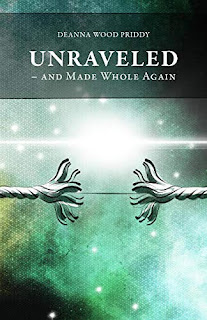
Weekly Reader: Unraveled and Made Whole Again by Deanna Wood Priddy: Short Slim But Intriguing Book About Religion and Faith


Weekly Reader: Unraveled and Made Whole Again by Deanna Wood Priddy: Short Slim But Intriguing Book About Religion and Faith

By Julie Sara Porter

Bookworm Reviews


Spoilers: Deanna Wood Priddy's memoirs Unraveled and Made Whole Again is a very short slim book. However, in its brief length it tells an interesting story about Priddy's religious background and how her faith led her through difficult times.


Priddy spends a lot of time describing her childhood as a preacher's daughter going from revival to revival. Her recall is fascinating as she remembers her father discovering religion after a nightmare and goes from being a drywall worker and painter to a minister.


Some of the highlights in Priddy's book are the various revivals. The Reader can practically hear the religious music, see the excited faces, and feel the sweat of hot days, pre-AC buildings and tents, and large crowds.

While some might disagree with the veracity of Priddy's claims such as seeing people get instantly healed, it's not hard to get swept up in her telling of the stories. When she writes about her father praying for a man to be healed from his cancer, it is an absorbing tale. Even more so, when he is not only declared cancer free but lives to a ripe old age. Regardless of personal belief, it is an interesting story and Priddy's writing grabs the Reader's interest.


Priddy also recalls the various travels that she and her family made. Her book is filled with various anecdotes like when they visited Mexico and received assistance from their interpreter and his wife. Also the times where they traveled by bus from one revival to another, but stopped to fish or listen to Kentucky bluegrass are nice chapters. The travels and various people that they meet such as a boisterous gospel songwriter and a belligerent man with a pipe wrench who wanted to shut down the revival are some of the more interesting passages in the book.


The book is good at showing the difference between religion, the rules and standards that are practiced within a building, sometimes the practice that one is raised in without question, and faith, the personal belief system that one has and chooses that helps get them through difficult troubled times. While Priddy was raised by a religious family and household, her personal beliefs are not discussed at first. Throughout her childhood, she is just moved by her parent's beliefs, never wondering for herself. She saw things that could be described as miraculous but never really considered how it affected her life, until she got married and began a musical career.

She began a career in gospel music sending audition tapes to recording studios and married Craig, a saxophone player. Even though she was rejected by The Grand Ole Opry, she and Craig joined a gospel band until the band leader got too affectionate with her. They settled in Missouri where Priddy worked as a teacher's aide.


Priddy's father's death in 1995 was also a time of problems within Priddy's first marriage. A time of infertility before she gave birth to two daughters, frequent moves and job changes, and differing ideologies particularly when one of the churches that they joined began to transmogrify into a cult took their toll on Priddy's marriage. It got to the point where she became angry at everything and everyone, even at God for putting her in this situation.

Priddy's spiritual anger is a perfectly natural reaction and is handled well. This is the voice of someone who spent her whole life following God, never questioning what she had been taught and wondering what it cost. What was in that faith for her if all it got her was an unhappy marriage and lots of unanswered questions.

Priddy's answers became known in personal signs like hearing a man sing "I'll Fly Away" and then she and her daughter seeing a feather. These spiritual signs allowed her to gain a more personal relationship with her God and not just parrot the way she was raised.


Her renewed faith strengthened as her first husband became verbally abusive and forced her to divorce him. She thanks her girls and her God for the strength to get through the divorce, unemployment, poverty, and a prolonged custody battle. She managed to get through those difficulties and her daughters remained with her, developing talents in art and music. She also began a relationship with Kirk Priddy, a former boyfriend and drummer with his family gospel band. This relationship evolved into a romance and happy second marriage as they formed the band, Unbroken. 

Besides her renewed faith, what also helped Priddy was seeking counseling. This was in contrast to her upbringing which insisted that God could fix anything so psychiatry and counseling were unnecessary. Priddy broke from that upbringing when she realized that "God has counselors too." She found one that encouraged her and helped her relieve much of the anxiety and depression that filled her throughout her life.


 Deanna Wood Priddy's book Unraveled and Made Whole Again is brief but tells a marvelous story about how one can find their own faith and strength to move on in even the toughest situations.