The Mantis Continuum (The Mantis Gland Series Book 4) by Adam Andrews Johnson
Sunday, March 8, 2026
Tracey's Calling by Rob Santana; The Mantis Continuum (The Mantis Gland Series Book 4) by Adam Andrews Johnson and Where The Wave Broke by Robert Rooks, The Travel Man
The Mantis Continuum (The Mantis Gland Series Book 4) by Adam Andrews Johnson
Monday, August 19, 2024
A Cat's Cradle by Carly Rheilan; Psychological Thriller Explores The Mindset of a Pedophile and His Victim
Tuesday, May 7, 2024
In The House of A Demon: A Memoir Book 1 by Tina Soctoy; Tension and Sense of Immediacy Fill Memoir About Kidnapping Victim
By Julie Sara Porter
Bookworm Reviews
Spoilers: Tina Soctoy’s Memoir, In the House of a Demon is probably the closest that many Readers will ever get to experiencing Stockholm Syndrome. It tells of a kidnapping through a survivor’s point of view with all of the tension and Immediacy that situation would provide.
When Soctoy was six years old, she was recruited to join a secret Soviet program to create child soldiers and spies. The book is set primarily within the first few months when she was held captive by a soldier named Sasha who molested and isolated her. Despite arguing and trying to escape, Soctoy eventually capitulated to her captors and became their willing pawn.
Throughout the book there is a sense of immediacy that puts us on the same level with Soctoy, the child. We are not given the particulars of her predicament within the text of the book itself, only in the "About the Author" section. In reading the book and not knowing the situation beforehand, the Reader is left uncertain who has Soctoy, for what purpose, what they are going to do to her, and when, if ever she will be free. We only see this situation through her terrified and confused six year old mind.
She doesn’t know her captor’s names except one is called Sasha. The others are just the Men. We don’t know where she is being held except a few context clues suggest that it’s an isolated and wooded area. This adds to the overall suspense that we are kept in the same ignorance as Soctoy and can almost visualize ourselves looking upward at these larger men who overpower her.
Her captors are master manipulators. They appear nice one minute by giving her food or speaking in an almost tender tone of voice. Then the next minute they threaten her and her mother. This puts her in a false sense of security so she becomes obedient rather than do something that will change their moods. She is raped and then made to feel like she was willing to do it, so she will consider herself fallen and damaged beyond all repair. The sex is humiliating and a sign of dominance that says that Soctoy can’t even feel alone in the comfort of a bed.
The captors also deceive her by promising that she will be reunited with her mother then put suspicion on her towards her parents. Since we aren’t given much background information, we are put in the same situation as Soctoy where we question her family’s loyalty as well. We wonder if Soctoy returns home, whether she will be put in a similar or worse situation than the one in which she is in.
Many times the dialogue and action between Soctoy and her captors get repetitive but it adds to Soctoy’s mental state. The more her captors repeat the same scenario over to her, the more Soctoy starts to believe it. Time and space are altered so she doesn’t know what day it is or how long that she has been there. Even basic facts like whether it is day or night are unknown to her. She becomes dependent on her captors to tell her anything.
A few times Soctoy manages to fight her captivity by arguing and escaping but these become hollow victories. They always catch up to her and they use physical and psychological torture to silence her objections. The more that she remains with them, the less likely she is to run away.
By the end, she is completely broken and is theirs to do whatever they want to her.
Soctoy wrote two more books about her young life. Maybe we will get more concrete answers to what happened to her, what the ultimate goal was, and what resulted from it. For now, we just received her six year old perspective and that was scary enough. The rest of the memoirs are bound to be even more horrifying.
Tuesday, December 20, 2022
New Book Alert: Wicked Bleu (Simone Doucet Series Book 2) by E. Denise Billups; New Orleans Setting and Haunting Backstory Captivate Supernatural Mystery
By Julie Sara Porter
Bookworm Reviews
Spoilers: If you are going to write a supernatural mystery in which a ghost of a murdered woman haunts her descendant and helpa her solve family mysteries, it might as well be set in New Orleans during Mardi Gras.
Yes, it's cliche but it is a setting that lends itself to such magic and mystery by its very nature. It is one of the best locations for this type of genre and is one of my favorite places to read about. In good books, New Orleans becomes a character that thrives on this supernatural energy and respect and reverence for all things macabre.
In this case New Orleans is not the only star of E. Denise Billups' Wicked Bleu, the second volume of Billups' Simone Doucet. The other is the title character, Bleu, the ghost of a woman who lived a life of abuse, racism, and sexual assault and makes her voice heard finally.
First, Bleu invades psychic and magazine writer Simone Doucet's dreams and gives her visual and audio impressions of her presence. Simone had long communicated with her ancestor and spiritual advisor, Delphine so communicating with ghosts is nothing new to her. But, Bleu's presence is more threatening.
Simone had visions of violence and drowning. Worst of all, her friend, Stacy, seems to be acting strangely like she's possessed. The answers appear to be found in New Orleans so Simone, Stacy, and their friends Mitchell and Jude go to the Big Easy during Mardi Gras to do some super sleuthing and ghost hunting.
The New Orleans setting is very prominent and is filled with spooky elements. There are many passages where Simone and her friends have to face New Orleans' undead residents.
It's an all too easy location to imagine ghosts around every corner from Jackson Square to the Garden District.
The book also reveals the less savory aspects of New Orleans' past, particularly the Storyville section, a notorious haven for prostitution. When a location has a depraved history of racism and misogyny, there are bound to be spirits trapped because of a society that profited off another's suffering.
Much of the setting adds to Bleu's character revealing why she is a frightening and sympathetic character at the same time. Many of the chapters where she possesses Stacy add to the overall eeriness. Stacy acts contrary to her usual behavior so Simone and the others are concerned for the changes in her friend.
Bleu flirts with total strangers and jeopardizes Stacy's health in her pursuit of the pleasures that she had in life. She also cuts Stacy off from her friends by creating dissension and discomfort among them. In her anger over the injustices that she suffered in life, Bleu makes an effort to put the living, especially the woman whom she possesses in an emotional hostage situation.
We also spend the last third learning about Bleu's history. Simone reads her diary and recounts an abusive lonely life with an immature prostitute mother and being subjected to abuse and degradation in her youth.
Bleu's diary is heartbreaking as she is buried with secrets that destroyed not only her life but those of the people close to her. The racism and sexism surrounds her as she strives to make a better life for herself but ends up in a far worse situation than she imagined. This guilt and anger compel to seek revenge from beyond the grave and puts innocent modern lives at risk.
Wicked Bleu is an effective supernatural horror novel because it reminds us that some monsters are born and some are made by society.
Friday, June 17, 2022
Weekly Reader: Conceptus by Brian Herskowitz; Suspenseful Plot and Traumatized Dedicated Lead Make Psychological Thriller Memorable
By Julie Sara Porter
Bookworm Reviews
Spoilers: Brian Herskowitz's psychological thriller, Conceptus, is the kind of thriller that I love. A suspenseful plot with genuine surprises and twists. A terrifying villain who uses their brilliance to lure unsuspecting victims to their prey and play with the authorities as they try to catch them. A tortured protagonist with problems of their own that are connected to the case forcing them to confront their own past.
Laura Drummond has a nightmare of a memory. While in high school, she was raped, attacked at knifepoint, and left for dead. She eventually recovered but the emotional scars still remain as well as some physical scars to remind her of that dreadful time.
In adulthood, Laura is a detective in the police force moving up from violence and sex crimes to investigating homicides. Right now, she investigates the assault and murder of Cindy Musgrave. Laura realizes that there is something painfully familiar about this case. In fact the method that Cindy's attacker used and the wounds on her body are very similar to what was done to Laura. Laura's attacker was never caught or identified. Could he still be around and active, waiting decades to find his next victim?
There are so many great things about this book. First, is Laura herself. She is someone who has turned her personal pain into a calling to help others so they don't suffer the way that she did.
Despite this painful memory of the rape and near death hanging over her head, Laura rebuilt her life as an adult. Besides solving crimes, she has an active but detached personal life. A lesbian, she has had many affairs but she is considering finding someone with whom to settle down, particularly the attractive and understanding Sharon. Many times, Sharon becomes close to Laura and the detective tells her various things about her past that she hasn't told anyone like about her rape, estrangement from her parents, and the grisly aftermath of the assault. It left a lot of damage to her psyche and one can imagine how difficult it is for her to open up to someone. It's a genuinely loving moment when she does as the weight of many years is lifted from her.
Part of the way Laura covers her past is to become desensitized to the violence around her. She dryly considers her work, "Another day. Another senseless murder." This jaded desensitization is a mask that comes crashing down when Laura investigates Cindy's rape and murder. This familiar crime echoes into her past. She realizes that she can't ignore or detach what's in front of her. She has to confront what happened to her during the rape and everything afterwards.
The plot is filled with very suspenseful chilling moments particularly when the point of view enters the rapist/murderer's mind. He trails his intended target like a hunter catching his prey. He is methodical and ice cold in his pursuits seeing them not as women but small animals to be hunted and destroyed. He studies their every move, where they live, work, study, and the best times when they are alone. It's enough to make a Reader paranoid, especially if they are a single woman.
There is some Freudian explanation in the murderer that thankfully doesn't absolve him. It just explains where he came from and why he did what he did.
Conceptus also has some juicy twists and reveals that I dare not share. They are genuine surprises and perfectly cap off this genuine thriller of a book.
Monday, December 6, 2021
New Book Alert: Cinema 7 by Michael J. Moore; Nightmare Inducing Zombified Children Are The Ultimate Fear In This Dark Disturbing Supernatural Horror
By Julie Sara Porter
Bookworm Reviews
Spoilers: I really thought after all the psychological thrillers and supernatural horrors that I have read and reviewed over the past five years, I thought that surely nothing could scare me. Yes folks, I was immune from nightmares.
Clearly, Michael J. Moore was on a mission to prove me wrong.
Because no sooner than I began reading the first chapter of Moore's gruesome dark disturbing horror novel, Cinema 7 a chapter in which Kim, a little girl stabs her mother and mother's boyfriend at the behest of a monstrous figure in her room than my subconscious became severely affected.
Not only does that lovely image begin the book but three other children do the same to their families leaving six parents dead and four children self made orphans and missing. Oh and right before these not so adorable tykes commit these horrific murders, they go through a change that seems to be a composite of the evil monster sexually abusing them then eating them alive.
Not only do these kids become undead psychopaths but their bodies are altered to make them almost demonic with gravelly deep voices and orange lights in place of eyes. Ah yes, reading this book late at night with the lights off does wonders for an already fragile psyche that imagines killer demon children with glowing eyes. (The description does not do it justice. Trust me, Moore's writing style definitely makes the Reader shiver with unbridled terror.)
Unfortunately this attack is not an isolated incident. Kyle McIntosh, a local high school boy with a tenuous connection to where the murders take place (his former girlfriend, Claudia, lives in the same trailer park where they happened), runs into the children in their demonic glory. Terrified, he tells the police who surprisingly believe him (video camera footage also showed the kids). Unfortunately, attacks are starting to increase as this strange monster possesses more kids and more family members turn up violently murdered leaving Kyle, his friends, family, and his new girlfriend, Marie, to face this seemingly unstoppable army bent on violence, mayhem, and revenge.
The Nightmare Fuel is palpable throughout this book. It's the type of book where a seemingly happy family could one night fall prey to violence by their youngest child who barely understands what they are doing before they pick up a knife and slaughter their parents, older siblings, and pets.
There are some ghoulish images of small infants unable to walk, all of a sudden springing up to commit murder. A toddler whose neck is broken during an escape attempt has a conversation with his older brother with his head leaning over what remains of his neck. And those eyes, the glowing eyes burn from the page into the Reader's souls.
What also makes this situation more monstrous is how it starts and how it continues. I won't reveal too much but the monster is motivated by hatred at someone. Someone human did something horrible to begin this rampage and was never caught. Sometimes as horrible as the supernatural is, the natural, the human can be far worse.
There is also the fear over how unstoppable this attack is. The monster goes throughout the town attacking family after family. Even the protagonists' families are attacked. It is not understated how this attack traumatizes everyone involved. Almost a whole generation of an entire town's childrens are possessed and parents are violently killed. Those that survive are certain to have the worst kind of PTSD imaginable. All because one character did something horrible and another sought revenge by punishing everyone around them.
The fear factor of the monstrous children and their leader's motivations and origins are the most memorable parts of the book. It overshadows some of the downfalls of the book. Kyle's romance with Marie is the stuff of typical teen angst and brings down most of the plot, except when the attacks affect them personally. Also his earlier relationship with Claudia ends up being unnecessary, especially since she herself barely appears in the book and is mostly talked about barely shown. Kyle and Marie also make some questionable decisions that are probably meant to make the Reader suspicious, but since they are proven to not be important. They don't lead to anything except for the Reader's exasperated sighs over how foolish these characters act.
But what can't be forgotten is how terrifying the monsters in this book are. It is the type of book that is best read in the dark for a good scare but only after checking the hallways, through the windows, and the children's bedrooms for pairs of eerie glowing orange eyes.
Saturday, August 28, 2021
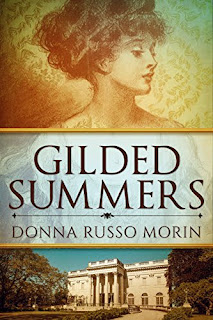
Weekly Reader: Gilded Summers (Newport's Gilded Age Book 1) by Donna Russo Morin; Moving Novel About Friendship Reveals Gilded Age Gender, Immigration, and Economic Conflicts
By Julie Sara Porter
Bookworm Reviews
Spoilers: There are many comparisons between now and The Gilded Age. Among them are the strong economic divides between rich and poor, the prejudice between Americans and immigrants, and the questions towards gender roles and how much progress women have actually made over the years.
Those struggles are remembered and paralleled into real modern life within the novel, Gilded Summers by Donna Russo Morinn, the first book in Morin's Newport's Gilded Age series. The series involves two women from different backgrounds who become best friends and have to deal with many of the issues of the day such as the division between the haves and have nots, the struggles that immigrants face when settling in the United States, and the fight for women's rights.
In 1895, 15 year old Pearl Worthington lives an upper class privileged life in Newport, Rhode Island. (Fun fact: Gilded Age Newport is also an important setting in the book Mistress Suffragette by Diana Forbes.). Pearl seems to have a life that most would envy: a large mansion, summers spent in the country, the current fashions. and her family's friends have famous last names like Astor, Oelrichs Fish, and Vanderbilt. She appears to have an enviable life but nothing can be further from the truth.
Pearl has a talent for drawing and illustration but cannot pursue it in any meaningful way except as an ornament for a potential marriage. She would love to study at the Rhode Island School of Design. Maybe pursue her art to a professional career like acquaintances from similar wealthy homes, Mary Cassatt and Edith Jones (later Wharton).
Pearl is weary of the small mindedness, malicious gossip, and verbal cruelty of the social set. She longs for the freedom granted to men like her brother, Clarence, in which they can step out of line and misbehave and no one would think anything of it (in fact many encourage that behavior in men) but a woman is marked for life.
Pearl is supported by her father, Orin, who is very busy but encouraging to her pursuits. However, Orin is dominated by his wife, Milicent. Milicent is emotionally abusive towards Pearl and expects her to fulfill her expected role to marry wealth, have rich children, and live the life of a society matron no questions asked and no arguments made.
Meanwhile, the Worthingtons take on new servants, widower Felice Costa, and his daughter, 15 year old Ginevra both who recently emigrated from Italy. Felice is hired to teach a very reluctant Clarence to play the violin. (Felice is a gifted violinist and luthier.) Ginevra is hired as a house maid to mostly sew clothes. Eventually, Ginevra moves up to becoming Pearl's lady's maid.
Like Pearl, Ginevra also feels limited by her role in society. Most of the Newport elite treat their servants like robots. They don't talk to them. They just expect them to serve their food, clean their houses, take care of their children, and so on in their own world only to come out of it to collect their payment. To the wealthy, people like Felice and Ginevra are nobodies and treated like nobodies. Ginevra watches Pearl and her friends and family, as well as the handsome men paraded in front of Pearl and feels like she lives in a separate existence from others. They are depersonalized and made to feel less than human.
That depersonalization exists among the servants as well. Many like Mrs. Briggs, the housekeeper, look down on the Costas for being new arrivals and on the lower levels of the service pecking order. Even kitchen maid, Greta, who is among the lowest in the servants' hierarchy, mocks Ginevra's accent and thinks of her as stupid.
The Costas are also judged as immigrants. Many German and Irish immigrants, especially ones who arrived years ago look down on the new Italian arrivals. People mock their accents and some want them to return to their own country.
Like Pearl, Ginevra dreams of a different life. Her talent for sewing leads to an interest in fashion. She begins to make Pearl's clothes creating embellishments and adding a personal style. She has dreams of being a fashion designer or opening a clothing boutique but like Pearl feels limited by her gender, economic status, and ethnicity.
Despite their differences, Pearl and Ginevra develop a genuine friendship that looks past their statuses and sees the real women inside. The friendship between Pearl and Ginevra is beautiful because it helps them get past their previous limitations. Together, they share their talents as Ginevra observes Pearl's sketchbook with awe and Pearl admires the beautiful gowns that Ginevra makes. They also talk about deeper issues like how they feel stifled by the people around them. Their friendship allows them to open up and see the world through different eyes.
Pearl and Ginevra are not only able to see their limited roles but those of the people around them. Pearl sees the "Swell Set" for what it really is and finds out what goes on inside the palatial Newport homes. She sees dissension and infidelity in marriages that are happy only in appearance. She and Ginevra see cheating spouses and the other half of the marriage that would rather look the other way than lose everything. They also see these same people look down and judge anyone else by the standards that even they can't live up to, such as when three society women including "The" Mrs. Astor, critique Milicent (the same set that she aspires to join). This is a few years before these women are also revealed to fall short of their own expectations and one files for divorce.
The two friends, particularly Ginevra, also experience first hand the sexism of the day when men feel like women are their property to do as they wish. This comes to a head when an intended fiance of Pearl's also wants Ginevra. He wouldn't mind marrying one and having the other as a mistress. His intentions eventually become violent but Pearl and Ginevra are there for each other in every way possible. Their friendship is strengthened by this incident and finally propel themselves to go after the freedom that they longed for.
Gilded Summers is a beautiful novel about how friendship can help see people beyond their race, ethnicity, sex, and income. Far from gilded, this book is pure gold.
Tuesday, May 11, 2021
Weekly Reader: Song of All Songs: Earthcycles Book 1 by Donna Dechen Birdwell; Science Fiction Novel Has Beautiful Setting, Great Characterization, But Slow Moving Plot
By Julie Sara Porter
Bookworm Reviews
Spoilers: Song of All Songs by Donna Dechen Birdwell is a Science Fiction novel that has much to offer. It's set in a post Apocalyptic world but isn't focused on the gloom and doom. Instead it has a beautiful setting with a reverence to nature. It has brilliant characterization with protagonists who go through great struggles on their journeys. However, the plot meanders and there are long stretches where not a lot happens leaving the results of a book that visually is impressive to picture but verbally needs work.
The setting of Song of All Songs is not a unique one in Science Fiction. Post Apocalyptic Earths reduced to agrarian societies are nothing new. Since Mary Shelley's The Last Man, and even before that mythology and religious texts like The Epic of Gilgamesh, Ragnarok, The Mahabharata, The Ramayana and The Book of Revelation, have described in graphic details about a world devastated by war and environmental destruction with only a handful of courageous survivors (if the world is lucky enough to have survivors.).
One of my first experiences with the genre was reading Stephen Vincent Benet's 1937 short story,"By The Waters of Babylon" in high school. Coming from a religious background and fully aware of the only recently ended Cold War, I was traumatized to the point of having nightmares reading in the story about the journey of John, son of the High Priest, to the Palace of the Gods by the Oudi-san River. When John gets there, he learns that the Palace of the Gods is the remnants of a decimated New York City after it had been destroyed by war. (Interesting fact about the story, since it was published in 1937, it predates public knowledge of atomic weaponry. However, Benet accurately described a world destroyed by such an event. He specifically mentioned a weapon causing much of the devastation. Some believe that Benet was referring to mustard gas, which affected much of the soldiers and civilians during WWI.)
The problem with books and stories in this genre is that if the events are set too far in the future or the world is left to complete ruins, the Reader not only is aware of it but is constantly on the lookout for signs. Reading the book almost becomes a code as they look for context and clues to interpret what the author is really referring to. For example when a character says that something is a magical portal and the Reader realizes that the character is looking at a computer or they are reading what they call a religious text and the author is describing a shopping list. After a while, the Reader gets confused about discovering the clues of what the characters are referring to rather than what they are actually doing in the book. They lose sight of the setting and characters to search for the details for their intended meanings.
Birdwell doesn't make her version of the world after the end any easier to interpret. She provides no context clues to imply what she is really referring to or what the characters are really seeing or experiencing. The protagonist, Meridia Einkorn, is on a mission to find various stones that sing. She can also see pictures and colors in the stones. What does that mean? Are they actually smart phones and she can access videos? (If they are, what are the odds that they would still work after centuries of not being used?) Are they instruments, or other devices, like music boxes, that make music? Is it possible that in the absence of technology and other barriers between humanity and nature, have humans evolved to the point that Nature has given them intuitive abilities? Can Meridia really hear stones sing?
We also learn that her love interest Damon photographs photons but is lately interested in what he dubs biophotons in which he can see light around living things. He is often looking for what he calls snails to help with the photos. Are snails film or batteries? When Damon says that he takes photographs is he using a camera or is he painting them and using the word photo because he doesn't know the other word and snails are paint? Like Meridia has he received intuitive abilities because of his connections to nature?
There is one moment that is obvious. Meridia, Damon, and their allies go to a place with many "mirrors" and see pictures of the history of their world including its end. While the mirrors are not specifically identified, more than likely, they are televisions or computers. It's the one moment of clarity in a book that is somewhat dense and unwieldy in its descriptions.
In this situation, the Reader is left with two options: 1) Continue looking for clues or 2) Take everything at face value. Either way is valid and it depends on what you are looking for when reading a Science Fiction novel. If you are looking for a more concrete interpretation for meaning, this book should be avoided. But if you want a Science Fiction novel that is more poetic and metaphorical and you want to get lost in the more spiritual connections that the characters have to nature then this book is definitely on your list.
The setting is striking and it explores the characters' interaction with their environment beautifully. Merdidia's connections to the stones are explored rather well and the idea of hearing sounds and seeing colors in them is evocative. In fact, this world's life cycle is arranged in stones like passages of time like "Amber'' or "Mica." Whatever the stones are meant to represent, they are clearly important to these people and the stones are representative of the community and if Meridia finds them, she restores the soul of the communities.
While the setting is left to interpretation, Birdwell clearly cares about her characters. Nowhere is this more evident than in how she writes Meridia. In one graphic chapter, Meridia is raped by a member of her community who is also related to her by blood. This encounter leaves her pregnant and emotionally scarred.
Recently, I reviewed another book (to avoid spoilers I won't give the name), in which a woman unwillingly has a baby by questionable means. For lack of a better word, she had been violated. However, the book does not go into how this experience should at least have left her emotionally wounded. There is no anger or sadness over what happened without her consent. She gets all googly eyes at the prospect of a baby and becomes instantly maternal. Her assailants are forgiven and we are led to believe that the end justifies the means. It is a wish fulfillment and a dangerous one at that, as though saying as long as it ends with a baby, then the parent's well being doesn't matter.
Birdwell handles this subplot much better. Meridia is left reasonably traumatized by the rape. Even though her assailant was close to her before, she doesn't feel the same way for him. She is troubled by the memory and it leaves her scarred through the rest of the book. In fact,her kinsman is exiled from the rest of the community because of his actions. While Meridia is given the suggestion to abort the pregnancy, she decides to carry it to term leaving the choice solely up to her. This book handles sexual assault in a strong way showing how it can leave the survivor pained, frightened, and broken.
However, this book shows another side to abuse survivors. Meridia is a very active character and potential leader to her community. She leads friends and family through various locations and shows tremendous strength in retrieving the stones. She also becomes empathetic towards other's pain. She is at first wary but accepts Damon into her life when he proves to be a better person than her exiled kinsman. She also befriends a woman whose father had been exiled previously and understands the conflicts concerning her parents. She is able to persevere despite the trauma that had been inflicted upon her.
Plot is not a strong point with Song of All Songs. There are various plots such as the search for stones, an impending war between two villages, and the conflicting words of two prophets. The majority of the book features characters moving from one location to another. This is less a plot driven book than it is a means to introduce the Reader to this post Apocalyptic setting and the characters that inhabit it.
Saturday, March 6, 2021
New Book Alert: Something for Bebe by Neil A. White; Intricate Suspenseful Thriller About War Crimes and Revenge During and After The Bosnian War
By Julie Sara Porter
Bookworm Reviews
Spoilers: The Bosnian War was a conflict that lasted from 1992-1995 and involved the countries of former Yugoslavia. After the Eastern bloc collapsed, various ethnic groups such as the Serbs, Croats, and Bosniaks (Bosnian Muslims) warred against each other in the country now known as Bosnia and Herzegovina. Ethnic cleansing occurred as Bosniaks and Bosnians Croats were forced to flee their homes or were exiled by the Army of the Republika and Serb paramilitaries. Methods included killing of civilians, rape, torture, destruction of civilian, public and cultural property, looting and pillaging, and relocations of various populations. Between 700,000 and 1,000,000 Bosniaks were removed from their homes by Serbian forces. Several people including Serbian politicians, soldiers, and officials were eventually tried by the UN-backed International Criminal Tribunal for the former Yugoslavia. As with many violent conflicts, Bosnia and Herzegovina is still trying to recover from those terrible days.
The Bosnian War is the backdrop for Something for Bebe by Neil A. White, an intricate and suspenseful thriller about long awaited revenge during and after the Bosnian War. It tells the story of an American journalist who vows to destroy the men who ruined his wife and her family's lives.
Veteran widowed journalist, Elliot Kruger is dying and he has something important to do before he shuffles off this mortal coil. He mails one note to four different men telling them that they may not know him but he knows them, that he is their conscience, and that he is coming for them. He then sends some information to Madison "Maddy" Holt, his young fellow journalist and protegee to research the story on what he is planning to do. Finally, he travels to former Yugoslavia to see justice done up close and personal with Maddy, the CIA, Serbian forces, and other interested and violent parties close behind.
Something for Bebe is a novel that is a thrilling chase and an engaging mystery rolled into one. Maddy and her friend, Grant Stanhope, travel to the former Yugoslavia to piece together the various questions of Elliot's past and why he traveled such a long distance to see justice done. They are constantly aware that they are being monitored and are chased out of hotel rooms by suspicious characters. Many characters are killed in graphic ways. One in particular is found in a men's room with entrails, blood, and organs around him, a sign that not only someone wanted this character dead but to suffer before their death.
Calls and messages to Grant's mother, who works for the State Department, reveal that this case has higher stakes than Elliot's one man revenge. Many of the higher ups in Europe and the United States don't mind playing the people under them like chess pieces and it shows. There are also other characters whose motives are a complete surprise adding further twists to the storyline.
The highlight of the book are the chapters that are set in Bosnia and Herzegovina in the past and present. As Elliot searches for his old enemies and Maddy and Grant search for Elliot, the Reader learns the story of Elliot's late wife, Berina "Bebe" Berberovic. The chapters reveal her as a Bosniak woman who was forced to watch as her neighbors were exiled, family members are killed or separated from her, and she is imprisoned. During her imprisonment, she is tortured and raped. It is a truly gripping and heartbreaking account of a woman being made to suffer because she is Muslim in a country that is violently prejudiced against them. Bebe's story is just one example of the many who suffered through those horrendous war years.
The Bosnia and Herzegovina described in the novel's present is still coming to terms with this violent past. Many of the characters that Maddy, Elliot, and Grant encounter have selective amnesia in not wanting to recall those days. They want to retain a small fraction of peace in which they were deprived from nearly 30 years ago. A whole generation has been born and matured since those days and only have ruined buildings and villages containing a smaller populace to tell them. This is a populace that will not and cannot remember those days.
Unfortunately, some of the perpetrators have gone unpunished. While some were made examples of during the tribunals, others escaped to other countries using pseudonyms. One of the more sadistic characters is arrogant enough to practically hide out in plain sight, still believing in his old prejudices and is willing to look for political allies to enable him to continue the work that he started during the War. He is a truly vile being and it is not a great loss in hoping that justice, in the form of Elliot, comes calling.
Something for Bebe is an exciting and heartbreaking account of war and revenge revealing that sometimes, retribution can wait but it does happen.
Friday, January 29, 2021
Weekly Reader: Murder on the Dark Web (A Belfast Murder Mystery Book 4) by Brian O'Hare; Dark and Sinister Murder Mystery Plays On Notions of Innocent and Guilty
Weekly Reader: Murder on the Dark Web (Belfast Murder Mystery Book 4) by Brian O'Hare; Dark and Sinister Murder Mystery Plays On Notions of Innocent and Guilty
By Julie Sara Porter
Bookworm Reviews
Spoilers: I will try not to reveal too much about this book, but one of the things that I like the most about it is somewhat tied to a huge spoiler so I will just say this review contains SOME MAJOR HEAVY DUTY SPOILERS!!!!
Murder on the Dark Web by Brian O'Hare is one of those types of murder mystery novels that completely subverts and flip flops the ideas of innocent and guilty and right and wrong. Not in some time have I detested a group of murder and blackmail victims more. Not in some time have I empathized, understood, and almost completely sided with the murderer more. It is only when the murderer takes things a step too far that the empathy ends.
Detective Chief Inspector Jim Sheehan and his team are called in when Judge Trevor Neeson is found murdered in his study. Sheehan's team are the usual brave good-hearted characters that you would find in most police procedural novels.
Sheehan is the wise leader and father to his men (and woman) and has a happy home life. Sergeant Denise Stewart, Sheehan's partner, is the only woman on the team. She is dating one of the other detectives and has to deal with the other team members trying to protect her so-called "delicate femininity" and dismissing her because she's a woman. Detective Declan Connors and Malachy McBride are an odd pairk (Connors is middle aged, street smart, and surly, McBride is young, educated, and enthusiastic). The two care for each other and may be partners, more than just on the force. Sheehan's team are a great well-written bunch that help provide light in the darkness by protecting those in trouble and punishing the truly guilty.
At first Neeson's murder investigation seems routine. On the night that he died, he had a gathering of wealthy guests. While investigating the guests, each one insists that they were just talking about Brexit. Well, okay rich folks talking politics nothing wrong with that. Except every time that the group says the reason behind their meeting, they use the exact same words as though they were reciting them. They seem like they are covering up their real conversation.
The book alternates between Sheehan's team's investigation, the murderer, and Neeson's colleagues. The Reader is one step ahead of Sheehan's team through the entire book, so it becomes not so much a Whodunnit, but more of a when will they find out?
What the Reader learns is that Neeson's gathering had nothing to do with Brexit. Instead he was part of a secret organization called The Fulfillment for the Enlightened Club, a group of wealthy elites who meet to fulfill their sexual pleasures. The club consists of high society members such as judges, professors, stockholders, property moguls, socialites, and millionaires. One member even flies in from South Africa to fulfill their sexual pleasure.
It is the activities of this club that are detestable. The club meets and pays for various sadistic pleasures like items on a menu, literally. (Seriously, there is a menu that lists all the sexual escapades and how much the members can pay for them.) The sexual activities include making snuff films and having sex with children as young as three or four years old. (sickened yet?) Neeson and the others are a detestable decadent bunch that take delight in other victim's pain. Neeson and another judge, Adams, have acquired a reputation for bidding and fighting over the younger pretty boys and young men.
The Club members are the sorts that are so comfortable with their wealth and status that they believe that they can get away with anything. This is probably why they make the same lame alibi. They play Sheehan's and his team just like their young victims. They have no shame, sorrow, remorse, and consider themselves above the law. The more the Reader gets to know these awful people, the more they want to see them taken down.
Sheehan and the other detectives aren't the only ones trailing the club. On the Dark Web, a character named Nemein has been leaving messages on his blog confessing to Neeson's murder and taking credit for other murders of club members. No one knows who he is except that he seems to be a well educated individual (he writes in the style of 19th century literature) and has a knowledge of the legal and judicial process. He claims that he is serving justice. This causes Sheehan and the other detectives to wonder who Nemein is and what is his connection to the Club. Is he a member or one of their victims?
What becomes clear is that Nemein has been hurt and is disgusted with the Club's actions. He is out for revenge about something personal and won't let the club's wealth and status be a barrier in his particular brand of justice. Much like other antagonists in other crime books that I read like Damien Linnane's Scarred or Karina Kantas' Lawless Justice, Nemein becomes understandable in his illegal activities. When Nemein reveals his connection to the club, his story is genuinely heartbreaking. The Reader can't help but feel for this character who once had love and showed kindness only to meet hurt and betrayal in the worst way.
What shifts our sympathies against Nemein is in the way he dispenses justice, especially against someone who was not a club member. He doesn't mind hurting innocent bystanders to make his point or forcing someone whose only crime was doing their job to make a sadistic choice. In his pursuit of justice, Nemein turns into the very monsters that he hated and upon whom he swore vengeance.
Murder on the Dark Web is a dark but gripping murder mystery. It shows us that sometimes the line between good and evil is not so defined. In fact, it can be quite blurry.