Showing posts with label Autobiography. Show all posts

Wednesday, September 13, 2023

New Book Alert: Joy: The Art of Making Tofu An Autobiography by Simon Boreham; Heartwarming and Heartbreaking Book of Love, Loss, Grief, Joy, and Tofu

New Book Alert: Joy: The Art of Making Tofu An Autobiography by Simon Boreham; Heartwarming and Heartbreaking Book of Love, Loss, Grief, Joy, and Tofu

By Julie Sara Porter

Bookworm Reviews 


 Simon Boreham's memoirs, Joy: The Art of Making Tofu: An Autobiography is a lovely, moving, and heartbreaking and heartwarming book about Boreham's 59 year marriage to his wife, Dawn and her death in 2021. 

The book begins shortly after Dawn's death as Boreham wrote his memoirs. Even from the beginning, he wrote of the aching memories of going through a house and the things that he and Dawn once shared and suddenly carried many beautiful and painful memories. The white-framed mirror that was her favorite. The porcelain vase with a crack that they bought at their Greystones home in Torquay. The handbag that she took to the hospital. All things under normal circumstances might have been overlooked and ignored that now carry significance and emotional weight. This chapter alone carries Boreham's grief, sadness, and his loving happy memories in a few short pages.

Boreham recounts Dawn's death with her hospitalization from angina and the painful seemingly endless waiting with their children, Catherine and Jason especially because they couldn't be in the hospital room with her because of the pandemic. Boreham combines this with other memories such as when he and Dawn entered the restaurant business in the 1970's and '80's and when he wrote a poem called "The Crying Man." This effect of going from one memory to another even at one point switching the point of view to the second person talking specifically to Dawn is how a person's mind works when it goes through deep stress and grief. It flickers from one memory to another when the current situation becomes too painful and wanting the person to still be there. 


Boreham keeps his and Dawn's years alive through great recall and detail. He talks about his middle class upbringing with his parents, Sybil and Mike, moving through several countries because of his father's career at Barclays Bank. Sybil and Mike eventually settled in the U.K. in 1959 until her death from cancer in 1976. Their happy but doting marriage was a detriment because as Dawn pointed out, she couldn't live up to their expectations for their son so they rarely visited the couple. In fact after Sybil's death, Mike fell apart and moved to South Africa. Boreham writes them as a couple insulated by their reserve and love for each other and their son. It was admirable because it gave Boreham an example of a happy marriage, but they were still standoffish towards Dawn.

Boreham captures his childhood with multiple senses and delightful memories such as the various books that he and his mother read together, Sybil's perfume, his grandparent's tomato garden, Boreham's crush on Disney's Snow White, and his father carrying him after a dog bit him. He also writes about his time in a boarding school that was structured with rules, upperclassmen who teased the younger ones, and a few loyal friends. These memories depict a man with a nice childhood and sometimes difficult youth that filled him with knowledge, thoughts, encouragement, and security. Things that he aspired towards in his marriage. In fact, his main act of rebellion was moving to Canada in the early 60's only to return to a steady life.

In contrast, Dawn was a very opinionated young lady. The second of three children, she was considered her father's favorite. As compared to Boreham's parents, Dawn's parents got along with her husband. In fact, Boreham thought of his mother-in-law Elizabeth as a second mother. Elizabeth, called "Dizzy Lizzy," was something of a character who responded to her son in law's poems with letters decorated with matchstick cartoon characters. She actually had an affair with Boreham's father which continued after both their spouses died. While Boreham and Dawn outwardly supported it, they still felt uncomfortable. While not outright stated, Elizabeth's open hearted eccentric personality may have inspired her daughter's outspoken unconventional nature 

Instead of the private school upbringing of her husband, Dawn attended a Catholic state school. When a nun constantly berated her, Dawn pulled her wimple off. When her sister saw cane marks on Dawn's legs, she and her younger brother were pulled out of that school. This showed Dawn as the type of woman who was more forward in her personality than her reserved husband. It was a strange attraction of opposites that proved compatible for over five decades of marital happiness.


In 1962, Boreham met Dawn while he was working in the hospitality industry and she was a hotel receptionist. He remembered what she wore and where they went those passionate first weeks before he left on a misadventure in Germany. He returned to England and Dawn began a love affair that lasted 59 years.

He remembers Dawn being the type who initiated the emotional response, but letting Boreham think he was leading her. When he kissed her during their dating, Boreham realized that Dawn expected and wanted him to.

Dawn's spirit comes alive in her widower's writing. She was high spirited, sociable, outspoken, intuitive, strong willed, outgoing, and joyful. She loved jazz, dancing, flowers, experimental cooking, and occasionally horse betting, and drinking single malts while quoting Robert Burns. This is told by a man who is still in love with his wife even after she left this world. The sharp grief may recede and be pushed back at times but he will always remember who she was and what she meant to him.

The Boreham's experiences in parenthood contain moments of humor like when their son Jason swallowed a cupboard key and anxiety like when he had fragile health and needed heart and kidney operations during his infancy. Many parents would relate to these situations.The Boreham parents were able to pass their tremendous love for each other to their children, grandchildren, and great grandchildren.

Besides the Boreham's marriage, this book is about their experience in the food business. Like many entrepreneurs, it took some time for the duo to find their niche. They went from a high-spend fish restaurant, to a steak and fish place. In 1989, two years after Boreham was let go of his job they purchased Dragonfly, an organic whole food manufacturing business. 

Their specialty was tofu which at the time was not widely made and sold except in family owned shops in Asia. The duo learned the hard way about the difficulties of making food by themselves without a factory and personnel. They found themselves quite busy making and delivering food only taking off for two weeks between Christmas and New Year's.

Boreham also writes of the toll that starting their own business worked on their marriage especially between two obstinate individuals who believed that they knew what was best. This is evident when after an argument, Dawn, fed up with her husband's high handedness, engaged in a one-woman strike and walkout leaving her husband to finish the clean up. After that he learned to accommodate her personality to his and that her solutions might be different but they weren't always wrong. Their time running Dragonfly helped strengthen their relationship by working towards a goal and implementing their diverse personalities to the end product.

Naturally the final chapters are filled with moments that tug at even the most immovable heart strings. Little moments are captured such as when they bought an antique turquoise pot that was too big to fit anywhere but Dawn just wanted to buy it anyway because the colors represented meaning and life. A pot that would eventually become the funeral urn to carry Dawn's ashes and was big enough to also hold the ashes of their late dog and Boreham when his time comes to be with them. Talk about meaning.

In the end, Boreham writes through his grief in keeping his wife's memory alive but still enjoying the life that he still has. He still can enjoy writing, and bonding with his children, grandchildren and great granddaughter, studying Eastern philosophy and other uplifting sources, and finding joy and happiness around him.

While Joy: The Art of Making Tofu is a sad book about grief and loss, it is also funny and moving as it tells of the memories of a happy marriage, and to find joy in not only those times but the remaining time that we have left.


Sunday, October 30, 2022

Weekly Reader: Racism is Real by Clive Henry; Personal Story of Encountering Racism and Turning to Activism


Weekly Reader: Racism is Real by Clive Henry; Personal Story of Encountering Racism and Turning to Activism


By Julie Sara Porter

Bookworm Reviews 


Some books that strike against racism take the historical or sociopolitical approach. They look at the whole picture of racism in the historical context describing such events as slavery and segregation and also current issues such as police racial profiling and redlining. It defined what racism is, how it was used throughout history, how it can still be recognized, and what can be done to end its still tremendous hold.

Other books are more personal. They discuss the individual experience with this harmful and ultimately destructive belief. How this person encountered racism and was then motivated to act against it. 

Clive Henry's Racism is Real takes the individual personal approach to prejudice. It is a wonderful powerful book that deals with Henry's experiences with institutional racism and how it affected his personal and professional life.

While racism is an important factor to Henry's book, it is not the only aspect to the book. Before he encounters the bigotry that made his adult life very difficult, Henry describes a happy childhood in Nottingham, England (home of Robin Hood) with loving parents, five siblings, and a love of comedy tv shows, 70's soul music, and movies by Stephen Spielberg and George Lucas. 

That idyllic youth ended with the death of Henry's father in 1983. The shift from childhood innocence to maturity coinciding with the death of a parent is heartfelt and recognizable. Familial roles shift and young people have to prepare themselves for a harder, tougher world that they are uncertain they are prepared for.

As Henry matured, his world became more complex. He eventually worked in retail, collecting data and managing stock levels. He embraced the New Jack Swing style of the mid-90's, partied, and had many romantic relationships. He also faced fatherhood at a young age, maintaining close relationships with his son and the boy's mother, Henry's former girlfriend turned close friend, Vanessa. He subsequently became the father of three other children. He also had to face the illnesses of his mother and sister.

In these chapters, we see not a perfect man but one who faces early adulthood with wild abandon and ultimately maturity and acceptance of adult responsibilities.

There were two major events that brought Henry face to face with racism. The first happened while Henry worked in the UPS Customer Service. After a great presentation, he was promoted to the Sales Department. He was excellent in making queries and practicing sales techniques, so much that he earned praise from his colleagues. He eventually became Inside Sales Executive for the Nottingham branch.

In 2008, ten years after he started working at UPS, he was put on a Performance Improvement Plan to evaluate his productivity and regain lost sales. This occurred when lynx accounts converted to UPS which Henry helped with. The results were 95% effective. Henry managed 30 staff members and collated the information. 

His work was practically flawless. He was given important managerial responsibilities and handled the merger successfully. There was no lost business. In fact, business had increased.

So why was he put under orders for improvement and why did Human Resources not sign off on it?

Those questions are merely rhetorical. There is one obvious reason especially when upon investigation, Henry realized that only he was singled out for this PIP and no one else, none of the white employees were. Henry filed an appeal and was told that "he was making a mountain out of a molehill." 

 During the appeals process, Henry received no support from his employers. He later left his job at UPS and found work as a taxi driver.

Henry's case was taken to court and made public all the way to the European Commission of Human Rights and Court of Appeal. When Henry's case went viral, he received support from many, some who have been in the same position in which he found himself.

Henry's second major encounter with racism occurred after the end of his relationship with Debbie, a woman with whom he had two children but was diagnosed bipolar. She charged Henry with rape. After Henry was out on bail, he collected information about Debbie's unstable behavior including stalking messages that she sent after Henry had been charged.

Once again Henry found himself in another court case that revealed the many cracks in the justice system, especially towards people of color. He revealed that neither Crown Protective Services (CPS) nor his solicitor sent important documentation regarding Debbie's health status in enough time to help with Henry's defense. Another barrister represented him and he was able to achieve a court victory. 

Some Readers may assume that what happened to Henry was an isolated incident of one individual. Unfortunately, there are many that share similar stories of workplace discrimination, harassment, and challenges when trying to oppose them. They happen too often for them to be seen as "just incidents." It is time for many institutions to look hard at themselves and the people who work within and require their goods and services and whether they are truly helping all people equally and fairly.

The institutional racism that Henry faced when his manager singled him out, his solicitor ignored him, and then when UPS and CPS refused to aid him reveals a harsh reality that many people of color face. They can follow all rules, obey the law, work as hard as they want, become an honest citizen and loving spouse and parent, and be considered a model employee. That doesn't always matter.

If an individual manager doesn't like them because of their skin color and that institution protects the racist manager over the employee, then yes that is institutional racism and they should be called out on it. If a person doesn't receive the proper assistance that they are legally allowed to have, then that service needs to be closely examined for their negligent treatment towards people of color.

Individuals, business, programs, and institutions need to be questioned, called out, and challenged. If a person can't treat everyone who walks through their business or governmental doors with the same care and helpfulness no matter what they look like, that person's behavior needs to be examined and they need to be removed.

Policies need to be changed to benefit all and everyone. It's not dismantling a system. It's asking it to be changed and live up to the promises of true equality, justice, fairness, and accountability 

That is true equity and equality.


Saturday, May 29, 2021

Weekly Reader: The View From Breast Pocket Mountain: A Memoir by Karen Hill Anton; Brilliant Touching Memoir About A Woman Searching For and Finding Her Purpose in Japan


Weekly Reader: The View From Breast Pocket Mountain: A Memoir by Karen Hill Anton; Brilliant Touching Memoir About A Woman Searching For and Finding Her Purpose in Japan

By Julie Sara Porter

Bookworm Reviews


Karen Hill Anton's memoir The View from Breast Pocket Mountain is. beautiful, brilliant, and touching memoir about an African-American woman who searches for her purpose and finds it in Japan.


Anton is like most memoirists, gifted with a good memory and the ability to captivate the senses and Reader's interests through the various scenarios in her colorful life. When she describes her childhood in Harlem with her two siblings and single father, her closeness to her father is sincerely felt. She remembers her institutionalized mother who had amnesia and couldn't always remember her children when they visited her in the institution in which she was placed.

 Anton also recalled how her father efficiently performed the duties of mother and father while giving his children basic lessons from home before starting school and giving his kids an appreciation for classical music and art. Because of his experience with a typewriter and having an encyclopedia knowledge, he was often called to draw up petitions and lead organizations. Anton's memories show him as a loving and strong willed  man who gave the gift of vast knowledge to his children.


Anton studied Art history and modern dance while living in Greenwich Village. She met figures like Joseph Heller, author of Catch 22. However, her real education came about during her various travels. At 19, she moved to London and hitchhiked through Europe. Travel changes a person's perspective and broadens their personal experiences. A telling moment occurs when Anton returns to New York City. Comparing it to the clean streets of Copenhagen, she asked why they were so dirty and was stunned when she was told that they had always been like this.  

In the United States and Europe, Anton became involved with the arts scene befriending various artists and musicians. She also met Don, an immature self-centered man. While Anton was a willing member of the Flower Power generation and was herself pretty free spirited, her relationship with Don showed that even the freest of spirits has their limits. Those limits are reached when someone constantly puts themselves and their partner in debt, when despite threats of homelessness and hunger they still won't at least try to look for work, and when one partner is saddled with a child while the other leaves. Don left Anton pregnant. She gave birth to her daughter, Nanao, in Denmark.


When some memoirists write, they could be considered name droppers. Anton on the other hand could be thought of as a place dropper. Many of her accounts are of her various travels and the experiences that she had are spread throughout the book. Shortly after Nanao was born, she and Anton lived in Switzerland where Anton worked as a cook. They then moved to a college town in Plainfield, Vermont where she worked as an administrative assistant and audited classes.

 It was also in Vermont where she deepened her relationship with Billy Anton, a friend that she had known since her high school days in New York City. They remained friends who shared books, ideals, and travels even though they were with other people. After Anton's separation from Don and Billy's divorce, the two became lovers. They eventually married and Billy adopted Nanao as his daughter. Billy led Anton on the adventure of a lifetime by being offered a job to teach at a dojo in Japan. Feeling a bit lost after the death of her father, Anton left her Plainfield job behind and she and Nano packed up and headed for Japan with Billy.


Some of the most interesting passages occur during Anton's road trip to Japan and her and her family's  lives in Japan. There are many moments where Anton felt out of place as a black woman in countries where she was in the minority. There is also a suspenseful passage which describes a near assault in the Middle East. The majority of the people that they met on their road trip were helpful and always ready with a bed, food, directions, or a break time to relax and talk while their children played.


Their arrival in Japan was originally fraught with tension as Billy worked as an instructor and Anton as a cook at a dojo that served more or less as a cult. Men, women, and children were separated and Yoshida, the sensei, resorted to physical abuse. The final straw for Anton and her family was during Christmas during a party when they saw a staff member bruised and bloody after an encounter with Yoshida. Worried that could happen to each other or Nanao, Anton and her family decided to leave the dojo. They eventually settled in a rural farming village on Breast Pocket Mountain.

The Anton Family's time on Breast Pocket Mountain has the typical moments of an outsider trying to adjust to a new life by growing used to the customs, learning the language, and getting used to the hard work living on a farm entails. But it is nice to read that Anton and her family finally felt secure and at home with new friends, beautiful landscape, and a place to raise Nanao and their three younger children: Mine, Mario, and Lila. Billy taught English while Anton studied calligraphy and wrote columns for the Japan Times and Chunichi Shimbun. They went through a realistic period of isolation,  marriage counseling, and considering separation or divorce. However, they are still married and still live at Breast Pocket Mountain.


The View from Breast Pocket Mountain is a good book that reminds Readers that they can find home anywhere, even if it's far from the country in which they were born.


Tuesday, April 27, 2021

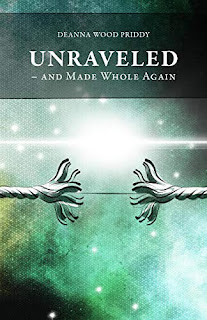
Weekly Reader: Unraveled and Made Whole Again by Deanna Wood Priddy: Short Slim But Intriguing Book About Religion and Faith


Weekly Reader: Unraveled and Made Whole Again by Deanna Wood Priddy: Short Slim But Intriguing Book About Religion and Faith

By Julie Sara Porter

Bookworm Reviews


Spoilers: Deanna Wood Priddy's memoirs Unraveled and Made Whole Again is a very short slim book. However, in its brief length it tells an interesting story about Priddy's religious background and how her faith led her through difficult times.


Priddy spends a lot of time describing her childhood as a preacher's daughter going from revival to revival. Her recall is fascinating as she remembers her father discovering religion after a nightmare and goes from being a drywall worker and painter to a minister.


Some of the highlights in Priddy's book are the various revivals. The Reader can practically hear the religious music, see the excited faces, and feel the sweat of hot days, pre-AC buildings and tents, and large crowds.

While some might disagree with the veracity of Priddy's claims such as seeing people get instantly healed, it's not hard to get swept up in her telling of the stories. When she writes about her father praying for a man to be healed from his cancer, it is an absorbing tale. Even more so, when he is not only declared cancer free but lives to a ripe old age. Regardless of personal belief, it is an interesting story and Priddy's writing grabs the Reader's interest.


Priddy also recalls the various travels that she and her family made. Her book is filled with various anecdotes like when they visited Mexico and received assistance from their interpreter and his wife. Also the times where they traveled by bus from one revival to another, but stopped to fish or listen to Kentucky bluegrass are nice chapters. The travels and various people that they meet such as a boisterous gospel songwriter and a belligerent man with a pipe wrench who wanted to shut down the revival are some of the more interesting passages in the book.


The book is good at showing the difference between religion, the rules and standards that are practiced within a building, sometimes the practice that one is raised in without question, and faith, the personal belief system that one has and chooses that helps get them through difficult troubled times. While Priddy was raised by a religious family and household, her personal beliefs are not discussed at first. Throughout her childhood, she is just moved by her parent's beliefs, never wondering for herself. She saw things that could be described as miraculous but never really considered how it affected her life, until she got married and began a musical career.

She began a career in gospel music sending audition tapes to recording studios and married Craig, a saxophone player. Even though she was rejected by The Grand Ole Opry, she and Craig joined a gospel band until the band leader got too affectionate with her. They settled in Missouri where Priddy worked as a teacher's aide.


Priddy's father's death in 1995 was also a time of problems within Priddy's first marriage. A time of infertility before she gave birth to two daughters, frequent moves and job changes, and differing ideologies particularly when one of the churches that they joined began to transmogrify into a cult took their toll on Priddy's marriage. It got to the point where she became angry at everything and everyone, even at God for putting her in this situation.

Priddy's spiritual anger is a perfectly natural reaction and is handled well. This is the voice of someone who spent her whole life following God, never questioning what she had been taught and wondering what it cost. What was in that faith for her if all it got her was an unhappy marriage and lots of unanswered questions.

Priddy's answers became known in personal signs like hearing a man sing "I'll Fly Away" and then she and her daughter seeing a feather. These spiritual signs allowed her to gain a more personal relationship with her God and not just parrot the way she was raised.


Her renewed faith strengthened as her first husband became verbally abusive and forced her to divorce him. She thanks her girls and her God for the strength to get through the divorce, unemployment, poverty, and a prolonged custody battle. She managed to get through those difficulties and her daughters remained with her, developing talents in art and music. She also began a relationship with Kirk Priddy, a former boyfriend and drummer with his family gospel band. This relationship evolved into a romance and happy second marriage as they formed the band, Unbroken. 

Besides her renewed faith, what also helped Priddy was seeking counseling. This was in contrast to her upbringing which insisted that God could fix anything so psychiatry and counseling were unnecessary. Priddy broke from that upbringing when she realized that "God has counselors too." She found one that encouraged her and helped her relieve much of the anxiety and depression that filled her throughout her life.


 Deanna Wood Priddy's book Unraveled and Made Whole Again is brief but tells a marvelous story about how one can find their own faith and strength to move on in even the toughest situations.


Wednesday, December 4, 2019

New Book Alert: The Bipolar Addict: Drinks, Drugs, Delirium, and Why Sober is the New Cool by Connor Bezane; Memoir Explores The Difficulties Of Drug Addiction and Mental Illness


New Book Alert: The Bipolar Addict: Drinks, Drugs, Delirium, and Why Sober is the New Cool by Connor Bezane; Memoir Explores The Difficulties Of Drug Addiction and Mental Illness


By Julie Sara Porter

Bookworm Reviews

Spoilers: One thing that I learned in reviewing various drug addiction and mental illness memoirs for this blog and other sources is that every experience is different or at least their books are different. Some focus on the causes and why they turned to drugs or realized that they thought differently than others. Others are more interested in the wider scope of not only their addiction and illness, but the crisis in general giving statistics on when the crisis started and what can be done to curtail it. Other authors take a middle road by telling their stories and those of others to reveal that addiction and mental illness isn't just their problem. It could be anybody's.

Connor Bezane takes that approach in his book, The Bipolar Addict: Drinks, Drugs, Delirium and Why Sober is the New Cool. He tells the story of his addiction and experience with Bipolar Disorder. Then he turns his book outward and explores the journeys of five other people who had experiences with addiction and mental illness. In this approach, he reveals that this wasn't just a struggle that affected him. Others were also in similar situations making their struggles more personal and at the same time widening the scope to affect the society at large.

Bezane writes that his first experimentation with alcohol and drugs in 2009 was different from other “normies” (the term that he and his fellow mentally ill colleagues refer to the “chemically stable members of society.”). Amphetamines and Barbiturates produced the exact opposite effects from each other: “Uppers brought (him) down and downers brought (him) up.” While crack cocaine usually produces euphoria, Bezane likened it to a soft core lullaby. Heroin also had a soothing effect on him. Bezane admitted that he took them to shut off his problems or so he thought.

The difference didn't just lay within how the drugs affected Bezane, but what caused his addiction.
Unlike other mental illness/addiction memoirs like Erin Khar's Strung Out: One Last Hit and Other Lies I Told Myself, there weren't any specific triggers such as parental divorce, early sexual abuse, or low self-esteem which led to Bezane’s descent. Mental illness and addiction can appear to anyone and don't always need the trauma of a troubled childhood to affect somebody and Bezane's book shows that.

Bezane's childhood was a relatively peaceful supportive one in a middle class neighborhood near Lincoln Park, North Chicago with a PR Executive mother and a stay-at-home father. Most of his memories centered around music like dancing to Michael Jackson's Thriller or watching Flashdance and Footloose with his sister. He liked to dance and even though he was teased at school for being a nerd, the kids admired his skills on the dance floor.

His idyllic childhood was marred when an encounter with a bullying teacher led Bezane to his first anxiety attack. He also began to panic when it came to taking tests resulting in him being unable to complete the track for the advanced class even though he would have aced it.

Depression afflicted Bezane when he received a D on an essay on Great Expectations. Many other incidents throughout his school career increased his depression when in his younger years, he felt more resilient towards disappointment.
Bezane's early experience with anxiety shows how those emotions can erupt instantly and even a word of criticism from a teacher, bullying from students or authority figures, or nervousness on a test can lead to years of crippling tension and self-doubt.

Bezane describes the symptoms of mental illness perfectly. For example, he describes the physical symptoms of anxiety such as the tight constricted chest, sweating palms, and labored breathing clearly. The psychological symptoms such as replaying a negative comment over and over in one's head, having pessimistic thoughts about oneself, and withdrawing from situations that produce the anxious feelings, are also well-written.

The book doesn't just deal with Bezane's battles with alcoholism, drug addiction, and mental illness. He also describes his interest in music and gift for writing which helped give him solace and allowed him to become a part of a wider and rapidly changing world.

In high school, Bezane found solace from the mental illness that he had but didn't understand in the punk scene. He wrote about going to clubs to see bands like Screeching Weasel and Oblivion with “freaky” friends rich with names like Roxie Stardust and eccentric behaviors like putting Elmer's Glue in their hair so it would stay up. With punk music, Bezane felt the friendship and emotional connections that his mental illness deprived him from and he felt acceptance with a group of eccentric friends with similar interests.

Unfortunately the punk scene also became an early factor for Bezane's alcoholism. He experimented with alcohol and marijuana to combat his reserve and shyness. Unfortunately, the alcohol proved to be a bigger crutch as it became a habit and later, an addiction. It also aggravated and increased his mental illness symptoms.

Bezane attended Iowa State in the late ‘90’s. He went to various concerts, became the Arts and Entertainment Editor at the student newspaper, and had many friends who introduced him to various musical acts. One memorable passage describes Bezane attending a rave at a cornfield in Iowa, watching the lights illuminated the area, and listening to the music that djs spun.

However, Bezane's binge drinking increased to the point that when he studied abroad in Spain, the landlady with whom he stayed told him not to drink too much. (“I'm a heavy drinker even by Spanish standards,” he admitted.) It was also in Spain that he began to take hashish.

Bezane had concerns about his sexuality which played into the insecurities that came with his mental illnesses. While he dated a girl, he felt guilty that he led her on while coming to terms with his homosexuality. He later developed a crush on a male roommate but was uncertain how to pursue him. His sexual concerns added to his dependence on alcohol as well as his anxiety, depression, and bipolar.

Bezane graduated and moved to New York City where he edited city pages for AOL, at the same time as 9/11. While he drank to cope with the tragedy, his depression was in check since he shared those feelings with others. He walked through a silent city that was empty in its grief.

However in New York, Bezane also felt a sense of acceptance and place among the Bohemian hipster scene that inhabited the artsy areas in Brooklyn and felt more comfortable with his sexuality as he received his first boyfriend.
However, he had his first bout of hypomania while on the dance floor. He felt an intense sense of elation and lost all sense of time and place.

Bezane eventually received his dream job working at MTV as a researcher, fact checker, and eventually producer. He interviewed groups like the Beastie Boys, attended musical events like Lollapalooza, and researched topical issues such as a profile on former students of Columbine High School on the fifth anniversary of the shootings.
This dream job didn't last.

Bezane's alcoholism and undiagnosed mental illnesses escalated to the point that in 2007 during a live Q&A session with then-Presidential hopeful, John McCain, Bezane had a full-blown panic attack. He was prescribed Prozac, but instead Bezane's mania was triggered.

His mania manifested itself in various ways such as an overly gregarious nature, overstimulated senses, compulsive shopping, insomnia, and constant elation. The elation gave way to paranoia as Bezane hallucinated terrifying voices and his thoughts raced at an accelerated speed. The symptoms of mania are frightening as Bezane described going from feeling a sense of friendliness towards the people in Times Square to become paranoid and afraid of them within a few days. The setting was the same. What changed was Bezane's mental state.

Bezane's behavior at work became increasingly erratic as he created elaborate ideas such as a blog dedicated to his own postings and promoting a band, The Teenagers believing that the group spoke directly to him. He constantly bothered his friends on social media and frightened his boyfriend, Chris, with his increased exuberant behavior. Chris forced him to see a psychiatrist.

As with bipolar, elation is followed by a crashing depression and Bezane crashed hard. He cried uncontrollably and stayed in bed in despair. After suffering a meltdown at work, Bezane admitted that he was bipolar and a colleague suggested that he get help. He was put on medical leave for an indeterminate amount of time.

During his leave, Bezane confessed his troubles to a friend. The description is moving as he describes the serenity he felt when that friend talked to him with understanding and support. This passage reveals how much an understanding ear can mean to someone with a mental illness. That person may not give advice, but just being there and lending support without judgement is enough.

Bezane returned to work at MTV but the mania and depression continued. He was prescribed various anti psychotics and depressants and began stockpiling them. During the Great Recession, he was laid off from MTV and he and Chris broke up shortly afterwards.

Depressed, Bezane drank heavily once more going from one to two or three packs a day and isolated himself from friends. His anxious state interfered with his temporary job interviewing Robert DeNiro and other red carpet celebrities for the Tribeca Film Festival. He knew that he was a mess.

In 2009, Bezane met Jeffrey, a rugby player who invited him to various events that involved, you guessed it, drinking. Because of their different political views: Bezane is a Democrat, Jeffrey a Republican, the two erupted into loud explosive drunken political fights. Rather than have sex with Jeffrey, Bezane enjoyed the drinking with him. He also took prescription pills and began taking harder drugs like crack cocaine and heroin. During one violent argument with Jeffrey, Bezane contemplated suicide. He called the National Suicide Prevention Hotline. Even though, he still doesn't remember the content of the call, he thanked the Hotline for saving his life “on more than one occasion.”

In 2012, Bezane attempted suicide right before a scheduled family meeting which he realized was an intervention. The intervention is tear jerking as Bezane's parents and sister revealed how much Bezane's addictions affected his relationship with them and his therapist stuck to the lies that he told her during their sessions when he minimized his drinking. After the intervention, Bezane had a beer and lit up a crack pipe.

This passage reveals a sad truth that people don't always seek help during an intervention. Sometimes, the opposite happens and that they feel like others are ganging up on them so they refuse to seek the help they sorely need. Ultimately, the decision to seek help lies with the addict and no one else.
For Bezane, that decision came about when his sister told him that either he goes to rehab or he never sees her son, his nephew, again. Bezane who had bonded with the boy and vowed to teach him about rock’n’roll, agreed to go to Hazelden.


While in Hazelden, Bezane bonded with fellow addicts, read various self-help books, engaged in therapy, and began to get a better cleaner outlook. Many of his new friends came from different walks of life and would have had very little in common with Bezane except they all were there to break the cycles of their addictions. They shared various war stories such as missing their drink of choice and recapturing interests such as in Bezane's case, his love for music.

Bezane also became aware of division within the rehab community. AA for a long time had a “no mood stabilizers” policy. Some members looked down upon those who rely on such medication for their mental illnesses. They think those who take them, like Bezane, are not truly clean and are still in the grips of their addictions. In Bezane's case, he had to be cut off of Xanax which finally worked to stabilize his moods.

Bezane also recalled many other patients who relapsed or disobeyed rehab regulations. This book shows that while rehab is helpful, it can be very restrictive and some rules can be harmful to some trying to recover and sometimes those trying to recover fall short of the promises.

In his final session, Bezane gave a speech set to instrumental music in which he revealed all his secrets to the group. He prayed to Apollo, the God of Music, thanking him for being a huge part of his life and recognizing the best in him.

In 2015, after three years of sobriety and being supported by his parents, Bezane re-entered the workforce. He had a few humorous experiences at Faziano's, a high end grocery store where he worked as a bagger and lot captain. Bezane's's chapter describing his eternal war with the Musack piped into the grocery store will arouse the sympathy of even the slightest music aficionado. His time working at Faziano's's bakery is sweet as he recalled the connections that he made with the customers most of whom were in good moods because they were there to treat themselves.

Bezane eventually returned to writing and developed TheBipolarAddict.com, a blog that allows him to communicate with other people about their struggles with mental illness and addiction. He offers advice and support, with others who struggle with these issues. He is closer to his family and is dating. He still struggles with bipolar, but he is trying to work around it.

The Bipolar Addict tells not only Bezane's story, but those of five other people whom Bezane calls “The Eccentrics” who shared their own struggles with mental illness and addiction. Like Bezane's account, their stories are different but all carry the same emotional feelings when a person can't trust their own mind and the work that it takes to get through these hardships.

These stories are from real interviews Bezane conducted with people like him who were dually diagnosed with mental illness and drug/alcohol addictions. They are unforgettable and include:

Jason a con artist who printed cards boasting of his phony title as President of Chase Bank so he could receive money to support his cocaine and heroin addiction. Besides enjoying the thrill of conning people, Jason attributed his devious nature to hypomania. He had trouble concentrating and his excitable fast talking behavior was often a detriment in work and relationships. His coke benders made him unemployable.
Jason became involved in various fraud schemes such as getting money for his nonexistent wife. After he stole crack and heroin from a drug dealer, he was arrested and sent to County Jail. He went into forced detox. He has since found religion, works in sales, and got engaged.

Kelly is an actress who had a nervous breakdown, Anorexia and was addicted to crystal meth and hallucinogens. She was a creative student, perfectionist, and overachiever. An accident in 8th grade caused her to have PTSD and she hid her depression behind a sunny nature.
In high school, Kelly had a nervous breakdown. In college, she took cocaine, hallucinogens, and crystal meth and developed anorexia and self-injury. After she graduated, she got a part in a James Barrie play and was sober throughout the run. When the play ended, Kelly fell back into her old habits and had symptoms of Obsessive Compulsive Disorder.
She attempted suicide twice and had paranoid delusions that required hospitalization. She eventually enrolled in a dual recovery program that helped her recover. She is studying to be an addictions counselor but still feels sad and unfulfilled and wants to reconnect to art and acting.

Ethan was high on ketamine and in a manic state when police found him trying to use a college press pass to board a flight to Buenos Aires. He had a wealthy but highly competitive background. During his sophomore year, Ethan was diagnosed with bipolar and given lithium and Prozac. He began drinking vodka tonics while in high school. His drinking escalated when he attended Harvard. He also started taking cocaine. While working at Let's Go Italy, Ethan partied at gay clubs, frequented one night stands,drank, and took drugs nearly every night.
By the end of his second year of college, Ethan's drug use included ketamine, ecstasy, crack, heroin, and various hallucinogens including acid, mescaline, mushrooms, and salvia.
He eventually tried to take a year off from work, school, and his drug use and drinking and moved...to New York's East Village where drugs were easy to get.
After graduating from Harvard, Ethan moved to Europe and took speedballs. Since Ethan traveled, he didn't have a steady dealer and managed to temporarily get off drugs but still drank and his mania continued. Eventually, he moved to San Francisco where the police arrested him when he tried to leave for Buenos Aires. The forced rehab didn't take and he eventually checked into Hazelden in Chicago. There he also tested positive for HIV.
The diagnosis shook him to permanent sobriety. He now majors in English Literature at Yale and hopes to become a teacher.

Jennifer is a clarinetist who, like Bezane, found solace from her anxiety and depression in music. She began playing band in fourth grade and four years later fell in love with classical music. Later her musical interests included punk music.However, she had a rough childhood including being raped by her father. This incident resulted in PTSD.
During her freshman year of high school, Jennifer developed depression that developed into paranoia and a mixed state including mania and depression. She had increasing suicidal thoughts and during her senior year tried marijuana to cope with her mental illness.
After she turned 21, Jennifer binge drank. She also took acid and mushrooms with a boyfriend. She moved onto harder drugs in 2004 and drank with her coworkers at an insurance company. Ultimately, she moved on to cocaine and OxyContin.The mania gave her delusions that she was on a TV show and led her to compulsive shopping.
Jennifer had a stormy marriage to a drug dealer who verbally and physically abused her as well as got her addicted to crack. After throwing him out for good, Jennifer went into rehab and got her bipolar diagnosis. After she recovered, she returned to her old friend: the clarinet.

Natalya is a dancer fascinated with Electronic Dance Music. She was born in Soviet-era Belarus. She was physically and verbally abused by her brother, her parents constantly fought, and she was molested by her cousins.
Her family became victimized by anti-Semitism and they eventually emigrated to the United States. Natalya felt like an outsider attending American schools in Chicago and developed symptoms of hypersensitivity. She was taunted and bullied and she eventually developed a poor body image. She sneaked out to clubs with friends and began drinking. At 16, she developed anorexia and bulimia. She also feared her brother who had Schizoaffective Disorder and threatened to kill her and their parents. Her brother was eventually hospitalized.
In 2002, a breakup with a boyfriend caused Natalya to binge drink. She had her first manic episode shortly thereafter. After, a long episode of insomnia, suicidal threats, and aimless wandering, Natalya checked herself into a psychiatric hospital.
While attending Columbia University Chicago as a marketing major, Natalya began using drugs and intensified her drinking. She also relapsed on her bulimia and began cutting.
She got a marketing job upon graduation that ended when colleagues smelled alcohol on her breath and saw the scars on her arms from the cutting. She attempted suicide by popping 400 pills. She was sent to the psychiatric ward where she attended AA. Afterwards, she had a series of rehabs followed by relapses. Finally, she entered rehab for the final time and she has been sober for three years. Natalya now works for a major credit card company and dances to hip hop and EDM at the trendiest clubs. She is also married and has a daughter.

The stories of Connor Bezane, Jason, Kelly, Ethan, Jennifer, and Natalya reveal the wide scope that mental illness and addiction can cover. They can affect anyone at any age or background. The journey through mental illness and addiction can be a dark and frightening one.


But these stories also reveal that recovery is possible and there can be light found at the end of this dark journey.

Wednesday, March 7, 2018

Classics Corner: Incidents in the Life of a Slave Girl by Harriet Jacobs: True Story Captures the Brutality of Slavery and The Rewards of Freedom

Classics Corner: Incidents in the Life of a Slave Girl by Harriet Jacobs: True Story Captures The Brutality of Slavery and the Rewards of Freedom
By Julie Sara Porter,
Bookworm Reviews

Spoilers: Harriet Beecher Stowe's novel Uncle Tom's Cabin reflected the horrors of slavery but from the authorship of a white woman. While it received much defense and criticism, even to this day (particularly from many who use the term, "Uncle Tom" as a derogatory term), it opened a lot of pre-Civil War eyes to slavery and the abolitionist movement. However, because Stowe wrote it (and did meticulous research for it which she explored in the follow up A Key to Uncle Tom's Cabin), it can only gain an outsider's perspective of what she imagines the life of a slave to be like. A book that had been written about the same time reflects the life of a slave much better, because it is the true story of a former slave written by herself.

Incidents in the Life of a Slave Girl by Harriet Jacobs (1813-1897) improves on Stowe's narrative because this was Jacob's life and her observations. The book was published under the name Linda Brent and with pseudonyms (however for this review, I will use the real names of the people.).  Jacobs explored the horrors of her situation and her eventual daring escape with honesty, warmth, rage, and even a dry detached wit that not only matches up to Uncle Tom's Cabin, but surpasses it in terms of writing quality.
Jacobs resorted to some literary techniques in her writing such as addressing the "Reader" in an intrusive narrative form and she invited the Reader to imagine themselves in such a situation. But most of her narration is honest, frank, and doesn't resort to melodrama. For example she uses situational irony when she recounts one of her master's description of a run away slave who was found in New York to be starving and begged to return. Jacobs later mentioned seeing this woman who was completely happy and had no intention of returning. "Many of the slaves believe such stories, and think it is not worth while to exchange slavery for a hard kind of freedom," she wrote.
She described such horrible events  as physical abuse and sexual assault, but in a plain matter-of-fact way to let the story speak for itself that slavery was a cruel institution. She didn't need to resort to drama to grab her reader's attention. She just let her own story speak for itself.

Jacobs recounted her childhood including her birth by her mother Delilah Horniblow and biracial father, Elijah Knox, and her upbringing by her grandmother. The home was so loving that Jacobs was unaware that she was property until her mother's death when she was six. "I was so fondly shielded that I never dreamed I was a piece of merchandise, trusted to them for safe keeping, liable to be demanded of them at any moment."

Jacobs lived with her mother's mistress, who was kind enough to teach her to read, write, and sew but not kind enough to free her. So after she died, the mistress left a will with a codicil that ended up causing Jacobs to be sold to the mistress' five-year-old niece, Mary Matilda Norcrom.
Mary Matilda's father, Dr. James Norcrom sexually harassed Jacobs when she came of age.He alternated between appearing  nice and erupting into violent rages, both of which terrified Jacobs. "My master met me at every turn, reminding me that I belonged to him, and swearing by heaven and earth that he would compel me to submit to him." Jacobs recounted excellently that fear of being continuously abused and assaulted by a powerful man and the loneliness that she has no one to turn to who could help her.

Jacobs used many means to resist Norcrom's advances including becoming involved in a consensual sexual relationship with a white man who fathered her two children, Louise Matilda and Joseph.
 Jacobs justified her sexual relationship as a means of survival. "I  was a poor slave girl, only fifteen years old," she wrote. "To be an object of interest to a man who is not married, and who is not her master, is agreeable to the pride and feelings of a slave, if her miserable situation has left her any pride or sentiment."
However Jacobs' relationship had strings attached. While her lover promised to free their children, he refused to do so, though he eventually returned them to their grandmother.  He also bought her brother and became upset that because he believed "some damned abolitionist encouraged him to run away." (In actuality, Jacobs' brother seized the opportunity to run away on his own.)
The careless behavior of Jacobs' white lover and former mistress shows that the Myth of the "Good Slave Owner" is just that: a myth. That when people with the best of intentions towards their slaves
still took part in such a heartless institution that offered no equality towards people seen as property. That even if a slave was fortunate enough to work under a kind master or mistress that encouraged them to read and never had them whipped, the slave was  not  seen as a human being in their own right. The kind master or mistress' protection may last only as long as they are still alive. The slave still could be at the mercy of being sold and separated from their friends and family, a real fear that filled Jacobs' life as she worried about her children being sold and Norcrom threatened to do if she resisted his advances.

Jacobs eventually ran away and in the book's most intense passages escaped to the last place Norcrom would have looked for her: instead of heading North, she turned right around and hid in the crawl space of her freed grandmother's attic. Jacobs watched from her grandmother's attic with glee as Norcrom made several fruitless trips up North to New York figuring that she ran up there to hide with relatives. But she also watched with heartache as her children and other relatives were sold and she can't do anything about it (though Norcrom kept bothering them about their mother's whereabouts which they did not know until Jacobs had been in hiding for years.) Even though Jacobs described the attic as "an uncomfortable prison" and her concern for her children was always apparent, she considered it a better alternative to being found and returned by Norcrom. "I heard the old doctor's threats but they no longer had the same power to trouble me. The darkest cloud of my life had rolled away," she wrote with pride about her escape and her children's removal from Norcrom's clutches.

Jacobs eventually escaped to Philadelphia in 1842  by boat to live with some anti-slavery friends and found work as a nursemaid in New York. She eventually was able to reunite with her children. Her book has a finality as she said that her story does not end with marriage, instead ending with the freedom of herself and her children. "We are as free from the power of slaveholders as are the white people of the north," she wrote with pride and dreamed of greater things like owning her own home (which she eventually did) and teaching about the evils of slavery (which she did at anti-slavery conventions), and her children going to school (which they both did. Louise Matilda  worked towards educating young African-American children and Joseph joined his uncle and Jacobs' brother to live in California).

There is an interesting story that when Jacobs first thought of telling her story, she was uncertain of her own writing abilities. So she appealed to Harriet Beecher Stowe, even suggesting her daughter, Louise Matilda accompany Stowe to England to recount her story. Stowe refused suggesting that Louise Matilda's story as a former slave might hold her to being spoiled and pampered by the English audience. Stowe also doubted the veracity of Jacobs' story and wanted to consult with her employer. Jacobs was outraged and sharply retorted, "...what a pity we poor blacks cant (sic) have the firmness and stability of character that you white people have."
Jacobs proved with her own observations and brilliant gift of writing that she was more than capable of telling her own story herself.


Wednesday, February 28, 2018

Classics Corner: I Know Why The Caged Bird Sings by Maya Angelou: Angelou's Memoir Captures The Beauty, Sadness, Terror, and Strength of Her Youth

Classics Corner: I Know Why The Caged Bird Sings by Maya Angelou: Angelou's Memoir Captures The Beauty, Sadness, Terror, and Strength of Her Youth
By Julie Sara Porter, Bookworm Reviews

Spoilers: Maya Angelou's classic memoir I Know Why The Caged Bird Sings is probably the gold standard of childhood memoirs. Angelou recounted a childhood troubled by parental separation, racism, child molestation, sexism, and teenage pregnancy with beauty and intelligence that also defined her career as a poet and Civil Rights activist.

Maya, born Marguerite Johnson (but nicknamed "My" or "Maya" by her older brother, Bailey) recounted her childhood from the time she was three years old when she and her brother were sent to live at their grandmother's home in Stamps, Arkansas to when she was 16 and gave birth to her son, Clyde. Angelou's autobiography is written exclusively from her childhood self in which she is intelligent, shy, insecure, and confused about the world around her.

The book is filled with beautiful descriptions of Angelou's memories. On her and Bailey's arrival in Stamps, she describes the reaction of  her grandmother's store (which is the nerve center of Stamps) as "Early in the century, Momma (we soon stopped calling her Grandmother) sold lunches to the sawmen  in the lumber yard (east Stamps) and the seedmen at the cotton gin (west Stamps). Her crisp meat pies and cool lemonade when joined to her miraculous ability to be in two places at the same time assured her business success." Using humor and beautiful description, Angelou captures her youth as well as she captured her poetry in a way that enchants and inspires the Reader.

Angelou's grandmother, Annie Henderson, filled a loving presence in Angelou's young life. She writes "(Her grandmother) was undemonstrative in her love but uncompromising in that love. A deep-brooding love hung over everything she touched." "Momma" Henderson was a woman of deep strength and faith. Many of Angelou's strongest memories are of her grandmother taking her to church, introducing her to the various members of the community, and distributing motherly wisdom and advice to Maya and Bailey. She was a true warm and motherly soul that provided comfort for Angelou's dark childhood.

Many of Angelou's darkest childhood memories were caused by those who should have loved and cared for her: her parents. Her father, Bailey Johnson Sr. was a distant presence in young Maya's life. In fact he only appears twice in the book: once to drive his daughter to St. Louis to live with her mother and another time to invite a then-teenage Maya to spend the summer with him and his girlfriend in San Diego (The summer ended with  a huge fight between Maya, her father, and his girlfriend resulting in her becoming temporarily homeless.)

As bad a time as Angelou had with her father, the time with her mother was worse. Her mother had
a very glamorous appearance almost like a film star but was very immature and somewhat self-centered, more interested in being buddies with Maya and Bailey than being a mother. This is particularly evident when the children lived with her and her boyfriend in St. Louis. The boyfriend raped 8  year old Maya and threatened to kill Bailey if she tells anyone. The isolation that she felt during the rape and its aftermath is deeply felt as she withdraws into herself unable to trust her mother to protect her.
Maya continued to feel isolated even after the boyfriend was arrested and put to trial. He was released after a year only to be found dead under mysterious circumstances (possibly caused by her uncles). However this does not give Angelou any release as she was  rendered mute for five years from the trauma.

Despite the trauma that Angelou endured from her parents, she encounters love and support from her grandmother and brother, Bailey. (Bailey encourages Maya to come forward about the rape despite the threats to his life). But even they can't shield children from racism. Racism is prominently felt throughout the book in different passages that reveal the cruelty of the bigots around Angelou and her family.
Three "powhitetrash" girls mocked and displayed  vulgar gestures to Angelou's grandmother. Her disabled Uncle Willie was  chased by Ku Klux Klan members only to find safety in a potato and onion bin. A white dentist refused  to treat Maya's teeth which Angelou envisions a dramatic confrontation in which Momma Henderson confounds the dentist and makes him change his ways. (In reality she had to remind him of a debt he owed her, but Angelou always liked her version better.) In another passage, a white professor gave a graduation speech which basically tells the mostly black audience that they will never be good at anything but in sports. During his speech, Maya felt ashamed and embarrassed at her race but then became defiant determined to prove him wrong.

The struggles within her family and from the racism outside would lead most people to despair, but Angelou discovered her strength through a love of reading and learning. She writes that  William Shakespeare is her "first white love" as she discovered his works at a young age. After that she recognizes the transformation that reading provides for her and a talent for writing. Angelou's writing suggested that her love of reading even proved miraculous at times.
After her selective muteness, Maya bonded with Mrs. Flowers, a Stamps intellectual who offered Maya poems and books to read. This connection to her love of reading, freed Maya from the trauma of her rape and allowed her to read a poem aloud in school.

Maya Angelou's I Know Why The Caged Bird Sings captured a troubled childhood but did so with humor, beauty, and strength found in a love of family and learning. She turned a difficult background into a work of triumph.