Showing posts with label Classics Corner. Show all posts
Thursday, July 30, 2020
Classics Corner: The Neverending Story by Michael Ende; The Ultimate Classic Fantasy Travel Into The World of Books
By Julie Sara Porter
Bookworm Reviews
PopSugar Reading Challenge: A book with a book on the cover
Spoilers: Those of us who were children of the '80's had a dark time at the movies, but damn it all, we loved it. If you're anything like me, still do.
Many of the films that we grew up with were darker and in some ways scarier than even some modern horror films. The Dark Crystal, Labyrinth, The Secret of NIMH, The Black Cauldron, The Last Unicorn, Something Wicked This Way Comes, Return to OZ, Who Framed Roger Rabbit, An American Tail, The Monster Squad, Ghost Busters, and Beetle Juice were just some of the many movies that we saw in theaters that fascinated us but still filled our nights with terror. Even our younger siblings and children may yelp with fear when they see our childhood favorites. Some of us may watch them again and wonder however did we survive going to the theater?
Sure we may have played with our Ataris and NESes and never went outside. Sure parents mocked our cartoons as half hour commercials and wondered why anyone would watch music videos. Sure, we were the first generation that was told "You're special" and may have received participation trophies. (Seriously, I used to get them all the time at Field Day events. I was an athletic loser, but they showed I tried. What is the freaking problem?). But when it came to the movies, we walked on the wild side and did so gladly.
One of the best movies from those times was The Neverending Story and my favorite fantasy film from that era. Many of us were in awe of the journey of young Bastian Balthazar Bux as he read about the beautiful fantasy world of Fantasia. We were amazed and sometimes scared of The Rock Biter, Morla, The Aged One, The Night Hob, and Falkor, The Luck Dragon. We cried with Atreyu the boy hero when he lost his beloved horse, Artax to the Swamps of Sadness and cheered him on when he fought Gmork, the creepy wolf, to the death. The fact that an invisible Nothing could destroy our world, probably made us fear thunderstorms for a long time afterwards. Before we may have understood what the terms "meta" and "breaking the fourth wall" meant, we saw it when the dying Childlike Empress revealed that Bastian, the boy reading the book, was the one who could cure her. We saw it even further when she revealed that others, meaning us, were with Bastian when he hid from the bullies in the bookstore and took the book. We debated what name Bastian yelled amid the thunder, lightning, and heavy rain (For the record, in both the book and movie, he said "Moon Child!") Most importantly, we wanted to be Bastian, the kid who found the book and enter that world and have that adventure as scary and traumatic as it sermed. Or at least, I did.
Many fans have less fond memories of the sequel, Neverending Story II: The Next Chapter. Though, some in subsequent years have since recognized it as a decent follow up to the original and while not as compelling or as memorable, was good in its own right. Also, Neverending Story II filled a very important need that those who only saw the first film and never read the book don't know: it covered the second half of the original novel. (The less said about the unnecessary train wreck that was The Neverending Story III: Escape from Fantasia, the better. The only thing that did was waste a perfectly good franchise and an early performance by Jack Black in one of his first film roles.)
While the book had its Readers over the years, it has fallen to the wayside because of the intense popularity of the first movie. For the record, Michael Ende himself didn't like the first movie. He felt it was childish and kitschy and distorted his book. However, that never stopped how loved the movie was. That love is well earned. The movies are well made, beautiful efforts with wonderful performances and scenes. They were huge parts of many's childhoods including mine. However, the book also deserves that recognition as well.
I am not saying either is better than the other. In fact, they are both equally good within their mediums. The book is wonderful for being a literary medium with its haunting descriptions and deep characterization. The first two movies do a good job as visual mediums in bringing those descriptions, characters, and actions to life. Instead of looking at them as separate entities, a competition where one has to emerge the better, look at them as the same entity telling the story in different ways. In a way, that's what makes it Neverending.
I will explain some of the things that are different about the book and how they add to the enjoyment of the films, like two halves that together create a whole. The first half is almost word for word similar to the first movie with some differences making some scenes longer and providing much needed exposition and explanation.
The second movie retains many of the characteristics and themes of the second half of the book. However, the second half of the book is not as linear of a straightforward quest as the first half. It is almost several adventures that are linked by Bastian's struggles within them. It makes sense that the second movie would gather it up in an adventure plot with a clear beginning, middle, and end.
Bastian's backstory is more elaborated upon in the novel making it more apparent why he would want to leave that world and become a hero in Fantastica (not Fantasia in the book). We see him not only bullied by the other kids, but as a complete physical and academic failure in school. (He was held back the previous year.) His only talent is making up names and stories, which comes in handy during his time in Fantastica.
We are aware from the movie that his mother is dead, but the book also emphasizes Bastian's troubled relationship with his father.
Through Bastian's father, the Reader experiences what it is like for a child to live with a mentally ill parent. In this case, his father is gripped with clinical depression, stemming from his wife's death. Bastian is unable to talk to him, as his father has lost interest in any activities and barely speaks to him or to anyone anymore. To Bastian, his father is frozen and numb to him. Bastian feels shut out by his father, so he retreats to his obsession with books and his fantasy worlds. This experience echoes in a later moment in the book when Bastian has a dream that his father is trapped inside a block of ice and Bastian hugs him trying to free him from the ice.
All of this backstory gives us the reasons why Bastian would enter and try to rebuild Fantastica after he names the Empress in the second half of the book. He was long held up for ridicule because of his weight, timidity, fear, and lack of acceptance. When he arrives in Fantastica, Bastian is encouraged to make wishes with the Auryn, a sacred gem that is her personal symbol. The more wishes that he makes, the more Fantastica grows. His first wish is to change his appearance to be taller, handsomer, and braver, like the heroes that he has always read about.
Bastian also names the new locations in Fantastica such as Perilin, the Night Forest and Goab, the Desert of Many Colors. He also creates creatures like Grograman, the Many Colored Death who is a living part of Goab and Smerg, a dragon that is created for a hero to defeat. He also names things like a sword that he calls Al-Tasher and a belt that causes it's wearer to become invisible that he calls Ghemmel. (In the second movie, we only see him create Smerg, give names to some of the areas, and making wishes to protect him and Atreyu during fights.) The longer Bastian remains in Fantastica, the more he becomes part of it. He forgets his home world and the life that he left behind. He eventually forgets he was ever from the outside world.
The book provides us with more information about the Fantasticans. For example, many of the characters who went nameless in the movies actually have names in the book. The first three Fantasticans that we encounter in both the book and first movie are the small man, Night Hob, and Rock Biter. In the book, we learn that the little man is named Gluckuk,the Night Hob is Vooshvazool, and the Rock Biter (called Rock Chewer) is Pyornkrachzark. There is also a will-o-the-wisp, Blubb. It actually makes sense that there are four characters rather than three, coming from all four directions to reveal just how large in magnitude the Nothing is coming from all directions-north, south, east, and west simultaneously.
We also get some insight into Atreyu's home life before he is recruited as Fantastica's book hero, before Bastian's arrival. Cairon, the Childlike Empress' advisor (a centaur in the book rather than a merman in the movie) travels to the Grassy Ocean beyond the Silver Mountains to visit the young warrior. While the book Atreyu and his people are clearly modeled after Native Americans (and both films hired actors who were either full or half-Native Americans in Noah Hathaway and Kenny Morrison), they are actually green skinned.
We learn that they are a nomadic people who are great hunters, but have a strict honor code. We also learn that the purple buffalo that Atreyu name drops in the movie, acts a guide in his dreams. The buffalo leads him to Morla the Aged One and the first clue to the Empress' cure.
Atreyu is almost like the perfect hero because he is written that way. Once Bastian becomes a physical part of the story, he proves to be a contrast to Atreyu in his actions. Atreyu receives the Auryn for his journey and makes the occasional wish upon it, but it has no adverse effect on him. He is a character from Fantastica and also has no hidden demons or longings from which the Auryn removed from him.
Bastian is a more relatable character, because he is understandable. He is an outsider from our world, so he is like us. The more he loses himself in the fantasy world, the more arrogant he becomes. He lost all of the qualities that made him human.
The antagonists are also very different. We learn more about Gmork, the wolfish servant of the Nothing. In his encounter with Atreyu (in which he is left by Night Creatures to starve to death rather than be stabbed by Atreyu), Gmork reveals that he is not from Fantastica. He has no world and has no exact form, taking many. He envies the Fantasticans for having a world. He is supposed to be embodiment of Fear just as Xaiyde the female sorceress in the second half of the book is a living embodiment of Temptation.
The second film makes Xaiyde the primary antagonist who creates and controls the Emptiness. The book appears to be the opposite. Xayide is simply a servant of the Emptiness, formed when Bastian loses more of himself. (In fact there is some indication that Bastian created Xaiyde himself after he expresses a need to have an adventure to prove his heroism.) She subtly encourages Bastian to make more wishes while acting as his subordinate. However, she manipulates Bastian into giving him gifts that increase his power and encourages him to use his wishes to control others, so she can overpower him. She is able to lead empty creatures such as her machine-like soldiers which only move by her will (which leads to her end, when Bastian rejects her manipulations. The soldiers run her over as though she willed them to kill her i.e. committed suicide.). Bastian's Emptiness almost makes him susceptible to her or rather the Emptiness' control.
They are not the main villains but Gmork and Xaiyde are the gateways to the true villains: The Nothing and The Emptiness. It is an impressive feat in book and movies, that the true antagonists in them are abstract concepts rather than actual beings. The Nothing in particular is a scary thought, and becomes more disturbing the older one gets. An entity that can make places, creatures, and things disappear is about as terrifying as it can get. The movie treats the Nothing as a storm that destroys everything in its path. The book is more subtle. Characters describe it as though someone went blind. All of a sudden, something that was there no longer is and is replaced with total blackness. It disappears as though it fell into a black hole, into nonexistence. Also, anyone who looks into the Nothing for too long gives into despair and becomes a part of it.
Another scary aspect that the book reveals is what happens to Fantasticans when they fall into the Nothing. They come to Earth, but they become Lies. They become things that people don't believe in and are simply means of deception. Even heroes like Atreyu become something that one can aspire to, but never become.
As frightening as the Nothing is, the Emptiness within Bastian is just as terrifying because it comes from his own actions. As he forgets about his life on Earth and becomes more arrogant, he becomes more insane with power. When he reaches the Ivory Tower, he sees that the Childlike Empress is gone. He then declares himself the Childlike Emperor and he is defeated by those who used to be his friends like Atreyu and Falkor. Eventually, Bastian loses everything, even his own name before he returns.
The antagonists are almost metaphors. The Nothing leaves sadness and despair on its wake. Bastian's Emptiness is like an insanity that consumes him annhiliating and destroying his mind as he retreats into the world he created. The Nothing could be Depression while the Emptiness could be Paranoid Schizophrenia.
We also get some interesting side quests that were probably removed from the movies either for special effects reasons or to fit the running time. Falkor for example does not enter the story saving Atreyu in the Swamps of Sadness. Instead, Atreyu saves him from a terrifying creature called Ygramul the Many, which is several small wasp like creatures that take one large changeable form. (It is here and not Atreyu's encounter with Morla the Aged One where Bastian screams with fright and Atreyu hears him leading to the first fourth wall break.)
Atreyu also goes through three gates to reach the Southern Oracle, not two. The first two are the same from the movie. The third is called the No Key Gate in which Atreyu must go through by acting like he doesn't want to. The more he fights to get inside, the less the door will open. So, Atreyu must temporarily forget the purpose of his journey before he can meet Uyuyulala, the Southern Oracle. There is also a deep sadness as Engywook, the cheerful scientific gnomic, who helps Atreyu through the gates is left in despair when Atreyu tells him that he will be the last person to speak to the Oracle. Engywook realizes that all his research was for nothing. He finally surrenders to the Nothing while Urgl, his wife remains loyally by his side to the end.
After Atreyu encounters the Childlike Empress to inform him of the results of his quest, she goes on a journey of her own. She floats into a litter to reach the Old Man of the Mountain, who is responsible for setting the Neverending Story to paper. (So he could be Michael Ende, himself.) The Old Man and The Empress read of Bastian's adventures and their own stopping at the exact moment where they are while Bastian writhes in indecision whether to call the Empress' name or not. Unlike the movie, where Bastian responds, because the Empress begs and cries to be saved, Bastian responds because he realizes that he, The Old Man, and the Empress are trapped in an endless cycle of reading the adventures without a resolution.
This adventure gives the Empress a chance to go on a quest of her own, but it slows things down and the telepathic dialogue between the two is shorter and more powerful for a film. (Incidentally, her name Moon Child came from when Bastian first saw her in a vision not from his late mother. Though, subsequent projects reveal that his mother still inspired Moon Child's name because she was named for the Moon Goddess: Selene.)
As I mentioned before the second half of the book features various smaller quests that are tied to Bastian's making wishes and him losing more of his memories of the outside world. He creates Smerg the Dragon specifically so a hero Hyruck can save the princess of his dreams. He encounters the Acharis, who are the saddest creatures in all of Fantastica. He then transforms them into the Shlamoofs, happy colorful but at times irritating butterfly-like creatures.
The majority of these adventures involve Bastian shaping Fantastica to fit his needs and gain heroism. A library is created detailing the adventures and stories that Bastian created. He receives names such as the Hero of Fantastica and the Wise Ones, scholars ask him questions like what is Fantastica ("The Neverending Story" he answers.) He wants to be admired, respected, and treated as a hero and legend. Then when he is consumed with power, he wants to be emperor and god.
One of the most haunting quests occurs shortly after Bastian's failed attempt at becoming Childlike Emperor. He finds himself in a strange city in which several men, women, and children don't speak and spend time doing repetitive mundane tasks. Bastian learns that these are the Old Emperors, humans who had also saved the Childlike Empress but had lost their memories of Earth and their identities. (Scarier still, on Earth there are probably several reports of missing persons over the years, even decades, of people who were never found because they became background characters inside a book.)
This implies that the Neverending Story is a cycle and that people from the outside world have visited it before. We even receive hints that Mr. Coreander the bookseller, also went to Fantastica himself and had adventures but mercifully emerged unscathed and not a relic at the City of Old Emperors.
Those who have no way of returning to the outside world just exist as background characters in the book, in the City of Old Emperors withiwith no past, identity, or place. After visiting that horrible place, Bastian doesn't remember his home world fully but realizes that he can't remain in Fantastica.
Bastian's final test is his acceptance of love. He no longer wants to be a hero, and recognized for his exterior achievements. He wants, probably what he has always wanted: love and acceptance. He thinks that he has that with Dame Eyola, a sweet woman who could be a stand-in for Bastian's late mother. Bastian is cared for, mothered, and feels loved but something is still missing. He realizes that what is missing is his father. All the time that Bastian dreamt of being a hero, he realized that his most important wish was to rescue his father and to give and receive the love that they used to share.
The most touching moment is when Bastian returns to the real world and reunited with his father. He tells his father of the adventures and he believes him. Bastian realizes that his adventures weren't for nothing. He saved his father after all.
An oft-repeated line throughout the book is "That is another story and shall be told another time." It repeats every time a character leaves the book revealing that they had more adventures. We also learn some interesting things about their later lives such as the four from the beginning became life long friends.Cairon never returned to the Ivory Tower and entered a new life. Engywook did get scientific recognition. Hyruck saved his princess but didn't want to marry her anymore and so on. These mentions remind us that as it's title suggests the Neverending Story truly continues. Adventures happen when we're not looking and exist outside of the plot that we've been reading about. They leave us with many possibilities over what happened to them (and possibly fodder for fanfiction.)
The Neverending Story is a fantasy classic as both a book and two movies. It is a beautiful unique fantasy that one falls into as much as Bastian did. It makes them lose themselves into the adventure and the beautiful and at times disturbing world. As with any good book, we can picture ourselves alongside Bastian embracing this fantasy world and interacting with the characters.
It is just as much a memorable imaginative trip as it would be to read a historical novel that covers several centuries of a real life place like New York and immerse oneself into its history and various people and cultures.
But that is another story and shall be told another time.
Tuesday, July 21, 2020
Classics Corner: Lies My Teacher Told Me: Everything Your American History Textbook Got Wrong by James W. Loewen ; Definitive Book on Learning About and Teaching American History In High School
Classics Corner: Lies My Teacher Told Me: Everything Your American History Textbook Got Wrong by James W. Loewen; Definitive Book on Learning and Teaching American History in High School
By Julie Sara Porter
Bookworm Reviews
If you thought, or still think, your high school American History class and textbooks were boring, chances are you are not alone. James W. Loewen discovered his college freshman didn't know any more about history than they did in high school.
To remedy this situation, Loewen studied high school history textbooks such as The Land of Promise, Rise of the American Nation and discovered feel-good blandly written history that focused on jingoism and patriotism and had very little analysis or depth. Loewen's book, Lies My Teacher Told Me: Everything Your American History Textbook Got Wrong aimed to discover those errors and improve on the way American History is taught in schools.
"Textbooks.....keep students in the dark about the nature of history, " Loewen wrote. "History is furious debate informed by evidence and reason. " Loewen's brilliant and insightful book challenges how history textbooks are written and provides the Reader with an alternative approach to history. Even the Readers that may not necessarily agree with the information Loewen provides will appreciate the more thoughtful, critical, and analytical approach to history and receive a deeper understanding of the American past.
Loewen begins by discussing heroification, making heroes and demigods out of historic figures. History students may know of Helen Keller's childhood in which Annie Sullivan taught her to sign and speak, but may be unaware of Keller's adulthood in which she became an ardent Socialist.
Woodrow Wilson is described in textbooks as an idealistic President who helped found the League of Nations, but the books often leave out Wilson's racism in which he segregated the federal government, propositioned the Espionage Act which ordered Americans to report "suspicious activities" like speaking out against WWI, and ordered invasions of various Latin American and island countries.
"Denying students the humanness of Keller and Wilson and others keeps students in intellectual immaturity, "Loewen wrote. "It might be called a Disney version of history: The Hall of Presidents at Disneyland similarly presents our leaders as heroic statesmen not imperfect human beings. "
Loewen put the textbooks to task for how they wrote about many of the standards in American History. Christopher Columbus is not written as an intrepid explorer looking for new trade routes to the Far East. Instead, he is seen by Loewen as an opportunist who saw a country rich with gold to plunder and people to enslave.
Far from being the deus ex machina-kindly Indians who provided the Pilgrims with the first Thanksgiving, instead Massasoit's tribe once thrived in the Massachusetts area and had been all but wiped out by smallpox brought on by white immigrants.
Loewen suggests that the Thanksgiving meal was not just a gesture of friendship but a plea for survival. (And how did the Pilgrims' descendants reward that kindness? Well Loewen writes that they declared war on the local tribes and took their land for themselves.)
Speaking of Native Americans, Loewen fills his Readers on wars the whites have declared on Native Americans such as King Phillip's War in 1675 as well as textbooks' portrayal of Native Americans as either bloodthirsty savages who made unprovoked attacks on whites or childlike innocents who were unaware of how to cultivate their land and needed the White Saviors to guide them.
African-Americans have it bad if not worse according to Loewen. The textbook perspective of the Antebellum South as an idyllic Paradise for masters and slaves and Reconstruction as a time of thieving Northern "carpetbaggers" and naive freed slaves who couldn't lead their farms or states is less out of historic primary sources than out of Gone With The Wind. In actuality Loewen writes that in the post-Civil War days many former slaves were elected into offices and performed in jobs admirably. In fact the real troubles were usually performed by the disgruntled former Confederates who formed the Ku Klux Klan and whose actions would later create Jim Crow Laws and the Myth of the Fallen South.
Loewen also cites the implied racism in how textbooks portray white abolitionists such as John Brown as "being insane"(when he was devoted to the cause of freeing slaves) and Abraham Lincoln as being indifferent to the cause of slavery solely for preserving the Union (when in reality he felt that the Union could never be preserved if half of its population where in chains).
The chapters about racism should be used as a guide for current issues. Loewen's book reveals that unfortunately the Myth of the Fallen South and the inherent racism that goes with it are still with us even now in 2020. If nothing else, the fight over taking down or leaving alone Confederate statues and the support and disagreements towards the Black Lives Matter protests reveal that those historical myths are still with us and are unfortunately very hard to die. Those struggles are still fresh in our minds and despite what some say, people cannot easily "get over them." If they aren't acknowledged or certain minorities are still treated poorly, partly because modern white people used glamorized versions of the Old West or the Antebellum South as justifications for stereotyping and continuing to treat Native Americans and African Americans so horribly.
Besides race, another issue that Lies My Teacher Told Me opens up is social class.This chapter reveals that George Carlin's often repeated quote "They call it the American Dream because you have to be asleep to believe it" is not too far off. As Loewens pointed out, we are surrounded by symbols of class and social structure from the homes we live in, to the clothes we wear, to the brands we buy, to the cars we drive. Unfortunately, social class cuts deeper as while Americans are so fond of repeating the "Land of Opportunity" myth ad nauseum, that they fail to notice and history classes fail to teach that those opportunities are not passed out freely nor are those opportunities necessarily based on merit. Many stumbling blocks to achieve a higher economic standards are often affected by someone's race, nationality, economic standards, or gender.
In schools teachers and textbooks are fond of the rags to riches myths such as Andrew Carnegie, Oprah Winfrey, or Steve Jobs, and fail to account that they are the exceptions. For every Carnegie who became a multimillionaire, there are countless others who work just as hard and barely eke out a living. These exceptions cause snobbishness in people that assume if someone is poor then they must be lazy or are not working hard enough. This rationale is often why many social and welfare programs are cut leading to increased poverty.
Education for example is not the same in every school. Wealthier students have the luxury of new technology, equipments, and pre college courses, while poorer students often have to make do with dated materials and hopes that they can get a scholarship or financial aid. It makes one wonder with the Coronavirus pandemic being such an issue if schools were able to pass out enough technology for students to study at home and whether teachers and students had the proper Internet access to use them. Not to mention, the most recent controversies about schools being forced to open in the fall will see a division between the schools that can afford to follow guidelines and use work and study at home alternatives and those that can't. Will the numbers of poorer students and faculty members catching the virus increase because of the lack of alternate options?
The most eye-opening chapters discuss the impact the Federal Government and Big Business had on modern history.
Loewen says that avoiding the role economics play in United States-International relations interferes with the textbooks' "international good guy approach." The United States's official word on interfering with other foreign countries is to "spread democracy", but Loewen's book shows that Capitalism and economics are the actual driving forces.
One example of this approachs is when International Telephone and Telegraph (ITT) led the U. S government in destabilizing Salvador Allende's Socialist Chilean government. Other examples include Union Carbide in India and United Fruit in Guatemala.
Many of the United States' gave support in other countries, particularly in Central and South American and Middle Eastern countries and not necessarily for the good of the people. Such examples include returning the shah of Iran to his throne in 1953, bringing down the elected government in Guatemala in 1954, attempting to bring down Fidel Castro's government through terror and sabotage and many many more.
These decisions often led to generations of tyranny and dictatorships and citizen led rebellions against not only their leaders but hatred towards the United States, often taking the form of terroris organizations and cartels. Also the deplorable conditions that these countries were left in because of United States interference caused many of these people to leave and emigrate to the United States.
The book predates the recent controversies towards asylum seekers and young immigrant children separated from their families, kept in cages, and many of them found to have disappeared, perhaps in the hands of unscrupulous adults. However, one cannot help but read the chapter and understand the United States's role in creating the unstable governments and low socioeconomic standards that those people are emigrating from.
Equally powerful is the approach or rather non-approach many textbooks have in portraying the Vietnam War. Of the textbooks surveyed, Loewen said most devoted less than 10 pages to Vietnam and only depicts photographs of smiling American soldiers leaving out the most provocative memorable images like the running girl covered in napalm. In fact, Loewen says that most high school teachers leave out the Vietnam War in discussions. (Recalling my own history classes, I only remember discussing the Sixties once and that was a brief end of year talk on the music. )
While the Vietnam War was a recent event for the book, one wonders how other events are portrayed in modern history classes. While certain events like 9/11 probably could not be avoided, do textbooks refer to the U.S. interference, such as the First Gulf War, that led to such animosity in the Middle East and the creation of terrorist groups? Were the controversies about the decision go to war in Iraq and the subsequent War on Terror get a mention or was that one of the things that textbook authors left out? What about the creation of the Patriot Act and the far reaching tactics of the NSA? There are still many gray areas to explore in American History and judging by many of the attitudes that people still hold to revere or criticize the past, unfortunately they are still around.
Loewen also refers to the low prominence that history has in high school curricula of schools not hiring qualified history teachers who can study and challenge the materials. Instead the school sboards settle for social science teachers or coaches. (Anothe recall from my high school history courses: football coaches taught all our social science and history classes.) As well as the lack of experienced historians that edit and critique these books. Many of the books were published to impress the school and education boards and to make as little waves as possible. Unfortunately, as Loewens reminds us history is not like that. It is a subject that is by nature controversial and needs to be taught that way: honestly and accurately.
While the book was first published 25 years ago, it's clear the situation has not yet improved. However Loewen frequently has updated his book and has written similar ones about Historic American Landmarks.(One wonders how he feels about the statues). If blandly written "feel good" history doesn't go away, neither will Loewen and neither should people who study and know the truth behind the American History Myths.
Friday, June 5, 2020
Classics Corner: London by Edward Rutherfurd; Epic Novel of London is Superior to Rutherfurd's Sarum in Every Way
Classics Corner: London by Edward Rutherfurd; Epic Novel of London's History is Superior to Rutherfurd's Sarum in Every Way
By Julie Sara Porter
Bookworm Reviews
PopSugar Reading Challenge: A book set in a city that has hosted the Olympics (London)
Spoilers: In my mind, there is only one name in epic historical fiction, the type of fiction that is set over the centuries set in the same location with various generations, usually within the same family. That name is Edward Rutherfurd.
Beginning with Sarum, published in 1985, Rutherfurd wrote a series of novels set in various locations that cover five to seven families that represent different social classes. The books include Sarum, The Forest, London, The Princes of Dublin, The Rebels of Dublin, Russka, Paris, and New York. In each one, he covers an exthaustive series of historical events that are seen through multiple pairs of eyes.
Sarum begins the formula with its epic scope and is brilliant at capturing the various time periods and details. However, the characterization isn't as strong as it could be. While the family aspects are strong, many characters are flat and interchangeable. They are less of individuals and more symbols of their social status, gender, class, occupations, and placement in their family lines.
However in his 1997 follow up novel, London, Rutherfurd obviously learned from his mistakes on characterization and wrote not only an epic story, but filled it with characters who are just as interesting on their own right as they are as members of their families and in a society reacting to the ever changing times.
Of course the biggest character is London itself. Rutherfurd captures every district, every street, every business bringing them to vibrant life as though the Reader can see the buildings, hear the many accents, and smell the various odors right in front of them.
London is experienced in its various incarnations from an out of the way backwater in Celtic times, to one of the final bastions of the Roman empire, to a central area of conflict during the Medieval Era, to the go-to destination for those seeking their fortune during the Renaissance, to the central location of the British Empire, to a place under attack during WWII, to a modern cosmopolitan city welcoming various immigrants, all who consider themselves Londoners.
These changing and dramatic times are witnessed by eight families. They are:
The Duckets/Doggets-They are present in every chapter from the Celtic days, originating as Duckets, to modern times. The name came from their ancestor's ability to swim like a duck. Many of the members are recognized by their black hair with a white streak near their forehead and webbing between their fingers (possibly a holdover from evolution.) Eventually, they split into two different families: The Duckets, who ascended into wealthy titled nobles and The Doggets, an impoverished family that remains primarily in the poorer sections, particularly London's East End.
The Bulls-The second most prominent family, making their debut during the Anglo Saxon era. They are a family that goes between wealthy landowners to members of the merchant class as brewers. Their name comes from the family living near a sign of the bull. Many of the family members are known for their stubborn uncompromising view of the world as black or white, right or wrong with no in between.
The Silversleeves-A family that came over with the Norman conquest, their name comes from the fancy robe one of the earliest ancestors wore. They are recognizable by their long noses, which some are rather sensitive about. They are a family of conniving schemers who climb their way to the top and in subsequent chapters act as various authority figures.
The Barnikels-This family is descended from the Vikings. The last name comes from their Viking ancestor who warned his subordinates not to kill children during the raids (bairn nikel=no children). The Viking blood is still present in subsequent generations by their large sizes, bad tempers, and seafaring abilities in which many become sailors, fishers, and members of the British Navy.
The Carpenters-A largely working class family that debuts during the early Medieval Era. Their family name is one of the occupational names that are so frequent. Many of the members help build some of the most iconic sites in London including St. Paul's Cathedral and Hampton Court. They are also a very religious and opinionated family, particularly during the English Civil War when they are ardent Puritans and during WWII when another is a member of the Fabian Society.
The Flemings-This family emigrated from Flanders during the late Medieval Era. They are known for the high standards that they set towards the people around them. They are also among the most mutable families in the book having different occupations that fit whatever the current needs are. They go from grocers, to costumers, to bakers, to tailors and other necessary occupations.
The Merediths-They emigrated from Wales during the Tudor era. They are known for their eloquence and intelligence which is put to good use as writers, preachers, and academics. They also have very adventurous spirits which gives them the opportunity to travel and live colorful lives.
The Pennys-The youngest of the families arrived from France around the time of the London Fire. Protestant Hugenots, they sought religious freedom and are often very strident and devout in their beliefs. They also have very mathematical and analytical minds which they reveal in their occupations in mathematics, banking, and engineering.
The families are well written as a unit, but also the individual characters within that unit. Considering Rutherfurd wrote over 100 chatacters and over 2,000 years of history, it cannot be stressed what a fantastic achievement that is. With Sarum, he took the easy way out to make his characters sketches, ideals, and just symbols of who they represent. In London, he made them real characters with motives, goals, and personalities that go beyond their expected roles.
Many characters stand out but among them are: Julius, ancestor of the Ducket Family, a scamp from Roman times who forges coins to get ahead, romances pretty girls, and hoards gold for his future. In fact his hiding of gold gets him in big trouble with the authorities and himself when he loses his gold and can't remember where he put it. (The gold becomes a continuing plot thread, until it is finally found by Julius' descendant, Charlie Dogget during WWII).
There is Henri Silversleeves, an emigre from Norman-era France who like his father is an adept chess player and uses those skills in life against everyone else. He is a skilled tactician who isn't afraid to play everyone around him from allies, to family members, to his unfaithful wife, Hilda. During conflicts between members of the Royal family and various factions, Henri skillfully observes, schemes, and takes years to play his hand but ultimately comes out ahead.
Edmund Meredith is a playwright of questionable talent during the Elizabethan era, who loves two things: Jane Fleming, a costumer for Shakespeare's acting company,@ and the sound of applause geared towards him and not necessarily in that order. When Jane gets abducted by pirate, Orlando "Black" Barnikel (an interesting character in his own right), Edmund settles for the applause. He becomes a well spoken minister who plays both sides during the English Civil War.
Another outstanding male character is Sam Dogget, a young Cockney lad in the 18th century who in a Dickensian twist gets mistaken for a wealthy heir and is adopted by the family of the Earl of St. James and Lord Bocton (also known as the Ducket family). Sam settles into the rich life and lives as an Earl until old age. In one moving scene, a confused and addled elderly Sam wanders through East End London remembering his former upbringing and speaking fluent Cockney.
The female characters are also equally well written. There are several standouts. Among them is Elfgiva, matriarch of the future Bull family, who is desperate to hold onto her pagan beliefs despite her husband and sons converting to Christianity. She stands firm to her beliefs despite her husband, Cerdic's emotional abuse and threats to put her away for a younger wife. Eventually, she converts, but by her own choice no one else's.
A pair of fun protagonists are Isobel and Margery Dogget, twins and the first to carry the surname of Dogget, to separate themselves from the wealthier Duckets. The duo are prostitutes and brothel madams, 13th century hookers with hearts of gold. They aid a pair of young lovers who are separated by family disapproval and imprisonment and get the better of a hypocritical alderman.
Then there's Dame Barnikel, who could be a second cousin to Chaucer's Wife of Bath. She has a few marriages under her belt and is busy arranging the marriage, and practically the life, of her stepdaughter, Amy Fleming. Dame Barnikel is also a hard-nosed businesswoman, singlehandedly running her husband's brewery and is a member of the Brewer's Guild. Guild membership is not an easy feat for many women to achieve, but those who know Dame Barnikel's abrasive and domineering personality would be fools to refuse.
Another standout female is Violet Bull. She causes trouble first by marrying Col. Meredith, an older man who once caught her mother, Mary Anne's fancy. In middle age, she joins the women's suffrage movement and takes part in their demonstrations like throwing bricks into windows, disrupting the horse races, and picketing. Violet stands for her beliefs, despite ostracism from her father and son.
One of the ways that Rutherfurd makes his characters more well rounded is to insert them in more than one chapter. In Sarum, he devoted one chapter to each era so we barely got to know the characters before we say goodbye to them and get introduced to a new set of characters. Rutherfurd's approach in London is a lot slower. He stretches characters's storylines out so we see them in different ages and how decades of change affected them.
Nowhere is this approach strongest than in the sad story of Lucy Dogget. Her story begins in 1822 in East End London. As a child, she loses her father to a workplace accident and her mother and brother to illness. She finds temporary work with her Uncle Silas as a dredger, someone who scavanges the Thames River for goods, refuge, and corpses to steal from. Silas eventually lets her go to start a new career, leaving Lucy on her own. Her story continues into young womanhood when she faces an illegitimate pregnancy and no money to care for her child. It concludes in old age as she makes the heartbreaking decision to give up her orphaned granddaughter to enter into service and obtain a better life for herself.
Another interesting approach that Rutherfurd does is ultimately tie all the families together through marriage, employment, and friendship. While there are some signs of this in early chapters where a Fleming girl marries a Carpenter boy or a Penny works for Meredith, the families are particularly united through the 19th century marriages of the Dogget Sisters, the daughters of Lucy's crafty Uncle Silas. Harriet marries Penny, who is extraordinarily gifted in numbers and money put to use as a banker. Esther marries Arnold Silversleeves,who is fascinated by machinery and becomes an engineer. Charlotte marries Captain Jonas Barnikel, a sea captain who participates in boat races. Mary Anne, the most opinionated and adventurous of the four sisters marries Edward Bull, a brewer who takes his wife on a hot air balloon ride as a gift.
The ties tangle even further when Esther Silversleeves hires Lucy Dogget's granddaughter, Jenny as a maid and Jenny later marries Percy Fleming, a tailor and as previously mentioned Mary Anne's daughter, Violet marries Col. Richard Meredith (whom her mother contemplated an affair with when they were younger).
By the time the book ends, it almost seems incestuous how tight these family ties become. However, since they are separated by generations, there are no causes for alarm when modern day archaeology grad, Sarah Bull begins a romance with British Museum curator, Dr. John Dogget. It is more seen as a sign of fate, like some people are destined to be together. It's in their blood and genes.
The best word to describe Edward Rutherfurd's London is epic. Epic in scope. Epic in history. Epic in character. Epic in setting. It is the right kind of history lesson, the kind that gives us faces and people to go with the dates and events.
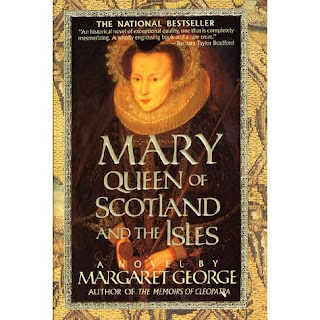
Classics Corner: Mary Queen of Scotland and The Isles by Margaret George;Grand and Definitive Historical Fiction of Scotland's Most Famous Queen
Classics Corner: Mary Queen of Scotland and The Isles by Margaret George; Grand and Definitive Historical Fiction of Scotland's Most Famous Queen
By Julie Sara Porter
Bookworm Reviews
PopSugar Reading Challenge: A book with a map
Spoilers: John Lennon was right. Life is what happens when you are busy making plans to finish reviewing the final book in a series for your blog but the Coronavirus pandemic causes the library to close, so instead of reviewing that book, you instead review another book about the same subject. (At least I think that's what he said or something like it. Anyway, it was pretty close.)
I was supposed to wrap up my Philippa Gregory series with the final Plantegenet and Tudor Court Series, The Other Queen about Mary Queen of Scots. But since I don't have a copy and the library is closed for now (though is supposed to reopen soon), that review will have to wait. Instead I decided to review another book about Mary Queen of Scots, Margaret George's Mary Queen of Scotland and The Isles.
Actually, right now I am reviewing the better of the two. While Gregory did a brilliant job capturing the Cousin's War, the six wives of King Henry VIII, Queen Mary I, and Queen Elizabeth, Mary Queen of Scots belongs to Margaret George. Gregory's version was short and anemic which only covered a small fraction of this famous Queen's history, but George covers the whole scope of this fascinating woman's vibrant passionate colorful life.
From the moment she was born and her father James V died, Mary Queen of Scots (1542-1587) is held under scrutiny and criticism. Her dying father expresses displeasure that she isn't a son to replace the legitimate sons that died. She is separated from her mother, Marie de Guise, to be raised in France while her mother acts as regent. Her French relatives judge her for being Scottish. Her Scottish subjects are suspicious of her gender, French upbringing, and Catholic religion. Her illegitimate half-siblings, particularly her brother James are jealous of her becoming the heir. Calvinist religious leader, John Knox considers Mary, the Whore of Babylon because of her religion and her status as a female assuming the Scottish throne. Her cousin, Elizabeth feels threatened by her status as the second heir to the throne. It's already not an easy life and it gets harder.
Mary's childhood establishes much of the character that she carries throughout the book. She has a fondness for pretty things because of her upbringing in France surrounded by beautiful clothes, delicate dishes, and poetry some of which is dedicated to her. She also shows a strong will. When she first encounters the formidable, Catherine de Medici, acting Queen of France she is able to stare her down and stand up to her. Her independent streak also carries over into her wedding to Francois II, future King of France, when she insists on wearing white, even though it's the French color of mourning. She later rues that decision after Francois dies and she finds herself wearing white again, this time at her husband's funeral.
The book also is rich in capturing the people around her. Both Marie de Guise and Catherine de Medici are both strong willed leaders, inspiring Mary with their leadership skills and ability to survive in a man's world. James Stewart, Mary's half brother hovers between being close to Mary because she is his sister and being competitive and resenting everything she stands for.
Mary's four ladies in waiting, who are also named Mary, form a loyal sisterhood to their beloved queen and are individuals in their own right-Mary "Flamina" Fleming is the boldest and most outspoken, Mary "Lusty" Livingston is the robust tomboy, Mary Beaton is the quiet daydreamer, and Mary Seton is the most serious and spiritual.
Francois is also well written as an embodiment of youthful innocence. They marry when he is 10 and Mary 14, so unsure of what to do, they spend their wedding night...falling asleep. Instead of a husband, Francois is more like a kid brother with whom Mary plays games, tells stories, and create elaborate ideas for their future kingdom. Francois is an eternal child who would have a hard time reaching adulthood, which unfortunately he does not. Mary is barely crowned Queen of France upon her father in law's death before she loses her husband less than a year later.
When Mary returns to Scotland after her mother's death, she gets a frosty welcome, literally. The weather is cold and misty so that she can't see anything. If ever there was a sign that her reign would not be a peaceful one, that would be it. The peasant and working class love her, considering her a return to civility. However, the Kirk, the noblemen who act as her council, are mistrustful of her, suspicious of her Catholic religion, dislike her de Guise relatives, and mock her French ways. Even though France and Scotland are allies as part of the Auld Alliance, against England, that's far from saying the Scots actually like the French especially after they convert to Protestantism. Many of the Kirk favor Knox's conservative dour approach and fear the queen simply because he tells them to.
Her antagonists include her brother, James, who more and more sees better advantages siding with Knox and his crew over her, The Hamiltons, a family that often looks out for their own interests, and Lord Ruthven, who is rumored to be a warlock and is certainly creepy enough if he isn't. Queen Elizabeth also has her reasons to fear her second cousin. Since Mary is the closest heir to the throne and a staunch Catholic, the Protestant Elizabeth is fearful that her Catholic subjects would favor Mary over her.
Standing at the center of her antagonists is Knox who puts fear into his followers' hearts that Mary will start another Inquisition. In actuality, she will do nothing of the kind. She respects her subjects' Protestant religion. She only asks that they respect hers. She is very passionate and fair minded, but is willing to compromise to make other's happy. But for some unyielding stubborn individuals, that's not enough.
Partly because of her lonely widowhood and the general dislike of her, Mary throws herself into a second marriage to Henry Stewart, Lord Darnley a relation of hers and Elizabeth's. At first, it seems pleasant enough. Darnley is handsome and charismatic, but he very quickly reveals his true nature. He is a big drinker and a philanderer. He is also intensely jealous of Mary's power and demands that she make him King. George doesn't sugarcoat Darnley's chatacter. He is a spiteful abusive weak willed bully who goes along with whatever scheme benefits him the most. The Reader is rooting for his comeuppance long before he receives it.
Mary has several loyal friends to her defense. Besides the Marys, another is David Riccio, her secretary who also acts as confidant, psychologist, public defender, stand up comedian, minstrel, and best friend. He is a very witty character who isn't afraid to tell Mary the truth whether she wants to hear it or not. He also isn't afraid to call out Darnley or his allies, which he does one too many times. In one of the most heart wrenching moments in the book, Darnley leads a group to come in and stab Riccio to death right in front of Mary.
Another loyal supporter is the man who becomes her third husband, James Hepburn, The Earl of Bothwell. Bothwell is everything that Darnley isn't brave, decisive, strong willed, even if he is a bit of a womanizer to begin with. To her credit, George does not make his and Mary's marriage an abrupt thing. They meet in France when he is part of the party that escorts Mary to Scotland. He then appears periodically in Mary's life, sometimes as an outspoken critic but mostly as a staunch ally and a good friend even before they become romantically involved. One of the best moments is when Mary apologizes that she couldn't make Bothwell king and he tells her that is fine. He is satisfied with his lands of Shetland and the Orkney Islands. Mary muses that Bothwell, a man who is better suited for the role of king doesn't want the title, while Darnley whines about wanting the title but exhibits behavior that could not be considered kingly or leader-like.
There are three mysteries that surround Mary's life and George gives interesting theories to answer them. The first is who killed Lord Darnley. What is known is that Darnley died in an explosion and was involved in the death of David Riccio. Most believe that the most likely suspects were either Mary herself or Bothwell. George's version stops short of actually accusing Mary of her second husband's murder, she certainly doesn't miss him.
The second mystery concerns her marriage to Bothwell. Publicly, Bothwell abducted Mary and she married him while in captivity. However, what muddies the waters of this claim is that there were love letters exchanged between Mary and Bothwell dated before Darnley's death and were found in a silver casket in Bothwell's home. The so-called "Casket Letters" were considered evidence that Mary was complicit in her second husband's death and became evidence for her forced abdication in favor of her son James VI (Later James I of England)
Again George gives her own interpretation to these events that the love between Mary and Bothwell was genuine and the abduction was staged so the blame would fall entirely on him and not her for running off with him. Mary and Bothwell's romance is one that is loving but made from bad timing (She chose not to make Bothwell her second husband because he was already married to a woman whom he would later divorce) and short lived. They end up separated when she escapes to England and he sails to Sweden where he is imprisoned and later dies. Their marriage was short, but it was one of love and loyalty in this book.
The final third of the book where Mary seeks refuge in England is probably the most boring part but it leads to the third mystery in her life. How involved was Mary in plots to bring down Queen Elizabeth. While she is under house arrest and moved about, she makes friends with many noblemen like George Talbot, the Earl of Shrewsbury. Many of these allies want to see a Catholic ascend the throne and promise to aid in Mary's escape. Mary knows that she is playing a dangerous game with these men but she writes letters in code requesting their aid and support. Just as she does with Mary's involvement with Darnley's death, George doesn't outright accuse her, but Mary knew that her release could only come from Elizabeth's death so she turns a blind eye to the consequences and what the end result would be.
Even though Mary is the main character, George also makes Elizabeth believable as well. She is somewhat jealous of Mary's appearance. During his first meeting with the Scottish Queen, Elizabeth pesters her ambassadors with comparisons about her height and her appearance asking if she's more attractive. When Mary gives birth to James, Elizabeth complains that she "is of barren stock." She also gets upset when Mary's family uses the English crest on their china (something Mary doesn't agree with either).
However despite her pettiness, Elizabeth relates to Mary as another female ruler in a man's world. Even though, they never meet face to face they write often calling each other "Sister," and giving tokens of friendship. When Mary finally is arrested for conspiring against Elizabeth, the English queen suffers remorse about having to put her cousin to death and wavers for a long time before she finally signs her death warrant.
Margaret George captured Mary Queen of Scots and made her passionate, headstrong, emotional, reckless, strong willed, and a very vibrant,, colorful, unforgettable woman. Some Royal characters like Elizabeth Woodville, Anne Boleyn, Anne of Cleve's, and Queen Elizabeth belonged to Philippa Gregory. But in this case, Mary Queen of Scots belongs to Margaret George.
Sunday, March 29, 2020
Classics Corner: One Hundred Years of Solitude by Gabriel Garcia Marquez; One Hundred Years of Confusion, Beauty, Magic, Emotion, and Fate
By Julie Sara Porter
Bookworm Reviews
PopSugar Reading Challenge: A book published in the 20th Century
Spoilers: Make no mistake about it, One Hundred Years of Solitude is not an easy book to read. But it is a book that is better experienced, thought about, and felt. It's the kind of book where images will stick with the Reader long after the book is closed. They will picture and remember those images and how they made them feel.
First come the difficulties in reading this masterpiece, then the praise.
Characters's names get repeated so often that the Reader should thank any deity imagined that there is a family tree that they can consult when mass confusion arrives over who is who.
The plot focuses on five generations of the Buenida family, a Colombian family that settles in Macondo, an isolated village. They begin with Jose Arcadio and his wife, Ursula. They have three biological children, Aureliano, Jose Arcadio, and Amaranta and one adopted, Rebeca. We then go into subsequent generations which boast of a total of 22 Aurelianos, 4 Jose Arcadios, 3 Remedios, 2 Amarantas, and 2 Ursulas. (It's not even a tradition. Other characters talk about the confusion and oddity of the name repetition.) Not only that, but many of the same generations have similar personality traits and physical characteristics, so many characters are interchangeable. They are less of individuals and more like one long continuous chain of the same people making the same mistakes, having the same beliefs, and living the same lives.
It's not uncommon to read about one character with one name and have them interact with another character with the same name, leaving the poor Reader to try to remember which generation that they are reading about. For example, Jose Arcadio the Father and Jose Arcadio the Son have a conversation in which Jose Arcadio (Son) runs off with a nomadic tribe. Then, Jose Arcadio (Father) regresses into a childlike state right before Jose Arcadio (Son) returns after a long estrangement.
The repetition of names gets comical when Aureliano, by then Col. Aureliano Buenida, impregnates 17 women, fathering sons by all of them. Of course all are named for their father, making that 17 Baby Aurelianos. It gets better. About four of the young Aurelianos move to the Buenida family manse and are called "Aureliano X," first name: Aureliano last name: their mother's family name (like Aureliano Triste). Then as if to make things even more confusing, the 17 Aurelianos all get murdered before they turn 35.
The narrative runs less like a smooth course down a stream and more like a rippling rapids down a rocky coast. Marquez writes like a person telling an oral story going on about something without making a point or telling part of a story and leave out vital information, only to remember it later. He begins the book telling us that Col. Aureliano Buenida was in front of a firing squad and had a childhood memory of seeing ice for the first time. Marquez only thinks to tell us later why he is in front of the firing squad and still later to tell us that he didn't die by the firing squad, but died much later of natural causes.
The effect of Marquez's writing is reminiscent of a ring of small children gathered around a wise village storyteller. They get droplets of information. So they lean in and pay attention to the details so they can get more. Real historical events are present like the military takeovers, civil wars, industrialization, and the rise of the fruit corporations. However, the events aren't a concrete focus so much as how they affect this little village and the people inside it. When Col. Aureliano leaves to start a military revolt against the oppressive Conservative government, he puts his nephew, Arcadio in charge. Unfortunately, Arcadio becomes a dictator turning Macando into a microcosm of the situation in the rest of Colombia, a country of great beauty trampled upon by corrupt political and military leaders. Ultimately, the other residents turn against Arcadio leaving him to face an execution as many leaders who begin their reigns with blood on their hands end the same way.
This book and The House of the Spirits by Isabel Allende could be considered twin spirits. Both are multigenerational books about Central and South American families and both books are considered the embodiments of the magical realism genres. However, both books are excellent in their own ways. The House of The Spirits is technically better written. The plots in the Allende book are straight forward and have clear beginnings, middles, and ends. While the characters are different generations from the same family, they also stand out as individuals. Their personalities, traits, goals, interactions, and ambitions are recognized. It is a book that is excellent on a mental level.
One Hundred Years of Solitude is better on an emotional level. Some paragraphs might be confusing, but the beautiful images are not to be missed. No Reader will forget Jose Arcadio (Father)'s dream of a house of mirror walls that leads him to discover Macondo or the continuous rain that pours down throughout the village.
The long illness in which the villagers all have a simultaneous case of insomnia is another image that stays. As are the means they use to keep their sanity and memories intact like writing notes and placing them on common objects, so they don't forget what they are.
This is a full sensory experience that draws the Reader in and doesn't let them go. It almost has a dream-like fairy tale quality. In fact, fairy tale tropes run abound in this story. There is the jealous rivalry between two sisters: Amaranta and Rebeca that intensifies to death threats and complete isolation for one of them. The divergent paths between Jose Arcadio (Son) and Col. Aureliano is reminiscent of those stories where one brother travels the world to seek his fortune and the other remains inside the kingdom to rule. There is even an eccentric woman, Pilar Ternera, a card reader, who alternates between Fairy Godmother and The Witch in the Woods. The beauty surrounds the book so much that the Reader can forgive the lapses in coherence. It is the deep emotional connection that stays with the Reader.
If there is a book that best represents the magical realism genre, it is this one. There are so many magical touches that add to the emotional experience. Many characters have unusual talents such as Aureliano's ability to survive several near death experiences. As she grows older and blind, Ursula is able to find anything that is lost simply by paying attention to the pauses and breaks from other's routines.
One of the more interesting, almost otherworldly characters is Remedios the Beautiful. Her physical appearance draws men to commit violence or suicide. Even when she wears plain clothes or has her head shaved, her natural beauty shines through. However, she is unaware of her physical appearance because she lives in a state of permanent childlike state, almost like a holy innocent ever virginal or untouched. So of course it makes sense that Remedios' end would not be conventional. She ascends into the heavens, like a saint.
Fatalism is a common theme to One Hundred Years of Solitude. Many characters like Pilar Ternera predict things that later come true. There is a consistent curse hanging over the family's head that occurs during a dream of Ursula's. She dreams that their family line will end when a baby is born with a pig's tail. Five generations later, a baby, Aureliano, is born with the pig tail but to parents who are unaware of the implications and are helpless to stop their inevitable end.
Perhaps that is why the characters all share the same names and are not individually defined as they are in The House of the Spirits. They are fated to become the same people in that continuous chain and the links will continue until the family line ends. This isn't the story of one person in a family, but one family that moves as one person that begins the world with much beauty and magic, but is destined as we all are to come to an inevitable end.
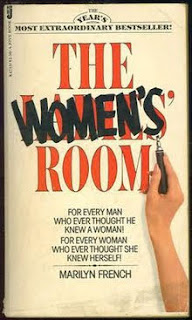
Classics Corner: The Women's Room by Marilyn French; The Troubled Lives of Women in the Mid-20th Century
Classics Corner: The Women's Room by Marilyn French; The Troubled Lives of Women in the Mid 20th Century
By Julie Sara Porter
Bookworm Reviews
PopSugar Reading Challenge: A book published the month of your birthday (February, 1977)
Spoilers: Marilyn French's novel, The Women's Room, could best be summarized as Feminine Mystique: The Novel.
Betty Friedan's 1964 landmark book, The Feminine Mystique is considered the book that kick-started the second wave of Feminism. It laid out the problems that many women had when they married young, had children, and settled into lives as stay at home mothers. Friedan wrote about the "Problem That Has No Name," women who were bored, listless, and unfulfilled with their lives. They had education, but no idea what to do with it and were unable or unwilling to use it for a career or to find a life outside the home. Many of these women developed physical, psychological, and emotional disorders and used alcoholism, drug addiction, and sexual gratification as means to cope with that dissatisfaction. Friedan's book received criticism, but many women read, understood, and related to that situation. Enough to create a movement.
If The Feminine Mystique described the problem and offered potential solutions, then The Women's Room is the case study, albeit a fictional case study. However, French graphically illustrated what happened to these women as they moved from giggly schoolgirls and conformist housewives of the 1950's and early '60's to divorcees, single mothers, and feminist activists of the late '60's and '70's.
The Women's Room focuses on Mira Ward. When we first meet her, it is 1968 and she is hiding in the Ladies' restroom at the college where she is taking classes. However, it has gone through a change like everything and everybody around her. French tells us, "She called (the Ladies' room) that even though someone had scratched out the word 'ladies' in the sign on the door and written 'women's' underneath. She called it that out of thirty-eight years of habit, and until she saw the cross-out on the door, had never thought about it. 'Ladies room' was a euphemism, she supposed, and she disliked euphemisms on principle."
This book is about women like Mira who argued and challenged being called "ladies" and all that the word implies ("young ladies", "proper ladies," sophisticated ladies who dress nicely, behave properly, and don't question society's standards) to being called "women." ("Wonder Woman,", "career women," women who fight for equal rights, careers, and the rights to being treated as equally to men.)
Mira is a product of a post-WWII upper-middle class upbringing, the type of upbringing that expected her to only have an advantageous marriage. All of her education and training, primarily from her mother, was made for that specific goal. However, Mira starts out life independent. She reads books by people like Nietzsche and Radclyffe Hall that are considered forbidden and asks important questions about sex, religion, and politics. At first, she tries to be independent. She doesn't want to be someone's secretary. She would rather have the adventures and be the boss. When she becomes involved with a boy, Lanny, she imagines herself scrubbing the kitchen floor with a baby crying in the background.
After she and Lanny break up, Mira begins dating Norm, a medical student. When she and Norm get married, Mira can feel her own life and independence slipping away. She suggests teaching and ultimately getting a Ph.D. in English Literature. Norm scoffs at the idea, thinking that she wouldn't have time what with taking care of the house, cooking meals, and raising the children. (It never occurs to him to share the household tasks. When she suggests this, it is clear that he thinks the very idea is repellant.) The picture of Mira's dependence becomes clearer and more haunting when after she gives birth to two children, Normie Jr. and Clark, Mira finds herself scrubbing the floor with crying children in the background, exactly like she feared.
Some of the hardest chapters to read are the ones that not only peer into Mira and Norm's troubled married life, but the troubled lives of all of the married couples that surround them. The Feminine Mystique doesn't just hit them, it hits everyone around them. Natalie is jealous when her husband, Hamp starts making eyes at the other women in their circle. Adele has a bad temper that constantly yells at her children and worries when she is pregnant with another. Bliss is engaged in an affair with her best friend's husband. Martha is taking night school courses and becomes involved with a French teacher. Sean and Oriane move to the Bahamas where Sean abandons her, leaving her broke and ill from cancer. Samantha and Simp end up financially stranded after Simp loses his job. The most troubling story is that of Lily, who is abused by her bullying husband and budding sociopathic son into a mental breakdown. Lily moves in and out of psychiatric care and constantly receives electroconvulsive therapy, shock treatments.
What of our main couple, Mira and Norm? Norm subjects his wife to verbal abuse and is judgemental towards his wife and her friends. He neglects his children. One night, he drops a bombshell on Mira when he tells her that he wants a divorce. (The reason is never specified, but is implied that Norm is leaving her for another woman, a woman whom he later marries.) During their separation, a devestated Mira attempts suicide by slashing her wrists only to be rescued by Martha.
This book illustrates the problems that women have with the institution of marriage. The female characters are more three dimensional than the males. They are flawed hurt characters who are desperate for happiness and are instead miserable. The men are flatter, more cardboard, and more interchangeable. It makes sense when the Reader realizes that the book is exclusively told from the female point of view, from a first person female narrator who isn't revealed until the end of the book. It presents the world how she sees it.
In her eyes, men are the dominant force unknowable and powerful. The women around her are the ones who are suffering. The Narrator makes no apologies for how she writes. She challenges the idea of marriage itself and how it transforms people into someone that they don't want to be.
She also mentions how when books are written by men, they make the female characters flatter and less interesting as mothers, children, or love interests. They can't write about women, because they can't get into their heads. (Though she cited that there were exceptions like Henry James.) In retaliation, the Narrator portrays the male characters from her outside perspective because she can't get into their heads.
After the divorce, Mira finds her life completely different. She finds the life that she once wanted. The first taste of freedom is felt when she gives Norm a bill, itemizing all of the work that she did for him all of those years. Even though Norm refuses to pay, she makes her point clear that she is becoming aware of her own mind and desires.
Mira has more freedom to further her education by taking English Literature courses in college. She becomes involved in a sexual relationship with Ben, another student, and meets some wild new friends that navigate her into the Women's Movement and living life on her own terms.
That's not to say that her and her friend's lives are problem free. Isolde, a lesbian, goes from one troubled relationship to another particularly with women who are afraid to take their romance with her to another level. Val, the leader of this group of feminists, wants to start her own women-only separatist community, but seeks vengeance when her beloved daughter, Chris, is raped.
But what differs between these women and the ones before is how they deal with their problems. The women that Mira knew during her marriage are more internal. They are unable to express their discomfort. Their only ways they can challenge their unhappiness is to act upon their frustrations and neuroses. They are so dependent on their husbands, that they can no longer become the agents of change. When that dependence is removed, the Marthas, the Samanthas, the Blisses, and the Lilies don't know what to do with themselves.
The Isoldes, the Vals, and the Chrises are the agents of change. Many of them are divorced or purposely unmarried, so they rely only on themselves. If something goes wrong in their lives, they seek to change it through action. They go through emotional break ups, sexual explorations, and class and work overload but are able act on their own. Part of independence is dealing with the positive and negative aspects of living your own life, becoming aware of your own emotions, and making your own decisions. It is an independence that is won because it is earned
Mira in particular, loves her new found and hard won independence. She enjoys it so much that she turns down Ben's marriage proposal knowing that she will end up with more of the same, another stifling crippling married life of dependence. In the end, Mira realizes that she has achieved the fulfillment that she long ago wanted by herself.
The Women's Room covers that dramatic moment when women challenged their right to be thought of as independent people who should receive equal rights and protection under the law and society. It showed that time when they stopped thinking of themselves as girls and ladies and started thinking of themselves as women.
Wednesday, March 25, 2020
Classics Corner: Spite Fences by Trudy Krisher; A Powerful Book About Fences Built From Racism, Spite, and Hatred
By Julie Sara Porter
Bookworm Reviews
PopSugar Reading Challenge: A book that features one of the Seven Deadly Sins (Spite, Wrath)
Spoilers: We all build walls and fences around ourselves. Some build them for protection to keep people inside. Others build them to keep others out.
Sometimes, the worst fences are the ones that surround the human heart. They are built because we don't know certain people, we don't want to know them. They are built not by hammers, drills, and nails but with other tools. Tools like assumptions, prejudice, spite, meanness, and hatred. Those fences are the strongest ones and they take forever to come down, if they ever do.
That is the situation faced by Magnolia "Maggie" Pugh, the young protagonist of Trudy Krisher's powerful novel, Spite Fences. Her family is considered "poor white trash" in their small town of Kinship, Georgia during the early 1960's. Many in town disregard her family because of their poverty. She has to deal with an abusive mother, unemployed father, and Gardenia, a sister who is propped up to become a beauty queen.
The Pughs also have to contend with their neighbors, the Boggses. Maggie's mother looks down on the Boggses, saying that if her family is poor, then at least they have standards. She thinks that the Boggses are a wild uncouth bunch of hooligans and with good reason. Their son, Virgil, is a sadist who plays malicious pranks on people including the Pugh sisters. Maggie's mother demands that her father put a fence around their home to block out the presence of their neighbors.
Besides the literal fence between the Pugh and Boggs homes, the figurative fences are stronger during the Jim Crow era. Maggie is looking for work as a housekeeper to help support her family. She is referred to the home of George Hardy, a mathematics professor who's new in town. At first, Maggie doesn't see George. She cleans his house as the two pass notes back and forth to each other. It comes as a surprise that her employer is an African-American man.
Maggie tries to continue working for George, whom she grows to like and respect, while hiding it from the town, particularly her mother. She also becomes swept up in the Civil Rights Movement as the African-American community of Kinship plans a display of civil disobedience. Maggie has to rely on her open mindedness, new found friendships with the African-American community, and her talents as a photographer to break through those fences and speak out.
Spite Fences is an extremely strong character and theme driven book. At the center of this storm lies Maggie. She is similar to Scout Finch, from To Kill A Mockingbird, a young prepubescent white girl breaking through the color barrier to question the societal standards that surrounds her. She is extremely timid and conditioned, particularly by her mother, not to express her strongest emotions. She buries a lot underneath, including being an eyewitness to a violent hate crime and not speaking out about the circumstances.
It is only after she befriends George and several other African-Americans around town, putting faces to names that she has grown up near but never knew on a personal basis that she realizes that she can no longer stand on the sidelines out of fear. Seeing how others live, worship, and work. She recognizes that struggle and is able to put herself forward.
Maggie is an amateur photographer and George is able to use that talent to bond with her. He offers her his issues of National Geographic so she can study photographs of other countries. He encourages her to use her talents around town and to look inside others to capture these moments. He also discusses deep topics such as fears with Maggie, so she can look inside the people around her and see beyond their outward appearances.
Maggie's photography becomes a key in breaking down the fences. She takes pictures of her new friends and herself in happy situations that unfortunately get revealed to the White community of Kinship. Even though things don't turn out well, Maggie is able to take pictures of the oppression that African-Americans face and the means they use to challenge them. These pictures not only bring faces to their struggle, but gives Maggie an opportunity to improve her situation.
Spite Fences is about the fences that are built out of cruelty and hatred. However, with love, friendship, human concern, and recognizing our talents, light can be shown through those fences. Maybe those fences can even come down.
Thursday, February 20, 2020
Classics Corner: Heartburn by Nora Ephron; Perfect Combination of Love and Food With Plenty of Sarcasm on the Side
Classics Corner: Heartburn by Nora Ephron; Perfect Combination of Love and Food With Plenty of Sarcasm On The Side
By Julie Sara Porter
Bookworm Reviews
PopSugar Reading Challenge: A book with a pink cover
Spoilers: One thing that Nora Ephron knew how to do was to make her Readers and Viewers laugh at relationships.
The Academy Award nominated screenwriter of such romantic comedies as When Harry Met Sally, Sleepless in Seattle, and Julie and Julia, Ephron was able to find the lighter situations behind the dating scene, mid-life crises, issues towards commitment, and marital strife. Many of her characters had their problems and conflicts, especially with loved ones, but they always faced them with a sharp wit that got them through their struggles. Much like their screenwriter.
By far one of her most personal works is Heartburn, a witty, dry, sometimes cynical look at the decline of a marriage. The book is based on Ephron's marriage to journalist, Carl Bernstein (of Watergate/Woodward and Bernstein/All the President's Men fame). Ephron treated her semifactual life the same way she treated her fictional: with a sarcastic wit that hid deep conflict and pain.
Rachel Samstadt is a cookbook author married to columnist, Mark Feldman. She is the mother of one child and is seven months pregnant with another. She thinks that she has a happy marriage until one day she discovers a book of kid's songs with a deeply personal, potentially romantic, message to Mark from a friend. After confronting Mark, he reveals the truth. He has been having an affair with this woman while his wife is pregnant.
This book is certainly a product of it's time when people were interested in self-reflection, when women questioned their place in work and home, and where divorce is a huge concern. Rachel still has a toe in the old world in her thoughts towards marriage. She wants to work on her marriage to Mark and is unable to accept that it's over. She spends a majority of the book writhing in agony and indecision knowing that she should let go, but unable to. When her therapist, Vera, tells her that Mark was the one who is to blame for her feelings of anger, hurt, and betrayal, Rachel disagrees. "It's my fault," she wails, "I chose him."
Besides this marriage, Rachel also recalls the early years of her and Mark's relationship, their troubled first marriages, and her parents's marriage trying to find an answer to why she turned out the way she did. Rachel's mother was a Hollywood agent who had a nervous breakdown. "We should have known my mother was crazy years before we did just because of the manical passion she brought to her lox and onions and eggs, but we didn't," Rachel said.
Her parents divorced and her mother remarried Mel, a man who literally thought he was God. Her father has an ongoing affair with Frances, who works at a paper company. "(Frances) has remained true to my father even though he keeps marrying other women and leaving her with nothing but commissions on his stationary orders," Rachel says.
She also recalls her first marriage to Charlie, who was a little too fond of hamsters and Mark's marriage to "the first Jewish Kimberly." These broken relationships contribute to Rachel's neuroses and help explain why she chooses to remain in such a toxic marriage. She doesn't want to be another unhappy marriage that ends in divorce. She wants to believe that Mark can change and that theirs will be the one happy marriage that remains.
This book is drenched with plenty of satire and sarcasm. Rachel is involved in group therapy, a trend in the '70's-'80's, where she and other members unload their neuroses and problems. During one of these sessions, a thief breaks in and robs the group members including stealing Rachel's wedding ring. When news breaks out about the robbery, Rachel's main concern is that she finally learned the other members's last names.
When she finds out about the affair, Rachel confronts Mark at his therapist only to learn that his mistress is also seeing the same therapist and is right there with him. "They were having a double session. At the family rate," Rachel fumes.
Since Rachel is a food author, Ephron inserted recipes in the text and not just as an aside in the index. Oh no, that's for amateurs. Ephron inserted the recipes into the action. Whenever, Rachel describes a particular dish, she adds the recipe on how to make it. The recipes are often in the strangest places.
In the hilarious climax, Rachel decides to make her unhappiness known with a key lime pie put, where else, in Mark's face. Right before the fatal throw, Ephron helpfully puts the recipe for key lime pie in parentheses, in case any Reader needs ammunition for their own arguments.
Besides revealing Rachel's writing style as someone who not only writes recipes but provides conversational anecdotes about how she discovered the recipes, the emphasis on cooking serves another purpose. It allows Rachel to maintain a domestic appearance.
She wants to be the perfect wife and mother who has food waiting on the table. She can control how many eggs can go into a pie and how long to stir a soup after boiling. If the recipe goes bad, she can always make something else. She realizes this as she thinks "I loved to cook, so I cooked. And then the cooking became the way of saying, I love you. And then cooking became the easy way of saying I love you. And then cooking became the only way of saying I love you."
Relationships aren't as easy as recipes. There are no simple steps to follow and no amount of mixing that will guarantee a satisfactory result. When a relationship ends, it takes a lot more than a new one to fully recover. Rachel has to learn that lesson right before she gets the pie.
Besides serving up food, Rachel serves up plenty of sarcasm. She is the type of person who is always quick with a comment or a joke trying to find something humorous in every situation. When a male friend suggests that he and Rachel should have an affair to get back at their cheating spouses, Rachel turns him down. "We would just huddle together, two little cuckolds in a storm, with nothing to hold us together but the urge to punish the two of them for breaking our hearts."
When she runs into Mark and his mistress, she isn't just irate about seeing him. She is furious because he is wearing a new blazer. She didn't realize that Mark and his new lover were in the "buying new clothes" phase. She spends the next few paragraphs meditating on the blazer rather than her marriage.
Above all, Heartburn is about self-reflection. Rachel learns that sometimes she resorts to humor and sarcasm to avoid how she really feels. She also realizes that she can't save a marriage that's doomed and that there's no shame in cutting herself off from the marriage. Learning this, allows Rachel to strengthen and adapt herself into a woman who can face life single rather than unhappily married.
Heartburn is one of Nora Ephron's best recipes for a broken heart. You take one teaspoon of infidelity. Add a dash of misery. Include two eggs worth of therapy and self-reflection. Add a dose of delicious recipes. Don't forget to mix with a hearty helping of wit and sarcasm. Preheat at 350. Let sit and savor after reading. Enjoy!
Classics Corner Birthday Book: The Joy Luck Club by Amy Tan; Emotional Moving Novel About Chinese-American Mothers and Daughters
By Julie Sara Porter
Bookworm Reviews
Birthday February 19, 1952
PopSugar Reading Challenge: A book that takes place in a country that starts with "C" (China)
Spoilers: I don't know anything about Mah Jong and I don't have any children, but I do know what it means to be a daughter and to not always understand my mother and vice versa. So I completely understand and sympathize with the plight of the characters in Amy Tan's classic, The Joy Luck Club.
The book is a series of interconnected short stories of four mothers: Suyan Woo, An-Mei Hsu, Lindo Jong, and Ying-Ying St. Clair who emigrated from China and their daughters Jing Mei "June" Woo, Rose Hsu Jordan, Waverly Jong, and Lena St. Clair who are more American than their mothers. The book is a truly emotional and moving work that while focuses on many of the issues that are faced by Chinese and Chinese-American women, any recent emigre as well as any parent and adult age child can find the conflicts relatable. We have all had situations where we felt that the previous or the next generation doesn't understand us. Then when we look deeper, we learn that we had a lot more in common than we were previously aware.
The four mothers are part of a group that meets weekly to play mah jong and talk about their lives. The book begins after Suyan's death and the other three mothers convince Jing Mei to take her place as the fourth in their mah jong games. Like the game itself, the book is divided into four parts of four stories each making 16 stories total.
The first eight tells of the mothers' and daughters' childhoods. The next eight covers the problems that they receive upon entering adulthood and within their marriages and families.
One of the central themes that carries throughout the book is who the mothers left behind in China. This is particularly strongest in Suyan and Jing Mei's story. After an argument when Jing Mei is still a child, Suyan accidentally blurts out that she had been married previously in China and had fled leaving behind two daughters, neither of which were Jing Mei. Realizing that she has two half-sisters that she never knew changes Jing Mei's relationship with her mother. Jing Mei feels their presence even though they aren't there physically. She feels that her mother preferred the daughters that she missed, so the daughter that is in front of her fails in comparison.
When Jing Mei grows, Suyan pushes her to become successful piano prodigy. After a substandard performance, Jing Mei gives up the piano for good. She spends much of her life believing that her mother doesn't approve of her job, friends, and life. It is not until well into adulthood after Suyan gives her a jade pendent that she learns that she had her mother's approval all along. Late after Suyan's death, the other three Joy Luck mothers contribute money so Jing Mei can travel to China to meet her half-sisters.
Another daughter who feels pressured by her mother into success is Waverly Jong. In fact, Suyan and Lindo turned bragging about their daughters almost into a contact sport. They build up so much competition between the two daughters, that Waverly and Jing Mei become rivals. Lindo's boasts about Waverly are about her genius at chess. Waverly excells at competition to the point that her mother's boasting gets embarrassing. Waverly gets so irritated by her mother talking up her success that she gives up chess. However, she hasn't lost trying to live up to her mother's expectations as a later story testifies when she introduces her white American boyfriend to Lindo. While Lindo seems to be non-committal especially when he commits various embarrassing faux pas at the dinner table, she later tells Waverly that she likes him.
Through Lindo's point of view, we discover that her way with words proved helpful in her past. She has a humorous courtship with her husband in which their respective Cantonese and Mandarin dialects make each other difficult to understand, but Lindo manages to get their conversations steered towards the words "matrimony" and "I do."
More dramatically was an incident in Lindo's youth in which she was forced into marriage with a prepubescent boy and was abused by his cruel mother who kept forcing the young couple to produce grandsons. Lindo manages to find her way out of the situation by pretending that their ancestors are displeased with the marriage and for her husband to accept marriage to a pregnant servant girl instead. Her in-laws get the grandson they coveted, the servant girl moves up a few notches, and Lindo gets free and manages to make her way to America.
While Lindo is a more dominant presence to the point that Waverly considers her mother unbearable, Ying-Ying and Lena St. Clair are more passive and that passivity has shaped their lives in very negative ways. Their stories are among the most heartbreaking. As a child, Ying-Ying got lost from her family during a Moon Lady ceremony. She naively asks the Moon Lady (really a male actor in a costume) to find them. This little scene foreshadows the sadness that Ying-Ying and Lena encounter throughout their lives, often being manipulated and abused by the men in their lives. Ying-Ying survives a torturous first marriage with a womanizer who abandons and results in her aborting her first child. She later marries a white man who is incredibly condescending and mocking towards her. Unfortunately, she also gives birth to an anencephalic child and becomes haunted by his death. She is consumed with depression, nightmares, and hallucinations. This makes her a cypher to Lena.
Lena takes her mother's passivity to heart during her marriage to Harold. Harold is also her supervisor at work and he financially as well as verbally abuses her. Seeing her daughter suffer the same way that she did under the thumb of a dictatorial husband, Ying-Ying convinces Lena to stand up for herself.
The different stories all carry their share of triumph after heartbreak. Among the saddest but ultimately rewarding stories are those of An-Mei and Rose Hsu Jordan. An-Mei's youth was shaped by her mother who became the fourth wife of a wealthy merchant. At first, An-Mei was raised by her grandmother, but after her grandmother's death, she finally moved in with her mother. An-Mei and her mother are abused by the merchant's second wife. The Second Wife plays various manipulative games to assert her dominance in the household such as attempting to win An-Mei over by giving her glass bracelet that she says is really pearl. She yells, screams, threatens suicide to get her way, and keeps An-Mei's half-brother as an emotional hostage by claiming to be his mother. An-Mei's mother finds no escape except through her own suicide. Though, An-Mei is clever enough to warn that her mother's spirit will haunt the cruel Second Wife, silencing the older woman's abuse for good.
An-Mei's family is hit by tragedy again when her youngest son, Bing accidentally drowns during a family trip to the beach. Rose is stricken with guilt for the rest of her life because she was supposed to watch Bing. She is haunted by Bing's death and continues to be held at an emotional distance. That emotional distance continues into her marriage to Ted Jordan. Rose was abused by Ted, a guy who after his bigoted mother insulted Rose put the blame on Rose, asking why she didn't stand up for herself. He also has every intention of getting remarried after his divorce and insults Rose by saying that she will never find anyone else. Rose doesn't want to surrender to her version of the Second Wife, so she challenges him in court for the right to keep their house and commands to be treated with respect.
The Joy Luck Club is filled with beautiful and emotional stories where the mothers and daughters believe that they don't understand each other, but realize that they understand a lot more than they thought. They are similar women with loves and hurts that carried between the generations. As soon as they recognize their similarities, they no longer see themselves under the family terms of mothers and daughters. They see complex women who have been hurt and are trying to find ways to move beyond that hurt. They recognize themselves into their journies that the mothers started and the daughters completed.
The Joy Luck Club is a book that has a lot of tears, a lot of heart, and ultimately a lot of joy.
Subscribe to:
Posts (Atom)