Showing posts with label Divorce. Show all posts

Friday, April 3, 2026

Dissolved (Gutted, Dissolved, and Then Finished Trilogy Book 2) by Anna Madorsky; Semi-Return to Normalcy-Maybe

Dissolved (Gutted, Dissolved, and Then Finished Trilogy Book 2) by Anna Madorsky; Semi-Return to Normalcy-Maybe

By Julie Sara Porter

Bookworm Reviews


This review is also on Reedsy Discovery.

Spoilers: Since this review is for the second volume in a trilogy, I advise you to read my review for the first volume, Gutted and be forewarned that this review will contain MAJOR SPOILERS!!

 In Gutted, the first volume of Anna Madorsky’s Gutted, Dissolved, and Then Finished Trilogy, Elliot, a woman troubled by PTSD and frequent insomnia, meets Jason, a highly intelligent, temperamental stranger who shares many of her philosophical Nihilistic thoughts. The two become lovers and kindred spirits before Jason reveals that in moments of fury, he killed people in the past and still has the urge to kill again. Elliot is at first frightened but then is drawn to his aggressive energy and open contempt for people around them. They marry and she becomes complicit and eventually partners with him when he goes in for his latest kill: a man who brutally kidnapped, raped, and murdered her friend Abbie. Elliot helps Jason cover up the crime but their relationship has been significantly altered so she decides to take a break from their marriage. She won’t notify anyone but she can’t be with Jason right now. She leaves him to find a different life for herself.

Dissolved, the second volume is mostly about her time alone. If Gutted was a journey of Elliot discovering the dark side within herself and Jason and taking those dark sides to frightening levels, then Dissolved is about the opposite. It involves Elliot trying desperately to return to normalcy or perhaps embracing it for the first time.

To maintain distance between herself and Jason, Elliot offers to house-sit for Oluchi, friend of a friend in Portland. In this new location, she makes new friends and becomes a different person. Unfortunately, she can’t stay away from Jason for too long and the two reunite. Their reunion brings back their actions and unresolved conflicts and Elliot has to either leave Jason to his own devices or return to their “Bonnie-and-Clyde” escapades.

In the previous book, Elliot lived in a cloak of darkness. She was still scarred with the traumas of her past and her mind was fogged from sleepless nights and damaging memories. She became easily susceptible to Jason’s manipulations, intellectual rhetoric, and pressing dark souled charisma. 

She thought that she found someone who shared her pessimistic views of the world until he revealed that he had been purposely stalking her. What he needed was a partner to share and facilitate these dark urges to commit murder. She was an outsider to everyone but to Jason and began to embrace a complete isolation from the world and a detachment to its laws and standards.

Dissolved is about the same woman trying her damned best to join that world that she once felt isolated from. Elliot invigorates her friendships by becoming more involved in their issues. In the previous book, she displayed some empathy for a coworker having trouble with her aging mother, and a couple of friends that are having marital problems. Most prominently, her concern for Abbie is what motivates her and Jason's rage and desire for murder. But her interactions with them conveyed world weary detachment as though she viewed them through thick glass, observing and feeling but up to a point.

However, she blossoms in Portland. She bonds with Oluchi enough to give her some information about her marriage (though not all of it). An elderly neighbor, Josephine treats her like a surrogate daughter. Rav and Yesenia, a fighting married couple, are put into her confidence.

Rav and Yesenia’s subplot proves an interesting contrast to Elliot and Jason. Rav and Yesenia's fights are loud, emotional, and almost darkly comic like a realistic sitcom with a hard edge. In other words, they are the type of couple that Elliot and Jason tried to avoid becoming. Rav and Yesenia's marriage conflicts are all outward while Elliot's and Jason's are inward.

Also Rav proves to be a contrast to Elliot herself especially when Jason returns. Just as Elliot sees Jason as a means to share her trauma and her grief, Rav sees them as a means to reflect his own aggressions and irritations. He is drawn to their shadow presence as much as Elliot had been to Jason. Looking at it now from the outside, she recognizes the harm and toxicity to the relationship but also is aware of her own longing for Jason's presence once more even as she tries to reject him.

Elliot also has a potential second love interest in Caspian, a bookseller. It isn't quite a romance but it is a deep respectful friendship. Caspian is an alternative to Jason. Like Jason he is highly intelligent, speaks of philosophical, metaphysical, and literary concepts, and causes Elliot to look inward. However he does so in a more positive way that seeks to better her not pull her down to a lower level as Jason does.

Normally, I don't care for love triangles but this is one that actually kind of works because of what Jason and Caspian represent to Elliot. Jason opened up her outsider status and encouraged her to acknowledge her darker angrier side, the side that had been hurt, hates the world, and wants to pass that hurt along to someone else.

Caspian wants to encourage Elliot's softer, more empathetic side, the type that wants to be loved and surrounded by loving, understanding people. Elliot opens up to share her thoughts about poetry, literature, and finding creative means to express her emotions. Caspian gives her possibilities to see past that hurt and find a way to move on from it. He opens up the insider status and the desire to belong and be accepted

Another way that Elliot expresses the desire to belong is through her family. In the previous book, Elliot was abused by or estranged from her immediate family. She was left isolated without anyone close to her, no positive examples to learn from leaving her alone and vulnerable.

Now she learns that her father died and she makes an attempt to reconcile with her mother who lives in Australia with her younger brothers. Elliot recognizes her own wasted effort at a reunion when the woman turns her back on her daughter while justifying choosing her sons over her. 

Instead Elliot actually does discover a found family in her Aunt Ava, her father's sister. She runs a New Age shop, reads Tarot Cards, and gives Elliot maternal advice about love and relationships. She is the older feminine guide that Elliot needed all along. It's particularly intriguing that she finds this familial link while separated from Jason. Without Jason her circle has widened but with him, it was severely limited.

You will notice in my review that I don't refer to Elliot and Jason's romance much but refer to other characters. That's because Jason isn't in it as much as the others. In his frequent absence from the narrative, other characters take prominent roles in Elliot’s life. She seems to be doing alright without him. For a time.

When Jason returns, Elliot realizes how much she missed that intense passion between them and their unique relationship in a world of two. She also is more suspicious of him and receives non-answers when she asks if he killed anyone else since they have been apart. She wonders if her presence was able to satisfy his bloodlust or at least redirect it to people who they felt deserved to die like abusers and rapists.

She is torn between the man that proved to be a dangerous killer and the man that she feels understands her the most. Even though she worked very hard at improving herself since their separation, she still has traces of that sad, mentally scarred, traumatized young woman that Jason met. The more she tries to deny their connection, the harder that it is to resist him.

Gutted revealed that Elliot was figuratively cut open when Jason explored her vulnerabilities. Dissolved reveals the tug of war between Elliot's personas: law or lawlessness, inner peace or outward violence, belonging or isolation, love or loneliness, society or outsider, burying her painful past or letting it consume her, being a decent person helping others or a violent criminal creating someone else's pain. Eventually, one or the other persona is going to have to dissolve, leaving only one. 


Sunday, May 12, 2024

Somewhere East of Me by Sean Vincent O'Keefe; Quirky and Contemplative Road Trip Across the U.S. and Into One's Memories and Soul


Somewhere East of Me by Sean Vincent O'Keefe; Quirky and Contemplative Road Trip Across the U.S. and Into One's Memories and Soul 

By Julie Sara Porter 

Bookworm Reviews 


Spoilers: Sean Vincent O'Keefe’s Somewhere East of Me is a road trip novel that brings plenty of weirdness, plenty of heart, and plenty of wisdom. It's the type of trip where the characters that you meet early on are not the same ones that you encounter later.


Jake coasts through his life with his ex wife,Angel. He then receives a call from his sister who informs him that their late mother's body is being exhumed from her South Carolina cemetery and they need a family member to witness it. Jake is unwillingly chosen so he drives from Colorado to South Carolina and along the way encounters some bizarre stops, kooky locals, and unwanted memories of his troubled past.


Somewhere East of Me is a book that is part quirky humor and part contemplative character study. We learn a great deal about Jake’s life before he takes his trip. He barely ekes out a living by writing content for various websites, buying and selling stuff on Craigslist, and living off the residuals of his one published novel which was well known enough to have been made into a horrible movie. He shows some signs of talent as his previous novel shows. On his trip, he meets people who have actually read and liked it. He also produces an interesting article about the inner child that receives a lot of buzz. These are flashes of talent which are buried under dry cynicism and a world weariness caused by a lifetime of scraping by. 


Jake’s relationship with Angel alternates between charming and frustrating. It’s sweet that the two former spouses are still in each other’s lives enough to live and work together and to speak well of each other even when the other is not present. But they also recognize each other as a crutch and a relationship that should have ended in a clean closing rather than just hanging on out of habit. The flashbacks to their meeting and how their relationship evolved from romance, to marriage, to divorce, to this awkward semi-”divorced but not really” phase reveals who they are and why they stay together. They hang onto one another as though they still need that Band-Aid against the outside world. The relationship may not be wise or healthy but it’s all that they have.


The highlight of the book by far is the road trip. Anyone who has driven cross country will recall the small towns with weird names, the seemingly endless roads, the off road restaurants and diners, and the strange tourist traps. It’s definitely a fun vicarious experience and a great mental vacation for those who are curious about the so-called flyover states. From Colorado, to Kansas. Missouri, Tennessee, and South Carolina, the Reader is treated to the sights, sounds, smells, and tastes of the various states. It’s enough to make one want to pack their bags, rev the car, and drive cross country with the top down. 


One  of the quirkiest chapters is when Jake visits Prairie Dog Town, a tourist spot which is what it says on the tin: a home for prairie dogs designed to look like a small town. It is a fun scene that explores the eccentricity of people who can make a tourist site out of anything. It’s tacky, silly, funny, creative, original, and upholds that kind of unique spirit that these towns and their residents are known for. 


Jake also encounters many of the locals, mostly in dining spots. They vary from helpful and kind to taciturn and morose. Jake and the locals share interests, thoughts, goals, motives, memories, and advice.


The trip becomes a counter to Jake's relationship with his family. Flashbacks explore Jake’s complex and troubled relationship with his family, particularly his late mother. We experience why Jake turned out to become the hollow husk that he is and why he feels compelled to return to a home in which he was unhappy. His love hate relationship with his mother is tantamount to the person that he later became and in some ways wants to move beyond. This trip is a means of coming to terms with his upbringing, how it hindered his current life, and how he can let go and start over with new fresh insights. 


 It’s interesting that in the final analysis, Jake develops close bonds with strangers on his trip more so than he does with members of his own family, perhaps because there is a distinct lack of baggage and dashed expectations. The locals give Jake some insights into his own character and peer into his relationship with his mother in a mature and nuanced way.


By the time Jake reaches South Carolina, he has reconciled his past of unease, sadness, and disappointment with his recent present of someone who has actually seen life instead of just floating along within it. This experience permits him to take charge of his life, let go of his past, and finally plan for a real future. 

Sunday, April 17, 2022

Weekly Reader: We've Got To Stop Meeting Like This: A Memoir of Missed Connections by Donna Y. Farris; Heart Breaking and Inspirational Memoir About Second Acts in Life, Career, and Love


Weekly Reader: We've Got To Stop Meeting Like This: A Memoir of Missed Connections by Donna Y. Farris; Heart Breaking and Inspirational Memoir About Second Acts in Life, Career, and Love


By Julie Sara Porter

Bookworm Reviews


Spoilers: F. Scott Fitzgerald was certainly wrong. There are second acts in American lives. 

Donna Y. Farris' book, We've Got To Stop Meeting Like This: A Memoir of Missed Connections is all about those second acts when a person rediscovers themselves after much disappointment in work and love. They find happiness in a new life filled with a fulfilling career, and devoted love.


Farris' book begins after her elder daughter, Sienna left for college. This transition caused Farris to feel loss and depression. She was left with Sylvie, a daughter that she loved but couldn't always communicate with. She also felt that her relationship with her husband, Jim, was growing stale and the two barely tolerated each other. While she had a talent for sales, the only positive thing that she found about her job with a finance company was that the commute was shorter than the previous one.

 To cheer herself up, Farris accompanied a friend to a Kripalu Yoga Retreat. The poses, meditative techniques, and the spiritual connection gave Farris  a new perspective. She became inspired to become a yoga instructor.


After her announcement, Jim's worst behaviors came to light. His partying with friends and condescending nature towards Farris' yoga studies were bad enough. The final straw occurred when Farris discovered that he sent flowers to and had an affair with another woman. Time to file for divorce.


After going through the loss and stress of ending her marriage, Farris took her yoga teacher training course seriously. She also began writing articles for The Elephant Journal. 

After some reluctance, she tried online dating. After a few early attempts, she clicked with Mario, a single father. They went through the usual dating conflicts and the childrens' struggles before a real romance and partnership developed.


Now in most books, usually novels, this would be the end of the book. Farris has a career that she genuinely loves and finds herself in a good relationship with a loving, understanding, and supportive man. The final page says, "The End." Credits roll and light comes up. Unfortunately, in real life endings are not so tidy. They only end with the author deciding that it is over. 

In fact, Farris' career change and close relationship with Marco occurs in the middle of the book. So there is a lot of pain, stress, and anguish left to go for Farris to reveal.


Even Farris' career change is written realistically. During her first visit, Farris isn't even sure that she likes Yoga. Her minivan with its "MINIDVA" license plate clashes with Priuses and Subarus and their "Kindness Counts" and "Coexist" bumper stickers. She remembers the old Sesame Street sketch, "One of These Things is Not Like the Others." 

She also felt uncomfortable doing poses. She muttered sarcastic comments under her breath and dreamt of walking out. But then she got past the initial discomfort, and began to use many of the practices such as writing about her issues in her daily life. She remembered how much she loved writing. An instructor also told her that "how we are on the mat is how we are in life…If we want to make change in our lives, the mat is the place to practice. It is where transformation begins."


Yoga however is not a quick fix or a bandaid for Farris' life. Her blog title 12 Months to Zen(nish) says it all. Farris still had to deal with depression, anger at her ex, bad dates, and the stress of single motherhood. An hour on a mat isn't going to change that. However, yoga gave Farris the capability to move forward in her professional and personal life. 


Farris also has to deal with stresses with her family and romantic relationships. She learned some surprises about her parents that caused her to rethink how she viewed them, particularly her distant mother. It also caused her to rethink how she raised her daughters. The realization that her parents and by extension herself are human and are more than they thought allowed her to become closer to Sienna and Sylvie.


Farris's relationship with her daughters and Yoga practice helped strengthen her in one of her biggest challenges. This also proves that life, unlike literature, can throw things at us even when we think that the plot ends on a high note. No sooner did Farris, Marco, and their blended family come together, wedding bells were on the horizon, then they were hit with a health scare that shook them into another troubling crisis. This health scare also changes the tone of the book. It started out as a seriocomic memoir about a divorced woman starting over but becomes a tearjerker about facing hardship and illness just when you least expect it.


Sometimes with memoirs and autobiographies, the book can't always end with a happy finale. Sometimes the end of a life is the end of the book. Sometimes, the only lesson that we can learn is to find the courage and strength to move on.

Saturday, May 22, 2021

New Book Alert: Like No Other Boy by Larry Center; A Book Like Many Others But A Sweet Moving Story About Love Between Father and Son


 New Book Alert: Like No Other Boy by Larry Center; A Book Like Many Others But A Sweet Moving Story About Love Between Father and Son

By Julie Sara Porter

Bookworm Reviews


Spoilers: Books about children with physical, psychological, and neurological disorders are nothing new. Books about the bond that children develop with animals are nothing new. Books about the relationship between single parents and their children are also nothing new.

In substandard hands, Larry Center's Like No Other Boy would be a glurgy piece of tripe filled with cliches that would make even the most ardent Hallmark Channel fan roll their eyes. Thankfully, Center is not that author. Instead he wrote a sweet, moving, and at times heartbreaking novel about the love between a single father and his Autistic son.


Chris Cutcher's son, Tommy is Autistic. He has limited communication with anyone and while verbal often has verbal tics and becomes agitated. On one of his weekends in which Chris has custody (Chris and his ex wife, Cheryl have joint custody.), he takes Tommy to the zoo. Tommy does not react much until they pass by the chimpanzee enclosuree. Fascinated, Tommy begins to communicate with the primates and even reveals one is pregnant. A sign outside the enclosure confirms it. 

Chris is stunned and when they return, records a second encounter between Tommy and the chimps. He is impressed that Tommy has opened himself up so he looks for a program that studies chimpanzees so Tommy can talk to them. Chris takes Tommy to the Weller Research Institute which studies primates. The researchers are able to study how Tommy communicates with the chimps while the boy makes new animal friends. We learn that

a combination of mental pictures, sign language, and laser focusing on one thing allow Tommy and the chimpanzees the ability to understand and relate to each other.

Chris's ex, Cheryl is less than enthused and wants Tommy to go to a school in Houston so he can be with her and her new fiance. Besides the stress of a divorce, raising a special needs child, and a not so lucrative career in voice over work, Chris also has to take care of his aging father so he cannot move to Houston. He wants Tommy to stay with him in San Diego, so a custody battle looks to be on the horizon.


There are some very touching moments between father and son that reflect the difficulties of raising a special needs child and the love that a good parent has for that child. In some passages, Tommy loses his temper only to be calmed by the promise of a token or a visit to the chimps. Sometimes Tommy withdraws so much into himself that Chris can't follow or understand him though he tries. We also see the realistic frustrations and exhaustion someone has in raising such a child. These moments make the sweet parts like when Chris makes his son laugh by imitating Tommy's favorite cartoon characters or when Chris watches with pride and delight as the chimpanzees help him open up even more beautiful.

I am not qualified to judge the accuracy of how Tommy's Autism is written (and people on the spectrum react differently to stimuli so what applies for one may not apply for another). However, the emotional crux of the story between the father and son is something that is earnest and sincere.


There are other characters that are equally as well written, both human and animal. Chris gets assistance from an animal researcher, Rachel who is amazed and encouraging towards Tommy's conversations with the chimpanzees. Chris's father is crotchety, stubborn and doesn't like being reminded of his diminished faculties but is fiercely protective of his son and grandson.

Cheryl, Tommy's mother, could be written as a villain and there are moments when she is pretty antagonistic like her insistence that Houston is the best option for him and her refusal to see that Tommy's time with the chimps is working even when she sees the results for herself. Cheryl also loves Tommy and advocates for him. She is just one of those types of people who think only she knows best and no one else.

Even the chimps are brilliantly characterized. There is Mikey, a little mischief maker who loves to run around the enclosure. Obo was a shy primate brought out of his shell by Tommy's arrival. Albert has heart problems from a lifetime of abuse and sometimes withdraws to paint but he is able to communicate through Tommy a longing for freedom. Of course Tommy's interactions with his primate friends are  deeply felt as many animal lovers can testify sharing a bond with their furry companions that goes beyond speech. It goes through thought, emotion, and understanding. This book shows that.


Like No Other Boy may be a book that tells a familiar story but it does it in a way that is touching, honest, sincere, heartwarming, and heartbreaking. 


Thursday, February 11, 2021

Weekly Reader: Mylee in The Mirror by Ellie Collins; Sweet YA Romance Starring The Goddess of Love By Promising Teen Author


 Weekly Reader: Mylee in The Mirror by Ellie Collins; Sweet YA Romance Starring The Goddess of Love By Promising Teen Author

By Julie Sara Porter

Bookworm Reviews


Spoilers: I am impressed by the work of young authors. I am even more impressed when authors are barely in and out of their teens.

Take Ellie Collins for example. Her debut novel Daisy, Bold & Beautiful, was written in 2018 when she was 11. Her second book, Mylee in the Mirror, was published later that year before Collins entered 7th grade and turned twelve. Last year, she published her third book, Mad Max and Sarah, at the age of fourteen.

Despite her youth, Collins has a gift for mixing modern characters and conflicts with Greek mythology. Each of her books feature a modern girl having problems with parents, friends, potential love interests, and siblings with the help and sometimes hindrance of a specific Greek goddess that uses their connections and abilities to help the young girl with her problems.

In Daisy Bold & Beautiful, Persephone, Queen of the Underworld and daughter of Demeter, Goddess of Nature and Harvesting, help D.J. who is struggling in her relocation to a new place and using her gardening talents to relate to other kids, who are too fascinated with the latest gadgets. In Mad Max & Sarah, Athena, the Goddess of Wisdom, uses her personal struggles with her numerous siblings to help Sarah who is arguing with her troubled older brother, Max.


Now we come to Collins's second book, Mylee in the Mirror. In this one, the Goddess Du Jour is Aphrodite, the Goddess of Love & Beauty. In this sweet YA novel, Aphrodite helps Mylee, a teen who has problems with love both at home and at school.

Mylee encounters Aphrodite as her grandmother gets sent to a retirement community, a move which Mylee is against but can do little about. She's also tired of her pushy mother forcing things, like cheerleading, on her when she would rather be on the trampoline and tumbling team. Her mother tries to set Mylee up with Sam, football captain and the most popular boy in school. Mylee is confused and uncertain about her feelings towards Sam, especially when her friend Lilith also likes him and her male friend, Ty, is starting to imply that he wants to be more than friends with Mylee. On top of this love confusion at school, Mylee has more trouble at home when her mother announces that she and her father are getting separated.


This time of anguish over love is the perfect environment for a certain Greek Goddess to make an appearance and appears she does. Aphrodite is seen inside one of the mirrors in Grammy's antique hand mirror collection. Grammy accidentally ended up with Aphrodite's mirror after it was stolen by the Trickster Messenger God, Hermes. Aphrodite wants her mirror back and she wants Mylee's help. In the meantime, she will listen to Mylee's problems. 


This is one of those fantasies where a modern person seeks advice from a unique spiritual advisor, like a ghost, a fairy, or in this case a Greek Goddess. Aphrodite is written the way that she usually is in most stories, vain, aware of her looks, sometimes superficial, and practically gushing over the thought of love and romance. She has a more formal elevated way of speaking that sets her apart from the modern characters. ("You've also weeded out an imposter friend because she would have said hurtful things about you...On top of that, you managed to make your mother happy.") Then suddenly, Aphrodite throws out a sudden slang term, revealing a childlike nature and an adaptability to keep up with a world around her that no longer reveres her. ("Umm...win, win, and win!")

Aphrodite helps Mylee by telling her details of her own life. Even though she, like Mylee's mother, wants Mylee to date "the handsome" Sam, the Goddess tells the mortal teen of her own love life, such as her unhappy marriage to Hephaestus, the Blacksmith God, and her affair with Ares, God of War. Mylee uses these examples from Aphrodite's experiences to solve her own problems. Perhaps Aphrodite is subtly telling Mylee what not to do.


Usually these type of books share the same problem, the spiritual advisor is such a large presence to the book that the Reader wants to see more of them. The chapters without them seem like filler. That is true to some degree in Mylee in the Mirror. It would be nice to see more conversations between Mylee and Aphrodite. Maybe the Goddess could play a more prominent active role than sharing details of her marriage and affairs so Mylee can learn from them.

Usually, the desire to see more of the spiritual advisor is because the modern characters are lacking in comparison. Thankfully, Collins pulled a surprising trick by making both leads interesting.


Mylee is a confused emotional young girl navigating her way through her first love while dealing with the end of her parents' love for each other. The plot falls sometimes to the typical teen angst of crushes, gossip, and what happens when suddenly you see that your close friend is actually very attractive. Some of it causes Mylee to be overwhelmed with angst and sarcasm (She refers to her and Sam's date as "The Date Heard Round The World", because of her mother's endless chattering about it).

There are some sweet cute moments, particularly that concern Ty's crush on her and Mylee trying to process her friends growing affection for her. The subplot concerning Mylee's parents's separation keeps the book from being too overtly sweet, fluffy, and teenagerish There are genuine moments of heartbreak and sadness that are the results of their separation. In one chapter, Mylee is left stranded in the rain waiting for her father who forgets to come and get her.


 Mylee doesn't always handle her problems in a mature manner and no one expects her to. She is processing all of these emotions, just at the time when her body is going through various changes. On top of that is the added stress of the decline of her parents' marriage and her mother's overbearing nature. Mylee doesn't always know how to deal with her problems and exhibits sadness, rage, irritation, embarrassment, and nervousness, sometimes all at once. It's easy for Collins to capture those feelings when she is no doubt going through them herself. 


In some ways, Mylee and Aphrodite fill a need for each other. Mylee needs an adult figure that understands her, listens to her, and accepts her as she is including her interests, friendships, and potential for love. Aphrodite also wants acceptance and understanding, maybe a daughter figure who looks beyond her glamorous facade and sees a figure who had been hurt, had flaws, and needed to learn a few lessons. Together, they fill that need and change for the better. Mylee finds ways to improve her relationships with her friends and parents. Aphrodite finds someone who still believes in and appreciates her.


In only her second book, Ellie Collins, has shown a true understanding of character development, literary allusion, plot, and theme. At 14, she can write as well as authors twice her age. It would be amazing to see how her writing talent will evolve and adapt as she grows.


Tuesday, July 28, 2020

New Book Alert: Light of Hope by S.T. Collins; Inspirational, But At Times Questionable Book About Survival After Domestic Abuse


New Book Alert: Light of Hope by S.T. Collins; Inspirational, But At Times Questionable Book About Survival After Domestic Abuse

By Julie Sara Porter

Bookworm Reviews


Spoilers: S.T. Collins's novel, Light of Hope is about people going through a difficult time as survivors of domestic abuse. It also covers the organizations and people that help them get back on their feet and look for new careers, homes, and lives beyond the abuse. Collins succeeds, sometimes.

This book is hopeful and inspirational because it proves that abuse isn't the end of the story. That there are many brave kind people helping survivors get ahead in life, many of whom had been abused themselves. This book captures the brave and kind characters that work in such an institution.

However, the characters make some questionable decisions and do impulsive things that put themselves and others in danger. While their goals and the work they do is admirable, sometimes they behave very foolishly and recklessly. They could use some therapy themselves before they even think about helping others.


The protagonist is Vikki Nelson, a divorcee who suffered from two unhappy previous marriages. Her first marriage ended because her husband had an affair with a friend. Her second marriage, after a long time of psychological and emotional abuse. She is currently staying with her sister, Lily a nurse and single mother who ended a physically abusive marriage. The two sisters depend on each other for strength and support.


Vikki intends to better her life. After receiving a Bachelor's degree in Social Work and working as a waitress, she is interviewed by Robert Cuccio, Director of Light of Hope, a shelter that helps economically disadvantaged women receive public assistance and new jobs. Many of these women heve been abused by husbands and boyfriends. They are afraid and suffer from low self-esteem, so they need someone to help walk them through the process of economic and personal independence. Vikki passes her interview and receives the job as caseworker at Light of Hope.


Vikki does very well at the job. She befriends her colleagues, particularly Rhonda, a saucy case manager who also has relationship troubles. She takes charge of many important projects such as a job fair and bonds with many of her clients like Nikoleta Janovic, a Bosnian immigrant with two children and a stalker ex-boyfriend.


In her personal life, Vikki is able to use what she learned from Light of Hope to help and encourage Lily. We also get peeks into hers and Lily's unhappy marriages and why they led them to the choices they made and the lives that they now lead.

Vikki emerges as a strong character, because of her genuine concern and willingness to help others. As someone who had been in that situation, she wants to be a guide for other women.

The work that the characters at Light of Hope do is beyond admirable. They help these woman move themselves forward from their pain and see possibilities. They are good characters, but unfortunately they make many bad decisions that produce quite a few plot holes and would be questionable in real life situations.


Vikki comes to care about Nikoleta and wants to protect her from her absuive stalker ex so she invites her to stay at Lily's house! First, it wasn't her place to make that decision (though Lily does agree to it.) Second, because of Nikoleta's ex being a stalker, she is putting Nikoleta, her family, Lily, Lily's son, and Vikki herself in danger. Third, why not check her into a battered women's shelter? The option isn't even addressed. They purposely don't reveal their addresses so people can't find them and they have better protection in case they do! Fourth, it doesn't work out anyway because Lily's son and Nikoleta's oldest daughter are two hormonal teenagers and are caught making out by Lily. (That was a factor that should have gone into consideration.) While it shows Vikki's concern, sometimes her thoughtless impulsiveness comes through much clearer. This is one of those times.


Another irritating plot point is Robert and Vikki's romantic relationship. At first, Robert seems like a nice guy, dedicated to helping others, willing to offer advice, and cares about his employees and clients. But then the farther the book goes, the more that there seems like something is..off about him. He has a tendency to be everywhere that Vikki goes. While,Vikki does a good job he promotes her really quickly as if to ensure that they have plenty of alone time. It's not a surprise when he and Vikki have a sexual relationship.

I don't really blame Vikki for this relationship. He is good looking, but there's more than that. Vikki has been through two unhappy marriages. Her emotions are off-kilter. It is easy to look for love and romance with the first man who has ever been nice to her, especially when he recognizes her talent.

The one who is questionable in their behavior is Robert. He is a director of a shelter that helps troubled women. He should be able to recognize the signs of a woman going through a troubled personal life. Also, he is in a position of power and should put the brakes on a workplace relationship.

Besides that even after they get together, he behaves in a way that throws some red flags. When they eat out at restaurants, he orders for both of them (an early sign of controlling behavior.). He makes eyes at a pretty waitress but becomes jealous when Vikki speaks to an old friend. When Vikki want to cool off the relationship,Robert openly promotes one of the other female co-workers to accompany him on a trip instead of Vikki. It's not good when the director of a shelter helping troubled women exhibits abusive controlling behavior himself.

I look at these issues with the plot and I wonder if they were intended to move the plot along. They were there for the sake of a novel rather than making any actual sense. I can't help but wonder if Light of Hope might have fared better as a nonfiction book exploring these type of shelters and what they do to help women. Maybe also offering cases of people who had survived abusive situations. Of course confidentiality is an issue with these stories, but Collins could use pseudonyms.

Light of Hope is an encouraging book that tells the Readers that life after abuse is possible. But, as a novel it dims really quickly.


Sunday, March 29, 2020

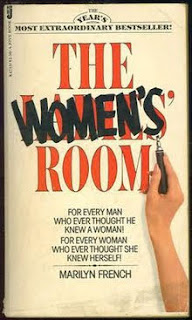
Classics Corner: The Women's Room by Marilyn French; The Troubled Lives of Women in the Mid-20th Century


Classics Corner: The Women's Room by Marilyn French; The Troubled Lives of Women in the Mid 20th Century

By Julie Sara Porter

Bookworm Reviews


PopSugar Reading Challenge: A book published the month of your birthday (February, 1977)

Spoilers: Marilyn French's novel, The Women's Room, could best be summarized as Feminine Mystique: The Novel.

Betty Friedan's 1964 landmark book, The Feminine Mystique is considered the book that kick-started the second wave of Feminism. It laid out the problems that many women had when they married young, had children, and settled into lives as stay at home mothers. Friedan wrote about the "Problem That Has No Name," women who were bored, listless, and unfulfilled with their lives. They had education, but no idea what to do with it and were unable or unwilling to use it for a career or to find a life outside the home. Many of these women developed physical, psychological, and emotional disorders and used alcoholism, drug addiction, and sexual gratification as means to cope with that dissatisfaction. Friedan's book received criticism, but many women read, understood, and related to that situation. Enough to create a movement.

If The Feminine Mystique described the problem and offered potential solutions, then The Women's Room is the case study, albeit a fictional case study. However, French graphically illustrated what happened to these women as they moved from giggly schoolgirls and conformist housewives of the 1950's and early '60's to divorcees, single mothers, and feminist activists of the late '60's and '70's.

The Women's Room focuses on Mira Ward. When we first meet her, it is 1968 and she is hiding in the Ladies' restroom at the college where she is taking classes. However, it has gone through a change like everything and everybody around her. French tells us, "She called (the Ladies' room) that even though someone had scratched out the word 'ladies' in the sign on the door and written 'women's' underneath. She called it that out of thirty-eight years of habit, and until she saw the cross-out on the door, had never thought about it. 'Ladies room' was a euphemism, she supposed, and she disliked euphemisms on principle."

This book is about women like Mira who argued and challenged being called "ladies" and all that the word implies ("young ladies", "proper ladies," sophisticated ladies who dress nicely, behave properly, and don't question society's standards) to being called "women." ("Wonder Woman,", "career women," women who fight for equal rights, careers, and the rights to being treated as equally to men.)

Mira is a product of a post-WWII upper-middle class upbringing, the type of upbringing that expected her to only have an advantageous marriage. All of her education and training, primarily from her mother, was made for that specific goal. However, Mira starts out life independent. She reads books by people like Nietzsche and Radclyffe Hall that are considered forbidden and asks important questions about sex, religion, and politics. At first, she tries to be independent. She doesn't want to be someone's secretary. She would rather have the adventures and be the boss. When she becomes involved with a boy, Lanny, she imagines herself scrubbing the kitchen floor with a baby crying in the background.

After she and Lanny break up, Mira begins dating Norm, a medical student. When she and Norm get married, Mira can feel her own life and independence slipping away. She suggests teaching and ultimately getting a Ph.D. in English Literature. Norm scoffs at the idea, thinking that she wouldn't have time what with taking care of the house, cooking meals, and raising the children. (It never occurs to him to share the household tasks. When she suggests this, it is clear that he thinks the very idea is repellant.) The picture of Mira's dependence becomes clearer and more haunting when after she gives birth to two children, Normie Jr. and Clark, Mira finds herself scrubbing the floor with crying children in the background, exactly like she feared.

Some of the hardest chapters to read are the ones that not only peer into Mira and Norm's troubled married life, but the troubled lives of all of the married couples that surround them. The Feminine Mystique doesn't just hit them, it hits everyone around them. Natalie is jealous when her husband, Hamp starts making eyes at the other women in their circle. Adele has a bad temper that constantly yells at her children and worries when she is pregnant with another. Bliss is engaged in an affair with her best friend's husband. Martha is taking night school courses and becomes involved with a French teacher. Sean and Oriane move to the Bahamas where Sean abandons her, leaving her broke and ill from cancer. Samantha and Simp end up financially stranded after Simp loses his job. The most troubling story is that of Lily, who is abused by her bullying husband and budding sociopathic son into a mental breakdown. Lily moves in and out of psychiatric care and constantly receives electroconvulsive therapy, shock treatments.

What of our main couple, Mira and Norm? Norm subjects his wife to verbal abuse and is judgemental towards his wife and her friends. He neglects his children. One night, he drops a bombshell on Mira when he tells her that he wants a divorce. (The reason is never specified, but is implied that Norm is leaving her for another woman, a woman whom he later marries.) During their separation, a devestated Mira attempts suicide by slashing her wrists only to be rescued by Martha.


This book illustrates the problems that women have with the institution of marriage. The female characters are more three dimensional than the males. They are flawed hurt characters who are desperate for happiness and are instead miserable. The men are flatter, more cardboard, and more interchangeable. It makes sense when the Reader realizes that the book is exclusively told from the female point of view, from a first person female narrator who isn't revealed until the end of the book. It presents the world how she sees it.

In her eyes, men are the dominant force unknowable and powerful. The women around her are the ones who are suffering. The Narrator makes no apologies for how she writes. She challenges the idea of marriage itself and how it transforms people into someone that they don't want to be.
She also mentions how when books are written by men, they make the female characters flatter and less interesting as mothers, children, or love interests. They can't write about women, because they can't get into their heads. (Though she cited that there were exceptions like Henry James.) In retaliation, the Narrator portrays the male characters from her outside perspective because she can't get into their heads.


After the divorce, Mira finds her life completely different. She finds the life that she once wanted. The first taste of freedom is felt when she gives Norm a bill, itemizing all of the work that she did for him all of those years. Even though Norm refuses to pay, she makes her point clear that she is becoming aware of her own mind and desires.

Mira has more freedom to further her education by taking English Literature courses in college. She becomes involved in a sexual relationship with Ben, another student, and meets some wild new friends that navigate her into the Women's Movement and living life on her own terms.


That's not to say that her and her friend's lives are problem free. Isolde, a lesbian, goes from one troubled relationship to another particularly with women who are afraid to take their romance with her to another level. Val, the leader of this group of feminists, wants to start her own women-only separatist community, but seeks vengeance when her beloved daughter, Chris, is raped.

But what differs between these women and the ones before is how they deal with their problems. The women that Mira knew during her marriage are more internal. They are unable to express their discomfort. Their only ways they can challenge their unhappiness is to act upon their frustrations and neuroses. They are so dependent on their husbands, that they can no longer become the agents of change. When that dependence is removed, the Marthas, the Samanthas, the Blisses, and the Lilies don't know what to do with themselves.

The Isoldes, the Vals, and the Chrises are the agents of change. Many of them are divorced or purposely unmarried, so they rely only on themselves. If something goes wrong in their lives, they seek to change it through action. They go through emotional break ups, sexual explorations, and class and work overload but are able act on their own. Part of independence is dealing with the positive and negative aspects of living your own life, becoming aware of your own emotions, and making your own decisions. It is an independence that is won because it is earned

Mira in particular, loves her new found and hard won independence. She enjoys it so much that she turns down Ben's marriage proposal knowing that she will end up with more of the same, another stifling crippling married life of dependence. In the end, Mira realizes that she has achieved the fulfillment that she long ago wanted by herself.

The Women's Room covers that dramatic moment when women challenged their right to be thought of as independent people who should receive equal rights and protection under the law and society. It showed that time when they stopped thinking of themselves as girls and ladies and started thinking of themselves as women.


Friday, November 15, 2019

New Book Alert: Elizabeth Craven: Writer, Feminist, European by Julia Gasper; Wonderful Feminist Biography of a Great Independent Woman Forgotten By History

                                                     
Portrait of Lady Elizabeth Baroness Craven, Later Princess Berkeley, Magravine of Brandenburg-Anspach by Ozias Humphrey


New Book Alert: Elizabeth Craven: Writer, Feminist, European by Julia Gasper; Wonderful Feminist Biography of a Great Independent Woman Forgotten By History


By Julie Sara Porter

Bookworm Reviews

Spoilers: One of the things that I have enjoyed the most about being an Editor/Book Reviewer is learning about different historical people and events, many of which I was previously unfamiliar. I recently reviewed L’Agent Double, Kit Sergeant's novel which featured the infamous Mata Hari and two other female spies of WWI that were just as important but have been overlooked by much of history: Marthe Cnockeart and Alouette Richer.

I just reviewed Lilac Girls, Martha Hall Kelly’s brilliant novel about Caroline Ferriday and the Ravensbruck Rabbits, a group of Polish women who had received dangerous experimental surgeries during the Holocaust.

For another website, I am reviewing a book about William Cooper, an activist who fought for the rights of Australia's First Nations People also known as the Aborigines.

Another interesting colorful figure I just learned about was Elizabeth Baroness Craven, Princess Berkeley Margravine of Brandenburg-Ansbach (1750-1828). Craven was an English noblewoman who had a scandalous and unhappy marriage that ended in divorce. However, she was also an accomplished poet, playwright, translator, travel writer and a forward thinking independent woman who championed women’s causes like education both at home and abroad.

Julia Gasper tells of Craven's fascinating life in her biography, Elizabeth Craven: Writer, Feminist, European. Gasper gives us a full picture of a woman who challenged society's restrictions by living according to her own terms and standards.

Gasper makes it clear from the first chapter that Craven was someone who had to be independent and willing to challenge the standards that she was under. She was born Elizabeth Berkeley, the sixth child and second only surviving daughter of Augustus, 4th Earl of Berkeley and his wife, Lady Berkeley. They were hoping for a second son, the “spare” to add to the “heir,” and could barely contain their disappointment. (A second son, George was born three years later.) In fact, when she was born, Elizabeth was so small and underweight that her mother considered suffocating her, except her great-aunt interfered.

Craven’s mother had no interest in her children particularly her younger daughter. She often neglected and ignored them. Because of this, Craven found maternal warmth in her godmother, great-aunt, and a governess, the warmth that she lacked from her mother. The lack of maternal feeling gave Craven the independence that she needed to survive on her own and challenge the standards held by the women of her mother's day.

Craven had a passionate nature that she inherited from her parents. Before he married, her father had an affair with a married woman that ended when her husband confronted her in public.
Craven's father died when she was five and her mother remarried a man who many thought was an opportunist. Lady Berkeley subsequently gave birth to two more daughters, but her second husband doubted that he fathered the younger of the two. Craven's sister and brothers also had relationships that were the causes of much gossip. These scandalous affairs foreshadowed into Craven's later life and unhappy marriage.


Elizabeth had a sound mind and body that came from strict learning and practice.
She was educated in French, Italian, dancing, drawing and playing the harp. She was educated by the standards of a young girl of her class, but she had a determination to learn more than what she had been given. She was a voracious reader with a passion for history and philosophy and a strong mind for business and finances which helped her aid her first and second husband in their expenditures. This education helped her learn and understand a world beyond her limited role as an English noblewoman.
She was also given cold baths and health food to toughen her up and keep her figure. When she grew, she participated in physical activity such as horseback and eating health foods. This strenuous physical regimen also played a large part of her adulthood when she observed other women's flaccid often weary nature and reasoned that it may have developed from increased dependence in their relationships.


Craven's marriage to William Craven already seemed like an attraction of opposites. She was from a wealthy noble family; he was a clergyman's son but the heir to a distant noble relative. She was educated and learned in many fields; he was described as “a plain and dull fellow whose education at Rugby and Oxford taught him very little.” She liked reading books, art, and music; he liked horse and dog racing, hunting, and reading newspapers. She was well-mannered, polite, and observant; he was uncouth, abrasive, and bad tempered. Their marriage was not going to last and it didn't.

The marriage resulted in the birth of 7 children but there were several incidents of physical and emotional abuse largely from William to Craven. There were also repeated accusations of infidelity from both sides. Finally after 13 years of marriage, she and William divorced. While the divorce gave her freedom and independence, it also cost Craven dearly. She gave up most of her homes and custody of all but one of her children.

She was bandied about and made the subject of gossip and rumor mongering such as that she had married another man or that she was really pregnant. Ironically, most of their closest friends and acquaintances preferred her because of her friendly outgoing nature, over William's brutish often intoxicated attitude.
Of course, once Craven did something about her unhappiness she was then derided. Her situation reflected the double standards many had at the time where they sympathized with a woman who was unhappily married but vilified her once she got out of the marriage.


Craven was a strong intellectual woman and like many intellectual women of her day, she hosted salons where she invited the best authors, philosophers, scientists and players during the Enlightenment Age. However, unlike many other women, Gasper revealed that Craven was not content to just invite them and be the hostess. She wanted to be one of the intellectuals. This idea of producing her own work and many of her views such as abolishing slavery and creating stronger women's rights put her at odds with her peers, particularly the bluestockings, the older educated sophisticated women of Craven's class.

Craven wrote many works and like many creative and talented people found inspiration in the world around her. Many of her works reflected her philosophical and political views and also provided commentary on her unhappy marriage.
She was the subject of various poems which recounted her witty and learned nature in contrast to William’s boorish dullness. Her first published works particularly the poem, “Lines Addressed to the Rev. Charles Jenner” were love letters to the lovers that she had during her marriage. One in particular was Rev. Charles Jenner, a minister and academic who wrote plays and comic verse. Their affair ended long before Craven's divorce happened but it was Jenner who encouraged Craven to publish her writing.

Craven also translated and wrote a number of plays, many of which questioned the role of women in society. One play, The Miniature Picture, seems like a typical mistaken identity romantic romp similar to Shakespeare's comedies like The Merchant of Venice or As You Like It. But buried inside is a conversation between a man and a woman disguised as a man who discuss marriage and divorce. The protagonist, played by Craven herself in the original performance, asks if the man prefers “marriage based on fear” and inquires if the man would prefer to hurt his wife to the point that she fears him rather than see the marriage end amicably. This was a subject important to Craven because of her own troubled marriage to William.
Another play that reflected her views was her translation of the Moliere play, The Statue Feast, about the notorious rake, Don Juan. Besides retelling the play, Craven added a prologue that discussed war in France. More importantly, she added an epilogue which invited the audience to imagine England being governed by a Parliamentary of women. While the suggestion was clearly made in a tongue-in-cheek manner (there would be “a tax on gossip and slander.”), this epilogue revealed that Craven wanted to break free from the constraints held by male-dominated restrictions and law.


By far Craven's most important feminist work occurred after her divorce. This was Letters from a Peeress of England to Her Eldest Son. Written as a series of letters to her son, William, Craven described her unhappy marriage and protested the legal status of wives under English law. It blatantly attacked the view that women should be under complete control of her husband. Craven warned her son to look at his wife as an equal and not as property. This was a strong and bold statement for that day.
It is a shame that Lady Elizabeth Craven is not as well known as other early feminists such as Mary Wollstonecraft or Sojourner Truth. Letters from a Peeress of England, could be considered a landmark feminist work along the lines of Wollstonecraft’s A Vindication of the Rights of Women, Abigail Adam’s “Remember the Ladies” letter, or Truth's “And Arn't I a Woman?” speech.


After her divorce, Craven traveled and acquired a reputation as a travel writer. Most of the book is spent describing Craven's travels and are brilliantly recaptured with all of the sites, experiences, and friendships and romances Craven made. When Craven and her son, Keppel visited Genoa, Italy they saw first-hand the cruelty of slavery. While Craven protested the practice in theory, her time in Genoa allowed her to be up close to the people suffering under the rule of heartless masters. She became more vocal in her hatred for the practice.

Many of Craven's travels allowed her to observe the treatment of women in other countries and they did not always leave a favorable impression on her. She was impressed by Catherine the Great 's leadership in Russia, particularly how she opened doors to education for all women. She also found the Empress to be a gracious and welcoming host.
However, Craven's writing also engaged in some English snobbery. She originally thought that the Russian feudal system was no better than slavery.
But she thought that the peasants were better cared for and healthier than slaves so she reasoned that they must have been treated well. Knowing that the Russian monarchy ended over one hundred years later and much of it caused by the cruel treatment that landowners held over the peasants, Craven's words would make many Readers cringe. However, it also served to remind us that even though Craven was a woman who was ahead of her time in many ways, she was also a woman of her time. Many of her opinions often were colored by her own life and experiences and observations of what she saw in front of her.

Another moment that illustrated this was Craven's visit to a Turkish bath house in Greece. Craven engaged in body shaming by describing the women as fat and said that the sight “would have put (her) in an ill-humor with (her) sex in a bath for ages.”
Her opinion was incredibly vain and modern Readers would consider it insensitive and abusive. However, Craven was not ashamed strictly because of their appearance. What upset her was the treatment of women that caused their appearance. She realized that these women lived a passive, captive existence under their husbands, lovers, fathers and so on. This existence did not allow the women much of a chance to go outside and engage in physical activity.


Craven moved to Germany where she eventually married the Margrave of Brandenburg-Ansbach. However, she still remained outspoken about issues that were important to her. She tried to start a school for girls but backed down over objections from the public. She fostered and eventually adopted two girls who were distant relatives.
She also composed her travel experiences into a book, A Journey Through the Crimea to Constantinople and wrote more plays,one of which Nourjad, had a Turkish setting inspired by her visit. Another play, La Philosophe Moderne was a satire of the French Revolution.

After her marriage to the Margrave, Craven and the Margrave returned to England where she hosted and performed in plays.
Craven also got involved in the unhappy marriage between Prince George of Wales, the future King George IV, and his wife, Princess Caroline who he was accused of treating horribly. George married Caroline under protest only so his debts could be paid and continued to abuse, shun, and flaunt other lovers in front of her.
Craven recognized the pattern of her own troubled first marriage and defended Caroline in public. Craven even wrote a play called The Princess of Georgia: An Opera in Two Acts which has the theme of marriage for duty vs. love and took a stance in defending the real-life princess on whom the story was based.


Later in life, Craven traveled again and wrote her memoirs, which of course were considered scandalous because they frankly discussed her extramarital affairs. She spent her remaining days in declining health and being cared for by her youngest son, Keppel.
Lady Elizabeth Craven managed to survive the gossip about her pastand even gained a second life in the process.

Lady Elizabeth Craven, Writer, Feminist, European is a wonderful book about an amazing woman. Hopefully, this book will bring Craven's story out to the public and she will be looked at as one of the most prominent Feminists of her day.

Wednesday, April 24, 2019

Weekly Reader: Emmie of Indianapolis by Kay Castaneda; Brilliant Slice of Life Stories Detail A Girl's Coming of Age in Indianapolis


Weekly Reader: Emmie of Indianapolis by Kay Castaneda; Brilliant Slice of Life Stories Detail A Girl's Coming of Age in Indianapolis

By Julie Sara Porter

Bookworm Reviews


Spoilers: Kay Castaneda's Emmie of Indianapolis is one of those coming of age books that take various moments in the young protagonist's life to depict their developing maturity. Emmie of Indianapolis takes that standard and does it well.

12 year old, Emmie's mother announces that she is divorcing her father and moving to Indianapolis with Emmie and her younger sisters, Jennie and Cassie. Understandable but difficult today, rare and even more difficult in 1963.

Emmie and her family have to adjust to moving to a small apartment above a tavern where their mother works. There are some tense moments as the girls have to deal with some pretty tense situations such as a pedophile visitor entering their apartment to be stopped by a neighbor, a disgusting landlord nicknamed “Ogre”, and their mother's slow descent into alcoholism.

Emmie befriends Joey, an African-American boy, George, a Chinese boy, and Polly, a Romanian Gypsy girl. Emmie encounters racism as her new friends are bullied by other kids in school. When Emmie defends her friends, she is ostracized because of her friendship with them and also because of her family's Catholic religion contrasting with the mostly Protestant student body.


While there are hardships in the book, Emmie of Indianapolis also has plenty of sweet engaging moments to spare. Many of them involve Emmie, her sisters, and friends exploring her new city. Many of the streets and landmarks like Monument Circle, are accurately described and the kids have fun shopping and sightseeing.

They also are able to one up their bullies by their scholarly efforts. They participate in a Spelling Bee and it's a genuine victory when George wins to the pride of his friends and parents. Emmie and her friends really shine in these moments.

Emmie's parents shine in their moments with Emmie and her sisters. The reasons for their divorce is never explained but they clearly love their daughters. The secret is that they are flawed but not irredeemable. Emmie's father takes them on weekend visits and is there during an emergency. While her mother is beginning an alcohol dependency that is noticeable when Emmie withdraws from uncomfortable with conversations about alcohol, her mother is still written as a kind loving woman. She cares for the girls and wants to protect them from danger. The alcohol may just be a sign that she is overwhelmed.

Besides finding strength in her friends and family, Emmie finds strength in her Catholic faith. When they arrive in Indianapolis, Emmie looks for a Catholic Church and is pleased when she finally finds it. She uses her knowledge in religion to serve others like her friends and feels a spiritual presence during times of stress. It makes sense that Emmie wants to become a teacher or a nun so she can serve others as an adult.

Emmie of Indianapolis is a charming slice of life with plenty of darkness but plenty of sweetness to spare.