Thursday, March 4, 2021

New Book Alert: Moonlight Becomes You (An Eidola Project Novel Book 2) by Robert Herold; Supernatural Horror Covers Spiritualism and Racism in Post-Civil War USA


 New Book Alert: Moonlight Becomes You (An Eidola Project Novel Book 2) by Robert Herold; Supernatural Horror Covers Spiritualism and Racism in Post-Civil War USA

By Julie Sara Porter

Bookworm Reviews


Spoilers: William James (1842-1910) is a prominent name in the worlds of psychology and parapsychology. The elder brother of author Henry James, William was a well established psychologist and philosopher, even considered the "Father of American Psychology." He was a firm believer in the pragmatic school of thought that the value of truth was dependent on the person who held it. He was also interested in the field of metaphysics and Spiritualism and was a founding member and vice-president of the American Society of Psychical Research. James observed mediums, notably Leonora Piper and evaluated 69 reports of her mediumship. He also contributed studies on mental telepathy. Even though many challenged his research, James' work was a contributing factor that paved the way for parapsychology to be treated as a legitimate science. 

Well with that real life background, William James would be a perfect candidate for a historical mystery horror series and well he is.


William James is one of the ensemble cast of The Eidola Project, Robert Herold's series in which James and his crew investigate supernatural occurrences in the Post-Civil War United States. The other project members consist of: Annabelle Douglas, James' second in command, a hypnotist with a secret addiction to laudanum, Dr. Edgar Gilpin, an African-American physicist and somewhat of a skeptic who is a frequent target of racism, Sarah Bradbury, a former sideshow/vaudeville medium who allows ghosts to speak through her and gets psychic impressions by touching those around her, and Nigel Pickford, a Confederate Civil War veteran and recovering alcoholic who has terrifying precognitive abilities but is cursed to never be believed. This is a group that not only witnesses terrifying things but are equally haunted by their own troubled past, secret vices, and their recent acquaintanceship with each other which still carries a great deal of mistrust and suspicion.


The latest case, Moonlight Becomes You, causes much of that mistrust and suspicion in house to explode while the Eidola members investigate a series of graphic murders. After African-American doctor, Joseph Curtis becomes the latest to be mauled to death by a werewolf in the segregated town of Petersburg, Virginia, Rev. Green calls on the Eidola Project to investigate these odd attacks. 

The James Gang not only has to deal with this monstrous creature who will tear its victims to pieces as soon as look at them, but they also have to deal with racists and the Ku Klux Klan, mistrust within the Petersburg community, and their own infighting before they can function as a team and take on the werewolf.


Moonlight Becomes You is a terrific book that captures both supernatural and real horror. The werewolf attacks are extremely violent and bloody. This is not a corny Hollywood cheese fest. When a person is attacked by the werewolf, they are ripped apart with blood and vital organs exposed. The attacks are not to be read unless the Reader has a strong stomach. The werewolf also lives off of pure animal instinct and will attack someone that they know and love just as easily as someone that they despise, leaving its human form to be tormented by intense guilt with only a slight comprehension of what they have done.

Along with the werewolf attacks, supernatural horror can be found within the Eidola Project members themselves and the people that they encounter. Marie, a vodou priestess is tortured by her fear of the werewolf and is institutionalized. In one of the creepiest passages, she commits self-harm by beating herself in the head while strapped in the asylum. 

Another creepy character is Monique, a witch and former lover of Nigel's. After their union ended in disaster, Monique leaves him with 

a curse as a parting gift. This curse ends up filling his thoughts and dreams so that he not only sees visions of the future but is tortured by hauntings of the people in the past that he couldn't save. Monique gets a sadistic delight out of driving her ex to alcoholism and near insanity.


Speaking of which, Nigel and Sarah's abilities are pretty terrifying as well. Throughout the book, Nigel suffers from PTSD hearing the voices of the men in his regiment accusing him of letting them die. He also has images that he can't always explain of things that will happen and even though sometimes there might be a cast change in those visions, they still happen (for example he dreams that Edgar will be attacked by the werewolf, but Edgar survives only for someone to get attacked in the same way). So Edgar's visions are inevitable and nothing can stop them.

Sarah's abilities also provide some scary moments. When she touches the late Dr. Curtis's sleeve, she sees the full attack with herself as Curtis. Another time she performs a seance and talks in the low baritone voice of an African-American man who reveals a secret known by his bemused and frightened friends. Both Sarah and Nigel are mentally scarred by their abilities that drive them to depression, anxiety, exhaustion, fear, and an inability to connect with anyone else because of what might happen to them.

These books suggest that having these supernatural abilities is not a pleasant experience and if not properly trained and understood could result in exploitation, insanity, and addiction to control them.


Unfortunately, the horror doesn't end with the otherworldly. There is enough fear found in the physical world as well, one that the Eidola Project faces firsthand. Many question the group's interracial and unisex makeup. They are also the frequent targets of the Ku Klux Klan. Edgar is met with hostility and physical and verbal attacks from the Klan. When he falls in love with Saphne, a local woman, the

Klan attacks increase especially, when he learns that she had been frequently raped by her white employer.

One of the chapters that perfectly reveals the racial tension that surrounds the novel is early in the book before Dr. Curtis is killed. Curtis tends to a white woman in labor who unfortunately dies in the process. Even though Curtis did everything that he could, she still died. Curtis knows that her husband, a long standing Klan member, would accuse him of murder even though he tried to help her. He is not surprised when he is surrounded by the white robed Klansmen.

While there technically is no correlation between the werewolf attacks and the Klan's presence, there is a possibility that the disruption of racism and hatred found in the physical world plays just as much damage as the supernatural attacks from the werewolf. That this hatred in the physical world bleeds into the disruption in the metaphysical world.


Along with the human and metaphysical world, the Eidola Project members are conflicted within themselves. James tried to act as a loving and sometimes exasperated father figure to four very dysfunctional and troubled adults.

Annabelle and Nigel both suffer from their addictions to laudanum and alcohol respectively. James is concerned that these addictions could affect their minds and abilities and tries to cut them off. However, subsequent final chapters show both reaching for the bottles in private suggesting that climbing out of their addictions will be long and painful.

Nigel and Edgar both have to deal with racial tension as well. Nigel represents the former white Confederacy, one who spent his life looking at black people as inferior. He simmers with distrust toward Edgar, a black man who represents everything he isn't: educated, eloquent, even tempered to a point. He resents having to treat Edgar like an equal. 

Likewise, Edgar represents the black men and women after the Civil War. Though Edgar was free and acquired an education, he is still looked upon with mistrust and has to jump through twice as many hoops as his white colleagues to receive even a fraction of acceptance from them. Through both men's conflicts with each other, we see the figurative ghosts of the past of slavery and war and how they still leave scars on their present psyche. Though some moments such as when the two save each other from the werewolf and when they refer to each other as a friend during an argument with locals, suggest that friendship and acceptance may be in the near future.


Moonlight Becomes You is part of a very brilliant series that covers how both the physical and metaphysical world can be haunted and healed by our actions.




Wednesday, March 3, 2021

Weekly Reader: Cardinal Machines (Cardinal Machines Book One) by Tracy Eire; Engaging Science Fiction Mystery YA Romance Explores The Union Between Woman and Machine


Weekly Reader: Cardinal Machines (Cardinal Machines Book One) by Tracy Eire; Engaging Science Fiction Mystery YA Romance Explores The Union Between Woman and Machine

By Julie Sara Porter

Bookworm Reviews


Spoilers: Tracy Eire's Science Fiction novel, Cardinal Machines,  explores the complex relationship between humanity and machinery. Nothing new in that, except that machinery is personified by an android taking the form of a handsome young man and humanity is personified by a cynical young woman working as a private investigator. Also that the relationship between the two develops into a potential romance, so Cardinal Machines explores the complex quasi romantic relationship between woman and machine. 


Katherine Zoey Cardinal Collins had a pretty rough life even though she is still in high school. Her parents died when she was very young leaving her to be raised by aunt and uncle. Her aunt was reported missing and presumed dead. Her uncle turned to alcoholism to cope with his grief and trained his niece to work in his very dangerous field of private investigation to the point that after he died, she took over his business.

Zoey has been cut off from her mother's wealthy powerful family, the Cardinals, and she has been struggling financially ever since then, though she refuses to ask for a handout. She is estranged from the Cardinals until she learns that her great aunt Katherine, for whom she was named, has died leaving her the heir to a custom ocean. Before Zoey can get out a surfboard and plunk a flag in the middle of the Pacific claiming it for the Cardinals, a handsome dark haired man arrives with a perfect mannequin like body and a stilted emotionless way of speaking. His paperwork reveals that he is C001-Oisin, pronounced "Ocean," and is fresh from the assembly line of her great aunt's robotics company. 

Ocean is an android specifically made for law enforcement, so Zoey can get some assistance in the pursuit of dangerous criminals. Katherine, the elder, apparently left Ocean to Zoey as a peace offering and to remind her that no matter how far she runs, she is still a Cardinal so she might as well suck it up and live with it.


Cardinal Machines blends the tone of Mystery, Science Fiction, YA, and even some Romance to create a work that is the best of all of these genres. The Science Fiction aspects are certainly the most prominent. The setting is in the near future in which AI is not yet a constant presence, but people are in fear of it becoming so. Many people make derogatory comments and threats toward Ocean to the point that Zoey and his former colleagues at the LAPD spend as much time protecting him from violent technophobes and other androids who are programmed to kill, as much as they protect the flesh and blood citizens around them from dangerous other humans. 

There are also real questions about how much Ocean has adapted to humanity. He has a very strict honor code which he follows the law to the letter and he doesn't always understand the shades of gray nuances that sometimes following a dangerous person can provide. In one chapter, he follows a suspect relentlessly while Zoey learns the suspect's background and why he chose to act as he did. As far as upholding the law, Ocean is a seasoned veteran but when it comes to understanding humans, he is still a rookie.

That also applies to his emotional state and his ability to reason and question his programming. As Zoey gets to know Ocean, she sees him adapt beyond his initial minor emotional responses and act out of sacrifice, self-preservation, feeling and in other ways beyond his programming. When they begin to experience a deeper connection, he moves beyond a faceless being of technology and behaves almost human. The questions of how human AI can become and how their experience with humans changes and adapts them is answered through Ocean's relationship with Zoey and others.


Cardinal Machines is not only a tribute to the future but to the past, specifically the hard boiled detective genre notably through Zoey's character arc. Zoey is sort of like what would happen if Dashiell Hammett's Sam Spade or Raymond Chandler's Phillip Marlowe adopted a daughter and exposed her to the dangerous elements that they lived with day after day. The results are a tough talking rebellious cynical teen who is much harder than the other high schoolers around her. When the other kids rebel, they might sneak out past curfew or steal the family car for a joyride. When Zoey rebels, she becomes a bounty hunter to search for dangerous criminals for money. Nancy Drew she ain't.

Sometimes Zoey's dangerous profession catches up to her as her apartment is shot at, she is drugged and kidnapped, and either she or Ocean are held up multiple times throughout the book. Her experiences with society's worst gives her a very negative perspective on humanity as well as an almost addictive thirst for danger. She lives for the danger of catching crooks, whether it's an ex husband who owes for child support and doesn't mind attacking Zoey with a gun or a robotics employee turned corporate spy who might have been a victim of an organized crime murder. It's the excitement and adventure that draws her as much as the idea of protecting innocent people from violent ones. Her experience with the dark side of human nature makes up for Ocean's innocence and confusion, making them a perfect couple that fill each other's needs.


Even though Zoey is in a hardened profession, she is still a teenager and in high school. That's where the YA aspect comes in. It would almost be a distraction from the philosophical science fiction questions and the hard edges mystery suspense, but somehow it works as almost a lighthearted contrast to the rest of the book. The school age gossip of hook ups, break ups, mean teachers, and popular kids is an almost welcome distraction to the darker stuff circling around Zoey on a regular basis. Zoey's closest friends are popular girls, Clara and Anne and Noah, who is at odds with his family because of his sexuality and who harbors a not so secret crush on Ocean. The three friends defend Zoey when townspeople attack her for the audacity of owning an android or when schoolmates spread rumors about what she and Ocean are actually doing. Because of their loyalty, Clara, Anne, and Noah form a loving and nonjudgmental family for Zoey in the absence of her biological one and accept Ocean into their circle as well. They provide an emotional center in Zoey's life, an emotional center that she will  defend.


The emotional center in Zoey's life is also provided by Ocean as he does for her. Zoey is certainly initially aroused by Ocean's attractiveness and he proves to be a good partner in crime solving.  They balance each other out with Zoey's street smarts and experience with the dangerous aspects of humanity and Ocean's more educated approach and ability to research information instantaneously. They become very protective of each other and often pull one another out of danger or draw a weapon on someone if they sense that their partner is in danger. 

Zoey addresses the physical aspects of their partnership by kissing Ocean and he responds in a very um shocking manner. What draws them is not only their physical connection, but their emotional one. Ocean is a learning android and he learns to care for and protect Zoey. He is able to question and rebel against his programming because of his feelings towards her. Through her, he understands humanity. He doesn't see Zoey as one of several who need his help. He sees her as Zoey, someone unique and individual.

In her own way as Ocean questions his initial programming, Zoey questions hers. She was afraid of getting close to anyone because she felt surrounded by death. She didn't want to lose anyone else or feel responsible when they died. Ocean breaks down that wall she put around herself as she breaks down his. She opens herself towards him. When they finally get together, it is a completion that they both evolve and adapt themselves.  Because of this, Zoey and Ocean are among my favorite romantic couples that I read this past month.


Cardinal Machines blends Science Fiction, Mystery, YA, and Romance to create a child that combines all of their aspects into one. This child, like its protagonists, questions its earlier programming influences and adapts into something different and unique.


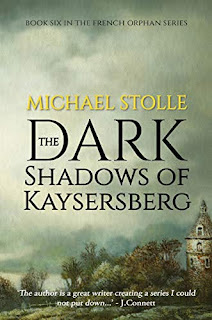
New Book Alert: The Dark Shadows of Kayserberg by Michael Stolle (Book Six of the French Orphans Series); Brilliant Adventure Romance Covers Scandal, Murder, and Conspiracy in 18th Century France


New Book Alert: The Dark Shadows of Kayserberg by Michael Stolle (Book Six of the French Orphans Series); Brilliant Adventure Romance Covers Scandal, Murder, and Conspiracy in 18th Century France

By Julie Sara Porter

Bookworm Reviews


Spoilers: Michael Stolle's The Dark Shadows of Kayserberg is the sixth novel in the French Orphan series in which Pierre, a young impoverished orphan ascends to the title of the Marquis de Beauvoir and makes an advantageous marriage and very powerful dangerous enemies set against the backdrop of 18th century France in the years of corrupt nobility before the Revolution. The books are tied together to Pierre's life and struggles, so it's hard to separate them. However, the sixth book, The Dark Shadows of Kayserberg changes tactics by presenting a different lead protagonist and making Pierre a supporting player.

 That is all for the better if you, like me, haven't read the other novels in the series. Recurring characters show up but do so in a way that explains their previous connections to the other novels or make you think that you met them for the first time. Plot points are summarized clearly as though these were characters who spent their lives having adventures that you might not have known the full story but would not feel lost if you didn't follow it in the first place.


Rather than Pierre, the main character is his best friend Armand St. Paul, son of the Marquis de St. Paul. The St. Paul Family has made a lot of powerful enemies, most particularly Cardinal Mazarin, a corrupt man of the cloth who studied under the Cardinal de Richelieu (The Three Musketeers'  best fiend). Mazarin may have been responsible for the death of Armand's oldest brother. Since his middle brother has become a priest, Armand is left to inherit not only the title, money, and estate, but the target on his back that Mazarin wants to fire upon. 

When another nobleman taunts Armand into having a duel and the hot headed and not quite bright Armand reciprocates, it's time for some damage control and life saving (not to mention a few clunks on Armand's head for being an idiot to walk into such an obvious trap and nearly either getting himself killed or wanted for murder). Pierre, Armand's father, and Pierre and Armand's friend, Francois arrange for Armand to go incognito to Kayserberg, where an old friend of Armand's father resides. Armand can hide out there while Mazarin's men chase a look-alike of Armand's elsewhere.

Unfortunately, Armand learns that corruption, scandal, and murder can be found anywhere. When he resides at the home of Guillaume, Count of Kayserberg, he finds himself falling in love with Elisabeth, Guillaume's ward and getting caught in a power struggle between the count, his scheming younger wife, Catherine, and his abusive brutal brother, Otto. Armand's stay in Kayserberg is not bound to be a long one.


The Dark Shadows of Kayserberg has all of the adventure of an Alexander Dumas novel with the scandal and gossip of Laclos' Dangerous Liaisons. It's hard to tell which is more numerous in the book: thrilling one on one fights and daring escapes from traps or bickering nobles playing musical beds and plotting to do away with each other. The characters are an adventure seeking roguish bunch who will either fight with you or bed you, some would do both within an hour.

The opening gives us an idea of the world that we are in and the type of characters that we meet. Armand is waking up in the boudoir of the beautiful and very married Countess Eloise de Verneuil. Neither Armand nor Eloise harbor any illusions about true love. For Armand, he gets to bed a beautiful woman and maintain his status as a rogue. Eloise gets to be in control as the elder party and gets pregnant since her impotent husband cannot provide a child. As for her husband, he just wants an heir. This open relationship is emphasized when after Armand is exiled, Eloise tells his parents and expresses concern the way one would about an old acquaintance that they barely know who's in trouble. Eloise wishes him well, but moves on. He did his part by giving her a child that will be raised by her and her husband. Armand's work is done.


This book is full of characters like that who have hidden agendas and are concealing whatever schemes that they are doing. Mazarin plays a loyal man of the Church and an upstanding individual but he is carrying on an affair with the queen and orders the assassinations of rivals as assuredly as a mob boss.

 Catherine acts like a loving wife to Guillaume and adopted mother to Elisabeth, content to be stuck in a small kingdom when in reality she tries to seduce her hot young houseguest, abuses her husband's ward, and plots Guillaume's death with his brother. 

Even characters like Armand and Elisabeth have dark agendas. Armand is a womanizer and has a violent temper against people that he doesn't like while Elisabeth, longing for freedom from her isolated castle, doesn't mind resorting to um explosive means to engineer hers and Armand's escape. 


This is a world where if this is the usual behavior of the average royal, noble, and church member then it's easy to see the French Revolution knocking on the door a few years later. Tellingly, we don't see many poorer characters except servants, mercenaries, innkeepers and others whose job it is to serve the nobility. The servants like Elizabeth's maid, Amelie and Armand's valet, Mathieu are very helpful to the plot and good characters in their own right. (Amelie and Mathieu even develop a romance the same time Armand and Elisabeth have theirs). But the actual suffering of the poor is far away from these characters, exploring the wide socioeconomic gulf that this time provided which allowed no real interaction between rich and poor. The wealthy nobles of the time resort to decadent distractions and devious plots to keep their hold on a way of life that is in the process of dying around them.


There are also plenty of daring suspenseful moments that hearken to the French adventure novels like The Scarlet Pimpernel or The Three Musketeers. From the beginning where Pierre, Francois, and Armand's father use subterfuge to hide Armand from Mazarin and his associates, the book is an exciting ride of suspense, disguises, duels, and characters who outfight and outthink each other. When Elisabeth and Armand leave Kayserberg through the mountains, Pierre helps them sneak away with assistance from hired mercenaries and helpful villagers while Mazarin gets his own spy into the works. Pierre, Francois, and Armand are a clever trio who tease each other with witty repartee but will use muscle and or brain to defend each other.

Elisabeth also proves to be a valuable asset to their team. When Armand is accused of a death in Kayserberg, Elizabeth sets fire to a wing, a fire which gets out of hand, to help him escape. She also manages to get out on her own when Catherine and Otto resort to kidnapping her. She instantly fits in with Armand, Pierre, and their friends when true to his teasing nature, Pierre says that anyone who sets fire to a building is perfect for Armand.


The Dark Shadows of Kayserberg is a brilliant novel that captures not only the adventurous romance of 18th century France but it's decadent scheming and conspiracies as well.

Saturday, February 27, 2021

March and April's Schedule


March and April's Schedule

By Julie Sara Porter

Bookworm Reviews


As usual, I went overboard with my expectations and only achieved half of my reading goals. Well March is another month and I will move many of the books up to the month. Afterwards, I have many new titles planned to celebrate Women's History Month, books written by and starring women: historical, mysteries, science fiction, and fantasy. It should be quite and interesting month.


Update: I injured my shoulder this past week so everything is getting pushed back. All books will be read as promised but this list will go into April to put less stress on myself to rush through the month.


As always, if you have written or know of any new books, do not hesitate to recommend them for review or editing, I am always glad to help.

You may reach me at

Facebook

Twitter

Linkedin

Email:  juliesaraporter@gmail.com.

Rates are as follows:

Beta Read….$30-50.00

Review $35-55.00*

Research $75.00-100.00

Edit-$100-200.00**

Proofread-$100.00-200.00**

Ghostwrite-$200.00-300.00**

Author-$300.00-500.00**

*Applied to certain New Book Alerts and Weekly Readers only, aside from previous arrangements from groups like BookTasters and Blackthorn Book Tours. 52 Funnels will also be free, because most authors were not notified.

**Depending on project size

All rates are subject to change


Cardinal Machines by Tracey Eire

The Dark Shadows of Keysbourg by Michael Stolle

Crazy in Paradise by Melanie Summer

Tomboys Don't Wear Pink by Christina Benjamin

Returning for Valentine's by Victoria Pinder

Time and Again by Emma Strong

The Transatlantic Slave Trade by Captivating History

The Underground Railroad by Captivating History

Skyrocket Your Career by Raj Subrameyer

Creative Manifestation and Meditation by Amara Hoeneck

Hacking Your Destiny by Karl Lillrud

Energy of Love By Susan J. Witt


The Bookworm's Guide To Dating by Emma Hart

If The Shoe Fits by Laurie LeClair

Captured by His Highland Kiss by Eloise Madigan

Wicked Design by Lauren Smith

Cruel Promise by K.A. Linde

Enchanted at Buckthorn Manor by Emma Randall

Moonlight Becomes You by Robert Herold

Something for Bebe by Neil A. White

Rosemary for Rememberance by Nikki Broadwell

Trapped in Time by Denise Daye

Canvas of Time by Amelie Pimont

Centricity by Nathaniel Henderson 

Tess of the D'Urbervilles by Thomas Hardy


Lady Be Good by Pamela Hamilton

Gilded Dreams by Donna Russo Moren

7 Days in Hell by Iseult Murphy

Echoes of the Past by Bruce Hughes

Spirit Sight by Marie Powell

Mother by C.M. Adler

Miss Mabel's School For Girls by Katie Cress

Mystic Guests by Leanne Lewis

Murder Under A Blue Moon by Abigail Keam

Kill Three Birds by Nicole Givens Kurtz

Mistress Suffragette by Diana Forbes

Tales of the Hinterland by Melissa Albert


The Half-Light by A.D. Lombardo

The Seeds We Sow by Gary Beene

The Serpent Queen by Tyler M. Mathis

Betrayal at Ravenswick Manor by Kelly Oliver

Starsight by Brenda Hiatt

A Hell of a Way to Die by A.K. Gregory

The Art of Remembering by Alison Ragsdale

The Secret Life of Sofronisba Anguisicca by Melissa Muldoon

An Unusual Botanist by Janis Linford

Maids of Misfortune by M. Louisa Blocke

Women's Weird Edited by Melissa Edmondson

The Great Women of Heron Lake by Deanna Lynn Slatten


As always, Happy Reading!


New Book Alert: The Dukedom of The Beast by Tiffany Baton; Beauty and The Beast Tale Set in The Regency Era is Rich With Great Characters and Suspense


New Book Alert: The Dukedom of The Beast by Tiffany Baton; Beauty and The Beast Tale Set in The Regency Era is Rich With Great Characters and Suspense

By Julie Sara Porter

Bookworm Reviews


Spoilers: With apologies to Walt Disney Music, Alan Menken, and the late Howard Ashman, Beauty and The Beast may be a tale as old as time but it still can be the inspiration for a winning Romamce set in any time period. (Actually, as we will soon learn, fairy tales are a huge inspiration for many books set in many time periods.) Tiffany Baton's The Dukedom of the Beast is a Regency era variation of this familiar tale and in of itself is rich with great characters and an engaging suspenseful plot.


Lady Nancy Bolton, daughter of the Duke of Cornington, has her life set out for her. She is engaged to Timothy Lockhart, Marquess of Honeyfiield when at a ball, she is sexually assaulted by Viscount Geralt Hodge. Even though she pushes him off, Nancy is blamed for the event. Unfortunately, this is another tale as old as time: when a woman gets assaulted, she is often the one that is blamed and is judged for it while the man gets off with no punishment whatsoever. Timothy ends the engagement and seeks a bride with a less tarnished reputation. Geralt continues his cred as a rogue with no consequences, will no doubt still be seen as a stud by his friends, and look for other young women to abuse. Nancy is the one left as the subject of scorn and gossip and is socially exiled: a woman with an independent mind and spirit but unable to fit in with the expectations set for her. She is left an outsider with a scarred reputation.

In fact, the only person who would have her is another outsider and there is one. Phillip Wallace, the Duke of Peterhum, is also an outsider left scarred. However, his scars are physical not emotional. An attack left him disfigured and claimed the life of his parents. Since then he has been raised in seclusion by his uncle, Jeremy Wallace. Since Nancy is a childhood friend, he formally requests permission to court Nancy himself. Nancy is incensed at the thought and even more so when her father agrees to the proposal. Then, she goes to meet Phillip herself…


The Dukedom of the Beast is a Regency Romance done right. It doesn't praise the rules and standards of the day, filling it with a false nostalgia. It opens up the double edged sword of a society where a woman can have a damaged reputation or a man can be physically injured by others and they are the one who are the ones who are left abused and abandoned. Nancy and Phillip's conflicts with the ton show that a society that is built on a standard of artifice and perfection is bound to fall when that perfection is rarely achieved.


A humorous dialogue occurs when Nancy and Phillip discuss habits and interests and are found to be incompatible. (She likes the pianoforte, going to the theatre, and reading novels. He likes the violin, reading nonfiction, and horseback riding.) In a normal courtship, more might have been made of those differences, but their loneliness and mutual understanding transcends those differences as they see the world through each other's eyes.

Both Nancy and Philip are imperfect people and their relationship prospers because of that imperfection. In fact, they develop an understanding and empathy towards each other that they may not have had if they weren't mutual outsiders.


Once Nancy and Phillip find that common ground and develop an understanding, complications occur that trouble their courtship. Phillip is attacked by an unknown assailant. Nancy is being stalked by a mysterious disguised figure and a wing of Phillip's estate is set on fire. 

The perpetrator behind these events is revealed in a well done plot twist that is a decent surprise. This twist also plays into the repressed frustrations of the day when some people feel that they aren't given their due. They have very little in their lives that they can claim is theirs and are driven by boredom and frustration to the point of insanity. 


The Dukedom of the Beast is a brilliant commentary on the Regency period and reveals that sometimes those that are outside of society  understand and love each other. Once those standards are removed, they no longer see the beastly and instead they recognize the beauty.


Weekly Reader: The Earl's Sinful Quest by Lisa Campbell; Dark and Mature Regency Romance Shows Love After Death


Weekly Reader: The Earl's Sinful Quest by Lisa Campbell; Dark and Mature Regency Romance Shows Love After Death

By Julie Sara Porter

Bookworm Reviews


Spoilers: The Earl's Sinful Quest is among the darker more mature of the Regency Romances that I read this month. The female protagonist is in a different stage in her life from the other women. She isn't a young virginal woman in her late teens or early twenties awaiting her Season so she can catch a potential husband and first love. Lady Amelia Turner has already been through that. In fact, she is a widow and currently the Dowager Countess of Wilton. 

Her husband, Arthur, died a year after their marriage leaving Amelia a widow who is at the mercy of her in laws including her domineering sister in law, Leonora and younger brother in law, Malcolm who is forced to end his medical studies and assume the title of the Earl of Wilton.

Of course in the time honored tradition of any romance, Malcolm appears and he and Amelia hit it off, developing a friendship that evolves into a romance. 


This romance does a good job of pointing out many of the social standards of the time period.

Once Amelia and Malcolm's romance develops, they face public scrutiny. This is a society in which some believe that being involved with the widow of one's brother is technically considered incest (even though they are not related by blood.) It's a Biblical concept that is still believed in some cultures. Amelia and Malcolm's romance could be cause for scorn and scandal. Not to mention, Amelia could look like a gold digger being with two brothers from the same family. At the time, their relationship could be enough to end their reputation.


Because of the situation that she is in, Amelia is not as naive as many other female protagonists in her genre. She understands the ideal of marriages of convenience and to her credit had a good one. She married Arthur to get her family out of debt and to help his reputation. He was gay and needed a wife for appearances. Despite their marriage not being consummated, Amelia and Arthur were good friends and generally happy with their marriage. In Arthur, Amelia found a close friend and loyal supporter.


In Malcolm, Amelia finds not only a good friend but a lover. Malcolm fills the emotional needs that his late brother could not. Malcolm also recognizes that emotional need with Amelia. Even though he never married and is by definition less experienced than Ame!ia, he has been committed to his studies and pursuits of women. He 

is regarded as a family outsider. 

When he is welcomed by Amelia, he finally feels a connection to his family that he previously kept at arm's length. He finally feels accepted. Their love making is established late in the book as they slow!y recognize each other as friends before they become lovers.


This book also shows what happens when most of the scrutiny comes from within one's own family. Malcolm and Arthur's sister, Leonore is unmarried but uses her dominating personality to control things from behind the scenes. She thinks that she knows best regardless of their arguments to the contrary. She tries to arrange the engagement of Amelia and Malcolm to the Duke of Derby and his sister. She disregards their feelings in the matter.


Leonore has a marginal hold in society. As a wealthy unmarried woman, no one regards her. She is completely diminished, so all that she has is her limited role that she is determined to hold onto. It is very likely that she sees Amelia as a threat so is determined to marry her off in an attempt to get rid of her. Leonore is a woman who social climbing and maintaining a good reputation are everything to her because that's all she has. She is unable to fill the one role that society placed on her, to be a loyal, loving, and wealthy wife so she expects others to do so. Her determination flies into obsession and causes her to tdo some manipulative and abusive  things to hold onto that role.


The Earl's Sinful Quest is filled with darker themes and characters than your average Regency romance but it still retains the sweetness and attention to detail that surrounds other romances. Somehow, the darkness is what actually makes Amelia and Malcolm better lovers.


Monday, February 22, 2021

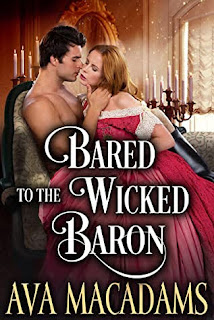
Weekly Reader: Bared To The Wicked Baron by Ava McAdams; Captivating Regency Romance But With A Very Misleading Title


Weekly Reader: Bared To The Wicked Baron by Ava McAdams; Captivating Regency Romance But With A Very Misleading Title

By Julie Sara Porter

Bookworm Reviews


Spoilers: In the Romance genre, certain things sell and are as  omnipresent as scary things are to a Stephen King novel. Sex sells as shown by the covers featuring barely dressed lovers wrapped in each other's arms. Certain time periods sell as shown by the glut of historical romances, particularly during the Regency Era. Certain words in the title, like "Wicked," Naughty,"  "Forbidden," "Sinful," and "Passion," sell as well. Those words reveal something dark and forbidden about the romance that Readers are about to indulge into. It's a business decision, but at times it is an unnecessary one especially when the title is extraordinarily misleading.

Take Ava McAdams' novel Bared To The Wicked Baron. It would be a halfway decent Regency era Romance of a couple getting to know each other despite outside forces attempting to break them up. 

However the title Bared To The Wicked Baron suggests something else. It suggests something more salacious and sultrier than what we get and it seems to do so only to sell the book to more Readers.


The titular Baron is nowhere near wicked. Sir Phillip Andrews, The Baron of Havordshire, is actually a sweet, but private baron who is caring for his ailing mother. He has been steadily losing money and now resides in a humble cottage to care for her. He has a few loyal servants, but he does much of the nursing himself. Because of this, he doesn't have a lot of time to do the usual social routine of a man among the ton. His friends convince him to spend one night away at a ball so he can finally relax. Now does this sound remotely wicked to you?

He is not wicked in temperament nor in reputation. I could sort of understand if Phillip harbored a reputation of being wicked to ward women away from him so they, and the Reader, don't know that he is caring for his mother leaving his family problems to be a surprise. Perhaps it could be the hidden heart inside his Byronic reputation. But his family conflict is revealed in the second chapter. No one describes or refers to Phillip as wicked and he never behaves that way. Arthur Thistlewood from The Second Mrs. Thistlewood has more right to the adjective than Phillip does. At most Phillip could be private, maybe secretive. Were Bared To The Private or Secretive Baron taken as titles?


Because he has been AWOL from social duties, Phillip's friends warn that his time may be up pursuing young viable women to be brides and give birth to his heirs without looking like an aging fool. Another character running out of time is Helena, daughter of the Earl of Brimsey. She is 27 years old and missed an earlier Season, because of her family's dwindled finances. Now her parents say better late than never and she needs to be married before it's too late. Naturally she goes to the same ball in which Phillip is dragged. The two meet, share a dance, and begin to fall in love.

Their courtship is rushed. That could be attributed to their ages in a time period where they were expected to already be married and the implied anxiety that would happen in a time period where death in childbirth is far from unheard, when late in life pregnancies can produce many long term complications, and when the medical profession amounted to guesswork.  Helena and Phillip's courtship is steamy in that it's an emotional release for a long delayed dream, one that satisfies them on a personal level. They are a nice decent couple that couldn't be further from villainous if they tried.


There is a wicked character in the book that complicates Helena and Phillip's courtship. They use underhanded means to come between the couple like physical attacks and secret confidences. More cannot be revealed but that person is definitely not a baron. This character has some development but it is revealed too late since they are unbearable and annoying throughout. In fact, their villainy is pretty transparent and certainly not compelling. 


Bared To The Wicked Baron is a decent romance but it promises to be something else. With so many words that could have been chosen for the title, wicked should not have been one of them.