Showing posts with label Regency-era. Show all posts

Saturday, February 27, 2021

New Book Alert: The Dukedom of The Beast by Tiffany Baton; Beauty and The Beast Tale Set in The Regency Era is Rich With Great Characters and Suspense


New Book Alert: The Dukedom of The Beast by Tiffany Baton; Beauty and The Beast Tale Set in The Regency Era is Rich With Great Characters and Suspense

By Julie Sara Porter

Bookworm Reviews


Spoilers: With apologies to Walt Disney Music, Alan Menken, and the late Howard Ashman, Beauty and The Beast may be a tale as old as time but it still can be the inspiration for a winning Romamce set in any time period. (Actually, as we will soon learn, fairy tales are a huge inspiration for many books set in many time periods.) Tiffany Baton's The Dukedom of the Beast is a Regency era variation of this familiar tale and in of itself is rich with great characters and an engaging suspenseful plot.


Lady Nancy Bolton, daughter of the Duke of Cornington, has her life set out for her. She is engaged to Timothy Lockhart, Marquess of Honeyfiield when at a ball, she is sexually assaulted by Viscount Geralt Hodge. Even though she pushes him off, Nancy is blamed for the event. Unfortunately, this is another tale as old as time: when a woman gets assaulted, she is often the one that is blamed and is judged for it while the man gets off with no punishment whatsoever. Timothy ends the engagement and seeks a bride with a less tarnished reputation. Geralt continues his cred as a rogue with no consequences, will no doubt still be seen as a stud by his friends, and look for other young women to abuse. Nancy is the one left as the subject of scorn and gossip and is socially exiled: a woman with an independent mind and spirit but unable to fit in with the expectations set for her. She is left an outsider with a scarred reputation.

In fact, the only person who would have her is another outsider and there is one. Phillip Wallace, the Duke of Peterhum, is also an outsider left scarred. However, his scars are physical not emotional. An attack left him disfigured and claimed the life of his parents. Since then he has been raised in seclusion by his uncle, Jeremy Wallace. Since Nancy is a childhood friend, he formally requests permission to court Nancy himself. Nancy is incensed at the thought and even more so when her father agrees to the proposal. Then, she goes to meet Phillip herself…


The Dukedom of the Beast is a Regency Romance done right. It doesn't praise the rules and standards of the day, filling it with a false nostalgia. It opens up the double edged sword of a society where a woman can have a damaged reputation or a man can be physically injured by others and they are the one who are the ones who are left abused and abandoned. Nancy and Phillip's conflicts with the ton show that a society that is built on a standard of artifice and perfection is bound to fall when that perfection is rarely achieved.


A humorous dialogue occurs when Nancy and Phillip discuss habits and interests and are found to be incompatible. (She likes the pianoforte, going to the theatre, and reading novels. He likes the violin, reading nonfiction, and horseback riding.) In a normal courtship, more might have been made of those differences, but their loneliness and mutual understanding transcends those differences as they see the world through each other's eyes.

Both Nancy and Philip are imperfect people and their relationship prospers because of that imperfection. In fact, they develop an understanding and empathy towards each other that they may not have had if they weren't mutual outsiders.


Once Nancy and Phillip find that common ground and develop an understanding, complications occur that trouble their courtship. Phillip is attacked by an unknown assailant. Nancy is being stalked by a mysterious disguised figure and a wing of Phillip's estate is set on fire. 

The perpetrator behind these events is revealed in a well done plot twist that is a decent surprise. This twist also plays into the repressed frustrations of the day when some people feel that they aren't given their due. They have very little in their lives that they can claim is theirs and are driven by boredom and frustration to the point of insanity. 


The Dukedom of the Beast is a brilliant commentary on the Regency period and reveals that sometimes those that are outside of society  understand and love each other. Once those standards are removed, they no longer see the beastly and instead they recognize the beauty.

Friday, May 22, 2020

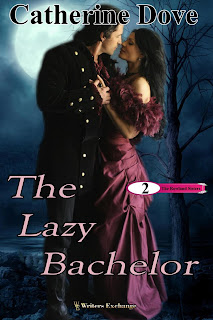
Weekly Reader: The Lazy Bachelor (The Rowland Sisters Series Book Two) by Catherine Dove; Darker, but Still Memorable Follow Up to Mr. Harding Proposes


Weekly Reader: The Lazy Bachelor (The Rowland Sisters Series Book Two) by Catherine Dove; Darker, but Still Memorable Follow Up To Mr. Harding Proposes


By Julie Sara Porter

Bookworm Reviews


Spoilers: So we come to another Regency era Romance by Catherine Dove, her second in The Rowland Sisters Series, The Lazy Bachelor. It is the darker older sibling to the previous book.


It has a decent female lead, some interesting moments particularly with two very young orphaned sisters, and while the male protagonist isn't the most likeable, he learns the obligatory lesson becomes a decent guy in the end. But it also has a slight edge which puts such issues as parental death, child abandonment, and class division in the forefront. It is not as light and airy as Mr. Harding Proposes and it certainly isn't meant to be. If the answer to the previous book would be "Yes, yes, a thousand times yes!" The answer to this would be "Uhhh, I would have to think about it."


Pergerine "Perry" Tyndall is the eponymous bachelor and he certainly lives up to the name. He is the type of guy who would rather coast by with money, looks, and charm rather than anything else. Even though his family is nobility, he doesn't even have to deal with the tedium tasks that come with being a title. That is all left to his cousin, Earl of Shipton. The good news is Shipton is fairly young man in good health. Unfortunately, Shipton is seriously injured. He survived but his near accident fills Perry with terror. If Shipton dies, Perry would have to be an Earl and work...and...stuff.

Unlike some of the more recent male protagonists in period romances that I have read so far, Perry probably begins as the least likeable. Far from The Baron and the Enchantress' Walter who intends to use his wealth to aid others and Mr. Harding Proposes' Richard who has an engaging down to earth personality, Perry offers very little likeability as a romantic lead. He is more farcical in nature, more similar a character from P.G. Wodehouse, broad and humorous than the gentle comedy usually associated with Regency Romance. He is almost too silly to be believable as a romantic lead.


However, he is not a hardhearted man or a snob. He shows some genuine heart, especially in his moments with Frances and Eleanor Armitage, two orphaned sisters. Their plight is not sugarcoated. Both sisters are orphaned at a young age and Frances is someone that comes across as very mature for her age. The two suffer from abandonment issues and are tired of being shuffled around and raised by detached guardians. Perry is just someone who pays money without any emotional involvement until the sisters basically call him out on his attitude. While Perry at first is reluctant, he bonds with the sisters. He helps guide Frances in her interest in men and he has some moments with Eleanor that are just too precious and would melt the hardest of hearts. The Armitage Sisters help turn Perry into a man who takes more involvement in life than just being there.

Another person that helps change Perry's character is Portia Freestone. Perry's appearance and behavior is counterbalanced by the female protagonist, Portia, Perry's cousin by marriage. She harbored an unrequited crush on Perry for years,but is not the type to be noticeable even during her Season. She starts out very shy and has a bit of a sardonic nature that mocks romantic conventions such as when she is told that she has acquired the interest of the local rake by planning on "feigning interest" in her pursuit.

Portia provides a contrast to a familiar face, Cecilia Rowland, the younger of the two sisters. They are extremely different, Cecilia is pretty, flirtatious, and lighthearted. While Portia is considered plain, serious, and quiet. I suppose it is confusing why Cecilia is not the lead female character in a series called The Rowland Sisters, instead of just the close friend of the female lead. Perhaps because of the darker tone, there needed to be a more serious lead to counterbalance Perry's foolishness.

Portia provides a guide to help Perry become a better person. She opens him up to friendship with the Armitage Sisters and occasionally isn't afraid to call him out on his B.S. These are traits that the more frivolous and dizzy Cecilia does not always possess.

If the theme to Mr. Harding Proposes is to accept people as they are, then the theme to The Lazy Bachelor is change, that the right person may like you even love you, but they also will help you become a better person. Through their rocky courtship which involves other pairings and typical mistaken assumptions Perry becomes more active and less self-centered and Portia gains a lot of self-worth and confidence that allows her to help Perry on his journey.

Because Perry begins the book so farcical, but the rest of the book deals with darker subjects, the tone is somewhat uneven but it levels out when Perry becomes more involved in Portia and The Armitage Sisters.

The Lazy Bachelor is a nice continuation to Mr. Harding Proposes, the dark counterpart to Mr. Harding's light. However, they both present lovely romances to bring the Reader back to the Regency era.


Thursday, April 30, 2020

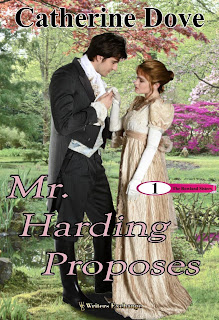
Weekly Reader: Mr. Harding Proposes (The Rowland Sisters Book One) by Catherine Dove; Regency-Era Romance Shines With Cute, Fun, Likeable Characters


Weekly Reader: Mr. Harding Proposes (The Rowland Sisters Series Book One) by Catherine Dove; Regency-Era Romance Shines With Cute, Fun, Likeable Characters

By Julie Sara Porter

Bookworm Reviews


PopSugar Reading Challenge: A book written by an author with flora and fauna in their name (dove).


Spoilers: If the last set of books that I read such as Laura Preble's Anna Incognito and Matthew S. Cox's The Girl Who Found The Sun ended up making me too uncomfortable because they became frequent even unintentional reminders of current events, then the books that I am reading now are the exact opposite. These books are doing everything they can to get the Reader away from the real world. These books are the ultimate escape from a world in turmoil from a pandemic, first responders and essential workers putting their lives on the line, and conspiracy theorists and impatient protestors who are disobeying pandemic guidelines that could potentially cause premature openings and further illness.


These are the books that are designed to help you forget and one genre that thrives on escapism is Romance. This is the second of three different types of Romances that I am reviewing this week. One Month Only is a modern love story about a couple combining business and love in Tuscany. Two Like Me and You is a breezy humorous YA Novel about two teens falling in love while helping a nongenerean reunite with his lost love.


This one, Catherine Dove's Mr. Harding Proposes is a historical Regency era romance that invokes comparisons to the works of Jane Austen and Oscar Wilde, a humorous little novel that thrives on manners, class structure, and cute lovable couples to help see the Reader through the plot that is fun and lighter than air.

The plot revolves around two sisters, Georgiana AKA Georgie and Cecelia AKA Cecy Rowland. Cecy prepares for her Season where she will be dolled up, attend many balls, soirees, and salons, and is officially declared available for England's Most Eligible Bachelors. Georgie does her best to help her sister through this whirlwind Season while dealing with her own romantic troubles.

Georgie receives a proposal of marriage, but not one that she expects. It comes from the mouth of Mr. Richard Harding, her best friend since childhood. Unfortunately, Richard does it so awkwardly and with his usual jocular teasing tone of voice that Georgie thinks that he is kidding and turns him down.


Meanwhile, there is a character that causes a lot of discomfort and controversy during the social Season. She is Lady Shipton, a former actress made good by an advantageous marriage. Unfortunately, she is the target of much scandal and gossip and many dowagers prefer their daughters to stay away from her including Georgie and Cecy's mother. However, the more that they spend time with Lady Shipton, the more Georgie and Cecy find her charming and helpful.


Mr. Harding Proposes is hardly a deep plot, but it is a lot of fun and the perfect antidote of sunshine for a time of tough stress and darkness. You can't help but root for Georgie and Richard to get together. They are like those couples like Benedick and Beatrice from Much Ado About Nothing who need to be together because life would be too boring for them otherwise.

Georgie is a character who is extremely smart and liberal minded, perhaps too smart for her own good. She is very intelligent and we'll read the kind of woman who in another time would be a great career woman but is hampered when her only career is finding a husband. Her intelligence and sarcasm unfortunately turns many men off.

However, it also is a virtue for the right kind of people. She is able to tell that one of Cecy's suitors is a cad and is able to handily get rid of him.
She is also able to see through social constraints to see the real
person. This is particularly noticeable in her moments with Lady Shipton, who is certainly a scene stealer and is one of the more interesting characters in the book. (I highly recommend that Dove write a prequel starring a youthful Lady Shipton.) She is able to see beyond the scandalous past to the warm woman underneath.

Lady Shipton arouses the interest of Georgie because of her being so scandalous, but she earns her gratitude when she takes part in getting rid of Cecy's rakish suitor. Georgie also defends her when she begins dating Georgie's uncle much to her mother's shock and chagrin.

Unfortunately, Georgie's intelligence causes her to question everything even Richard's proposal. Her better traits are a detriment as they are with Richard. He is a humorous character, probably in another book would be the plucky comic relief best friend of the lead male. But in his own book that could be a problem when he is sifting through his own love life. He has a quick wit and is often there for Georgie when she needs him. Because of this, he is permanently Regency Friend Zoned.

Georgie confuses his romantic overtures for simple friendship or using her as a safety marriage ("If we are still single at 35 let's marry each other…") . He even questions his own motives, but the two clearly care for each other. There are times when they especially Richard counter romantic expectations knowing that sometimes there is more to love than romantic poetry and beautiful wordy proposals against the backdrop of a scenic lakeview. Sometimes, it is about just being the handy life saver that is just what the other person needs.

Sometimes all you need to get through life is a good Romance and q chance to escape. Mr. Harding Proposes provides that expertly. The answer to the proposal of whether this book should be read is "Yes, yes a thousand times, yes!"

Monday, February 19, 2018

Weekly Reader: An Elegant Facade by Kristi Ann Hunter: A Brilliant Regency-Era Romance About The Difficulties of Maintaining Perfection


Weekly Reader: An Elegant Façade by Kristi Ann Hunter, A Brilliant Regency-Era Romance About the Difficulties of Maintaining Perfection 
By Julie Sara Porter
Bookworm Reviews

Spoilers: The best laid plans of mice, men, and blogger/book reviewers often go awry. Originally, I was going to review A Night In With Audrey Hepburn by Lucy Holiday but it was late in arriving via Inter library Loan so I am reviewing An Elegant Façade. (A Night In With Audrey Hepburn arrived, so I am planning on making it a bonus Weekly Reader for the coming week.). Anyway, Kristi Ann Hunter’s Regency-era tribute to the works of Jane Austen makes for a lovely romantic substitute and is a brilliant novel about a woman doing everything she can to maintain an air of perfection for fear that she would be seen as flawed.

Lady Georgina Hawthorne can’t wait for her Season in which she will be presented in English society and be able to hopefully find and catch a rich titled husband. She and her lady’s maid, Harriett have been preparing for this moment for a long time. Georgina always makes a point to wear white, so she can be eye catching to the many gentlemen. She and Harriett pour over the Debrett’s Peerage to find the most available suitors. Georgina practises where to stand, how to sit, speak properly. She affects a cold haughty air to those around her, so they don’t bother to ask her too many questions. She acts like a person with something to hide.

Because she is a person with something to hide: Georgina is illiterate. Her whole life is spent hiding this secret even from family members. When she was younger, Harriett transcribed all of her lessons and interpreted her schoolwork for her. Georgina and Harriett rise two hours before everyone else so Harriet can read her mistress her invitations and write letters for her, without anyone knowing. It’s almost entertaining but sad at the lengths Georgina goes to cover up her deception.
When she is handed a note, she acts in a frantic way and tells someone else, “Just read it!” to hide that she couldn’t. A potential greedy unlikable suitor passes her instructions to meet him and Georgina says that she refuses to be summoned like a stable hand. Georgina would rather be perceived as a hysterical incompetent or a haughty bitch than be seen as someone with an imperfection that she feels would make her an outcast from society.

Despite her haughty exterior, she catches the eye of Colin McCrae, a Scottish businessman who has ascended high enough in English society to be accepted to fine gentry parties, but he is still held under scrutiny. He has powerful friends that help him enter society like Georgina’s brother, Lord Trent and Ryland, the Duke of Marshingham and suitor to Georgina’s sister, Miranda. Ryland is also in the British Secret Service and he and Colin are on the look for some sinister characters while Ryland disguises himself to court Miranda. (These subplots are elaborated upon in the previous book, A Noble Masquerade making the two books meant to take place simultaneously. It is a noble undertaking for an author, but sometimes annoying for a reader if they haven’t read the previous book.)

Of course Colin and Georgina engage in byplay and witticisms in which they annoy each other with Colin’s arrogance and Georgina’s haughtiness but can’t seem to get each other out of their minds.
However, the two show a great deal of growth and development. The moment when Colin sees a frantic and tearful Georgina agonizing over the words in a letter and offers to read it for her is moving.  Also, the compassion and understanding that he has for how isolated she feels in trying to build this perfect facade is brilliant.

In Georgina, he also sees qualities he lacks in his own character. He can’t understand why if Georgina is so close to her family, particularly her loving siblings, that she keeps her illiteracy a secret from them. This feeling for honesty towards family, gives him the courage to speak to his own estranged family particularly his gambler father who ended up losing the family business. He also opens himself up to looking at Georgina as a person and not just a spoiled entitled aristocrat.

An Elegant Façade is what’s known as an Inspirational Romance, in which characters speak of and extol Christian virtues. While there is some talk about Georgina feeling God cursed her with her affliction and Colin reads the Bible frequently, it’s not as over-emphasized as it is in other Inspirational Fiction. Instead, Hunter trusts the Readers to make their own connections to the themes in the story.
Most importantly Hunter provides the Reader with two engaging characters in a beautiful nostalgic setting and allows those characters to change each other along the way.

Classics Corner: Emma by Jane Austen: A Sweet Comedy With A Sometimes Infuriating But Always Well-Meaning Protagonist


Classics Corner: Emma by Jane Austen, A Sweet Comedy With A Sometimes Infuriating But Always Well-Meaning Protagonist
By Julie Sara Porter
Bookworm Reviews

Spoilers: I want to apologize for being so late with these reviews. I had some personal stuff going on. This past Saturday was my birthday and I’ll be honest, I’ve been watching the Olympics. (Figure skating’s my jam. Though I’m an American, I'm happy for Virtue and Moir, their "Sympathy for the Devil" and "Moulin Rouge" performances were awesome. Javier Fernandez was one charming entertainer and totally deserved that Silver Medal-come on going from Charlie Chaplin to Don Quixote, the man deserved a prize for showmanship.) Anyway, on to Emma.

Emma Woodhouse is the type of friend who people constantly criticize but usually end by saying “But she means well.” Okay, she may meddle in people’s lives, set people up against their will, “But she means well.” She’s like that popular girl who thinks that the key to her fellow student’s happiness is a complete makeover and a date with the captain of the football team, “But she means well.” Jane Austen once described her as a “heroine in which no one but (herself) would like.” But…well you get the idea.

Emma Woodhouse is determined to match up her friends whether they want to be or not. Taking pride that she introduced her former governess (and surrogate mother) to a local wealthy widower, she takes full credit for the match and thinks that she has a career (as much a career as a woman would have in Regency-era England) ahead of her of setting up her unattached lovelorn friends with the right person where they will live, hopefully, ever after.

The first to reach Emma’s Spidey Single Sense is Harriet Smith. Harriet is a shy young woman with very little to offer any future prospects. She is illegitimate with unknown parents and is taken in by the charity of distant relatives. So Emma plans on setting her up with an eligible bachelor with the determination of an Olympic athlete competing for a Gold medal. (If Matchmaking were an Olympic sport that is).
First Emma ignores Harriet’s interest in Mr. Martin, a local farmer, thinking that Harriet could do much better….like the new young curate, Mr. Elton. Unfortunately, Mr. Elton is a fickle weak minded fool who is looking for a bride to bring him up a few notches in the social stratosphere. In fact he is quite receptive to the invitations that Emma sends him to be with herself and Harriet. He is completely enamored and proposes to…..Emma. Emma has the sense to turn Elton down and send him packing to find a wealthy but air headed bride.

Other people get involved in Emma’s attempts at match making. There’s Frank Churchill, a local boy made good by a wealthy aunt and uncle and has grown into a snob and a rake. Jane Fairfax, a girl who’s Aunt and Great-Aunt, Miss and Mrs. Bates, will extol her virtues to everyone who is unfortunate enough to be in hearing distance. Their praise of Jane sickens the others, Emma especially, who envision  her as the model of perfection. 

Emma almost treats her friends like dolls, albeit well-loved dolls. She thinks that if she positions them just right, insert a few dinner parties and balls, then they will fall in love just as she suspected. However, she fails to account that unlike dolls, people don’t always act the way she wants them to. She falls in love with Frank Churchill. Then when her infatuation dies, she steps aside for Harriet when she believes the younger woman is in love with him, only to discover that Churchill had been in a secret engagement with Jane Fairfax, the whole time.  Gee, it’s like her friends are actual human beings with thoughts of their own and aren’t Emma’s playthings to move however she sees fit.

The thing with Emma is that she’s not a heartless person. She genuinely believes that she is acting for the good of all. When she tries to set Harriet up with Mr. Elton then briefly with Mr. Churchill, she genuinely wants to see Harriet happy. She doesn’t think about the consequences of whether the men are interested in Harriet or someone else. The worst that she can be accused of is thoughtless. When she is filled with remorse (such as after she realizes that she has hurt Miss Bates’ feelings after she says some thoughtless words at an outing or when she finds out that Frank Churchill and Jane Fairfax are engaged and she has to find a way to break the news to Harriet), the Reader has no doubt that her remorse is genuine. Emma is the type of person that you may want to lecture, even slap sometimes, but you don’t want to hate or completely break things off with.

Emma also has a difficult time with following her own desires. Originally, she is content to remain a spinster and care for her eccentric father and estate. Perhaps her need to set up her friends is to ignore or avoid her own feelings. While she admits to being fascinated by the charming Frank Churchill even engaging in flirting with him, she gets out of any potential attachments when he proves himself to be vain, foppish, and overly critical. (She actually pities Jane Fairfax when it is revealed that they married. But Churchill does show some maturity as he writes and apologetic letter to Emma and to his father for deceiving them, suggesting some growth in his character.)

Emma’s own romantic needs become entangled with those of Mr. Knightly, her brother-in-law. Knightly has the unenviable task of acting as Emma’s conscience telling her when she’s gone too far. He is offended when she insults Miss Bates and reminds her that her meddling in Harriet’s life will only bring trouble to her. Of course Emma never listens and learns the hard way.
However, like Emma, Mr. Knightly also shows that he is a caring person. He dances with Harriet at a ball when no one else will earning a schoolgirl crush from her which is almost thwarted by Emma’s jealousy but Harriet’s former intended, Mr. Martin appears from nowhere (a plot point left somewhat dangled) to set things right. When he lectures Emma, it is more out of a blunt kindness of telling her what she needs to hear rather than playing along with her schemes like everyone else does. He’s the type of person that someone like Emma needs, someone to bring them back down to earth before they fly too high and get themselves in trouble.

Despite Austen’s insistence that no one but herself will like, Emma actually is very likable. She is packed with flaws and insecurities. She is extremely meddling, but caring. She gets herself and her friends in trouble and almost makes a mess of many things. But oh darn it all, she means well.