Friday, June 5, 2020

Classics Corner: London by Edward Rutherfurd; Epic Novel of London is Superior to Rutherfurd's Sarum in Every Way


Classics Corner: London by Edward Rutherfurd; Epic Novel of London's History is Superior to Rutherfurd's Sarum in Every Way

By Julie Sara Porter

Bookworm Reviews

PopSugar Reading Challenge: A book set in a city that has hosted the Olympics (London)


Spoilers: In my mind, there is only one name in epic historical fiction, the type of fiction that is set over the centuries set in the same location with various generations, usually within the same family. That name is Edward Rutherfurd.

Beginning with Sarum, published in 1985, Rutherfurd wrote a series of novels set in various locations that cover five to seven families that represent different social classes. The books include Sarum, The Forest, London, The Princes of Dublin, The Rebels of Dublin, Russka, Paris, and New York. In each one, he covers an exthaustive series of historical events that are seen through multiple pairs of eyes.

Sarum begins the formula with its epic scope and is brilliant at capturing the various time periods and details. However, the characterization isn't as strong as it could be. While the family aspects are strong, many characters are flat and interchangeable. They are less of individuals and more symbols of their social status, gender, class, occupations, and placement in their family lines.


However in his 1997 follow up novel, London, Rutherfurd obviously learned from his mistakes on characterization and wrote not only an epic story, but filled it with characters who are just as interesting on their own right as they are as members of their families and in a society reacting to the ever changing times.

Of course the biggest character is London itself. Rutherfurd captures every district, every street, every business bringing them to vibrant life as though the Reader can see the buildings, hear the many accents, and smell the various odors right in front of them.

London is experienced in its various incarnations from an out of the way backwater in Celtic times, to one of the final bastions of the Roman empire, to a central area of conflict during the Medieval Era, to the go-to destination for those seeking their fortune during the Renaissance, to the central location of the British Empire, to a place under attack during WWII, to a modern cosmopolitan city welcoming various immigrants, all who consider themselves Londoners.


These changing and dramatic times are witnessed by eight families. They are:

The Duckets/Doggets-They are present in every chapter from the Celtic days, originating as Duckets, to modern times. The name came from their ancestor's ability to swim like a duck. Many of the members are recognized by their black hair with a white streak near their forehead and webbing between their fingers (possibly a holdover from evolution.) Eventually, they split into two different families: The Duckets, who ascended into wealthy titled nobles and The Doggets, an impoverished family that remains primarily in the poorer sections, particularly London's East End.


The Bulls-The second most prominent family, making their debut during the Anglo Saxon era. They are a family that goes between wealthy landowners to members of the merchant class as brewers. Their name comes from the family living near a sign of the bull. Many of the family members are known for their stubborn uncompromising view of the world as black or white, right or wrong with no in between.


The Silversleeves-A family that came over with the Norman conquest, their name comes from the fancy robe one of the earliest ancestors wore. They are recognizable by their long noses, which some are rather sensitive about. They are a family of conniving schemers who climb their way to the top and in subsequent chapters act as various authority figures.


The Barnikels-This family is descended from the Vikings. The last name comes from their Viking ancestor who warned his subordinates not to kill children during the raids (bairn nikel=no children). The Viking blood is still present in subsequent generations by their large sizes, bad tempers, and seafaring abilities in which many become sailors, fishers, and members of the British Navy.


The Carpenters-A largely working class family that debuts during the early Medieval Era. Their family name is one of the occupational names that are so frequent. Many of the members help build some of the most iconic sites in London including St. Paul's Cathedral and Hampton Court. They are also a very religious and opinionated family, particularly during the English Civil War when they are ardent Puritans and during WWII when another is a member of the Fabian Society.


The Flemings-This family emigrated from Flanders during the late Medieval Era. They are known for the high standards that they set towards the people around them. They are also among the most mutable families in the book having different occupations that fit whatever the current needs are. They go from grocers, to costumers, to bakers, to tailors and other necessary occupations.


The Merediths-They emigrated from Wales during the Tudor era. They are known for their eloquence and intelligence which is put to good use as writers, preachers, and academics. They also have very adventurous spirits which gives them the opportunity to travel and live colorful lives.


The Pennys-The youngest of the families arrived from France around the time of the London Fire. Protestant Hugenots, they sought religious freedom and are often very strident and devout in their beliefs. They also have very mathematical and analytical minds which they reveal in their occupations in mathematics, banking, and engineering.

The families are well written as a unit, but also the individual characters within that unit. Considering Rutherfurd wrote over 100 chatacters and over 2,000 years of history, it cannot be stressed what a fantastic achievement that is. With Sarum, he took the easy way out to make his characters sketches, ideals, and just symbols of who they represent. In London, he made them real characters with motives, goals, and personalities that go beyond their expected roles.

Many characters stand out but among them are: Julius, ancestor of the Ducket Family, a scamp from Roman times who forges coins to get ahead, romances pretty girls, and hoards gold for his future. In fact his hiding of gold gets him in big trouble with the authorities and himself when he loses his gold and can't remember where he put it. (The gold becomes a continuing plot thread, until it is finally found by Julius' descendant, Charlie Dogget during WWII).

There is Henri Silversleeves, an emigre from Norman-era France who like his father is an adept chess player and uses those skills in life against everyone else. He is a skilled tactician who isn't afraid to play everyone around him from allies, to family members, to his unfaithful wife, Hilda. During conflicts between members of the Royal family and various factions, Henri skillfully observes, schemes, and takes years to play his hand but ultimately comes out ahead.

Edmund Meredith is a playwright of questionable talent during the Elizabethan era, who loves two things: Jane Fleming, a costumer for Shakespeare's acting company,@ and the sound of applause geared towards him and not necessarily in that order. When Jane gets abducted by pirate, Orlando "Black" Barnikel (an interesting character in his own right), Edmund settles for the applause. He becomes a well spoken minister who plays both sides during the English Civil War.

Another outstanding male character is Sam Dogget, a young Cockney lad in the 18th century who in a Dickensian twist gets mistaken for a wealthy heir and is adopted by the family of the Earl of St. James and Lord Bocton (also known as the Ducket family). Sam settles into the rich life and lives as an Earl until old age. In one moving scene, a confused and addled elderly Sam wanders through East End London remembering his former upbringing and speaking fluent Cockney.

The female characters are also equally well written. There are several standouts. Among them is Elfgiva, matriarch of the future Bull family, who is desperate to hold onto her pagan beliefs despite her husband and sons converting to Christianity. She stands firm to her beliefs despite her husband, Cerdic's emotional abuse and threats to put her away for a younger wife. Eventually, she converts, but by her own choice no one else's.

A pair of fun protagonists are Isobel and Margery Dogget, twins and the first to carry the surname of Dogget, to separate themselves from the wealthier Duckets. The duo are prostitutes and brothel madams, 13th century hookers with hearts of gold. They aid a pair of young lovers who are separated by family disapproval and imprisonment and get the better of a hypocritical alderman.

Then there's Dame Barnikel, who could be a second cousin to Chaucer's Wife of Bath. She has a few marriages under her belt and is busy arranging the marriage, and practically the life, of her stepdaughter, Amy Fleming. Dame Barnikel is also a hard-nosed businesswoman, singlehandedly running her husband's brewery and is a member of the Brewer's Guild. Guild membership is not an easy feat for many women to achieve, but those who know Dame Barnikel's abrasive and domineering personality would be fools to refuse.

Another standout female is Violet Bull. She causes trouble first by marrying Col. Meredith, an older man who once caught her mother, Mary Anne's fancy. In middle age, she joins the women's suffrage movement and takes part in their demonstrations like throwing bricks into windows, disrupting the horse races, and picketing. Violet stands for her beliefs, despite ostracism from her father and son.


One of the ways that Rutherfurd makes his characters more well rounded is to insert them in more than one chapter. In Sarum, he devoted one chapter to each era so we barely got to know the characters before we say goodbye to them and get introduced to a new set of characters. Rutherfurd's approach in London is a lot slower. He stretches characters's storylines out so we see them in different ages and how decades of change affected them.

Nowhere is this approach strongest than in the sad story of Lucy Dogget. Her story begins in 1822 in East End London. As a child, she loses her father to a workplace accident and her mother and brother to illness. She finds temporary work with her Uncle Silas as a dredger, someone who scavanges the Thames River for goods, refuge, and corpses to steal from. Silas eventually lets her go to start a new career, leaving Lucy on her own. Her story continues into young womanhood when she faces an illegitimate pregnancy and no money to care for her child. It concludes in old age as she makes the heartbreaking decision to give up her orphaned granddaughter to enter into service and obtain a better life for herself.

Another interesting approach that Rutherfurd does is ultimately tie all the families together through marriage, employment, and friendship. While there are some signs of this in early chapters where a Fleming girl marries a Carpenter boy or a Penny works for Meredith, the families are particularly united through the 19th century marriages of the Dogget Sisters, the daughters of Lucy's crafty Uncle Silas. Harriet marries Penny, who is extraordinarily gifted in numbers and money put to use as a banker. Esther marries Arnold Silversleeves,who is fascinated by machinery and becomes an engineer. Charlotte marries Captain Jonas Barnikel, a sea captain who participates in boat races. Mary Anne, the most opinionated and adventurous of the four sisters marries Edward Bull, a brewer who takes his wife on a hot air balloon ride as a gift.

The ties tangle even further when Esther Silversleeves hires Lucy Dogget's granddaughter, Jenny as a maid and Jenny later marries Percy Fleming, a tailor and as previously mentioned Mary Anne's daughter, Violet marries Col. Richard Meredith (whom her mother contemplated an affair with when they were younger).

By the time the book ends, it almost seems incestuous how tight these family ties become. However, since they are separated by generations, there are no causes for alarm when modern day archaeology grad, Sarah Bull begins a romance with British Museum curator, Dr. John Dogget. It is more seen as a sign of fate, like some people are destined to be together. It's in their blood and genes.

The best word to describe Edward Rutherfurd's London is epic. Epic in scope. Epic in history. Epic in character. Epic in setting. It is the right kind of history lesson, the kind that gives us faces and people to go with the dates and events.

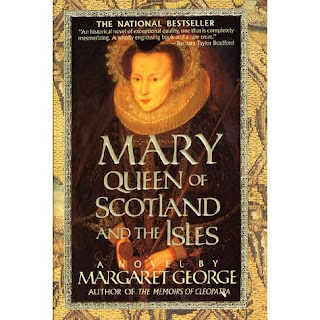


Classics Corner: Mary Queen of Scotland and The Isles by Margaret George;Grand and Definitive Historical Fiction of Scotland's Most Famous Queen


Classics Corner: Mary Queen of Scotland and The Isles by Margaret George; Grand and Definitive Historical Fiction of Scotland's Most Famous Queen

By Julie Sara Porter

Bookworm Reviews


PopSugar Reading Challenge: A book with a map


Spoilers: John Lennon was right. Life is what happens when you are busy making plans to finish reviewing the final book in a series for your blog but the Coronavirus pandemic causes the library to close, so instead of reviewing that book, you instead review another book about the same subject. (At least I think that's what he said or something like it. Anyway, it was pretty close.)


I was supposed to wrap up my Philippa Gregory series with the final Plantegenet and Tudor Court Series, The Other Queen about Mary Queen of Scots. But since I don't have a copy and the library is closed for now (though is supposed to reopen soon), that review will have to wait. Instead I decided to review another book about Mary Queen of Scots, Margaret George's Mary Queen of Scotland and The Isles.


Actually, right now I am reviewing the better of the two. While Gregory did a brilliant job capturing the Cousin's War, the six wives of King Henry VIII, Queen Mary I, and Queen Elizabeth, Mary Queen of Scots belongs to Margaret George. Gregory's version was short and anemic which only covered a small fraction of this famous Queen's history, but George covers the whole scope of this fascinating woman's vibrant passionate colorful life.


From the moment she was born and her father James V died, Mary Queen of Scots (1542-1587) is held under scrutiny and criticism. Her dying father expresses displeasure that she isn't a son to replace the legitimate sons that died. She is separated from her mother, Marie de Guise, to be raised in France while her mother acts as regent. Her French relatives judge her for being Scottish. Her Scottish subjects are suspicious of her gender, French upbringing, and Catholic religion. Her illegitimate half-siblings, particularly her brother James are jealous of her becoming the heir. Calvinist religious leader, John Knox considers Mary, the Whore of Babylon because of her religion and her status as a female assuming the Scottish throne. Her cousin, Elizabeth feels threatened by her status as the second heir to the throne. It's already not an easy life and it gets harder.


Mary's childhood establishes much of the character that she carries throughout the book. She has a fondness for pretty things because of her upbringing in France surrounded by beautiful clothes, delicate dishes, and poetry some of which is dedicated to her. She also shows a strong will. When she first encounters the formidable, Catherine de Medici, acting Queen of France she is able to stare her down and stand up to her. Her independent streak also carries over into her wedding to Francois II, future King of France, when she insists on wearing white, even though it's the French color of mourning. She later rues that decision after Francois dies and she finds herself wearing white again, this time at her husband's funeral.


The book also is rich in capturing the people around her. Both Marie de Guise and Catherine de Medici are both strong willed leaders, inspiring Mary with their leadership skills and ability to survive in a man's world. James Stewart, Mary's half brother hovers between being close to Mary because she is his sister and being competitive and resenting everything she stands for.

Mary's four ladies in waiting, who are also named Mary, form a loyal sisterhood to their beloved queen and are individuals in their own right-Mary "Flamina" Fleming is the boldest and most outspoken, Mary "Lusty" Livingston is the robust tomboy, Mary Beaton is the quiet daydreamer, and Mary Seton is the most serious and spiritual.


Francois is also well written as an embodiment of youthful innocence. They marry when he is 10 and Mary 14, so unsure of what to do, they spend their wedding night...falling asleep. Instead of a husband, Francois is more like a kid brother with whom Mary plays games, tells stories, and create elaborate ideas for their future kingdom. Francois is an eternal child who would have a hard time reaching adulthood, which unfortunately he does not. Mary is barely crowned Queen of France upon her father in law's death before she loses her husband less than a year later.


When Mary returns to Scotland after her mother's death, she gets a frosty welcome, literally. The weather is cold and misty so that she can't see anything. If ever there was a sign that her reign would not be a peaceful one, that would be it. The peasant and working class love her, considering her a return to civility. However, the Kirk, the noblemen who act as her council, are mistrustful of her, suspicious of her Catholic religion, dislike her de Guise relatives, and mock her French ways. Even though France and Scotland are allies as part of the Auld Alliance, against England, that's far from saying the Scots actually like the French especially after they convert to Protestantism. Many of the Kirk favor Knox's conservative dour approach and fear the queen simply because he tells them to.


Her antagonists include her brother, James, who more and more sees better advantages siding with Knox and his crew over her, The Hamiltons, a family that often looks out for their own interests, and Lord Ruthven, who is rumored to be a warlock and is certainly creepy enough if he isn't. Queen Elizabeth also has her reasons to fear her second cousin. Since Mary is the closest heir to the throne and a staunch Catholic, the Protestant Elizabeth is fearful that her Catholic subjects would favor Mary over her.

Standing at the center of her antagonists is Knox who puts fear into his followers' hearts that Mary will start another Inquisition. In actuality, she will do nothing of the kind. She respects her subjects' Protestant religion. She only asks that they respect hers. She is very passionate and fair minded, but is willing to compromise to make other's happy. But for some unyielding stubborn individuals, that's not enough.


Partly because of her lonely widowhood and the general dislike of her, Mary throws herself into a second marriage to Henry Stewart, Lord Darnley a relation of hers and Elizabeth's. At first, it seems pleasant enough. Darnley is handsome and charismatic, but he very quickly reveals his true nature. He is a big drinker and a philanderer. He is also intensely jealous of Mary's power and demands that she make him King. George doesn't sugarcoat Darnley's chatacter. He is a spiteful abusive weak willed bully who goes along with whatever scheme benefits him the most. The Reader is rooting for his comeuppance long before he receives it.


Mary has several loyal friends to her defense. Besides the Marys, another is David Riccio, her secretary who also acts as confidant, psychologist, public defender, stand up comedian, minstrel, and best friend. He is a very witty character who isn't afraid to tell Mary the truth whether she wants to hear it or not. He also isn't afraid to call out Darnley or his allies, which he does one too many times. In one of the most heart wrenching moments in the book, Darnley leads a group to come in and stab Riccio to death right in front of Mary.


Another loyal supporter is the man who becomes her third husband, James Hepburn, The Earl of Bothwell. Bothwell is everything that Darnley isn't brave, decisive, strong willed, even if he is a bit of a womanizer to begin with. To her credit, George does not make his and Mary's marriage an abrupt thing. They meet in France when he is part of the party that escorts Mary to Scotland. He then appears periodically in Mary's life, sometimes as an outspoken critic but mostly as a staunch ally and a good friend even before they become romantically involved. One of the best moments is when Mary apologizes that she couldn't make Bothwell king and he tells her that is fine. He is satisfied with his lands of Shetland and the Orkney Islands. Mary muses that Bothwell, a man who is better suited for the role of king doesn't want the title, while Darnley whines about wanting the title but exhibits behavior that could not be considered kingly or leader-like.


There are three mysteries that surround Mary's life and George gives interesting theories to answer them. The first is who killed Lord Darnley. What is known is that Darnley died in an explosion and was involved in the death of David Riccio. Most believe that the most likely suspects were either Mary herself or Bothwell. George's version stops short of actually accusing Mary of her second husband's murder, she certainly doesn't miss him.


The second mystery concerns her marriage to Bothwell. Publicly, Bothwell abducted Mary and she married him while in captivity. However, what muddies the waters of this claim is that there were love letters exchanged between Mary and Bothwell dated before Darnley's death and were found in a silver casket in Bothwell's home. The so-called "Casket Letters" were considered evidence that Mary was complicit in her second husband's death and became evidence for her forced abdication in favor of her son James VI (Later James I of England)

Again George gives her own interpretation to these events that the love between Mary and Bothwell was genuine and the abduction was staged so the blame would fall entirely on him and not her for running off with him. Mary and Bothwell's romance is one that is loving but made from bad timing (She chose not to make Bothwell her second husband because he was already married to a woman whom he would later divorce) and short lived. They end up separated when she escapes to England and he sails to Sweden where he is imprisoned and later dies. Their marriage was short, but it was one of love and loyalty in this book.


The final third of the book where Mary seeks refuge in England is probably the most boring part but it leads to the third mystery in her life. How involved was Mary in plots to bring down Queen Elizabeth. While she is under house arrest and moved about, she makes friends with many noblemen like George Talbot, the Earl of Shrewsbury. Many of these allies want to see a Catholic ascend the throne and promise to aid in Mary's escape. Mary knows that she is playing a dangerous game with these men but she writes letters in code requesting their aid and support. Just as she does with Mary's involvement with Darnley's death, George doesn't outright accuse her, but Mary knew that her release could only come from Elizabeth's death so she turns a blind eye to the consequences and what the end result would be.

Even though Mary is the main character, George also makes Elizabeth believable as well. She is somewhat jealous of Mary's appearance. During his first meeting with the Scottish Queen, Elizabeth pesters her ambassadors with comparisons about her height and her appearance asking if she's more attractive. When Mary gives birth to James, Elizabeth complains that she "is of barren stock." She also gets upset when Mary's family uses the English crest on their china (something Mary doesn't agree with either).

However despite her pettiness, Elizabeth relates to Mary as another female ruler in a man's world. Even though, they never meet face to face they write often calling each other "Sister," and giving tokens of friendship. When Mary finally is arrested for conspiring against Elizabeth, the English queen suffers remorse about having to put her cousin to death and wavers for a long time before she finally signs her death warrant.

Margaret George captured Mary Queen of Scots and made her passionate, headstrong, emotional, reckless, strong willed, and a very vibrant,, colorful, unforgettable woman. Some Royal characters like Elizabeth Woodville, Anne Boleyn, Anne of Cleve's, and Queen Elizabeth belonged to Philippa Gregory. But in this case, Mary Queen of Scots belongs to Margaret George.

Thursday, June 4, 2020

Weekly Reader: Star Wars Legends: Tales From The Mos Eisley Cantina Edited by Kevin J. Anderson; Memorable Stories About Fascinating Characters In Iconic Scenes From The Star Wars Franchise


Weekly Reader: Star Wars Legends: Tales of the Mos Eisley Cantina Edited by Kevin J. Anderson; Memorable Stories About Fascinating Characters In Iconic Scene in the Star Wars Franchise

By Julie Sara Porter

Bookworm Reviews


PopSugar Reading Challenge: A book with a made-up language (Huttese, Rodian, etc.)


Spoilers: A Long Time Ago In A Galaxy Far Far Away….

…..There was a great disturbance in the Force. Prequels and Sequels were yet a dream or a glimmer of an idea. The fandom had yet to explode into the Intergalactic Civil War. In fact Star Wars fans were united in their desire to hear more about that franchise. So, a small band of freedom fighters, uh Science Fiction authors, took it upon themselves to continue the saga in various forms. Through books, graphic novels, video games, and other outlets, the Expanded Universe, now known as Legends Series, was created and even though the movies have continued the canon saga, the Legends series has its share of fans and still has appreciation as a continuation and Alternate Universe of the well known and at times polarizing franchise.


One of the more interesting aspects that the Legends gave to the fans was how they served as continuations within the original trilogy. They filled the blanks between A New Hope, Empire Strikes Back, and Return of the Jedi showing that the characters that we already knew had other adventures when we weren't looking. They also gave more depth to supporting characters that most people would not have even remembered otherwise such as Wedge ("Look at the size of that thing!") Antilles, Mon ("Many Bothan spies died to give us this information.") Mothma, and Admiral ("It's a trap!") Akbar. In fact, some of the characters who only had a brief glimpse or a line or two in the movies were finally given their say and a chance in the spotlight in the Tales Anthology series. These anthologies took those extras from specific notable scenes in the movies and made them the main characters in their own stories.

One of the most iconic scenes in the entire series is Mos Eisley Cantina, "the wretched hive scum and villainy" on Tatooine from A New Hope where Luke Skywalker and Obi Wan Kenobi first encounter Han Solo and Chewbacca The Wookie (and this Reader's favorite scene from her favorite movie in the franchise). The intergalactic answer to Rick's Cafe Americain from Casablanca is filled with strange alien assassins, spies, thieves, mercenaries, murderers, and a crabby human bartender who does not like droids. Their stories are covered in the anthology, Tales from the Mos Eisley Cantina, and it demonstrates the wonder of these books by giving more depth to that iconic scene by revealing the strange and rich characters that inhabited it.


The stories are all wonderful and imaginative in how they explore the various ways these characters survived in a dictatorship that spread throughout the entire galaxy. Some joined the Rebellion, others became card carrying Imperials. Still others took the lawless route and survived by entering lives of crime. Even though it is a science fiction setting, and one of the most well known at that, there are parallels to the situation in these series and how we Earthlings survived during dictatorships in our own history such as Nazi Germany and Stalinist Russia.


They are well written brilliant stories with a colorful cast of characters. Among the best stories are:

"We Don't Do Weddings: The Band's Tale" by Kathy Tyers

Certainly among the most memorable moments in the Mos Eisley Cantina is the bouncy tune that plays as soon as Our Heroes enter the scene, the tune played on space age jazz instruments by similar looking bulbous headed creatures with wide dark eyes. The tune that gave Earthlings ear worms for decades. Well not many people know that the band is Figrin Da'n and The Modal Nodes and even less people know that jaunty tune is called "Mad About Me."
This humorous story deals with the conflict between Figrin, the firey tempered leader and compulsive gambler and Doik Na'ts, the more serious deadpan second in command. The two butt heads as they are removed from their original gig at Jabba's Place (future workplace of Jedi's musicians, The Max Rebo Band.) and are assigned to play at the wedding of Lady Valerian, a Whiphid and Jabba's strongest rival. 

The band has misgivings at playing at weddings in the first place (As Doik explains "A wedding gig lasts two days ,(three days with some species, plus the time it takes to learn new music.) You're treated like a recording told to repeat impossible phrases and lengthen the usual processional and ordered to play a final chord as the nerve wracked principal's arrive central stage... if they arrive. Someone always brings a screaming neonate. Then the reception where they inebriate themselves until no one hears a note. All this for half pay and full satisfaction. You helped perpetuate a species.") But to play for Jabba's worst rival is nothing short of suicidal, but the pay is good and for Figrin, the gambling tables are a plus so on they go.

Things turn to a very expected violent head between the wedding party and The Modal Nodes have no choice but to play a very familiar venue. The irony is underneath the bouncy exciteable tunes that the band plays, they are in fear every moment that either Jabba or Valerian will send their assassins. They are literally playing as if their lives depended on it. This final image of Doik scanning the crowd for any potential killers adds a sense of darkness to the joyful music that the band plays.


"A Hunter's Fate: Greedo's Tale" Tom Veitch and Martha Veitch

I am not going to go into the tired cliched "Who shot first" argument, because this is Greedo's story. The green bounty hunter that met the business end of Han Solo's blaster is revealed to be a young naive cocky punk in over his very large snout.

Greedo's is revealed to be part of the Rodians, a race of aliens who have been on the run when other Rodians started hunting one another for blood sport. Greedo however is fascinated by the thought of becoming a bounty hunter and inadvertently puts his widowed mother and younger brother in danger by one of his assignments. Left alone, he is trained by the conniving Dyyz Nataz and Warhog Goa in bounty hunting. Eventually, they are lead to the ever lovable Jabba the Hutt who orders a bounty on, guess who, Han Solo.

Greedo's arrogance is felt throughout the story as well as his determination to become the best bounty hunter. It is that arrogance and naivete that blinds him to the obvious fact that Goa and Dyyz are taking advantage of him and that Han would prove to be a formidable adversary.


"Hammertong: The Tale of The 'Tonnika Sisters'" by Timothy Zahn

One of the more intriguing aspects that each story has is how the characters observe the events from A New Hope from the droids being ordered outside, to Obi Wan cutting off Ponda Baba's arm, to Han's confrontation with Greedo. Similar to the audience in a play, the characters view these events from different angles and have different perspectives. Two of these characters that observe the events are Shada and Karoly, two mercenary warriors posing as Brea and Senni Tonnika, two con artist sisters. The two ladies study the statistics of the various cantina crawlers to solicit smugglers to assist them. The duo were hired to steal a strange weapon called the Hammertong and need a good smuggler/pilot to aid them in getting it off of Tatooine quickly. Unfortunately, their adventures cross with Luke Skywalker and Han Solo's and they end up in big trouble with the local Tatooine law.

The standout in this story is Shada, an idealist turned cynic who joined The Mistryl, a fabled group of heroic warrior women who over time lost their heroics and became mercenaries for hire. Shada longs to recapture the selfless heroism of legend but has to survive in a dark cynical Galaxy. Eventually, Shada finds that heroism within the Rebellion and realizes that she can use her warrior training for another better cause.


"The Sand Tender: The Hammerhead's Tale" by Dave Wolverton

One of the more unique looking aliens is Momaw Nadon, AKA Hammerhead. He was even one of the Mos Eisley Cantina gang that was made into an action figure.

His story puts him beyond the reputation of strange looking extra. In fact, his is among the saddest in the book. Nadon is a former priest who had a psychic connection with plants in which he honors the Law of Life. Unfortunately, an Imperial Captain Alima threatened to destroy the plants if Nadon did not reveal their technological secrets. Nadon caved, feeling the psychic pain of his plants. His actions exiled him from his home planet onto Tatooine where he works as a spy passing information for the Rebels and hoping for the chance to meet Alima again and kill him.

It's an emotional tug of war as Nadon has to reconcile his once peaceful nature with his hatred for Alima and all that the Imperials stand for. For the first time, he encounters a brutal savage side within himself and it threatens to consume his connections to his plants and the Law of Life. Fortunately, Nadon discovers a way to get revenge in his own way and to continue respecting the Law of Life.

"Empire Blues: The Devaronian's Tale" by Daniel Keys Moran

Among the narrators, one of my favorites is Kardue'sai Malloc AKA Labria, a devil looking character with sharp teeth. Malloc is a former Imperial soldier that after a bloodbath resigned and headed for Tatooine where he lost himself in booze, music, and regrets.

Malloc is a very sarcastic narrator with plenty of one liners. (He remarks that Wuher the Mos Eisley Cantina bartender, whom he describes as his best friend, dressed formally: "He changed his shirt.") He also has a passion that transcends the Empire or Rebellion: that of music.

Malloc has a large collection of recording chips of his favorite bands and singers. His recall of many of the musicians' histories recount what often happens when a dictatorship occurs. In any Galaxy, it is the artists who suffer and are arrested. Many of Malloc's collection consists of musicians who are arrested, dead, or missing, and their music has been banned by the Empire.

However, Malloc will do anything to hear his favorite groups. We learn that Malloc's story is tied to the Modal Nodes' story in that Malloc arranged for the band to perform at Lady Valerian's wedding and then get them hired to perform at the Cantina. Malloc's story reveals the desperation when one has very little to live for and holds onto it as the only thing to keep them going.


"When The Desert Wind Turns: The Stormtrooper's Tale" by Doug Beeson

Before the prequels revealed that the Imperial Storm Troopers were clones and the sequels retconned that into revealing to them as recruits selected from birth, this story reveals that they were recruited like any other soldier. This process is seen through the eyes of Davin Feith, a young rookie whose basic training is nothing short of torturous. He is trained to march and run the ATAT Walkers (He is the one who discovers the flaw that smaller fighters can tie their legs sending them to the ground). The threats are very real and life as a stormtrooper is very short.

Besides being a military story, "When The Desert Wind Turns" is also one of redemption. When Feith is one of the Troopers assigns to look for the droids, his eyes are opened to Imperial cruelty. In some of the saddest moments we see the actual scenes when the Jawa sand crawler is attacked and Luke's Uncle Owen and Aunt Beru are killed making these throw away scenes from the movie even more heart breaking.

In the end Feith must make a choice between remaining on his stormtrooper path or following his conscience and become a Rebel.


"One Last Night in the Mos Eisley Cantina: The Tale of the Wolfman and The Lamproid" by Judith and Garfield Reeves-Stevens

In the Star Wars Legends Series, other characters are capable of using the Force. In fact in subsequent books, Luke opens up a Jedi Academy specifically to find and educate those who are Force sensitive.

This love story gives us two characters who are bound by the Force and their love for each other. Lak Sivrak and Dice Ibegon meet on that memorable day in the Cantina just as the droids are forced out the door. They begin a relationship as they join the Rebel Alliance, and fight in the Battle of Hoth, ending in Dice's death.

The strange story jumps Sivrak from the Battle of Endor, to Hoth, to the Cantina independent of time and space. His memories of Dice are out of joint as they know the things that are going to happen before they do and appear to be on different time streams. Finally, Dice gives her lover one last chance to escape their life together and his subsequent grief and to change his future. Sivrak has to consider if a life with a love that is lost is better than a life without love at all.

The lovely final moments show that love and sacrifice are worth fighting for in here or in any other galaxy.


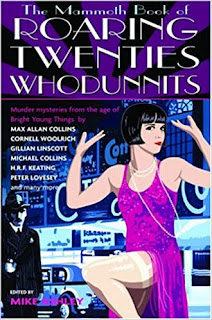
Weekly Reader: The Mammoth Book of Roaring Twenties Whodunnits Edited by Mike Ashley; Jazz Age Mysteries Shine In This Colorful Fascinating Anthology


Weekly Reader: The Mammoth Book of Roaring Twenties Whodunnits Edited by Mike Ashley; Jazz Age Mysteries Shine In This Colorful Fascinating Anthology
By Julie Sara Porter
Bookworm Reviews

PopSugar Reading Challenge: A book set in the 1920's

Spoilers: The 1920's. The Jazz Age. The Bright Young Things. The Lost Generation. This fascinating wild decade conjurs up images of free spirited flappers, smooth, but violent gangsters, jazz music, Prohibition, the Charleston, and noted celebrities like Calvin Coolidge, Charles Lindbergh, Al Capone, Rudolf Valentino, Babe Ruth, Clara Bow, and Charlie Chaplin. Authors like Ernest Hemingway, F. Scott Fitzgerald, James Joyce, Gertrude Stein, T.S. Eliot, Langston Hughes, and Dorothy Parker explored new frank ways of writing that captured the violence, sexuality, and free expression this time allowed. The world of murder mysteries also had its big names. British authors, Agatha Christie and Dorothy Sayers, gave the world their genteel cultured sleuths Christie's Miss Jane Marple and Hercule Poirot and Sayers' Lord Peter Wimsey. In America, The Black Mask literary magazine made its debut and introduced those hard boiled detective genre authors,  Dashiel Hammett and Raymond Chandler. The 1920's were a fascinating decade and one that demands to be explored. 

The Mammoth Books are a series of anthologies which explored various literary genres. They produced some of the best collections of historical mysteries, featuring mysteries set in different time periods. One of these anthologies explores the 1920's in depth with The Mammoth Book of Roaring Twenties Whodunnits. It is a fascinating collection of short stories featuring some of the most exciting murder mysteries, clever sleuths, and fascinating murderers set in this colorful time.

Among the best stories in this anthology are:

"Timor Mortis" by Annette Meyers
The 1920's saw a resurgence in women's independence. Women were granted the right to vote in 1920 and many young women celebrated their freedom in other ways. Many bobbed their hair, wore short A-line skirts, smoked in public, talked openly about sex, and finally got rid of the restraining corsets. They were able to live independently and earn their own money without worrying about marriage. 
Annette Meyers explores that freedom with her protagonist, Olivia "Oliver" Brown, a poet/private investigator who lives in Greenwich Village, among the other artists, writers, and activists. She lives a colorful life with some eccentric friends so when she encounters death, it is bound not to be in a conventional way. She is recruited to look for a friend's missing cousin at the same time as the local masquerade ball. During the ball, Death makes a guest appearance as one of the party goers is stabbed to death while the party goer is dressed in multi-colored feathers and rides on the back of a white stallion. 
Aside from the unique crime scene, the mystery itself is solid with enough clues to point to an obvious finish. What makes this story, however, is its lead character. Oliver is a free spirited independent woman who has an artistic outlook and a very observant eye. She is the embodiment of the 1920's New Woman who lives for herself and her own goals.

"Someone" by Michael Collins
Underneath all of the glitz and glamor, the 1920's had a dark side. It was the time of Prohibition and the gangsters. While many of them such as Al Capone, Bugsy Siegel, and Meyer Lansky achieved antiheroic status and many thought of them as smooth, charming, goodfellas, in truth they were a violent bloodthirsty bunch. 
Michael Collins explored the past of his regular protagonist, Dan Fortune in this short story. Fortune remembers his father, Casey, a police officer who tried to have an honest career. However, honesty means very little when he makes some dangerous acquaintances such as corrupt New York Mayor, Jimmie Walker, Bobby Astor, the so-called "black sheep" of the wealthy family, and mobsters, Owney Madden and Arnold Rothstein. (Rothstein is particularly infamous for being one of the men who fixed the 1919 World Series by bribing eight players in the Chicago White Sox to throw the series, hence the Black Sox Scandal.) 
Casey Fortune becomes mired in his acquaintances' duplicitous dealings and realizes that he can't keep his head above the crime around him. His allegiances and the brutal crimes in which he witnesses consume him and destroys his family forever.
While technically, there isn't a specific mystery, this story shows how a life of crime can affect a family for generations to come and how Innocents can fall because of the actions of the guilty.

"Thoroughly Modern Millinery" by Marilyn Todd
One of the things that I like the most about The Mammoth Historical Whodunnits is that I discover new authors and characters. Many like Peter Tremayne's Sister Fidelma, Steven Saylor's Gordianus The Finder, and Margaret Frazier's Dame Frevysse have become favorite detectives of mine. Another favorite is Claudia Serferus, the saucy Roman noblewoman/amateur detective of Marilyn Todd's I Claudia mystery series. 
In this story, Todd creates another interesting female detective this time for the Jazz Age: Phyllis "Fizzy" Potter, a freelance magazine illustrator with a sense of justice. While names like Fizzy, Bubbles, Squiffy, and Catspaw suggests a lighthearted P.G. Wodehouse-esque comedy, this story can be as dark and grim as the rest. The plot focuses on blackmail, drug addiction, and the lengths people will go to protect family members and keep secrets. There is also a theme of Abstract Art, the popular art trend in the 1920's which allowed artists to express themselves in more outlandish and emotional ways than the concrete clear examples of the past.

"The Hope of the World" by Mat Coward
The 1920's was also a time of great revolt. After the Russian Revolution began in 1917, many in the United States and Great Britain were terrified that the same thing would happen in their countries. Labor Unions went on strike and many activists embraced Socialistic principles. This is the milieu of the story, " The Hope of the World" by Mat Coward.
This story plays on the familiar mystery trope of the dinner party murder in which a party, usually in Britain, is rudely interrupted by the death of one of its members. Of course, anyone could be a suspect. In this case, most of the party guests are Communists and Socialists. While the constant addresses of "Comrade This" and "Comrade That" can be confusing, the story reveals why many of these people looked to these philosophies. Many were disillusioned after WWI. Others saw income inequality and sought to change it. Others saw better opportunities for women. This was a group that may have had a common goal but were also suspicious and mistrustful and with good reason. They were often held under suspicion by authorities. This revolutionary zeal and mistrust is the perfect brew for violence and sure enough in this story, it happens.

"The Broadcast Murder" by Grenville Robbins
Technology saw a massive upswing in the 1920's. Automobiles became mass produced. While airplanes had been in use since before WWI, Charles Lindbergh's trip across the Atlantic Ocean showed what those flying machines were really capable of. Another popular technological source was the radio.
In Greenville Robbins' "The Broadcast Murder" (one of the few short stories in this anthology that was published in the 1920's), the radio becomes not only a source of news, shows, and music, it is also a source for murder. In a play on the locked room mystery, Charles Tremayne, radio announcer, is murdered live on air in his broadcasting booth with hundreds of listeners hearing his final words. The premise is intriguing as the narrator wades through the potential leads. The solution is also pretty clever as it plays on what people think they hear and don't hear as well as what goes on behind the scenes when the radio is on.

"For The Benefit of Mr. Means" by Christine Matthews
One of the most infamous Hollywood scandals was the 1921 murder of actress, Virginia Rappe. The prime suspect was movie comedian, Roscoe "Fatty" Arbuckle. Arbuckle was found not guilty, but the court of public opinion ruined his career forever. 
In this reimagining of Arbuckle's post movie career, he teams up with another scandal maker, Gaston Bullock Means, an author who wrote an expose called The President's Daughter. Arbuckle and Means solve a murder at a party attended by some very familiar faces.
While the mystery is excellent and Means and Arbuckle make a great detective duo redeeming their names in pursuit of justice, the real highlights are the dizzying array of real person cameos. Matthews fills her story with such notables as F. Scott and Zelda Fitzgerald, Dorothy Parker, W.C. Fields, Bing Crosby, and Ramon Navarro. These characters bicker, chatter, and  bounce off each other cleverly and the notable names put Jay Gatsby's parties to shame.

"I'll Never Play Detective Again" by Cornell Woolrich
One of the darkest real life crimes in the 1920's was the murder of 14 year old Bobby Frank by two young men, Richard Loeb and Nathan Leopold. What was most disturbing about this case was the motive behind the murder. The two men killed the boy simply to prove that they could do it, to show people that they thought that they were above such concepts as legality and morality.
The Leopold-Loeb Case was certainly the inspiration for this disturbing tale. At an engagement party for his friends, Dick Walsh, a wealthy young New Yorker investigates the death of the bride's kid sister when the girl succumbs to a poisoned flower. Dick finds himself discovering some troubling things about the bride and groom, people he thought that he knew for years.
The resolution is terrifying as Dick is forced to confront someone with a truly evil heart and intent that goes beyond cold blooded murder. The ending to this story makes this not only the most disturbing story in Roaring Twenties Whodunnits, but among the darkest and most disturbing short stories of the entire Mammoth Book Anthologies.

Wednesday, June 3, 2020

New Book Alert: Sleeping Around in America: Revisiting The Roadside Motel by Andrew Beattie; A Colorful Pictorial Look At America's Hidden Motels


New Book Alert: Sleeping Around in America: Revisiting The Roadside Motel by Andrew Beattie; A Colorful Pictorial Look At America's Hidden Motels

By Julie Sara Porter

Bookworm Reviews


If we can get past the whole Coronavirus pandemic and other issues, I would say that Andrew Beattie's Sleeping Around in America: Revisiting the Roadside Motel makes for a good book for summer travel. This summer, I would say "Maybe wait a little bit. But,certainly when the opportunity arises, travel and by all means take this book with you."


Beattie's book is a travelogue, photo book, and travel guide of visiting the U.S. via motorcycle and checking out the various motels. Not the big name chains like Motel 6, or Econo Lodge, or others. Instead these are the out of the way places with names like The June Motel, The Cadillac Motel, and the Thunderbird Inn Motel. Places that are owned by a variety of hoteliers including former rock stars, members of the Amish community, and people who are so fascinated with the 1950's that they give their guests the whole '50's going experience complete with decor and Doo Wop music playing on the speakers.

These are the type of places that you find when you aren't looking, just driving along the beaten path and feel your eyes droop with highway hyponisis. Suddenly, you see a friendly neon light up ahead and find a bed for the night. These motels are among the hidden but loved treasures that dot America's landscape.


In his introduction, Beattie explains his own memories of visiting motels complete with swimming pools and HBO playing on TV. (Remember when that was a draw?) He also recognizes the hospitality industry's contribution to the United States' ever changing appearance. "(Motels) are the biproduct of the growth of a society in a post-industrial age. They are a fixture of America's landscape. Motels contributed to the changing social behaviors, and not just sexual customs, because of the anonimity and convenience they provide. Add that motels represent the freedom of mobility and exploration that are two essential characteristics of the American Dream."

The first chapter covers the fascinating history of motels and how they were designed to capture drivers' interests almost as soon as the automobile was mass produced. In 1935, The Official AAA Camp Directory listed 9,841 with the number reaching its peak in 1961 with 60,951. Beattie estimates the number now to be about 3,000 and 6,000 independently owned and operated motels. Beattie recounts the motel's many connotations such as a symbol of freedom, a comfortable place for the night, and an out of the way place for lovers to engage in secret affairs. (What do you expect from a title like Sleeping Around in America? The double entrende is very evident.)


Beattie explains that he set to create The Motorcycle Chronicles, a directory of independent motels that motorcyclists could check into during their trips. Based on suggestions from Readers, articles from lifestyle and travel magazines, and Google, he sought to travel to fifty hotels in fifty days. In a moving paragraph, Beattie described his father's passing right when he began his project. Beattie's father shared a mutual love of motels and motorcycles, as well as cows. Beattie's father also had a brother who was a WWII pilot. When he began his journey, Beattie saw an abandoned motel sign on a field near a herd of cattle and the remnants of a private airplane. Looking at the sight as a sign from his late father, Beattie knew that he was on the right track.


Each motel is lovingly described with its timeless decor, brilliant amenities, friendly owners and personnel, and unique individuality which make them stand out from the cookie cutter sameness of the bigger hotel chains. For example, even though the June Motel straddles the border between upstate New York and Canada, it has a distinctly Floridian theme with its plastic flamingo themed decor, the pink walls, and the references to wine. (The pillows say "Good Wine" and "Good Vibes" and instead of Gideon Bibles, the drawers boast guides to good wine.) The effect is to make visitors feel the warmth of Florida while in the cold of the north.


Among the more interesting of the motels is the Caribbean Motel of Wildwood, New Jersey whose owners, Carolyn Emigh and George Miller put their love of the 1950's to a new level. The colors of avocado green and replicated vintage style furniture captures the time period. Emigh and Miller are members of Wildwood's Doo Wop Preservation League and have music from the 1950's pumped into the loudspeakers of each motel room.


The hotel's owners are about as eccentric as the buildings themselves. Kate's Lazy Meadows Motel is owned by B52's Kate Pierson and is purposely patterned after the group's 1989 hit song, "Love Shack," complete with the "tin roof (rusted)" and white lights that provide the "glitter on the front porch". However, it is not "down the Atlanta highway." Instead it is in the Catskills.


Another unique group of owners are Dee and Peter Shah, a couple that emigrated from India and integrated themselves into the Amish community of Ronks, Pennsylvania. The Shah's Cherry Lane Motor Court is a tribute to their Amish neighbors. They are friends of the community so provide technology and modern conveniences while having benches and furniture for their friends' uses.

These motels are useful to provide history lessons. Those who saw the 2018 Academy Award winning movie, Green Book will know of "The N#$&o Traveler's Green Book," a book that highlighted segregated places in which African-Americans could stay in without interference. One of those former establishments, the Inn of the Dove, still remains though is thankfully integrated. The fact that it still stands recognizes its involvement in such a history that lead to monumental change and continues to echo through current changes. Many other motels were at the center of cultural events such as inspiring Glenn Frey to write The Eagle's hit "Take It Easy" and where Bono stayed when he worked on U2's album, Under the Joshua Tree.


Some of the decor couldn't be kitschier if the owners tried. The Big Texan road sign features a large cowboy and the building's exterior features a model of (what else) the head of a large steer. The Wigwam Motel of Holbrook, Arizona has a Native American theme including Wigwam designed buildings. (Fans of the 2005 Pixar film, Cars, might recognize the parody tribute of the Cozy Cone Motel which transfroms the wigwam style buildings into safety cones for its automotive clientele.) Many weird colorful signs and decorations pop up throughout the book proving that the tourist traps and roadside attractions are alive and well.


I couldn't leave this review without mentioning the photographs. Beattie captures each motel's unique individuality with color and vibrance. They make the United States' landscape into one that is waiting to be explored and shared.


Sleeping Around in America Revisiting the Roadside Motel is a wonderful book that will inspire travelers to hit the road and visit these fascinating places. These travelers will certainly get their kicks on Route 66 and beyond.


Weekly Reader: The Rome of Fall by Chad Alan Gibbs; Biting Novel About Small Town Life, School Days, '90's Nostalgia, and Memories Good and Bad

Weekly Reader: The Rome of Fall by Chad Alan Gibbs; Biting Novel About Small Town Life, School Days, '90's Nostalgia, and Memories Good and Bad
By Julie Sara Porter
Bookworm Reviews

PopSugar Reading Challenge: A book that features social media 

Spoilers: This is a book that fills me with so many memories, that it almost scares me. I went to a rural high school and graduated in the '90's (Grandview R-II, Ware, Missouri, Class of '96.) So I remember so much of it, the Friday night football games especially Homecoming, the pre-social media age of card catalogs, AOL, and chat rooms, X Files on Friday then Sunday nights, and Alternative and Grunge music from the greats like Nirvana, Pearl Jam, Garbage, Sound Garden, Alice in Chains, Jane's Addiction, and many others. Chad Alan Gibbs' The Rome of Fall reopens those days so well, that he makes me wonder if he had a camera installed at my high school at the time, just so he could take notes for a future novel. (Or more than likely remembered his own high school years, which is the more logical theory.)

Marcus Brinks is a new kid at Rome High School in Rome, Alabama in 1994. He loves Alternative music and wants to front his own band but right now he's an outcast new kid who is bullied, particularly by quarterback, Deacon Cassburn. He goes through the typical teen hijinks such as making friends with fellow outcast, Jackson Crowder with whom he shares a mutual love of Weezer and his crush on pretty girl, Becca Walsh.
Rome is a school that takes its football team seriously. Very seriously. Pep rallies are scheduled every Friday afternoon and the football games are packed every night. The students go to the games and meet for pizza afterwards. It's a time honored tradition that everyone partakes. Even those with no athletic abilities or interest, like Marcus, engage in the social activities of attending the games and get caught up in the whole "us vs. them" mentality. Why Marcus even has a Friday Night Girlfriend in Becca. (Her real boyfriend is Deacon, but since he plays football, she needs someone to accompany her to games or take her out when he goes to the away games.)

If you didn't live in a rural school, or any school which was practically dependant on its athletic teams, and weren't interested in sports and had other options on Fridays, then you probably don't understand what football season is like in high school. The Rome of Fall is not exaggerating. If anything, it understates how big it is to some schools.
 It's easy to get excited during those Fridays during the pep rallies when cheerleaders lead spectators in cheering on the team as well as your class (Seniors usually got the biggest cheers). Even the most non-athletic students (such as this one who was a shy socially awkward bookworm with very few friends) could get swept up in the excitement and belonging. It didn't matter if the team won or lost. (My years, they got as far as district my freshman year then suffered a tremendous losing streak afterwards.) You were there in your school colors (ours were black and gold), created posters and mascot designs for spirit week (Grandview Eagles), and used those days as a time to socialize, have fun, and act as a unit. In rural schools with little options of alternate things to do on a Friday night, football games could often be the highlight of the week. Gibbs conveys that milieu rather well.

After graduating high school, Marcus becomes the lead singer of an indie rock band, Dear Brutus. They manage to release one album called The Beige Album, reportedly inspired by Markus' relationship with an ex-girlfriend and Lois Lowry's Newbery Medal novel, The Giver (more '90's Nostalgia. Who didn't read that in school or repeatedly see it advertised in book order forms or Scholastic Book Fairs?) The Beige Album sold 500,000 copies, certified gold, and received unanimous praise from critics. The group received instantaneous success until Marcus walked off stage during a concert in 1999 and the group disbanded. Marcus then spent some time in the Caribbean in isolation and solitude.

While the musical trajectory of Dear Brutus is traditional, almost cliched with the instant success, internal problems, and break up, it adds to the nostalgia for those of us who remember the music of the 1990's. Songs as varied as Nirvana's "Smells Like Teen Spirit," Pearl Jam's "Even Flow," Sound Garden's  "Black Hole Sun," Alice in Chain's "Man in the Box," Lisa Loeb's "Stay (I Missed You)", Melissa Etheridge's "Come To My Window," Jewel's "Who Will Save Your Souls?", Sheryl Crow's "All I Want To Do," Tom Cochrane's "Life is a Highway," Blind Melon's "No Rain," Faith No More's "Epic," Green Day's "Basket Case",  and Smashing Pumpkins' "Vampire" and many many others were the soundtracks of many of our teen years. Chances are if the music was stripped down, the vocals were either mournful and melancholy or screaming and angry, the lyrics brutally honest, and the performers were upfront about their personal problems and sneered at corporate commercialism while at the same time welcomed it, then by all the Gods and Goddesses, it was our music. 
That's how Gibbs writes Dear Brutus, a sometimes satirical but an affectionate tribute to the music of the 1990's. The Readers nod in recognition comparing the fictional Dear Brutus with many of their own favorite real life favorite groups and singers.

The Rome of Fall alternates between Marcus' past as a high school student and as a rock musician and his present as he returns to 2017 Rome. Unemployed, caring for his ailing mother, and almost 20 years removed from his rock star fame, he accepts a position as an English teacher at Rome High School. While some believe that you can't go home again, that doesn't really apply when those you knew never left.
His old rival Deacon is part of the Quarterback Club. His former girlfriend, Becca Walsh teaches sixth grade. The biggest change is in his former best friend, Jackson. Once a fellow rock fan and social misfit, Jackson is a coach, town hero, and practically owns Rome. He has also transforned into a complete jerk who hides a sleazy, cheating, illegal nature underneath a "God-and-Country-Family-Values" community leader image.
 Those who would find it unrealistic that so many of Marcus' old high school acquaintances still live in town should check their former classmates' social media accounts and realize that true to life, many of them do stick around where they grew up and went to school.

Returning to Rome forces Marcus to confront his past. He can't hide from his former rock fame when his students have access to Wikipedia, Spotify, and other social media apps and waste plenty of class time reminding him of it. He also can't hide from terrible things that he did in high school, one that changed the trajectory of his, Deacon's, and Jackson's lives forever. 
He also has to confront the reality of his relationships with those he knew and wonder if he really knew them at all. Was Becca the sweet lost muse of his imagination and lyrics or was she just using Marcus and is continuing to use him? Did Jackson change and get a swelled head over the years or was he always a jerk and Marcus just didn't notice? Marcus' past is colored through rose tinted reminisces about the good old days, until they bleeds over into the present and he has to see them as they really were.
 In the present  Marcus finds himself caught between his former friend and rival, discovering that some resentments haven't changed and some emotions have only gotten stronger as he and those around him have gotten older. Once he faces the lives of those in the present, is he able to confront his past and come forward about things that he did and in which he turned a blind eye.

The Rome of Fall is the type of book that on the surface brims with nostalgia. However, it also forces us to look at those old days with a more critical eye, what really happened, how we behaved, and the troubles we faced. We will see that we did horrible things, that times were hard, that life wasn't perfect. We may still like the music, or watch the movies. We may even still go to the local football games, but that doesn't mean that life was better or more perfect. Only our memories distorted them to make them seem better than they were. Adults look at their youths as carefree and wonderful when they weren't. People in the 2020's look on past decades with fondness and longing that no one would have had at the time. (Though considering how stressful 2020 already is, who can blame them?) 

The Rome of Fall is a biting commentary that shows that nostalgia is simply a trick of the memory. There were no good old days, just days.


Tuesday, June 2, 2020

New Book Alert: Empire Paladin: Realm of the Dead by M.S. Valdez; Epic Battle of Good Vs. Evil Hits A Gray Area


New Book Alert: Empire Paladin: Realm of the Dead by M.S. Valdez; Epic Battle of Good Vs. Evil Hits A Gray Area

By Julie Sara Porter

Bookworm Reviews


Spoilers: There is a great moment at the very end of the Devil's Advocate when the smarmy lawyer, played by Keanu Reeves, thinks that he has defeated Satan, played very memorably and hammingly by Al Pacino. Reeves' character has renounced his previous career as a soulless attorney working under Satan's law firm (literally) and has reunited with his troubled wife, played by Charlize Theron. He vows to be a public defender and advocate for others. On the way out, he gives an interview in which he espouses his new found good hearted and altruistic nature. When Reeves' back is turned, the reporter transforms into Satan. Realizing that he has trapped the attorney with his good nature as easily as he had the first time playing on Reeves' avarice, Pacino's Satan looks right at the camera and says one of the best closing lines in film history: "Vanity, definitely my favorite sin."


M.S. Valdez's Empire Paladin: Realm of the Dead plays on the concept: that those who believe that they are good can often be capable of doing the most evil. If someone's good nature is built on pride, self-righteousness, and converting or destroying those who do not share their limited view of the world, then they can be as dangerous as those who only live to hurt and destroy others for revenge or selfish gain.


Realm of the Dead presents two characters caught up in the conflict of good vs. evil that on the surface appear to be completely different, but when looked closer are very similar in their obsessions, fanaticism, and single minded pursuits. Similar to another recent epic fantasy that I reviewed, Derek Smythe's The Other Magic, the battle of good vs. evil is less straightforward. It's not always black and white, sometimes it's shades of gray.


Many of the characters are among the 12 members of the primus paladins of the Order of the Paladins, the elite Knight order from the Holy Roman Empire. They travel throughout Europe under the direct orders from the Empire to fight for, defend, and spread God's word. It's an awesome responsibility and certainly lends itself to people who can be skewered by their view of what God's word actually means and commit deadly actions in the names of those views.

One of those knights that falls short is Lord Vhaldrynn Malleus. Besides being an effective paladin and dedicated warrior, he has the gift of healing and bringing the dead back to life. Unfortunately, his wife and children were murdered while he was away on assignment. Vhaldrynn is enraged that this personal loss happened while he was doing God's work, so he renounces his religious calling. Since he accepts that evil is in the world, the only thing that he can do to combat it is to destroy all of humanity.


Of course this is a world where Satan definitely exists and is always on hand for a renunciation. He appears right in front of Vhaldrynn complete with witty dialogue and an offer he can't refuse. (When he gives an overly long list of titles, Vhaldrynn says "You are Lucifer, the Father of Lies." Satan's comeback: "Then I guess I must not be who I said I was.") His tantalizing offer is that Vhaldrynn can now use his healing powers to bring people from the dead and create a mindless zombie army to do their dark master's bidding.


If there is a deadly sin that Vhaldrynn is guilty of, it's Wrath. He is so bound by his hatred and vengeance over what happened to his family that he is willing to destroy the world. He is even aware that his ultimate prize will be eternal damnation and he no longer cares. Anger has eaten him from the inside and is destroying as quickly as his army of the dead are destroying everything else around him.


Another character that has their own view of God's word and acts according to it, is a character on the other side, the side of good: Lady Camila Chastaine. Camila is considered one of the best paladins: relentless in her pursuit of enemies and fights them until they are converted or dead. (For those who accuse Valdez of political correctness in featuring a female paladin should be aware that history and legend is full of stories of such women. Charlemagne had a female paladin, Lady Bradamante, in his knighthood. History includes such figures as Joanna of Flanders, Empress Matilda, Jeanne de Clissone, and of course one of the most famous female warriors of all, Joan of Arc.) Camila is a fierce warrior, dedicated, strong-willed, and excellent at strategy and physical fighting.


However, she is not always likeable. Our first encounter with her is when she pursues a man for the rape of a young girl. It would be admirable except the man had already been tried and found not guilty by the Duke. Camila refuses to listen to the man's pleas of innocence and protection by the Duke. She says that there is a difference between man's law and God's law and she is there to enact God's law before she kills him.


Camila's traveling companions, fellow paladins, Talitha and Altrael and sorceress, Fausta think of her as cold, emotionless, and self-righteous. They try to keep her grounded and to see beyond her narrow minded view and retain her humanity. But they are not always successful.

If Vhaldrynn is guilty of Wrath, then Camila is guilty of Satan's favorite sin from The Devil's Advocate: Pride and Vanity. She believes that she is doing God's work and that she is merely his vessel, but she is actually following her own ascended view of humanity and she is willing to kill others to enforce it. In some ways that makes her no better than Vhaldrynn.


Camila's pride ultimately proves to be her downfall. Satan finds that he can lure her just as easily as he could Vhaldrynn. In his horrific confrontations with the female paladin, he forces her to face her own demons, including a literal one that is activated by her self righteousness and pride and the violence that comes with that.


Empire Paladin Realm of the Dead features characters that walk a thin line between good and evil. Once they fall so far into the individual sides, they might see how similar those sides actually are.