Showing posts with label Magical Realism. Show all posts

Tuesday, June 23, 2026

The Midnight Library by Matt Haig; 1,000th Blog Post is About a Captivating Enchanting Library of Lives


The Midnight Library by Matt Haig; 1,000th Blog Post is About a Captivating Enchanting Library of Lives

By Julie Sara Porter 

Spoilers: Wow, 1,000th blog post! 9 years! It has been quite a ride! I have been a Book Reviewer longer than I have been anything else and I love it! 

There have been so many authors, so many books, and so many stories that I shared. I feel like I have lived thousands of lives vicariously. So it is fitting that my thousandth review should be The Midnight Library by Matt Haig, a Contemporary Fantasy novel about a library that tells of several potential lives of one woman. 

Nora Seed attempts to take her own life. When she wakes up, she finds herself inside The Midnight Library. The librarian, Mrs. Elm tells her that it is filled with books that represent the various lives that Nora lived had she made different choices. All she has to do is choose one and she is transported to become that particular Nora in that particular reality.

This book has an amazing concept with wonderful themes of choice, regret, memory, loss, possibility, personal happiness, and finding one's true path. The library itself is filled with an endless collection of books, lives, that are untitled and unmarked. They seem to convey sameness and monotony, but instead the stories inside provide a variety of lives with different situations, experiences, and memories.

Nora is the right character for something like this to happen (even if her surname, Seed, and Mrs. Elm’s names are a bit on the nose.) Nora works at a music store and despairs over missed opportunities and lost career paths. She has broken romantic relationships and is estranged from family members. Her life is just going through the motions and feeling like she isn't a part of anything. She feels that her life is one of past regret and barely living in the present.

The lives take Nora through various situations. In many ways, this book is similar to the movie Everything Everywhere All At Once, which presents another woman entering various realities based on different worlds and choices. The realities come from different initial choices. Then those choices result in other outcomes. Some good, some bad but eventually lead to her becoming a more sagacious and perceptive person because of her experience with them.

Nora becomes a pub owner, animal rescue shelter worker, an Olympic swimmer turned public speaker, rock star, climate change scientist, and philosophy professor among other careers. Her family and love life fill the gamut from single, cohabitating, in romantic relationships, married, divorced, to widowed. Her friends are still in touch, grown apart, connected on social media, lost because of breakups, or are completely out of her life.

She is childless, had various miscarriages, has one or two children. She has plenty of pets, allergic to animals, or had pets that died. Her parents are divorced, widowed, still together, both dead, or out of her life. Her brother is estranged from her, supporting her, acting as her manager, alive, or dead. She can be healthy and destined to live a long life, sickly and dying, physically healthy but suffering from various psychiatric disorders, or caught in a serious catastrophic accident.

It's exhausting and also exhilarating keeping track of the various realities, moving along Nora’s life paths, understanding the changes, and finding out the knowledge and wisdom that she obtains from them. Each reality is different but tells a complete beautiful story of a woman receiving the opportunity to explore all of her potential lives to find the one that fulfills her the most.

That is the secret to the various realities. All of them have positive and negative aspects. One where she is rich and famous could also see her as depressed and suicidal. One where she married an ex boyfriend that she still has feelings for gives her lots of friends but various marital problems. 

One where she travels and sees many great places reveals that she experiences them alone. Another where she works for important humanitarian causes puts her in Nihilistic despair when she believes that nothing will improve. Even when she is in a mostly happy reality, there is something that she lost or gave up on. Even when a possibility leads to negative results, she can find something positive inside it. 

The point of the novel is not to find the perfect life or the life where Nora left the biggest impact. It's to find the possibilities that surround her and in turn us. It's for all of us to recognize the hardships and appreciate the pleasures. To find meaning and existence in living no matter the reality. To find everything instead of nothing. In my case, to find the meaning and possibility that exists in every story. All 1,000 of them.


The Dark Side of Dreams by Marjorie Kay Noble; What The Mirrors Knew by Linda Annas Ferguson

 The Dark Side of Dreams by Marjorie Kay Noble; What The Mirrors Knew by Linda Annas Ferguson 

By Julie Sara Porter 

Bookworm Reviews 


The Dark Side of Dreams by Marjorie Kay Noble

This review is a summary. The full review can be found on LitPick

Marjorie Kay Noble’s The Dark Side of Dreams is an astute, insightful, and vivid look at a future of simulated reality and corporate control. 

In the future where consciousness can be uploaded to a simulated afterlife called Shemathra’s Realm, Mira Patel uploads a digital copy of her grandfather Gunter Holden, protagonist of the book Babylon Dreams. She recruits her grandfather to help her fight the oppressive system controlling the real and virtual worlds. She also learns more about Gunter’s nefarious past which challenges her previous view of him.

The world that Mira lives in and Gunter saw the start of is one where gigantic corporations openly control everything and everybody from birth to beyond death. This is a sad situation that the current dictators created but Gunter also has to bear a lot of responsibility for what he openly caused and what he allowed to happen during his own climb to success. 

He is made to face many of the decisions that he made, the people that he hurt, the financial gain but emotional abandonment, and the corruption that occurred when he made the first choice but others took his ideas and made them worse. 

He has to make the choice to be the hero after death in simulated reality that he wasn't in life in the physical world.


 What The Mirrors Knew by Linda Annas Ferguson 

This is a summary. The full review is on Reader Views 

Linda Annas Ferguson’s What The Mirrors Knew is one of the best books of 2026 so far. It is a beautiful literary fiction novel with gorgeous prose and enchanting magical realism details.
Anna Grace O’Neil is depressed after some personal and professional losses. She decides to fill a long cherished dream to visit Ireland. While there, she encounters various strange moments that cause her to question love, loss, family, connectivity, and what home really means.

The writing is lyrical particularly with the setting and character. Ferguson captures Ireland's beauty, mythology, and history with great affection and understanding. Anna Grace is a fully developed character who is originally disconnected in her life but gains a new perspective.

This book is mostly set in the real world but there are some potentially fantastic elements which steer this book slightly into magical realism territory. Nothing is spelled out or seen as a definite physical manifestation of fantasy. Instead they are more experienced out of the corner of the eye or through speculation and guessing. 

 By far the biggest magical element is the presence of synchronicity and coincidence. Sometimes it stretches credibility but it also is indicative of how things fall into place when one is on the right path. 

Instead of exploring a more fantastic magical supernatural plot, this book shows the magic found in everyday situations. The greatest magic that Anna Grace found in her visit to Ireland was in restoring her sense of joy and will to live.


Wednesday, April 15, 2026

And Then They Fell in Rome by C.L. Rosario; Magical Realism Novel About Love, Coincidence, Fate, and The Power of a Great Bromance


 And Then They Fell in Rome by C.L. Rosario; Magical Realism Novel About Love, Coincidence, Fate, and The Power of a Great Bromance

By Julie Sara Porter 

Bookworm Reviews 

This review is also on Reedsy Discovery.

Spoilers: C.L. Rosario's novel And Then They Fell in Rome, is a powerful Magical Realism Contemporary Fantasy book that says a lot about love, romance, fate, coincidence, synchronicity, and maturity. Mostly it's a book about the importance of friendship between men. A novel that is largely concerned about romance is told primarily from the points of view of a group of male friends, a circular bromance if you will.

A group of friends called the Troubadours meet up in 2021. They are Freddy Bustamante, Juan Fernandez, Charlie Costa, Brian Verdugo, and Jan Luis Larose and are reuniting for the first time since their Senior year in college three years prior. In the middle of their drinks, laughter, and reminisces, a woman appears. She is called “La Bruja” (“The Witch”) or “The Stranger.” She says that she had been following them for some time, entered the minds, and took the forms of people that they met. 

La Bruja has a challenge for the guys. One of them, Jan Luis, was “compromised on a cosmic level” and is in danger of dying young. The only cure is love. The other Troubadours need to help him find love. To make things even more complicated, La Bruja removes the memories of their conversation from The Troubadours’s minds. So they know that they have to help Jan Luis but not how or why.

The book is rich with moments of magical realism with more emphasis on the realism than the magic with the exception of the appearance of La Bruja who comes straight from the latter. Her presence is reminiscent of Latin American novels that fit the magical realism subgenre. She is a mythical and legendary creature in a real world setting. The guys are talking about everyday things in a commonplace setting then BAM, she appears and moves things in a different direction. 

Most of the book focuses on situations that can be magical, mundane, coincidental, or from a more cynical perspective contrived. When the characters, except Jan Luis, go to Rome, a series of serendipitous moments lead them to the right people at the right time. After one relationship is threatened, one of the Troubadours encounters another woman who is connected to his previous lover.

Conversations and encounters are told through multiple perspectives so we don't realize that characters are supposed to meet and fall in love until it happens. Going down the right street, visiting the right cafe, and looking up at the right time leads to a meeting with the love of a lifetime. Even Jan Luis’s later trip to Rome seems to be fated to occur at that specific moment in time.

Similar to works like One Hundred Years of Solitude by Gabriel Garcia Marquez and The House of the Spirits by Isabel Allende, La Bruja 's presence is tied to the real world conflicts concerning the characters. However the two books merge magic with politics, war, colonization, authoritarianism, and other global issues. 

The focus of And Then They Fell in Rome is exclusively on personal friendships, romantic attachments, and the interactions between men and women. Romance in and of itself can be considered magical with people looking and acting like the best versions of themselves to attract and enchant someone else. Sexual and emotional attachments are often described in fantastic ways (“She enchanted me.” “He's so charming.” “I am drawn to your presence.”) 

Even the ideas of creating lasting relationships, finding compatibility, and finding that perfect partnership are actions that often resist being analyzed and quantified because there are always exceptions, variables, emotional experiences and situations leading to other potential outcomes. So this book just injects literal potential magic where figurative magic already existed to give a slight nudge to the characters.

Speaking of characters, this book has some well written multifaceted characters. While La Bruja is my personal favorite, the Troubadours and their love interests convey richness and complexity.

The Troubadours are a group that doesn't play on conventional male stereotypes when guys get together. They aren't looking to drink, party, have wild and crazy adventures, and score as many hot willing babes as possible. They are ready to enter the next stages of their lives, as professionals, committed boyfriends, potential husbands, and maybe someday fathers. They aren't looking for one night stands. They are looking for a lifetime.

The complexities of modern relationships are shown through the Troubadours’s romantic experiences as they look for their potential partners. Juan goes through three separate romances before he realizes that he let his jealous assumptions interfere with what could have been a great relationship. One woman leads him to face his regrets so he can change his future. 

Cinephile Brian keeps comparing his love life to favorite films and hopes to find the leading lady in his life. He is faced with the reality that real people don't act according to a script. They need to be recognized for their frailties, flaws, and insecurities, not his fantasy projections of them.

Former frat boy Freddy is caught between two women: Maddy who represents his lost wayward wild youth and Katelyn who offers a chance at adulthood, maturity, realization, and authenticity. He also has a previous close association with La Bruja and is the only one who remembers her conversation with them and sees the truth that no one else does. 

Charlie is tempted to cheat on his girlfriend with unexpected results. This encounter forces him to confront his own thoughts about fidelity, desires, commitment, and adulthood.

 What about Jan Luis, the central focus of these romantic journeys? His past of an unhappy childhood with separated parents and a previous break up of his own have made him reluctant to seek or accept love. He is in danger of closing himself off emotionally and achieving fulfillment only in dreams and fantasies.

The love interest characters are just as brilliantly written. These are characters with their own stories, identities, and agencies. They aren't there solely to fulfill the Troubadours’s romantic desires but are meant to stand toe to toe in equal footing with them. The relationships happen because the characters work on improving themselves as individuals before they become coupled. 

While the romance and magical realism are important aspects of the story, by far the central relationship is not between the Troubadours and their significant others. It is among the Troubadours themselves.

These are five friends, who are brothers in heart and spirit. The conflict of helping Jan Luis find love becomes a catalyst that leads to their own conflicts and questions. They would be unable to evolve without each other. It's easy to recognize that these men deserve romantic love when we see that they are capable of maintaining a filial love. They are there for each other through university, work, romance, and marriage. Chances are their future kids will have not only loving fathers but four honorary uncles that will protect them with their lives.

It's also a kind of brotherly love that inspires change in each other. They aren't afraid to give one another advice or criticism to say exactly what they did wrong and how they can be better people. It is among the best bromances that I have read in recent novels. They aren't just there for each other in good times but bad as well.

And Then They Fell in Rome is a book that is magical, realistic, romantic, and bromantic.


Sunday, August 3, 2025

A Sense of Home: The Land of The Great Lakes by N.Z. Kaminsky; Beautiful Ethereal Bildungsroman About Lucid Dreaming, Creativity, and Imagination


 A Sense of Home: The Land of The Great Lakes by N.Z. Kaminsky; Beautiful Ethereal Bildungsroman About Lucid Dreaming, Creativity, and Imagination 

By Julie Sara Porter 

Bookworm Reviews 

This review is also on Reedsy Discovery 

Spoilers: N.Z. Kaminksy’s novel A Sense of Home: The Land of The Great Lakes lives up to its name. Once you open this beautiful lyrical book and fall into this bildungsroman of a young girl experiencing an ethereal evocative world of lucid dreams, creativity, and imagination you will feel like you are coming home. 

Tyra Blair lived in the city of Moss in the parallel world of Azure. It is much like our Earth with similar history, pop culture, and problems. One of those problems is war. When soldiers and their trained beasts attack Moss, Tyra and her family are forced go into hiding in the town of Marigold which is beautiful but the people there are cold and unpleasant. In exile, Tyra's parents implode as her mother Scarlett becomes depressed and her father Logan retreats into alcohol. Tyra is forced to become self-reliant while dealing with trauma, nightmares, and aching loneliness. She can only find comfort in books and nature. 

One day, she meets Koda a friendly squirrel. He guides her to a mirror where she can visit her favorite books and stories. This experience opens up a brighter lucid dream world. Her lucid dreams appear throughout her life as she grows and deals with many personal issues of loss, fighting parents, unemployment, unsatisfying romances, separation, war, tyranny, and death. These lucid dreams help her survive and dream of the day when she will leave to join The Land of The Great Lakes. Not Minnesota, it is a fabled land of thought, imagination, and beauty that can only be reached by invitation.

This book is one that grabs Readers's attention and holds on causing them to remember the little details long after they are done, particularly Tyra's lucid dreams. They are definitely the highlights of this book. 

Tyra and Koda’s trips into books delight any bookworm. The duo see Lady Death tries to con her godson doctor into letting her kill his patient. A man is confronted by and consumed by his shadow self. Grandfather Frost warms an abandoned maiden and many more. Through these experiences, Tyra is immersed into worlds of imagination, courage, adventure, and escape. The characters aren't content to wallow in loss and self pity like her parents. Instead, they persevere and fight with strength, cleverness, and kindness. In doing so, they challenge the status quo and reshape the world. Through them, Tyra is inspired to find ways to reshape hers. 

The book journeys aren't the only situations that Tyra's lucid dreams conjure up. She is able to befriend fantastic creatures like a pair of adorable furry monsters who would not be out of place in a Muppet special. She communicates with the deceased who send her wisdom that they were unable to when they were alive. They offer guidance on her path through signs, riddles, and visions. Her dreams not only provide an escape from a troublesome existence but gives her the means to survive it and aspire towards a greater path.

The best book to compare A Sense of Home to is another one that I recently read, The Art of Agony by Amy Felix. They are both coming of age stories about young women exploring the inner depths of their minds to survive during dismal dark times but the executions are polar opposites. 

The Art of Agony is about Eva, the protagonist becoming aware that the world is a dark meaningless place, even her own mind can't be trusted, and no one cares about how she feels. In A Sense of Home, Tyra's mind is opened to more enlightened possibilities. She sees a world beyond the one in which she lives that gives her a sense of purpose and more meaningful existence.

 While The Art of Agony is a more cerebral introspective perspective, A Sense of Home is a fuller, more evocative, ethereal, and a more intelligent perspective. It is one thing to come to the realization that life is hard and everything is stacked against you, but it is another to admit that but to find some meaning, purpose, and value in it anyway. That's why in some ways A Sense of Home is more mature than The Art of Agony which while excellent in exploring angst and the source of it, can also be lost in, overwhelmed by, and consumed by that same angst. Why bother doing anything at all if nothing matters? Why bother writing about it?

 A Sense of Home tells us that what we dream about, long for, hope for, create, inspire, love, and bring to life is enough of a reason. If we are only a spark in this vastness in the universe, then we might as well find something that isn't harmful but worthwhile. Something that gives us contentment and some kind of pleasure about being alive.


Friday, December 29, 2023

New Book Alert: For All of Us by Jillian Rose; Reincarnation Romance is Centered by Spiritual Connection and Meaningful Characterization


New Book Alert: For All of Us by Jillian Rose; Reincarnation Romance is Centered by Spiritual Connection and Meaningful Characterization

By Julie Sara Porter

Bookworm Reviews


This book is also reviewed on Reedsy Discovery 

Spoilers: Here's a theme from two years ago: reincarnated lovers reunited in modern day, reveling in their timeless love and weighing whether they should be together in the current timeline. This time, it is captured by Jillian Rose in her Romance/Magical Realism novel, For All of Us. Technically, Rose’s version is nothing new, but it is a spiritually centered and captivating character driven novel. I suppose like its lovers, the theme itself is timeless, that love never dies and that there may be some existence beyond physical death.


Cora is a Yoga instructor, seemingly happily married to Emerson, an architect. She is assigned by Emerson’s partner, Natasha, to teach at the Catskills Retreat Center to encourage creativity and unity among their co-workers. Neither Emerson nor Natasha can come but Cora is sure that she can handle it. While there, she meets the participants in the class and the Retreat staff, particularly its owner, Kai. As she spends time with Kai, she begins to feel an emotional and spiritual connection that causes her to evaluate her marriage and realize that there are things that were unsaid and unacknowledged between her and Emerson. While this is going on, there is another story set in the early 20th Century about a couple named Juliette and Asher who fall in love and have a child, Pearl, before going through a devastating loss. In the present, Cora and Kai share memories of Juliette and Asher, further complicating their relationships both past and present.


There are some moments where the Reader feels a sense of spiritual calm. The chapters at the Retreat are filled with moments like these. Cora and Kai take walks in the woods and mountains and their senses are activated by the nature surrounding them. Cora’s classes are lessons in poses as well as mindfulness and transcendence.


These classes and her time at the Retreat benefits her as well as her students. Cora and Emerson suffered tremendous loss in their life, one that they don't talk about but causes a strain in their marriage. They keep the pain and sadness locked away and never acknowledge it. But the more that they don't talk about it, the more it pulls on them revealing the fractures between their happy facade. It is only in the safety of the Retreat and communicating with Kai that Cora finds the catharsis and emotional release that she needed. 


It also is at the Retreat in which Cora and Kai awaken their past life memories as Juliette and Asher. Now I will admit that while I don't necessarily dislike reincarnated lovers tropes, I have however seen times when it is done badly. Bram Stoker’s Dracula for example. Just because they were lovers in one life does not mean that they are entitled to be together in the current one. Let's not forget about things like consent and they may already be in a loving relationship. Where many people saw Gary Oldman speaking passionately about “crossing oceans of time,” I just saw a sexual predator who raped, assaulted, and brutalized a woman that he felt entitled to have because she resembled his dead wife.


I have also seen reincarnated lovers as a trope done with the theme that just because you were happy in one life or thought that you were, doesn't mean that you really were or guaranteed to be in the current one. Nikki Broadwell’s novel, Rosemary for Remembrance is a brilliant take on that in which a married couple live simultaneous lives in the 19th and mid-20th century and get all the baggage that comes with it including the arguments, infidelity, incompatible personalities, separations, trauma and so on. 

Actually Rose’s novel contains that as well when both Cora and Juliette suffer similar deaths in their lives. Those simultaneous moments of grief, anguish, and the aftermath on how both women and the men in their lives deal with the tragedies in different ways are some of the highlights.


What saves For All of Us from falling into the simplistic style of reincarnated lovers done badly is that Jillian Rose does not shy away from the actual consequences that occur when the lovers are reunited. If they are in another relationship, someone is going to get hurt. Also just because they resemble that person and share those memories doesn't mean that they necessarily are that specific identity. They are an entirely different person with different current memories, have been through different experiences, and have a different personality than the one who went on before.


For All of Us knows about this conflict because exploring Cora’s complex feelings towards Kai and Emerson. It's not a binary “either or” choice. They are both great guys. While yes she recognizes that there are unspoken cracks in her marriage, that doesn't make Emerson an irredeemable monster, just a flawed human being. One that acknowledges those flaws and is willing to work on them. 


What helps this particular version is the care that Rose shows all parties in this situation: Cora, Kai, Emerson, and even Natasha who is also affected by these events (and of course Juliette and Asher). They are well written with no direct protagonist/antagonist conflict. They also strive to be their most honest authentic selves in their relationships and finally reach that point with each other. They are paired not just by passion, love, or previous memories but by that honesty and authenticity.


Monday, November 28, 2022

New Book Alert: Life Between Seconds by Douglas Weissman; Beautiful Moving Novel About Living After Loss


New Book Alert: Life Between Seconds by Douglas Weissman; Beautiful Moving Novel About Living After Loss

By Julie Sara Porter

Bookworm Reviews


Spoilers: Douglas Weissman's novel, Life Between Seconds is a beautiful, meditative, and lyrical novel about people trying to live after suffering tremendous loss. It can be very emotional with the realistic portrayal of sadness, grief, and depression. Then there are parts that become very fanciful as it enters characters' imaginations and dreams. It's hard to place it as a realistic contemporary fiction or a fantasy or even a mixture of both. 

Whatever it is, it is a beautiful and unforgettable work.


The book focuses on two people, Peter and Sofia. We first encounter them during their early years. Peter is a young child having an outing with his mother, Sam. Sam tells Peter stories about his father and paints pictures of places like Machu Picchu and San Francisco, that she promises that he will see one day.

Meanwhile, Sofia is with her husband, Gadton and their newborn daughter, Valentina. She soothes the baby to sleep with all the promises that Valentina will one day live a wonderful life: go to university, have a beloved career, meet a wonderful man that will adore her, and so on.


In both chapters, we are given glimpses of the protagonists in the happiest times of their lives when they were in perpetual innocence. They make plans that they don't yet know won't come to fruition. These moments become important because they symbolize the last time that Peter and Sofia were happy.


After those chapters are finished, we return to Peter and Sofia years later. Peter was once a bright imaginative child. Now, he's a jaded and embittered adult. He has lost both of his parents and now feels rootless in the world.

He works as a janitor in a science children's museum and frequently travels. He has trouble making emotional connections, always assuring himself that no matter how bad things get, he has a ticket to somewhere else (right now Nepal) in his pocket. His once childlike desire for travel has now taken over his life.


Meanwhile, Sofia is alone. She has lost her husband and daughter. Unlike Peter's wanderlust, she is content to remain inside her apartment going out only according to a regular schedule. She avoids communications with those from her past but still her memories overpower her. She maintains friendship and cooks food, like Argentinian empanadas, but like Peter has trouble making deep communications.


The strongest characterization can be found within the relationship between Peter and Sofia. They are neighbors who at first maintain casual conversations but slowly become closer once they learn that they share mutual loss. They don't develop a romantic connection but one of friendship, perhaps filling the parent-child voids in their lives. That friendship allows them to break from their loneliness and move towards others.


Life Between Seconds is mostly a dark but ultimately uplifting novel but one that is mostly set in reality. However, some of the most intriguing parts are the strange detours into magical realism. Peter's opening chapters with Sam for example weave the reality of their situation with fairy tales that Sam tells Peter about his father and future adventures that they will take with Peter's teddy bear, Claus.


Sofia's adult memories of Gaston and Valentina consume her so much that she has trouble separating fantasy from reality: what she believes happened to Gaston and Valentina and what actually happened to them. While Peter travels to escape his memories, Sofia remains in place and keeps trying to relive and change hers.


By far the strangest chapters are the ones that take Sam on a fantasy sea voyage with a now talking Claus. The symbolic imagery such as the boat being described as tub-like or that the ocean seeming endless suggests some things without coming right out and revealing them in the text.

While it's more than likely a vision, dream, or hallucination it's hard to tell whose, Sam or Peter's. If it's Sam's, it could be what is flashing through her mind before she makes her final choice 

If it's Peter's, it possibly details a wish fulfillment of what he hopes happened to her. 

This suggests a deep creative connection between mother and son as art, literature, and storytelling were touchstones that they shared as communication.


Life Between Seconds is a book that makes the Reader think about life and death and how they cope with such loss. It is a meditation on what legacy is left behind for others to remember and take with them.


Wednesday, June 29, 2022

New Book Alert: Shadow of the Mole by Bob Van Laerhoven; Dark Psychological Mystery About Amnesia, Obsession, and The Cost of Searching for Ones True Identity and Self


New Book Alert: Shadow of the Mole by Bob Van Laerhoven; Dark Psychological Mystery About Amnesia, Obsession, and The Cost of Searching for Ones True Identity and Self

By Julie Sara Porter

Bookworm Reviews 


Spoilers: Ignoring all of the soap opera and rom com cliches about the condition, but amnesia can be a terrifying experience. There can be huge gaps in a person's memory, even their whole past, and no real way of filling it, especially if they are alone and without identification. That person remains a blank slate for anyone to fill and they may be filled with whatever the other person wants. The amnesiac may have no control over what new identity is fashioned around them. The people observing the amnesiac may be so obsessed with putting together that puzzle that their identity is caught up with the one who has amnesia. They may put the amnesiac into an identity that they create and has nothing to do with the reality of who that person really was. The amnesiac may never get their real identity and memory back and are left with what they are told, leaving them a complete stranger to themselves.

That concept is explored in Bob Van Laerhoven's Shadow of the Mole, an absorbing dark psychological mystery about a World War I era patient with amnesia and the obsessive nature of his doctor to find out who he really is.


In 1916, Dr. Michel Denis is fascinated by a patient known only as "The Mole" (so called because of his rodential facial features.) At first The Mole remains silent and non responsive so no one knows anything about him. Is he a soldier, if so which side? Is he a deserter? Some of the attendants are frightened of him. Is there something supernatural about him? When he is active, he asks provocative questions and gives no verbal clues to his identity. He also scribbles furiously a book that he claims must be chronicled. Denis treats The Mole and sees him through his nightmares. He also thinks about his strange request to chronicle the story. Denis compares him to someone  like Samuel Taylor Coleridge's Ancient Mariner, cursed to tell his story before he dies.

As Denis reads The Mole's writing, he is consumed by the story itself. The Mole writes of a man, Alain Mangin who lived a life surrounded by dark magic, the supernatural and a curse laid upon him seemingly by a Romany drummer who appears periodically, with his dancer sister, throughout Alain's life. As Denis reads the story, he is obsessed with finding answers about the Mole's identity and his connection to the words on the pages. Is he Alain? Is he the Drummer? Is this story true and autobiographical or is it a complete fabrication meant to make himself more enchanting and mysterious than he really is? Why is The Mole so obsessed with putting it down? Why does he remember every detail of this story but doesn't know his identity enough to say it or is he revealing his identity through the pages? Is he a victim of a curse or atoning for causing the curse? Also what does Denis need from this man? Is he projecting his own doubts and insecurities about the world through The Mole's past? Is he finding answers towards his own? Is he seeking answers for The Mole or for himself?


Like in many books that feature a story within a story, it is the past story, in this case Alain's, that is is the most interesting, grippig, and unforgettable. What is rather interesting about The Mole's writings  is the intentional literariness of it. He is allegedly telling his story which should be an autobiography, but it takes some huge lapses in narrative literary techniques into a fictional account (or more fictional than the actual novel that Shadow of the Mole starts out being).


Some of these literary techniques like the constant reappearance of the Romany dancer and drummer, border on dark fantasy or supernatural horror. I mean we know that characters don't constantly reappear in someone's life, unless they are related, friends, or workmates. They don't just drop in and out at random odd times in different locations, over the years, seemingly for no reason at all. They don't at least in the real world, but they do in  fiction. They follow the whims of the author who uses their characters however they choose. The constant reappearance of the Romany siblings in Alain's life could be a clue that the Mole's writings could be just a work of fiction. A novel that he constructed from his mind to overcome the bland ordinariness of the real world.


Alain begins the narrative as a bright imaginative boy who because of his reading of Jules Verne's From the Earth to the Moon wants to one day visit the celestial object in the sky.  He wants to become famous, perhaps as a soldier or a statesman but he wants to be famous. Later he becomes a spy and gets involved in plots that in the 19th century lead to ramifications that later echo into the beginning of the First World War. The story seems to be that of a man who wants to believe that he shaped history in his own way.  It seems that The Mole's writings are giving Alain the fame that he craved so badly.


The other possibility is that the Romany siblings are metaphors for a mind that is about to snap.

Perhaps since the Mole has amnesia, the  Romanys exist because he hallucinated them or they reflected the gaps in his memory. They may be more than a plot device. They may just be the parts that the Mole doesn't remember or doesn't want to remember. They may represent the darker forgotten parts of the Mole's mind that he chooses to suppress. Every time he forgets something, he throws in the Drummer and the Dancer to cover up or hide from what really happened.


Reading this story actually works its way into Denis' mind as well. He is living in a world torn apart by War. Discovering The Mole's identity and getting to the truth of Alain's story becomes more important to him than anything or anyone else. He develops a relationship with a woman that fizzles because of his obsession. He makes questionable decisions that puts his career in jeopardy. He wants to find sense in a world that is losing its grip on reality and sends young men around the world to fight other young men. 


Following the clues to the mystery almost soothes the doctor's mind. After all, a mystery needs to be solved. Finding the solution to a mystery gives the investigator some power and control to the narrative. In a world spiraling out of control. Denis needs to find that solution. Unfortunately, his investigation becomes an obsession when he tries to shape the Mole into the idea that he fashions for him. 


As the Mole controls Denis with providing his narrative, Denis controls The Mole by his trying to discover the answer. Their relationship veers into dual obsession in which neither can escape.


Saturday, August 21, 2021

New Book Alert: Kalkota Noir by Tom Vater; Mystery Noir Peers Into Kalkota's Past, Present, and Future


New Book Alert: Kalkota Noir by Tom Vater; Mystery Noir Peers Into Kalkota's Past, Present, and Future

By Julie Sara Porter

Bookworm Reviews


Tom Vater's Kolkata Noir is a tribute to the city of Kolkata told in the style of a murder mystery noir novel. It's a three part structure in which two detectives, Madhurima Mitra and Becker, solve mysteries in the West Bengal capital over the course of forty years. Each mystery shows how Kolkata changes over the course of four decades. 


The first part "1999-Calcutta" is a murder mystery that could take place in an episode of an English cozy mystery. Richard Dunlop, an English expatriate, turns up missing and a Calcutta businessman, Abir Roychowdhury is reported murdered. Mitra and Becker interview potential suspects including Abir's widow, Paulami and brother, Kishore, and chase various leads that take them right into the homes of Kalkota's elite to get to the bottom of this case. 

The resolution of the mystery is pretty obvious but the characterization and milieu stand out in this section. Mitra in particular is an admirable lead protagonist. She is a bright ambitious young woman wanting to get ahead in a male dominated field in a country still set in a patriarchal society. She also has a family legacy to live up to: She is the niece of Feluda, the Bengali detective star of the novels by director/author, Satiyajat Ray. His reputation is legendary and Mitra wants to make her mark for her own benefit as well as fill his very large shoes. (Feluda's character is so prominent in Indian literature that it would be the equivalent of a young British detective trying to carry on the legacy of their Uncle Sherlock Holmes or Aunt Jane Marple.)

This section also reveals an India that even though it has been an independent nation since 1947, still holds onto the English class system and caste system from the Hindu religion. This part is an intended pastiche to the English drawing room mystery as a reminder of those days. Mitra and Becker visit the homes and interrogate Kalkota's wealthiest citizens who live in a separate isolated world from the people below them. There are still barely concealed hostilities between the English and Indian populations but mostly it's depicted with racist remarks and an entitled nature that claims dominance over others. The poorer areas are hidden away in the margins as though they live in a place far away and remote from the palatial mansions and marital troubles of the Roychowdhuries and the people around them.


The second part, "Kolkata-2019" takes place in those margins that were left behind by the elite of Part One. Becker is called back to India because an Englishman wants him to go to Kalkota to retrieve his wayward sons, Aubrey and Magnus Bilham-Rolls and bring them home. Aubrey and Magnus are not exactly receptive to the idea. The brothers have a sweet scam going on in which Aubrey assumes the role of Farangi Baba, a guru who claims to have a direct pipeline to Nirvana. Magnus handles the promotion and money while Aubrey wins over the crowd and reveals his version of the secrets of the universe, particularly where Mother Theresa hid her money. This particular story catches the attention of an impoverished public, several nationalistic groups, and violent people who would like to do away with the brothers and take the money for themselves.

Instead of the wealth experienced by the characters in Part One, Part Two shows the crippling poverty experienced in the poorer sections of Kalkota. The community is riddled with unemployment, homelessness, addiction, and various people who are without any sort of hope. It's no wonder that Aubrey and Magnus can so easily sway a crowd that is desperate for a miracle and need something to relieve their hard troubled existence. We also get a sense of people driven to violence and hatred directed at the various immigrants. They have been pushed around by the people on top and now they are pushing back violently if need be.

We also see how the years have changed Mitra and Becker. The two were briefly partnered but shared a mutual affection for each other. Now twenty years later, both have found professional success, Becker as a detective settled in England but acting as a liasion to India and Mitra has successfully climbed the ranks and became known as well as her uncle. Their personal lives are also marked by their previous case. Becker never married (except to his job) because he never forgot his beautiful and strong willed partner. Mitra however is married with an adult daughter but still carries a torch for her once partner. Their resumed romance adds on to the crime caper aspects experienced by the Billham-Rills Brothers in Part Two.


"Part Three: Killkata-2039" is the most influenced by the noir genre. It has a plot similar to a 1940's film but has a near futuristic science fiction setting  surrounding it. Becker receives a call from Davi, Mitra's daughter that her mother needs to leave Kolkata which is now largely underwater thanks to climate change caused flooding. Not only that but her father, Mitra's husband is missing. As a Muslim, he has been the target of several hate crimes and may have been kidnapped by an Anti-Muslim religious sect.

The Killkata setting shown in Part Three is one that has fallen into ruin. The city is ruined by environmental catastrophe. Besides the flooding, decades of chemical poisoning and radiation from war have taken their toll on the people. Those that haven't died from the poison have ended up with physical and psychological abnormalities such as a family of orphaned siblings that includes one sister with a large amount of testosterone that gives her a full beard and a hermaphrodite sibling. Racism has taken over as Anti-Muslim laws have prevented Muslims from finding employment and many ethnic groups are murdered in the streets. The wealthy have already abandoned the city leaving behind those who are too poor, too sick, or too protective of those that remain to leave.

While the setting is dystopian future, Mitra and Becker's romance and their plot is old Hollywood at its finest. There are dark shadowy figures who could be informants or assassins. There is a world weariness and cynicism as the detectives journey through the mean streets looking for any leads or suspects. This cynicism is played into their romance as the duo are no longer the young idealists that they once were. They have been hardened by the dark times and their profession. Justice is a faint memory and they no longer see the world as us vs. them black vs. white morality. Instead it's a gray world of mere survival. 

However, the duo still retain their selflessness and dedication to others as they prove in an ending clearly reminiscent of Casablanca. One of the pair leaves Kalkota forever while the other remains and continues to fight for the new surrogate family that they have formed.


With its engaging couple and detailed setting, Kalkota Noir is a brilliant mystery that exposes India's past, present, and future.


Friday, June 18, 2021

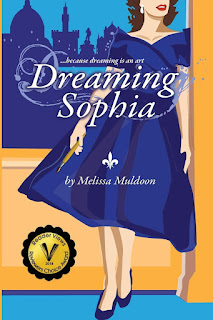
Weekly Reader: Dreaming Sophia by Melissa Muldoon; Muldoon's Work Is A Love Letter To Italy Itself And The Various Creative Souls That Lived There


Weekly Reader: Dreaming Sophia by Melissa Muldoon; Muldoon's Work Is A Love Letter To Italy Itself And The Various Creative Souls That Lived There

By Julie Sara Porter

Bookworm Reviews


Spoilers: Melissa Muldoon's Dreaming Sophia is the first of her Italy series, written in 2016. In some ways, it sets the stage for many of the books: a modern woman is drawn to Italy by a mysterious figure, a woman from Italy's Renaissance past and there is a connection between them. An outsider of the series is The Secret Life of Sofonisba Anguissola in that it tells of Anguissola's life with no detours into the present.

Another outsider is Dreaming Sophia. It carries the familiar trope of the modern woman meeting important historical figures from the past' but unlike Eternally Artemisia and Waking Isabella, Dreaming Sophia doesn't stop at just one brilliant figure. Instead Muldoon gives us several that appear before our protagonist to help guide her on her path to embrace a home in Italy.


Sophia, a young woman, is left alone and devastated after the deaths of her parents in a plane crash. Her mother studied in Italy in the 1960's even taking part in rescuing art and architecture from an approaching flood. She became one of Florence's Mud Angels. Also Sophia's mother's passion for Italian cinema like Federico Fellini, Marcello Mastroiani, and the breathtakingly lovely Sophia Loren caused her to name her daughter after the film actress. 

Sophia's father, a lawyer, also was fascinated by the country. He nicknamed his daughter, "Bella," Italian for beautiful. He bought property in Sonoma, California because he and his wife were fascinated by the Tuscan style architecture. The two transferred their love of the country so that after their deaths, Sophia holds onto that dream as a way to keep their memory alive.

At first Sophia takes small steps in her dream of living in Italy. She studies the language in university and becomes reacquainted with classic literature like The Divine Comedy. After a time of indecision and sadness, Sophia hears a voice encouraging her to dream. She knows to follow her dream and move to Italy.


During her life in Italy, Sophia receives assistance from various figures. Unlike the other books, she is inspired by several: Eleanora De Medici, Lorenzo "Il Magnifico" de Medici, Michelangelo Buonarroti, Leonardo Da Vinci , Lucrezia Borgia, General Giuseppe Garibaldi, Venus, Signor Brunelleschi, Casanova, and La Loren herself. It seems the spirit world all has their sights on this young woman and wants to guide her through all aspects of Italy, its history, its art, its architecture, it's mythology, and its entertainment. They give Sophia the whole picture of the country that she feels a close connection to, a place that she can call home.

The spiritual visits are magical and inspiring but also provide some humor. Sophia gets so used to them that when she visits Rome, she is surprised when she doesn't run into Caravaggio. 

A very metafictional moment involves the glamorous Sophia Loren, both as a spirit and a real woman. When Sophia encounters her in spirit form, she is her younger self when she starred in various films like Two Women and Marriage Italian Style. However, in a later chapter she sees the glamorous actress in the flesh and how she looks currently. (No word on what Loren herself thought of Muldoon inserting her into the book via a strange magical realism, age regression and progression.)


The book isn't as plot heavy as the other three. Sophia studies painting and obtains a rival. She falls in love with Lorenzo, a descendant of the Medici family. Most of the book explores Sophia living in Italy, getting to know every street and city, becoming familiar with the customs, and feeling a sense of belonging. She stays with a family that is very affectionate and curious about her. She begins to see them as a substitute family in absence of her parents. 

One of the best scenes involves her visiting a masquerade ball in Venice. The elaborate costumes, the somewhat sinister masks, the canals give a sense of mystery,magic, and intrigue especially when she encounters a various flirtation man who calls himself Casanova (of course considering her track record of meeting various figures, he might actually be the famous lover and spy.)


What stands out in Dreaming Sophia,, actually in all of Muldoon's books, is the setting. Italy becomes a character itself as the various people and places are lovingly detailed. They show Italy as a place of beauty and passion. For the protagonists in the books, Italy is a home.


Wednesday, March 17, 2021

New Book Alert: Canvas of Time by Amelie Pimont; Haunting and Beautiful Romance About Reincarnation and Love Lasting Over Time


New Book Alert: Canvas of Time by Amelie Pimont; Haunting and Beautiful Romance About Reincarnation and Love Lasting Over Time

By Julie Sara Porter

Bookworm Reviews


Spoilers: David Mitchell's Cloud Atlas is one of the best thought provoking novels about reincarnation. In it, six separate stories from different genres are brought together by the idea that the six protagonists are the same person reincarnated over the centuries. The character changes genders, ethnicities, skin color, and sexualities but inside they are the same person having the same thoughts, similar goals, and motives revealing that the body is just the cover for the eternal soul underneath. It is a transformative novel that stays with the Reader long after the book is closed.

Amelie Pimont's novel Canvas of Time is a similar work. It is not as complex or invites deep thought the way Cloud Atlas does, but it is a haunting love story which involves a pair of lovers who get acquainted, fall in love, are separated by cruel circumstances, only to meet again the next life. It's much simpler than Cloud Atlas but is every bit as beautiful and unforgettable.


The two lovers that we meet are Eli and Sarah (same names every time) and we encounter them in Ancient Egypt, 20th century France between the World Wars, modern 21st century  California, and a futuristic spaceship. The landscapes are almost dream-like yet precise in their details. 

The fairy tale aspects of the princess and the commoner trope are explored beautifully in the Egyptian segments as spoiled Princess Sarah flirts with slave Eli, then he defends her against an avenging army. It is a strange attraction of opposites as the two see each other beyond the wide economic gulf that separates them. Then just when you think it will turn out well for them, it turns into a Shakespearean tragedy.


While the Egyptian section captures the romantic fairy tale aspects of "long ago and far away," the French section captures the minutiae of everyday life along with the stress and sacrifice of living during war time. Unlike the Egyptian segments, the events are rooted in actual history. Eli and Sarah are born into two separate farming families that are close friends and live in an almost communal existence. Through Eli and Sarah's youth, we see the children study the facets of agriculture like milking cows, building efficient machinery to help with the farming, selling their wares to the market and so on. Then every night, the two families gather together for storytelling. It's a pleasant nostalgic atmosphere. 

When World War I begins, it is an explosion that destroys the peaceful existence that occurred previously. In some very traumatic chapters, German soldiers use their family farm as a base and force the families to work for them. The constant abuse, sexual assault, malnutrition from rationing, and physical and emotional stress takes its toll on both families to the point that Eli and Sarah lose family members. The losses bring them closer together. The years between the wars are a welcome normalcy as Eli and Sarah explore their fire forged romantic feelings into a marriage and parenthood before reality slaps them in the face again with another World War.


The segment set in modern America takes on the themes of magical realism by featuring dreams, psychic connections, automatic art, and fantastic coincidences suggesting that Eli and Sarah live a fated existence that propels them to their destiny. In this reality, Sarah is a photographer who is on assignment to take pictures of orphaned and abandoned children. She even develops a maternal bond with one of the young girls that she photographs. Meanwhile, Eli is an artist who paints pictures of a woman whom he has only seen in his dreams and scenes of his past lives.

There are some magical scenes in this segment such as when Sarah has visions of Eli in this study painting and the two have a telepathic conversation and get to know each other before they meet face to face. The book plays out as though their previous lives were building up to this moment when they finally meet in the present.


By far the best part is the science fiction story because it not only develops our lovers but the situation that they are in and why they fight so hard to be together. In this version, Sarah is one of the few survivors of a planet that has been destroyed by an environmental disaster. The residents of the ship want to take them to their home planet but first  they are given rigorous physical training, a list of rules that must be obeyed, and are made the test subjects of  some strange experiments in the med bay. Before they arrive on their planet, they pick up Eli who has been stranded and has learned to adapt on his planet. Of course, Sarah and Eli fall in love once more.

Eli and Sarah's romance is augmented by the science fiction setting in which a conspiracy is revealed causing them to question the others around them, even one another. We also see the results of making a personal sacrifice for those you care about and how it leaves its mark on generations to come.


Cloud Atlas is more of a thinking person's reincarnation novel. Mitchell does some tricks with the narrative like splitting the stories in half and having characters ask questions in one lifetime that are answered in another. Some things are inferred like whether other characters around the protagonists also shared past lives with them but nothing is ever outright stated leading the Reader to figure things out.

Canvas of Time on the other hand is more straightforward, the feeling person's reincarnation novel. The stories are split in a specific order with beginning, middle, and end. There are call backs and call forwards to former and future lives. In one lifetime, Eli gets violently stabbed, so in another he develops a fear of knives. In the present, Sarah visits the farm in France where she and Eli lived in that time period and recognizes it. 

Even characters reappear and play similar roles throughout the lovers' many lives. A female friend of Sarah exists as a fellow refuge, a slave, a village girl, and her sister in separate lives. A little girl attaches herself to the lovers in various lives sometimes as a sister,  daughter, or a young girl whom Eli or Sarah bonds with. A severe villainous character switches uniforms, ranks, careers, and even gender once but can't hide their true cruel despotic nature underneath. These echoes carry throughout Sarah and Eli's journey as a cycle that exists through time.


Canvas of Time is not only a remarkable fantastic love story but it is one that reminds us that love can exist throughout time and sometimes death is just another journey to a new life, adventure,and love.


Sunday, March 29, 2020

Classics Corner: One Hundred Years of Solitude by Gabriel Garcia Marquez; One Hundred Years of Confusion, Beauty, Magic, Emotion, and Fate


Classics Corner: One Hundred Years of Solitude by Gabriel Garcia Marquez; One Hundred Years of Confusion, Beauty, Magic, Emotion, and Fate

By Julie Sara Porter

Bookworm Reviews


PopSugar Reading Challenge: A book published in the 20th Century


Spoilers: Make no mistake about it, One Hundred Years of Solitude is not an easy book to read. But it is a book that is better experienced, thought about, and felt. It's the kind of book where images will stick with the Reader long after the book is closed. They will picture and remember those images and how they made them feel.

First come the difficulties in reading this masterpiece, then the praise.

Characters's names get repeated so often that the Reader should thank any deity imagined that there is a family tree that they can consult when mass confusion arrives over who is who.

The plot focuses on five generations of the Buenida family, a Colombian family that settles in Macondo, an isolated village. They begin with Jose Arcadio and his wife, Ursula. They have three biological children, Aureliano, Jose Arcadio, and Amaranta and one adopted, Rebeca. We then go into subsequent generations which boast of a total of 22 Aurelianos, 4 Jose Arcadios, 3 Remedios, 2 Amarantas, and 2 Ursulas. (It's not even a tradition. Other characters talk about the confusion and oddity of the name repetition.) Not only that, but many of the same generations have similar personality traits and physical characteristics, so many characters are interchangeable. They are less of individuals and more like one long continuous chain of the same people making the same mistakes, having the same beliefs, and living the same lives.

It's not uncommon to read about one character with one name and have them interact with another character with the same name, leaving the poor Reader to try to remember which generation that they are reading about. For example, Jose Arcadio the Father and Jose Arcadio the Son have a conversation in which Jose Arcadio (Son) runs off with a nomadic tribe. Then, Jose Arcadio (Father) regresses into a childlike state right before Jose Arcadio (Son) returns after a long estrangement.

The repetition of names gets comical when Aureliano, by then Col. Aureliano Buenida, impregnates 17 women, fathering sons by all of them. Of course all are named for their father, making that 17 Baby Aurelianos. It gets better. About four of the young Aurelianos move to the Buenida family manse and are called "Aureliano X," first name: Aureliano last name: their mother's family name (like Aureliano Triste). Then as if to make things even more confusing, the 17 Aurelianos all get murdered before they turn 35.

The narrative runs less like a smooth course down a stream and more like a rippling rapids down a rocky coast. Marquez writes like a person telling an oral story going on about something without making a point or telling part of a story and leave out vital information, only to remember it later. He begins the book telling us that Col. Aureliano Buenida was in front of a firing squad and had a childhood memory of seeing ice for the first time. Marquez only thinks to tell us later why he is in front of the firing squad and still later to tell us that he didn't die by the firing squad, but died much later of natural causes.


The effect of Marquez's writing is reminiscent of a ring of small children gathered around a wise village storyteller. They get droplets of information. So they lean in and pay attention to the details so they can get more. Real historical events are present like the military takeovers, civil wars, industrialization, and the rise of the fruit corporations. However, the events aren't a concrete focus so much as how they affect this little village and the people inside it. When Col. Aureliano leaves to start a military revolt against the oppressive Conservative government, he puts his nephew, Arcadio in charge. Unfortunately, Arcadio becomes a dictator turning Macando into a microcosm of the situation in the rest of Colombia, a country of great beauty trampled upon by corrupt political and military leaders. Ultimately, the other residents turn against Arcadio leaving him to face an execution as many leaders who begin their reigns with blood on their hands end the same way.

This book and The House of the Spirits by Isabel Allende could be considered twin spirits. Both are multigenerational books about Central and South American families and both books are considered the embodiments of the magical realism genres. However, both books are excellent in their own ways. The House of The Spirits is technically better written. The plots in the Allende book are straight forward and have clear beginnings, middles, and ends. While the characters are different generations from the same family, they also stand out as individuals. Their personalities, traits, goals, interactions, and ambitions are recognized. It is a book that is excellent on a mental level.

One Hundred Years of Solitude is better on an emotional level. Some paragraphs might be confusing, but the beautiful images are not to be missed. No Reader will forget Jose Arcadio (Father)'s dream of a house of mirror walls that leads him to discover Macondo or the continuous rain that pours down throughout the village.

The long illness in which the villagers all have a simultaneous case of insomnia is another image that stays. As are the means they use to keep their sanity and memories intact like writing notes and placing them on common objects, so they don't forget what they are.

This is a full sensory experience that draws the Reader in and doesn't let them go. It almost has a dream-like fairy tale quality. In fact, fairy tale tropes run abound in this story. There is the jealous rivalry between two sisters: Amaranta and Rebeca that intensifies to death threats and complete isolation for one of them. The divergent paths between Jose Arcadio (Son) and Col. Aureliano is reminiscent of those stories where one brother travels the world to seek his fortune and the other remains inside the kingdom to rule. There is even an eccentric woman, Pilar Ternera, a card reader, who alternates between Fairy Godmother and The Witch in the Woods. The beauty surrounds the book so much that the Reader can forgive the lapses in coherence. It is the deep emotional connection that stays with the Reader.

If there is a book that best represents the magical realism genre, it is this one. There are so many magical touches that add to the emotional experience. Many characters have unusual talents such as Aureliano's ability to survive several near death experiences. As she grows older and blind, Ursula is able to find anything that is lost simply by paying attention to the pauses and breaks from other's routines.

One of the more interesting, almost otherworldly characters is Remedios the Beautiful. Her physical appearance draws men to commit violence or suicide. Even when she wears plain clothes or has her head shaved, her natural beauty shines through. However, she is unaware of her physical appearance because she lives in a state of permanent childlike state, almost like a holy innocent ever virginal or untouched. So of course it makes sense that Remedios' end would not be conventional. She ascends into the heavens, like a saint.

Fatalism is a common theme to One Hundred Years of Solitude. Many characters like Pilar Ternera predict things that later come true. There is a consistent curse hanging over the family's head that occurs during a dream of Ursula's. She dreams that their family line will end when a baby is born with a pig's tail. Five generations later, a baby, Aureliano, is born with the pig tail but to parents who are unaware of the implications and are helpless to stop their inevitable end.

Perhaps that is why the characters all share the same names and are not individually defined as they are in The House of the Spirits. They are fated to become the same people in that continuous chain and the links will continue until the family line ends. This isn't the story of one person in a family, but one family that moves as one person that begins the world with much beauty and magic, but is destined as we all are to come to an inevitable end.


Saturday, June 15, 2019

New Book Alert; The Book Charmer by Karen Hawkins; Charming Magical Southern Tale About Friendship in a Small Town


New Book Alert: The Book Charmer by Karen Hawkins; Charming Magical Southern Tale About Friendship in a Small Town


By Julie Sara Porter


Bookworm Reviews


Spoilers: There are bookworms and there's Sarah Dove. She is the type of reader in which books talk to her, literally in her case.


In Karen Hawkins’s charming and magical novel, The Book Charmer, Sarah first hears the voices of books when she is a little girl. She hears the voice of her ancestor's diary begging for her to read it. After much deliberation and argument (Sarah wanted to read about dragons), she agrees and becomes fascinated with her family history.


The Doves are a unique family in Dove Pond, South Carolina. They have always produced seven daughters and each one is bestowed with some unique ability. The seventh (in this case, Sarah) is the most powerful and is often the head of the family and her community. Sarah's ability to hear books calling to her is put to good use in her role as town librarian. The books long to be matched to the right person and tell her who should read them. Sarah is able to match a Reader with the right book to solve their problems or answer their questions.


However, a once thriving town, Dove Pond is now dying. Businesses and residents are leaving. The mayor, an honorary position, is tremendously lazy and is inept in handling the town's funds. Even many of Sarah's sisters have left leaving only her and Ava, a horticulturist who hears plants the way her sister hears books. If Sarah doesn't act fast, there won't be much of a Dove Pond left.


Enter Grace Wheeler. Grace arrives in Dove Pond with her troubled orphan niece, Daisy, and her dementia-ridden foster mother, Mama G., to accept the job as Dove Pond’s Town Clerk. Sarah's books tell her that the new arrival will be the one to save Dove Pond, so she wants to get Grace to join the committee of the upcoming Apple Festival as a springboard to save the town. At first, Grace is reluctant but when the two eat coffee cake and carpool together, a friendship begins to develop.


The plot of The Book Charmer is similar to many of the other books of this type. Big City person visits a small town (usually in the South) of good-hearted eccentric locals. At first, the City Slicker has their own personal problems and doesn't want to have anything to do with them but still they begin to like it there, and become an active member of the community helping to save it from dying. Expect some cute little magical touches and a friendship and/or romance with a local.
It's not a bad plot, and if done right the results can be quite pleasant. Luckily Hawkins does it right. Grace and Sarah make for an interesting duo that play the familiar plot rather well.

One way is that they compliment each other so well. Sarah is a romantic almost otherworldly figure. She takes much of the strangeness of her family and the town in stride. She treats her beloved books like wise old friends and she is always on the lookout for signs and omens like flowers inexplicably changing color to let her know she is on the right track.
Sarah is an engaging people person who knows a great deal about the locals’ personalities, interests, and of course reading habits. She takes her role as a community lead seriously because she loves Dove Pond and doesn't want to see it die.

Grace is the more cynical realist. A former foster child, she developed a tough exterior that she uses in her relationships with others. While she could have been written as a heartless yuppie or an urban snob, Hawkins instead writes her as someone who is overwhelmed. She is trying to care for her niece and mother so when the mayor forces her to chair the Apple Festival, it's no surprise that at first she instantly delegates it to someone else and automatically resigns.
However, once she is tricked into rejoining the Festival committee, Grace shows a strong business strategy and work ethic. When she realizes the town's finances are in bad shape, she is able to plan a business outreach to send businesses to Dove Pond for the festival. To reach out to local business owners, she needs to get to know them and that's where Sarah comes in.

Grace and Sarah make for a great team that work well together and are able to use their talents to achieve their goals. Sarah wouldn't have the business acumen to draw in various companies without Grace and likewise Grace wouldn't understand how the town works without Sarah. They are practically two halves of the same woman representing the realist and romantic sides.

There are also other interesting characters that go through great change throughout the book. Daisy starts out as a rebellious sullen girl, but begins to enjoy being a part of the town when she is given extra duties such as reading to children. While Mama G’s faculties are diminishing, she is still on hand to provide a sympathetic ear and some words of encouragement. There is Trav Parker, an Afghanistan war vet and childhood friend of Sarah's who begins to develop a fondness for Grace and Daisy. His relationship with Grace and her family allows him to move beyond his PTSD and self-imposed isolation. There are also other memories of the community that are likable and charming in their own ways.

That's what this book has plenty of. Charm. The Book Charmer is a sweet book that casts a gentle spell on the Reader. While it does mention serious topics like dementia, death, mental illness and others, the book does not overwhelm the Reader with them. Instead it suggests that even when things are at their darkest, there is always a solution out of it. There is some light to be offered whether it is through the kind words of a friend, a gentle walk through town, a slice of coffee cake, the smell of a new flower, or the pages of a beloved book.