Showing posts with label Books About Books. Show all posts

Sunday, August 3, 2025

A Sense of Home: The Land of The Great Lakes by N.Z. Kaminsky; Beautiful Ethereal Bildungsroman About Lucid Dreaming, Creativity, and Imagination


 A Sense of Home: The Land of The Great Lakes by N.Z. Kaminsky; Beautiful Ethereal Bildungsroman About Lucid Dreaming, Creativity, and Imagination 

By Julie Sara Porter 

Bookworm Reviews 

This review is also on Reedsy Discovery 

Spoilers: N.Z. Kaminksy’s novel A Sense of Home: The Land of The Great Lakes lives up to its name. Once you open this beautiful lyrical book and fall into this bildungsroman of a young girl experiencing an ethereal evocative world of lucid dreams, creativity, and imagination you will feel like you are coming home. 

Tyra Blair lived in the city of Moss in the parallel world of Azure. It is much like our Earth with similar history, pop culture, and problems. One of those problems is war. When soldiers and their trained beasts attack Moss, Tyra and her family are forced go into hiding in the town of Marigold which is beautiful but the people there are cold and unpleasant. In exile, Tyra's parents implode as her mother Scarlett becomes depressed and her father Logan retreats into alcohol. Tyra is forced to become self-reliant while dealing with trauma, nightmares, and aching loneliness. She can only find comfort in books and nature. 

One day, she meets Koda a friendly squirrel. He guides her to a mirror where she can visit her favorite books and stories. This experience opens up a brighter lucid dream world. Her lucid dreams appear throughout her life as she grows and deals with many personal issues of loss, fighting parents, unemployment, unsatisfying romances, separation, war, tyranny, and death. These lucid dreams help her survive and dream of the day when she will leave to join The Land of The Great Lakes. Not Minnesota, it is a fabled land of thought, imagination, and beauty that can only be reached by invitation.

This book is one that grabs Readers's attention and holds on causing them to remember the little details long after they are done, particularly Tyra's lucid dreams. They are definitely the highlights of this book. 

Tyra and Koda’s trips into books delight any bookworm. The duo see Lady Death tries to con her godson doctor into letting her kill his patient. A man is confronted by and consumed by his shadow self. Grandfather Frost warms an abandoned maiden and many more. Through these experiences, Tyra is immersed into worlds of imagination, courage, adventure, and escape. The characters aren't content to wallow in loss and self pity like her parents. Instead, they persevere and fight with strength, cleverness, and kindness. In doing so, they challenge the status quo and reshape the world. Through them, Tyra is inspired to find ways to reshape hers. 

The book journeys aren't the only situations that Tyra's lucid dreams conjure up. She is able to befriend fantastic creatures like a pair of adorable furry monsters who would not be out of place in a Muppet special. She communicates with the deceased who send her wisdom that they were unable to when they were alive. They offer guidance on her path through signs, riddles, and visions. Her dreams not only provide an escape from a troublesome existence but gives her the means to survive it and aspire towards a greater path.

The best book to compare A Sense of Home to is another one that I recently read, The Art of Agony by Amy Felix. They are both coming of age stories about young women exploring the inner depths of their minds to survive during dismal dark times but the executions are polar opposites. 

The Art of Agony is about Eva, the protagonist becoming aware that the world is a dark meaningless place, even her own mind can't be trusted, and no one cares about how she feels. In A Sense of Home, Tyra's mind is opened to more enlightened possibilities. She sees a world beyond the one in which she lives that gives her a sense of purpose and more meaningful existence.

 While The Art of Agony is a more cerebral introspective perspective, A Sense of Home is a fuller, more evocative, ethereal, and a more intelligent perspective. It is one thing to come to the realization that life is hard and everything is stacked against you, but it is another to admit that but to find some meaning, purpose, and value in it anyway. That's why in some ways A Sense of Home is more mature than The Art of Agony which while excellent in exploring angst and the source of it, can also be lost in, overwhelmed by, and consumed by that same angst. Why bother doing anything at all if nothing matters? Why bother writing about it?

 A Sense of Home tells us that what we dream about, long for, hope for, create, inspire, love, and bring to life is enough of a reason. If we are only a spark in this vastness in the universe, then we might as well find something that isn't harmful but worthwhile. Something that gives us contentment and some kind of pleasure about being alive.


Saturday, June 7, 2025

Ismene and The Voice by Juniper Calle; Fanciful and Profound Fantasy About A Mysterious Library and The Woman Who Loves It


Ismene and The Voice by Juniper Calle; Fanciful and Profound Fantasy About A Mysterious Library and The Woman Who Loves It

By Julie Sara Porter 

Bookworm Reviews 


Spoilers: It's been awhile since I completely identified with a book character and now, I have found one. She is Ismene, the protagonist of Ismene and The Voice by Juniper Calle, an Epic Fantasy novel about a fracturing kingdom, a wise and sentient library, and a woman whose power comes from reading and sharing knowledge and wisdom with others.

Ismene is one of three characters who explore The Castle, a mysterious building which houses The Library, a collection that contains most of their world's knowledge. The other two characters are Lady Harmonia, Ismene's wealthy, spoiled employer and the daughter of the most powerful man in their lands and Eryx, a scholar whom Harmonia’s family sponsors and is a secret activist. Each woman has her own reasons for going on this journey. Harmonia wants to find and research texts and statistics that portray her lineage in a good light. Eryx wants to find forbidden knowledge and share it with fellow rebels that challenge Harmonia's family’s rule. Ismene wants to collect and share information with others. In other words, Ismene wants to be a part of The Library.

Calle superbly balances the setting and characters by giving us a fanciful and profound location and engaging and brilliant characters who are affected by it. Of course the most important setting is The Castle and Calle is not sparse with the details.

The Castle is described as remote and intimidating. It must be crossed by climbing a very steep mountain. If it takes a struggle to reach it, then you know it must have something greatly valuable within. The remoteness is the point as The Castle is a mere observer to the political struggles, familial conflicts, and wars underneath, neither good nor evil. It is merely a neutral force that records and keeps information, leaving the people down below to decide what to do with the information that they are given.

One of the most intriguing aspects of The Castle is that it's alive. It is often personified as a living creature that breathes, listens, and thinks. Books immediately appear at request and words light up on the pages so the Reader can locate the right information and sources.Many characters like Ismene speak to it like penitents to a divine being, something powerful and worthy of respect even worship. 

There are also servants called The Hands that attend to visitors' needs like giving them books, fixing their beds, and delivering food and messages. They appear in and out of the walls and shadows as though they are automatons that are physically attached to the Castle and operate only when needed.

By far the most intriguing aspect of The Castle is The Voice, the Castle’s spokesfigure. They are completely covered by androgynous clothing and veils. No one knows who they are, their real name, appearance, gender, age, even whether or not they are human. All that is known is that they live at The Castle and are its Head Librarian. They control who enters the library and who has access to the Library’s knowledge. They seem to be mentally and emotionally connected to the Castle even to the point of feeling its illness and pain.

 One can say if The Castle is a computer the hardware of monitor, screen, keyboard, and endless indecipherable streams of data, then The Voice is The Central Processing Unit (CPU) that runs the software, directs and interprets the flow and transfer of data, and coordinates the information process. They are connected to The Castle and retain all of the Library’s knowledge in their head. They have no identity except they are The Library.

The Library and its surrounding Castle is a curious and imposing setting but it retains probably the largest and most valuable treasure in the land. Nothing is more important than information and knowledge and an educated and knowledgeable population is not an easy one to control. 

Harmonia and her family understand this. She borrows and presents books that offer positive opinions about her family. She doesn't want to keep the people ignorant. In fact, she makes a big show of encouraging education and patronizing scholars and academics. But she does want to control what they read and how they interpret what they read.

 If books are negative, critical, or question her family’s authority they are banned and the people are denied access. Since information can only be obtained by going to The Castle, this leaves out critical thought and independent research. If they are not told about any problems, then they won't be aware that they exist and will obey Harmonia's family without question.

 Harmonia is similar to political, government, and religious authority figures. They want to restrict certain types of books under the guise of “age appropriateness” and control what people read rather than interfere with the act of reading itself. People can learn to read but these censors will tell them what they can read and learn. They can't question the norm if they are never told what the alternatives to the norm are. For Harmonia The Library is a means of control.

Harmonia is an authority figure that represents the system that Eryx and Ismene fight against in their own way. Eryx is the fiery rebel. She is grateful for the scholarship gift that Harmonia has given her but she is not blind to the limitations, flaws, illegal actions, and misdeeds that people like her and her power thirsty father do. 

Eryx is idealistic and passionate about her causes and wants to educate the people to act. She borrows forbidden books and shares them with peasants, servants, and resistance cells. She is a member of a Scholars Guild and organizes resistance movements through that.

Eryx is reminiscent of activists, warriors, protestors, and revolutionaries. They are people who use that information to support their causes. They check and research laws and statistics to support their claims so they can make crucial arguments and presentations. It's not a matter of just acting by committing random acts of violence or quoting generalities. It's finding solutions to the problem of an autocratic society and possibly the means of creating a more egalitarian society in its place. For Eryx, The Library is a means for change.

While Eryx uses The Castle’s knowledge to spread revolutionary ideals that Harmonia wants to suppress, Ismene believes that the very actions of giving information is revolutionary in and of itself. She isn't as outwardly rebellious as Eryx but she fights in her own way by keeping information and spreading it herself. When Eryx shows her that she borrowed forbidden books, Ismene shows her stacks of several books that she kept over the years.

That's why I find her so relatable and consequently she is my favorite character. Knowledge is what's most important to her, not the results of power. She lives in a world of books and reading. She, like the Castle, is an outsider and observer of all around her. But unlike The Castle and The Voice who are neutral, Ismene has her opinions about the world around her. She just prefers to fight smarter and quieter than people like Eryx and Harmonia.

 While Ismene considers Eryx a friend and at one time respected Harmonia, she has no romantic interest and is possibly Asexual. She loves The Library and books the way other people love their families, lovers, friends, their country, or power. It holds her strongest emotional, physical, mental, and spiritual connection. 

Ismene reads, keeps the knowledge in her head, and shares it with others. As she learns more, the information is stored in her mind and brings her closer to becoming a part of the Library. She is practically a Priestess and The Library is her deity. 

Ismene is like many people whose loyalties lie in her chosen form of expression and wisdom. The educators, the creatives, the artists, the thinkers, the philosophers, the journalists, the writers, the researchers, the academics, and intellectuals. Those who autocrats often go after and arrest first because they know the truth. 

These deep thinkers can find the pertinent knowledge in that endless stream of information and empower people around them to act on that knowledge. In doing so, they become empowered by the wisdom and truth that they hold, learn, and share. For Harmonia and Eryx The Castle is a means to achieve their goals. For Ismene The Castle is the goal. For her, The Castle is.


Saturday, December 21, 2024

The Girl Who Didn't Get Married by Mark Ross; Bookish Madness


The Girl Who Didn't Get Married by Mark Ross; Bookish Madness

By Julie Sara Porter 

Bookworm Reviews

Spoilers: Books like any other arts and entertainment medium offers a means of escape, information, deep thought, knowledge, relaxation, and fun.

Mostly it can be a good thing but for some it can be a detriment especially if they have trouble separating fantasy from reality. Sometimes, what they read becomes more real than the world around them and they identify with the characters so much that they can't separate themselves from them. That is the conflict facing Emma Jenkins, protagonist of The Girl Who Didn't Get Married by Mark Ross, a psychological thriller about a bibliophile who is put into a destructive situation and copes by using her very active literary fantasy life.

Emma is engaged but her fiance, Christian calls it off the day before their wedding. Apparently he had something on the side with Dana Martin. Police officer Jared Evans interrogates her on the day of the wedding that never was to inform her that Dana was found dead inside a hotel room. Witnesses saw someone who looked like Emma leaving the hotel. She had the opportunity, means and certainly a motive so it doesn't look good. As Jared investigates Emma, Emma does her own investigation to clear her own name and confront Christian. She is also caught up in her favorite mystery novels and psychological thrillers identifying with characters like Amanda Chapman and Claire Rosen so much that she not only interacts with them but actually becomes the characters.

The Girl Who Didn't Get Married is a strong insightful psychological thriller about a woman who is on the cusp of losing her sanity right when her entire world is falling apart around her. 

Emma is someone whose delusions are getting in the way of living her life.

There are chapters where she talks to her favorite literary characters and they offer advice on her current predicaments. Whole chapters are told from those characters’ points of view not Emma's so the Reader is required to pay attention to whether Emma, Amanda, Claire, or one of the other characters is on the scene. 

It can get very confusing to follow especially when chapters jump from one point of view to another and where they purposely contradict each other. For example Amanda does things that Emma doesn't remember doing or has no control over. 

There are strong suggestions that Emma identifies with these characters because they act in ways that she wants to. They are brave, confident, self-assured, seductive, alluring, strong-willed, and are able to manipulate situations in their favor. Reading about, talking to, and becoming these characters becomes a wish fulfillment for a woman who feels like she has no sense of self-worth or identity and feels like a cypher in her own real world. Someone who things happen to rather than making them happen for herself.

Emma's transformations from character to character are the highlights of the book more so than the plot. The plot is suspenseful and mind twisting. There are some interesting detours and revelations that require the Reader to read closely and even go back to review them again just to be sure.

However, some plot points can be discombobulating. One in particular will have the character scratching their heads in confusion and torn between whether they loved or hated it. It requires some deep thinking and a potential suspension of belief but it also resonates with what we know about the characters and the information in which we are given and can infer.

The Girl Who Didn't Get Married is a compelling look at a troubled bookworm’s fractured mind. It's a bit dramatic but is also intriguing and sometimes scary to imagine how quickly that could become us.


Thursday, May 23, 2024

Demons Also Dream: Summoned (Deadly Sins Book 1) by Ava Lock; Meta Dark Fantasy/Horror is Also an Effective How To Writer’s Guide


 Demons Also Dream: Summoned (Deadly Sins Book 1) by Ava Lock; Meta Dark Fantasy/Horror is Also an Effective How To Writer’s Guide

By Julie Sara Porter


Spoilers: Ava Lock’s Demons Also Dream: Summoned is not the first time that I have reviewed a How to Writer’s Guide disguised as a novel. That honor would go to D-L Nelson’s Lexington: Anatomy of a Novel which features author Nelson’s Historical Fiction novel about a British soldier during the Revolutionary War while giving us the process in which she created, researched, wrote, and edited said novel. Technically, Jasper Fforde’s Thursday Next series flirts with that concept as well, especially in the books, First Among Sequels and One of Our Thursdays Are Missing when Thursday’s adventures are put in book form and she has to contend with an even more fictionalized version of herself. Jen Finelli's Becoming Hero gives us a graphic novel in which characters argue with each other and the authors about the directions in which the graphic novel is going. 

But Lock’s book Demons Also Dream, takes that step even further. She wrote an effective sharp witty satirical Fantasy but also offers advice how a Dark Fantasy novel should or shouldn’t be written by having the protagonists talk and argue about it during the action. 

Our Literary Deadpools are Jocelyn B. “Joss” Wild, best selling Horror and Fantasy author, and Azazel, AKA Fury, a demonic genie, former lover of Lucifer, and Joss’s muse. Joss shares a psychic connection with Fury and Hell’s denizens so she can see what’s going on down there and this in turn gives her inspiration for her works. Joss however wants to write her final Fury novel and move onto other works. This does not sit well with her favorite subject as Fury questions Joss’ novel and what this untimely end would mean. While this is going on, Fury bids to collect a bounty on Roger Ford Garrison, the escaped soul of a news anchor who in life kidnapped, tortured, and murdered members of the LGBT+ community. Joss encounters April S. Showers, a fan and aspiring author who is not exactly the picture of perfect sanity. 


Demons Also Dream is a Hell of a fun time, particularly because of its two leads. Joss is a cerebral sardonic character who probably would have preferred to experience Hell, demons, psychopaths, and psychic energy through the pages of the books that she writes. She would rather be an author of best selling novels and go to the bar to cruise for an attractive woman to sleep with. What she gets instead is Fury, an aggressive sexually charged denizen of Hell who lives up to her name. She reacts with passion and fury inspiring Joss with her experiences and her energy. It's a difficult life one of demonic encounters , kidnappings, torture, and frightening psychic visions but Joss endures it, reports on it, and even makes money off of it. The two bounce off each other really well in these insane situations in which they find themselves. 


The book is ripe with deliciously juicy bits that add to the overall tone of the story. Lucifer is described as looking and sounding like George Clooney. Roger works for, what else, Fox News. Hell is less a place of torture than a place of ineffective bureaucracy. When April holds Joss captive she submits her to the worst torture imagined: she makes her read her unfinished sappy Princess Fantasy novel! This book is a hilarious and savage delight.


The best parts are the meta commentary which reveals that this is a smart novel about how to write a Dark Fantasy novel. Characters call attention to various plot points that happen particularly Fury. It's one thing to kill off a lead character as Joss was planning to do in her novel. But when said lead character sits up and argues with you about it is something else entirely. It's particularly good when in the end Joss changes the name of her intended book from Demons Also Die to Demons Also Dream implying that the book that we just read is the one that she wrote. It makes one wonder how Lock’s actual creative process went in putting together her book.


The most brilliant and savage commentary is when Joss reads April's manuscript which, let's just say, makes the Vogons from Hitchhiker’s Guide to the Galaxy and The Mentor’s William Lansing look like misunderstood literary geniuses. Rather than outright attack the banal work, Joss gives her captor smart advice. She tells her to make her Mary Sue protagonist more real by giving her flaws. Put her into a conflict that raises the stakes and changes her outlook. Happy endings are fine but make them well earned by having her struggle. This is all good advice that any author needs to hear and the fact that it is written inside a novel that plays with and illustrates these conversations is really telling

 Demons Also Dream: Summoned is an amazing and effective Master Class on writing a novel that is Trojan Horse disguised as a fun and exciting novel.


Sunday, March 24, 2024

The Daily Stoicism Bible: [4 in 1] The Highly Actionable Guide to Face the Uncertainties of Modern Life with Ancient Wisdom and Self-Control. Including Essential Stoic Practices and Exercises By Christopher H. White; Computer Networking Bible: [3 in 1] The Complete Crash Course to Effectively Design, Implement and Manage Networks. Including Sections on Security, Performance and Scalability By Rick C. Worley; Book-fluence: How to Write a Book to Position Yourself as a Leader in Your Industry by Nailah Harvey, M.A.Ed; Blackstone Griddle Cookbook for Beginners: Delicious, Healthy, Affordable, Flavorful Grill Recipes with Techniques and Tips for Beginners and Advanced Users with Pictures by Dr. Maria

 The Daily Stoicism Bible: [4 in 1] The Highly Actionable Guide to Face the Uncertainties of Modern Life with Ancient Wisdom and Self-Control. Including Essential Stoic Practices and Exercises By Christopher H. White; Computer Networking Bible: [3 in 1] The Complete Crash Course to Effectively Design, Implement and Manage Networks. Including Sections on Security, Performance and Scalability By Rick C. Worley; Book-fluence: How to Write a Book to Position Yourself as a Leader in Your Industry by Nailah Harvey, M.A.Ed; Blackstone Griddle Cookbook for Beginners: Delicious, Healthy, Affordable, Flavorful Grill Recipes with Techniques and Tips for Beginners and Advanced Users with Pictures by Dr Maria 


The Daily Stoicism Bible: [4 in 1] The Highly Actionable Guide to Face the Uncertainties of Modern Life with Ancient Wisdom and Self-Control. Including Essential Stoic Practices and Exercises

By Christopher H. White


Christopher White's 4-part series, The Daily Stoicism Bible, is a fascinating look on how Readers can practice the ancient Greek philosophy of Stoicism and implement it into their daily lives.


While many believe that Stoicism involves denying one’s emotions and behaving almost robotically, White challenges those assumptions. Instead it is defined as knowing and accepting things can change for better or for worse, that terrible things can happen, understanding and accepting when they do, and making steps to learn from and find solutions to those problems. It's  about understanding hardship, loss, and suffering from a distance and feeling but not being overwhelmed by them or allowing them to control one's life. 


One of the most interesting aspects to the book are the various practices that one could do to achieve a Stoic outlook on life. Procedures like journaling, meditating, and visualization help to clear the mind and prepare one to view difficulties and hardships with a focused and reasonable mind.


Some of the chapters emphasize visualizing the worst and asking questions about it. Much of the fear and anxiety stem from the unknown, the possibilities of what could happen. Questioning and visualizing bring those fears to life and breaks them down into parts that can be recognized and either dealt with and cannot. For example, one can't change the entire economy but can achieve the positive mindset to send their resume to potential employers, perform well at an interview, and become an ideal employee.

This series helps Readers practice Stoicism

so they can face what they can't change, work on what can, and recognize the difference.


Computer Networking Bible: [3 in 1] The Complete Crash Course to Effectively Design, Implement and Manage Networks. Including Sections on Security, Performance and Scalability

By Rick C. Worley


Rick C. Worley’s The Computer Networking Bible is an interesting 3-part series which invites Readers into the inner workings of a computer network.


The book splits into three books which focus on the fundamentals of a network, how a network is built and managed, and various advanced networking topics. It makes sometimes difficult and confusing terms clear and comprehensible. 


The terms are nearly and precisely defined so Readers who are new to networking can understand various models, standards, devices, topologies, protocols, and services. It's a crash course in learning what those terms mean and how they combine into a huge network.


The second and third books are more detailed in how networks are designed and  maintained and how they can be advanced with other tools. Readers are walked through implementing a network and applying security to keep it and users safe and protected from hackers and grifters. Other components are virtualization, automation, and performance optimization. They allow members to update the network and interact with each other.


Advanced topics include Cloud Computing, Software-Defined Networking, the Internet of Things, Applications, Services, Programming Languages, API, Monitoring Tools, and A

Analytics. These chapters help users update their network. 

This book is a basic course on how to create and update a network to become more advanced and interactive in an ever-changing, technological and interconnected world.


Book-fluence: How to Write a Book to Position Yourself as a Leader in Your Industry by Nailah Harvey, M.A.Ed


Nailah Harvey’s book Book-fluence is a helpful book on how anyone who is knowledgeable in their field could put their experience and advice into book format.


The book is efficiently organized as an acronym for WRITE: Work on your author mindset. Record your expertise. Identify your framework. Tailor your book. Expand your network.


It begins by asking the potential writer what they are great at, what they want to be known for, and what they should write their book about. This asks writers to think about themselves and what they want the main theme or topic of their book to be. 


There are also tips on exploring the market and where to look for publishers. Thinking about who to tailor the book to, the title, and content allow the focus to be narrowed into a digestible length for readers.


The final chapters deal with the aftermath of writing the book. Once the book is written, the chapters are laid out, and the tone and audience are selected, it's important to edit and proofread before sending it to publishers. Checking for spelling, grammar, and narrative helps sell the book to the publisher.

Marketing is also another step that this book addresses. Buying an ISBN number, using social media contacts, and interacting with potential buyers and readers are discussed.


Book-fluence is the book for when you want encouragement to use your expertise and guide others in book form.


Blackstone Griddle Cookbook for Beginners: Delicious, Healthy, Affordable, Flavorful Grill Recipes with Techniques and Tips for Beginners and Advanced Users with Pictures by Dr Maria 


It's the time when the weather's getting warmer and many are looking forward to picnics, barbecues, and any meal

over an outdoor open fire. If you are, then this book is for you.


This book contains mouth watering recipes for those who love their beef, game, and pork. There are varieties of ways that such meats can be prepared from chicken, bacon, burgers, and vegetable meals. What is particularly fascinating about this book are the various burgers and sandwiches that are offered. It brightens the options that are usually recognized in a typical barbecue.


The book is neatly divided into basic chapters for breakfast, lunch, and dinner. It also identifies the foods that are considered the healthiest and most beneficial. There are also plenty of tips on how to season and savor the food to give the meal extra taste.


The Blackstone Griddle Cookbook for Beginners is one that will make any outdoor picnic and barbecue a wonderful experience. It will make such an outing memorable.


Tuesday, May 23, 2023

Weekly Reader: The Mentor by Lee Matthew Goldberg; Author-Editor Conflict Becomes Suspenseful, Bloodier, and Deadlier Than Usual


 Weekly Reader: The Mentor by Lee Matthew Goldberg; Author-Editor Conflict Becomes Suspenseful, Bloodier, and Deadlier Than Usual

By Julie Sara Porter

Bookworm Reviews


Spoilers: One thing that I will say as an Editor and Book Reviewer, no matter how often I disagree with authors, I am glad that our disagreements don't go the way of William Lansing and Kyle Broder in Lee Matthew Goldberg's The Mentor. This psychological thriller takes the never ending struggle between authors and editors and twists it to violent and deadly means.


Professor William Lansing is delighted to learn that his former student, Kyle Broder, has attained superstar status in the publishing world. The young editor gets the credit for discovering and editing the debut novel of rising star author, Sierra Raven. William thinks that Kyle would be the perfect editor to pitch his magnum opus, Devil's Hopyard, to. After all, William had been working on the book for ten years and he helped Kyle out when he was a troubled addicted college student so…favors?


Unfortunately, William's manuscript is an incredibly disturbing look into the mind of a deranged psychopath. Worst of all, it's a badly written incredibly disturbing look into the mind of a deranged psychopath. It's about the rape, murder, and cannibalism of a young woman and hits too close to home for Kyle's liking.

Kyle has no intention of publishing it and let's just say William does not take constructive criticism well. His desire for literary fame becomes an obsession and his means to achieve it become violent. Soon, Kyle begins to wonder how much of William's work is the product of a writer's imagination and how much of it is based on true events.


Just like with Goldberg's previous books, Slow Down, Orange City, and The Desire Card series, The Mentor shows the dangers of unbridled ambition and what happens when one's ambitions overpower their sense of ethics, morality, legality, and basic humanity. They become someone to be feared, someone who believes that the end justifies the means, any means, no matter who suffers.


William has that kind of ambition. He is definitely someone who we can't separate the art from the artist. Everyone around him and everything that he does is just material for his book. It's hard to tell whether he had these graphically violent thoughts before he wrote them or being a writer came first and he found gruesome inspiration. Either way, he sees everyone as characters in his novel that he could do the most horrific things or make them do the worst things and they act according to the orders of him, the author.


Kyle is a more sympathetic character since he is the one getting stalked and gaslit, but he also has an unchecked ambitious side. He rejects William's manuscript because he finds it disturbing, but at first he is less concerned about the content than about what it would mean for his reputation. He is a rising star attached to a couple of potential bestsellers, a coming of age novel and a crime thriller, surefire hits. Kyle does not want his star to be hitched to a poorly written and potentially controversial work. He is not concerned about the potential loss of life and confession of an actual crime rather than what it would mean if his name was attached to it. It's only when William's desire for fame and violent tendencies affect Kyle personally that he realizes just how deadly William's desires are.


Some of the other characters in The Mentor aren't as clearly defined. A rival of Kyle's sucks up to William until it becomes feasible not to. Kyle's girlfriend, Jamie, plays the usual love interest character who at first doesn't believe that the protagonist is being stalked until they too become a victim. Sierra becomes a pawn in Kyle's chance for stardom and ultimately William's chance for notoriety. Everyone is collateral in this one-on-one battle.


The final chapters of The Mentor are drenched in irony as things turn on its head and the drive for ambition becomes one of infamy. William gets his stardom in the worst way possible and Kyle has to live with the consequences. 


Monday, August 15, 2022

New Book Alert: Lexington Anatomy of a Novel by D-L Nelson; How to Write a Historical Fiction Novel While Being a Historical Fiction Novel


New Book Alert: Lexington Anatomy of a Novel by D-L Nelson; How to Write a Historical Fiction Novel While Being a Historical Fiction Novel 

By Julie Sara Porter

Bookworm Reviews 


Spoilers: There are many books that are guides on how to write books in certain genres. I used to own guides on how to write Science Fiction, Fantasy, Horror, Mysteries, and Children Books. I also had back issues of a magazine called Byline which offered advice to aspiring writers.  One of my all time favorite articles for writers involved a man whose book about a boy with an overactive imagination was rejected because it was too similar to Calvin and Hobbes. In a rage, the author looked up the works of philosophers John Calvin and Thomas Hobbes to grasp the editor's meaning before he was introduced for the first time to a familiar comic strip about a boy and his stuffed tiger.


Usually, the authors of these books and articles include excerpts of their works to show how they did it or didn't do it

The guides are meant to help other authors improve their works and make a sale. Sometimes, they are fascinating behind the scenes tours of how a work is conceived, written, prepared, edited, and hopefully fingers crossed, accepted and published. It's like watching the "Making of" documentary on a Blu-ray of a film.

D-L Nelson's book Lexington Anatomy of a Novel is like that. It is partly a historical fiction novel about a British man joining the Army during the American Revolution and taking part in the Battle of Lexington. It is also the story of two modern women whose study of the Revolutionary War inspires a collaboration in creativity. However, it is also a nonfiction account of how Nelson was inspired to write the novel and how she put it together.


Nelson wrote that the idea for her book came when she and her husband visited the Minute Man National Park in Lexington, Massachusetts. While coming upon the graves of various American soldiers, they saw two graves of unnamed British soldiers. Nelson wondered who the soldiers were and what life was like for them. So she was inspired to write a Historical Fiction Novel from the point of view of a British soldier.

While Nelson writes about how she created her characters and researched the history, we get the novel that she wrote. It tells of James Holloway, assistant in a bakery owned by his bullying older brother, William. James's wife died in childbirth. He is grieving and wondering if his life will always consist of him playing second fiddle to his brother. A chance encounter with a soldier inspires him to enlist in the British Army right as Revolution is brewing in America. 

Nelson combines the Revolutionary era story of James with a modern story about Daphne Andrews, a British ambassador's wife. She gets through her boredom in her marriage by studying history. She shares her interest with Florence Dubois, the French Ambassador's wife who has a talent for drawing. The two combine their resources and talents to collaborate on a comic book about a pair of twins living during the Revolutionary War.


Lexington: Anatomy of a Novel is an ambitious idea that works well mostly. It gives the steps towards making a novel while also presenting the finished product. Both the historical novel and Nelson's journey work well as complimentary towards each other. 

We experience James's time in the army working as an aide to General Gage at the same time that Nelson reveals the difficulties that she had with putting Gage into the action and making sure his fictional whereabouts matched his real ones at the time. It gives Readers some ideas of how real people are inserted into a historical fiction starring fictional characters.


Nelson's historical research is the highlight of the book particularly with how it works into James's story. For example, Nelson visited the many taverns, houses, and other locations to check the actual names and owners. These are revealed in the chapters before James encountered them. It shows the dedication authors have in their research by visiting locations, checking census records and reports, reading books and news articles, and interviewing locals. It's a hard job but when done right, the dedication shows. 


Also present is Nelson's attention to character which she also illustrated. She clearly gave a lot of thought in how she wrote James's actions and motivations. For example, while in America he has a flirtation with a few female characters and even considers settling down with one, Nelson was clear that her book had no room for becoming a Romance, plus James would still be in mourning for his wife. So James's romantic relationships are seriously downplayed.


I find it fascinating that this book is exclusively told from a British perspective. As an American, most of the Revolutionary War works that I have read or seen are almost exclusively told from an American point of view. Even characters who start out British often convert to an American ideology. While James considers settling down and opening a bakery in one of the Colonies, his views are mostly pro-British. It's a refreshing unique perspective in the historical genre that is sometimes dubbed "Revolutionary Chic."


What doesn't quite work as well is the subplot about Daphne. Nelson says that she wrote that because she heard the voice of a modern woman wanting to tell her story alongside James's. But a fictional modern story is unnecessary because Nelson already has a modern story to interact with James: her own. Perhaps, it was her own voice and not Daphne's that she was hearing.


Now there isn't technically anything wrong with Daphne's story. It shows her realization that she is stuck in a loveless marriage and how she uses her creative talents to study her passions, do something that she loves, and even break free and find independence. She is a well written character and her and Florence's comic book sounds brilliant.


But in most historical fiction, the modern and historical stories overlap somehow. The modern character might be studying the past character in an attempt to solve some mystery. They might have themes in common or there could be some familial link that is revealed. The family tie is a bit cliche but it is one of the most common ways the stories are linked.

But aside from a few thematic elements and the fact that she is also studying the Revolutionary War, the connection between Daphne and James is tenuous at best. She and Florence are writing their book about a pair of twins. James isn't even a character in their work. In fact, with Nelson already inserted into the book, Daphne's story in this book is redundant. There are times in Nelson's chapters where she spends a long time "forgetting" about Daphne and struggling to return to her plot.


What might have been better could be that Nelson could write a separate book solely about Daphne and her book. Perhaps she could even collaborate with an illustrator or cartoonist to compose sketches and the final panels so we could see the fictional making of a fictional comic book. It would make a very solid but separate story in its own right.


Despite the issues with Daphne's plot, Lexington Anatomy of a Novel is excellent both as a historical fiction novel and a guide on how to write them. It helps Readers understand the hard work that authors go through to make their stories and characters come to life and sometimes how difficult it is in the end to let them go.


Sunday, October 24, 2021

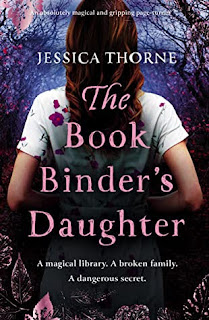
New Book Alert: The Bookbinder's Daughter by Jessica Thorne; Enchanting Special Collections Library Is Backdrop For Year's Best Fantasy


New Book Alert: The Bookbinder's Daughter by Jessica Thorne; Enchanting Special Collections Library Is Backdrop For Year's Best Fantasy

By Julie Sara Porter

Bookworm Reviews


Spoilers: Through this blog, we have seen book lovers and collections that have magic, not the traditional kind where a love of reading and a great imagination can send a Reader anywhere they want with the turn of a page. I mean real magic. From books that literally talk to Readers, books that appear to provide answers when someone is at an emotional crossroads, books that pull Readers inside their magical world, literary characters taking breaks from their storylines to hang out and chill with Readers, and libraries that hold every book that has or will be written and where characters congregate between reads and sometimes wait to become characters in a new work or taking over for other characters.

These Book Worlds could be a dream for me and my fellow Bookworms. 


That network of magical libraries and book keepers can add another member: The Ayredale Special Collection from Jessica Thorne's enchanting modern fantasy novel, The Bookbinder's Daughter.

 On the surface, it looks like a typical special library with a learned scholarly staff that know their collection and the knowledge it contains, researchers who come in to study the contents, comfortable chairs, a fireplace, and a very cozy, quiet, and welcoming atmosphere. It seems normal, but it's not.


 Sophie Lawrence knows this. She and her father left the Special Collection after her mother disappeared when she was a teenager. Now, Sophie is an adult whose father has died and she is in a loveless relationship with a verbally abusive boyfriend. She has constant dreams of walking around a tree that reaches the sky and a voice that calls to her. Her only comfort is her job as a bookbinder. She repairs and builds books with the care of a doctor to her patients.

Sophie is visited by her uncle, Dr. Edward Talbot who sends her an official job offer to become a conservator and specialist binder at the Ayredale Special Collection. Because of the trauma of her mother's disappearance and the blocked memories of her time in Ayredale, Sophie is extremely reluctant but as soon as she reenters the library and meets its odd staff, she feels a sense of being drawn in and welcomed. She also feels a surge of energy surrounding the library, something ancient, powerful, hypnotic, and potentially dangerous.


The characters and setting are what makes The Bookbinder's Daughter truly magical. There are so many great touches that enchant and draw the Reader into this spellbinding world of deep magic, knowledge, and wisdom.

Once Sophie enters the Special Collection, it becomes apparent that the collection and staff are one of a kind. The Ayredale staff are an eccentric unique bunch. Many of them practice some form of magic or what they call, The Art.

There's Uncle Edward who comes and goes on a whim always insisting that the "family must always return to the library." Will Rhys, Sophie's childhood best friend has grown into a handsome young man that sees himself as a protector of the library and Sophie. Professor Hypatia Alexander, the Keeper, never misses a thing but is looking for a replacement. Arthur Dee, Will's half brother has an obsession with the darker aspects of the collection. Villus, the library cat has his own sense of self importance. Delphine, one of three young library assistants (the other two are named Hannah and Meera), sets her amorous sights on the available and important men in the library. 

Then there's my favorite character, Tia, a flamboyant and flashy archivist who has a tragic past and powerful abilities behind her flowing red hair, glamorous appearance, and fashionable wardrobe. (Sort of like if Maggie Smith's earlier character Miss Jean Brodie had the knowledge of her later character Professor Minerva McGonagall.) The staff fills Sophie with a sense of welcome with their mostly kind nature but unease as the collection's real value becomes apparent.


And what a value that collection is. There are some very old magic books with a lot of power. One of them has leaves, no not leaves like pages, actual golden leaves written with words. This book is written in a strange language that none of the staff can decipher, except Sophie. Sophie, who has dyslexia and often has a hard time understanding written language, completely understands this book and many others. It appears that Sophie has her own untapped Art that needs to be put into practice. She has been  called to this job by outside forces and she does her job well.

The collection has a history that goes back to John Dee, Queen Elizabeth I's astrologer, advisor, and sorcerer who allegedly knew and wrote about various magical ancient languages. 


If the books aren't enough, there's the very large tree that stands in the center of the rotunda. A tree that contains much knowledge that can be transferred just by looking at it. It's a tree that is familiar to followers of various myths and religions. (Of course since books come from trees, it makes sense that the books and their original source would be together.) The books and tree are now in the care of the Ayredales who protect them from being misused even as they are pulsing with power and draw the unsuspecting, unwary, curious, avaricious, and greedy.

Of course, greed and opportunism set in and the collection is misused and opened wide. Dangerous things happen and many characters are revealed to be something else, something more frightening and deadly. Sophie finds out some truths about her family and the people that she works with and slowly has begun to regard as a second family.


The Bookbinder's Daughter is one of those type of books that draw a Reader in so much that they are immersed in the world and lost in the setting and characters. That magic  makes The Bookbinder's Daughter one of the best books and certainly the best fantasy of 2021.


Thursday, July 30, 2020

Classics Corner: The Neverending Story by Michael Ende; The Ultimate Classic Fantasy Travel Into The World of Books


Classics Corner: The Neverending Story by Michael Ende; The Ultimate Classic Fantasy Travel Into The World of Books

By Julie Sara Porter

Bookworm Reviews


PopSugar Reading Challenge: A book with a book on the cover

Spoilers: Those of us who were children of the '80's had a dark time at the movies, but damn it all, we loved it. If you're anything like me, still do.


Many of the films that we grew up with were darker and in some ways scarier than even some modern horror films. The Dark Crystal, Labyrinth, The Secret of NIMH, The Black Cauldron, The Last Unicorn, Something Wicked This Way Comes, Return to OZ, Who Framed Roger Rabbit, An American Tail, The Monster Squad, Ghost Busters, and Beetle Juice were just some of the many movies that we saw in theaters that fascinated us but still filled our nights with terror. Even our younger siblings and children may yelp with fear when they see our childhood favorites. Some of us may watch them again and wonder however did we survive going to the theater?


Sure we may have played with our Ataris and NESes and never went outside. Sure parents mocked our cartoons as half hour commercials and wondered why anyone would watch music videos. Sure, we were the first generation that was told "You're special" and may have received participation trophies. (Seriously, I used to get them all the time at Field Day events. I was an athletic loser, but they showed I tried. What is the freaking problem?). But when it came to the movies, we walked on the wild side and did so gladly.


One of the best movies from those times was The Neverending Story and my favorite fantasy film from that era. Many of us were in awe of the journey of young Bastian Balthazar Bux as he read about the beautiful fantasy world of Fantasia. We were amazed and sometimes scared of The Rock Biter, Morla, The Aged One, The Night Hob, and Falkor, The Luck Dragon. We cried with Atreyu the boy hero when he lost his beloved horse, Artax to the Swamps of Sadness and cheered him on when he fought Gmork, the creepy wolf, to the death. The fact that an invisible Nothing could destroy our world, probably made us fear thunderstorms for a long time afterwards. Before we may have understood what the terms "meta" and "breaking the fourth wall" meant, we saw it when the dying Childlike Empress revealed that Bastian, the boy reading the book, was the one who could cure her. We saw it even further when she revealed that others, meaning us, were with Bastian when he hid from the bullies in the bookstore and took the book. We debated what name Bastian yelled amid the thunder, lightning, and heavy rain (For the record, in both the book and movie, he said "Moon Child!") Most importantly, we wanted to be Bastian, the kid who found the book and enter that world and have that adventure as scary and traumatic as it sermed. Or at least, I did.


Many fans have less fond memories of the sequel, Neverending Story II: The Next Chapter. Though, some in subsequent years have since recognized it as a decent follow up to the original and while not as compelling or as memorable, was good in its own right. Also, Neverending Story II filled a very important need that those who only saw the first film and never read the book don't know: it covered the second half of the original novel. (The less said about the unnecessary train wreck that was The Neverending Story III: Escape from Fantasia, the better. The only thing that did was waste a perfectly good franchise and an early performance by Jack Black in one of his first film roles.)

While the book had its Readers over the years, it has fallen to the wayside because of the intense popularity of the first movie. For the record, Michael Ende himself didn't like the first movie. He felt it was childish and kitschy and distorted his book. However, that never stopped how loved the movie was. That love is well earned. The movies are well made, beautiful efforts with wonderful performances and scenes. They were huge parts of many's childhoods including mine. However, the book also deserves that recognition as well.


I am not saying either is better than the other. In fact, they are both equally good within their mediums. The book is wonderful for being a literary medium with its haunting descriptions and deep characterization. The first two movies do a good job as visual mediums in bringing those descriptions, characters, and actions to life. Instead of looking at them as separate entities, a competition where one has to emerge the better, look at them as the same entity telling the story in different ways. In a way, that's what makes it Neverending.


I will explain some of the things that are different about the book and how they add to the enjoyment of the films, like two halves that together create a whole. The first half is almost word for word similar to the first movie with some differences making some scenes longer and providing much needed exposition and explanation.

The second movie retains many of the characteristics and themes of the second half of the book. However, the second half of the book is not as linear of a straightforward quest as the first half. It is almost several adventures that are linked by Bastian's struggles within them. It makes sense that the second movie would gather it up in an adventure plot with a clear beginning, middle, and end.


Bastian's backstory is more elaborated upon in the novel making it more apparent why he would want to leave that world and become a hero in Fantastica (not Fantasia in the book). We see him not only bullied by the other kids, but as a complete physical and academic failure in school. (He was held back the previous year.) His only talent is making up names and stories, which comes in handy during his time in Fantastica.


We are aware from the movie that his mother is dead, but the book also emphasizes Bastian's troubled relationship with his father.
Through Bastian's father, the Reader experiences what it is like for a child to live with a mentally ill parent. In this case, his father is gripped with clinical depression, stemming from his wife's death. Bastian is unable to talk to him, as his father has lost interest in any activities and barely speaks to him or to anyone anymore. To Bastian, his father is frozen and numb to him. Bastian feels shut out by his father, so he retreats to his obsession with books and his fantasy worlds. This experience echoes in a later moment in the book when Bastian has a dream that his father is trapped inside a block of ice and Bastian hugs him trying to free him from the ice.


All of this backstory gives us the reasons why Bastian would enter and try to rebuild Fantastica after he names the Empress in the second half of the book. He was long held up for ridicule because of his weight, timidity, fear, and lack of acceptance. When he arrives in Fantastica, Bastian is encouraged to make wishes with the Auryn, a sacred gem that is her personal symbol. The more wishes that he makes, the more Fantastica grows. His first wish is to change his appearance to be taller, handsomer, and braver, like the heroes that he has always read about.


Bastian also names the new locations in Fantastica such as Perilin, the Night Forest and Goab, the Desert of Many Colors. He also creates creatures like Grograman, the Many Colored Death who is a living part of Goab and Smerg, a dragon that is created for a hero to defeat. He also names things like a sword that he calls Al-Tasher and a belt that causes it's wearer to become invisible that he calls Ghemmel. (In the second movie, we only see him create Smerg, give names to some of the areas, and making wishes to protect him and Atreyu during fights.) The longer Bastian remains in Fantastica, the more he becomes part of it. He forgets his home world and the life that he left behind. He eventually forgets he was ever from the outside world.

The book provides us with more information about the Fantasticans. For example, many of the characters who went nameless in the movies actually have names in the book. The first three Fantasticans that we encounter in both the book and first movie are the small man, Night Hob, and Rock Biter. In the book, we learn that the little man is named Gluckuk,the Night Hob is Vooshvazool, and the Rock Biter (called Rock Chewer) is Pyornkrachzark. There is also a will-o-the-wisp, Blubb. It actually makes sense that there are four characters rather than three, coming from all four directions to reveal just how large in magnitude the Nothing is coming from all directions-north, south, east, and west simultaneously.


We also get some insight into Atreyu's home life before he is recruited as Fantastica's book hero, before Bastian's arrival. Cairon, the Childlike Empress' advisor (a centaur in the book rather than a merman in the movie) travels to the Grassy Ocean beyond the Silver Mountains to visit the young warrior. While the book Atreyu and his people are clearly modeled after Native Americans (and both films hired actors who were either full or half-Native Americans in Noah Hathaway and Kenny Morrison), they are actually green skinned.
We learn that they are a nomadic people who are great hunters, but have a strict honor code. We also learn that the purple buffalo that Atreyu name drops in the movie, acts a guide in his dreams. The buffalo leads him to Morla the Aged One and the first clue to the Empress' cure.


Atreyu is almost like the perfect hero because he is written that way. Once Bastian becomes a physical part of the story, he proves to be a contrast to Atreyu in his actions. Atreyu receives the Auryn for his journey and makes the occasional wish upon it, but it has no adverse effect on him. He is a character from Fantastica and also has no hidden demons or longings from which the Auryn removed from him.
Bastian is a more relatable character, because he is understandable. He is an outsider from our world, so he is like us. The more he loses himself in the fantasy world, the more arrogant he becomes. He lost all of the qualities that made him human.


The antagonists are also very different. We learn more about Gmork, the wolfish servant of the Nothing. In his encounter with Atreyu (in which he is left by Night Creatures to starve to death rather than be stabbed by Atreyu), Gmork reveals that he is not from Fantastica. He has no world and has no exact form, taking many. He envies the Fantasticans for having a world. He is supposed to be embodiment of Fear just as Xaiyde the female sorceress in the second half of the book is a living embodiment of Temptation.

The second film makes Xaiyde the primary antagonist who creates and controls the Emptiness. The book appears to be the opposite. Xayide is simply a servant of the Emptiness, formed when Bastian loses more of himself. (In fact there is some indication that Bastian created Xaiyde himself after he expresses a need to have an adventure to prove his heroism.) She subtly encourages Bastian to make more wishes while acting as his subordinate. However, she manipulates Bastian into giving him gifts that increase his power and encourages him to use his wishes to control others, so she can overpower him. She is able to lead empty creatures such as her machine-like soldiers which only move by her will (which leads to her end, when Bastian rejects her manipulations. The soldiers run her over as though she willed them to kill her i.e. committed suicide.). Bastian's Emptiness almost makes him susceptible to her or rather the Emptiness' control.

They are not the main villains but Gmork and Xaiyde are the gateways to the true villains: The Nothing and The Emptiness. It is an impressive feat in book and movies, that the true antagonists in them are abstract concepts rather than actual beings. The Nothing in particular is a scary thought, and becomes more disturbing the older one gets. An entity that can make places, creatures, and things disappear is about as terrifying as it can get. The movie treats the Nothing as a storm that destroys everything in its path. The book is more subtle. Characters describe it as though someone went blind. All of a sudden, something that was there no longer is and is replaced with total blackness. It disappears as though it fell into a black hole, into nonexistence. Also, anyone who looks into the Nothing for too long gives into despair and becomes a part of it.

Another scary aspect that the book reveals is what happens to Fantasticans when they fall into the Nothing. They come to Earth, but they become Lies. They become things that people don't believe in and are simply means of deception. Even heroes like Atreyu become something that one can aspire to, but never become.

As frightening as the Nothing is, the Emptiness within Bastian is just as terrifying because it comes from his own actions. As he forgets about his life on Earth and becomes more arrogant, he becomes more insane with power. When he reaches the Ivory Tower, he sees that the Childlike Empress is gone. He then declares himself the Childlike Emperor and he is defeated by those who used to be his friends like Atreyu and Falkor. Eventually, Bastian loses everything, even his own name before he returns.

The antagonists are almost metaphors. The Nothing leaves sadness and despair on its wake. Bastian's Emptiness is like an insanity that consumes him annhiliating and destroying his mind as he retreats into the world he created. The Nothing could be Depression while the Emptiness could be Paranoid Schizophrenia.

We also get some interesting side quests that were probably removed from the movies either for special effects reasons or to fit the running time. Falkor for example does not enter the story saving Atreyu in the Swamps of Sadness. Instead, Atreyu saves him from a terrifying creature called Ygramul the Many, which is several small wasp like creatures that take one large changeable form. (It is here and not Atreyu's encounter with Morla the Aged One where Bastian screams with fright and Atreyu hears him leading to the first fourth wall break.)


Atreyu also goes through three gates to reach the Southern Oracle, not two. The first two are the same from the movie. The third is called the No Key Gate in which Atreyu must go through by acting like he doesn't want to. The more he fights to get inside, the less the door will open. So, Atreyu must temporarily forget the purpose of his journey before he can meet Uyuyulala, the Southern Oracle. There is also a deep sadness as Engywook, the cheerful scientific gnomic, who helps Atreyu through the gates is left in despair when Atreyu tells him that he will be the last person to speak to the Oracle. Engywook realizes that all his research was for nothing. He finally surrenders to the Nothing while Urgl, his wife remains loyally by his side to the end.

After Atreyu encounters the Childlike Empress to inform him of the results of his quest, she goes on a journey of her own. She floats into a litter to reach the Old Man of the Mountain, who is responsible for setting the Neverending Story to paper. (So he could be Michael Ende, himself.) The Old Man and The Empress read of Bastian's adventures and their own stopping at the exact moment where they are while Bastian writhes in indecision whether to call the Empress' name or not. Unlike the movie, where Bastian responds, because the Empress begs and cries to be saved, Bastian responds because he realizes that he, The Old Man, and the Empress are trapped in an endless cycle of reading the adventures without a resolution.

This adventure gives the Empress a chance to go on a quest of her own, but it slows things down and the telepathic dialogue between the two is shorter and more powerful for a film. (Incidentally, her name Moon Child came from when Bastian first saw her in a vision not from his late mother. Though, subsequent projects reveal that his mother still inspired Moon Child's name because she was named for the Moon Goddess: Selene.)

As I mentioned before the second half of the book features various smaller quests that are tied to Bastian's making wishes and him losing more of his memories of the outside world. He creates Smerg the Dragon specifically so a hero Hyruck can save the princess of his dreams. He encounters the Acharis, who are the saddest creatures in all of Fantastica. He then transforms them into the Shlamoofs, happy colorful but at times irritating butterfly-like creatures.

The majority of these adventures involve Bastian shaping Fantastica to fit his needs and gain heroism. A library is created detailing the adventures and stories that Bastian created. He receives names such as the Hero of Fantastica and the Wise Ones, scholars ask him questions like what is Fantastica ("The Neverending Story" he answers.) He wants to be admired, respected, and treated as a hero and legend. Then when he is consumed with power, he wants to be emperor and god.

One of the most haunting quests occurs shortly after Bastian's failed attempt at becoming Childlike Emperor. He finds himself in a strange city in which several men, women, and children don't speak and spend time doing repetitive mundane tasks. Bastian learns that these are the Old Emperors, humans who had also saved the Childlike Empress but had lost their memories of Earth and their identities. (Scarier still, on Earth there are probably several reports of missing persons over the years, even decades, of people who were never found because they became background characters inside a book.)

This implies that the Neverending Story is a cycle and that people from the outside world have visited it before. We even receive hints that Mr. Coreander the bookseller, also went to Fantastica himself and had adventures but mercifully emerged unscathed and not a relic at the City of Old Emperors.
Those who have no way of returning to the outside world just exist as background characters in the book, in the City of Old Emperors withiwith no past, identity,  or place. After visiting that horrible place, Bastian doesn't remember his home world fully but realizes that he can't remain in Fantastica.

Bastian's final test is his acceptance of love. He no longer wants to be a hero, and recognized for his exterior achievements. He wants, probably what he has always wanted: love and acceptance. He thinks that he has that with Dame Eyola, a sweet woman who could be a stand-in for Bastian's late mother. Bastian is cared for, mothered, and feels loved but something is still missing. He realizes that what is missing is his father. All the time that Bastian dreamt of being a hero, he realized that his most important wish was to rescue his father and to give and receive the love that they used to share.

The most touching moment is when Bastian returns to the real world and reunited with his father. He tells his father of the adventures and he believes him. Bastian realizes that his adventures weren't for nothing. He saved his father after all.


An oft-repeated line throughout the book is "That is another story and shall be told another time." It repeats every time a character leaves the book revealing that they had more adventures. We also learn some interesting things about their later lives such as the four from the beginning became life long friends.Cairon never returned to the Ivory Tower and entered a new life. Engywook did get scientific recognition. Hyruck saved his princess but didn't want to marry her anymore and so on. These mentions remind us that as it's title suggests the Neverending Story truly continues. Adventures happen when we're not looking and exist outside of the plot that we've been reading about. They leave us with many possibilities over what happened to them (and possibly fodder for fanfiction.)


The Neverending Story is a fantasy classic as both a book and two movies. It is a beautiful unique fantasy that one falls into as much as Bastian did. It makes them lose themselves into the adventure and the beautiful and at times disturbing world. As with any good book, we can picture ourselves alongside Bastian embracing this fantasy world and interacting with the characters.

It is just as much a memorable imaginative trip as it would be to read a historical novel that covers  several centuries of a real life place like New York and immerse oneself into its history and various people and cultures.

But that is another story and shall be told another time.