Showing posts with label Multi-generational narrative. Show all posts

Tuesday, September 2, 2025

The Lindens by Barney Jeffries; Lovely History of a House and Its People


The Lindens by Barney Jeffries; Lovely History of a House and Its People 

By Julie Sara Porter 

Bookworm Reviews 

Spoilers: Barney Jeffries’ The Lindens is similar to Edward Rutherfurd’s Epic Historical Fiction novels like Sarum, London, and New York. Like Rutherfurd, Jeffries covers a large cast of characters for an extensive period of time in a specific location. This book covers approximately 150 years of a house in Marshmead, England called The Lindens.

The Lindens was built in 1885 by rising businessman Arnold Cann for his family. The various characters that live there are an eclectic group of people over the years who have their own rich and captivating stories to tell. There's Tessa Hobson, a highly intelligent milkmaid with an advantageous marriage, Henry Cook, a WWII evacuee who acquires a love of birds, Irene Cotter who is contemplating leaving her abusive marriage, Arthur and Eleanor Aldridge, a hippie couple who weigh their next steps after their successful children's book series comes to an end, The Blakes, a multigenerational family that has an eventful Christmas season with plenty of emotional baggage, Veronika Lambert, a Slovakian immigrant who is faced with xenophobic neighbors, and Marsha Wood, whose investigation into The Lindens and its residents brings all of the various characters together.


Like any good Historical Fiction novel about a particular space, Jeffries personifies The Lindens so that the house becomes a character in its own right, in fact the central character. Its solid brick exterior, gabled windows, and bay windows suggest a stable protectorate for those who live there. The four bedrooms, indoor bathroom, two smaller servant rooms, drawing room, cellar, lawn, walled garden, stables, coach house, and orchard reveal The Lindens as a home of tremendous wealth but restraint in showing it off. The various touches that are added over the years such as the row of lime trees, the pond, built-in swimming pool, fountain gardens, and additions give the home different traits and characteristics that are found within each family and over the generations. 

In general The Lindens is a house that can very quickly become a home. It is beautiful, stately, charming, steady, ornate, proud, imposing, warm, and inviting. It holds the various memories, voices, personalities, behaviors, triumphs, tragedies, loves, and losses of the people who lived there.

Besides capturing The Lindens’ many facets and changes, Jeffries also captures the various characters’ individualities and complexities. A truly insurmountable and impressive feat considering the large cast that covers hundreds of years of English history. There are many well written characters from different backgrounds, goals, personality traits, experiences, and memories that surround the book. Jeffries created a memorable ensemble.

Tessa Hobson starts the book out strong. She is a dairy maid from a lower class family, but instantly shows her vast intelligence that is beyond what most people think of her. She captures the eye of The Lindens’ heir, Roger Cann, as he reads Romantic poetry out loud. Tessa is amused that it appears he is reading out loud to the cows. This gesture becomes a running gag between the couple as they joke that they met when “Roger read Keats to the cows.” This moment of literary connection leads to others as Tessa reveals that her own literary interests from Thomas Hardy, to the Romantics are as vast as Roger’s.

Tessa however isn’t just verbally intelligent, she reveals herself to be brilliant in numbers by keeping track of her family finances and tallying the gallons of milk that are collected and distributed. She also has an entrepreneurial mind as she has plans to modernize the Cann’s dairy farm and far reaching goals to see those plans through. It’s no surprise that Roger’s father, Arnold recruits Tessa as the farm’s manager and bucks tradition by putting a woman in charge of a growing business that ends up a success.

The importance of knowledge and learning is spread throughout the centuries as the characters receive opportunities to learn new things, express that knowledge in different ways, and pass that knowledge to others. One of those characters is Henry Cook, a boy from London taken in as an evacuee by Tessa in her old age. Henry gains a love of nature as he explores the gardens, the trees, the orchards, and especially the birds. Tessa and Henry bond through their bird watching trips where he learns to identify the various bird species that surround The Lindens.

This love of nature continues throughout Henry’s life as he becomes a respected ornithologist who writes a series of books about birds in England. In old age, he revisits the Lindens with his family and cries tears of joy as he locates the current avian inhabitants of the estate, no doubt descendants of the birds that he knew when he was a boy. He also passes this knowledge and love of nature to the young people that accompany him like his grandson, Laurence, Laurence’s wife, Aleesha, and Aleesha’s sister, Marsha.

Besides knowledge, The Lindens becomes a therapeutic location that helps its residents and visitors explore their creativity and individuality. Arthur and Eleanor Aldridge wrote and illustrated The Brixton Bunnies, a series of satirical children’s books that also appeal to adults. They received plenty of inspiration, fame, wealth, and made their voices and opinions heard through these books. But they landed in a rut and felt the series ran its course. Buying the Lindens gives Arthur some much needed inspiration for his next project: a series of serio-comic stories and novels about life in the country. 

However, creativity and the results of that creativity can be all-consuming. The Aldridges were once united in working on The Brixton Bunnies as a duo, but since moving to The Lindens, their lives veer away from each other. Eleanor is enamored with this country home and continues to illustrate adaptations of children’s classics. Despite writing about the country, Arthur is interested in expanding his writing interests and his horizons. He wants to travel, see new places, and meet new people, including other women. Not surprisingly, these differences become insurmountable and the couple realize that their marriage has to come to an end which results in trauma for their son, Felix. He goes through a series of problems in his life including addiction, depression, constant relocation, and frequent job dissatisfaction before he returns to The Lindens to find a peace of mind and his own creativity and voice. 

The Lindens is a location of coming and going and is different things to different people. For Irene Cotter and her son, Eric, the house is a beautiful prison that stands as a symbol of their captivity by an abusive husband and father. The only way that they can achieve any freedom is to leave it. For Veronika Lambert, The Lindens is a symbol of freedom as she flees her troubled home country to a place of security and comfort. 

The Lindens is also a place of nostalgia to come back to and relive a carefree innocent childhood. One of the best chapters that illustrate this is when the family of Julia and Glen Blake are reunited for the winter holidays. The parents and their three children come to terms with their adult struggles and conflicts while retaining those youthful memories, competitions, arguments, and family ties. The oldest daughter, Alex, has a high powered white collar career but is consumed with loneliness, envy, and alcoholism. Their only son, Robin and his wife, Kelly are at odds because of their different parenting styles towards their infant twins. Meanwhile Ruthie, the youngest, is concerned whether her family will accept her girlfriend, Marsha.

It’s worth noting that the majority of people who receive the house are not direct immediate descendants or heirs. It isn't primarily a home that is passed from parent to child. Nephews inherit from aunts and uncles. In-laws receive it instead of blood relatives. Mostly, families purchase the home from previous tenants. Most of the characters are not related by blood, nor do they arrive or leave the Lindens with the comfort of a wide ancestry which tell them that this space is and will always be theirs by birth. Instead they are united by their connections to the house and to each other. 

The various characters are drawn together by an investigation conducted by Marsha. Her curiosity about this place and its inhabitants opens a wide circle among them. Some purchase The Lindens from others. Some marry or become romantically involved with members of the other families. Visitors return to this beautiful house that once held their pasts. Even those who are long deceased are shouted out by current inhabitants visiting their graves or recognizing their contributions to the house. 

It’s a wide circle that is centered around this one space that meant so many things to so many people. The people that dwelled within, the characteristics and traits that were included, the memories and connections that are formed, the history, its current life, and the future generations are what turns this house into a home.



Thursday, August 7, 2025

Keep On Glowing Your Guide to Graceful Empowerment and Unstoppable Glow by Robin Emtage; The Belgian Girls by Kathryn Atwood; Mission: Red Scythe by C.W. James


Keep On Glowing Your Guide to Graceful Empowerment and Unstoppable Glow by Robin Emtage; The Belgian Girls by Kathryn Atwood; Mission: Red Scythe by C.W. James
By Julie Sara Porter 
Bookworm Reviews 


Keep On Glowing: Your Guide to Graceful Empowerment and Unstoppable Glow by Robin Emtage 

 Every woman has a fire, power source, inside that is forged by resilience, wisdom, and unstoppable feminine force. Some call this fire a glow. All women have it but not all are aware of it or use it to its fullest potential. Sometimes it fades over time or is buried under years, sometimes decades, of conditioning. It can dim and fade away into nothingness if not nurtured and cared for. Robin Emtage, beauty stylist, holistic glow expert, and founder of Silktage Tropical Inspired Beauty Products, wrote Keep On Glowing: Your Guide to Graceful Empowerment and Unstoppable Glow to help inspire women to discover and retain that glow throughout their lives.

Emtage’s Keep on Glowing Method consists of five pillars: Radiant Mindset, Sacred Self Care, Glow Rituals, Protective Boundaries, and Unapologetic Expression. Emtage describes this method as one that is designed to help readers return to themselves with grace, confidence, and an unstoppable glow.

Each chapter focuses on different concepts like creating a bold mindset for lasting radiance, practicing self-compassion for inner glow, gaining confidence and beauty that blossoms with age, reclaiming inner power, protecting glow in relationships, giving permission to shine, glowing forward and inspire, aging with intention and conscious glowing, using age-defying rituals, crafting a glow that lasts, building momentum through small deadly wins,practicing the art of saying no and creating boundaries, reimagining radiance and recognizing beauty beyond the mirror, building the life that you deserve, designing a life that radiates inside and out, and glowing forward. 

The book features advice and wisdom that is clearly explained with encouraging words. For example “Chapter 2: Be Your Own Best Friend: Self-Compassion for Inner Glow,” has words about “The Foundation of Self-Compassion, “The Glow Killing Inner Critic,” and “The Glow Boosting Power of Self-Talk.” “The Power of Self-Talk” section suggests ways of verbally turning negative self-criticism into positive and encouraging affirmations. For example, instead of saying, “I’m bad at this,” Emtage suggests changing the limiting sentence to “I’m learning and every step makes me better.”

Activities inspire readers to list their concerns, ways that can be improved, and identifying positive attributes. For example “Chapter 3: Embrace Your Radiance: Confidence and Beauty That Blossoms With Age”, includes various rituals, writing exercises, and actions that help guide the inner glow to shine. For example “Radiate Gratitude: Unleashing the Glow of Appreciation”, suggests that readers write down one thing that they like about themselves to remind them that they are worthy of admiration and respect especially from themselves. 

The chapters also include Glow Actions and Affirmations as final takeaways to preserve the inner glow. “Chapter 4: Reclaim Your Feminine Power: Unlocking Your True Glow” includes a Glow Action of writing a letter to oneself declaring a commitment to living fully in their power. They are encouraged to reveal what they will no longer tolerate, what they will say yes to, and to read the letter whenever they feel their light dimming. The Glow Affirmation for this chapter is “I reclaim my glow with every choice, every boundary, and every act of self-love.” 


The Belgian Girls by Kathryn J. Atwood

This is a summary of the review. The full reviews can be found on LitPick.

The Belgian Girls tells two stories. It combines the adventures of two women, a real life figure and a fictional character from the two different World Wars, to tell an intergenerational story of courage, sacrifice, freedom, heroism, and rebellion against oppression. 

The first chronological one is the true story of Gabrielle “Gaby” Petit, a barmaid in pre-WWI Belgium. Infuriated by the presence of German soldiers in her country, she organizes a spy network to pass information and defeat her country’s enemies. The second story, the fictionalized account, is that of Julienne Gobert, newly arrived in Brussels with her widowed father. She hears the story of Gaby Petit and is inspired to also become a spy and Resistance fighter against the Nazis as they devour the country around her. 

The stories perfectly merge together with characters, plot threads, and situations that link the two together. For example both protagonists were recently hit with trauma even before their involvement with the war efforts.The traumas leave these young women feeling unprotected in a changing world that is becoming more complicated but also tests their resilience, independence, and willingness to challenge their surroundings. 

The dual narration of the book shows how important it is to look to the past and learn how to live during tough times. Those tough times bring out the best in both women. Gabrielle, who lived a hard existence, learns to empathize with others and fight for her country. Julienne is pulled from her previous mousy timid nature and is moved by Gaby’s story. She becomes bolder and more courageous during times of danger. Both women are willing to fight and die if they have to.

The stories of Gabrielle Petit and Julienne Gobert remind us that one of the best ways to survive tough times of war, violence, tyranny, death, oppression, and poverty is to look to the past and how others lived during them, adapted to their surroundings, fought against them, and became heroes. Perhaps in doing so they can become heroes in the present.


Mission: Red Scythe (A James Vagus Thriller) by C.W. James

This is a summary of the review. The full review is on LitPick.

This book combines the flashy colorful adventures of a Ian Fleming James Bond novel with the duplicitous realistic tension of a John LeCarre novel.

In 1965, orphaned James Vagus is given an interesting offer. John Smith represents MIS-X the mysterious benefactor of James’ education. Smith notes James’ youth, good looks, amiable but reserved personality, and affinity for languages. MIS-X is looking for young recruits to go to places where the youth hang out like concerts, colleges, and class trips and gather information unobtrusively. In other words they are looking for teen spies. James is the perfect potential spy. He accepts the proposal, is given a partner Dakota Walker, and receives his first major assignment. He is to trail Otto Stradt, a corrupt businessman with ties to Eastern Europe. This assignment leads James and Dakota straight to a conspiracy involving scientists studying the potential of killer biology and the governments who will pay top dollar for such research. 

 James and Dakota are spies with all of the gorgeous locations, beautiful people, and cool toys and gadgets but also have an awareness that the governments that one works for can’t always be trusted, that agents can be quickly betrayed, and murder is never far away.

There is a seedy underside to this seemingly glamorous world, a seedy underside that young adults in their late teens and whose brains haven’t been fully developed are being thrown into. 

There is a constant awareness of death and betrayal that surrounds the characters. Even the characters that are on each other’s side may not be completely trustworthy as these young characters are encouraged to do everything they can lie, steal, have affairs, break laws, and murder to please their country and allies. There are moments that if the characters don’t expect betrayal from the presumed good guys, the reader might.

The only real true honest bond is that between James and Dakota. There are moments when one is captured, the other is willing to go through extremes to rescue them even if they risk blowing their cover. In this world of dishonesty, corruption, secrets, and murder the most honest moment is when the two partners acknowledge not only their friendship but also their brotherhood.

Thursday, July 30, 2020

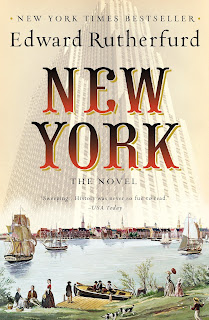
Weekly Reader: New York by Edward Rutherfurd; Another Epic Rutherfurd Success, But With Some Missed Opportunities


Weekly Reader: New York by Edward Rutherfurd; Another Epic Rutherfurd Success, But With Some Missed Opportunities

By Julie Sara Porter

Bookworm Reviews


PopSugar Reading Challenge: A book with the same name as a movie or TV show, but is unrelated to it (New York, New York)


Spoilers: I suppose after writing about Sarum, London, The Forest, Ireland, Russia, and would later write about Paris, Edward Rutherfurd decided to write about New York because he figured that if he could write about there, he could write about anywhere. (Apologies to John Kander and Fred Ebb for the paraphrase.)

New York is yet another of Rutherfurd's sprawling epics which cover the families of one location over the course of several centuries. This time, the English author takes his act on the road to the United States and New York. He does it with his usual grand style that captures these important historical moments, but makes it personal by showing us the individuals who exist in those turbulent fascinating times.


Rutherfurd deserves a lot of praise for writing an American city very well. He captures the various buroughs, streets, locations, accents, ethnicities, and the character of the city expertly. For example, he captures the various speech patterns of the characters without resorting to stereotypical dialect. He tells the points of view of people of various ethnicities and social status, as citizens, but maintains their individual struggles and personalities.
Rutherfurd captures New York so well, that it's easy to forget that he's not an American.

Once again he covers various families and reveals how they relate to the world around them. They are:


The Van Dycks/Masters-The European-American family traces their roots from Dutch lineage back when the territory was New Amsterdam. They eventually married with the English immigrant, Master family. They exemplify the old money families who are often in charge of the stock market, the big Fortune 500 companies, and names that are on guest lists of high society and philanthropic donations. They are present in every chapter from the beginning.

The Hudson/Rivers-The African-American family begin as slaves to the Van Dyck family. They are very prevelant before and during the Revolutionary War as the members argue over whether or not to aid the white Americans. They appear sporadically, but unfortunately their lineage is cut short during the 1863 Draft Riots when one of their members is lynched.

The Whites-A working class family that contrasts with the wealthier Masters. They have a long animosity towards the wealthy family. Their most important role is during the Revolutionary War when they are staunch Patriots and fight for the working class Americans. In subsequent chapters, they take on various occupations like police officers and fire fighters.

The Albions-A family of wealthy English expatriates. They appear mostly as a staunch Loyalist family during the Revolutionary War. Eventually, they return to England but maintain a friendship with the Masters.

The O'Donnells-An Irish-American family that emigrated to New York in the 1840's to escape the Irish potato famine. They begin in the impoverished area of Five Points and work mostly in service. Later, some of the family members gain prominence because of their involvement with Tammany Hall. The O'Donnells gain social success until by the late 20th century, one is an upwardly mobile attorney.

The Kellers-A family that emigrated from Germany in the mid-1800's and are close friends with the O'Donnells. They mostly work as tailors, artisans, and shopkeepers. Later family members develop creative talents, as one becomes a professional photographer and another becomes a caterer.

The Carusos-A family that emigrated from Italy through Ellis Island in 1901 (no relation to the opera singer). They eventually move to the Lower East Side. They experience various important moments from the Triangle Shirtwaist Factory Fire of 1911, to the creation of the Mafia (as one joins), and the construction of important buildings like the Empire State and the Chrysler Building. Like the O'Donnells, they too move upwards, as their final family member becomes a doctor.

The Adlers-A Conservative Jewish family from Flatbush, Brooklyn that appears in New York by 1955. They are mostly seen through the eyes of Sarah, their daughter, an art gallery owner. She gets involved with the Bohemian lifestyle and becomes more Liberal and secular and defies her family traditions..

The Campos-A Puerto Rican family that resides in El Barrio, Spanish Harlem. They appear in 1977, the final family in the book. Like the Adlers because they arrive so late, they are mostly seen through one character, Juan. Juan experiences the poverty of many black and Latino New Yorkers in the 1970's when the city is about to declare bankruptcy. He later becomes an advocate for the poor communities.

Because the book covers roughly four hundred years of history, a short time for a Rutherfurd book, Rutherfurd was able to write it similar to London. He inserted several characters into multiple chapters, so the Readers can see their experiences over many decades and see how they evolve with the times. The Revolutionary War doesn't happen until 11 chapters in. The 19th and 20th century cover 9 and 7 chapters respectively. It's a purposely slow moving process, but like London is the better for it.


Once again there are some excellent characters including:

Dirk Van Dyck-A Dutch immigrant trader in 17th century New Amsterdam, who has a loveless marriage but escapes from it to father a Lenape girl called Pale Feather. She makes the ongoing symbol that is passed from generation to generation, a wampum belt.

Quash-The first, and so far only, first person narrator of a Rutherfurd book. A slave, Quash recounts the transformation of New Amsterdam to New York and he eventually receives his freedom and becomes a shopkeeper.

John Master-One of the first in his family to carry the Master name. When New York is still considered a backwater location, he has a rocky meeting with his wealthier cultured Bostonian cousins (to show the difference between New York and Boston) and an unfortunate courtship. He then has a better marriage with Philadelphian Quaker, Mercy Brewster.

Charlie White-A working class man who was a childhood friend of John Master's only to be snubbed by his family. Later, he becomes a fervent Patriot who organizes protests and resistances against the British government.

James Master-Son of John who is educated in England and marries Vanessa, a well-to-do Englishwoman. Despite, or because of this, James becomes an outspoken Patriot. He leaves his wife and returns to New York. He then raises his son, Weston, as a single parent.

Hetty Master-Introduced in 1849, she is the wife of Frank Master, Weston's son. Despite her intense wealth, she is passionately involved in various social causes like abolition, women's suffrage, and labor unions.

Mary O'Donnell-The first of the O'Donnell family, she gets hired as a maid to the Masters. Later, she becomes Hetty's companion and best friend.

Theodore Keller-The youngest of the immigrant Keller family. By 1863, he becomes a photographer. He shows an artistic eye as he snaps portraits, graphic scenes of war, and landscapes. He becomes a well known artist after death.

Salvatore Caruso-The son of the Italian immigrant family, his sister is killed in the Triangle Shirtwaist Factory Fire and his brother is killed working for the Mafia. He becomes a construction worker and is involved in a love triangle with his brother, Angelo and girlfriend, Teresa.

Rose Van Dyck Master-The female head of the Master family by the early 1900's. She is something of a name dropper, referring to her friend Mrs. Astor, and a snob. However, she has enough financial insight to save her family from the 1929 stock market crash.

Charlie Master-Rose's dilletante son, he becomes involved with the Village scene of the 1920's of artists, writers, and theater types. Later he becomes an aging hippy and becomes involved with a younger woman. He writes about that experience in a semiautobiographical novel, Verrazano Narrows.

Sarah Adler-The daughter of the Jewish family. She owns an art gallery and has very liberal values that put her at odds with her traditional family. She is the woman that has the affair with Charlie Master and inspires his novel.

Juan Campos-An idealistic Puerto Rican immigrant who becomes an advocate for the poor families of color. He begins in the 1970's when New York saw an increase in poverty, union struggles, and crime.

Gorham Master-An investment banker in the 1970's and '80's. While he has the family name and success, he wants more meaning to his life. Ultimately, he assists Juan with a foundation to help others.

Maggie O'Donnell-Gorham's wife, and Mary's descendant, a yuppie attroney. She is pleased to have it all, a good career, husband, and children.

As with Rutherfurd's other works, the characters are an engaging bunch. We see them encountering big issues like the Revolutionary War, the Civil War, the creation of Niagara Falls and the Brooklyn Bridge, the Blizzard of 1888, New York's rise to being one of the largest and most important cities in the world, the Financial Panic of 1901, the Stock Market Crash of 1929, and September 11. So many important events are covered.

Rutherfurd also captures many personal moments for the characters. Frank's proposal to Hetty at the Croton Aqueduct produces fond memories even after they have friction in their marriage. Hetty later befriends Frank's mistress, Lily de Chantal and they conspire to overpower another mistress, Donna Clipp.

Mary lies about her family's connection to Tammany Hall to work as a maid for the Master family. By the time the truth comes out, decades later, Hetty is just grateful to have a long time friend.

One of Theodore Keller's photographs is named, Hudson River. Not because of the River, but because he captures Hudson River, the characters,' death. This photograph ends up being his most popular and infamous.

While Salvatore is working on the Empire States Building, he is so incensed by Angelo and Teresa's affair, that he contemplates killing him. A lucky accident spares his life and he becomes a devoted uncle and godfather.

Gorham Master spends many years feeling unfulfilled by his life of gain. He consults headhunters and weighs other opportunities before finally doing something positive with his wealth by aiding Juan Campos.

The final recipient of the Master family wampum belt is none of the Masters, but Sarah Adler as a gift from her lover, Charlie Master. She wears it when she is trapped inside the World Trade Center just as it is attacked and she is killed.

There are however plenty of missed opportunities. The most important is probably the too early departure of the African-American family, the Rivers. For the first time in Rutherfurd's books, we get a first person account with Quash. He reports of the change from New Amsterdam to New York and the English encroachment on the island of Manhattan. He also talks about his marriage to Naomi, his love for his son, Hudson and his friendly relationship with Dirk, his master who promises to free him on his deathbed. Hudson is eventually sold to a ship captain, but Quash obtains his freedom and opens a store. With that strong beginning and a first person departure from the other books, one would expect Quash's family to be prominent from beginning to end.

Unfortunately, that is not the case. During the Revolutionary War, Quash's son, Hudson raises concerns when his son, Solomon, joins the Sons of Liberty. Once Solomon's son, Hudson is sold, the family does not reappear, until they escape through the Underground Railroad. Then as I said earlier, their final descendant Hudson River is lynched and hanged during the Draft Riots of 1863.

That's it. It is great that Rutherfurd opens up this shameful period in America's past and telling it through a family that suffered through it. However, they should have continued in later chapters. The Rivers could have been actively involved in the Civil Rights Movement, the Harlem Renaissance, redlining, and the Great Migration. Heck, a later Rivers descendant could have been a fellow activist alongside Juan Campos. Many events and perspectives are lost when the Rivers's story ends prematurely.

The Rivers aren't the only ones. It's clear that while the book is another Rutherfurd ensemble, the main family involved is the Masters. They are present in every chapter and get the lion's share of points of view. This leaves a lot of families out of key events.

The White's introduction is very powerful and the book appears that to reveal another multi-generational family feud ala The Wilsons Vs. Shockleys in Sarum. Unfortunately, the White family takes a diminished role after the Revolutionary War and only receives minor appearances in later chapters. The Whites, as well as the Rivers, are the only families to not reappear in the final chapters that focus on 9/11.

Rutherfurd reveals the various immigrant families that make up New York, showing how America is made up of different people. It shows that we all come from somewhere else. Unfortunately, many of these immigrant families are spread out, some taking more prominent roles than others. The O'Donnells, Kellers, and Carusos have strong introductuons but by the mid-20th century, they disappear only to reappear for the finale. There are a few missteps where we could have seen more sons and daughters.

The book also leaves out some key events. The most important events that are short changed are The Great Depression and WWII. The book skips from 1929 to 1955. It seems odd that a book that chronicles the American experience so faithfully would leave these out. We don't get to see how poverty and joblessness affected the families in question. We don't get to see their opinions about the New Deal and their feelings towards Franklin D. Roosevelt (and he's a New Yorker at that. Seriously they left him out?).

We don't get to have the characters experience Pearl Harbor or see the male characters enlist. Nor do we experience the female characters working (many outside the home for the first time.). One of the families is Jewish and they don't even touch on the Holocaust or reveal that one of the Adlers is a survivor. Rutherfurd could have easily introduced two more chapters to cover these events. That he didn't is a real shame.

While the book has some missed opportunities, New York is another wonderful experience in time travel thanks to Rutherfurd. Reading about the people of New York and the way that has changed over the centuries, fills the Reader with a sense of pride in the city and how well Rutherfurd caught it.

Sunday, March 29, 2020

Classics Corner: One Hundred Years of Solitude by Gabriel Garcia Marquez; One Hundred Years of Confusion, Beauty, Magic, Emotion, and Fate


Classics Corner: One Hundred Years of Solitude by Gabriel Garcia Marquez; One Hundred Years of Confusion, Beauty, Magic, Emotion, and Fate

By Julie Sara Porter

Bookworm Reviews


PopSugar Reading Challenge: A book published in the 20th Century


Spoilers: Make no mistake about it, One Hundred Years of Solitude is not an easy book to read. But it is a book that is better experienced, thought about, and felt. It's the kind of book where images will stick with the Reader long after the book is closed. They will picture and remember those images and how they made them feel.

First come the difficulties in reading this masterpiece, then the praise.

Characters's names get repeated so often that the Reader should thank any deity imagined that there is a family tree that they can consult when mass confusion arrives over who is who.

The plot focuses on five generations of the Buenida family, a Colombian family that settles in Macondo, an isolated village. They begin with Jose Arcadio and his wife, Ursula. They have three biological children, Aureliano, Jose Arcadio, and Amaranta and one adopted, Rebeca. We then go into subsequent generations which boast of a total of 22 Aurelianos, 4 Jose Arcadios, 3 Remedios, 2 Amarantas, and 2 Ursulas. (It's not even a tradition. Other characters talk about the confusion and oddity of the name repetition.) Not only that, but many of the same generations have similar personality traits and physical characteristics, so many characters are interchangeable. They are less of individuals and more like one long continuous chain of the same people making the same mistakes, having the same beliefs, and living the same lives.

It's not uncommon to read about one character with one name and have them interact with another character with the same name, leaving the poor Reader to try to remember which generation that they are reading about. For example, Jose Arcadio the Father and Jose Arcadio the Son have a conversation in which Jose Arcadio (Son) runs off with a nomadic tribe. Then, Jose Arcadio (Father) regresses into a childlike state right before Jose Arcadio (Son) returns after a long estrangement.

The repetition of names gets comical when Aureliano, by then Col. Aureliano Buenida, impregnates 17 women, fathering sons by all of them. Of course all are named for their father, making that 17 Baby Aurelianos. It gets better. About four of the young Aurelianos move to the Buenida family manse and are called "Aureliano X," first name: Aureliano last name: their mother's family name (like Aureliano Triste). Then as if to make things even more confusing, the 17 Aurelianos all get murdered before they turn 35.

The narrative runs less like a smooth course down a stream and more like a rippling rapids down a rocky coast. Marquez writes like a person telling an oral story going on about something without making a point or telling part of a story and leave out vital information, only to remember it later. He begins the book telling us that Col. Aureliano Buenida was in front of a firing squad and had a childhood memory of seeing ice for the first time. Marquez only thinks to tell us later why he is in front of the firing squad and still later to tell us that he didn't die by the firing squad, but died much later of natural causes.


The effect of Marquez's writing is reminiscent of a ring of small children gathered around a wise village storyteller. They get droplets of information. So they lean in and pay attention to the details so they can get more. Real historical events are present like the military takeovers, civil wars, industrialization, and the rise of the fruit corporations. However, the events aren't a concrete focus so much as how they affect this little village and the people inside it. When Col. Aureliano leaves to start a military revolt against the oppressive Conservative government, he puts his nephew, Arcadio in charge. Unfortunately, Arcadio becomes a dictator turning Macando into a microcosm of the situation in the rest of Colombia, a country of great beauty trampled upon by corrupt political and military leaders. Ultimately, the other residents turn against Arcadio leaving him to face an execution as many leaders who begin their reigns with blood on their hands end the same way.

This book and The House of the Spirits by Isabel Allende could be considered twin spirits. Both are multigenerational books about Central and South American families and both books are considered the embodiments of the magical realism genres. However, both books are excellent in their own ways. The House of The Spirits is technically better written. The plots in the Allende book are straight forward and have clear beginnings, middles, and ends. While the characters are different generations from the same family, they also stand out as individuals. Their personalities, traits, goals, interactions, and ambitions are recognized. It is a book that is excellent on a mental level.

One Hundred Years of Solitude is better on an emotional level. Some paragraphs might be confusing, but the beautiful images are not to be missed. No Reader will forget Jose Arcadio (Father)'s dream of a house of mirror walls that leads him to discover Macondo or the continuous rain that pours down throughout the village.

The long illness in which the villagers all have a simultaneous case of insomnia is another image that stays. As are the means they use to keep their sanity and memories intact like writing notes and placing them on common objects, so they don't forget what they are.

This is a full sensory experience that draws the Reader in and doesn't let them go. It almost has a dream-like fairy tale quality. In fact, fairy tale tropes run abound in this story. There is the jealous rivalry between two sisters: Amaranta and Rebeca that intensifies to death threats and complete isolation for one of them. The divergent paths between Jose Arcadio (Son) and Col. Aureliano is reminiscent of those stories where one brother travels the world to seek his fortune and the other remains inside the kingdom to rule. There is even an eccentric woman, Pilar Ternera, a card reader, who alternates between Fairy Godmother and The Witch in the Woods. The beauty surrounds the book so much that the Reader can forgive the lapses in coherence. It is the deep emotional connection that stays with the Reader.

If there is a book that best represents the magical realism genre, it is this one. There are so many magical touches that add to the emotional experience. Many characters have unusual talents such as Aureliano's ability to survive several near death experiences. As she grows older and blind, Ursula is able to find anything that is lost simply by paying attention to the pauses and breaks from other's routines.

One of the more interesting, almost otherworldly characters is Remedios the Beautiful. Her physical appearance draws men to commit violence or suicide. Even when she wears plain clothes or has her head shaved, her natural beauty shines through. However, she is unaware of her physical appearance because she lives in a state of permanent childlike state, almost like a holy innocent ever virginal or untouched. So of course it makes sense that Remedios' end would not be conventional. She ascends into the heavens, like a saint.

Fatalism is a common theme to One Hundred Years of Solitude. Many characters like Pilar Ternera predict things that later come true. There is a consistent curse hanging over the family's head that occurs during a dream of Ursula's. She dreams that their family line will end when a baby is born with a pig's tail. Five generations later, a baby, Aureliano, is born with the pig tail but to parents who are unaware of the implications and are helpless to stop their inevitable end.

Perhaps that is why the characters all share the same names and are not individually defined as they are in The House of the Spirits. They are fated to become the same people in that continuous chain and the links will continue until the family line ends. This isn't the story of one person in a family, but one family that moves as one person that begins the world with much beauty and magic, but is destined as we all are to come to an inevitable end.


Sunday, June 30, 2019

Classics Corner: Holes by Louis Sachar; Three Stories Blend To Make One Superb YA Classic


Classics Corner: Holes by Louis Sachar; Three Stories Blend To Make One Superb YA Classic


By Julie Sara Porter

Bookworm Reviews


Spoilers: I always said that Louis Sachar's Newbery Medal Winning novel, Holes is deep for a YA novel. Heck, it is deeper than most adult novels. Teachers wisely have used this book to teach their students about paying attention to detail and multiple narratives.

Holes doesn't tell one interesting story. Instead, Sachar tells three and wraps them all in one ambitious, cleverly written superb classic.

Story #1 is that of Stanley Yelnats IV and his adventures at Camp Green Lake. Stanley's family has been under a curse for five generations. This curse often puts Stanley in the wrong place at the wrong time such as when he is caught with a baseball player's pair of athletic shoes that was donated to a children's home. Stanley is arrested and sent to an all-boys detention camp, Camp Green Lake.
The camp is in the middle of the desert and the nasty Warden and her cohorts demand that the boys dig one hole a day. They claim that they are trying to “build character” but it doesn't take long for Stanley to realize they are looking for something but what?

Story #2 is about Stanley's “no good-dirty-rotten-pig-stealing-great-great grandfather,” Elya Yelnats and the origin of the Yelnats family curse. Elya was a young Latvian man who fell in love with a girl. To win her over, Elya's friend, Madame Zeroni suggests that he should take a pig up the mountain and tend to it so it will grow stronger. When he is done with that, he should then take Madame Zeroni up the mountain so she can grow stronger. However, if he fails, he and his family will be cursed always and for eternity.
Unfortunately, Elya rejects the flaky girl when she can't decide between her two suitors.
So, Elya flees to America forgetting about Madame Zeroni and his promise to carry her up the mountain. He realizes the consequences when his family becomes hit with bad luck, particularly his son, Stanley Yelnats I who has a chest of valuables stolen during a stagecoach robbery.

Story # 3, my favorite, is of Western outlaw, Kissin’ Kate Barlow. Kate is a schoolteacher in the once-thriving town of Green Lake. She becomes romantically involved with Sam, an African-American onion farmer. When they are caught kissing, Kate's schoolhouse is burned down and Sam is lynched and shot to death.
Out of revenge, Kate goes after the members of the lynch mob by shooting them then leaving a kiss as her trademark. Kate begins a 20 year career of robbing trains, banks stagecoaches (including a stage that had as a passenger, one Stanley Yelnats I), and killing people who get in her way. Rumors are eventually spread that she buried the loot that she stole out in the desert and anyone who searches for it will have to go digging. And what a coincidence, that in modern times there is a delinquent camp for boys that can do just that.

As you can tell, Holes is not an easy story to tell and that's what makes it a great book. In my previous entry for A Wrinkle in Time, I praised YA books that recognize their Reader's intelligence. They can tell an engaging and inventive story that draws in young Readers while using bigger concepts and effective storytelling that doesn't talk down to them. Holes has all of that and more.

Off-handed conversations become important later on. Some things happen to Stanley in the present which are answered in one of the flashbacks stories. Characters are introduced in the present whose relatives had great significance in the past.
Sachar chose not to write his book in a chronological linear manner. Instead, he combined the three stories using excerpts from each into the chapters sorting them by plot and thematic element. The questions asked by characters in the present are answered by characters in the past and struggles caused by character's actions in the past are resolved by character's actions in the present. Confused yet?

Holes is not just a book with a deep narration. It also has a lot of humor, depth, and a lot of warmth. Much of the humor lies in Sachar’s writing. He first describes Camp Green Lake as “There is no lake at Camp Green Lake.”
He describes Kate Barlow as a beautiful school teacher loved by her students and many of the men in town. The men came to her adult education classes hoping to get a date with her, but Sachar tells us “all they got was the education.”

The humor isn't just limited to the narration. Names add to the funny elements to the story. Stanley Yelnats’ first and last names are the same forward and backwards (His great-great grandmother thought that was clever and it stuck with subsequent generations.)
All of the campers and staff have nicknames. The campers call each other names like Zig Zag, X Ray, Armpit, Magnet, Squint, Twitch, and Zero after some physical characteristic or personality trait. To receive a nickname means that you are accepted as one of the gang, as Stanley (later Caveman) discovers.
The staff are called The Warden (her title to show she's in charge), Mr. Sir (The Warden’s sadistic second in command) and Dr. Pendanski AKA Mom (the boy's counselor who affects a kind demeanor but is really condescending and patronizing to the boys, particularly Zero).

Besides the clever narration and word play, Holes discusses real world issues like homelessness, child abandonment, juvenile delinquency, and most notably racism. Kate and Sam are an interracial couple in the late 1800’s. Their encounters as Sam fixes Kate’s school roof, window, door, and eventually her broken heart are beautiful making them among the best literary romantic couples of all time.

Sachar, however, doesn't shy away from the ramifications from a racist town that may not have minded Sam when he sold them onions but raises Holy Hell when he and a white school teacher fall in love. After Sam is killed, Kate transforms from a sweet schoolteacher to an angry outlaw and Green Lake changes from a lush green garden spot to an arid decayed desert. These changes reveal the hateful nature that was buried under the residents of Green Lake bringing that hatred out in the open.

Stanley's family also has much to answer for. While Elya's crime of forgetting about Madame Zeroni wasn't as great as Sam’s murder, he reveals his egocentricism and ungratefulness by not even thinking of her until it is too late. Elya's actions still led to many generations of bad luck, poverty, and tragedy for his family. The only way the curse can be resolved is through Stanley.

Stanley unwittingly becomes the catalyst for great change during his time in Camp Green Lake most importantly in his friendship with Zero.
Zero is a small camper who doesn't say much and is frequently bullied. Stanley and Zero strike up a friendship when Stanley teaches Zero to read and Zero helps his new friend dig his holes. They defend each other after they are bullied.
When Zero runs away from camp, Stanley orchestrates a daring escape attempt to find him earning them the support of the formerly apathetic campers. When Stanley and Zero are reunited, things happen that tie all three stories together and allows Elya's curse to be broken and Kate to finally receive some peace. What was broken by hatred and selfishness is made whole because of friendship and self-sacrifice.

Holes is one of the most ambitious YA novels with its multiple perspectives, time hopping narrative, and combination of humor, social issues, and warmth. Louis Sachar won the Newbery Medal for his efforts and rightfully deserved it.

Monday, December 24, 2018

Classics Corner: The House of The Spirits by Isabel Allende; A Grand Epic Magical Realism Novel About Three Generations of a Chilean Family


Classics Corner: The House of The Spirits by Isabel Allende; A Grand Epic Magical Realism Novel About Three Generations of a Chilean Family

By Julie Sara Porter

Bookworm Reviews


Spoilers: I am becoming quite a fan of Magical Realism so much that it is my favorite subgenre in Fantasy.
Magical Realism is when fantastic events happen in a real world setting. It could be in history or in present day but it is a realistic setting. However something magical happens that suddenly makes it not so real. Perhaps a fantasy character like a fairy appears or some characters have supernatural abilities.
Many Central and South American authors practically own this genre with many names such as Gabriel Garcia Marquez (Colombia), Paulo Coelho (Brazil), and Isabel Allende (Chile) coming from these countries. Their books demonstrate how the magic is joined with the mundane.
The key isn't necessarily the magical elements but it's how they relate to the mundanities of the rest of the plot. Most of the time they are considered a regular element even a part of the novel's history and culture.Sometimes the magical elements are simply treated as a non-event or just one of those things.

Isabel Allende's House of the Spirits is a perfect example of a magical realistic novel in which some characters are endowed with unusual qualities and fantastic situations but they also have to live in a real world of political upheavals, domestic violence, unhappy marriages, and abject poverty.
The most fantastic elements of Allende's epic novel occur in the lives of two Chilean sisters: Rosa “The Beautiful” and Clara “The Clairvoyant” del Valle. The interest in their magical uniqueness is actually downplayed to where other characters remark on them but no more than they would if say a character was extraordinarily gifted in math and science or a beautiful girl is noticed for her striking good looks. Their odd qualities are interesting but not considered outlandish or otherworldly to others. They are just accepted as a part of them.
Rosa has natural green hair thereby proving the possibility that her mother's family might be descended from mermaids. Oh well, they say, it makes her more beautiful but other than that so what? Clara is highly clairvoyant, has an uncanny success rate of predicting the future, and talks to spirits. Some may find it weird but most people come to her with questions about family members or the results of the next election. The magical elements blend in so well with the realism that the Reader begins to accept the idea that they might be a part of daily Chilean life.

Besides their magical abilities, the two sisters become well developed characters in their relationships with others particularly with Esteban Trueba, a former laborer with plans to move ahead in life as the owner of Tres Marias, a country estate. At first he is engaged to Rosa but when she dies, he goes to seek his fortune only to return to marry Clara. (just as she predicted.)
Esteban and Clara's marriage is a study in contrast and displays the complexities of Magical Realism in which the two elements may exist but it is not always a peaceful coexistence. Clara represents the magical and Esteban represents the realism.
Clara dresses all in white and lives mostly within herself. She reads Tarot Cards and participates in Spiritualism conversations with ghosts through table rapping and befriending mediums. She spends most of her days writing detailed notebooks about her life, interpreting her dreams, seeing the future, and living in a separate existence apart from her family particularly her cruel and at times abusive husband. Even after she gives birth to three children, they are often left in the care of servants, Clara's far seeing grandmother, or Esteban's prim sister while Clara participates in her Spiritualism activities. Occasionally she takes an interest in the physical world around her such as when a massive earthquake kills or incapacitates several members of her family and she assumes her role as the lady of the estate. However she always returns to her secretive spiritual world, the world that she prefers to the natural world of an unhappy marriage, constant strife and conflict, and threats from various revolutionaries.

While Clara exists in the supernatural world, Esteban prefers to make his home in the physical world around him. He is concerned with getting more money and bringing progress to Tres Marias even if it means exploiting his workers to do so. He is also at the center of various political conflicts in the novel. A Conservative Senator, Esteban becomes a symbol of the decadence and cruelty of the upper class. He becomes the target of various revolutionaries particularly Labor Unions, Socialists, and Militarists all who would love to make Esteban and his family an example of their treatment towards their enemies.
The conflict between Esteban's realism vs. Clara's magic makes their marriage a deeply troubled one as Clara ignores her husband most of the time and Esteban either yells at or strikes his wife to get her to obey him.

Esteban and Clara's divergent world views are also carried over into their children particularly their daughter, Blanca and granddaughter, Alba. Blanca inherits her father's involvement in politics, but she also has some of her mother's precognitive abilities allowing her to visualize a better world and become something of an idealist. This idealism puts her at odds with her father as she is committed to help the poor and befriends and eventually becomes lovers with Pedro Tercero Garcia, the son of Tres Maria's foreman. Her father forces her into an unhappy marriage with an obnoxious count with a rapacious sexual appetite. She eventually leaves him and returns to her parents becoming the target of her father's anger but her mother's affection.
Even after Clara dies, the Trueba's connections to the magical supernatural world continue as Blanca's daughter, Alba, not only inherits Clara's precognition but also Rosa’s green hair. She also possess a unique ability that no one else in her family has: the ability to soften Esteban as he bonds with his granddaughter while still estranged from his daughter.

The irony is that the most seemingly magical member of the Trueba family, Alba, is also the one who is the most involved in the real world around her. She attends Socialist rallies and is involved with a young activist who ends up on the run. When Chile is taken over by a military junta, Alba is imprisoned and tortured by a soldier whose advances she once spurned and who also happens to be Esteban's illegitimate son with Pedro Tercero Garcia’s aunt.
Both Alba and Blanca use their home as a temporary stopping place for refugees to escape the junta. This creates a clever play on words and a fascinating amalgam of the magical and mundane because the Trueba family home was once considered a home to many of Clara's supernatural spirits that she communicated with now becomes a temporary home to physical spirits, or people who are planning to escape the tyrannical government.

Isabel Allende's House of the Spirits does a terrific job of balancing Magic and Realism making this a perfect example of the genre. It shows what a great fantasy novel can do.

Sunday, September 16, 2018

Weekly Reader: Cloud Atlas by David Mitchell; A Beautiful Transformative Novel About Life, Death, Reincarnation, and The Legacy We Leave Behind


Weekly Reader: Cloud Atlas by David Mitchell; A Beautiful Transformative Novel About Life, Death, Reincarnation, and The Legacy We Leave Behind


By Julie Sara Porter


Bookworm Reviews


Spoilers: I admit that when I first approached Cloud Atlas, I did with great trepidation. I had heard about the book's structure and I was concerned whether I would be able to follow it. After having read difficult books like Ulysses and Infinite Jest, I thought this would be another book that tries to show off to its Readers only to confuse them.


I shouldn't have worried. Instead what I found was one of my favorite books that I read this year. David Mitchell didn't tell just one memorable story. He told six of them. I joke that he probably couldn't decide whether he wanted to write an adventure, a romance, a political thriller, a comic satire, a science fiction, or a post-Apocalyptic fantasy then just said, “Screw it, I'll write all of them.” That he could take these extremely different genres and provide extremely different narratives from various people that are diverse in gender, age, ethnicity, and social status shows not only a tremendous writing talent but an ability to use that talent to provide the Readers with these multiple stories and characters.


It is a brilliant and beautiful book that focuses on six people over the course of many centuries.
The six characters are:
Adam Ewing-An American notary in 1840’s New Zealand and Hawaii who protects and befriends an escaped slave and becomes involved in the Abolitionist cause.
Robert Frobisher- A disinherited bisexual composer in 1930’s Europe who writes letters to his male lover, Rufus Sixsmith, about his relationships with an abusive older composer and his seductive wife.
Luisa Rey-An investigative reporter in 1970’s California who becomes involved in a conspiracy concerning the mysterious death of a nuclear scientist and his research on the company he works for.
Timothy Cavendish- An elderly vanity publisher in 21st century London who is stalked by members of a criminal family and ends up incarcerated in a nursing home by his scheming brother.
Sonmi 451-A clone in futuristic Seoul, South Korea who is rescued from her monotonous life at a fast food restaurant and gets caught up in the Resistance against the Neo Capitalist Police State she works under.
Zachary- A young man in the distant post-apocalyptic future Hawaii who aids a newcomer to his village who tells him a great deal about the past of his people.


On the surface, these characters and stories don't appear to be related but the more the Reader digs, the more they learn how these stories are linked as one gigantic chain that transcends centuries.
While living with the disagreeable composer, Vyvyan Ayres, Robert discovers the first half of Adam Ewing’s journal and is upset that he couldn't find the other half considering “a half-finished book is a half-finished love affair.”
Luisa finds an album of Robert’s “Cloud Atlas Sextet” and is moved by the music. Not to mention that the nuclear scientist/informant who aids Luisa is none other than Rufus Sixsmith, Robert's former lover who gives her Robert's letters.
Timothy receives a novel of Luisa’s exploits and at first dismisses it as trite as though it were written by a child. (The book implies the novel about Luisa was written by a young neighbor that she took a maternal interest in.) While he is incarcerated, Timothy seems to enjoy reading about Luisa's exploits and gutsiness.
Sonmi 451 watches films which she calls “disneys” (In this future proper nouns replace common terms for objects) with a fellow rebel. One of them is based on Timothy's life, incarceration in the nursing home, then escape from it.
Zachary’s people worship Sonmi 451 as a goddess. (In her story, while escaping she stayed temporarily in a community whose members are implied to be the ancestors of Zachary's people.) Later Zachary's friend, Meronym shows Sonmi's interrogation on a device called an orison. She then says that Sonmi was a human woman not a goddess.


These traces of the characters and how each one learns of the last are like those Russian matryoshka or nesting dolls where one leads to another to make a full picture. They show that our works such as primary sources like letters and journals, music, books, movies, and stories are what will last and how people will remember us long after we are gone. Bodies may die but history, art, and literature will continue to tell our stories in one form or another.


Another common theme that these stories carry are those of struggles between the powerful and powerless, those who are corrupt and imprison and those who fight and escape.
In Adam’s journal entries, we learn that he befriended a slave, Autua who stowed away on the same ship he traveled. At first Adam is ambivalent about slavery, following the presumed “White Man's Burden.” When he sees the goodness and loyalty in Autua and also the cruelty and deception of many white people, including a doctor who is poisoning him just to rob him later, Adam and his wife become committed abolitionists and help free other slaves.
Robert is made a pariah because of his sexuality and is used by Ayres who steals his work and seduced by his conniving wife and daughter. Robert is then left with a shattered reputation, tremendous debt, and a broken heart. He pours out his love in his sextet and final letter to Sixsmith (whom he realizes too late is the real love of his life) before he escapes the only way he can: through suicide.
Luisa fights against the corrupt corporation that murdered Sixsmith to keep quiet about his research concerning a flaw in the nuclear power plant he worked for. (Tellingly enough this would be the same corporation that Sonmi works for in the future.) She plans to go public with Sixsmith’s research despite multiple attempts on her life. (Including in one passage where her car is pushed into the ocean. Thankfully, she survives.) The idealistic reporter manages to smuggle the information to Sixsmith's niece and forces the dismissal of the greedy CEO who had Sixsmith and his allies murdered.
Timothy is incapacitated by his brother, his weakened body after he suffers a stroke, and above all a tyrannical staff particularly a nasty head nurse who prefers to medicate her patients rather than help them. In a humorous section (contrasting with the other more serious stories), Timothy engineers an escape from the nursing home with three other patients who manage to steal one of the patient's family member's car. (He always leaves the keys in the ignition during his visits.)
In her report to an interrogator called the Archivist, Sonmi explains how the death of a more obstreperous friend caused her to question her life of sameness, forced cheerfulness, and routine work of serving people drug enhanced food. When she is “kidnapped” i.e. liberated by a Resistance member, she tells the Archivist about her journey into forbidden areas, real friendships and emotions for the other rebels as compared to the phony ones in the cloning facility. She also learns some harsh discoveries about the world around her and the clones’ real purpose. She also is aware that much of her journey was fabricated by spies and traitors but she wants her story to be told anyway so future generations will know who she fought and why.
Zachary’s world is reduced to an almost primitive state. He is aware of warfare between various tribes and also suffers from a traumatic experience in which his father was killed and brother, Adam was enslaved. He appeals to Meronym, who though an outsider, is a Prescient, someone who still has memories of history. During their night journey, Zachary and Meronym protect each other from slavers and Meronym empowers Zachary with knowledge of the past. He is able to use that knowledge to counter his fears which manifest as a demonic figure called Old Georgie that once cripplied him with guilt and terror.


The strongest link within these characters is revealed as we learn that they are the same character reincarnated over time. This is proven as each one learns that they share the same birthmark shaped like a comet somewhere on their bodies. While this may seem odd to some people, many Readers who are aware of other stories of reincarnation know that souls can be reborn as different genders or races. The characters share memories, dreams, and connections to one another. Zachary's brother is named Adam who is sold into slavery; the same name as the first character, Adam Ewing, a man who fought against slavery.
Both Ayres and Robert share a dream about a brightly colored restaurant in which the servers are all identically dressed women with the same faces foreshadowing Sonmi's life.
When he first encounters Luisa in a broken elevator, Rufus Sixsmith reveals that he feels an intense connection to her that he can't explain. This implies that he recognizes his late lover, Robert in her.
While Timothy's connections to the others are through popular culture, he uses these references to link himself to the others. He compares one character to “Mrs. Robinson” in The Graduate (referring to Robert's ill-advised affair with the older and married, Mrs. Ayres and the unfortunate love triangle with her daughter, Eva.) Timothy also makes a reference to the movie, “Soylent Green” (referring to Sonmi's discovery that clones are made and processed for food, the same food she used to serve at the fast food place.)

These connections are made even deeper in the 2012 movie, Cloud Atlas directed by the Wachowksi Siblings where the characters in all six stories are played by the same actors playing multiple roles. Some that follow reincarnation believe that not only are we reborn in different lives but the people around us are as well. In multiple lives the people we know now may have been or will be lovers, family members, heroes, or people we just met or will meet on the street.


Cloud Atlas is a strange book, no doubt about it. It is also a beautiful book about how connected
humanity is through delicate strands or ripples in time and shows that after we die, our souls and legacies live on and carry over into future generations.


Wednesday, May 16, 2018

Weekly Reader: The Hideaway by Lauren K. Denton: A Sweet Somewhat Typical Southern Tale About Coming Home


Weekly Reader: The Hideaway by Lauren K. Denton; A Sweet Somewhat Typical Southern Tale About Coming Home
By Julie Sara Porter,
Bookworm Reviews

The Hideaway is not big on plot or suspense. It's a paint-by-numbers family story long on Southern gentility and sweetness. However it is a sweet story with two strong female protagonists and carries the theme of coming home.

Sara Jenkins is a modern New Orleans businesswoman with an interest in the past. She owns an antique shop and buys and restores old furniture. She thinks that she is living a fulfilled life until she hears her grandmother Mags died.

Mags reared Sara after the death of Sara’s parents. The two lived in Sweet Bay, Alabama one of those sweet Southern small towns that seem to exist in these type of books. The type of town where everyone is eccentric but good-natured and welcomes visitors with open arms. In Sweet Bay, Mags owned The Hideaway, a boarding house so welcoming that some visitors arrived in the ‘60’s and stayed for life.

 While Sara loved her grandmother and the Hideaway, she went through the typical teen angst and embarrassment towards Mags’ upfront sassiness and her overalls and bird’s nest hats. Upon adulthood, Sara fled for New Orleans and an upwardly mobile life until Mags’ death calls Sara back to Sweet Bay and she inherits the Hideaway according to her grandmother's will.

The Hideaway is actually two stories in one. Sara’s subplot is a standard “former city dwellers acquaint  themselves with rural life, falls in love with a local, and fights the nasty developer who wants to buy the town from under them.” There isn't a thing in Sara’s plot that hasn't appeared many times before in other books and movies. Sara is an interesting character as she goes through these regular plot angles. Her passages with romantic lead, Crawford are adorable and she bonds really well with the residents of the Hideaway. Even her moments with the nasty developer, Sammy Grosvenor aren't as bad as they could be. He turns out to be a somewhat decent guy who is able to compromise with the locals. The modern day chapters are filled with so much sugar and sweetness that the Reader will either give an adorable sigh or a nauseous gulp.

The real meat to the book belongs to Mags. As Sara rebuilds the Hideaway, she finds photographs of her grandmother as a young woman as well as mementos and pictures of a handsome young man who is definitely not her grandfather.

 Alternating with Sara’s chapters are flashbacks of Mags’ life. She recounts her life as the daughter of a wealthy prominent family and married to a rich businessman. She would have lived a life in high society until her husband left her for another woman. Rather than remaining married and ignoring her husband's affairs like her parents want, Mags skips town and stumbles upon the Hideaway by accident.

Mags is a fun bright spot in what would otherwise be a predictable book. She makes her subplot more memorable than Sara’s plot. She rebels against her parents when they urge her to return to her husband and vows to create her own life in Sweet Bay.
 When she arrives in Sweet Bay, Mags is instantly attracted to the boarding house and it's eccentric residents particularly the beatniks who have made it their new home. She also falls in love with William, a carpenter. The transformation that changes Mags from a frothy socialite to a strong-willed independent woman makes for great reading.

The Hideaway has a strong theme of home. This is emphasized by the character's feelings towards the Hideaway. They, especially Sara and Mags, feel an instant connection and belonging to the place. It is easy to see why they work so hard to make the Hideaway a home. The book is predictable but it conveys a sense of belonging that Mags and Sara give to each other, everyone around them, and the Reader.