Showing posts with label American History. Show all posts

Wednesday, September 9, 2026

Killing Lisa by Toby Dorr, Time Capsule of 1986 by Pierce DeMars, Shadow Work Demystified by V.V. Phoenix, Keep On Glowing Guided Journal by Robin Emtage


Killing Lisa: The Life, Crime, and Execution of Lisa Montgomery by Toby Dorr 

Toby Dorr’s Killing Lisa The Life, Crime, and Execution of Lisa Montgomery is a powerful thought provoking book about crime, female killers, mental illness, and a stinging indictment against the death penalty. 


On January 13,2021 1:31 a.m. in Terre Haute, Indiana, Lisa Montgomery was executed for the murder of Bobbie Jo Stinnett who was pregnant at the time of her death. Montgomery cut the baby from Stinnett's womb through a makeshift Caesarian section to pass it off as her own.


This book is written by Toby Dorr who was incarcerated in the same prison as Montgomery and befriended her. It's a unique perspective that acknowledges the crime Montgomery committed but also the complex nature and character of Montgomery the person without justifying her actions. 


Dorr, who was incarcerated for providing guns to a felon, met Montgomery in a crafting class. She was stunned that the gentle soft spoken woman with a talent for tatting, quilting, and knitting, who shared snacks, drew pictures and bookmarks, and exchanged stories about their children could also be the same woman who committed such a violent crime.


Dorr’s book tries to reconcile the gentle friend that she knew with the troubled woman who committed murder. Dorr saw a woman who was not a cold blooded killer but had a deeply fractured mind which turned Stinnett into a casualty of Montgomery's psychotic break.


Dorr reveals information from Montgomery's past not to defend her but to understand her. It's important to understand why a person commits murder to recognize the signs so it doesn't happen again. 


In Montgomery’s case, the murder was preceded by years of physical and sexual abuse. One incident was so traumatic that she suffered brain damage. She was raped by her stepfather, impregnated by her stepbrother, suffered an abusive first marriage in which she gave birth to four children, and had a happier second marriage but the emotional and mental scars had long set in. She coped with the abuse by dissociation and was eventually diagnosed with Bipolar Disorder, PTSD, and DID. 


Besides Montgomery's mental state, Dorr saw a lot of blame from those who ignored her or cast aside her problems. Montgomery appealed to a relative who was also a deputy sheriff, Family Services who removed Lisa's sister from their parents but not herself, a doctor who sent her home without reporting her rape, and family court where she openly testified against her stepfather. No one intervened so the abuse continued and the troubled girl became a disturbed woman.


Dorr also cited flaws in the mental health care and legal systems. Since Montgomery lived far below the poverty line, she could not afford mental health treatment and was denied long term care. She received no therapy, no medication, no follow up, no diagnosis until it was far too late. She also had an attorney who was inexperienced in capital cases and barely scratched the surface of Montgomery’s psychological state and did not disclose Montgomery’s violent past. Dorr sees her friend who had been destroyed by the people around her long before she ever took a life.


Besides giving a detailed profile of her friend, Dorr turns her book into a plea against the death penalty. She sees it as an archaic form of punishment that does nothing to stop violent crimes or the circumstances that lead to the murder in question. She believes that all it does is create more deaths and more grief stricken friends and families.


Dorr does a commendable job of capturing her friend and making her case against the death penalty. She makes the readers aware that Montgomery was a person whose life and circumstances led to this moment and if she had been helped sooner, then both she and Stinnett would still be alive. She makes a good case mostly by appealing to emotions to show the dangers of the death penalty and a society that encourages capital murder while at the same time condemning individuals for it.


However her book is not particularly balanced. That was probably her intention not to go into the details of the crime itself, the means, the encounter, Montgomery's motives, and the investigation. She was laser focused on her friend but forgot that there was another person involved: Bobbie Jo Stinnett.


She probably wanted to keep Montgomery the focus but ignoring Stinnett removes an important part of the story. Dorr dedicates the book to both women but does not give us Stinnett as a person. We don't know anything about her, her background, her past, or her life. She left behind a husband, family, friends, and plenty of dogs (she was a dog breeder), but we experienced none of that.


Perhaps Dorr did not know much about her. Perhaps she didn't want to compromise her view of her friend. Perhaps she thought that if she focused on the murder and the victim, then the reader would lose their empathetic perception of Montgomery. Either way this is technically a three person story, a triangle: Montgomery, Dorr, and Stinnett and Stinnett's angle is obviously shorter than the other two’s.


Regardless of whether readers agree or disagree with the position that Dorr takes or find holes in the way that she told it, her book definitely opens conversations about violence, illness, guilt, innocence, and whether justice is truly met when one is executed for murder or if it creates a greater cycle of violence, grief, and despair.


Time Capsule of 1986: American Life, Culture, Breakthroughs, and World Events in Full Color With Real Photos Includes Timeline of the Generation of '86 (Year in History Books) by Pierce DeMars 

The 80’s was an interesting decade and 1986 was monumental for many reasons. I was 9 years old, attending 3rd Grade at Longwood Elementary School, and living in Eglin Air Force Base Ft. Walton Beach FL with my parents, older brother, and three younger sisters. This book is a bright, colorful, informative look at this particular year.

The book offers an engaging snapshot of life during this time. It includes important news events like The Challenger Explosion, he Chernobyl Disaster, and The Reagan-Gorbachev Reykjavik Summit.
Chapters include Everyday Life including Food, Fashion, Work, School, Arts and Culture including Mainstream and Alternatives in Music, TV, Cinema, and Literature, Sports including Triumphs, Records, and Scandals, the World in 1986, including National and International News, the Life of the American Family, Science, Technology, and Innovation, and Life of the Generation of 1986. . 

For those who lived through that year, it reopens several memories. For those who didn't, it gives an interesting widespread look at how people lived before they were born.

One of the more interesting chapters is the final one that goes through a timeline that someone born in 1986 would have experienced. Milestones include being born in an analog world and when the Cold War was still present, to being 3 years old when the Cold War ended, 5 when Soviet Union dissolved, 7 when the World Wide Web was made public, early teens when the first Internet connections arrived, 15 during 9/11, in their 20’s by the time social media was introduced to the public, 22 when Barack Obama was elected US President, 30 when Donald Trump was elected for his first term, 34 during the COVID pandemic, and 40 this year during a time of continuous AI, political unrest, and the struggles of maintaining a work-life balance.


Shadow Work Demystified: A Step-by-step Guide to Cultivate Inner Peace, Heal Deep Trauma and Emotional Triggers, and Overcome Limiting Patterns to Reclaim Your Personal Power by V.V. Phoenix

The Shadow Self is a Jungian archetype that describes the unconscious part of the personality that is hidden within and encompasses all the parts that are ignored or buried. It compromises many of the more negative emotions and thoughts like anger, ignorance, fear, sadness, envy, greed, selfishness, and other parts that are often hidden. This book encourages readers not to eliminate those traits but to understand, manage, and integrate them. 

The chapters are interactive and engaging by using esoteric and practical advice.
 Chapters include The Shadow Within, Stop Running-The Shadow’s Already in the Room, Spotting Your Inner Saboteur, Before The Dig-Setting The Ground For Inner Work, Meeting Your Shadow, When The Going Gets Tough, Living Wholeheartedly, and Stepping Into the Light.

The book presents advice, personal experiences, and exercises to bring the Shadow Self forward and work alongside it to understand the entire self. For example Chapter 5: Meeting Your Shadow includes sections on Talking To What's Hidden, The Clues in Your Dreams, Shadow Journaling, Letting The Shadow Be The Artist, Calm Observation, 3-2-1 Shadow Process, and The Good/Bad Box. The exercises include using active imagination, dream interpretation, writing prompts, art prompts, mindfulness techniques, dialogue with the shadow, and asking questions about the shadow.


Keep on Glowing: A Guided Journal to Reclaim Your Radiance and Own Your Next Chapter by Robin Emtage 

This book is an excellent companion to Robin Emtage’s previous book, Keep on Glowing: Your Guide to Graceful Empowerment and Unstoppable Glow. Instead of using primarily words, personal anecdotes, this journal focuses on activities, interaction with the material, and personal experiences from the reader.

The book is divided into six chapters. It includes an Introduction-How to use these pages, glow tracker guide, your glow baseline, and my glow intention map, Radiant Mindset-Reconnect with your thoughts, truth, and inner light, Sacred Self-Care-Nourish your body, rhythm, and radiant means, Glow Rituals-Anchor your glow in joyful, intentional routines, Protective boundaries-Reclaim your energy, peace, and emotional space, Unapologetic Expression-Speak up, show up, and radiant as your full self, and Glow Forward-Your glow promise and closing reflections.

The entries prompt readers to look inward to answer their own questions and leave plenty of space to answer them. For example Chapter 1: Radiant Mindset includes activities like entries on “Define Your Radiance,” “Stop Shrinking, Start Shining,” “Slow Down to Shine,” “Release and Remember Your Worth,” “Build Trust Within,” “Honor Your Timing,” “The Rhythm of Resilience,” “Speak to Yourself With Love,” “The Overgiver,” “Glow Freely,” “Your Radiant Self,” “Name Your Glow,” “Reflect Your Glow Shift,” “Letting Go, Inviting In,” “Live Your Truth Out Loud,” “Your Glowing Future,” and Glow Within: A Spiritual Reset.”

Each entry includes Glow Affirmations and Glow Activities and some also feature other questions and suggestions. For example “Glow Within A Spiritual Reset” features a Glow Affirmation that says “I am divinely guided, deeply rooted, and fully aligned.” The Glow Activity says “Take a few moments of quiet. Light a candle, breathe slowly, or close your eyes. Then reflect: What does being spiritually aligned mean to me right now? Other questions for the entry include “Where in my life do I need to surrender control and trust more?” and “When was the last time that I felt connected to something greater than myself?”

The chapter also includes list activities like 2 “,Glow Snapshots,” “The Glow Reframe,” “Mini Glow Moments,” “This Month’s Glow Focus,” and “7 Day Glow Reset.” They ask various questions about specific activities. For example the first “Glow Snapshot” says “Today's Glow Intention,” “One Thought I Released,” “One Act of Self-Kindness I Gave Myself,” “A Moment I Feel Radiant,” “Evening Glow Gratitude,” and a “Mood Check In.”


Thursday, September 18, 2025

The Healer's Daughter by Myriana Merkovic; Bewitching Historical Fiction About A 17th Century Healer and Witch


 The Healer's Daughter by Myriana Merkovic; Bewitching Historical Fiction About A 17th Century Healer and Witch

By Julie Sara Porter 

Bookworm Reviews 

Spoilers: The Healer's Daughter by Myriana Merkovic casts a spell on its Reader. It is a bewitching Historical Fiction novel about a healer and witch in 17th century North America.

In 1692, Naida Galene and her mother, Zephyr, had to flee Andover, Massachusetts when accusers from the Salem Witch Trials went witch hunting. They escape to Charles Town, South Carolina to start a new life. After Zephyr dies en route, Naida takes to the woods to live in solitude around nature. Her reputation as a healer is spread through word of mouth and she receives many loyal customers, particularly women, who visit her in secret. She also gets into a relationship with Ambrose Neville, a botanist and scientist. Unfortunately, she also meets with animosity from Sable, a local witch who doesn't like this new upstart and Lord Harrington, a nobleman who is suspicious of and lustful towards the young healer.

The Healer's Daughter is a brilliant character study of a woman who lives in the outer fringes of society and survives and even thrives because of her inner power. 

Naida comes from a long line of healers and witches who taught her everything she knows. Her family is a matrilineal line where power is inherited and taught from mother to daughter. Naida  not only remembers her mother, Zephyr, but her grandmother, Vesta, and other ancestors. She has inherited ancestral memories where she recalls their own experiences with different herbs and potions or the lessons that they taught their daughters.

 Some of their interactions consist of Naida remembering them and others are actual conversations with their spirits, especially Zephyr and Vesta. While she respects their authority and her lineage, Naida isn't afraid to call them out for their lifestyle choices and that they expect her to carry on the tradition even if it's emotionally difficult for her. Among those choices are to live completely alone and only have sex for procreation. If the child is a daughter, they must raise them by themselves in isolation (the son is returned to his father). 

When Naida weighs a romantic relationship with Ambrose, she wants to break the tradition to find a way to use her abilities while being happily married and openly involved with the community. She is someone who isn't afraid to question society and tradition, even when they are hers.

There are plenty of moments where Naida and her family help people with their healing experiences. She recalls many women going to Grandma Vesta for help with insomnia, pregnancy, or keeping their abusive drunk husbands away from them. She also bitterly remembers that these same women would either turn a blind eye or actively take part in the trials that would send her grandmother to her death and then run Naida and Zephyr out of town. 

Naida herself uses her hedge witch abilities to help others. She treats Ambrose's injury which attracts him but also makes him suspicious where she learned her healing skills. She also helps soothe a pregnant woman’s physical and mental health. 

One of the more traumatic moments occurs when a woman asks Naida for an abortifacient because she has several young children and an abusive husband. Naida has her own internal conflict with the request. She knows that this procedure could result in her arrest and the woman could get hurt or even murdered by her husband. But the woman's health becomes the most important deciding factor and she respects her choice, so she helps her.

There are strong conflicts between Naida and the society that surrounds her. Anytime that Naida interacts with Sable, the sardonic and potentially psychopathic town outsider who has her own bad reputation, Naida faces suspicions that she's in a witch's coven. Whenever she gets into an argument with Ambrose using her natural personally trained healing magic against his scientific education and training, the information points towards training in witchcraft. Above all Lord Harrington has his own vested interest in accusing the young woman, so he gathers his own evidence.

Naida knows that she is going to arouse curiosity and accusations no matter what she does, then she might as well be herself. She might as well do what she is trained to do. If they call her a witch, then a witch is who she will be. This self-awareness is what strengthens her as she faces accusers, her family legacy, and has to decide how to live her life.

The Healer's Daughter is a compelling outlook at what life was like for independent women in the 17th century and how they often became outsiders and accused witches. That this woman is actually a witch is neither here nor there. 

Naida is using her abilities to heal people, create medicines and remedies, consult and advise others. 

There are some implications that the male government establishment is threatened by her knowledge. She is a woman outside the community box and they can't place her or fit her inside. As with many women throughout history, if they can't place her and can't force her to conform, then they will do everything they can to silence her. But Naida is a woman who resists being categorized and won't be silenced. She is from a family legacy of strength, independence, mindfulness, talent, and spirit.

 Naida is a truly bewitching presence throughout her fictional world and to the Reader.


Friday, June 14, 2024

But One Life: The Story of Nathan Hale by Samantha Wilcoxson; Interesting Historical Fiction Novel About Nathan Hale Goes Beyond His Final Words


But One Life: The Story of Nathan Hale by Samantha Wilcoxson; Interesting Historical Fiction Novel About Nathan Hale Goes Beyond His Final Words

By Julie Sara Porter 

Bookworm Reviews 


Spoilers: Probably if it wasn't for Nathan Hale’s final words, we probably wouldn't know much about him at all. Nathan Hale (1755-1776) was a school teacher who took up arms during the American Revolutionary War. He volunteered for an intelligence gathering mission in New York City but was caught, exposed, and eventually executed. His final words were, “I only regret that I have but one life to lose for my country.” These words proved to be an inspiration to many of the Patriots fighting for American independence and are still remembered as one of the most important quotes in American history.


Just as she did with her previous work, Luminous: The Story of a Radium Girl, Samantha Wilcoxson's But One Life: The Store of Nathan Hale, brings to life a historical figure who lived during important times. They are written as regular normal people that are caught in dramatic and tragic events that are beyond their scope. They heed the call, rise to the occasion, and make their mark during their time and for the future.


Wilcoxson never loses sight of Hale’s ordinariness. In fact, that is a key part of this book. Most of the plot focuses on his university years and his teaching career. The Revolutionary War does not even kick off until halfway through the book. His time as a spy only features in the last two or three chapters (more on that later). In fact during University, Hale is seen as a tag along kid brother following his elder sibling Enoch around. This earns him the nickname “Secondus” (Second) to Enoch’s “Primus.” 


Hale is someone who stumbles upon the world at large rather than charging headlong into it. At Yale, he and his classmates which include future spymaster, Benjamin Tallmadge are aware of events like the Boston Massacre and the Boston Tea Party but are not involved in them. Mostly they study and debate whether taxation without representation is unjust and whether they are really considered British or American citizens. Like many college students before and since, Hale and his friends become aware of a larger world around them and discover their political and social identities, emphasizing and sometimes annoying everyone else with them. Their early contributions to  American independence consist of knowing that such a thing is possible and identifying as Americans. They probably never thought that the road to independence would become so bloody and violent. 


Hale’s post-University but pre-Revolution career is a series of ups and downs, some of it affected by the changing world and some of it from his own difficulties. His first teaching job in Haddan Landing is such a disaster that he resigns before Christmas and accepts a much better position in New London. His courtship with Betsey Adams is troubled by contrasting ideals and differing future plans. He even becomes more involved with the concepts of liberty and independence instead of just talking about it. He has the radical notion of educating girls as well as boys so they can embrace the enlightened values of freedom and education. He speaks out in support of the Suffolk Resolves, a declaration that rejected the Massachusetts Government Act  and resulted in the boycott of imported goods because of the Intolerable Acts. When the shot is heard around the world at the Battle of Lexington and Concord, Hale officially enlists. This decision becomes a deal breaker for Betsey who ends their relationship but it leads Hale directly towards his inevitable destiny. 


Hale’s military service is rich in details about the hardships that soldiers and civilians endured during war time. From the freezing conditions, to frequent illnesses, changing orders, disgruntled enlistees, and of course the threat of violence and death in battle, this approach takes out the mindless propaganda and leaves the realism that is involved in warfare. Hale’s hopes boil down to staying alive and hoping that this fight will be worth it in the end. Maybe his country will have its independence and  Hale might gain some significance. It’s only towards the end that both goals come to fruition but not without Hale making the ultimate sacrifice.


While the book does a great job of humanizing Hale’s journey and making him a real person, it also confused me at first. I read most of it wondering when we were going to read about Hale becoming a spy. Why was the most important historical fact about Hale pushed so far towards the back of the book? After all other books like 355: The Women of Washington’s Spy Ring by Kit Sergeant put espionage front and center and Wilcoxson only devotes the final third to Hale’s missions. I was curious until I  read the chapters that covered Hale’s spying. It turns out that he wasn’t really that good at it. 


In Wilcoxson’s laudable effort to humanize Hale and the other early American patriots, she makes the Reader aware of their flaws. While Hale was a dedicated Patriot, an excellent soldier, and probably a terrific forward thinking teacher, he was not so adept at the spy game. In his first and only assignment, he manages to gather some intelligence but his cover is easily blown and he is very quickly discovered. It’s kind of humorous especially compared to Sergeant’s work where Meg Moncrieff Coughlin, Elizabeth Burgin, and Sally Townsend have much more successful multiple missions as members of the Culper Spy Ring and one may have even been the notorious “Agent 355,” one of Washington’s most successful female spies and who still to this day has remained unidentified. I was disappointed when I came upon Hale’s chapters and preferred the rest of the book, but after much thought I realized that was the point. 


Nathan Hale was not some super spy secret agent. He was just an ordinary guy thrust into an extraordinary situation. One that in some ways he was unprepared for, but rose to the occasion anyway. He was someone who was proud to be one of the many who fought and died for his country and ultimately summarized those feelings with the right words. 

Thursday, July 27, 2023

Weekly Reader: In Freedom's Light by Sharon Gloger Friedman; Moving Historical Fiction About Prejudice and Freedom


Weekly Reader: In Freedom's Light by Sharon Gloger Friedman; Moving Historical Fiction About Prejudice and Freedom 

By Julie Sara Porter

Bookworm Reviews


Spoilers: Sharon Gloger Friedman’s Ashes has long been a favorite book of mine since I began this blog. In 2019, it came in second in the inaugural “New Book Alert” countdown and has led to an ongoing interest in reading detailed historical fiction novels about strong independent women fighting to make their voices heard during difficult circumstances and time periods that did not always welcome a woman’s voice or perspective. In Ashes, Miriam, a Jewish immigrant flees with her family from a Russian pogrom, to New York City. She finds work and gets involved in labor unionization during the time of the Triangle Shirtwaist Factory Fire. Miriam’s journey from dutiful daughter to labor activist is compelling as is the terrifying imagery of the fire and the lives lost because of management indifference and negligence.

Friedman set such a high standard for herself that her next book would have to be something else to match Ashes. Luckily, her follow up, In Freedom’s Light, is that something else. While it also tells the story of a fictional Jewish woman emigrating to America and captures a distant time period with great description and detail, it differs in terms of storytelling and characterization. Ashes tells of a tragic event in American history from the point of view of an individual who is greatly affected by the great sweeping changes around her. In Freedom’s Light tells of various events that capture the minutiae and reality of everyday life through several decades and how the characters struggle with conforming or challenging those circumstances. 


In 1785 Valencia, Spain, Anica Amelsem put herself, her husband, Efren and her daughter, Isabel in big trouble for refusing a cut of pork in the marketplace. She is a converso, part of a Jewish family that was forced to convert to Christianity. This practice began during the Inquisition under the reign of King Ferdinand and Queen Isabella and even in the 18th century, suspected Jews can get arrested or even executed. (Friedman’s notes state that this was retained into the 19th century). Efren’s family had long ago converted with no ties to Judaism, but Anica’s family continued their rituals and beliefs in private, so private that Anica never even shared them with her husband until now. The gossip and rumors are enough to worry the Amelsems and they decide to flee for America, with Isabel and a loyal servant, Mariana in tow, to find work and live with Efren’s uncle Philip  in Charleston, South Carolina. They are nervous but excited. After all, America just won a war declaring independence from Britain and it is a country of liberty and equality where everyone can worship at any altar they choose and is free to live how they want. Right? Right?

Well wrong. Upon arriving in South Carolina, Anica and Efren discover the less rosy side of the United States when they see Philip’s plantation of slaves. The couple befriend the slaves and speak out against the cruel institution and the abuse inflicted by Philip, his family, and overseer. Anica and Efren discover that the promise of freedom and equality  aren’t evenly handed out to everyone so they intend to use their status to help others receive the benefits of that promise as well. 


It is important that Anica and Efren would understand the slave's plight. Having been marginalized and treated as second class citizens in their country and forced to hide parts of who they are because of prejudice and Anti Semitism, they recognize the racism, hatred, malice, and hypocrisy in a country that does not permit equality to many of the people living there. Sometimes it takes a fellow outsider to understand the problems of the people around them and shine new light when locals are desensitized, apathetic, or actively participating in such problems. 


Anica and Efren immediately show kindness and treat the African-Americans humanely, something that angers Philip and his overseer, Jesse. They only see workers that they bought and now work for them while Anica and Efren see fellow human beings. They take the time to learn their names and relationships and bond with them as friends. For example, when a young boy, Daniel, is beaten by Jesse, Efren physically defends him and makes sure that Jesse will never hurt him again. Efren becomes a father figure to Daniel and he begins to understand his purpose living in his uncle's plantation.


Anica and Efren are in a difficult situation. Since they don’t own the plantation, they can’t free the slaves. They can defend the slaves from abuse, but Philip doesn’t care. He mostly gets drunk and goes to the city to hang out with prostitutes. They could leave, but who would protect the slaves then? Things would be just as bad if not worse than before, because there would always be the fear that they would run to the Amelsems for safety. The only thing that the couple can do is remain for now, befriend the African-Americans at the plantation, defend as many as they can from physical and sexual abuse, agree to turn a blind eye if they escape, and let them know that there are at least two white people that care about them. Efren makes plans for him, his family, and as many new friends as they can, to leave by creating a shipping business independent of Philip’s interests.


One of the most touching relationships in the book is that of Anica and Ruth, one of the housemaids.

Anica befriends Ruth and their bond is so intimate that she shares her Sabbath rituals of lighting candles with her. This bond continues to the point where the two women end up becoming best friends and their young children, Hannah and Benjamin become close friends as well. Even after the Amselems finally leave the plantation, Ruth comes with, not as a slave, servant, or a maid. Instead, she is a free woman,family friend, and honorary sister to Anica. 


It is telling that the book takes place between 1785-1845, between the Revolutionary and Civil War. Through the experiences of Anica, Efren, Ruth, and others we see that transition between 

the United States winning its independence and being torn apart. We see the daily lives of the people and how things like the Fugitive Slave Act, the eventual publication of Uncle Tom’s Cabin, and various other things would eventually lead to the Civil War. None of these things have happened yet, but Friedman’s book provides the fertile ground and environment in which such events could occur. The fertile ground that Isabel, Hannah, and Benjamin's generation will have to struggle with.


Through the characters of In Freedom’s Light, we see a world that is on the brink of having such terms as “freedom,” “liberty,” and “equality” questioned and how within a few decades of the book’s end, there  will be  explosive results between people who are unwilling to recognize freedom in others and those who will defend them. The actions of Anica, Efren, and others show that freedom can be more than words on on an old document. They can be felt, meant, and understood by everyone. 

Thursday, July 30, 2020

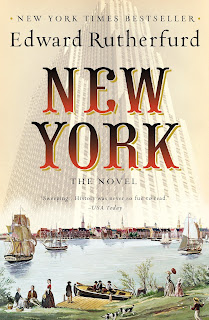
Weekly Reader: New York by Edward Rutherfurd; Another Epic Rutherfurd Success, But With Some Missed Opportunities


Weekly Reader: New York by Edward Rutherfurd; Another Epic Rutherfurd Success, But With Some Missed Opportunities

By Julie Sara Porter

Bookworm Reviews


PopSugar Reading Challenge: A book with the same name as a movie or TV show, but is unrelated to it (New York, New York)


Spoilers: I suppose after writing about Sarum, London, The Forest, Ireland, Russia, and would later write about Paris, Edward Rutherfurd decided to write about New York because he figured that if he could write about there, he could write about anywhere. (Apologies to John Kander and Fred Ebb for the paraphrase.)

New York is yet another of Rutherfurd's sprawling epics which cover the families of one location over the course of several centuries. This time, the English author takes his act on the road to the United States and New York. He does it with his usual grand style that captures these important historical moments, but makes it personal by showing us the individuals who exist in those turbulent fascinating times.


Rutherfurd deserves a lot of praise for writing an American city very well. He captures the various buroughs, streets, locations, accents, ethnicities, and the character of the city expertly. For example, he captures the various speech patterns of the characters without resorting to stereotypical dialect. He tells the points of view of people of various ethnicities and social status, as citizens, but maintains their individual struggles and personalities.
Rutherfurd captures New York so well, that it's easy to forget that he's not an American.

Once again he covers various families and reveals how they relate to the world around them. They are:


The Van Dycks/Masters-The European-American family traces their roots from Dutch lineage back when the territory was New Amsterdam. They eventually married with the English immigrant, Master family. They exemplify the old money families who are often in charge of the stock market, the big Fortune 500 companies, and names that are on guest lists of high society and philanthropic donations. They are present in every chapter from the beginning.

The Hudson/Rivers-The African-American family begin as slaves to the Van Dyck family. They are very prevelant before and during the Revolutionary War as the members argue over whether or not to aid the white Americans. They appear sporadically, but unfortunately their lineage is cut short during the 1863 Draft Riots when one of their members is lynched.

The Whites-A working class family that contrasts with the wealthier Masters. They have a long animosity towards the wealthy family. Their most important role is during the Revolutionary War when they are staunch Patriots and fight for the working class Americans. In subsequent chapters, they take on various occupations like police officers and fire fighters.

The Albions-A family of wealthy English expatriates. They appear mostly as a staunch Loyalist family during the Revolutionary War. Eventually, they return to England but maintain a friendship with the Masters.

The O'Donnells-An Irish-American family that emigrated to New York in the 1840's to escape the Irish potato famine. They begin in the impoverished area of Five Points and work mostly in service. Later, some of the family members gain prominence because of their involvement with Tammany Hall. The O'Donnells gain social success until by the late 20th century, one is an upwardly mobile attorney.

The Kellers-A family that emigrated from Germany in the mid-1800's and are close friends with the O'Donnells. They mostly work as tailors, artisans, and shopkeepers. Later family members develop creative talents, as one becomes a professional photographer and another becomes a caterer.

The Carusos-A family that emigrated from Italy through Ellis Island in 1901 (no relation to the opera singer). They eventually move to the Lower East Side. They experience various important moments from the Triangle Shirtwaist Factory Fire of 1911, to the creation of the Mafia (as one joins), and the construction of important buildings like the Empire State and the Chrysler Building. Like the O'Donnells, they too move upwards, as their final family member becomes a doctor.

The Adlers-A Conservative Jewish family from Flatbush, Brooklyn that appears in New York by 1955. They are mostly seen through the eyes of Sarah, their daughter, an art gallery owner. She gets involved with the Bohemian lifestyle and becomes more Liberal and secular and defies her family traditions..

The Campos-A Puerto Rican family that resides in El Barrio, Spanish Harlem. They appear in 1977, the final family in the book. Like the Adlers because they arrive so late, they are mostly seen through one character, Juan. Juan experiences the poverty of many black and Latino New Yorkers in the 1970's when the city is about to declare bankruptcy. He later becomes an advocate for the poor communities.

Because the book covers roughly four hundred years of history, a short time for a Rutherfurd book, Rutherfurd was able to write it similar to London. He inserted several characters into multiple chapters, so the Readers can see their experiences over many decades and see how they evolve with the times. The Revolutionary War doesn't happen until 11 chapters in. The 19th and 20th century cover 9 and 7 chapters respectively. It's a purposely slow moving process, but like London is the better for it.


Once again there are some excellent characters including:

Dirk Van Dyck-A Dutch immigrant trader in 17th century New Amsterdam, who has a loveless marriage but escapes from it to father a Lenape girl called Pale Feather. She makes the ongoing symbol that is passed from generation to generation, a wampum belt.

Quash-The first, and so far only, first person narrator of a Rutherfurd book. A slave, Quash recounts the transformation of New Amsterdam to New York and he eventually receives his freedom and becomes a shopkeeper.

John Master-One of the first in his family to carry the Master name. When New York is still considered a backwater location, he has a rocky meeting with his wealthier cultured Bostonian cousins (to show the difference between New York and Boston) and an unfortunate courtship. He then has a better marriage with Philadelphian Quaker, Mercy Brewster.

Charlie White-A working class man who was a childhood friend of John Master's only to be snubbed by his family. Later, he becomes a fervent Patriot who organizes protests and resistances against the British government.

James Master-Son of John who is educated in England and marries Vanessa, a well-to-do Englishwoman. Despite, or because of this, James becomes an outspoken Patriot. He leaves his wife and returns to New York. He then raises his son, Weston, as a single parent.

Hetty Master-Introduced in 1849, she is the wife of Frank Master, Weston's son. Despite her intense wealth, she is passionately involved in various social causes like abolition, women's suffrage, and labor unions.

Mary O'Donnell-The first of the O'Donnell family, she gets hired as a maid to the Masters. Later, she becomes Hetty's companion and best friend.

Theodore Keller-The youngest of the immigrant Keller family. By 1863, he becomes a photographer. He shows an artistic eye as he snaps portraits, graphic scenes of war, and landscapes. He becomes a well known artist after death.

Salvatore Caruso-The son of the Italian immigrant family, his sister is killed in the Triangle Shirtwaist Factory Fire and his brother is killed working for the Mafia. He becomes a construction worker and is involved in a love triangle with his brother, Angelo and girlfriend, Teresa.

Rose Van Dyck Master-The female head of the Master family by the early 1900's. She is something of a name dropper, referring to her friend Mrs. Astor, and a snob. However, she has enough financial insight to save her family from the 1929 stock market crash.

Charlie Master-Rose's dilletante son, he becomes involved with the Village scene of the 1920's of artists, writers, and theater types. Later he becomes an aging hippy and becomes involved with a younger woman. He writes about that experience in a semiautobiographical novel, Verrazano Narrows.

Sarah Adler-The daughter of the Jewish family. She owns an art gallery and has very liberal values that put her at odds with her traditional family. She is the woman that has the affair with Charlie Master and inspires his novel.

Juan Campos-An idealistic Puerto Rican immigrant who becomes an advocate for the poor families of color. He begins in the 1970's when New York saw an increase in poverty, union struggles, and crime.

Gorham Master-An investment banker in the 1970's and '80's. While he has the family name and success, he wants more meaning to his life. Ultimately, he assists Juan with a foundation to help others.

Maggie O'Donnell-Gorham's wife, and Mary's descendant, a yuppie attroney. She is pleased to have it all, a good career, husband, and children.

As with Rutherfurd's other works, the characters are an engaging bunch. We see them encountering big issues like the Revolutionary War, the Civil War, the creation of Niagara Falls and the Brooklyn Bridge, the Blizzard of 1888, New York's rise to being one of the largest and most important cities in the world, the Financial Panic of 1901, the Stock Market Crash of 1929, and September 11. So many important events are covered.

Rutherfurd also captures many personal moments for the characters. Frank's proposal to Hetty at the Croton Aqueduct produces fond memories even after they have friction in their marriage. Hetty later befriends Frank's mistress, Lily de Chantal and they conspire to overpower another mistress, Donna Clipp.

Mary lies about her family's connection to Tammany Hall to work as a maid for the Master family. By the time the truth comes out, decades later, Hetty is just grateful to have a long time friend.

One of Theodore Keller's photographs is named, Hudson River. Not because of the River, but because he captures Hudson River, the characters,' death. This photograph ends up being his most popular and infamous.

While Salvatore is working on the Empire States Building, he is so incensed by Angelo and Teresa's affair, that he contemplates killing him. A lucky accident spares his life and he becomes a devoted uncle and godfather.

Gorham Master spends many years feeling unfulfilled by his life of gain. He consults headhunters and weighs other opportunities before finally doing something positive with his wealth by aiding Juan Campos.

The final recipient of the Master family wampum belt is none of the Masters, but Sarah Adler as a gift from her lover, Charlie Master. She wears it when she is trapped inside the World Trade Center just as it is attacked and she is killed.

There are however plenty of missed opportunities. The most important is probably the too early departure of the African-American family, the Rivers. For the first time in Rutherfurd's books, we get a first person account with Quash. He reports of the change from New Amsterdam to New York and the English encroachment on the island of Manhattan. He also talks about his marriage to Naomi, his love for his son, Hudson and his friendly relationship with Dirk, his master who promises to free him on his deathbed. Hudson is eventually sold to a ship captain, but Quash obtains his freedom and opens a store. With that strong beginning and a first person departure from the other books, one would expect Quash's family to be prominent from beginning to end.

Unfortunately, that is not the case. During the Revolutionary War, Quash's son, Hudson raises concerns when his son, Solomon, joins the Sons of Liberty. Once Solomon's son, Hudson is sold, the family does not reappear, until they escape through the Underground Railroad. Then as I said earlier, their final descendant Hudson River is lynched and hanged during the Draft Riots of 1863.

That's it. It is great that Rutherfurd opens up this shameful period in America's past and telling it through a family that suffered through it. However, they should have continued in later chapters. The Rivers could have been actively involved in the Civil Rights Movement, the Harlem Renaissance, redlining, and the Great Migration. Heck, a later Rivers descendant could have been a fellow activist alongside Juan Campos. Many events and perspectives are lost when the Rivers's story ends prematurely.

The Rivers aren't the only ones. It's clear that while the book is another Rutherfurd ensemble, the main family involved is the Masters. They are present in every chapter and get the lion's share of points of view. This leaves a lot of families out of key events.

The White's introduction is very powerful and the book appears that to reveal another multi-generational family feud ala The Wilsons Vs. Shockleys in Sarum. Unfortunately, the White family takes a diminished role after the Revolutionary War and only receives minor appearances in later chapters. The Whites, as well as the Rivers, are the only families to not reappear in the final chapters that focus on 9/11.

Rutherfurd reveals the various immigrant families that make up New York, showing how America is made up of different people. It shows that we all come from somewhere else. Unfortunately, many of these immigrant families are spread out, some taking more prominent roles than others. The O'Donnells, Kellers, and Carusos have strong introductuons but by the mid-20th century, they disappear only to reappear for the finale. There are a few missteps where we could have seen more sons and daughters.

The book also leaves out some key events. The most important events that are short changed are The Great Depression and WWII. The book skips from 1929 to 1955. It seems odd that a book that chronicles the American experience so faithfully would leave these out. We don't get to see how poverty and joblessness affected the families in question. We don't get to see their opinions about the New Deal and their feelings towards Franklin D. Roosevelt (and he's a New Yorker at that. Seriously they left him out?).

We don't get to have the characters experience Pearl Harbor or see the male characters enlist. Nor do we experience the female characters working (many outside the home for the first time.). One of the families is Jewish and they don't even touch on the Holocaust or reveal that one of the Adlers is a survivor. Rutherfurd could have easily introduced two more chapters to cover these events. That he didn't is a real shame.

While the book has some missed opportunities, New York is another wonderful experience in time travel thanks to Rutherfurd. Reading about the people of New York and the way that has changed over the centuries, fills the Reader with a sense of pride in the city and how well Rutherfurd caught it.

Tuesday, July 21, 2020

Classics Corner: Lies My Teacher Told Me: Everything Your American History Textbook Got Wrong by James W. Loewen ; Definitive Book on Learning About and Teaching American History In High School


Classics Corner: Lies My Teacher Told Me: Everything Your American History Textbook Got Wrong by James W. Loewen; Definitive Book on Learning and Teaching American History in High School

By Julie Sara Porter

Bookworm Reviews


If you thought, or still think, your high school American History class and textbooks were boring, chances are you are not alone. James W. Loewen discovered his college freshman didn't know any more about history than they did in high school.

To remedy this situation, Loewen studied high school history textbooks such as The Land of Promise, Rise of the American Nation and discovered feel-good blandly written history that focused on jingoism and patriotism and had very little analysis or depth. Loewen's book, Lies My Teacher Told Me: Everything Your American History Textbook Got Wrong aimed to discover those errors and improve on the way American History is taught in schools.

"Textbooks.....keep students in the dark about the nature of history, " Loewen wrote. "History is furious debate informed by evidence and reason. " Loewen's brilliant and insightful book challenges how history textbooks are written and provides the Reader with an alternative approach to history. Even the Readers that may not necessarily agree with the information Loewen provides will appreciate the more thoughtful, critical, and analytical approach to history and receive a deeper understanding of the American past.


Loewen begins by discussing heroification, making heroes and demigods out of historic figures. History students may know of Helen Keller's childhood in which Annie Sullivan taught her to sign and speak, but may be unaware of Keller's adulthood in which she became an ardent Socialist.

Woodrow Wilson is described in textbooks as an idealistic President who helped found the League of Nations, but the books often leave out Wilson's racism in which he segregated the federal government, propositioned the Espionage Act which ordered Americans to report "suspicious activities" like speaking out against WWI, and ordered invasions of various Latin American and island countries.

"Denying students the humanness of Keller and Wilson and others keeps students in intellectual immaturity, "Loewen wrote. "It might be called a Disney version of history: The Hall of Presidents at Disneyland similarly presents our leaders as heroic statesmen not imperfect human beings. "

Loewen put the textbooks to task for how they wrote about many of the standards in American History. Christopher Columbus is not written as an intrepid explorer looking for new trade routes to the Far East. Instead, he is seen by Loewen as an opportunist who saw a country rich with gold to plunder and people to enslave.

Far from being the deus ex machina-kindly Indians who provided the Pilgrims with the first Thanksgiving, instead Massasoit's tribe once thrived in the Massachusetts area and had been all but wiped out by smallpox brought on by white immigrants.

Loewen suggests that the Thanksgiving meal was not just a gesture of friendship but a plea for survival. (And how did the Pilgrims' descendants reward that kindness? Well Loewen writes that they declared war on the local tribes and took their land for themselves.)


Speaking of Native Americans, Loewen fills his Readers on wars the whites have declared on Native Americans such as King Phillip's War in 1675 as well as textbooks' portrayal of Native Americans as either bloodthirsty savages who made unprovoked attacks on whites or childlike innocents who were unaware of how to cultivate their land and needed the White Saviors to guide them.

African-Americans have it bad if not worse according to Loewen. The textbook perspective of the Antebellum South as an idyllic Paradise for masters and slaves and Reconstruction as a time of thieving Northern "carpetbaggers" and naive freed slaves who couldn't lead their farms or states is less out of historic primary sources than out of Gone With The Wind. In actuality Loewen writes that in the post-Civil War days many former slaves were elected into offices and performed in jobs admirably. In fact the real troubles were usually performed by the disgruntled former Confederates who formed the Ku Klux Klan and whose actions would later create Jim Crow Laws and the Myth of the Fallen South.

Loewen also cites the implied racism in how textbooks portray white abolitionists such as John Brown as "being insane"(when he was devoted to the cause of freeing slaves) and Abraham Lincoln as being indifferent to the cause of slavery solely for preserving the Union (when in reality he felt that the Union could never be preserved if half of its population where in chains).

The chapters about racism should be used as a guide for current issues. Loewen's book reveals that unfortunately the Myth of the Fallen South and the inherent racism that goes with it are still with us even now in 2020. If nothing else, the fight over taking down or leaving alone Confederate statues and the support and disagreements towards the Black Lives Matter protests reveal that those historical myths are still with us and are unfortunately very hard to die. Those struggles are still fresh in our minds and despite what some say, people cannot easily "get over them." If they aren't acknowledged or certain minorities are still treated poorly, partly because modern white people used glamorized versions of the Old West or the Antebellum South as justifications for stereotyping and continuing to treat Native Americans and African Americans so horribly.


Besides race, another issue that Lies My Teacher Told Me opens up is social class.This chapter reveals that George Carlin's often repeated quote "They call it the American Dream because you have to be asleep to believe it" is not too far off. As Loewens pointed out, we are surrounded by symbols of class and social structure from the homes we live in, to the clothes we wear, to the brands we buy, to the cars we drive. Unfortunately, social class cuts deeper as while Americans are so fond of repeating the "Land of Opportunity" myth ad nauseum, that they fail to notice and history classes fail to teach that those opportunities are not passed out freely nor are those opportunities necessarily based on merit. Many stumbling blocks to achieve a higher economic standards are often affected by someone's race, nationality, economic standards, or gender.

In schools teachers and textbooks are fond of the rags to riches myths such as Andrew Carnegie, Oprah Winfrey, or Steve Jobs, and fail to account that they are the exceptions. For every Carnegie who became a multimillionaire, there are countless others who work just as hard and barely eke out a living. These exceptions cause snobbishness in people that assume if someone is poor then they must be lazy or are not working hard enough. This rationale is often why many social and welfare programs are cut leading to increased poverty.


Education for example is not the same in every school. Wealthier students have the luxury of new technology, equipments, and pre college courses, while poorer students often have to make do with dated materials and hopes that they can get a scholarship or financial aid. It makes one wonder with the Coronavirus pandemic being such an issue if schools were able to pass out enough technology for students to study at home and whether teachers and students had the proper Internet access to use them. Not to mention, the most recent controversies about schools being forced to open in the fall will see a division between the schools that can afford to follow guidelines and use work and study at home alternatives and those that can't. Will the numbers of poorer students and faculty members catching the virus increase because of the lack of alternate options?


The most eye-opening chapters discuss the impact the Federal Government and Big Business had on modern history.

Loewen says that avoiding the role economics play in United States-International relations interferes with the textbooks' "international good guy approach." The United States's official word on interfering with other foreign countries is to "spread democracy", but Loewen's book shows that Capitalism and economics are the actual driving forces.

One example of this approachs is when International Telephone and Telegraph (ITT) led the U. S government in destabilizing Salvador Allende's Socialist Chilean government. Other examples include Union Carbide in India and United Fruit in Guatemala.

Many of the United States' gave support in other countries, particularly in Central and South American and Middle Eastern countries and not necessarily for the good of the people. Such examples include returning the shah of Iran to his throne in 1953, bringing down the elected government in Guatemala in 1954, attempting to bring down Fidel Castro's government through terror and sabotage and many many more.

These decisions often led to generations of tyranny and dictatorships and citizen led rebellions against not only their leaders but hatred towards the United States, often taking the form of terroris organizations and cartels. Also the deplorable conditions that these countries were left in because of United States interference caused many of these people to leave and emigrate to the United States.

The book predates the recent controversies towards asylum seekers and young immigrant children separated from their families, kept in cages, and many of them found to have disappeared, perhaps in the hands of unscrupulous adults. However, one cannot help but read the chapter and understand the United States's role in creating the unstable governments and low socioeconomic standards that those people are emigrating from.

Equally powerful is the approach or rather non-approach many textbooks have in portraying the Vietnam War. Of the textbooks surveyed, Loewen said most devoted less than 10 pages to Vietnam and only depicts photographs of smiling American soldiers leaving out the most provocative memorable images like the running girl covered in napalm. In fact, Loewen says that most high school teachers leave out the Vietnam War in discussions. (Recalling my own history classes, I only remember discussing the Sixties once and that was a brief end of year talk on the music. )

While the Vietnam War was a recent event for the book, one wonders how other events are portrayed in modern history classes. While certain events like 9/11 probably could not be avoided, do textbooks refer to the U.S. interference, such as the First Gulf War, that led to such animosity in the Middle East and the creation of terrorist groups? Were the controversies about the decision go to war in Iraq and the subsequent War on Terror get a mention or was that one of the things that textbook authors left out? What about the creation of the Patriot Act and the far reaching tactics of the NSA? There are still many gray areas to explore in American History and judging by many of the attitudes that people still hold to revere or criticize the past, unfortunately they are still around.

Loewen also refers to the low prominence that history has in high school curricula of schools not hiring qualified history teachers who can study and challenge the materials. Instead the school sboards settle for social science teachers or coaches. (Anothe recall from my high school history courses: football coaches taught all our social science and history classes.) As well as the lack of experienced historians that edit and critique these books. Many of the books were published to impress the school and education boards and to make as little waves as possible. Unfortunately, as Loewens reminds us history is not like that. It is a subject that is by nature controversial and needs to be taught that way: honestly and accurately.


While the book was first published 25 years ago, it's clear the situation has not yet improved. However Loewen frequently has updated his book and has written similar ones about Historic American Landmarks.(One wonders how he feels about the statues). If blandly written "feel good" history doesn't go away, neither will Loewen and neither should people who study and know the truth behind the American History Myths.