Showing posts with label Death. Show all posts

Thursday, November 27, 2025

Gravity Flow The Jimmy Whistler Stories by EM Schorb, Walk With Me One Hundred Days of Crazy by Ernesto H Lee, Penthesilea Rise of An Amazon by Stephanie Vanise, The Bluestockings A History of The First Women's Movement by Susannah Gibson, Violeta by Nikki Roman


By Julie Sara Porter 
Bookworm Reviews 


These are summaries. The full reviews can be found on Reader Views or MockingOwl Roost 

Gravity Flow: The Jimmy Whistler Stories by EM Schorb 

This is a seriocomic anthology of various moments in the life of Jimmy Whistler, a writer, in the 50's-60's.

The covers Jimmy's troubled childhood, his time working in a burlesque theater, military career, writing career, his friends, lovers, children, and other important experiences.

Characterization is this book's strongest asset. Jimmy's experiences are told by various vignettes that describe events in his life. He encounters many eccentric characters including a burlesque performer, a Beatnik poet, and different lovers.

The book is told through Jimmy's point of view so we see the world through his eyes. Most of the characters are broad, farcical, and bizarre. Jimmy's narrative voice is arrogant, impulsive, but always fascinating.


Walk With Me One Hundred Days of Crazy by Ernesto H. Lee

This is a powerful evocative novel about life, love, death, and learning to appreciate life.

Mark Rennie and Karen McKenzie are both dying. Instead of just waiting for the inevitable, they decide to spend 100 days traveling and enjoying themselves before the end.

The book is a descriptive travel guide of different experiences like dancing in Cuba, walking across the Great Wall of China, and swimming with sharks in Cancun. It is a scenic itinerary of exciting adventures and experiences.

It also captures how people face death in different ways. Some want to do everything medically possible to prolong their lives while others would rather face death on their own terms. There is no one way to face this conflict and all are valid.


Penthesilea: Rise of An Amazon by Stephanie Vanise 

This is a powerful and gripping Historical Fiction novel about a young Amazon, Penthesilea during the Trojan War.

She is third of four daughters of the Queen of Amazon. Penthesilea lives in the shadow of her other sisters and struggles to find her own identity in war.

Various characters and events from Greek Mythology appear including Hippolyta, Hercules, Paris, Helen of Troy, and Achilles. They are made more complex in this adaptation as Vanise captures their psyches and inner conflicts.

Penthesilea in particular is looking for recognition in a powerful war like family. She strives to empower herself and stand out. She strives to be one of a kind not one of hundreds.


The Bluestockings: A History of The First Women's Movement by Susannah Gibson 

This is a fascinating Historical Nonfiction account of the Bluestockings, a group of 18th century women who hosted salons, encouraged creative talents, and discussed politics, philosophy and other topics in which women were discouraged from discussing.

These women supported one another in their creative pursuits like writing and art. These were women whose voices might otherwise have not been heard. They also had unconventional lives where some married supportive men, had Lesbian relationships, or opted not to marry at all.

The Bluestockings did not last very long but they were an influence for many women like Jane Austen, Mary Wollstonecraft, and Elizabeth Gaskell who in turn inspired the various waves of Feminism. Women's History would have been very different without them.


Violeta by Nikki Roman 
This is a Gothic Literature novel that focuses on child abuse, trauma, and finding ones personal power and independence.

Violet Valentine is isolated by her mother who keeps her secluded from the outside world. Her only contact is with her brother, Tommy. The toxic situation explodes when their mother puts both children'a lives in danger.

Violeta involves the anxieties that are found in families particularly between parents and children and siblings. The Valentine Family engage in continuous conflict, emotional and psychological instability, and fragile dysfunction. 

The siblings are confined and battered by their mother’s volatile and abusive behavior so they can only rely on each other. They support each other to break from her, recognize their comfort, strength, and independence, and find sanctuary and a real home.


Monday, October 6, 2025

Life Into Death And Other Stories About The Two Gods Who Balance The Earth by E.S. Sibbald; The Hidden Raphael's Banker The Art and Finance Mystery Series Book 1 by Alessandra Oddi Baglioni; Labyrinth of Shadows (The Witch's Rebirth Part 1) by Michaela Riley

 Life Into Death And Other Stories About The Two Gods Who Balance The Earth by E.S. Sibbald; The Hidden Raphael's Banker (The Art and Finance Mystery Series Book 1) by Alessandra Oddi Baglioni; Labyrinth of Shadows (The Witch's Rebirth Part 1) by Michaela Riley 

By Julie Sara Porter 

Bookworm Reviews 


Spoilers:


Life Into Death And Other Stories About The Two Gods Who Balance The Earth by E.S. Sibbald

E.S. Sibbald’s Fantasy short novel, Life Into Death and Other Stories About Two Gods Who Balance the Earth is a lyrical, visceral, and powerful meditation on life and death. These two transitions are personified by a pair of gods who are on opposite sides, banter, vie, and love one another. 

They are present in the literal beginning. In the primordial sea, Life watches single celled organisms form and reproduce. Death appears when one stops moving. They are together at the end when after environmental and nuclear disasters have taken their toll, Life and Death stand in a global wide wasteland where nothing can ever be born or grow. If nothing can live, then nothing can ever die. So Life and Death just fade from existence. The book combines their first meeting, their last reunion, and many of the times in between to give us the full experience of this odd but loving immortal couple. 

Life and Death naturally are a study in contrasts. The first paragraphs of the book remind us that Life is in the bright places of the world while Death is in the shadows. Life exists in the birth of babies, the growth of plants, and in the forests, seas and skies. Death exists in street corners, graveyards, hospital beds, mausoleums, and in the dark corner of the human mind. Life is loved and praised while Death is feared and sometimes hated.

 Both are beautiful, powerful, awe inspiring, and are everywhere in everything and everybody. They are genderless and can take many forms, children, animals, soldiers, elderly people, men, women, married couples, single celled organisms but they always recognize each other. They are drawn together so it is no surprise that their coexistence transforms over the eons into a partnership, to a flirtation, to a friendship, to a romance, to an undying love for each other. It’s a union developed from years of observing each other watching the global experience. 

Many of the most compelling chapters occur as the duo observe mortals in many situations. They see soldiers on the battlefield killing one another, then sees soldiers on different sides calling for a Christmas Day truce during WWI (true story by the way). They participate in a Pride March when same-sex marriage becomes legal in the U.S. Death despairs over having to take a suicidal young woman and silently cheers when Life interferes giving her extra years. They see families sharing love, craftspeople and artists proud of their work, adventurers seeking another thrill, parents holding their children for the first time, and people closing their eyes for the last. 

Each experience leaves their marks on Life and Death and exposes their deeper emotions and vulnerabilities. It is no wonder that they express their love for each other as they see humans do the same. It would be impossible to dwell among mortals and not be emotionally affected by their transience and their desires to find meaning in the short time in which they are given. They try to find out who they are. Life and Death don’t have to.They just are. But that doesn’t mean that they can’t feel, can’t connect, and can’t love. 

In exploring the most important transitions of life and death, Life Into Death tells Readers about what happens at the beginning and the end. But it also tells us that what we do in between is what gives us meaning and existence. They make us alive. 


The Hidden Raphael's Banker (The Art and Finance Mystery Series Book 1) by Alessandra Oddi Baglioni;

Alessandra Oddi Baglioni’s The Hidden Raphael's Banker is a continuation to her Historical Fiction short novel, The Red Wedding. Instead of a family history about a Renaissance era family scheming and conniving against other families and each other, it's a modern Mystery Thriller with a wide conspiracy involving a painting once commissioned by said Renaissance era family.

In The Red Wedding, we learn that Atalanta Baglioni commissioned Raphael to paint a portrait of Jesus’ Deposition as an act of contrition after family members were killed during the wedding of her cousin Astor Baglioni and his wife Lavinia Colonna Orsini. This book continues the story of what happened to that painting. 

Architect and art aficionado, George Lacroix is in Rome at the Borghese Museum. He sees the painting and becomes fascinated by its origins and history. While researching the history of the Baglioni Family, the painting, and its previous owners, George stumbles across a conspiracy that reveals other motives connected to the painting. 

This book is an intricate thriller in which art and history provide clues and hints leading to modern day events. What in The Red Wedding was a simple act of repentance and memorial to those lost, in this volume became symbolic of the institutions that hold real power through politics, finance, culture, business, philanthropy, and leadership. In a meta moment, George uses Baglioni’s own previous book, The Red Wedding, for research, complete with passages lifted from the book. 

 It sounds bizarre that this painting would lead to such a conspiracy. But the commission was made by a very influential Renaissance-era family that was involved in high circles including The Pope and had rivalries with other families like the Medicis and the Borgias. It makes sense that they would be involved with some secret inner circles. It also makes sense that these circles would have a ripple effect into modern day with despots in suits that prefer to do their power grabs by spreading money around and remaining hidden rather than poison or stab someone at a wedding.  

There are genuine moments of suspense during George’s investigation. He meets betrayal from people who he thought that he could trust. He becomes romantically involved or is enamored with a couple of women who have their own agendas. There are many global agents who want to keep this discovery hidden and aren’t above killing to get it done.

By far the most enigmatic character is Colomba. At first she appears to be a tour guide who gives George information about The Deposition then disappears. Her story becomes more complicated when George learns that there is nobody employed at the Borghese with her name and appearance. George also encounters her other times on the streets, inside museums, and other places. She acts as a guide or guardian angel who helps George.

 Sometimes Columba provides information, warns George of danger, or keeps him away from pursuers. It’s also interesting to note that there is a similar character in The Red Wedding who also provides a similar function. This suggests that the current Columba is a ghost of the former Columba and is atoning for the death and destruction that happened in the Renaissance by preventing it from happening again. 

The Hidden Raphael’s Banker is for those who like their adventure thrillers to be widespread with conspiracies that tie history with current events, are led by brilliant experts in their field, and excite readers while making them think.

Labyrinth of Shadows The Witch's Return Part 1 by Michaela Riley 

Michaela Riley’s Historical Fantasy Labyrinth of Shadows (The Witch's Rebirth) is a rich, enchanting, and complex novel about a witch that is reincarnated over the centuries.

The Witch is a very powerful being. While there are other witches, this specific figure, The Witch, is said to be the most powerful. She has been reborn countless times. In 1590 Copenhagen she is Anna facing a witch trial in which she is to be burned at the stake. In 478, she seduces young Prince Clovis of the Franks to tell him that he will lead his armies into victory. 

The majority of this book is set in the 5th Century when Mairead, a Druid High Priestess conducts a Samhain ritual to rid her tribe of Armaeus, the most feared Daemon in the entire realm. During the ritual, she discovers an abandoned baby and takes her in. The baby, named Merona, is the current incarnation of The Witch and is destined to fight and hopefully defeat Armaeus. She shows flashes of insight from her former lives but she also has to receive training. To do that Merona must be taught by Murdach, Mairead’s friend.

This book has an abundance of witch lore weaved into the narrative. Those who have an interest in folklore and legends of witches and their origins will be fascinated with the references. Mairead and her Druids follow ancient rites and rituals

Mairead’s authority was high during a time period which still respected Druids and the Ancient Celtic traditions that they represented even as they were also aware of the transition towards Christianity that was on its way. This is a society that is firmly holding onto the old ways, even as new ones are starting to gain influence. 

An interesting twist to this book is the appearance of Armaeus and his goal. Instead of being an instrument of Satan or dark magic, he is an instrument of the evil in humanity. He encourages the Witch Trials to attack women who could fight against him and fan the flames of human prejudice. It’s interesting that the Christians who claim to be fighting Satan end up serving someone just as powerful and dangerous. But hatred often clouds judgement. People can’t always tell who their enemies really are as long as they use the right words and hate who they hate. Merona certainly has her work cut out for her. 

Some of the most fascinating chapters occur during Murdach’s training of Merona that increases her knowledge and abilities. The flashes of intuition from other lives become stronger and more concrete as she explores past lives. She also explores future lives like her time as Anna, to give herself foresight and precognition and begins to recognize patterns of people and situations that keep reoccurring. She recognizes that she, Murdach, and Armaeus have a history that stretches through time. 

Meronia also has to expand her magical abilities. Murdoch takes her on a series of tests to train her in elemental magic. She faces trials of earth, air, fire, and water to channel her abilities and control the elements. The training takes several years and many revelations before Merona is considered powerful enough to fight Armaeus.

The final test is for Merona to go to the Labyrinth of Shadows where she has to encounter her fears, face her biggest challenges, and discover her inner power. It is a challenging trial, the kind in which one could emerge as an insane threat or an extremely potent witch. 


Tuesday, September 9, 2025

The Sunflower Widows by Matthew Fults; Building Community Through War and Grief


The Sunflower Widows by Matthew Fults; Building Community Through War and Grief 

By Julie Sara Porter 

Bookworm Reviews 

This review is also on Reedsy Discovery.

Spoilers: War brings many victims not just those who were killed but in the survivors especially those who have lost loved ones during war. For the friends and family members, the loss brings long term grief and sorrow. Even when the reasons to go into war are understandable, it still brings violence, death, and heartache. Sometimes the only things that a survivor can do is continue and find positive means of survival. One of the ways is to form a community of those who have had similar experiences so they can share their loss together. That's what happens to the women in Matthew Fults’ novel, The Sunflower Widows.

The Sunflower Widows tells the story of four women from a small Ukrainian village who have lost husbands and other loved ones in battle, particularly during the recent Russo-Ukrainian War. They meet at the home of Kathryna, an elderly woman who is familiar with death and grief. She befriends three younger widows, Yulia, a newlywed, Anna, a middle aged wife of a career soldier, and Natalya, a suddenly single mother. They form a network of support, understanding, and love.

The women's stories are individually told through flashbacks that focus on their lives and relationships before the war then moves to the present as they form a tight bond of sisterhood that encourages laughter, tears, empathy, and understanding. They are fascinating characters coming into their own separate lives before they come together as a group.

Their past stories are moving, detailed, emotional, and sometimes even funny. For example, Yulia and her husband Maksym have a meet-cute when she and her female friends have a flirting match with him and his male friends. In their one and one battle of words, they both emerge as the winners because they agree to date. The date blossoms into a relationship that evolves into a happy marriage for a time.

The flashbacks feature memories that become precious because they are gone. Even the most mundane of activities carry significance that they didn’t before. Anna’s grief is haunted by conversations that were started but never finished about how she and Borys saw their future particularly with or without children.

Their past memories parallel with their new normal in which they have to live without their loved ones.Natalya tries to put up a brave front for her infant son while her world falls apart around her as she mourns her husband, Dmitryo’s death. Her conflicts in being present for her son while wanting to withdraw into herself and her memories are understandable and relatable especially by those who have experienced similar loss. 

They don’t even have to be widows to understand the pain that these women go through. Kathryna herself was unmarried but is no stranger to death. As a child, her father was killed in WWII before she had the chance to really know him. She empathizes with these women because her mother went through the same process.

Because the characters are at different stages in life, the deaths feel like an interruption of what would be a normal process of one life transition to another. Yulia wanted to have a longer marriage to Maksym than the one that ended early and abruptly. Anna was looking forward to Borys’s retirement and spending her twilight years with him. Natalya now has a child, Zdeno, who will grow up never knowing his father, Dmitryo. Putin robbed them all of those chances when his Russian Army invaded their country.

The cause of the war is to fight against the invaders and for Ukraine to maintain its independent sovereignty. The four women understand that and want to live in a country free of invaders and Russian authority disrupting their cities, homes, routines, and daily lives. But agreeing with the cause doesn’t make the grief any less bearable and their husbands any less missed. This acknowledgement of courage and sacrifice can be seen when Kathryna lays out two more chairs when she meets the other three women. The reason that she sets the two empty chairs is because “there will always be widows.” 

The Sunflower Widows has a strong theme of community and togetherness. In their mutual grief, the four women are there for each other. They listen to each other’s stories offering tea and conversation. The other women hold and sit for Zdeno becoming honorary aunts. They encourage each other to change jobs and relocate if they have to. They wipe away one another’s tears and wrap their arms around each other with loving embraces. 

In collaborating and communicating with each other and inviting other mourners , the Sunflower Widows learn that while grief never really goes away, there can always be something positive found in sharing it and helping others. 


Sunday, July 13, 2025

The Assassin's Heart by Chuck Morgan; Dead People Anonymous by Loraine Hayes


The Assassin's Heart by Chuck Morgan; Dead People Anonymous by Loraine Hayes 


 The Assassin's Heart by Chuck Morgan 


This is a short review. The full review is on LitPick 

The Assassin's Heart is an enthralling character driven Thriller about an assassin who begins to question her allegiances when her own heart and emotions are on the line.

 Delia Cahill seems to live a perfect enviable life. She's happily married to Mark, a government employee and has a great career as a high powered attorney with a noted list of rich and famous clients. She is actually a high priced assassin with a tremendous kill list and an excellent reputation as someone who gets the job done. Her latest assignment is Alexander Thorne, a tech genius who created an app that can penetrate any system, network, and defense. However, her heart gets in the way as Delia finds herself falling in love with her target.

Delia straddles the line between consummate professional and romantic heroine and plays both extremes rather well. She's like a praying mantis or a black widow spider, attracting her captive before destroying him. In fact she is so effective at her job that it would be nice to see more of this side of her as a remorseless killer.

Mostly we see her when she realizes that her job isn't what she thought. Her relationship with Alexander becomes a deal breaker between her and the Organization. After she falls in love, they go through extreme measures to break her, treating her just like she used to treat her targets. 

Delia lived a life of violence that overpowered her enemies and tried to live without a conscience. It worked until her conscience overpowered her. 


Dead People Anonymous by Loraine Hayes 

It turns out the dead need just as much emotional and psychological help as the living. Just like the living, the dead sometimes meet in groups to talk about them. Dead People Anonymous by Loraine Hayes is an entertaining, hilarious, and heartfelt look at life after death and the support groups that they form. 

Lexi died at age 28. She wakes up surrounded by other ghosts that have their own stories to tell. There's Billy, a soldier who died during the Vietnam War and finds Lexi very attractive. Vivian is the group leader and Team Mom who suffered loss and rejection in life. Malik appears to be the youngest as he died at 11 but since he's the first who died, he is the wisest and most experienced when it comes to rules of the dead. Dominic is a surly argumentative sort on the surface but has a hidden heart of gold. Maria is quiet but retains the insecurities and neurosis that she had in life. Finally, Chester is the oldest, dying at age 98 and has a lifetime of regrets and memories. The Dead People Anonymous group is there for each other.
The living impaired talk about their problems, discuss the circumstances of their deaths, and what they need to do to cross over to the next plane of existence wherever that may be.

The world of the dead is very detailed with all of the rules and standards that the dead follow. Like all good Fantasies, Hayes took great care in creating and planning her imaginary world and it shows in her writing. 

The ghosts are restricted to various rules. They feel emotions strongly and those emotions can be quite contagious among them. They can relive moments in their pasts as observers and maybe learn things about those moments that they suppressed on Earth. Yes Heaven and Hell exist and the choices that they made in life and after death could serve as gateways to either location.

The ghosts can touch each other but not humans.
They can leave and observe humans, but during times of stress or enlightenment, they find themselves transported back to the building where the group meets. It's also not a good idea to visit friends or family. It's not forbidden but it brings out the worst emotions and could lead to permanent relocation in one direction or another.
These rules are intriguing as Lexi navigates her way through being dead, making mistakes, and adjusting to her ghostly afterlife.

The book also has a strong sense of character development as we get to know each group member, what they were like in life, who they left behind, and what unfinished business holds them back. 

Each character's past is explored and we touch on various human experiences through the eyes of those who had to leave humanity behind. These are stories of lost loves, missing family members, unfaithfulness, anger, jealousy, age, grudges, unspoken words, regrets, and wanting to know if their lives had any meaningful impact and if there was some part of themselves that lived on in some way. 

In the end that's all anyone wants to know, dead or alive. If they actually mattered.


Saturday, May 10, 2025

Reaping By Numbers: A Dead-End Job by Nicole Givens Kurtz; Fun and Interesting Take on The Grim Reaper


 Reaping By Numbers: A Dead-End Job by Nicole Givens Kurtz; Fun and Interesting Take on The Grim Reaper 

By Julie Sara Porter 

Bookworm Reviews 


Spoilers: Nicole Givens Kurtz knows how to write mysteries set in unique settings or populated with unique characters. Her novel, Glitches and Stitches is set in the future where AI is so omnipresent that people have a hard time separating the orga from the mecha which complicates a murder investigation. Kill Three Birds is a murder mystery set in a world of anthropomorphic birds. Her latest Reaping By Numbers also has an interesting premise in which a murder is investigated by none other than the Grim Reaper, well a Grim Reaper anyway.

Note, I said a Grim Reaper, as in plural more than one. Kurtz’s take on Reapers is that it is a job like any other. They are mostly human but are led by demons who work for the original Grim Reaper, also known as G. They don't kill people or cause them to die so much as they are there at the point of death and escort them in the transition between life and lifelessness. 

Patrice Williams is one such Reaper. Her reaping skills come naturally because they are inherited from her father who was an excellent Reaper in his day. Her latest assignment puts her right in the middle of a murder investigation, a turf war between various demonic factions, a meddlesome angel, and demonic possession. Patrice has to use all of her skills particularly when her own family is involved, especially her niece, Brianna, whose body inadvertently becomes the vessel of a very angry and violent demon.

In a strange way, Reaping By Numbers is the complete opposite of my previous book, Secrets at The Aviary Inn by Maryann Clarke. Secrets explores an ordinary conflict of a woman researching her family history but gives it some enchanting touches in setting and character that almost makes it seem like a Contemporary Fantasy. Reaping By Numbers takes an otherworldly fantastic situation of reapers guiding people after death and finds a dark humor by exploring the ordinary mundanity of the situation. 

Patrice clocks in and out like everyone else, does her shift, takes her breaks, deals with co-workers and supervisors, some encouraging and others obnoxious, collects her earnings, and goes home. Okay she's dealing with the recently deceased but so do morgue attendants and funeral home workers. What's so strange about that? Alright, her bosses are demons that emerged from the darkest pits of Hell but aren't all of our bosses? Yes, she has to face some very unpleasant encounters with dark magic, soul sucking spirits, wrathful ghosts, and avenging angels but no job is perfect. The benefits are great, particularly when you are alive to enjoy them. 

The way that her family is portrayed is that of a loving supportive foundation but are divided on various issues. Patrice's father is proud that his daughter is following in his footsteps. He is very encouraging as they talk shop though he also sternly warns her about some of the more dangerous aspects of the job. 

Not all of her family is supportive, particularly her religious mother and intrusive sister. Her mother is concerned that her daughter is consorting with demons. Her sister is trying to live a normal life with her pastor husband and children and feels that Patrice's profession could bring unwanted trouble within their family circle. Her worst fears come true when her daughter is possessed by demons.

Brianna's possession is a central plot point in this book. Kurtz conveys the anguish and fear that her family has, particularly Patrice who has to actively remove the demon while dealing with her own guilt and uncertainty about her chosen path. Patrice's dialogue with Brianna is the strongest emotional core especially when the young girl shows some potential to be a Reaper herself. 

Reaping By Numbers conveys a lot of dark humor but a lot of emotions in this book about a woman who considers hanging out with the dead as just another day at work.

Wednesday, September 13, 2023

New Book Alert: Joy: The Art of Making Tofu An Autobiography by Simon Boreham; Heartwarming and Heartbreaking Book of Love, Loss, Grief, Joy, and Tofu

New Book Alert: Joy: The Art of Making Tofu An Autobiography by Simon Boreham; Heartwarming and Heartbreaking Book of Love, Loss, Grief, Joy, and Tofu

By Julie Sara Porter

Bookworm Reviews 


 Simon Boreham's memoirs, Joy: The Art of Making Tofu: An Autobiography is a lovely, moving, and heartbreaking and heartwarming book about Boreham's 59 year marriage to his wife, Dawn and her death in 2021. 

The book begins shortly after Dawn's death as Boreham wrote his memoirs. Even from the beginning, he wrote of the aching memories of going through a house and the things that he and Dawn once shared and suddenly carried many beautiful and painful memories. The white-framed mirror that was her favorite. The porcelain vase with a crack that they bought at their Greystones home in Torquay. The handbag that she took to the hospital. All things under normal circumstances might have been overlooked and ignored that now carry significance and emotional weight. This chapter alone carries Boreham's grief, sadness, and his loving happy memories in a few short pages.

Boreham recounts Dawn's death with her hospitalization from angina and the painful seemingly endless waiting with their children, Catherine and Jason especially because they couldn't be in the hospital room with her because of the pandemic. Boreham combines this with other memories such as when he and Dawn entered the restaurant business in the 1970's and '80's and when he wrote a poem called "The Crying Man." This effect of going from one memory to another even at one point switching the point of view to the second person talking specifically to Dawn is how a person's mind works when it goes through deep stress and grief. It flickers from one memory to another when the current situation becomes too painful and wanting the person to still be there. 


Boreham keeps his and Dawn's years alive through great recall and detail. He talks about his middle class upbringing with his parents, Sybil and Mike, moving through several countries because of his father's career at Barclays Bank. Sybil and Mike eventually settled in the U.K. in 1959 until her death from cancer in 1976. Their happy but doting marriage was a detriment because as Dawn pointed out, she couldn't live up to their expectations for their son so they rarely visited the couple. In fact after Sybil's death, Mike fell apart and moved to South Africa. Boreham writes them as a couple insulated by their reserve and love for each other and their son. It was admirable because it gave Boreham an example of a happy marriage, but they were still standoffish towards Dawn.

Boreham captures his childhood with multiple senses and delightful memories such as the various books that he and his mother read together, Sybil's perfume, his grandparent's tomato garden, Boreham's crush on Disney's Snow White, and his father carrying him after a dog bit him. He also writes about his time in a boarding school that was structured with rules, upperclassmen who teased the younger ones, and a few loyal friends. These memories depict a man with a nice childhood and sometimes difficult youth that filled him with knowledge, thoughts, encouragement, and security. Things that he aspired towards in his marriage. In fact, his main act of rebellion was moving to Canada in the early 60's only to return to a steady life.

In contrast, Dawn was a very opinionated young lady. The second of three children, she was considered her father's favorite. As compared to Boreham's parents, Dawn's parents got along with her husband. In fact, Boreham thought of his mother-in-law Elizabeth as a second mother. Elizabeth, called "Dizzy Lizzy," was something of a character who responded to her son in law's poems with letters decorated with matchstick cartoon characters. She actually had an affair with Boreham's father which continued after both their spouses died. While Boreham and Dawn outwardly supported it, they still felt uncomfortable. While not outright stated, Elizabeth's open hearted eccentric personality may have inspired her daughter's outspoken unconventional nature 

Instead of the private school upbringing of her husband, Dawn attended a Catholic state school. When a nun constantly berated her, Dawn pulled her wimple off. When her sister saw cane marks on Dawn's legs, she and her younger brother were pulled out of that school. This showed Dawn as the type of woman who was more forward in her personality than her reserved husband. It was a strange attraction of opposites that proved compatible for over five decades of marital happiness.


In 1962, Boreham met Dawn while he was working in the hospitality industry and she was a hotel receptionist. He remembered what she wore and where they went those passionate first weeks before he left on a misadventure in Germany. He returned to England and Dawn began a love affair that lasted 59 years.

He remembers Dawn being the type who initiated the emotional response, but letting Boreham think he was leading her. When he kissed her during their dating, Boreham realized that Dawn expected and wanted him to.

Dawn's spirit comes alive in her widower's writing. She was high spirited, sociable, outspoken, intuitive, strong willed, outgoing, and joyful. She loved jazz, dancing, flowers, experimental cooking, and occasionally horse betting, and drinking single malts while quoting Robert Burns. This is told by a man who is still in love with his wife even after she left this world. The sharp grief may recede and be pushed back at times but he will always remember who she was and what she meant to him.

The Boreham's experiences in parenthood contain moments of humor like when their son Jason swallowed a cupboard key and anxiety like when he had fragile health and needed heart and kidney operations during his infancy. Many parents would relate to these situations.The Boreham parents were able to pass their tremendous love for each other to their children, grandchildren, and great grandchildren.

Besides the Boreham's marriage, this book is about their experience in the food business. Like many entrepreneurs, it took some time for the duo to find their niche. They went from a high-spend fish restaurant, to a steak and fish place. In 1989, two years after Boreham was let go of his job they purchased Dragonfly, an organic whole food manufacturing business. 

Their specialty was tofu which at the time was not widely made and sold except in family owned shops in Asia. The duo learned the hard way about the difficulties of making food by themselves without a factory and personnel. They found themselves quite busy making and delivering food only taking off for two weeks between Christmas and New Year's.

Boreham also writes of the toll that starting their own business worked on their marriage especially between two obstinate individuals who believed that they knew what was best. This is evident when after an argument, Dawn, fed up with her husband's high handedness, engaged in a one-woman strike and walkout leaving her husband to finish the clean up. After that he learned to accommodate her personality to his and that her solutions might be different but they weren't always wrong. Their time running Dragonfly helped strengthen their relationship by working towards a goal and implementing their diverse personalities to the end product.

Naturally the final chapters are filled with moments that tug at even the most immovable heart strings. Little moments are captured such as when they bought an antique turquoise pot that was too big to fit anywhere but Dawn just wanted to buy it anyway because the colors represented meaning and life. A pot that would eventually become the funeral urn to carry Dawn's ashes and was big enough to also hold the ashes of their late dog and Boreham when his time comes to be with them. Talk about meaning.

In the end, Boreham writes through his grief in keeping his wife's memory alive but still enjoying the life that he still has. He still can enjoy writing, and bonding with his children, grandchildren and great granddaughter, studying Eastern philosophy and other uplifting sources, and finding joy and happiness around him.

While Joy: The Art of Making Tofu is a sad book about grief and loss, it is also funny and moving as it tells of the memories of a happy marriage, and to find joy in not only those times but the remaining time that we have left.


Monday, November 28, 2022

New Book Alert: Life Between Seconds by Douglas Weissman; Beautiful Moving Novel About Living After Loss


New Book Alert: Life Between Seconds by Douglas Weissman; Beautiful Moving Novel About Living After Loss

By Julie Sara Porter

Bookworm Reviews


Spoilers: Douglas Weissman's novel, Life Between Seconds is a beautiful, meditative, and lyrical novel about people trying to live after suffering tremendous loss. It can be very emotional with the realistic portrayal of sadness, grief, and depression. Then there are parts that become very fanciful as it enters characters' imaginations and dreams. It's hard to place it as a realistic contemporary fiction or a fantasy or even a mixture of both. 

Whatever it is, it is a beautiful and unforgettable work.


The book focuses on two people, Peter and Sofia. We first encounter them during their early years. Peter is a young child having an outing with his mother, Sam. Sam tells Peter stories about his father and paints pictures of places like Machu Picchu and San Francisco, that she promises that he will see one day.

Meanwhile, Sofia is with her husband, Gadton and their newborn daughter, Valentina. She soothes the baby to sleep with all the promises that Valentina will one day live a wonderful life: go to university, have a beloved career, meet a wonderful man that will adore her, and so on.


In both chapters, we are given glimpses of the protagonists in the happiest times of their lives when they were in perpetual innocence. They make plans that they don't yet know won't come to fruition. These moments become important because they symbolize the last time that Peter and Sofia were happy.


After those chapters are finished, we return to Peter and Sofia years later. Peter was once a bright imaginative child. Now, he's a jaded and embittered adult. He has lost both of his parents and now feels rootless in the world.

He works as a janitor in a science children's museum and frequently travels. He has trouble making emotional connections, always assuring himself that no matter how bad things get, he has a ticket to somewhere else (right now Nepal) in his pocket. His once childlike desire for travel has now taken over his life.


Meanwhile, Sofia is alone. She has lost her husband and daughter. Unlike Peter's wanderlust, she is content to remain inside her apartment going out only according to a regular schedule. She avoids communications with those from her past but still her memories overpower her. She maintains friendship and cooks food, like Argentinian empanadas, but like Peter has trouble making deep communications.


The strongest characterization can be found within the relationship between Peter and Sofia. They are neighbors who at first maintain casual conversations but slowly become closer once they learn that they share mutual loss. They don't develop a romantic connection but one of friendship, perhaps filling the parent-child voids in their lives. That friendship allows them to break from their loneliness and move towards others.


Life Between Seconds is mostly a dark but ultimately uplifting novel but one that is mostly set in reality. However, some of the most intriguing parts are the strange detours into magical realism. Peter's opening chapters with Sam for example weave the reality of their situation with fairy tales that Sam tells Peter about his father and future adventures that they will take with Peter's teddy bear, Claus.


Sofia's adult memories of Gaston and Valentina consume her so much that she has trouble separating fantasy from reality: what she believes happened to Gaston and Valentina and what actually happened to them. While Peter travels to escape his memories, Sofia remains in place and keeps trying to relive and change hers.


By far the strangest chapters are the ones that take Sam on a fantasy sea voyage with a now talking Claus. The symbolic imagery such as the boat being described as tub-like or that the ocean seeming endless suggests some things without coming right out and revealing them in the text.

While it's more than likely a vision, dream, or hallucination it's hard to tell whose, Sam or Peter's. If it's Sam's, it could be what is flashing through her mind before she makes her final choice 

If it's Peter's, it possibly details a wish fulfillment of what he hopes happened to her. 

This suggests a deep creative connection between mother and son as art, literature, and storytelling were touchstones that they shared as communication.


Life Between Seconds is a book that makes the Reader think about life and death and how they cope with such loss. It is a meditation on what legacy is left behind for others to remember and take with them.


Friday, November 25, 2022

New Book Alert: Dead Winner by Kevin G. Chapman; Suspenseful Murder Mystery Over a Winning Lottery Ticket Marred By Length and Too Many Plot Twists


New Book Alert: Dead Winner by Kevin G. Chapman; Suspenseful Murder Mystery Over a Winning Lottery Ticket Marred By Length and Too Many Plot Twists

By Julie Sara Porter

Bookworm Reviews


Spoilers: Winning the lottery brings with it a host of problems: taxes taken out, strangers pretending to be long lost relatives, gold diggers and fortune hunters, harassed by shady organizations, many threats, and sometimes death. That's enough to make one wish they never bought a ticket.


On its own that would be an interesting premise for a murder mystery in which a lottery winner is found dead shortly after their win but before it is made public. Unfortunately, Kevin G. Chapman's Dead Winner is not that book. It takes that premise and mar it with too many plot twists that are used to justify its length.


Tom Williams just won the lottery and he has only told his wife, Monica and his former schoolmate, Rory McEntyre, who is his financial advisor. Unfortunately, the day after he gives this news, Tom is found dead by Monica. Monica insists that Tom's death was suicide but there are some inconsistencies to that version. Not to mention, that Tom's former employers and assistant are involved in separate subplots involving him. Tom has his own secrets and Riley and Monica are harboring a not so secret infatuation for each other.


The lottery plot is interesting. There are moments when greed overtakes the characters along with the promise of new big money. There is a seriocomic sequence when Tom and Monica discover that the lottery ticket is missing and someone holds it for ransom.


There are some real truthful moments particularly as Riley reevaluates his friendship with Tom and interest in Monica. He realized that the more aggressive and choleric Tom always took the lead in their friendship, so Riley is realizing that he now has to take control. One of those means is being there for Monica and being more available for her more than Tom was.


However, the book has too many red herrings and subplots that the narrative runs away with itself. Some of the characters don't amount to very much and others become too involved with the action. This is one mystery that needs focus and to develop one potential plot at a time instead of over crowding the Reader.


The worst is saved for last. There is a final plot twist that I won't reveal but makes absolutely no sense based on the previous information that we have been given. The twist seems to have pulled out of thin air rather than the clues and mystery itself. It's not an ending to make you wonder or marvel so much as it's an ending to make you roll your eyes or throw the book down in disgust.


For me, Dead Winner is actually a Live Loser.


Monday, May 2, 2022

Weekly Reader: The Flames of Resistance: Women Spies of World War II by Kit Sergeant; Sergeant's Darkest and Best True Spy Thriller Yet


Weekly Reader: The Flames of Resistance: Women Spies of World War II by Kit Sergeant; Sergeant's Darkest and Best True Spy Thriller Yet

By Julie Sara Porter

Bookworm Reviews


Spoilers: Normally, I don't emphasize spoilers when a historical fiction novel involves real historical people as the protagonists. There's no point when all the Reader has to do is look up the information on the Internet. But Flames of Resistance: Women Spies of World War II is an entirely different beast from Kit Sergeant's other Historical Fiction novels about female spies. It's darker than the others by far and  some of the most compelling things about the book are how those dark aspects are written. So, I am going to repeat this has some  MAJOR HEAVY DUTY SPOILERS!!!


With all of Sergeant's Female Spies novels, there is always a feeling of suspense: a realization that every moment that these women live through could be their last. They work amidst war, violence, and dehumanization of those who are considered "The Enemy." Some are dehumanized themselves or fall into that propaganda mindset. They suffer great hardship, separation from loved ones, deaths of those closest to them, and imprisonment and torture. All of this while they use deception, brilliance, and subterfuge to deliver information to their  allies. 

However, in all of Sergeant's previous novels only one of her selected protagonists is killed in the line of duty: M'greet Gertrude Zeller MacLeod AKA Mara Hari in L'Agent Double: Spies and Martyrs of The Great War. She was executed by firing squad. 

 Not bad considering the series covers so far four books that cover almost 200 years of history and four major wars. However, Sergeant's second World War II era novel and fifth novel total seeks to break that record in the most horrific, disturbing, and heart wrenching of ways. This is the one that reveals the courage and dedication that comes with fighting to defend one's country from invasion and the ultimate sacrifice that is often waiting in the end.


In Sparks of Resistance, Sergeant covered the early years of WWII when the French Resistance was formed by combining several small groups of spies, saboteurs, rebels, and activists into one large supergroup that hides in the shadows and uses intelligence, espionage, and covert activities to fight Hitler's tyranny. Unfortunately, that group suffered a serious setback when Mathilde "La Chatte" Lily-Carre, one of the main organizers, was arrested, forced to turn traitor, and become a double agent to save her own skin. The original group Internationalle fizzled out because of the deception.

This novel is set in the middle of the War when Resistance is at an all time high and many are willing to join, even some who would have looked the other way a couple of years prior. Four women are the focus who take part in the fight against Hitler and his Nazis. As before, they are different, ages, status, lifestyles, races, and outlooks but they are all united for a cause.


Those women are:


Yvonne Rudellat -Yvonne is the first female agent trained by the newly formed  Special Operations Executive to enter France (A predecessor Virginia Hall arrived before but she was American and entered the country as a journalist.) A divorcee and single mother, Yvonne is often older than the other female agents and takes an almost maternal role with them. 

She is also one tough lady that you do not want to mess with. Her first arrival into France is not a pleasure cruise as she and a colleague arrive in a small boat through the rushing water and in the dead of night.

She also reveals much strength and toughness as she studies and prepares explosives for sabotage. Yvonne also is often paired in the field with Pierre Culioli, an agent with whom she has a love-hate relationship that evolves into a mutual respect and admiration for each other, even a potential romance.


Andree Borrel-A young woman who had been recruited as a nurse, Andree is tomboyish and scrappy. She comes from a lower class background and has an earthier sassy attitude as compared to many of her upper class fellow agents. For entrances, she one ups Yvonne. She is the first female agent to parachute into France. 

She works mostly as a courier for the Prosper circuit alongside Francis Suttill and wireless operator Gilbert Norman. The three even become a known trio, with Andree and Gilbert becoming lovers.

Andree has a young, more spirited nature that sometimes gets her in trouble and unfortunately puts right her in the path of treachery and betrayal.


Noor Inayat Khan-Of the agents, Noor had an interesting family background that could have filled its own book. Her father,  Inayat Khan was an Indian Muslim and descendant of hereditary nobles and musicians. His great great grandfather was the ruler of Mysore, making Noor a princess. Her mother was an American who left her family behind and changed her name to wed Inayat who earned a living as a Sufi musician. 

Noor herself has a talent for music, art, and literature.  She was also a Sufi musician and children's books author and illustrator. One of her most popular books was Twenty Jataka Tales, an anthology of stories inspired by Jataka legends from the Buddhist tradition.

Noor left that privileged and cultural life behind to join first the Women's Auxiliary Air Force then the SOE. She begins her espionage career as a wireless operator. Her talent for literature allows her to think of poems and phrases that combine the various codes to communicate with fellow operators (and to make them untraceable to the Nazis).

Later she becomes a courier and field agent because of her desire to be more hands on. She is more reserved than her female colleagues and does not have much in the way of a love interest in this book. However her friendships with the agents are very close and she has to face hardships with quiet stoicism that the others rely on.


Francine Agazarian-The final spy is the only one of the quartet who is happily married. In fact, despite objections, Francine and her husband, Jack are both operatives and couriers for the same Prosper circuit. 

Francine is the most emotional of her colleagues, probably because she has more to lose that is staring her right in the face. By contrast, the other agents are separated from those that they love and face it with toughness, earthiness, and stoicism. At one point, Francine and Jack are reunited after a long separation. Francine has had enough of intrigue, violence, and death so she resigns to live a normal life.


The four operatives are similar to the protagonists of Sergeant's 355: The Women of Washington's Spy Ring. They often work together and are even friends. They have a sisterly relationship in which they share a common goal and work towards it. However, that doesn't stop personalities from clashing and them getting into disagreements about how operations are run. Because their love lives are so different, they don't get involved with the same lovers.

 But the book still shows them as different women with different mindsets and sometimes those mindsets result in heavy disagreement.


As I mentioned this is by far the best book in Sergeant's series but also her darkest. The Prosper Circuit is betrayed and from a person that is not a likely suspect. Unlike in Sparks of Resistance, there is no seeming reluctance on this character's part. They do it and delight in the chess game that they ended up winning.


As a result of the betrayal, three of the protagonists are arrested and subjected to extensive torture. The outlook is grim as they become ill, frightened, and anxious to the point of paranoia, and suffer horrid physical abuse. The only ray of hope lies when one attempts an escape and that ray is squashed when she is caught and returned to prison.

One by one, the women die either by being gassed to death, are shot in the head, or succumb to illness. The lone survivor sees the end of the war but is filled with tremendous survivor's guilt and PTSD that will last for the rest of her life.

Of course the women are awarded, three posthumously for their courage and sacrifice. The defeat of The Nazis and the end of World War II also proved that their heroism was not in vain. It is a disturbing process to that end, one that leaves a lot of sadness, but ultimately it's worth it.


Sergeant has another book set in WWII called Embers of Resistance which one could guess leads to the end of the war. It would be interesting to see whether Sergeant uses her writing to cover female spies in other conflicts. The French Revolution?

The Cold War? Would Vietnam work? The War on Terror? There could be more amazing historical trips led by some brilliant strong dedicated women.


Sunday, July 4, 2021

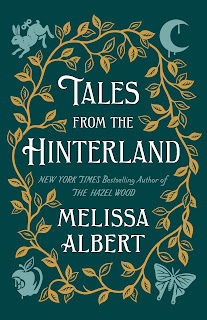
Weekly Reader: Tales From The Hinterland (The Hazel Wood) by Melissa Albert; Delightful Blend of Horror and Fairy Tale Is The Best Anthology of 2021 So Far


Weekly Reader: Tales From The Hinterland (The Hazel Wood) by Melissa Albert; Delightful Blend of Horror and Fairy Tale Is The Best Anthology of 2021 So Far

By Julie Sara Porter

Bookworm Reviews


Spoilers: Somewhere on the corner of Horror Ave. and Fairy Tale St. lies Melissa Albert's Tales From The Hinterland. This is an anthology that is filled with many modern and very fractured fairy tales. However, and I cannot stress this enough, these are not Disney style stories for the kids. These fairy tales are creepy and sinister with plenty of blood and scares. These are more like fairy tales in the way that they were originally told and subsequently written by The Brothers Grimm. Yes, they are scary but also enchanting and mesmerizing. It is hard to put this anthology down once it is started.

 The best stories are:


"The Door That Wasn't There"

This story begins the creepy factor already. It starts with the common trope of the deceased mother/loving sisters/wicked stepmother combined with the concept of the forbidden doorways that you are not supposed to go through. 

Once Anya, the elder of two sisters, opens the forbidden door it involves a great and terrifying sacrifice. This sacrifice makes you wonder whether the flat good lead in most fairy tales may not be as good as she appears. Anya's trip through the doorway is enchanting but like most magic deals contains a price. It's just the cost of the price that is rather chilling particularly the lengths that Anya goes to achieve it.


"The Clockwork Bride"

You ever seen one of those old fashioned toy stores in movies with porcelain dolls and clockwork toys and thought it would be neat to go through the store or buy one? Well this story suggests that watch out. You may not get out of that store ever again, at least not without someone buying you.

A mysterious toymaker comes to town with an impressive array of clockwork toys. Brother and sister, Eleanor and Thomas see the toys up close. When they return, Eleanor wishes that she could escape from her boring impoverished humdrum life and enter the toy's world. Forgetting what type of anthology that she lives in, Eleanor follows a hare that looks like one she saw at the display. Thomas follows her and they see toy soldiers and ballerinas grown to life size. Unfortunately, the clockwork world is too mesmerizing and they realize too late that they can't get out. Even long after Eleanor grows and has a child, the Toymaker calls to her.

There is an almost uncanny valley feel about this story featuring toys that look real but aren't and children that were real but now are not. It's the type of setting that even Chucky would stay away from.


"The Skinned Maiden"

One of Albert's best traits is to take a familiar story and give a creepy original spin towards it. This one is a variation of the Animal Bride story. The usual version sees a beautiful woman out at night next to feathers or an animal skin. A man watched her and falls in love. He confiscates the skin or feathers until she agrees to marry him. She does and he hides the original form from her. Years later, one of their children tells the woman that they found out where the skin or feathers were. The woman goes to find it and leaves the house never to return, sometimes taking the children with her.

The variation found in "The Skinned Maiden" is not so melancholy or pleasant. Instead of going quietly into that good night and returning to her animal form, The Maiden instead starts sounding more like the Ghost Woman in "The Golden Arm" Story ("Who has my golden arm??"). She threatens her husband becoming more monstrous. Then in the end, she takes on a very fearsome nightmarish appearance forcing her husband to admit his theft of her skin and forcing of their marriage before she completely destroys him.


"Alice Three Times"

This story is similar to the changeling tales in which a child is born with some unusual powers or traits. Usually, those traits either allow the magical child save a kingdom and fall in love or become destructive for the child, parents, or future spouse. In this version, it's the latter.

A princess is born as a result of an affair between the queen and one of her courtiers. She is a very strange child with very hollow black eyes and the ability to speak at two months old. The queen decides to give her the very "unroyal" name of Alice. (I guess no one told her that one of Queen Victoria's daughters was named Alice. Oh well, as past experience has told us, any fantasy with a protagonist named Alice is going to lead to a bizarre otherworldly time.)

As Alice grows rather quickly, she frightens people with her eerie stare, precocious intelligence, and physical abuse towards her siblings. The queen wants to send her daughter into exile, but the king is starting to have extremely improper Woody Allen-esque thoughts towards his stepdaughter.

This story appeals to Albert's strengths of writing interesting female characters in this fantasy anthology. The story becomes a one on one battle between mother and daughter. Alice has her strange uncanny powers and the Queen has her cunning and influence. The two are memorable as they vie against each other pitting their family and potential suitors as arsenal against the other. 


"The House Under The Stairwell"

If there was a story that carried the adage "Be Careful What You Wish For" this would be it. Isobel, the eldest of three sisters has a broken engagement so she does what any heartbroken young woman would do: she and her sisters prick their fingers and let the blood spill on the briar overgrowing the grave of a woman called The Wicked Wife.They will then dream of the man that they will marry.

The younger sisters dream of conventional husbands while Isobel's is less than conventional. She dreams of a masquerade ball in which a man approaches her in a fox costume. Each night she dreams of the strange dance under the stairwell and her Fox Suitor. She is also haunted by a ghost woman whom Isobel believes to be the Wicked Wife. She at first thinks that it's just a reoccurring dream but she becomes nervous when her sisters become courted by men who look just like the ones in their dreams. 

This is one of the best stories in the anthology. The Fairy World underneath the stairwell is the right combination of enchanting and terrifying. Instead of being the beautiful other world found in modern fantasy films like Lord of the Rings, it hearkens back to the old Celtic and Teutonic folk tales where the Fair Folk can be seductive and deadly.

There is also a strong theme of collaboration between women that runs contrary to many of the other stories like "Alice Three Times" and in some respects "The Door That Wasn't There." The strongest characterization is between Isobel and The Wicked Wife. The Wicked Wife reveals that she has been maligned with a bad reputation over the years and she wants to save the younger Isobel from making the same mistake that she did and has had to live with for eternity.


"The Mother and The Dagger"

This story reveals how a monster is made. It begins in an almost poetic opening delivered in second person which invites the Reader to listen through an open window and follow a bewitching voice calling them to a cabin decorated with bones. Of course in true dark fantasy horror tradition, that voice is the last thing that they will ever hear.

Albert then backtracks to tell us the story of a queen who longed for a child and made a deal with a sinister witch. The queen gets her child but all ends up not going well and the queen slowly morphs into the Mother, the creature spoken of in the opening of the story.

There is almost a melancholy towards The Mother as she is driven by sadness and longing. Her murderous impulses seem to spiral out of control as she wants to hold onto what she can never really have: a child to remain with her.


"Death and The Wood Wife"

Many of the stories in this anthology like "Ilsa Waits" and "Twice Killed Katherine" deal with encounters between the protagonist and Death. Usually, the encounter requires action, fighting Death. This story requires the protagonist to outsmart Death.

A princess is the youngest of eight children. All of her siblings died before she was born and her mother died in childbirth. The princess is very wealthy but very peculiar looking with skin the color of green leaves. When she grows, she has many suitors. One of her suitors speaks in riddles and is implied to be the Son of Death. Death's Son is ready to claim his bride. The princess turns him down and marries a woodcutter. When the woodcutter dies as well, The Princess is ready to take on Death and Son.

The Princess's confrontation with the Death family is not one of strength but one of cleverness. She denies that she was the woman that the Son attempted to court saying that she is simply a "wood wife" and nothing more. She uses verbal clues and riddles to ascertain the Son's motives against his father. She is able to use her wits to save herself, her husband, and escape Death's kingdom.


There are many great and terrifying stories in Tales From The Hinterland that mix horror and dark fantasy with the classic fairy tale genre. This odd combination of cross genres make this the best anthology, if not the best fantasy novels this year so far.