Showing posts with label Travel. Show all posts

Wednesday, February 18, 2026

The Purpose of Getting Lost by Tracy Smith; Recovery and Self-Discovery Through Travel


The Purpose of Getting Lost by Tracy Smith; Recovery and Self-Discovery Through Travel

By Julie Sara Porter 

Bookworm Reviews


Spoilers: Tracy Smith's The Purpose of Getting Lost is a detailed and introspective memoir about Smith discovering herself through travel.

Smith survived a childhood of rejection, and an adulthood of divorce, the departure of her kids, the fading of old friendships, extensive surgery, physical pain, and mental health crises. At age 49, she booked a flight to Iceland and kept on going afterwards to other countries. She didn't consider travel an escape but a “way to stitch (herself) together and pay tributes to the part that (she) had ignored for so long.”

One of the most interesting aspects of the book are the icons that appear before each chapter to reveal what elements Smith explored during that particular part of the trip. They consist of mountains to indicate Adventure, fire for Community, a tornado for Risk, an elephant for Acceptance, a lighthouse for Confidence, and a bird for Freedom. These icons indicate that Smith was not traveling just for fun or just to be a tourist. She intended to challenge herself and explore aspects to her personality that helped her become a more fulfilled person.

Smith’s first trip to Norway and Iceland was a risky endeavor. Since it was largely unplanned, she walked around the terminal trying to figure out where to go, how to use her phone, and how to find a bus to Reykjavik. This reveals that a trip made by impulse often has its drawbacks and sometimes relies on guesswork, patience, and asking people.

Since it was her first couple of days, Smith's primary emotions, uncertainty and exhaustion, marred her first views of Reykjavik. She was looking forward to this journey but was also overwhelmed by the choices, the new surroundings, and anxiety. She recovered enough to go to a nearby bar dressed in Buffalo Bills attire and struck up a conversation with a fellow sports fan. This chance meeting soothed her uncertainty by reminding her that seeing new sights and meeting people are worth the risk of traveling alone. 

Smith’s sense of adventure was tested when she visited Doha, United Arab Emirates during the World Cup. Surrounded by people, Smith felt several anxieties about such things as being kidnapped or getting lost. She silenced her fear by pausing and looking at the people and sights around. Instead of returning to the hotel, she stopped to enjoy herself. This was her trip and her adventure so she reasoned that she might as well make the best of it.

The adventure continued as Smith entered a mosh pit consisting of soccer fans. Caught up in the excitement of the crowd, she joined them cheering, clapping, and celebrating. Some men even lifted her up and pushed her over a gate into a restaurant that she wanted to eat at. This was an experience in facing large crowds and finding a sense of adventure in an unfamiliar place and surrounded by unfamiliar people. While she faced many natural elements and risky tours, the fear of crowds and unknown places can be filled by anyone going on any trip. It is an adventure to face those fears as much as mountain climbing or bungee jumping.

Smith’s solo trips were an experience in acceptance. Before, she often made decisions that involved other people, but this journey was a practice in self-care and reliance. Her trip to Costa Rica with her daughter was a relaxing journey but Smith had to accept that her daughter was growing up and therefore so should she. Her journey to Croatia was much more difficult because it involved a fracturing relationship. Her time in Croatia was cut short because she and her boyfriend broke up. She had to accept that loss and move on.

This relationship and its end left her with a choice to visit a friend in Italy who was going through her own issues and risk hurting her with the pace or go to Portugal alone and allow her friend to heal. She chose Portugal recognizing that her friend needed rest and not the stress of travel and that Smith herself needed some time alone to sort through her troubled relationships. This allowed her to accept herself by herself.

Smith was often a planner and often made itineraries and lists. While that can be good for travel especially in the early stages, it can limit the spontaneity and surprises that come with travel. Smith’s time in Koh Samui, Thailand taught her to enjoy freedom. She viewed a waterfall with a tour group that she stumbled upon and was in awe of the sight that she might have missed if she stuck to a plan. 

Most of that time on the island was spent relaxing and not sight seeing. Smith rested in the hotel, read her Kindle, went swimming, shopped nearby, and observed people around her. The relaxation and freedom of living in the moment was just as important for her as the times where she took tours, participated in adventures, and interacted with others. 

Not all of Smith’s trips were solo adventures. As previously stated, she traveled with her daughter, son, ex, and friends. She also interacted with strangers forming a large global community of friends and family around the world. Traveling to Greece with her friends Stacey and Cheryl illustrated the importance of community especially when traveling. The three friends booked separate rooms, had a loose itinerary, and spent some time by themselves. Ironically, their solo time deepened their connections to each other because they had space to breathe and their time together was much more engaging.

Another journey with her friend Carmen also taught Smith about forming community with others. Carmen introduced her friend to her family in Puerto Rico who accepted Smith as one of their own. She had meals with them, conversed with Carmen’s aunts and uncles, and was embraced by their warmth and hospitality. She arrived as a stranger but left as a surrogate niece and cousin.

Smith’s travels were exercises in persistence and confidence. She endured many hard and difficult journeys such as climbing pyramids, hiking through the jungle, and visiting Machu Picchu. She realized that these dangerous trips were tests of her persistence and ability to survive them. 

Many of her experiences tested her endurance. Once in Belize, her group had to climb 130 steps. Even though she sweated, her legs cramped, and she doubted herself, Smith made the climb. She said that “the climb wasn’t pretty. It wasn’t graceful but it was mine.” This was true confidence in herself and her journey.

Traveling around the world gave Smith several opportunities to encounter new places, meet new people, learn some important lessons, test her strength and endurance, take risks, practice self-care, live in the moment, and ultimately to find herself.


Wednesday, December 24, 2025

Bird of Paradox and Other Tales by John Devlin; Short Stories of Love, Learning, and Diversity


Bird of Paradox and Other Tales by John Devlin; Short Stories of Love, Learning, and Diversity 

By Julie Sara Porter 

Bookworm Reviews 

Spoilers: Author John Devlin knows how to capture ordinary events and conversations and create plots and characters who are rich with development and meaning. 

In his anthology, Bird of Paradox and Other Tales, each tale began (in his words) as “scraps of overhead gossip, a scribbled note, or the kind of boast a man makes when all bets are off.” They are based on situations that Devlin experienced in places from rural Ireland to China and Vietnam where he taught English.

Some are moving, others are humorous. All deal with lack of communication and understanding that can be found between people of different cultures, backgrounds, and genders. They can be messy, rude, argumentative, short sighted, suspicious, unpredictable, ignorant, arrogant, lustful, regretful, hopeful, confident, and enthusiastic. Most of all very understandable and recognizable.

The best stories are:

Bird of Paradox”

In this case, bird does not refer to avian creatures in the sky. Instead it uses the British slang for women in the title, specifically one woman.

Barry is visiting his Aunt Lena, a visit that he is not looking forward to with good reason. Aunt Lena is a very contradictory and argumentative character 

This story is a witty character study of an aunt and nephew. Devlin’s gift of overhearing conversation is at play as Barry is in the Tube and train station. He is an observer watching other people and overhearing their stories, making this confined area even more crowded and claustrophobic with their conversations and faces. It's a place where you can't help but hear and see everyone and everything even if you aren't a part of it. 

Once Barry enters Lena's house, she is an antidote to the confinement of the Tubes. She is set apart from everyone around her. A woman who uses her bizarre anecdotes about life in a brothel, peculiarities like a fear of flies, and her opinions about everyone around her. She is an eccentric character who makes a magnetic but suffocating presence. You are fascinated by her but a little of her goes a long way.

It's an interesting dichotomy that the nephew exists to move silently around other people and the aunt is a force that commands others to move around her.

Lady Luck

This story demonstrates the difficulties of dating and how sometimes daters speak a different language. Walter is looking to get lucky and wants to have sex with the right woman. He places a personal ad specifically looking for Asian women. 

The women display various traits and behaviors but none are the right woman for him. One likes line dancing and has a large appetite. Another preferred a younger man. Another goes into a story about a troubled relationship with her late husband's brother. Another goes into long tangents about her ex never giving him a word edge wise. 

These dates are humorous exercises in futility as something is bound to go wrong leaving Walter perpetually alone. It's the kind of dating scene which relies on only a few minutes to decide whether or not they are compatible enough for a night let alone for a lifetime.

The Xmas Party

 This and the next story are part of a series involving Joe McKenna, a teacher at Great Wall English (GWE). The series deals with culture shock and diversity, interpersonal relationships in an academic setting, and finding common ground in a new place.

The first story involves Joe’s introduction to the staff at the GWE Christmas party in early November. Joe becomes involved in the various pairings and peccadillos of the teaching staff who could probably use some education.

Though the story is short, it packs a lot of character. From the awkward pairing of the pompous Ronnie and the mild mannered Sunny to a guy named Fat Freddy who inspires a lot of gossip, 

It's a very busy, noisy, and nosey environment. There's a constant stream of chatter, movement, and color to make the Reader feel like they are among this group having small talk and trying to sound interested in the tenth person that they have been introduced to. It can be fun but draining to put on a performance.

The politeness, talk, and overwhelming tedium is broken during a fight between a couple of the teachers. This fight is a reminder that even when people are together for a common goal whether it's teaching English or having a party, differences are bound to collide and if unchecked, tempers could flare.

Charlie Visits the Ancestral Temple

If “The Xmas Party” celebrated the noise and chatter, this story is a comparatively simpler affair. It involves Joe McKenna and his colleague, Charlie Bell visiting an ancestral temple.

The story is both mesmerizing and humorous. Charlie is captivated by a lion dance and the souvenir pigs. Joe however is concerned about the confusing directions and tourist crowds. 

People can look at one place and see something different: a sacred temple or an abandoned ruin. A colorful performance or a tourist trap. A piece of local culture or a tacky item. It depends on who is doing the looking.

Online Teaching in Lockdown

This story is part of a series involving an unnamed narrator (possibly Devlin himself) teaching in Vietnam, a difficult endeavor made even more so during a pandemic.

This story in particular involves The Narrator arriving in Vietnam just as COVID hits. Besides getting accustomed to a new country and school system, he also has to take a crash course in online education and Zoom.

The Narrator is bemused as the online interactions become increasingly personalized as people do chores and get undressed during them. Social media keeps people apart but also lends them a degree of intimacy that they never had before.

The students also exhibit various behaviors to deal with the stress of being out of a social environment. They get into fights, withdraw into themselves, behave recklessly. It shows that in times of stress, people will respond in a variety of ways. 

In using Zoom, the Narrator learns more about his students seeing sides that he would never have seen in a classroom.

Sidestreets of Saigon

This story does not deal with character interactions so much as it deals with setting. The Narrator describes his new neighborhood.

The Narrator is fascinated and somewhat overwhelmed by this new location with its temples, crowded streets, and ubiquitous sidestreets. It's easy to understand why he feels culture shock and out of place. It takes awhile to get used to the rhythm of a new location and that discombobulation can increase in a foreign country. 

The Narrator is a great observer focusing on the various people like a mother-daughter team of restauranteurs, an efficient female barber, a woman with two dogs, and others. The people give the streets color and life. They are captured going about their daily lives through someone else's words.

Lonely Hearts

Similar to “Lady Luck” this story covers dating but instead of a series of bad dates, this is a dialogue heavy focus on one bad date between an unnamed man and woman.

The two constantly talk to each other in brief question and answer format (“Do you work evenings or days.” “Evenings are sacred. I work days.”) It's practically like an interrogation or a tennis match where the two characters try to size and one up each other.  

The two characters go around in circles trying to search for something in common or at least some form of connection. As their conversations get deeper and more personal, it's clear that this is one relationship that is bound to fail.

The Wrong Gerri

This story might have the healthiest relationship in the entire anthology and it involves mistaken identity.

Tony returns from Japan where he taught English to reconnect with his former girlfriend, Gerri. He calls her number and gets Gerri, but it's another woman who doesn't remember Tony or any of the details that he mentions.

Unlike the other couples, they click well and are genuinely interested in what the other has to say. He compliments her cosy house. She teases him about Japanese women. They share unbelievable stories that leave one another amused, curious, and probably in disbelief, but at least captivated.

 The possibility of meeting again is certainly in the air. Even if she isn't the right Gerri, it's clear that she is the right woman.


Monday, January 20, 2025

The Colonel and The Bee by Patrick Canning; Fun Charming Victorian Adventure That Ascends to Great Heights

The Colonel and The Bee by Patrick Canning; Fun Charming Victorian Adventure That Ascends to Great Heights 

By Julie Sara Porter 

Bookworm Reviews 

Spoilers: Patrick Canning’s The Colonel and The Bee is a throwback to an earlier time of a 19th century Adventure Novel. Pastiches of Victorian Adventures are not unfamiliar with this blog. I reviewed Jon Stephen Jones’ Victorian Adventure Stories and B,G, Hilton’s Champagne Charlie and The Amazing Gladys. Where Jones used familiarity with the Victorian tropes to write stories that echoed them perfectly and Hilton used those tropes to write a novel that brimmed with quirky originality and bizarre goofiness, Canning walks a middle ground. He wrote a novel that presents a fantastic Victorian Adventure with a postmodern darker edge. 

The book is narrated by The Amazing Beatrix, a former acrobat, who instead of running away to join the circus is instead running away from the circus to join something, anything else. She resents the abusive treatment from the circus ringmaster, Ziro so during a private performance for a nobleman, Beatrix makes a dramatic escape to the protection of Colonel James Bacchus, an eccentric treasure hunter with a reputation of daring adventures and romantic escapades. The Colonel takes her into Ox, The Oxford Starladder his floating house (no seriously it’s a four story wicker house attached to a red hot air balloon). She befriends his colleagues, the Newlyweds, obtains a nickname, “Bee” and joins them on their latest hunt for The Blue Star Sphinx. Unfortunately, some dangerous characters are also looking for the Sphinx and the Colonel including an intrepid law enforcement officer and two feuding criminal families. 

The Colonel and The Bee walks a fine and interesting line between the fantastic situations of the past and the rich character development of the present. Canning captures both expertly by giving us realistic characters in a fantastic setting.

What stands out at first is the fantasy, the adventure, the outlandish fantastic tropes of the past. We know realistically that a hot air balloon can’t carry a four story house, but that doesn’t matter. In this book, it does. We know that buried treasure isn’t really found by searching for intricate clues and x doesn’t always mark the spot, but who cares? That’s part of the fun. The Colonel and The Bee opens up those childlike parts of ourselves that read comic books or old adventure novels and imagine ourselves as the characters. Characters like Indiana Jones, The Doctor, Jules Verne’s Phileas Fogg, Sherlock Holmes, Professor Challenger, James Bond, Nancy Drew, every superhero ever. Characters that we imagine wake up every morning wondering what adventure they will get into today. 

Canning captures that childlike wonder that these stories convey. The adventure is solid with many twists and turns. There are written clues that provide context to the Sphinx and its backstory. We are treated to various locations such as Switzerland, Belgium, Spain, Gibraltar, Britain, and The Sahara where The Colonel, Bee, and their allies encounter dangers that require cunning, intelligence, stealth, strength, and daring to survive. It's an adventure that moves at a brisk pace but contains enough plot threads to go into different directions and hold the Reader's interest.This is a light hearted fun adventure for the most part.

While the majority of the book is fun and light, the way that most of these quaint Historical adventures are, there is some depth and attention to character psychology that give this book a postmodern edge. The Colonel and Bee reveal themselves as more than the flashy outlandish exterior that we see at first. 

Bee left behind a lifetime of abuse and degradation at the circus. The maltreatment takes its toll on Bee as despite trusting The Colonel enough to rescue her, she is incredibly cynical and suspicious towards his actions. She had been exploited and used so this is what she expects from people. She for a time is unable to trust The Colonel and suspects the worst from him, particularly because of his history with women. She is looking for an escape out of her situation, maybe some money, but nothing else. 

As she travels with The Colonel and his friends, Bee begins to relate to and bond with them. She sees their vulnerabilities, kindness, and acceptance towards her. Her agility is useful for getting them out of tough situations and her earthy nature provides a nice contrast to The Colonel’s flightiness. As she uses her skills to become a member of the group, she opens up to her new found friends. She also begins to let go of her earlier trauma from her time at the circus even to the point where she even bonds with some of her former colleagues when she recognizes their suffering as well.

Since Bee is the first person narrator, we see her various layers but it takes some time to see The Colonel’s. He lives a seemingly enviable life from land to land, adventure to adventure, and lover to lover. He has a charming flirtatious enthusiastic demeanor. He seems less drawn to search for the Sphinx because of wealth than he is for the thrill and excitement. As the book continues, The Colonel is revealed to have a past and troubles of his own that he hides under his gregarious devil may care personality.

The Colonel reveals that he comes from a very dysfunctional family and this adventure is not just a treasure hunt but a search for some family members. Now, his adventures are seen as means to fill the empty voids in his life. They give him some purpose and significance. He was made to feel like he didn't belong anywhere so he became a citizen of the world. His only real family and friends are those that travel with him on The Ox or aid him on his journeys from the ground. 

The Colonel and Bee move from flashy adventurers looking for treasure, to two lost individuals looking for familial connections. Through their journey, they find both.


Thursday, January 16, 2025

Oliver's Travels by Clifford Garstang; Cerebral Introspective Plot About Writing, Traveling, and Searching for The Past


 Oliver's Travels by Clifford Garstang; Cerebral Introspective Plot About Writing, Traveling, and Searching for The Past

By Julie Sara Porter 

Bookworm Reviews 

Spoilers: Even though Oliver's Travels sounds like Gulliver's Travels, Clifford Garstang’s novel is not a fantasy satire of a man traveling to different weird lands that mock various aspects of 18th century life. Instead it is a cerebral introspective novel about a man trying to discover the answers to his past through philosophy, writing, and traveling.

Ollie Tucker just graduated from college with a degree in Philosophy. He leaves his troubled father and siblings behind to move in with his estranged alcoholic mother and teach at a community college. Ollie becomes obsessed with learning about his missing Uncle Scotty especially when he has disturbing flashbacks concerning their relationship. 

Oliver's Travels takes a thoughtful look at its lead character. His family is toxic with an emotionally distant father, an alcoholic mother, a Fundamentalist sister, and a brother who has PTSD since his return from Afghanistan. He looks inward for support and validation that his family weren't able to give him. Ollie enters into a romantic relationship with Mary, another teacher, a relationship that is fraught with frequent arguments, miscommunications, and Ollie's uncertainty about whether he loves Mary or her brother, Mike.

 It's obvious that Garstang made him a Philosophy major to show him as the type of character who would examine his life and choices. His present situation often segues into past conversations with his academic advisor, Professor Russell where they talk about things like guilt, free will, memories, and identity. These conversations focus on what troubles Ollie and propels him to do the things that he does. They also have dark edges in the later chapters when Oliver and Russell’s student-mentor relationship becomes more intimate and disturbing. It makes one wonder how many of their Q&A sessions were genuine and how many were used for seduction. 

Besides Philosophy, Ollie examines his life through writing and travel. He writes a novel about a man named Oliver who travels to exotic locations, lives as a free spirit, and has a troubled romance. There ends up being a lot of parallels between fiction and real life but it is also clear that Ollie's novel is a sense of wish fulfillment. Oliver is the person that Ollie wants to be: bold, assertive, and daring. He goes on similar journeys but the fictional Oliver isn't as bound by these concerns as his author is.

 Ollie asks questions that are never answered. Oliver gets those answers. Ollie waffles about whether he can afford to go to another country and worries about cost and his relationships. Oliver just goes without repercussions. Ollie has a troubled on and off again relationship with Mary. While Oliver has arguments with his partner, they are able to work through them. Oliver is what Ollie wants to be: Someone with many of the same problems but is able to face them and shape himself into a better person.

Besides writing, Ollie uses travel as a means of finding answers. He and Mary travel from Singapore, to Tokyo, to Paris, to Mexico City to work or vacation. Each leg of their journey brings new struggles and disappointments. Ollie and Mary might go to different places but they are the same people every time. They are filled with the same insecurities, worries, conflicts, and ties to their dysfunctional families. A new city where they have to teach a different class of students, see sights, and learn a new language does not change who they are. In fact the relocation only adds more stress to their fracturing relationship. The relocation and the real unspoken motives for the traveling. Ollie is chasing leads to where Scotty might have lived.

Ollie asks his parents and siblings about his Uncle Scotty because the family won't talk about him. They give him evasive answers and contradictory statements which only fuels his curiosity even more. He wants to know about him to see if his disturbing memories were real or fabricated. He believes that if he finds and interacts with Scotty, then Ollie can finally get some answers about why he is stuck in this place of insecurity and frequent conflicts. 

When Ollie learns the truth about why Scotty left, he realizes that everything that he thought about him and the rest of their family was wrong. At first, Ollie envies his uncle's nomadic life but the more he pieces together Scotty’s real story, he realizes that his romantic image was errant. Scotty wasn't living a carefree life or running away from a past crime, he traveled because he felt compelled to. He went to different countries to get away from his own traumatic memories and because he couldn’t find a place that felt like home. In his drive to learn about his Uncle through philosophy, writing, and travel, Ollie realizes that he is more like him than he originally thought and is destined to end up in the same place.


Saturday, December 7, 2024

Traumatization and Its Aftermath: The Systemic Approach to Understanding and Treating Traumatic Disorders by Antonieta Contreras: The Candid Odyssey: Exploring India and The Philosophy of Life by B Johny;


Traumatization and Its Aftermath: The Systemic Approach to Understanding and Treating Traumatic Disorders by Antonieta Contreras

Antonieta Contreras’ book Traumatization and Its Aftermath: The Systemic Approach to Understanding and Treating Traumatic Disorders is an in depth look at trauma, how it affects our lives, and what can be done to treat it.

While there is some confusion over what trauma is and isn't, Contrera describes trauma as “the effects of the activation of the innate survival circuits that are designed to protect the individual from the possibility of dying after a severe reaction to a threatening occurrence.” 

It's good to separate what trauma is (long term, creating barriers between self and an event to keep from experiencing it again or dying) and what trauma isn't (short term, emotional distress or disappointment without extensive change in lifestyle or behavior). The means of understanding what trauma actually is helps define, identify, and ultimately recognize and treat it.

Contreras identifies the various stages of traumatization by using a lightning strike as an example. The lightning that appears in the sky and scares the person is called traumatic. The trauma process officially begins by a traumatic event for example getting struck by lightning and becoming aware of the danger. 

Traumatization starts when the person becomes shocked and scared. Survival circuits are activated by reacting in fear, perhaps filled with anxiety and fear of loud noises. The reaction dissipates info defeat as the survival mode is depleted. When this final stage is met, the mind and body react with long term lasting injuries and complications which reignite the traumatization long afterwards. The stages help Readers recognize the patterns in their own lives and where they may lie within that cycle. 

The book also goes into detail about the effects that trauma has on the body particularly the brain and emotions. It focuses on how external traumatizing agents like abuse, neglect, and systemic adversity can create internal agents like distorted perception, shame, guilt, fear and defeat. Mechanisms like the Fight-Flight-Freeze-Fawn response are also explored. Traumatization is an ongoing continuous process which can be physically, mentally and emotionally troubling. 

The book uses medical and psychological terms to analyze and systematize trauma. Some of it can be dense and hard to follow but the basic approach is to show how a person lives with trauma and how it affects their lives and relationships with others.

Contreras like many authors uses case studies to prove her point but unlike many authors who name several specific examples, Contreras uses one study of one specific individual spreading their story across several chapters to give an in depth look on how trauma can continue for years even decades after the first traumatic event.

Contreras tells the story of Michaela who was drugged and raped by an acquaintance. This traumatic event grew as Michaela tried to seek counseling but received a lack of empathy and a lot of insulting questions towards her ethnicity. The rape and the questions led her to feel fear, shame, and an inability to articulate or share her trauma. 

Michaela then developed PTSD from the ordeal. She avoided people and situations that reminded her of the rape or her rapist. She had negative thoughts about herself, blamed herself, and lost interest in things. 

After therapy and self reflection, Michaela realized the rape wasn't her only bad experience. She realized that she was abused in other ways by previous relationships though she did not recognize it as abuse at the time. She dealt with them by dissociating herself. 

She also recalled a neglected childhood from a mother who was herself abused when she was young. Michaela also had a contentious relationship with a brother who ran away from home when she was a child. 

Michaela recognized these earlier events and patterns contributed to the post trauma from her rape. Understanding and naming the trauma gave her the awareness and courage to work through it. Michaela’s story is an example for us all.

Traumatization and Its Aftermath brings trauma to the forefront so it can be seen, analyzed, understood, treated, and maybe someday ended.


The Candid Odyssey: Exploring India and The Philosophy of Life by B. Johny

B. Johny’s The Candid Odyssey: Exploring India and The Philosophy of Life is a detailed and descriptive trip through India and we're all invited. Well sort of.

That's because Johnny writes the book in first person plural using “we”, Instead of “I.” While people often travel in groups and Johnny could very well be referring to his actual traveling companions, the pronoun may have been chosen for stylistic reasons. It's a way to draw the Reader in so they can vicariously enjoy the trip alongside Johny.

From August 20 to October 22, 2022 Johny travelled to India to recover from a bout of depression and for a journey of self-discovery. During that time, Johny visited many places, encountered many people, and reflected on many things. 

Johny describes his experiences rather well in a way that invites Readers to picture them in their heads. He describes Horniman Circle Garden in Mumbai as “filled with people enjoying their time in peace. Some read quietly, others nap on the grass, and some engage in deep discussions….As we rest near a tree, we observe small rats scurrying about in search of food.” Johny wants us to experience everything in India, the beauty and ugliness, the rare and commonplace, the familiar and unfamiliar. 

Johny finds meaning in various experiences on his trip. He describes passing through a tunnel as “we feel a sense of joy, knowing that at the end of the darkness lies light. Witnessing that light is a satisfying experience….We only realize the presence of light when we go through the darkness. Similarly, life is filled with peace and happiness, which we appreciate only after experiencing some conflict and sorrow.”

Even hardships on the trip lead to valuable life lessons. When Johny came down with a fever, he recognized the importance of being sedentary even while traveling and scheduling an extra week for just such an occasion. “Just like race cars need a pit stop, it's time for a pit stop in our journey….A day to rest, rethink, replan, and refresh. Such pit stops are applicable throughout our lives. This long journey itself is a pit stop in life.”

Since this is a journey of self-discovery, spirituality is often discussed. Johny found a deeper connection to spirit in various people, places, and things. He describes a train ride as one of the best meditation techniques. “When we gaze out of the window, countless thoughts arise, often unexpectedly. The very thoughts we had been seeking….The interesting thing is that we gradually transition between locations, making it difficult to recognize the differences easily. This mirrors life itself; we gradually transition through ages, and it's not always apparent how we’ve changed as we grow older. Recognizing who we are requires self-reflection. Ultimately, our consistent self-reflection leads to self-realization, a deep pursuit of knowing ourselves. By being mindful of our actions, words, and intentions we can effectively navigate this journey.”

Just as we can through life.


Monday, November 28, 2022

New Book Alert: Life Between Seconds by Douglas Weissman; Beautiful Moving Novel About Living After Loss


New Book Alert: Life Between Seconds by Douglas Weissman; Beautiful Moving Novel About Living After Loss

By Julie Sara Porter

Bookworm Reviews


Spoilers: Douglas Weissman's novel, Life Between Seconds is a beautiful, meditative, and lyrical novel about people trying to live after suffering tremendous loss. It can be very emotional with the realistic portrayal of sadness, grief, and depression. Then there are parts that become very fanciful as it enters characters' imaginations and dreams. It's hard to place it as a realistic contemporary fiction or a fantasy or even a mixture of both. 

Whatever it is, it is a beautiful and unforgettable work.


The book focuses on two people, Peter and Sofia. We first encounter them during their early years. Peter is a young child having an outing with his mother, Sam. Sam tells Peter stories about his father and paints pictures of places like Machu Picchu and San Francisco, that she promises that he will see one day.

Meanwhile, Sofia is with her husband, Gadton and their newborn daughter, Valentina. She soothes the baby to sleep with all the promises that Valentina will one day live a wonderful life: go to university, have a beloved career, meet a wonderful man that will adore her, and so on.


In both chapters, we are given glimpses of the protagonists in the happiest times of their lives when they were in perpetual innocence. They make plans that they don't yet know won't come to fruition. These moments become important because they symbolize the last time that Peter and Sofia were happy.


After those chapters are finished, we return to Peter and Sofia years later. Peter was once a bright imaginative child. Now, he's a jaded and embittered adult. He has lost both of his parents and now feels rootless in the world.

He works as a janitor in a science children's museum and frequently travels. He has trouble making emotional connections, always assuring himself that no matter how bad things get, he has a ticket to somewhere else (right now Nepal) in his pocket. His once childlike desire for travel has now taken over his life.


Meanwhile, Sofia is alone. She has lost her husband and daughter. Unlike Peter's wanderlust, she is content to remain inside her apartment going out only according to a regular schedule. She avoids communications with those from her past but still her memories overpower her. She maintains friendship and cooks food, like Argentinian empanadas, but like Peter has trouble making deep communications.


The strongest characterization can be found within the relationship between Peter and Sofia. They are neighbors who at first maintain casual conversations but slowly become closer once they learn that they share mutual loss. They don't develop a romantic connection but one of friendship, perhaps filling the parent-child voids in their lives. That friendship allows them to break from their loneliness and move towards others.


Life Between Seconds is mostly a dark but ultimately uplifting novel but one that is mostly set in reality. However, some of the most intriguing parts are the strange detours into magical realism. Peter's opening chapters with Sam for example weave the reality of their situation with fairy tales that Sam tells Peter about his father and future adventures that they will take with Peter's teddy bear, Claus.


Sofia's adult memories of Gaston and Valentina consume her so much that she has trouble separating fantasy from reality: what she believes happened to Gaston and Valentina and what actually happened to them. While Peter travels to escape his memories, Sofia remains in place and keeps trying to relive and change hers.


By far the strangest chapters are the ones that take Sam on a fantasy sea voyage with a now talking Claus. The symbolic imagery such as the boat being described as tub-like or that the ocean seeming endless suggests some things without coming right out and revealing them in the text.

While it's more than likely a vision, dream, or hallucination it's hard to tell whose, Sam or Peter's. If it's Sam's, it could be what is flashing through her mind before she makes her final choice 

If it's Peter's, it possibly details a wish fulfillment of what he hopes happened to her. 

This suggests a deep creative connection between mother and son as art, literature, and storytelling were touchstones that they shared as communication.


Life Between Seconds is a book that makes the Reader think about life and death and how they cope with such loss. It is a meditation on what legacy is left behind for others to remember and take with them.


Friday, October 1, 2021

Lit List Short Reviews; Cycling The Silk Road: From Shanghai to London in Thirty-Six Weeks by Chaewon Yoo, The Girl With A Golden Heart by Achal Kumar, Not Him or Her Accepting and Loving My Non Binary Child Here's What You Should Know by Michelle Mann, The Numbers Game by Miles Watson, One Night in Paris A City of Light Novella Book 1 by Juliette Sobanet, Wiccan The Truth About Wicca and Witchcraft A Witch's Bible by Julia Steyson

 Lit List Short Reviews; Cycling The Silk Road: From Shanghai to London in Thirty-Six Weeks by Chaewon Yoo, The Girl With A Golden Heart by Achal Kumar, Not Him or Her Accepting and Loving My Non Binary Child Here's What You Should Know by Michelle Mann, The Numbers Game by Miles Watson, One Night in Paris A City of Light Novella Book 1 by Juliette Sobanet, Wiccan The Truth About Wicca and Witchcraft A Witch's Bible by Julia Steyson

By Julie Sara Porter

Bookworm Reviews

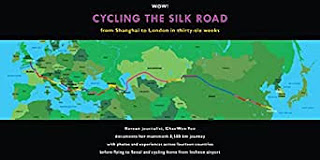
Cycling The Silk Road From Shanghai to London in Thirty-Six Weeks by Chaewon Yoo


Korean journalist, Chaewon (Eva) Yoo knows how to plan and plan big.

From June, 2018-January, 2019, Yoo traveled 8,567 kilometers along the Silk Road between Shanghai and London via bicycle. Her book, Cycling The Silk Road covers that journey. It's a short book but is illustrated with eye catching photogtaphs and described with engaging anecdotes and good advice for any interested traveler.


The Silk Road was a network of trade routes that connected the East and West to the 18th century when industrialization resulted in expansion in local productivity, Enlightenment values, and affordability for the masses. Silk, paper, and gunpowder were among the goods traded on the route. The Bubonic plague and other diseases were also spread creating worldwide pandemics. Yoo had a strong sense of history by traveling this route and an awareness of the modern world as she interacted the people who lived in the different countries.


Yoo's writings are brief, but she captures her experiences with warmth and humor. As she cycled through the asphalt, chalk powder, and dust in Yingshang, she was bemused to find a hotel that "looked like something from a Western movie or a desert in Arizona, U.S.A. when (she) was ten."

While in Italy, she recalls the friendly people that she met such as people performing in a Christmas play in traditional Provincial clothing. She also remembers the wine, most of it on tap. At a tavern, she only wanted half a liter, but the assistant filled her drink up to the brim.


There are various moments where Yoo was pleased to observe the nature around her. While rafting on a banana boat along the Dan River, Yoo lay on the boat and looked up at the sky, observing the clouds moving at different height.

Sometimes, her descriptions of nature uplifted what could have been a trying time. A difficult time of traveling uphill in the rain in Edessa, Greece became an eye catching moment when Yoo observed a 50 meter waterfall with strange rock formations made even more impressive by the rain.


Yoo brilliantly describes the homes and people. Her encounters with the residents are some of the highlights.

While in Yevlax, Azerbaijan, Yoo stayed in an old house with a cow barn. She described "every yard with a plastic cover and a sink to wash fruit, vegetables, and your teeth." She described the food and drink that was offered, such as tea with honey dipped berries served in intricately designed glass holders and sugar and candy inside glass containers.


While in Milan, Italy, Yoo experienced the kindness of strangers. Her bike was stolen so she purchased a secondhand one. The theft coincided with a seminar. Yoo posted her map and asked if anyone would attend. She met 15 people who wanted to hear her story.

In France, Yoo's hosts guided her to various events such as a hypnosis meeting, a January festival, and a potluck dance complete with accordion music. Yoo described France "as the most hospitable country on (her) trip."


The photographs in the book are filled with delectable food, lovely landscapes, and friendly people. They help provide images to Yoo's words. In fact, the short length makes the photos the main focus of the book so the Reader can experience the trip the way Yoo did.


 Cycling The Silk Road is a wonderful account of a trip that is memorable in words and pictures.


The Girl With A Golden Heart by Achal Kumar


Achal Kumar's short novel, The Girl With A Golden Heart is a moving and spiritual story about a woman who finds justice through fighting an enemy and self-actualization by helping the people of her village.


In the beginning, we are introduced to Shivani, an Indian woman who is one of the ten women entrepreneurs in the country. She is powerful and dedicated and has a reputation for honor and philanthropy, particularly with her woman care trust which helps poor girls and women pursue education and gain self-employment in their own villages.

One night, she returns to her home village of Madhurpura and remembers the circumstances that led her to depart and pursue this life path.


Most of the book occurs in flashbacks when Shivani was a young woman. After a flood, Bharat, Shivani's impoverished father sought help from Baccha Babu, a criminal who behaves like a mob boss. He appoints thirty associates who engage in robbery, kidnapping, smuggling, and stealing land grants from poor farmers. 

Using threats, manipulation, and intimidation, Babu ultimately ends up owning Bharat's farm. 

Shivani is raped by one of Babu's loathsome sons. The rape leaves her traumatized especially since she can't report it to the police. (Babu owns the police.) The further escalation of violence and Babu's tighter grip on Madhurpura leads Shivani to lose some family members. She desires revenge against Baccha Babu, the man who stole her family's farm and destroyed her village, reputation, and family.


The book is impactful as Shivani and Babu engage in their one on one war. Babu appears ahead with his thugs, intimidation tactics, and money. However, Shivani's determination to bring him down, her clear-sightedness in researching and analyzing his business properties for weaknesses, and kindness in gaining allies rather than threatening them prove to be assets.


In Karmingar, she falls in love with Altaf, a man who helps her in her war against Babu. Even though she puts him in dangerous situations, she is concerned for his well being enough to sacrifice her life for him. Also, her business acumen helps put his family in a better financial situation than they were before.

She finds a sanctuary in the home of a progressive politician who empathizes with her plight and treats her like his own daughter. Ultimately, he helps mentor Shivani on her part towards a better future.

Babu's plans create division between Muslims and Hindus and results in more violence and economic trouble including for him. It's almost karmic justice that Shivani's kindness brings her forward while Babu's greed brings him down.


The Girl With A Golden Heart is a moving parable about someone who thrived despite great adversity. Then she used that privilege to help others in the same situation.


Not Him or Her Accepting and Loving My Non Binary Child Here's What You Should Know by Michelle Mann


Not Him or Her Accepting and Loving My Non Binary Child Here's What You Should Know by Michelle Mann is a good book that covers an important topic, how to raise a non binary child in a world that isn't always understanding.


Mann brings forward an important topic that has been very controversial lately. She humanizes the conflicts that many non binary children and their cisgendered parents go through within their own families and society. It also shows that the most important keys in such families are understanding and acceptance.

Parents and others can be inclusive by exhibiting proper characteristics like using the right preferred pronouns and defending the child in front of others.


 The personal stories add a great touch to the book, especially in revealing the diversity of parents and their children's experiences. Various situations are covered, such as Simone having to take excess time to explain to a dental assistant that her child was nonbinary. They show how many of the simplest procedures could produce stress because of a judgemental society.


The book covers different age groups of non-binary children from early childhood, to teenagers, to adulthood. This counters the whole myth that "It's a phase. They'll outgrow it." Mann openly counters such myths and assumptions and how they contribute to a lack of acceptance within the child.


Not Him or Her shows how devaluing and demeaning those myths are and how gender identity is often influenced by parental and societal views that either encourage or demean the child.

Bottom line: If the child is old enough to recognize gender in society around them through toys, advertising, and adult perspective, then they are old enough to recognize the gender identity within themselves.


Not Him or Her reminds the Readers that the most important thing that they can do for their child is to understand, accept, and unconditionally love them.


The Numbers Game by Miles Watson


Miles Watson's novella, The Numbers Game is a tight, suspenseful, and character driven book about a WWII pilot with a unique gift that helps him survive but could overpower him.


Pilot Officer Maurice Mickelwhite is a mathematical genius. (Fun Fact: Maurice Mickelwhite is also the real name of actor Michael Caine. This appears to be a coincidence.)

His potential life of teaching calculus and algebra while living only for numbers is interrupted by the War. As he participates in the Battle of Britain, Maurice is able to use his talent for numbers to calculate the probabilities of survival, not only for him but the other members of his squadron. He knows the likelihood in which each pilot is going to die and is quite often right. Unfortunately, his own numbers are very close to coming up.


The Numbers Game is a brilliant character study about someone who goes to war but doesn't really want to.

Maurice is not exactly a flag waving jingoist ready to die for King and Country. 

In fact, he had dreams of teaching math in school and being left to "his numbers, his tobacco, and his copy of the Journal of the London Mathematical Society.

Instead, he got the war."

Maurice wouldn't have minded using his mathematical genius to work in the London office but instead he is in the RAF as a pilot. (There was even a rumor that the RAF refused "as a matter of principle" to let anyone do anything that they showed an interest or talent in.) 

This attitude is counter to the popular culture image that RAF's were brave heroic patriotic fliers with their own colorful language and daring to kick the German fighters out of England. 

The Numbers Game shows that it was often made up of men who were there by force and would rather be doing anything else. 


In many ways, Maurice is similar to characters like Yossarian from Catch 22 or Hawkeye Pierce in MASH. He gets through the madness of war by holding onto a sardonic sense of humor. He scoffs at those who insist that skill and abilities are factors in determining when someone is going to die. He thinks, "The numbers formed a path which you were doomed to walk-a path ending in a scaffold….The more you flew, the greater your risk of dying. It was just that simple."


Because of his certainty about death, Maurice has a very fatalistic behavior when his fellow pilots die. Even when others disagree with him and die anyway, he is neither grief stricken nor smug about being proven right. He is matter of fact because he saw it coming. He comes across as cold at times, but Maurice is almost like someone with precognitive abilities. They have a tremendous talent that allows them to see what is to come so they are not surprised when it happens. The events just confirm what he already knew. 


Since the narrative is short, there isn't a whole lot of time to focus on Maurice's character but that adds to the suspense. The brief length allows tension to build as the pilots approach the end of the short novel and their lives. Every moment is quick as the Reader waits for the inevitable conclusion.


The Numbers Game reveals that war is not always defined by victories or ideologies, sometimes it is just a matter of numbers.


One Night in Paris: A City of Light Novella Book 1 by Juliette Sobanet


One Night in Paris, Juliette Sobanet's novella is an enchanting and lovely time travel fantasy with a brilliant sense of time and place.


Ella, a modern woman has had enough of her controlling and abusive husband, Dave. On her way to fly to Paris to visit her dying grandmother, she announces that she is leaving him and wants a divorce.

In Paris, Ella's grandmother shows her pictures from the 1920's of herself and her best friend, Lucie. She also gives her a request. She can't rest until Ella goes back and stops Lucie from marrying a man named Max and dying at the young age of 23. Grandma invites Ella to wear one of her flapper dresses and a brooch. After she puts them on, Ella finds herself transported to 1927 Paris and standing in a jazz club face to face with Grandma's friend, Lucie.


One of the most delightful traits that this novella possesses is its setting. 1927 Paris is depicted with all of the color and excitement that comes to be expected in a work about the Roaring Twenties. Ella is drawn by the excitement of jazz, free living, drinking, and the flapper lifestyle. It's exciting and gives her a chance to liberate herself from her modern worries and her unhappy marriage. 


One Night in Paris is also a magical story about love and friendship. During her time in 1927, Ella encounters Leo, a charming American writer. Their night of passion and bliss could be an inspiration for Leo's writing. It's almost cliche for a brief romance to be set in Paris, but Sobanet makes it work. Ella and Leo's romance is touching without being overdone or maudlin. It's fairy tale like as Jazz Age Paris is almost a fantasy land capturing the romantic and fantastic elements of the people who dwell within it.


However, One Night in Paris is more than a love story. There is a strong theme of female friendship and empowerment. When she observes Lucie and her verbally abusive boyfriend, Ella thinks about her loveless marriage. She tries to rescue Lucie from her potential end and transforming from a happy go lucky independent free spirited woman to a timid frightened abused wife under her future husband's thumb. 

In their quick meeting, Ella develops a bond with Lucie. She is at first confused about her assignment but willing to help Lucie to honor her grandmother's wishes. However, as she gets to know Lucie, she wants to protect her on her own. She wants to save Lucie from the same situation which she had just left.


One Night in Paris is a beautiful romantic novella of love and friendship. It's pure magic.


Wiccan: The Truth About Wicca and Witchcraft A Witch's Bible by Julia Steyson


Julia Steyson wrote the perfect beginner's book for those who are interested in Wicca.

The first part introduces the Reader to the history of Paganism. Steyson includes lists of various mythologies and figures that Readers might be interested in communicating with like Odin, Norse God of Wisdom or Venus, Roman Goddess of Love. It is a good introduction to show that Paganism has a long history to be understood and respected.


The second and third parts go into modern times and the various tools, rituals, and some sample spells for practicing Wiccans. The lists of elements, crystals, herbs, and other tools can be confusing but it is helpful to know what can be used for specific purposes. Of course, none of these things are necessary. The tools are meant as guides. Sometimes, all you need is your brain and a quiet time and place to think.


One of the most interesting parts are the seven paths of spiritual practice including coming into presence, awakening intention, sustaining awareness, transcending self interest, deepening remembrance, expressing gratitude and wonder, and radiating blessing. These paths show that Wicca can be a vibrant bright ever changing exchange between the WIccan and Spirit. 


Wicca The Truth About Wicca and Witchcraft is a great start to a wonderful open minded, spiritual path.


Saturday, May 29, 2021

Weekly Reader: The View From Breast Pocket Mountain: A Memoir by Karen Hill Anton; Brilliant Touching Memoir About A Woman Searching For and Finding Her Purpose in Japan


Weekly Reader: The View From Breast Pocket Mountain: A Memoir by Karen Hill Anton; Brilliant Touching Memoir About A Woman Searching For and Finding Her Purpose in Japan

By Julie Sara Porter

Bookworm Reviews


Karen Hill Anton's memoir The View from Breast Pocket Mountain is. beautiful, brilliant, and touching memoir about an African-American woman who searches for her purpose and finds it in Japan.


Anton is like most memoirists, gifted with a good memory and the ability to captivate the senses and Reader's interests through the various scenarios in her colorful life. When she describes her childhood in Harlem with her two siblings and single father, her closeness to her father is sincerely felt. She remembers her institutionalized mother who had amnesia and couldn't always remember her children when they visited her in the institution in which she was placed.

 Anton also recalled how her father efficiently performed the duties of mother and father while giving his children basic lessons from home before starting school and giving his kids an appreciation for classical music and art. Because of his experience with a typewriter and having an encyclopedia knowledge, he was often called to draw up petitions and lead organizations. Anton's memories show him as a loving and strong willed  man who gave the gift of vast knowledge to his children.


Anton studied Art history and modern dance while living in Greenwich Village. She met figures like Joseph Heller, author of Catch 22. However, her real education came about during her various travels. At 19, she moved to London and hitchhiked through Europe. Travel changes a person's perspective and broadens their personal experiences. A telling moment occurs when Anton returns to New York City. Comparing it to the clean streets of Copenhagen, she asked why they were so dirty and was stunned when she was told that they had always been like this.  

In the United States and Europe, Anton became involved with the arts scene befriending various artists and musicians. She also met Don, an immature self-centered man. While Anton was a willing member of the Flower Power generation and was herself pretty free spirited, her relationship with Don showed that even the freest of spirits has their limits. Those limits are reached when someone constantly puts themselves and their partner in debt, when despite threats of homelessness and hunger they still won't at least try to look for work, and when one partner is saddled with a child while the other leaves. Don left Anton pregnant. She gave birth to her daughter, Nanao, in Denmark.


When some memoirists write, they could be considered name droppers. Anton on the other hand could be thought of as a place dropper. Many of her accounts are of her various travels and the experiences that she had are spread throughout the book. Shortly after Nanao was born, she and Anton lived in Switzerland where Anton worked as a cook. They then moved to a college town in Plainfield, Vermont where she worked as an administrative assistant and audited classes.

 It was also in Vermont where she deepened her relationship with Billy Anton, a friend that she had known since her high school days in New York City. They remained friends who shared books, ideals, and travels even though they were with other people. After Anton's separation from Don and Billy's divorce, the two became lovers. They eventually married and Billy adopted Nanao as his daughter. Billy led Anton on the adventure of a lifetime by being offered a job to teach at a dojo in Japan. Feeling a bit lost after the death of her father, Anton left her Plainfield job behind and she and Nano packed up and headed for Japan with Billy.


Some of the most interesting passages occur during Anton's road trip to Japan and her and her family's  lives in Japan. There are many moments where Anton felt out of place as a black woman in countries where she was in the minority. There is also a suspenseful passage which describes a near assault in the Middle East. The majority of the people that they met on their road trip were helpful and always ready with a bed, food, directions, or a break time to relax and talk while their children played.


Their arrival in Japan was originally fraught with tension as Billy worked as an instructor and Anton as a cook at a dojo that served more or less as a cult. Men, women, and children were separated and Yoshida, the sensei, resorted to physical abuse. The final straw for Anton and her family was during Christmas during a party when they saw a staff member bruised and bloody after an encounter with Yoshida. Worried that could happen to each other or Nanao, Anton and her family decided to leave the dojo. They eventually settled in a rural farming village on Breast Pocket Mountain.

The Anton Family's time on Breast Pocket Mountain has the typical moments of an outsider trying to adjust to a new life by growing used to the customs, learning the language, and getting used to the hard work living on a farm entails. But it is nice to read that Anton and her family finally felt secure and at home with new friends, beautiful landscape, and a place to raise Nanao and their three younger children: Mine, Mario, and Lila. Billy taught English while Anton studied calligraphy and wrote columns for the Japan Times and Chunichi Shimbun. They went through a realistic period of isolation,  marriage counseling, and considering separation or divorce. However, they are still married and still live at Breast Pocket Mountain.


The View from Breast Pocket Mountain is a good book that reminds Readers that they can find home anywhere, even if it's far from the country in which they were born.


Monday, January 27, 2020

Weekly Reader: Losing Gemma by Katy Gardner; The Ever Changing Nature Between The Reader and The Book


Weekly Reader: Losing Gemma by Katy Gardner; The Ever Changing Nature Between The Reader and The Book

By Julie Sara Porter

Bookworm Reviews


PopSugar Reading Challenge: A book featuring a protagonist in their 20's.


Spoilers (I can't stress this enough, BIG HUGE SPOILERS): I have a unique relationship with the novel, Losing Gemma by Katy Gardner. It was among the first books that I reviewed for the University of Missouri-St. Louis student newspaper, The Current and therefore one of the first books in which I reviewed for publication.

I still have the original review copy.

Because I read it so long ago at the age of 23-24, I was the same age as the deutragonists and felt like a contemporary. I was captivated by the adventures of Esther Waring and Gemma Harding, two college-age Englishwomen who long to flee from their lives in rural Stevenage and go backpacking in India. Like them, I was fascinated with the idea of international travel and often read enviously about students who worked abroad and participated in programs like Semester at Sea. I covered the concerts, lectures, and exhibits offered by UMSL's International Studies and longed to see these other countries for myself. Sure, I visited Italy and Greece in 1999 with Jefferson College's Educational Travel Group. Sure, I was an Air Force brat who lived in Germany and traveled cross country through the United States three times with my family, but I was thirsty for more.

That travel bug consumed me so much that when I first read Losing Gemma, I focused on the travel. I was captivated by how Gardner described every street, every forest, and every train station in India picturing the captivating setting in my head. I snorted with laughter as Esther and Gemma broke several basic traveler rules such as leaving their documents inside a locker and telling a total stranger about their travel plans instead of family members or the Embassy like all of the guidebooks and travel magazines tell you. I attributed that to the haste of travel and foolish naivety that Esther admits.

I understood the characters particularly the shy bookish Gemma being carried along by Esther, her more adventurous friend. I was Gemma, nervous and uncertain, but I wanted to be more like the bold active Esther. I wanted to be the girl who walked through Europe for a year, worked at various jobs to pay my way, and visited the places tourists never saw.

I was enchanted by the magical realism in which the duo and their eccentric new friend, Coral may have encounter a spiritual vision during their visit to Agun Mazir, a Muslim shrine. Then five years after her original trip to India, a more weathered sedate Esther, no longer the once brash intrepid traveler, returns and receives what could only be described as an experience akin to Enlightenment in learning the real purpose of her original journey. Looking for a spiritual identity and "comparison shopping" between faiths, this aspect of the book fascinated me as well.


Well that was almost 20 years ago. It is now 2020 and I am 42. I understand now that travel is not really what the book is about. Losing Gemma is still a good book, sort of. The aspects are still there: the travel, the spiritual journey, and interesting characters. Gemma and Esther are still there making the same mistakes and learning the same lessons. They didn't change.

What changed was me. I'm not the same college girl that I was when I reviewed the novel for the first time at The Current. I am no longer a contemporary. I am almost 20 years older than they are and now think of them like younger sisters or, dare I say it, daughters. I shake my head and roll my eyes in cynicism and irritation at the troubles that they endure, mostly that they bring on themselves because of their own thoughtless actions, reckless behavior, and egocentrisms. Their tour becomes less like a fulfilled goal and more like a journey of arrogance and assumption.


Admittedly, Esther realizes this herself. After all the opening paragraph explains, "This is the story of me and Gemma and how I lost her." Many times Esther calls herself out on her arrogance such as when Gemma wants to give money to a homeless girl and Esther warns her about that causing a decline in the country's economy citing an anthropology paper that she wrote in which she received an A. Five years later, when Esther returns to India, she sees homeless children and thinks of her youthful snobbery with shame.

She recalls the many locals who warn them not to go to Agun Mazir, which Esther slights as they go. Esther even pays no attention to her own common sense and instincts when after a fight, Esther leaves Gemma alone with Coral and then returns to find both girls gone and a body near the shrine.

Even the suggestion to go to Agun Mazir is one of recklessness. Instead of going to the usual touristy spots like the Taj Mahal or the beaches of Goa, Esther throws the travel book into the air and they will visit wherever the pages land on. Esther even admits, "I could have stopped it. I could have flipped a few pages and changed everything but in total ignorance. I let the book fly."


That is Esther's behavior throughout the book. She is youthful arrogance incarnate, the attitude one has in their early 20's fully grown but still immature. We read a few books, went to college, latched onto a cause and now we know everything about it. Come on, we've all been there. We knew everything and by the Gods, we expected the world to sit up and pay attention. Then, we got annoyed when it didn't.

There is nothing wrong with that passion and arrogance. It's there for a reason. It helps you understand the world and enables you to become an active participant in it.
There is also nothing wrong with backpacking travel. It helps open your eyes to another part of the world that you never would have seen.
Sometimes, those experiences can be channeled into activism or a career that inspires, leads, and learns about the ways to change the world. But that change must also come from within as well, understanding your role in the world and becoming more understanding of those around you.

That change never comes within Esther or rather it does, but too late. Instead of being a fully formed character, she is a symbol of that youthful energy: part of the world but not really understanding, accepting, or becoming involved in it. Instead she believes that visiting some out of the way local place, far from the tourist crowd for a few days, makes her a true citizen of the world. When all it does is just makes her another tourist.


Coral also becomes a symbol as well. She is a person who unlike Esther is more experienced about visiting India but she only accepts her superficial view of it. When we first meet her, she is running across the streets of Delhi, high, and we later learn that she stole Gemma's money belt. After befriending Esther and Gemma, Coral invites them to smoke marijuana and blathers on about "transbutation", "and letting your pranic energy" flow as someone who studies them without understanding what they mean. As they enter Agun Mazir, Coral wears fancy costumes and goes on about the spiritual energy within fire. She isn't interested in spirituality so much as she is interested in something new and different, something that shocks people. She is less like a budding guru and more like an excited kid playing dress up or a daredevil looking for the ultimate thrill.

Esther is right when she describes Coral as "getting off on Exotica" as is Gemma who at first is fascinated with Coral but then become irritated with "her elaborate costumes, frantic postures, tangled up bizarre thoughts, and foolish f#$@&d up fantasies about India." Coral becomes a stereotype and that's who she is supposed to be. If Esther is a symbol of the young tourist who studies a place or an ideal without really engaging with it, Coral is a symbol of the white tourist who is swept up into their own vision of what a place or experience is supposed to be like, perhaps seen through the lens of Hollywood films or books written by tourists. She really isn't interested in India because she is looking for Enlightenment or a sense of belonging. She is interested in India because it's cool and daring. She participates in rituals for the wrong reasons and she ends up paying the price for her assumption that she knows what she is doing.

Unlike the other two, Gemma is the most well rounded character. She is also a symbol of the soul who is sincerely looking for acceptance and belonging. However, there is a darkness in her journey as well as her final destination that cheapens that acceptance and makes one wonder how sincere she really is.

Esther often refers to Gemma in derogatory terms. She criticizes her friend's full figure, naivety, bookishness, and neediness. Esther empathizes with Gemma's sad childhood in which her father ran off with another woman and her depressed mother ignored her. Esther pities the young woman who was once the scholarly hope of their school but got stoned and failed her A Levels. Gemma was then rejected by universities so instead she stayed home and read all day while Esther got a Bachelor's in Anthropology from University of Sussex. Esther feels sorry for Gemma as she dates men out of her league including her latest, Steve, who is so far out of Gemma's league that Esther steals him. While Esther has grown to be annoyed by Gemma, in respect to their old friendship she remains her friend.

Once we enter Gemma's thoughts, we see that she's not as needy as she appears. She inwardly bad-mouths Esther and is full aware of Esther's romance with Steve. She laughs about how after months of hinting, she convinced Steve to get her a promise ring and manipulated Esther into inviting her to come to India. She is a sharper and stronger person than Esther gives her credit for and she is at first content to remain that way, carried along and inwardly snide but outwardly complacent.

When Gemma and Esther arrive in India, Gemma sees people like Zack, a guru whom she describes as "(her) angel." People who live without fear, she feels the sense of belonging that she always needed. Gemma's narration changes the focus from being a novel about a foolish and arrogant woman (Esther) who loses her best friend because of her foolishness and arrogance and instead becomes a novel about a lost and hopeless woman (Gemma) achieving maturity at the end of a spiritual journey. When Esther encounters Gemma five years later as the co-leader of a Buddhist ashram, stronger, braver, and better than she was, it should be a moment of triumph that she has achieved Enlightenment and is in a higher level spiritually. But is it a truly happy ending and is she really a better person?


First off there is Gemma's account of how she, Esther, and Coral parted ways. Her escape involves much deception and violence. She never feels remorse for any of it, considering it part of a higher plan. She also bears some responsibility for cutting ties off from friends and family without a word, considering those attachments as superficial. Third, she also hasn't changed much in her subtle manipulation. When she mentions that Zack runs the ashram, she can't resist adding that she lets him think he runs it.

Gemma is still an interesting character, but not a truly changed one. She is interested in what India did for her, and how it got her away from her family and moved her to becoming a leader in her own right. However, she hasn't truly let go of her personal attachments nor of her ego believing that the journey is all about her. She could come through her initial ego and become a better more enlightened leader. However, the darker possibility is that she sees the ashram followers as an extension of herself and that she has the makings of a cult with herself as the Goddess figure.


Losing Gemma is all about being in ones 20's and only half understanding the world and taking from it only what fits for you. It is about experimenting and finding one's path in life. It is about that arrogance of believing you know everything and assuming you are always right, and the shame when you learn that you are not. Above all it is about being in ones 30's and 40's and understanding that youth within oneself, laughing or crying about it, and accepting it as an inevitable part of growing into the person you were.


42 year old me accepts 23 year olds Gemma, Esther, and Julie. That being said, 42 year old me still wants to travel someday.