Showing posts with label Immortality. Show all posts

Monday, October 6, 2025

Life Into Death And Other Stories About The Two Gods Who Balance The Earth by E.S. Sibbald; The Hidden Raphael's Banker The Art and Finance Mystery Series Book 1 by Alessandra Oddi Baglioni; Labyrinth of Shadows (The Witch's Rebirth Part 1) by Michaela Riley

 Life Into Death And Other Stories About The Two Gods Who Balance The Earth by E.S. Sibbald; The Hidden Raphael's Banker (The Art and Finance Mystery Series Book 1) by Alessandra Oddi Baglioni; Labyrinth of Shadows (The Witch's Rebirth Part 1) by Michaela Riley 

By Julie Sara Porter 

Bookworm Reviews 


Spoilers:


Life Into Death And Other Stories About The Two Gods Who Balance The Earth by E.S. Sibbald

E.S. Sibbald’s Fantasy short novel, Life Into Death and Other Stories About Two Gods Who Balance the Earth is a lyrical, visceral, and powerful meditation on life and death. These two transitions are personified by a pair of gods who are on opposite sides, banter, vie, and love one another. 

They are present in the literal beginning. In the primordial sea, Life watches single celled organisms form and reproduce. Death appears when one stops moving. They are together at the end when after environmental and nuclear disasters have taken their toll, Life and Death stand in a global wide wasteland where nothing can ever be born or grow. If nothing can live, then nothing can ever die. So Life and Death just fade from existence. The book combines their first meeting, their last reunion, and many of the times in between to give us the full experience of this odd but loving immortal couple. 

Life and Death naturally are a study in contrasts. The first paragraphs of the book remind us that Life is in the bright places of the world while Death is in the shadows. Life exists in the birth of babies, the growth of plants, and in the forests, seas and skies. Death exists in street corners, graveyards, hospital beds, mausoleums, and in the dark corner of the human mind. Life is loved and praised while Death is feared and sometimes hated.

 Both are beautiful, powerful, awe inspiring, and are everywhere in everything and everybody. They are genderless and can take many forms, children, animals, soldiers, elderly people, men, women, married couples, single celled organisms but they always recognize each other. They are drawn together so it is no surprise that their coexistence transforms over the eons into a partnership, to a flirtation, to a friendship, to a romance, to an undying love for each other. It’s a union developed from years of observing each other watching the global experience. 

Many of the most compelling chapters occur as the duo observe mortals in many situations. They see soldiers on the battlefield killing one another, then sees soldiers on different sides calling for a Christmas Day truce during WWI (true story by the way). They participate in a Pride March when same-sex marriage becomes legal in the U.S. Death despairs over having to take a suicidal young woman and silently cheers when Life interferes giving her extra years. They see families sharing love, craftspeople and artists proud of their work, adventurers seeking another thrill, parents holding their children for the first time, and people closing their eyes for the last. 

Each experience leaves their marks on Life and Death and exposes their deeper emotions and vulnerabilities. It is no wonder that they express their love for each other as they see humans do the same. It would be impossible to dwell among mortals and not be emotionally affected by their transience and their desires to find meaning in the short time in which they are given. They try to find out who they are. Life and Death don’t have to.They just are. But that doesn’t mean that they can’t feel, can’t connect, and can’t love. 

In exploring the most important transitions of life and death, Life Into Death tells Readers about what happens at the beginning and the end. But it also tells us that what we do in between is what gives us meaning and existence. They make us alive. 


The Hidden Raphael's Banker (The Art and Finance Mystery Series Book 1) by Alessandra Oddi Baglioni;

Alessandra Oddi Baglioni’s The Hidden Raphael's Banker is a continuation to her Historical Fiction short novel, The Red Wedding. Instead of a family history about a Renaissance era family scheming and conniving against other families and each other, it's a modern Mystery Thriller with a wide conspiracy involving a painting once commissioned by said Renaissance era family.

In The Red Wedding, we learn that Atalanta Baglioni commissioned Raphael to paint a portrait of Jesus’ Deposition as an act of contrition after family members were killed during the wedding of her cousin Astor Baglioni and his wife Lavinia Colonna Orsini. This book continues the story of what happened to that painting. 

Architect and art aficionado, George Lacroix is in Rome at the Borghese Museum. He sees the painting and becomes fascinated by its origins and history. While researching the history of the Baglioni Family, the painting, and its previous owners, George stumbles across a conspiracy that reveals other motives connected to the painting. 

This book is an intricate thriller in which art and history provide clues and hints leading to modern day events. What in The Red Wedding was a simple act of repentance and memorial to those lost, in this volume became symbolic of the institutions that hold real power through politics, finance, culture, business, philanthropy, and leadership. In a meta moment, George uses Baglioni’s own previous book, The Red Wedding, for research, complete with passages lifted from the book. 

 It sounds bizarre that this painting would lead to such a conspiracy. But the commission was made by a very influential Renaissance-era family that was involved in high circles including The Pope and had rivalries with other families like the Medicis and the Borgias. It makes sense that they would be involved with some secret inner circles. It also makes sense that these circles would have a ripple effect into modern day with despots in suits that prefer to do their power grabs by spreading money around and remaining hidden rather than poison or stab someone at a wedding.  

There are genuine moments of suspense during George’s investigation. He meets betrayal from people who he thought that he could trust. He becomes romantically involved or is enamored with a couple of women who have their own agendas. There are many global agents who want to keep this discovery hidden and aren’t above killing to get it done.

By far the most enigmatic character is Colomba. At first she appears to be a tour guide who gives George information about The Deposition then disappears. Her story becomes more complicated when George learns that there is nobody employed at the Borghese with her name and appearance. George also encounters her other times on the streets, inside museums, and other places. She acts as a guide or guardian angel who helps George.

 Sometimes Columba provides information, warns George of danger, or keeps him away from pursuers. It’s also interesting to note that there is a similar character in The Red Wedding who also provides a similar function. This suggests that the current Columba is a ghost of the former Columba and is atoning for the death and destruction that happened in the Renaissance by preventing it from happening again. 

The Hidden Raphael’s Banker is for those who like their adventure thrillers to be widespread with conspiracies that tie history with current events, are led by brilliant experts in their field, and excite readers while making them think.

Labyrinth of Shadows The Witch's Return Part 1 by Michaela Riley 

Michaela Riley’s Historical Fantasy Labyrinth of Shadows (The Witch's Rebirth) is a rich, enchanting, and complex novel about a witch that is reincarnated over the centuries.

The Witch is a very powerful being. While there are other witches, this specific figure, The Witch, is said to be the most powerful. She has been reborn countless times. In 1590 Copenhagen she is Anna facing a witch trial in which she is to be burned at the stake. In 478, she seduces young Prince Clovis of the Franks to tell him that he will lead his armies into victory. 

The majority of this book is set in the 5th Century when Mairead, a Druid High Priestess conducts a Samhain ritual to rid her tribe of Armaeus, the most feared Daemon in the entire realm. During the ritual, she discovers an abandoned baby and takes her in. The baby, named Merona, is the current incarnation of The Witch and is destined to fight and hopefully defeat Armaeus. She shows flashes of insight from her former lives but she also has to receive training. To do that Merona must be taught by Murdach, Mairead’s friend.

This book has an abundance of witch lore weaved into the narrative. Those who have an interest in folklore and legends of witches and their origins will be fascinated with the references. Mairead and her Druids follow ancient rites and rituals

Mairead’s authority was high during a time period which still respected Druids and the Ancient Celtic traditions that they represented even as they were also aware of the transition towards Christianity that was on its way. This is a society that is firmly holding onto the old ways, even as new ones are starting to gain influence. 

An interesting twist to this book is the appearance of Armaeus and his goal. Instead of being an instrument of Satan or dark magic, he is an instrument of the evil in humanity. He encourages the Witch Trials to attack women who could fight against him and fan the flames of human prejudice. It’s interesting that the Christians who claim to be fighting Satan end up serving someone just as powerful and dangerous. But hatred often clouds judgement. People can’t always tell who their enemies really are as long as they use the right words and hate who they hate. Merona certainly has her work cut out for her. 

Some of the most fascinating chapters occur during Murdach’s training of Merona that increases her knowledge and abilities. The flashes of intuition from other lives become stronger and more concrete as she explores past lives. She also explores future lives like her time as Anna, to give herself foresight and precognition and begins to recognize patterns of people and situations that keep reoccurring. She recognizes that she, Murdach, and Armaeus have a history that stretches through time. 

Meronia also has to expand her magical abilities. Murdoch takes her on a series of tests to train her in elemental magic. She faces trials of earth, air, fire, and water to channel her abilities and control the elements. The training takes several years and many revelations before Merona is considered powerful enough to fight Armaeus.

The final test is for Merona to go to the Labyrinth of Shadows where she has to encounter her fears, face her biggest challenges, and discover her inner power. It is a challenging trial, the kind in which one could emerge as an insane threat or an extremely potent witch. 


Wednesday, July 30, 2025

The Last Ritual by Dragos Gaszpar; A Fantasy That Is Sometimes Too Dark and Somber For Its Own Good


The Last Ritual by Dragos Gaszpar; A Fantasy That Is Sometimes Too Dark and Somber For Its Own Good 

By Julie Sara Porter 

Bookworm Reviews 

Spoilers: When a book starts with the line “we killed God,” you know that you are in for a dark somber time. That's what you get with The Last Ritual by Dragos Gaszpar, a dark Epic Fantasy which is mostly set during extensive battles between mortal enemies.

A group of traveling companions have spent centuries fighting against the beastly Leath. After some of their companions are killed in their latest battle, they think that they have an advantage when one of their own, Tarra returns from captivity with a Leath named Skar in tow. Having one of their enemies in their camp gives them an opportunity to study and understand the Leath and fight them smarter rather than harder. 

The somber tone is the book’s biggest strength but oddly enough is also its biggest weakness. It answers a fundamental question of whether a book can be too dark for its own good. The Last Ritual says, “yes.”

The tone is what makes this Fantasy novel realistic which sounds like a contradiction in terms but in this case it works. It serves as a deconstruction of tropes which are often found in Fantasies.

While battles are the norm for many novels and death is expected, that's often a side feature of the conflict. In this case, victory in war gives way to endless slaughter and the heroism faced by the characters is switched instead for brutal inescapable violence. There are no wins when enemy armies have been fighting against each other for a long time. Instead, it is a resigned weariness that forces them to move forward because to end it would lead them to wondering what the point was in all of the fighting in the first place.

The constant battles can be weary not only to the characters but to the Reader as well. The book starts out suspenseful as some characters are met with death pretty early giving an intentional ill ease. But the fights and violence are so frequent and repetitive, that battle fatigue sets in. It becomes harder to remember strategies, motives, and actions. After a while, the battles are interchangeable. The Reader squirms with impatience and even boredom mirroring the emotions of the characters who live for the fight but are sick of it as well.

The dour nature can be found not only in tone and plot but in character as well. The companions face not only the Leath but disagreements from within. For example, Tarra who has spent time with the Leath suggests a more communicative and understanding approach that encourages dialogue and negotiation with them. Her colleague Silanna is more fiery tempered and is in favor of slaughtering every Leath and letting the god that they just killed rise from the dead to sort it out later. Melaan, who serves as the primary protagonist, hovers between the two ideologies, violent fury at the Leath and empathetic humanity, especially the more that he talks to Skar and sees a multifaceted complex individual and not a mindless monster. 

The characters face their own views about mortality, prejudice, xenophobia, and what happens when the enemy is more within than outside. They argue and bicker a great deal amongst themselves. Just like the battles they often go back and forth on a regular basis. However, just like the fights against the Leath, the characters' personal struggles become tedious and cringy. At one point they stop an emergency situation just to have another argument that gets more shrill, irritating, and makes the Reader root for the Leath to end it. The protagonists' feelings towards each other also plays into realism that the constant struggle against the Leath is what holds them together as a unit. Without it, they wouldn't be close or even friends. 

The Last Ritual is a book that thrives on being as troubling and morbid as possible. It works but it also goes a long way and leaves the Reader feeling hollow and empty.


Wednesday, September 4, 2024

Immortal Water by Brian Van Norman; Moving and Haunting Historical and Contemporary Fiction About The Search for Eternal Youth


Immortal Water by Brian Van Norman; Moving and Haunting Historical and Contemporary Fiction About The Search for Eternal Youth

By Julie Sara Porter 

Bookworm Reviews 


Spoilers: I suppose it’s strangely fitting that a state like Florida with its tourist traps, Florida Men, and hordes of retirees would have a mythological story connected to its origins as a Spanish colony. It’s a state that practically lives for a story like that: quirky sites for people to visit, odd locals who are stereotyped as dim, weird, and boisterous, and an economy practically built on tourists and people relocating towards a sunny climate. With how Florida is often seen, is it any wonder that the Fountain of Youth myth is so prevalent in its legends?

Historically, there is some doubt whether Juan Ponce de Leon was really looking for the Fountain of Youth. Modern historians thought the explorer and conquistador was more concerned about finding new lands to conquer and plunder for its riches than preserving his youth. But still the Fountain of Youth legend persists and continues in pop culture. 

Brian Van Norman explores the Fountain of Youth legend in his novel, Immortal Water. It is a Historical and Contemporary Novel about the search for eternal youth, and immortality, the problems with aging, and the experience and wisdom that come with it.

Immortal Water tells two stories. The first is that of Ponce de Leon who is suffering from a series of setbacks involving rivalries and political machinations against him. On one last voyage, Mayaimi, a captive Calusa woman, spins him tales of a fountain whose waters promise eternal life, so Ponce knows exactly where he’s going next.

The contemporary story is that of Ross Porter, a retired history professor who receives the devastating news that his wife, Emily is dying. While the two are determined to make the most of Emily’s final days, Ross becomes consumed with the legend of Ponce de Leon and the Fountain of Youth. After Emily dies, he is determined to find the Fountain himself.

Immortal Water ties the two stories thematically of two men faced with their aging bodies and diminished reputations trying to find a lasting legacy that allows them to live if not physically then certainly metaphorically forever. They want to find a means to escape death, age, and decline and acquire second chances to recapture their youth and glory. 

Ponce de Leon and Ross couldn’t be more different from each other though their end goals are the same. It's through their differences where the motivations become clear. 

Ponce de Leon is motivated by his diminishing reputation and influence. He was once a proud conquistador and explorer, appointed governor of the island that he overpowered, a friend and fellow voyager of Christopher Columbus. He plundered many lands and enslaved or vanquished their people. To the Reader, that is not a proud accomplishment but to de Leon himself and to the Spanish Kingdom of King Ferdinand and Queen Isabella whose goal was to obtain wealth and spread Christianity by word or sword, it was.

Unfortunately, a world like that where conquest of outside lands is all too easy so are conquests from within. Corruption, currying favor, and political enemies are quite common in these nations that are now governed by representatives from Spain. Ponce de Leon has his share of enemies. Even though he was personally close to Christopher Columbus, Ponce de Leon finds himself at odds with Columbus’s son, Diego who is now viceroy and is removing the old guards who no longer have a place within the current Spanish colonial governments.

Ponce de Leon feels the punch of being tyrannized. As he dominated the indigenous people, he was dominated by the current government that he helped bring about. He feels redundant and his influence diminishes as he gets older. He lost respect from his fellow countryman and his own family. Even his son backs Columbus Junior over him. He believes that finding the Fountain of Youth will not only extend his life but revitalize his reputation.

A counter to Ponce de Leon’s journey is Mayaimi. She was abducted from her village and is extremely resentful of being passed around and treated like a sexual plaything by her captors. Ponce de Leon dismisses her as being ignorant and backwards, but she is definitely smarter, more self-aware, and manipulative than he realizes. His experience with her is limited because of his arrogance in leadership. It never occurs to him that she and her people will resist their captivity in any way possible.

She is the one who encourages his search for the Fountain of Youth. She builds up the legend knowing that Ponce de Leon could not resist chasing such a dream. While she follows the spiritual path, it appears that she doesn't believe in the Fountain of Youth or at least doesn't think it's worth pursuing. However, she doesn't mind playing her village legends to her benefit. If Ponce de Leon finds it, she's none the better. But if he doesn't, he will have wasted his life on a fool's errand or die in the process.

Ponce de Leon's story is one of the arrogance of shaping the world including the passage of time to fit one's own desires. By contrast, Ross Porter’s story is one of obsession that comes with filling a void of grief. Instead of wanting to control the world, Ross himself is shaped and controlled by it.

Instead of a life of suspicion, tyranny, and ambition, Ross’ is one of loss, regret, and sorrow. He had a happy life with Emily and his family. He and Emily were curious about history but not consumed by it. They enjoyed the search and the reading more than the pursuit. The book spends quite a long time exploring Ross and Emily's marriage before he goes looking for the Fountain of Youth. Their marriage was one of happiness, curiosity, and an awareness of aging bodies and time running out.

Even during the most joyful events, there is always a sense that Ross and Emily's happiness is short lived. They reunite with their children, in-laws, and grandchildren knowing that this may be the last time that they will be together. When Emily dies, Ross feels a deep growing hollow chasm in his life, one that can't be filled. He remembers his wife's weakening frail body and diminished spirit. Every pain and ache that comes with aging is magnified within him. He needs something to fill that chasm and like most academics, it's filled with the pursuit of knowledge, the pursuit of eternal youth and immortality.

Ross’ mind is caught inside memories of his life with Emily and his research of the Fountain's location. His motives might be different but he is every bit as single minded and determined as Ponce de Leon. This determination puts him at odds with friends and family, particularly his son who questions Ross’ obsession and sanity. Even though his concern is out of love and not power like de Leon’s son, Ross feels just as isolated as de Leon did in his search. The isolation turns to obsession to find the Fountain.

While Emily is not cunning or manipulative as Mayaimi, she is just as much a catalyst for her husband's search as the Calusa woman is to her captors. Her deteriorating body reminds her husband about the physical complications of age. Her love of vacationing in Florida gives Ross a means to begin his journey. Ross even dreams of her giving clues to the location of the Fountain.

Both Ross and Ponce de Leon share certain attributes in common. The most important are feeling ostracized and silenced by the younger generation, diminishing of their influence and authority, feeling physical pain, and the yearning to find late in life significance. They may long to swallow the drink that rejuvenates their bodies, gives them energy, and allows them to live a few more years. But the most important draw is not the physical benefits but the prestigious ones.

If they find and deliver the Fountain of Youth, their names will go down in history. Ponce de Leon could obtain money and power that eluded him. Ross could create a lasting legacy to his and Emily's marriage. It's the immortality of fame that is just as if not more important than the immortality of the body. 

Immortal Water is a fascinating quest about two flawed men searching for immortality only to find that the real immortality happens during the time they have left. It is in the legacy, the lessons, the people, and the emotional impact that they left behind.


Friday, July 23, 2021

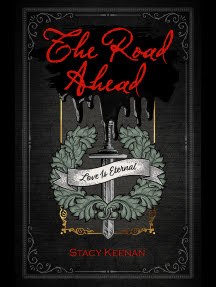
New Book Alert: The Road Ahead Love is Eternal by Stacy Keenan; The One Where They All Became Vampires


 New Book Alert: The Road Ahead Love is Eternal by Stacy Keenan; The One Where They All Became Vampires

By Julie Sara Porter

Bookworm Reviews


Spoilers: In The Road Between , the previous volume of Stacy Keenan's Love is Eternal movie monster memorabilia designer, Abby Wickes meets and falls in love with luthier, Nathaniel Davenport. Nathan is handsome and mysterious and is of course revealed to be a vampire. The duo's romance hits a huge snag when Abby is attacked by a fellow vampire and becomes one herself.

Surprisingly, despite the dark fantasy horror turn that the Road Between takes towards the end, the emphasis of the book is on romantic comedy as though Stacy and Nathan were the traditional meet cute couple with intimate conflicts. One of them just so happens to be a vampire.


While Keenan ups the dark fantasy horror aspects in this volume by giving us more information on vampire lore (or her interpretation of vampire lore) and new frightening characters, humor and characterization is still very present. This is especially prevalent when Abby and Nathan host a Christmas and New Years gathering of Nathan's old friends (and I do mean "old friends"). Abby clicks with Nathan's four friends, Lachlann, Ailith, Karsten, and Ava and becomes accepted into their circle. With six friends and three couples, the gathering seems overall like an extended supernatural episode of Friends ("Could we be any more Goth and vampiric?"). The emphasis in this novel is on friendship and forming an extended family of true companions.


Just like its predecessor, The Road Ahead plays with the idea of combining dark fantasy in an almost comedy situation such as when Ava and Ailith chat with Abby about the men in their lives after Abby and Nathan get engaged. They give sexual advice and what to expect for the future when a couple could stay together literally until the end of time.


There are some interesting revelations about the sextets's lives as vampires and how they adjusted to the changing times. Lachlann remembers his time taking part in the American Revolutionary War and he and Ailith take a trip to Ft. Ticonderoga to honor his fallen comrades. Karsten also shares war stories about his time as a Goth warrior against the Roman Empire. 

The vampire characters also talk about how they adjust to the changing times particularly in their careers. Ava started out making dresses for noblewomen. In the 21st century, she has transformed into a fashion blogger. Nathan still is a luthier and his violins are often specially made for orchestras and musicians. He is also a dedicated musician himself as he reveals when he takes part in a performance of The Nutcracker. Abby wonders how her future as a graphic designer and memorabilia maker will change over the coming centuries.


The darker aspects are also increased in this volume as well. Abby, Nathan, and their friends find themselves fighting the revenants, an undead army created by evil vampires. Later, another creature is revealed. I won't go into many details but let's just say it is familiar to anyone who has ever seen many European cathedrals and castles or were fans of a certain Disney animated dark series from the '90's.

There are also hints that Abby's family has previous involvement with vampires and her Aunt Sarah (who has been out of town since the previous volume) may know more about her niece's condition than she is letting on.


The Road Ahead expands upon the characterization and the dark fantasy and does what a good second volume does. It improves the series and entices the Reader to read the next one.


Sunday, July 26, 2020

New Book Alert: Life is Big by Kiki Denis; Bizarre, Undefinable, Unforgettable Tale About Life, Death, Interconnectivity, and Achieving Immortality


New Book Alert: Life is Big by Kiki Denis; Bizarre, Undefinable, but Unforgettable Tale About Life, Death, Interconnectivity, and Achieving Immortality

By Julie Sara Porter

Bookworm Reviews


PopSugar Reading Challenge: A book with only words on the cover


Spoilers: Kiki Denis' book Life is Big is not an easy book to categorize. It's a fantasy that focuses on life after death. It's a science fiction because it explores scientific and technological achievements and how researchers quantify our everyday existence, even thought and emotion. It's a satire in which many characters' discoveries and theories are so extreme that they become ridiculous. It's a tragedy that discusses death and how connected we are to each other in strange but meaningful ways. It's bizarre, weird, and sometimes confusing. But most of all, Life is Big is a book that is unforgettable and hard to get out of your mind.


Because Life is Big is such a difficult book to categorize, it is also a difficult book to summarize the plot. It's neither long nor unwieldy, but it takes the point of view of 11 characters all with their own stories, pursuits, beliefs, and agendas. It seems to tell 11 different stories, but the chapters reveal that they are somehow connected to each other in different ways.

The first character that we meet is Alma-Jane, AKA A.J. A.J. is a brilliant 11-year-old girl who is the most genetically happiest person on the planet. (Seriously, she took a test for it.) Unfortunately, because of a genetic mutation, she is dying. A.J., her brother, Ayrtron, and friend, Alejandro have declared war on death. The trio use their mighty brain power (and these kids are geniuses so that brain power is mighty), to find a way to beat death or at least give A.J., a few more years of life. A.J. and Ayrtron have created a website which if successful could help change A.J.'s gene color (which is a contributing factor to her illness.). A.J. also is using the brief time that she has left researching other people who have genetic happiness and consoling a woman whose genetic happiness is zero.


Ayrtron also has another project going on. In cyberspace, he assumes the identity of a 42 year old scientist and gives advice to adult geniuses. (They wouldn't listen to advice from a kid, but maybe from another adult, he reasons.) He calculates heartbeats and thoughts in a person's lifetime. During his studies, he communicates with another scientist, Lazslo, who claims to have part of Einstein's brain in a jar. Ayrtron may be a genius kid, but he is still a kid. He recklessly books a flight to London to visit Laszlo and the brain so he can continue his studies.

Their buddy, Alejandro is also studying the behaviors of an iCub, Qining particularly while it interacts with him and A.J. He wants to study "the little brain people", how the mind works. He asks Qning questions such as whether it is alive and how it feels not to have a father.(Qning was created by a female inventor.)

In their own way and through their private studies, the trio are trying to find some meaning in their lives, and answer questions about the overall key to existence. Maybe through their researches, they are not only hoping to save A.J.'s life, but find something lasting, recognition that will outlive them.


The kids aren't the only ones who are doing bizarre scientific research. Ayrtron's online friend, Laszlo, also has his own studies, creating the Potentiality Puzzle, which measures happiness, delight, and fearlessness in a person. He was inspired by his late girlfriend, Sonia who was the smartest and most fearless person that he knew. Sonia had a mentor, Dr. Maurits Harvey, who created genetically modified mice so he could study their thought patterns and emotions. Sonia was on her way to meet Dr. Harvey when she booked a flight on September 11,2001, so her research remained unfinished. The once self-conscious, Laszlo is determined to continue her work, ironically becoming more fearless in his pursuits.


Another of Harvey's protegees, Lila, is also interested in studying happiness. In fact, she created the Overall Happiness test that determined A.J's score. This book contains a great deal of interconnectivity between characters, mostly through their reasearch. Names are dropped that become prominent later. One person's research proves beneficial to another.

The connection between Lila and A.J. is particularly compelling. Lila was given up for adoption by her birth mother, Raduska. A.J. got the highest score on Lila's happiness study and consoles a woman online whose happiness level is zero. The woman whose happiness level is zero is, ta da, Raduska, Lila's birth mother. A.J.'s research not only gives her recognition and meaning, but it also provides answers to Lila and Raduska.

Oh yes, Dr. Harvey's scientific work has continued beyond his death as well. His chapter is told not from his perspective but from that of one of his mice, Mighty-11. Mighty-11 and the other mice, called the Mighties, have created their own society inside Harvey's lab,where the elder mice educate the younger. Yes, a talking mouse narrates one of the chapters. Did I mention this book was bizarre?


This book is almost satirical in describing the various theories that these geniuses create and study. They demonstrate how scientific minds analyze and quantify everything, even that which cannot be necessarily quantified. How do you measure things like Happiness, Contentment, or Love? What is the process in measuring emotions, intuition, things that by definition resist being measured? What would the results prove, that some people are happier than others? How? Many people in real life do study behaviors and there are lists about the "happiest countries" or "happiest states". But, this book takes those studies to the extreme by giving us characters who live to find a solution to everything, even that which cannot be truly measured.

As if the dying happy little girl, the oddball research, the sentient AI, the talking mice, coincidence of a mother and daughter being linked through the dying happy little girl, and Einstein's brain didn't make this book weird, things get even weirder. We meet Albert Einstein (yes that one) who now lives as one of the Great Immortals with his girlfriend, Sabina, the female protagonist of Milan Kundera's novel, The Unbearable Lightness of Being. Yes, a deceased historical figure and a fictional character have shacked up in the cyberspace equivalent of the Afterlife. It's that kind of book. However, as anyone who studied Einstein's life knows how troubled his real-life marriages to his wives, Mileva and Elsa were, it makes sense that he would not want to spend eternity with either of them. He is attracted to Sabina's "lightness," and ever the scientist, he is fascinated by and studies it.


Einstein is also friends with Alfred Butts, the creator of the board game, Scrabble and Pablo Neruda, the poet who spends his time after death flying kites. These three are considered Great Immortals, people who are missed by many because they left something behind from a scientific theory that changed the world, to Nobel Prize winning poetry, to a board game played by millions.

Then there are people like Socrates, no not the philosopher (I am actually surprised he's not), but A.J. and Ayrtron's grandfather and his wife, Sofia. They are concerned Minor Immortals, because they are only remembered by friends and family, the people that they loved.

Meanwhile, Death and his younger brother, Hypnos AKA Obituary Man or O.M., also get their two cents in. They argue over who to push The Button on, i.e. who is going to die. Death still is ticked off with O.M. for making an unauthorized switch by trading one person's life for another. Death who is pretty cranky also has a conversation with the soon to be late, Grandma Sofia that indicates that he doesn't always like his job but rules are rules. It takes a lot of convincing to persuade Death to bend the rules one more time.


Reading about Denis' version of the Afterlife is similar to the one in Thomas Milhorat's Melia in Foreverland, where famous and average people are strutting around doing their own things, forming friendships, pursuing new interests, even researching new things, and seeing how their achievements affected those left behind. They achieve immortality through their legacies that others follow and remember.


Ultimately, that's what Life is Big is about. How one achieves immortality, not by literally and physically living forever. Immortality is achieved by the things a person leaves behind: their research, their art, their philosophies, their ideals, their actions, and of course by their friends and family. It's not how and when they died. It's who they affected emotionally and what their lives meant to others.

This theme is prominent in a phrase that is carried throughout the book, a phrase that inspired the title of the book: "Life is Big. Immortality exists, although it doesn't apply to humans (yet)."

This book shows that in a way immortality does exist for humans.