Wednesday, July 22, 2020

New Book Alert: Umbral Ten (Khaldaia Chronicles) by Douglas Murphy; Outstanding Characters and Dystopian Horror Fill Dark Fantasy


New Book Alert: Umbral Ten (Khaldaia Chronicles) by Douglas Murphy; Outstanding  Characters and Dystopian Horror Fill Dark Fantasy

By Julie Sara Porter

Bookworm Reviews

PopSugar Reading Challenge: A book with a character with vision impairment or enhanced eyesight (Jakob)


Spoilers: What do you get when you combine Epic Fantasy with Dystopian Fiction? You would probably get something like Umbral Ten, the first book in the Khaldaia Chronicles. A book that is firmly set in the epic fantasy milieu but features characters learning to survive and adapt in a chaotic world of corruption, environmental disaster, and fully sanctioned murder and genocide. This book puts the dark in Dark Fantasy and elevates the work into unforgettable horror and terror affecting a cast of outstanding characters.


Before the book officially begins there is a strange prologue in which two characters discuss needing funding and being unable to save the world overnight. For now, it is almost unnecessary and provides a distraction to the rest of the book,u bit also provides hints that there are bigger things going on and that all is not necessarily as it seems.

Once the novel begins proper, we are introduced to six characters: Theodosia AKA Theo, an Elven mage and the wise leader of the group, Ser Lance, a knight dedicated to his religion and code of honor, Rook, a sharp tongued mercenary, Snuffles, Rook's partner who has a dark secret, Sister Tamara, a foul mouthed nun who packs a gun, and Jakob, a meek library assistant with an eidetic memory.


The sextet encounter each other after they are knocked out during a ceremony. When they wake up, they discover that the world around them has changed. Ten years have gone by. The place wherehwhere the ceremony was held is abandoned and lays in ruins. The tree that was once a symbol of life and positive magic is now dead. A once venerated archbishop has turned into a demonic creature, called an Incarnate, who devours human flesh. The only Gods that are worshipped are dark death gods and even small villages have daily human sacrifice rituals. It's pure Hell and our gang of six are right in the middle of it.


So far there isn't much of a single quest beyond mere survival in this pre-Industrial dystopian nightmare but under the circumstances, that's enough. The protagonists have to adjust to a world that they don't recognize and survive when there are many creatures that are out for blood. It's terrifying like someone who was in a coma during the Obama Administration waking up in 2020 and is terrified to experience the Coronavirus pandemic, unidentified Federal troops pulling people off the streets, and a reality show host as President/Dictator. It would be a lot to take in and every day, you would use any ability you had to learn how to survive and to fight in this confusing world.


That is what the six protagonists do and where they shine best. They learn that people that they knew and once respected are now firmly on the side of the human sacrificers. They also work to protect a village of terrified people and a young priest suddenly thrown into the role of village head because of the deaths of those before him. Despite the different temperaments and personalities, the six companions band together to help the villagers and fight off a delegation of dark sorceresses and Incarnates. Their final conflict is actually clever as they outsmart their enemies rather than outfight them.


The six companions are very brilliantly written characters as they interact with each other. They discover some of them, like Snuffles and Jakob, have hidden abilities and others, like Sister Tamara, have alliances that get revealed later. Many of these revelations cause dissension in the group. At one point, they vote whether or not to kill one of the members in case their abilities push them too far.

By far the best character is Jakob. He is almost a stand-in for every fantasy fan who reads the books wishing they were part of the action. He is well read and brilliant, but clearly out of his element among skilled fighters, powerful magic users, and bold warriors. He suffers from an inferiority complex, especially when others describe him as dead weight. He even questions his own self worth, but ultimately shows that he can contribute just as well as any of them.

Umbral Ten is a very dark, but outstanding beginning to a potentially great series. Hopefully, things can only get better for them because I can't see how they can get worse.

Tuesday, July 21, 2020

Weekly Reader: Murder in Montague Falls by Russ Colchamiro, Sawney Hatton, and Patrick Thomas: Graphic Violence and Murder in a Small Town


Weekly Reader: Murder in Montague Falls by Russ Colchamiro, Sawney Hatton, and Patrick Thomas; Graphic Violence, Murder, and Psychological Terror Haunt Three Generations of A Small Town

By Julie Sara Porter

Bookworm Reviews


PopSugar Reading Challenge: A book by an author who has written more than 20 books (Patrick Thomas, 40+ books and over 150 short stories)


Spoilers: Anyone who lives in a small town can tell you that violence and murder can happen there just as well as in any city. Anywhere people live will always have violent arguments, jealous quarrels, drug deals, domestic violence, child abuse, jealousy over possessions, and death. That's probably why small towns make such enticing settings in mysteries. The authors and creators love to poke holes into the whole "nothing can happen here" attitude and reveal these small town residents as often violent, bloodthirsty, arrogant, judgemental, hypocritical, and just as ready to pick up a gun or knife and do away with someone just as much as their urban counterparts.

The three-part novella series, Murder in Montague Falls, explores the concept of murder in a small town. Three authors, Russ Colchamiro, Sawney Hatton, and Patrick Thomas, capture three generations of secrets, gaphic violence, psychological terror, and murder in the small town of Montague Falls.

The stories are unrelated to each other. Two stories are told from the criminals' perspective and one from an amateur detective's.

No characters make appearances between the three works. One references another story in one line, but that's it. Somehow that elevates the stories to an even more sinister level. There is no suggestion that one story influences another or that the characters are destined to take a violent path. Instead it suggests that violent natures exist in anybody and that murder can occur randomly in any time and under any circumstance.

"Red Ink" by Russ Colchamiro- This story captures a youthful excitement in having an overactive imagination and shows what happens when, uh oh, those youthful fantasies turn out to be true.

Isaac Fuller, a young newspaper deliverer, finds some excitement in his tedious part-time job by pretending he's a young secret agent. He imagines that his neighbors are Communist spies and he is on their trail. (It is the '80's after all). Tension mounts between Isaac's reality and fantasy when he sees a dead body inside one of the houses and what appears to be a murderer standing over the body. Suddenly, his once wild imagination may not be so wild after all.

This novella captures that energy that is found in those kid adventures like The Goonies or The Monster Squad where it is up to the kids to face some nasty villains and save their world. It's no coincidence that "Red Ink" is set in the 1980's when those adventure films were popular.

There are also some Hitchcockian moments that hearken back to earlier more adult adventures. There is some suspense when the body is removed, the suspect provides an alibi, and no one believes Isaac's crazy story. Some psychological background is provided with the death of Isaac's baby sister and his determination to protect others. Above all, the most suspenseful passage is when Isaac learns that not only are his spy fantasies real, but he is alone with the murderer. He quickly learns that reality is a lot bloodier and more painful than his dreams.

"The Devil's Delinquents" by Sawney Hatton-If "Red Ink" is a tribute to the kid adventure films of the '80's, then Sawney Hatton's "The Devil's Delinquents" is a tribute to the '90's psychological horror films and the Goth culture which led to a lot of Generation Xers feeling like misfits and outcasts from society.

Three of those misfits are Derry Rhodes, Cal Virgil, and Natalie Glantz. Derry and Cal are in an alternative band that sing songs invoking Satan. However, these two are just pretenders compared to Natalie. She calls herself a dark witch, holds rituals, and claims to have a dead fetus of her child by Satan kept in a jar. When Ntalie gets the duo involved in her ritual, she demands a blood sacrifice....human sacrifice.

I would say that the trio are stereotypes,but that's the point. They are almost comical in their Satanic worship that they study from movies, metal music, and books. It's all based on the appearances that they see. They are basically dumb pathetic idiots playing dress up, but extremely violent idiots make no mistake about that.

They want to solicit Satan's help as a way out of their pathetic sad lives and obtain fame, attractiveness, and acceptance that they don't have at home. They are misfits that will commit even the darkest deeds to get that notice and acceptance.

There is a darkness that was so prevalent in '90's culture of suspicion, horror, and psychological thrill that this novella captures.
In a twist that is almost worthy of Quentin Tarantino, the violence is carried out in a way that is deliberately over the top. In a moment of being careful what one wishes for, one of the characters does get their fame and acceptance in the most horrific way possible.


"A Many Splendid Tthing" by Patrick Thomas-The final novella, "A Many Splendid Thing" is more of a tribute to an older genre than the previous novellas. While the book is described as noir, this story is the one with the strongest claim to the genre. "A Many Splendid Thing" hearkens back to the noir films like Double Indemnity and The Postman Always Rings Twice in which a sexy femme fatale entices a poor shmo to commit murder. Then after the murder happens, the two conspire against each other.

In this variation, the poor shmo is high school senior, Jethro. He doesn't have much luck with the ladies or anyone else for that matter until he captures the interest of Rosa Carmine, his Science teacher, the aforementioned femme fatale. Rosa provides Jethro with some ,ahem, hand's on tutoring before she confesses that she is being abused by her husband and needs one little favor from her boy toy.

While all the stories are great, this is by far the best of the three because of the almost old school glamor that in which it pays tribute. Even setting the story in the 1950's reveals those Old Hollywood sensibilities that "A Many Splendid Thing" acknowledges. While violence is present and bloody, it's not as important as the aftereffects and how it resonates with the characters.

Once the violent act is committed, the novella becomes a tug of war as Jethro and Rosa turn on each other very quickly and vie to outsmart each other. The ending is brilliant and clever as both parties have one final gambit to play, even beyond death.

Murder in Montague Falls is an excellent book that honors different genres in the author's unique styles. The three works reveal the worst and the darkest aspects that exist inside those cute little houses around those slow moving streets. It reminds us that just because everybody seems to know everybody does not necessarily mean that they aren't hiding a knife behind their friendly greeting.

Classics Corner: Lies My Teacher Told Me: Everything Your American History Textbook Got Wrong by James W. Loewen ; Definitive Book on Learning About and Teaching American History In High School


Classics Corner: Lies My Teacher Told Me: Everything Your American History Textbook Got Wrong by James W. Loewen; Definitive Book on Learning and Teaching American History in High School

By Julie Sara Porter

Bookworm Reviews


If you thought, or still think, your high school American History class and textbooks were boring, chances are you are not alone. James W. Loewen discovered his college freshman didn't know any more about history than they did in high school.

To remedy this situation, Loewen studied high school history textbooks such as The Land of Promise, Rise of the American Nation and discovered feel-good blandly written history that focused on jingoism and patriotism and had very little analysis or depth. Loewen's book, Lies My Teacher Told Me: Everything Your American History Textbook Got Wrong aimed to discover those errors and improve on the way American History is taught in schools.

"Textbooks.....keep students in the dark about the nature of history, " Loewen wrote. "History is furious debate informed by evidence and reason. " Loewen's brilliant and insightful book challenges how history textbooks are written and provides the Reader with an alternative approach to history. Even the Readers that may not necessarily agree with the information Loewen provides will appreciate the more thoughtful, critical, and analytical approach to history and receive a deeper understanding of the American past.


Loewen begins by discussing heroification, making heroes and demigods out of historic figures. History students may know of Helen Keller's childhood in which Annie Sullivan taught her to sign and speak, but may be unaware of Keller's adulthood in which she became an ardent Socialist.

Woodrow Wilson is described in textbooks as an idealistic President who helped found the League of Nations, but the books often leave out Wilson's racism in which he segregated the federal government, propositioned the Espionage Act which ordered Americans to report "suspicious activities" like speaking out against WWI, and ordered invasions of various Latin American and island countries.

"Denying students the humanness of Keller and Wilson and others keeps students in intellectual immaturity, "Loewen wrote. "It might be called a Disney version of history: The Hall of Presidents at Disneyland similarly presents our leaders as heroic statesmen not imperfect human beings. "

Loewen put the textbooks to task for how they wrote about many of the standards in American History. Christopher Columbus is not written as an intrepid explorer looking for new trade routes to the Far East. Instead, he is seen by Loewen as an opportunist who saw a country rich with gold to plunder and people to enslave.

Far from being the deus ex machina-kindly Indians who provided the Pilgrims with the first Thanksgiving, instead Massasoit's tribe once thrived in the Massachusetts area and had been all but wiped out by smallpox brought on by white immigrants.

Loewen suggests that the Thanksgiving meal was not just a gesture of friendship but a plea for survival. (And how did the Pilgrims' descendants reward that kindness? Well Loewen writes that they declared war on the local tribes and took their land for themselves.)


Speaking of Native Americans, Loewen fills his Readers on wars the whites have declared on Native Americans such as King Phillip's War in 1675 as well as textbooks' portrayal of Native Americans as either bloodthirsty savages who made unprovoked attacks on whites or childlike innocents who were unaware of how to cultivate their land and needed the White Saviors to guide them.

African-Americans have it bad if not worse according to Loewen. The textbook perspective of the Antebellum South as an idyllic Paradise for masters and slaves and Reconstruction as a time of thieving Northern "carpetbaggers" and naive freed slaves who couldn't lead their farms or states is less out of historic primary sources than out of Gone With The Wind. In actuality Loewen writes that in the post-Civil War days many former slaves were elected into offices and performed in jobs admirably. In fact the real troubles were usually performed by the disgruntled former Confederates who formed the Ku Klux Klan and whose actions would later create Jim Crow Laws and the Myth of the Fallen South.

Loewen also cites the implied racism in how textbooks portray white abolitionists such as John Brown as "being insane"(when he was devoted to the cause of freeing slaves) and Abraham Lincoln as being indifferent to the cause of slavery solely for preserving the Union (when in reality he felt that the Union could never be preserved if half of its population where in chains).

The chapters about racism should be used as a guide for current issues. Loewen's book reveals that unfortunately the Myth of the Fallen South and the inherent racism that goes with it are still with us even now in 2020. If nothing else, the fight over taking down or leaving alone Confederate statues and the support and disagreements towards the Black Lives Matter protests reveal that those historical myths are still with us and are unfortunately very hard to die. Those struggles are still fresh in our minds and despite what some say, people cannot easily "get over them." If they aren't acknowledged or certain minorities are still treated poorly, partly because modern white people used glamorized versions of the Old West or the Antebellum South as justifications for stereotyping and continuing to treat Native Americans and African Americans so horribly.


Besides race, another issue that Lies My Teacher Told Me opens up is social class.This chapter reveals that George Carlin's often repeated quote "They call it the American Dream because you have to be asleep to believe it" is not too far off. As Loewens pointed out, we are surrounded by symbols of class and social structure from the homes we live in, to the clothes we wear, to the brands we buy, to the cars we drive. Unfortunately, social class cuts deeper as while Americans are so fond of repeating the "Land of Opportunity" myth ad nauseum, that they fail to notice and history classes fail to teach that those opportunities are not passed out freely nor are those opportunities necessarily based on merit. Many stumbling blocks to achieve a higher economic standards are often affected by someone's race, nationality, economic standards, or gender.

In schools teachers and textbooks are fond of the rags to riches myths such as Andrew Carnegie, Oprah Winfrey, or Steve Jobs, and fail to account that they are the exceptions. For every Carnegie who became a multimillionaire, there are countless others who work just as hard and barely eke out a living. These exceptions cause snobbishness in people that assume if someone is poor then they must be lazy or are not working hard enough. This rationale is often why many social and welfare programs are cut leading to increased poverty.


Education for example is not the same in every school. Wealthier students have the luxury of new technology, equipments, and pre college courses, while poorer students often have to make do with dated materials and hopes that they can get a scholarship or financial aid. It makes one wonder with the Coronavirus pandemic being such an issue if schools were able to pass out enough technology for students to study at home and whether teachers and students had the proper Internet access to use them. Not to mention, the most recent controversies about schools being forced to open in the fall will see a division between the schools that can afford to follow guidelines and use work and study at home alternatives and those that can't. Will the numbers of poorer students and faculty members catching the virus increase because of the lack of alternate options?


The most eye-opening chapters discuss the impact the Federal Government and Big Business had on modern history.

Loewen says that avoiding the role economics play in United States-International relations interferes with the textbooks' "international good guy approach." The United States's official word on interfering with other foreign countries is to "spread democracy", but Loewen's book shows that Capitalism and economics are the actual driving forces.

One example of this approachs is when International Telephone and Telegraph (ITT) led the U. S government in destabilizing Salvador Allende's Socialist Chilean government. Other examples include Union Carbide in India and United Fruit in Guatemala.

Many of the United States' gave support in other countries, particularly in Central and South American and Middle Eastern countries and not necessarily for the good of the people. Such examples include returning the shah of Iran to his throne in 1953, bringing down the elected government in Guatemala in 1954, attempting to bring down Fidel Castro's government through terror and sabotage and many many more.

These decisions often led to generations of tyranny and dictatorships and citizen led rebellions against not only their leaders but hatred towards the United States, often taking the form of terroris organizations and cartels. Also the deplorable conditions that these countries were left in because of United States interference caused many of these people to leave and emigrate to the United States.

The book predates the recent controversies towards asylum seekers and young immigrant children separated from their families, kept in cages, and many of them found to have disappeared, perhaps in the hands of unscrupulous adults. However, one cannot help but read the chapter and understand the United States's role in creating the unstable governments and low socioeconomic standards that those people are emigrating from.

Equally powerful is the approach or rather non-approach many textbooks have in portraying the Vietnam War. Of the textbooks surveyed, Loewen said most devoted less than 10 pages to Vietnam and only depicts photographs of smiling American soldiers leaving out the most provocative memorable images like the running girl covered in napalm. In fact, Loewen says that most high school teachers leave out the Vietnam War in discussions. (Recalling my own history classes, I only remember discussing the Sixties once and that was a brief end of year talk on the music. )

While the Vietnam War was a recent event for the book, one wonders how other events are portrayed in modern history classes. While certain events like 9/11 probably could not be avoided, do textbooks refer to the U.S. interference, such as the First Gulf War, that led to such animosity in the Middle East and the creation of terrorist groups? Were the controversies about the decision go to war in Iraq and the subsequent War on Terror get a mention or was that one of the things that textbook authors left out? What about the creation of the Patriot Act and the far reaching tactics of the NSA? There are still many gray areas to explore in American History and judging by many of the attitudes that people still hold to revere or criticize the past, unfortunately they are still around.

Loewen also refers to the low prominence that history has in high school curricula of schools not hiring qualified history teachers who can study and challenge the materials. Instead the school sboards settle for social science teachers or coaches. (Anothe recall from my high school history courses: football coaches taught all our social science and history classes.) As well as the lack of experienced historians that edit and critique these books. Many of the books were published to impress the school and education boards and to make as little waves as possible. Unfortunately, as Loewens reminds us history is not like that. It is a subject that is by nature controversial and needs to be taught that way: honestly and accurately.


While the book was first published 25 years ago, it's clear the situation has not yet improved. However Loewen frequently has updated his book and has written similar ones about Historic American Landmarks.(One wonders how he feels about the statues). If blandly written "feel good" history doesn't go away, neither will Loewen and neither should people who study and know the truth behind the American History Myths.

Saturday, July 11, 2020

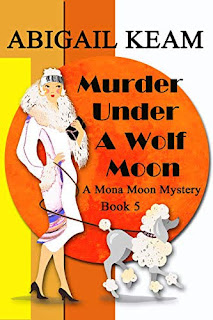
New Book Alert: Murder Under A Wolf Moon (A Mona Moon Mystery Book 5) by Abigail Keam; 1930's Historical Mystery Shines With Fun Feminist Lead


New Book Alert: Murder Under a Wolf Moon (A Mona Moon Mystery Book 5) by Abigail Keam; 1930's Historical Mystery Shines With Fun Feminist Lead

By Julie Sara Porter

Bookworm Reviews


Spoilers: When people ask me where are the novels with strong female leads, I always say "Look no further than murder mysteries especially historical mysteries." The genre is filled with a bevy of strong willed independent women, especially who live in times where they weren't encouraged to be such, facing dead bodies, odious killers, and sometimes a disapproving society to solve the murder, discover the truth, and obtain justice. Such examples include Peter Tremayne's Sister Fidelma, Marilyn Todd's Claudia Seferius, Margaret Frazier's Dame Frevysse, Alissa Cole's Elle Burns, Victoria Thompson's Sarah Brandt, Elizabeth Peters's Amelia Peabody, Tasha Alexander's Lady Emily Ashton, Rhys Bowen's Molly Murphy and Georgie Eugenie, Radha Vatsal's Kitty Weeks, Sujata Massey's Perveen Mistry, Kerry Greenwood's Phrynne Fisher, Rebecca Cantrell's Hannah Vogel, and Alison Montclair's Iris Sparks and Gwendolyn Bainbridge.


Another addition to this illustrious sisterhood is Abigail Keam's Mona Moon. This feisty protagonist is a former cartographer turned businesswoman in 1930's Kentucky. In previous volumes, she inherited her late uncle's fortune, estate, and business. Despite the Great Depression looming, she has become extraordinarily wealthy but that doesn't stop her from being surrounded by suspicion and murder. Many question her actions because she is a transplanted New Yorker and a woman at that. Most men don't think that she is capable of running her uncle's affairs. People also question her friendships and trusted working relationships with black people. In the deep South, that's a no no.

Mona has a strong business sense, an open mindedness, and independent spirit. All of which captures the interest of Lord Robert Farley, an Englishman and spy. The two are engaged and are deeply in love, but Mona is uncertain if she wants to make their relationship permanent.

All of these aspects to her personality make Mona something of an outsider. They also make her empathetic to the problems of other outsiders, especially in the latest volume Murder Under A Wolf Moon. One of whom is Elspeth Neferet Alden Hopper, wife of Cornelius "Connie" Vanderbilt Hopper, a formerly wealthy man fallen on hard times. In fact, Elspeth's money is what returns Connie to social prominence. Elspeth captures Mona's interest because of her fascination with the archaeological career of Elspeth's father, John. She also witnesses Elspeth sobbing in a private moment and little by little gets the details of her unhappy marriage with a verbally abusive controlling husband, racist remarks from others for being half-Egyptian, and death threats that are sent through the mail.

The death threats arouse Mona's curiosity and protective nature. She recruits African-American private investigator, Jellybean Martin to go undercover at the Hopper home and watch out for Elspeth. Jellybean no sooner arrives when Beulah, Elspeth's maid, turns up dead. Jellybean reports the news before disappearing. ("When there's a dead body, the new black man is always the first suspect," he says before Mona helps him evade the racist police and lynch mob that eagerly await him.) It doesn't take much sleuthing before the police trace Jellybean's sudden arrival to Mona's referral and she too ends up a suspect.


The mystery is pretty good as the clues lead to up to inevitable conclusions. Mona receives assistance from her allies such as Jellybean, Mona's maid, Violet, and her personal secretary, Dottie. Some aggravating suspects appear such as Connie's dilletante son, Wally and his horrible sister, Consuelo that further complicate things. Mona also discovers that one of her friends has a closer connection to the Hopper family as initially believed. If the resolution of the murder and the motives behind it are a bit obvious and predictable, at least the means are enough of a twist to throw the Reader off kilter.


What really makes this book as with any good mystery is the lead detective. Mona has a lot of spunk and energy such as when she tells off the local sheriff and boasts that she "just bullied a bully." She also has an extensive knowledge on anything from Egyptian artifacts to civil law which help assist her in her investigation. Many women can relate to her independent spirit and her concerns about choosing a family or career. As much as she loves Robert, she is uncertain whether marriage would cause her to lose her independence. She is a woman not only of her time but any time.

Like her last name, Mona Moon makes her series shine with brilliance. She is one of many great female historical mystery female protagonists that are worth reading about. It is a legacy of which she, and in turn her author, are proud members.


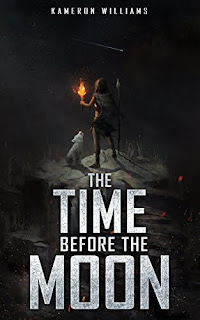
Weekly Reader: The Time Before The Moon by Kameron Williams; Prehistoric Fiction With Very Modern and Timeless Themes


Weekly Reader: The Time Before The Moon by Kameron Williams; Prehistoric Fiction With Very Modern and Timeless Themes

By Julie Sara Porter

Bookworm Reviews


Spoilers: I admit even though I usually love to read historical fiction, I was never fond of reading Prehistoric Fiction. I tried to read Clan of the Cave Bear once and found it boring. I was just never interested in reading about Neanderthal and Cro Magnons. However, I found an exception to this genre in which I was never fond. The Time Before The Moon by Kameron Williams is a prehistoric fiction that has very modern and timeless themes of conformity, group think, rebellion, and freedom.


Omi is a young villager who has come of age. He does his part participating in hunts and fights with local villagers to gain prominence and respect. Everyone does their bit and has a role to play in this village from the Quarrymen to the Hunters, to the Healers. They are ruled by The Seer, an enigmatic elderly leader who receives visions from the gods to declare laws and regulations for the village. He is surrounded by beautiful young ladies, his Priestesses who interpret his laws. If anyone disobeys they are threatened with a cleansing.


Omi acts like an obedient villager mostly. He takes part in ceremonial rites and doesn't mind much when the Seer requests sacrifices. Omi's rebellions are mostly minor. He gets into fights with the Seer's bullying grandson. He als gets high off of the joyplant with his potential love interest, Agatha. The Seer forbids ingestion of the plant as well as pairings that he did not arrange himself.


Most of Omi's rebellions are slights and harmless until he witnesses some things that cause him to question the Seer and his motives. First, he sees the Seer practically rape one of his Priestesses and realizes what their real purpose is: to service the Seer's desires. Second, even though he is in love with Agatha, The Seer arranges her marriage to his grandson to give him more power. The final straw is when Omi sees what a cleansing entails: a ritual in which the guilty party is blinded and ostracized from the village. All of these events opens Omi's eyes to the Seer's cruel and despotic nature and he runs from the Seer's autocratic ways.


The book carries a prominent theme of rebellion against conformity. When Omi leaves the village behind, he leaves the aunt and uncle who raised him, the woman he loves, and his closest friends some who follow the Seer's commands to find him. The price of his rebellion is complete ostracism with only a Wolf pup, called originally Pup, as a companion. In this distant time when community meant survival and the elements and animal life are so uncertain that being outside could kill you. When only a community can protect you, that is a huge price and it is one that Omi is willing to bear. That is how he much he distrusts the Seer and knows that he has become a dictator.


Freedom becomes important to Omi and his leaving causes a ripple that grows larger within the community as other villagers are clued into the Seer's tyranny and begin to abandon the village. Just like in modern times, one person questioning the system creates a chain of others who begin to see the errors as well. It isn't before too long that Omi has his own community of outcasts.


There is also a theme of exhibiting true leadership. Omi must ensure that his village is not run like the old one nor that he becomes like the Seer. He wants his village to carry on the ideas of freedom and live beyond the rules set by the Seer. He strives to make his village a more democratic peaceful place and to show mercy and charity, even in one particular surprisingly heartwarming moment, to his enemies.


The Time Before The Moon may take place in prehistory, but we can see these themes echo throughout not only history but in modern times as well.

New Book Alert: VanWest: The Past (Book One of The VanWest Series) by Kenneth Thomas; Involved, But Action Packed and Suspenseful Start of a Science Fiction Series


New Book Alert: VanWest: The Past (Book One of the VanWest Series) by Kenneth Thomas; Involved, But Action Packed and Suspenseful Start Of A Science Fiction Series

By Julie Sara Porter

Bookworm Reviews


Spoilers: The first couple of chapters of Kenneth Thomas's VanWest The Past are a stark difference than the rest of the book. It begins like a video game put to words. VanWest, the protagonist, participates in a series of tournaments that seems to be somewhere between Halo and Harry Potter's Triwizard Tournament. There is action and propaganda as VanWest and his fellow Enforcers are held up as the ultimate athletes. They go through various games with such delightful names as "Pythea's Labyrinth" and "Fires of Vesta," to achieve victory. The Enforcers use their strength, teamwork, and intelligence to get through the various levels. The Reader expects to see a Health Bar or gold coins representing extra points over the Soldier's heads. These chapters are tense and nail-biting, but not particularly interesting or character driven.


Just when the Reader thinks this book is going to continue to be all action and little plot, the book takes a 360 degree turn and it becomes apparent that all that happened before was intended propaganda. We, the Readers, were meant to see VanWest as the government sees him: as the ultimate hero, warrior, the one who fills their ideals of conquest and control. We are meant to not think too much about VanWest and what he actually stands for.

The introduction hints that Earth is now controlled by oligarchs who reside in Antartica (because it is the only decent piece of land that hasn't been completely destroyed by radiation and pollution). While we have an inkling that the government is corrupt, VanWest doesn't. He is supposed to be their model Superman, until the games are over.


Since time travel is possible, VanWest is given an important assignment. A rebel group the Natural Earth Alliance, wants to break the stronghold that the Universal Council has over the 29th century. The NEA wants to restore Earth to the late 20th century status so they have gone back in time to prevent the Universal Council from it's eventual conquest. 
The NEA's first stop is 1961 to interfere with the formation of CERN which is the first link in a long chain that resulted in the formation of space travel, the creation of the Universal Council, and the destruction of Earth. VanWest has to go back in time to infiltrate and stop the NEA. 

It is on this mission that VanWest and the Reader realizes that he is more than a propaganda tool. He initially sees the NEA members as names on a list with psuedonyms like "Mad Newton", "The Seductress," "The Priestess," and others.
 After his assignment, he befriends Dr. Von Helmann, the so-called "Mad Newton" and falls in love with Von Helmann's daughter, Iris. 
When he gains acceptance by the Van Helmann family and ends up being on the same side of the NEA, he sees them as more than names on a list. He sees them as people fighting for a just cause. We also see VanWest in a better light. He is more than a thoughtless blunt instrument. He is a man struggling to be himself and fight for his individuality in a government that forbids it. His greatest moment is when he openly defies the Council in public and on screen, the opposite of who he was before.


The book starts out virtually plotless but then becomes more involved. Betrayals pile on top of each other,  further confusing allegiances so that no one is sure who to trust. Suspense is built as characters try to outdo each other in cunning, subterfuge, and with a few fistfights and shootings.
VanWest The Past is the beginning of what hopefully will be a fascinating series of a rebel fighting against his own government and in the process finding himself.

Wednesday, July 8, 2020

Weekly Reader: I Love You To Pieces by Lori Flynn; Mystery and Mental Health Drama Does Not Mix Well


Weekly Reader: I Love You to Pieces by Lori Flynn; Mystery and Mental Health Drama Does Not Mix Well

By Julie Sara Porter

Bookworm Reviews


Spoilers: It's ironic that Lori Flynn's novel, I Love You to Pieces is about a protagonist with Dissociative Identity Disorder. Because the lead character isn't the only one who is confused about her identity. The tone of the book is uncertain whether it wants to be a murder mystery with an obvious twist or a dramatic story about a young woman's illness being used as a coping mechanism from an abused childhood. The two shifting tones show that the DID diagnosis is so paramount and obvious that it should have served as the main plot point instead of spending so much time trying to hide the secret from the Reader when they know what the secret is.


Olivia Harding is the wealthy Floridian daughter of a loving father and an abusive mother. Her father Alexander adores her but he dies in a plane crash when she is nine. Her mother, Elizabeth, is a cruel horrible woman. She kills Olivia's lovebirds and cat out of malicious spite then breaks her arm in a fit of rage. After her father's death, Olivia moves in with Catherine, her loving grandmother, and gets some semblance of peace. However, she suffers from PTSD and has blackouts of events that she can't remember.

There is a haunting moment when Olivia is trapped by Elizabeth inside a storage room. Catherine receives a phone call from a small but threatening voice saying that "Elizabitch" has locked Olivia up and could she get her out. This passage foreshadows how Olivia's illness served as a protector against her mother, but then became a hindrance for her living a full life.


Olivia grows into a loving young woman who decides to create fundraisers for her family's non-profit shelter for rescue dogs. Catherine is still a loving feisty presence in her life. She has two female friends, Jill and Melody, who also have personal and psychological problems. She befriends and becomes romantically involved with Ben, her family's young attorney. She seems to be adjusting to life.

Unfortunately, she still has her psychological disorders that she doesn't want anyone to know about. She still has blackouts and can't remember certain things like going through a procedure to get an IUD inserted inside her. Nor can she explain the expensive clothes or the marks on her body that suggests sexual acts in which Olivia does not remember taking part.

Then there are the chapters which are told from the point of view of Delia, a wild foul mouthed escort to wealthy visitors to Florida. She does her bit but constantly wants to "be free" and needs to get to her place by a certain time. It becomes evident that Delia and Olivia are the same person and that Olivia has DID with Delia serving as an alternate personality.


If the book had introduced us to Olivia's DID from the beginning, it would function well as a general fiction book about a woman struggling with an illness that she barely understands partly because of her blackouts and the confusion of the people around her. She could have seen a psychiatrist through Catherine and been diagnosed early on. We could have had many chapters of her trying to reconcile her personalities with herself and her life. The book could have chronicled her recovery and reconciling herself with her other personalities as well as confronting Elizabeth with what she caused.


But no what could be a realistic story of living with Dissociative Identity Disorder becomes a hoary murder mystery/psychological thriller, as theatrical as Shutter Island by using DID as a plot twist instead of an illness. There is the usual subplot of Delia committing violence and Olivia being accused of it. The confusion among friends and other characters when she is suddenly not herself when it is clear to the Reader why she is not herself. The mystery is not even that convincing since we know who did it.

Because the revelation of her illness occurs halfway through the book, Olivia's recovery is glossed over into the final couple of chapters. We are given a late third personality to learn about before that happens. We are given very little insight of what it is like to live with such an illness when it is used as merely a plot point instead of an actual illness that many people struggle with in real life.


I Love You to Pieces could be a better book, but unfortunately the pieces don't fit together to make a complete whole.