Showing posts with label Neil Gaiman. Show all posts
Saturday, May 4, 2019
Classics Corner: Good Omens: The Nice and Accurate Prophecies of Agnes Nutter by Terry Pratchett and Neil Gaiman; A Brilliant Pythonesque Send Up About Biblical Prophecy and The End of the World
By Julie Sara Porter
Bookworm Reviews
Spoilers: I grew up in a Christian household so I had a very tense childhood filled with nightmares and fear about Satan, Hell, the Rapture, and the Book of Revelation. Those thoughts made me uncomfortable and I dreaded going to church. Many times I worried whether I was “saved” enough and lost a lot of sleep over the years. As I grew older and became a Wiccan, I realized that I didn't agree with that idea of spirituality. If a religion has to guilt trip or scare me into joining, then in my mind, it was not a religion worth having.
I think that's why Good Omens resonates so well with me. It takes many of those Book of Revelation fears and made a comedy out of them. It is sort of like what would happen if The Monty Python guys wrote The Omen or The Left Behind series. Terry Pratchett, late author of the Discworld series and Neil Gaiman, before he became the literary giant we know today, took those concepts found in Biblical prophecy like the Anti-Christ, the End Times, Armageddon and the rest and made them better and funnier.
This send up of Biblical prophecy begins with Crowley, a demon who did not fall from Heaven but just “fell in with a wrong crowd” and Aziraphale, an angel who wants to follow God's ineffable plan no matter how arbitrary it seems. The duo have been on Earth longer than they have been in Heaven or Hell. They have even worked out an Arrangement (in capital letters) where Crawley tempts one person while Aziraphale guides another. Crowley takes one region in England while Aziraphale works another. They don't interfere in each other's transactions, their Bosses get their souls, and everything is hunky dory. That is until Crowley's Hellacious colleagues, Hastur and Ligur show him a certain screaming baby delivered up from the bounds of Hell and he is ordered to take him to the hospital in Tadfield. The baby is the Antichrist and the End definitely is nigh.
That's a bummer for Aziraphale and Crowley because they kind of like Earth. Crowley would miss his barely lived in penthouse flat, his well kept plants, and his beloved Bentley with car phone and tape deck which turns every cassette into the Best of Queen if it has been in the deck longer than two weeks. (This book was published in 1990, one year before Freddie Mercury's death and Queen received a second life thanks to the rerelease of Bohemian Rhapsody). Aziraphale would miss his used bookshop and old antique books, the sweet little cafes where everyone knows his name, and the great classical composers. (Heaven only has two: Elgar and Liszt).
Aziraphale and Crowley make for a memorable duo and their moments together are a delight as the two bicker, agree, and talk like an old married couple leaving many Readers (such as myself) to conclude that maybe they are a couple. Crowley's cynical barbs match up with Aziraphale's idealistic naive quips making them more of a comedy team instead of beings on opposite sides of the war between God and Satan.
One of the highlights is an argument in which Crowley tries to convince Aziraphale to thwart Armageddon by reminding him that he still hasn't seen the end of Sound of Music. (“And you'll enjoy it, you really will.”) Because they will miss Earth and each other, the duo decide to take matters into their own hands or rather into their own wings and cloven hooves. They decide to watch over the baby and steer him towards good or evil.
Great idea but oh wait the baby was delivered to the wrong couple. They've been watching the wrong one and the real Anti-Christ has grown up without any angelic or demonic influence.
Besides Aziraphale and Crowley, Good Omens has some other great situations and characters. There is Agnes Nutter, a 17th century witch whose prophecies are spot on much to detriment of her descendant, Anathema Device and her new boyfriend, Newton Pulcifer who happens to be the descendant of the Witch Hunter who executed Agnes.
There are the Horse Persons of the Apocalypse now taking advantage of modern era. War is an arms dealer turned war correspondent. Famine writes diet books which promote not eating and also creates a series of frozen foods with no nutritional or edible value whatsoever. Pestilence is out for the count because of penicillin and antibiotics, so he is replaced by Pollution who works on various oil tankers that mysteriously explode. Death is well, Death.
The Four Horse Persons even ditch their horses in favor of motorcycles and also get new members to their gang with names like “Things That Don't Work Properly After You Give Them a Good Thumping” and “Really Cool People.”
Then there is the Anti-Christ, Adam Young who is a cross between Tom Sawyer, Booth Tarkington's Penrod, and Anthony Freemont from the Twilight Zone episode “It's a Good Life.” He is forever getting into mischief with his friends Pepper, Wensleydale, and Brian and his dog, Dog, and doing typical kid things like playing “The British Inquisition” and “Charles Fort and the Tibetans Vs. The Aliens” based on things he read. He is able to make things happen such as causing aliens to appear and Atlantis to rise from the oceans but is unaware of the reason why until it is almost too late. (In one of the few dramatic moments, Adam understands the full scope of his powers and has to appeal to his friends to stop him.)
There are great moments sprinkled throughout the book such as the Bugger Alle This Bible which has a few extra verses transcribed by a clearly irritated typesetter. There is an order of Satanic nuns whose job it is to deliver the Antichrist only to make a mess of things when they give him to the Youngs and who one member turns their temple into a meeting place for businesspeople to work out their aggressions by playing paintball.
There is a great moment where Aziraphale crashes a religious telecast and gives some American Bible Thumpers what for about the Rapture. (“Who has time to go round picking people out and popping them up in the air to sneer at the people dying of radiation sickness on the patched and burning Earth below them?”)
Of course there is the inevitable final showdown between God, the Devil, and Our Heroes in which they try to convince them that the World doesn't have to end.
Good Omens is a great book especially if you are familiar with the Bible and it's End Times prophecies. But even those who aren't, will love the wordplay, dialogue, farcical situations, and story in which Good and Evil don't fight so much as perform a stand up comedy act.
Saturday, October 28, 2017
20 Favorite Booooks For Halloween
20 Favorite Booooks for Halloween
By Julie Sara Porter Bookworm
It's no secret that Halloween is my favorite holiday. I love the costumes, the mystery, the fun of watching my favorite horror episodes of Twilight Zone and Outer Limits maybe a documentary about the supernatural or two and movies like Poltergeist, Carrie, Rosemary's Baby, The Exorcist Silence of the Lambs, and Stephen King's Rose Red. Of course my favorite tradition is to read my favorite supernatural, horror, and dark fantasy books and fill my thoughts with witches, ghosts,vampires, werewolves and other things that go bump in the night.
So I have made this list of 20 of my favorite books to be read for Halloween. So read,. enjoy, and I'll see you in your nightmares! MWAHAHAA! 👹
20. Scary Stories To Tell in The Dark by Alvin Schwartz -Since Every kid who grew up in the 80's-'90's remember this trilogy of creepy 1-3 page short stories. Schwartz collected a series of well-known urban legends, folk stories, and campfire tales and put them in this spine tingling collection. Even though the stories have been told and retold countless times but Schwartz's brief retelling combined with Stephen Gamell's graphic illustrations make these stories as great and creepy as the day when we first heard them.
All of the greats are there including "The Hook" ( the couple who are stalked by a killer with a hook for a hand), "The Babysitter" (a babysitter gets phone calls from inside the client's house), and "High Beams" (person follows women to protect her from a killer in the backseat), and "The Hand" (a group of students nurses play joke on another one by scaring her with a corpses' hand.) These are the famous Urban Legend stories that happened to friends of friends.
By far the most interesting stories are the "Boo" stories which require audience participation in which the story teller scares the audience by screaming "Boo" at the end of the story. Such as The Golden Arm (in which a woman murdered by her greedy husband and keeps asking for the arm.) These Boo stories make for interesting Halloween games reflecting the common fear of being startled.
Reflecting our fear is what these stories do best. Fear of ghosts, vengeful spirits, serial killers, the unknown. Each story represents and give voice to our basic fears. Gamell's illustrations also add to the fear filling the pages with sinister images like skeletal ghost girls or creatures with cat's eyes.
The footnotes also add to the book's ambiance as well. Sometimes they give variations to the tales ("The Drum" features two naughty girls with different names and different gifts they want but the end result is always the same- the put-upon mother disappears leaving a demon in her place). Sometimes they add further information to a story making it more interesting ("The Hotel Room" in which a mother and daughter stay in a hotel where the mother disappears and no one but the daughter remember her. The footnotes state that the mother died of yellow fever and the hotel disposed of her body.)
Sometimes our fears require a visual aid and Alvin Schwartz's series does just that.
19. Frankenstein by Mary Shelley (1818)
Frankenstein blurs the line between human and monster by making us question what it means to be human in the first place.
Dr. Victor Frankenstein starts out as a wealthy high-spirited son of a noble Swiss family. He falls in love with his parents' ward, Elizabeth and plans on attending university to be a doctor. While at university, Frankenstein becomes obsessed with bringing the dead to life.
Many movies have recounted Victor Frankenstein's scientific process so often that it became cliched with the thunder and lightning, hunchback servant Ygor, and the self-destroying castle lever. It's hard to strip down the image to Shelly's original intent. But Shelley captured that original horror perfectly of Frankenstein robbing graves and stealing cadavers to piece together his monster's body. He puts all of his passion and obsession into creating the monster that his health declines to the point of near death. He avoids friends and family isolating himself caring only for building his monster. His obsession becomes monstrous as he allows it devour his entire life.
While Frankenstein obsession becomes monstrous, the Monster slowly learns about humanity beginning with Frankenstein running away from the creature in terror when he awakes. Feeling abandoned and alone, the Monster wanders the Earth looking for his creator and wanting to know why he was created. People run from him and he learns about human prejudice. He stays outside the home of a family and learns to read and reason. He tries to befriend the family's blind grandfather but they turn away from him. In his journeys, The Monster experiences only the dark side of humanity: fear, anger, hatred and uses the new-found human knowledge to go after the one he blames for this lesson: Victor Frankenstein.
Frankenstein and his monster's paths cross as they deprive each other of friends and family leaving them isolated. The Monster kills Frankenstein's younger brother then frames the housekeeper's daughter for the crime. He orders Frankenstein to make him a bride and Frankenstein destroys it fearful of what children they could create. The Monster stalks Frankenstein, saying "I will see you on your wedding night. " He then murders Elizabeth, Frankenstein's newly wedded wife.
Depriving each other of love and family, both Frankenstein and the Monster become isolated monsters so it is fitting that the two end up in the North Pole for their final confrontation. They are deprived of anyone or anything else but each other becoming their own monsters.
18. Dr. Jekyll and Mr. Hyde by Robert Louis Stevenson (1886)-Frankenstein explores the duality of monster and human between two characters. Robert Louis Stevenson went Mary Shelley one better. He wrote of the division between human and monster in one person.
Dr. Jekyll and Mr. Hyde is somewhat hampered by the writing style of a murder mystery in which everyone is aware of the ending. I will mostly focus on the final section in which Dr. Henry Jekyll recounts how he became Edward Hyde and the theme of good and evil inside one person.
Dr. Henry Jekyll is obsessed with the idea that people are mixtures of good and evil. Can someone be a good person healing the sick during the day and be a bad person that frequent brothels at night? What if those two sided split into two individuals?
This theory inspires Jekyll to take on a new persona, Mr. Edward Hyde. He creates a drug that allows Mr. Hyde to come out evil and devoid of any ethics or laws. The type of character who would walk over a small child for fun. Many of the people around Hyde, such as Jekyll's co-narrator Utterson describe an instant feeling of evil when they look at Hyde.
Jekyll believes that as long as Hyde is inside his Soho Flat, drinking, soliciting prostitutes, then Jekyll is free to go about treating the sick and becoming a pillar of the community. He doesn't account for his own addiction for becoming Hyde by constantly taking the drug then forgetting whether he took it or not. He also fails to account for Hyde's ever growing rage whenever he comes out especially when he murders a noble man. Or that Hyde is slowly becoming the more dominating personality taking over Jekyll whether Jekyll takes the drug or not.
Dr. Jekyll and Mr. Hyde was ahead of it's time in many ways. Besides warning of the dangers of drug addiction, it is also a foreshadowing of Dissociative Identity Disorder AKA Multiple Personality Disorder.
Each is aware of the other personality but seeks control over the body. There are many moments when Jekyll turns into Hyde even without the drug and Hyde defaces Jekyll's things without Jekyll knowing. Jekyll thinks of Hyde as a separate personality and in the end swears that whatever punishment comes from the crime will be given solely to Hyde. Sometimes the worst monsters are often the ones inside.
17. "The Legend of Sleepy Hollow" by Washington Irving (1798)- One of the most popular Halloween tales ever. How could it not be on this list? Plus it has a terrific visual aid provided by the Walt Disney animated short. Ignore any other two hour film version particularly the Tim Burton directed version starring Johnny Depp. They prove the futility of stretching a short story that is less than 20 pages to a 2 hour movie. (Not to mention the irritation of a good looking actor like Depp in playing a homely character like Ichabod Crane.)
A good horror story has to have a good protagonist. That's why Irving's story stands out. Ichabod Crane himself is a memorable character. Whether he is teaching school, whipping the obstreperous boys and being kind to the younger timid children. Whether he is eating like an anaconda, leading a choir, or reading the works of witch-hunting pastor,Cotton Mather (which Irving assures us "he most certainly believed."). Whether he is trying to woo the lovely Katrina Van Tassel from the bullying Brom Bones, Ichabod never fails to make an impression on the Reader.
Of course the chase from the Headless Horseman is the highlight of this story. It starts out suspenseful with the dark setting and forest animal sounds building up the tension. Then the sinister Horseman appears as if it were a creature from Hell. With it's demonic laugh, it chases Ichabod to the bridge where it tosses it's pumpkin head and.... that's the last we see of Ichabod in this world maybe. While there is some possibility even from Irving that the Horseman is a trick from Brom. If it's a trick it's a darn good and memorably frightening one.
16. Dracula by Bram Stoker (1897)- Modern pop culture often portrays vampires as sexy brooding Byronic heroes. While Twilight helped saturate the market, that's the common portrayal of vampires including the 1992 film version of Dracula starring Gary Oldman. But if you go to the original source, the book Dracula is less sexy more predatory, less brooding and more brutal, less anti-hero and more rapist.
Jonathan Harker is invited to Transylvania to handle the properties of one Count Dracula. The journey already has suspense with the fierce wolves, locals giving vague warnings and evil eyes, and the creepy looking carriage driver with long claws.
Then there's Dracula, an older withered nobleman with a taste for blood and three strange ladies who wouldn't mind taking a bite out of their new visitor. It doesn't take long for Jonathan to realize his host is a vampire and that Jonathan is a prisoner.
Meanwhile back in England, Jonathan's sweet fiancee, Mina Murray is patiently waiting for her intended while her flirtatious friend, Lucy Westenra is preparing for her wedding to Arthur Holden, a dying Lord's son. Unfortunately there are some weird things happening.
One of Dr. Jack Seward's patients Renfield develops a taste for animals and talks about his approaching master. Lucy begins sleep walking and having nightmares. Wild animals are running amok and a ship lands on England's shore with a dead crew. Could that weird coffin-sized crate from Transylvania have anything to do with it?
What Stoker wrote and many filmmakers fail to realize is that Dracula is not meant to be sexy and misunderstood, he is a violator whose very presence brings fear and insanity to those around him. When he attacks Lucy and Mina, there is no releasing of repressed sexuality or freeing them from Victorian constraints like many believe. Oh his attacks are sexual in nature it's true. But they sap the women of their energy and consumes the life out of them. Dracula's attacks are more comparable to a rapist or a pedophile one who leaves his victims traumatized rather than rejuvenated.
While Lucy and nearly Mina are almost destroyed by the vampire's attacks, they retain elements of humanity. Lucy is protected by those who love her and in the most moving scene, her life is ended by Arthur, her husband, who saves her from a bloodthirsty immortal life. While Mina has been bitten by Dracula and is connected to him telepathically, she is able to gather the information from Arthur, Jonathan and the others to create a precise account of their fights against Dracula. Mina is a valuable member of the Hunting Dracula Team.
Through their encounters with the men in their lives, Mina and Lucy are able to remind the Reader that they are still capable of being loved and accepted. Not just mindless cardboard servants of a vampire, instead good characters in their own right.
These modern interpretations of Dracula while intriguing take away who he was, who Stoker intended him to be: a creature who deprived others of life, who gets power from violating others, in other words, a monster.
15. Carrie by Stephen King (1974)- Some people create their own monsters inside, other monsters are created by the people around them. Carrie White is part of the latter category and the reason she so fascinates many is that she is so understandable to many. We may never know a Dracula, but we may know, were, or still are a Carrie: a put-up on bullied abused misfit who one day gets pushed too far.
Stephen King himself knew two such Carries and in both of them he captured aspects of his female protagonist. Girl#1: An overweight girl that King knew in high school was relentlessly bullied by other girls. This girl later committed suicide.
She inspired the passages where Carrie is relentlessly mocked by other girls after she gets her first period and the girls taunt and throw tampons at her. These passages fly in the face of the idea many have that only boys bully. Girls bully too and sometimes their bullying lasts longer and leaves much bigger scars.
Girl#2: The second girl in King's life who inspired the creation of Carrie was a young woman who King did odd jobs for at her house. The young woman had a very religious mother and a home with a lot of religious iconography including a very large cross. The young woman died during an epileptic seizure.
King used this woman's fervent religious background as a springboard for Carrie's relationship with her fanatic mother. Margaret White is filled with self-righteousness and sees sin all around her including in her daughter. When Carrie is sent home after the girls bully her, her mother beats and locks her in a closet.
Carrie finds no protection at school or at home so she continues to keep her rage inside her as it emerged in the form of telekinesis of lights breaking or people falling down, minor things until the night of the Prom. A terrible prank by Mean Girl, Chris Hargenson causes Carrie's telekinetic powers to lose control and she finally unleashes her pent-up fury on the people who did this to her.
In King's novel, the plot is treated like an actual event as the linear plot is combined with interviews, book excerpts, and first person accounts that question different character behavior and motives. (Did Tommy Ross and Sue Snell purposely take part in the pranking on Carrie by asking her to the prom or were they just trying to help her because they were sorry for her?)
While reportedly King himself did this to distance himself from such an intimate story about a teenage girl's developing maturity (also why he said it was never one of his favorite's of his books.), his pseudo-journalistic style of telling Carrie's holds everyone accountable for Carrie's behavior. It's easy to say Carrie was a monster because she had telekinesis and that she could have chosen not to attack. It's a lot harder to find the monsters in the bullies at school, the abuse of her mother, and a school administration and town that let them do it.
14. The Witches of Eastwick by John Updike (1984)-Unlike many of the other books on this list, The Witches of Eastwick stands out as a darkly comic at times sarcastic book of encounters with horror and the supernatural. Updike's characters aren't good or even close to it but they are fun reveling in their wickedness and dark desires especially when no one knows if the Devil is in control or his servants.
Alexandra Spofford, Jane Smart, and Sukie Rougemont are three divorced women living a bored and listless existence in small town Eastwick, Rhode Island. Their careers are stagnant: Sukie writes gossip for the local paper, Alexandra sculpts little female figures called bubbies who get sold in the local gift shop, and Jane is a cellist who conducts the church choirs. They are bored with their mob of spoiled bratty kids and while they each have a lover, the men in their lives are priggish, hypocritical, dumb and all are married.
The only thing that the trio lives for are their Thursday night get-togethers where the women cast spells such as creating thunderstorms, seeing auras, or astral projection. The women take these abilities for granted. As far as they are concerned, they've always had them and no explanation is needed for how they acquired them. The nights when they can share these abilities are all that they can enjoy until Daryl Van Horne arrives.
Daryl is a charming brutish wealthy inventor from New York, all chauvinism and ego. He should be the type of man most women would be repelled by (and this Reader often is) but our three protagonists can't help themselves. He invites them to his Mansion and his hot tub to have sex with him. He makes no promises for the future or pledges undying love. He only promises them a good time and do they ever get it.
To these women, Daryl represents all of their inner longings and desires that they had buried so long underneath marriage, children, and small town life. Each woman becomes re-energized and rejuvenated through their time with Daryl and pursue stronger artistic influences.
Jane aspires to compose her own musical pieces. Sukie begins to write a novel and becomes Editor of her paper. Alexandra creates larger sculptures in the style of Nikki de Sainte Phalle's larger monuments. In opening their sexuality, Daryl allows these women newer avenues to explore their creativity on a wider scale.
However along with the release of energy and creativity comes a release of dark magic as the trio's former lovers either end up dead or leave town. In one particular gruesome chapter, the three women curse the town busybody by having her vomit needles, feathers, and other things until her husband (and one of Sukie's former lovers) kills her and himself.
While the three manifest varying degrees of guilt over the incident, the real results of their curse comes in the form of the busybody and her husband's two children, Chris and Jenny. Feeling a latent sense of remorse over her involvement in Jenny's parents' death, Sukie invites her to Daryl's mansion where she becomes a member of the circle and Daryl's new lover.
The women are horrified and jealous when Daryl abandons them to marry Jenny and enters a life of celibacy and stability. They unleash all of that passion, that fury, that dark magic that he taught them to turn back around on him and his new bride proving that they have out mastered their instructor in terms of dark magic. Instead of taking their rage out on Daryl who taught them the darkness, they take it out on Jenny whom they blame for luring Daryl from that darkness.
While the three leads are witches, Daryl is not a literal devil as Jack Nicholson portrayed him in the 1987 hit film. He is a figurative devil exploring the three women's dark sides and revelling in it. While Alexandra, Jane, and Sukie believe that their worst enemy in Jenny has been defeated, after they learn of Daryl's final whereabouts, they wonder whether he was the real manipulator getting them to exactly what he wanted them to do. Who is the player and who is the played, Satan or those who learn from him?
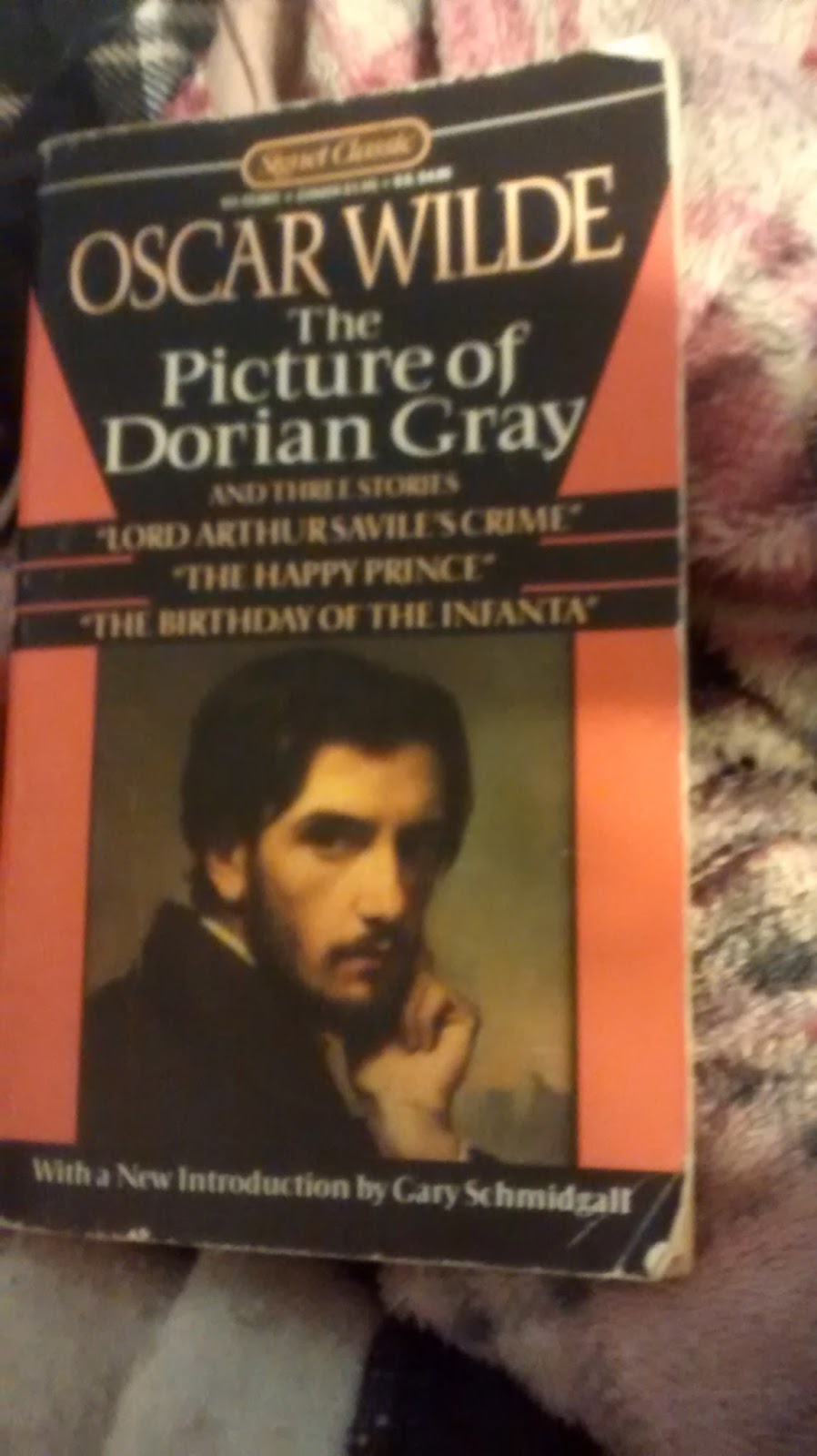
13. The Picture of Dorian Gray by Oscar Wilde (1890)- Oscar Wilde's literary masterpieces explored the fear of receiving our innermost desire and the results from it.
Like the legendary figure, Johann Faust, Dorian Gray, a young noble dilettante makes a hasty wish that proves to be self-destructive. After seeing the portrait his friend (and sometimes lover) Basil Halliward painted of himself, Dorian is filled with an intense longing.
Despairing that one day his youth and good looks will end and the portrait would never change, Dorian wishes that it would be the other way around that he would stay forever young and the painting would grow old. His wish is granted and Dorian spends his eternal youth doing good works for others, marries a beautiful woman, and they live forever in a lovely palace by the sea.
Just kidding. Actually, Dorian becomes cruel, vain, greedy and self-absorbed. He falls in love with an actress, and when she puts on a purposely bad performance on stage so she could leave her mother and theatre manager and marry Dorian, Dorian rejects her. The rejection and the self-sabotage of her career lead to Sybil's suicide. After her death, Dorian notices the portrait now has a cruel mouth and lines.
Dorian goes from one hateful thing to another: discarding and disgracing both male and female lovers, selling and stealing beautiful clothing and jewelry so he can adorn himself, and various other uses that bring out his lusts and desires. All throughout his misdeeds, Dorian's portrait ages.
In this variation of Faust, while Dorian's cynical and witty friend, Lord Henry Wotton suggests Mephistopheles in that he bears the initial thought of Dorian aging, Dorian proves more than adequate of being his own Demon. Dorian is extremely self-centered throughout. When he commits murder, it is because of fear of being exposed. Even at the end when Dorian is filled with self-pity and remorse and wants to destroy the portrait, it is because he doesn't want the stain of the ever-changing portrait to reveal who he really is. Of course in true Faustian style, his attempts at destroying the portrait only succeeds in destroying himself.
12. Coraline by Neil Gaiman (2002)-
Coraline's message is an old one (Kids:Learn to appreciate your parents. ). But it is wrapped around a truly original and truly spooky story about a young girl who takes a scary path to learn it.
Young budding explorer, Coraline Jones (Author Neil Gaiman says that he originally typed the protagonist's name as Caroline, but he made an error in spelling. Instead of correcting it, he left the name as it was and was even more thrilled to discover it was once an actual name. ) is bored with her family. Her father experiments with "recipes" instead of making food she likes. Her mother buys her sensible clothing but nothing outlandish to make her stand out . Above all, they hardly spend time with her often leaving her to explore the flat and its eccentric occupants (including two women who once were well-known stage performers and an elderly man who is training "a mouse orchestra".) herself.
All that changes when Coraline finds a key to the drawing room. Once she goes inside the drawing room, she sees an apartment much like her own and parents almost like hers except that they want to spoil her by making her favorite foods, buying her whatever she wants, and spend extra time with her.
Yes, things are fine here. Oh did I forget to mention that Coraline's "Other Mother" has long claw-like fingers and that Coraline's "Other Parents" indeed everyone in this world have black button eyes that appear to be sewn on?
It doesn't take long for Coraline to realize that she is in a parallel universe and that her "Other Mother" is holding her real parents captive along with the souls of three children whom the "Other Mother" had previously taken, in situations similar to Coraline's. So the clever feisty young girl has to fight the sinister "Other Mother" using her wits and exploring nature.
Coraline challenges the older woman with finding the souls of the children and her parents. Through spooky passages in which the Other Mother and her subordinates try to stop her, Coraline strives to rescue the captives and herself.
In one particularly memorable chapter the doppelganger of Mr. Bobo AKA "The Crazy Man Upstairs" speaks in a far-off scary voice says that if Coraline agrees to stay she will have all of her wishes fulfilled and they will do whatever she wants. With an intelligence beyond her years, Coraline declares "What fun would it be if I got everything I ever wanted? Just like that and it didn't mean anything? What then?"
Another memorably creepy moment occurs when a subordinate of the Other Mother's turns into a grub right before Coraline's eyes. Of course, there is the final fake-out scene which Coraline believes the journey is over but a visit from the Other Mother's creepy vulture-like hand convinces her otherwise. So once again, Coraline has to use her wits to prepare for Round Two.
Through his writing, Gaiman proves that there is nothing wring telling a story with a familiar message as long as you have a unique, innovative, and scary way of telling it.
11. "The Fall of the House of Usher" by Edgar Allan Poe (1839)- Edgar Allan Poe is probably the King of Horror Short Stories and Poems. Within a few short scenes, Poe captured dark scary scenes of characters succumbing to madness by recognizing evil around and within themselves. While all of his short stories are great, the one that stands out is "Fall of the House of Usher."
The Unnamed Narrator visits an old school friend, Roderick Usher at his home. The Usher Mansion is creepy in and of itself. It is a sinister place: cold, threadbare, wind-blown, probably the prototype for every Haunted House ever since.
Usher himself seems to be in the grip of one or several mental illnesses that affect his senses: He can't stand any lighting but candlelight, can't wear most fabrics for except loose velvet and silk, can eat only the simplest foods, is unable to smell strong odors, and gets headaches from most music except his own string instruments played softly.
Roderick is also protective of his twin sister , Madeleine, who is sickly and is about to die soon. Usher and the Narrator take silent vigil until they receive word that Madeleine has died.
What begins as a creepy story of a decaying Mansion with it's decaying owners, the last of their family line, becomes even creepier after Madeleine is buried. There are some interesting questions that never get answered that add to the suspense. What exactly is the relationship between Roderick and Madeleine? How instrumental was Roderick in her death? These questions continue to add to the sinister aspects to this family that they seem to live outside of the rigors of the day where lust and violence exist hand in hand in the darkness of Usher Mansion.
The fear continues as both Roderick and the Narrator hear various creaks and moans coming from the direction of Madeleine's tomb. The Narrator begins to doubt his own sanity suggesting that this story has three characters on the brink of madness. The Narrator tells a ghost story with appropriate action as the noise gets louder.
The final passage depicts the strongest fear found in Poe's writing: The Premature Burial as Madeleine emerges from her tomb, bleeding and wounded after being buried alive for seven days. The sight of his sister rising from the dead causes Roderick to suffer a fatal attack from apoplexy or fright as Madeleine dies from the exertion and the Narrator runs in terror from the House of Usher and the death of it's family.
10. Storm Front:. The Dresden Files by Jim Butcher (2002)-
One of the early rules of writing Murder Mysteries is to never involve the Supernatural. Since about the 1980's, many authors have squashed and obliterated that rule thankfully. One of the finest of the supernatural detectives is Harry: The Wizard. Not that Harry, Harry Dresden: The Professional Wizard/Private Investigator.
Storm Front is in the grand tradition of many opening books in detective series: introducing us to the lead detective and his/her world. Butcher gives us Harry, a lonely detective with a chivalrous nature, a dislike for most modern technology, and witty one-liners. (When someone asks if he is Harry Dresden the Wizard, he is half-tempted to respond "No this is Harry Dresden: The Lizard. The Wizard is downstairs. But things like rent keep (Harry) from responding."
The plot itself could come from most hard-boiled detective stories. Harry is hired to look for a woman's missing husband and the police want him to investigate the gruesome murder of a prostitute and her client. But it's the supernatural aspects that keep Harry from being merely a clone of Sam Spade and Phillip Marlowe. Instead he's more like their magical younger brother.
In the world in which Harry lives, real magic is the norm and Supernatural Crimes are so regular that each police department has a specific group that handles these crimes. Where wizards and Witches are hired for different occupations. Where someone can be violently murdered and mutilated and someone can take one look at the body and realize that they were killed by magical means. Where wizards and witches frequent bars so much that the bartenders have no jukeboxes or televisions so the technology wouldn't be destroyed by magical energy. (Hence why Harry is determined to have hardly any technological gadgets in his apartment.)
In Harry's world, people follow magical rules thoroughly such as learning the specific names and pronunciations of fairies so they can ask them for advice.(As Harry does with his flighty excitable fairy friend, Toot Toot.) They also learn the importance of creating magical circles to trap spirits (As Harry tries to do in one frightening passage with a large dark spirit.)
There are also plenty of supernatural creatures that exist alongside of Harry. Besides the aforementioned Toot Toot, there is Bob, the talking skull that supplies information to Harry, so Harry considers him better than any database. Bianca, a vampire brothel owner with aspirations of owning the Criminal Underworld but assists Harry when it serves her purpose. In later installments to the series, Harry encounters werewolves, djiin, the ghost of his late father, his late mother's fairy relatives, and his half-vampire half-brother.
Some of the most frightening passages appear because of dark magic users and in the souls of humans who manipulative magic for dark purposes. A mob boss peddles Third Eye, which promises that non-magic users will use magic but the results instead bring about hallucinations and insanity within the user. There are also dark wizards who control weather and minions to bring about desired results such as when an unstable wizard summons a shadow creature to spy on Harry.
The magical atmosphere, rules, and supernatural characters both good and bad make this trip into an Alternate Supernatural world an fascinating and at times frightening one.
9. The Haunting of Hill House by Shirley Jackson (1959)-Haunted House stories are all-too commonplace to the point that they may not scare people anymore. Sometimes to get a scare, you have to go to the original source. In this case go to one of the most well-known books, Shirley Jackson's The Haunting of Hill House.
Like many good horror stories, the fear not only comes from the surroundings but within the characters who have anxieties inside themselves. The characters and the Reader are unsure whether the supernatural goings-on comes from the house or from the characters themselves.
In Jackson's narrative, this pre-horror fear comes from Eleanor Vance. Eleanor is one of three people: the other two are flamboyant artist, Theodora (just Theodora) and heir, Luke Sanderson. They are invited
for a paranormal investigation by Dr. John Montague, to Hill House, a dark and creepy mansion with a dark and creepy story including sororicide, an insane patriarch, and a former servant turned heiress who may or may not have killed her mistress.
Hill House is a typical haunted house atmosphere. The type of setting where people look at it instantly and feel a dark sense of foreboding. Inside the house is just as scary with mysterious footsteps, voices, and where sometimes the house guests see ghostly figures out of the corner of their eyes.
In one particularly unforgettable passage, Dr. Montague's snobbish wife receives a message through automatic writing (where ghosts spell words through a medium, like the Ouija Board) that reveals a lot of personal information about Eleanor.
As the book continues Eleanor becomes the key to all the scares at Hill House. Even before she visits the house, she is greatly troubled. She spent most of her adult years caring for her mean-spirited mother and after she dies, Eleanor becomes homeless and is forced to live with her aggravating sister, brother-in-law, and niece.
As if that wasn't enough, Eleanor is a closet lesbian. In the 1950's. When she arrives at Hill House, Eleanor becomes instantly attracted to the glamorous and cheerful, Theodora. At first, Theodora seems to reciprocate but when Eleanor suggests that they make their relationship more permanent by moving in together, Theodora cuts her off with a cold, "Do you always go where you're not wanted." After that conversation, the ghosts become even more chaotic and possess Eleanor.
So are the ghosts real and are they drawn to Eleanor's repressed passion for Theodora and buried rage towards her family or is Eleanor's repressed passion and buried rage the root causes of all the disturbances? Is it the House or Eleanor that border on insanity? The questions are never answered but one thing is for sure: Both Hill House and the people inside, particularly Eleanor Vance, are haunted and when haunted houses and people are together dangerous, scary, and unpredictable things happen.
8. Daughters of the Witching Hill by Mary Sharratt (2011)- Some readers are afraid of witches. Others are more afraid of Witch Trials. This book falls in the latter category, a historic novel which brilliantly captures the fear of those days: accusations, tortures, confessions under duress, and characterizes the people, mostly women, who suffered under them.
This book tells the true story of the so-called Pendle Witches, a group of 9 women and two men who were put to death on charges of Witchcraft. The book is told from the points of view of two of the witches: Bess Southerns AKA Mother Demdike and her granddaughter, Alison Device.
Through their narrations, Sharratt captures the religious and political turmoil in which women were marginalized and poor women even more so. These women are outcasts from society and receive very little protection from the noble landowners and magistrates. So they turn to whatever they can do to survive: stealing, begging, and in Bess' case spells and charms.
Bess is a cunning woman, a white witch whom people call on for blessings on their animals, to heal illnesses, to help women give birth and so on. Far from the austere Protestantism around her, Bess still clings to the old Catholic religion. She communicates with saints before she helps others and recalls the festivals in which she danced without a care with the available men.
Bess' cunning practice also has some connections to Paganism particularly in her communications with her familiar, Tibb who is both advisor and lover to her. She also faithfully retains her friendship with Anne Whittle AKA Chattox another cunning woman who uses her abilities for darker purposes like revenge against her family. These aspects to Bess' character make her suspicious to people around her, including her daughter who renounced her own practice of cunning magic out of fear.
Bess finds a willing ally in cunning magic in her granddaughter, Alizon Device, who begins to see familiars and premonitions. Alizon barely has time to begin her training before she wards off a lecherous peddler who suffers a stroke afterwards. This incident results in the arrest of Alizon, her grandmother, and other women in the village.
The trials are masterfully recreated. In one chapter a remorseful Alizon is made to confess to a nobleman who plays "Good Cop" for all it's worth. Many of the other women such as Anne Whittle and Bess' daughter are tricked into implicating each other.
A passage that expertly captures the cruelty of the magistrates turning families against each other is best exemplified in the sections involving Alizon's spoiled irritating younger half-sister, Jennett. She sells out her family for the chance to live with her wealthy birth father. Even though she is 11 years old, the judges take her testimony seriously and finds Alizon's family guilty. These passages show how thin family ties can be in times of great peril.
Even though the characters are sentenced to hang (and Bess' dies in prison), their strengths emerge. Friends and family on opposite sides are reconciled. Former enemies finally find peace with each other. By the end many of the characters face their mortality with courage and welcoming almost considering death a better alternative than to live in such a world of fear and suspicion.
7. Miss Peregrine's Home for Peculiar Children by Ransom Riggs (2011)- My siblings described this book as "Silent Hill for Kids." With fascinating graphic photographs of unusual children with unusual abilities and descriptions of terrifying monsters that chase them, they aren't too far off.
The first things that are striking about this book are the photographs. Most of them seem to show children with unusual abilities. A girl in one picture appears to be levitating. A child in another photo appears to have another face on the back of their head. The effects are visually impressive and unsettling like viewing older photographs of people who have died.
These photos were the foundation of Ransom Riggs' idea for the book. In his author's notes, he stated that he collected these strange photos for years and wanted to build a story around them.
Lucky for the Reader, Riggs is as good a writer as he is a collector of strange photographs. He built around the photos an engaging YA novel about a group of misfits with unusual abilities at Miss Peregrine's Home for Peculiar Children (sort of Professor Xavier's Elementary School for Gifted Students) where they welcome anyone who is an outsider.
Through their doors enters Jake Portman, an ordinary Florida teen filled with stories from his late grandfather about living at the Home and the friends he made. So to find closure in his grandfather's death, Jake visits Grandpa Portman's childhood in Wales and encounters the mysterious home and it's even more mysterious residents...oh yes and they're the exact age that they we're when Grandpa knew them.
As Jake becomes acquainted with the children and their abilities (called " Peculiarities" to use the book's vernacular) he begins to feel accepted into this unusual but memorable group. Such as Branwen, a girl with enormous strength, Enoch, who can bring inanimate objects and the dead back to life, Olive, who can fly, and Emma, who can make fire (and who develops as a potential love interest for Jake) .
Above all of these is Miss Alma Le Fay Peregrine ( who in the equally excellent film is played by Eva Green, ironically who played Morgan Le Fay in the Camelot series). Miss Peregrine guides her children with a firm but gentle hand like a mother bird watching over her chicks....literally.
She transforms into a falcon to locate and protect other Peculiar Children. Her other unique ability is to bend time and space so that herself, the children, and the home are stuck in the same time loop day after day so it's always the same day in 1943 before the Home was destroyed by a German bomb. (Hence why the kids haven't aged since Grandpa Portman's day.) She protects the children inside the time loop so they can be forever Young and won't have to be examined by scientists or exhibited by greedy normal people (such as Olive whose parents sold her to a circus)
Besides protecting the children from the ravages of time and the suspicions of nornals, Miss Peregrine's Home protects the children from wights and hollows. These vicious monsters were created by a group of evil Peculiars who ling to devour the souls of other Peculiars. The descriptions of these Peculiars with their hollowed out eyes and their large monstrous spider like creature are enough to fill the Reader with nightmares. The attacks as the creatures emerge through fog and shadows leaving a hollowed out shell where a Peculiar used to makes this book the equal of many adult books by giving us fearful situations and brilliant characters that we root for to get out of them.
6. The Graveyard Book by Neil Gaiman (2008)-This is the second book by Neil Gaiman on this list thereby proving that he is the Current Master of Horror. His memorable well-earned Newbery Medal winning book is proof of that. It takes the original idea of telling a ghost story from the point of view of the Ghosts themselves making them more fascinating than the flat human characters.
The story begins with a sinister character called the Man Jack who killed a family of two parents and their young daughter. He is about to go after their toddler son when the very smart baby crawls away to the nearby cemetery. He is then taken in by Mr. and Mrs. Owens, a kindly ghost couple, is practically adopted by the entire graveyard, and is named Nobody or Bod. (Based on after various ghosts says he looks like their relatives, Mrs. Owens says, " He looks like nobody but himself.") Since Bod is a living human, the ghosts grant him the Freedom of the Graveyard which allows him to travel between the dead and the living.
The residents of the graveyard are a unique and fascinating bunch . Each one is brilliantly written from the Sleer, ancient Celtic creatures who are looking for the Master of their Treasure so they can protect him to Silas, the caretaker of the Graveyard who acts as Bod's guardian and teacher because like Bod he also has Freedom from the Graveyard for undisclosed reasons. (The book never outright states why Silas also has this freedom but indicates that he is a vampire trying to redeem himself.)
The plot moves along freely as each chapter is treated as a short story with it's own distinct subplot. (Similar to The Jungle Book, Gaiman's favorite childhood book which inspired this book's narrative style of telling various stories as a whole book.) Each chapter is an event in Bod's life as he encounters various characters in and out of the Graveyard. These characters include: Miss Lupescu, a stern tutor with a hairy secret, Elizabeth, a young woman executed as a witch and buried in an unmarked grave, and Scarlet, a young girl who is Bod's first human friend.
Each of these chapters reflect Bod's growing maturity, the evolution of his powers like visiting other people's dreams, and fading in and out, and his curiosity about the Living World. They also teach him valuable lessons. For example his encounter with Elizabeth teaches him compassion as he searches for a proper headstone for her and gets kidnapped by an acquaintance of the Man Jack's. Elizabeth is able to use her witchly magical wiles to help Bod because he helped her.
His encounter with The Sleer and Miss Lupescu teach him to face his fears. In the former, he fears some creatures in the Dark and discover they aren't as bad as he thought just confused and longing. In his meeting with Miss Lupescu, she aids him in taking on a group of sinister Underground Goblins and he learns about Teamwork and never taking anything or anyone at face value. These lessons allow Bod to become a better wiser person and prepares him to face his worst enemy of all: the Man Jack.
The book eventually comes back around to the Man Jack and the reasons for his obsession with finding and killing the Toddler Who Got Away. Bod has to use his abilities and recruits his ghostly family to help him defeat his life long-time enemy. With his predatory lust for murder and his cunning deceitful nature the Man Jack proves to be more frightening than any character in the Graveyard. The Graveyard character conspire to protect Bod who is like a son or a brother to them making the final chapter a memorable battle life and death. In this case anyway the forces of death are better and more heroic than the forces of living.
5. Practical Magic by Alice Hoffman (1995)- While some Readers would be terrified to be in a magical family, others may think it's cool. Alice Hoffman's wonderful magic realism novel shows the difficulties of living in a family of witches and how ties especially magical ties can never really be broken.
Gillian and Sally Owens are the latest in a long line of magical women starting with their ancestor, Maria. The Owens women have a family history of using magic, being the targets of suspicion, and falling in love but being responsible for the deaths of the men that they loved. The people in their Massachusetts town run from their house, spread rumors that the Owens women consort with the devil, and ostracize them from the community.
However the fear of the Owenses doesn't stop many local women from seeing the Owens women for spells and charms such as when a lovestruck drugtore clerk sees Gillian and Sally's aunt's to get a love spell to win the man of her dreams. The spell works all too well in a true lesson of being careful what you wish for. The girl's intended becomes a jealous stalker and in her rage against the aunts, she is cursed to become mute.
The difference between Gillian and Sally are expressed in how they deal with the family's magical notorious reputation. Gillian, wild and free-spirited runs away and bounces from job to job and man to man. She lives a rootless existence until she encounters Jimmy, an abusive drug dealer. The more conventional and serious, Sally on the other hand settles into an early marriage and suburban life as a wife and mother of two daughters. It is only after Gillian returns with a deceased Jimmy in tow that the sisters face each other and their family history.
Practical Magic shows how strong the familial bonds are in the Owens clan and how those bonds are made stronger because of their magical links. Even though Gillian runs away from home she is never far from Sally's thoughts or reach. The two call each other at least once a week and are verbal supports to each other. After Sally's husband dies, Gillian tells her not to fall apart "that's (Gillian's) job." After Jimmy dies, Gillian turns to the one person she knows she can trust: Sally.
The family bonds continue to Sally's daughters, Antonia and Kylie. While the two teenage girls argue like sisters do, there are moments where they exhibit strong love and loyalty. One passage where Antonia protects Kylie from sexual assault not only shows their loyalty but how their relationship develops from antagonism to closeness.
Magic is either strengthened or weakened by the Owen bonds. Even though he's dead, Jimmy's ghost feeds off their negative feelings. Each time the sisters argue, Kylie sees Jimmy's spirit in the backyard mocking and taunting them. He becomes stronger as their connections become weaker.
As they realize this, Gillian and Sally become aware that they have to embrace the magical past that they hid from so long. They recruit the aunts who raised them and call upon their abilities, and those of Sally's daughters to fight the negative spirits from Jimmy. In using the magic, that they avoided the Owens sisters become a much closer and stronger family.

4. Jonathan Strange and Mr Norrell by Susanna Clarke (2004)- Think of Jonathan Strange and Mr. Norrell as Harry Potter for adults. It is a finely crafted detailed novel about an alternate history of magic users. However what makes Strange and Norrell stand out from Harry Potter is that instead of the characters going against an evil wizard, the characters have to confrontation their own desires to use dark magic and the dark spirits. In other words, instead of going against Voldemort, Susanna Clarke's magicians become their own Voldemorts.
Gilbert Norrell is a reclusive bookish practicing magician who for a time insists he is the only practicing English magician in England. (The others just read and talk about magic but don't actually practice it.) Norrell captures the attention of the English public by making the stone figures in a church talk and bringing a dead woman back to life. Soon the country is abuzz that magic has returned to England once again.
Much of the English public is intrigued. None more so than Jonathan Strange, a young dilettante nobleman's son who is searching for a professional and thinks magic could be his career. He shows a talent for magic so much that Norrell takes him on as a pupil. The two work together to fight against Napoleon's army and become quite a team. However, Strange' curiosity and obsession with forbidden magic and Norrell's desire to keep certain magics secret puts the two at odds.
Clarke's version of English magic is filled with clever details giving the book a strange sense of reality mixed with fantasy. The cleverest moments occur when the narration quotes from various footnotes from different works about magic users in England's past. These footnotes give Strange and Norrell's fascinating back stories about the magic users and their magic without throwing in a lot of unnecessary exposition. They also introduce us to the magic users of England's past particularly The Raven King.
The Raven King is an enigmatic character that is the source of many magician legends. Most magicians either fear him or long to be him particularly Norrell who is the former and Strange who is the latter. The stories of the Raven King's magic use parallels into the main plot of Norrell and Strange.
The Raven King's involvement with fairies foreshadows Norrell's summons of a fairy. While Norrell fears the Raven King and claims that he wants little to do with him, Norrell isn't above using the Raven King's magic to call up a sinister fairy. This fairy's appearance continues to cause trouble for Norrell, Strange, and the people around them.
Strange is even more enamored with the Raven King's magic becoming obsessed. In one chapter he walks "The King's Roads" allowing him to travel between mirrors. In another he induces insanity upon himself to summon a fairy. Strange's traffics with dark magic causes him to lose his wife and pushes him towards self-destruction. He is similar to the Raven King in his desire to control dark magic even from Hell itself.
The magical world of Jonathan Strange and Mr. Norrell is a gripping world in which magic use produces consequences most importantly within the souls of the magicians themselves.
3. Mysteries of the Unknown by Time Life (1985-1992)
This is one of two of the most frightening series produced by Time-Life. Many may remember ordering these books over the phone ("for just $19.95 and we'll send a volume every month..") While out of print these books can be readily found in many used bookstores, libraries, or on Amazon.com for a reasonable price.
This particular series focuses on unexplained phenomena such as U.F.O's, ghostly visitations, and other stories that explore the more mysterious sides of the universe. Each book is filled with spooky first person accounts and photographs that enhance the chilling atmosphere of each story. While some may doubt the veracity of these stories, they are enough to provide for a very chilling Halloween reading.
The creepiest volumes and stories in this series are as follows:
A. Transformations- Vampires: "The Story of Countess Elizabeth Bathory"-This book is filled with accounts of people transforming into monsters such as werewolves, vampires, and zombies. While many are blood curdling none more so than Countess Elizabeth Bathory, a real-life countess whose cruelty knew no bounds. The volume discusses many of the more unsavory stories of Bathory's character such as that she bathed in the blood of her servant girls and was known to sexually abuse her victims while torturing them. Her end is just as terrifying as she was found guilty for her crimes and walled up inside her castle....alive.
B. The Magical Arts- Magic in the Modern World: "Clarivus Narcisse: The Zombie"-This book features accounts of people using magic for purposes such as revenge and justice, but quite often for personal gain or to curry favor with political and royal figures. Among those are the Haitian voodoo practitioners who create zombies such as one Clarivus Narcisse. Narcisse returned to his village after 20 years to find that he had been declared dead and buried (even shown his grave). It was later revealed that he had been revived, given a pacifying drug, and sold to slavery at a plantation. This real-life story of kidnapping and transforming a person into a zombie is as creepy as any episode of the Walking Dead, showing how far some will go to control someone: even depriving them of their humanity and mortality.
C. Hauntings- The Haunted World: " Stepping Into the Past"- The supernatural world continues after death and this book features many of the most haunted locations in the world, where spirits feel connected to specific places or people. One of the spookiest is an account of two British schoolteachers who visit Versailles and encounter various figures dressed in 18th century style. Subsequent research showed that their encounter parallels point by point the way the palace looked during the time of Marie Antoinette Some of the creepiest aspects include encountering a sinister figure who Marie Antoinette didn't like. (Implying that not only did they see Versailles through her eyes, but experienced her emotions as well).
D.- Witches and Witchcraft-The Horror of the Witch Hunt: " The Witch Trials"-This book is pretty straightforward: about male and female witches and their magical abilities both past and present. One chapter tells of the various Witch Trials. The paragraphs go into graphic details of the means of torture such as thumb screws, dunking in cold water, sleep deprivation, and third degree (tying a victim to a wheel and tightening the rope in three degrees). The sections also tell of the paranoia and fear as people accused one another, those who were arrested accuse each other, leading to further accusations. The book reports that in small German towns the accusations were so numerous that by the end of the Trials the villages had few women left.
E. Phantom Encounters-Ghosts Wrought By Crisis: "Ghosts in the Family"=The final book on this list also deals with ghosts, but ghosts that are connected to people. These ghosts appear to foreshadow their own deaths, accidents, or haunt various generations. Different castles and noble families had been haunted by ghosts over the centuries as some of these stories show. Many report of family hauntings such as an Irish family's encounters with the bain sidhe, a female spirit who sings before someone dies. The family of Lord Byron was reportedly visited by a sinister black robed friar who smiled when the family encountered misfortune (such as during Byron's wedding which he cited his marriage as one of the worst times of his life.).
2. The Enchanted World by Time Life (1986-1992)- This is the second of two great series by Time-Life that explore the spookier sides of life. Instead of unexplained phenomena, The Enchanted World's stories are those of myths, legends, and fairy tales. Many of these versions make the stories scarier almost to the point of horror, giving different spins to the familiar tales. The eye-catching illustrations are the highlights of each book portraying the stories with graphic beauty turning these books into works of art.
The scariest books and stories in this set are:
A. Night Creatures- The Way of the Werebeast:"Little Red Riding Hood"-This book begins with monstrous legendary creatures like Beowulf's Grendel and St. George's dragon and continues to tell of werecreatures and vampires. These tales turn familiar stories into nightmares. "Little Red Riding Hood" is a good example. Instead of a little girl and her grandmother getting rescued by a huntsman, Red and Grandma are instead violently and bloodily eaten. No rescue. No eleventh hour reprieve. They are just eaten. Plus, the illustration of the wolf's shadow pouncing on Red while it grabs her cape adds fuel to the frightening fire.
B. The Secret Arts- The Power in the Word:"The Agrippas"-This book tells of the various tools that magic users have used over the centuries: magic books, spells, numerology, herbs, metals, mirrors, jewels, etc. Each one is bestowed with power to help someone, but more often than not become destructive to those who use it. Among the most destructive are the Agrippas, magic spell books that are so potent in magic that not only are indestructible but they are known to reappear intact in the person's home after they have been destroyed. (The Agrippas have to be chained and if broken some scream with demons escaping).
C. Spells and Bindings- The Web of Enchantment: "Bluebeard"-This book shows the results of magic and how spells can sometimes bring disastrous results. It also features the scariest fairy tale ever, "Bluebeard" a character who is less Prince Charming and more Hannibal Lector. A curious young woman marries the frequently widowed Bluebeard and discovers his secret room of the remains of his previous wives. The illustrations portray Bluebeard's tale almost like a graphic novel where he leers menacingly at his young bride as if measuring her for a spot in the secret room.
D. Witches and Wizards- The Shadowy Sisterhood: "The Witch on Dailoisse Churchyard."=Another book that portrays witches and wizards and their various magical abilities for good and sometimes for bad. Sometimes the magic turns back on them such as that of a witch who tries to lure a witch hunter by making him think that she has turned against her coven. When it doesn't work, the witch is left staggering to the Dailoisse Churchyard where the newly dead receive absolution. The witch is caught at the gate by a dark figure on a horse and devoured by his dogs, more than likely the Grim Reaper. The Witch Hunter is cursed to always watch his back in fear of the witch's sisters.
E. Ghosts-Shadow Plays of Grief and Pain: " The Tower Ghosts/The Phantom Tenants of Castle Glamis"-The final spooky book in the Enchanted World series tells of various ghost stories and hauntings. The most involving are those of ghosts who recreate their death scenes night after night for eternity. The most popular of these are the Ghosts in the Tower of London such as Edward and Richard, the young princes who were believed to be killed in the tower, Anne Boleyn, the second wife of Henry VIII who has been to known to walk around the tower with or without her head, and Lady Margaret Pole, Countess of Salisbury who nights recreates her terrifying run from the executioner before he captures and beheads her. Castle Glamis in Scotland also has its share of creepy figures such as a Lord who plays cards with the Devil until Doomsday, a Gray Lady who can be heard screaming behind the walls, and the Missing Heir, a disfigured being who is rumored to have been imprisoned in the Castle by his father. (Reportedly subsequent generations tell the tale of the imprisoned heir to their sons on the son's 21st birthday implying that the Missing Heir lived quite a long time.)
1. Lolly Willowes or The Loving Huntsman by Sylvia Townsend Warner-This book is not by any means the scariest book on this list but it offers a different side to why a person would embrace the supernatural and living a magical life. It shows a woman often ignored and neglected who embraces witchcraft to gain some significance and meaning to her life. Lolly Willowes, first published in 1926, is a little known classic, but deserves to be remembered as a well-written feminist parable of a middle-aged woman learning to embrace independence, her own identity, and paganism in the process.
In almost supernatural coincidence
(probably intentionally so considering later events), Laura finds a way out of
her confining existence. She takes up residence in a small cottage in the Great
Mop, a village near Cotswold, England, supplements her own income with creating
herbs and potions, encounters some very eccentric friends including a
mysterious figure that may or may not be the Devil, and learns to embrace
witchcraft.
Lolly Willowes works well as the story of a
woman finding her own individuality. There are parts that don't
work quite so well. One of Laura's nephews comes to live with her and wears out
his welcome within the first few lines perhaps to remind Laura of her family
looming over her, a constant presence in her life.
One of the more refreshing qualities to the book is the magical figure that appears in and out of the story who may or may not be Satan. While Laura calls him Satan, it is implied that the term is only from her frame of reference. Instead the figure is friendly, welcoming, and kind-hearted towards her decision to become a witch. When Laura realizes that her pact has made her become a witch, she is thrilled thinking of other women who have been isolated and thought dull throughout Europe who had a chance to become powerful and known. The figure, I hesitate to call him Satan, seems to hearken back to the early pagan religions as a Father God, like Pan or Cernunnos, who helps women explore their darker aspects and embrace their independence and sexuality. He just probably should not have been called Satan.
Lolly
Willowes is similar to the character that
many of us knew and feared as a child, or that some of us were fascinated with and grew up to become: the
strange woman who lives alone, the odd lady who talks to her animals
as though they were children, who grows weird plants and
herbs, and who never goes out except at night, the woman who is the stuff
of rumors and gossip: The Witch. Warner however does us a favor, by taking the
reader into that character’s mind shows us the whys and how she became that
way. Instead of giving us a hoary stereotype, Warner gives us a full and
complete character, one in which we are proud to share with the journey
towards her independence.
By Julie Sara Porter Bookworm
It's no secret that Halloween is my favorite holiday. I love the costumes, the mystery, the fun of watching my favorite horror episodes of Twilight Zone and Outer Limits maybe a documentary about the supernatural or two and movies like Poltergeist, Carrie, Rosemary's Baby, The Exorcist Silence of the Lambs, and Stephen King's Rose Red. Of course my favorite tradition is to read my favorite supernatural, horror, and dark fantasy books and fill my thoughts with witches, ghosts,vampires, werewolves and other things that go bump in the night.
So I have made this list of 20 of my favorite books to be read for Halloween. So read,. enjoy, and I'll see you in your nightmares! MWAHAHAA! 👹
20. Scary Stories To Tell in The Dark by Alvin Schwartz -Since Every kid who grew up in the 80's-'90's remember this trilogy of creepy 1-3 page short stories. Schwartz collected a series of well-known urban legends, folk stories, and campfire tales and put them in this spine tingling collection. Even though the stories have been told and retold countless times but Schwartz's brief retelling combined with Stephen Gamell's graphic illustrations make these stories as great and creepy as the day when we first heard them.
All of the greats are there including "The Hook" ( the couple who are stalked by a killer with a hook for a hand), "The Babysitter" (a babysitter gets phone calls from inside the client's house), and "High Beams" (person follows women to protect her from a killer in the backseat), and "The Hand" (a group of students nurses play joke on another one by scaring her with a corpses' hand.) These are the famous Urban Legend stories that happened to friends of friends.
By far the most interesting stories are the "Boo" stories which require audience participation in which the story teller scares the audience by screaming "Boo" at the end of the story. Such as The Golden Arm (in which a woman murdered by her greedy husband and keeps asking for the arm.) These Boo stories make for interesting Halloween games reflecting the common fear of being startled.
Reflecting our fear is what these stories do best. Fear of ghosts, vengeful spirits, serial killers, the unknown. Each story represents and give voice to our basic fears. Gamell's illustrations also add to the fear filling the pages with sinister images like skeletal ghost girls or creatures with cat's eyes.
The footnotes also add to the book's ambiance as well. Sometimes they give variations to the tales ("The Drum" features two naughty girls with different names and different gifts they want but the end result is always the same- the put-upon mother disappears leaving a demon in her place). Sometimes they add further information to a story making it more interesting ("The Hotel Room" in which a mother and daughter stay in a hotel where the mother disappears and no one but the daughter remember her. The footnotes state that the mother died of yellow fever and the hotel disposed of her body.)
Sometimes our fears require a visual aid and Alvin Schwartz's series does just that.
19. Frankenstein by Mary Shelley (1818)
Frankenstein blurs the line between human and monster by making us question what it means to be human in the first place.
Dr. Victor Frankenstein starts out as a wealthy high-spirited son of a noble Swiss family. He falls in love with his parents' ward, Elizabeth and plans on attending university to be a doctor. While at university, Frankenstein becomes obsessed with bringing the dead to life.
Many movies have recounted Victor Frankenstein's scientific process so often that it became cliched with the thunder and lightning, hunchback servant Ygor, and the self-destroying castle lever. It's hard to strip down the image to Shelly's original intent. But Shelley captured that original horror perfectly of Frankenstein robbing graves and stealing cadavers to piece together his monster's body. He puts all of his passion and obsession into creating the monster that his health declines to the point of near death. He avoids friends and family isolating himself caring only for building his monster. His obsession becomes monstrous as he allows it devour his entire life.
While Frankenstein obsession becomes monstrous, the Monster slowly learns about humanity beginning with Frankenstein running away from the creature in terror when he awakes. Feeling abandoned and alone, the Monster wanders the Earth looking for his creator and wanting to know why he was created. People run from him and he learns about human prejudice. He stays outside the home of a family and learns to read and reason. He tries to befriend the family's blind grandfather but they turn away from him. In his journeys, The Monster experiences only the dark side of humanity: fear, anger, hatred and uses the new-found human knowledge to go after the one he blames for this lesson: Victor Frankenstein.
Frankenstein and his monster's paths cross as they deprive each other of friends and family leaving them isolated. The Monster kills Frankenstein's younger brother then frames the housekeeper's daughter for the crime. He orders Frankenstein to make him a bride and Frankenstein destroys it fearful of what children they could create. The Monster stalks Frankenstein, saying "I will see you on your wedding night. " He then murders Elizabeth, Frankenstein's newly wedded wife.
Depriving each other of love and family, both Frankenstein and the Monster become isolated monsters so it is fitting that the two end up in the North Pole for their final confrontation. They are deprived of anyone or anything else but each other becoming their own monsters.
18. Dr. Jekyll and Mr. Hyde by Robert Louis Stevenson (1886)-Frankenstein explores the duality of monster and human between two characters. Robert Louis Stevenson went Mary Shelley one better. He wrote of the division between human and monster in one person.
Dr. Jekyll and Mr. Hyde is somewhat hampered by the writing style of a murder mystery in which everyone is aware of the ending. I will mostly focus on the final section in which Dr. Henry Jekyll recounts how he became Edward Hyde and the theme of good and evil inside one person.
Dr. Henry Jekyll is obsessed with the idea that people are mixtures of good and evil. Can someone be a good person healing the sick during the day and be a bad person that frequent brothels at night? What if those two sided split into two individuals?
This theory inspires Jekyll to take on a new persona, Mr. Edward Hyde. He creates a drug that allows Mr. Hyde to come out evil and devoid of any ethics or laws. The type of character who would walk over a small child for fun. Many of the people around Hyde, such as Jekyll's co-narrator Utterson describe an instant feeling of evil when they look at Hyde.
Jekyll believes that as long as Hyde is inside his Soho Flat, drinking, soliciting prostitutes, then Jekyll is free to go about treating the sick and becoming a pillar of the community. He doesn't account for his own addiction for becoming Hyde by constantly taking the drug then forgetting whether he took it or not. He also fails to account for Hyde's ever growing rage whenever he comes out especially when he murders a noble man. Or that Hyde is slowly becoming the more dominating personality taking over Jekyll whether Jekyll takes the drug or not.
Dr. Jekyll and Mr. Hyde was ahead of it's time in many ways. Besides warning of the dangers of drug addiction, it is also a foreshadowing of Dissociative Identity Disorder AKA Multiple Personality Disorder.
Each is aware of the other personality but seeks control over the body. There are many moments when Jekyll turns into Hyde even without the drug and Hyde defaces Jekyll's things without Jekyll knowing. Jekyll thinks of Hyde as a separate personality and in the end swears that whatever punishment comes from the crime will be given solely to Hyde. Sometimes the worst monsters are often the ones inside.
17. "The Legend of Sleepy Hollow" by Washington Irving (1798)- One of the most popular Halloween tales ever. How could it not be on this list? Plus it has a terrific visual aid provided by the Walt Disney animated short. Ignore any other two hour film version particularly the Tim Burton directed version starring Johnny Depp. They prove the futility of stretching a short story that is less than 20 pages to a 2 hour movie. (Not to mention the irritation of a good looking actor like Depp in playing a homely character like Ichabod Crane.)
A good horror story has to have a good protagonist. That's why Irving's story stands out. Ichabod Crane himself is a memorable character. Whether he is teaching school, whipping the obstreperous boys and being kind to the younger timid children. Whether he is eating like an anaconda, leading a choir, or reading the works of witch-hunting pastor,Cotton Mather (which Irving assures us "he most certainly believed."). Whether he is trying to woo the lovely Katrina Van Tassel from the bullying Brom Bones, Ichabod never fails to make an impression on the Reader.
Of course the chase from the Headless Horseman is the highlight of this story. It starts out suspenseful with the dark setting and forest animal sounds building up the tension. Then the sinister Horseman appears as if it were a creature from Hell. With it's demonic laugh, it chases Ichabod to the bridge where it tosses it's pumpkin head and.... that's the last we see of Ichabod in this world maybe. While there is some possibility even from Irving that the Horseman is a trick from Brom. If it's a trick it's a darn good and memorably frightening one.
16. Dracula by Bram Stoker (1897)- Modern pop culture often portrays vampires as sexy brooding Byronic heroes. While Twilight helped saturate the market, that's the common portrayal of vampires including the 1992 film version of Dracula starring Gary Oldman. But if you go to the original source, the book Dracula is less sexy more predatory, less brooding and more brutal, less anti-hero and more rapist.
Jonathan Harker is invited to Transylvania to handle the properties of one Count Dracula. The journey already has suspense with the fierce wolves, locals giving vague warnings and evil eyes, and the creepy looking carriage driver with long claws.
Then there's Dracula, an older withered nobleman with a taste for blood and three strange ladies who wouldn't mind taking a bite out of their new visitor. It doesn't take long for Jonathan to realize his host is a vampire and that Jonathan is a prisoner.
Meanwhile back in England, Jonathan's sweet fiancee, Mina Murray is patiently waiting for her intended while her flirtatious friend, Lucy Westenra is preparing for her wedding to Arthur Holden, a dying Lord's son. Unfortunately there are some weird things happening.
One of Dr. Jack Seward's patients Renfield develops a taste for animals and talks about his approaching master. Lucy begins sleep walking and having nightmares. Wild animals are running amok and a ship lands on England's shore with a dead crew. Could that weird coffin-sized crate from Transylvania have anything to do with it?
What Stoker wrote and many filmmakers fail to realize is that Dracula is not meant to be sexy and misunderstood, he is a violator whose very presence brings fear and insanity to those around him. When he attacks Lucy and Mina, there is no releasing of repressed sexuality or freeing them from Victorian constraints like many believe. Oh his attacks are sexual in nature it's true. But they sap the women of their energy and consumes the life out of them. Dracula's attacks are more comparable to a rapist or a pedophile one who leaves his victims traumatized rather than rejuvenated.
While Lucy and nearly Mina are almost destroyed by the vampire's attacks, they retain elements of humanity. Lucy is protected by those who love her and in the most moving scene, her life is ended by Arthur, her husband, who saves her from a bloodthirsty immortal life. While Mina has been bitten by Dracula and is connected to him telepathically, she is able to gather the information from Arthur, Jonathan and the others to create a precise account of their fights against Dracula. Mina is a valuable member of the Hunting Dracula Team.
Through their encounters with the men in their lives, Mina and Lucy are able to remind the Reader that they are still capable of being loved and accepted. Not just mindless cardboard servants of a vampire, instead good characters in their own right.
These modern interpretations of Dracula while intriguing take away who he was, who Stoker intended him to be: a creature who deprived others of life, who gets power from violating others, in other words, a monster.
15. Carrie by Stephen King (1974)- Some people create their own monsters inside, other monsters are created by the people around them. Carrie White is part of the latter category and the reason she so fascinates many is that she is so understandable to many. We may never know a Dracula, but we may know, were, or still are a Carrie: a put-up on bullied abused misfit who one day gets pushed too far.
Stephen King himself knew two such Carries and in both of them he captured aspects of his female protagonist. Girl#1: An overweight girl that King knew in high school was relentlessly bullied by other girls. This girl later committed suicide.
She inspired the passages where Carrie is relentlessly mocked by other girls after she gets her first period and the girls taunt and throw tampons at her. These passages fly in the face of the idea many have that only boys bully. Girls bully too and sometimes their bullying lasts longer and leaves much bigger scars.
Girl#2: The second girl in King's life who inspired the creation of Carrie was a young woman who King did odd jobs for at her house. The young woman had a very religious mother and a home with a lot of religious iconography including a very large cross. The young woman died during an epileptic seizure.
King used this woman's fervent religious background as a springboard for Carrie's relationship with her fanatic mother. Margaret White is filled with self-righteousness and sees sin all around her including in her daughter. When Carrie is sent home after the girls bully her, her mother beats and locks her in a closet.
Carrie finds no protection at school or at home so she continues to keep her rage inside her as it emerged in the form of telekinesis of lights breaking or people falling down, minor things until the night of the Prom. A terrible prank by Mean Girl, Chris Hargenson causes Carrie's telekinetic powers to lose control and she finally unleashes her pent-up fury on the people who did this to her.
In King's novel, the plot is treated like an actual event as the linear plot is combined with interviews, book excerpts, and first person accounts that question different character behavior and motives. (Did Tommy Ross and Sue Snell purposely take part in the pranking on Carrie by asking her to the prom or were they just trying to help her because they were sorry for her?)
While reportedly King himself did this to distance himself from such an intimate story about a teenage girl's developing maturity (also why he said it was never one of his favorite's of his books.), his pseudo-journalistic style of telling Carrie's holds everyone accountable for Carrie's behavior. It's easy to say Carrie was a monster because she had telekinesis and that she could have chosen not to attack. It's a lot harder to find the monsters in the bullies at school, the abuse of her mother, and a school administration and town that let them do it.
14. The Witches of Eastwick by John Updike (1984)-Unlike many of the other books on this list, The Witches of Eastwick stands out as a darkly comic at times sarcastic book of encounters with horror and the supernatural. Updike's characters aren't good or even close to it but they are fun reveling in their wickedness and dark desires especially when no one knows if the Devil is in control or his servants.
Alexandra Spofford, Jane Smart, and Sukie Rougemont are three divorced women living a bored and listless existence in small town Eastwick, Rhode Island. Their careers are stagnant: Sukie writes gossip for the local paper, Alexandra sculpts little female figures called bubbies who get sold in the local gift shop, and Jane is a cellist who conducts the church choirs. They are bored with their mob of spoiled bratty kids and while they each have a lover, the men in their lives are priggish, hypocritical, dumb and all are married.
The only thing that the trio lives for are their Thursday night get-togethers where the women cast spells such as creating thunderstorms, seeing auras, or astral projection. The women take these abilities for granted. As far as they are concerned, they've always had them and no explanation is needed for how they acquired them. The nights when they can share these abilities are all that they can enjoy until Daryl Van Horne arrives.
Daryl is a charming brutish wealthy inventor from New York, all chauvinism and ego. He should be the type of man most women would be repelled by (and this Reader often is) but our three protagonists can't help themselves. He invites them to his Mansion and his hot tub to have sex with him. He makes no promises for the future or pledges undying love. He only promises them a good time and do they ever get it.
To these women, Daryl represents all of their inner longings and desires that they had buried so long underneath marriage, children, and small town life. Each woman becomes re-energized and rejuvenated through their time with Daryl and pursue stronger artistic influences.
Jane aspires to compose her own musical pieces. Sukie begins to write a novel and becomes Editor of her paper. Alexandra creates larger sculptures in the style of Nikki de Sainte Phalle's larger monuments. In opening their sexuality, Daryl allows these women newer avenues to explore their creativity on a wider scale.
However along with the release of energy and creativity comes a release of dark magic as the trio's former lovers either end up dead or leave town. In one particular gruesome chapter, the three women curse the town busybody by having her vomit needles, feathers, and other things until her husband (and one of Sukie's former lovers) kills her and himself.
While the three manifest varying degrees of guilt over the incident, the real results of their curse comes in the form of the busybody and her husband's two children, Chris and Jenny. Feeling a latent sense of remorse over her involvement in Jenny's parents' death, Sukie invites her to Daryl's mansion where she becomes a member of the circle and Daryl's new lover.
The women are horrified and jealous when Daryl abandons them to marry Jenny and enters a life of celibacy and stability. They unleash all of that passion, that fury, that dark magic that he taught them to turn back around on him and his new bride proving that they have out mastered their instructor in terms of dark magic. Instead of taking their rage out on Daryl who taught them the darkness, they take it out on Jenny whom they blame for luring Daryl from that darkness.
While the three leads are witches, Daryl is not a literal devil as Jack Nicholson portrayed him in the 1987 hit film. He is a figurative devil exploring the three women's dark sides and revelling in it. While Alexandra, Jane, and Sukie believe that their worst enemy in Jenny has been defeated, after they learn of Daryl's final whereabouts, they wonder whether he was the real manipulator getting them to exactly what he wanted them to do. Who is the player and who is the played, Satan or those who learn from him?
13. The Picture of Dorian Gray by Oscar Wilde (1890)- Oscar Wilde's literary masterpieces explored the fear of receiving our innermost desire and the results from it.
Like the legendary figure, Johann Faust, Dorian Gray, a young noble dilettante makes a hasty wish that proves to be self-destructive. After seeing the portrait his friend (and sometimes lover) Basil Halliward painted of himself, Dorian is filled with an intense longing.
Despairing that one day his youth and good looks will end and the portrait would never change, Dorian wishes that it would be the other way around that he would stay forever young and the painting would grow old. His wish is granted and Dorian spends his eternal youth doing good works for others, marries a beautiful woman, and they live forever in a lovely palace by the sea.
Just kidding. Actually, Dorian becomes cruel, vain, greedy and self-absorbed. He falls in love with an actress, and when she puts on a purposely bad performance on stage so she could leave her mother and theatre manager and marry Dorian, Dorian rejects her. The rejection and the self-sabotage of her career lead to Sybil's suicide. After her death, Dorian notices the portrait now has a cruel mouth and lines.
Dorian goes from one hateful thing to another: discarding and disgracing both male and female lovers, selling and stealing beautiful clothing and jewelry so he can adorn himself, and various other uses that bring out his lusts and desires. All throughout his misdeeds, Dorian's portrait ages.
In this variation of Faust, while Dorian's cynical and witty friend, Lord Henry Wotton suggests Mephistopheles in that he bears the initial thought of Dorian aging, Dorian proves more than adequate of being his own Demon. Dorian is extremely self-centered throughout. When he commits murder, it is because of fear of being exposed. Even at the end when Dorian is filled with self-pity and remorse and wants to destroy the portrait, it is because he doesn't want the stain of the ever-changing portrait to reveal who he really is. Of course in true Faustian style, his attempts at destroying the portrait only succeeds in destroying himself.
12. Coraline by Neil Gaiman (2002)-
Coraline's message is an old one (Kids:Learn to appreciate your parents. ). But it is wrapped around a truly original and truly spooky story about a young girl who takes a scary path to learn it.
Young budding explorer, Coraline Jones (Author Neil Gaiman says that he originally typed the protagonist's name as Caroline, but he made an error in spelling. Instead of correcting it, he left the name as it was and was even more thrilled to discover it was once an actual name. ) is bored with her family. Her father experiments with "recipes" instead of making food she likes. Her mother buys her sensible clothing but nothing outlandish to make her stand out . Above all, they hardly spend time with her often leaving her to explore the flat and its eccentric occupants (including two women who once were well-known stage performers and an elderly man who is training "a mouse orchestra".) herself.
All that changes when Coraline finds a key to the drawing room. Once she goes inside the drawing room, she sees an apartment much like her own and parents almost like hers except that they want to spoil her by making her favorite foods, buying her whatever she wants, and spend extra time with her.
Yes, things are fine here. Oh did I forget to mention that Coraline's "Other Mother" has long claw-like fingers and that Coraline's "Other Parents" indeed everyone in this world have black button eyes that appear to be sewn on?
It doesn't take long for Coraline to realize that she is in a parallel universe and that her "Other Mother" is holding her real parents captive along with the souls of three children whom the "Other Mother" had previously taken, in situations similar to Coraline's. So the clever feisty young girl has to fight the sinister "Other Mother" using her wits and exploring nature.
Coraline challenges the older woman with finding the souls of the children and her parents. Through spooky passages in which the Other Mother and her subordinates try to stop her, Coraline strives to rescue the captives and herself.
In one particularly memorable chapter the doppelganger of Mr. Bobo AKA "The Crazy Man Upstairs" speaks in a far-off scary voice says that if Coraline agrees to stay she will have all of her wishes fulfilled and they will do whatever she wants. With an intelligence beyond her years, Coraline declares "What fun would it be if I got everything I ever wanted? Just like that and it didn't mean anything? What then?"
Another memorably creepy moment occurs when a subordinate of the Other Mother's turns into a grub right before Coraline's eyes. Of course, there is the final fake-out scene which Coraline believes the journey is over but a visit from the Other Mother's creepy vulture-like hand convinces her otherwise. So once again, Coraline has to use her wits to prepare for Round Two.
Through his writing, Gaiman proves that there is nothing wring telling a story with a familiar message as long as you have a unique, innovative, and scary way of telling it.
11. "The Fall of the House of Usher" by Edgar Allan Poe (1839)- Edgar Allan Poe is probably the King of Horror Short Stories and Poems. Within a few short scenes, Poe captured dark scary scenes of characters succumbing to madness by recognizing evil around and within themselves. While all of his short stories are great, the one that stands out is "Fall of the House of Usher."
The Unnamed Narrator visits an old school friend, Roderick Usher at his home. The Usher Mansion is creepy in and of itself. It is a sinister place: cold, threadbare, wind-blown, probably the prototype for every Haunted House ever since.
Usher himself seems to be in the grip of one or several mental illnesses that affect his senses: He can't stand any lighting but candlelight, can't wear most fabrics for except loose velvet and silk, can eat only the simplest foods, is unable to smell strong odors, and gets headaches from most music except his own string instruments played softly.
Roderick is also protective of his twin sister , Madeleine, who is sickly and is about to die soon. Usher and the Narrator take silent vigil until they receive word that Madeleine has died.
What begins as a creepy story of a decaying Mansion with it's decaying owners, the last of their family line, becomes even creepier after Madeleine is buried. There are some interesting questions that never get answered that add to the suspense. What exactly is the relationship between Roderick and Madeleine? How instrumental was Roderick in her death? These questions continue to add to the sinister aspects to this family that they seem to live outside of the rigors of the day where lust and violence exist hand in hand in the darkness of Usher Mansion.
The fear continues as both Roderick and the Narrator hear various creaks and moans coming from the direction of Madeleine's tomb. The Narrator begins to doubt his own sanity suggesting that this story has three characters on the brink of madness. The Narrator tells a ghost story with appropriate action as the noise gets louder.
The final passage depicts the strongest fear found in Poe's writing: The Premature Burial as Madeleine emerges from her tomb, bleeding and wounded after being buried alive for seven days. The sight of his sister rising from the dead causes Roderick to suffer a fatal attack from apoplexy or fright as Madeleine dies from the exertion and the Narrator runs in terror from the House of Usher and the death of it's family.
10. Storm Front:. The Dresden Files by Jim Butcher (2002)-
One of the early rules of writing Murder Mysteries is to never involve the Supernatural. Since about the 1980's, many authors have squashed and obliterated that rule thankfully. One of the finest of the supernatural detectives is Harry: The Wizard. Not that Harry, Harry Dresden: The Professional Wizard/Private Investigator.
Storm Front is in the grand tradition of many opening books in detective series: introducing us to the lead detective and his/her world. Butcher gives us Harry, a lonely detective with a chivalrous nature, a dislike for most modern technology, and witty one-liners. (When someone asks if he is Harry Dresden the Wizard, he is half-tempted to respond "No this is Harry Dresden: The Lizard. The Wizard is downstairs. But things like rent keep (Harry) from responding."
The plot itself could come from most hard-boiled detective stories. Harry is hired to look for a woman's missing husband and the police want him to investigate the gruesome murder of a prostitute and her client. But it's the supernatural aspects that keep Harry from being merely a clone of Sam Spade and Phillip Marlowe. Instead he's more like their magical younger brother.
In the world in which Harry lives, real magic is the norm and Supernatural Crimes are so regular that each police department has a specific group that handles these crimes. Where wizards and Witches are hired for different occupations. Where someone can be violently murdered and mutilated and someone can take one look at the body and realize that they were killed by magical means. Where wizards and witches frequent bars so much that the bartenders have no jukeboxes or televisions so the technology wouldn't be destroyed by magical energy. (Hence why Harry is determined to have hardly any technological gadgets in his apartment.)
In Harry's world, people follow magical rules thoroughly such as learning the specific names and pronunciations of fairies so they can ask them for advice.(As Harry does with his flighty excitable fairy friend, Toot Toot.) They also learn the importance of creating magical circles to trap spirits (As Harry tries to do in one frightening passage with a large dark spirit.)
There are also plenty of supernatural creatures that exist alongside of Harry. Besides the aforementioned Toot Toot, there is Bob, the talking skull that supplies information to Harry, so Harry considers him better than any database. Bianca, a vampire brothel owner with aspirations of owning the Criminal Underworld but assists Harry when it serves her purpose. In later installments to the series, Harry encounters werewolves, djiin, the ghost of his late father, his late mother's fairy relatives, and his half-vampire half-brother.
Some of the most frightening passages appear because of dark magic users and in the souls of humans who manipulative magic for dark purposes. A mob boss peddles Third Eye, which promises that non-magic users will use magic but the results instead bring about hallucinations and insanity within the user. There are also dark wizards who control weather and minions to bring about desired results such as when an unstable wizard summons a shadow creature to spy on Harry.
The magical atmosphere, rules, and supernatural characters both good and bad make this trip into an Alternate Supernatural world an fascinating and at times frightening one.
9. The Haunting of Hill House by Shirley Jackson (1959)-Haunted House stories are all-too commonplace to the point that they may not scare people anymore. Sometimes to get a scare, you have to go to the original source. In this case go to one of the most well-known books, Shirley Jackson's The Haunting of Hill House.
Like many good horror stories, the fear not only comes from the surroundings but within the characters who have anxieties inside themselves. The characters and the Reader are unsure whether the supernatural goings-on comes from the house or from the characters themselves.
In Jackson's narrative, this pre-horror fear comes from Eleanor Vance. Eleanor is one of three people: the other two are flamboyant artist, Theodora (just Theodora) and heir, Luke Sanderson. They are invited
for a paranormal investigation by Dr. John Montague, to Hill House, a dark and creepy mansion with a dark and creepy story including sororicide, an insane patriarch, and a former servant turned heiress who may or may not have killed her mistress.
Hill House is a typical haunted house atmosphere. The type of setting where people look at it instantly and feel a dark sense of foreboding. Inside the house is just as scary with mysterious footsteps, voices, and where sometimes the house guests see ghostly figures out of the corner of their eyes.
In one particularly unforgettable passage, Dr. Montague's snobbish wife receives a message through automatic writing (where ghosts spell words through a medium, like the Ouija Board) that reveals a lot of personal information about Eleanor.
As the book continues Eleanor becomes the key to all the scares at Hill House. Even before she visits the house, she is greatly troubled. She spent most of her adult years caring for her mean-spirited mother and after she dies, Eleanor becomes homeless and is forced to live with her aggravating sister, brother-in-law, and niece.
As if that wasn't enough, Eleanor is a closet lesbian. In the 1950's. When she arrives at Hill House, Eleanor becomes instantly attracted to the glamorous and cheerful, Theodora. At first, Theodora seems to reciprocate but when Eleanor suggests that they make their relationship more permanent by moving in together, Theodora cuts her off with a cold, "Do you always go where you're not wanted." After that conversation, the ghosts become even more chaotic and possess Eleanor.
So are the ghosts real and are they drawn to Eleanor's repressed passion for Theodora and buried rage towards her family or is Eleanor's repressed passion and buried rage the root causes of all the disturbances? Is it the House or Eleanor that border on insanity? The questions are never answered but one thing is for sure: Both Hill House and the people inside, particularly Eleanor Vance, are haunted and when haunted houses and people are together dangerous, scary, and unpredictable things happen.
8. Daughters of the Witching Hill by Mary Sharratt (2011)- Some readers are afraid of witches. Others are more afraid of Witch Trials. This book falls in the latter category, a historic novel which brilliantly captures the fear of those days: accusations, tortures, confessions under duress, and characterizes the people, mostly women, who suffered under them.
This book tells the true story of the so-called Pendle Witches, a group of 9 women and two men who were put to death on charges of Witchcraft. The book is told from the points of view of two of the witches: Bess Southerns AKA Mother Demdike and her granddaughter, Alison Device.
Through their narrations, Sharratt captures the religious and political turmoil in which women were marginalized and poor women even more so. These women are outcasts from society and receive very little protection from the noble landowners and magistrates. So they turn to whatever they can do to survive: stealing, begging, and in Bess' case spells and charms.
Bess is a cunning woman, a white witch whom people call on for blessings on their animals, to heal illnesses, to help women give birth and so on. Far from the austere Protestantism around her, Bess still clings to the old Catholic religion. She communicates with saints before she helps others and recalls the festivals in which she danced without a care with the available men.
Bess' cunning practice also has some connections to Paganism particularly in her communications with her familiar, Tibb who is both advisor and lover to her. She also faithfully retains her friendship with Anne Whittle AKA Chattox another cunning woman who uses her abilities for darker purposes like revenge against her family. These aspects to Bess' character make her suspicious to people around her, including her daughter who renounced her own practice of cunning magic out of fear.
Bess finds a willing ally in cunning magic in her granddaughter, Alizon Device, who begins to see familiars and premonitions. Alizon barely has time to begin her training before she wards off a lecherous peddler who suffers a stroke afterwards. This incident results in the arrest of Alizon, her grandmother, and other women in the village.
The trials are masterfully recreated. In one chapter a remorseful Alizon is made to confess to a nobleman who plays "Good Cop" for all it's worth. Many of the other women such as Anne Whittle and Bess' daughter are tricked into implicating each other.
A passage that expertly captures the cruelty of the magistrates turning families against each other is best exemplified in the sections involving Alizon's spoiled irritating younger half-sister, Jennett. She sells out her family for the chance to live with her wealthy birth father. Even though she is 11 years old, the judges take her testimony seriously and finds Alizon's family guilty. These passages show how thin family ties can be in times of great peril.
Even though the characters are sentenced to hang (and Bess' dies in prison), their strengths emerge. Friends and family on opposite sides are reconciled. Former enemies finally find peace with each other. By the end many of the characters face their mortality with courage and welcoming almost considering death a better alternative than to live in such a world of fear and suspicion.
7. Miss Peregrine's Home for Peculiar Children by Ransom Riggs (2011)- My siblings described this book as "Silent Hill for Kids." With fascinating graphic photographs of unusual children with unusual abilities and descriptions of terrifying monsters that chase them, they aren't too far off.
The first things that are striking about this book are the photographs. Most of them seem to show children with unusual abilities. A girl in one picture appears to be levitating. A child in another photo appears to have another face on the back of their head. The effects are visually impressive and unsettling like viewing older photographs of people who have died.
These photos were the foundation of Ransom Riggs' idea for the book. In his author's notes, he stated that he collected these strange photos for years and wanted to build a story around them.
Lucky for the Reader, Riggs is as good a writer as he is a collector of strange photographs. He built around the photos an engaging YA novel about a group of misfits with unusual abilities at Miss Peregrine's Home for Peculiar Children (sort of Professor Xavier's Elementary School for Gifted Students) where they welcome anyone who is an outsider.
Through their doors enters Jake Portman, an ordinary Florida teen filled with stories from his late grandfather about living at the Home and the friends he made. So to find closure in his grandfather's death, Jake visits Grandpa Portman's childhood in Wales and encounters the mysterious home and it's even more mysterious residents...oh yes and they're the exact age that they we're when Grandpa knew them.
As Jake becomes acquainted with the children and their abilities (called " Peculiarities" to use the book's vernacular) he begins to feel accepted into this unusual but memorable group. Such as Branwen, a girl with enormous strength, Enoch, who can bring inanimate objects and the dead back to life, Olive, who can fly, and Emma, who can make fire (and who develops as a potential love interest for Jake) .
Above all of these is Miss Alma Le Fay Peregrine ( who in the equally excellent film is played by Eva Green, ironically who played Morgan Le Fay in the Camelot series). Miss Peregrine guides her children with a firm but gentle hand like a mother bird watching over her chicks....literally.
She transforms into a falcon to locate and protect other Peculiar Children. Her other unique ability is to bend time and space so that herself, the children, and the home are stuck in the same time loop day after day so it's always the same day in 1943 before the Home was destroyed by a German bomb. (Hence why the kids haven't aged since Grandpa Portman's day.) She protects the children inside the time loop so they can be forever Young and won't have to be examined by scientists or exhibited by greedy normal people (such as Olive whose parents sold her to a circus)
Besides protecting the children from the ravages of time and the suspicions of nornals, Miss Peregrine's Home protects the children from wights and hollows. These vicious monsters were created by a group of evil Peculiars who ling to devour the souls of other Peculiars. The descriptions of these Peculiars with their hollowed out eyes and their large monstrous spider like creature are enough to fill the Reader with nightmares. The attacks as the creatures emerge through fog and shadows leaving a hollowed out shell where a Peculiar used to makes this book the equal of many adult books by giving us fearful situations and brilliant characters that we root for to get out of them.
6. The Graveyard Book by Neil Gaiman (2008)-This is the second book by Neil Gaiman on this list thereby proving that he is the Current Master of Horror. His memorable well-earned Newbery Medal winning book is proof of that. It takes the original idea of telling a ghost story from the point of view of the Ghosts themselves making them more fascinating than the flat human characters.
The story begins with a sinister character called the Man Jack who killed a family of two parents and their young daughter. He is about to go after their toddler son when the very smart baby crawls away to the nearby cemetery. He is then taken in by Mr. and Mrs. Owens, a kindly ghost couple, is practically adopted by the entire graveyard, and is named Nobody or Bod. (Based on after various ghosts says he looks like their relatives, Mrs. Owens says, " He looks like nobody but himself.") Since Bod is a living human, the ghosts grant him the Freedom of the Graveyard which allows him to travel between the dead and the living.
The residents of the graveyard are a unique and fascinating bunch . Each one is brilliantly written from the Sleer, ancient Celtic creatures who are looking for the Master of their Treasure so they can protect him to Silas, the caretaker of the Graveyard who acts as Bod's guardian and teacher because like Bod he also has Freedom from the Graveyard for undisclosed reasons. (The book never outright states why Silas also has this freedom but indicates that he is a vampire trying to redeem himself.)
The plot moves along freely as each chapter is treated as a short story with it's own distinct subplot. (Similar to The Jungle Book, Gaiman's favorite childhood book which inspired this book's narrative style of telling various stories as a whole book.) Each chapter is an event in Bod's life as he encounters various characters in and out of the Graveyard. These characters include: Miss Lupescu, a stern tutor with a hairy secret, Elizabeth, a young woman executed as a witch and buried in an unmarked grave, and Scarlet, a young girl who is Bod's first human friend.
Each of these chapters reflect Bod's growing maturity, the evolution of his powers like visiting other people's dreams, and fading in and out, and his curiosity about the Living World. They also teach him valuable lessons. For example his encounter with Elizabeth teaches him compassion as he searches for a proper headstone for her and gets kidnapped by an acquaintance of the Man Jack's. Elizabeth is able to use her witchly magical wiles to help Bod because he helped her.
His encounter with The Sleer and Miss Lupescu teach him to face his fears. In the former, he fears some creatures in the Dark and discover they aren't as bad as he thought just confused and longing. In his meeting with Miss Lupescu, she aids him in taking on a group of sinister Underground Goblins and he learns about Teamwork and never taking anything or anyone at face value. These lessons allow Bod to become a better wiser person and prepares him to face his worst enemy of all: the Man Jack.
The book eventually comes back around to the Man Jack and the reasons for his obsession with finding and killing the Toddler Who Got Away. Bod has to use his abilities and recruits his ghostly family to help him defeat his life long-time enemy. With his predatory lust for murder and his cunning deceitful nature the Man Jack proves to be more frightening than any character in the Graveyard. The Graveyard character conspire to protect Bod who is like a son or a brother to them making the final chapter a memorable battle life and death. In this case anyway the forces of death are better and more heroic than the forces of living.
Gillian and Sally Owens are the latest in a long line of magical women starting with their ancestor, Maria. The Owens women have a family history of using magic, being the targets of suspicion, and falling in love but being responsible for the deaths of the men that they loved. The people in their Massachusetts town run from their house, spread rumors that the Owens women consort with the devil, and ostracize them from the community.
However the fear of the Owenses doesn't stop many local women from seeing the Owens women for spells and charms such as when a lovestruck drugtore clerk sees Gillian and Sally's aunt's to get a love spell to win the man of her dreams. The spell works all too well in a true lesson of being careful what you wish for. The girl's intended becomes a jealous stalker and in her rage against the aunts, she is cursed to become mute.
The difference between Gillian and Sally are expressed in how they deal with the family's magical notorious reputation. Gillian, wild and free-spirited runs away and bounces from job to job and man to man. She lives a rootless existence until she encounters Jimmy, an abusive drug dealer. The more conventional and serious, Sally on the other hand settles into an early marriage and suburban life as a wife and mother of two daughters. It is only after Gillian returns with a deceased Jimmy in tow that the sisters face each other and their family history.
Practical Magic shows how strong the familial bonds are in the Owens clan and how those bonds are made stronger because of their magical links. Even though Gillian runs away from home she is never far from Sally's thoughts or reach. The two call each other at least once a week and are verbal supports to each other. After Sally's husband dies, Gillian tells her not to fall apart "that's (Gillian's) job." After Jimmy dies, Gillian turns to the one person she knows she can trust: Sally.
The family bonds continue to Sally's daughters, Antonia and Kylie. While the two teenage girls argue like sisters do, there are moments where they exhibit strong love and loyalty. One passage where Antonia protects Kylie from sexual assault not only shows their loyalty but how their relationship develops from antagonism to closeness.
Magic is either strengthened or weakened by the Owen bonds. Even though he's dead, Jimmy's ghost feeds off their negative feelings. Each time the sisters argue, Kylie sees Jimmy's spirit in the backyard mocking and taunting them. He becomes stronger as their connections become weaker.
As they realize this, Gillian and Sally become aware that they have to embrace the magical past that they hid from so long. They recruit the aunts who raised them and call upon their abilities, and those of Sally's daughters to fight the negative spirits from Jimmy. In using the magic, that they avoided the Owens sisters become a much closer and stronger family.

Gilbert Norrell is a reclusive bookish practicing magician who for a time insists he is the only practicing English magician in England. (The others just read and talk about magic but don't actually practice it.) Norrell captures the attention of the English public by making the stone figures in a church talk and bringing a dead woman back to life. Soon the country is abuzz that magic has returned to England once again.
Much of the English public is intrigued. None more so than Jonathan Strange, a young dilettante nobleman's son who is searching for a professional and thinks magic could be his career. He shows a talent for magic so much that Norrell takes him on as a pupil. The two work together to fight against Napoleon's army and become quite a team. However, Strange' curiosity and obsession with forbidden magic and Norrell's desire to keep certain magics secret puts the two at odds.
Clarke's version of English magic is filled with clever details giving the book a strange sense of reality mixed with fantasy. The cleverest moments occur when the narration quotes from various footnotes from different works about magic users in England's past. These footnotes give Strange and Norrell's fascinating back stories about the magic users and their magic without throwing in a lot of unnecessary exposition. They also introduce us to the magic users of England's past particularly The Raven King.
The Raven King is an enigmatic character that is the source of many magician legends. Most magicians either fear him or long to be him particularly Norrell who is the former and Strange who is the latter. The stories of the Raven King's magic use parallels into the main plot of Norrell and Strange.
The Raven King's involvement with fairies foreshadows Norrell's summons of a fairy. While Norrell fears the Raven King and claims that he wants little to do with him, Norrell isn't above using the Raven King's magic to call up a sinister fairy. This fairy's appearance continues to cause trouble for Norrell, Strange, and the people around them.
Strange is even more enamored with the Raven King's magic becoming obsessed. In one chapter he walks "The King's Roads" allowing him to travel between mirrors. In another he induces insanity upon himself to summon a fairy. Strange's traffics with dark magic causes him to lose his wife and pushes him towards self-destruction. He is similar to the Raven King in his desire to control dark magic even from Hell itself.
The magical world of Jonathan Strange and Mr. Norrell is a gripping world in which magic use produces consequences most importantly within the souls of the magicians themselves.
3. Mysteries of the Unknown by Time Life (1985-1992)
This is one of two of the most frightening series produced by Time-Life. Many may remember ordering these books over the phone ("for just $19.95 and we'll send a volume every month..") While out of print these books can be readily found in many used bookstores, libraries, or on Amazon.com for a reasonable price.
This particular series focuses on unexplained phenomena such as U.F.O's, ghostly visitations, and other stories that explore the more mysterious sides of the universe. Each book is filled with spooky first person accounts and photographs that enhance the chilling atmosphere of each story. While some may doubt the veracity of these stories, they are enough to provide for a very chilling Halloween reading.
The creepiest volumes and stories in this series are as follows:
A. Transformations- Vampires: "The Story of Countess Elizabeth Bathory"-This book is filled with accounts of people transforming into monsters such as werewolves, vampires, and zombies. While many are blood curdling none more so than Countess Elizabeth Bathory, a real-life countess whose cruelty knew no bounds. The volume discusses many of the more unsavory stories of Bathory's character such as that she bathed in the blood of her servant girls and was known to sexually abuse her victims while torturing them. Her end is just as terrifying as she was found guilty for her crimes and walled up inside her castle....alive.
B. The Magical Arts- Magic in the Modern World: "Clarivus Narcisse: The Zombie"-This book features accounts of people using magic for purposes such as revenge and justice, but quite often for personal gain or to curry favor with political and royal figures. Among those are the Haitian voodoo practitioners who create zombies such as one Clarivus Narcisse. Narcisse returned to his village after 20 years to find that he had been declared dead and buried (even shown his grave). It was later revealed that he had been revived, given a pacifying drug, and sold to slavery at a plantation. This real-life story of kidnapping and transforming a person into a zombie is as creepy as any episode of the Walking Dead, showing how far some will go to control someone: even depriving them of their humanity and mortality.
C. Hauntings- The Haunted World: " Stepping Into the Past"- The supernatural world continues after death and this book features many of the most haunted locations in the world, where spirits feel connected to specific places or people. One of the spookiest is an account of two British schoolteachers who visit Versailles and encounter various figures dressed in 18th century style. Subsequent research showed that their encounter parallels point by point the way the palace looked during the time of Marie Antoinette Some of the creepiest aspects include encountering a sinister figure who Marie Antoinette didn't like. (Implying that not only did they see Versailles through her eyes, but experienced her emotions as well).
D.- Witches and Witchcraft-The Horror of the Witch Hunt: " The Witch Trials"-This book is pretty straightforward: about male and female witches and their magical abilities both past and present. One chapter tells of the various Witch Trials. The paragraphs go into graphic details of the means of torture such as thumb screws, dunking in cold water, sleep deprivation, and third degree (tying a victim to a wheel and tightening the rope in three degrees). The sections also tell of the paranoia and fear as people accused one another, those who were arrested accuse each other, leading to further accusations. The book reports that in small German towns the accusations were so numerous that by the end of the Trials the villages had few women left.
E. Phantom Encounters-Ghosts Wrought By Crisis: "Ghosts in the Family"=The final book on this list also deals with ghosts, but ghosts that are connected to people. These ghosts appear to foreshadow their own deaths, accidents, or haunt various generations. Different castles and noble families had been haunted by ghosts over the centuries as some of these stories show. Many report of family hauntings such as an Irish family's encounters with the bain sidhe, a female spirit who sings before someone dies. The family of Lord Byron was reportedly visited by a sinister black robed friar who smiled when the family encountered misfortune (such as during Byron's wedding which he cited his marriage as one of the worst times of his life.).
2. The Enchanted World by Time Life (1986-1992)- This is the second of two great series by Time-Life that explore the spookier sides of life. Instead of unexplained phenomena, The Enchanted World's stories are those of myths, legends, and fairy tales. Many of these versions make the stories scarier almost to the point of horror, giving different spins to the familiar tales. The eye-catching illustrations are the highlights of each book portraying the stories with graphic beauty turning these books into works of art.
The scariest books and stories in this set are:
A. Night Creatures- The Way of the Werebeast:"Little Red Riding Hood"-This book begins with monstrous legendary creatures like Beowulf's Grendel and St. George's dragon and continues to tell of werecreatures and vampires. These tales turn familiar stories into nightmares. "Little Red Riding Hood" is a good example. Instead of a little girl and her grandmother getting rescued by a huntsman, Red and Grandma are instead violently and bloodily eaten. No rescue. No eleventh hour reprieve. They are just eaten. Plus, the illustration of the wolf's shadow pouncing on Red while it grabs her cape adds fuel to the frightening fire.
B. The Secret Arts- The Power in the Word:"The Agrippas"-This book tells of the various tools that magic users have used over the centuries: magic books, spells, numerology, herbs, metals, mirrors, jewels, etc. Each one is bestowed with power to help someone, but more often than not become destructive to those who use it. Among the most destructive are the Agrippas, magic spell books that are so potent in magic that not only are indestructible but they are known to reappear intact in the person's home after they have been destroyed. (The Agrippas have to be chained and if broken some scream with demons escaping).
C. Spells and Bindings- The Web of Enchantment: "Bluebeard"-This book shows the results of magic and how spells can sometimes bring disastrous results. It also features the scariest fairy tale ever, "Bluebeard" a character who is less Prince Charming and more Hannibal Lector. A curious young woman marries the frequently widowed Bluebeard and discovers his secret room of the remains of his previous wives. The illustrations portray Bluebeard's tale almost like a graphic novel where he leers menacingly at his young bride as if measuring her for a spot in the secret room.
D. Witches and Wizards- The Shadowy Sisterhood: "The Witch on Dailoisse Churchyard."=Another book that portrays witches and wizards and their various magical abilities for good and sometimes for bad. Sometimes the magic turns back on them such as that of a witch who tries to lure a witch hunter by making him think that she has turned against her coven. When it doesn't work, the witch is left staggering to the Dailoisse Churchyard where the newly dead receive absolution. The witch is caught at the gate by a dark figure on a horse and devoured by his dogs, more than likely the Grim Reaper. The Witch Hunter is cursed to always watch his back in fear of the witch's sisters.
E. Ghosts-Shadow Plays of Grief and Pain: " The Tower Ghosts/The Phantom Tenants of Castle Glamis"-The final spooky book in the Enchanted World series tells of various ghost stories and hauntings. The most involving are those of ghosts who recreate their death scenes night after night for eternity. The most popular of these are the Ghosts in the Tower of London such as Edward and Richard, the young princes who were believed to be killed in the tower, Anne Boleyn, the second wife of Henry VIII who has been to known to walk around the tower with or without her head, and Lady Margaret Pole, Countess of Salisbury who nights recreates her terrifying run from the executioner before he captures and beheads her. Castle Glamis in Scotland also has its share of creepy figures such as a Lord who plays cards with the Devil until Doomsday, a Gray Lady who can be heard screaming behind the walls, and the Missing Heir, a disfigured being who is rumored to have been imprisoned in the Castle by his father. (Reportedly subsequent generations tell the tale of the imprisoned heir to their sons on the son's 21st birthday implying that the Missing Heir lived quite a long time.)
1. Lolly Willowes or The Loving Huntsman by Sylvia Townsend Warner-This book is not by any means the scariest book on this list but it offers a different side to why a person would embrace the supernatural and living a magical life. It shows a woman often ignored and neglected who embraces witchcraft to gain some significance and meaning to her life. Lolly Willowes, first published in 1926, is a little known classic, but deserves to be remembered as a well-written feminist parable of a middle-aged woman learning to embrace independence, her own identity, and paganism in the process.
Laura "Lolly" Willowes is
the product of a stifling middle-class Edwardian upbringing. After her beloved,
but stern father's death, Laura becomes shuffled between her siblings’ families
who are alternately vain and foppish or rigid and uncompromising. To her
nieces and nephews, she's nothing but strange spinster Aunt Lolly. To her
siblings and in-laws, she is just an afterthought, someone to take up space in
the spare room and awkwardly be introduced to at parties and family
gatherings.
One of the more refreshing qualities to the book is the magical figure that appears in and out of the story who may or may not be Satan. While Laura calls him Satan, it is implied that the term is only from her frame of reference. Instead the figure is friendly, welcoming, and kind-hearted towards her decision to become a witch. When Laura realizes that her pact has made her become a witch, she is thrilled thinking of other women who have been isolated and thought dull throughout Europe who had a chance to become powerful and known. The figure, I hesitate to call him Satan, seems to hearken back to the early pagan religions as a Father God, like Pan or Cernunnos, who helps women explore their darker aspects and embrace their independence and sexuality. He just probably should not have been called Satan.
However, the witch angle
is mostly fascinating, partly because of the lack of theatrics making
her decision to become a pagan as natural as the other choices she makes. A cat
appears and though Laura is at first apprehensive that it is a minion of Satan;
she is matter-of-fact as though it’s just the natural way of things.
When she is invited to her first coven meeting, she is just as shy and as
much a wallflower as at her family parties. She becomes a pagan, not through
some magic spells, but because of her closeness to nature and for the
freedom paganism provides for women.In some ways, Laura Willowes could be a forerunner to many men and women who become Wiccans or Pagans because they believe in what Paganism has to offer: environmentalism, feminism, freedom from restrictions, and independent ways of thinking.
Monday, March 27, 2017
15 Funniest Literature For Fun, Fools, and Frivolity
By Julie Sara Porter, Bookworm
April is the perfect time to curl up and laugh yourself sick
with a funny book. So I compiled a list of 15 books guaranteed to bring out the fool in any reader or at least put a smile at on their faces.
This list consists mostly of novels but also a short story,
an autobiography, plays, an anthology, and two collections of writings by known
humorists.
I have also included the best quotes and moments that explain why these books are
funny. While I am aware that humor is subjective, and maybe some of these
quotes might be dark or even outdated but in my mind they represent the best of
these books and their authors.
If you know of any books that make you laugh that I haven't included, please let me know in the comments below or on my Facebook page.
15. Diary of a
Wimpy Kid by Jeff Kinney-The school-age misadventures of Greg Heffley and
his friends and family including his bullying older brother, Rodrick have been
loved by kids and adults alike. Kids completely relate to Greg’s inability to
control situations that often get progressively worse and funnier as the story
goes along. Adults probably remember their own awkward youth and the mishaps
that encountered.
The series is a very hilarious almost sitcom-like look as
Greg recounts through writing and drawing his latest foibles to his exasperation
and the reader’s delight.
Funniest Moments:
The Jeff Kinney illustrations are the best parts of the books in their
simplicity and visual humor. The characters are drawn as stick figures and
compliment and sometimes run counter to Greg’s writing as if to reveal Greg’s
thought process or the real events that occurred.
14. “The Secret Life of Walter Mitty” by John Thurber
Thurber’s short story is a simple one about a milquetoast
unhappily married man dragged around the town by his nagging wife only to
daydream of adventures and heroism. “Walter Mitty” has all of Thurber’s usual
writing tropes some of which may be outdated to modern readers, such as the
nasty wife/wimpy husband stock characters that were so popular in writings in
the ‘20’s and ‘30’s. However it is the dream sequences that truly make the
story unique and funny.
In each of his fantasy scenarios, Mitty is a too-good-to-be-true
hero who walks in and saves the day to the amazement and awe of his fellow
surgeons/pilots/attorneys/soldiers whatever. The dream sequences seem one part Boy’s Own Adventure and one part
Hollywood film as Mitty’s fantasies allow him to become the hero that he can’t
be in his real life. The dreamers inside all of us can relate.
Funniest Quote: Most of the dream sequences are hilarious in
their over-dramatic dialogue, fictitious jargon, and melodramatic situations.
Here is an example:
“‘It’s the millionaire banker, Wellington McMillan,’ said
the pretty nurse. ‘Yes,’ said Walter Mitty removing his gloves slowly. ‘Who has
the case?’ ‘Dr. Renshaw and Dr. Benbow, but there are two specialists here, Dr.
Remington from New York and Dr. Pritchard-Milford from London. He flew over.’ A
door opened down a long, cool corridor and Dr. Renshaw came out. He looked
distraught and haggard. ‘Hello Mitty,’ he said. ‘We’re having the devil’s own
time with McMillan, the millionaire banker and close personal friend of
Roosevelt. Obstreosis of the ductal tract. Tertiary. Wish you’d take a look at
him.’ Glad to,’ said Mitty.
In the operating room there were whispered instructions:
‘Dr. Remington, Dr. Mitty. Dr. Pritchard-Mitford, Dr. Mitty.’ ‘I’ve read your
book on strepthothricosis,’ said Pritchard-Mitford shaking hands. ‘A brilliant
performance, sir.’ ‘Thank you’’ said Mitty. ‘Didn’t know you were in the
States, Mitty,’ grumbled Remington. ‘Coals to Newcastle, bringing Mitford and
me up here for a tertiary.’ ‘You are very kind,’ said Mitty.
A huge complicated machine connected to the operating table,
with many tubes and wires and began at this moment to go
pocketa-pocketa-pocketa. ‘The new anesthetizer is giving way!’ shouted an
intern. ‘There is no one in the East who knows how to fix it!’
‘Quiet Man,” said Mitty in a low cool voice. He sprang to
the machine, which was now going pocketa-pocketa-pocketa-queep. He began
fingering delicately a row of glistening dials. ‘Give me a fountain pen!’ he
snapped. Someone handed him a fountain pen. He pulled a faulty piston out of
the machine and inserted the pen in its place. ‘That will hold for ten
minutes,’ he said. ‘Get on with the operation.’ A nurse hurried over and
whispered to Renshaw and Mitty saw the man turn pale. ‘Coreopsis has set in,’
said Renshaw nervously. ‘If you would take over Mitty?’ Mitty looked at him and
at the craven figure of Benbow, who drank, and at the grave, uncertain faces of
the two great specialist. ‘If you wish,’ he said. They slipped a white gown on
him; he adjusted a mask and drew on thin gloves; nurses handed him shining…..
13. The Princess Bride
by William Goldman-While the film deservedly is a classic in parodying the
fairy tale/adventure genre, the book is equally as humorous. Of course there is
the story of Westley AKA the Dread Pirate Roberts and his true love, Buttercup.
All of the familiar characters like the vengeance seeking
Inigo Montoya, the cowardly Prince Humperdinck, and the supposed genius Vizzini
are there as well as the situations like the encounters with the ROUS, the
history of the Dread Pirate Roberts, and the clever storming of the castle by
three men, a holocaust cloak, and a wheelbarrow.
However, what sets the book apart from the movie is
Goldman’s fictitious backstory to how he encountered the “original book” by S.
Morgenstern from his father and how the
version that we are reading is simply “the good parts” version with all of
Morgenstern’s original satire edited out.
The book is filled with humorous asides as Goldman explains
what he had removed and the reasons behind it, such as a 30 page section on
packing, and Buttercup’s royal training. (He limits this section to one line
“One thing and another three years pass.”) This meta-fiction writing makes the
book stand out as more than a stand-alone adventure novel and becomes a clever
send-up of writing in general. In fact Goldman’s back story fooled readers so
much that there are still people convinced that the original “text” by S.
Morgenstern really exists.
Funniest Quote Narration (Very dark but very true at times):
Look (Grown-ups skip this part): I’m not about to tell you this book has a
tragic ending. I already said in the very first line how it is my favorite in
all the world. But there’s a lot of bad stuff coming up, torture you’ve already
been prepared for, but there’s worse. There’s death coming up and you better
understand this: Some of the wrong people die. Be ready for it. This isn’t Curious George Uses the Potty. Nobody
warned me and it was my own fault (you’ll see what I mean in a little) and that
was my mistake so I’m not letting it happen to you. The wrong people die, some
of them, and the reason is this: life is not fair. Forget all the garbage your
parents put out.”
12. Then We Came To
the End by Joshua Ferris-Anyone who has worked in an office setting will
completely understand Ferris’ story about advertising agency employees worried
about upcoming lay-offs during the early 2000’s dot com bubble burst.
Many scenes are almost unbelievable such as a fired employee
who returns dressed as a clown to attack his former colleagues or a duo of
office pranksters who pull an elaborate joke on a co-worker when they steal a
Native American figure from his desk. The characters and situations are all
sharply written and so broad and farcical but at the same time understandable.
They become almost relatable in their elaborate schemes to beat the tedium and
office politics and their anxieties when their time at work may be coming to an
end. The reader will enjoy the ride even if they might sniffle a little at the
end.
Funniest Quote: Narration: “Using a wide variety of media,
we could demonstrate for our fellow Americans their anxieties, desires,
insufficiencies, and frustrations-and how to assuage them all. We informed you
in six seconds that you needed something you didn’t know you lacked. We made
you want anything that anyone willing to pay us wanted you to want. We here
hired guns of the human soul. We pulled the strings on the people across the
land and by god they got to their feet and they danced for us.”
11. The Essential
Groucho Writings by, for, and about Groucho Marx-The Marx Brothers are still
some of the most well-known and beloved comedians of all time and part of their
success lies in the character of Groucho. Known for his one-liners, his large
mustache, his trademark cigar, and his eyebrows that seemed to have a life of
their own, Groucho stood out as one of the most memorable of the brothers.
This book is a collection of many of Marx’s best works
including the scripts from the movies, his columns, his period hosting the game
show, You Bet Your Life, and
reminisces and articles written by people who knew him best. It is a great,
hilarious, and sometimes touching tribute to one of the funniest performers in
the Golden Age of Hollywood
Funniest Quote(s):
From the films: From Duck
Soup
Margaret Dumont as Mrs. Teasdale: “Oh your excellency. We’ve
been expecting you. As chairwoman of the reception committee, I extend the
wishes of every man, woman, and child of Freedonia.
Groucho as Rufus T. Firefly, President of Freedonia: Never
mind that stuff. Take a card.
M.D.: Card? What will I do with the card?
G.M.: You can keep it. I’ve got fifty-one left.
M.D.: As chairwoman of the reception committee, I welcome
you with open arms.
G.M. Is that so? How late do you stay open?
M.D. I’ve sponsored your appointment because I feel you are
the most able statesman in all of Freedonia
G.M.: Well that covers a lot of ground. Say! You cover a lot
of ground yourself. You’d better beat it! I hear they’re gonna tear you down
and put up an office building right where you’re standing. You can leave in a
taxi. If you can’t get a taxi, you can leave in a huff. If that’s too soon, you
can leave in a minute and a huff. You know you haven’t stopped talking since
I’ve been here. You must have been vaccinated with a phonograph needle.”
From his writing: Marx (After Warner Brothers sent the
brothers a telegram protesting their use of the title A Night in Casablanca, he sent this letter to the film company’s
legal department): “You claim that you own Casablanca
and that no one else can use that name without permission. What about
‘Warner Brothers?’ Do you own that too? You probably have the right to use the
name Warner, but what about the name Brothers? Professionally, we were brothers
long before you were. We were touring the sticks as the Marx Brothers when
Vitaphone was still a gleam in the inventor’s eye and even before there had
been other brothers-the Smith Brothers, the Brothers Karamazov; Dan Brothers,
an outfielder with Detroit, and ‘Brother, Can You Spare a Dime?’ (This was
originally ‘Brothers, Can You Spare a Dime?’ but this was spreading a dime
pretty thin, so they threw out one brother, gave all the money to the other
one, and whittled it down to ‘Brother Can You Spare a Dime?’)”
10. The Odd Couple/The Sunshine Boys by Neil Simon-These
two plays stand out as the best of Simon’s works, both portraying two bickering
men forced to live and work together. Even the title, The Odd Couple, is instantly identifiable as well as the story of
two polar opposites, a slob and a neat-freak living together. The situation has
almost become a staple in modern day sitcoms and buddy films.
The Sunshine Boys
is not as well-known but I like it better than The Odd Couple. The plot
concerns vaudeville duo, Lewis and Clark, based on real-life duo Smith and Dale
(with a lot of Dean Martin and Jerry Lewis’ acrimonious relationship thrown
in). Lewis and Clark got along well on-stage but bickered off, but are forced
out of retirement and back together for one show. This trope is also familiar
to modern audiences as many shows and movies portray seniors who don’t get
along but are forced to live or work together.
What stands out from the stock situations is Simon’s gift
for writing the characters. Whether it’s Odd
Couple’s Felix and Oscar or Sunshine
Boy’s Lewis and Clark, Simon gives them great one-liners against each other
making their encounters hilarious and causes them to stand out from their many
imitators.
Funniest Moment(s):
From The Odd Couple:
Oscar: I can’t take it anymore, Felix, I’m cracking up.
Everything you do irritates me. And when you’re not here, the things I know
you’re gonna do when you come in irritate me. You leave me little notes on my
pillow. Told you 158 times I can’t stand little notes on my pillow. ‘We’re all
out of cornflakes. F.U.’ Took me three hours to figure out F.U. was Felix
Unger.
From The Sunshine Boys:
“Willy Clark: What’s wrong with saying ‘enter’ instead of
‘come in?’
Al Lewis: Because it’s different. Do you know why we did
this sketch for 43 years, Willy because it’s good.
Willy Clark: And do you know why we’re not doing it anymore?
Because we’ve been doing it for 43 years.
A.L.: If we’re not doing it anymore why are we changing it?
W.C.: You know what’s wrong with you, Lewis? You’ve been
sitting on a New Jersey porch for too long. You’re out of touch. From my window
here, I see everything that’s going on in the world. Look! I see old people,
young people, nice people, bad people. I see hold-ups! I see drug addicts!
Ambulances! Car crashes! Jumpers from buildings! I see everything! You see…a
lawn mower…and the milkman.
A.L.: That’s why you want to say ‘enter’ instead of ‘come
in?’ “
9. Bridget Jones’
Diary by Helen Fielding-Bridget
Jones’ is a humorously self-aware story about a woman who spends a year
trying to lose weight, maintain a relationship with a responsible adult, and
develop “inner poise and authority and sense of self as woman of substance,
complete without boyfriend, as the best way to obtain boyfriend.” Her diary
entries are great reading as she recounts her irritation with her smug married
friends, her affair with her lecherous boss, Daniel Cleaver, her relationship
with Mark Darcy, her parent’s friends’ son, and her mother’s late-life crisis
and much younger boyfriend. Throughout the book, Bridget recounts her search
for love and satisfaction with writing that is witty, dry and at times hopeful
and optimistic. She is the character that many single men and women can
completely understand and maybe are.
Funniest Quote: Bridget (on seeing Mark Darcy for the first
time at her parents’ friends’ Turkey Curry Buffet): “It struck me as pretty
ridiculous to be called Mr. Darcy and to stand on your own looking snooty at a
party. It’s like being called Heathcliff and insisting on spending the entire evening
in the gardens shouting ‘Cathy’ and banging your head against a tree.”
8. A Hitchhiker’s
Guide to the Galaxy by Douglas Adams-While one would think a book about the
destruction of earth would be too dark for a comedy, Adams made a Sci-Fi comedy
classic.
It is filled with humorous situations such as when
protagonists, Arthur Dent, the last surviving Earthling and Ford Prefect, an
alien from Betelgeuse (not Guildford as he claimed) are trapped by a race of
aliens who torture then by reciting bad poetry. Then there’s the simple fact
that the Earth is destroyed so the aliens can make a new interplanetary
highway.
The main characters make for a winning comedy team as Dent,
Ford, Zaphod Beeblebrox, the idiotic President of the Galaxy, Trillian
MacMillan, a beauty who speaks in probabilities, and Marvin, a mopey android, navigate
the universe. Many lines are quite memorable such as “so long and thanks for
the fish” and “the secret to life, the universe, and everything.” (Both of
which ended up as book titles to the later installments to the series). It is
to science-fiction, what Princess Bride
is to fantasy: a great send-up of the genre and a legend in its own right.
Funniest Quote: Narration: “One of the things Ford Prefect
had always found hardest to understand about humans was their habit of continually
stating and repeating the very, very obvious, as in ‘It’s a nice day,’ or
‘You’re very tall,’ or ‘Oh dear you seem to have fallen down a thirty foot
well, are you all right?’ At first Ford formed a theory to account for his
strange behavior. If human beings don’t keep exercising their lips, he thought,
their mouths probably seize up. After a few months’ consideration and
observation he abandoned this theory in favor of the new one. If they don’t
keep on exercising their lips, he thought their brains start working.”
7. A Liar’s
Autobiography Vol. VI by Graham Chapman-No one would expect an
autobiography from one of the members of Monty
Python to be a dry dreary sob-fest and it isn’t. Chapman’s book movingly
discusses such topics as his struggle with alcoholism, his homosexuality
including his relationship with his life partner, David Sherlock and adopted son,
John Tomiczek (The book ends before Chapman’s discovery of inoperable throat
cancer and subsequent death in 1989). However in true Python fashion, Chapman
never let the book get too dark or depressing. Throughout the book, Chapman’s
writing is filled with funny asides and description that almost turn his life
into a Python script in its own right.
Funniest Quote: Chapman (after he suffered from D.T.’s):
“My personal physician and hard-drinking companion, his
Efficaciousness, A.R. Baily, the Practical, M.R.C.P., brought along a remarkably
sane psychiatrist whose name for the purpose of this book, I shall give in the
form of a Times crossword clue:
Across
1. Familiar French horseman on the tip of one’s tongue ruins
musical pedigree (7,8)
Dr. One Across, having known me since medical school gave
analytical flummery the elbow and said, ‘Graham, you’re an alcoholic.’
I said, ‘Yes.’
He said, ‘Do you want not to be?’
I said, ‘Yes.’”
6. The Eyre Affair by
Jasper Fforde-Any book lover would dream about visiting the world of Fforde’s
Thursday Next series at least once. It is a world where literary characters
such as Cheshire Cat or Miss Havisham come out daily to chat with real
characters. Where Shakespeare machines stand on street corners and quote lines
form the play for a small price. Where people take their literature so
seriously that there are gangs that fight over whether Shakespeare did or did
not write his plays (The Oxfordians and the Baconians are particularly
vicious). Where people travel by airship instead of train or airplane and the
Crimean War lasted for over 100 years.
Fforde writes of an intriguing alternate universe which
plays out the humor in meta-situations that allow the real and the fictional
world meld into each other. He also provides memorable characters to inhabit
it, both his and other writers’, Thursday Next, the series’ main protagonist is
a clever and memorable lead. She takes the world’s bizarreness with a
detachment and wryness that accepts the goings-on.
Funniest Quotes: Many of them come from the epitaphs at the
beginning of each chapter, which provide the reader with some much needed
exposition, all without dropping it unnecessarily into the action. A couple of
them:
Acheron Hades (resident antagonist and all around nasty
guy): “The best reason for commuting loathsome and detestable acts and let’s
face it, I am considered something of an expert in this field-is purely for their
own sake. Monetary gain is all very well, but it dilutes the wickedness to a
lower level that is obtainable by anyone with an overdeveloped sense of
avarice. True and baseless evil is as rare as the purest good-and we all know
how rare that is.”
Thursday (describing her odd family particularly her
time-traveling father): “I was born on a Thursday, hence the name. My brother was born on a Monday and they
called him Anton-go figure. My mother was called Wednesday but was born on a
Sunday-I don’t know why-and my father had no name at all-his identity and
existence had been scrubbed by the ChronoGuard after he went rogue. To all
intents and purposes he didn’t exist at all. It didn’t matter. He was always
Dad to me.”
5. Good Omens by
Terry Pratchett and Neil Gaiman-Like Hitchhiker,
Good Omens takes the end of the world in a new and funny direction. This is
more of a send-up of religion and Biblical prophecies as the Antichrist is born
but given to the wrong parents and Crowley, a car-phone owning demon and
Aziraphale, a bookstore owning angel, like Earth so much that they want to stop
the inevitable Apocalypse.
Many of the Apocalyptic prophecies and writings are cleverly
parodied such as the Bugger Alle Thise Bible (which has a few extra verses
transcribed a clearly irritated copyist) and the Four Horseman, uh, Bikers of
the Apocalypse (along with new members, Really Cool People and Things That Do
Not Work Properly After You Give Them a Good Thumping). The stand-out
characters are Crowley and Aziraphale. The angel and demon make a memorable duo
with Crowley’s cynical barbs match up with Aziraphale’s idealistic naïve quips.
Their scenes together make them more like a comedy team and less like sworn
enemies on the battle between God and Satan.
Funniest Quotes:
Crowley There’s this big mountain, see a mile high, at the
end of the universe and once every thousand years there’s this bird-
Aziraphale: The same bird every thousand years?
Crowley: The same bird
Aziraphale: Bloody ancient bird
C: Okay and every thousand years this bird flies-
A: -limps
C: -Flies all the way back to the mountain to sharpen its
beak
A: Hold on you can’t do that. Between here and there there’s
loads of-buggerall dear boy,
C: But it ges there anyway
A: How
C: It doesn’t matter.
A: It could use a spaceship.
C: Yeah if you like. So this bird-
A: Only it is the end of the universe we’re talking about, it
would be one of those spaceships where the descendants who get out at the other
end. You have to tell your descendants ‘When you get to the Mountain, you have
to-‘You have to-What do they have to do?:
C:-Sharpen its beak to fly on the mountain and then it flies
back-
A:-in the spaceship?”
C:And after a thousand years it goes and does it again
A: Seems like a lot of effort just to sharpen a beak.
C: Listen when the point is when the bird has worn down to
nothing right then…then you still won’t
have finished watching the Sound of
Music!!”
4. The Importance of Being Earnest by Oscar
Wilde-Wilde’s comedy of manners is a terrific witty play filled with mistaken
identity and silly situations. Jack Worthing, a young English-man-about town
creates a separate identity, Ernest to propose to Gwendolyn Fairfax. Things get
more complicated when Jack’s friend, Algernon Moncrief also adopts the Ernest
persona to propose to Jack’s niece, Cecily Cardew. The situations and dialogue
make this play one of the funniest of all time.
Funniest Quotes:
Algernon: What you really are is a Bunburyist. I was quite
right in saying you were a Bunburyist. You are one of the most advanced
Bunburyist I know.
Jack: What on earth do you mean?
Algernon: You have invented a very useful young brother
called Ernest, in order that you may be able to come up to town as often as you
like. I have invented an invaluable permanent invalid called Bunbury, in order
that I may be able to go down into the country whenever I choose. Bunbury is
perfectly invaluable. If it wasn’t for Bunbury’s extraordinary bad health, for
instance, I wouldn’t be able to dine with, you at Willis’ tonight, for I have
been really engaged to Aunt Augusta for more than a week.
J: I haven’t asked you to dine with me anywhere tonight.
A: I know. You are absurdly careless about sending out
invitations. It is very foolish of you. Nothing annoys people so much as not
receiving invitations.
3. A Midsummer Night’s
Dream by William Shakespeare-Shakespeare was known just as much for his
comedies as his tragedies and A Midsummer
Night’s Dream is the best of them. Through fairies, four silly lovers, and
an even sillier group of actors, Shakespeare sent up love stories in which
couples are separated by parental circumstances.
The playwright used the lovers’ fickle nature as the boys
are easily swayed to fall in love with different girls, as well as the actors’
production of Pyramus and Thisbe to parody such stories including his own Romeo and Juliet. The highlight is Puck,
King Oberon’s jester who controls the events and mocks them by providing
commentary to the audience.
Funniest Quotes:
Puck has some very well-known
monologues. His two best ones are
Puck (describes mortals most accurately):
Captain of our fairy
band
Helena is here at
hand
And the youth mistook
by me
Pleading for a
lover’s fee
Shall we their fond
pageants see?
Lord what fools these
mortals be!
Puck (one of the best apologies for a thin plot)
If we shadows have offended
Think but this and all is mended
That you have but slumbre’d here
While these visions did appear
And this weak and idle theme
No more yielding but a dream
Gentles, do not reprimand
If you pardon we will mend
And, as I’m an honest Puck
If we have unearned luck
Now to scrape the serpent’s tongue
We will make amends ere long;
Else the Puck a liar call;
So, good night unto you all
Give me your hands, if we be friends.
And Robin shall restore amends."

2. The Portable Dorothy Parker-Parker was considered the Queen of the Vicious Circle AKA The Algonquin Round Table, a group of actors, writers, columnists, and wits that tried to outdo each other with barbs and pranks. Parker was undoubtedly one of the funniest women of all time.
Her poems and short stories including, “Big Blonde” are dark, but filled
with lines that mock romance and reason with a clever wit that finds humor in
dark situations. Many of her characters are surrounded by conflicts like broken hearts, attempted suicide, racism, class distinction, and infidelity. However, there is a cynical humor and situational irony in Parker's stories such as "Too Bad" or "The Bolt Behind the Blue" in which other characters observe the protagonist in a seemingly perfect enviable moment after the protagonist just bore their souls in an uncomfortable way in private. Parker's characters laugh so they don't cry.
Parker was also known for her reviews and literary
criticisms. She often had a clever line to describe a book or a performance
that she didn’t like such as writing "Theodore Dreiser ought to write nicer",or her description of A.A. Milne’s House at Pooh Corner: “Tonstant Weader Fwowed Up.” Parker said out
loud, what many reviewers probably wanted to say but often said it more
memorable and made it more original.
Favorite Quotes From her poems:
“My own dear love, he is strong and true
And he cares not what comes after.
His words ring sweet as a chime of gold.
And his eyes are lit with laughter
He is jubilant as a
flag unfurled-
Oh a girl, she’d not forget him
My own dear love, he
is all my world-
And I wish I’d never met him
My, he’s mad and my love, he’s fleet
And a wild young wood-thing bore him
The ways are fair to his roaming feet,
And the skies are sunlit for him.
As sharply sweet to my hear he seems
As the fragrance of acacia
My own dear love, he is all my dreams-
And I wish he were in Asia
My love runs like a day in June,
And he makes no friends of sorrows.
He’ll tread his galloping rigadoon
In the pathway of the morrows,
He’ll live his days where the sunbeams start,
Nor could storm or wind uproot him.
My own dear love he is all my heart-
And I wish somebody’d shoot him.”
From her reviews (on The Glass Key by Dashielll Hammett.) "It is true that had the literary lads got past those names and cracked the pages, they would have found the plots to be so many nuisances; confusion into madness as in The Red Harvest; fanciful to nausea as in The Maltese Falcon; or as in the case of the newly published The Glass Key, so tired that even this reviewer, who infancy was let drop by a nurse with the result that she has ever since then been fascinated by amateur coin tricks, was able to guess the identity of the murderer by the middle of the book."
1.The World of Jeeves
by P.G. Wodehouse-I always say that Wodehouse’s anthology is
the cure for what ails you. Every page is filled with
hilarious situations usually involving upper-class twit, Bertie Wooster and his
love-lorn friends all soliciting the help of Bertie’s valet, Jeeves. The plots
are clever filled with madcap situations such as when Bertie finds himself
unwittingly engaged to a horrible domineering woman. (The only way out is to convince
her psychiatrist father that Bertie is mad).
Wodehouse’s writing and Bertie’s narration stands out.
Bertie constantly waffles in his description, misquotes or forgets literary
quotes, and makes a fool of himself when he tries to command Jeeves but often acquiesces
in the end (usually involving Bertie’s fashion faux pas or Jeeves’ desire to
travel). Many of the passages are laugh-out-loud hilarious even after multiple
readings and are perfect for a beautiful spring day or a not-so-beautiful
stressful winter day or any day that isn’t so beautiful or not-so-beautiful.
Favorite Quotes: From the original story, “Jeeves Takes
Charge,” Bertie (after Jeeves tells him that he doesn’t approve of a checked
suit that Bertie has selected): “Again there was that kind of rummy something
in his manner. It was the way he said it, don’t you know. He didn’t like the
suit. I pulled myself together to assert myself. Something seemed to tell me
that, unless I was jolly careful and nipped this lad in the bud, he would be
starting to boss me. He had the aspect of a distinctly resolute blighter.
Well, I wasn’t going to have any of that sort of thing, by
Jove! I’d seen many cases of fellows who had become perfect slaves to their
valets. I remember poor old Aubrey Fothergill telling me with absolute tears in
his eyes-poor chap!-one night at the club, that he had been compelled to give
up a pair of brown shoes simply because Meekyn, his man, disapproved of them.
You have to keep these fellows in their place, don’t you know. You have to work
the good old iron-hand-in-the-velvet glove wheeze. If you give them a
what’s-its-name., they take a thingummy.”
Bertie (later after Jeeves has helped him out of an
obstacle): “Oh Jeeves, about that checked suit.
Jeeves: Yes sir?
Bertie: Is it really frost?
J: A trifle too bizarre in my opinion.
B: But lots of fellow asked me who my tailor is.
J: Doubtless in order to avoid him, sir.
B: He’s supposed to be one of the best men in London!
J: I am saying nothing against his moral character, sir.
B: All right Jeeves, you know. Give the bally thing away to
somebody.
J: Thank you, sir. I gave it to the under-gardener last
night. A little more tea, sir?”
Subscribe to:
Comments (Atom)