Showing posts with label Gangs. Show all posts

Monday, June 2, 2025

Bomber Jackets by Rob Santana; An Insightful, Witty, and Sincere Queer Romance in 1970’s New York


 Bomber Jackets by Rob Santana; An Insightful, Witty, and Sincere Queer Romance in 1970’s New York 

By Julie Sara Porter 

Bookworm Reviews 


Spoilers: I suppose that it's fitting that I would review Rob Santana’s latest novel during Pride Month. As many long time Readers of this blog know that Rob Santana is a long time favorite of mine because Readers don't know what to expect when reading his novels except that it will be unexpected. What you read at the beginning of the book is not the same book when the final page is read.

 The Oscar Goes To deals with the glamor and gossip of Hollywood and becomes a tragic story about the mental breakdown of an abused starlet who commits suicide live on air. Little Blue Eyes starts as a heartwarming family drama about a single woman finding an abandoned baby and transforms into a heady custody battle and savage indictment of racism, class struggles, and addiction. Freeze Frame evolves from a quirky romance between two eccentric characters into an emotional crime drama as a murder is accidentally captured on film and various characters are destroyed by it. Not to mention the short works in which Jane Austen and Adolf Hitler are written in different ways.

Santana's latest and very timely book, Bomber Jackets also creates various tones into one text. It starts out as a desolate Crime Mystery as Patrick Madden, a landlord/building super, is interrogated by a police officer about a murder in which he was either a witness or a participant with his fellow gang members cousin Junior and friends, Frank Rapallo and Bambi. It then turns into a witty Queer Romance between Patrick and Erica Velez, a saucy and delightful transvestite tenant. Finally, it becomes an insightful and sincere Bildungsroman as Patrick finds his life irrevocably changed by the tug of war between his gang and his love interest, his loyalties between who he was to who he could be.

The darker aspects of the book’s Crime Mystery beginning are augmented by its setting and tone. It's probably no coincidence that Santana chose this particular time and place. As many know, New York City was in a severe economic crisis in the 1970’s. Well the whole country was but NYC’s situation was so bad that it faced near bankruptcy in 1975. This led to the infamous New York Times headline “Ford to City: Drop Dead” when the President refused to bail out the city though he later relented. There was massive unemployment, cuts in municipal services, declines in the subway system, and the so-called “white flight” when middle class families fled to the suburbs creating a larger racial and class divide. A city wide blackout in 1977, increased crime in places like the South Bronx, Bedford-Stuyvesant in Brooklyn, and Times Square, and the Son of Sam killing spree only increased the anxiety and uncertainty. 

On the positive side there was an explosive rise in arts and culture much of which is still recognized today. Graffiti art and hip hop were created specifically because of this economic crisis. (Hip hop actually benefited from it by performers hosting street parties and using used technology, second hand clothing, scratched records, and inexpensive items to create the sound and aesthetic). Disco offered escapist entertainment as many danced their troubles away, did drugs, and traded partners. Along with disco was a rise in Queer culture as many LGBT+ people came out and wrote, sang, performed, painted, and possibly for the first time felt free to live their truths.

The New Hollywood filmmakers like Martin Scorsese, Francis Ford Coppola, Walter Hill, and Sidney Lumet, and television shows like All In the Family, Kojak, Taxi, Rhoda, and Barney Miller addressed the times head on. Authors, poets, and musicians like Lawrence Block, Judy Blume, Peter Maas, Don DeLillo, Donald Westlake, Alice Childless, Frank O'Hara, Audre Lorde, Patti Smith, Lou Reed, John Kander, and Billy Joel captured that gritty time with their words and music. This is the milieu in which Patrick lives.

Patrick lives in a dilapidated apartment building with his stepmother, Yanna as his mother drifts from parental responsibilities and his father is in a coma. He collects rent and makes repairs or contacts other people to make those repairs. He has to face many complaining and threatening financially struggling tenants who need roofs over their heads but aren't looking forward to paying for them. Outside is pure kill or be killed Social Darwinism. If one doesn't get mugged, held up, raped, shot, or stabbed, there is always the fear that they will run into Son of Sam lurking in the shadows waiting for another victim. It's a desperate, bitter, and anxious existence.

Patrick is part of a mini-gang called the Bomber Jackets with Rapallo, Junior, and Bambi. His pals are also on the lower rungs of the economic ladder and work in dead end jobs, have unhappy marriages, and boast of criminal reputations. They endlessly mock each other with sarcastic quips and playful threats towards one another and those outside their circle. It's a means to vent out their frustrations, cover up their emotions, face their own insecurities by needling others for their weaknesses. Their antics start out mostly harmless but with a sardonic sharp edge that hints at darker intentions.

Those edges become larger and the intentions become more pronounced when a minority moves in and around Patrick's apartment, LGBT+ people. A presumed gay couple moves into the neighborhood. When Erica moves into Patrick's apartment, they are uncertain whether a man or a woman has moved in. (To answer the question, Erica identifies as female but sometimes wears her previous men’s clothing to avoid being harassed or when meeting her estranged family.) 

As often happens (and we can certainly see now), when people are struggling, they will take their frustrations out on someone different, an other. So Patrick’s gang attacks the LGBT+ around them. They catcall them, insult them, stalk them, and play childish but harmful pranks like throwing bugs and roaches into their apartments. Those interactions become more volatile as the book goes on, particularly as Rapallo becomes more violent and unpredictable. 

With the dark setting comes the Queer Romance between Patrick and Erica. Once Patrick gets over his confusion about Erica's gender identity, he becomes a close friend, which he admits to the police officers interrogating him. While Patrick questioned his friend's attacks on the LGBT+ community, he mostly remains neutral and inactive. He thinks that Rapallo and the others are idiots, but can't quite break away from them partly out of fear of what they will do, confusion about his own identity and sexuality, and misplaced loyalty to people he knew for most of his life. 

It takes Erica to make Patrick look at himself and take some action. Erica is flashy, charming, flirtatious, witty, saucy, independent, and fearless, someone who draws Patrick in with her vitality and effervescence. Her clothing, wigs, and style show us a woman who could be a skilled performer and that life is her stage. She quips at Patrick with lines like “Look at me. This Uptown Girl aims to hit fast ‘cause I'm there to assassinate.”

Erica has flashes of being a Manic Pixy Dream Girl but she also has layers that keeps her from being just a stereotype or a tool that brings out Patrick’s better qualities with no story of her own. Even though she wants to go to Drag Balls, she suffers from insecurity and panic attacks when she's there. She longed to be with people like herself, but once she is, she is intimidated partly because she spent so much time in the closet that it has become her comfort zone. She is more comfortable being outrageous and standing out from people who are seemingly normal than she is with people who are like her. It's a struggle but she is willing to adapt and refocus herself, playing on those hidden character traits as well as her more public persona.

In fact the few times when Erica is in male clothing, and reverts back to her assigned gender identity at birth, Eric, is when she shows the most vulnerability. She is quiet, uncertain, shy, self-conscious, and clearly miserable. As Eric, she hides and stays invisible drifting into the crowd that she would have made them pay attention and look at her as Erica. She reverts to make her family happy and to stay safe but it takes a toll on her. As Patrick bonds with and falls in love with Erica, he sees that her female identity is her real identity and the male identity that she is forced to wear is the disguise. 

As Patrick and Erica grow closer and accept each other, he begins to see his former friend's darker side and is less apathetic towards their actions. He has to make a choice between his old loyalties and new love. In doing so, like Erica he accepts and lives his own truth. 


Thursday, May 30, 2024

Dr. Fixit's Malicious Machine The Legend of Guts and Glory Freedom Fighters of Nil by Jessica Crichton; Crichton’s Science Fiction Children’s Book Has Plenty of Guts and Glory


 Dr. Fixit's Malicious Machine The Legend of Guts and Glory Freedom Fighters of Nil by Jessica Crichton; Crichton’s Science Fiction Children’s Book Has Plenty of Guts and Glory 

By Julie Sara Porter 

Bookworm Reviews 

Spoilers: One of the things that I love about working on this blog is becoming acquainted with new, to me anyway, authors by reading multiple books written by them. It is a great journey to discover their entire body of work to see their imaginative literary worlds, to recognize tropes and themes that carry over from book to book, and associate them with a specific genre or style. My latest literary acquaintance is Children’s and YA author, Jessica Crichton.

Crichton’s book, Dr. Fixit’s Malicious Machine: The Legend of Guts and Glory Freedom Fighters of Nil is a brilliant Dystopian/Parallel Universe Science Fiction which gives Readers a fantastic setting, interesting characters that inhabit it, and some very powerful themes about family and what it actually means to grow up. 

Twins, Trevor and Tabitha Tate AKA Guts and Glory respectively find their scientist mother’s lab ransacked and learn that she has been abducted by a weird tentacled creature. They are invited by a mysterious person, Dr. Fixit, who says that their mother is in his world of Nil and they have to be put through a series of tests to find her and prove themselves worthy. The twins and their older sister, Emily, follow a portal to Nil which is revealed to be a dismal place overrun by giant bugs and juvenile gangs. Emily is kidnapped by the Teens, one of the gangs, and is held captive in their fortress Igh Schoo. The twins are found by a local kid named Books who takes the duo straight to the DarkCrows, a gang of kids under 12 who are sworn enemies of the Teens. The Crows think that Trevor and Tabitha resemble Guts and Glory, two legendary figures who have sworn to return to help their people. The Tate Twins find themselves in the middle of a gang war and a world where things aren’t always what they seem.

Crichton excels at subverting expectations and creating a Children’s Novel that isn’t afraid to get dark when it needs to. Many Children’s books series don’t start out completely dark. They introduce Readers to the new world by making it a fun place rich with details that makes one want to visit, saving the major conflicts for subsequent books. Crichton’’s book is different. It starts dark and looks to stay that way. 

For example Nil is a world with few adults, but it is not exactly Peter Pan’s NeverLand. It’s more like a nation wide version of Lord of the Flies. What we see of Nil is a dismal place with destroyed buildings, rampant lawlessness, complete chaos and destruction, and young people running around with no structure or understanding.

With no rules, no structures, gangs of children and teenagers are free to do whatever they want including hurting, abusing, or killing. After all, empathy and understanding are traits that are often taught by example and learning. Without those traits trained into them during their toddler years, they resort to selfish basest instincts. This is what is on display. 

These are children and teenagers who only live for themselves and have only the faintest idea of what deeper emotions like love really are. Family still exists because there are siblings but once a sibling becomes a Teen, that link is destroyed. Friendships are earned and just as easily broken within the gangs. The stress of this world even temporarily breaks Tabitha and Trevor apart. Nil is a nightmare world that many Readers probably would not want to visit unless they were really brave or really foolhardy.

Crichton also has fun playing with various tropes that are common in Children’s Literature by giving us reasons why they exist. As previously mentioned, there is a prophecy regarding Guts and Glory but we learn that the prophecy was made in a surprisingly mundane way. It is not an ancient myth passed down from a loving deity so much as a record accidentally left behind when the writer had to leave in a big hurry. The implication seems to be that these kids were so desperate for a hero or something beyond themselves that they latched onto anything that they could find that encouraged them to look forward to a better day. 

There are some fun and interesting bits that add to Crichton’s excellent writing style. Names are particularly fun. Of course there are Tabitha and Trevor, the aforementioned Guts and Glory. There are also characters that are rich with names like Fist, Shark, Books, Roach, Turtle, and Gadget. These names give you some idea of the characters’ personalities and interests. Of course that the names are chosen not by parents but by other kids adds to the effect. Like in another life, these names could have been used as insults or means of bullying but now they are the only ways that they can identify themselves.

Some names are a bit on the nose. Nil means nothing and that gives some idea of what this world is really like. The biggest laugh is the Teen’s hideout, Igh Schoo  and how long it takes Trevor to figure out what it means. It’s obvious and clever in its own way. 

Above all this is a strong book about love and loyalty. The gang members feign loyalty but are willing to turn on each other at a moment’s notice. Some characters trust others too readily only to find betrayal. In one heartbreaking moment, the Tate Siblings’ bond with other family members are called into question, creating hurt, pain, and ties that may end up being forever broken. However, Tabitha and Trevor’s familial bond is strengthened by this adventure showing that they do have the courage, love, leadership, and perseverance to become the Guts and Glory of legends. 

It takes a lot of Guts to write a book with familiar tropes and do something unique with them. Crichton has them and the results are very Glorious. 

Saturday, May 4, 2024

The Crew by Michael Mohr; Gripping and Devastating Look At The Punk Culture and Real Rebellion Against Any Form of Conformity


 The Crew by Michael Mohr; Gripping and Devastating Look At The Punk Culture and Real Rebellion Against Any Form of Conformity 

By Julie Sara Porter 

Bookworm Reviews 

Spoilers: One of my former high school teachers said that “Teenagers are the worst conformists” and I can't help but agree. Many of them play at rebelling against their parents, school, and society but they also create a structure of their own. They often form tight peer groups and are quick to point out the weird ones who don't fit in. If someone steps outside that group's standards, they then become the target of the other’s rancor. You can rebel against anything that you want but not the teen status quo.

That attitude is perfectly explored in Michael Mohr’s The Crew which shows those teen conformist standards and how they apply in even the most rebellious of groups.

Jack “Dog” Donnigan is invited to join The Crew, a clique of punk kids who go to concerts, stay out all night, do a variety of drugs, get into fights and cause more trouble. They are led by the enigmatic Cannonball, who practically adopts Dog as a kid brother.. Unfortunately, when Dog falls in love with Cannonball’s girlfriend, Sarah, he learns that freedom comes with a price of Cannonball’s unquestionable authority. Woe on anyone who challenges that authority as Dog learns.

At first Dog is exhilarated by the acceptance and seemingly boundless freedom that the Crew seems to exhibit. This is perfectly encapsulated when Dog attends a concert with his new friends. Intoxicated by their acceptance and his new found bravado, Dog jumps to the stage and sings with the band. He feels the glaring spotlight and the attention and admiration which the Crew fills him with. This moment shows him as someone who is willing to move beyond his comfort zone to gain not only acceptance but to give himself a pivotal role within the group that accepts him.

As Dog becomes mired within the Crew’s interrelationships he starts to see their dark side, most notably in his interactions with Cannonball. He alternates between admiration and loathing for his leader. On the one hand, he thinks that Cannon is the standard that they should all aspire towards. On the other hand, he resents his complete control over the junior members. 

Cannon encourages Dog to challenge authority including his teachers and parents, even break ties with them. Their nightly meetings are partly to please hedonistic pleasures but also to question the standard life that the Crew had previously been given. Whether through drugs, music, or probing their innermost thoughts, Dog, Cannon, and the other Crew members are looking for answers and they hope that this surrogate family can provide them. 

It can become dangerous when a group becomes the central focus of a person’s life and Dog learns that almost too late. Once he starts a secret relationship with Sarah, he becomes the object of Cannnonball’s scorn. Once a favorite member of the Crew and potential second in command, he becomes their inside outsider. Cannonball creates a disinformation campaign which brings suspicion towards Dog from the other members. He also encourages sadistic pranks like abandoning Dog while he crashes from a drug high and escalates violent threats when he challenges his former recruit to a fight. 

Cannonball’s authoritarian hold on the Crew makes him a hypocrite to the act of rebellion that he claims to exhibit. It’s okay to thumb one’s nose at parents, teachers, and the law but disobeying Cannonball is a step too far. He becomes less like a gang leader and more like a cult leader who takes full authority over his followers to the point that he becomes surrogate father, teacher, mentor, leader, and deity. There are some implications that Cannonball’s unsettled home life left him rootless and he holds a tigh grip on his Crew to maintain a significance that otherwise would have been lost to him. However, that significance comes with it a dangerous ego that needs unquestionable blind worship to be satisfied.

It’s ironic that in his rebellion, Dog becomes more confined and boxed in than before. It is only in the end when he is deprived of everything that has held him: school, family, relationships, friendships, and even his old gang, that he finds the freedom that he has looked for and the uncertainty about life that freedom entails.

Friday, January 26, 2024

Journeyman: A Central City Novel (Kulpa and Bayonne Mysteries Book 2)by Indy Perro; Central City Sequel Doubles Down on Cop and Criminal Duality


Journeyman (A Central City Novel) by Indy Perro; Central City Sequel Doubles Down on Cop and Criminal Duality

By Julie Sara Porter

Bookworm Reviews 


Spoilers: When we last left Central City in Indy Perro’s book of the same name, Detective Vinnie Bayonne and ex-con, bar owner, and informant Kane Kulpa pool their resources to solve the murder of several prostitute’s clients. The murderer was identified and Tran van Kahn, the leader of a Vietnamese gang that tried to muscle in on Kane’s territory, was murdered. Unfortunately, these came at a great cost to Kane and Bayonne. Adam McKenna, Bayonne’s partner and Kane’s brother, was left institutionalized and Kane and Adam’s developmentally disabled and traumatized mother, Molly Matches died.


 In the followup novel, Journeyman, we see the cop and criminal are struggling to rebuild shaky lives. Bayonne’s commitment to justice is questioned because of his friendship with Kane and he embarks on a relationship with prostitute Cassandra. Meanwhile, Kane is beginning a tentative  leadership amidst rivalries from gangs who are out for blood and revenge. Bayonne is assigned to investigate the possible overdose death of the mayor’s son. Meanwhile gang war is declared after a shootout occurs outside Kane’s bar, the Side Saddle.


This is the type of mystery where the author is less concerned about the mystery itself than they are about the lead characters. Frankly, it’s all the better for it. The O.D. plot and the gang plot are interesting but in some ways predictable. There isn’t much in the way of a whodunnit so much as the enemies are quite visible leaving little to surprises or revelations. It’s stuff that is often found in other works that deal with gangs, drugs, sex work, political corruption, and crimes and quite frequently done better. Nothing new technically arrives or is resolved. But that is not where Journeyman’s real strength lies.


Journeyman’s real strength, in fact the strongest asset to the Central City series as a whole are its two leads: Vinnie Bayonne and Kane Kulpa. While in some works anyone can solve the central mystery, with this one only Bayonne and Kane can solve this one and leave Central City well in somewhat peace. 


We see these two at their most emotionally vulnerable as they try to maintain some semblance of order with their surroundings. They are protective of those that they are close to: Bayonne with Cassandra and Kane with his friends. We also see them facing antagonists challenging their leadership from various gangs to corrupt politicians and authority figures. Despite this, the two men have the strength and compassion to protect those around them.


One of the best chapters that show the duo’s concern for others is when Bayonne and Kane visit Adam in the hospital. As they talk to and care for Adam and confide in each other about his treatment and their concerns about his future, it is clear that both men are in mourning for the seriously ill man in front of him. Adam is not dead but is just as gone as if he had a bullet to his brain. They lost a partner and best friend with a once bright future in front of him and a brother with a broken past which deprived him of a family. We see that these men have many of the same concerns, goals, and motives even if they have different means to obtain them.


Unfortunately it is the means that cause a wedge between Bayonne and Kane. Kane desires to remain as leader and overpower his rivals. He becomes more ruthless and colder in ordering murder and extortion. 

As Kane ascends in the Underworld, Bayonne becomes more regimented in upholding the law. As the world collapses and becomes grayer, Bayonne holds onto the black and white of the legal system. 


Bayonne and Kane’s friendship is forever scarred when the two make decisions putting them in direct conflict. In the end, they face each other equal in power, are having ascended in their careers, but now no longer friends. What's worse is because of their shared history, they are not only enemies but enemies that know each other's backgrounds, secrets, and modus operandi. 

Bayonne and Kane are worthy opponents who will certainly lose their worthiness by the next book. They may lose what once made them great: their friendship.


Tuesday, August 29, 2023

Weekly Reader: Legacy of Heroes by Daniel P. Riley; Character's Real Identities Outshine Their Superheroics

Weekly Reader: Legacy of Heroes by Daniel P. Riley; Character's Real Identities Outshine Their Superheroics

By Julie Sara Porter

Bookworm Reviews

Spoilers: Maybe because I am sick of superheroes everywhere, but when the superhero's real life identity and problems are better written than their super identity and fights with villains, that's not a good sign.

That's the problem facing Daniel P. Riley's Legacy of Heroes. He gives us three interesting characters then puts them in a typical hero plot that is trite and leaves very few surprises or excitement.

The protagonists are three teenagers with different abilities. Dasani Watson suits up as the newest version of Paragon, as a tribute to the original hero who lost his life saving Dasani years ago. James Lassiter is followed by a demonic figure that hides in the shadows and is barely controlled by James. The third member is Amy Price AKA Shriek AKA Crescendo who was once a member of a supervillain gang but now uses her power of making sonic sounds for good when her old gang abandons her. 

The three are assembled by Martin Lieberman, journalist and friend to the original Paragon. He wants to turn the trio into the latest superhero team to take on various villains like Amy's old gang and enemies of original Paragon's.

Individually the trio have some great moments that revealed their personal problems and struggles. They are actually more interesting in their conflicts with their placements and teen problems then they are with their fights against their super antagonists.

Dasani is still grief stricken over the deaths of his parents and of the original Paragon. Even though he only met Paragon once, it was such a monumental moment that changed his life forever. Living with his grandfather and struggling to take the role of his hero, gives Dasani a sense of reality of a world in which heroes are all too mortal and can't always be found in reality. Dasani has to look for the heroism within himself.

James has some pretty frightening passages with his companion, The Shadow Man. In a way, he is similar to someone with a severe mental illness like Paranoid Schizophrenia, PTSD, or Dissociative Identity Disorder. He can't always control his darker aspects. Sometimes it lives independently and does things that James is often against. The Shadow Man makes James feel isolated from his new friends.

Amy has to deal with leaving a toxic group and getting her life back in order. She was frequently abused and knew that she was only being used because of her abilities but as a runaway estranged from her parents she had few options. She is intimidated by the gang leaders, Comedy and Tragedy (called because they wear the comedy and tragedy theater masks). Amy isn't able to cut herself off from the gang until she is abandoned and found by James and Dasani. There she finds people who understand and accept her.

The trio start strong until the team heroics begin. There are some interesting costumes and characters that they face, notably Amy's old acquaintances Comedy and Tragedy. But they are lost to the typical plot points found in most superhero tales: the fights where they are overpowered, then come together stronger and united, the moment when one of the good guys gets kidnapped with their weaknesses exposed, the history between these new enemies and the good guy's mentor, and the twist of one of the villain's secret identity. Of course, the climactic ending reminds us that this is only the beginning. It's all regular and even boring with no new approaches to the plot. So much so that I forgot many of the plot angles almost as soon as I ended the book.

We've seen it all before and with the exceptions of the trio's individual backstories, the rest isn't really that super.


Tuesday, September 27, 2022

Lit List Short Reviews: Creating Abundance and Living Generously by Anne Denys; If Your Mouth Could Talk: An In Depth Guide to Oral Health and Its Impact On Your Entire Lifeby Dr. Kami Hoss; Newton Gritters 1: The Foundation by Eddie Beasley Jr ;


Lit List Short Reviews: Creating Abundance and Living Generously by Anne Denys; If Your Mouth Could Talk: An In Depth Guide to Oral Health and Its Impact On Your Entire Life by Dr. Kami Hoss; Newton Gritters 1: The Foundation by Eddie Beasley Jr 

By Julie Sara Porter

Bookworm Reviews


I apologize for not being active this month.. Our WiFi connection was so bad that we changed providers. Now we're on T-Mobile which seems to be working. So hopefully, I will be more productive.

 Creating Abundance and Living Generously

By Anne Denys


In dark times when scarcity and division are apparent, a book like Anne Denys' Creating Abundance and Living Generously is what is needed. It suggests that a person can get through life by being abundant with kindness and generosity. It opens up topics of collaboration, trust, being in the flow, and giving.


Many of these tips are suggested to make a better, healthier, and happier work and lifestyle. For example, in workplaces where collaboration is key, people are less stressed about losing their jobs, keep away from the flight or fight response, share and brainstorm with peers more willingly, feel at ease and are motivated to come to work.


Denys uses personal examples from her life and others to demonstrate her points. While discussing the idea of flow psychology, she discusses the man who introduced the concept, Mihaly Csiskzentmilhalyi. A former prisoner during WWII, Csiskzentmilhalyi observed much pain and suffering. After the war, he studied the work of Carl Jung and psychology. He became a pioneer on positive psychology and happiness research. He described being in the flow as "being involved in an activity for its own sake."


Denys also writes about her own struggles and how they contributed to her own realization of her self-worth. A childhood with a hardworking father, a spoiled mother, competitive siblings, and constant infighting gave her limited self beliefs. By the time she was in high school, she had the urge to leave and make something of herself. However, she kept having negative critical thoughts. She had to learn where those thoughts came from and how they impacted her life. In writing this book, Denys is helping Readers with their own issues and self doubt as well as her own.


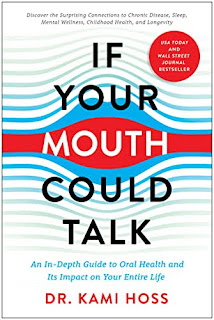
If Your Mouth Could Talk An-In Depth Guide to Oral Health and Its Impact on Your Entire Life by Dr. Kami Hoss


Dr. Kami Hoss' book, If Your Mouth Could Talk An-In Depth Guide to Oral Health and Its Impact on Your Entire Life is a guide to help contribute in giving its readers a lifetime of happy and healthy smiles.

Hoss covers assistance on obtaining good oral health that goes beyond brushing and flossing teeth.


Many of the chapters suggest that Readers look at the whole picture of their health including genetics, upbringing, and physical health that can help and harm how their mouths are treated.

Epigenetics is the study of traits that are inherited through the DNA. Hoss suggests that these traits could affect someone's health including their oral health. For example, Hoss cites studies where people who were obese when they were young end up later with children and grandchildren who could develop shorter and potentially unhealthy lives.


Even different stages throughout a person's life could result in poor dental health. If a mother is pregnant for example, she should not miss a trip to a dentist or orthodontist. Poor oral health could result in conditions like gestational diabetes and preeclampsia as well blockage of airways. These could then lead to ill health for the baby. Hoss also cites various childhood illnesses like tongue-tie which could lead to bigger health problems later.


This book is especially geared towards parents to encourage their children to practice good health habits such as dieting, exercising, making regular dental and medical health check ups, and obtaining a regular sleep schedule. Of course the parents themselves should practice these habits as well to pass those genetic markers and provide a good example so their children can learn by example.


Newton Gritters 1: The Foundation by Eddie Beasley Jr.


Eddie Beasley Jr.'s short novel, Newton Gritters 1: The Foundation, is an all too brief but gripping character study about a young man entering a life of crime and the beginnings of his potential criminal empire.


3 (just the number with no name) is released after a stint in prison. He moved from Baltimore to Canton, Ohio to live with his sister. He tried to go straight with legit jobs such as welding, but the lure and the thrill of danger, big money, and infamous notoriety are too tempting to resist. With his friends, Tboy and Mike, 3 gets involved in drug dealing in Newton. He builds up a tidy sum and a reputation as a criminal leader.

Beasley informs us that 3's empire lasted for ten years and The Foundation is the beginning of this journey.


There isn't very much to the plot of this volume. 3 gets introduced, meets his new friends, they start selling drugs, get betrayed, and have a few near misses with the law. It's the kind of thing that is seen in many crime movies, TV shows, and in real life too. It's not much of a plot in the beginning. Beasley's foreshadowing suggests that there are more exciting things to come.


However, what The Foundation doesn't have in plot, it makes up for in setting and character. The Newton setting is almost a character itself with its residents with eccentric street names and slang terms. For example one character called Homeboy says "Yo! This s#$_'s got me feeling like when Smokey was in the pigeon -coop….This is a for sure money maker (sic)."

Sometimes, it can be a bit difficult to understand what's going on because the slang is a constant presence even in the narration. However, it helps characterize Newton and its people telling readers exactly who they are reading about, where they come from, and what they want.


Characterization is also important in this book, particularly with the main protagonist, 3. It would be tempting to make 3 a naive fool or a hard hearted crook, but Beasley does not do this. He isn't irredeemable nor is he overly soft. He provides a series of rules for himself and his associates to follow, such as selling only to addicts instead of getting first timers addicted, to reveal that he has standards. He is loyal to his friends and while he objectifies women for their bodies, he can show a gentlemanly demeanor with them. 3 knows the score and has a few opportunities to get out and live a legit life. However, his criminal history and the lessons about mistrust that he gleaned from his past convince him that the criminal path is the only one that can provide him with what he thinks that he needs. It would be easier and more lucrative to continue dealing drugs than it would be to take a legit job where people would judge him for his past and appearance. 


The Foundation is an interesting start to what should be a suspenseful, dishonest, but absorbing series. It's criminal how good it is.


Sunday, May 30, 2021

Weekly Reader: The Black Rose (Larkin's Barkin' Book One) by Pete Adams; Engaging Crime Thriller About East End London Crime Families Undone By Nonsensical Ending


 Weekly Reader: The Black Rose (Larkin's Barkin' Book One by Pete Adams; Engaging Crime Thriller About East End London Crime Families Undone By Nonsensical Ending

By Julie Sara Porter

Bookworm Reviews


Spoilers: One thing that I will say about Pete Adams's The Black Rose is that it had a very strong premise and a great engaging and suspenseful beginning and middle. However, somewhere towards the end, it really lost itself. While the book provided plot twists that were genuinely surprising, they were so far out in left field that Adams really should have let go of surprise and instead let the compelling narrative lead to a better, even if it had to be more conventional, ending.


The Black Rose is great at exploring the British criminal underworld and the families that run it. Adams was clearly inspired by such noted real-life firms like the Clerkenwell Crime Syndicate (AKA The Adams Family), The Arif Family, The Richardson  Gang, and The Kray Twins. The inner lives, rules,  standards, and family honor and sometimes disloyalty come into play within the fictional Saint and Larkin Families. The two families have been at war for generations. They have had blood for blood. Every time one member gets killed, another is struck down in retaliation.  They vie for ownership of the streets and the various illegal operations around town. Occasionally, they stop the fighting out of respect if important key members die or they join forces to fight a common enemy like the law or a rival firm. 

This time the Saints and Larkins have found a corker of an enemy: The O'Neill Crime Syndicate, a new group that originated from Ireland.

 Their main representative isn't a seasoned gangster. In fact, she is a fifteen year old girl, Roisin (pronounced Ro-sheen) O'Neil AKA Rose and The Black Rose. Rose befriends Chas Larkin, the sickly and mentally ill outcast of the Larkin family. When Rose and Chas begin their own crime spree, the Saints and Larkins realize that they have to put their differences aside to take on this new, psychopathic, and highly dangerous enemy.


The contrast between the Larkin-Saints and Chas and Rose are what makes the book. While no one in the book is particularly likeable, there are differences. The Larkins and Saints have been doing the criminal rivalry for decades so they are an integral part of the neighborhood. As much as these families hate each other, they realize that they are dependant upon one another.  

The Saints control the docks and the Larkins control the gambling houses, brothels, and other businesses around the docks. Both families are headed by tough as nails women in Bessie Saint and Alice "Nan" Larkin. They have their separate pubs in which they congregate-Dad's for Saints and Arrie's for Larkins. Two younger women in the families develop a friendship that turns into a romance, possibly a suggestion of a union at least by marriage. (Hey even the Hatfields and McCoys put down their guns temporarily when two of them married each other. Only to pick them up again after they got divorced.)

Both families know and respect the East End and the people that inhabit it, considering the London area their protectorate. They commit violence towards each other such as threatening rival family members (whoah to the Saint schoolchild who bullies a Larkin and vice versa. Rest assured, they will live to regret it.) and destroying their property. But they have rules and standards.

For example if an important family member is killed, they call off the fight long enough for a grieving process to continue and even have representatives attend the funeral. They both grieve when a mass death arrives (and in this book, it happens a lot.)

Their sometimes peace is symbolized by a crumpet that resides under a glass case in Dad's. The rules are that no one would but a Saint may touch it and the Larkins honor it until it gets mysteriously stolen in the beginning and the Larkins don't own up to it. This incident leads to a long chain of violence between the Saints, Larkins, the police, and the newcomer O'Neils which fractures the strained peace between the Saints and Larkins, especially when Chas and Rose become involved.


Chas meets Rose when she defends him from bully, Mickey Saint at school. Chas is often considered an outcast even within his own family, so in Rose he finds someone intoxicating and bewitching, a kindred spirit, and an understanding friend. However, there is a darker side to Rose's behavior as  she beats Mickey Saint practically to death. The two continue to go on a crime spree of wanton violent destruction, not caring whether it's Saint or Larkin property or neither. Rose and Chas act without conscience or scruples and they don't care who they hurt. In fact, Rose seems to delight in playing the two crime families against each other.

She also is able to carry Chas along. Playing on his loneliness, isolation, and his subconscious thoughts against the rest of his family and the Saints, Rose is able to put into action what he has wanted to do for some time. The more she acts, the more Chas follows her into that world and the more dangerous he becomes.


That's why she frightens the two families so much. Rose is less of a real person than an entity who feeds off of hatred and destruction. Unlike the two families who have a code and rules, Rose has none. She has no loyalty or allegiances. We hear about the O'Neills but don't see them except for Rose and there is even doubt whether they really exist or only exist because of this one girl. She is willing to do what the Saints and Larkins are not and that makes her more villainous and far more dangerous.

 It's as though Hannibal Lector was put into the middle of the Godfather. His psychopathic chaotic nature contradicts that of the Corleones and he would be considered a greater evil than them. That's how Rose is seen to the Saints and Larkins. She shakes up their world because she is not a part of it. She is beyond their control and almost unstoppable, unless the two families work together to end this two-person crime spree.


In fact the only thing that stops Rose is an ending that puts things to a screeching halt. I won't spoil it, but let's say it's one of those endings that seems to pull a twist out of thin air and a ridiculous one at that. It relies on an absolute suspension of disbelief that is beyond incredulous and requires a lot of questions to ask how it was possible to be pulled, how this twist could have been maintained when logistics would have prevented it, and the subsequent ramifications for what had occurred before the reveal. 

I don't want to say that Rose O'Neill is a good character who deserves a good ending, but she was built up to be so mesmerizing, so destructive, and so chaotic that this ending does her an injustice. A good antagonistic character deserves a better ending than that.


Monday, May 25, 2020

Weekly Reader: Lawless Justice (The Outlaw Series Book 3) by Karina Kantas; Strong Female Characters Unleash Their Claws In Suspenseful Psychological Thriller About Vigilantism and Gangs


Weekly Reader: Lawless Justice (The Outlaw Series Book 3) by Karina Kantas; Strong Characters Unleash Their Claws in Suspenseful Psychological Thriller About Vigilantism and Living A Double Life

By Julie Sara Porter

Bookworm Reviews


Spoilers: Vigilantism and gang membership has a certain appeal to some people. Like the beginning of The Godfather when undertaker, Bonasera, can't find justice from the police against the WASP bullies who raped and nearly murdered his daughter. He realizes that for real justice, he must go to Don Vito Corleone. Some people become vigilantes or appeal to gangs when they feel that the system not only won't help them, but favor the oppressors.

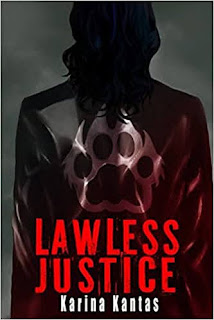
That's the situation in Karina Kantas' suspenseful psychological thriller, Lawless Justice book three of her Outlaw Series. When someone is hurt in an abusive situation or is the victim of a crime from a powerful untouchable villain, then for justice these people go not to the police, but to the Kittnz (sic), an all female biker gang that unsheath their claws and enact swift retribution for those who are oppressed and victimized.


The Kittnz are seen through the eyes of Cass, a journalist coming off an abusive relationship. She returns to her home of Milton Keynes, and during a night out with her sister encounters the gang for the first time. The Kittnz may have the name, but they are more like the Big Cats in town. They are beautiful women who drive their own motorcycles, wear leather jackets, and will pick a fight with anyone in their way. Cass is fascinated by this strange gang, but even more so when they save her life after a confrontation with two men. Cass recuperates in their hideout and is eventually invited to join the gang.


Lawless Justice walks a fine but distinct line with it's characters. The Kittnz are clearly the protagonists. Their motives are understandable, but their actions are extremely violent. They will defend a battered wife by beating the daylights out of her abusive husband or give a verbal and physical warning to some White Supremacist youths to leave an immigrant family alone.

But sometimes their behaviors spin out of control like when they take retribution so far as to burn an enemy's house down. They also aren't above threatening members who want to get out. The book stops short of glorifying The Kittnz's behavior or making them heroes, but it does go into the roots of why people join gangs or go to them for help. As regular women, they had been oppressed, abused, marginalized, threatened, and dismissed by authority figures so they feel that they have no choice but to strike back at those who harm them and others who are in the same situation.


One of the more intriguing aspects of this book is how expectations are subverted on who joins these gangs. The Kittnz are not high school dropouts, drug addicts, wayward girls in their teens and twenties from broken homes. These are women in their late 20's-30's in successful careers and day jobs, everything from doctor, lawyer, psychotherapist, photographer, mechanic, and journalist. By day they work and act as pillars of the community, but by night they vent out their frustrations and commit acts of violence. They have real names and identities, but are known primarily by their gang names: Raven (the leader), Scarlet, Jade, Eve, Storm, and Cass' new name, Ice. In fact once Ice gets her new moniker, the third person narration refers to her with that name even when she is with family members and acquaintances outside the gang. It is a subtle reminder that the old abused victim, Cass is dead and in her place is Ice, a woman who

seeks action. with the cold detachment that her name suggests.

The book does not gloss over the violent ending that results from such a life. There is plenty of betrayal and second guessing of motives. Some characters get seriously hurt and others don't make it. The gang life is a violent, angry, short, and ultimately self-destructive one and this book makes no mistake about that.

The Kittnz of Lawless Justice may be badass, but their book is the purrfect blend of action and psychology into the people who are motivated by violence and the actions that they commit.