Showing posts with label Environmental Concerns. Show all posts

Saturday, August 6, 2022

Weekly Reader: Cooper's Ridge by Ian Conner; Fascinating Science Fiction Novel About The Discovery, Exploration, and Colonization of a Newly Discovered Planet Amid Earth's Chaotic and Inevitable End


Weekly Reader: Cooper's Ridge by Ian Conner; Fascinating Science Fiction Novel About The Discovery, Exploration, and Colonization of a Newly Discovered Planet Amid Earth's Chaotic and Inevitable End


By Julie Sara Porter

Bookworm Reviews


Spoilers: If there is one thing that Science Fiction has told us, it's that if Earthlings ever do obtain the ability to travel to the stars and live on other planets, it's that we inevitably take our problems, our prejudices, violent tendencies, conspiracies, and mistrust with us. After all, a change of location, atmosphere, and landscape may not necessarily change the person within. 

Ray Bradbury's The Martian Chronicles is an example. Bradbury's anthology showed a series of expeditions from Earth to explore, colonize, and ultimately settle on the Fourth Planet from the Sun. In reality, it was an allegory of the European's colonization of the Americas, acting with carelessness and cruelty towards the land and the natives that inhabited the countries first.

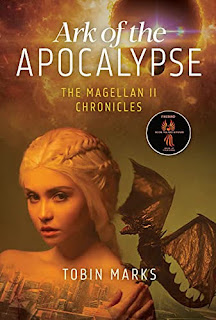
Last year, I reviewed Tobin Marks' Ark of the Apocalypse: The Magellan II Chronicles in which the exploration and resettlement of a few Earthlings on a new planet was tempered by the hopeless situation on Earth with the emphasis on the environmental destruction, catastrophic wars, and the suffering of the people left behind. The outlook in Marks' book was so bleak that I turned myself away from dystopian Science Fiction novels for awhile. (It didn't help that it was one of several books in the subgenre that I read for two years straight.)


Another book that explores the dichotomy of interstellar travel with human frailty and error is Ian Conner's Cooper's Ridge. It's definitely a much better book than Ark of the Apocalypse. It explores many of the similar themes of space exploration, Earth's vulnerability, and greedy and opportunistic humans but it does so in a more well rounded way. Yes there are problems on both worlds, but there are people willing to fight against and change those circumstances. 


The book starts at the beginning, well not as far as the Big Bang Theory or the creation of the Universe, but a bit more recent than that. It starts with the discovery of a new planet surrounded by four moons. Being the typical egocentric scientists that they are, astronomers, Barnaby Ridge and Lorraine Cooper name the new planet Cooper's Ridge after themselves. As for the satellites, they are named for Lorraine's favorite flowers: Gardenia, Ginger, Hibiscus, and Heliconia. Even better, Cooper's Ridge looks like it's capable of sustaining human life! A great find indeed.

Fast forward 200 years later and Earth is ready to launch its first expedition to Cooper's Ridge on the large self sustaining vessel, Far Constellation. Because it's a thirty year journey and they don't yet have access to cryogenic freezing, many of the explorers are young- in their teens to early forties so when they arrive on the planet, they can assume leadership positions. Children and pregnant people are also on board so a new generation can be born and raised in the new world. All goes well until meteors from Heliconia collide with the first ship the Endeavor, killing the crew and thousands of civilians and cutting the first expedition to Cooper's Ridge in half. 


Despite the early deaths, humans begin to settle in Cooper's Ridge. Generations go by and some of the younger generations weren't even born on Earth either only knowing Far Constellation or Cooper's Ridge as their birthplace. (They're not Earthlings. Are they Cooperians? Ridgites? Cooper's Ridglings?) 

One of those young people is Cassie Wells who is following in her father's footsteps as an astrophysicist. Cassie is curious about some suspicious activity on the moon Heliconia, references to something called the Hive, and a technology that allows one to travel through worlds via gateways. The more Cassie, her father, and their friends and colleagues dig into the mystery of the Hive, the more they learn that something dangerous is approaching the new home of Cooper's Ridge and that there are some who are willing to kill to keep people from finding out.


Meanwhile, on Earth, people are trying to get to Cooper's Ridge as fast as they can while the planet is being overrun by a group called the Preservationists. The Preservationists' leader, Adolf Hale seems to take a cue from another man from the past whose first name was Adolf and last name started with an "H." He enforces draconian laws to keep Earth's population under control like forced sterilization, genocide of the elderly and those deemed "undesirable" (which could be anyone), and even approves of intentionally spreading a contagious virus to kill. Hale is so sadistic and despotic that he is willing to make some otherworldly alliances to see that his goals are met.


What often makes a Space Travel Science Fiction Novel is the intergalactic setting and in this case with Cooper's Ridge, it works. Instead of a blue planet, Cooper's Ridge is mostly green because it is surrounded by forest with rain pouring down. The four moons are various shades of red from light pink Gardenia to blood red Heliconia. Picture going for a walk some night on a neverending field of green and looking up to see four red moons shining down on you. A planet that is still new, fresh, and untainted by human greed for now. The description of the planet alone is enough to make one want to buy a one way ticket to Cooper's Ridge, at least while it's still beautiful.


Unfortunately, despite a lovely setting, human greed and opportunism is never far behind. A constant theme throughout this book is conspiracy and the cost of maintaining secrets. Conspiracies develop along both worlds: Earth and Cooper's Ridge and threaten to destroy the people in them, the new world that is found, and the world left behind.

Even after Cooper's Ridge is first discovered, Barnaby and Lorraine are ordered not to make it public. However, Lorraine can't resist. She knows that Earth's days are numbered and a breathable liveable planet could be a way out. She bravely makes the discovery known and has to go into exile for the rest of her life. The destruction of the first expedition is kept under wraps as well as the real cause for the crash, because no one wants to admit that there could be fatalities in exploring this new world or about the lethal alien race that caused it.


The biggest conspiracy of all lies in Cassie's discovery of the Hive and the new technology. She and various people around her are chased, threatened, and nearly killed by many who don't want them to reveal what they learned. Some such as Hale want to take advantage of this new information as a means of control and dominance. Unfortunately, this shows that whether on Earth or on Cooper's Ridge, there are people who are willing to destroy others and even the world around them to uphold the status quo and remain in power.


Fortunately, this book also shows that there are people that are willing to make new discoveries, help others, and speak out against tyranny for the betterment of humanity. As long as people continue to do that, there is always hope. Here or on any planet.




Friday, July 15, 2022

New Book Alert: Fancy Fanciful Fantasticality (Overture for the Overawed) by Francessca Bella; Descriptive Character Driven Science Fiction Novel Goes Deceptively Deep Into Concepts of Heroism and Belief


 New Book Alert: Fancy Fanciful Fantasticality (Overture for the Overawed) by Francessca Bella; Descriptive Character Driven Science Fiction Novel Goes Deceptively Deep Into Concepts of Heroism and Belief

By Julie Sara Porter

Bookworm Reviews 


Spoilers: Stop me if you heard this one: a young woman leads a rebellion, fights a dictatorship, and finds the courage within herself to become the heroine that her people need. She becomes the leader of her new community and obtains legendary, almost mythical status. 

Well, on the surface Francessca Bella's novel, Fancy Fanciful Fantasticality Overture for the Overawed, appears to be that kind of book about that kind of heroine. But if you look deeper, you will see more meaning behind the book. You will see the human being behind the legend.


The heroine that has achieved legendary status after her rebellious heroism is Calista Soleil who is the Fancy Fanciful Fantasticality (say that five times fast). Besides having an awesomely alliterative moniker, Calista also is the Overseer of the Port of Sunshinescence in the Principality of Sunshinescence (another mouthful). Her people are very spiritual and worship the sun as a goddess. Many admire Calista as much as they admire the sun. Many would love to just bask in her loveliness. Everyone thinks of her as a great leader and heroine. Everyone except sometimes Calista Soleil.

Calista feels that she has lost her way so she returns to her alma mater, Chromia Academy. When that doesn't work out, she tries to send a message to her family. While communicating with them, she sees a frightening image of a firebird, a phoenix, striking the Earth. Over the centuries, because of war, pollution, and greed, Earth is blocked from the sun. The people of Earth have mostly been reduced to a barbaric survivalist existence willing to listen to the latest fanatical cult leader who says that the moon is all that they need.

Calista fears that the Phoenix is the sun's final warning, the anger that humanity took advantage of its resources long enough and now will be destroyed. She wants to go to Earth to help the people. Calista gets assistance on her mission with her new friends, Lavender, a scientist who once worked for the sinister and secretive Moonbow Laboratories and Sagen, who also worked for Moonbow and is handy with a weapon, and willing to use them despite objections from the pacifistic Calista. The trio face not only the people of Earth but a cult leader who wants the Earthlings to turn from the sun and worship the moon.


What makes this book stand out is the Fancy Fanciful Fantasticality herself, or rather the alleged Fancy Fanciful Fantasticality. Despite her legendary status, Calista doesn't always feel fancy, fanciful, or fantastic. We aren't shown the legend that led her to these titles. We are given hints here and there but that's not what this book is about. This is about what happens after the goal is achieved and the new leader is made. This is meant to peel away the legend and see that there is a real person, a real person of flaws and virtues, a complex human being. Somehow in exploring Calista's humanity makes her even more heroic.


In many ways, Calista exemplifies all of the positive traits that someone of her station should possess. She is very courageous and thirsty for adventure. She goes to Earth knowing full well the state that it's in and that she may not return. She exhibits good leadership skills and takes decisive action. When she, Lavender, and Sagen find themselves in a trap and encounter betrayal, Calista is able to get them out. She also shows a compassionate side in that she is willing to help the Earthlings get out of the predicament that they are in. She also befriends Teal, an Earth citizen who is quite intelligent and would be a good candidate to attend Chromia Academy. Perhaps, Calista sees something of her younger self in her, so she encourages Teal in her intellectual pursuits. Like the sun that she represents, Calista tries to exhibit warmth and light to all around her. 


Optimum word is tries because Calista does not always succeed. Sometimes the reasons are found within herself. Ironically, someone who represents the sun's warmth also acts very cold, forbidding, and polarizing. She acts in a very arrogant manner at times. When she visits Chromia Academy, she doesn't remember the names of the student or even an instructor who came to the school and made an enormous impact on her young life. She came to the school hoping to find some positive connections but instead all she remembers is how isolated that she was.

 The isolation continues when she is with her family. Calista realizes that her people depend on her so much that they have forgotten to think for themselves. They are enchanted by the image that they created around her and in some ways so is she.


Calista is at times guilty of many of the things that she accuses others of being. She thinks that the Earthlings she encounters are mostly intolerant and judgemental but fails to recognize those attributes within herself. Her younger brother, Tybalt and sister, Berrie at first accompany her. But when they are told that the journey is dangerous and even fatal, they turn around and go back. Rather than expressing concern about her sibling's safety or understanding their decision, Calista berates them and calls them cowards. Then she stridently declares that few can be as brave as she can. 

Even though she later supports Teal when she learns what a big help that she has been, she is at first surprised that someone from Earth is so intelligent. She also says that not just anybody can join the Chromia Academy, only the elite with connections. Luckily, she ends up becoming that connection so she is able to drop much of her earlier snobbery.


Calista can be uncompromising in her views. She gets into a science vs. spirituality debate with Lavender and argues with Sagen about using weapons even in self defense. She criticizes the fear mongering Moonite cult for denying the evidence of the sun's presence and their insistence of only living for the moon. However, she is just as single minded in her devotion in the sun and has a cult-like following herself (not one of her designs, but she still wields the same power.) In fact, this aspect of the book could be a metaphor for many of the views that people hold on to nowadays. I won't say which views but it's not hard to connect the dots. 


To her credit, Calista knows that she has those negative qualities and works to change them within herself. One of Calista's signs of maturity is her willingness to see her friend's sides and work together with them. 

In her journey to her past, she tries to find the adventurous brave young woman that she once was before her pride and following got the better of her. Perhaps, she feels that she is unworthy of the titles that she has received. This adventure on Earth is a source of self-redemption to become a better person, one who earns the right to be called the Fancy Fanciful Fantasticality.


These negative and positive qualities are what actually make Calista a great character. The conflicts with the Moonite cult, the Earth citizens, and the elements are important. But the biggest conflict of all is the one with herself.


With a very human protagonist who saves the Earth and learns about herself, Bella's book truly is fancy, fanciful, and fantastical.


Tuesday, November 23, 2021

New Book Alert: Dark Maiden By Ian Conner; Native American Folklore Mixes With Modern Horror


New Book Alert: Dark Maiden By Ian Conner; Native American Folklore Mixes With Modern Horror

By Julie Sara Porter

Bookworm Reviews


Spoilers: Dark Maiden by Ian Conner is like one of those ghost stories that you read in Haunted Places collections or hear about in an urban legend. It tells of an old evil spirit with a fascinating backstory that intrudes upon the present day to enact some sort of vengeance or malicious intent on subsequent generations. A story like this might be familiar, but Conner gives it enough atmosphere to send chills down your spine.


A mysterious creature called The Skadegamutc or Ghost Witch has been haunting the Pequabuck Lake in Nollesemic Village, Maine. Many people since the 16th century have been missing and some have drowned despite varying degrees of swimming ability. In 2005, disappearances are quite high particularly because Carlyle Allen, a wealthy developer, wants to build new property in the area leading to more people and more victims to fall prey to the Ghost Witch's clutches.

What is known about the Ghost Witch is that it sometimes takes the form of a beautiful maiden that lures its prey. It appears to have a fondness for twins since many of its victims either are twins or are parts of families that have them. It also seems to have a vendetta against the Two Spears and Four Claws Families, two local clans who have been sworn enemies of the creature for 500 years.


The Ghost Witch is an actual figure from Wabanaki folklore. In Conner's book, it is given a chilling backstory and modus operandi that gives this old narrative a modern scare.

One of the best chapters in the entire book is the first where the Reader is first introduced to this enigmatic spectre in the 16th century. It takes the form of a Maiden that captivates four young women who consider themselves homely as compared to this otherworldly beauty swimming in the lake. As they swim, the girls not only find that they have become beautiful, but are drawn to this mysterious maiden. The Ghost Witch gives an alluring almost erotic presence as it draws the young mortal woman only to take their lives. A story with variations that are repeated so often that it has become hoary and even cliche is transformed into a moment of seduction and terror thanks to Conner's engaging writing. 

That seduction and terror continues for centuries as people are  drawn to and appalled by the Ghost Witch and its actions. It seems to get off on people's most negative emotions like insecurity and greed. Perhaps the Ghost Witch is a metaphor for unbridled and extreme desires and what happens when those desires overpower and take control. They draw someone towards them to a dark and disturbing end.


What is compelling about the Ghost Witch is that it harbors no distinction between who it attacks (except that it has a fondness for twins). Male or female, white or Native American. It's all the same to it. While there is a subplot about redevelopment and the potential destruction of the land and environment, it's clear that the Ghost Witch is not there as a symbol of Mother Nature's rage. In fact, since it uses the most negative emotions to draw prey inside, maybe it's hoping for more greed from the developers and rage and hopelessness from the residents. More negative emotions means more humans to play with and snack on. However, The Ghost Witch doesn't care who it hurts. It will destroy anyone that is unfortunate enough to cross its path.

In fact, its worst enemies are from the Two Spears and Four Claws families. While the Ghost Witch attacks in the present, we are also given the back story of how this creature came to be and why the families are united in their drive to destroy it. For spoiler's sake, I won't go into it in this review but it is compelling and makes the characters more understandable.

 The history gives more dimensions to this inhuman character and its enemies to remind us that it once was actually human, came from somewhere, and fell in the worst way possible. The backstory also reveals why the Two Spears and Four Claws families are so determined to destroy the Ghost Witch and why the current generation feel that it's their responsibility to end this evil once and for all.


Dark Maiden is a construction and restructuring of an ancient folk tale. By giving us its origins, motives, and means, Conner shows that this is not simply some unstoppable demon. Instead it was once human and like all humans is prey to weakness. If understood, it can be defeated.


Wednesday, August 4, 2021

New Book Alert: Ark of the Apocalypse (The Magellan II Chronicles) by Tobin Marks; The Dark Somber Final Word on Earth's Destruction By Human Cruelty, Arrogance, Apathy, and Ignorance


New Book Alert: Ark of the Apocalypse (The Magellan II Chronicles) by Tobin Marks; The Dark Somber Final Word on Earth's Destruction By Human Cruelty, Arrogance, Apathy, and Ignorance

By Julie Sara Porter

Bookworm Reviews


Spoilers:There are science fiction books that are so dark that you fall into a black hole of personal depression. Then there are those that cause you to just throw up your hands and go "No hope! We're doomed!"

 If Court of The Grandchildren is a final warning for humanity to prevent climate change and to mind what we are doing before it's too late, then Ark of the Apocalypse The Magellan II Chronicles by Tobin Marks is the final message. It's the suicide note that Gaia will write as if saying "The Earth is dying because you weren't good to it. Now you are dying too."

Last year, I reviewed The Girl Who Found The Sun right when Missouri was in the process of shutting down because of the Covid pandemic. A Science Fiction novel in which the characters live in an underground world kept from the outside suddenly seemed more real when compared to a real life situation in which people were kept inside their homes because of the ravages of a pandemic and the arrogance of many people and a then Presidential Administration that chose not to follow simple common sense advice and allowed the virus to spread.

Once again a Science Fiction novel has become too real. With the Delta Strand variant of Covid creating another wave and many people around the world being unable to or choosing not to be vaccinated, with wildfires the size of New York City, Chicago, and Los Angeles spreading throughout the United States, and above all billionaires like Richard Branson and Jeff Bezos engaging in a "measuring contest" to see who can spend less than 15 minutes in space in a private spaceship instead of using that wealth to pay taxes or to help the people on this planet. The Magic 8 Ball prediction for Ark of the Apocalypse switches from "Maybe possible" to "Absolutely certain."

Once the future hits in 2035, it really hits and it's written in a way that is extremely believable. Temperatures in Mexico have reached 120 on normal days (the last time it hit under 115 was in 2027). Rising global sea levels have made most coastal cities flooded and uninhabitable and many once thriving water regions, like the Sea of Cortez, have become dead zones. Also hurricanes no longer operate through seasons and form supercells on a regular basis. Snow no longer appears on mountain ranges like the Rockies and the Alps.The rivers in India and China have dried up and the Great Lakes are becoming smaller because the waters dumped into them have dried up.

Earth is no longer able to produce enough food to maintain its increasing population. With the scarcity of water, only 20% of the Earth's population of 12 billion can be adequately fed.

 Countries, most notably Russia and the United States, are going to war over diminished resources. The U.S. President Abigail Moore is particularly eager to fire off her country's space orbital weapons system The Theater High Orbital Rover or THOR. (Typical USA in financial, environmental, and sociopolitical ruin but of course the government has the money to install and use a high tech brand new weapon for defense. I told you this book was spookily accurate.) 

The war ends in less than four minutes but one of the Iranian missiles explodes over Russia causing more tension between nations. Of course nuclear blasts unleash disease, famine, and a depressed and angry populace (at least the ones that survive.) Moore and Russian President Yuri Volkov exchange accusations and blame until they come to an uneasy agreement.

This is the kind of world where at the International Convention on Climate Control, climatologist Dr. Randall Burt's speeches could be summarized as "We tried to warn you. Everyone is guilty including myself. So long, Suckers!" Before he goes home to attempt suicide. His only suggestion is to eliminate 90% of the population or watch as we all drop dead. The only chance for humanity's survival is for a small group to travel into the stars and live on another planet. 

Two families are important to this mission. Their plan was centuries in the making. In the 1930's The Yanbeyevs, a Tatar family is ordered to be deported to Siberia. However, they have a secret up their sleeves which will help them get through the future struggles: A strange gift of prophecy shared by the seventh child of the family. This prophetic gift is passed through Anatoly's descendant Olga and her granddaughter, Nadya. Olga is determined that Nadya is to be one of the people on that space mission and she isn't above doing secretive underhanded things to ensure that future comes to pass and Nadya is able to survive to fill that destiny.

Another important family is that of Hikaru Mizushima's from Japan. After the bombing of Nagasaki, they have been holding onto a secret project contained within a metal box, a secret which will enable humanity to travel to the stars. Hikaru is able to use his ancestor's research to create spacecraft without rocket propulsion. 

This possibility of interstellar travel saving humankind is on the surface optimistic but that optimism is tempered by many realities.

 1) That only a select few people get to go so the majority of the population is left on Earth to die. In fact the cold attitude of many of the characters like The Yanbeyevs, Mizushimas, Moore, and Volkov is that "Everyone else can go f#$@ t&$#@(+-@_s," which is not the best way to make the Reader want to actually like these people and root for their mission to succeed.

2) Since the majority of the book is set on Earth, the focus isn't on space exploration or what this new planet is like. We do have some chapters where the characters encounter dragon-like beings and Nadya's dreams in the hyperspace sleep travel prove useful to the survival of the expatriate Earthlings. However, most of the book deals with the slow death march that Earth is on. 

We are given pages and pages of war and environmental catastrophe which is slowly strangling the remaining population. While you can't blame characters like Burt for reminding people that this could have been avoided, the callous tunnel vision that many characters have for the interstellar mission is is like ripping open a bandaid on a gaping wound. The wound is still there.

Especially since they are also willing to leave their families behind including small children. Unless they are planning subsequent space missions, they leave knowing that they are essentially consigning loved ones to their deaths by allowing them to remain on Earth. Also the chapters where they are on that planet suggest that they haven't lost their warlike nature or the desire of control and domination.

3) Of course the realism in how Marks writes this future cannot be avoided nor can the comparisons to the world that surrounds this fictional universe. It gets to the point that it's no surprise that the final two leaders of Russia and the United States: Viktor Petrov (replacing Volkov who was assassinated after 66 years as Russian President) and Crissy Caryn (an attractive former media celebrity) still engage in threats of war even as the world is dying around them suggesting that with some people power, any power, is more important than protection and survival. Nor is it any surprise that when Burt delivers the bad news, the people blame him for it instead of accepting their own share of the guilt.

This scenario is all too real and in real life may only be a few short years away (if not already here). The impending destruction and the callousness of the people living within it is something that we all have experienced and may continue to experience.

Ark of the Apocalypse The Magellan II Chronicles is one of those types of Science Fiction novels where even the hopeful moments convey a sense of despair because of what is left behind. It's a nightmare that is all too true and while we can close this book and forget about its contents, we can't close the real world around it. The only thing that we can do is turn things around, before this nightmare fictional scenario becomes the complete inescapable truth.


Saturday, May 1, 2021

New Book Alert: Under The Volcano (Quito Murder Mysteries) by William Graham; Suspenseful Trip Into The Violent Bloody Ecuadorian Underworld


New Book Alert: Under The Volcano (Quito Murder Mysteries) by William Graham; Suspenseful Trip Into The Violent Bloody Ecuadorian Underworld

By Julie Sara Porter

Bookworm Reviews


Spoilers: One of the most interesting aspects about murder mysteries is how they sometimes act as round the world tours. Sometimes the setting is so intrinsic to the plot that the mystery can't be set anywhere else. Either the suspenseful and deadly circumstances stand to counter the beautiful scenic view that surrounds the character or that the suspense and death surrounds the otherwise beautiful unique view so often that it's a part of daily life.

Under the Volcano: Quito Murder Mysteries by William Graham reveals that the Ecuadorian setting of the book is the latter.


Graham describes the setting of Ecuador so well that it almost becomes a character in the book. This is a country which according to OSAC's website, its capital city Quito's crime rate level is listed as a critical threat. The book shows poor citizens longing for better lives, a rampant drug trade thanks to close proximity to Colombia, American tourists who visit the country for fun or to hide their most nefarious deeds, and plenty of jungles and forests to leave a body or two. This is a world where even the cops can act as criminals.


Graham explores the complex dark lives of Quito's citizens and visitors in six stories that are interconnected by the presence of Detective Alberto Alvarado. He is the typical police detective heading a murder mystery who protects the innocent and can stand against any gun wielding killer to find out the truth. However, he has an extremely shady side that even the most hard boiled detective in the darkest noir story would find his actions questionable. Alberto has a gambling addiction which puts him at odds with his wife, Dolores and involves himself with shady characters that he should be arresting. 

He also commits violence in various chapters and not always in self defense or protection towards others.


Similar to Robert New's Colours of Death, Graham tells six different novellas that are all linked by Alberto's presence in solving them. They take different aspects of exploring the victims and perpetrators of crime in this dark and gritty Ecuadorian setting.

The stories are:


*Deadly Crude"- This story really develops many of the problems of the rural communities and why their residents have no love lost for Quito. We see the San Carlos village ravaged by pollution where it's a health hazard to drink from or swim in the water. ("Make him drink bottled water only," a doctor tells an anguished mother about her child who has been sickened by the water.) Many of the young people leave for better opportunities and never return. Some however want to return to fight for the people left behind like lawyer Juan Criollo who was murdered. When Quito radio personality Teresa Eagle makes note of his disappearance during a broadcast, Alberto is put on the case even though he doesn't personally care for lawyers. ("But even lawyers have mothers," he reasons.) 

The plot is seeped in muck and not just because Juan was investigating the corrupt oil industry that polluted his home village. (Though that is a truly horrifying development to reveal what San Carlos is reduced to and will no doubt get worse now that their champion has been killed.) But also the lengths these industries go through to keep the environmental damage a secret. There are some very violent means that some will go through to protect their profits and bottom line over human life.


"The Diplomat"- This is one of those types of suspense stories that tell part of the narrative from the murderer's point of view as well as the investigator so we not only follow the investigation but the journey of the unfortunate soul to cover up the crime. 

In this case, wealthy American Lucas Grant accidentally hits a woman with his car. Rather than calling a hospital or informing some authority figure, this true "prince among men" is angry at her for being so foolish to put him in this predicament. After an argument with his mistress (part of the reason that he's not willing to come forward), Lucas dumps the woman's body onto the side road of an airport. What a guy!

The impact of the case in "Deadly Crude" left Alberto so stressed that he lost his hair. He isn't ready to tackle another dangerous case but the realization that Maria, the dead woman is close to the same age as his daughter. Feeling a paternal tug at his heart, Alberto takes the case.

This is a case where not only the murderer but the rest of the cast are downright horrible as well. Besides Lucas being a cowardly sleaze of the highest order, his wife, Victoria is a shrieking drug addict. His mistress, Geovanna, is decent enough to want to report the accident to the police but she is pretty self-serving and materialistic. A photographer, Carlos and his partner, Luz, take pictures of the crime and decide to blackmail Lucas with the evidence. There isn't a likeable member in the whole bunch which carries on the dark aspects of detective noir where characters are purposely unlikeable but interesting to follow.


"Family Secret"- One of the common themes in these stories is the appearance of Americans either as tourists or expatriates. They come to Ecuador for a vacation, but often they arrive to get away from a lawless past, to exploit the country's riches, or to obtain answers to troubling questions. American reporter, Patricia Dobson is one of those who arrives to get answers. On her mother's deathbed, she learns that the man that she believed was her father really wasn't. Her birth father was Ecuadorian novelist and activist, Jorge Cossio. Patricia goes to Ecuador to meet her father and unfortunately never returns.

This story is somewhat reminiscent of an Agatha Christie locked room mystery where there is a claustrophobic setting and a limited number of suspects. It doesn't help that with the exception of Jorge no one particularly wants her there.

Because of the limited amount of suspects, the murderer is pretty easy to guess. However, what is brilliantly handled is the amount of hatred that this family has over this presumed outsider and what she represents to their roles in the dynamic.


"Gold Rush"- This is not one of the better stories except for one interesting subplot. The main plot is that Arturo Silva is killed after he gets into a partnership with a pair of Americans who find gold. In true Treasure of the Sierra Madre fashion, greed sets in and bodies are discovered. This case isn't particularly great nor is the resolution. What is most interesting is what is going on with Alberto between investigations.

In an unrelated plot, Alberto commits cold blooded first degree murder. Yes the lead detective commits murder and not in self defense or to protect someone. This is one of the few times that I am aware that the lead detective kills someone and the murder is not affected by the main plot. Even more baffling is that he is never called out on it nor is this particular murder ever investigated. It makes you look at Alberto differently in the rest of the book.

It is a strange twist to see a detective callously murder someone without reprecussions, but it gives the Reader a sense of the kind of world that they are reading about. A world where the line between those on the side of the law and against is thin to the point of practically non-existent. A world where there are good reasons why the crime level is described as critically high when anyone could quickly change from friend to enemy. It's dark but at the same time unfortunately very real too that there are officers who sincerely believe that they are above the law.


"Confession"-In a dark setting like the way Graham writes Quito, it is expected that even the local church is corrupted. Two priests are murdered, one shortly after confession. Apparently, they are being punished for sins that were undiscovered and unpunished for a long time.

This story really develops the long term repercussions of unpunished crimes and how they fester over time. Eventually, the guilty are found out usually by someone who has had to suffer the trauma of not only being hurt but by having to watch day in and day out this person walking free and clear because they are protected by a system that favors them over their victims.(Makes you wonder if there will be future repercussions for Alberto's murder in going with that theme.)


"Cloud Forest Murder"- Remember how I said that there are a lot of forests and jungles which are perfect to leave a body? Well that is at play here. Rachel, one of a group of American tourists, is found lying with her head crushed by a rock in the Ecuadorian Cloud Forest outside the Linda Vista lodge where she and her husband and friends are staying. What an unbelievable coincidence Alberto and his wife, Dolores are vacationing there as well. Since Death never takes a holiday, neither does a criminal investigator.

Similar to "Family Secrets," the suspects are a small limited group. This keeps the relationships intimate and the emotions present. There is a love triangle that develops between some of the characters and it is shown in a way that comes naturally since two of the characters have known each other for years making the other member more of the intrusion. 

While the murderer is certainly questionable, it's clear that their actions come from loneliness and overwhelming anguish making the Reader understand their actions even when they don't condone them.


Under the Volcano is a brilliant anthology that explores all that is hot and dangerous in Quito leading to actions that are ready to explode.