Showing posts with label Alternate points of view. Show all posts

Tuesday, December 11, 2018

Weekly Holiday Reader: Marley's Ghost by Mark Hazard Osmun; Dickensian Mystical Holiday Treat About Ebenezer Scrooge's Late Partner


Weekly Holiday Reader: Marley's Ghost by Mark Hazard Osmun; Dickensian Mystical Holiday Treat About Ebenezer Scrooge's Late Partner

By Julie Sara Porter

Bookworm Reviews


Spoilers: In my previous entry, I wrote about one of my Favorite Holiday Reading Traditions, The Life and Adventures of Santa Claus by L. Frank Baum. Now I will mention Favorite Holiday Reading Traditions #2: Marley's Ghost by Mark Hazard Osmun.


Now I love Charles Dickens’ original work, A Christmas Carol. (My family and I watch the wonderful 1984 version starring George C. Scott every Christmas Eve.) It is a creepy, dark but moving story about redemption and kindness that can be found within the most curmudgeonly soul. However, Marley's Ghost plays on one of my favorite tropes: telling a familiar story from another point of view. (See my list “Our Sides of the Story” for other examples. Some pictures are missing.) This time the spotlight is on Jacob Marley, Scrooge's former partner and for a time only friend.


Marley gets a very detailed back story that is rich in Dickensian situations such as a once happy family's fall into ruin, debtor’s prison, terrible working conditions that are dying to be unionized, colorful crooks with equally colorful names, intense poverty, and angelic children that are too good for this sinful earth. As Marley lays dying and the Reader waits for him to enter his destiny of an afterlife bound in chains, his life flashes before his eyes. He recalls his childhood as Jake Turner and his once happy family of a loving God-fearing mother, a charming yarn spinning father who tells his children the Pagan seasonal legends, and a sweet twin brother, Ezra, who appears to be on the autism spectrum. Some of the sweetest moments are when Jake and Ezra communicate in a secret language as Jake, a Mathematics genius, sketches numbers, equations, and figures while Ezra, a musical prodigy, responds either by singing or playing instruments like the piano or a whistle.


Unfortunately trouble strikes the Turner Family when Jake's father is driven to suicide because of threats of debtor's prison. Jake, Ezra, and their mother work in the mines where she dies shortly thereafter. By themselves, Jake and Ezra are forced to endure the living Hell of hard work, dangerous situations, and inhuman employers who treat their miners as nothing more than disposable sources of income. During a particularly intense moment between Jake and his supervisors, he is separated from Ezra and framed for murder. In prison, Jake encounters the roguish Bill Worthy, who hires the young genius as an assistant and later partner and gives him a new name: Jacob Marley. (Based on Three-Jack-Maul, a card game which Jake had the advantage because of his knowledge of probability and card counting.)

Marley's rise to success is encountered with various moments that are designed to destroy his soul leading him to guide Scrooge in becoming “the grasping covetous old sinner” that we know from the opening pages of Dickens's Christmas classic. Marley is surrounded by scoundrels and rich cutthroats that would sell their children for a seat on the Exchange. No better or worse than these mentors, Marley simply seeks to outdo them in dirty dealings and profiting off of others’ suffering. Scrooge enters his life as a wide-eyed idealistic young clerk and slowly devolves into a cantankerous angry recluse shattered by his sister's death in childbirth and absorbs Marley's misotheism (hatred towards God) and anger at the world. Marley's influence on Scrooge is so great that it is no surprise that he forces Marley to sign papers on his deathbed making Scrooge his sole executioner.

The most fascinating passages are those set in the Afterlife which appears to be a composite of Christian and Pagan beliefs of the Other Side. (no doubt mirroring Marley's dual belief system growing up with a Christian mother and a father who had no specific beliefs but was knowledgeable about the Celtic myths and legends.) Neither in Heaven nor Hell Marley wanders in a desolate snowy land assumed to be Purgatory where he wears “the chains (he) forged in life.” (One graphic moment features Marley longing to rescue a suffering homeless woman and despairs when he sees other bound ghosts, including people he recognizes such as Worthy, his colleagues at the Exchange and the mine, and a Hellfire-and-Brimstone pastor at his family's church, despairing for the same reason.) He is guided by a mysterious figure named Brighton who though not in Dickens’ story will be familiar with readers of the Bible. Much of Marley's journey culminates in his self-actualization of his anger at God for the things that he had to endure and his renunciation of that rage.

Pagan beliefs are also revealed throughout the book. The Three Christmas Ghosts are revealed to be figured from Celtic and Teutonic lore. Past is the childlike Pooka, a shapeshifter that can assume any form from a wolf, to a child, to an old man. Present is Ruprecht, a hedonistic giant who is surrounded by good food, merry music, and children who had been denied fun in their lives but can experience in the Afterlife. Future is Berchta, an elderly female death spirit who protects those who have been murdered, abandoned, and taken before their time. (Foreshadowing their involvement in Scrooge's life the three each give Marley a command to “Make Scrooge…” “Remember.” “Dance.” “Fear.” Each shows their connections to childhood, adulthood, and death.)

The ghosts surround the living adhering to Pagan beliefs that the links between the Mortal and Spirit World are weak especially in certain times of the year like the Solstice and Christmas. Also there are restrictions in which ghosts cannot be seen only heard as is revealed in a heartbreaking moment between Marley and Ezra.

The book culminates in a decision where Marley has to choose to communicate with only one mortal: Scrooge or Ezra. (Not exactly a spoiler in revealing who he chooses. The book even makes it clear when Marley realizes that Ezra is in a better position than when Marley left him, lovingly cared for and accepted by friends and a surrogate family. He is aware that “saving Ezra only saves (Marley).”)

Marley's moments with Scrooge are just as powerful in Osman's writing as they are in Dickens's particularly when Marley vicariously watches his old friend's transformation with happy tears and realizes Scrooge in turn saved him.

Marley's Ghost is a great companion to A Christmas Carol. It builds on Dickens's work about the supernatural, charity, redemption, and friendship. It also should stand on its own as a powerful story in its own right.

Thursday, August 16, 2018

Weekly Reader Bonus: Dog Sees God: Confessions of a Teenage Blockhead by Bert V. Royal; A Realistic Brutal Story of Growing Up From Our Favorite Comic Strip Characters


Weekly Reader Bonus: Dog Sees God: Confessions of a Teenage Blockhead by Bert V. Royal; A Realistic Brutal Story of Growing Up From Our Favorite Comic Strip Characters


By Julie Sara Porter

Bookworm Reviews


Spoilers: I suppose I should call this the Weekly Viewer since it's a play rather than a book. But many consider plays as important parts of literature as do I. In various previous Lit Lists, I have cited plays like A Raisin in the Sun, Rosencrantz and Guildernstern are Dead, Medea, The Importance of Being Earnest, The Odd Couple, The Sunshine Boys, and A Midsummer Night's Dream as some of my favorites. I also like a challenge so I thought this would be a good try.


There are many of us who wonder what happened to our favorite fictional characters later in life. What if they were hit with real world problems? What if the kids grew up or what happened when the adults were wayward youths? Such books as the Thursday Next series and films as Who Framed Roger Rabbit and the upcoming Happytime Murders show what happens when our favorite literary, animated, and puppet characters come face to face with such problems as sexuality, segregation, domestic violence, and crimes. Fanfiction writers explore various possibilities of their favorite characters in different sometimes angstier settings. Last month, I reviewed The Boy Detective Fails by Joe Meno which explored the adult life of a child detective based on Encyclopedia Brown. Exploring the pasts and futures of beloved characters raise interesting questions which invite various possibilities.


The latest characters to have their later lives exposed and dissected for the world to see are Charles Schultz's Peanuts gang. In the play Dog Sees God: Confessions of a Teenage Blockhead, unauthorized by the Schultz Estate, Bert V. Royal explores the teen years of Charlie Brown, Linus, Lucy and the gang and we discover it's a biting grim darker world than the one they knew when they were children.


Because of the unauthorization, none of the characters are called by their real names but we the audience know who they are. When one character called “Van” mourns for his lost blanket we know he's the quiet philosophical Linus. When one character, “Beethoven” retreats to the music room to play his favorite composer, it's not too hard to assume that he is the once musical prodigy Schroeder. Knowing who these characters were makes what happens to them all the more moving and heartbreaking. If Charlie Brown can have an unhappy adolescence, anyone could.


The play begins with the death of CB’s (Charlie Brown) dog and proceeds to get worse from there. First CB graphically describes to his Pen Pal the death of his beloved beagle (Snoopy) after getting put down because he contracted rabies and ate a yellow bird that CB believed “was the beagle’s best friend.” (Woodstock-I told you it would get worse.) The dog’s death sends CB into grief as he questions what happens after we die. While Peanuts often took a philosophical at times spiritual outlook, this play puts those questions front and center as CB ponders the meaning of death.


Far from being the misfit put-upon bullied kid, CB is now a popular jock who does his fair share of bullying. He is best friends with Matt (Pig Pen) who is no longer the nice kid who walked around with a trail of dirt. Instead he is an Obsessive Compulsive bigoted, sexist, homophobe who hates to be reminded of his former life and nickname.

CB is also still best friends with Van (Linus) who is a pothead and has some of the funniest lines in the play. When Van explains that after his blanket was burned, he smoked it's ashes. (“My blanket and I are one,” Van says triumphantly.)

Matt, Van, and CB also hang around with Tricia (Peppermint Patty), the former tomboy turned airheaded party girl and her best friend Marcie (Marcy-the only character to go by her original name), who while still is smart has become  like Tricia, another Mean Girl.
Royal’s decision to make Matt, Tricia, and Marcie antagonists (and Matt is particularly villainous in how he taunts those he bullies) show that sometimes when people grow and change, they not only don't retain the characteristics that they once had but they change for the worse.


The most frequent target for Matt and the other's abuse is no longer CB, but Beethoven (Schroeder). Beethoven has withdrawn into himself since his father had been arrested for molesting him. Instead of sympathies and support, Beethoven's former friends mock, taunt, and beat him for being gay. Even though CB did not bully Beethoven, Beethoven chides him for being worse “because (he) watched it happen” and that of all people, CB would know what it's like to be an outcast. Instead Beethoven keeps to himself even during lunch,where he sits in the music room as he practices the piano. It is in the music room that after a tense moment, Beethoven and CB kiss.


The kiss causes CB to question his feelings and sexuality. He fears hatred and ostracism from his peers. The only person to give him support is the last person anyone would expect: Van’s Sister (Lucy). The best scene in the play is when CB visits Van’s Sister in the psychiatric hospital where she had been staying since she set the Little Red Haired Girl's hair on fire. In one of the two most heartbreaking monologues in the play, Van's Sister reveals that she set the Little Red Haired Girl's hair on fire because Van’s Sister had an abortion and discovered that the LRH Girl called her “a whore.”

The dialogue between CB and Van’s Sister reveals CB’s confusion about the kiss and how he isn't sure whether he loves Beethoven. Van's Sister alternates between common sense advice towards CB’s predicament and accepting her role as an “unrepentant, unremorseful sociopath and (she) has no choice but to believe it.” In their mutual stories of love and hate, CB and Van's Sister reveal themselves as two people trying to find an identity for themselves as people who long to be loved and accepted.


Maturity is a common theme in Dog Sees God. Along with that maturity is the search for identity and realizing who we are and who we want to be. This is revealed by CB’s Sister (Sally) who similar to her song “My Philosophy” in the musical You're a Good Man, Charlie Brown is always looking for a different identity. Like Van, CB's Sister is seen as a comic relief as she goes from being a Goth girl to a Gangsta rapper. She also does a melodramatic one-woman show “Cocooning Into Platypus." While her one-woman show is hammy at first, she reveals the theme of the play by showing us a caterpillar that transforms into a newly made human who could think, cry, feel, find and lose love.


Finding and losing love is what the play is about. Once CB and Beethoven’s relationship is revealed to the others, they realize how much they have fallen in love. Unfortunately, their happiness is cut short by an angry Matt who is furious that he thinks Beethoven “recruited his friend.” Matt hurts Beethoven in a way that is savage, brutal, and leads to horrible consequences.


The adult world that surrounds the Peanuts gang is a darker one than the days when the kids put ornaments on Charlie Brown’s Christmas tree, or when Linus waited in the pumpkin patch for the Great Pumpkin, or when Snoopy stood on his doghouse writing a book or fighting the Red Baron. But the kids know, as everyone else watching them do, they have to grow up sometimes.


  1.  But maturity is not always dark or sad. It can also be a world of warmth, kindness, and friendship. This is exemplified in the other great monologue in the play when CB reads a letter from his Pen Pal who tells him that through it all, he is a good man. The most touching moment of all is when the Pen Pal reveals his name as CS, implying that even when his friends taunt CB and his life seems horrible God (or rather Charlie Brown's God and Creator, Charles Schultz) hasn't forgotten him and still loves him.


Saturday, July 14, 2018

Weekly Reader: After Alice by Gregory Maguire; Sequel to the Alice Tale Lacks Sparkle, Magic, and Alice


Weekly Reader: After Alice by Gregory Maguire; Sequel To The Alice Tale Lacks Sparkle, Magic, and Alice
By Julie Sara Porter
Bookworm Reviews

Spoilers: There's an episode of Mad Men in which the characters watch an ad for Patio soft drink which features a jingle parodying the opening to the movie musical, Bye Bye Birdie complete with an Ann-Margaret look-alike caterwauling the jinglized version of the opening song. The client and advertisers look at it and say, “It's not right. The song's right. The camera angle’s right. The setting’s right. But something’s not right. Something's missing, what is it?” Sterling-Cooper’s womanizing Accounts Director, Roger Sterling (John Slattery) comes up with the answer. “(The look-alike) isn't Ann-Margaret.”

That's exactly how I feel about Gregory Maguire's novel, After Alice. Maguire has made an excellent career of deconstructing popular fairy tales and children's literature to give them a fresh perspective. His OZ Quartet/Wicked Years is probably his best known work. They retell the story of L. Frank Baum’s OZ books from the points of view of Brr, The Cowardly Lion and particularly Elphaba, the presumed Wicked Witch of the West and her family including her son, Liir and granddaughter, Rain. The original and best novel of the series, Wicked, was also the source of the popular Tony winning musical of the same name. Maguire also took a hand at retelling Cinderella (Confessions from an Ugly Stepsister), Snow White (Mirror, Mirror) and A Christmas Carol (Lost). In his most recent work, Maguire tackles Lewis Carroll’s Alice's Adventures in Wonderland and Through the Looking Glass. But unfortunately unlike many of his other works, Maguire suffers a major misstep in his writing.

To paraphrase the advertisers in Mad Men, something is missing. The world is right, the Wonderland characters are right, the wordplay is present (Several times the riddle “when is a door not a door?” “When it's a jar” is repeated once literally), and even the oddities of size and depth perception that marks the journey as a Dreamworld are there. But something Isn't there. The protagonists are not Alice.

Now I am biased, I will admit that Alice is one of my favorite literary characters, probably my favorite female literary character. So I take great care in observing how other authors and filmmakers portray her. In Carroll's books, she is a bright, inquisitive, imaginative young girl even before she enters Wonderland. She is fond of pretending to be two people, gives herself very good advice but seldom follows it, engages in games of “Let's Pretend”, and rambles off as much nonsense as the Wonderland residents. (unsure of what Latitude and Longitude are but “finds them grand words to say.”) She also has some pretty strong character flaws such as stubbornness, a quick temper, and a willingness to argue with anyone even authority figures. (Queen of Hearts: Hold your tongue. Alice: I won't!). In other words, she is just as interesting a character as are the eccentric creatures of Wonderland.

That’s why the protagonists of After Alice are so disappointing. There is no spark nor fire to them. They are dull gray protagonists in a world that screams for a lead that is as bright and vibrant as the world around her.
Alice is missing throughout the Maguire book, on her Magical Mystery Tour. So her place is filled with two characters who had minor roles in Carroll's book: Alice's older sister, Lydia (the one who read “a book without pictures or conversations” at the beginning and started Alice off on her journey) and Ada, a friend of Alice's who gets one mention in the original book. (When Alice is trying to figure out who she is, she is certain that she's not Ada “for Ada's hair goes into ringlets and (Alice's) hair doesn't go into ringlets at all.”) Ada is determined to find Alice who she considers her best friend and Lydia, well Lydia, is concerned about her sister but also wants to catch the eye of her father's house guest, Mr. Winter.

There's nothing wrong with retelling a story through the supporting character’s point of view, in fact I love it. Last year I wrote a list of “Our Sides of the Story: Favorite Books and Stories Told From Alternate Points of View.” (Both Wicked and Confessions of an Ugly Stepsister are on that list). But like any other protagonist, the author can't just rely in name recognition. They have to give them their own story, their own motives or the book just becomes a rehash of the original and the Reader is left wondering why bother writing it.

The problems with Ada and Lydia are there is nothing there that is interesting. Ada gets to see Wonderland but the beginning tells us that she is a sensible girl, a vicar's daughter, so she doesn't interact or engage with the Wonderland residents in a way that is meaningful. It seems more like Maguire wanted the Reader to say “Oh look there's the Walrus and the Carpenter!” “There's the White Queen” rather than, “What is Ada going to do with them?” While there are some interesting aspects to Ada's character (She is consistently described as a “large and heavy girl” and she has a limp which implies she has some physical and psychological issues.).
There are also some clever references to the original book such as Ada bringing the orange marmalade that Alice finds while falling through the rabbit hole. (and doesn't drop for “fear of killing somebody underneath.”).
However unlike her predecessor, Ada is extremely dull: an ineffectual tour guide to a world we already know about.

Lydia’s half of the book is even worse. Because Lydia doesn't visit Wonderland herself, there is almost no purpose to her story. Her infatuation with Mr. Winter seems more to spring from the comedy of manners from Jane Austen rather than the satiric nonsense of Charles Lutwidge Dodgson. She goes to humorous extremes to get Mr. Winter’s attention including befriending Winter’s African-American ward, Siam and considering Ada’s governess, Mrs. Armstrong, a rival for his affections. Like Ada, Lydia has some interesting traits such as taking a maternal role towards her younger sister after the death of their mother, which she determines as a reason that Alice behaves so flighty and wild. (It makes perfect sense.) But Lydia's story is more of a distraction to add more pages to the book than to serve any real purpose. Not to mention, Lydia’s relationship with Mr. Winter doesn't really go anywhere in the end so there's almost no reason for it.

There are a few new Wonderland characters like a Tin Ballerina and a Tin Bear that seem to belong more to OZ than Wonderland. Even Queen Victoria has a cameo to engage in a first person plural “Royal We” conversation with Ada. But these characters are out of place in Wonderland's milieu.
The only interesting original character is Siam. A former American slave, the young boy was freed and unofficially adopted by Winter who is almost suffocatingly overprotective of the boy. After accidentally falling down the rabbit hole and running into Ada, he learns to embrace a childlike nature and falls in love with the place. The resolution to his story is extremely open ended, but he makes the choice that many Readers of Carroll's book no doubt wish they could.

I had such high hopes for this book. I really wanted to love it. As mentioned Wicked and Confessions are among my favorite books that tell stories from Alternate Points of View. (though I can't say the same for the other Wicked Years books.) Mirror Mirror takes an interesting historic perspective to Snow White. Of course as I said I absolutely love the original Alice books.

But After Alice was a true disappointment. There was no magic to the tale. Not enough nonsense. Not enough Alice.

Monday, March 20, 2017

Our Sides of the Stories: Favorite Books Told From Another Point of View


Our Sides of The Stories: Favorite Books Told From Alternate Points of View


By Julie Sara Porter, Bookworm

Have you ever read a book and thought to yourself, “This can’t be it; this can’t be the whole story?” Did you ever root for the antagonist more than the so-called hero? Did you ever wonder what was going through the heads of the secondary characters when this entire daring do was taking place? Well this countdown is made for you.

Call them “Postmodern Literature.” Call them “Parallel Stories.” Call them “Perspective Flip.” Call them “Really Well-Written Fan Fiction.” I just prefer to call them alternate points of view. The criteria is that the story has to be told from another character rather than the original protagonist, whether it is the antagonist or another character. There is one exception in this countdown but the protagonist is portrayed so differently that it counts. In one case, the story is told from a character that did not meet the other character in canon, but is unquestionably an inspiration. These include plays, short stories, and novels. The list is arranged in descending order to my favorite alternate point of view.


15. Rosencrantz and Guildenstern Are Dead by Tom Stoppard- Original tale: Hamlet by William Shakespeare- In Shakespeare’s play, Rosencrantz and Guildenstern are Hamlet’s two money-hungry sometimes comic relief friends hired to spy on the Danish prince for his uncle/stepfather. In Stoppard’s witty and dark play, the duo took center stage as they get involved in Elsinore’s politics almost against their own will.

Stoppard’s play is full of wit and clever byplay as Rosencrantz and Guildenstern turn many of their verbal sparring into an almost tennis match. They play clever games such as when they flip a coin and count which side up, or where they engage in conversation by asking only questions. Their intelligence shows in these dialogues.

Stoppard’s Absurdist take of Hamlet turned around the idea of plays and fiction in general. The duo question their involvement in the conspiracies that surround Hamlet, wonder if they ever really knew him at all, and wonder if they are characters in someone else’s design.


14. Grendel by John Gardner-Original tale: Beowulf- This is probably one of the works that popularized the concept of alternate points of view. Instead of the Anglo-Saxon hero, Gardner’s main character is the monstrous creature that haunts Hrothgar’s castle. Instead of being a giant ogre-like beast, Grendel is furious at these humans who built their kingdom over his lands and his attacks seem almost reasonable. He thinks Beowulf is a monster. (Indeed Grendel doesn’t call him by name. He refers to him as a “brute” and a “beast”)
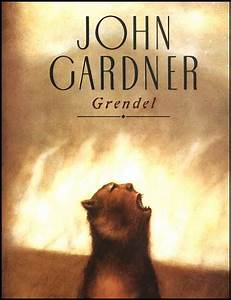
In Gardner’s clever almost subversive retelling, Grendel becomes almost a symbol of nature or early civilization fighting their conquerors. He is also an existentialist character deeply wondering about his own existence in a world of monsters, human and otherwise.


13.  Fagin the Jew by Will Eisner-Original tale: Oliver Twist by Charles Dickens-Like Shakespeare’s Shylock, many consider Charles Dickens’ Fagin to be a victim of Anti-Semitism. Eisner’s graphic novel took this idea and gave it a story of his own. Fagin becomes a truly tragic character as he recounts his life story to Charles Dickens himself before he is led to the gallows.

His background is moving as Fagin recounts his childhood in the Ashkenazic Jewish community of London and his separation from his family because of a pogrom. He survives the only way he can in Victorian London by becoming a pickpocket and then training younger pickpockets as he ages.


12. “The Case of the Impecunious Chevalier” by Richard Lopoff-Original works “A Study in Scarlet” by Sir Arthur Conan Doyle/”Murders in the Rue Morgue” by Edgar Allan Poe-In Conan Doyle’s original Sherlock Holmes story, “A Study in Scarlet,” Watson compares his friend’s detection to Poe’s C. Auguste Dupin. Far from flattered, Holmes’ is offended. He calls Dupin a “very inferior fellow,” and ridicules Dupin’s ratiocination example of guessing his friend’s thought process as the work of a show off. In Lopoff’s interesting meeting of minds, Dupin reads Holmes’ insults and is rather offended especially since he trained Holmes in one of his earliest cases. Lopoff not only cleverly repaid the debt that Holmes and Doyle owe Dupin and Poe, but the story becomes a challenge between the two mental giants.

This short story is actually from an anthology book, My Sherlock Holmes, which tells of Holmes and Watson through other eyes such as Moriarty, Mrs. Hudson, Wiggins of the Baker Street Irregulars, various clients, Irene “The Woman” Adler, and the two Mrs. Watsons.


11. A Thousand Acres by Jane Smiley- Original tale: King Lear by William Shakespeare-Smiley does many of the other authors on this list one better. Instead of simply revising the story of King Lear through the eyes of his eldest daughters, Goneril and Regan, she transplanted the story to modern day. Instead of two greedy princesses fighting their senile father for control of his kingdom, the novel instead is the story of two women fighting for control of the family farm from their abusive alcoholic father.

The two protagonists, Ginny and Rose, the modern equivalent of Goneril and Regan, become strong-willed sympathetic characters trying to survive in a man’s world of farming and remembering the incest from their father when they were younger. The plot moves from their rejection of their father and their betrayal from a man who seduces both sisters to its inevitable conclusion with the two sisters’ lives ruined forever.


10. Rebecca’s Tale by Sally Beauman- Original tale: Rebecca by Daphne Du Maurier-If any character on this list needed their story told more, it is certainly Rebecca De Winter, Maxim De Winter’s first wife from Daphne Du Maurier’s Rebecca. We learned about her from De Winter, Mrs. Danvers, and Rebecca’s cousin, Jack Favell. Heck even the second Mrs. DeWinter got a say and she never knew Rebecca in life. Beauman cleared up that oversight by providing the reader with Rebecca’s journal.

Through her own eyes, Rebecca is hardly the paragon of beauty and social grace that Mrs. Danvers, Favell, or Mrs. De Winter see or the scheming harpy in Maxim’s version. Instead she is a troubled strong-willed woman with attitudes and affections that counter her upbringing of the times. Rebecca adds to Du Maurier’s tale and Rebecca’s actions towards her marriage to Maxim and her decisions leading to their final encounter become less arbitrary and more understandable through Beauman’s writing.


9. Confessions of an Ugly Stepsister by Gregory Maguire-Original tale: Cinderella-The first of two Gregory Maguire novels on this list. Maguire certainly has a history of telling stories from other points of view and this one is no exception. This recounts the story of Cinderella largely from her two stepsisters, the possibly mentally disabled Ruth and the aspiring artist Iris.

The stepsisters are fascinating as they try to survive accusations of witchcraft that cause them to flee England, their eccentric domineering mother, and their beautiful agoraphobic stepsister, Clara. Iris is effective as she tries to please her mother and make her mark as an artist studying under the Dutch Masters. Ruth’s story is particularly heartbreaking as she survives to hear their story become a legend which bears little resemblance to the facts.


8. Wicked: The Life and Times of the Wicked Witch of the West by Gregory Maguire-Original tale: The Wonderful Wizard of OZ by L. Frank Baum-Maguire’s second book on this list is probably the most famous work on here mostly because of the well-known musical. In the equally fascinating book, Maguire tells of the Witch of the West’s (called Elphaba) ostracism from Munchkinland because of her green skin, school days at Shiz University where she meets Glinda, studies of magic, and her activism for the rights of sentient Animals.

Elphaba becomes a unique character branded wicked because of her inability to follow the status quo and rejections of the manipulations of the Wizard and Madame Morrible, her devious former schoolmistress. Her journey from naïve schoolgirl to OZ’s Public Enemy #1 is a fascinating one.

Warning: While I like this story, I did not like the sequel Son of a Witch near as much and never read the other books in the series, A Lion Among Men or Out of OZ, so I don’t have a high or much of an opinion about the rest of the OZ Quartet series.


7. The Merlin Trilogy/The Wicked Day by Mary Stewart-Original tale: The Legends of King Arthur/La Morte D’Artur by Sir Thomas Malory- If a bookstore stocked up on only the various books, movies, plays and what not about the legends of King Arthur, there would not be room for anything else. Indeed this list has two in the major countdown and two more in honorable mention. Stewart’s Arthurian books tells the legends from two characters: Merlin in the beginning and Mordred in the final book.

In the Merlin Trilogy, Merlin recounts his childhood under Aurelius Ambrosious, his training in divination, his relationship with Arthur, and his love affair with Nimue, his young protégée. The final book The Last Enchantment is particularly moving as Merlin recounts the final days of Camelot, his faltering relationships with Arthur and Nimue, and his feelings that there is no longer a place for him in a world that moves ever so closer to progress.

Mordred’s book, The Wicked Day, tells of his life with his four half-brothers and his encounters with his father/uncle, Arthur, leading up to their inevitable confrontation. Mordred tells his story not with the world-weary detachment of Merlin, but instead with bitter cynicism and sarcastic one-liners such as when he ridicules his brothers, Gawain, Gareth, and Gaheris as pretentious social climbers using their relationship to “their Uncle the High King” to their advantage. He is also rebellious towards his upbringing by his mother and stepfather as a tool of vengeance against Arthur. His tender side is shown as he grows to respect and care for the King and is reluctant to bring about his downfall.


6. “The End of Little Nell “by Robert Barnard Original tale: The Old Curiosity Shop by Charles Dickens-This is the exception to the rule in this list of telling the story from the original protagonist’s point of view. Many may know of the tragic ingénue of Dickens’ book The Old Curiosity Shop whose death caused many a reader to cry or they may sympathize with Oscar Wilde that “One must have a heart of stone to read the death of Little Nell without laughing.” Barnard’s version of the Dickens heroine would agree with Wilde’s assessment.

Instead of a Victorian too-good-to-be-true victim, Barnard’s clever story gives us a young manipulative gambling prostitute who is well on her way to achieving her ambitions of being “England’s Queen of Crime.” Nell derisively talks of the other characters in The Old Curiosity Shop such as Daniel Quip, the antagonist and ex-lover, the do-gooder hero, Kit Nubbins (“a dim spark if ever there was one.”) and others. She mocks their gullibility in how they swallow her goody-two-shoes persona. She calls Dicken’s portrayal of her “garbage by a hack writer”. However she accepts that persona as the perfect disguise so she could continue her illegal activities by faking her death to become a part of London's Underworld.
Like “The Case of the Impecunious Chevalier,” this story comes from an anthology. It comes from Dickensian Whodunits, a book of short stories in which Dickens’ characters and Dickens himself get involved with various mysteries and crimes.


5. “Toil and Trouble” by Edward D. Hoch- Original tale: Macbeth by William Shakespeare-In Shakespeare’s play, The Weird Sisters are merely a plot device to reveal the prophecies that send Macbeth on his way and portray Jacobean fears of witches. Hoch’s brief but suspenseful story gives the three sisters a backstory, individual characteristics, and a more personal involvement in Macbeth’s life. Told primarily from the point of view of Selene, the middle sister, the story recounts how the sisters studied witchcraft from their teacher, Hecate. It also tells of their relationship with each other as Persephone is the leader guiding her younger sisters, Selene is the smart one able to see things that the others do not, and Artemis is the shyest and youngest but also filled with her own importance.

The atmosphere is equally as dark and chilling as Shakespeare’s play as the sisters become involved in the bloodshed and murders around them. The story also comes to a strange, but fitting conclusion as the trio realize that they have been manipulated and refuse to take part in these events any longer.

This too comes from an anthology, Shakespearean Whodunnits. Like the Dickens book, this book involves various Shakespeare’s characters participating in solving murder mysteries often concerning events in their own plays.


4. Marley’s Ghost by Mark Hazard Osmun-Original tale: A Christmas Carol by Charles Dickens-Ebenezer Scrooge’s late partner, Jacob Marley takes center stage in this moving surrealistic variation of Dickens famous Christmas story. Marley recounts his childhood, his life of business, his death, and his after-life.

The early years of his childhood are moving as Osmun reveals Marley’s closeness with his twin brother, the possibly autistic, Ezra. It also shows many of the hardships faced in Regency and Victorian England as the readers are treated to scenes of coal mines, poverty, debtor’s prisons, and other institutions.

The afterlife sections are surrealistic as Marley tows his chains in a strange world where he encounters three pagan spirits which will be familiar to readers of Dickens’ original tale. The after world shows the guilt and longing for redemption inside Marley’s soul and his anguish over his separation from his long-lost brother and the miserly solitary fate of Ebenezer Scrooge, his partner and friend.


3. Medea by Euripides –Original tale: Jason and The Golden Fleece/Jason and the Argonauts- The oldest story on this list. Some have called Medea the original feminist play and I would have to agree. Medea has been characterized as a femme fatale, dark sorceress, or a sociopathic villain in various works. Euripides took a more empathetic approach to Jason’s love interest/companion.

In the days after their journey, Medea recounts how she helped Jason acquire the Golden Fleece by using clever tricks and ruses to aid his search, murdered a king, and cut herself off from her father to join the Argonauts and Jason.  After the adventure, Medea is understandably hurt when he rejects her for another woman. She wonders what was in that entire struggle for her.

Medea’s decision to kill her and Jason’s children becomes more understanding when Medea reveals that is based partly on a jealous rage to make Jason hurt, but also to protect the children from a life of exile. Medea definitely is seen as a multi-faceted fascinating character as she challenges the fate that she has been dealt with in a faithless and ungrateful lover and questions who is the real author of her and Jason’s tragedy.


2. Wide Sargasso Sea by Jean Rhys-Original tale: Jane Eyre by Charlotte Bronte-Bertha Rochester is seen in Bronte’s original book as the mad wife in the attic, Jane’s dark alter ego and an obstacle towards her happiness. Rhys gives her a complete makeover into a passionate woman challenging her marriage and suffering from her husband’s coldness to the point of madness.

Bertha, called Antoinette Cosway in this book, is a Jamaican white woman descendant of former slave masters. She suffers from the hatred of the black locals, her mother’s mental illness and preference for her mentally disabled son, Pierre, and the indifference of her emotionally abusive stepfather, Mason. She fights her circumstances by arguing, studying obeah magic under her family servant, Christophine and flirting with other men.

Antoinette’s story becomes a feminist story as she challenges the circumstances around her, particularly her arranged marriage to Rochester.

Besides being a feminist novel, Wide Sargasso Sea is also seen as an attack on colonialism. Antoinette’s fascination with Jamaica’s natural beauty and closeness to the culture contrasts with Rochester’s discomfort with the wilderness around him and desire for ownership of the people. Antoinette is truly an outsider in every sense of the word. Because she is ridiculed as “a white cockroach,” she is unwelcomed by many people in Jamaica and is considered a wild Jamaican by the English; she is unable to fit in. Much of Rochester’s mistrust of her comes from his willingness to believe accounts from others about her character. This results in his rejection of Antoinette and her subsequent madness.


1. The Mists of Avalon by Marion Zimmer Bradley-Original tale: The Legends of King Arthur/La Morte D’Artur by Sir Thomas Malory-The best alternate point of view

tells of the Arthurian legends through the eyes of its female characters primarily Morgan Le Fey and Guinevere.

The two become a study in contrasts in their narratives. Morgan Le Fey, called Morgaine,

is trained on Avalon’s community of magical women. Her aunt, Vivienne AKA The Lady of the Lake rears her to study magic, practice divination, and honor the Goddess. Guinevere is trained in a rigorous convent where she practices Christianity but fears the outside world full of sin and what she deems as black magic. Morgaine is raised to be a powerful leader and advisor to royalty. Guinevere’s only goal is to be the wife of a king and possibly the subject of someone’s courtly love poems.

The religious and feminist aspects of the two characters come to a head in their involvements with Arthur. Morgaine and Arthur become involved in a pagan ritual which alternately fascinates but then disgusts Arthur when Morgaine bears their son, Gwydion (later called Mordred). Guinevere tries to get her husband to embrace Christianity and to honor no gods but the Hebrew-Christian one. Guinevere and Morgaine also have to deal with their romantic feelings for Lancelot in the former and Accolon in the latter.

The struggles between the two are fascinating to read as the known events of the Arthurian legends become turned around. The book’s best character is Morgaine who fights the male dominance of Camelot to protect her pagan beliefs and the connections to the Goddess.


Other works worth mentioning are Andrew Lloyd Weber’s musical Jesus Christ Superstar, Finn by John Clinch, March by Geraldine Brooks, Jack Maggs by Peter Carey, The Wind Done Gone by Alice Randall,  Rhett Butler’s People by Donald MacCraig, Mr. Fitzwilliam Darcy: Gentleman Trilogy by Pamela Aiden, Captain Hook: The Adventures of a Notorious Youth by J.V. Hart, I, Iago by Nicole Galland, I Am Mordred and I Am Morgan Le Fay by Nancy Springer, The Penelopiad by Margaret Atwood, Ahab’s Wife or The Star-Gazer by Sena Jeter Naslund, and Mr. Timothy by Louis Bayard.


So that’s my list. What are some of your favorite stories told from other points of view? Which long neglected or misunderstood character do you believe deserves to finally have their say? Let me know in the comments below or through Facebook.