Tuesday, August 11, 2020

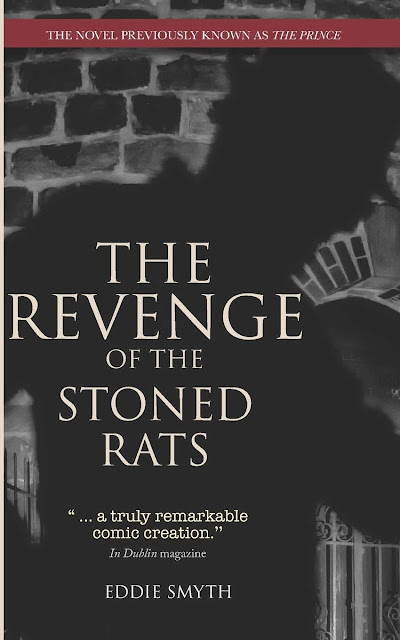
Weekly Reader:The Revenge of the Stoned Rats: The Novel Previously Known As The Prince by Eddie Smyth; Confusing Weird Book For Weirdness' Sake


Weekly Reader: The Revenge of The Stoned Rats : The Novel Previously Known As The Prince by Eddie Smyth; Confusing Weird Book For Weirdness' Sake

By Julie Sara Porter

Bookworm Reviews


Spoilers: There are books like Kiki Denis' Life is Big that seem weird, but really there is a method to the weirdness. They are trying to make a point and tell a story in a fresh unique way. The weirdness is used as a means to engage the Reader with the plot and theme.


 Then there are books that are weird for no point at all, weird just for the sake of being weird. They like to throw anything at the Reader for no particular reason, except to show the author's writing ability. To paraphrase Oscar Wilde, they are weird for weirdness's sake. 


Eddie Smyth's The Revenge of the Stoned Rats: The Novel Previously Known As The Prince is part of the latter category. It could tell an interesting story. But it takes so many unnecessary detours into surreality that not only does it halt the plot, but after awhile the Reader forgets what the plot even was.


The book begins cleverly and humorously enough with an introduction shaming the Reader for reading introductions. ("Who told you to read this? Is it proscribed (sic) reading?") It is hilarious in a meta-fourth wall break sense. It also tries to prepare you for the type of book that you may be reading. Though nothing can really prepare you for it.


The book begins pretty decently showing the life of an impoverished kid from a troubled family in early 1970's Ireland. Billy Sikes (his father thought Billy's name "was funny or clever or something. It was later in (Billy's) life before (he) knew why".) is an 11 year old with a messed up home life. His father, then his mother abandoned him. He lives with his extremely religious, but verbally abusive aunt, Kate, and his two female cousins: one of whom, Anna, might be mentally disabled and the other, Agnes, is  a sadistic bully. His half-brother, Herbert, has returned home, but seems to be in the grips of depression. Herbert spends all his time in his room listening to records or hanging out with a wild crowd late at night.


Billy's only outlet is hanging out with his best friend, Jimmy Conroy. Jimmy also has an unhappy home life. His mother "left with the milkman." (Billy speculates that they are friends because they share a common bond of having absent deadbeat mothers.) Now, Jimmy lives with his alcoholic father and two older brothers: one of whom, Mickey spends all his time riding motorcycles and the other, Patrick, does the cooking and cleaning (and appears to be the only sane one in both families).


The two live in a pretty rough neighborhood where drugs and gangs run rampant. One of whom is called The Black Prince and appears to run the neighborhood. Some people get attacked and others have vengeance on their minds. It's a grim place where abuse is all too common and childhood ends too quickly.  


The book has a strong beginning with a very sarcastic narrator filled with one-liners. (On Herbert's birth: "(Their mother) didn't understand where the baby came from, she'd insisted that she must have been 'immaculately concepted.' We'd been told about that in school, but I hadn't a clue about what it meant. But it was a good story, and it was religion, so it had to be true.")


This book could be an excellent coming of age story about a young man fighting his way through abuse, drugs, and gang violence into maturity. Then it takes a left turn into Bizarro World with no real  purpose or reason.


On a fishing trip, Billy hitches a ride with a biker with a fish head. The fish biker suddenly blurts out his life story to Billy, a total stranger, revealing that he may or may not be connected to Billy. Then, there's another stranger who may also be connected to them as well as The Black Prince. Billy might be shown a snuff film with one of his relatives in the starring role.


The Revenge of the Stoned Rats becomes a book where nothing is straightforward. In fact, the plot itself can't be easily described after awhile. 

The second part gets worse as characters thought dead return to life. There is a sudden trip into a western. Supernatural rats appear to frighten Billy almost too death. The plot of Billy and his friends seeking vengeance for attacks on their families is spread out between one strange hallucinogenic moment after another.


After awhile, the Reader doesn't know what is going on. Is Billy telling the story in modern day and embellishing it with extra details? Is he a drug addict going through a bad trip? Is he insane and hallucinating while in a psychiatric hospital? Is he dying and his life is flashing before his eyes? Is he a writer going through writer's block, so he is just just putting down whatever runs through his head? The introduction suggests one thing, but the ending suggests something completely different. The Reader doesn't know and after awhile doesn't care.


I like books that are weird. They make you sit up and pay attention. They take the Reader from their comfort zone and stretches their imagination while allowing them to meditate on what the book is really trying to say. However, there is such a thing as being too weird and Revenge of the Stoned Rats crosses that line.


The weirdness seems to appear in place of a coherent plot. It appears as though Smyth removed the plot just to be thought of as meta or clever, but instead just comes across as bizarre and confusing. It's like listening to a rambling account from someone who is mentally unstable. It might be interesting, but it is way too confusing to follow.


If there was a stronger point to the weirdness, or a final reason for why the story is told the way it is, it would make some sense. But unfortunately, The Revenge of the Stoned Rats is not that book. It has no sense and no reason. It might be interesting at first, but then it becomes confusing, pretentious, irritating, and even boring.


Sunday, August 2, 2020

August's Reading List


August Reading List


July was another month that had many books held over from the previous month. August has a whole bunch of new books to read. I would like to thank the people at First Impressions for hiring me and giving me new materials to read. You, BookTasters, Blackthorn Book Tours, and the various individual authors who have asked me to review their books have helped fill this blog with many wonderful titles. I could not have done it without any of you.


New Book Alert: A New Way of Life: Protect Yourself and Those You Love. Be the Solution to Future Pandemics Like Covid-19, Climate Change, Economic Crises by Samy Barnett

Weekly Reader: Revenge of the Stoned Rats (The Novel Formerly Known As The Prince) by Eddie Smyth

Weekly Reader: Precious Silver Chopsticks: The True Story of a Korean Noble Family by Mae Adams (PopSugar Reading Challenge: A book with gold, silver, or bronze in the title)

Classics Corner: A People's History of the United States, 1492-The Present by Howard Zinn

New Book Alert: The Last Moon Before Home by Barbara Dzikowski

New Book Alert: When She Touches: A Discovery of Destiny and A Gift Like No Other by Sheryl Frazer

New Book Alert: Behind Blue Eyes: A Cyberpunk Noir Novel by Anna Mocikat

Classics Corner: The Heart is a Lonely Hunter by Carson McCullers (PopSugar Reading Challenge: A book by an author in their 20's)

Weekly Reader: Stamped From The Beginning: The Definitive History of Racist Ideas in The United States by Ibram X. Kendi

Weekly Reader: The Adventures of George and Mabel An Almost (Sort of? Kind of? Could be?) True Story by Stephanie Hutcheson

New Book Alert: The Oscar Goes To by Rob Santana

Weekly Reader: Coins for My Dream: Stories from My Early Years by Mae Adams

Weekly Reader: Girl At Sea: A Coming of Age Story by David Barton

New Book Alert: Everyone is a Moon: Strange Stories by Sawney Hatton

New Book Alert: The Patchwork Prince: Stumbling Stoned by A. Von Wyck

Classics Corner: Love in the Time of Cholera by Gabriel Garcia Marquez (PopSugar Reading Challenge: A book with a bird on the cover)

Weekly Reader: The Book Thief by Markus Zusak (PopSugar Reading Challenge: A book with a four or more star rating on Goodreads)

Weekly Reader: 1776 by David McCullough

New Book Alert: Sophie de Tott: Artist in A Time of Revolution by Julia Gasper; Brilliant Gripping Biography of Overlooked Female Artist of the French Revolution


New Book Alert: Sophie de Tott: Artist in A Time of Revolution by Julia Gasper; Brilliant, Gripping Biography of Overlooked Female Artist of the French Revolution

By Julie Sara Porter

Bookworm Reviews


Julia Gasper's previous book, Elizabeth Craven: Writer, Feminist, European covered the life of Elizabeth Baroness Craven, Princess Berkeley Magravine of Brandenburg-Anspach. She was a brilliant woman whose travels and writings challenged the roles expected of women. She deserves to be recognized with other early feminists like Mary Wollstonecraft who led the path for other women to put those concerns from writing into activism.


Gasper's latest book, Sophie de Tott: Artist in a Time of Revolution, is a biography about another woman with immense talent but was neglected by history. This woman was Sophie de Tott (1758-1848) and like Craven, she too lived a colorful life as a portrait painter, novelist, musician, and secret agent. This book reveals her as a strong-willed woman with great talent, a strong sense of liberty and equality, and a scandalous personal life in which she lived according to her own terms.

Gasper wrote about Tott: "She is one of innumerable neglected women artists and wherever we find any allusions of her in catalogs and indexes, she is treated as an obscure painter of perhaps one or two works. In fact, there are about fifty works of hers that can definitely be listed, and possibly many others that have yet to be discovered."

Tott is yet another of those women who patriarchal history has ignored only to be rediscovered and recognized by feminist scholars. Similar to Elizabeth Craven, herself, and the women in Nina Ansary's book Anonymous is a Woman.

Tott's early life taught her a great deal about independence and liberty. She was born in Constantinople in 1758 to Baron Francois de Tott, the Hungarian born son of a French diplomat and who worked as a secretary for his cousin, Charles Gravier, the Comte de Vergennes. Francois and his father arrived in Constantinople on a fact-finding mission. He married a woman, Marie Rambaud, the daughter of a mercantile family. Marie's mother was French, but born in Turkey, and her father was of Greek extraction.

Tott was born, Sofia-Ernesta later adapted to Sophie-Ernestine. She was the first of three daughters, the others being Angelique-Amelie and Marie-Francoise. Angelique became a nun and Marie had an advantageous marriage.There were three other children, but they died in childhood. This cosmopolitan heritage and upbringing often made Tott something of an outsider in French circles as she matured.

The Tott sisters grew up speaking French and their mother's native Greek. Their father's ideals which valued Nature, Knowledge, and Reason over wealth influenced their upbringing. They were taught reading, writing, and sewing by their mother.

Baron de Tott was often involved in military operations and reconstruction of Constantinople, so the family or he moved around a lot. By the time de Tott was 18, she, her mother, and sisters eventually settled in France.

Marie and her daughters' arrival in Lyon, France made quite a splash. Their Constantinople fashions including kavadis, ornately embroidered short sleeved robes over a petticoat and bodice, taraboulous, ornamented sashes around their waists, and scarves wrapped around their heads like turbans were much discussed.

They also met the Chevalier Charles de Pougens, a brilliant cultured young man who was born illegitimate. He developed an interest in young Sophie. An unsuccessful surgery left him completely blind, but he and Sophie continued to share romantic feelings for each other. They traded love letters with his friend, Fortia, acting as intermediary. Tott had no fortune and Pougeons, no employment but a promised stipend if he remained celibate.Their romance was not looked upon favorably.

Marie died in 1779 and the Baron did not approve of Pougeons as a suitor for his eldest daughter. He tried to force an arranged marriage upon her, but Tott ran away. Their arguments escalated and Tott moved in with a new friend, Adrienne, Comtesse de Tesse.

Tott and Tesse had a relationship that was both mother-daughter and mentor-student. Through Tesse's influence, Tott embraced a more intellectual, literary, and philosophical world. Tesse hosted frequent salons and corresponded with philosophers, Voltaire and Diderot and novelist, Mme. de Stael. 8-year-old, Mozart dedicated a performance to her.

The salon discussions were lively during the pre-Revolutionary days discussing religious skepticism, reformist plans, and republican ideals. Tott learned a lot from her mentor and developed a sense of reform, intellect, and equality that lasted throughout her life.

It is also through Tesse that Tott learned the music and painting that would help shape her later career. She may have been educated by Elisabeth Louise Vigee-Lebrun, a female portrait artist who had been commissioned by Marie Antoinette.

One of Tott's first portraits was of her adopted mother, seated with a sword on her lap. (The sword may be a symbol of the Tesses's Masonic Lodge membership.)

Tott's introduction to salon life and portrait painting did not go unnoticed. She was the subject of poems by Ponce Denis Echouard-LeBrun, who admired her work and compared her to the Graces of Greek mythology.

Even though Tott was in a learned exciting new world, she never ended her correspondence with Pougeons. They could not marry or even elope because the Baron had to give permission and any elopement would be annulled. Pougeons was told by Tesse to leave for three years and not to write to Tott. They however, continued to write passionate letters, swearing that they will never marry anyone but each other. Tott received much criticism from Tesse's inner circle for carrying on an affair in which neither her father nor foster mother approved but Tesse publically supported her.

The controversy caused both Tott and Pougeons to fall ill with emotional and psychological disorders. Tesse tried to keep the two apart by arranging a journalist position for Pougeons and sending Tott to a convent. (Despite that the Tesses weren't particularly religious.)

Tott's illness escalated to the point that she fell into a coma. Though Pougeon was at her bedside, he finally agreed to work at his occupation and cease their correspondence. Tott renounced her relationship with Pougeons and any hope of marrying him. However, true to her promise, she never married anyone else.

This romance and two others revealed her as a deeply passionate emotional woman who sometimes was ruled by those emotions. However, like many artists that passion and emotion allowed her to create and reveal her works in a deeply personal and loving light


Tott resumed the mother-daughter bond with Tesse when bigger world events shook them: the French Revolution. Tott and the Tesses had close friendships with many who helped shape the American Revolutionary War such as Thomas Jefferson and Marquis de Lafayette, Tesse's nephew by marriage. These allegiances as well as the sham trial and indefinete prison sentence of an acquaintance are among the many moments that revealed Tott's humanitarian goals that resisted against the despotism and carelessness of the royals.

While the Bourbon Royal family befriended many of the American Revolutionaries and aided America in their war for Independence, Gasper wrote that this alliance backfired on them drastically:

"Its ministers did not foresee the dangers of importing the most extreme radical ideology into the bosom of France where it was approved by leading intellectuals and even apparently by sovereigns...A hereditary monarch, whose ministers were appointed by decree and who could make or unmake laws as he pleased, was siding with a republican rebellion that was nothing more to do with kings." Economic inflation, excessive taxes, the limit of Parliamentary control, a starving poor populace, and sudden new ideas about liberation and egalitarian ideals helped make many of the French feel that perhaps a country without a monarchy was a good idea.

During this time, Tott maintained an intellectual and hearty correspondence with Jefferson. The two shared ideas, but she wasn't afraid to disagree with him such as giving her honest opinion about a portrait. Her artistic career continued as she painted other portraits such as that of a doctor who treated a mysterious ailment of hers and who then died himself of the same illness. Tott also had her portrait painted by her former tutor, Vigee-Lebrun.

Unfortunately, Tott's father was imprisoned in the Bastille in 1786. He was released, but it reopened Tott's status as an unmarried woman without a man's support. The Tesses settled property on her, about seven thousand livres, and made her the heir to their country home. She was able to live as a woman of independent means.

Before the Revolution, Tott painted what was probably her most provocative portrait, that of Ourika, a young Senegalese girl who was sent to France by the Marechal de Boufflers to his aunt. The painting depicts the girl, about eight years old, putting a Laurel wreath on the bust of a man. Ourika's is one of only about a dozen portraits of black people in Paris during this time. Gasper wrote that those portraits were not only artistic, but political as well. "To portray a black person at all as a named individual was to draw attention to their humanity."


Gasper speculated that Tott's own foreign background allowed her to sympathize with Ourika and recognize her humanity.

In 1799, the Comte de Tesse joined the Estates-General and suggested benevolent reforms such as universal elementary education and welfare inspections of wet-nurses. Unfortunately, these reforms could not help a hungry enraged populace. The Comte was of a more moderate frame of mind than the more violent radicals. The Estates-General debated many of the policies with nobles resisting any change, radicals wanting reform, and moderates, like the Comte favoring a slower change. Mme. de Tesse disagreed with her husband and was concerned about handing too much power to the people. The debate continued until July 14, 1789, when the Bastille was stormed.

Tott was with Tesse at the Versailles on October 5, 1789 when the people arrived in anger, throwing stones, mounting sculpted heads of the royals on pikes, and demanding to see the King and Queen. Tott and the others were kept at Versailles until the riot dispersed. Lafayette arrived and begged King Louis to concede to at least some of their demands. King Louis signed a declaration of rights and was taken prisoner.

After the King and Queen were imprisoned, riots continued and nobles plotted their escape. Madame de Tesse escaped with Tott and her sister, Marie, to Switzerland while the Comte remained in France.

In Switzerland, Tesse's new home became a haven for emigres. They lived a more downscale life, but Tesse and her charges managed to have money saved. They were generous, especially to emigres who were left in worse conditions than they were. The sisters spent a great deal of time gardening, reading novels, and befriending other emigres.

Tesse fell ill and was mostly bed ridden and depressed. Tott, however, hung out with younger people who were in good health, hopeful spirits, and hoped to make the most of their move. One of those young people was Antoine, Vicomte d'Agoult who was dashing, handsome, somewhat self-absorbed, and was married, but solely for wealth and was separated from his wife.

Agoult was a good friend of novelist, Choderlos de Laclos, author of Les Liasons Dangereuses/Dangerous Liasions and was rumored to be the inspiration for the Visconte de Valmont, the scandalous sexual predator from the novel. Even though Laclos had many inspirations for his characters, Agoult still was something of a rake and a lady's man. His reputation did not sit well with the Comtesse de Tesse and she did not approve of his relationship with her foster daughter.

This relationship caused dissension in the once close relationship between Tesse and Tott. Tesse treated her foster daughter with frosty silence. She solicited help from her husband and Tott's father, both of whom expressed their disapproval bluntly. Tesse complained about being treated unfairly. Tott continued to side with Agoult insisting that their relationship was not immoral. Tesse said them being together was enough. Tott and Agoult spent all of their time together and were very passionate in their physical contact.

The Tesses and Tott acquired a reputation for generosity. They helped many emigres, especially some who were clergy. They fed them with food from their garden. When the Comte joined his family in Switzerland, he purchased various household goods and his wife and foster daughter dispersed them to the poor. Gasper writes that when one of their friends was so poor that they acquired a habit of shoplifting, the Tesses reimbursed the shopkeepers for the losses.

The Comte purchased a new cassock for an Abbe who had been deprived of his during his escape.


Despite the generous spirit and the return of the Comte, the relationship between Tott and Tesse was still fractured. Tott resumed painting, almost to vent out her frustrations. She painted the portrait of many emigres, including Joseph-Luc de Vezet, a deputy of the Estates-General with whom Tott had a lively intellectual discourse, and Jean-Joseph Mournier, future advisor of Napoleon.

Agoult returned to Tott's life, while Tesse continued to treat him with cold politeness. She permitted him to visit because she knew that Tott was an adult and her passionate nature would cause her to follow him to France, bringing more trouble on herself. Tesse acted as chaperone and was able to weigh Agoult's vain character. This made her even more against Agoult.


Gasper herself believed that Agoult genuinely loved Tott and his traveling long distances to see her proved it. "It is curious that Mme de Tesse, who professed to love Sophie so much, doubted that anybody else could love her," Gasper said.

Tott's father's death in 1793 did not warm any feelings. The Baron de Tott died, in poverty owing money to many including the Tesses. Tott offered to pay her father's debts, but Tesse coldly refused.

While Tesse was away, Tott wrote letters to Agoult. Tesse worried that gossip would spread that she permitted the affair under her roof. The two's arguments became more heated as Tesse accused Tott of being ungrateful and Tott accused her foster mother of being a tyrant.

Tott and Agoult's romance intensified. When he visited, she invited him to her bedroom, no longer caring about propriety or pleasing her foster mother.

She then informed Tesse that she was returning all possessions and valuables and would live in a convent. Agoult helped her to leave. Tesse formally accepted Tott's request and Tott left her forever. Tott wrote one letter explaining her reasons and Tesse returned a cold and indifferent response, telling her that the estrangement was permanent. To the end of her life, Tesse refused to read or open any letters from Sophie de Tott. The Tesses left for Germany with Tott's sister, Marie leaving Tott behind in Switzerland.

Many of the Tesses and Tott's friends and relatives fell to the guillotine or were imprisoned. Agoult helped Tott to join the Royalist network who wanted to bring the Bourbons back as constitutional monarchs.

In 1795, she returned to France on a secret mission as "Mlle de Tott, musician." She saw all allusions to the monarchy removed, monks and nuns in exile, former convents and monasteries used as hostels or storage, and the corrupt new rulers living in luxury and assuming total control.

Tott moved to Hamburg, Germany where she rented a studio to earn a living painting portraits and hosting musical events. Among her portraits were Young Woman in White, which may have been of her sister, Marie and she may have painted another one of a woman who might have been her other sister, Angelique. She also painted various royalists, including Mme. Isaac Morier.

She continued writing to Agoult and used her home as a hub for the royalist network. She and the other royalists supported the arrival of Comte de Provence, who assumed the title of Louis XVIII. Other royalists that she welcomed included Antoine Rivarol, a satirist, and Marquis de la Porte, a former governor of the King and considered the "oracle" of the royalists.

Besides painting, in 1798, Tott also wrote the novel, Pauline de Vergies, ou Lettres de Madame de Staincis, Publiees par Claire de Tott (Pauline de Vergies, or Madame de Staincis's Letters, Published by Claire de Tott.). The plot involves a young woman, Pauline, in the care of a wealthy couple. Pauline makes unsuitable friends despite objections from her adopted mother. Pauline refuses to marry, but has a serious courtship with an older widower. She turns his offer down. Pauline becomes ill and depressed to the point of severe mental instability. She briefly vanishes, but then returns to France, dying. She confesses that she loved a married man and vowed to never marry anyone else.

The novel is filled with sensibilities that were so prevalent in 18th century novels, but shows many of the similar struggles that Tott dealt with being an unmarried woman with an active love life.

Oddly enough, the Revolution gets scant mention as though Tott did not want to relive those events in fiction as she did in reality.

Gasper wrote, "All the elements in (Tott's) life and experience have been rearranged like beads in a kaleidoscope. She put into this story all the intense suffering and agonized, thwarted she had suffered firstly for the Chevalier de Pougens and then for the Vicomte d'Agoult…. Although, the French Revolution is not ostensibly present in the novel, the discourse of tyranny and liberty, despotism and rights, recurs constantly in Pauline's personal predicament."

Gasper also sees Pauline de Vergies as an attack on sensibility, deep unchecked emotion which Tott suffered from most of her life. (Which would later be characterized as Anxiety, Depression, and other mood disorders. )

Gasper wrote, "The story of Pauline de Vergies is a prolonged cry of anguish from an intelligent woman who has to suppress her emotion until she is going mad, and finds that she has no bearable existence in the society where she finds herself. Love does not have a happy ending and independence is not an option."

During her time in Germany, Tott acted as an informer, supporter, and channel for communications for a secret network of royalist activists. When Napoleon Bonaparte became First Consul in 1799, his secret service pursued all opponents against him, including those in Germany. Hamburg was no longer safe and many emigres fled.

Tott fled to England with her painting tools. One of her letters was confiscated and she was declared a conspirator against Napoleon. She knew that she could not return to France or she would face execution.


Upon Tott's arrival in England, she continued to receive various commissions, particularly of emigrated royalists, like the Duchesse de Guiche and her daughter, Corisande de Gramont. Those portraits were accepted for the annual exhibition of the Royal Academy of Somerset House in 1801.

Gasper wrote that Tott's acceptance was an honor and a stepping stone to bring acknowledgement to her professional career. "The fact that she got in at the first attempt indicates that she was in a different category from most of the emigres who turned to painting for a living," Gasper wrote.

One of Tott's biggest commissions in England was that of the Princess of Wales, Caroline of Brunswick. As Gasper's previous book about Elizabeth Craven reveals, Caroline had a troubled marriage with the Prince Regent. The two were constantly at odds. Caroline was derided by her husband for her plain appearance. He flaunted his mistresses in front of her and she was ignored by the court. Caroline however had many supporters, one of whom was Craven who wrote a play in her honor.

Another was Sophie de Tott, who found her friendly and charming. Princess Caroline presented a unique challenge for Tott, to remove any blemishes in her appearance. "(Caroline) was no beauty and the chief aim of any portrait was to flatter her and disguise her squint, luckily something that (Tott) was able to do," Gasper wrote. Unfortunately, the painting was interrupted when the King of England felll ill and Caroline had to accompany her husband at Windsor. The delay gave Tott severe anxiety, since the cost of living was high in England, she was desperate for money, and she may have ended her relationship with Agoult since they stopped writing when she arrived in England. (A footnote explained that Tott apparently never got to finish her portrait of Caroline, since her name is not listed as one of the artists who were known to have painted portraits of her.)


Tott had better luck in painting a portrait of Louis-Joseph, Prince de Conde, a former commander who led the royalist army. He was familiar with Tott's secret agent work, as well as her artistic talent. She painted a portrait of Conde in uniform holding a baton and sword, with a battlefield behind him. He is revealed as a man of deep pride and courage in battle. However, because his face is drawn and careworn, the painting also reveals the emotional toll that a life of war and exile had done to him.
After her painting of Conde, Tott received several commissions and had a steady stream of work. She was particularly fond of painting her fellow emigres and supporting causes that were close to her heart. Gasper wrote, "(Tott) became a committed artist with a purpose in life, engagee."

Among those she painted was the Comte de Artrois, called "Monsieur" by his fellow exiles, because he was younger brother to Louis XVIII. Tott painted him twice, once in a gaudy scarlet coat wearing a cheerful affable expression on his face and another with him dressed in a black coat with a somber, but benevolent expression.


Another portrait made at the time revealed Tott's kinship with fellow creative people. This was of Marie-Martin Marcel, Vicomte de Marin. He made a living as a professional musician. He played the harp and piano and composed chamber music. Tott's portrait of him revealed him as a creative refined genius. He represented many of the qualities that Tott felt were left behind in the Revolution.

In 1802, Britain and France made peace and France allowed its exiles to return. Tott was aware that her reputation as a secret agent would still be questioned. She also refused to recognize Bonaparte's leadership, so she opted to remain in exile.

However, Tott continued to paint portraits of people including Antoine-Philippe, Duc de Montpensier, Sir George Provost, Governor of Canada, the Marechal de Coigny, and Lady Crawfurd, wife of the British ambassador to Hamburg. Her growing reputation allowed Tott to receive a commission to paint retiring MP, William Knox.

One of her most significant portraits of this era was that of General Jean-Charles Pichegru. He was deported to Guinea but escaped and was involved in a conspiracy to overthrow Bonaparte. Unlike most royalists, he came from a poor background and was promoted by merit. However, he turned against the Revolution's bloodier tactics and spent some time in prison on Devil's Island. Britain provided money and transport for him to lead an uprising to restore Louis XVIII to his throne. This unfortunately ended in failure and Pichegru's imprisonment and death in prison.

Tott's portrait revealed him as a 40 year old man who had prematurely aged by war and harsh imprisonment. This portrait reveals how the exile and suffering took an emotional and physical toll on the emigres. However, Gasper revealed that Tott's portrait didn't show a man defeated, but determined. "(Pichegru) is a different kind of hero, who makes up for in experience and understanding what he may lack in breeding or polish. By painting him, in uniform, (Tott) was making a strong anti-Bonaparte statement."

Her paintings began to take on more obvious political overtones, such as one depicting General Amedee de Willot in prison. The conditions were described by Willot. Another was a double portrait of British Lt. Col. John Moore and Egyptian Mameluke leader, Elfi Bey.

Bey in particular captured the interest of the English public because of his foreign dress and behavior. Perhaps, Tott was reliving her own arrival in France from Constantinople all those years ago.

Gasper wrote, "After so many years of intensive work, de Tott had achieved professional renown. She had pitted her paintbrush against the might of Bonaparte's army, with the result that she had become at this point, a successful artist."

In 1804, Tott met and befriended a familiar face: Elizabeth Baroness Craven, Princess Berkeley, Magravine of Brandenburg-Anspach. In her introduction, Gasper wrote that she became interested in writing about Tott while working on her book about Craven. She was intrigued that while Tott wrote about Craven, Craven, who was fond of documenting nearly everything, barely acknowledged Tott. Gasper's research and speculations may have discovered why the two women, who were similar in independence, strength, and talent would be at odds.

Along with other emigres, Tott was a frequent guest at Brandenburg House, the Hammersmith country home of Craven and her second husband. Brandenburg was the location of many intellectual discussions and amateur performances.

Tott and Craven had similar personalities, interests, and acquaintances so the two women developed a friendship.

The fact that Craven had been to Constantinople, Tott's birth place, and wrote of her travels also led to many discussions between them.

Tott was drawn particularly by Craven's generosity and kindness. Craven hired an acquaintance as chamberlain, mostly because he was a talented actor. She also continued to pay a pension to a former maid when she retired to France and despite the international conflicts made sure she continued to receive it. Craven commissioned her new friend to paint portraits of her husband and youngest son, Keppel. By 1805, she appointed Tott as a lady of honor. Perhaps, Tott bonded with Craven not just because she was another independent talented woman, but also because she had a second chance to relive the mentor-student/mother-daughter bond that she had and lost with Comtesse de Tesse.

At first Tott did not get on with Keppel, Craven's youngest son. As mentioned in Craven's book, Craven and her first husband's marriage ended in divorce. To obtain the divorce, Craven surrendered custody of all of her children, except Keppel. Since Keppel was the only child left in Craven's life, she rather spoiled and indulged him. They had a very close bond, but Keppel felt threatened by his mother's new lady of honor.

He felt that his mother was too generous and overspent on her friends. He believed that Tott was a mercenary adventuress. The only compliment that he initially paid her was that she captured her sitter's likeness rather well. Tott tried her best to be polite to Keppel, used to being treated as an outsider because of her background and politics.

The death of Craven's second husband, The Magrave in 1806 changed things. His household was left in debt and without ready cash. Craven was in financial odds with her eldest son, Lord Craven. Keppel received sympathies from Tott and begano to see the artist in a new light. Tott was much older, but was still attracted to her friend's son. Gasper hinted that there might have been a slight Oedipal Complex, since Tott was so much like Craven in personality that Keppel may have had a filial as well as romantic attraction towards her. Gasper wrote "(Tott) had always been inclined to love not wisely, but too well; it was the story of her life, and this appears to have been her last unwise love."

Much of Tott and Keppel's romance is speculation on Gasper's part but she provides compelling evidence that it happened. For example, Keppel's journal describes Tott as "X", the way he referred to his lovers, including a male one.

One of the most important pieces of evidence that Tott and Keppel may have had an affair is that Keppel fathered a child during this time. The child, a boy, Augustus Denham Craven, was fostered by Craven but the mother was never revealed, except some iffy records that refer to a Mme Derville (who may have been a known courtesan, a married woman, or a pseudonym). Gasper believes that instead Augustus' mother may have been Tott. As he matured, Augustus was described as attractive but having an artistic temperament (possibly inherited from his artistically temperamental mother.)

While Tott was 48, Gasper speculated that this fact may have made her careless in her relations with Keppel. Keppel's writing and correspondence seem to be in code giving his lover secret names like "Aspasia" and suggests that she is a well off intelligent friend of his mother's.

In early 1807, Tott made an unscheduled stop away from London, to give birth perhaps. For a woman in her position, an illegitimate child would have been a disaster. The fact that if Tott did have a child, then she couldn't acknowledge it but that Keppel not only could, but have it raised in his mother's house reveals the double standard that both Tott and Craven had to deal with their whole lives.

There are some questions that run throughout Augustus' life such as who painted a portrait of him that was clearly in Tott's style. Why was Augustus sent to a private school in Paris instead of in England? Why was Mme Derville listed as Augustus' mother? These questions suggest but don't give the concrete answer that Augustus is Sophie de Tott's son.

Tott and Craven worked out an agreement in which Tott would waive her pension, so Craven could keep her family home. In addition, Craven promised to care for Keppel (and possibly Tott's) child for life this same time. Gasper believed that this formal severing of ties was more than likely triggered by Tott giving birth to Keppel's child. This estrangement is possibly why Craven never referred to Tott in her memoirs as if cutting her off from her memories.

By 1808, Tott resumed painting (perhaps to get back to work and to provide an emotional release from her loss). She painted Nathaniel Curzon, 2nd Lord Scarsdale and his wife. The picture depicts a fashionable man in a Scarlet coat. Tott also painted an unknown woman holding a drawing of a boy. The fact that she is holding a paintbrush suggests that she is another female artist, possibly Maria Cosway.

Tott received a prestigious commission to paint a portrait of Countess Ludwika Lanckronska, the wife of Polish nobleman Count Antoni Lanckronski. Tott depicted her in classical robes, and having a vigorous cheerful expression.

In October 1807, the Comte de Provence arrived with his entourage which included Tott's former lover, Vicomte Antoine d'Agoult. They seem to have had a friendly, but not romantic reunion. Tott even painted his portrait revealing her once attractive lady killer of an ex as a gray haired distinguished gentleman.

Many of Tott's friends and family returned to France. In 1799, her sister returned to France with her family where they pragmatically accepted the leadership. They were able to regain prosperity through connections with the Bonapartes.

The Tesses returned in 1808 and even got some of their property back. They both died in 1814.

Tott, stubborn as ever, remained in England until after Bonaparte's disasterous campaign in Russia, then his forced abdication. Finally, Tott joined the other emigres who returned home to France.

When Louis XVIII retained the throne,he gave Tott a position as a lady in waiting to his daughter in law, the Duchess d'Angouleme, who was the highest ranking woman in France since Louis's wife died. Tott painted a portrait of the Duchess in 1815 which was exhibited at the Paris Salon. The portrait was described as deeply melancholy, perhaps in reference to the many deaths within the Duchess's family because of the Revolution and exile

Tott reunited with some old friends and family upon her return. Because both were in the royal ott spent a great deal of time with Agoult whose wife finally died, but he remarried Comtesse de Choisy, for influence.

She also reunited with her sister, Marie-Francoise, the Duchess de Liancourt. She painted two of her niece's portraits.

Also because of her title, Tott received many perks including an apartment in Versailles and in Paris lived in the Tuileries. However, the new perks did not mean wealth. The French monarchy was not rich. The treasury was empty and a volcanic eruption in 1816 in the East Indies spread ash and cloud dust into the air to cause crops to wither and die. Tott was one of several titled ladies who by 1822 were on a list of of titled ladies who received charity donations from the Catholic Church.

Despite her penury, Tott was known to be kind and generous. Joseph Comte de Rafelis de Broves, commander of the Order of St. Louis wrote a letter thanking Tott for her kindness and assistance in persuading Angouleme to pay for his son's college fees. Perhaps, Tott was thinking of another young child who was being cared for by his paternal grandmother, but with whom Tott had no contact.

In 1820, the king's nephew Duc de Berry was assasinated. The Duchess d'Angouleme career for his widow and children. Tott probably spent time with those children and grew fond of them.

In 1824, Louis XVIII died and he was succeeded by Comte d'Artois, Charles X. He was conservative, even more so after the death of his son. He wanted to abolish a constitutional monarchy. He gave aristocrats the right to reclaim property confiscated during the Revolution. Tott applied to regain ownership of the Chaville estate. After several legal entanglements, she received it. However in 1826, the decision was overturned but she received a monetary compensation which she used to buy a house in the village of Versailles.

After Charles X was dethroned after the July Revolution of 1830, Louis-Philippe, "The Citizen King" ascended the throne and retained a constitutional monarchy. With the departure of the Duchess d'Angouleme, Tott had no official position but was awarded a pension by the new king. At 72, she retired from court and devoted herself to charity work.

She became so known for her charitable work that when she died at the age of 90, her obituary listed that and not her artwork or her novel. Gasper's book puts Tott and her abilities front and center. She is no longer anonymous. Sophie de Tott was a passionate woman of strong passions and immense creativity. She now is a name and has a legacy.




Thursday, July 30, 2020

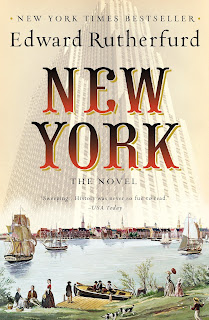
Weekly Reader: New York by Edward Rutherfurd; Another Epic Rutherfurd Success, But With Some Missed Opportunities


Weekly Reader: New York by Edward Rutherfurd; Another Epic Rutherfurd Success, But With Some Missed Opportunities

By Julie Sara Porter

Bookworm Reviews


PopSugar Reading Challenge: A book with the same name as a movie or TV show, but is unrelated to it (New York, New York)


Spoilers: I suppose after writing about Sarum, London, The Forest, Ireland, Russia, and would later write about Paris, Edward Rutherfurd decided to write about New York because he figured that if he could write about there, he could write about anywhere. (Apologies to John Kander and Fred Ebb for the paraphrase.)

New York is yet another of Rutherfurd's sprawling epics which cover the families of one location over the course of several centuries. This time, the English author takes his act on the road to the United States and New York. He does it with his usual grand style that captures these important historical moments, but makes it personal by showing us the individuals who exist in those turbulent fascinating times.


Rutherfurd deserves a lot of praise for writing an American city very well. He captures the various buroughs, streets, locations, accents, ethnicities, and the character of the city expertly. For example, he captures the various speech patterns of the characters without resorting to stereotypical dialect. He tells the points of view of people of various ethnicities and social status, as citizens, but maintains their individual struggles and personalities.
Rutherfurd captures New York so well, that it's easy to forget that he's not an American.

Once again he covers various families and reveals how they relate to the world around them. They are:


The Van Dycks/Masters-The European-American family traces their roots from Dutch lineage back when the territory was New Amsterdam. They eventually married with the English immigrant, Master family. They exemplify the old money families who are often in charge of the stock market, the big Fortune 500 companies, and names that are on guest lists of high society and philanthropic donations. They are present in every chapter from the beginning.

The Hudson/Rivers-The African-American family begin as slaves to the Van Dyck family. They are very prevelant before and during the Revolutionary War as the members argue over whether or not to aid the white Americans. They appear sporadically, but unfortunately their lineage is cut short during the 1863 Draft Riots when one of their members is lynched.

The Whites-A working class family that contrasts with the wealthier Masters. They have a long animosity towards the wealthy family. Their most important role is during the Revolutionary War when they are staunch Patriots and fight for the working class Americans. In subsequent chapters, they take on various occupations like police officers and fire fighters.

The Albions-A family of wealthy English expatriates. They appear mostly as a staunch Loyalist family during the Revolutionary War. Eventually, they return to England but maintain a friendship with the Masters.

The O'Donnells-An Irish-American family that emigrated to New York in the 1840's to escape the Irish potato famine. They begin in the impoverished area of Five Points and work mostly in service. Later, some of the family members gain prominence because of their involvement with Tammany Hall. The O'Donnells gain social success until by the late 20th century, one is an upwardly mobile attorney.

The Kellers-A family that emigrated from Germany in the mid-1800's and are close friends with the O'Donnells. They mostly work as tailors, artisans, and shopkeepers. Later family members develop creative talents, as one becomes a professional photographer and another becomes a caterer.

The Carusos-A family that emigrated from Italy through Ellis Island in 1901 (no relation to the opera singer). They eventually move to the Lower East Side. They experience various important moments from the Triangle Shirtwaist Factory Fire of 1911, to the creation of the Mafia (as one joins), and the construction of important buildings like the Empire State and the Chrysler Building. Like the O'Donnells, they too move upwards, as their final family member becomes a doctor.

The Adlers-A Conservative Jewish family from Flatbush, Brooklyn that appears in New York by 1955. They are mostly seen through the eyes of Sarah, their daughter, an art gallery owner. She gets involved with the Bohemian lifestyle and becomes more Liberal and secular and defies her family traditions..

The Campos-A Puerto Rican family that resides in El Barrio, Spanish Harlem. They appear in 1977, the final family in the book. Like the Adlers because they arrive so late, they are mostly seen through one character, Juan. Juan experiences the poverty of many black and Latino New Yorkers in the 1970's when the city is about to declare bankruptcy. He later becomes an advocate for the poor communities.

Because the book covers roughly four hundred years of history, a short time for a Rutherfurd book, Rutherfurd was able to write it similar to London. He inserted several characters into multiple chapters, so the Readers can see their experiences over many decades and see how they evolve with the times. The Revolutionary War doesn't happen until 11 chapters in. The 19th and 20th century cover 9 and 7 chapters respectively. It's a purposely slow moving process, but like London is the better for it.


Once again there are some excellent characters including:

Dirk Van Dyck-A Dutch immigrant trader in 17th century New Amsterdam, who has a loveless marriage but escapes from it to father a Lenape girl called Pale Feather. She makes the ongoing symbol that is passed from generation to generation, a wampum belt.

Quash-The first, and so far only, first person narrator of a Rutherfurd book. A slave, Quash recounts the transformation of New Amsterdam to New York and he eventually receives his freedom and becomes a shopkeeper.

John Master-One of the first in his family to carry the Master name. When New York is still considered a backwater location, he has a rocky meeting with his wealthier cultured Bostonian cousins (to show the difference between New York and Boston) and an unfortunate courtship. He then has a better marriage with Philadelphian Quaker, Mercy Brewster.

Charlie White-A working class man who was a childhood friend of John Master's only to be snubbed by his family. Later, he becomes a fervent Patriot who organizes protests and resistances against the British government.

James Master-Son of John who is educated in England and marries Vanessa, a well-to-do Englishwoman. Despite, or because of this, James becomes an outspoken Patriot. He leaves his wife and returns to New York. He then raises his son, Weston, as a single parent.

Hetty Master-Introduced in 1849, she is the wife of Frank Master, Weston's son. Despite her intense wealth, she is passionately involved in various social causes like abolition, women's suffrage, and labor unions.

Mary O'Donnell-The first of the O'Donnell family, she gets hired as a maid to the Masters. Later, she becomes Hetty's companion and best friend.

Theodore Keller-The youngest of the immigrant Keller family. By 1863, he becomes a photographer. He shows an artistic eye as he snaps portraits, graphic scenes of war, and landscapes. He becomes a well known artist after death.

Salvatore Caruso-The son of the Italian immigrant family, his sister is killed in the Triangle Shirtwaist Factory Fire and his brother is killed working for the Mafia. He becomes a construction worker and is involved in a love triangle with his brother, Angelo and girlfriend, Teresa.

Rose Van Dyck Master-The female head of the Master family by the early 1900's. She is something of a name dropper, referring to her friend Mrs. Astor, and a snob. However, she has enough financial insight to save her family from the 1929 stock market crash.

Charlie Master-Rose's dilletante son, he becomes involved with the Village scene of the 1920's of artists, writers, and theater types. Later he becomes an aging hippy and becomes involved with a younger woman. He writes about that experience in a semiautobiographical novel, Verrazano Narrows.

Sarah Adler-The daughter of the Jewish family. She owns an art gallery and has very liberal values that put her at odds with her traditional family. She is the woman that has the affair with Charlie Master and inspires his novel.

Juan Campos-An idealistic Puerto Rican immigrant who becomes an advocate for the poor families of color. He begins in the 1970's when New York saw an increase in poverty, union struggles, and crime.

Gorham Master-An investment banker in the 1970's and '80's. While he has the family name and success, he wants more meaning to his life. Ultimately, he assists Juan with a foundation to help others.

Maggie O'Donnell-Gorham's wife, and Mary's descendant, a yuppie attroney. She is pleased to have it all, a good career, husband, and children.

As with Rutherfurd's other works, the characters are an engaging bunch. We see them encountering big issues like the Revolutionary War, the Civil War, the creation of Niagara Falls and the Brooklyn Bridge, the Blizzard of 1888, New York's rise to being one of the largest and most important cities in the world, the Financial Panic of 1901, the Stock Market Crash of 1929, and September 11. So many important events are covered.

Rutherfurd also captures many personal moments for the characters. Frank's proposal to Hetty at the Croton Aqueduct produces fond memories even after they have friction in their marriage. Hetty later befriends Frank's mistress, Lily de Chantal and they conspire to overpower another mistress, Donna Clipp.

Mary lies about her family's connection to Tammany Hall to work as a maid for the Master family. By the time the truth comes out, decades later, Hetty is just grateful to have a long time friend.

One of Theodore Keller's photographs is named, Hudson River. Not because of the River, but because he captures Hudson River, the characters,' death. This photograph ends up being his most popular and infamous.

While Salvatore is working on the Empire States Building, he is so incensed by Angelo and Teresa's affair, that he contemplates killing him. A lucky accident spares his life and he becomes a devoted uncle and godfather.

Gorham Master spends many years feeling unfulfilled by his life of gain. He consults headhunters and weighs other opportunities before finally doing something positive with his wealth by aiding Juan Campos.

The final recipient of the Master family wampum belt is none of the Masters, but Sarah Adler as a gift from her lover, Charlie Master. She wears it when she is trapped inside the World Trade Center just as it is attacked and she is killed.

There are however plenty of missed opportunities. The most important is probably the too early departure of the African-American family, the Rivers. For the first time in Rutherfurd's books, we get a first person account with Quash. He reports of the change from New Amsterdam to New York and the English encroachment on the island of Manhattan. He also talks about his marriage to Naomi, his love for his son, Hudson and his friendly relationship with Dirk, his master who promises to free him on his deathbed. Hudson is eventually sold to a ship captain, but Quash obtains his freedom and opens a store. With that strong beginning and a first person departure from the other books, one would expect Quash's family to be prominent from beginning to end.

Unfortunately, that is not the case. During the Revolutionary War, Quash's son, Hudson raises concerns when his son, Solomon, joins the Sons of Liberty. Once Solomon's son, Hudson is sold, the family does not reappear, until they escape through the Underground Railroad. Then as I said earlier, their final descendant Hudson River is lynched and hanged during the Draft Riots of 1863.

That's it. It is great that Rutherfurd opens up this shameful period in America's past and telling it through a family that suffered through it. However, they should have continued in later chapters. The Rivers could have been actively involved in the Civil Rights Movement, the Harlem Renaissance, redlining, and the Great Migration. Heck, a later Rivers descendant could have been a fellow activist alongside Juan Campos. Many events and perspectives are lost when the Rivers's story ends prematurely.

The Rivers aren't the only ones. It's clear that while the book is another Rutherfurd ensemble, the main family involved is the Masters. They are present in every chapter and get the lion's share of points of view. This leaves a lot of families out of key events.

The White's introduction is very powerful and the book appears that to reveal another multi-generational family feud ala The Wilsons Vs. Shockleys in Sarum. Unfortunately, the White family takes a diminished role after the Revolutionary War and only receives minor appearances in later chapters. The Whites, as well as the Rivers, are the only families to not reappear in the final chapters that focus on 9/11.

Rutherfurd reveals the various immigrant families that make up New York, showing how America is made up of different people. It shows that we all come from somewhere else. Unfortunately, many of these immigrant families are spread out, some taking more prominent roles than others. The O'Donnells, Kellers, and Carusos have strong introductuons but by the mid-20th century, they disappear only to reappear for the finale. There are a few missteps where we could have seen more sons and daughters.

The book also leaves out some key events. The most important events that are short changed are The Great Depression and WWII. The book skips from 1929 to 1955. It seems odd that a book that chronicles the American experience so faithfully would leave these out. We don't get to see how poverty and joblessness affected the families in question. We don't get to see their opinions about the New Deal and their feelings towards Franklin D. Roosevelt (and he's a New Yorker at that. Seriously they left him out?).

We don't get to have the characters experience Pearl Harbor or see the male characters enlist. Nor do we experience the female characters working (many outside the home for the first time.). One of the families is Jewish and they don't even touch on the Holocaust or reveal that one of the Adlers is a survivor. Rutherfurd could have easily introduced two more chapters to cover these events. That he didn't is a real shame.

While the book has some missed opportunities, New York is another wonderful experience in time travel thanks to Rutherfurd. Reading about the people of New York and the way that has changed over the centuries, fills the Reader with a sense of pride in the city and how well Rutherfurd caught it.

Classics Corner: The Neverending Story by Michael Ende; The Ultimate Classic Fantasy Travel Into The World of Books


Classics Corner: The Neverending Story by Michael Ende; The Ultimate Classic Fantasy Travel Into The World of Books

By Julie Sara Porter

Bookworm Reviews


PopSugar Reading Challenge: A book with a book on the cover

Spoilers: Those of us who were children of the '80's had a dark time at the movies, but damn it all, we loved it. If you're anything like me, still do.


Many of the films that we grew up with were darker and in some ways scarier than even some modern horror films. The Dark Crystal, Labyrinth, The Secret of NIMH, The Black Cauldron, The Last Unicorn, Something Wicked This Way Comes, Return to OZ, Who Framed Roger Rabbit, An American Tail, The Monster Squad, Ghost Busters, and Beetle Juice were just some of the many movies that we saw in theaters that fascinated us but still filled our nights with terror. Even our younger siblings and children may yelp with fear when they see our childhood favorites. Some of us may watch them again and wonder however did we survive going to the theater?


Sure we may have played with our Ataris and NESes and never went outside. Sure parents mocked our cartoons as half hour commercials and wondered why anyone would watch music videos. Sure, we were the first generation that was told "You're special" and may have received participation trophies. (Seriously, I used to get them all the time at Field Day events. I was an athletic loser, but they showed I tried. What is the freaking problem?). But when it came to the movies, we walked on the wild side and did so gladly.


One of the best movies from those times was The Neverending Story and my favorite fantasy film from that era. Many of us were in awe of the journey of young Bastian Balthazar Bux as he read about the beautiful fantasy world of Fantasia. We were amazed and sometimes scared of The Rock Biter, Morla, The Aged One, The Night Hob, and Falkor, The Luck Dragon. We cried with Atreyu the boy hero when he lost his beloved horse, Artax to the Swamps of Sadness and cheered him on when he fought Gmork, the creepy wolf, to the death. The fact that an invisible Nothing could destroy our world, probably made us fear thunderstorms for a long time afterwards. Before we may have understood what the terms "meta" and "breaking the fourth wall" meant, we saw it when the dying Childlike Empress revealed that Bastian, the boy reading the book, was the one who could cure her. We saw it even further when she revealed that others, meaning us, were with Bastian when he hid from the bullies in the bookstore and took the book. We debated what name Bastian yelled amid the thunder, lightning, and heavy rain (For the record, in both the book and movie, he said "Moon Child!") Most importantly, we wanted to be Bastian, the kid who found the book and enter that world and have that adventure as scary and traumatic as it sermed. Or at least, I did.


Many fans have less fond memories of the sequel, Neverending Story II: The Next Chapter. Though, some in subsequent years have since recognized it as a decent follow up to the original and while not as compelling or as memorable, was good in its own right. Also, Neverending Story II filled a very important need that those who only saw the first film and never read the book don't know: it covered the second half of the original novel. (The less said about the unnecessary train wreck that was The Neverending Story III: Escape from Fantasia, the better. The only thing that did was waste a perfectly good franchise and an early performance by Jack Black in one of his first film roles.)

While the book had its Readers over the years, it has fallen to the wayside because of the intense popularity of the first movie. For the record, Michael Ende himself didn't like the first movie. He felt it was childish and kitschy and distorted his book. However, that never stopped how loved the movie was. That love is well earned. The movies are well made, beautiful efforts with wonderful performances and scenes. They were huge parts of many's childhoods including mine. However, the book also deserves that recognition as well.


I am not saying either is better than the other. In fact, they are both equally good within their mediums. The book is wonderful for being a literary medium with its haunting descriptions and deep characterization. The first two movies do a good job as visual mediums in bringing those descriptions, characters, and actions to life. Instead of looking at them as separate entities, a competition where one has to emerge the better, look at them as the same entity telling the story in different ways. In a way, that's what makes it Neverending.


I will explain some of the things that are different about the book and how they add to the enjoyment of the films, like two halves that together create a whole. The first half is almost word for word similar to the first movie with some differences making some scenes longer and providing much needed exposition and explanation.

The second movie retains many of the characteristics and themes of the second half of the book. However, the second half of the book is not as linear of a straightforward quest as the first half. It is almost several adventures that are linked by Bastian's struggles within them. It makes sense that the second movie would gather it up in an adventure plot with a clear beginning, middle, and end.


Bastian's backstory is more elaborated upon in the novel making it more apparent why he would want to leave that world and become a hero in Fantastica (not Fantasia in the book). We see him not only bullied by the other kids, but as a complete physical and academic failure in school. (He was held back the previous year.) His only talent is making up names and stories, which comes in handy during his time in Fantastica.


We are aware from the movie that his mother is dead, but the book also emphasizes Bastian's troubled relationship with his father.
Through Bastian's father, the Reader experiences what it is like for a child to live with a mentally ill parent. In this case, his father is gripped with clinical depression, stemming from his wife's death. Bastian is unable to talk to him, as his father has lost interest in any activities and barely speaks to him or to anyone anymore. To Bastian, his father is frozen and numb to him. Bastian feels shut out by his father, so he retreats to his obsession with books and his fantasy worlds. This experience echoes in a later moment in the book when Bastian has a dream that his father is trapped inside a block of ice and Bastian hugs him trying to free him from the ice.


All of this backstory gives us the reasons why Bastian would enter and try to rebuild Fantastica after he names the Empress in the second half of the book. He was long held up for ridicule because of his weight, timidity, fear, and lack of acceptance. When he arrives in Fantastica, Bastian is encouraged to make wishes with the Auryn, a sacred gem that is her personal symbol. The more wishes that he makes, the more Fantastica grows. His first wish is to change his appearance to be taller, handsomer, and braver, like the heroes that he has always read about.


Bastian also names the new locations in Fantastica such as Perilin, the Night Forest and Goab, the Desert of Many Colors. He also creates creatures like Grograman, the Many Colored Death who is a living part of Goab and Smerg, a dragon that is created for a hero to defeat. He also names things like a sword that he calls Al-Tasher and a belt that causes it's wearer to become invisible that he calls Ghemmel. (In the second movie, we only see him create Smerg, give names to some of the areas, and making wishes to protect him and Atreyu during fights.) The longer Bastian remains in Fantastica, the more he becomes part of it. He forgets his home world and the life that he left behind. He eventually forgets he was ever from the outside world.

The book provides us with more information about the Fantasticans. For example, many of the characters who went nameless in the movies actually have names in the book. The first three Fantasticans that we encounter in both the book and first movie are the small man, Night Hob, and Rock Biter. In the book, we learn that the little man is named Gluckuk,the Night Hob is Vooshvazool, and the Rock Biter (called Rock Chewer) is Pyornkrachzark. There is also a will-o-the-wisp, Blubb. It actually makes sense that there are four characters rather than three, coming from all four directions to reveal just how large in magnitude the Nothing is coming from all directions-north, south, east, and west simultaneously.


We also get some insight into Atreyu's home life before he is recruited as Fantastica's book hero, before Bastian's arrival. Cairon, the Childlike Empress' advisor (a centaur in the book rather than a merman in the movie) travels to the Grassy Ocean beyond the Silver Mountains to visit the young warrior. While the book Atreyu and his people are clearly modeled after Native Americans (and both films hired actors who were either full or half-Native Americans in Noah Hathaway and Kenny Morrison), they are actually green skinned.
We learn that they are a nomadic people who are great hunters, but have a strict honor code. We also learn that the purple buffalo that Atreyu name drops in the movie, acts a guide in his dreams. The buffalo leads him to Morla the Aged One and the first clue to the Empress' cure.


Atreyu is almost like the perfect hero because he is written that way. Once Bastian becomes a physical part of the story, he proves to be a contrast to Atreyu in his actions. Atreyu receives the Auryn for his journey and makes the occasional wish upon it, but it has no adverse effect on him. He is a character from Fantastica and also has no hidden demons or longings from which the Auryn removed from him.
Bastian is a more relatable character, because he is understandable. He is an outsider from our world, so he is like us. The more he loses himself in the fantasy world, the more arrogant he becomes. He lost all of the qualities that made him human.


The antagonists are also very different. We learn more about Gmork, the wolfish servant of the Nothing. In his encounter with Atreyu (in which he is left by Night Creatures to starve to death rather than be stabbed by Atreyu), Gmork reveals that he is not from Fantastica. He has no world and has no exact form, taking many. He envies the Fantasticans for having a world. He is supposed to be embodiment of Fear just as Xaiyde the female sorceress in the second half of the book is a living embodiment of Temptation.

The second film makes Xaiyde the primary antagonist who creates and controls the Emptiness. The book appears to be the opposite. Xayide is simply a servant of the Emptiness, formed when Bastian loses more of himself. (In fact there is some indication that Bastian created Xaiyde himself after he expresses a need to have an adventure to prove his heroism.) She subtly encourages Bastian to make more wishes while acting as his subordinate. However, she manipulates Bastian into giving him gifts that increase his power and encourages him to use his wishes to control others, so she can overpower him. She is able to lead empty creatures such as her machine-like soldiers which only move by her will (which leads to her end, when Bastian rejects her manipulations. The soldiers run her over as though she willed them to kill her i.e. committed suicide.). Bastian's Emptiness almost makes him susceptible to her or rather the Emptiness' control.

They are not the main villains but Gmork and Xaiyde are the gateways to the true villains: The Nothing and The Emptiness. It is an impressive feat in book and movies, that the true antagonists in them are abstract concepts rather than actual beings. The Nothing in particular is a scary thought, and becomes more disturbing the older one gets. An entity that can make places, creatures, and things disappear is about as terrifying as it can get. The movie treats the Nothing as a storm that destroys everything in its path. The book is more subtle. Characters describe it as though someone went blind. All of a sudden, something that was there no longer is and is replaced with total blackness. It disappears as though it fell into a black hole, into nonexistence. Also, anyone who looks into the Nothing for too long gives into despair and becomes a part of it.

Another scary aspect that the book reveals is what happens to Fantasticans when they fall into the Nothing. They come to Earth, but they become Lies. They become things that people don't believe in and are simply means of deception. Even heroes like Atreyu become something that one can aspire to, but never become.

As frightening as the Nothing is, the Emptiness within Bastian is just as terrifying because it comes from his own actions. As he forgets about his life on Earth and becomes more arrogant, he becomes more insane with power. When he reaches the Ivory Tower, he sees that the Childlike Empress is gone. He then declares himself the Childlike Emperor and he is defeated by those who used to be his friends like Atreyu and Falkor. Eventually, Bastian loses everything, even his own name before he returns.

The antagonists are almost metaphors. The Nothing leaves sadness and despair on its wake. Bastian's Emptiness is like an insanity that consumes him annhiliating and destroying his mind as he retreats into the world he created. The Nothing could be Depression while the Emptiness could be Paranoid Schizophrenia.

We also get some interesting side quests that were probably removed from the movies either for special effects reasons or to fit the running time. Falkor for example does not enter the story saving Atreyu in the Swamps of Sadness. Instead, Atreyu saves him from a terrifying creature called Ygramul the Many, which is several small wasp like creatures that take one large changeable form. (It is here and not Atreyu's encounter with Morla the Aged One where Bastian screams with fright and Atreyu hears him leading to the first fourth wall break.)


Atreyu also goes through three gates to reach the Southern Oracle, not two. The first two are the same from the movie. The third is called the No Key Gate in which Atreyu must go through by acting like he doesn't want to. The more he fights to get inside, the less the door will open. So, Atreyu must temporarily forget the purpose of his journey before he can meet Uyuyulala, the Southern Oracle. There is also a deep sadness as Engywook, the cheerful scientific gnomic, who helps Atreyu through the gates is left in despair when Atreyu tells him that he will be the last person to speak to the Oracle. Engywook realizes that all his research was for nothing. He finally surrenders to the Nothing while Urgl, his wife remains loyally by his side to the end.

After Atreyu encounters the Childlike Empress to inform him of the results of his quest, she goes on a journey of her own. She floats into a litter to reach the Old Man of the Mountain, who is responsible for setting the Neverending Story to paper. (So he could be Michael Ende, himself.) The Old Man and The Empress read of Bastian's adventures and their own stopping at the exact moment where they are while Bastian writhes in indecision whether to call the Empress' name or not. Unlike the movie, where Bastian responds, because the Empress begs and cries to be saved, Bastian responds because he realizes that he, The Old Man, and the Empress are trapped in an endless cycle of reading the adventures without a resolution.

This adventure gives the Empress a chance to go on a quest of her own, but it slows things down and the telepathic dialogue between the two is shorter and more powerful for a film. (Incidentally, her name Moon Child came from when Bastian first saw her in a vision not from his late mother. Though, subsequent projects reveal that his mother still inspired Moon Child's name because she was named for the Moon Goddess: Selene.)

As I mentioned before the second half of the book features various smaller quests that are tied to Bastian's making wishes and him losing more of his memories of the outside world. He creates Smerg the Dragon specifically so a hero Hyruck can save the princess of his dreams. He encounters the Acharis, who are the saddest creatures in all of Fantastica. He then transforms them into the Shlamoofs, happy colorful but at times irritating butterfly-like creatures.

The majority of these adventures involve Bastian shaping Fantastica to fit his needs and gain heroism. A library is created detailing the adventures and stories that Bastian created. He receives names such as the Hero of Fantastica and the Wise Ones, scholars ask him questions like what is Fantastica ("The Neverending Story" he answers.) He wants to be admired, respected, and treated as a hero and legend. Then when he is consumed with power, he wants to be emperor and god.

One of the most haunting quests occurs shortly after Bastian's failed attempt at becoming Childlike Emperor. He finds himself in a strange city in which several men, women, and children don't speak and spend time doing repetitive mundane tasks. Bastian learns that these are the Old Emperors, humans who had also saved the Childlike Empress but had lost their memories of Earth and their identities. (Scarier still, on Earth there are probably several reports of missing persons over the years, even decades, of people who were never found because they became background characters inside a book.)

This implies that the Neverending Story is a cycle and that people from the outside world have visited it before. We even receive hints that Mr. Coreander the bookseller, also went to Fantastica himself and had adventures but mercifully emerged unscathed and not a relic at the City of Old Emperors.
Those who have no way of returning to the outside world just exist as background characters in the book, in the City of Old Emperors withiwith no past, identity,  or place. After visiting that horrible place, Bastian doesn't remember his home world fully but realizes that he can't remain in Fantastica.

Bastian's final test is his acceptance of love. He no longer wants to be a hero, and recognized for his exterior achievements. He wants, probably what he has always wanted: love and acceptance. He thinks that he has that with Dame Eyola, a sweet woman who could be a stand-in for Bastian's late mother. Bastian is cared for, mothered, and feels loved but something is still missing. He realizes that what is missing is his father. All the time that Bastian dreamt of being a hero, he realized that his most important wish was to rescue his father and to give and receive the love that they used to share.

The most touching moment is when Bastian returns to the real world and reunited with his father. He tells his father of the adventures and he believes him. Bastian realizes that his adventures weren't for nothing. He saved his father after all.


An oft-repeated line throughout the book is "That is another story and shall be told another time." It repeats every time a character leaves the book revealing that they had more adventures. We also learn some interesting things about their later lives such as the four from the beginning became life long friends.Cairon never returned to the Ivory Tower and entered a new life. Engywook did get scientific recognition. Hyruck saved his princess but didn't want to marry her anymore and so on. These mentions remind us that as it's title suggests the Neverending Story truly continues. Adventures happen when we're not looking and exist outside of the plot that we've been reading about. They leave us with many possibilities over what happened to them (and possibly fodder for fanfiction.)


The Neverending Story is a fantasy classic as both a book and two movies. It is a beautiful unique fantasy that one falls into as much as Bastian did. It makes them lose themselves into the adventure and the beautiful and at times disturbing world. As with any good book, we can picture ourselves alongside Bastian embracing this fantasy world and interacting with the characters.

It is just as much a memorable imaginative trip as it would be to read a historical novel that covers  several centuries of a real life place like New York and immerse oneself into its history and various people and cultures.

But that is another story and shall be told another time.


Tuesday, July 28, 2020

Weekly Reader: Call Numbers: The Not-So-Quiet Life of Librarians by Syntell Smith; Sharp, Funny, and Deep Look At Rivalries and Relationships Inside A Public Library


Weekly Reader: Call Numbers: The Not-So-Quiet Life of Librarians by Syntell Smith; Sharp, Funny, and Deep Look At Rivalries and Relationships Inside A Public Library

By Julie Sara Porter

Bookworm Reviews


Spoilers: Syntell Smith's Call Numbers: The Not So Quiet Life of Librarians, could be considered the library equivalent of Joshua Ferris' Then We Came to The End. Both are humorous workplace satires about the wacky hijinks of employees and are also used to make important serious points about their societies. However, they are very different in many ways. Then We Came to The End was about an office set at an advertising agency facing the early 2000's economic crisis dealing with the fear of layoffs and possible workplace violence from an unhinged fired employee. Call Numbers is about the staff of a New York Public Library branch in 1994, that have to deal with budget cuts, an underprivileged neighborhood, and racial tension between staff members and the people around them.

Robin Walker, library clerk, is a transfer to the 58th Street Branch of the New York Public Library, from the Ft. Washington branch. As soon as he enters his new workplace, he is surrounded by conflict. He may be able to memorize the locations of various books by the call numbers, recognizes the lion statues in front of the Central Branch by name, and knows the Procedures of Conduct by heart, but that doesn't stop him from making a few enemies the second that he enters the doors.

His first enemy is Sonyai Yi, Branch Senior Clerk. She doesn't trust Robin's friendly but obstreperous behavior. However, that is not the only reason that she doesn't like him. Sonyai is in charge of the four young pages and she promised the next clerk position to high school student, Janelle Simms. Janelle needs the promotion because she's pregnant and the only ones who know are Sonyai and the other three pages.


Another enemy is Tommy Carmichael, another clerk and Sonyai's protege. Tommy doesn't like Robin, mostly because Sonyai doesn't. He isn't above playing juvenile pranks to force his authority over the newbie.

Yet another enemy is Ethel Jenkins. She and Gerry Coltraine are the only two African-American clerks at the 58th Branch until Robin comes along. Gerry bonds with him partly out of solidarity and partly to show Sonyai up. (He wants to become Senior Clerk in her place). Ethel however is suspicious of him for a personal reason. He is lighter skinned than she and she can't resist mocking him every chance she gets. She gets a page, Alex Stevens, to go along with the snide attitude until Alex takes a prank too far.


Oh yes and there are other plots going along with Robin and his Not-So-Merry Team of Rivals. Library Director, Augustus Chavez constantly vies with Heywood Lerner, Information Assistant, for movie nights and philanthropic donations, but has a loyal supporter in Zelda Clein, Librarian, who acts like a pit bull defending her boss.

Angie Trueblood, Information Assistant, is trying to earn her Associates in Library Science degree. However, she discovers some shady things about Augustus.

Meanwhile the youngest staff member, 14-year-old, Lakeshia Seabrooke develops a crush on Robin. She gets some off color advice from fellow page, Tanya Brown, who also has to deal with some bullies at school. The library staff of the 58th Branch may want their patrons to shush for the good of other patrons, but this staff is anything but silent.

There are some situations that are so broad that they are almost farcical. One is the hazing ritual that Sonyai and Tommy put Robin through in which he is faced with checking patrons out during the closing rush. Unfortunately, this ends in a fist fight between the two clerks to be broken up by Zelda and the police.

Another situation involves the extremes that Heywood goes through to prevent Blazing Saddles from being loaned out to 58th Branch for an upcoming Mel Brooks Film Festival.


Then there's the crash course on sex that Tonya gives Lekeshia complete with The Joy of Sex as a manual. (They borrowed the book under Tanya's name and oops, it's past due. Of course, Tanya's parents get a phone call.)

There is also the bar where library employees from different branches meet and compare notes about the awful people that they work with and conspire against them. They may be information professionals, but sometimes their immaturity shines through as much as or more than their willingness to offer books and other sources of knowledge to the New York public.

While the book is very broad at times, there are moments that Smith makes the Readers see the real characters inside the goofy hijinks. The characters show a lot of depth that take them beyond sitcom stereotypes. While Robin instantly goes on the defensive when he arrives at 58th, making enemies with his blunt attitude, he also shows a vulnerable side. He cares for his ailing grandfather, who has long been hearing impaired, and remains estranged from his superstar half-sister and stage mother.

He also has a friendly relationship with Gerry where the two quiz each other on call numbers. Once he and Tommy get past their testy initial dislike, their relationship cools down to frienemies who like to tease, but will defend each other. Robin also helps Tanya with her bully situation and agrees to go out with Lakeshia while letting her down gently by reminding her that he is an adult and it would be illegal for them to be together.

Even the more antagonistic characters show real depth and strengths both inside and outside the library. Just when we are ready to write Sonyai off as a domineering bitch, she shows a maternal side to the four pages. She treats them like wayward daughters giving them advice and lecturing them. She dislikes Robin mostly because of her protectiveness towards Janelle and the girl's situation.

In one of her best moments, she stands up for Janelle when her parents are furious about her impending pregnancy. She even gains a grudging respect towards Robin by the end.

The pages have their own girl squad. They act like sisters who disagree but help each other. Even when they are split about Robin, Lakeshia and Tanya like him and Alex and Janelle don't, it doesn't end their friendship with each other.

Augustus shows an antagonistic side as he cuts corners, sucks up to wealthy donors, and kills anything that would resemble negative publicity. The latter particularly at the expense of the staff's welfare. However, he makes it clear that he loves his library and would do anything to make sure that it remains operational and gets all of the new equipment, releases, and technology that they need. Even if he might have to commit potentially questionable and possibly illegal deeds to do it.

Some of the characters shine best in their home lives away from the library. Tommy has a loving interracial marriage with his pregnant wife, Sarah, which still bears some animosity from their families.

Angie shows a lot of spunk in her information science classes and exhibits knowledge that rivals her professors (and probably most of the staff). The conservative nerdy, Heywood gains an appreciation for grunge music, thanks to a friendship with a female musician who is mourning for a friend and fellow musician who recently committed suicide. (It's 1994, guess who?)

Ethel learns that she has a medical condition which could cause complications for her future career plans. Even characters like Zelda who seem to not have a life beyond the library show how important their jobs are to them and how hard they work to give people the information that they need. These moments show these characters' many facets. They can be selfish jerks, sarcastic wisecrackers, wacky goofballs, sympathetic friends and family members, and well-rounded individuals.

There is a serious undercurrent of racial tension that moves along as a theme throughout the book. Many characters suffer from comments or stereotypical remarks about their race creating a Mutual Animosity Society.

In one passage, a racist patron asks Angie for a librarian. She puts him in his place by not only telling him that she is an information professional and in two years will be a librarian, but also sharply reprimands him for his dismissive attitude towards her for being Native American. Many other characters like Sonyai and Robin respond similarily to racist comments while others like Augustus and Zelda turn a blind eye, trying to keep the library free of bad publicity.

Many characters are aware of the undercurrent of tension and how it affects their relationship with the other staff members and the public. When Robin is met with hostility on his first day, he responds back with further hostility. This tension leads to some violent encounters such as Tommy and Robin's fist fight.

The worst encounter is a final prank in which Alex writes an obscene message inside the library before opening, one that she knows will get under Robin's skin. Robin responds as violently as expected. This prank causes all the undercurrents to explode and come to the forefront.

In 2020, this prank would end up on social media and there would be a firestorm so big that no one could contain it. The encounter wouldn't slide and for better or worse, there would be some serious questions and a restructuring of the library and its staff.

However since the book is set in 1994 and they have a library director who is obssessd with giving the library a good facade, that doesn't happen. He only suspends Robin and Alex and practically cajoles and bribes them not to make it public. They agree but it is painfully clear that this tension isn't over.

With a second book on the horizon, those undercurrents will become stronger and what simmered will explode. What was once funny may no longer be. There are some hints that the comedy will stop when reality steps in and takes center stage. The 58th Street Branch staff are a pretty humorous character driven bunch now, but what happens next may take the humor out and show the real characters.