Wednesday, October 7, 2020

Classics Corner: Slaughterhouse Five by Kurt Vonnegut; Vonnegut's Brilliant and Confusing Classic About War, Love, Death, and Time Hopping Aliens


 Classics Corner: Slaughterhouse Five by Kurt Vonnegut; Vonnegut's Brilliant and Confusing Classic About War, Love, Death, and Time Hopping Aliens

By Julie Sara Porter

Bookworm Reviews


PopSugar Reading Challenge: A banned or challenged book you read during Banned Books Week


Spoilers: Once and for all, Kurt Vonnegut Jr. was a masterful storyteller.

A storyteller that grabbed you with weirdness, eccentricity, and oddball characters. A storyteller that enjoyed subverting expectations and confusing the hell out of his Readers. A storyteller that often had conflicting views and loved shocking people with his forthright upfront opinions. A storyteller who loved to provoke thought and discussion with his brutally violent and sexually honest books. But a storyteller nonetheless.


Certainly the acme, highest point, of Vonnegut's gifts is his novel, Slaughterhouse Five, a brilliant and purposely confusing classic about the evils of war, the existence of intelligent life on other planets, and the fragility of time and how fate, memory, and action play into our knowledge of time. It's Kurt Vonnegut's Brief History of Time (if Stephen Hawking stepped aside and let Vonnegut write his book.) It's satire, serious, tragic, thought provoking, bizarre, and an exciting challenge to read.


Once we are told at the beginning that "All of this happened, more or less," the Reader knows they are in for one weird and wild ride indeed. The prologue explains that the author/narrator, more than likely a fictional version of Vonnegut, talks about his time studying at the University of Chicago, fighting in WWII, his research on the Children's Crusade, and his travels through Cold War Europe. Oh yeah, he incidentally mentions a buddy of his, Billy Pilgrim, from the town of Illium, New York who, by the way, was abducted by aliens from the planet, Tralfamadore and became "unstuck in time." Crazy huh? Friends and the darndest things they say.


After the prologue, we get to experience Billy Pilgrim's story in all its bizarre, confusing, yet enchanting glory. Since we are warned in advance that Billy has become unstuck in time, we know the story is probably not going to be a traditional chronological linear narrative and Vonnegut does not disappoint. The narrative skips from Billy's time in WWII, to his old age living with his adult daughter, to his young adulthood in Illium courting his future wife, Valencia Merble, to his abduction and time on a Tralfamadorian zoo, to his death during an assassination while speaking in front of thousands of people about time and flying saucers, to his youth with his parents, and back around in a strange cycle that Billy recalls all that had happened and will happen.


Slaughterhouse Five is an exercise in postmodernism and recognizes how authors can manipulate plot and setting to entice Readers to follow them. Since there is no sense in the chronology, the Reader knows that they are in Vonnegut's yard, so they might as well sit back and  enjoy the show. Because of the book going back and forth in time, there is a fatalistic sense to Billy's story and the novel as a whole. As the Trafalmadorians  observe Billy's interactions with the people around him: friends, family, fellow soldiers, enemies, one gets the sense that they are observing all of human nature: our lives, our loves, our hatreds. 

The Trafalmadorians observe Billy and other Earthlings with a sense of detachment. They don't want to destroy or change the planet, just study it. Their oft-repeated mantra is "And so it goes," especially when someone dies. Death is just something that happens without much concern. The subtitle to the book is The Children's Crusade and it makes sense. To the Tralfamadorians, we are nothing more than children, to be watched and monitored as we make our youthful mistakes.

Because of the fatalism, Billy makes no motion to change or alter his destiny. Like the Tralfamadorians, he is a mere observer in his life. He knows that fighting in WWII, he will come face to face with death and be held captive by the German army, but he continues. He knows that Valencia will be killed in a horrific accident, that his son will be a shiftless layabout to later become a Green Beret, and that he will end up living with his daughter's family, but he has no desire to change these things. He even knows the circumstances of his death and who it is that will administer it. He makes no effort to stop it and gets to know the man who will later kill him. Since his life runs out of sequence, he sees that his past, present, and future as inevitable. After all, it is very easy to be non committal to your death, when after it happens, you zip back into your life as a 12 year old. Billy takes on the Tralfamadorians' view of detached acceptance looking at his life with the same view: "And so it goes."


Vonnegut has a bit of fun in his writing. He is fond of clever one-liners such as in the intro when the narrator writes that he wants to write an anti-war book, his publisher asks "Why don't you write an anti-glacier book instead?" (Because I guess glaciers are like wars, they will always be there? Of course the added unforeseen irony is writing an anti-glacier book calls to mind another controversial topic: climate change.) There's the fact that Billy is "unstuck in time" not traveling in time, but unstuck, as though time itself was a mere construct that one could come in and out of voluntarily. Even onamatopeia gets the Vonnegut treatment with a bird's call "poo-te-weet" during the bombing in Dresden calling to mind a death knell, as though the end were imminent.


Characters also get a skewering from Vonnegut's savage writing. Ronald Weary, a fervent patriot and fellow soldier, has a predictable pattern for friendship: pretend friendliness with someone and then later "he would find some pretext for beating the s#@t out of them." Weary also becomes a catalyst in Billy's death, when after he dies, another soldier vows that someday he will make Billy pay. 

When Billy first meets Valencia, he isn't exactly smitten with the love bug, but knows that he will marry her. ("Billy didn't want to marry ugly Valencia. She was one of the symptoms of his disease. He knew he was going crazy when he heard himself proposing marriage to her, when he begged her to take the diamond ring and be his companion for life.")

Montana Wildhack, an adult film actress and fellow abductee at Trafalmadore, is partnered with Billy so their abductors can see Earthlings procreate. Montana is one of the few to understand Billy's time travels and can always tell when he is unstuck. During one of Billy's returns to his future, he tries to look her up only to learn that she is reported dead, even though he knows she's on Trafalmadore with their baby.


One of the more interesting aspects of Vonnegut's writing is the shared universe mythology of his works. This book goes full out by having Billy encounter Vonnegut's other characters like Harold 

W. Campbell Jr., an American Nazi from Mother Night, and Eliot Rosewater, a science fiction fan and conspiracy theorist, from God Bless You, Mr. Rosewater. It's fun reading this team of oddballs and curmudgeons bounce off each other and ramble about their weird philosophies and theories. (Yes, the guy who was abducted by aliens and is unstuck in time is the normal one in the group.)


 One of the more fascinating members of Vonnegut's Not-Exactly-The-Avengers is Kilgore Trout. Trout is considered one of the worst science fiction authors in the world and only can boast of one fan, the aforementioned, Eliot Rosewater. Billy later reads Trout's work and soon he becomes the only author that he likes reading (so Trout's fandom rises to a mighty two. Kilgore-Con must be fun.) Once Trout befriends Billy, he keeps bugging him to hear details about his time travels and abduction, no doubt hoping for more material.

Besides Slaughterhouse Five, Trout would also appear in Vonnegut's other novels, God Bless You Mr. Rosewater, Breakfast of Champions, Jailbird, Galapagos, and Timequake. He is a fourth wall breaking character who thinks he might be a fictional character in someone's world. Because of his eccentricity and self-depreciating sense of humor, some consider Trout to be Vonnegut's mouthpiece. Vonnegut was so enamored with the character that in 2004, he actually prepared Kilgore Trout's obituary, announcing that the character "committed suicide" when a psychic informed him that George W. Bush was certain to win a second term in office.


By far, the most memorable passages in Slaughterhouse Five, occurs during Billy's time in WWII, particularly during the Battle of Dresden (which Vonnegut himself encountered). Slaughterhouse Five has been described as an anti-war novel, by some as even the best anti-war novel. (Personally, Johnny Got His Gun, Catch 22, and Farewell to Arms share that distinction for me). But Slaughterhouse Five is certainly graphic and honest about the brutality of war and the human monsters that it creates. 

A huge chunk of Billy's memories and time travel occur during his time in WWII. There are many unforgettable moments where Billy, originally supposed to be a chaplain's assistant, is thrust into a war and the realities of battle in which he is unprepared: the marching with ruined shoes, the bombs exploding in the distance, the anxiety of never knowing which moment is your last (except Billy for obvious Tralfamadorian-sized reasons), the transformation of other human beings into an enemy to be hunted and destroyed. 


Billy's acceptance but concerns about war contrast with Weary's over the top obnoxious jingoism. Billy sees war as cruel, but inevitable while Weary is the "kill 'em all and let God sort it out later" variety. Weary views the Germans as enemies and ironically holds much of the same views the Nazis had.

 It is no coincidence that Billy and his fellow American soldiers were made prisoners of war inside a slaughterhouse (hence the title). Nor is it a coincidence that the Bombing of Dresden (in which Americans attacked civilian targets, not just soldiers, including children.) occurs in the book. Besides Vonnegut being an eyewitness to this battle, these passages show the real brutality and fanaticism that war brings.

Vonnegut's writing shows that fanaticism can be found on all sides and when it comes to war, inhumanity is not exclusive to one army or one country, but can be found anywhere and by anyone. While some think of WWII as a good war against Hitler and Nazism, in truth no side was above horrific actions. Vonnegut reported the Bombing of Dresden as he saw it and what he saw was truly monstrous, no matter which side was responsible.


Slaughterhouse Five is a memorable novel that combines the horrors of war with the wonder of space and time travel. It is often challenged and sometimes banned? However, it is frequently bizarre but also brilliant. It is a masterful story told by a gifted storyteller.


And so it goes.


Weekly Reader: The Cult of Eden: Book One of The Unrisen by Bill Halpin; Dark and Gripping Horror of Family Vs. Death Cult


 Weekly Reader: The Cult of Eden: Book One of The Unrisen by Bill Halpin; Dark and Gripping Horror of Family Vs. Death Cult

By Julie Sara Porter

Bookworm Reviews


Spoilers: If you were a person of deep faith and beliefs, no matter what those beliefs were, and you and your loved ones were put in a dangerous, potentially fatal situation that would require you to act contrary to those beliefs (Against killing but have to kill someone, maybe someone close to you, to get out; in a happy loving committed relationship but agree to have sex with your captor;  committed to your beliefs but forced to renounce them live in front of an audience), would you do it? It's a very terrifying prospect that one would hope that they never have to go through: to find their beliefs naked and shaken and to either die by the cruelty and manipulations of another or to live the rest of their lives knowing that they would be forever changed by their desire for survival.


That is the situation faced by Will Battese, the protagonist of Bill Halpin's The Cult of Eden. Will is the son of a very close knit loving Catholic family from Lake Placid, New York. His widowed father is the Deacon of his church (Catholic deacons are allowed to get married), but will soon leave the church to get remarried and move his soon to be second wife, father, and younger son to New York City to be close to Will, his wife Shannon and their infant son, Gideon. Will is looking forward to his family's visit like a kid at Christmas.


Will is looking forward to his family's visit not just because of how close he is to them, but how conflicted he has been feeling these days in comparison to his own life. He moved to New York with his ambitious wife, so Shannon could ascend her upwardly mobile career in interior decorating. Will felt choked enough in a city that he never cared for and a wife with exorbitant material needs, but her unexpected pregnancy forced him to leave culinary school and take a minimum wage job as a short order cook at a low rate diner. In fact if it weren't for Gideon's birth and his family's arrival, Will and Shannon would probably have headed for divorce courts. Now only their love for their son and Will's Catholic aversion against divorce keeps them together.


The underlying stress in the Battese's marriage and Will's family's move spills into some bizarre and terrifying things that happen at the same time and surprisingly echo through this seemingly happy family reunion. After doing a good deed by giving free food to two homeless men, the homeless men attack Will. Confused and terrified, Will reports this frightening attack to his wife who blames it on the behavior of the homeless and chastises her husband for trying to help them. 

After that "heartwarming" moment between loving spouses occurs, things get weirder. A couple that works with Will disappears and Will and Shannon are stalked by a mysterious character named Victor Degas on a subway that leads to another attack. These strange seemingly random acts of violence come to a climax when an armed group headed by Degas and Will's former coworker and friend, Haynes attack the Battese Family in their home and kidnap Will, Gideon, his father, Richard, his grandfather, Griff, and his younger brother, Danny. (Shannon and Richard's fiancee, Jessi hide for shelter so are temporarily reprieved from the kidnapping but soon also find themselves in a horrifying situation.)


The Battese Family are targeted by a demonic death cult that wants to not only kill the family but destroy their spiritual faith and love for each other. It's a dark and gripping novel with plenty of scenes that cover various fears: of blood, people in costumes and eerie masks, closed in spaces, drowning, being assaulted, having your child kidnapped and just about everything else in between. The Edenic Cult, which kidnaps the family, knows how to bring the fear and they do it well. 

Some of the most frightening passages in the book occur when the Battese men are blindfolded and muffled while they can hear and see the rituals but can't do anything about them. The chanting, the monotonous intonation of the priests, the ritual stabbing and nonchalance of the members,and the fact that Will recognizes long time friends underneath the robes are blood curdling.


Besides the terrifying situation, even scarier is how it affects those who have been abducted. There is no doubt that if they are able to survive this ordeal (and there is no guarantee of that), they will be forever traumatized. The Battese Family are forced to reveal long buried family secrets. One member willingly gives up the location of another one just to make an escape. They are separated and gaslit by being told that the other parties are dead and are unsure of the truth. This cult isn't above hurting small children as well. Baby Gideon is separated from Will and Shannon and they are given contradictory reports about his whereabouts. While 11-year-old, Danny is physically assaulted like everyone else, he is one of the few survivors. It is clear that this abduction and the loss of some of his family members will forever mark his young soul.


Danny isn't the only one who will receive long term trauma. Will and Shannon both make some heartbreaking decisions to ensure their survival and that of their family. Shannon makes a decision based on her own ego and need for survival. Will, a once naive and deeply religious man, questions his faith and existence and does something unconscionable that promises to haunt him forever. Since they spend most of the book separated, they never have any confrontation over their fracturing relationship before the events happened or what they did during these events, but their actions hang over them like dark clouds before a storm. Dark clouds that don't disappear when the book ends. These clouds leave events open up for a sequel and threaten that the dark clouds will produce storms that may destroy their marriage and the Battese Family forever.


The Cult of Eden is more than just a horror book. It raises a lot of thoughts and questions about how strong one's path is and what it would take for them to break it. The strongest trauma may not come from the violence others inflect upon us, but what we do or allow to do to ourselves to get out of it.


Wednesday, September 30, 2020

Weekly Reader: Scarred by Damien Linnane; Inside The Tortured Scarred Mind of a Vigilante


Weekly Reader: Scarred by Damien Linnane; Inside The Tortured Scarred Mind of a Vigilante

By Julie Sara Porter

Bookworm Reviews


Spoilers: Scarred by Damien Linnane is a fascinating and sometimes terrifying look into the mind of a vigilante. The book makes him if not always sympathetic, but understandable in his motives and  his bloody graphic journey interesting as we follow him.


Jason Ennis seems like a nice guy, if a bit eccentric. He volunteers at a soup kitchen and has a genuine repartee with the other volunteers and homeless. However, he favors wearing combat boots, army fatigues, and has a fascination with guns. He also has a night time hobby that takes up much of his time: He hunts down and kills people who commit abuse, sexual assault, and various other violent crimes.

Many of his nights are spent chasing and catching presators before he goes in for the literal kill. He wants to avenge those who have been injured by others and their abusers have gotten away with it. He envisions himself as a Judge Dredd type who upholds the law by breaking it.

Meanwhile as Jason stalks his prey, another killer, Howard Silverman, is on the loose hunting down, raping, and killing women for his sexual pleasure. The book becomes a three way hunt: Jason for his prey, Howard for his, and Detective Brandon Ames to catch both of them.


The book is not one of black and white, good vs. evil. It's more like light gray vs. a slightly darker shade of gray, bordering on evil vs. really evil. We are mesmerized by Jason's actions, even if we would question them in real life. 

What makes Jason so understandable is the care that Linnane does in analyzing his protagonist and why he acts as he does. Similar to Bruce Wayne before he became Batman, Jason has a motive for his murderous and violent actions. He himself has been a victim of physical and sexual abuse and one of the people he killed was the man who abused him. He stalks the night streets, sometimes catching men in the act of abusing wives or girlfriends on sight and shooting them. He also is methodical in his approach as he follows one potential assailant to his home and studies his actions before he strikes. He kills to protect others from being abused. Jason is a clearly scarred man and he wants to scar the world around him, so it's as wounded as he is.


Howard by contrast is not looked on with shades of gray. Similar to the show, Dexter, to make Jason look better in comparison, there has to be someone made to look worse. In this case, Howard is that person. Unlike Jason who has a motive for what he does, Howard is just drawn by his own desires to dominate and overpower women and others who are weaker than him. He is a foil for Jason and represents everything he despises. It's no wonder that the two are destined to encounter each other and that encounter would end fatally.


That however does not make Jason a hero by any stretch of the imagination.

There are many moments where Jason's actions are questionable even within the text. Many of the women and children that he saves are more frightened of him than they are of their abuser. When he kills a man that he perceives as a rapist, there is some doubt whether the man actually did commit rape or Jason misunderstood the encounter. When he rescues another woman, he develops an unhealthy attraction to her and she even visits him in prison, implying that his obssession with her will soon be as dangerous as the men he pursued. Jason clearly falls in the anti-hero category.


In fact the only actually heroic character the book offers is Ames. He is caught between catching the two killers, seeing one just as destructive as the other. He has a good detective instinct as he interviews suspects to identify Jason and Howard. He also abhors the publicity that the search is getting, like the press giving them catchy nicknames like "Corporal Punishment" (for Jason) and "Jack-Knife Joker" (for Howard) and concerned about copycat killers. A father, he wants to protect his daughter from the dangerous predators. Ames has the police officer outlook of what does and does not follow the law and acts accordingly. He doesn't see how or why the killer acts. He sees a killer. He is heroic but he lacks the nuances and depth that makes Jason so interesting. In fact, he is rather bland in comparison.


Damien Linnane shows us a scarred world and someone who survives in it by being more scarred. There isn't much healing. Instead there are hints that the scars will last a long time.


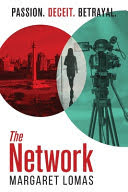
Weekly Reader: The Network by Margaret Lomas; A Strange But Effective Mix of Chick Lit and Espionage Thriller


Weekly Reader: The Network by Margaret Lomas; A Strange But Effective Mix of Chick Lit and Espionage Thriller

By Julie Sara Porter

Bookworm Reviews


Spoilers: The best way to describe Margaret Lomas's novel, The Network is Bridget Jones Vs. ISIS. To paraphrase the old Reese's Peanut Butter Cups commercials: "Hey you got Espionage in my Chick Lit.* "Well you got Chick Lit in my Espionage."


The book starts out as a chick lit about a woman coming off a dead end job and bad relationship to embrace a new exciting life in another country as an on air reporter. She has the supportive best friend and the dalliances with Mr. Right who turns out to be Mr. Wrong. But then the book goes from Helen Fielding to Tom Clancy in less than sixty pages. The woman then finds herself in the middle of international intrigue and becomes the target of a terrorist organization.


There are many ways that mixing light hearted comedy with espionage wouldn't work, but somehow in this case it does. Among the reasons that it works is because Lomas creates an effective lead who is well meaning, but awkward and is caught in a genuinely terrifying situation.


Samantha "Sam" Cannon is an Australian woman who longs to be a serious journalist. Unfortunately, she is stuck reporting on human interest stories for Australian Television, such as the farmer with the biggest potato or the newest baby animal at the zoo. Her one success story was exposing an MP who was caught using funds to pay for his affair with an exotic dancer, but that brief flame flickered as quickly as her relationship with her boyfriend, Ryan. Speaking of Ryan, Sam catches him in bed with another woman when he's supposed to be with his mother. Her going nowhere job and break up are enough to make her want to start over.


Her loyal and worldly friend, Bella talks Sam into applying for an on-site reporter position in Jakarta, Indonesia. She does and gets the job. She instantly clicks in her new surroundings, enjoys Jakartan life, befriends her welcoming colleagues, and obtains a new love interest in Jase, a fellow Australian transplanted to Indonesia. However, Sam doesn't like Jase's friend, Arwan. He is intrusive, pushy, chauvinistic, and horns in on her and Jade's dates. Not only that but Jase constantly defers to Arwan.


Aside from the difficulties between her, Jase, and Arwan, Sam thrives at her job. Even before she moved to Jakarta, she exhibited a keen sense of observation and journalistic sense. With the Exotic Dancer story, she follows a lead by contacting another dancer with whom sh had a previous acquaintanship when Sam worked as a barista. In Jakarta, she lands a plum interview with a female politician and becomes interesting in covering the lives of young Indonesians whether they will follow old traditions or make new ones.


Another reason that The Network worls is that the espionage plot is genuinely suspenseful with the tense situations and the minds of the terrorists who we don't empathize with but understand why they would choose such a violent path. We also become interested in Sam's involvement with them because she acts like normal people would in such a situation. She witnesses a shakedown and covers it for a story. She happens to be in a club when a bomb goes off. Her despair is clearly felt as she learns that one of her friends had died. 

She also has some awkward moments such as trusting the wrong people, revealing too much, or being caught alone with the enemy. She is not a Super Woman, she is Every Woman. 


We also get some interesting insights into the terrorist organization and how they operate. While some writing veers towards uncomfortable stereotyping, their motives are made clear. One of the characters is given a backstory that does not absolve him of his destructive acts but puts them in a context that makes sense to his character.


The title, The Network is a double meaning. It refers to the television news network in which Sam works and the terrorist network that commits mass murder. Cleverly, Lomas builds a network between two genres they usually don't cross but this time they do and do it well.


Weekly Reader: Husbands and Other Sharp Objects by Marilyn Simon Rothstein; Witty, Sarcastic, and Sharp Look at Divorce During Marriage


 Weekly Reader: Husbands and Other Sharp Objects by Marilyn Simon Rothstein; Witty, Sarcastic, and Sharp Look at Divorce During Marriage

By Julie Sara Porter

Bookworm Reviews


Spoilers: Planning a wedding is hard, but planning a wedding while going through a divorce is pure murder.

Well not literally in Marilyn Simon Rothstein's Husbands and Other Sharp Objects, but certainly figuratively on the soul.Rothstein's sharp, witty, and sarcastic book takes a long look at the beginning of a marriage while one is coming to an end.


Marcy Hammer is going through a really difficult time. After over thirty years of marriage, her husband Harvey has left her for a much younger woman who is pregnant with his child. She has been reeling from this loss and going through divorce proceedings while in a heavy relationship with her new boyfriend, Jon. Her adult daughter, Amanda announces that she's getting married to Jake Berger, an attorney that represents Harvey's international business. Now Marcy has to bite her teeth and act civil with her soon to be ex while going through the various wedding preparations with her spoiled Bridezilla of a daughter.


Rothstein's writing style is similar to that of Nora Ephron or Dorothy Parker, finding humor in tough situations, no matter how abrasive and sardonic that humor can be. Many of the situations border on the farcical with many characters, particularly Marcy, snarking at each other.

For example, Marcy's first meeting with her prospective son in law occurs when the two literally bump into each other at the airport. That is their cars run into each other while Marcy is meeting a friend and Jake is meeting Amanda (Amanda was supposed to arrive two days later.) . When Marcy first meets Jake, she wonders how much he knows about her and Harvey's separation. She thinks "I don't know. You don't know me. But tell me can you see from my hazel eyes that my husband has a new baby mama? Do you also know that she is in her twenties and is Argentine and he sent her back to Buenos Aires with the funds to open a business?"

When she realizes that Jake is Harvey's lawyer, Marcy decides to hit Harvey where it hurts the most: in his wallet. "Why don't you just bill the repairs (to their dented cars) to Harvey?" She asks. "And it's okay with me if you want to double your hourly rate," she adds silently.


Marcy always has a quick wit. Similar to Ephron's Rachel Samstadt from Heartburn, her humor is used as a defense mechanism to deal with the stress going on in her life. She takes potshots at her various troubles. When Jon demonstrates his talent of quoting the first lines of great novels, Marcy says, "Harvey quoted a book to me once. His checkbook. He recited the amount that I owed for a day at the spa." She also describes Harvey as "so nuts that children with allergies need to stay away from him."

Comparing religious differences between her and Dana, a close friend, Marcy says,"I am Jewish. My friend Dana is a Narcissist." 

Upon learning that Amanda's soon to be mother in law is Maud, but her nickname is Mug, Marcy thinks "If I had to choose between Mug or Maud, I'd ask people to refer to me as 'Hey You.'"

When Amanda keeps bothering her mother with the changing details of the wedding, Marcy says "Honestly, I think you should get married wherever you want to get married. Whether it's on a cattle ranch or the Orient Express and one of us is murdered, it's fine with me."


Besides the laughs, there is a lot of depth as well in Marcy's character. Even though the plans of the wedding are a headache and a half, she goes through the motions because she wants Amanda to be happy. She also shows love to her other children, Elizabeth and Ben. When Amanda considers moving to a venue that outlaws homosexuality, thereby ensuring that Ben and his boyfriend, Jordan would not be able to come, Marcy questions this. She also has lot of inner turmoil when Amanda tells her that she doesn't want Jon at the wedding. She is torn between her daughter's happiness and her boyfriend's. 

There is even some poignancy to her character when her friend Candy learns that she has cancer. Comedy turns to drama as Marcy tries to be supportive while also clearly anguished for her friend.


Marcy is a brilliant lead comic character. Unfortunately, much of the supporting cast border on parody and many are unlikeable. Harvey is the typical boorish ex. He demands that Marcy keep their house and insists on having the final say in wedding details. It's not a mystery why he and Marcy split up, but it's a mystery what she ever saw in him in the first place. 


Jon at first seems alright: loving, supportive, and understanding about Marcy's decision to take things slowly, the Anti-Harvey. Unfortunately, a plot twist happens which either causes Jon to act out of character or act according to his real character and the supportive boyfriend act could only be suppressed for so long. Either way, it suggests that he can be as thoughtless and controlling as Harvey and hints that Marcy could be in for more of the same.


Then there's Amanda. Never have I seen a more spoiled thoughtless daughter since Mildred Pierce's Vida. Okay, she's not murderous but she certainly is obnoxious and irritating. From constantly whining about the details to her shrill complaints about people ruining her "special day," she is the stereotype of every bitchy bride ever. Her siblings, Elizabeth and Ben, get three cheers simply for telling her to knock it off. I know weddings are stressful, but Amanda takes her behavior to an extreme that makes her more annoying than understandable.


For the most part, Husbands and Other Sharp Objects is not a book to be taken seriously. It is meant to be read with a laugh and a nod of understanding when one has gone through difficult stressful times. Marilyn Simon Rothstein's sharpness lies in her ability to capture humor with that stress.


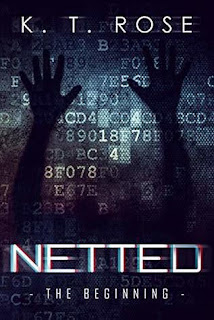
New Book Alert: Netted: The Beginning by K.T. Rose; Engaging Mesmerizing Thriller Journey Into The Dark Web By Julie Sara Porter


New Book Alert: Netted: The Beginning by K.T. Rose; Engaging Mesmerizing Thriller Journey Into The Dark Web

By Julie Sara Porter

Bookworm Reviews


Spoilers: The Dark Web is an area of the Internet in which many have heard but not as many experienced. It is the darker areas on the Internet that remains unexplored and mostly unadministered. One of its most infamous aspects are the amount of illegal activities that occur there. Illegal drugs and weapons can be purchased and humans can be trafficked. Stalkers can follow victims without being traced. People can watch Livestream videos of mutilations, rape, cannibalism, and abuse. It's a frightening place where many of the darkest fetishes and fantasies are revealed.


That is the milieu of K.T. Rose's Netted. She explores the Dark Web as seen by two people who are different in their approaches to the seamier side of the Internet but still end up becoming its victims.


Dale demonstrates the dangers of online dating and how we really don't know with whom we contact on social media. He's coming off of the end of a long-term relationship. His protective sister, Diane encourages him to use Going Out, a dating app for a rebound relationship. He gets in touch with Marla and after three weeks, goes to see her in person.


What starts out as a typical romantic comedy of "getting to know you" awkwardness and idle chit chat between a lonely gamer and his new eccentric germaphobe date gets darker and more sinister after she offers him a drink. Suddenly, he feels sleepy and this Manic Pixy Dream Girl is more like a Creepy Demonic Nightmare Woman. She attacks him and appears to be at the behest of someone else named "Paul" who hints that she is supposed to kidnap him for unspecified reasons.


The change in tone from romance to horror in Dale's section is intentional, but the change in the next segment is horror all the way through and that makes it more memorable,not just horror in the graphic things that happen but horror in the mind of the protagonist and the people around her.


The featured character in this segment is Jessica, a troubled high school student who had been abandoned by her mother and is estranged from her father and his new family. Instead she lives with her foul mouthed grandmother. She is frequently bullied at school and her only emotional release is watching The Silent Red Room, a dark web series starring the enigmatic, Father Paul.


The Silent Red Room's concept is that people are kidnapped by viewer request and then tortured at the behest of those who watch. Jessica uses the show to satisfy her blood lust and need for revenge. Her rage and desire for vengeance reaches its tipping point after  Brandy, her best friend is the victim of a cruel prank by Franny, a mean girl that ends up on social media. When the prank is turned and Franny is cyberstalked and threatened, she commits suicide. Brandy feels sorry for the girl, but Jessica feels nothing except pride in her involvement in Franny's humiliation and later death. 


While one could say that Jessica was getting back at Brandy's mistreatment, there is more than enough evidence to suggest that Jessica only used Brandy as an excuse and is as cold blooded to her as she is to anyone else. Her only real interest is to emulate the torture that she sees on The Silent Red Room and to catch the interest of Father Paul. She is a true psychopath and lives for her dark fantasies and little else.


Dale and Jessica's stories come together on the set of the Silent Red Room where they meet Father Paul and his Merry Band of Torturers face to face. The two struggle to escape: Dale from a situation in which he knows nothing about and Jessica from a place that she knows all too well and is suddenly aware that she should be careful what she wishes for. The climax shows the depths of the Dark Web in which the bloodiest fantasies become reality and things are definitely not what they seem.


Netted:The Beginning is a strong start to a series that explores the Dark Web. If this introduction is any indication, it should be a dark mesmerizing voyage into the unseen Internet indeed.


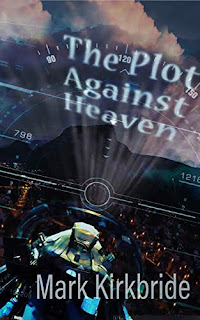
New Book Alert: The Plot Against Heaven by Mark Kirkbride; Intriguing Premise and World Building Undone by Short Length


New Book Alert: The Plot Against Heaven by Mark Kirkbride; Intriguing Premise and World Building Undone by Short Length

By Julie Sara Porter

Bookworm Reviews


Spoilers: Some novellas benefit from a short length. The story is best told in a short manner to the point so that the characters encounter the monster or solve the mystery without any unnecessary subplots or padding. Then there are ones that falter because of their short length.


Mark Kirkbride's The Plot Against Heaven is one that is way too short and would greatly benefit from expansion. It offers an intriguing premise of a widower caught between the battle of Heaven and Hell so he can be reunited with his deceased wife. It also has a brilliant sense of world building on how Heaven and Hell are written, in fact almost too good. The problem is because of the 68 page length, the premise and world building aren't as incredible as they could be.


The story is similar to the myth of Orpheus and Eurydice, in which a musician goes to the Underworld to get his deceased wife only to lose her when he disobeys Hades's command not to look back at her until they get out. It's sort of a variation of the myth with modern twists.

Paul Desuthe, a jingle writer/poet is in Heaven to plead his case before God that his wife, Kate, was taken too early and wants to have her back. When he finds the Big Guy isn't there and appears to have not been there for some time, he becomes irate and denounces God. Well anyone who has ever read or seen Faust, The Devil and Daniel Webster, the legend of the Flying Dutchman, Oh God You Devil, or another encounter between Heaven, Hell, and mortals know that when someone denounces God, someone else is listening. Down Paul goes to Hell and encounters Satan. Satan appears friendlier than God's staff and says he will bring Kate back to life if he does one tiny favor for him. See Satan and God will soon be engaging in the Big War, Armageddon, and Satan needs a good writer like Paul to be his pitch person and advertise Hell in a way that is contradictory to the traditional view.


The Plot Against Heaven does some really unique things with how Heaven and Hell are written. Heaven is a composite of a sterilized urban metropolis and a police state. The buildings are all skyscrapers with God's being the biggest of all. God himself gets driven around in a limo, and the only glimpse that Paul catches of Him is a large brain. 

There are fighter planes constantly flying up and down Heaven's skies and there are plenty of soldiers and suited business types asking their newcomers any questions. There are also billboards and signs warning people to follow all rules and that they never know who might be listening. This version of Heaven is ready for war at anytime and has none of the joy and Paradise in which it is usually associated.


By contrast Hell looks more like Las Vegas or any type of party town with casinos, games, loud music, and plenty of good looking men and women just for the asking. It is bright and colorful and without the rigidity of Heaven's existence.  While Hell is enticing, there is a superficiality that suggests that the good times are all surface and a means of entrapment. Similar to the Rolling Stones' song "Sympathy for the Devil," Satan is definitely "a man of wealth and taste." He watches over his kingdom with a smug sophistication, satisfied that by giving his people what they want, then they are completely in his power.


Heaven and Hell are so brilliantly written that it is such a shame that we are given so little time inside them. Heaven only apears in two chapters before Paul takes his downward plunge. Hell is covered pretty decently but more could be added. 

While the war happens between the sides, we see very little interaction between Paul and the other denizens. We aren't given enough of a build up before War is declared nor are we given much of a chance to get to know characters before there are casualties.

The thought of Heaven as a police state and Hell as a casino are so intriguing that there should be more chances to explore these settings in great detail. There are plenty of ripe moments for satire in the presentation that don't get too land because of the brief length.


The climax also needs to be better explored. There are various twists on top of the other. Some are pretty clever but they contradict each other and one revelation only makes sense if the other plot twist didn't happen. It produces an ending that is more puzzling than satisfactory.


The Plot Against Heaven is a great idea, but without more depth invested in the work an idea a sketch is all it is. Kirkbride could and definitely should explore this milieu in a longer work. This idea certainly deserves it.