Tuesday, March 7, 2017

Favorite Feminist Literature Part I: 19th Century


Favorite Feminist Literature Part 1: 19th Century


By Julie Sara Porter, Bookworm


In honor of March, Women’s History Month, I am writing a three-part review series of my favorite works considered Feminist literature from the 19th to the end of the 20th century. While most of the authors are women, not all are. The works just have to be told primarily from a woman’s point of view or feature a female protagonist.

The female protagonists are strong characters who challenge society’s expectations of them. While some are successful, others are not so successful. But they certainly let the other characters and the reader know exactly who they are and how they feel.

I use the term “literature” because while the selections are mostly novels, I have also included one book of poems and an anthology of short stories. I am aware that some books are left out. Many such as The Well of Loneliness, Mrs. Dalloway, and Atonement were left out for a very simple reason: I haven’t read them. (Though I want to). Of course, I am open to any great suggestions of feminist literature or any other sort of literature that discusses important topics, so please write your comments below.

All descriptions will include spoilers to the works.


5. The Portrait of a Lady by Henry James (1881)

The plot: Isabel Archer, an intelligent and well-read American young lady is taken to Europe with her aunt. Her aunt wants her niece to marry well, but Isabel turns down a marriage proposal from Lord Warburton, an Englishman and spurns her enamored cousin, Ralph. Ralph’s father and Isabel’s uncle is captivated by Isabel’s spirit and intelligence and leaves her half his wealth upon his death. Isabel then becomes the target of fortune hunter, Gilbert Osmond, in which they engage in an unhappy marriage.


Why it’s a favorite in Feminist literature: The book is filled with strong female characters from Henrietta Stackpole, a wry American journalist to Madame Merle, a scheming conniving con artist. James gives prominent female characters voices and makes them memorable instead of stereotypes of dizzy females who live for marriage.

Isabel stands out in this novel as a character who is brilliantly realized. She questions her role as a woman longing to live a life of independence and experience many things before she falls into marriage. She is also flawed as she engages in an unhappy marriage with Osmond, who is clearly not good enough for her. However, Isabel continues to keep her independent spirit by helping her stepdaughter, Pansy escape from a marriage to the wrong man. She also has a fondness for Pansy that overcomes her dislike for Osmond, wanting to be a guide for the younger girl.


Favorite Quote: Isabel (on turning down Warburton’s marriage proposal): “I’m not in the first youth-I can do what I choose-I belong to the independent class. I’ve neither father nor mother; I’m poor and of a serious disposition; I’m not pretty. I therefore am not bound to be timid and conventional; indeed I cannot afford such luxuries. Besides, I try to judge things for myself; to judge wrong, I think is more honorable than to not judge at all. I don’t wish to be a mere sheep in the flock; I wish to choose my fate and know something of human affairs beyond what other people think it compatible with propriety to tell me.”


4. Tess of the D’Urbervilles by Thomas Hardy (1891)

The plot: After her father discovers that her family is descended from nobility, Tess Durbeyfield claims relation to the titled D’Urberville family. She falls in a relationship with the caddish Alec D’Urberville who leaves her pregnant. Tess ends her relationship with Alec and the child dies. A grief-stricken Tess finds work in a nearby dairy farm where she encounters the cold and spiritual Angel Clare. Tess and Angel marry and Tess reveals her past to Angel, who rejects Tess, considering her a “fallen woman.” Tess leaves her husband and things get worse from there.


Why it’s a favorite in Feminist literature: The novel reveals the double standards that fall when women step outside their role and embrace their passions and afterwards suffer from a sullied reputation while many times men suffer no consequence whatsoever. Hardy gives a character who at times acquiesces to this standard, but also is not afraid to make her own decisions.

Tess embraces her passions by falling into an affair with Alec and then into marriage with Angel. She then ends her relationships with both men unwilling to compromise, particularly after Angel rejects her. While he sees her as flawed, she sees him as flawed as well in his unwillingness to accept her. While she makes a very wrong decision in her final scene with Alec, the novel suggests that she is unwilling to take being a pawn anymore and fights back in one of the few ways that a poor 19th century woman can.


Favorite Quote: Tess (to Alec D’Urberville clearly not buying his “conversion to Christianity” story): “Don’t go on with it! I can’t believe in such sudden things! I feel indignant with you for talking to me like this, when you know-when you know what harm you’ve done to me! You, and those like you, take your fill of pleasure on earth by making the life of such as me bitter and black with sorrow; and then it is a fine thing, when you have had enough of that, to think of securing your pleasure in heaven by becoming converted! Out upon such-I don’t believe in you! I hate it!”


3. The Poems of Emily Dickinson by Emily Dickinson (Various beginning in 1891 after Dickenson’s death)

The plot: Well really not a plot since they are poems, but Dickinson’s poems’ topics range from nature subjects like bees, birds, spiders, flowers, trees, and the sky, to social subjects like marriage, sexuality, spirituality, and death.


Why it’s a favorite in Feminist literature: Dickinson was known for her extreme shyness and solitude. She spent most of her life in her home town of Amherst, Massachusetts. Only a few of her poems were published in her lifetime. She had a reputation, which carries to this day of being an agoraphobic spinster.

However, Dickinson’s deepest themes are revealed throughout her poetry. Her writing features such themes as enjoying solitude, being an outsider in a world of conformity, and finding spirituality within nature rather than in the four walls of a church.


Favorite Quote:

“Much madness is divinest sense

To a discerning eye;

Much sense the starkest madness.

‘Tis the majority

In this, as all prevails

Assent, and you are sane;

Demur,-you’re straightway dangerous

And handled with a chain.”


 2.  Middlemarch by George Eliot (1871)

The plot: Various plots unfold in this tome. However, Dorothea Brooke’s story is the main plot for this review. Dorothea, a well-educated intellectual woman dreams of a life of meaning, so she marries Edward Casaubon, an elderly academic. The marriage quickly becomes unhappy and Dorothea falls in love with Will Ladislaw, Edward’s younger cousin. When he learns of the affection the two share, a dying Casaubon changes his will so that Dorothea loses her inheritance from him if she marries Ladislaw.


Why it’s a favorite in Feminist literature: Dorothea stands out among the other female characters like the superficial Rosamond Vincy and Dorothea’s conventional sister, Celia. She longs for a life of deep meaning, intellectualism, and active service towards the poor, and is stifled by the role women in her period have to fill as decorative pieces waiting for marriage.

She designs cottages for the people on her uncle’s estate and she longs to discuss and analyze Casaubon’s Key to All Mythologies study. While her marriage to Casaubon is obviously unwise to all but her, she is less drawn to him physically than she is to someone who she believes understands her mentally. Dorothea is simply a woman born in the wrong circumstances and the wrong time period, and unlike her trail blazing author, lacked the stamina to pursue her interests.

The other reason this book is a favorite for Feminism is because of its author. Eliot, whose real name was Mary Ann Evans, chose to write under a male name and pursue her academic interests and writing. Her subjects were not specifically about marriage and romance, so much as they discusses topics like religion, social issues, and class conflicts. Eliot pursued an over 20 year affair with George Henry Lewes, a married editor. After Lewes died in 1878, Eliot married a man 20 years her junior. While the fictional Dorothea was unable to find happiness in her role as a woman, the real Eliot was able to pursue her own happiness.


Favorite Quote: Narration (This sets up one of the main themes to the book): “Here and there is born a Saint Theresa, foundress of nothing, whose loving heartbeats and sobs after an unattained goodness tremble off and are dispersed among hindrances, instead of centering in some long-recognizable deed.”


1. Jane Eyre by Charlotte Bronte (1847)
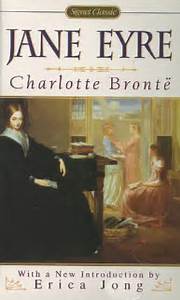
The plot: Orphaned, Jane Eyre is abused by her aunt and cousins then is sent to a cruel Dickensian school for girls. After she grows up, she is offered a position as a governess to the ward of the wealthy mysterious, Edward Fairfax Rochester. While she tutors Rochester’s ward, Adele, and becomes fascinated by her employer, Jane hears unusual laughter and encounters mysterious circumstances in the house. These weird happenings threaten Jane’s happiness in the Rochester home and her and Rochester’s growing affection for each other.


Why it’s a favorite in Feminist literature: Jane is no wilting naïve Victorian heroine. Even as a child, she is not afraid to stand up for herself. She fights back when her cousin, John Reed bullies her and tells her cruel aunt, “I am glad you are no relation of mine.” When she gains employment with Rochester, she is not afraid to call him out when he manipulates her with a phony engagement even though she is in love with him.

 When she finds out that Rochester’s first wife is imprisoned in the house, mad, Jane refuses Rochester’s offer to marry him or live as his mistress. In all of her decisions, Jane displays a great deal of self-sufficiency and strength that allows her to fight against her antagonists even if they think of her as inferior because of her gender and her poverty. Only when Jane is able to become Rochester’s equal, and in some ways his superior, in the end does she accept his proposal.

I also highly recommend the novel, Wide Sargasso Sea by Jean Rhys, which is the story of Bertha Rochester, Rochester’s first wife. She also has a passionate independent spirit that allows her to stand up for herself against antagonists like Rochester.


Favorite quote: Jane: “I tell you I must go! Do you think that I can stay to become nothing to you? Do you think I am an automaton?-a machine without feelings? And can bear to have my morsel of bread snatched from my lips, and my drops of my living water dashed from my cup? Do you think, because I am poor, obscure, plain, and little, I am soul and heartless? You think wrong!-I have as much soul as you, and full as much heart! And if God had gifted me with some beauty and much wealth, I should have made it as hard for you love leave me, as it is now for me to leave you. I am not talking to you through the modicum of custom, conventionalities, nor even of mortal flesh: it is my spirit that addresses your spirit; just as if both had passed through the Grave, and we stood at God’s feet, equal, as we are!”


Honorable Mention: The novels: Vanity Fair by William Makepeace Thackeray, Madame Bovary by Gustave Flaubert, Mill On the Floss by George Eliot, Far From the Madding Crowd by Thomas Hardy, The Scarlet Letter by Nathaniel Hawthorne, The Tenant of Wildfell Hall by Anne Bronte, Washington Square by Henry James, Aurora Leigh by Elizabeth Barrett -Browning,  Ruth Hall by Fanny Fern, and Leila by George Sand.

Non-fiction: A Vindication of the Rights of Women by Mary Wollstonecraft (alright this one was from the 18th century published in 1792, but it definitely is worth a mention), Eighty Years and More by Elizabeth Cady Stanton, Sojourner Truth’s “Ain’t I A Woman” speech, Woman in the 19th Century by Margaret Fuller, Incidents in the Life of A Slave Girl by Harriet Jacobs, Twenty Years at Hull House by Jane Addams, and The Subjection of Women by John Stuart Mill.

Plays: A Doll’s House and Hedda Gabler by Henrik Ibsen

 Short Stories and Poetry: Works by Mary Wilkens Freeman, Sarah Orne Jewitt, Rebecca Harding Davis, Emma Lazaru,s, and Elizabeth Barrett-Browning

15 Favorite Newbery Medal Winners


Favorite 15 Newbery Medal Winners

By Julie Sara Porter, Bookworm

 
Magical ‘Girl Who Drank the Moon’ will keep readers spellbound ...
The winner of the 2017 Newbery Medal is The Girl Who Drank The Moon by Kelly Barnhill. Some of the best Newbery winners contain original ideas and concepts, relatable protagonists, and strong attention to detail particularly for history. The top 15 in this blogger’s opinion are (in chronological order):


  1. The Witch of Blackbird Pond by Elizabeth George Speare (1959)-Never has Puritan New England been portrayed more claustrophobic and judgmental and never has a character been more out of her element than 16-year-old Barbados native, Kit Tyler. The witch trials and the element that breeds them are excellently captured in Speare’s writing. Even the slightest deviation from the norm such as not attending Meetings, acting out stories from the Bible, or writing someone’s name in a Horn Book, become causes for suspicion. The friendship between the rebellious Kit and Hannah Tupper, a Quaker and the titular so-called witch is lovely as Hannah opens her home to outsiders like Kit and an abused lonely girl. Her home becomes a safe haven from the dismal climate of the village. The witch trial scenes are filled with suspense and bring out the contrasting beliefs of the villagers and Kit and Hannah.


  1. A Wrinkle In Time by Madeleine L’Engle (1963)-The science fiction classic which follows the adventures of Meg and Charles Wallace Murry who search a tesseract for their missing scientist father is well-known. But many of the themes and characterizations still resonate today. The eccentric Mrs. Whatsit, Mrs., Who, and Mrs. Which are fascinating tour guides into this story of centaurs, mediums, and The Black Thing (a dark cloud that is the symbol of all evil). The science fiction worlds in L’Engle’s book compare to classic worlds such as Middle Earth, Wonderland, OZ or other fictional settings for the reader to remember and long to visit. Underneath all of this weirdness the book has some strong themes about fighting against conformity as the Murrys and their friends take on the telepathic IT.


  1. From the Mixed-Up Files of Mrs. Basil E. Frankweiler by E.L. Konigsburg (1968)-Art appreciation may not be the usual subject for a juvenile novel, but this literary tour of the Metropolitan Museum of Art in New York City is not to be missed. Claudia and Jamie Kincaid run away to the Met and stay inside after hours. The Kincaid siblings display cunning and resourcefulness as they infiltrate school groups so security guards mistake them for visitors and use “wishing coins” for money. For Millennials and younger children, it will make an interesting read as the Kincaid children use the nearby Donnell branch of the New York Library, the museum’s records collection, and a completely disorganized file cabinet in Connecticut to research a marble angel statue and its mysterious collector, Mrs. Frankweiler. Yes, kids, sometimes we had to go the long way for research in the old days.


  1. Roll of Thunder, Hear My Cry by Mildred Taylor (1977)-The segregated Depression era South seen through the eyes of 9-year-old, Cassie Logan is stark, uncomfortable, and unfortunately very real. The racism that inflicts the Logan family is portrayed in many ways such as when a young white girl and her father throw Cassie on the road and make her call the girl “miss” after Cassie accidentally bumps into her. Cassie gets even with the girl in a very epic manner showing her as a very strong intelligent girl ready to fight against her oppressors. Many of the violent scenes such as revealing victims of burning and tarring and feathering as well as the organization of a lynch mob are very disturbing and unforgettable. They show the true impact of racism and how it affected everyone around them. The ending is purposely left ambiguous as the racist climate will continue to effect the Logan family for generations to come.


  1. Bridge to Terabithia by Katherine Paterson (1978)-This is the go-to book for any lonely kid who withdraws into their own private world of books, video games, or fictional kingdoms to deal with the stress of the outside world. Many readers will relate to Jesse Aarons and Leslie Burke as they create their fantasy world, Terabithia, a haven from such difficulties as Jesse’s catty sisters and bullying classmates. The children reveal their creativity by detailing adventures in their fantasy world where they reign as monarchs. Some readers may even recall their own Terabithias. The book’s tragic ending is well-written and beautifully realized as the characters deal with loss and the idea of moving on. Knowing that this was based on a friend of Paterson’s son, makes the story even more moving and cathartic.


  1. The Westing Game by Ellen Raskin (1979)-Mystery lovers and puzzle aficionados have fallen in love with the Game created by multi-millionaire Samuel Westing, a cross between Sam Walton and Willy Wonka, to find his heir and to discover which of them had taken his life. The players are all unique individuals that reveal more of themselves as the game goes on. From Angela Wexler, a debutante tired of being treated as a pretty face to Berthe Erica Crow, a dour Salvation Army worker with a secret connection to Westing, the ensemble is brilliantly realized by Raskin. The real star and scene stealer however is 13-year-old, Tabitha Ruth “Turtle/T.R.” Wexler, amateur detective and probably the youngest stock broker ever. With her knowledge of the stock market and observation of the other players, Turtle is able to stay ahead of the other heirs.


  1. Jacob Have I Loved by Katherine Paterson (1981)-Anyone who has been a sibling can relate to the struggles of Sara Louise Bradshaw, as she has to live with her pretty talented sister, Caroline. Sara Louise nicknamed “Wheez” is tired of Caroline receiving all the attention from her parents, classmates, and the local community.  Many readers can understand the feelings of envy of more talented and successful siblings and the low self-esteem issues that sometimes comes with that sibling rivalry. While not long on plot, the novel shows several scenes of Sara Louise struggling to carve her own identity first as a crab fisher then as a nurse/midwife, an occupation that allows her in one final scene to come to terms with her past pain.


  1. The Whipping Boy by Sid Fleischman (1987)-While the plot is simple: two former enemies run away and learn about each other becoming friends, Fleischman’s book gives two brilliant lead characters that make the journey an excellent one. The spoiled prince, Horace AKA “Prince Brat” and his street-smart whipping boy, Jemmy bounce off each other really well when thieves mistake Jemmy for the prince and vice versa. The two also really come through in some of the more dramatic incidents such as when an almost free Jemmy feels guilty about leaving the forlorn “out-of-his-depth” prince behind and refers to him as his friend. (“Cows would give beer first.”) Also when Horace confesses that he wishes he could be more like the whipping boy because “(he’s) not afraid of anything.” The duo really come into their own as stronger characters that are more than their outside appearances of a prince and a servant.


  1. Number The Stars by Lois Lowry (1990)-The Holocaust is the subject of many novels juveniles and young adults. This terrific story is a fresh take by focusing on people who risked their lives to help Jewish families escape from the Nazis. Annemarie Johansen, the 10-year old-protagonist, is written with a lot of depth and courage as she does her bit to aid the Resistance by delivering packages and helping her family hide her best friend’s family. The suspenseful plot moves along briskly as the Johansens use ingenuous methods such as hiding goods for the escaping Jewish family by staging a mock funeral for a non-existent aunt. This book shows how people can use whatever means to aid others in times of crisis.


  1. The Giver by Lois Lowry (1994)-Lowry’s second book on this list is a brilliant science fiction novel about a dystopian society masquerading itself as perfect. 12- year-old, Jonas begins to recognize the cracks in his society when he is named Receiver of Memory, made to remember the old ways of life. The memory exchanges between Jonas and his mentor, The Giver, are moving and heart-breaking as Jonas experience things like colors, animals, multigenerational families, and real love for the first time. People who long for a perfect society should read this and realize what could be sacrificed in a drive for perfection.


  1. The Midwife’s Apprentice by Karen Cushman (1996)-Karen Cushman had a talent for writing strong-willed Medieval era female protagonists. Her first novel, Catherine Called Birdy dealt with a noblewoman trying to fight an arranged marriage to a much older nobleman. Her second, equally brilliant novel gives another excellent lead character, Brat AKA “Beetle” and “Alyce,” the title apprentice. Alyce studies and trains as a midwife despite her tyrannical superior, Jane. Alyce is a kind-hearted likeable character as she helps a poor woman give birth (while Jane runs off to aid the Lady of the Manor) and searches for a homeless boy who is like a brother to her. The reader will understand and empathize with Alyce’s resolve to make something of herself as a midwife and a woman in the Medieval era.


  1. Holes by Louis Sacher (1999)-Anyone who has read Sacher’s Wayside School series will know what to expect when they read his books and Holes has them all over: humorous situations (juvenile detention boys forced to dig holes for their Warden), clever word plays (the protagonist’s name is Stanley Yelnats IV, the same name backwards), and odd almost supernatural happenings (the Yelnats family is cursed with bad luck thanks to a “no good pig stealing great-grandfather.”). Sacher’s writing is biting, humorous, and extremely touching particularly the relationship between Stanley and Zero, another boy at camp. Another touching highlight to the book is the story of Kissin’ Kate Barlow, a school-teacher-turned-outlaw and her interracial romance with Sam, a turnip farmer. The story of Kate becomes a thread that ties the modern story of the boys in the camp and the Yelnats’ family curse drawing them all together in one clever conclusion.


  1. Bud, Not Buddy by Christopher Paul Curtis (2000)-If a book was ever meant to have a soundtrack, it would be this one. The story of Bud, an African-American boy who runs away to find his family is a great journey into the world of blues and jazz music. Along the way, Bud joins Herman E. Callaway and his jazz band, the Dusky Devastators of the Depression. The portrayal of the jazz musicians is written brilliantly as the band reveals their closeness and accepts Bud as one of their own. Herman and his band give Bud a sense of family and purpose as he strives to become a musician like them. He also learns about his family and past in a moving recall that answers questions for him.


  1. Crispin, Cross of Lead by Avi (2003)-Like Midwife’s Apprentice, this book also takes a look into the Middle Ages as the plot revolves around Crispin, a peasant boy who searches for his father’s family with only a cross as his clue. The details of Medieval peasant life are greatly described as Crispin and his mentor, Bear encounter lords, priests, and other travelers. The setting gives the reader a strong sense of place and time using examples like Crispin being called Asta’s Son, the first few years of his life to point out his illegitimate birth or characters being forced to hold to spoken oaths. It is a thoughtful lesson into Medieval culture and what Crispin had to fight against to find his place in that world.


  1. The Graveyard Book by Neil Gaiman (2009)-Gaiman’s book is an original take on the standard ghost story by telling this book largely from the point of view of the ghosts themselves! Everything about the book is unique and original such as a family of ghosts taking in the recently orphaned toddler, Nobody, and raising him as their own child. Nobody also is a multi-faceted character as he travels between the world of the living and the world of the dead making friends and family on both sides finding difficulties in reconciling his interest in the living world with his life in the ghost world. The plot has its horror scenes such as an antagonist that was responsible for the death of Nobody’s family and is obsessed with finding the lone survivor. But Nobody and his ghost friends and family are portrayed almost like the Addams Family or Halloweentown residents of the Nightmare Before Christmas, creepy and spooky but somehow charming and loveable in all of their creepiness and spookiness.


   Well that’s my list. What are your favorite Newbery Winners and Honorees? Please, share your thoughts in the comments below.

Alice's Adventures in Wonderland/Through the Looking Glass by Lewis Carroll

Review: Alice's Adventures in Wonderland/Through the Looking Glass
By Lewis Carroll
How can I express in words what this book has meant to me my whole life? It seems that a blog of reviews could only begin with one of my all-time favorite novels, the one that I have read more times than other's, the one whose lead protagonist I have considered "my best book friend" (more on that later).

My journey with Alice's Adventures in Wonderland/Through the Looking Glass began when I was seven years old. I had seen many of the film versions such as the Disney version and a miniseries from 1985, but I had never read the whole book before. I finally ordered it in a book order form and felt myself transported to the world of madness, word plays, and goofy characters that in a strange way made sense to me. At first, I read it as an ultimate escape from the worries and problems of any normal school girl. I would read and imagine myself falling down the rabbit hole as it took me to this strange world and I could be alongside Alice having tea with the Mad Hatter, listening to the Cheshire Cat's instructions, playing chess with the Red and White Queen and having so many adventures.

As I grew older, I began to appreciate the book for its satire of Victorian conventions. I recognized the parody of Queen Victoria that could be found in the temperamental Queen of Hearts and the Duchess who was so fond of finding morals in things. I recognized the poems "You Are Old Father William" and "How Doth the Little Crocodile" make fun of poems that were meant to instill proper behavior. I also saw the lunacy behind rules such as "sentence first-verdict afterwards" and could see how they made no more sense than the real rules at the time.

Most of all, I recognize and pay tribute to the character of Alice. I have identified with her struggle going through Wonderland and Looking Glass World. She was a young lady who wasn't afraid to challenge rules that made no sense, argue with characters when they were rude to her, but she still continued to play the game. In many decisions, I feel that I have fallen down the rabbit hole or am playing an endless game of chess against opponents. I keep playing, but I hope that I can stop and think and be myself so that I don't lose sight of who I am through all the changes as Alice often does. I own a book called, You've Got to Read This Book in which people discuss the books that changed their lives. I know beyond a doubt that Alice has changed mine. That's why I call these books "my best book friends."

Introduction

Monday, February 13, 2017


Introduction


Hi everybody my name is Sara Porter and I love to read and review books! This will be a blog in which I review some of my favorite books and some not-so-favorite. For right now I will post reviews as I read the books about every week to two weeks. Some of these reviews will be retreads from my former blog, "Sara's Library Wonderland."
Hopefully if this site picks up, I will be able to review new releases and advanced review copies.


First I will tell you a little about myself. I have a Masters-Library Science from Indiana University Purdue University-Indianapolis and a Bachelor of Arts-English from University of Missouri-St. Louis. Right now I am working as a Customer Service Associate at At Home Home Décor Superstore in Fenton, Missouri.
I am particularly interested in acquiring a position in either a library or a bookstore. My LinkedIn profile can be found here and my Facebook account can be found here  . My book reviews will also be featured on my Facebook account.


I am always on the lookout for something new and interesting to read. I particularly enjoy classic literature, particularly the 19th and early 20th century American and British novels, modern genre fiction like historic fiction, mysteries, and magic realism, non-fiction and biographies, self-help spiritual books, mythology and legend collections, and most anything I can put in my hands.
My other interests are finding out new bits of information and trivia, searching for information and helping others to find it, watching movies particularly older ones from the 30s-60s, solving crosswords and logic puzzles, coloring adult coloring books, and listening to classical, New Age music, and rock and pop music from 60s-90s.


I hope this will be a fun and interesting experience and I hope it will lead to some great things. Most of all, I hope you, dear Reader, will find some new and interesting reading experiences.