Showing posts with label Serial Killers. Show all posts

Sunday, September 13, 2026

Then Finished (Gutted, Dissolved, and Then Finished Book 3) by Anna Madorsky; Thrilling Conclusion to Psychologically Disturbing Trilogy

Then Finished (Gutted, Dissolved, and Then Finished Book 3) by Anna Madorsky; Thrilling Conclusion to Psychologically Disturbing Trilogy

By Julie Sara Porter 

Bookworm Reviews

Spoilers: Since this is the final book in a trilogy, I recommend that you read my reviews on the previous volumes, Gutted and Dissolved and be forewarned that this review will contain MAJOR SPOILERS!!! for the entire series. Please, read at your own discretion.

In The Gutted, Dissolved, and Then Finished Trilogy, Anna Madorsky introduced us to killer couple Elliot and Jason. In the first book. Gutted, Jason meets an insomniac Elliot in a late night cafe where they share dark Nihilistic thoughts and complete isolation. They become lovers and eventually husband and wife. Jason reveals the worst aspects of his character and admits that he has killed someone before and has urges to do so again. Elliot alternates between appalled and fascinated and helps him kill again by the end of the book.

 In the second volume, Dissolved, Elliot and Jason are now divorced. To separate herself from the violence and Jason's dark urges, Elliot moves to Portland, makes many new friends, reunites with family members, and falls in love with Max, another man. She makes plans to live a better, more positive life. But she can't get Jason out of her mind and when he returns, she can't help but submit to his desires.

Now we have Volume 3: Then Finished, the final volume, the end, the resolution to Jason and Elliot’s troubled relationship and murderous plans. This volume takes the dark hints from the previous books and gives them their inevitable, destructive, graphic, and bloody conclusion. 

It lives up to its name by ending the series not with a period but an exclamation point! Book 3 revels in the darkness that is central to the narration whereas before it was hovering on the edge in Book 1 and moving ever closer in Book 2.

Now Elliot is romantically involved with Max who was introduced in Dissolved. He has finally defrosted her previously icy nature and she is beginning to open herself up to having another long term relationship. However, Jason is still there and still a part of her life. The two ex spouses rekindle their romance and with this romance comes dead bodies. It isn't too long before the duo are ready to kill again but now the relationship has shifted in surprising ways.

Gutted involved Jason introducing Elliot to her darker nature and murderous impulses. Dissolved showed her trying to get away from them. Then Finished counters the previous books by saying that no matter how far Elliot tries to run and escape, she can't hide who she is. The creature that existed within her but needed Jason to bring it forward. 

In the previous books, Elliot fights against her darker nature. In this book, she accepts and embraces that darker nature. The conflict in Dissolved involved her finding better friends that bring out a better lighter nature within her. Here, Max does not represent a brighter path for her but a barrier towards what she now sees as her true self.

She sees the encouraging kindness that she once depended on with Max as restrictive, confining, and weak willed. She questions his motives and shoves her affair with Jason into his face, probably to close that final link to a lawful steady society. She made her choice so in rejecting Max, she rejects society.

A strange thing occurs throughout the book. It's clear that Elliot learned from Jason to embrace a darker and violent nature but she learned it too well. She used to be on the sidelines, making suggestions, driving the get away car, providing the alibi, and sometimes assisting in the graphic details. But here she is a stronger forceful presence and takes the lead.

Many of Elliot and Jason’s arguments consist of Elliot pushing her ex into doing something and he resists, which is the complete inversion of their former relationship. She has become more aggressive, darker tempered, and more open to causing great harm.

It's also highly significant that this is the only book in the trilogy where Elliot commits murder on her own. She has been open to the possibility of taking blood and now she can master and own it. She surpassed Jason in rage and violence and now he has to live with the monster that he created.

It's also significant that as Elliot strengthens, Jason weakens. He is now the withdrawn quiet one suggesting from the sides. He stews in a rage that is burning down into weariness and lethargy. The rage that fueled him has been given to Elliot with none left for him. Without it, he has nothing to live for.

Elliot has seen a better life but blatantly rejects it. Jason has no other frame of reference so cannot function when the chain of command is ruptured. His pain that he blamed as being the catalyst for murder is now all-consuming when he doesn't have an outlet to satiate it. He used to be angry, now he's just sad.

As with all murderers, Elliot and Jason’s crime spree comes to an end. It is an inevitable conclusion to a toxic relationship that was foretold the moment that an intense mysterious stranger saw an insomniac woman in a cafe and enveloped her into his private darkness.


Sunday, April 12, 2026

Threads of Fate by Aminah Bridgette Fox; Occult Academia Horror Novel Hints At Real World Issues


Threads of Fate by Aminah Bridgette Fox; Occult Academia Horror Novel Hints At Real World Issues

By Julie Sara Porter 

Bookworm Reviews 

Spoilers: Aminah Bridgette Fox’s novel Threads of Fate, is similar to a Twilight Zone episode. When creating the anthology series, Rod Serling realized that he could insert his political views into a Science Fiction show. He used Science Fiction, Fantasy, and Horror tropes to make the connections to issues like equality, conformity, mental illness, autocracies and so on. He told a great story and also revealed basic truths that should be considered and listened to. Other creators also did the same.

Threads of Fate is like that. It is a gripping and mesmerizing Supernatural Horror Occult Academia novel about missing college students, cults, and the existence of monsters like vampires that hides important themes of marginalization, economic and racial division, gender and sexual identities, and the secrets in educational, government, corporate and political institutions

Milford University student Tammy Moore is reported missing. Her friends, particularly her best friend and roommate Manuela “Manny” Webb are anxious and grief stricken as weeks and months pass with no words, signs, or clues appear about her presence and whether or not she's alive. Tammy isn't the only one. Other students go missing and Manny notices some interesting sigils around campus. There might be a connection to the missing students and the mysterious sigils. It is a connection that reveals a dark sinister side to the university, faculty, staff, and student body and a conspiracy that has been going on for hundreds of years and taken countless lives.

This book walks a thin line between a realistic and paranormal thriller. The book is technically an Occult Academia but it doesn't feature magical studies or supernatural creatures as professors and students. Instead it looks like any other university, stately buildings, well tended grounds, student centers, offices, organizations, libraries, labs, and areas named after wealthy donors. Bleary eyed students and cynical professors go to and fro their daily lives to teach, study, drink coffee, publish, attend meetings, date, and everything else. It's the curriculum, focus, and classes that are unusual.

Occult Studies is an academic discipline and there are courses on the subject like “Cultural Histories of the Occult and Forbidden Knowledge.” There are professors like Beau Moreau who are authorities on the subject and some literally wrote the books on Occult Studies. Students can even major in the subject alongside Creative Writing, Communications, or Medicine.

The book doesn't say what the employment outlook is like for one who majors in Occult Studies but it would be interesting to find out. The iconoclastic studies alongside the normal setting perfectly combine something ancient, magical, and supernatural with something modern, realistic, and relatable.

The missing students plot point provides commentary on many actual issues. There is the media frenzy particularly on social media where grief becomes a public spectacle, a person even a dead person becomes a commodity for hits, shares, and comments. 

The case becomes a cause celebre then disappears when the reporters, bloggers, and law enforcement officers do. The 15 minutes of fame are sped up to about 5 in this day of quick and disposable fame and infamy.

Manny and her friends are caught between trying to solve the mystery of the disappearances and go through their usual college life but it's hard to do with people wanting to find out the gory details. 

Since Manny's best friend was one of the victims, she is constantly surrounded by questions, accusations, and publicity depicting her in many roles from the actual murderer to the brave survivor. Her grief is magnified by the notoriety so she seeks therapy to sort out her grief, anger, and helplessness. 

There is also commentary about the type of people being murdered. The majority of the victims are either students of color or were involved in DEI organizations and causes. This connection opens up conversations and arguments about prejudicial assumptions about the victims and their assailants. 

It also puts an edge on the arrival and departure of the media circus. One could look at the constant presence as a counter, almost an overreaction to a press that is often accused of perpetuating “Missing White Woman Syndrome,” but the abrupt end could be seen as the press doing that very thing. They chase a lead with a racial narrative then step away when the consequences become too great when civilians involve themselves.

Manny is in a precarious position as a Black female asexual student who was in the right place at the right time to avoid the fate Tammy was thrown into. She knows that she could by definition become a target making her times walking alone on campus even more suspenseful in ways that some of her other friends don't have to worry about.

However, Manny is able to take actions in ways that authorities and the media will not allow. She and her friends investigate on their own. In one heart stopping chapter, she witnesses a terrifying ceremonial ritual which reveals a lot about many of the more privileged people that surround university life. When those channels fail and prove to be dangerous, she and her friends guess the potential future victims and try to protect them from the kidnappers by following them.

There is a transition between reality and fantasy when a plausible albeit supernatural novel becomes entirely a supernatural novel with very little plausibility. A discovery about one of the characters moves this character to center stage and develops their relationship with Manny in questionable potentially disturbing ways.

In making comparisons between fantasy and the reality subtext, Manny’s relationship between this character asks a lot of uncomfortable questions about sexual power and dominance, intergenerational romance, racial implications, and sexual identity. It moves the book into a different direction which may not be one for the better.


Wednesday, April 1, 2026

Gutted (Gutted, Dissolved, and Then Finished Trilogy Book 1) by Anna Madorsky; Troubling Relationship Turns Destructive and Toxic


Gutted (Gutted, Dissolved, and Then Finished Trilogy Book 1) by Anna Madorsky; Troubling Relationship Turns Destructive and Toxic

By Julie Sara Porter 

Bookworm Reviews 

Spoilers: Even if the introduction of Anna Madorsky’s book, Gutted, the first book in her Gutted, Dissolved, and Then Finished Trilogy, doesn’t outright spell out what happens to the central couple the first few chapters alone carry an initial feeling of unease that this couple is not going to be a happy one. This feeling only grows long before we learn about the violent history that haunts them in the past and the impulses that still rule their lives.

Elliot, a frequent insomniac, heads for a cafe in the rain in a desperate attempt to find something to soothe her. On the way there, she meets Jason, a mesmerizing stranger who asks probing and philosophical questions and understands the dark aspects luring inside her subconscious. The two become close and more intimate while Jason hints at some disturbing impulses and mannerisms.

 Finally, in a candid moment, Jason reveals his history of violence, darker urges and impulses which consume him, and that he still has those urges even now. Elliot is left with a moral quandary. Should she turn a blind eye to his behavior, help him no matter how far his urges take him, or leave him, inform the police, and regain her life?

The overall tone of this book is bleak. Both Elliot and Jason are disturbing characters caught in their own shadow natures and emotions particularly trauma, depression, anger, violence, hatred, and depersonalization. 

This is a couple that is practically destined to be a killer couple long before the first victim is identified and the body is laid out. Separately, they are miserable and insulated. Together, they are destructive towards others and themselves.

Their first encounter in hindsight is a lesson in subtle manipulation, control, and dominance. Elliot’s thought process is incredibly askew because of her insomnia and her early traumatic home life which causes her to withdraw into herself. She is very susceptible to Jason’s influence which he later revealed was among the reasons that he purposely sought her out.

Jason captivates her by echoing many of her own thoughts about the world around her. He offers his own Nihilistic views which she resonates with. She sees a partner in their mutual dark views of the world around them and who turns those thoughts into a distorted logic. If they have been hurt by a cruel and unfeeling world around them, can anyone blame them for seeing nothingness everywhere they go and thinking that life is completely pointless?

 If life is pointless, then there is no reason to honor laws, ethics, morals and other barriers. Jason rewords and reframes these views so Elliot thinks that she thought of them herself. She then thinks that Jason is a kindred spirit when all he is is a pathway to further isolation.

Elliot feels detached from everyone except for Jason. A chapter that illustrates this is when she and Jason have dinner with her close friends. Elliot’s friends’ marriage is happy. They are well adjusted with their house, careers, and dog. These are goals many aspire towards, but Elliot cannot help but think that it’s a phony surface. 

Elliot is shut out from achieving such a life, so she doesn’t bother to hope for them. Instead of wanting what she can’t have, she finds the flaws within and magnifies them until they turn into the whole picture. Instead of trying to move beyond her status, she remains detached, depersonalized, and immobile. Miserably unhappy but unable or unwilling to act upon it until Jason enters her orbit.

While Elliot simmers in her thoughts and unhappiness, Jason is the one who brings them to the surface. He is the agent of chaos that does the things that Elliot dreams of doing but is hampered by her own inertia. 

Jason reveals a dark past in which he was forced to respond to violence with violence. Instead of feeling remorse or justification, the violence became an obsession and fixation. It is an itch that he can't scratch so satisfies it by hurting others.

Jason likens his violent actions to an urge that when he sees someone that angers him, he needs to satiate that obsession with blood and murder. For someone who speaks so well about philosophy and metaphysical concepts, he cannot articulate his murderous impulses until Elliot rationalizes them.

 As he reframed her dark thoughts, she reframes his random acts and urges into a means of self-protection and defense. As Elliot is controlled by Jason, Jason is controlled by these urges. Elliot’s own inert thoughts are given movement by Jason and Jason’s acts of violence are given rationale by Elliot.

The violent acts occur in the final chapters and are almost cathartic after the build up provided by these two disturbed individuals. It is bloody, brutal, and purposely grotesque. For all of the depth in characterization that is given to the two lead characters, when we see them acting out their violent fantasies their mystique and control disappear.

 They no longer see each other as mutual lost souls drifting along in an uncaring world. They see partners and instigators in escalating the chaos and violence that contributed to that uncaring world. 


Tuesday, March 12, 2024

Echoes of Ballard House (Simone Doucet Book 3) by E. Denise Billups; Real Life Unsolved New Orleans Mystery Combines with Simone Doucet’s Dark Supernatural World

Echoes of Ballard House (Simone Doucet Book 3) by E. Denise Billups; Real Life Unsolved New Orleans Mystery Combines with Simone Doucet’s Dark Supernatural World

By Julie Sara Porter

Bookworm Reviews 


Spoilers: In the annals of unsolved mysteries, The Axeman of New Orleans is certainly a memorable and terrifying one. Between May 23, 1918-October 27, 1919, a serial killer stalked the streets of New Orleans brandishing their victims with an ax. There were twelve victims, most of them Italian immigrants or Italian-Americans, attributed to the Axeman. On March 13, 1919, a letter reportedly from the Axeman was published in several newspapers which promised more killings but had a unique request. Since the Axeman loved jazz music, on the following Tuesday night, they declared that they would spare any home that had jazz music playing from inside. Jazz musicians were hired and played in hundreds of homes that night. It appeared to work as there were no reported killings during that time. However, three subsequent killings later that year were attributed to the Axeman. The murders apparently stopped for unknown reasons after the final murder on October 27, 1919. The Axeman was never identified and no formal suspicions or arrests were made. To this day, the case remains unsolved. 


This eerie New Orleans legend is featured prominently in E. Denise Billups’ third Simone Doucet Supernatural Mystery, Echoes of Ballard House. It effectively combines a real life murder mystery with Simone's dark interior world of ghosts, visions, and demonic forces that trap the unwary and angry.


Simone is house sitting in a spooky manor called Ballard House, for her friends. Gisele and Theo, while researching information on her ancestors, Antoine and Bleu (introduced and featured prominently in the previous book, Wicked Bleu). While looking after the place, she experiences psychic visions of a bloody murder and an angry spirit. Simone studies the history of the house and one previous owner, Jensen who sold the house to her friends under mysterious circumstances. These circumstances are tied to disturbing family secrets and a bloody murder that took place during the Axeman’s reign of terror. 


Between the two books in the Simone Doucet Series, Wicked Bleu has the stronger sense of characterization particularly dealing with the life, death, and afterlife of Bleu, a Storyville prostitute who had been victimized by racism, misogyny, and abuse and carried those scars beyond death. Echoes of Ballard House, however, is the better of the two in terms of shocks, scares, and the overall unease that comes with reading a horror book. 


The opening reveals that ominous dark psychic energy right away. An unidentified Narrator wanders through the house while jazz is played to appease the Axeman. This figure wanders through Ballard House filled with hate and revenge against their own family members. They want  to kill them and frame the serial murderer for it. There are dueling evils within the house as the Axeman takes life for unimaginable cravings to satisfy bloodlust and sadistic pleasure. But there is something just as bad if not worse about the other character who is plotting to do away with their own family members for personal reasons. The Axeman is killing people that they don’t know but this mysterious Narrator is inflicting the same horror on people that they do know and presumably once loved. One, the Axeman is inhuman, someone that most people can’t imagine what that feels like. Another, the Narrator, is all too human, someone that some might be afraid of becoming. One argument too many, one lost temper, one careless display of weaponry, or buried resentment that boils over. That person could be just as, if not far more, dangerous than any serial killer.


Suspense carries over into the present as the first few chapters explore Jensen, the previous Ballard House owner before Gisele and Theo. He inherited the house from his late aunt, but he learns that the house was obtained under false pretenses. Even though Jensen attempts to right this previous conflict and return the house to the rightful heirs, there is a dark undercurrent that will not be silenced, at times literally. Whispers come through the house about the owners and the crimes that occurred. There is also a startling revelation that causes Jensen to withdraw his ownership of Ballard House. It is a genuinely unexpected twist that provides a disturbing mental image for the Reader to mull over for a few days. 


By the time Simone house sits, Ballard House is completely festered with spirits that affect her physical and psychological well being. She suffers from vivid nightmares, chronic fatigue, migraines, and dizzy spells. In one harrowing chapter, she passes out and has a visualization in which she witnesses the murders in the prologue first hand. The mindset of a psychic can be a troubling one and this chapter is an example of that. 


Simone is on high alert for any dark presences almost to the point of paranoia. She becomes suspicious of the people that surround the house: a pool cleaner, a neighbor and Jensen who befriends the young psychic and may have romantic feelings towards her. Simone’s heightened suspicions also transfer towards Gisele and Theo, long time friends, with whom she never had conflict before. Her visions and fears affect her perceptions so much that she can’t tell friend from enemy. 


The supernatural world is a terrifying one as dark almost demonic presences are driven by rage, desire, insanity, and sins past. But what the Simone Doucet Series excels at is showing the real terror are the human beings that we encounter every day. The racist who dehumanizes those around them so they can justify their attacks.The misogynist who longs to own and use women for his sexual pleasure. The killer who murders without conscience. The family member whose anger towards their relatives turns into homicide. Those are the true terrors. Their actions cause the supernatural disruption proving that humans are more monstrous than any ghostly apparition can ever be.


Saturday, November 18, 2023

Weekly Reader: Satan’s Fan Club by Mark Kirkbride; Thriller Looks Into The Darkest Sides of Humanity


Weekly Reader: Satan’s Fan Club by Mark Kirkbride; Thriller Looks Into The Darkest Sides of Humanity

By Julie Sara Porter

Bookworm Reviews

Spoilers: Well we saw The Devil take a holiday off in A Festive Juxtaposition, now let's see what his biggest fans are doing. Well sort of.

Mark Kirkbride’s Satan's Fan Club is a disturbing intriguing psychological thriller which explores the darkest sides of human nature, the secret desires that we don't want anyone to know about, and the people who are willing to let those secrets come forward.

James Glavier is a young man who is invited to join a secret society known as Satan's Fan Club. The entrance fee is a very simple one. He has to commit a crime that is very personal to him and he has to kill someone important to him. It's not like James is a law abiding do-gooding citizen anyway. He is sexually attracted to his twin sister, Louise and the two live an isolated suffocating existence with each other as their only companion. James also sees darkness around him as his father is attracted to the au pair, Riika. Not to mention there is a serial killer on the loose and his victims are found awfully close to the Glavier household.

This is one of those types of books where it's hard to root for anyone because everyone is so reprehensible in some way. Satan's Fan Club did not have to do a whole lot to make these characters explore their dark side since they were pretty deplorable to begin with. They just pushed them along the path that they already took the first step on.

James and Louise’s relationship is one that is born out of toxicity and mutual abuse. They isolate each other from the world around them and are extraordinarily possessive of each other. They know that if found out, their affair could be catastrophic but they don't care. If anything, it excites them even more because it's dangerous and forbidden. It seems to be born from a selfish need to be the only one in each other's life and to live recklessly rather than any type of real affection.

Their parents are just as bad. Their dim mother seems to turn a blind eye to their affection or is easily deceived. It's only later that we discover that her naivete is a front for hiding her own jealous and duplicitous nature. She only reveals what she knows when it serves her best interest.

Their father is someone who talks a good game about religion but does not follow his own standards. He behaves like a regular church goer by quoting the Bible, doing good works, and acting like a pillar of the community. That's what people see on the outside. Inwardly, however, he is a philanderer who barely hides his affair with Riika. He has a violent temper when things don't go his way or something counters his religious beliefs. He is a hypocrite of the highest order.

The Glavier family is so unlikeable that at one point their young daughter shows some violent tendencies suggesting that she too will end up like everyone else.

The final chapters are dripped in irony as the consequences of the characters’ actions are called forward and secrets are revealed. Even the true identity of Satan's Fan Club and its members are called into question as the characters discover too late that this is one club where the membership cost is too high.

Friday, June 17, 2022

Weekly Reader: Conceptus by Brian Herskowitz; Suspenseful Plot and Traumatized Dedicated Lead Make Psychological Thriller Memorable


Weekly Reader: Conceptus by Brian Herskowitz; Suspenseful Plot and Traumatized Dedicated Lead Make Psychological Thriller Memorable

By Julie Sara Porter

Bookworm Reviews 


Spoilers: Brian Herskowitz's psychological thriller, Conceptus, is the kind of thriller that I love. A suspenseful plot with genuine surprises and twists. A terrifying villain who uses their brilliance to lure unsuspecting victims to their prey and play with the authorities as they try to catch them. A tortured protagonist with problems of their own that are connected to the case forcing them to confront their own past.


Laura Drummond has a nightmare of a memory. While in high school, she was raped, attacked at knifepoint, and left for dead. She eventually recovered but the emotional scars still remain as well as some physical scars to remind her of that dreadful time.

In adulthood, Laura is a detective in the police force moving up from violence and sex crimes to investigating homicides. Right now, she investigates the assault and murder of Cindy Musgrave. Laura realizes that there is something painfully familiar about this case. In fact the method that Cindy's attacker used and the wounds on her body are very similar to what was done to Laura. Laura's attacker was never caught or identified. Could he still be around and active, waiting decades to find his next victim?


There are so many great things about this book. First, is Laura herself. She is someone who has turned her personal pain into a calling to help others so they don't suffer the way that she did.

Despite this painful memory of the rape and near death hanging over her head, Laura rebuilt her life as an adult. Besides solving crimes, she has an active but detached personal life. A lesbian, she has  had many affairs but she is considering finding someone with whom to settle down, particularly the attractive and understanding Sharon. Many times, Sharon becomes close to Laura and the detective tells her various things about her past that she hasn't told anyone like about her rape, estrangement from her parents, and the grisly aftermath of the assault. It left a lot of damage to her psyche and one can imagine how difficult it is for her to open up to someone. It's a genuinely loving moment when she does as the weight of many years is lifted from her.


Part of the way Laura covers her past is to become desensitized to the violence around her. She dryly considers her work, "Another day. Another senseless murder." This jaded desensitization is a mask that comes crashing down when Laura investigates Cindy's rape and murder. This familiar crime echoes into her past. She realizes that she can't ignore or detach what's in front of her. She has to confront what happened to her during the rape and everything afterwards.


The plot is filled with very suspenseful chilling moments particularly when the point of view enters the rapist/murderer's mind. He trails his intended target like a hunter catching his prey. He is methodical and ice cold in his pursuits seeing them not as women but small animals to be hunted and destroyed. He studies their every move, where they live, work, study, and the best times when they are alone. It's enough to make a Reader paranoid, especially if they are a single woman. 

There is some Freudian explanation in the murderer that thankfully doesn't absolve him. It just explains where he came from and why he did what he did. 


Conceptus also has some juicy twists and reveals that I dare not share. They are genuine surprises and perfectly cap off this genuine thriller of a book.


Thursday, July 1, 2021

Lit List: Short Reviews: The Girl from Colombia by Julian Rodriguez, Neoliberalism, Globalism, Income Inequality, Poverty, and Resistance by Renaldo C. McKenzie, The Bedwetter Journal of a Budding Psychopath by Lee Alan Howard

 Lit List: Short Reviews

By Julie Sara Porter

Bookworm Reviews


Spoilers: I want to apologize for being so scattered with my reviews lately. First, I house sat for my sister while she and her family were in Florida. I was able to get plenty of work done because of their great WiFi but not all projects were completed.

Second, when I returned I had a series of neck and shoulder problems which prevented me from being on the computer for so long. They are gone but now I have a slight ear infection.

Third, the power went off in our house at the same time that my charger was destroyed. The power is back but I still need a new charger so right now I am working on limited time doing as much as I can before the battery goes and I have to borrow someone else's. Let's just say it's been a busy stressful month.

Because of that I have had to condense three reviews into shorter ones similar to what you would find in Amazon or Goodreads. I prefer my longer, more analytic reviews but when pressed for time, it's better than nothing. I may do this from on for shorter works like novellas, poetry books, and short stories. Anyway, here are my three reviews. Hopefully, I should get a new charger by tomorrow and be up to my regular form.


The Girl From Colombia by Julian Rodriguez

Julian Rodriguez's historical fiction novel, The Girl from Colombia is that rare book that writes a love triangle right by giving the Reader three compelling characters so that the emotional investment is on all parties.

In the late 19th century, Joseph Johnson's wealthy cruel father, Samuel is ill. Joseph is set to inherit and marry Elizabeth, an heiress. However, a young mysterious woman from Colombia named Isabel lives in a cottage by the beach. Joseph's curiosity gets the better of him when he finally meets this bewitching beauty. The two fall in love leading to potential scandal and estrangement should they be discovered.


The three characters are very well written. Joseph is someone who has had to suffer under the thumb of a dictatorial father and is torn between his  duty to his family legacy which is largely built on exploitation and deceit and his responsibilities to himself and the people around him. With Isabel he becomes very protective and recognizes a better nature in seeing someone who suffered under the decisions that his father made. His struggles raise the questions in whether a legacy should be preserved when it's built by someone else's cruelty and living off of the backs of others.

Isabel is a very passionate emotional vibrant woman, the most interesting character in the book. She is kept hidden from the Johnsons for a long time as if to deny what Samuel did to her and her mother. However, as Isabel grows she makes her presence known. Her first chapter shows her attempting to enter the Johnson house, knife in hand. When she indulges in her affair with Joseph, she sees someone who is also wounded by Samuel's behavior and is kept hidden in his own way.

Elizabeth is a nice surprise. Usually, love triangles are skewered in one person's favor by making the other as horrible or as boring as possible. Rodriguez is smarter than that. Elizabeth not only is a nice person but she actually befriends Isabel on her own. In fact, she comes up with an idea that could benefit all three parties. If not for plot circumstances, it may have even worked.


The Girl from Colombia not only provides a well written love triangle but shows how sins from past generations can ruin the lives of subsequent generations.


Neoliberalism, Globalism, Income Inequality, Poverty, and Resistance by Renaldo C. McKenzie

Renaldo C. Mackenzie's book Neoliberalism, Globalization, Income Inequality, Poverty and Resistance is a sobering account of how the economic and sociopolitical controversies affect the United States and the Caribbean countries, particularly Jamaica.


People who are interested in global and financial transactions between nations will find a lot to read and think about in this book. McKenzie explains how income inequality has shaped the outlook of these countries and how Jamaica's flattened economic growth has been a factor in the poverty of its citizens. McKenzie also states Neoliberalism restructuring has caused a decline in Jamaica's economics. Sometimes the theory has produced chaotic and uneven results. A decrease in a country's economy also leads to increases in illegal activity such as drug manufacturing, selling, and usage, breakdowns in family structure, and increased violence and hate crimes. 

McKenzie also discusses how racial controversies in the United States have bled into struggles in other countries. Such controversies as The Black Lives Matter protest, racial profiling, and critical race theory taught in education has altered the views that many have had over other countries that had been colonized by white Europeans but inhabited by indigenous people and people of color. Slave revolutions occurred in Jamaica before the Civil War and in the late 19th century many descendants of slaves moved in an African diaspora to Jamaica. Similar to current struggles in the United States and South Africa, the current status of the Caribbean countries can be learned by owning up and acknowledging the racism in the past and how systemic racism remains.


Neoliberalism, Globalization, Income Inequality, Poverty, and Resistance gives Readers a chance to understand how the problems in one country carry over and parallel the problems in another.


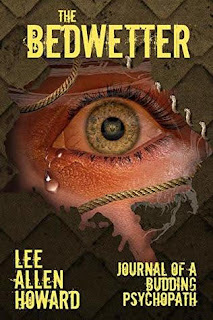
The Bedwetter: Journal of a Budding Psychopath by Lee Alan Howard

Lee Alan Howard's psychological thriller The Bedwetter: Journal of a Budding Psychopath lives up to its name. It is a dark absorbing look into the transformation of a troubled young man into a potential murderer.

Russell Pisarek has a long list of problems. He has nocturnal urinations and is embarrassed by it. He has flashbacks of a manipulative and abusive mother. He works in an animal testing lab but has has a history of dealing and using drugs. Right now he lives with his nagging sister who is concerned about the influence Russell has over her son.

Most of the time he spends playing video games like Call of Duty and muttering under his breath how much he hates everyone else. His only friend is Connors, a man who runs an army surplus store in which Russell buys knives and other weapons. The general impression that Russell gives off is someone who is antisocial and angry but keeps all his worst thoughts to himself but is waiting for the day to explode.


Throughout the novel it becomes clear that Russell is a ticking time bomb. The smallest things like a nasty Craigslist response or having to clean the rabbits cages at work send him off. Most of the time he responds by calling the people around him demeaning nicknames (He calls his mother, Melanie, Melanoma) and using his first person narration to mentally cuss them out. (When his mother mocks him in public, Russell tells the Reader "You're my witness-SHE STARTED IT!")

 So far his behavior seems innocuous but it becomes more worrisome the longer the book goes on. He has violent fantasies about a woman in which he is infatuated.  He steals ketamine from work to feed an addiction. After his father dies, he remembers his indifference and participation when his mother abused him and can't muster up any sadness or empathy. It takes a long time for Russell to commit violence but when he does, it's not a surprise that it happened just that it took so long.

Howard writes a character teetering on the edge of sanity rather well. We already sense something is going to happen before it does, we are just waiting for the moment that it does. It's like looking outside on a cloudy day, watching the sky turn green, hearing the thunder and seeing the lightning get closer, and watching the rain turn to hail. You just know that a tornado is coming so that by the time it shows, you are relieved because you have been waiting and expecting it for so long.

When Russell finally commits violence, it's not exactly a moment of triumph but it is seen as an inevitable conclusion. The Reader has been reading his dark obsessive thoughts, has seen his fantasies become more unhinged, and his enemy list become longer. We have been expecting this outcome for sometime and are almost relieved that it finally does.

The Bedwetter is a fascinating look at a troubled individual who gets worse. It is among the closest many of us can ever get into the mind of a psychopath and probably the closest many of us want to.


Monday, June 28, 2021

Weekly Reader: Profiler by M.A.R. Unger; Multiple Subplots Mar Otherwise Decent Murder Mystery About Criminal Profiling and Military PTSD


Weekly Reader: Profiler by M.A.R. Unger; Multiple Subplots Mar Otherwise Decent Murder Mystery About Criminal Profiling and Military PTSD

By Julie Sara Porter

Bookworm Reviews


Spoilers: M.A.R. Unger's murder mystery novel, Profiler, would be a decent mystery dealing with criminal profiling and the consequences of PTSD in military veterans. It may make a decent series where Dr. Tom Jessup uses his gift for criminal profiling to uncover the serial killer du jour while investigating his own background. The problem is that Unger does too much in one book. Unger puts too many subplots into one book making it difficult for the reader to focus on the main  story.


One night, trouble occurs around Jessup's property. Police arrive to inform Jessup that there has been a murder around his place. Jessup had the TV on loud and didn't hear a thing. Neither did his closest current neighbor, Liz, a nosy woman who is house sitting for a wealthy artist. Jessup becomes concerned when he discovers that the murder occurred near the trailer of Beau Travers, an Iraqi War Vet and Jessup's friend and patient who suffers from PTSD. Relieved that the deceased was not Beau, Jessup offers his services out of concern for Beau's welfare. A quick investigation reveals that the deceased was also a vet named Reddi Mercado and a picture reveals that he and Beau served in the same regiment. Other people in the picture have or will be killed, so if Beau isn't the killer, then he will soon be killed.

Meanwhile a serial killer dubbed the Southwest Killer is picking out college students. Jessup analyzes this case with the help of his girlfriend, Denver police officer Baxter. 


It's not unusual for a mystery or psychological thriller to have a few subplots to go with the main action. After all, where would we be without the mystery solver's relationship woes, problems with their troubled teen, or the suspect/potential love interest? Sometimes the subplot involves one of the suspects to give the character more depth and make them a red herring and false lead. However, what makes Profiler so unfocused is that Unger gives two thriller subplots that have nothing to do with each other.


By themselves, the Marine Vet plot and the Southwest Killer plot are both interesting. The Marine plot is particularly compelling, particularly in the interactions between Beau and Jessup. There is a very effective moment where Beau is in the grips of a PTSD flashback and Jessup has to talk him out of harming others or himself. This chapter reveals the tight friendship between the two characters and how the horrors of war are not always left behind on the battlefield.

We also see the toll war takes on soldiers and civilians alike when some characters can't let go of the things that were done during war time.

The Southwest Killer plot also has some genuine moments of suspense such as when Jessup gives his analysis on the killer's motives and behaviors and is not only proven to be right but a potential victim is accidentally put right in the killer's path. One character also takes advantage of Jessup in the worst way possible, jeopardizing both of their careers and possibly lives.


 The problem is not that these two plots exist. It's that these two plots shouldn't exist in the same book. Alone they would make compelling narratives as separate books in the series. However, together they cause the book to be weighed down. We don't have enough time  to focus on one plot when the narrative moves to Jessup and colleagues discussing the events of the other plot. This happens several times in the book, making the writing hard to follow.

There is a point where the plots converge in a way that suggests that they are related. But they veer off in opposite directions that have nothing to do with each other. The overall effect is that the book would have done just as well or better without either the Marine plot or the Southwest Killer plot and the book would not have suffered much without them. 


Profiler could be an engaging series. Perhaps that is what Unger was hoping for. But a quick word of advice: Don't throw all the volumes in one book otherwise the Reader won't care to read the other books in he series.

Wednesday, February 19, 2020

New Book Alert: The Caller: A Demon Within by Jeanie Creviston; Strong Suspenseful Beginning Cannot Make Up For Overstuffed Ending


New Book Alert: The Caller: A Demon Within by Jeanie Creviston; Strong Suspenseful Beginning Cannot Make Up For Overstuffed Ending

By Julie Sara Porter

Bookworm Reviews


Spoilers: As disappointed as I get with books that start badly and stay that way, I am even more so with books that start well but have bad endings. They have so much promise going in that it becomes an even worse disappointment when they fizzle out before the words "The End" appear.


Take Jeanie Creviston's thriller The Caller: A Demon Within. It starts out as an excellent psychological thriller using points of view from the serial killer, the victim, and the law enforcement officer. Then it becomes overstuffed with demonic possession and one too many false leads that confuse the Reader and leaves the plot going in too many directions.


The book focuses on Tom Biddle, a New Jersey cop, who is one of the many police officers searching for a rapist/serial killer. They arrest a potential suspect, David Hernandez who manipulates a fight between the officers and himself. Trying to break up the fight, Tom accidentally drops a photograph of his former fiancee, Sydnie. David is instantly drawn to the woman in the photo and when he manages to get released from custody, he heads over to Indiana where Sydnie now lives with her husband and daughters.


The Caller starts strong with an intriguing chase. The alternating points of view are solid. David is a very spine tingling antagonist of the Hannibal Lector variety. He is able to control the situation with icy mind games and extraordinary persistence. In one passage, he manipulates a fellow prisoner to confessing to the murders and then committing suicide.

He also has a predatory instinct on how to circle his chosen prey before he loses control and kills them. He tracks a chiropractor by pretending to be a patient, then trails her to her place before going in for the literal kill. He is someone who believes that because of his intelligence and process in capturing his victims that he can never be caught.


Tom by contrast is not as self-assured and much more flawed. It was a mistake to leave a photograph in the presence of a potential assailant, one that he rues throughout the rest of the book. As compared to his toxic masculine father, Tom is a more sensitive sort. He is clearly protective towards the victims, particularly Sydnie. Even though, he parted ways with her, he is still in love with her and so concerned about her welfare that he crosses state lines to save her life.


The other interesting aspect to the novel is how it deals with Sydnie. She is a strong willed woman who is deeply in love with her husband, Ed, and involved in her daughter's lives. She is the type of person that you can't imagine bad things happening to. It becomes terrifying when she starts getting frightening calls from New Jersey and the calls get closer and closer to where she lives.

While Sydnie is the target, she is also very protective of her home and family. So much so that she is able to take on her stalker with assistance from friends and family and minimal help from Tom (In a refreshing twist on the whole " male cop saves female victim" trope, Tom isn't even there during the final confrontation, leaving Sydnie to move center stage as the hero in the story.)

Sydnie is also psychic which gives her the advantage to know that danger is coming. She is also able to get flashes into David's psyche to see the once abused child and learn how he became a killer.


Sydnie's psychic abilities aren't the only supernatural aspects to the novel and that's where the problems lay. What started out as a realistic psychological thriller becomes disjointed when it is revealed that a demonic presence is around. There is very little foreshadowing of that beforehand and the little that there is could have been attributed to David's unstable mind and thought process. The demonic presence ends up taking over the plot and turns what could be a tight action suspenseful climax into a supernatural battle of good vs. evil out of nowhere.


Creviston did such a good job at capturing a psychological thriller that when the book veers towards the supernatural, it becomes jarring.The Caller could have easily remained a normal psychological thriller and have been better for it or the supernatural aspects could have been a part of the story earlier on.

It's almost like Creviston had one idea then halfway through had another idea. So she went with that and combined the two rather than altering the beginning to make the idea flow more naturally.


Even Sydnie's psychic abilities could have remained on a more subtle scale in anticipating danger before it occurs and for her to learn how this criminal was made. But it cheapens all of the character development that the main characters-particularly David and Sydnie- to follow the whole demonic possession angle. Instead of understanding how the characters's choices and upbringing lead them to this behavior, we are told that they have been influenced by angelic and demonic forces and have no real control over the actions. If that was true then what was the point of all of that early character development to turn into a red herring?


Speaking of red herrings, the ending has too many implausible ones at the end. It might be understandable for there to be another stalker going after Sydnie's family, but more than likely they would be a partner or co-hort of David's rather than a separate person with their own agenda. Especially since there were no early signs that this character would do such a thing nor how they were able to come upon the scene at the exact moment when David was also stalking them. At the very least, the two could have worked together combining their plots rather than being separated.


Also, a love triangle begins to develop in the final chapters when one didn't exist beforehand. When this happens, the characters act so bizarrely and uncharacteristically childish that this Reader was tempted to say "Dudes, you're lives are in danger! Get some perspective!"

Then there is the thrown in conclusion meant to tell us in the best horror movie fashion that the fight isn't over.


The Caller has some good things going for it particularly with strong character development between the protagonists and antagonist as a mental chess game between equal opponents. But the flaws make this novel a definite wrong number.


New Book Alert: The Surrey Stalker by B.L. Pearce; Tight Suspenseful Novella About the Hunt for a Serial Killer


New Book Alert: The Surrey Stalker by B.L. Pearce; Tight Suspenseful Novella About the Hunt for a Serial Killer

By Julie Sara Porter

Bookworm Reviews


Spoiler Alert: B.L. Pearce's novella, The Surrey Stalker is extremely short. Because of that, it lacks something in characterization. But what it lacks, it makes up for plot and suspense. It's a brief read but it is one that keeps the Reader on the edge of their seats from first page to last.


A sinister character has been stalking and murdering various women around Surrey. His latest victim is an archivist named Julie Andrews ("like the actress", the officers say). DI Rob Miller uses the case as a distraction from his relationship woes with his fiancee, Yvette. As the body count increases and the investigators profile the killer and follow possible leads, Miller puts his and Yvette's lives on the line in his determination to catch him.


This is a tightly wound book where clues and suspense are laid out intelligently and lead to precise and well thought-out conclusions. When the police officers learn that the victim's engagement rings were forced inside the victims, they realize that the killer might be involved with weddings and envy those who have had good relationships when he had none. Profilers analyze that this is someone who had a stormy love life. Those leads prove to be effective in catching the Stalker.


The victims are chronicled through their encounters with the Stalker and the interviews with anguished fiances and family members. Justin remembers Julie as a loving affectionate woman who was worried about a troublesome follower. Sara Bakshi wanted to start a family. (I just want to mention how personally weirded out I am, reading a suspense novella in which two separate victims share my first and middle names.) The Reader really feels for these women who had their lives ahead of them but were cut short just when they should have been their happiest.

The chapters between the Stalker and the victims are the best. We peer into the Stalker's dangerous frame of mind almost like a hunter or predatory animal closing in on his prey. It is terrifying and mesmerizing as he follows them and ultimately traps them.


The characterization towards the police officers is unfortunately not as effective. Miller's relationship woes with Yvette are heart felt but serve mostly as distractions to the goal of catching The Surrey Stalker. They become repetitive and don't add anything new to "the lonely cop with spouse/significant other problems" trope.

However, Miller and Yvette's arguments puts her at a vulnerable position and leaves her right in the path of the Stalker so it moves the narrative along to an effective climax.

The Surrey Stalker is a tight finely structured novella that is filled with suspense and leads to a thrilling conclusion.


Friday, October 26, 2018

Forgotten Favorites: The Lamplighter by Anthony O'Neill; Dark and Bloody Supernatural Thriller About The Terrors Found in Dreams


Forgotten Favorites: The Lamplighter by Anthony O'Neill; Dark and Bloody Supernatural Thriller About The Terrors Found in Dreams

By Julie Sara Porter

Bookworm Reviews


Spoilers: Dreams can be great things to have. They reflect stress that a person has throughout the day and create breaks and possible solutions. They connect the Dreamer to various archetypes and symbols in the Collective Consciousness. They reflect our strongest desires and ambitions and possibly foretell the future. However, they also reflect our worst fears and sometimes can seem worse than reality. What if those nightmares came true and not only affected the Dreamer but the world around them?


That is the premise behind Anthony O'Neill's fascinating but little known novel, The Lamplighter. Evelyn Todd, a young woman in 19th century Edinburgh had a vibrant imagination that helped her through a troubled childhood at a home for destitute girls. As a girl, she is fascinated by a lamplighter outside the girl’s home. She creates stories and draws pictures about the adventures of a traveling lamplighter which she calls “Leerie,” (a slang term for Lamplighter). When her stories begin to frighten the other girls, the home's director orders her to stop talking about them. He no sooner gives her the order, then a mysterious man arrives claiming to be Evelyn's father and takes her to his home. She tells him about her Leerie stories and a few days later, her father introduces her to a man who resembles her drawings and claims to be Leerie.


Twenty years later, as the narrator tells us, “the streets of Edinburgh were filled with blood.” A professor is murdered and his body is scattered along the road. Inspector Groves, a conceited police inspector, links the murder to a similar one to a lighthouse keeper and other murders that follow. Meanwhile Thomas McKnight, a professor of logic and metaphysics, and his friend, Joseph Canavan, a gravedigger, are also investigating the murder since the deceased professor was a colleague and professional rival of McKnight's. McKnight, Canavan, and Groves are led to the now-adult Evelyn who works for a bookseller and whose nights are filled with dreams of detailed serial murders and her old imaginary friend (or is it enemy?) ,Leerie. Also many people, including Canavan and Evelyn, report sightings of a sinister demonic figure in the shadows.


The book is filled with suspense and horror-filled moments that rather than provide lame attempts at creating jump scares, instead enhance the plot and the surreal quality of the murders and Evelyn's dreams which either foretell the murders or are active participants. The chapters detailing the murders and the demonic figure are scary the way that H.P. Lovecraft's writing is scary. The creature doesn't have a specific shape and is seen in and out of the shadows like a figure of nightmares that changes shape and wouldn't have a specific form in the material world.


O'Neill puts interesting characters into this dark daymare of a novel. The most fascinating is Evelyn herself. She is secretive and cynical when Groves, Canavan, McKnight question her. (When Groves repeats his claims that her descriptions of the dreams as “vague”, she responds, “Yes, you told me that before.”) While the men particularly McKnight, think she's mentally ill or at least suffering from guilt from an overactive imagination that places her at the scene of the crime, Evelyn appears to have some dark secrets that she hides with her cryptic comments and scars that she hides behind gloves and scarves. In one tense chapter through hypnosis Evelyn explains her past in a story that is both creepy and heartbreaking. She recounts abuse and torture from guardians and her rage against them which might manifest in sinister creatures formed from her mind.


McKnight, Groves, and Canavan appear to be less defined. Groves is more interested in his memoirs and getting his name heard and considers solving the case as nothing more than adding a decisive finish to his illustrious career. McKnight is a very logical left-brained sort of man who questions her account constantly. Canavan is a more emotional sort who wants to rescue Evelyn seeing her as a damsel in distress. They are almost stereotypes but it makes sense when it is hinted that Evelyn's nightmare creatures not only come true, but she is also able to create protections and safeguards against them. Could those safeguards include creating people who open up repressed memories that manifest themselves as a demon that attacks her abusers on her behalf? This possibility is purposely left open-ended but is very meta and clever the more the Reader thinks about it.


The Lamplighter's protagonists have a hard time telling fantasy from reality and the more that Evelyn's nightmares take shape, the more frightening they become. This leads to a spellbinding and captivating conclusion that leaves the Reader with questions about the division between Reality and Imagination. This is the type of book that is both a standard horror story and a metaphysical journey. It is a dream come true, but not always the best dreams.

Friday, August 10, 2018

Classics Corner: American Psycho by Bret Easton Ellis; A Rambling Book With a Truly Horrible Lead


Classics Corner: American Psycho by Bret Easton Ellis; A Rambling Book With a Truly Horrible Lead


By Julie Sara Porter


Bookworm Reviews


Spoilers: Well with a title like American Psycho, you don't expect the protagonist of Bret Easton Ellis's classic psychological thriller to be a likeable kind-hearted hero. But the truth is, Patrick Bateman is a truly horrible hateful person whose journey presents two possibilities, neither of which are good: Either he is completely delusional and a complete vain and shallow character who believes killing people will satisfy his urges or he really is a deranged psychopath who gets his kicks slicing up prostitutes, homeless people, business rivals and anyone else who is unfortunate enough to be alone with him.


The book isn't really long in plot. Mostly it's a few months in Bateman's life in which he rambles on about brand names, his work as an investment banker, favorite musical groups, his obsession with reading about serial killers, parties with friends and cocaine, oh yeah and the times when he takes an unsuspecting victim to his apartment and stabs and mutilates his victim with an ice pick.


Naturally Bateman is not a likeable character, but he is also not a relatable, understandable, or even after a while an interesting character. He is written so broadly and farcical that it is really hard to be invested in such a character. Even some of the worst characters such as Crime and Punishment’s Raskolnikov, Native Son’s Bigger Thomas, and soon I will review The Girl With The Dragon Tattoo which features Lisbeth Salander, a young woman who does not mind giving rapists and killers of women bloody ends. With these characters, you don't support what they do but you may understand why they do it. But with Bateman, that moment never comes. He is shallow and pretentious at best and a demented violent abusive bigoted misogynist at worst.


Bateman begins most days with a beauty treatment that even supermodels or pageant contestants might find a bit much. Paragraph after paragraph goes into his skin care treatment, specific hair care regimen, and names specific clothing by their brand names. (In fact, a running gag throughout the book are the paragraphs of non-stop product placements where Bateman just describes brand after brand comparing and contrasting them.) With his regimen and brand loyalty, Bateman comes across as a man who is completely vain and cares about little else but his personal appearance.


Even before he makes his first kill, Bateman is about as darkly comic character as can be. While we are told he is an investment banker, we see him barely at work except in a few conversations with his secretary whom he believes has a crush on him.Instead he spends more time at endless clubs and dinner parties where he takes cocaine, flirts with the female guests, and constantly confuses arriving guests with other people in his life. The confusion suggests either Bateman is so self-involved that he doesn't care who the people are around him or his brain is addled that he can't recognize people anymore.


He also displays psychotic tendencies. If something doesn't go his way, Bateman will shout obscenities and describes how he wants to kill the person who offended him.


In one passage, Bateman and his colleagues show off their business cards and Bateman jealously considers killing those who had better cards than his.


The thoughts are only thoughts until Bateman makes his first kill. It is actually suspenseful as he follows his prey and overpowers her. This leads to other murders that become broader and uncomfortably more farcical as the book goes along. It is disconcerting when Bateman describes an extremely bloody kill in one chapter and then reviews the best and worst songs by Whitney Houston in the next. Bateman is so detached from his bloody work that he retreats to his status symbols instead of the moral, legal, and ethical implications. Even when Bateman is driven to confess, it’s less out of guilt than fear he will be caught because he killed people out of his usual M.O. a business rival and a child rather than prostitutes, homeless men, and bedmates who he shows little remorse for.


While American Psycho makes for interesting reading to get into the mind of a serial killer, after a while the murders get repetitive and the book runs far too long. After the tenth kill, the Reader thinks “Okay, okay we get it! Patrick Bateman is a murderous SOB. Are we done yet?”


While Bateman describes his kills in a graphic manner, there are implications that he is not as violent as he appears to be. When he goes on his murderous rants about killing other people, his friends don't react very much. This suggests that they are as soulless as he is or that he really didn't say or do those things and he is imagining his life as a serial killer. The latter possibility is also suggested when after Bateman meets a friend that he confesses the murders to, the friend laughs in his face and says that he had lunch days ago with the man Bateman believes he killed.


So either Patrick Bateman is a violent murdering psychopath or longs to be one. Neither possibility is good and neither make him interesting.