Showing posts with label Historical Romance. Show all posts

Thursday, October 31, 2024

1949: Starlings of Peace Book 1 of The Historical Fiction Trilogy by Catharine A Deever; Character Driven Novel About Life Between WWII and The Cold War


 1949: Starlings of Peace Book 1 of The Historical Fiction Trilogy by Catharine A Deever; Character Driven Novel About Life Between WWII and The Cold War

By Julie Sara Porter 

Bookworm Reviews 

Spoilers: It doesn't take a lot of Historical research to realize that the end of World War II was a direct cause to the Cold War. The United States and Soviet Union were once allied against the Axis Powers and then emerged from the aftermath as the two strongest super powers. They divided most of the world through their ideologies, support of political figures, military might, and resources distribution. Even though not a single weapon was fired between the two superpowers, the Cold War was a war of arms distribution, ideologies, and political maneuvering. It was not the war of guns, aircrafts, tanks, bombers, atomic weapons, and soldiers of the Second World War.

Catharine A. Deever’s novel 1949: Starlings of Peace, captures the tumultuous years in which the Second World War ended and The Cold War began when one conflict was removed but another lay in the horizon.

In keeping with the themes of changing warfare and ideologies, even though it is by definition a war novel, it isn't concerned with big battles and sweeping military fears. It isn't long on plot. Instead it focuses on characterization and how it's various leads, specifically four couples navigate a changing world that promises peace but actually brings more conflict.

The four couples in question are:

Capt. John Jacob “Mac” MacDonald and Magdalena Eva “Maggie” Welles-From America. He is an Air Force pilot who was shot down and is now investigating the damaged European countries. She is a political operative and senator’s daughter who is on a fact finding mission for the Marshall Plan. Their separate ambitions are as powerful as their desire for finding and navigating a future together.

Sir Robert Anthony “Tony” and Lady Evelyn Taylor- From Britain. He is a baronet and financial newspaper magnate. She is an investment firm partner from an aristocratic family. They put off plans for a family on hold during the war and now they are ready. Unfortunately, they have to deal with changing feelings and putting on an elegant front in the face of a troubled home life.

Rene Laurent and Violet Charlet Boulanger-From France. He is an interpreter and translator who is mourning the loss of most of his Jewish family. She is a language teacher who specializes in Russian and is able to study the Soviet Union and provide insights on the impending superpower. They reunited after a long separation and tremendous grief which puts a toll on their relationship.

Sebastian Lukas Gauss and Heidimarie Regina “Heidi” Bauer-From Germany. He is a former soldier and POW who currently runs a small hotel. She is a former resistance fighter who now works for Sebastian. The two work to make their hotel into a success while suffering from the traumas of their past and growing attraction for each other.

The characters have many stand out moments where they deal with the scars of the previous war and live in the uncertainty of the future with another different sort of war looming on the horizon. They are at crossroads and have to navigate a return to a life that they may not be able to fully return to.

The couples have some interesting moments which display the depths of their characterization. Mac for example is still living with his injury and is trying to reform Europe for the future. Maggie is a very dedicated woman who uses her position to find out exactly what post-war lives are like without propaganda getting in the way. Their romance starts out well because they have similar goals and are very intelligent professionals. It goes a bit too fast for two rational adults in a post-war time setting when they get married not even halfway through the book. Considering the setting is one year, they were only involved for weeks or months before they were wed.

 I suppose a quickie romance and subsequent marriage would have made more sense during the war but it seems a bit too sudden to be believable here. Maybe, their romance should have been more of a slow burn leading to an engagement in the final chapter. But that's a small quibble because Mac and Maggie are two characters that bounce off each other like lovers in the movies of that era.

Tony and Evelyn’s relationship comes from a different place than Mac and Maggie’s. They are a more sophisticated couple that had to keep their private lives behind closed doors. There is one telling argument that they have which suggests that their marriage was out of convenience and for appearances rather than any emotional or romantic feelings towards each other. This conversation plays a lot into how they interact with each other in public and in private. 

They are a couple that put up appearances before the War and put emotional personnel decisions on hold. Now that the War is over, they have to talk about them. Tony and Evelyn care about each other but now have to decide whether appearances matter in a changing world or is it finally time to achieve personal happiness. 

We also get PTSD from characters who were first hand witnesses to the brutal dehumanization of the Nazi Party. Rene and Heidi’s stories are by far the most traumatic in the book so it is good to see them embracing chances for new and better lives.

Being Jewish, Rene lost most of his family in the death camps. Even more heart wrenching is that he and Violet’s young son also died. They suffer such tremendous loss and grief and naturally are uncertain whether they can ever recover when they lost everything and everyone they ever knew and loved.

With the absence of family, Rene and Violet from families with the people around them. Ever amiable, Rene works alongside and translates for the others. He is a bridge that brings the various characters together. Violet is also in an interesting position. As a Russian translator, she is able to get some insights into the country that will soon become a formidable adversary on the world stage.

Heidi also has a gripping backstory. She has flashbacks of the things that she had to do to survive such as dressing as a boy to avoid rapists and becoming quite adept at using weapons. She lived in total flight or fight survival mode and it is difficult for her to adjust to a world where she doesn't have to live like that.

Sebastian and Heidi have a very interesting dynamic as she is someone who suffered at the hands of the Nazis and he is someone who while wasn't a member did a lot of damage by ignoring the signs until it was too late. In the post-war period, they have to navigate an unlikely friendship as well as their goals to open and run a successful business. 

The characters in 1949 brilliantly capture people who have finally reached the end of one stage in their lives and now have to deal with what comes next in their lives, relationships, and countries.

Thursday, April 30, 2020

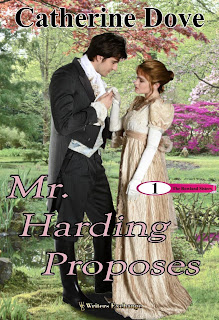
Weekly Reader: Mr. Harding Proposes (The Rowland Sisters Book One) by Catherine Dove; Regency-Era Romance Shines With Cute, Fun, Likeable Characters


Weekly Reader: Mr. Harding Proposes (The Rowland Sisters Series Book One) by Catherine Dove; Regency-Era Romance Shines With Cute, Fun, Likeable Characters

By Julie Sara Porter

Bookworm Reviews


PopSugar Reading Challenge: A book written by an author with flora and fauna in their name (dove).


Spoilers: If the last set of books that I read such as Laura Preble's Anna Incognito and Matthew S. Cox's The Girl Who Found The Sun ended up making me too uncomfortable because they became frequent even unintentional reminders of current events, then the books that I am reading now are the exact opposite. These books are doing everything they can to get the Reader away from the real world. These books are the ultimate escape from a world in turmoil from a pandemic, first responders and essential workers putting their lives on the line, and conspiracy theorists and impatient protestors who are disobeying pandemic guidelines that could potentially cause premature openings and further illness.


These are the books that are designed to help you forget and one genre that thrives on escapism is Romance. This is the second of three different types of Romances that I am reviewing this week. One Month Only is a modern love story about a couple combining business and love in Tuscany. Two Like Me and You is a breezy humorous YA Novel about two teens falling in love while helping a nongenerean reunite with his lost love.


This one, Catherine Dove's Mr. Harding Proposes is a historical Regency era romance that invokes comparisons to the works of Jane Austen and Oscar Wilde, a humorous little novel that thrives on manners, class structure, and cute lovable couples to help see the Reader through the plot that is fun and lighter than air.

The plot revolves around two sisters, Georgiana AKA Georgie and Cecelia AKA Cecy Rowland. Cecy prepares for her Season where she will be dolled up, attend many balls, soirees, and salons, and is officially declared available for England's Most Eligible Bachelors. Georgie does her best to help her sister through this whirlwind Season while dealing with her own romantic troubles.

Georgie receives a proposal of marriage, but not one that she expects. It comes from the mouth of Mr. Richard Harding, her best friend since childhood. Unfortunately, Richard does it so awkwardly and with his usual jocular teasing tone of voice that Georgie thinks that he is kidding and turns him down.


Meanwhile, there is a character that causes a lot of discomfort and controversy during the social Season. She is Lady Shipton, a former actress made good by an advantageous marriage. Unfortunately, she is the target of much scandal and gossip and many dowagers prefer their daughters to stay away from her including Georgie and Cecy's mother. However, the more that they spend time with Lady Shipton, the more Georgie and Cecy find her charming and helpful.


Mr. Harding Proposes is hardly a deep plot, but it is a lot of fun and the perfect antidote of sunshine for a time of tough stress and darkness. You can't help but root for Georgie and Richard to get together. They are like those couples like Benedick and Beatrice from Much Ado About Nothing who need to be together because life would be too boring for them otherwise.

Georgie is a character who is extremely smart and liberal minded, perhaps too smart for her own good. She is very intelligent and we'll read the kind of woman who in another time would be a great career woman but is hampered when her only career is finding a husband. Her intelligence and sarcasm unfortunately turns many men off.

However, it also is a virtue for the right kind of people. She is able to tell that one of Cecy's suitors is a cad and is able to handily get rid of him.
She is also able to see through social constraints to see the real
person. This is particularly noticeable in her moments with Lady Shipton, who is certainly a scene stealer and is one of the more interesting characters in the book. (I highly recommend that Dove write a prequel starring a youthful Lady Shipton.) She is able to see beyond the scandalous past to the warm woman underneath.

Lady Shipton arouses the interest of Georgie because of her being so scandalous, but she earns her gratitude when she takes part in getting rid of Cecy's rakish suitor. Georgie also defends her when she begins dating Georgie's uncle much to her mother's shock and chagrin.

Unfortunately, Georgie's intelligence causes her to question everything even Richard's proposal. Her better traits are a detriment as they are with Richard. He is a humorous character, probably in another book would be the plucky comic relief best friend of the lead male. But in his own book that could be a problem when he is sifting through his own love life. He has a quick wit and is often there for Georgie when she needs him. Because of this, he is permanently Regency Friend Zoned.

Georgie confuses his romantic overtures for simple friendship or using her as a safety marriage ("If we are still single at 35 let's marry each other…") . He even questions his own motives, but the two clearly care for each other. There are times when they especially Richard counter romantic expectations knowing that sometimes there is more to love than romantic poetry and beautiful wordy proposals against the backdrop of a scenic lakeview. Sometimes, it is about just being the handy life saver that is just what the other person needs.

Sometimes all you need to get through life is a good Romance and q chance to escape. Mr. Harding Proposes provides that expertly. The answer to the proposal of whether this book should be read is "Yes, yes a thousand times, yes!"

Friday, February 28, 2020

New Book Alert: The Baron and the Enchantress (The Enchantress Book 3) by Paullett Golden; Excellent Beginning and Ending Marred By Dragging Repetitive Middle


New Book Alert: The Baron and The Enchantress (The Enchantress Book 3) by Paullett Golden; Excellent Beginning and Ending Marred By Dragging and Repetitive Middle

By Julie Sara Porter

Bookworm Reviews


Spoilers: Paullett Golden's Historical Romance, The Baron and The Enchantress, is like the little girl with the curl in the middle of her forehead from the nursery rhyme. When it is good, it is very good but when it is bad, it's horrid.

Well not really horrid, just dull and repetitive.

It begins well with an interesting premise in which a working class woman learns that she is descended from a noble family and ends well with lovers united, goals met, and families grown stronger. However, the steps between conflict and resolution are marred by a long slow trip through the same situation repeated over and over with barely any change in character and plot.


Lilith Chambers is an 18th century midwife who was raised and educated in an orphanage when news breaks out that she is the long-lost sister of Sebastian Lancaster, Earl of Roddam. She was raised as Sebastian's full sister by who she believed were her birth parents. Unfortunately, after the death of her loving adopted mother, her abusive father, the former Earl, sends her to an orphanage where she learns that she is actually the illegitimate daughter of the former Earl and a servant woman. After the Earl's death, Sebastian seeks to reunite his family by drawing Lilith back into the family.

Lilith's skills as a midwife proves useful in assisting Sebastian's wife, Lizbeth through a difficult delivery. She also captures the interest of Walter Hobbs, The Baron Collingwood. Walter is capitvated by Lilith's independent fiery spirit and she is drawn by his altruistic nature. The two become romantically involved, but Lilith is concerned that the revelation of her illegitimate birth could cause problems with her new-found family and love life.


The book starts out strong with characters that defy traditional romance expectations. One of the more unique refreshing takes with Lilith's age. She's 33. When most Historical Romance female protagonists usually are in their late teens and early twenties, it's nice to read about one who is approximately the same age as her usual readership. Lilith is a woman who has had plenty of life experiences and an older woman's more cynical outlook on life.

Also, Lilith is someone who is just as interested in pursuing a career as she is in getting married. Most of the early chapters focuses on Lizbeth's pregnancy and Lilith helping her. Her interactions with Lizbeth such as purposelyt contradicting the physician's reactionary medical advice reveal that she is good at her job.

She also teaches at the orphanage in which she was raised. She aids young girls in their scholarly pursuits, particularly in Math and Science. She also wants to help unwed troubled mothers, like her own birth mother, who are alone and abandoned. Lilith is someone with a great brain and a willingness to use it to help others.


Sebastian, Walter, and their family are also nice surprises as well. One would expect a wealthy titled family to look down on their poorer relation, but they don't. Sebastian welcomes her with open arms. Lizbeth instantly treats her like a much beloved sister, even before she saves her and her baby's lives. One would expect Lizbeth's aunt and Walter's mother, Hazel, to turn her nose up at Lilith's arrival. But after giving some terrified early misgivings during Lizbeth's delivery, she recalls her own rags to riches upbringing and welcomes Lilith grandly.

Walter in particular is also an interesting romantic figure. Like Lilith, he too dreams of a life of significance. He wants to do something important with his wealth and title. When he hears about Lilith's upbringing, he decides to fund an orphanage. While Lilith questions this, he is clearly committed to the goal and wouldn't mind having the assistance of a certain attractive educator/midwife in achieving it.

It is a nice departure to see noble people in literature using their resources to help others revealing that nobility isn't always just an inherited name. Sometimes it is an adjective that describes upstanding character.


Unfortunately, Golden does too good a job of revealing their acceptance of Lilith, that there is really nowhere for the book to go. There are some stereotypical snobbish aristocrats, but they don't really develop the plot that much. There is also an opportunistic clergyman acquaintance of Lilith's who becomes too obsessed with her. This subplot hints that the clergyman could make trouble for Lilith, but apart from having a case of foot-in-mouth disease not much happens and his story is arbitrarily solved.

Instead most of the book focuses on Lilith's lack of acceptance towards her new family, not theirs toward her. She constantly makes assumptions about the wealthy that are discredited by the actions of Walter, Sebastian, et al. Even after she is proven wrong, she still thinks of them as elitist snobs. She started out as an interesting strong willed character, but quickly devolves into a judgemental reverse snob.

I know that she was raised in an orphanage, but she is allegedly a woman of great brilliance and intelligence. Surely, her experience with Sebastian's family should serve as a counterexample to her assumptions. Not to mention that she should consider that if stereotypes aren't true about her, what makes her think that they are true about them. In fact, the more that they, particularly Walter, try to welcome her, the more she resists. I suppose it's supposed to make her endearing, but honestly it makes her look like a hypocrite.

This argument between Lilith's assumptions and Walter's actions keeps coming up and is repeated as though there isn't anything else that the book has to do. The problem may be because the story takes place en media res after Lilith's identity had been revealed in the previous novel, The Earl and the Enchantress. With a strong introduction, there may not have been anywhere else for this book to go.


Thankfully, Golden does salvage the ending into a sweet resolution that works well in which lovers are not only united, but they make plans to open that orphanage and home for unwed mothers, to help the next generation.

The Baron and the Enchantress starts and ends so we'll that it is a shame that the middle could use some of the same magic to become equally as enchanting as the rest of the book.