Showing posts with label Class Conflicts. Show all posts

Monday, November 17, 2025

The Sixth Victim (A Constance Piper Mystery) by Tessa Harris; Jack The Ripper Takes Center Stage in Ominous Supernatural Mystery


The Sixth Victim (A Constance Piper Mystery) by Tessa Harris; Jack The Ripper Takes Center Stage in Ominous Supernatural Mystery 

By Julie Sara Porter 

Bookworm Reviews 

Spoilers: Now we turn to that unsolved historical mystery, Whitechapel, East End London’s most infamous son, Jack The Ripper. This famed and unidentified serial killer of female sex workers is the primary antagonist in The Sixth Victim: A Constance Piper Mystery by Tessa Harris. This is an effective Historical Mystery which captures time, place, and important themes about the degradation of women in the patriarchal Victorian Era.

Flower seller Constance Piper has to support her family but right now Whitechapel citizens are in fear. The latest victim “Dark” Annie Chapman was found after previous victims, Martha Tabram and Polly Nichols. Every woman walks home in terror and anxiety of the killer that could come out of the shadows to strike. However, Constance has a secret weapon at her disposal. She can communicate with ghosts and has reached the interest of Emily Tindall, a teacher who is concerned about a missing friend and students who have also vanished. Constance and Emily work together to solve these murders and disappearances.

This book captures the setting intricately with both time and place. The Victorian Age revealed a sharp division between rich and poor which is revealed through the contrast between lead characters. 

Emily lives around the middle to upper class while Constance dwells with the working lower class. Emily visits ornate wealthy houses while Constance lives in city slums. Emily's closest circle dines on five course dinners on fancy dishes while Constance’s friends and family face imminent starvation and homelessness. Emily's friends hide marital struggles and family disputes behind closed doors that are protected by status and connections. Constance's friends’ struggles are out for the world to see and are augmented by the lack of concern from those same resources. 

Rich and poor live in separate worlds and the twain does not meet often. However Emily and Constance act as bridges between them. Though Emily's status would be considered wealthy if not comfortable she does not ignore the plight of others. As an educator, she understands the importance of learning and teaches reading to working class women. She helps them realize that they don't have to limit themselves to an impoverished life and they can aspire to a better one. 

Emily recognizes that these women often had very few options which often resulted in domestic violence, alcoholism, addiction, prostitution, and illegitimate pregnancy. By educating them, Emily gives opportunities and options to break the cycles around them.

Constance considers Emily a mentor so their exchanges are full of warmth and support. Constance is the only person in her family that can read and feels like an outsider among her peers whose goals often go as far as their next meal or finding a partner for the night. 

Emily wants to open a shop, leave the East End, and build a comfortable nest egg. One of the more revealing moments is when she is dressed in a nice suit and speaks professionally to a wealthy woman. She surprises herself with her polished refined behavior even as she hides nerves underneath.

Besides the attention to class struggles, this book is adept at recounting the Jack The Ripper case and the overall violent world in which they take place. We are shown the “Canon Five” victims: Polly Nichols, Dark Annie Chapman, Long Lizzie Stride, Catherine Eddowes, and Mary Kelly. Kelly's story is particularly heartbreaking as she struggles with an unwanted pregnancy and a troubled common law marriage. 

Harris also offers some speculation. A potential victim is Martha Tabram, who at the time was considered a Ripper victim and even now there's some debate whether she was one or not. There is also the appearance of a headless unidentified female corpse, a real life unsolved mystery at the time that was also attributed to Jack.

The details are there: the notes, the graphic violence, the potential suspects, and the theories. The book plays on speculations and profiles to depict the potential suspects. In depicting them, Harris comments on xenophobia, fear of authority, and dehumanization of different classes. 

Even without the Ripper, there is a dark undercurrent of violence and crime. There is domestic abuse, forced prostitution, child trafficking, and fraudsters posing as mediums. In fact it is during a session with a fake medium when Constance first displays her real clairvoyant abilities

It is a mean world where Jack can hide in plain sight because he fits in. It's a world where Victorian moralists lecture others, particularly women, about propriety while at the same time committing violence towards women and maintaining a patriarchal system in which they can't report it.

With The Sixth Victim, Tessa Harris uses the Jack The Ripper murders as a springboard in this dissection of Victorian class division, subjugation of women, and depraved violence. 


Friday, August 29, 2025

House of Grace by Patricia M. Osborne; Finding Grace and Strength Through Adversity and Change


 House of Grace by Patricia M. Osborne; Finding Grace and Strength Through Adversity and Change

By Julie Sara Porter 

Bookworm Reviews 


Spoilers: I will try to keep spoilers to a minimum in this review but I can't make any promises. Please read at your own discretion. 

One thing that can be said about the life of Grace Granville, the protagonist of Patricia M Osborne’s Historical Fiction novel, House of Grace is that it certainly wasn't dull and conflict free. This is a novel starring a captivating woman and is full of passion, ambition, change, economic rises and falls, love lost and won, triumph and tragedies, and deep emotional pain and joy. 

Grace begins the book as a 16 year old schoolgirl at an affluent boarding school in Brighton. She loves it because she can escape from her abusive, domineering, entitled, and wealthy parents, hang out with her best friend Katy Gilmore, and design and create clothing as she aspires to be a fashion designer. While visiting Katy’s family, she is drawn to Katy's cousin, Jack, a coal miner. After she is unable to continue her education or pursue a career in fashion, Grace considers marrying Jack to her parent's protests, threats to cut her off, and forced courtship with a more prestigious suitable man. To get out of this situation, she makes a reckless decision that draws her away from her parents and into Jack’s arms and life.

The book is divided into two parts and the tone changes dramatically to reflect that shift. The first part is a romantic drama with some lighthearted moments as Grace demonstrates how out of her element that she sometimes is in a middle to working class environment. The second part is more of a family tragedy as Grace is faced with various struggles and heartbreak.

Grace goes through great changes that alter her mindset and test her will. For example, while visiting Katy and Jack’s family, she has a hard time getting used to servants and employers talking to each other on a friendly basis and using first names. She also recognizes some of her own snobbishness after she carelessly mocks Jack and his friend’s old clothing before they are introduced. She is never intentionally cruel but realizes that her sheltered insulated upbringing did not give her much of an opportunity to interact with different people or provide her with the tools to earn a living with little money. 

Grace sees something greater with Katy and Jack’s family than she had with her own. In her past, Grace had a family that withheld affection and parents who treated her and her sister like commodities to be educated and then married off. With the Gilmores, she sees a natural warmth and kindness, a family that she would like to be a part of instead of her own. This culminates in a dramatic moment when Grace is disowned and disinherited by her birth family and she is taken in by the Gilmores. She is now among people who might be inferior to her parents in class and social status, but are superior to them in love and kindness.

One of the strongest themes in this book is change and whether a person can adjust and adapt to them. Adaptability is one of Grace’s strongest gifts. She has to reinvent herself a number of times throughout the book and survive change and hardship. 

In the second half of the book, Grace is at her lowest point emotionally. She suffers a devastating loss that changes her circumstances forever and is faced with a cruel choice. It is a difficult time of intense grief made worse by this heart wrenching choice. However, Grace somehow manages to find her inner strength and resources to not only survive but thrive and succeed. 

House of Grace is the kind of novel that alternates between sadness and happiness. It can make a Reader cry on one page then make them applaud on the next. Like its main character, this book is truly a work of grace. 


Friday, February 28, 2025

Girls, Crime, and The Ruling Body by Barry Ziman; Secrets, Murder, and The Political Elite


Girls, Crime, and The Ruling Body by Barry Ziman; Secrets, Murder, and The Political Elite

By Julie Sara Porter 

Bookworm Reviews 

Spoilers: In the hallowed halls of the rich, famous, and powerful lie some of the darkest secrets: sexual assault, rape, pedophilia, abuse, shady business deals, racketeering, corruption, fraud, mismanagement, cooking account books, workplace violations, safety and health violations, double dealing, treason, murder, supporting and sometimes committing genocide. They think that their wealth and famous names will prevent them from facing any accountability or punishment. Unfortunately, in many cases, they are right. Barry R. Ziman’s Girls, Crime, and The Ruling Body is about people like that and how the wealthy and powerful do terrible illegal things and quite often get away with it. 

Ryan McNeil is the chief of staff for Assemblyman Nickolas Somatos, a brilliant and ambitious New York based politician who has his sights set on higher positions of power. Cathy Wilet, a beautiful intern, is reported missing and foul play is suspected. This concerns Ryan because by chance he was one of the last people to see Cathy alive. He is questioned by police after he reveals his connection with her. Ryan is considered a person of interest so he becomes obsessed with the case and Cathy. This puts him at odds with his job when Ryan's notoriety affects Somatos’ approval ratings and his relationship with his girlfriend, Caroline who leaves him. Seven years later, Ryan is still chief of staff to Somatos who is now a U.S. Congressman. He also has an advantageous though unhappy marriage to his sophisticated but troubled wife, Annie. Ryan's new life begins to crumble when another woman ends up missing in a case similar to Cathy's and because of the similarities, Ryan becomes a primary suspect.

What is particularly striking about Girls, Crime, and The Ruling Body is the inside look at the wealthy and powerful and how they function, operate, and maintain control over the United State's population. It's the type of world where everything and everybody has a price and quite often that price is high.

Somatos is a politician who might have started out with good intentions and ideals, a real concern and desire to change the world. However, idealism has been replaced by pragmatism. The good intentions became mired in compromise and gain. He still has certain beliefs that he wants to come to fruition but knows that the price is his soul to become the arrogant hypocritical judgemental politician that he once ran against. He is one of many in this book who live a life of unchecked privilege, of wealth, power, influence, and glamor. Decisions are made by people like him on behalf of the people who are expected to follow along without complaining.

It's the type of glamorous surface that occurs so often in these types of works. We might admire or envy those people from afar but fear or are suspicious towards them when we learn what is inside. Various other characters in the book are seduced and fall susceptible to this life: politicians, business people, lobbyists, spouses, lovers, interns, media. Everyone is held under a microscope as their inner selves are revealed. Quite often those inner selves are repellant, repugnant, and filled with naked aggressive, hateful, decadent, violent, and murderous intentions.

 This behavior is seen by Ryan who stands on the outside and wants in. He is no better than anyone else. He has frequent affairs and has an ambitious drive to climb higher in this cesspool. Even his concern for the welfare of Cathy and the other women isn't based on any real concern but is actually based on his lustful obsession for them and fear over what these cases could mean for his long term career and family plans. 

This book has a very cynical view towards politics, justice, and the American system. That cynicism carries over to the end. For spoiler’s sake specific points won't be mentioned. Let's just say it doesn't end the way many mysteries and thrillers do. Instead it continues the cycle of powerful people doing horrible crimes to innocent people and facing no accountability for it. Everything gets swept under and covered by complacency, apathy, and insulating privilege. 

We want to believe that everyone is created equal but unfortunately some are born at the finish line and are able to influence everyone and everything else in their favor. Money, fame, and power often interfere with the actual pursuits of justice, equality, mercy, and compassion. That won't keep many from pursuing them and helping people to actually be seen as equal no matter their race, sexuality, gender identity, country of origin, faith, beliefs, or income status. Maybe then when we are truly seen as equal, justice can truly be met. 


Wednesday, November 27, 2024

Priceless Passion by Ary Chest; Historical Gay Romance Covers Love, Class Struggles, and Self-identity


Priceless Passion by Ary Chest; Historical Gay Romance Covers Love, Class Struggles, and Self-identity 

By Julie Sara Porter 

Bookworm Reviews 

This review is also on Reedsy Discovery 

Spoilers: When writing a Historical Fiction novel featuring a member of the LGBT+ community, it is important to write them accurately with how the time period affects their lives, relationships, and their feelings about the world and themselves.

 Yes there are some that minimize those struggles and are just as effective, The Shabti by Megeara C. Lopez for example. It is a Supernatural Horror novel set in the 1930’s which treats the romance between the two lead male characters as a nonevent as compared to the supernatural entity that is haunting them. That is a rarity. 

To realistically portray a character, particularly an LGBT+ in a historical time period, it is important to accurately capture that time period, homophobic and transphobic warts and all and how the lead character challenges those standards. Otherwise, there's no point in writing about that time period at all. Ary Chest’s novel, Priceless Passion excels in giving us a gay man's struggles with class division, poverty, homophobia, and romance on his journey towards self-reflection and discovery of his own identity.

In 1927, Baltimore, Eustice Mercidale is a son of external wealth and privilege but internal misery and despair. His father, Burton is a coal industrialist who rules his family and business with an iron fist, emphasis on fist. His mother, Jessica, is a non-entity who goes along with whatever her husband wants to maintain social standing. His sister, Ophelia, is a wild flapper who challenges her father's authority. Eustice himself is torn between behaving like the good obedient son and his own desires for rebellion and finding his own path.

The first few chapters give us the opulence, extravagance, and corruption during the Roaring Twenties, the flaws that would later lead to the Great Depression. The Mercidales live a seemingly enviable life of immense wealth. They have a large network of business partners, society matrons, and affluent young people. They go to parties to see and be seen. Eustice and Ophelia went to the best schools and traveled. They seem like the family everyone would want to be like. But it is all a front.

Eustice feels the intense pressure to excel and be the #1 son who will take over the family business. He can't rebel but Ophelia does. She wears short dresses, goes out all night, and has many affairs. She openly flaunts her flamboyant behavior defying a staid cold environment that is all surface but no substance. That wants but doesn't need. That has but doesn't deserve. That owns but doesn't love. That controls but doesn't understand. Eustice understands these feelings but can't yet find it in his heart to openly challenge his father like his sister does.

There are some hints that Burton’s staid, religious, overly moral personality is a front for corrupt and criminal activity. The employees who mine and separate the coal to support the Mercidale’s lifestyle work under horrible conditions which are augmented by Burton’s decisions to cut corners on safety and worker benefits. He encourages Eustice to become more involved with the business so he is able to see this darker, more hypocritical side of his father. 

Eustice’s standing within the family requires him to defend his father's actions, because they will soon be his, while inwardly hating what Burton has done and the abusive hold that he has on his family. Burton’s hold on Eustice at first works all too well. Outwardly, he is the rigid businessman to be but inwardly has longings and desires towards men which he is forced to suppress. However, it is this inward private life which allows Eustice to take some action and find a path separate from his family.

This call to action takes human form into that of Cyrus, a server that catches Eustice's eye at a masquerade party. Eustice has had previous affairs with men, but they were always clandestine, secret, a way of finding personal pleasure while denying his own emotional longings. 

Eustice's flirtation with Cyrus builds into something larger as they encounter each other at various social gatherings and exchange some witty saucy by play. Eustice fantasizes about this new presence in his life until those fantasies become reality and they engage in a physical ongoing relationship. 

What makes his relationship with Cyrus different from previous ones, is the emotional connection that grows through their encounters that reaches beyond sex and sees something more substantial. Cyrus becomes someone that challenges Eustice’s worldview and whom he can visualize spending a life with. 

Those secret fantasies end up becoming reality when Eustice discovers that his new boyfriend is a Communist. Instead of being appalled, Eustice finds a way out of the ornate but oppressive half life in which he is living. He understands Cyrus’s motives in an abstract sense, and has no personal love or loyalty towards his father. However, he is still caught between his old safe rich world and a new life that consists of unpredictability, potential poverty, and outright rebellion and activism. The answer is made for him in a heart stopping chapter in which Eustice says goodbye to his life as a Mercidale in the most definite, unpredictable, and violent way possible. 

It is the second half of the book that takes Eustice away from his creature comforts where he really comes to his own as a character. He and Cyrus move to another part of the country away from his wealth, connection, and resources and he discovers an inner strength that he didn't know that he had. 

He works in domestic and secretarial positions and for the first time really understands what it means to work hard and earn very little, how oppressive or simply thoughtless those in charge can be towards those that work for them, and what it means to go to bed hungry or to panic when he or Cyrus are sick or injured and can't afford a good doctor or medicine. He understands why people like Cyrus fight against their oppressors. Eustice now knows the reasons behind them, though he doesn't condone their more violent actions which ultimately becomes a deal breaker between him and Cyrus. 

 Unlike his previous life in which he and his family had material possessions but barely disguised revulsion for each other, Eustice and Cyrus have very few things but a stronger love. The hard times make them closer and smooth out their rough edges and previously conflicted views. They cling to, uphold, and support each other to keep the proverbial wolf at bay outside the door.

During his time with Cyrus, Eustice also openly embraces life as a gay man, as openly as he can in the 1920’s and ‘30’s. He and Cyrus live together but to most people, they are simply roommates or co-workers (because they are different races, they are unable to pass as brothers without creating an elaborate story). They meet other LGBT+ people in secret windowless clubs and arrange to exit them in small groups or with lesbian women so spectators don't get nosy. 

Many of the sexual encounters are hidden by people who have to otherwise pretend to be happily engaged or married as Eustice reveals to another man in an earlier chapter. They can live together in secret but can't openly talk about their lovers without using coded phrases such as nicknames, or gender neutral names. 

They never know if they will face arrest or murder, or the possibility that someone who might have been a supportive ally before would either turn against them voluntarily or reveal too much accidentally. It is a suffocating existence for people to identify a certain way or loving someone when straight cis gender people do without a second thought or concern whether they will face arrest, public scrutiny, ostracism, bullying, unemployment, or death.

Eustice and Cyrus do their part in helping their fellow LGBT+ community members. They take part in a series of elaborate vigilante actions that protect and defend others from potential arrest or ramification. Because society will not protect them, they have to protect themselves. That is the kind of life when one lives on the outer fringes of what is seen as acceptable society and is one which Eustice is willing to pay if it means being with the man that he loves.

Priceless Passion is very realistic in how it portrays the hateful atmosphere that surrounds Eustice and Cyrus and the courage that they have by not only living within it but defying it in their own way.


Wednesday, December 14, 2022

New Book Alert: The White Pavilion by Ruth Fox; World Building and Protagonist Elevate This Science Fiction Novel to Brilliance


New Book Alert: The White Pavilion by Ruth Fox; World Building and Protagonist Elevate This Science Fiction Novel to Brilliance 

By Julie Sara Porter

Bookworm Reviews 


Spoilers: When I read a Science Fiction novel, especially one set on another planet, I look for how it approaches world building. How different this new world is from Earth. Whether the characters are unique in appearance, personalities, society, culture or whether they are just Earthlings on another planet. Science Fiction is large in technology and science, as compared to Fantasy. But there must also be a strong sense of creativity and imagination from the authors as much as (and I would argue more) than from Fantasy.

Some recent examples of Science Fiction that I read with brilliant world building include: What Branches Grow by T.S. Beier, Merchants of Knowledge and Magic by Erika McCorkle, Moon Deeds by Palmer Pickering, The Descendants by Destiny Hawkins, The Angela Hardwicke Science Fiction Mysteries by Russ Colchamiro, Cooper's Ridge by Ian Conner, Dusk Upon Elysium by Tamel Wino, Fancy Fanciful Fantasticality by Francessca Bella, Fearghus Academy by I.O. Scheffer, The Love of the Tayanmi by T.A. McLaughlin, Hades Forest by Simon Elson, Salvage Trouble Black Ocean Galaxy Outlaws Mission by J.D. Morin, The Sun Casts No Shadow by Mark Richardson, Pride of Ashna by Emmanuel W. Arriaga, One If: A Virago Fantasy by Carol R. Allan, Suzy Spitfire and the Snake Eyes of Venus by Joe Canzano, Demons of Time by Varun Sayal, Canvas of Time by Amelie Pimont, Bound by P.L. Sullivan, Centricity by Nathaniel Henderson, Orange City by Lee Matthew Goldberg, VanWest by Kenneth Thomas, Behind Blue Eyes by Anna Mocikat, Life is Big by Kiki Denis, Star Wolf by L.A. Frederick, Star Wars: Tales From the Mos Eisley Cantina Edited by Kevin J. Anderson, The Girl Who Found The Sun by Matthew S. Cox, Multiverse Investigations Unit by R.E. McLean, Joshua N'Gon: Last Prince of Alkebulahn by Anthony Hewitt, Dragon's Destiny by Carl Cota-Robles, Zodiac States by William Stalker, Sapphire and Planet Zero by Christina Blake, The Thursday Next Series by Jasper Fforde, Slaughterhouse Five by Kurt Vonnegut, Agents of the Nevermind by Tantra Besko, World Shaken: Guardians of the Zodiac by J.J. Excelsior, Cloud Atlas by David Mitchell, Imajica by Clive Barker, A Wrinkle in Time by Madeleine L'Engle, and The Martian Chronicles and other works by Ray Bradbury.


To that illustrious list, I include The White Pavilion by Ruth Fox. This is a top notch Science Fiction novel which captures a planet whose people pay homage to Earth cultures but make their own. This book also has well thought characters, particularly the protagonist to dwell in it.


Imre is a dancer from the highly regarded White Pavilion in Tierra Major. Tierra Mejor is a planet that is populated by people whose ancestors fled what is now called Old Earth. That was many centuries ago so the Tierrans are far removed from their former lives on Earth and have their own way of thinking and doing things.


One of the most intriguing aspects of Tierra Mejor is how its residents capture the Earthling culture but up to a point. Imre lives in a society that seems to be based on Medieval and Renaissance Italy and Spain. There is a monarchy that has the main power like La Reina, the ill queen whose son, Thaniel, is the Principe Regente in all but name. They speak Spanish and English in tribute to their Earthling ancestry. There is a strong appreciation and acceptance for art and music to the point that dancers like Imre are highly revered and invited to perform certain dances representing different stages in life and the planet's history. There are some people who live a monastic lifestyle in which they transcribe history, pray to their religion, and have tremendous hold over the royal family.


Besides Medieval and Renaissance eras, we find that Tierra Mejor also captures the Victorian Era, specifically Steampunk. There are automatons but aren't very sophisticated like many robots and AIs found in most Science Fiction works. Instead they are more like clunky clockwork mechanicals that serve as drivers, clerks, and servants.

Speaking of clockwork, the whole planet runs on clockwork, literally. Instead of being a naturally made planet, it is operated by a giant wheel built inside the core. So Tierra Mejor is a human made mechanical planet from creation. People help run the wheel and work in an assembly run manner reminiscent of steelworkers, sweatshop workers, and coal miners during the Industrial Era.


Fascinatingly enough, Tierra history doesn't go further than Victorian in appearance. Perhaps, they realized the toll Progress took on Old Earth that they don't want to go any farther involved in science and technology. They want to choose a stopping point and try not to destroy this world as the old one was.


If the White Pavilion ever becomes a movie, it would be fascinating to see how the Production Design team would capture this society that is sort of like Earth but not quite. The architecture, costumes, and lighting would be a challenge to mesh these time periods together at once. Imre for example, at first could dress in flowing elegant feminine Renaissance era gowns at first then slowly as her situation changes, she wears more strident industrial androgynous Steampunk style trousers and shirtwaists. It would be a fascinating thought about how this world could be visualized.


The Tierrans have a unique sense of religion. Because the planet is run by a clockwork wheel, everyone tries to keep their world going in a strict formation called the Pattern. They worship the Pattern. Everyone works in a timely manner and knows their place in society. Everything has to run smoothly and the Pattern cannot be disrupted in any way.

If it is, then disaster could erupt.

Imre learns this during what should be the most important moment of her life. She and her fellow dancers perform the Dance of a Thousand Steps, a heavily mythologized and idealized version of how people traveled from Old Earth to Tierra Mejor. Imre has the coveted role of the Crane which took the people from the old world to the new (more than likely a starship). Unfortunately, during her performance Imre stumbles, falls, and hurts her ankle.


The fall is not her fault (in fact we later find out it was deliberate on someone else's part), but that doesn't matter. As far as everyone around her is concerned, she broke the Pattern. Subsequent earthquakes and a pandemic is enough evidence for them. Imre then finds herself a pariah and then just as quickly taken to the palace to be a dancer/courtesan for the Principe Regente.


The world of Tierra Mejor is a fascinating creation and what makes it even stronger is the characterization. Imre in particular is a standout. When she is first introduced, she is happily situated in her role as a lead dancer. She was sent to the Pavilion at a young age leaving behind a drug addicted prostitute mother. During her time at the Pavilion, she finds her talent. She works hard at her dancing and understands that the dances that she and her colleagues perform symbolize important life events like birth, life, love, and death. It's a form of entertainment for the audience and also an artistic way of revealing their society's culture. 


Imre also finds a surrogate family. She refers to her instructor in maternal terms and her fellow dancers as sisters. 

That makes her rejection after her fall all that more upsetting. Instead of supporting her, assuring her that we all make mistakes, or encouraging her to try again, they turn their backs on her. They don't visit her as she is recovering. Her instructor is satisfied to get rid of her.

Imre goes through so much suffering and maturity that later when she is later given the opportunity to return to the Pavilion, she sees her former sisters as silly, uninformed, and thoughtless and knows that she would never fit in with them.


Imre's time away from the White Pavilion, particularly at the Palace and even more so at the Wheel enlightens her and opens her eyes to how this world is really run. She finds love and lust with a few characters that arouse her sexually or reaches her emotionally. She goes to the library and studies the history of Old Earth and the creation of Tierra Mejor. 

She comes in close contact with the interior workings of Tierra Mejor and what really goes on inside the world that thought she knew. 


Most importantly, Imre gets to know Thaniel, the Regent. She sees him as a young man trapped by his role of being a figurehead but not being able to do anything proactive to help anyone. He is sheltered and protected by relatives and advisors which act like they have his best interest in mind, but really are looking out for themselves. 

Imre sees Thaniel not as a symbol or a figurehead but a human being, a friend, and later a love interest. 

Imre's relationship with Thaniel and the knowledge that she obtains outside of the White Pavilion causes her to see Tierra Mejor as it really is and realize that there are people who will manipulate the Pattern for their own desires.


The White Pavilion is elevated into sheer brilliance because of its memorable protagonist and world building.


Saturday, August 28, 2021

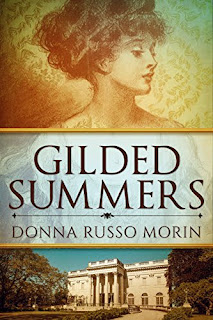
Weekly Reader: Gilded Summers (Newport's Gilded Age Book 1) by Donna Russo Morin; Moving Novel About Friendship Reveals Gilded Age Gender, Immigration, and Economic Conflicts


Weekly Reader: Gilded Summers (Newport's Gilded Age Book 1) by Donna Russo Morin; Moving Novel About Friendship Reveals Gilded Age Gender, Immigration, and Economic Conflicts

By Julie Sara Porter

Bookworm Reviews


Spoilers: There are many comparisons between now and The Gilded Age. Among them are the strong economic divides between rich and poor, the prejudice between Americans and immigrants, and the questions towards gender roles and how much progress women have actually made over the years.


Those struggles are remembered and paralleled into real modern life within the novel, Gilded Summers by Donna Russo Morinn, the first book in Morin's Newport's Gilded Age series. The series involves two women from different backgrounds who become best friends and have to deal with many of the issues of the day such as the division between the haves and have nots, the struggles that immigrants face when settling in the United States, and the fight for women's rights.


In 1895, 15 year old Pearl Worthington lives an upper class privileged life in Newport, Rhode Island. (Fun fact: Gilded Age Newport is also an important setting in the book Mistress Suffragette by Diana Forbes.). Pearl seems to have a life that most would envy: a large mansion, summers spent in the country, the current fashions. and her family's friends have famous last names like Astor, Oelrichs  Fish, and Vanderbilt. She appears to have an enviable life but nothing can be further from the truth.

Pearl has a talent for drawing and illustration but cannot pursue it in any meaningful way except as an ornament for a potential marriage. She would love to study at the Rhode Island School of Design. Maybe pursue her art to a professional career like acquaintances from similar wealthy homes, Mary Cassatt and Edith Jones (later Wharton).


Pearl is weary of the small mindedness, malicious gossip, and verbal cruelty of the social set. She longs for the freedom granted to men like her brother, Clarence, in which they can step out of line and misbehave and no one would think anything of it (in fact many encourage that behavior in men) but a woman is marked for life.

Pearl is supported by her father, Orin, who is very busy but encouraging to her pursuits. However, Orin is dominated by his wife, Milicent. Milicent is emotionally abusive towards Pearl and expects her to fulfill her expected role to marry wealth, have rich children, and live the life of a society matron no questions asked and no arguments made.


Meanwhile, the Worthingtons take on new servants, widower Felice Costa, and his daughter, 15 year old Ginevra both who recently emigrated from Italy. Felice is hired to teach a very reluctant Clarence to play the violin. (Felice is a gifted violinist and luthier.) Ginevra is hired as a house maid to mostly sew clothes. Eventually, Ginevra moves up to becoming Pearl's lady's maid. 

Like Pearl, Ginevra also feels limited by her role in society. Most of the Newport elite treat their servants like robots. They don't talk to them. They just expect them to serve their food, clean their houses, take care of their children, and so on in their own world only to come out of it to collect their payment. To the wealthy, people like Felice and Ginevra are nobodies and treated like nobodies. Ginevra watches Pearl and her friends and family, as well as the handsome men paraded in front of Pearl and feels like she lives in a separate existence from others. They are depersonalized and made to feel less than human.

That depersonalization exists among the servants as well. Many like Mrs. Briggs, the housekeeper, look down on the Costas for being new arrivals and on the lower levels of the service pecking order. Even kitchen maid, Greta, who is among the lowest in the servants' hierarchy, mocks Ginevra's accent and thinks of her as stupid. 


The Costas are also judged as immigrants. Many German and Irish immigrants, especially ones who arrived years ago look down on the new Italian arrivals. People mock their accents and some want them to return to their own country. 

Like Pearl, Ginevra dreams of a different life. Her talent for sewing leads to an interest in fashion. She begins to make Pearl's clothes creating embellishments and adding a personal style. She has dreams of being a fashion designer or opening a clothing boutique but like Pearl feels limited by her gender, economic status, and ethnicity.


Despite their differences, Pearl and Ginevra develop a genuine friendship that looks past their statuses and sees the real women inside. The friendship between Pearl and Ginevra is beautiful because it helps them get past their previous limitations. Together, they share their talents as Ginevra observes Pearl's sketchbook with awe and Pearl admires the beautiful gowns that Ginevra makes. They also talk about deeper issues like how they feel stifled by the people around them. Their friendship allows them to open up and see the world through different eyes.


Pearl and Ginevra are not only able to see their limited roles but those of the people around them. Pearl sees the "Swell Set" for what it really is and finds out what goes on inside the palatial Newport homes. She sees dissension and infidelity in marriages that are happy only in appearance. She and Ginevra see cheating spouses and the other half of the marriage that would rather look the other way than lose everything. They also see these same people look down and judge anyone else by the standards that even they can't live up to, such as when three society women including "The" Mrs. Astor, critique Milicent (the same set that she aspires to join). This is a few years before these women are also revealed to fall short of their own expectations and one files for divorce.


The two friends, particularly Ginevra, also experience first hand the sexism of the day when men feel like women are their property to do as they wish. This comes to a head when an intended fiance of Pearl's also wants Ginevra. He wouldn't mind marrying one and having the other as a mistress. His intentions eventually become violent but Pearl and Ginevra are there for each other in every way possible. Their friendship is strengthened by this incident and finally propel themselves to go after the freedom that they longed for.


Gilded Summers is a beautiful novel about how friendship can help see people beyond their race, ethnicity, sex, and income. Far from gilded, this book is pure gold.


Thursday, July 29, 2021

New Book Alert: Accidentally Engaged To The Billionaire (Accidental Engagement Series Book 1) by Bridget Taylor; Predictable But Charming Romance Between Different Social Classes


New Book Alert: Accidentally Engaged To The Billionaire (Accidental Engagement Series Book 1) by Bridget Taylor; Predictable But Charming Romance Between Different Social Classes

By Julie Sara Porter

Bookworm Reviews


Spoilers: Bridget Taylor's Accidentally Engaged to the Billionaire is the example of Modern Romance Wish Fulfillment: The lovers of different social classes meet and arrange an alleged romance. They have to act like a happy couple in front of tongue clicking disapproving friends and relatives. After revealing their differences and arguments, usually an Act 3 Break Up, the duo decide that they love each other for real. Expect a lot of parties inside swank wealthy estates, maybe a vacation to an exotic location or a formal dance at the country club, expensive gifts, and a shopping spree.

There isn't anything in Accidentally Engaged to the Billionaire that hasn't been read or seen before and in some ways, in dark times, that's what makes it comforting.

Romances like this are the literary equivalent of a candy bar or a second can of soda. It's not healthy or stimulating but it's comforting, fun, and entertaining. It's a charming book that gives us pure wish fulfillment and makes for a good escape.


Charles Bentley, the eponymous billionaire, is in a bind. He is due to Inherit his father's money but the will stipulates that he has to be married before his 35th birthday and the big day is looming. There are some family members, such as his avaricious uncle and his much younger trophy wife, who would love to see him not get it. Rather than hit the singles bars, go on speed dates, or check out Match.com, Charles proposes to the woman who just delivered his pizza. 

Jane is confused about this odd proposal, but intrigued by his offer to pay her college tuition and to get her family out of their financial hole, so she accepts. Of course they go through the usual hurdles of faking their engagement, meeting disapproving friends and family, etc, before falling in love for real.


Charles and Jane are a study in contrasts. Charles is a smooth confident man about town, born with money. He is so insulated in his wealth that he thinks money can buy anything, even a potential fiancee. He doesn't want it to be sordid. In fact, sex and emotion aren't even factors. They are to be engaged in name only as though it were a business transaction. 

Charles lacks some of the depth of rich suitors found in books like Courage Jonathan or The Artist and His Billionaire. He is disgusted by the behavior of some of his family members and has enough awareness to be appalled by the money grubbing snobbish antics of his Uncle Jack, Aunt Rosemary, and the family lawyer, Wyatt Tucker. Unfortunately, he doesn't want to leave the family and attempt to make it on his own without his family or to do some charitable philanthropic good with his money. I suppose that he feels that paying off the tuition and debts of one college student is his good deed and teaching a person to fish blah blah blah. 

Charles shows kindness in some of the most unlikely of places. He lets Jane spend the night when a fight with her older sister causes her to get kicked out. He also begins to shed some of his earlier snobbishness and sees more than his wealthy corner of the universe.


Jane is of course the poor woman made good with this peculiar offer. In her story, we get some realism with discussions of poverty and income inequality. By contrast to Charles' world, Jane's is pretty bleak. She is working her way through college but still has student loans looming in her future. Her mother died recently so it's just Jane and her sister, Helena, who works as a bartender in a strip club. Jane appreciates the generous financial offer that Charles is offering and she can't afford to say no. However, she wonders what accepting means to her. She has visions of herself in fancy dress, sitting in a mansion, and turning her nose up at the things and people that she used to like. 

Unfortunately, the bleaker and more realistic that Taylor writes Jane's predicament, the less likely the fantastic aspects of the Romance are. Jane has to agree to Charles' proposal because she is written without any options. She has no choice but to say yes.

Like Charles, Jane also goes through a transformation. She doesn't become the snob that she fears, but she does learn to use that money to change her and Helena's lives and maybe get a better future.


Actually, Taylor writes a better potential couple that almost steals the spotlight from Charles and Jane: Helena and Charles' cousin, James.

James is Charles' closest companion. He is the only one who is in on the Proposal Scheme and speaks for a lot of Readers who probably think "Hey, isn't this idea a little weird?" 

However, he is incredibly loyal to Charles and grows to like and accept Jane. He is usually quick with a wry comment or one liner that sometimes puts him at odds with others, particularly Charles. He is also completely on Charles' side because he can't stand Jack and wants to see him go down.


Helena is also a brilliant contrast to the romance between Charles and Jane. Helena is more cynical about this proposal. She loves her sister and doesn't want to see her get hurt but she also thinks that this scheme amounts to prostitution. She is furious not only that her family has to be put into such a situation where Jane has to accept it but also has a grudge against the Bentleys in particular. It takes a while for her to reveal the reason for the grudge but it shows that sometimes when the wealthy act, the poor suffer and they may not be aware of who is suffering.

Helena and James' exchanges are minimal, but they carry a lot of wit, sarcasm, and repartee that you can see a possible couple emerging from them. Also since they are written to be more experienced than Charles and Jane, their romance won't necessarily begin with a contrived fairy tale like beginning. It would begin with the more gradual "getting to know each other" scenario that many regular couples go through. If Taylor isn't planning on it, she should write a spin off series about James and Helena.


Accidentally Engaged to the Billionaire is the kind of Romance that reality invites a scoff but the Escapist side longing for a dream will enjoy. 


Saturday, May 22, 2021

New Book Alert: Courage Jonathan (Courage To Rise Book 2) by Heather Nadine Lenz; Warm and Funny Novel About Life After Happily Ever After


New Book Alert: Courage Jonathan (Courage to Rise Book 2) by Heather Nadine Lenz; Warm and Funny Novel About Life After Happily Ever After

By Julie Sara Porter

Bookworm Reviews


Spoilers: I have to hand it to Heather Nadine Lenz. She thought of one of the cutest ways to draw Readers into a second volume if they are unfamiliar with the first. Most authors have a prologue. Others put dabs of exposition throughout the book so they can pick up things as they go on. Others ignore it entirely and expect the Readers to catch up.

In Courage Jonathan, the previous novel, Courage Caroline is summarized in one overlong drunken monologue by a future groom on the day before his wedding.

Jonathan Arrozinni is in Bali ready to marry his fiancee Caroline but as he explains to a bartender, he has cold feet. He recalls the events of the previous book: That he is the son of a wealthy family who started an architectural firm with his brother. He fell in love with Caroline, a yoga instructor from a poor family. His family raised objections and threatened to cut him off. Through a series of romantic complications including both of their exes, Jonathan decides to go for love instead of money and asks Caroline to marry him.

In this opening chapter, the bartender is no doubt considering a career change as Jonathan rambles on and on but the Reader gets a sense of the kind of character that Jonathan is. He is foolish, prone to hasty decisions without thinking, helplessly idealistic, romantic, at times self-centered, entitled because he had spent his life with money, but ultimately good hearted. In this chapter we learn about Jonathan through this summary of the previous book.


Courage Jonathan is a funny and warm book. If Courage Caroline says that  love conquers all and is worth taking the leap, then Courage Jonathan is the more rational friend holding their romantic idiot friend by the belt loops and saying "Whoa there, Love Birds, you might want to hold off and think about this for a while."

The trouble begins right before the wedding. Besides Jonathan's second thoughts, Caroline announces that she's pregnant, and Jonathan's brother makes a humiliating speech earning Caroline's embarrassment and Jonathan's fury. This angers Jonathan so much that not only does he refuse his family's money but he dissolves his partnership with Daniel and resolves to start his own firm. Well a year later, Jonathan is bankrupt, unemployed, and depressed and a fed up Caroline is ready to file for divorce and take their son, Leo with her.


The book has some romantic moments that reveal what a sweet couple Jonathan and Caroline actually are, the kind that are instantly likeable and we root for. In Bali, they observe a beautiful waterfall with the other members of Jonathan's family who before and since are at each other's throats. That moment however brings them together as they observe this natural beauty.

Another moment is during their wedding over water. They have to be barefoot and of course Caroline and Jonathan slip and get wet. As they playfully splash each other, we see this is a couple that take great delight and joy in being together. Despite the family conflicts and Jonathan's concerned feelings at the beginning, the Reader needs these moments to see Jonathan and Caroline as a loving couple caught up in the haze of romance before reality sets in and sets and it does.


After the bankruptcy and the estrangement of Johnathan's family, we see what a life of privilege does to someone who is too used to it and the culture shock when someone has to get used to being on their own for the first time. Jonathan may have felt suffocated by the standards and questioned many of their dealings. He may have constantly tired of them controlling him but now that he has cut the strings, he is wondering what went wrong.

It's not a surprise that Johnathan's architectural firm goes under. He is without the contacts, the backing, and the promotion that his famous name provided. He's practically like a toddler trying to skip learning to walk and trying instead to run around the neighborhood only to fall flat on his face. 


His depression when everything goes under is real enough to be understandable but also comic enough to make one want to shake him out of his funk and tell him to get over himself. It gets more dramatic as he contemplates suicide before he is rescued by a friend. This moment becomes a wake up call for Jonathan as he no longer loses himself to self pity and really takes positive steps to take charge of his life. Before when he broke from his family and started his own firm, he did it basically just to show them off like a pouty kid wanting to prove to his parents "See I did it myself!"

This time he restarts his life to become a better person on his own terms, so he can be a better worker, friend, husband, and father. He becomes a more well rounded person who takes pride in his work and cares for Caroline and Leo.


The ironic thing is at the exact moment when his new life is at its highest, his family are at their lowest. Jonathan may have successfully broken the patterns of entitlement and avarice, but they have not. They end up paying a price for their greed and expect money and a famous name means that they won't face punishment. At least in this book, they will. Jonathan looks on this with bemusement at their situation, relief that he got out, and a haunting thought of who he might have been and where he might have ended up if he stayed.


Courage Jonathan begins with a character who is so laughable that you want to slap him to make him see reality. It ended with him being slapped by life and becoming more real than ever.


Tuesday, March 30, 2021

Classics Corner: The Great Gatsby by F. Scott Fitzgerald; Welcome to the Public Domain, Old Sport


Classics Corner: The Great Gatsby by F. Scott Fitzgerald; Welcome to the Public Domain, Old Sport

By Julie Sara Porter

Bookworm Reviews


Spoilers: Jay Gatsby has achieved a feat achieved by many before him such as King Arthur, Robin Hood, Don Quixote, Cinderella, Hamlet, Jane Eyre, Mr. Darcy, Oliver Twist, Ebenezer Scrooge, Sherlock Holmes,  Alice, Dracula, Huckleberry Finn, The Wizard of OZ (book form not MGM movie form) have received. He,Daisy and Tom Buchanan, Nick Caraway and the "whole rotten crowd" have entered the public domain. That means that F. Scott Fitzgerald's classic gets all that comes with it: academic interests, adaptation, remakes, alternate points of view, parodies, merchandise and the rest. (A zombie version is reportedly in the works.)


Many take The Great Gatsby at face value. They think it reveals the glamor of the Roaring Twenties, the parties, drinking, and what the hell fun before reality hit with the Crash of '29. It's a lot deeper than that.

The Great Gatsby is about the illusion of fame and celebrity and how the rich and famous look to the people underneath them. To them, they look attractive, carefree, and cannot possibly have anything wrong with their lives. The countless suicides, public meltdowns, and o.d’s of celebrities have shown otherwise. Inside every celebrity is a frightened suffering person that has to hide that suffering under the spotlight


Jay Gatsby, the eponymous protagonist Fitzgerald’s novel is someone who has an illusion of a rich and famous life but suffers a lonely existence. He is a wealthy mysterious man who throws the wildest parties that are attended by the best and brightest of the Roaring Twenties: gangsters, politicians, actors, producers, and scores of flappers.

The people drink, dance and have a great time and wonder about their mysterious host who throws the parties but is rarely seen at them. Is he a bootlegger? Is he a distant cousin of Kaiser Wilhelm? Did he kill a man? No one knows, but still they go to his parties. All they know is he is the  man who seems to have everything, wealth, splendor, fame, and the masses can’t help but enjoy themselves.

To them Gatsby is the embodiment of the Jazz Age: Live free, live rich, live large, and have fun. In this liberated freedom of the Jazz Age, many people felt free to experiment. Women in particular were free from corsets, wore short skirts, smoked in public, and were allowed to embrace their sexuality and that often involved having affairs. Fitzgerald captured that carefree and sexually liberated milieu that surrounds Gatsby perfectly.


Gatsby’s life is recounted by Nick Carraway, the naive narrator and Gatsby’s next-door neighbor. At first, Nick watches bemused at all the people who attend Gatsby’s parties. He watches the events next door with a detached admiration and perhaps some slight envy at his neighbor’s carefree seemingly easy adventurous lifestyle (some think maybe with lust for Gatsby). Until he realizes that he has a closer connection to Gatsby than he was previously aware. This connection comes in the form of Daisy Buchanan, Nick’s second cousin and her husband, Tom, an old friend of Nick’s.

While getting reacquainted with the Buchanans and their friend, Jordan Baker whom Daisy wants to “fling together” with Nick, Nick learns that Tom has a mistress in the city and that Daisy and Gatsby are former lovers. Nick becomes a go-between as Daisy and Gatsby are reunited and rekindle their love affair.


By far the most intriguing character in the book is Gatsby, whom Nick describes as “worth the whole damn bunch put together.” At the very least, he is a much better character than the narcissistic Daisy and the bad-tempered Tom whom Nick describes as “careless people. They smashed up things and creatures and then retreated back into their money or their vast carelessness, or whatever it was that kept them together, and let other people clean up the mess they made.”

 As Nick gets to know his wealthy friend, he begins to piece together the events in his life that shaped him. He learns about Gatsby’s impoverished background and his drive to improve himself and his situation. Nick also learns how Gatsby obtained his wealth through his military service and making good connections with wealthy, sometimes shady characters. In learning about Gatsby’s backstory, Nick saw a man who was constantly trying to look upwards and always trying to achieve happiness.

Even when he has found wealth, success, and is surrounded by the “Bright Young Things,” Gatsby still isn’t happy. He purposely chose the mansion on West Egg, Long Island, because it overlooks the lake surrounding the East Egg where Daisy lives.  Jordan confides to Nick that the only reason that Gatsby began the parties in the first place was so by chance that Daisy would wander into them. It’s no surprise that once Daisy is back in Gatsby’s arms that the parties cease. Through all of his wealth, connections, and fame, Gatsby still yearns for his lost love, “The One That Got Away.”


What makes Gatsby’s story sadder is that Daisy is not really worth the attention Gatsby gives her. He is still caught up in his romantic juvenile fantasies of the young innocent girl that he remembers, not the vapid flirt that she has become. She is less interested in loving Gatsby than she is fascinated by his big house and shiny things and wants to get even with her husband and his mistress, Myrtle Wilson. Even when Gatsby forces Daisy’s hand by confronting Tom with their affair, she still can’t summon the courage to decide between them playing both men at once. Even after a violent occurrence which puts all matters upfront, Daisy avoids Gatsby entirely and poor Gatsby still believes that somehow, someway Daisy will come rushing into his arms.


Like the real-life celebrities who have come to violent ends, Jay Gatsby’s life is sadder and lonelier than anyone realizes. This is shown particularly in the final crushing scenes when despite all of the countless people that attended his parties, despite the love he held for Daisy, the only people in attendance at Gatsby’s funeral are a permanent house guest, Gatsby’s estranged father, and Nick, who is revealed to be Gatsby’s best, truest, and only real friend.

Saturday, March 6, 2021

Centricity (Centricity Cycle: Book One) by Nathaniel Henderson; Involved, Immersive, and Expansive First Volume of Epic Science Fiction Series


Centricity (Centricity Cycle: Book One) by Nathaniel Henderson; Involved, Immersive, and Expansive First Volume of Epic Science Fiction Series

By Julie Sara Porter

Bookworm Reviews


Spoilers: Nathaniel Henderson's Centricity is a very complicated Science Fiction novel. It's expansive, involved, is filled with technological and scientific jargon, and has various characters and plots. It's the type of book that forces you to pay attention, sometimes read and reread various chapters to understand character motives and actions. However, that's what makes it a great novel. Because of this complexity, it is a book in which the Reader not so much reads but dives into and submerges themselves into. Thus creating an almost immersive experience.


There are various things going on so Centricity is something of a chore to summarize, but I shall try my best to recount the various plots and subplots. The setting is a place called Naion in the distant future. (Historical information reveals that this is future Earth and that Naion itself might be a newly formed North America, but nothing is officially confirmed. Their timeline is even set in 278, past a time called the Foundation.)

A courier called Ekram is caught in the middle of the kidnapping of Yiju Gainen, an ambassador's daughter when both he and the girl are killed in a struggle between corporate representatives. The media has portrayed Ekram as a ruthless psychopath, but there are hints that there is a bigger conspiracy and authorities are content with laying the blame solely on Ekram.(The first chapter reveals that he was a naive patsy in over his head and didn't even know that the "package" that he was hired to transport was a young girl before he saw her for the first time.) 

This case among others are being investigated by the Civil Protection and Compliance Agency (CAPCA), particularly Interagency Coordination Manager, Adasha Denali. Adasha is not only investigating what went wrong with the kidnapping, but also the circumstances surrounding the death of her mentor and possible lover, Gabriel Bachsare. Her investigation into Gabriel's tracks reveals that he may be hiding a felonious past.

Fellow CAPCA agent, Tenu Rown, is the sole survivor of an attack that left his regiment dead or in the case of his lover, Maria Salvatore, captured and tortured by Scott Voros, a sinister mercenary for a giant corporate entity, Alkanost Security.

 Meanwhile, reengineer and drug addict, Kannik "Nik '' Amlin learns that his surrogate father, Daal Ormonde, is dead and he is brutally interrogated for Daal's death. While trying to earn some money, take drugs, and learn who killed Daal, Nik finds himself the target of sinister figures who track him through cyberspace. These various investigations reveal the existence of an important piece of hardware called the Acorn, which is very valuable and very dangerous. Like I said, it's a complex book.


Centricity is the type of Science Fiction novel that great care went into world building including Naion's history, economics, government, social standings, technology, and culture. Naion is a world of a strict hierarchy with the 1 percenters living on top in high rises and the rest living down below. Corporate control divided parts of the world so many of the government workers are in charge in name only with CEO's making the final say.  Unemployment, poverty, and violence are regular events so many of the impoverished numb themselves with drugs and more violence, doing any illegal activity for pay and these corporate reps will pay. While CAPCA is considered law enforcement, the "white suits" are generally mistrusted and resort to sometimes brutal means to obtain information.

What is paramount in Naion's society is that everyone has cyber implants, called nimphs, connected to their brains. Information can be downloaded and appear right in front of the user. One user can have a public conversation with one person and a private separate one with another as Adasha shows in one passage. (Though there are implications that these conversations are not as private as initially believed.) If a character wants to get away, they can experience a total augmented reality with all five senses as Nik does in a vibrant almost hallucinatory chapter. This augmented reality can become an addiction and the book does not skimp on the comparison. Naoin's technology is like social media/VR times 1,000.


It's clear that Henderson was inspired by the cyberpunk works of Phillip K. Dick and William Gibson, particularly Blade Runner and Neuromancer. Henderson took those works and gave them a 21st century outlook making futuristic comparisons to this current life of income inequality, corporate control, and the over abundance and saturation of technology. The difference between Henderson and his forebears is that people like Dick and Gibson had to imagine that world to come. Henderson only has to read the news and tweak it a little to fit his futuristic setting.


Besides Henderson's impressive world building, he also gives memorable characters to inhabit Naion. His two best characters are Adasha and Nik. They reveal the huge gulf between characters on opposite ends of the socioeconomic divide. Indeed, their particular stories don't even really converge until late in the book when they are at the same location and even then, they don't see each other or share a word of dialogue between them.  

Adasha represents the people on top. She is wealthy with an important title in which she worked hard to obtain. Her family is well connected and includes a sister who is a rising politician. When she gives orders and asks questions, she gets answers. 

Adasha sometimes questions the strict regulations that CAPCA has over them and tries to investigate within the perimeters. However, sometimes she has to bend and break the rules when she learns about the various cover ups. Her discoveries cause her to question the people around her and to travel incognito to find out what she needs without interference. Adasha is a highly intelligent, rational, strong woman  who fights with brain and muscles. She will research a problem and fight anyone who gets in her way. 


If Adasha represents the upper class, Nik represents the lower. He scrambles to do technological work for pay and can't afford to turn anyone down. These jobs often get him involved in some dangerous, painful, and potentially fatal situations such as looking for the missing friend of the woman that he loves. He is just one of the many cogs drifting along in clubs and augmented reality to soothe their hunger, homelessness, and aimless lives. The only family that he has are a mentally ill mother and some men, including Daal, who were friends of his late father's. He is alone in the world and senses that if he disappeared, no one would care. Nik loses himself in drugs and simulations because his real life is so meaningless and terrible.

While Adasha has her name and prominence to speak for her, Nik has only his technological skills. He searches multiple networks, bypassing and hacking his way through firewalls and fail-safes, to find the right nugget of information. Unfortunately, these searches take a great toll on his health and safety. In one chapter, he is overwhelmed by the information that almost causes his nimph to burn out. In another chapter, he downloads something directly into his nimph and his demeanor afterwards suggests that he will be overcome by mental illness from his inability to handle what he learned.

In their different ways and experiences, Nik and Adasha reveal a troubled society that is on the verge of tyranny and collapse and requires some to challenge and rebel against it. Maybe Nik and Adasha are those rebels.


Centricity leaves some questions unanswered and some plot points unresolved leaving those outcomes for future volumes in the series. It may be hard to top Book #1. Centricity is a total immersive complex experience that results in the best Science Fiction novel of the year so far.