Showing posts with label 1920's. Show all posts

Tuesday, August 26, 2025

Murder Makes Waves (Jack and Frances Mysteries) by Carmen Radtke; Charming Couple In Murder Mystery On The High Seas


Murder Makes Waves (Jack and Frances Mysteries) by Carmen Radtke; Charming Couple In  Murder Mystery On The High Seas

By Julie Sara Porter 

Bookworm Reviews 

Spoilers: Frances Palmer and Jack Sullivan are the current heirs to those crime solving duo of lovers of the past like Agatha Christie’s Tommy and Tuppence Beresford, The Thin Man’s Nick and Nora Charles, Moonlighting’s David Addison and Maddie Hayes, Hart to Hart’s Jonathan and Jennifer Hart, Bones’ Temperance Brennan and Seely Booth, Castle’s Richard Castle and Kate Beckett, and Miss Scarlet and The Duke’s Eliza Scarlet and William “Duke” Wellington (some have argued Sherlock Holmes and Dr. John Watson). Jack and Frances are the stars of Carmen Radtke’s Jack and Frances Mysteries and its current volume, Murder Makes Waves. 

Jack is a nightclub owner and WWI veteran in 1931, Adelaide, Australia. Frances is the assistant to her uncle, Salvatore “Sal” Bernardo, a magician and vaudevillian. The engaged couple and Uncle Sal are invited to visit Jack's mother in England via SS Empress of the Sea. What should be a peaceful voyage becomes fatal as one of the passengers, Lawrence Vaughn is murdered during a masquerade ball and Evie, a singer and dancer that the couple befriended, is accused of the crime. 

Jack and Frances are certainly the best part of the novel. They sparkle with wit, observation, persistence, and an old world charm that can be found in Historical Cozy Mysteries. They are the types who brilliantly counter each other in personality, temperament, and sleuthing style to make a great team.

Frances is the outgoing, spirited, vivacious one. Her natural charm and empathy allows her to bond instantly with strangers as she does with Evie and various other people on the boat. As a performer, she is able to play certain roles to glean information and ferret out the criminal. 

Frances is from a working class background so many of her observations are based on common sense wisdom and street savviness. She is the kind of woman who thrives in the 1920’s and ‘30’s, a time period that allows women to be free, independent, and outspoken.

Frances is the color flying around in circles, while Jack is the steady pole that keeps them anchored. His staid but paternal demeanor reveals the trust and loyalty that someone in trouble needs, such as when Merryweather, a young steward, is wrongfully accused of theft. His dry wit and observation allows him to notice details like another person's behavior or clues that other people miss. As a nightclub owner, his organizational and leadership skills allow him to put the details together to find a conclusion. 

Jack’s experience as a war veteran acquainted him with the darker aspects of human nature and survival instincts that desperate people form. While he is Conservative in some respects such as wanting marriage and a home, he is open minded enough to accept others points of view, especially in these modern times.

The rest of the characters are a pretty colorful cast. Uncle Sal is a delightful comic relief, a charming, bombastic ham who probably is looking for stage scenery to chew. His romance with Mildred, another passenger, is both humorous and heartwarming.

 While on the ocean liner, the trio meet a stunning array of wealthy dowagers, dim upperclassmen, devious debutantes, and sassy showgirls, characters who would be just as at home in a PG Wodehouse short story as they would in an Agatha Christie novel. 

In fact, Frances herself makes the comparison when she observes Mildred with her nephew Tom. However Mildred is not the shrieking harpy that is Wodehouse's Aunt Agatha. Instead she is a warm, earthy, cool aunt more like Bertie Wooster’s Aunt Dahlia. While Tom has his naive dizzy moments worthy of Wooster, he actually is also quiet and has his own moments of intelligence.

Other characters also have interesting moments. Lawrence starts out as a popular lady's man until his darker, more nefarious deeds are uncovered revealing a narcissistic sociopathic soul underneath. Evie plays the flighty effervescent vivacious flapper but she also shows great vulnerability about her predicament. Other characters have great moments which reveal much about their public personas and inner selves.

Murder Makes Waves is a worthy volume for lovers of Historical Fiction especially set in the 1920’s and 30’s, Cozy Mysteries, and any type of novel with a charming thrill seeking witty and highly romantic duo at the forefront.

Tuesday, March 30, 2021

Classics Corner: The Great Gatsby by F. Scott Fitzgerald; Welcome to the Public Domain, Old Sport


Classics Corner: The Great Gatsby by F. Scott Fitzgerald; Welcome to the Public Domain, Old Sport

By Julie Sara Porter

Bookworm Reviews


Spoilers: Jay Gatsby has achieved a feat achieved by many before him such as King Arthur, Robin Hood, Don Quixote, Cinderella, Hamlet, Jane Eyre, Mr. Darcy, Oliver Twist, Ebenezer Scrooge, Sherlock Holmes,  Alice, Dracula, Huckleberry Finn, The Wizard of OZ (book form not MGM movie form) have received. He,Daisy and Tom Buchanan, Nick Caraway and the "whole rotten crowd" have entered the public domain. That means that F. Scott Fitzgerald's classic gets all that comes with it: academic interests, adaptation, remakes, alternate points of view, parodies, merchandise and the rest. (A zombie version is reportedly in the works.)


Many take The Great Gatsby at face value. They think it reveals the glamor of the Roaring Twenties, the parties, drinking, and what the hell fun before reality hit with the Crash of '29. It's a lot deeper than that.

The Great Gatsby is about the illusion of fame and celebrity and how the rich and famous look to the people underneath them. To them, they look attractive, carefree, and cannot possibly have anything wrong with their lives. The countless suicides, public meltdowns, and o.d’s of celebrities have shown otherwise. Inside every celebrity is a frightened suffering person that has to hide that suffering under the spotlight


Jay Gatsby, the eponymous protagonist Fitzgerald’s novel is someone who has an illusion of a rich and famous life but suffers a lonely existence. He is a wealthy mysterious man who throws the wildest parties that are attended by the best and brightest of the Roaring Twenties: gangsters, politicians, actors, producers, and scores of flappers.

The people drink, dance and have a great time and wonder about their mysterious host who throws the parties but is rarely seen at them. Is he a bootlegger? Is he a distant cousin of Kaiser Wilhelm? Did he kill a man? No one knows, but still they go to his parties. All they know is he is the  man who seems to have everything, wealth, splendor, fame, and the masses can’t help but enjoy themselves.

To them Gatsby is the embodiment of the Jazz Age: Live free, live rich, live large, and have fun. In this liberated freedom of the Jazz Age, many people felt free to experiment. Women in particular were free from corsets, wore short skirts, smoked in public, and were allowed to embrace their sexuality and that often involved having affairs. Fitzgerald captured that carefree and sexually liberated milieu that surrounds Gatsby perfectly.


Gatsby’s life is recounted by Nick Carraway, the naive narrator and Gatsby’s next-door neighbor. At first, Nick watches bemused at all the people who attend Gatsby’s parties. He watches the events next door with a detached admiration and perhaps some slight envy at his neighbor’s carefree seemingly easy adventurous lifestyle (some think maybe with lust for Gatsby). Until he realizes that he has a closer connection to Gatsby than he was previously aware. This connection comes in the form of Daisy Buchanan, Nick’s second cousin and her husband, Tom, an old friend of Nick’s.

While getting reacquainted with the Buchanans and their friend, Jordan Baker whom Daisy wants to “fling together” with Nick, Nick learns that Tom has a mistress in the city and that Daisy and Gatsby are former lovers. Nick becomes a go-between as Daisy and Gatsby are reunited and rekindle their love affair.


By far the most intriguing character in the book is Gatsby, whom Nick describes as “worth the whole damn bunch put together.” At the very least, he is a much better character than the narcissistic Daisy and the bad-tempered Tom whom Nick describes as “careless people. They smashed up things and creatures and then retreated back into their money or their vast carelessness, or whatever it was that kept them together, and let other people clean up the mess they made.”

 As Nick gets to know his wealthy friend, he begins to piece together the events in his life that shaped him. He learns about Gatsby’s impoverished background and his drive to improve himself and his situation. Nick also learns how Gatsby obtained his wealth through his military service and making good connections with wealthy, sometimes shady characters. In learning about Gatsby’s backstory, Nick saw a man who was constantly trying to look upwards and always trying to achieve happiness.

Even when he has found wealth, success, and is surrounded by the “Bright Young Things,” Gatsby still isn’t happy. He purposely chose the mansion on West Egg, Long Island, because it overlooks the lake surrounding the East Egg where Daisy lives.  Jordan confides to Nick that the only reason that Gatsby began the parties in the first place was so by chance that Daisy would wander into them. It’s no surprise that once Daisy is back in Gatsby’s arms that the parties cease. Through all of his wealth, connections, and fame, Gatsby still yearns for his lost love, “The One That Got Away.”


What makes Gatsby’s story sadder is that Daisy is not really worth the attention Gatsby gives her. He is still caught up in his romantic juvenile fantasies of the young innocent girl that he remembers, not the vapid flirt that she has become. She is less interested in loving Gatsby than she is fascinated by his big house and shiny things and wants to get even with her husband and his mistress, Myrtle Wilson. Even when Gatsby forces Daisy’s hand by confronting Tom with their affair, she still can’t summon the courage to decide between them playing both men at once. Even after a violent occurrence which puts all matters upfront, Daisy avoids Gatsby entirely and poor Gatsby still believes that somehow, someway Daisy will come rushing into his arms.


Like the real-life celebrities who have come to violent ends, Jay Gatsby’s life is sadder and lonelier than anyone realizes. This is shown particularly in the final crushing scenes when despite all of the countless people that attended his parties, despite the love he held for Daisy, the only people in attendance at Gatsby’s funeral are a permanent house guest, Gatsby’s estranged father, and Nick, who is revealed to be Gatsby’s best, truest, and only real friend.

Wednesday, January 27, 2021

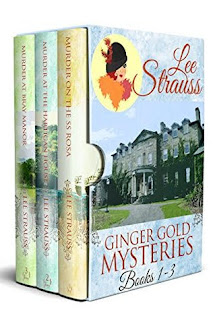
Weekly Reader: The Ginger Gold Mysteries 1-3 by Lee Strauss; Brilliant Jazz Age Historical Mystery Series With Brilliant, Sharp Tongued and Stylish Lead


 Weekly Reader: The Ginger Gold Mysteries 1-3 by Lee Strauss; Brilliant Jazz Age Historical Mystery Series With Brilliant, Sharp Tongued and Stylish Lead

By Julie Sara Porter

Bookworm Reviews


Spoilers: Last year, I was introduced to Mona Moon, cartographer turned businesswoman in 1930's Kentucky, and one addition to the illustrious sisterhood known as historical mystery female protagonists. Well, rewind about ten years and she would find a kindred spirit in fellow historical detective club inductee, Ginger Gold.


Lee Strauss' lead protagonist is a sharp and sassy war widow and fashionista in 1923. After the death of her father, the Boston based Ginger returns to her childhood home of England to inherit her father's vast estate, Hartigan House.

Ginger always is ready with a quick wit and an adventurous curious spirit. When murder is there, she doesn't mind defying authorities to conduct her own investigation and has something quick to say in her defense. In one instance in Murder on the SS Rosa, after the handsome and potential love interest, Chief Inspector Basil Reed warns her not to get involved with the official investigation, Ginger searches anyway and wants to speak to the deceased's widow. She reminds her bemused friend, medical student Haley Higgins that Basil said "not to officially investigate. (Ginger) only wants to offer condolences." Then wonders if she should bring a gift.


Ginger is a very stylish woman with an outfit for every occasion. In Murder on the SS Rosa, Ginger patiently demonstrates to Haley the difference between a day dress, a Jeanne Lanvin, "suitable for afternoon tea or semiformal dining," and a Coco Chanel evening gown that is "perfect for a night of dancing." Her clothes sense makes for some humorous moments such as when she holds up a murder interrogation because she doesn't have a thing to wear. However, she has an eye for style and what is suitable for women to wear on any occasion. Those attributes plus a desire to do something instead of being one of the idle rich allows Ginger to eventually open a women's clothing boutique called Feathers and Flair. 


However despite her style and penchant for barbs, there are darker aspects to Ginger's character that are gently revealed throughout the series. She is in mourning for her late husband, Daniel Lord Gold, who was killed during WWI. She, like many of her generation, is still reeling from the ramifications of a great war that sent young men from nearly every country to their deaths while she is simultaneously trying to uphold the "live life to the fullest" spirit of the 1920's. This grief makes her wary around men particularly Basil who seems to like her more than friendship and vice versa. One of the most emotional moments occurs in Murder at Bray Manor when Ginger finally visits Daniel's grave and reveals her mixed emotions towards moving on.


Ginger also has a past during the war as a spy. While as of Murder at Bray Manor, it is not fully explained, there are some implications that Ginger was pretty close to some dangerous and duplicitous characters. One was Captain Smithwick who wanted to bring her back into the Game. She also may have been betrayed and nearly died, so even before she begins her career as an amateur detective, Ginger is no stranger to murder or dangerous situations.


The book that I read contains the first three volumes of the series. Each mystery is in a different style, but all are brilliant, suspenseful, and filled with great historic detail for the time, customs, dialogue, and of course the wardrobe.

The first three books are:


Murder on the SS Rosa-Ginger and Haley travel to England so Ginger can inherit her father's estate and Haley can begin her medical studies to become a doctor. The two and Ginger's Boston terrier, Bossy, sail on board a luxury liner, the SS Rosa. Unfortunately, this is no pleasure cruise as the captain, Walsh, winds up dead.

In a seagoing version of a locked room murder mystery, the suspects are a small confined bunch. They include the captain's temperamental widow, a beautiful silent film actress and her dour minder, and a crew with secrets of their own. Because of the limited cast, the murderer and their connection to the captain are pretty easy to guess. However, this book serves as a great introduction to Ginger's character as she uses charm, urbane sophistication, and her quick wit as a means to ascertain information. She is also able to run circles around Basil's investigative methods by using clever observation, intuition, daring, and simple pluck to the point that Basil allows her to listen in on inquiries and act as an unofficial partner.


Murder at Hartigan House-Turns out Ginger's homecoming is just as eventful as the trip over. While getting reacquainted with her childhood home, the staff, and the English ways, the family butler, Pippins, directs Ginger to the attic where a skeleton has been discovered. Apparently, it has been there for over ten years since the house was shut up. This leads to some uncomfortable questions such as who was the body? How did they die? What was the reason behind their death? Above all, what did Ginger's father know and when did he know it? The questions increase as another body is added.

Of the three first books in the series,this one is probably the best. The dead body in the attic seems almost to come from Edgar Allan Poe, an urban legend, or a grim fairy tale. It is a very chilling situation and investigation as Ginger has to question many of her father's old friends and the house staff, some who knew her as a child. She also has to ask some uncomfortable questions about her late father with whom she was close. The mystery has some interesting twists. The reveal is genuinely a surprise and flip flops the notion of who is truly innocent or guilty in this world. Also, the moment when the killer is revealed is genuinely suspenseful as Ginger is put in a helpless situation and at the killer's mercy.


Murder at Bray Manor-We saw Ginger's family home, now we take a trip to her late husband's and meet her in-laws. While Ginger's grandmother-in-law Ambrosia and sister-in-law, Felicia had small roles in Murder at Hartigan House, this book solidifies them as important characters in Ginger's life. Felicia summons Ginger to investigate the appearance of a poltergeist in the Gold family home.

Bray Manor has fallen on hard times and Felicia opens the home as a meeting place for various clubs like knitters, stamp collectors, gardeners and such. It is after one of these gatherings that Felicia's friend, Angela Ashton is murdered. It is up to Ginger to investigate this death and reopen some wounds from her past.

If Murder on the SS Rosa is the wittiest, and Murder at Hartigan House is the most gruesome and suspenseful, then Murder at Bray Manor is the most emotional in the series. There is the aforementioned sadness that Ginger feels about visiting Daniel's grave. Her grief is realistic as is the post trauma that she feels over her war experiences. It's very possible that her sassy fashionable attitude are just covers for the broken soul underneath.

 Besides her problems, the Gold family is caught up in their own turmoil. This is a family that has been steadily losing money for years (in fact Daniel married Ginger for her family's money though their marriage blossomed into love). Ambrosia is an elderly woman so stuck in the past that she would rather be homeless than reshape her life to fit in the new world by letting visitors in her family home. Felicia might seem like a bubble headed flapper on the surface, but as the sole heir to Bray Manor has the foresight to save it. 

The passages between them balancing tradition vs. progress are heartfelt as the two women would otherwise be left alone by an uncaring world.

The emotions shared by Ginger, Ambrosia, and Felicia aren't the only ones that are truly moving. Without revealing too much, the murderer's motives are understandable and almost empathetic. In their confession, we don't see a remorseless cruel person, we see someone who was desperate, broken, and driven by their rage and grief to commit the ultimate crime.


The first three books in the Ginger Gold Mysteries gives us a brilliant sparkling character that is among the galaxy of great historical female detectives. Just like her name, Ginger is pure Gold.


Thursday, December 10, 2020

New Book Alert: No One Runs Faster Than A Bullet by Andrew Davies; Short But Intriguing Look At Kansas City's Criminal Underworld


New Book Alert: No One Runs Faster Than A Bullet by Andrew Davies; Short But Intriguing Look At Kansas City's Criminal Underworld

By Julie Sara Porter

Bookworm Reviews


Spoilers: I would like to apologise for the long forced break in my blog. I had Covid last month and was sick for two weeks. Afterwards, I had to make adjustments on my glasses because my eyes bothered me. I am better now and have plenty of reviews backed up!


Now on with the first:

 No one may run faster than a bullet, but that doesn't mean an author should write faster than one.


Andrew Davies' short novel, No One Runs Faster Than A Bullet has a very interesting premise in exploring the world of Kansas City's organized crime racket in the late 1920's. It has a potentially interesting roguish bunch of characters that would be fascinating to explore in the environment of deceit, decadence, and depravity. However, because of its short length, a fragment and a sketch of a brilliant idea is all we get. Because of Davies' desire to keep the book short, what is a great idea and concept comes across as shallow and underutilised.


We get some historical information in the opening pages by introducing the  ratification of the 18th Amendment and how it influenced the increase in  organized crime in various American cities such as Chicago, New York City, and Kansas City. 

While Chicago and New York's involvement in organized crime is widely known in pop culture, Kansas City is not as discussed. According to various sources, Kansas City began as a racketeering  center when the DiGiovanni brothers emigrated from Sicily and settled in Kansas City. Their organization rackets were controlled by John Lazia and given a free pass by corrupt politician, Teddy Pendergast. Kansas City was a prime location for illegal activity because of its central presence to various states.


In this milieu several people are featured: stock broker, Albert Carr who is right there when the Dow goes down on October, 1929, Ezra Cohen, a prizefighter who joined law enforcement, Owens, a Pinkerton detective with a bad temper and his violent partner, Anderson, Donovan, a pastor who sees sin everywhere even an attack by a dog, and Ezekiel, the District Attorney, and his wife, Laura who had been kidnapped a year prior. Behind the scenes is Shlomo Weintraub, head of the Weintraub Syndicate and the real strung puller in just about everything going on in Kansas City. 


It's a pretty intriguing roster of characters Davie writes about. The majority of them are amoral and dishonest, even when they claim to be on the right side of the law. They don't mind doing things like getting on the take or using excessive force. There are also some interesting touches with the characters such as Owens and Anderson taking part in a sting operation and Laura still having PTSD from her kidnapping.

There are also many characters who are no doubt based on real people. Weintraub clearly is similar to the real life DiGiovanni brothers and Lazia. Donovan has more than a whiff of the real life Hellfire and Brimstone pastor's of the 1920's and '30's like Billy Sunday.

 Among the most recognizable figures is Laura who is clearly based on Nell Donnelly Read, a Kansas City clothing designer and wife of a prominent politician who was kidnapped. Read's husband contacted Lazia to help him find and search for her. Read was returned, but she later divorced her husband and married his law partner who helped engineer her rescue. Knowing that puts a dismal foreshadowing in Laura and Ezekiel's marriage with the realization that their real life counterpart's marriage didn't last.


No One Runs Faster Than A Bullet could be better. Many of the problems are undone by too many fascinating characters and not enough pages to deal with then and the plot. No sooner are characters introduced than they take part in a shakedown of various criminals, without really concerning ourselves with who they are and what their stakes are in this struggle. Many of the illegal activities are either too quick or discussed after the fact, so we don't have much time to build up the activities. 

Also, this is too large a cast and too many plot lines going on to keep track of in a short novel that is less than 100 pages. If Davie had just involved one of the crimes and had only a few characters it might have worked. Even better, he could have easily expanded the short novel into a longer one putting more emphasis on the characters that we only sort of get to know before Tommy guns are drawn. 


With some extra work and characterization, No One Runs Faster Than A Bullet could make a crime novel that would place Kansas City as a memorable criminal underworld setting. As it is however, it promises to be a great shot but ends up missing the mark.


Thursday, June 4, 2020

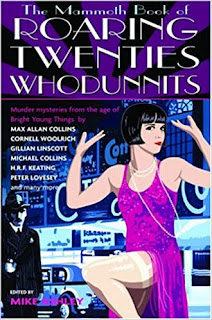
Weekly Reader: The Mammoth Book of Roaring Twenties Whodunnits Edited by Mike Ashley; Jazz Age Mysteries Shine In This Colorful Fascinating Anthology


Weekly Reader: The Mammoth Book of Roaring Twenties Whodunnits Edited by Mike Ashley; Jazz Age Mysteries Shine In This Colorful Fascinating Anthology
By Julie Sara Porter
Bookworm Reviews

PopSugar Reading Challenge: A book set in the 1920's

Spoilers: The 1920's. The Jazz Age. The Bright Young Things. The Lost Generation. This fascinating wild decade conjurs up images of free spirited flappers, smooth, but violent gangsters, jazz music, Prohibition, the Charleston, and noted celebrities like Calvin Coolidge, Charles Lindbergh, Al Capone, Rudolf Valentino, Babe Ruth, Clara Bow, and Charlie Chaplin. Authors like Ernest Hemingway, F. Scott Fitzgerald, James Joyce, Gertrude Stein, T.S. Eliot, Langston Hughes, and Dorothy Parker explored new frank ways of writing that captured the violence, sexuality, and free expression this time allowed. The world of murder mysteries also had its big names. British authors, Agatha Christie and Dorothy Sayers, gave the world their genteel cultured sleuths Christie's Miss Jane Marple and Hercule Poirot and Sayers' Lord Peter Wimsey. In America, The Black Mask literary magazine made its debut and introduced those hard boiled detective genre authors,  Dashiel Hammett and Raymond Chandler. The 1920's were a fascinating decade and one that demands to be explored. 

The Mammoth Books are a series of anthologies which explored various literary genres. They produced some of the best collections of historical mysteries, featuring mysteries set in different time periods. One of these anthologies explores the 1920's in depth with The Mammoth Book of Roaring Twenties Whodunnits. It is a fascinating collection of short stories featuring some of the most exciting murder mysteries, clever sleuths, and fascinating murderers set in this colorful time.

Among the best stories in this anthology are:

"Timor Mortis" by Annette Meyers
The 1920's saw a resurgence in women's independence. Women were granted the right to vote in 1920 and many young women celebrated their freedom in other ways. Many bobbed their hair, wore short A-line skirts, smoked in public, talked openly about sex, and finally got rid of the restraining corsets. They were able to live independently and earn their own money without worrying about marriage. 
Annette Meyers explores that freedom with her protagonist, Olivia "Oliver" Brown, a poet/private investigator who lives in Greenwich Village, among the other artists, writers, and activists. She lives a colorful life with some eccentric friends so when she encounters death, it is bound not to be in a conventional way. She is recruited to look for a friend's missing cousin at the same time as the local masquerade ball. During the ball, Death makes a guest appearance as one of the party goers is stabbed to death while the party goer is dressed in multi-colored feathers and rides on the back of a white stallion. 
Aside from the unique crime scene, the mystery itself is solid with enough clues to point to an obvious finish. What makes this story, however, is its lead character. Oliver is a free spirited independent woman who has an artistic outlook and a very observant eye. She is the embodiment of the 1920's New Woman who lives for herself and her own goals.

"Someone" by Michael Collins
Underneath all of the glitz and glamor, the 1920's had a dark side. It was the time of Prohibition and the gangsters. While many of them such as Al Capone, Bugsy Siegel, and Meyer Lansky achieved antiheroic status and many thought of them as smooth, charming, goodfellas, in truth they were a violent bloodthirsty bunch. 
Michael Collins explored the past of his regular protagonist, Dan Fortune in this short story. Fortune remembers his father, Casey, a police officer who tried to have an honest career. However, honesty means very little when he makes some dangerous acquaintances such as corrupt New York Mayor, Jimmie Walker, Bobby Astor, the so-called "black sheep" of the wealthy family, and mobsters, Owney Madden and Arnold Rothstein. (Rothstein is particularly infamous for being one of the men who fixed the 1919 World Series by bribing eight players in the Chicago White Sox to throw the series, hence the Black Sox Scandal.) 
Casey Fortune becomes mired in his acquaintances' duplicitous dealings and realizes that he can't keep his head above the crime around him. His allegiances and the brutal crimes in which he witnesses consume him and destroys his family forever.
While technically, there isn't a specific mystery, this story shows how a life of crime can affect a family for generations to come and how Innocents can fall because of the actions of the guilty.

"Thoroughly Modern Millinery" by Marilyn Todd
One of the things that I like the most about The Mammoth Historical Whodunnits is that I discover new authors and characters. Many like Peter Tremayne's Sister Fidelma, Steven Saylor's Gordianus The Finder, and Margaret Frazier's Dame Frevysse have become favorite detectives of mine. Another favorite is Claudia Serferus, the saucy Roman noblewoman/amateur detective of Marilyn Todd's I Claudia mystery series. 
In this story, Todd creates another interesting female detective this time for the Jazz Age: Phyllis "Fizzy" Potter, a freelance magazine illustrator with a sense of justice. While names like Fizzy, Bubbles, Squiffy, and Catspaw suggests a lighthearted P.G. Wodehouse-esque comedy, this story can be as dark and grim as the rest. The plot focuses on blackmail, drug addiction, and the lengths people will go to protect family members and keep secrets. There is also a theme of Abstract Art, the popular art trend in the 1920's which allowed artists to express themselves in more outlandish and emotional ways than the concrete clear examples of the past.

"The Hope of the World" by Mat Coward
The 1920's was also a time of great revolt. After the Russian Revolution began in 1917, many in the United States and Great Britain were terrified that the same thing would happen in their countries. Labor Unions went on strike and many activists embraced Socialistic principles. This is the milieu of the story, " The Hope of the World" by Mat Coward.
This story plays on the familiar mystery trope of the dinner party murder in which a party, usually in Britain, is rudely interrupted by the death of one of its members. Of course, anyone could be a suspect. In this case, most of the party guests are Communists and Socialists. While the constant addresses of "Comrade This" and "Comrade That" can be confusing, the story reveals why many of these people looked to these philosophies. Many were disillusioned after WWI. Others saw income inequality and sought to change it. Others saw better opportunities for women. This was a group that may have had a common goal but were also suspicious and mistrustful and with good reason. They were often held under suspicion by authorities. This revolutionary zeal and mistrust is the perfect brew for violence and sure enough in this story, it happens.

"The Broadcast Murder" by Grenville Robbins
Technology saw a massive upswing in the 1920's. Automobiles became mass produced. While airplanes had been in use since before WWI, Charles Lindbergh's trip across the Atlantic Ocean showed what those flying machines were really capable of. Another popular technological source was the radio.
In Greenville Robbins' "The Broadcast Murder" (one of the few short stories in this anthology that was published in the 1920's), the radio becomes not only a source of news, shows, and music, it is also a source for murder. In a play on the locked room mystery, Charles Tremayne, radio announcer, is murdered live on air in his broadcasting booth with hundreds of listeners hearing his final words. The premise is intriguing as the narrator wades through the potential leads. The solution is also pretty clever as it plays on what people think they hear and don't hear as well as what goes on behind the scenes when the radio is on.

"For The Benefit of Mr. Means" by Christine Matthews
One of the most infamous Hollywood scandals was the 1921 murder of actress, Virginia Rappe. The prime suspect was movie comedian, Roscoe "Fatty" Arbuckle. Arbuckle was found not guilty, but the court of public opinion ruined his career forever. 
In this reimagining of Arbuckle's post movie career, he teams up with another scandal maker, Gaston Bullock Means, an author who wrote an expose called The President's Daughter. Arbuckle and Means solve a murder at a party attended by some very familiar faces.
While the mystery is excellent and Means and Arbuckle make a great detective duo redeeming their names in pursuit of justice, the real highlights are the dizzying array of real person cameos. Matthews fills her story with such notables as F. Scott and Zelda Fitzgerald, Dorothy Parker, W.C. Fields, Bing Crosby, and Ramon Navarro. These characters bicker, chatter, and  bounce off each other cleverly and the notable names put Jay Gatsby's parties to shame.

"I'll Never Play Detective Again" by Cornell Woolrich
One of the darkest real life crimes in the 1920's was the murder of 14 year old Bobby Frank by two young men, Richard Loeb and Nathan Leopold. What was most disturbing about this case was the motive behind the murder. The two men killed the boy simply to prove that they could do it, to show people that they thought that they were above such concepts as legality and morality.
The Leopold-Loeb Case was certainly the inspiration for this disturbing tale. At an engagement party for his friends, Dick Walsh, a wealthy young New Yorker investigates the death of the bride's kid sister when the girl succumbs to a poisoned flower. Dick finds himself discovering some troubling things about the bride and groom, people he thought that he knew for years.
The resolution is terrifying as Dick is forced to confront someone with a truly evil heart and intent that goes beyond cold blooded murder. The ending to this story makes this not only the most disturbing story in Roaring Twenties Whodunnits, but among the darkest and most disturbing short stories of the entire Mammoth Book Anthologies.