Tuesday, July 21, 2020
Classics Corner: Lies My Teacher Told Me: Everything Your American History Textbook Got Wrong by James W. Loewen ; Definitive Book on Learning About and Teaching American History In High School
Classics Corner: Lies My Teacher Told Me: Everything Your American History Textbook Got Wrong by James W. Loewen; Definitive Book on Learning and Teaching American History in High School
By Julie Sara Porter
Bookworm Reviews
If you thought, or still think, your high school American History class and textbooks were boring, chances are you are not alone. James W. Loewen discovered his college freshman didn't know any more about history than they did in high school.
To remedy this situation, Loewen studied high school history textbooks such as The Land of Promise, Rise of the American Nation and discovered feel-good blandly written history that focused on jingoism and patriotism and had very little analysis or depth. Loewen's book, Lies My Teacher Told Me: Everything Your American History Textbook Got Wrong aimed to discover those errors and improve on the way American History is taught in schools.
"Textbooks.....keep students in the dark about the nature of history, " Loewen wrote. "History is furious debate informed by evidence and reason. " Loewen's brilliant and insightful book challenges how history textbooks are written and provides the Reader with an alternative approach to history. Even the Readers that may not necessarily agree with the information Loewen provides will appreciate the more thoughtful, critical, and analytical approach to history and receive a deeper understanding of the American past.
Loewen begins by discussing heroification, making heroes and demigods out of historic figures. History students may know of Helen Keller's childhood in which Annie Sullivan taught her to sign and speak, but may be unaware of Keller's adulthood in which she became an ardent Socialist.
Woodrow Wilson is described in textbooks as an idealistic President who helped found the League of Nations, but the books often leave out Wilson's racism in which he segregated the federal government, propositioned the Espionage Act which ordered Americans to report "suspicious activities" like speaking out against WWI, and ordered invasions of various Latin American and island countries.
"Denying students the humanness of Keller and Wilson and others keeps students in intellectual immaturity, "Loewen wrote. "It might be called a Disney version of history: The Hall of Presidents at Disneyland similarly presents our leaders as heroic statesmen not imperfect human beings. "
Loewen put the textbooks to task for how they wrote about many of the standards in American History. Christopher Columbus is not written as an intrepid explorer looking for new trade routes to the Far East. Instead, he is seen by Loewen as an opportunist who saw a country rich with gold to plunder and people to enslave.
Far from being the deus ex machina-kindly Indians who provided the Pilgrims with the first Thanksgiving, instead Massasoit's tribe once thrived in the Massachusetts area and had been all but wiped out by smallpox brought on by white immigrants.
Loewen suggests that the Thanksgiving meal was not just a gesture of friendship but a plea for survival. (And how did the Pilgrims' descendants reward that kindness? Well Loewen writes that they declared war on the local tribes and took their land for themselves.)
Speaking of Native Americans, Loewen fills his Readers on wars the whites have declared on Native Americans such as King Phillip's War in 1675 as well as textbooks' portrayal of Native Americans as either bloodthirsty savages who made unprovoked attacks on whites or childlike innocents who were unaware of how to cultivate their land and needed the White Saviors to guide them.
African-Americans have it bad if not worse according to Loewen. The textbook perspective of the Antebellum South as an idyllic Paradise for masters and slaves and Reconstruction as a time of thieving Northern "carpetbaggers" and naive freed slaves who couldn't lead their farms or states is less out of historic primary sources than out of Gone With The Wind. In actuality Loewen writes that in the post-Civil War days many former slaves were elected into offices and performed in jobs admirably. In fact the real troubles were usually performed by the disgruntled former Confederates who formed the Ku Klux Klan and whose actions would later create Jim Crow Laws and the Myth of the Fallen South.
Loewen also cites the implied racism in how textbooks portray white abolitionists such as John Brown as "being insane"(when he was devoted to the cause of freeing slaves) and Abraham Lincoln as being indifferent to the cause of slavery solely for preserving the Union (when in reality he felt that the Union could never be preserved if half of its population where in chains).
The chapters about racism should be used as a guide for current issues. Loewen's book reveals that unfortunately the Myth of the Fallen South and the inherent racism that goes with it are still with us even now in 2020. If nothing else, the fight over taking down or leaving alone Confederate statues and the support and disagreements towards the Black Lives Matter protests reveal that those historical myths are still with us and are unfortunately very hard to die. Those struggles are still fresh in our minds and despite what some say, people cannot easily "get over them." If they aren't acknowledged or certain minorities are still treated poorly, partly because modern white people used glamorized versions of the Old West or the Antebellum South as justifications for stereotyping and continuing to treat Native Americans and African Americans so horribly.
Besides race, another issue that Lies My Teacher Told Me opens up is social class.This chapter reveals that George Carlin's often repeated quote "They call it the American Dream because you have to be asleep to believe it" is not too far off. As Loewens pointed out, we are surrounded by symbols of class and social structure from the homes we live in, to the clothes we wear, to the brands we buy, to the cars we drive. Unfortunately, social class cuts deeper as while Americans are so fond of repeating the "Land of Opportunity" myth ad nauseum, that they fail to notice and history classes fail to teach that those opportunities are not passed out freely nor are those opportunities necessarily based on merit. Many stumbling blocks to achieve a higher economic standards are often affected by someone's race, nationality, economic standards, or gender.
In schools teachers and textbooks are fond of the rags to riches myths such as Andrew Carnegie, Oprah Winfrey, or Steve Jobs, and fail to account that they are the exceptions. For every Carnegie who became a multimillionaire, there are countless others who work just as hard and barely eke out a living. These exceptions cause snobbishness in people that assume if someone is poor then they must be lazy or are not working hard enough. This rationale is often why many social and welfare programs are cut leading to increased poverty.
Education for example is not the same in every school. Wealthier students have the luxury of new technology, equipments, and pre college courses, while poorer students often have to make do with dated materials and hopes that they can get a scholarship or financial aid. It makes one wonder with the Coronavirus pandemic being such an issue if schools were able to pass out enough technology for students to study at home and whether teachers and students had the proper Internet access to use them. Not to mention, the most recent controversies about schools being forced to open in the fall will see a division between the schools that can afford to follow guidelines and use work and study at home alternatives and those that can't. Will the numbers of poorer students and faculty members catching the virus increase because of the lack of alternate options?
The most eye-opening chapters discuss the impact the Federal Government and Big Business had on modern history.
Loewen says that avoiding the role economics play in United States-International relations interferes with the textbooks' "international good guy approach." The United States's official word on interfering with other foreign countries is to "spread democracy", but Loewen's book shows that Capitalism and economics are the actual driving forces.
One example of this approachs is when International Telephone and Telegraph (ITT) led the U. S government in destabilizing Salvador Allende's Socialist Chilean government. Other examples include Union Carbide in India and United Fruit in Guatemala.
Many of the United States' gave support in other countries, particularly in Central and South American and Middle Eastern countries and not necessarily for the good of the people. Such examples include returning the shah of Iran to his throne in 1953, bringing down the elected government in Guatemala in 1954, attempting to bring down Fidel Castro's government through terror and sabotage and many many more.
These decisions often led to generations of tyranny and dictatorships and citizen led rebellions against not only their leaders but hatred towards the United States, often taking the form of terroris organizations and cartels. Also the deplorable conditions that these countries were left in because of United States interference caused many of these people to leave and emigrate to the United States.
The book predates the recent controversies towards asylum seekers and young immigrant children separated from their families, kept in cages, and many of them found to have disappeared, perhaps in the hands of unscrupulous adults. However, one cannot help but read the chapter and understand the United States's role in creating the unstable governments and low socioeconomic standards that those people are emigrating from.
Equally powerful is the approach or rather non-approach many textbooks have in portraying the Vietnam War. Of the textbooks surveyed, Loewen said most devoted less than 10 pages to Vietnam and only depicts photographs of smiling American soldiers leaving out the most provocative memorable images like the running girl covered in napalm. In fact, Loewen says that most high school teachers leave out the Vietnam War in discussions. (Recalling my own history classes, I only remember discussing the Sixties once and that was a brief end of year talk on the music. )
While the Vietnam War was a recent event for the book, one wonders how other events are portrayed in modern history classes. While certain events like 9/11 probably could not be avoided, do textbooks refer to the U.S. interference, such as the First Gulf War, that led to such animosity in the Middle East and the creation of terrorist groups? Were the controversies about the decision go to war in Iraq and the subsequent War on Terror get a mention or was that one of the things that textbook authors left out? What about the creation of the Patriot Act and the far reaching tactics of the NSA? There are still many gray areas to explore in American History and judging by many of the attitudes that people still hold to revere or criticize the past, unfortunately they are still around.
Loewen also refers to the low prominence that history has in high school curricula of schools not hiring qualified history teachers who can study and challenge the materials. Instead the school sboards settle for social science teachers or coaches. (Anothe recall from my high school history courses: football coaches taught all our social science and history classes.) As well as the lack of experienced historians that edit and critique these books. Many of the books were published to impress the school and education boards and to make as little waves as possible. Unfortunately, as Loewens reminds us history is not like that. It is a subject that is by nature controversial and needs to be taught that way: honestly and accurately.
While the book was first published 25 years ago, it's clear the situation has not yet improved. However Loewen frequently has updated his book and has written similar ones about Historic American Landmarks.(One wonders how he feels about the statues). If blandly written "feel good" history doesn't go away, neither will Loewen and neither should people who study and know the truth behind the American History Myths.
Saturday, July 11, 2020
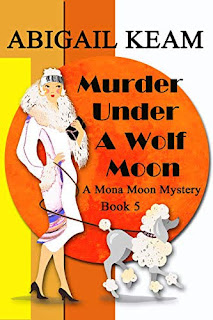
New Book Alert: Murder Under A Wolf Moon (A Mona Moon Mystery Book 5) by Abigail Keam; 1930's Historical Mystery Shines With Fun Feminist Lead
New Book Alert: Murder Under a Wolf Moon (A Mona Moon Mystery Book 5) by Abigail Keam; 1930's Historical Mystery Shines With Fun Feminist Lead
By Julie Sara Porter
Bookworm Reviews
Spoilers: When people ask me where are the novels with strong female leads, I always say "Look no further than murder mysteries especially historical mysteries." The genre is filled with a bevy of strong willed independent women, especially who live in times where they weren't encouraged to be such, facing dead bodies, odious killers, and sometimes a disapproving society to solve the murder, discover the truth, and obtain justice. Such examples include Peter Tremayne's Sister Fidelma, Marilyn Todd's Claudia Seferius, Margaret Frazier's Dame Frevysse, Alissa Cole's Elle Burns, Victoria Thompson's Sarah Brandt, Elizabeth Peters's Amelia Peabody, Tasha Alexander's Lady Emily Ashton, Rhys Bowen's Molly Murphy and Georgie Eugenie, Radha Vatsal's Kitty Weeks, Sujata Massey's Perveen Mistry, Kerry Greenwood's Phrynne Fisher, Rebecca Cantrell's Hannah Vogel, and Alison Montclair's Iris Sparks and Gwendolyn Bainbridge.
Another addition to this illustrious sisterhood is Abigail Keam's Mona Moon. This feisty protagonist is a former cartographer turned businesswoman in 1930's Kentucky. In previous volumes, she inherited her late uncle's fortune, estate, and business. Despite the Great Depression looming, she has become extraordinarily wealthy but that doesn't stop her from being surrounded by suspicion and murder. Many question her actions because she is a transplanted New Yorker and a woman at that. Most men don't think that she is capable of running her uncle's affairs. People also question her friendships and trusted working relationships with black people. In the deep South, that's a no no.
Mona has a strong business sense, an open mindedness, and independent spirit. All of which captures the interest of Lord Robert Farley, an Englishman and spy. The two are engaged and are deeply in love, but Mona is uncertain if she wants to make their relationship permanent.
All of these aspects to her personality make Mona something of an outsider. They also make her empathetic to the problems of other outsiders, especially in the latest volume Murder Under A Wolf Moon. One of whom is Elspeth Neferet Alden Hopper, wife of Cornelius "Connie" Vanderbilt Hopper, a formerly wealthy man fallen on hard times. In fact, Elspeth's money is what returns Connie to social prominence. Elspeth captures Mona's interest because of her fascination with the archaeological career of Elspeth's father, John. She also witnesses Elspeth sobbing in a private moment and little by little gets the details of her unhappy marriage with a verbally abusive controlling husband, racist remarks from others for being half-Egyptian, and death threats that are sent through the mail.
The death threats arouse Mona's curiosity and protective nature. She recruits African-American private investigator, Jellybean Martin to go undercover at the Hopper home and watch out for Elspeth. Jellybean no sooner arrives when Beulah, Elspeth's maid, turns up dead. Jellybean reports the news before disappearing. ("When there's a dead body, the new black man is always the first suspect," he says before Mona helps him evade the racist police and lynch mob that eagerly await him.) It doesn't take much sleuthing before the police trace Jellybean's sudden arrival to Mona's referral and she too ends up a suspect.
The mystery is pretty good as the clues lead to up to inevitable conclusions. Mona receives assistance from her allies such as Jellybean, Mona's maid, Violet, and her personal secretary, Dottie. Some aggravating suspects appear such as Connie's dilletante son, Wally and his horrible sister, Consuelo that further complicate things. Mona also discovers that one of her friends has a closer connection to the Hopper family as initially believed. If the resolution of the murder and the motives behind it are a bit obvious and predictable, at least the means are enough of a twist to throw the Reader off kilter.
What really makes this book as with any good mystery is the lead detective. Mona has a lot of spunk and energy such as when she tells off the local sheriff and boasts that she "just bullied a bully." She also has an extensive knowledge on anything from Egyptian artifacts to civil law which help assist her in her investigation. Many women can relate to her independent spirit and her concerns about choosing a family or career. As much as she loves Robert, she is uncertain whether marriage would cause her to lose her independence. She is a woman not only of her time but any time.
Like her last name, Mona Moon makes her series shine with brilliance. She is one of many great female historical mystery female protagonists that are worth reading about. It is a legacy of which she, and in turn her author, are proud members.
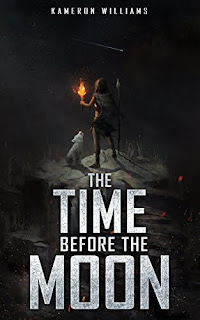
Weekly Reader: The Time Before The Moon by Kameron Williams; Prehistoric Fiction With Very Modern and Timeless Themes
By Julie Sara Porter
Bookworm Reviews
Spoilers: I admit even though I usually love to read historical fiction, I was never fond of reading Prehistoric Fiction. I tried to read Clan of the Cave Bear once and found it boring. I was just never interested in reading about Neanderthal and Cro Magnons. However, I found an exception to this genre in which I was never fond. The Time Before The Moon by Kameron Williams is a prehistoric fiction that has very modern and timeless themes of conformity, group think, rebellion, and freedom.
Omi is a young villager who has come of age. He does his part participating in hunts and fights with local villagers to gain prominence and respect. Everyone does their bit and has a role to play in this village from the Quarrymen to the Hunters, to the Healers. They are ruled by The Seer, an enigmatic elderly leader who receives visions from the gods to declare laws and regulations for the village. He is surrounded by beautiful young ladies, his Priestesses who interpret his laws. If anyone disobeys they are threatened with a cleansing.
Omi acts like an obedient villager mostly. He takes part in ceremonial rites and doesn't mind much when the Seer requests sacrifices. Omi's rebellions are mostly minor. He gets into fights with the Seer's bullying grandson. He als gets high off of the joyplant with his potential love interest, Agatha. The Seer forbids ingestion of the plant as well as pairings that he did not arrange himself.
Most of Omi's rebellions are slights and harmless until he witnesses some things that cause him to question the Seer and his motives. First, he sees the Seer practically rape one of his Priestesses and realizes what their real purpose is: to service the Seer's desires. Second, even though he is in love with Agatha, The Seer arranges her marriage to his grandson to give him more power. The final straw is when Omi sees what a cleansing entails: a ritual in which the guilty party is blinded and ostracized from the village. All of these events opens Omi's eyes to the Seer's cruel and despotic nature and he runs from the Seer's autocratic ways.
The book carries a prominent theme of rebellion against conformity. When Omi leaves the village behind, he leaves the aunt and uncle who raised him, the woman he loves, and his closest friends some who follow the Seer's commands to find him. The price of his rebellion is complete ostracism with only a Wolf pup, called originally Pup, as a companion. In this distant time when community meant survival and the elements and animal life are so uncertain that being outside could kill you. When only a community can protect you, that is a huge price and it is one that Omi is willing to bear. That is how he much he distrusts the Seer and knows that he has become a dictator.
Freedom becomes important to Omi and his leaving causes a ripple that grows larger within the community as other villagers are clued into the Seer's tyranny and begin to abandon the village. Just like in modern times, one person questioning the system creates a chain of others who begin to see the errors as well. It isn't before too long that Omi has his own community of outcasts.
There is also a theme of exhibiting true leadership. Omi must ensure that his village is not run like the old one nor that he becomes like the Seer. He wants his village to carry on the ideas of freedom and live beyond the rules set by the Seer. He strives to make his village a more democratic peaceful place and to show mercy and charity, even in one particular surprisingly heartwarming moment, to his enemies.
The Time Before The Moon may take place in prehistory, but we can see these themes echo throughout not only history but in modern times as well.
New Book Alert: VanWest: The Past (Book One of The VanWest Series) by Kenneth Thomas; Involved, But Action Packed and Suspenseful Start of a Science Fiction Series
New Book Alert: VanWest: The Past (Book One of the VanWest Series) by Kenneth Thomas; Involved, But Action Packed and Suspenseful Start Of A Science Fiction Series
By Julie Sara Porter
Bookworm Reviews
Spoilers: The first couple of chapters of Kenneth Thomas's VanWest The Past are a stark difference than the rest of the book. It begins like a video game put to words. VanWest, the protagonist, participates in a series of tournaments that seems to be somewhere between Halo and Harry Potter's Triwizard Tournament. There is action and propaganda as VanWest and his fellow Enforcers are held up as the ultimate athletes. They go through various games with such delightful names as "Pythea's Labyrinth" and "Fires of Vesta," to achieve victory. The Enforcers use their strength, teamwork, and intelligence to get through the various levels. The Reader expects to see a Health Bar or gold coins representing extra points over the Soldier's heads. These chapters are tense and nail-biting, but not particularly interesting or character driven.
Just when the Reader thinks this book is going to continue to be all action and little plot, the book takes a 360 degree turn and it becomes apparent that all that happened before was intended propaganda. We, the Readers, were meant to see VanWest as the government sees him: as the ultimate hero, warrior, the one who fills their ideals of conquest and control. We are meant to not think too much about VanWest and what he actually stands for.
The introduction hints that Earth is now controlled by oligarchs who reside in Antartica (because it is the only decent piece of land that hasn't been completely destroyed by radiation and pollution). While we have an inkling that the government is corrupt, VanWest doesn't. He is supposed to be their model Superman, until the games are over.
Since time travel is possible, VanWest is given an important assignment. A rebel group the Natural Earth Alliance, wants to break the stronghold that the Universal Council has over the 29th century. The NEA wants to restore Earth to the late 20th century status so they have gone back in time to prevent the Universal Council from it's eventual conquest.
The NEA's first stop is 1961 to interfere with the formation of CERN which is the first link in a long chain that resulted in the formation of space travel, the creation of the Universal Council, and the destruction of Earth. VanWest has to go back in time to infiltrate and stop the NEA.
It is on this mission that VanWest and the Reader realizes that he is more than a propaganda tool. He initially sees the NEA members as names on a list with psuedonyms like "Mad Newton", "The Seductress," "The Priestess," and others.
After his assignment, he befriends Dr. Von Helmann, the so-called "Mad Newton" and falls in love with Von Helmann's daughter, Iris.
When he gains acceptance by the Van Helmann family and ends up being on the same side of the NEA, he sees them as more than names on a list. He sees them as people fighting for a just cause. We also see VanWest in a better light. He is more than a thoughtless blunt instrument. He is a man struggling to be himself and fight for his individuality in a government that forbids it. His greatest moment is when he openly defies the Council in public and on screen, the opposite of who he was before.
The book starts out virtually plotless but then becomes more involved. Betrayals pile on top of each other, further confusing allegiances so that no one is sure who to trust. Suspense is built as characters try to outdo each other in cunning, subterfuge, and with a few fistfights and shootings.
VanWest The Past is the beginning of what hopefully will be a fascinating series of a rebel fighting against his own government and in the process finding himself.
The book starts out virtually plotless but then becomes more involved. Betrayals pile on top of each other, further confusing allegiances so that no one is sure who to trust. Suspense is built as characters try to outdo each other in cunning, subterfuge, and with a few fistfights and shootings.
VanWest The Past is the beginning of what hopefully will be a fascinating series of a rebel fighting against his own government and in the process finding himself.
Wednesday, July 8, 2020
Weekly Reader: I Love You To Pieces by Lori Flynn; Mystery and Mental Health Drama Does Not Mix Well
Weekly Reader: I Love You to Pieces by Lori Flynn; Mystery and Mental Health Drama Does Not Mix Well
By Julie Sara Porter
Bookworm Reviews
Spoilers: It's ironic that Lori Flynn's novel, I Love You to Pieces is about a protagonist with Dissociative Identity Disorder. Because the lead character isn't the only one who is confused about her identity. The tone of the book is uncertain whether it wants to be a murder mystery with an obvious twist or a dramatic story about a young woman's illness being used as a coping mechanism from an abused childhood. The two shifting tones show that the DID diagnosis is so paramount and obvious that it should have served as the main plot point instead of spending so much time trying to hide the secret from the Reader when they know what the secret is.
Olivia Harding is the wealthy Floridian daughter of a loving father and an abusive mother. Her father Alexander adores her but he dies in a plane crash when she is nine. Her mother, Elizabeth, is a cruel horrible woman. She kills Olivia's lovebirds and cat out of malicious spite then breaks her arm in a fit of rage. After her father's death, Olivia moves in with Catherine, her loving grandmother, and gets some semblance of peace. However, she suffers from PTSD and has blackouts of events that she can't remember.
There is a haunting moment when Olivia is trapped by Elizabeth inside a storage room. Catherine receives a phone call from a small but threatening voice saying that "Elizabitch" has locked Olivia up and could she get her out. This passage foreshadows how Olivia's illness served as a protector against her mother, but then became a hindrance for her living a full life.
Olivia grows into a loving young woman who decides to create fundraisers for her family's non-profit shelter for rescue dogs. Catherine is still a loving feisty presence in her life. She has two female friends, Jill and Melody, who also have personal and psychological problems. She befriends and becomes romantically involved with Ben, her family's young attorney. She seems to be adjusting to life.
Unfortunately, she still has her psychological disorders that she doesn't want anyone to know about. She still has blackouts and can't remember certain things like going through a procedure to get an IUD inserted inside her. Nor can she explain the expensive clothes or the marks on her body that suggests sexual acts in which Olivia does not remember taking part.
Then there are the chapters which are told from the point of view of Delia, a wild foul mouthed escort to wealthy visitors to Florida. She does her bit but constantly wants to "be free" and needs to get to her place by a certain time. It becomes evident that Delia and Olivia are the same person and that Olivia has DID with Delia serving as an alternate personality.
If the book had introduced us to Olivia's DID from the beginning, it would function well as a general fiction book about a woman struggling with an illness that she barely understands partly because of her blackouts and the confusion of the people around her. She could have seen a psychiatrist through Catherine and been diagnosed early on. We could have had many chapters of her trying to reconcile her personalities with herself and her life. The book could have chronicled her recovery and reconciling herself with her other personalities as well as confronting Elizabeth with what she caused.
But no what could be a realistic story of living with Dissociative Identity Disorder becomes a hoary murder mystery/psychological thriller, as theatrical as Shutter Island by using DID as a plot twist instead of an illness. There is the usual subplot of Delia committing violence and Olivia being accused of it. The confusion among friends and other characters when she is suddenly not herself when it is clear to the Reader why she is not herself. The mystery is not even that convincing since we know who did it.
Because the revelation of her illness occurs halfway through the book, Olivia's recovery is glossed over into the final couple of chapters. We are given a late third personality to learn about before that happens. We are given very little insight of what it is like to live with such an illness when it is used as merely a plot point instead of an actual illness that many people struggle with in real life.
I Love You to Pieces could be a better book, but unfortunately the pieces don't fit together to make a complete whole.
Tuesday, July 7, 2020
New Book Alert: Melia in Foreverland by Thomas H. Milhorat, M.D.; Beautiful Spiritual Allegory About The Existence of God and The Meaning of Life and Death
By Julie Sara Porter
Bookworm Reviews
PopSugar Reading Challenge: A book with a three word title
Spoilers: Since I began this blog, every year I find a book that becomes a spiritual fantasy journey that asks a lot of questions, has a lot to say, and fills this Reader with wonder at the journey and themes. Probably since my first experience with Alice's Adventures in Wonderland and Through the Looking Glass, I have always been looking for that kind of book. Quite often, I find it and it becomes one of my favorite books of that year.
In 2017, it was Mists of Avalon by Marion Zimmer Bradley. In 2018, it was a one-two punch of Cloud Atlas by David Mitchell and Clive Barker's Imajica. Last year, the book that captured my heart and soul the most was The Unseen Blossom by Zlaikha Y. Samadi and L'Mere Younossi.
This year, I am proud to say that I have found another book that can be added to that illustrious pantheon. That book is Melia in Foreverland, Thomas H. Milhorat's spiritual allegory which asks many of the ultimate philosophical questions such as "Is There a God?", "Why does evil exist?" and "What is humanity's purpose?" in a moving fantasy of a young woman questioning her own faith and reason for existence.
Melia is a typical 16-year-old farm girl from Orion, Kansas in the late 1940's. She believes in God, but has not really thought about it beyond a shallow sense of vague faith. She questions those beliefs when her cousin, Emma, announces in tears that her beloved dog, Fanny, was killed in a senseless accident. The loss causes Emma to consider what she calls "the second matter": She doubts the existence of God and wonders why the Supreme Being would allow death, randomness, and evil into the world.
Melia can't find answers within her own superficial faith. Her family as well suffered from the death of her baby brother. She hopes to find the answers to give Emma reassurance. She is well read, since her father, a physician, shared books of Virgil, Dante, Plato, Gallileo and many others with her. However, Melia is still left confused, downhearted, and unable to say anything beyond simple platitudes. She wants to find the right words to assuage Emma's grief and find answers to her own questions, but how?
One morning, Melia finds herself walking along a strange road that says "This Way to Land's End." She also finds a strange man with Mediterranean features and wearing artisan clothing. He is Publius Vergilius Mero, AKA Virgil, the Roman poet and philosopher who wrote works like "The Aenaed." Virgil is the first person that she encounters from the world, Foreverland (the place mortals call Heaven, Nirvana, The Elysian Fields, The Other World, and so on.). No, Melia's not dead, but she will go on a journey that will give her and Emma the answers that they need.
Like all travelers on their journey, Melia needs a guide. Virgil introduces Melia to her guide, Dante Alighieri de Firenze, author of The Divine Comedy. Since in his classic allegorical journey, Dante was guided through the Inferno, Purgatory, and Paradise by the virtuous Beatrice, Dante pays the favor forward by being the guide to a young woman, Melia.
Astride upon Pegasus, the noble flying horse from Greek mythology, Dante, Melia, and Melia's dachshund, Schnapsie travel to various stopping points in Foreverland that are in the stars. They encounter many well known scientists, astronomers, philosophers, artists, writers, and others who provide various answers to Melia's thought provoking questions.
The world building is beyond lovely. The travelers move beyond time and space to visit known stars in the Universe that are inhabited by various legendary characters. They include Polaris, the North Star, which serves as a grove and exterior classroom for Aristotle and Antares, where Charles Darwin shows Melia evolution in action.
Like many of the best of these types of books, the settings are almost dream-like and stretch the boundaries of imagination. After all in reality, no one could live on these stars. But that doesn't stop Milhorat from using his imagination to create whole societies of people, animals, and nature that lives and thrives on them (even if those lives are technically deceased).
The most striking of the settings is Sirius, a location of beautiful townhouses and canals and is the home of many artists, musicians, entertainers and such. Most of the Sirius residents even have to be incognito because where there are entertainers there are fans, even deceased ones.
One of the more delightful passages is when Melia has her portrait painted by Leonardo Da Vinci with Vivaldi playing in the background. Using his studies of the human body, imagination, and keen use of light, Da Vinci captures Melia as both a young and older woman in different stages of life. Melia also gets into a conversation with Rene Descartes and Euripides about human tragedy in the dramatics and in reality and how they affect and change us. This conversation shows the meaning that art and literature have in capturing moments that we can admire, stare in awe at their beauty and wonder, and study and learn from.
Another setting that has a personal link for Melia is Betelgeuse. Not because she's a Michael Keaton fan. Because Betelgeuse is her favorite star as it is used to guide farmers during harvest seasons the way sailors use Polaris during navigation. She realizes that she has a personal connection with the star, because her ancestors reside there. She meets family members like her great-great grandaunt, Pauline. Encountering her family helps Melia learn that she is one of a long link stretched through time. That link helps provide Melia with some much needed answers through her own life and future.
While the book takes a spiritual journey, it is not what one would call overly religious. It does not push one religion over another. In fact, Jesus Christ gets scant mention. There are characters, such as Virgil and Aristotle who were alive in pre-Abrhamaic times that have their own beliefs based on their background. Even people like Galileo Galilei and Charles Darwin, who made enemies of religious people with their scientific research, make appearances and speak about their work suggesting that science and spirit are simply two different languages that describe the workings of the universe. God, Himself,d not make a personal appearance and instead exists in all things, nature, animals, and in others who do goodness. Of course that the land is called Foreverland and not Heaven or Nirvana or a more conventional name with conventional means to reach it, suggests that they are simply different names, words, and followings for the same thing. That the Spirit can take any form it chooses and humans use their own terms for it.
One of the most thought provoking chapters is when Melia encounters "The Walking Dead" (not the show), the deceased that are headed in two directions. The dead include two children who were murdered in a violent crime who are headed down a path of white polished chalcedony. Their murderer then is led down a path of nuggeted coal down a dark tunnel. This encounter puts Melia in a conversation with Dante and Aristotle about the nature of good and evil. Aristotle measures evil in different levels from Involuntary Trespass (actions that are beyond one's control, for example a child or animal running in front of a car and getting hit when the driver doesn't see them) to Pure Evil (evil for evil's sake such as incest, sex crimes, hate crimes, genocide, premeditated murder, slavery, and genocide.) This description suggests that the terms good and evil have more forms and shades than many believe and are not always the same actions and meaning.
While this adventure is designed to help Emma, it also helps Melia. She is able to think beyond the simple platitudes and superficial faith that she spoke about but never understood earlier. Melia's trip to Foreverland opens her mind to greater thinking and deeper reasonings. She sees the universe as a fuller more elaborate place than she had before.
Melia in Foreverland is a book that begins with one question, but asks many and leaves the Reader to interpret their own answers. Most of all it surrounds these questions inside a beautiful dream world that will never be forgotten.
Monday, July 6, 2020
New Book Alert: The Job Seeker & The Coach: How to Rescue and Fast Track Your Job Search In No Time by Hamza Zaouali; Good Job Seeking Advice in Story Form
By Julie Sara Porter
Bookworm Reviews
Books for job seekers often get repetitive after awhile, especially if you spent a long time job searching. Many say the same things: have someone look over your resume. Make sure it has action verbs and is free of errors before you send it. Make sure you show up early for your interview and are dressed nicely. Don't forget to send a thank you note and then follow up on your interview.
Then there is the advice that is contradictory. Have an objective or a summary. No don't have one, the hiring manager looks over it. Make your resume one page, so it's easy to skim. No, make it two so you can emphasize your skills. Apply only to certain jobs because the job market is tough. No, the sky's the limit, apply anywhere! Have a cover letter to look professional. No, no one has time to read it.
It can be incredibly headache inducing and discouraging when you follow the advice and don't see results right away. You follow the books and steps almost religiously. So, where is your job? Are you following the wrong advice and reading the wrong books? It is a stressful time made worse by the constant barrage of well meaning, but at times difficult advice.
Sometimes, it helps if the job searching book is written in a fresh unique way. That's where Hamza Zaouali's The Job Seeker and The Coach comes in. Instead of just a typical how to book with bullet points, resume samples, and do's and don't's with faceless job seekers, Zaouali writes his book as a session between one job seeker and her coach. He gives his advice in story form. This approach gives the book more immediacy and makes the advice more personal than the sometimes objective condescending manner that other authors sometimes give to Readers.
The eponymous job seeker (the Everyseeker, if you will) is named Lisa, a woman who has been terminated from her sales position in Dubai. After a discouraging time with vague interviews and recruiters, she is recommended to try the Three Circles Coach (assumed to be Zaouali himself).
The first thing The Coach does is probably one of the hardest things that a job seeker hears, but is necessary. Lisa, like many job seekers, is concerned about exterior issues. The job market is slow. She is the wrong gender or the wrong skin color. She is in the wrong place. There aren't any open positions with her experience and skills and she can't move. All of the things that job seekers tell themselves, fearing the stacked deck against them and longing to just give up.
The Coach shoots each rationale down with "Other people have jobs, why not you?"
While The Coach acknowledges these outside problems, he refuses to let Lisa acquiesce to them and use them as excuses to give up. He encourages her to be more active and continue to search. While she can't necessarily do anything about those external forces, she can change herself and her internal forces. Lisa, and in turn Job Seekers reading about her, can improve their own confidence by strengthening their chances despite the negative outlook by turning into effective job seekers.
The Three Circles that the coach suggests are the three steps every job seeker goes through. Marketing (How the Job Seeker searches for work and writes their resume), Sales (How the Job Seeker presents themselves in interviews and advertises their skills and experience), and Service to Others (How the Job Seeker uses the job search to help Employers, and in turn themselves, achieve results).
Zaouali's writing treats the job search like a business in which the Seeker advertises themselves for the employer who is thought of as a client. Job Seekers can develop their brand and marketing skills to increase their opportunities and impact in a future business. When a Job Seeker shows an uncanny business savviness in advertising themselves, they already tell the employer that they have excellent marketing, sales, and customer service skills.
In her search, Lisa goes through the usual steps of resume sending, interviewing, following up, and waiting all with The Coach giving the various steps on what to do next. Zaouali updates most of the advice to a current 2020 audience that is aware of a changing job market and that they need to change with it to be more accessible. Some advice seems different from what many seekers are used to.
For example, instead of Job Seekers putting their full address, Zaouali advises Lisa and the Readers to put a target location where they would like to live and work, so they appear available to relocate if need be. (The point of the resume is to get the interview. Don't let unwillingness to travel be a barrier between the seeker and their dream job, Zaouali says.)
The Job Seeker is also encouraged to showcase skills with a table to emphasize their abilities and expertise. Important skills such as team management, administrative work, and computer languages can be placed into such a table to let the employer know exactly what they are looking for. It also illustrates the skills of which the Seeker writes.
Networking is also highlighted in this book, particularly for the hidden job market. Social Media and the Internet can be useful fountains of information to find available jobs before they are advertised to the general public. Groups, Facebook Friends, and LinkedIn Contacts are very helpful in locating openings.
While the book doesn't mention how the market in 2020 has changed for obvious pandemic-sized reasons, it does mention how networking can be used to assist for those issues. The book allows the Reader to embrace the possibility of remote employment as well as researching companies that are good fits for the potential employee. (Nowadays, it is particularly important to research how well the company values the health and safety of its employees and customers.)
The Coach also says that any type of work can be used as gainful experience. Writing blog articles or reviewing products for example show a strong writing ability as well as a desire to remain involved in one's chosen field despite unemployment or under employment.
Anything can be used for a good experience whether by staying active in the field or using soft skills (skills that are needed anywhere like customer service, technical proficiency etc.).
Through Lisa's experiences, the Reader vicariously witnesses her mistakes. Then they remember their own and seek to improve them. When Lisa bombs her first interview by giving vague examples and not asking follow up questions, the Reader cringes in embarrassment and sympathy. Then they remember how often they do that and vow like Lisa to do better next time.
When Lisa doesn't take an interview seriously because it's not a field in which she is interested, the Coach and the Reader remind her that every interview is a learning experience and that she, and we, should be our professional best every time.
Lisa makes the same errors and has the same victories that her Readers do. When she markets and sells herself and performs expertly at the interview, it is a victory for her and us when she receives the job.The Job Seeker sees themselves in her and uses her story as a template to their own. Her story reminds her and us that if she can do it, we can do it.
The job search is a long struggle. It's never fun and always stressful. Sometimes it feels like a thousand eyes are staring at you, watching how you dress, speak, and even what you put on the Internet. It feels like one long dog and pony show that can drag on for weeks, months, even years. But when we find that great job, market ourselves to the best of our ability, and exhibit a willingness to serve the employer's needs and contribute to their mission.
When we get that great career, then books like The Job Seeker and The Coach are guideposts that show us that the long search is worth it.
The first three chapters are available to be downloaded for free at http://bit.ly/39cPs9c
Subscribe to:
Posts (Atom)