Showing posts with label Post-Apocalyptic Science Fiction. Show all posts

Wednesday, October 8, 2025

Survive The Cursed by Ashton Abbott; The End is A Monster Mash-Up


Survive The Cursed by Ashton Abbott; The End is A Monster Mash-Up

By Julie Sara Porter 

Bookworm Reviews


Spoilers: There have been many Post-Apocalyptic works of fiction that predict the future will be overrun with supernatural monsters that will destroy humans and become the dominant species. Zombies are the most frequent survivors. Vampires have also had a shot at living forever in the Post-Apocalyptic wasteland. Occasionally, werecreatures and very rarely witches and other magic users come out to play in these future games. Well, Survive The Cursed seems like a novel length explanation that the author , Ashton Abbott couldn't decide which monsters to be the primary antagonists, so she decided on all of them.

In the future, humanity is reduced to living in enclaves on abandoned areas like Avery Winters does with her parents and other assorted humans in what used to be Eglin Air Force Base on the Florida panhandle. On a personal note, my father was in the Air Force and we lived in Eglin for a time from 1985-1987. I attended elementary school grades 2-4 there, so it is a fascinating and eerie experience reading about and imagining a place that I once lived becoming part of a Post-Apocalyptic universe. But I digress.

Anyway, Avery and the other humans hunt for monsters and kill them in brutal attacks. They study the movements, strengths, and weaknesses of witches, zombies, vampires, and werecreatures, find out where they are located, and kill or imprison them before they attack the humans. 

It's a difficult life and Avery has grown jaded and used to the constant fight against these monsters. She is old enough to remember life before the monsters, usually through minor things like eating cereal, wearing different clothes, or going to school or friend's houses. That's all gone as humanity has almost completely been wiped out except in small pockets and everyone has to fight and struggle to survive. 

Fighting for survival is such a new normal for Avery, that she is deprived of empathy, understanding, or compassion. She is so driven to kill the monsters that she ironically has lost her own humanity. She ignores the medical experiments that her father performs on the monsters that are captured. She vows that if one of her fellow soldiers is transformed into a monster, she would kill them without a second thought. She demonstrates this during an assignment when a couple of her closest friends are attacked by zombies and become zombies themselves. 

Avery only sees the monsters as cardboard adversaries until she is assigned guard duty over the imprisoned monsters. She is forced to look her enemies in the eye and converse with them. She particularly captures the interest of Whitney, a saucy temperamental Witch who wants to go down fighting and Mattias, an enigmatic and calm Vampire who wants to plead his case to his captors. 

The longer that Avery talks to and listens to her captives' perspective, doubt enters her mind. She questions the purpose of her fellow human’s, particularly her father's motives with his experiments. Avery admires Whitney's defiance and tenacity and is drawn to Mattias’s charismatic personality and almost human appearance. 

Before the monsters were a monolith, something easily destroyed and disposed of. Now she has to concede that they have names, identities, families, emotions, personalities, and possess admirable traits that she never considered. 

A twist occurs that causes Avery to challenge everything that she once believed. She is ostracized and her concept of friends and enemies have reversed. She sees humanity in those she thought of as monsters and monstrosity in those she thought of as human. It makes one wonder if there is any real distinction between human and supernatural characters and where the monsters begin and end. 


Monday, November 25, 2024

The Young by Nicholas John Powter; The Super Easy Mediterranean Diet Cookbook for Beginners by Wendeline Daalmeijer; The Super Easy Good Energy Diet Cookbook for Beginners by Astrid T. Rasmussen

The Young by Nicholas John Powter 

This is a short review. The full version can be found on LitPick.

This is a stirring novel of survival and the strong bond between Father and Son.

 In a post-Apocalyptic future, Fren Welp and his father, Sven are attacked in their village by beasts from a far away kingdom. After a fight in which Fren is threatened and a family friend has been kidnapped, father and son travel to the kingdom to face their sworn enemies. Unfortunately, the fight becomes personal when they learn that some of the kingdom’s subjects are closer to them than they originally thought.

There is a strong sense of survival. Sven and Fren exhibit a “kill or be killed” mentality. They live a hard, difficult life in which they have to fight against animals, other humans, even former friends and family members. 

The society in The Young is an agrarian society that has deteriorated into small enclaves or tribes, mostly just specific families and even they can be divided. We learn that  Fren’s mother and brother disappeared. Their reappearance is not a happy reunion as they no longer recognize the family members that they left behind.

Despite The Young carrying a theme of survival through adversity and decline in society, it is not completely dour. Heart and warmth lie within the relationship between Sven and Fren.Lacking anything else in life, all they have is each other.

The Young is dark with its theme of survival but light with the love between its deuteragonists. It shows even during the worst times, it's important to have someone to hold onto, care for, guide, help, and love.


The 2025 Super Easy Mediterranean Diet Cookbook for Beginners: 2000 Days of Quicky, Tasty, & Nutritious Recipes Book for Everyday Meals to Live a Healthier Life |No-Stress 30-Day Meal Plan by Wendeline Daalmeijer; 

The 2025 Super Easy Mediterranean Diet Cookbook is a detailed and informative book which explores the benefits and recipes for meals made along the Mediterranean Sea around Southern Europe, Northern Africa, and West Asia.

The introduction provides a history of Mediterranean style cooking, particularly the importance of olive oil and other flavoring to add taste and preservation. Benefits include reducing risk to chronic disease and improved cognitive function and longevity. The book describes the Mediterranean Diet as “a celebration of food” because it encourages family togetherness and holistic activities such as exercise and dancing as well as eating. 

The recipes vary in meals and styles including: Greek Egg and Potatoes for Breakfast, Domatorizo (Greek Tomato Rice) for Beans and Grains, Moroccan Chicken with Apricots, Almonds, and Olives for Poultry, Grilled Kafta for Beef, Pork, and Lamb, Oregano Tilapia Fingers for Fish and Seafood, Garlic-Lemon Hummus for Snacks and Appetizers, Caponata (Sicilian Eggplant) for Vegetables and Sides, Provençal Ratatouille with Herbed Breadcrumbs and Goat Cheese for Vegetarian Mains, Baklava and Honey for Desserts, Israeli Salad with Nuts and Seeds for Salads, Mediterranean-Pita Wraps for Pizza, Wraps, and Sandwiches, Fettuccine with Tomatoes and Pesto, Melitzanosalata (Greek Eggplant Dip) for Staples, Sauces, Dips and Dressings.

This book provides many suggestions to adapt an international cuisine that encourages healthy eating, diverse options, and emotional wellness.


The Super Easy Good Energy Diet Cookbook for Beginners: 150+ Tasty & Nutritious Recipes Inspired by Dr. Casey Means’ Teachings to Help You Lose Weight and Eat Healthier by Astrid T. Rasmussen

The Super Easy Good Energy Cookbook for Beginners is an excellent book that offers good recipes to increase energy levels and cultivate healthy eating habits.

The introduction covers Dr. Casey Means’ Dietary Philosophy which the book uses as its primary inspiration. Means endorsed a holistic approach to nutrition, focusing on the interconnectedness of metabolic health, inflammation, and overall well-being. Among the aspects that Means emphasized include low-glycemic eating, individual metabolic responses to foods, and using whole foods as a cornerstone. Among the tools are Continuous Glucose Monitoring by measuring glucose in real time and identifying sugar spikes.

The book gives a biography that lists Means’ experiences, research, philosophies, and guidelines that are implemented into the Good Energy Diet. The diet eliminates refined sugar, processed grains, and unhealthy fats and the inclusion of high-fiber foods, healthy fats, probiotic-rich foods, and micronutrient-dense foods. Lifestyle is also important in maintaining the Good Energy Diet by doing physical activity, getting enough sleep, and managing stress levels.

The introduction also provides case studies of people whose health improved by implementing the diet into their lives. Mary struggled with metabolic issues such as obesity, fatigue, and elevated blood sugar levels. Within a few months of committing to the diet, her energy improved, blood sugar levels stabilized, and she lost weight. There are similar studies like John who used the diet to improve his blood pressure and cholesterol levels and Lisa whose diet helped her manage her Depression and Anxiety.

Like any other cookbook, the recipes offer a good variety of excellent choices for healthy eating and living. They include: Banana Oat Muffins for Breakfast, Beef and Bell Pepper Stir Fry for Beef, Pork, and Lamb, Fresh Rosemary Chicken for Poultry, Curry-Glazed Salmon with Quinoa for Fish and Seafood, Cold Soup Smoothie for Snacks and Appetizers, Smashed Potatoes with Dried Herbs for Vegetables and Sides, Papaya Rice Bowls for Vegetarian Mains, Easy Summer Gazpacho for Stews and Soups, Greek Salads with Lemon-Orange Vinaigrette for Salads, Almond Butter Fudge with Chocolate Sauce for Desserts, and Whole-Wheat Pizza Dough for Staples, Sauces, Dips, and Dressings. 

The Good Energy Cookbook presents good eating to develop good energy.
 

Saturday, February 17, 2024

The World As It Should Be by Lee Ann Kostempski; Witches, Kelpies, Demons, and Ghosts Haunt Post Apocalyptic Fantasy Landscape


 The World As It Should Be by Lee Ann Kostempski; Witches, Kelpies, Demons, and Ghosts Haunt Post Apocalyptic Fantasy Landscape 

By Julie Sara Porter

Bookworm Reviews

Spoilers: Lee Ann Kostempski’s The World As It Should Be is a strange but effective mashup of Post-Apocalyptic Science Fiction and Dark Fantasy. It's one of those strange concoctions that takes the best of two or more genres and creates an awesome work of its own.

Charity Olmstead is wandering around a wasteland that used to be Salem, Massachusetts. The world ended in earthquakes and dragon-fire 48 hours prior with few survivors. Charity was kicked out of her studio apartment by her ex-boyfriend, Dean and his mother. She also comes from a witch family and has psychic abilities so ghosts have been bothering her, especially those that have recently died because of the attacks. Charity is in despair when she encounters a kelpie, a shape shifting horse creature originated in Irish and Scottish folklore. Since kelpies are known to consume flesh, a suicidal Charity offers herself to the creature. The Kelpie at first refuses but then strikes a bargain with her. His mate has been killed and he can't find his colt so if Charity helps him look for his child and the monster hunters who killed his mate, then he will eat her. As the two unlikely partners travel through the fallen world, powerful authority figures from Salem have their own theories about who or what caused the end of the world and they want to resurrect the trials that once made their town infamous.

The World As It Should Be is definitely among the darkest Fantasies that I have ever read. The post apocalyptic setting pulls out all the stops with its disturbing graphic imagery and the impact of what it means to those who suffer and try to survive through it. The fact that the protagonist is so suicidal that her main goal is to seek death also adds to the grimness. 

What is particularly disturbing about the setting is the immediacy and cause of this scenario. The end just happened only two days prior and it shows. Charity wanders around a world in a daze because she still remembers the stores and houses that were standing there a week ago. Still remembers friends that she kept in touch with a few days prior and still wouldn't have minded meeting for lunch on a typical day. Still remembers the world that was two days ago. It reminds the Reader of tragic events when the world seems to stop and we remember and long for the normal that happened before.

The cause of the end is terrifying and is even more so the longer one thinks about it. For spoiler’s sake, I won't reveal too much. But let's just say that a hurt soul and an errant wish made out of anger, no matter how righteous it is, caused much damage. It's frightening to imagine someone with that much power and was pushed into such a situation that compelled this thought.

Of course what makes the setting stand out is the presence of fantasy characters and magic users. It's also rather clever that the human characters treat their presence as a non-event. They act like talking to Kelpies and hiding from dragons is simply an everyday occurrence which it probably is. The implications are that they weren't created because of the apocalypse. They have always been there and this is a modern fantasy world that just got hit with a science fiction dystopian situation.


This relative ease between humans and fantasy creatures explains the casual acquaintanceship between Charity and the Kelpie. Humans like Charity are aware of the kelpie’s carnivorous situation so they stay away from them, the way most humans stay away from dangerous animals that could attack them. Charity however shows her death seeking tendencies by approaching him and setting herself up as a meal. The Kelpie is part of a species with animalistic instincts but human-like reason and intellect. They have an urge to feast but know when to do so and decide not to. The Kelpie weighs his options and eventually his growing loyalty towards Charity and his concern for her situation causes him to rethink their bargain. 


The presence of witches and witchcraft is brilliantly handled. Charity reacts like her magical and clairvoyant abilities are something that she has always had to the point that she's tired of them. She walks away from ghosts not out of fear but out of annoyance that they keep stalking her. She has a group of childhood friends called The Coven Kids-sounds like a great YA series-who, like her, are the children of prominent witches in this area of Massachusetts. While Charity grew apart from them upon adulthood, she now pleads with and seeks solace from them for magical assistance and to reclaim her spellcasting heritage. 

Of course where there are witches, there are witch hunters and in Salem that is a definite given. The humans of Salem react the way that humans do when they are faced with a deadly situation, look for a scapegoat, a minority to lay all the blame on. Being prominent Salemites, they revert to their past to find the current scapegoats and resurrect the witch trials that made their town so notorious in the annals of history. The misogyny and authoritarianism of the Salemites is laid bare in the present as they try Charity and the past as a frightening spirit seeks violent vengeance for past sins. It will take all of Charity's magic and intelligence and her friendship with the Kelpie to face her enemies and her own deep depression and suicidal tendencies.

The World As It Should Be is a dark, disturbing, but detailed and endlessly fascinating blend of Post-Apocalyptic Science Fiction and Dark Fantasy. It brings the best of both genres to make one whole wonderful book.


Sunday, March 13, 2022

Lit List Short Review Beyond The Sushi Chef The Ultimate Bible For Mastering Nigri Sushi From The Creators of Sushi University; Suspended Animation by Carly Rheilan; The Anti-Inflammatory Diet Cookbook For Beginners: 600 Anti-Inflammatory Recipes with 21-Day Meal Plan to Reduce Inflammation by Fernando K. Rankin; After The Apocalypse: The Kim and Kaya Chronicles by Scott W. Kimak

 Lit List Short Reviews


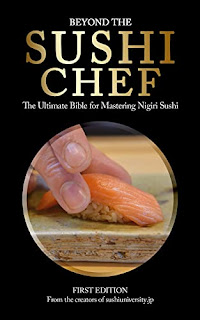
Beyond The Sushi Chef: The Ultimate Bible For Mastering Nigri Sushi From The Creators of Sushi University.jp


Everything you ever wanted to know about sushi can be found in the book Beyond The Sushi Chef: The Ultimate Bible For Mastering Nigri Sushi.

This book is perfect for those who love Japanese cooking or even for those who are curious about it, but never actually tried sushi before or have been to such a restaurant.


The book is filled with descriptions of various sushi, what they go best with, when the best season is for them, the history, and their overall price. A description of the Atlantic Salmon reveals it to be distributed mostly on the North Atlantic, but can be found in Norway, Chile, England, and Australia. Farmed salmon are chilled by locals and never frozen. They were the first fish farmed in seawater in Europe. They are characterized by their texture, fat content, and color. They are considered the most expensive type of farmed salmon. 


Even though it's not a cookbook, there are some interesting ways of preparing the salmon. A Tossaki hand roll is often considered the first piece of a sushi course. It goes well with sushi vinegar using red vinegar. Since it's the head, it moves a lot so should be prepared using the back of the knife.


For those who have never visited an authentic sushi restaurant and would like to visit one, the book provides tips on etiquette when visiting such an establishment. Among them are "Stay in your allotted seat at the counter. Long established restaurants may have their own rules such as the regular customers will need to sit in front of the sushi chef. In these types of places, if you want to enjoy conversation then you should sit at the table." This section reveals the universal truth that good manners are always essential.


Beyond The Sushi Chef gives the Reader exactly everything they need to know to turn a potentially fishy situation into a fine dining experience.


Suspended Animation by Carly Rheilan


The short story, Suspended Animation by Carly Rheilan, does one thing best. It captures a moment of suspense and terror and does it brilliantly.


An unnamed character is locked in a strange situation where they are imprisoned in some aerial suspension. They only have a Spider for company (who may be an actual spider or someone that they call Spider). Finding the inspiration from Spider the Narrator makes their move.


There is a tone of disorientation in this book as the Narrator doesn't know where they are or how long they have been there. Neither do we. We don't know this character's name, back story, or why they are in this predicament. I'm a big fan of getting important information like that. It helps us get to know this character and understand their predicament. But it also adds to the confusion. If we the Observers don't know what's going on, there is no way that the Protagonist does.


The tension mounts as the Narrator struggles to get out of this situation. The phrases like "Any minute it will be my turn. It's time. I can't go on taking this. Seriously." It's almost like Anxiety Poetry as the words go up and down like this Character does. It's a verbal description of what is going on with the Narrator both physically and mentally.


This story captures this moment of suspension wonderfully. Sometimes you want more but sometimes a moment is all you need.


The Complete Anti-Inflammatory Diet Cookbooks for Beginners: 600 Anti-Inflammatory Recipes with 21-Day Meal Plan to Reduce Inflammation by Fernando K. Rankin


Fernando K. Rankin's recipe book, The Complete Anti-Inflammatory Diet Cookbooks for Beginners, isn't just a recipe book for Readers to eat food to prevent chronic inflammation. It's also filled with suggestions on how to take a more holistic approach to living a healthier life that reduces inflammation. 


The introduction talks about how serious Chronic Inflammation is by describing symptoms such as insulin resistance, memory loss, joint pain, and weight gain. It also describes severe long term effects and health risks like cardiovascular disease, autoimmune disease, and digestive ailments. 

Besides a proper diet (which will be discussed soon), the book offers suggestions to improve one's lifestyle including exercise, sleep, and to avoid addictive habits.


As for the diet, Rankin offers suggestions like whole grains, healthy plant based facts, and my favorite line fruits and vegetables that "make your plate look like a rainbow." Some sensitivities include Gluten, nightshades like tomatoes and eggplants, and carbohydrates. 


The book also includes a helpful chart of a 21 Days Anti-Inflammatory Diet Meal Plan. The chart coincides with the recipes found within the book. Day 1 suggests Simple Steel-Cut Oats for Breakfast, Quinca Florentine for Lunch, Savory Beef Meatloaf for Dinner, and Cranberry Compote for a Snack. The chart concludes with meals for Day 21 including Sweet Potato-Ground Turkey Hash for Breakfast, Pressure Cooked Ratatouille for Lunch, Cherry Tomato and Basil Chicken Casserole for Dinner, and Pecan and Date Snack Bars for Snack. It would be nice for the chart to show the direct links to the recipes for the Kindle version but it provides a nice visual aid and schedule for those who have specific goals in mind when it comes to health.


The recipes are simple and healthy and can be used to remove ailments from the body. Food like Elegant White Fish Soup and Pork Chops with Cooked Apple Salsa show the different ways that the food can be prepared. The book shows that good health is an ongoing continuous process but can result in a happier outlook on face.


After The Apocalypse The Kim and Kaya Chronicles by Scott W. Kimak


After The Apocalypse The Kim and Kaya Chronicles by Scott W. Kimak is the moving story of a girl, her parents, and her dog at the end of the world.

In a post Apocalyptic world, 18 year old Kim lives in a militaristic underground society with her parents, Major and Captain Wessek and her German Shepherd, Kaya. When her parents question the health of their Colonel, they are thrown into the brig and tried for treason for their efforts. This suggests to Kim and her family that the Colonel definitely has something to hide.


Because of its brief length (64 pages), we aren't given much information about the world in which Kim lives. We don't know what triggered the apocalypse whether it was war or environmental related. There are some revelations towards the end that reveal that something more sinister and conspiratorial is going on. The Apocalypse takes a back seat and as someone who has read more than enough post Apocalyptic Dystopian Science Fiction last year, that's all the better.


What stands out are the relations between Kim, her parents, and Kaya. Kim's parents are strong people clearly in positions of power in their society. They train their daughter in a military fashion so she knows how to fight and defend herself. However, their love for her is apparent. When she talks to Nick, a boy who also lives underground, her parents have the typical worried parents reaction as though she were just a typical teenage girl with a crush on a boy at school. They also encourage her to think for herself. When they are arrested, she questions the authorities and stands up for them as they did for her. It's clear that the Wesseks raised their daughter right.


The other touching relationship is between Kim and Kaya. As we have seen in other Science Fiction works, dogs do not fare well in post Apocalyptic Dystopian settings (I Am Legend is a notable example). However, Kimak is determined to keep Kim and Kaya together which is a boon for animal lovers. The young woman and her dog are a great team as they protect each other from danger and Kim cares for the dog as though Kaya were a younger sibling. They share a bond that transcends human-animal and makes them partners and friends.


Though not long, After The Apocalypse shows that even at the end of the world love and compassion can still be found. 


Tuesday, May 11, 2021

Weekly Reader: Song of All Songs: Earthcycles Book 1 by Donna Dechen Birdwell; Science Fiction Novel Has Beautiful Setting, Great Characterization, But Slow Moving Plot


 Weekly Reader: Song of All Songs: Earthcycles Book 1 by Donna Dechen Birdwell; Science Fiction Novel Has Beautiful Setting, Great Characterization, But Slow Moving Plot

By Julie Sara Porter

Bookworm Reviews


Spoilers: Song of All Songs by Donna Dechen Birdwell is a Science Fiction novel that has much to offer. It's set in a post Apocalyptic world but isn't focused on the gloom and doom. Instead it has a beautiful setting with a reverence to nature. It has brilliant characterization with protagonists who go through great struggles on their journeys. However, the plot meanders and there are long stretches where not a lot happens leaving the results of a book that visually is impressive to picture but verbally needs work.


The setting of Song of All Songs is not a unique one in Science Fiction. Post Apocalyptic Earths reduced to agrarian societies are nothing new. Since Mary Shelley's The Last Man, and even before that mythology and religious texts like The Epic of Gilgamesh, Ragnarok, The Mahabharata, The Ramayana and The Book of Revelation, have described in graphic details about a world devastated by war and environmental destruction with only a handful of courageous survivors  (if the world is lucky enough to have survivors.).

 One of my first experiences with the genre was reading Stephen Vincent Benet's 1937 short story,"By The Waters  of Babylon" in high school. Coming from a religious background and fully aware of the only recently ended Cold War, I was traumatized to the point of having nightmares reading in the story about the journey of John, son of the High Priest, to the Palace of the Gods by the Oudi-san River. When John gets there, he learns that the Palace of the Gods is the remnants of a decimated New York City after it had been destroyed by war. (Interesting fact about the story, since it was published in 1937, it predates public knowledge of atomic weaponry. However, Benet accurately described a world destroyed by such an event. He specifically mentioned a weapon causing much of the devastation. Some believe that Benet was referring to mustard gas, which affected much of the soldiers and civilians during WWI.)


The problem with books and stories in this genre is that if the events are set too far in the future or the world is left to complete ruins, the Reader not only is aware of it but is constantly on the lookout for signs. Reading the book almost becomes a code as they look for context and clues to interpret what the author is really referring to. For example when a character says that something is a magical portal and the Reader realizes that the character is looking at a computer or they are reading what they call a religious text and the author is describing a shopping list.  After a while, the Reader gets confused about discovering the clues of what the characters are referring to rather than what they are actually doing in the book. They lose sight of the setting and characters to search for the details for their intended meanings.


Birdwell doesn't make her version of the world after the end any easier to interpret. She provides no context clues to imply what she is really referring to or what the characters are really seeing or experiencing. The protagonist, Meridia Einkorn, is on a mission to find various stones that sing. She can also see pictures and colors in the stones. What does that mean? Are they actually smart phones and she can access videos? (If they are, what are the odds that they would still work after centuries of not being used?) Are they instruments, or other devices, like music boxes, that make music? Is it possible that in the absence of technology and other barriers between humanity and nature, have humans evolved to the point that Nature has given them intuitive abilities? Can Meridia really hear stones sing?

We also learn that her love interest Damon photographs photons but is lately interested in what he dubs biophotons in which he can see light around living things. He is often looking for what he calls snails to help with the photos. Are snails film or batteries? When Damon says that he takes photographs is he using a camera or is he painting them and using the word photo because he doesn't know the other word and snails are paint? Like Meridia has he received intuitive abilities because of his connections to nature?

There is one moment that is obvious. Meridia, Damon, and their allies go to a place with many "mirrors" and see pictures of the history of their world including its end. While the mirrors are not specifically identified, more than likely, they are televisions or computers. It's the one moment of clarity in a book that is somewhat dense and unwieldy in its descriptions.


In this situation, the Reader is left with two options: 1) Continue looking for clues or 2) Take everything at face value. Either way is valid and it depends on what you are looking for when reading a Science Fiction novel. If you are looking for a more concrete interpretation for meaning, this book should be avoided. But if you want a Science Fiction novel that is more poetic and metaphorical and you want to get lost in the more spiritual connections that the characters have to nature then this book is definitely on your list.

The setting is striking and it explores the characters' interaction with their environment beautifully. Merdidia's connections to the stones are explored rather well and the idea of hearing sounds and seeing colors in them is evocative. In fact, this world's life cycle is arranged in stones like passages of time like "Amber'' or "Mica." Whatever the stones are meant to represent, they are clearly important to these people and the stones are representative of the community and if Meridia finds them, she restores the soul of the communities.


While the setting is left to interpretation, Birdwell clearly cares about her characters. Nowhere is this more evident than in how she writes Meridia. In one graphic chapter, Meridia is raped by a member of her community who is also related to her by blood. This encounter leaves her pregnant and emotionally scarred.


 Recently, I reviewed another book (to avoid spoilers I won't give the name), in which a woman unwillingly has a baby by questionable means.  For lack of a better word, she had been violated. However, the book does not go into how this experience should at least have left her emotionally wounded. There is no anger or sadness over what happened without her consent. She gets all googly eyes at the prospect of a baby and becomes instantly maternal. Her assailants are forgiven and we are led to believe that the end justifies the means. It is a wish fulfillment and a dangerous one at that, as though saying as long as it ends with a baby, then the parent's well being doesn't matter.


Birdwell handles this subplot much better. Meridia is left reasonably traumatized by the rape. Even though her assailant was close to her before, she doesn't feel the same way for him. She is troubled by the memory and it leaves her scarred through the rest of the book. In fact,her kinsman is exiled from the rest of the community because of his actions. While Meridia is given the suggestion to abort the pregnancy, she decides to carry it to term leaving the choice solely up to her. This book handles sexual assault in a strong way showing how it can leave the survivor pained, frightened, and broken. 


However, this book shows another side to abuse survivors. Meridia is a very active character and potential leader to her community. She leads friends and family through various locations and shows tremendous strength in retrieving the stones. She also becomes empathetic towards other's pain. She is at first wary but accepts Damon into her life when he proves to be a better person than her exiled kinsman. She also befriends a woman whose father had been exiled previously and understands the conflicts concerning her parents. She is able to persevere despite the trauma that had been inflicted upon her.


Plot is not a strong point with Song of All Songs. There are various plots such as the search for stones, an impending war between two villages, and the conflicting words of two prophets. The majority of the book features characters moving from one location to another. This is less a plot driven book than it is a means to introduce the Reader to this post Apocalyptic setting and the characters that inhabit it.