Showing posts with label Musicians. Show all posts

Sunday, March 8, 2026

Tracey's Calling by Rob Santana; The Mantis Continuum (The Mantis Gland Series Book 4) by Adam Andrews Johnson and Where The Wave Broke by Robert Rooks, The Travel Man


Tracey's Calling by Rob Santana, The Mantis Continuum (The Mantis Gland Series Book 4) by Adam Andrews Johnson and Where The Wave Broke by Robert Rooks, The Travel Man 

By Julie Sara Porter
Bookworm Reviews 

Tracey's Calling by Rob Santana 


Tracey's Calling by Rob Santana is a tense psychological suspense short novel about trauma and its chilling aftermath on two people, the victim and the perpetrator.

Tracey is left traumatized after being sexually assaulted by Phil, a married husband and father. She is angry and filled with vengeance but she doesn't want to just have him arrested or kill him. She has a more long-term goal. She manipulates her way into his home, befriends his wife, Patsy and daughter, Joy, and blackmails Phil into financially providing her escape from her abusive family.

This book is essentially a two-person story between Phil and Tracey, the abuser and his sexual victim, the blackmailer and her financial victim. They both have plenty of depth and layers in their one-on-one combat.

 Tracey is very methodical in planning and executing her revenge. She decides to become a haunting presence in Phil’s life instead of taking the easy way out and killing him. It's a way of disarming Phil and leaving him as vulnerable and uncertain as he was. She may have been physically underneath him then but she is figuratively on top of him now.

Phil is also an interesting albeit antagonistic character. His memories of that night are filled with the graphic violence that he inflicted and his weak attempts at justifying it. He is not understandable at all here.

However, there are points where the safety of his family is compromised and the Reader's thoughts shift to Patsy and Joy's welfare and how Phil will be affected by their losses. It allows Readers to understand and even be concerned about the husband and father without defending or condoning the violent actions that he did.

Also, Patsy and Joy’s subplots are handled well. Patsy sometimes acts as the comic relief by rehearsing weather girl monologues and being preoccupied with an upcoming job interview at a news TV station. However, she also shows awareness with Tracey’s presence and the circumstances of her arrival by going from empathy, to suspicion towards her, then distrust towards Phil.

Joy is an effective foil to Tracey. She was a sheltered girl thrown into violent catastrophic circumstances which Tracey knew about practically since birth. She acts like a spoiled brat at times, but is also a very realistic teenager with emotions, hormones, and irritation at everyone else around her. She follows Tracey into some dangerous circumstances without thinking of the consequences.

This is a cold calculated tale of revenge in which much is lost and there are very few victors.


The Mantis Continuum (The Mantis Gland Series Book 4) by Adam Andrews Johnson 

No matter how an ongoing book series, not every volume is going to be a winner. The first three books of Adam Andrews Johnson’s The Mantis Gland Series told a captivating series about a world where some people called Shifts have mutations because of a gland called the Mantis Gland. These people develop extraordinary abilities like flight, telekinesis, elemental control, super strength, impervious skin, or remote viewing.

 The Shifts are targeted by the Messiahs, a religious cult that has a great deal of power and influence. They perform ritualistic murder on the Shifts so they can swallow and absorb the glands. In each volume, the Shifts gather together in Teshon City where they form a resistance aided by a Demifae,a person who studies magic, called The Mystic and others who fight against the Messiah’s influence. The first three volumes tell a streamlined story and introduce new characters with the goal of bringing them together. They have a definite beginning, middle, and end. 

The fourth volume in The Mantis Gland Series, The Mantis Continuum is by far the weakest book in the series. It has some interesting passages of character development that push some forward into new relationships, abilities, positions, and self-awareness. However, there are too many characters and subplots to tell a comprehensible or compelling story. It’s a case of doing way too much at once.

Some of the new characters and subplots aren’t bad. After the murder of their mother, twins Thech and Jzuna flee to Teshon City with an entertainer named Bivon. A trio, Kosephaji, Relliduna, and Pelipi have to escape via boat after Relliduna becomes seriously injured. Meanwhile a group of former Messiahs whose bodies have completely altered into monstrosities by consuming too many Mantis Glands are heading straight for Teshon and they are hungry.

When the book slows down, it captures some pretty decent moments. Thech and Jzuna have a loving sibling relationship. The sweet but dim Thech is the more physical one while the bright eloquent Jzuna provides the brainpower. Jzuna is a maternal influence on her brother’s life while Thecha brings out her more empathetic side. 

Another winning relationship is that of Kosephjai and Relliduna. As their lives are in danger, they evolve from best friends to lovers. With the constant threats to their lives and feeling out of focus because of the suspicion towards Shifts, there are very few people that they and Pelipi can rely on. These stressful situations bring out their most vulnerable emotions, cause them to evaluate their feelings towards each other, and move their relationship forward. 

The problems occur when the action moves to Teshon City where the new characters meet the old ones. There are way too many characters to focus on and it’s hard to remember who is whom, what their significance is, which book they debuted in, or even their powers. 

If you notice in my previous paragraphs, I mentioned some of the character developments that I liked but not their powers, it's because I don't remember them. There wasn't anything that made their abilities stand out or differentiate from the older characters.

There are times when the chapters read like one giant roll call by showing brief scenes of characters in their current setting but don’t do anything important with them. It was almost like Johnson said, “See this character? Yeah they are still alive. Move along.” With that many introductions or reintroductions, it takes a long time for them to actually do anything.

Even an interesting plot point that was introduced in the previous book of Messiahs whose bodies have become distorted by their addictive consumption of the Mantis Gland, isn't as compelling as it was in the previous book. They leave a creepy disturbing presence, enter Teshon City with unending appetites, kill a few Shifts, and anticlimactically meet their end. They were much more intimidating as a cult.

Perhaps Johnson should have ended the series at Book Three or, as much as I like the new characters, just developed the original ones instead of inserting new ones. This book shows that there is a time to write and build on a new series but there is also a time that it should end. There is a fifth book, The Mantis Synchronicity. Here's hoping that it's better.


Where The Wave Broke by Robert Rooks, The Travel Man 


This review is also on Reedsy Discovery.

Where The Wave Broke by Robert Rooks is a short novel about a touring music group that is long on atmosphere but not on plot or thankfully music group cliches.

Two years after they break up, the band Borrowed Light has re-formed to go on a tour of several European cities. Drummer Giada, bassist Julian, and the guitarist Narrator endure long days going from one place to another, long nights of performing, playing at various clubs, and facing fans, owners, executives, on and on.

Let's explain what this book doesn't have. No love triangles though they had some romantic entanglements in the past. No drug addiction fights or onstage meltdowns. No slow climb to success followed by a rapid fall thanks to personnel disputes and the soulless music industry. No internal conflict between the member who is full of themselves and the others. Not much of the usual music tropes, which actually makes this a great short novel.

The biggest strength in the book is the atmosphere. The opening describes the trio’s travels as “The map matters only because sound behaves differently from where you stand. Amsterdam’s wood, Paris’ velvet, Brussels’ take, Montreux’s morning light, Valencia’s warm air, Stockholm’s clean edge, those spaces shaped our tempos more than adrenaline ever could.” 

The book is a constant stream of wearying movement, travel, faces running together, frustration with last minute changes and bookings, the exhilaration of a performing high, and the languid exhaustion afterwards. 

The clubs are filled with smoky air, tight compacted space, argumentative organizers and club owners, and customers either enraptured by the music or bored with life. Only faces and names change. The music draws the band, their listeners, and club employees for one moment before it ends and they trudge along to their separate lives.

The tone explains perfectly why this book doesn’t go into the usual tropes and cliches about music groups, It tells the truth about that kind of life. Julian, Giada, and The Narrator don’t fall into those typical hijinks because realistically they don’t have time to. They travel to different places, check into hotels, inspect the clubs, negotiate with owners and executives, put up their instruments, sound check, play a few sets, close, thank everybody, pack up, maybe have a few drinks or talk to customers, stagger off to bed, sleep, wake up the next day, check out, and then go on to the next city. 

Any conflicts that occur between them is not because of rock star ego. It’s because they are tired and snippy from constant travel and are getting on one another’s nerves, 

There is a simplicity within these characters and how they accept the music and travel lifestyle as just a part of their lives. They leave complicated love lives, conflicts with family members, and their own insecurities and self-esteem issues behind to play. Also their personalities mesh well with Giada’s no nonsense leadership and organization skills, Julian’s flash and outgoing personality, and The Narrator’s rationality and poetic observation. 

The band gives them a chance to use their musical talents and personality traits to good use by contributing to their chosen art, openly and honestly expressing their emotions, seeing different places and meeting different people, and despite the hardships having a good time, and making exciting memories to look back on.

In fact their tour isn’t really seen as a means to become discovered and sign on with a bigtime record company. It’s just something that they get to do once in a while as friends and musicians and then return to normal life afterwards. . 


Wednesday, February 25, 2026

The Girl From Melodia by Jonathan Toussaint; The Toxic Musician and The Troubled Muse


The Girl From Melodia by Jonathan Toussaint; The Toxic Musician and The Troubled Muse

By Julie Sara Porter 

Bookworm Reviews


This review is also on Reedsy Discovery.

Spoilers: The relationship between an artist and their muse is one that has been discussed, studied, analyzed, argued about both for and against, critiqued, defended, parodied, and recognized. The Artist, usually a man but these days any gender will do, is a tortured soul driven by emotion and is inspired by The Muse, often a woman but again that has changed, who is the source of their art and possibly the breadwinner while they go through their artistic funk. The model for the portrait. The name in the catchy rock song. The disguised protagonist or love interest of the novel. The unattainable unrequited love of the romance film. Despite being named for the Greek goddesses who were the sources of the arts themselves, oftentimes the modern Muse takes a secondary role in creation. 

Think Camille Claudel for Auguste Rodin, Gala for Salvador Dali, Aline Bernstein for Thomas Wolfe, Leila Waddell for Alesteir Crowley, Yoko Ono for John Lennon, Patti “Layla” Boyd for George Harrison and Eric Clapton, Charlotte Gainsborough for Lars Von Trier, and Uma Thurman for Quentin Tarantino. While many muses have had careers of their own, the stereotypical assumption towards them is that the Muses are just required to shut up, stand there, passively inspire, and not actively create their own art. Often if the Artist is a Narcissist, they will agree with that assumption. That is what is at play with Johnathan Toussaint’s novel, The Girl From Melodia.

 The Girl from Melodia is like a folk song. It's about two people who are looking for their authentic voices and are consumed by a passionate love, a love that ends badly. It speaks about truth, love, art, obsession, and unhappiness all of the things that make a perfect tragic love song, but a very crappy real life incompatible relationship.

Martyn Lockhart is the son of famed English folk singer/songwriter, John Lockhart. He is proud of his family legacy and his father’s reputation but he also wants to come out of his father’s shadow and be known as his own person. In 1992, Martyn encountered Francoise, a French woman at the Tulle Music Festival. To Martyn, the Artist, Francoise is the Muse. She inspires him and the two begin a very passionate romantic love affair that continues when returning to Martyn’s native England. Unfortunately just as quickly as the romance and creativity are set afire, they fizzle out when the reality of commitment, artistic temperament, financial and practical woes, and professional and personal insecurity set in.

It cannot be overstated how unhealthy this relationship is. Martyn is the archetypal Artiste. He is creative, passionate, reckless, iconoclastic, argumentative, self-absorbed, and Narcissistic. Everything is material for his music. His first encounter with Francoise leads him to his latest song and concept album, The Girl From Melodia

Melodia is a fictional country that Martyn created as a child that he could mentally retreat to in his imagination when things got tough for him. In many ways, Martyn never left that fantasy and still remains in Melodia even as his real world falls apart around him.

He possesses a romantic ideal of Francoise at first. She inspires him with her looks, carefree attitude, lively spirit, and vulnerability. Like him, she is also a passionate writer particularly in her journal which she describes the headlong sexual and romantic emotions of being near each other and the intellect of two creatives sharing ideas. She is also a musician and songwriter and just as she inspires him, Martyn inspires her.

These are the days of the early lyrics and first juvenilia poems which describe the youthful innocence of plunging feet first without thinking or caring about what comes next. Francoise fills that Melodia fantasy so well that Martyn tries to remain there. He wants to hold Francoise to the fantasy world and image that he created. But he considers Melodia and Francoise as his works and there is only room for one writer and artist in that fantasy.

That all changes when they move to England and their real natures, especially Martyn’s, emerges. Because just like Martyn has all of the positive aspects of an artist like creativity and passion, he also has many of the negative aspects. He is the kind of guy who diss tracks like “You’re So Vain,” “You Oughta Know,” or most of Taylor Swift’s catalog were written about.

Martyn is the type of guy who excites, fascinates, and blinds one with his talent, charm, looks, and artistic fire at first. Then his true nature is revealed to be controlling, absent, egocentric, jealous, volatile, immature, and self-indulgent. Suddenly, his love interest is left with a broken heart, a diminished soul, and a cynical outlook on love to fill at least hundreds of discographies.

One of the ways the narcissism is manifested is when Martyn suffers through writer’s block. As his creative well runs dry, Francoise is activated. She writes, rehearses, and performs. There are even hints of a record deal which makes Martyn furious. 

It is very reminiscent of stories like A Star is Born, which is a film that I thoroughly despise no matter the adaptation for reasons that I won’t go into, despite the original screenplay being written by Dorothy Parker, one of my favorite writers. Martyn feels that he is supposed to be the creative one, the musician, the poet and Francoise is the creation, the inspiration, the model. He can’t live with his partner’s success if it is at the expense of his own and doesn’t have the enlightened foresight to take pride in it. 

To Martyn, the muse is not supposed to drink from the artistic poetic well. She is supposed to guide him to the well and provide him with a cup. He was once interested in her talent when it was hers, but now that’s in direct competition of his own, he sees it as a threat. He behaves irresponsibly, withdraws from Francoise, belittles her, and in one of the worst chapters destroys her demo recordings that she worked hard on for months.

Her songs and journal entries show that she is just as driven, just as passionate, and cares about her music just as much as he does. She shapes Melodia into her own fantasy and Martyn doesn’t want to share it.  

To his credit, I suppose Martyn recognizes these attributes in himself. In the prologue, as he goes over his relationship with others, particularly Francoise, he realizes that he is to blame. He compares himself to a vampire sucking on Francoise’ energy and creativity to survive.

 The novel reveals that she wasn’t the only one who suffered from his egotism and his previous partnership with a former friend produced violent results because of Martyn’s conceit and insecurities. Looking back with regret and harshly obtained wisdom, he comments in the narration with lines like “This still haunts me,” and “I know that I shouldn’t have done this, but..” He knows that he screwed up so has some humility and remorse over it.

Some of those negative attributes can be attributed to his upbringing by his folksinger father, John. John also possessed a similar artistic temperament, penchant for violent behavior, and self-destructive coping mechanisms. Those mechanisms led to the decline of his relationship with Martyn’s mother. 

Martyn saw the creative sparks and emotional decline from the front row. But he only connects to his father through their music. He wanted to achieve the artistic, professional, critical acclaim, and audience adulation that his father had. Unfortunately, he got that and everything that came with it: the temper, the addiction, the mistreatment of partners and didn’t realize it until it was too late.

One could say that Martyn’s regret is more self-indulgence and that he hasn’t truly repented. That may be true. He might find another toxic relationship to inspire then anger him. But he may also see this as a wake up call and finally gain the maturity to improve not only his life but his music as well. 

Tuesday, October 5, 2021

New Book Alert: Alejandro's Lie by Bob Van Laerhove; An Honest and Absorbing Look At Imprisonment and PTSD In A Latin American Dictatorship


 New Book Alert: Alejandro's Lie by Bob Van Laerhove; An Honest and  Absorbing Look At Imprisonment and PTSD In A Latin American Dictatorship

By Julie Sara Porter

Bookworm Reviews

Spoilers: M.G. Claybrook's satirical children's book for adults The Voyages of Gethsarade has the biting but very true line, "All revolutions begin the same way by not being paid."

Gethsarade, Claybrook's furry squirrel musician-turned-folk-hero protagonist, would find a revolutionary partner in Alejandro Juron, who would share that same sentiment. Alejandro is the (human in this case, not squirrel) protagonist of Alejandro's Lie, Bob Van Laerhoven political thriller about revolution in a Latin American country. It shows what happens when the marching, protests, and rebellions stop and the rebel is left older and alone with their thoughts.

It is 1983 in Valtaigo, Terreno, a fictional Latin American country. Alejandro has just been released from a prison that is so notorious that it is nicknamed The Last Supper, because "supper was the only meal that they gave you on your execution." Alejandro was the guitarist in the folk band, Aconcagua, led by the fiery and charismatic Victor Perez. 

Alejandro struggles to adjust to life on the outside, refamiliarizing himself with places like the 'pigsty', Vaitago's slums and living under the military junta that has strict control over Terreno (with funding from the United States). He reunites with old friends, like Cristobal Vial, a former firebrand playing it safe as a university librarian and makes new friends, like Beatriz Candalti, a feminist who is separated and planning to divorce her abusive husband.

Alejandro's imprisonment has given him PTSD and a bitter cynical outlook. He also feels guilty about his own motives for becoming a musician/revolutionary and his actions that led to Vincent's arrest, imprisonment, and death.

Alejandro's Lie is an absorbing look at how a dictatorship affects the people and places surrounding it. Terreno is a fictional location but the impact of living under a tyranny can be clearly felt in the real world. This impact has been experienced by people from real Central and South American countries that have been ruined by dictators who have used various political leanings from Capitalism to Communism and backing from more powerful countries as means for control. 

One character describes the situation in Terreno as "The wealthy are dancing the rumba in luxurious nightclubs, the poor grab leftovers in the garbage dumps….Terreno is a country of contradictions a d teeming with underground parties and resistance groups…rebel groups are smuggling in arms from Cuba...the middle class hesitates; the oligarchy has resolutely sided with the junta." It's a world that has been teetering on an abyss for a long time and barely needs a slight push before it falls off.

Alejandro's Lie is the type of book in which the author avoids making the setting beautiful to focus on the ugliness surrounding the characters. There are some detailed descriptions of nature, particularly when Beatriz flies a plane to a mountain location. However, they are very few. Most of the action is in Valtaigo, possibly a deliberate move by Van Laerhoven. The focus is on the dictatorship, so much so that everything in the country is centered around it. Even nature's beauty is tainted by the corrupt people in charge who want to destroy it. Terreno is a country filled with loss, regret, guilt, and forced complacency.

Those feelings overwhelm Alejandro as soon as he leaves The Last Supper and exacerbates his already growing PTSD. He suffers through the nightmarish memories of his imprisonment including starvation, torture, and manipulation. After leaving prison however, his experiences get worse. 

Alejandro left a country that was devastated by a dictator. What he finds is a ruthless government still in power. The people's rights have only diminished further. Unfortunately, it has been so long that most people have lost the will to fight. There are some resistors, as Beatriz is involved in just such a cell. But they are the minority. Most people such as Beatriz's father and at times Cristobal have traded rebellion for conformity and are less concerned with ideologies and more worried about survival. It makes one wonder what the point of rebellion is if the people aren't going to follow through on it.

The complacency of the people and his own dark memories drive Alejandro. He questions everything, even his own motives for joining Ancocagaua. His motives for becoming a folk musician and betrayal of Victor eat away at his soul. He believes that his own motivations to join a political folk band had more to do with fame, money, and sleeping with willing women than it did with singing against the system. This puts a more cynical and world weary outlook at the  rebellious idealistic image that others saw in him. Alejandro also has to contend with his mental anguish over Victor's imprisonment and his blame in turning Victor in not for political reasons but because he had an affair with Victor's wife.

Alejandro recognizes the lie within himself and can't do anything to ease that remorse. He turns to music, drink, old friends, even a stint as a professional barrio wrestler to earn money. But these things only make the void in his life worse. The only emotion that he has left is rage for an old enemy. This rage causes him to engage in a pretty reckless plan to seek vengeance and retribution.

Alejandro's Lie is a book that explores the long term impact that a dictatorship and imprisonment has on the soul and how they lose everything: their home, families, lovers, strength, and fighting spirit. Truth be told, Alejandro's Lie is a somber but still intriguing and completely honest book.


Tuesday, August 10, 2021

New Book Alert: Lady Be Good: The Life and Times of Dorothy Hale by Pamela Hamilton; A Fascinating and Brilliant True Story About The Life and Mysterious Death of A Talented But Now Forgotten Entertainer


 New Book Alert: Lady Be Good: The Life and Times of Dorothy Hale by Pamela Hamilton; A Fascinating and Brilliant True Story About The Life and Mysterious Death of A Talented But Now Forgotten Entertainer

SoBy Julie Sara Porter

Bookworm Reviews


Spoilers: There are probably not many people today who are familiar with the name of Dorothy Hale (1905-1938). If they are admirers of the artwork of Frida Kahlo, they may recognize her as the subject of Kahlo's painting of The Suicide of Dorothy Hale, which depicts Hale as a beautiful woman falling from a building to her death. So in other words she is similar to Peg Entwhistle, the stage actress who tried to find success in Hollywood only to jump off the 13th letter of the Hollywood sign to her death. Like Entwhistle, if Hale is known at all, it is by the way that she left this world rather than her contribution within it. However, former NBC News Producer, Pamela Hamilton aims to change all of that with her fascinating and brilliant fictional biography Lady Be Good: The Life and Times of Dorothy Hale.


Hale, nee Dorothy Donovan, was from an affluent Catholic family with Victorian values. Hale rebelled against her upbringing by pursuing a career. She eventually became a dancer and Ziegfeld Follies girl and was part of the chorus of the Broadway production of Lady Be Good. Hale also starred with her friend, Rosamond Pinchot in Abide With Me, a play written by another friend, Clare Boothe Luce. She also had small roles in the movies, Cynara and Catherine the Great.

Hale was married twice. Her first marriage to millionaire stockbroker, Gaillard Thomas ended in divorce. Her second to muralist, fresco artist, and portrait painter, Garland Hale ended with his death in 1931. She had many love affairs including with Constantin Alajalov, a cover artist, Russell Davenport, a writer for Time Magazine, Isamu Noguchi, a sculptor, artist, and designer, and Harry Hopkins, a WPA administrator and Roosevelt's top advisor. She was also a regular member of New York's Cafe Society having friends such as Kahlo, Luce, Cole Porter, Frank Crowninshield, Buckminster Fuller,and many of the best and brightest of New York society in the 1920's and '30's.


Her death was the subject of much speculation at the time which Kahlo's painting was a part of it. What is known is that the day before her death, she hosted a party inviting many of her close friends as a farewell party explaining that she was soon going on a long trip. The next day she fell sixteen floors to her death from her Central Park South apartment.

 It was unknown whether she fell, jumped, or was pushed. However, second hand accounts at the time reported of "financial troubles" and "disappointments about her age and unhappy love affairs." The press portrayed Hale as a fragile vulnerable woman who took her own life. Despite Kahlo's genuine grief over the death of her friend, her painting did much to add to that unverified assumption that Hale committed suicide.


Hamilton's book does a lot to discredit the speculation of Hale's death and instead focuses on her life. Far from the fragile depressed lonely woman that the press portrayed her after death, Hale is written by Hamilton as a vibrant and bright woman full of life and excited to be surrounded by a talented and eccentric group of friends and lovers.


Lady Be Good is practically a whirlwind of color, art, entertainment, glamor, and excitement. One that Hale is glad to be a part of even though she does not achieve as much personal success as she would like. She is surrounded by bright and talented people and for the most part, she is happy to be with them. The famous names that come in and out of the book and appear throughout Hale's life include Clare Boothe Luce, Frida Kahlo, Fred Astaire, Frank Crowninshield, Dorothy Parker, Rosamond Pinchot, Alva Vanderbilt Belmont, Eugene O'Neill, Isamu Noguchi, George Gershwin, Cole Porter, Gertrude Stein, Samuel Goldwyn, King Vidor, John Barrymore, Buckminster Fuller, and many many others. It is a brilliant cast of the intelligentsia and literati of New York's Cafe Society and The Golden Age of Hollywood. 

Dorothy enjoys the life that she is in and the freedom that being a part of that group implies.This is the main reason why her first marriage doesn't work out.


 Hale is an exciteable and enthusiastic woman who enjoys going to clubs, theater performances, salons, and art shows. Gaillard is stiff and dull and is only interested in making money. Hale marred him mostly out of fear when a serious injury ended her dancing days. After the fear subsides, their differences becomes insurmountable and Hale heads for Reno to file for divorce.

Hale finds a happier life with Gardner Hale who because of his artistic talent and connections is also a welcome member of Hale's wide social circle. His death causes Hale to fall into a deep depression which takes her a long time to get through. Hamilton's writing suggests that her romances with Isamu Noguchi and Harry Hopkins were because of loneliness and to fill an empty void in her life.


After Gardner's death, Hale attempts a Hollywood career. She films a screen test that is widely received and she is even described as a "beautiful up and coming star." Unfortunately, she is unable to receive success with so many other stars in Hollywood's galaxy. 

She also stars in Abide With Me which even though critics brutally panned it, she had a good time performing in because of her friendship with Luce and Pinchot.


The point that Hamilton is trying to make with this fictional biography is to celebrate Hale's life rather than focus on her death. In fact when it does happen, the circumstances are rather aribtrary and are given short shrift. To Hamilton, Hale's life was more important and she was a woman who lived it to the fullest.


Tuesday, April 27, 2021

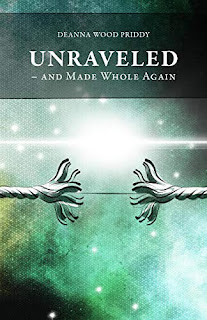
Weekly Reader: Unraveled and Made Whole Again by Deanna Wood Priddy: Short Slim But Intriguing Book About Religion and Faith


Weekly Reader: Unraveled and Made Whole Again by Deanna Wood Priddy: Short Slim But Intriguing Book About Religion and Faith

By Julie Sara Porter

Bookworm Reviews


Spoilers: Deanna Wood Priddy's memoirs Unraveled and Made Whole Again is a very short slim book. However, in its brief length it tells an interesting story about Priddy's religious background and how her faith led her through difficult times.


Priddy spends a lot of time describing her childhood as a preacher's daughter going from revival to revival. Her recall is fascinating as she remembers her father discovering religion after a nightmare and goes from being a drywall worker and painter to a minister.


Some of the highlights in Priddy's book are the various revivals. The Reader can practically hear the religious music, see the excited faces, and feel the sweat of hot days, pre-AC buildings and tents, and large crowds.

While some might disagree with the veracity of Priddy's claims such as seeing people get instantly healed, it's not hard to get swept up in her telling of the stories. When she writes about her father praying for a man to be healed from his cancer, it is an absorbing tale. Even more so, when he is not only declared cancer free but lives to a ripe old age. Regardless of personal belief, it is an interesting story and Priddy's writing grabs the Reader's interest.


Priddy also recalls the various travels that she and her family made. Her book is filled with various anecdotes like when they visited Mexico and received assistance from their interpreter and his wife. Also the times where they traveled by bus from one revival to another, but stopped to fish or listen to Kentucky bluegrass are nice chapters. The travels and various people that they meet such as a boisterous gospel songwriter and a belligerent man with a pipe wrench who wanted to shut down the revival are some of the more interesting passages in the book.


The book is good at showing the difference between religion, the rules and standards that are practiced within a building, sometimes the practice that one is raised in without question, and faith, the personal belief system that one has and chooses that helps get them through difficult troubled times. While Priddy was raised by a religious family and household, her personal beliefs are not discussed at first. Throughout her childhood, she is just moved by her parent's beliefs, never wondering for herself. She saw things that could be described as miraculous but never really considered how it affected her life, until she got married and began a musical career.

She began a career in gospel music sending audition tapes to recording studios and married Craig, a saxophone player. Even though she was rejected by The Grand Ole Opry, she and Craig joined a gospel band until the band leader got too affectionate with her. They settled in Missouri where Priddy worked as a teacher's aide.


Priddy's father's death in 1995 was also a time of problems within Priddy's first marriage. A time of infertility before she gave birth to two daughters, frequent moves and job changes, and differing ideologies particularly when one of the churches that they joined began to transmogrify into a cult took their toll on Priddy's marriage. It got to the point where she became angry at everything and everyone, even at God for putting her in this situation.

Priddy's spiritual anger is a perfectly natural reaction and is handled well. This is the voice of someone who spent her whole life following God, never questioning what she had been taught and wondering what it cost. What was in that faith for her if all it got her was an unhappy marriage and lots of unanswered questions.

Priddy's answers became known in personal signs like hearing a man sing "I'll Fly Away" and then she and her daughter seeing a feather. These spiritual signs allowed her to gain a more personal relationship with her God and not just parrot the way she was raised.


Her renewed faith strengthened as her first husband became verbally abusive and forced her to divorce him. She thanks her girls and her God for the strength to get through the divorce, unemployment, poverty, and a prolonged custody battle. She managed to get through those difficulties and her daughters remained with her, developing talents in art and music. She also began a relationship with Kirk Priddy, a former boyfriend and drummer with his family gospel band. This relationship evolved into a romance and happy second marriage as they formed the band, Unbroken. 

Besides her renewed faith, what also helped Priddy was seeking counseling. This was in contrast to her upbringing which insisted that God could fix anything so psychiatry and counseling were unnecessary. Priddy broke from that upbringing when she realized that "God has counselors too." She found one that encouraged her and helped her relieve much of the anxiety and depression that filled her throughout her life.


 Deanna Wood Priddy's book Unraveled and Made Whole Again is brief but tells a marvelous story about how one can find their own faith and strength to move on in even the toughest situations.