Showing posts with label Westerns. Show all posts

Friday, July 17, 2026

The Price of Loyalty: Serving Adela of Blois by Malve Von Hassell; An Era in Anddemar by Maureen B. Roberts; The Orphans of Absolution The Hollow Dark Chronicles by Remi A. Rodriguez Brignoni


The Price of Safety: Serving Adela of Blois by Malve Von Hassell 

This review is a summary. The entire review is on LitPick 

 The Price of Loyalty: Serving Adela of Blois is a sublime look at the early Medieval Era during the time of the Norman Conquest and the First Crusades. It is rich in character particularly in its two protagonists Princess Adela of Normandy and Countess of Blois and Cerdic of Wessex, a knight sworn to serve her.

The book sees her through her brothers’ rebellion, the Crusades, her marriage to Count Stephen-Henry of Blois, motherhood, and her family's legacy. It is also told from the perspective of Cedric of Wessex, a knight and childhood friend of Adela’s but has complicated feelings for her despite their marriages to other people.

The two become friends by sharing outsider status. Cerdic is removed from his home in Wessex and Adela subverts her family's expectations. Adela and Cerdic develop a bond of friendship that lasts through constant changes particularly when Adela's brother rebels against her father and Cerdic is trained to fight him.

Adulthood transforms their friendship into a platonic romance. Their relationship never becomes physical but it's clear that they are among the most important people in one another's lives. Even though they marry two decent characters the kind Stephen-Henry and the strong willed Gisella, they still retain their closeness.

The book goes out of its way to not only make Adela and Cerdic decent characters, but also their spouses as well. Because Von Hassell portrays Adela, Cerdic, and their spouses in decent lights, the marriages and Adela and Cerdic’s bond does not resort to love triangle tropes. Adela and Cerdic stay faithful to their spouses and don't give into their passions. 

In the struggle between the political and the personal, Adela and Cerdic choose the political. That doesn't mean that they don't love each other. It just means that their bond includes their spouses, children, homes, lands, positions, values, and self-respect.

An Era in Anddemar by Maureen B. Roberts 

This is a summary. The full review is on Reader Views 

Maureen B. Roberts’ An Era in Andemarr is the best kind of science fiction novel. The extensive world building, rich characters, and involved plot provide a dream-like almost immersive experience inside a new literary universe. 

The Greying is entering the Andemarr Galaxy. This strange combination of natural disaster and viral pandemic leaves nothing but dull gray indifference, suffering, and despair from anyone that comes in contact with it and will turn a once vibrant galaxy into a hollow empty shell and quite possibly spread to other galaxies. It's up to the dark knight Sir Jaide, the shapemage Jessiah, and a group of scientists that find themselves in this strange galaxy far far away from their home, to combat and fight against it. 

An Era in Andemarr is a feast for the eyes to read and the brain to create mental pictures. The Andemarr Galaxy itself is a masterclass in Science Fiction world building. The setting combines space opera with fairy land. The descriptions of various planets with different sky colors,the presence of several moons in the sky, glimmering lakes, plants present only in their worlds, and figures like sprites, melusines, and hippogriffs zipping in and out of the landscapes capture the imagination.

The Greying is set up not as a physical antagonist or a villain but as something that is both natural and psychological. It is similar to The Nothing in The Neverending Story, an abstract concept that destroys the universe because of its mere presence and stands as a metaphor for the issues that exist in fictional and real life.

Many of the characters are able to counter the Greying by their individuality, emotional connections, determination, and love for the world around them. Sir Jaide is extremely protective of his loved ones, particularly his lover Vidar Quain (Queen of Vidar) Starwing. They are the very definition of soulmates who love and respect each other. Starwing navigates the wide monarchical and political landscape, while Jaide goes on missions and operates one on one with those who are personally affected by The Greying.

Jessiah is a more scholarly academic contrast to Sir Jaide’s physically active approach. He is able to reveal an inner strength and endurance as he faces this intergalactic crisis and his growing powers that are augmented in this strange new environment.

An Era in Andemarr is the type of science fiction novel that invites the reader inside and makes them feel like they want to spend longer than an era there.


Orphans of Absolution (The Hollow Dark Chronicles) by Remi A. Rodriguez Brignoni 

Orphans of Absolution by Remi A. Rodriguez Brignoni deftly combines Westerns and Paranormal Horror to create a chilling graphic novel of the creatures that can be found in the Old West. 

Twins Francis and Randall O’Dowell are the sole survivors when Father Mercer, a violent minister, murdered their entire family. Now they wander the Southwest, particularly the Arizona Territory hunting demons and other supernatural creatures for a bounty. However, they are on the lookout for their real target, Father Mercer.


The book is a veritable tour into Southwestern myths, legends, and ghost stories. The twins encounter a town in which children have been captured by La Llorona, the notorious ghost that lures children to drowning deaths. The results of a town filled with missing children in a time where early death was all too frequent is heart wrenching and motivates Francis and Randall on their search. 


They also encounter shapeshifters that sometimes fool the twins by looking or sounding like people that they knew. There are various moments when the twins are out in the isolated desert where suddenly they might hear their deceased mother’s voice or catch the form of a former lover out of the corner of their eye. It is terrifying to imagine a creature that not only knows their entire history but is willing to use it as a weapon against them.


Even when characters are potentially benevolent, there is a dark sinister aura that hints that they might not be trustworthy. A mysterious man known only as Crow appears and disappears to give them solid hints and advice about their missions but also maliciously puts them in dangerous situations.


What also makes this book more ominous is the setting. This is set primarily in the desert regions where the landscape is the same for miles. Where the nearest help could be in the next town or county for all anyone knows. Where the mind often plays tricks on the unwary who are lulled into a false sense of sameness and security.Where a mysterious moving shadow could be an animal, a violent person, or something else entirely. Brignoni takes full advantage of the haunted Old West.


The creatures and settings aren’t the only things that are haunted. Randall and Francis are too. They only live for the hunt and have foregone any hopes of romance, family, or settling down while there are dark supernatural spirits out there. They both have histories of relationships that ended prematurely, something that their antagonists take full advantage of. They are also haunted by their family’s graphic death and wake up with memories of blood, bodies, and the minister's sinister presence.


Because of their status as nomadic orphans, all Randall and Francis have in the world are each other. If anything challenges that union, whether it's human or supernatural, that challenge is outright rejected. They have no lives beyond the hunt and each other. It’s an unhealthy codependent relationship that is at times possessive and controlling (though the jury is out over who is controlling whom). But Randall and Francis have a shared understanding, language, and destiny that only they can understand. They have seen death as children and now have to face it every day as adults.


Orphans of Absolution is a graphic chilling Horror Western that combines the barren landscape and the lone gunslingers of one genre with the nightmares and twists of another. This combination presents strange but effective absolute results.

Saturday, August 9, 2025

Cerberus: The Sheriff, The Gimp, and Queen of The Underworld (Founders Universe) by Chad Miller; Go West Ancient Olympians

Cerberus: The Sheriff, The Gimp, and Queen of The Underworld (Founders Universe) by Chad Miller; Go West Ancient Olympians


By Julie Sara Porter 

Bookworm Reviews 

Spoilers: 

First, I apologize for the derogatory term to describe a person with leg injuries. It is in the title and will only be used in that context. 

What can be more interesting than a retelling of Greek Mythology? How about a retelling of Greek Mythology complete with cowboy hats, six shooters, showdowns, saloons, and lots of gunfights?

That's what you get when you read Cerberus: The Sheriff, The Gimp, and The Queen of The Underworld by Chad Miller. It retells the story of the Ancient Greek pantheon as a Western. It's a unique interpretation that borrows heavily from its original source and is able to turn it around in new and interesting ways.

Ari is a gunslinger who has been disabled and disfigured since birth. He was abandoned as an infant and was raised in isolation by Zeke, a mysterious benefactor. As an adult, Ari has a large killing record and an unquenchable thirst for violence and vengeance against a world that despised and abandoned him since birth. He receives messages from Zeke informing him of the various enemies that he wants Ari to kill. Along the way, he faces opposition from Sheriff Posey and Deputy Leena, the law in the land. Auntie Phyllis controls the brothels, thieves, outlaws, and scallywags in town and has her own vengeance to gain on this mysterious gunslinger/assassin. As Ari’s kill count grows higher, his various enemies are forced to put their heads together to fight their common foe. But once united they may find their common foe is not who they thought.

Cerberus has a lot of fun with the “Olympian Gods and Goddesses Go West” premise. The characters are recognizable not only by their role in a traditional Western but also as members of the Greek Olympian pantheon. For example Herman the gregarious telegraph operator who loves gossip is easily recognizable in his ancient form as Hermes the swift-footed Trickster and messenger god. Who is that beautiful buxom lady emerging from her shell to flirt and spend time with the fellas for a brief time and for money? That’s no lady, that's Annie, the classic hooker with a heart of gold counterpart of Aphrodite, Goddess of Love and Beauty. Those twins that are consummate warriors, handy with bows and arrows and his dark solitary nature contrasts with her sunny more humanistic personality? They can’t be anyone else but Artemis and Appolonia, outlaws and gender swapped counterparts of Artemis, Goddess of the Moon and Hunt and Apollo God of the Sun and various other attributes including Music, Poetry, and Healing. If you are ill or injured there is no one better to go to than Applius, town doctor since he is the current incarnation of Ascelipus, the God of Healing. 

Because of this connection to Greek mythology, it’s easy to see where the various plot points are going. When Aunt Phyllis, Queen of the Underworld, has her eyes on Phillip, the handsome young son of Demetrius, a prosperous farmer whose crops feed the town, it's not hard to recognize the parallels between them and Hades, Persephone, and Demeter respectively. It’s also a given that Phillip will be pulled into Phyllis’ service, an irate Demetrius will threaten to burn his crops to the ground if he doesn’t get his son back, and the three will work together on an arrangement where Phillip will work for his father’s farm for part of the year then serve Phyllis’ needs for the other half. 

Just because they are based on mythological characters doesn’t mean that they are bound to the original stories. Sometimes they purposely counter them to distance themselves from what had gone on before. One of the most interesting aspects like that is the working relationship between Sheriff Posey and Deputy Leena, this book’s answer to Poseidon, God of the Seas and Athena, Goddess of Wisdom, War and Handicraft. In mythology the two might be uncle and niece, but they are also frequent rivals vying for patronage to Athens or taking opposite sides during the Trojan War. But in Cerberus, the duo are allies and have a surrogate father daughter relationship. Sure Posey spends a lot of time on his boat in the lake and would rather be fishing. Okay Leena has a tendency to put people, including her boss, off with her know-it-all attitude and high standards. Posey’s laid back paternal demeanor counters with Athena’s more high handed approach to law enforcement making them a great team that compliments one another’s strengths and weaknesses.

So where does Ari fit into all this? Well, he is a composite character. His background of being abandoned at birth, disfigured, and isolated from the rest of the society puts him as a counterpart to Hephaestus, God of Fire, Metalwork, and Craftsmanship, and Blacksmith to the Gods. However instead of living in a secluded hut crafting firearms for the townspeople like his forebear, Ari serves the purpose of another character: Ares, God of War. He is the blade of vengeance that strikes at anyone who is his target. Like the savage brutal aspects of war, Ari doesn’t care who his victim is. He will kill anyone regardless of who they are or what they have done. They are just names, targets to be destroyed at the orders of Zeke (whose remoteness, long term schemes, ulterior motives, and penchant for womanizing echo his mythological doppelganger Zeus).

It’s never stated how or why these characters line up with Greek mythology whether they are descendents who are destined to follow their predecessors, reincarnated spirits, or it's just a coincidence that their paths line up with those who have gone on before. Barring any in-universe explanation the reasonable answer is Miller likes Greek Mythology and westerns and couldn’t decide which to write about so he decided to split the difference. 

One thing is for sure is that unlike their mythological sources, these characters are all too human. That means there are very few supernatural occurrences that can’t be explained away. Zeke’s messages to Ari seem to come out of thin air or are divinely sent but could just as easily be formed by a guy who has many spies, is great at eavesdropping and obtaining information without getting caught, and has an almost inhuman and potentially sociopathic psychological understanding of human nature at its worst. 

That also means that unlike the residents of Mount Olympus and beyond these characters are all too mortal and can die and die they do. The passages describing Ari’s murders are particularly graphic and individualized. They are gruesome and particularly over the top so that the Reader could think that no matter what they did, they certainly didn’t deserve to be a checkmark on someone’s kill list for arbitrary reasons. 

Perhaps the mortality of the characters and the differences and similarities to mythology is the point. Fate and destiny are common themes in mythology and that’s what is being explored in Cerberus. Zeke,as Zeus, positions the characters, particularly Ari, where he wants them and observes them mostly from afar. He uses and toys with them for his own pleasure, amusement, and self-righteous need to settle scores. He treats the other characters like they don’t have any agency of their own and are incapable of living their own lives and making their own decisions. They are programmed to live according to pre-chosen stories and narratives. The moment comes when they realize that they are being played, break their programming, and change the narrative into something else, becoming somebody else. 


Saturday, June 12, 2021

Weekly Reader: In A Town Called Paradox by Miriam Murcutt and Richard Starks; Feel Good Romance and Family Drama Reads Like A Hollywood Film


Weekly Reader: In A Town Called Paradox by Miriam Murcutt and Richard Starks; Feel Good Romance and Family Drama Reads Like A Hollywood Film

By Julie Sara Porter

Bookworm Reviews


Spoilers: Miriam Murcutt and Richard Starks's novel In A Town Called Paradox seems like a Hollywood film. That might be intentional since we are told that the town of Paradox, Utah is the location for shooting several films.  The townspeople of Paradox get a taste of Hollywood glamor as people like Rock Hudson and Marilyn Monroe work and congregate in this town during filming. It is an interesting experience but a short lived one as most of the time, the residents of Paradox go about their daily lives. 


One of those residents is Corin Dunbar. Her first taste of the magic of filmmaking came when Marilyn Monroe shared her favorite lipstick with her. For Corin, this connection helped give her a bit of glamor and escapism from her troubled past. Her mother died and her father abandoned her so she moved from her New York home to live with her Aunt Jessie in this strange Utah town. It takes some time, but Corin begins to adjust to living in this town. She enjoys riding horses,running the ranch, and hanging out with her friend, Dorothy who gains a loose reputation as she grows. Corin grows to love Paradox and its residents including her tough and tender hearted Aunt Jessie, Carter Williams, the showboat mayor and his star struck wife who was responsible for bringing the film industry to Paradox, and Cal Parker, the latest in a long line of law enforcement officers in his family.


There is a nice mixture of the fantasy provided by Hollywood and the reality of living in a town like Paradox. Many of the townspeople are thrilled to be extras and walk-ons in various film projects. Some like Dorothy are star struck and want to eventually break out into movies. Some like Corin just hold it in stride while going about their daily business. Some people are drawn to Paradox because of the allure and fantasy like Noah "Ark" Stevenson, a British astronomy student and movie fan who moves to Paradox where his favorite Western films are made. He moves to Paradox partly because of the setting but also the view so he can go stargazing. Eventually, he and Corin fall in love.


Ark and Corin's romance is even played like something in a dramatic film with romantic comedy elements. Ark is more philosophical and esoteric. Corin is earthier and more of a realist. They are an attraction of opposites that are drawn to each other despite a local who is also in love with Corin but doesn't have a chance. Corin and Ark's romance is played out under the desert landscape and panoramic view of the stars.


Sometimes the Hollywood elements of the book veer towards cheese. A prison escapee arrives to make things complicated for the characters. A family secret appears at the end almost too late to make any real impact on the plot so the book could have done without it. There are also the typical tear jerking moments when one of the pair is at the point of death as though to remind us that some of the most memorable love stories are often the saddest.


In A Town Called Paradox is the type of book that puts illusion and reality side by side and shows that both can tell an interesting tale.


Wednesday, December 23, 2020

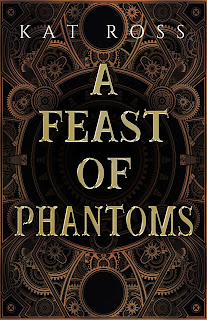
New Book Alert: A Feast of Phantoms: Lingua Magika #1 by Kat Ross; Magical, Terrifying, and Mesmerizing New Steampunk Dark Fantasy


New Book Alert: A Feast of Phantoms: Lingua Magika #1 by Kat Ross; Magical, Terrifying, and Mesmerizing New Steampunk Dark Fantasy

By Julie Sara Porter

Bookworm Reviews 


Spoilers: It's kind of weird to review not one, but two dark fantasy/horror novels for the Holiday season. But when one stops to think about it, it's not that weird at all. Of course there is the simple scheduling that I just happened to be reviewing these books this time of year. But the connection between horror, fantasy, and the holidays is actually deeper than most people are aware.  

When the harvest year died down and winter appeared, many of the ancient Pagan cultures like the Viking and Celts would tell stories of their deceased ancestors as a means to keep their spirits alive and to reassure that they have moved onto better places where they will be remembered. Even when Christianity dominated the European landscape, the idea of telling ghost stories during the Yuletide was not an unheard of concept. Some of the most famous works of European literature like Hamlet and, naturally, A Christmas Carol hearken back to that tradition.

That tradition continues to modern day. The song "The Most Wonderful Time of The Year" refers to "scary ghost stories." Many of our most popular Christmas books and movies like Christmas Carol, It's a Wonderful Life, The Polar Express, and my personal favorite, The Life and Adventures of Santa Claus, deal with that brush of the magical, supernatural, and sometimes fearful spirits and visions that appear just when days get shorter and night is the longest. And who can forget that lovable and cuddly creature from German folklore, Krampus, whose idea of a good time is to punish naughty children by putting them in a sack and beating the ever loving daylights out of them?


In keeping with that tradition of giving the Holidays a supernatural, spiritual, and spooky bent I give my Readers, A Feast of Phantoms by Kat Ross, the first of her Lingua Magika series which combines a Steampunk Western with Dark Fantasy and creates a terrifying out of mesmerizing world that is brilliant to experience and immerse oneself into.

Ross' attention to detail and world building is beyond astounding. It's one of those literary worlds that one falls into and lives in, not just reads. The setting is filled with the Western tropes with out of the way dusty towns, like Lucky Boy, the one horse town that is the residence of protagonist, Deputy Ruth Cortez. There are also references to another town called Three Bars, which was destroyed by a tornado. (Don't you just love these Western small town names?)


By contrast, there is Carnarvon City, a city of industrialization and growth. It is headed by the Carnarvon Family, a mother and her children, who seem to have their fingers in every institution in town. They don't mind stretching those fingers to the rest of the state, maybe the whole country, despite rivalries with the equally wealthy but so far unseen Braga Family.

Where the small towns like Lucky Boy and Three Bars come out of the Western tradition, Carnarvon City is built on Steampunk. There are steam trains and airships, even a few experimental automobiles, the finest in late 19th century early 20th century technology. Of course the aesthetic would not be complete without gears, telescopes, goggles, top hats, and velvet. 


What makes this setting isn't just the Steampunk aesthetic combined with Western theme. It's the fantastic aspects. This is not only a book where magic exists, but it is commonplace. So commonplace that phantoms are alive, well, and very active.

Ross clearly thought a lot about how to write about the phantoms and it shows. She provides little twists that show depths of the creatures such collective nouns (a group of Phantoms are called a feast) and classifications. There are lesser phantoms like Ruth's partner, Doc, who resides inside the deputy's gun and aids her when she requires information or defense. Then there are the larger classification level phantoms who can efficiently destroy a city in a matter of seconds.


Obviously, these phantoms are dangerous and uncontrollable. The hapless humans need help from those who can communicate and control these spirits. There are linguists, humans that can speak a few of the phantom's languages. Then there are savants, humans who can speak several of the phantom's languages. But, savants are not perceived as the sanest or trustworthy of humans as Ruth discovers when she is hired to leave Lucky Boy to guard apprehended savant, Lee Merriweather (not the actress). 


Lee has been captured by Marshall Sebastian Hardin who is acting under orders from Calindra Carnarvon, matriarch of the powerful Steampunk Carnarvon Family. At first, Ruth willingly goes along with Lee's transfer to be tried by the Carnarvons' reps in a potential kangaroo court. However, after Lee escapes, Ruth questions just what exactly the Carnarvons' and Hardin are planning. 


A benefit is that many of the characters are multifaceted and understandable, so that the Readers don't know who to side with. Ruth remains pretty likable and heroic throughout, but the others surrounding her are a curious bunch. Lee alternates between sinister and charismatic. There are also familial ties that he is protective of while others use him for their purposes.


Even Hardin and the Carnarvons who are the main antagonists show fascinating depths in character. Hardin and Ruth share a lot of chemistry implying that if they aren't yet a couple, then they will be. Calindra Carnarvon shows a lot of strength as a business minded woman in the Old West. Her children befriend Ruth possibly for genuine reasons, but just as possibly to keep a potential enemy closer.


Of course, the phantoms are also interesting characters as well. Doc is a deadpan snarker who will help Ruth at the slightest moment but not before getting the last word in. Another demon is terrifying in its powers and ability to hide in plain sight.


A Feast of Phantoms is a great and creepy world to fall into. It's creepiest to read when the nights are at their longest. It is a very commendable movable feast.


Wednesday, December 4, 2019

New Book Alert: Sand and Smoke (Dragon Destiny) by Carl Cota-Robles; Fantasy Novel Brilliantly Combined With Steampunk Science Fiction and Westerns


New Book Alert: Sand and Smoke (Dragon Destiny) by Carl Cota-Robles; Fantasy Novel Brilliantly Combined With Steampunk Science Fiction and Westerns

By Julie Sara Porter

Bookworm Reviews


Spoilers: If you want to write an Epic Fantasy series and are bored with putting it in a Medieval-esque setting with kings, feudal lords, elves, and sorcerers, you may wish to combine it with other genres. Science Fiction works, giving a scientific explanation to all of the magical goings-on. An Urban Setting could be interesting turning your Fantasy, into a Magical Realism story. Or you could do what Carl Cota-Robles did.

He put in a dash of magical Fantasy with dragons, a cup of Steampunk Science Fiction, and mixed it well with Westerns to give a book that is a very strange mixture of ingredients but is certainly a very creative attempt at building a new hybrid Fantasy world.

The Western/Science Fiction Steampunk portion of the story is provided by Al Hardin AKA The Silver Bandanna. Al is a young cowpoke living in a desert-like area on a planet in the year 4717. He disguises himself as The Silver Bandanna- a Lone Ranger type who protects the poor downtrodden people from the “Punchers”- corrupt thieves who steal money and land from honest folk. Sometimes he is hired for big projects to take down the corrupt governments that control the Punchers.

Al, however, has one ability that many other western heroes lack: he can control the winds with his hands. He doesn't know where he gets the power from, only that it is useful. In fact, it is so useful that many recognize the Silver Bandanna by that ability as much as they recognize the eponymous bandanna that he uses to cover the lower half of his face.

Al is going to need all of his abilities for his latest assignment. Joel Forquid, a rich idealist, recruits the Silver Bandanna to destroy a weapon that his father financed and will destroy many. Along the way, Al and Joel encounter other people to aid them on their journey as well as face gun fights and double crossing. Oh did I mention that there are dragons flying overhead and some are protecting the weapon?

While the dragons veer Al's story firmly towards Fantasy, they are upfront in the other story, that of Maya Samoralt. Maya's half centralizes the more fantastic and magical elements. Maya is a brilliant, and at times arrogant swordswoman, who is selected to be a student at a Hogwarts-esque school that teaches young people to become dragon riders.

While waiting for her big chance, Maya and the other students go through various trials to demonstrate their skills such as sword fighting and locating items as well as learning about meditation, reading ancient texts, and working with a partner. Maya also has to deal with a bullying snobbish classmate who also happens to be her partner. However, Maya makes a new friend in Cuicao, a young Shapeshiftter dragon with a reputation for rule breaking within her draconian community.

Meanwhile we get a look into the world of dragons as two races of dragons battle preparing to erupt into a Civil War.

Until late in the book, these stories almost never converge. The only link that they share is the existence of dragons and a few derogatory comments about people from their sides of their world. I wonder if Cotas-Robles had three ideas in mind in writing his book and he couldn't decide which one to write, so he combined all of them.

They could have gone just as well as three separate books in the same series, however the function of separating gives us a wide scope of what this world is like. So often, with books that take place on a different world, it is assumed that all of the residents live in the same environment, are under the same government, and have the same sociopolitical structure and issues. When you think about it, it is kind of ludicrous. As if the people of Earth were expected to look alike, worship the same deity, have the same sociopolitical structure, and live in the same small area of the planet.

In separating the stories, the Reader gets an idea over how vast their world is. They live different existences and it shows in the competing narratives.

Al lives in an arid mostly agrarian community where corruption takes the form of avaricious officials, robber barons, thieves, and land developers. Maya lives within a structured classicist society in which people are identified by the gemstones on the foreheads such as gold for wealthy merchants, silver (like Maya and her family) for artists and educators, copper for laborers, and obsidian for dragon riders. The dragons are arranged in a clan-like structure with plenty of infighting. The fact that these three stories don't converge until later into the narrative shows Cota-Robles’ gift of not only building a world but the many different facets of it.

Cotas-Robles is also effective in filling his world with memorable characters. While Al is certainly patterned after the heroic characters found in Westerns, he is well-defined in his motivations and goals. His dislike for Punchers comes from a clear place and his personal code on what he does and doesn't do as the Silver Bandana are made aware.

Maya is also well-written and established. She is both bookish by revealing her interest in the school's library and active in her interest in sword fighting. She shows a duplicitous at times argumentative nature such as her confrontations with her partner, Nikita and her admission over how she got accepted at the school. She also shows a great deal of kindness in her conversations with Cuicao treating her like a friend rather than a dragon.

Even supporting characters show a lot of depth. Joel is driven by the large picture of stopping the weapon. Jin Bell, a Puncher hired by Joel to help out with the mission is ruthless and could back stab the team at a moment's notice but shows compassion and protectiveness towards Fin, his partner and unofficial adopted son.

The dragons are also given plenty of character as well. Cuicao is an impetuous little spitfire but is very devoted to Maya once they bond becoming the best friend that both need. A dragon, Hans is devastated when his son, Johan turns against his family further illustrating the divisive precarious nature among the dragons.
With Sand and Smoke, Carl Cotas-Robles gave us a wonderfully detailed world of memorable characters. It would be a great world to return to for the next adventure.