Showing posts with label Sorcery. Show all posts

Wednesday, April 15, 2020

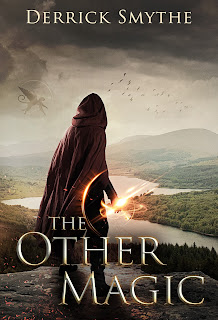
New Book Alert: The Other Magic (Passage to Dawn Series Book One) by Derrick Smythe; Brilliant Epic Fantasy Subverts Light Vs. Dark


New Book Alert: The Other Magic (Passage to Dawn Series Book One) by Derrick Smythe; Brilliant Epic Fantasy Subverts of Light Vs. Dark

By Julie Sara Porter

Bookworm Reviews


Spoilers: The common consensus in most epic fantasies is that light equals good and dark equals bad. The heroes are always on the light side using only beneficial white magic (except when defending themselves against their adversaries. Then they kick major ass.). The villains are always on the dark side using black magic against enemies. That's how it used to be.

Recently however, authors and other artists have broken from that trope finding it cliched, simplistic, and even racist. They have taken more subtle approaches giving a more nuanced look at this conflict. Then there are ones like Derek Smythe's first book to his Passage to Dawn series, The Other Magic which have a lot of fun completely subverting the trope and turning it on its head.


In the possibly mythical world of Dorea (there are subtle hints that the setting might be in a post-Apolcalyptic future or alternate universe but nothing is ever outright stated), a prophecy was fulfilled 25 years ago in which a Child of Hope was born to save their world from the demons of darkness. Sound familiar? Not quite. As if the child's name, Magog, wasn't enough of a clue being lifted from the Book of Revelation, that all is not as it seems, his true nature is revealed as he grows and assumes the title of god-king. Magog becomes less of Jesus Christ and more of Jim Jones. He orders his priests, particularly his right hand man, Grobennar, to seek out and locate other magic users so he can drain their powers and devour them whole. Everyone is beholden to Magog and his extremely powerful and corrupt council of priests.


Three other characters emerge to fight their way through this increasingly violent and terrifying world. Aynward, a rebellious prince, is beginning his university studies and learns some interesting things that causes him to question the world around him. Sindri is a former high priestess in exile who is looking to find other magic users. Then there is Kibure, a slave boy who has learned that he has magical abilities. He also learns that he might be a tazamine, a demon.


This is a complete turn around over what we consider light and dark, good and evil and Smythe does this excellently. Magog is power mad and Groebnner is blinded by his fanaticism. He knows that Magog is insane and dangerous, but he is so far gone in his spiritual path and his belief in the prophecies, that he is willing to forego doubt and common sense to follow Magog. He justifies his reasoning in his head and acts as an enabler towards the god-king's obssession, taking pride in the power that his role as chief advisor brings.


The three protagonists are fundamentally flawed and even though they are branded as using demonic or dark magic, they are actually more understandable and relatable than those on the side of light.

Sindri is extremely arrogant and snobbish, and some of her training towards Kibure borders on the sadistic. However, she is also cunning and resourceful in getting out of trouble such as when she sensibly lies about her nationality in front of potentially violent natives of a rival kingdom. She also carries a lot of hurt over her past when she was exiled and her equally magical brother was killed. Her discovery and training of Kibure becomes a ticket towards redemption.


Because of his slave background, Kibure is mistrustful and quick to anger particularly when he unthinkingly uses his magic in fits of rage and desperation. However, he shows a softer side as he grows fond of his new companions. He particularly bonds with a Raven called Rave as he learns to channel his abilities and emotion. Rave acts as a familiar and Kibure's link with the bird emerge as some of the most genuine and heartfelt moments in the book.


Aynward's story provides much of the humor and some of the bitterest truths. The prince is a likeable scoundrel who runs into his fair share of trouble in school usually spying on behalf of others or getting into fights with students. He is also drawn to a pretty face as he demonstrates when he encounters Sindri for the first time. However, his experience plays strongly into the theme of the subversion of light and dark as well as the price that is paid in certain pursuits. During his studies, Aynward and his fellow students pour over legends, stories, and histories that Aynward knows. However, they present another side to the works in which he was previously familiar. He learns that there are many sides to every story and that sometimes truth gets swept under by propoganda and legend.


Everything in this book has a price, allegiances, honors, wisdom, the truth, and above all magic. One of the more intriguing prospects is the physical sacrifices that are made when characters use magic. When Kibure first begins to use his powers, he suffers temporary hearing loss and total color blindness. Groebnner is in possession of a pendent that holds Jaween, a sardonic spirit that seems to take hold of Groebnner's mind leaving possible questions of demonic possession combined with multiple personalities. Many of the magic users speak of intense and painful physical transformations that their bones go through when they use major wide ranging spells (no doubt keeping them from using these spells very often. In fact in his search for tazamines, Groebnner is limited by this very handicap. He has to be physically near a tazamines before he can sense them.) These prices reveal how painful and single minded the pursuit of these goals can be and how they reflect on all characters on all sides.


The Other Magic is a fascinating epic fantasy. It subverts dark and light in a way that casts an enchanting spell on the Reader.


Thursday, December 12, 2019

Weekly Reader: Circe by Madeleine Miller; Homer's Odyssey Femme Fatale Gets Modern Makeover


Weekly Reader: Circe by Madeleine Miller; Homer's Odyssey Femme Fatale Gets Modern Makeover

By Julie Sara Porter

Bookworm Reviews


Spoilers: There are many colorful female characters in Greek Mythology: Athena Goddess of Wisdom, Aphrodite Goddess of Love and Beauty, Artemis Goddess of Moon and the Hunt, Hera Goddess of Marriage and Zeus’s eternally jealous wife, The Muses Goddesses of the Arts, Atalanta the fastest mortal woman and the lone female of Jason and the Argonauts, Medea the beguiling witch that helped Jason get the golden fleece, Helen the “face that launched a thousand ships” and inspired the Trojan War, Cassandra who was given the gift of prophecy but was never to be believed, and many many others.

One of the most interesting is Circe, one of the fascinating female characters found in Homer's epic poem, The Odyssey. During his twenty year voyage home, Odysseus and his men become stranded on Aeaea the island of Circe, the beautiful beguiling witch. With a wave of her wand, Circe turns Odysseus's men into pigs but Odysseus remains pig free and forces her to change them back. She restores his men with the proviso that Odysseus remain and become her lover. After one year, Odysseus and his crew leave Aeaea and head to the sea for more adventures.

Madeleine Miller's novel, Circe tells the story of the seductive sorceress making her more than a byword for glamorous treachery. In Miller's capable hands, Circe becomes a fully formed three-dimensional woman of deep thought and feeling.

One way that Miller develops Circe's character is to insert her into myths in which she was absent. Since the Greek deities family ties are large, that is an easy thing to do. In fact, Circe's book becomes a veritable Who's Who Among The Greek Pantheon.

Circe is the fourth child of Helios, the Titan God of the Sun and Perse, the Naiad guardian of streams and fountains. Because of her yellow eyes and thin screechy voice, Circe is often bullied by her family particularly her older siblings, Pasiphae and Perses. She states that there wasn't a name for what she is, so everyone derides her as strange, ugly, and stupid. Circe is the outsider in her family.


Of course her families are marginalized as well. As Titans, they were the gods that Zeus defeated to win his position as the king of the Olympians. With the Titans considered outcasts, it's unfortunately natural that Circe's family would take their frustrations out on the family member who is stranger than the rest: Circe.

Because of Circe's outsider status within her family, she feels an affinity for others who are equally marginalized. She delivers nectar to an imprisoned Prometheus and bonds with Aeetes, her younger brother who is even more derided than she is.

When she falls in love with Glaucos, a sailor, Circe discovers her hidden power. The ill and injured Glaucos longs to be a god so despite family objection, Circe is able to use flowers created from the spilled blood of Kronos, the defeated Titan, to transform the man of her dreams into the god of his.

Unfortunately, Glaucos’s godification gives him a swelled head and he dumps Circe for Scylla, a doting nymph/fan girl. Using her brand new abilities, a jealous Circe transforms Scylla into a hideous sea monster. Scylla retreats to a strait across from the Charybdis whirlpool which both are traps for unwary sea travelers. (There is a reason why the Greek version of getting caught between a rock and a hard place is called “getting caught between Scylla and Charybdis.”)


After this incident, Circe reveals her abilities to her family and is exiled to Aeaea. It is apparent that Helios exiled her not because of concern for what she did to Glaucos and Scylla. He could care less about them. He is intimidated by his daughter having a power that he doesn't understand or know about. Once she is exiled, Circe learns for the first time that there is a name for what she is: pharmakis, witch.


Circe is a character of great emotion and intellect. Her emotions such as her jealousy towards Scylla causes her to do things that she later regrets. However, she has the intelligence to study sorcery and herbalism and use her abilities to turn others into their true selves. While getting exiled may seem like torture, for her it gives her a chance to be independent and explore her personal power. The exile actually makes her more powerful than if she stayed with the Titans.


While on the island, Circe has a very active love life. First, she gets involved with Hermes, the Trickster/Messenger God. When their relationship ends badly, they become sworn enemies.

Another lover is Daedalus, the architect and inventor. The two's mixture of art and invention, science and sorcery compliment each other. She is moved by the widowed Daedalus's devotion to his son, Icarus and is left desolate when the boy dies after flying too close to the sun and his remorseful father succumbs to grief shortly thereafter.

These relationships show Circe as someone who is receptive to the idea of love but is not ready to surrender the independence that she has fought for. In her exile, she has grown to love her studies of magic and how it provides with her own strength, power, and significance.


Circe also gets involved in the affairs of her siblings and watches as her sister, Pasiphae and brother, Aeetes become drunk with power. They use everyone even their children to get and remain on top. Circe watches as Pasiphae, Queen of Crete and wife of King Minos, gives birth to the Minotaur and explains the circumstances to the creature's conception. (“I f$#@-d a bull!”, Pasiphae declares plainly.)

The Minotaur is sentenced to the Labyrinth where he is neglected by everyone except his half-sister, Ariadne who later also rejects him to side with her lover, Theseus. Pasiphae uses the Minotaur as a killing machine. He is her means to gain control over gods and mortals, including her husband.

Aeetes also uses his daughter, Medea in a ruthless power grab. As King of Colchis, he is the holder of the Golden Fleece and is as cruel and neglectful of his daughter, Medea, as their father, Helios was to him and Circe. It's not a surprise that Medea would leave that toxic environment to join her lover, Jason. However, the younger witch, Medea is blind to her paramour’s flaws as they hide out on Aunt Circe's island (figuring fellow witch Circe would understand.). However, Circe recognizes Jason's vanity and how he dismissed Medea and realizes that he does not truly love the girl. Circe sees Medea will be miserable with him. Of course the myths of Jason and the Argonauts and the play, Medea prove her right when Jason dumps her to marry a princess leaving her to kill their children rather than letting them be exiled or sold to slavery.


Circe contrasts with her siblings because her power is internal. She doesn't seek out the trappings of wealth and privilege that Aeetes and Pasiphae have. She has her powers and her island and she is pleased with that. Unlike them, she is not in fear of an avenging enemy, a thieving hero, or a disloyal spouse. Circe is her own person.

Of course the emotional crux is provided during Circe's fatal meeting with Odysseus. Right before he arrives, Circe practices on a fleet of sailors, some which intend to rape her, by turning them into pigs. As for what happened to them, let's just say that Circe develops a fondness for ham of the sea.


Odysseus and Circe go through their typical meeting and dalliance, but Odysseus is hardly the hero of Homer's epic story. This is Circe's tale and Odysseus is much more sinister than is usually portrayed. When he tells of his adventures, it's clear that he loves the sound of his own voice. There is also a ruthlessness and deception in his manner which suggests instability and that he enjoyed killing and mind games far more than he admitted.

The book offers the theory that Odysseus isn't exactly in a hurry to go home and his 20 year exile might be more by choice than by the ruling of the gods.


This potential instability in Odysseus's character is confirmed when he returns to his home of Ithaca. When Odysseus's wife, Penelope and son, Telemachus visit Aeaea after Odysseus's death, they reveal how rocky his return was.

Since he spent so much time away, Odysseus was often restless and neglectful of his kingdom. He had PTSD from his voyages and often attacked his family in a frenzied state. He spent more time looking out at the sea in longing.

Instead of hero, Miller's writing subverts Odysseus's character and turns him into maladjusted sociopath.


Telemachus and Penelope aren't the only ones that Odysseus screws over. Before he leaves Aeaea, Odysseus gets Circe pregnant. She gives birth to a son, Telegonus and strives to protect him from the wrath of the gods particularly an irate Athena who was Odysseus's protector.

Circe builds a magical barrier around Aeaea to keep anyone from coming in but it also keeps anyone from going out.

Circe's protection does not sit well with Telegonus. His and Circe's relationship is strained because he longs for adventure and travel, things that his mother denies. While Circe is worried about her son, there is also an underlying desperation as if Circe wants to hold onto Telegonus because she feels the need for someone to love and respect her.

However, the more Circe tries to keep Telegonus near her, the more he pushes away. Circe then has to confront Telegonus, Odysseus's family, and her own past sins in some heady magical confrontations that require all of her abilities and strength.

Madeleine Miller wrote Circe as a very complex character, one of great feeling, longing, regret, and passion. She saw more femme than fatale, more soul than seductress, and more of an independent woman of great strength and power than the beautiful deadly witch of Homer.


Thursday, April 11, 2019

Weekly Reader: Greenspell: A Fantasy Anthology by Kathy Ann Trueman; A Brilliant Anthology of Lovely Fantasy Stories About Female Magic Users


Weekly Reader: Greenspell: A Fantasy Anthology by Kathy Ann Trueman; A Brilliant Anthology of Lovely Fantasy Stories About Female Magic Users

By Julie Sara Porter

Bookworm Reviews


Spoilers: There is a new name in epic fantasy literature and that name is Kathy Ann Trueman. Last year, Trueman's book Stories of the Vale: Path of the Dragonfly was a strong character driven look at epic fantasy tropes such as feudal lords, magical creatures, spells, and adventurous quests. Another book, Greenspell is an anthology though not as epic in scope or plot is still rich in character and magical detail.


A common thread in all the stories is that the protagonists are all female and the majority are magic users of some kind. While there are some feminist moments in the stories that explore the solidarity and companionship of sisterhood and features female characters challenging many fantasy tropes by being active leaders, the stories aren't political so much as they are fantasy stories in which the lead characters happen to be female.

Magic is a huge presence in the stories in which characters use magic for different means some in defense and protection of others and some for greed or vengeance. There is no definite good vs. evil black vs. white magic set up. Instead some character's fates are sealed by the choices they make without any moral philosophy thrown at the Reader.


Greenspell is a very short anthology, only five stories but they are all good. The stories are:


“The Sow's Ear”- This story was also featured in Marian Zimmer Bradley's Swords and Sorcery anthology. If Rod Serling and George R.R. Martin ever collaborated on a fantasy driven episode of the Twilight Zone, this would be it. (Actually George R.R. Martin did write some episodes of the 1980’s Twilight Zone series so I'm not too far off.)
This story follows the theme of “Be Careful What You Wish For” to a clever conclusion. Janell, a sorceress is hired to aid a woman who was once young and beautiful and wants her original appearance back.
The plot turns on a few twists as Janell realizes too late that the woman is not what she appears and Janell is trapped inside a curse that is unique and continues the story's meaning of appearance concealing the true nature.

“Thief from Thief”-This sequel to “A Sow's Ear” has both drama and humor. Janell is still punished by the previous story's curse. Trueman devotes many paragraphs describing Janell's three year torment in an extremely small confinement well. Janell is driven to near insanity trying to find a way out of her imprisonment as well as the boredom of such a small area. While she never ages (because it's a magic curse), she is aware the world has changed around her and can't be a part of it.
Her enemy, also a carry over from the previous story, is good at psychological torture as well often giving Janell just enough of a glimpse of the outside world to let her know what she is missing and creating illusion spells so if a wayward knight or wanderer enters their lair, it mistakes Janell for a rock formation and goes on their way.
Humor is found as Janell finds a thief who could rescue her. She weaves a spell to end the illusion on her so he could see it. She uses various magic to get his attention just about doing anything but holding up a large neon sign that says “I'm down here, Idiot!”
Keeping her magical knowledge and cleverness in soliciting the thief's help, Janell manages to break free from her enemy and the curse.

“Friends in Spite”- I hate vampire books and stories. Anne Rice's Lester books are overrated. I found Dracula to be less a brooding tortured soul than a creepy perverted rapist. Don't get me started on Buffy the Vampire Slayer or Angel. In fact I will go out on a limb and say the only literary vampire that I can for sure say I like is C.D. Bitesky of Mel Gilden's Fifth Grade Monsters. The reason that I am saying this is I want the Reader to understand the full scope of my meaning when I say “Friends in Spite” is my favorite short story in this anthology despite or because the main character is a vampire sorceress.
Elianne, the aforementioned vampire/sorceress and her friend, Trevia, a swordswoman are in a village in which two people are attacked mysteriously. Elianne sees the lack of blood in the bodies and knows the killer was like her: another vampire.
There are some clichéd moments such as Elianne turning into a bat and having the urge to levitate (even vampires that cross genres have standards to uphold). But thankfully not many.
There are genuine moments of horror and graphic violence. The vampire killer not only kills it's victims and takes their blood but it mutilates them so people think it was murdered by a wild animal. To find the vampire, Elianne casts a spell that makes all vampires including herself lust and hunger for blood. These moments give the story genuine horror.
Elianne and Trevia's friendship is the true heart of this story as they are able to complete each other with Elianne's knowledge of magic and vampires combined with Trevia's swordplay and muscle. Through her friendship and trust in Trevia, Elianne reveals vital information on how to kill the vampire and is able to combat her spell cast blood lust for Trevia. While it is a story of strong fantasy and horror, it is the friendship between Elianne and Trevia that is the real core of “Friends in Spite.”

“Just Until Sun-Up”- Another friendship story between a magic user and non-magic user though this one favors humor rather than horror.
Neikei, a witch and Karra, a minstrel/juggler's horses and gear have been stolen by a group of thieves… and that's it. That's the plot. It focuses mostly on the theft and the duo trying to get their stuff back.
While not long on plot, the story features some byplay and one-liners as Neikei and Karra go after the thieves. (When Neikei reminds Karra that her spells are to protect her person not her possessions, Karra sarcastically remarks “Oh and if the thieves had tried to take you, that would be different.”) Karra's sardonic anxiety plays off Neikei's calm rationality rather well as the two act like a comedy team, the Female Fantasy Answers to Abbott and Costello or Bob Hope and Bing Crosby in the Road To… movies. (Road to King's Landing.)
Though unlike the other comedy teams Neikei has some magical ways of defeating their antagonists whivh she shows Karra in a way that gets their horses back and dispenses justice in a hilarious and original manner.


“The Sun God's Reading”- Similar to “A Sow's Ear” this one also plays on “Be Careful What You Wish For” but in a less vindictive manner. This focuses on the idea of aspiring to reach a certain goal but once it is met evaluating whether one is able to achieve that greatness ever again.
Yula, Gunnie, and the Narrator attend a school in which the students develop their talents and
connections with the Gods. Brilliantly, the story makes no distinction between the various pantheons as Odin, the Norse God of Wisdom pals around with Apollo, Greco-Roman Sun God.
The three students are granted one wish at the end of the year.(“Nothing frivolous like world peace,” The Narrator tells us.) and only one will be granted. The Narrator wants a lute made of gold. Gunnie wants a ship to sail the seas and Yula wants to meet Apollo and to have him read one of her poems.
Despite the mystical setting, there is a contemporary theme to this story of goal setting and being ready to meet those goals and move on once they are met. The three students are very capable in their studies of music, maritime travel, and poetry but they are filled with self-doubt and worry about their studies and whether they are really good in their chosen fields.
Once the wish is granted, the students go through transitions which are true to life as well. Two continue with their studies even getting their wishes granted on their own. The other abandons them feeling that she will never be as good as she was then. Instead she settles into a different life with a husband, children, and a job which is tied to her earlier ambitions but isn't as fulfilling. These divergent paths the student take is similar to the many graduates who peak at young ages. Some continue down their paths to their brand of success. Others end up elsewhere that while not necessarily bad was not what they envisioned.

Greenspell is a great example of how fantasy authors can create magic, 
believable  characters, and built worlds in a few short pages just as well as they can through a novel or a series. Trueman excels at both: the long and the short of fantasy.