Showing posts with label Middlemarch. Show all posts

Wednesday, December 18, 2019

Best of the Best 2019 Part 1: Classics Corner


Best of the Best 2019 Part 1: Classics Corner


By Julie Sara Porter

Bookworm Reviews


Spoilers: It's that time again to discuss my favorite books that I read in 2019.

This year since I read so many in my main three categories, I am composing three separate lists.

The first list is for Classics Corner, those books that were published before 1999.


10. Jazz by Toni Morrison-A book that sounds as good as it reads. A love triangle between Violet Trace a mentally ill hairdresser, Joe, her salesman husband, and Dorcas, his 18-year-old mistress is written with repetitive phrases, call and answer sections, and rhythmic flow in writing much like the music of the title. Morrison's book also features three damaged people dealing with racism, death, parental abandonment, mental illness, and infidelity in forceful sometimes violent ways.


9. Good Omens: The Nice and Accurate Prophecies of Agnes Nutter by Neil Gaiman and Terry Pratchett-

If you are going to the Apocalypse take this funny book with you. An angel and demon duo decide to prevent the destruction of Earth and involve themselves in the lives of the Antichrist. There are Bikers of the Apocalypse, adorable hounds of hell, prophets who are spot on with their prophecies, and a tape deck playing the Best of Queen over and over. Plus this is all over seen by Aziraphale, an angel that runs a used book shop and Crowley, a Bentley driving demon. What's not to love?


8. Daisy Miller/Washington Square by Henry James- These two novellas feature James’s gift of prying into the female psyche and questioning the roles of women. Daisy features the title character, an American flirt shocking her fellow expatriates with her passionate romantic manner with the locals. Washington is about Catherine Sloper, a shy woman controlled by her rigid father and falling in love with a man who might be a fortune hunter. Both are strong character studies of women trapped by society's constraints and rebelling against them in the only ways that they can.


7. Matilda by Roald Dahl- The crown jewel/gold standard in Dahl's impressive literary repertoire. Matilda is every book lover's hero, a young girl who finds escape from her abusive parents and headmistress through books. When both she and Miss Honey, her favorite teacher, are threatened, Matilda uses her massive brain power to fight back in an epic and satisfactory manner.


6. A Wrinkle in Time by Madeleine L’Engle- When people are asked to name their favorite YA novels, this Newbery Winner often comes up and deservedly so. The book is an epic fantasy in which Meg Murray, her brother, and friends including the mysterious Mrs. Who, Mrs. Whatsit, and Mrs. Who travel through a tesseract in search of Meg’s captive father. The book is filled with fascinating worlds like the rigid conformist Cazmatoz and brilliant characters like the Happy Medium. Above all it carries a strong theme of maintaining one's individuality against conformity.


5. Fear of Flying by Erica Jong- This controversial book from the 1970’s tells a sharp biting but truthful story about a woman seeking sexual liberation. Isadora Wing, a dissatisfied writer longs to escape her unhappy marriage by having an unattached affair. The book covers her affair and her past which involves her miserable mother, her hypocritical sisters, and her unstable first marriage to give us the whole picture towards Isadora's life and the choices she makes as she searches for her independence and personal happiness.


4. The House of Mirth by Edith Wharton- The best of Wharton's literary canon takes a savage look at the upperclass New York society in the late 19th and early 20th century from the people longing to get in. Lily Bart is a 29-year-old socialite running out of time to marry a wealthy man and little prospects to do anything else. The book explores how gossip, scandal, and wealth can destroy a person and leave them destitute and bereft of hope.


3. Vanity Fair by William Makepeace Thackeray- The O.G. of British Literary Bad Girls is none other than Thackeray's Becky Sharp. This book explores Becky's involvement with the Sedley and Crawley families in her attempts to climb to the top of wealth and society. Becky is an intriguing character as she flirts, steals, thumbs her nose, connives, lies, and possibly murders to get her way.


2. Middlemarch by George Eliot-Eliot’s magnum opus begins where most books of the time end with marriage but gives us the unhappiness when couples are incompatible. Dorothea Brooke, an intelligent altruistic woman marries an elderly man to get what she hopes is intellectual satisfaction and a life of meaning and significance. Tertius Lydgate, an idealistic doctor committed to research and service, marries a woman of great wealth and society but who is also completely vapid and materialistic. Eliot explores in great detail the unhappiness that Dorothea and Tertius encounter in their marriages and how they compromise the ideals that they once held for themselves.


The Portable Dorothy Parker by Dorothy Parker-The best Classic book I read this year covers a lot of ground. Through her short stories, poems, essays, and reviews, particularly her Constant Reader book reviews for The New Yorker, Parker skewered everything and everybody. She looked at everything from unhappy marriages, the flapper lifestyle, racism, sexism, gossipy matrons, womanizing playboys, strict parents, Capitalism, Socialism, European politics, religion, literary and theater snobs, celebrity culture, mental illness, alcoholism, art and literary movements, and her fellow writers and artists with a sharp witty acid tongue. Dorothy Parker was a writer who strove for the last word and quite often got it.


Honorable Mention: Bleak House by Charles Dickens, Holes by Louis Sacher, The Complete Raffles Stories by E.W. Hornung, The World of Jeeves by P.G. Wodehouse, The Scarlet Letter by Nathaniel Hawthorne, The Adventures of Tom Sawyer and Huckleberry Finn by Mark Twain, We Were The Mulvaneys by Joyce Carol Oates, The Tenant of Wildfell Hall by Anne Bronte, and The Great and Secret Show (The Art Trilogy) by Clive Barker

Thursday, March 28, 2019

Women's History Month Classics Corner: Middlemarch by George Eliot; George Eliot's Magnum Opus About the Reality of Dashed Dreams and Unhappy Marriages


Women’s History Month Classics Corner: Middlemarch by George Eliot; George Eliot's Magnum Opus About the Reality of Dashed Dreams and Unhappy Marriages

By Julie Sara Porter

Bookworm Reviews


Spoilers: I admit I enjoy reading George Eliot after Jane Austen.

If Austen's novels are the frilly romantic girl who gushes over love songs and poems, dreams of Prince Charming (or Mr. Darcy), and wonders why life isn't a rom com, then Eliot's novels would be her prickly older bookworm sister who reminds her about the divorce statistics, is concerned with world issues, and maybe finds a partner but usually while she is building her career or becoming involved in social causes.

That being said, I like George Eliot better. One of my all-time favorite novels by her is undoubtedly her greatest work, her Magnum Opus, Middlemarch. Contrasted with other books written by women at the time, Middlemarch isn't overly concerned with romance. Romance is in it sure, but that isn't the main focus. The focus instead is on unhappy marriages, socioeconomic struggles, academic research, political reform and how various characters of different roles of society get along with each other.

To begin with, let's talk about Middlemarch's author herself, George Eliot (1819-1880).

George Eliot, born Mary Anne Evans, was the fifth child of Robert and Christina Evans. Robert was the manager of an estate. It was at the estate's vast library where Evans, a voracious reader, studied Classics and various languages which would have been forbidden for a girl in her time period. Evans had little formal education and was mostly self-taught by this reading.

While Evans was raised in an Anglican household, beginning in her late teens she made friends with various agnostic freethinkers. She began to question her religion putting herself at odds with her father. She also had arguments with her brothers who received the formal education that she had been deprived of because of her gender. Her animosity towards her brothers may have been the inspiration for her novel, The Mill on the Floss which concerns the rivalry between the cruel, Tom Tulliver and his bookish sister, Maggie.

After her father died, Evans visited Geneva and embarked on a writing career in which she chose the name George Eliot. She chose the pseudonym because of her concerns that she would not be taken seriously as a female author and she wanted to maintain anonymity. Eliot produced several essays, translations, various short stories and poems, and 7 novels. Her novels concerned themselves with social issues, religion, class conflicts, Antisemitism, and gender roles things women normally did not write about at the time.

Besides her writing career, Eliot's personal life was a rebellious one as well. She embarked on an over 20 affair with George Henry Lewes, a married editor. Despite his unhappy marriage and his closeness to Eliot, Lewes did not divorce his wife. Nonetheless, he and Eliot were together until his death in 1870 making the two the subject of much scandal and innuendo.

After Lewes's death, Eliot married the much younger, John Cross. However Cross was deeply troubled and attempted to jump from their hotel to the Grand Canal in Rome while on their honeymoon. He survived but the two returned to England where Eliot died of throat infection and kidney disease in 1870.

Eliot’s life is one of a woman who struggled to find her place in the world and rebelled against the constraints of society’s standards towards women. She was able to take charge of her life and be her own person which is what makes Middlemarch so fascinating.

While Eliot was a rebel to the end, her characters try to be. They try to be more than what 19th century rural England expects from them. The most iconoclastic characters are the two leads: Dorothea Brooke and Tertius Lydgate.

Dorothea in particular has an uphill battle becoming her own person. She is one of two sisters who are adopted by their uncle Arthur Brooke. Instead of looking forward to marriage and gushing over pretty jewelry as her sister, Celia does, Dorothea is a well-read intellectual woman who dreams of a life of meaning.
She  wants a life of study and active service to the poor. She designs cottages on her uncle's estate so the poor workers can have better equipped, safer, affordable, and comfortable homes. She reads great works and longs to have someone with which to discuss them.

Dorothea feels stifled by the society around her and is often ridiculed for her plainness and her ambitions. Even her sister is confused by her. Celia mocks her cottage plans as “fads” and wonders why she turned down a proposal from the wealthy but conventional Sir James Chettam. Dorothea is an outsider “a cygnet among the ducklings” Eliot tells us.

Eliot compares her protagonist to Saint Theresa “foundress of nothing, who's loving heartbeats and long after an unattainable goodness tremble off and are dispersed among hindrances instead of hindering in some long-recognizable deed.” In other words, Dorothea is someone who longs to do something greater than what she is brought up to do.

If she lived in modern day, Dorothea would be great as a college professor, or an architect who designs houses for lower income families, or the director of a non profit organization that assists people with housing and education. But alas it is the 19th century and she is only raised to be someone's wife. She is stifled in her role as nothing more than a decorative set piece in a man's life.

So Dorothea becomes engaged to Edward Casaubon, an elderly clergyman who is forever researching The Key to All Mythologies. The marriage is unwise to all but Dorothea. Dorothea hopes to become a helpmate to Casaubon by studying various languages, taking notes, researching and maybe publishing their knowledge to the world. She isn't drawn to him physically so much as she is mentally. She believes that he understands her and longs to be his pupil, secretary, and oh yes wife.

What Dorothea gets instead is a man who is cruel and abusive. Casaubon hides his research and does very little with it never wanting it to be published or read by the masses that he feels are beneath him including his wife. He verbally abuses Dorothea when she suggests studying under him and mocks her desires to learn and help others. Far from her intellectual savior, instead Casaubon is as close minded as the rest of the society that Dorothea longed to escape from.

Finding no acceptance from her husband, Dorothea finds friendship in Casaubon's cousin, Will Ladislaw, a free thinking artist. While Will is just as brilliant as Dorothea, she isn't just looking for a fellow intellect though that is a bonus. She becomes aware that she is a woman with emotion, desires, and longings. She and Will become enamored with each other.

While Casaubon is usually unemotional, he manages to choke out enough jealousy that he alters his will out of spite by leaving the estate to Dorothea but if she marries Will, she forfeits the estate entirely.

Ironically, it is only after Casaubon's death that Dorothea becomes the woman that she aspired to become by designing cottages and donating money to various causes. However, she can't ignore her feelings for Will and has a tough decision to make.


Another Middlemarch outsider struck with an unhappy marriage is Tertius Lydgate, a young doctor who arrives to shake things up in the village. While he is seeking a typical marriage with a pretty wealthy bride, he longs to do some good by treating the poor, building a hospital, and conducting scientific research.
Many of his views are held under suspicion by a public that is so reactionary that they question anything that is new. Like Dorothea, Tertius wants to become a different person but is hampered by societal restrictions.

These restrictions are caused by his choice of a wife in the beautiful superficial Rosamond Vincy. Their courtship in which Tertius becomes romantically involved with Rosamond despite objections from her family seems almost like a commentary on Austen's work in which contrivances keep the couple apart until the end in which the couple has a fairy tale wedding. Middlemarch however goes beyond the wedding to show that married life is not what they expected and instead of a cutesy in love couple, Tertius and Rosamond are stuck with opposing views and financial struggles.

Like Dorothea, Tertius thought that he was getting the perfect spouse. He wanted a wife to run his home, connect him to Middlemarch society, and provide the seed money for his medical practice. What he got instead was a Narcissist who spends money on furniture, clothing, jewelry and just about anything else she can put her pretty little hands on.

Rosamond is a lot like Dora Spenlow David Copperfield's first wife, a spoiled childlike fool who is completely unprepared for the realities of adulthood and marriage. Like children do, she wants everything in front of her and is not used to being rejected. Her spoiled attitude and tantrums put her at odds with her husband who resorts to gambling and doing business with shady characters to pay off the debts that Rosamond puts him through.

Above all like Dorothea who wanted intellectual satisfaction, but got emotional desolation in her marriage to Casaubon, Tertius has to compromise his values. Instead of helping poor people, he has to treat and charge wealthy people to keep up with Rosamond's spending sprees.

There are several other subplots throughout the book that all carry the themes of aspirations that are dashed by reality. There is Rosamond's feckless brother Fred, an immature wastrel who realizes too late that superficial charm and idiocy can only go so far as he pursues the poor virtuous Mary Garth. Mary works for a dying cantankerous old man, Featherstone whose greedy relatives gather around him waiting for him to die so they can inherit his money. Sir James Chettam's pursuit of Dorothea is ended by her marriage to Casaubon so he settles for Celia almost as a rebound. Casaubon's research into the Key to All Mythologies is hampered by his xenophobic desire to tie everything to Christian doctrine so he ignores any research that doesn't fit his narrow view. Not to mention his discoveries of current findings are prematurely ended because he can't understand German, the language in which the findings are written, and he is too proud to get assistance. Then there is Dorothea and Celia’s Uncle Arthur who is running for Parliament on a Reform platform that gets shouted down and insulted by his constituency.

All of the characters in Middlemarch have dreams and aspirations to be something more or greater than what they are. While some succeed, most are dashed or altered. The characters compromise values, integrity, finances, and their ideals to settle into lives that were far from what they wanted or expected.

Even when characters get married, there is much tongue clicking and questioning about whether it's the right thing or not. This leaves the ending as somewhat ambiguous when the Reader learns that Tertius and Dorothea become shells of the people they wanted to be for the sake of the conventions that they longed to change or fight against but instead have to settle.

While her characters especially Dorothea could be mirrors of Eliot, the contrast between Eliot and her protagonist cannot be ignored. Dorothea might have been Eliot if she wasn't a writer and didn't have a way to express her creative desires. If Eliot didn't have the courage to live her life according to her principles and not other people's standards, she might have become Dorothea trying to find outlets through her marriages but ending up unfulfilled and dissatisfied. Dorothea Brooke went one way and her author, George Eliot thankfully went another.

Tuesday, March 7, 2017

Favorite Feminist Literature Part I: 19th Century


Favorite Feminist Literature Part 1: 19th Century

By Julie Sara Porter, Bookworm


In honor of March, Women’s History Month, I am writing a three-part review series of my favorite works considered Feminist literature from the 19th to the end of the 20th century. While most of the authors are women, not all are. The works just have to be told primarily from a woman’s point of view or feature a female protagonist.

The female protagonists are strong characters who challenge society’s expectations of them. While some are successful, others are not so successful. But they certainly let the other characters and the reader know exactly who they are and how they feel.

I use the term “literature” because while the selections are mostly novels, I have also included one book of poems and an anthology of short stories. I am aware that some books are left out. Many such as The Well of Loneliness, Mrs. Dalloway, and Atonement were left out for a very simple reason: I haven’t read them. (Though I want to). Of course, I am open to any great suggestions of feminist literature or any other sort of literature that discusses important topics, so please write your comments below.

All descriptions will include spoilers to the works.


5. The Portrait of a Lady by Henry James (1881)

The plot: Isabel Archer, an intelligent and well-read American young lady is taken to Europe with her aunt. Her aunt wants her niece to marry well, but Isabel turns down a marriage proposal from Lord Warburton, an Englishman and spurns her enamored cousin, Ralph. Ralph’s father and Isabel’s uncle is captivated by Isabel’s spirit and intelligence and leaves her half his wealth upon his death. Isabel then becomes the target of fortune hunter, Gilbert Osmond, in which they engage in an unhappy marriage.


Why it’s a favorite in Feminist literature: The book is filled with strong female characters from Henrietta Stackpole, a wry American journalist to Madame Merle, a scheming conniving con artist. James gives prominent female characters voices and makes them memorable instead of stereotypes of dizzy females who live for marriage.

Isabel stands out in this novel as a character who is brilliantly realized. She questions her role as a woman longing to live a life of independence and experience many things before she falls into marriage. She is also flawed as she engages in an unhappy marriage with Osmond, who is clearly not good enough for her. However, Isabel continues to keep her independent spirit by helping her stepdaughter, Pansy escape from a marriage to the wrong man. She also has a fondness for Pansy that overcomes her dislike for Osmond, wanting to be a guide for the younger girl.


Favorite Quote: Isabel (on turning down Warburton’s marriage proposal): “I’m not in the first youth-I can do what I choose-I belong to the independent class. I’ve neither father nor mother; I’m poor and of a serious disposition; I’m not pretty. I therefore am not bound to be timid and conventional; indeed I cannot afford such luxuries. Besides, I try to judge things for myself; to judge wrong, I think is more honorable than to not judge at all. I don’t wish to be a mere sheep in the flock; I wish to choose my fate and know something of human affairs beyond what other people think it compatible with propriety to tell me.”


4. Tess of the D’Urbervilles by Thomas Hardy (1891)

The plot: After her father discovers that her family is descended from nobility, Tess Durbeyfield claims relation to the titled D’Urberville family. She falls in a relationship with the caddish Alec D’Urberville who leaves her pregnant. Tess ends her relationship with Alec and the child dies. A grief-stricken Tess finds work in a nearby dairy farm where she encounters the cold and spiritual Angel Clare. Tess and Angel marry and Tess reveals her past to Angel, who rejects Tess, considering her a “fallen woman.” Tess leaves her husband and things get worse from there.


Why it’s a favorite in Feminist literature: The novel reveals the double standards that fall when women step outside their role and embrace their passions and afterwards suffer from a sullied reputation while many times men suffer no consequence whatsoever. Hardy gives a character who at times acquiesces to this standard, but also is not afraid to make her own decisions.

Tess embraces her passions by falling into an affair with Alec and then into marriage with Angel. She then ends her relationships with both men unwilling to compromise, particularly after Angel rejects her. While he sees her as flawed, she sees him as flawed as well in his unwillingness to accept her. While she makes a very wrong decision in her final scene with Alec, the novel suggests that she is unwilling to take being a pawn anymore and fights back in one of the few ways that a poor 19th century woman can.


Favorite Quote: Tess (to Alec D’Urberville clearly not buying his “conversion to Christianity” story): “Don’t go on with it! I can’t believe in such sudden things! I feel indignant with you for talking to me like this, when you know-when you know what harm you’ve done to me! You, and those like you, take your fill of pleasure on earth by making the life of such as me bitter and black with sorrow; and then it is a fine thing, when you have had enough of that, to think of securing your pleasure in heaven by becoming converted! Out upon such-I don’t believe in you! I hate it!”


3. The Poems of Emily Dickinson by Emily Dickinson (Various beginning in 1891 after Dickenson’s death)

The plot: Well really not a plot since they are poems, but Dickinson’s poems’ topics range from nature subjects like bees, birds, spiders, flowers, trees, and the sky, to social subjects like marriage, sexuality, spirituality, and death.


Why it’s a favorite in Feminist literature: Dickinson was known for her extreme shyness and solitude. She spent most of her life in her home town of Amherst, Massachusetts. Only a few of her poems were published in her lifetime. She had a reputation, which carries to this day of being an agoraphobic spinster.

However, Dickinson’s deepest themes are revealed throughout her poetry. Her writing features such themes as enjoying solitude, being an outsider in a world of conformity, and finding spirituality within nature rather than in the four walls of a church.


Favorite Quote:

“Much madness is divinest sense

To a discerning eye;

Much sense the starkest madness.

‘Tis the majority

In this, as all prevails

Assent, and you are sane;

Demur,-you’re straightway dangerous

And handled with a chain.”


 2.  Middlemarch by George Eliot (1871)

The plot: Various plots unfold in this tome. However, Dorothea Brooke’s story is the main plot for this review. Dorothea, a well-educated intellectual woman dreams of a life of meaning, so she marries Edward Casaubon, an elderly academic. The marriage quickly becomes unhappy and Dorothea falls in love with Will Ladislaw, Edward’s younger cousin. When he learns of the affection the two share, a dying Casaubon changes his will so that Dorothea loses her inheritance from him if she marries Ladislaw.


Why it’s a favorite in Feminist literature: Dorothea stands out among the other female characters like the superficial Rosamond Vincy and Dorothea’s conventional sister, Celia. She longs for a life of deep meaning, intellectualism, and active service towards the poor, and is stifled by the role women in her period have to fill as decorative pieces waiting for marriage.

She designs cottages for the people on her uncle’s estate and she longs to discuss and analyze Casaubon’s Key to All Mythologies study. While her marriage to Casaubon is obviously unwise to all but her, she is less drawn to him physically than she is to someone who she believes understands her mentally. Dorothea is simply a woman born in the wrong circumstances and the wrong time period, and unlike her trail blazing author, lacked the stamina to pursue her interests.

The other reason this book is a favorite for Feminism is because of its author. Eliot, whose real name was Mary Ann Evans, chose to write under a male name and pursue her academic interests and writing. Her subjects were not specifically about marriage and romance, so much as they discusses topics like religion, social issues, and class conflicts. Eliot pursued an over 20 year affair with George Henry Lewes, a married editor. After Lewes died in 1878, Eliot married a man 20 years her junior. While the fictional Dorothea was unable to find happiness in her role as a woman, the real Eliot was able to pursue her own happiness.


Favorite Quote: Narration (This sets up one of the main themes to the book): “Here and there is born a Saint Theresa, foundress of nothing, whose loving heartbeats and sobs after an unattained goodness tremble off and are dispersed among hindrances, instead of centering in some long-recognizable deed.”


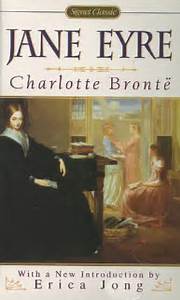
1. Jane Eyre by Charlotte Bronte (1847)

The plot: Orphaned, Jane Eyre is abused by her aunt and cousins then is sent to a cruel Dickensian school for girls. After she grows up, she is offered a position as a governess to the ward of the wealthy mysterious, Edward Fairfax Rochester. While she tutors Rochester’s ward, Adele, and becomes fascinated by her employer, Jane hears unusual laughter and encounters mysterious circumstances in the house. These weird happenings threaten Jane’s happiness in the Rochester home and her and Rochester’s growing affection for each other.


Why it’s a favorite in Feminist literature: Jane is no wilting naïve Victorian heroine. Even as a child, she is not afraid to stand up for herself. She fights back when her cousin, John Reed bullies her and tells her cruel aunt, “I am glad you are no relation of mine.” When she gains employment with Rochester, she is not afraid to call him out when he manipulates her with a phony engagement even though she is in love with him.

 When she finds out that Rochester’s first wife is imprisoned in the house, mad, Jane refuses Rochester’s offer to marry him or live as his mistress. In all of her decisions, Jane displays a great deal of self-sufficiency and strength that allows her to fight against her antagonists even if they think of her as inferior because of her gender and her poverty. Only when Jane is able to become Rochester’s equal, and in some ways his superior, in the end does she accept his proposal.

I also highly recommend the novel, Wide Sargasso Sea by Jean Rhys, which is the story of Bertha Rochester, Rochester’s first wife. She also has a passionate independent spirit that allows her to stand up for herself against antagonists like Rochester.


Favorite quote: Jane: “I tell you I must go! Do you think that I can stay to become nothing to you? Do you think I am an automaton?-a machine without feelings? And can bear to have my morsel of bread snatched from my lips, and my drops of my living water dashed from my cup? Do you think, because I am poor, obscure, plain, and little, I am soul and heartless? You think wrong!-I have as much soul as you, and full as much heart! And if God had gifted me with some beauty and much wealth, I should have made it as hard for you love leave me, as it is now for me to leave you. I am not talking to you through the modicum of custom, conventionalities, nor even of mortal flesh: it is my spirit that addresses your spirit; just as if both had passed through the Grave, and we stood at God’s feet, equal, as we are!”


Honorable Mention: The novels: Vanity Fair by William Makepeace Thackeray, Madame Bovary by Gustave Flaubert, Mill On the Floss by George Eliot, Far From the Madding Crowd by Thomas Hardy, The Scarlet Letter by Nathaniel Hawthorne, The Tenant of Wildfell Hall by Anne Bronte, Washington Square by Henry James, Aurora Leigh by Elizabeth Barrett -Browning,  Ruth Hall by Fanny Fern, and Leila by George Sand.

Non-fiction: A Vindication of the Rights of Women by Mary Wollstonecraft (alright this one was from the 18th century published in 1792, but it definitely is worth a mention), Eighty Years and More by Elizabeth Cady Stanton, Sojourner Truth’s “Ain’t I A Woman” speech, Woman in the 19th Century by Margaret Fuller, Incidents in the Life of A Slave Girl by Harriet Jacobs, Twenty Years at Hull House by Jane Addams, and The Subjection of Women by John Stuart Mill.

Plays: A Doll’s House and Hedda Gabler by Henrik Ibsen

 Short Stories and Poetry: Works by Mary Wilkens Freeman, Sarah Orne Jewitt, Rebecca Harding Davis, Emma Lazaru,s, and Elizabeth Barrett-Browning