Showing posts with label Chick Lit. Show all posts
Friday, February 28, 2020
Weekly Reader: The Jane Austen Book Club by Karen Joy Fowler; Cute Romantic, but Fluffy Love Letter to Austen's Work
By Julie Sara Porter
Bookworm Reviews
PopSugar Reading Challenge: A book about a book club
Spoilers: Okay, I admit it. I am not by any means a fan of Jane Austen
At best, I find her books light fluffy romance, but nowhere near as well-written as other writers of her time like Charlotte Bronte or George Eliot. At worst, I find her overrated and her books and characters repetitive and borderline aggravating.
My personal experience with Austen's works are as follows: I find Emma humorous with a flawed but adorable and at times purposely annoying protagonist. Northanger Abbey is a lot of fun with its parody of Gothic literature. Sense and Sensibility, is okay but mostly average. Pride and Prejudice is overrated with two annoying protagonists that are more annoying in their omnipresence (though more tolerable than those in Wuthering Heights). I am undecided on Mansfield Park and Persuasion since I have not read either. I have yet to read one of her books that I liked beyond.. .well just okay and many authors that I like better.
However, Jane Austen in February cannot be avoided. It's like cat videos and Top Ten lists on YouTube or Laura Brannigan's "Gloria" on St. Louis radio stations during hockey season. It's inevitable that Jane Austen and romance go together, so instead of ignoring it, might as well suck it up and enjoy it and read either one of her books or a book about her books.
In this case, I read The Jane Austen Book Club by Karen Joy Fowler. While I still am not a Jane Austen fan, I will always recommend any book that celebrates the importance of reading and where characters identity themselves with the situations that are found in books. On that level, I could not recommend The Jane Austen Book Club enough.
It is a fun cute lighter-than-fluff book that explores the troubled love lives of the members of the eponymous club. While it can be read and appreciated by any fans of romance, chick lit, or books about books, it will be best loved by fans of Jane Austen who will catch and enjoy the parallels between the characters and their literary counterparts.
The Book Club is started by best friends 40-somethings Jocelyn and Sylvia. Besides them the antendees are 28-year-old French teacher Prudie, Sylvia's lesbian thrill-seeker daughter, Allegra, Bernadette, a 50ish woman with multiple marriages to her credit, and Grigg, the lone male member. The six members are required to read all six of Austen's novels and one member has to lead the discussion and host the group at her or his house all while dealing with their own romances and problems.
The club members are a charming relatable bunch that play off each other very well. Many Readers will recognize the characters's personalities and quirks as people they may know or are. There is Jocelyn who loves to walk her Rhodesian Ridgebacks and is something of a control freak who likes to micromanage her friend's lives while ignoring her own lonely unmarried status. Sylvia is a recently divorced single mother who has been burned by love and is not eager to open herself up to the possibilities of another love.
Grigg prefers to live in the worlds of his favorite science fiction novels and conventions and often has trouble being the sole male among his three sisters and his new female friends, which causes him to be permanently friend zoned.
Bernadette loves to regale her friends with her colorful stories about her stage parents and her various flawed husbands with humor to disguise how lonely and troubled her life was. Allegra lives for exciting pastimes like skydiving and mountain climbing and being with women who give her an exciting hard time. Prudie is married, but can't ignore the advances that her students make towards her, nor her and her husband's many disagreements and annoying characteristics.
Fowler parallels each character with a specific Austen novel and the novel helps guide the character through their love lives. Jocelyn is compared to Emma with her desire to make matches with her friends. Like Emma Wodehouse, she sets her friend up with someone with whom she falls in love. She invites Grigg to the group to set him up with Sylvia, but realizes that she has fallen for him herself.
Meanwhile Grigg's interest in science fiction is much like Catherine Moreland's obsession with Gothic Romance novels in Northanger Abbey. Both use their preferred genres as means of escapism from complacent and conflicting reality. Grigg also uses his science fiction novels as means of communication, such as recommending Ursula K. LeGuin's novels to Jocelyn.
Allegra's literary counterparts is Marianne Dashwood in Sense and Sensibility. Like Marianne, Allegra is a woman of deep emotion who lives for new experiences. She doesn't always listen to the advice provided by her more sensible mother, especially when it comes to her relationship with her latest girlfriend, Corine. She suffers a near emotional breakdown when she learns that Corrine stole parts of her life for her writing inspiration. Even when she is in a new relationship in the end, there is much discussion whether this relationship will last.
Like Fanny Price of Mansfield Park, Prudie has to learn to face life on her own with the death of her mother. She also is permanently confused by the open flirtations around her while maintaining a deeper more loving connection with her husband.
Bernadette's story is like that of Elizabeth Bennett in Pride and Prejudice. As a child, she was used by her mother to achieve child stardom like Mrs. Bennett uses her daughters to find wealthy husbands. She also recognizes the stubborn pride and arrogant assumptions that filled her previous marriages. She is always ready with a quick word and witty comment like many of the most loquacious of Austen's characters.
Finally, Sylvia is compared to Anne Elliot of Persuasion, the oldest and final of Austen's protagonists. She too had been left alone and deserted by a former love. When she and her ex meet again, they have to consider how much they have changed and whether they want to sever all ties or get back together.
The book has the usual formulaic ending where characters are paired up and learn lessons. Some relationships are a bit abrupt and one might make modern Readers cringe more than it would have in Austen's day. But still it's a cute book, one that is good reading for Valentine's Day or for anyone who wants to read a book that celebrates a love of reading.
Like any good book about reading, the characters recognize themselves within the books. Jane Austen's novels provide escape and friendship as they discuss the plots, characters, and themes. They also provide their own answers towards their own lives and loves.
Monday, January 27, 2020
Weekly Reader: Twenties Girl by Sophie Kinsella; Cute Chick Lit With A Fascinating Ghost and Standard Protagonist
By Julie Sara Porter
Bookworm Reviews
PopSugar Reading Challenge: A book that has "20" or "Twenty" in the title
Spoilers: There are many Chick Lit stories in which the protagonist, usually a lovelorn woman stuck in a dead end job, receives magical assistance from a unique advisor whether it's a genie, a fairy, the ghost of a beloved movie star, or in the case of Sophie Kinsella's Twenties Girl, a deceased relative. The problem with most of these novels is that the unique advisor is so well written and fascinating that they end up being the best part of the book. The rest including the modern protagonist pale in comparison and the parts without them seem like filler.
Unfortunately, Twenties Girl firmly fits the rule rather than the exception. It tells the story of a young Londoner who is visited by the ghost of her deceased great aunt and makes all of the inevitable mistakes in romance, work, and friendships before learning the proverbial lesson and helping the ghost move on.
Lara Lington is having a rough time lately. She went into partnership with her friend, Nora, to become a corporate headhunter until Nora abandoned her. Lara's boyfriend, Josh, broke up with her and she is convinced that he still loves her. She feels intimidated by her famous Uncle Bill ("Yes the Bill Lington," Lara insists) who runs a successful chain of coffee shops and is peddling his Two Little Coins Seminars in which he offers the keys to success in which anyone can start, like him, with two little coins and a big dream.
Lara is already pretty miserable and when she is told that her 105 year old Great Aunt Sadie Lancaster has died and she has to attend the funeral. The funeral has a darkly comic tone as it is clear that no one had much contact with Great Aunt Sadie, nor was very close to her so no one particularly wants to be at her funeral. Lara's parents are there to assuage their guilt over not visiting her at her retirement home. Uncle Bill and his wife, Aunt Trudy are there to promote Bill's caring family man persona. Their daughter, Lara's cousin, Diamante to promote her fashion label and so Bill can pay for her charity boob job. (She's getting a boob job and then giving an interview afterwords-"half the proceeds of the interview go to charity.") Lara's sister, Tonya (Tonya and Lara? Hmm, someone loved Dr. Zhivago enough to name two sisters out of the female leads) is there to point out other people's miseries. Lara is practically dragged there by her parents when she would rather sit at home and try to save her flagging business and moan and whine about Josh.
The funeral is bound to be a brief, dull, impersonal one when Lara has an encounter that makes it less dull and way more personal. A dark haired woman in a lime green flapper dress appears only to Lara and bemoans about not having her favorite necklace. The woman is the ghost of Lara's Great Aunt Sadie, but as she looked when she was 23: a devil may care exuberant flapper. At first Lara doubts her imagination and mind, but after she finally comes to terms that Sadie is real and a ghost, she and Sadie strike a deal. Sadie needs her favorite necklace because when she wore it she "felt special." Lara needs help fixing the problems in her life. Lara will look for Sadie's necklace if Sadie helps Lara with her career and lovelife.
The novel sparkles whenever Sadie enters the scene. Kinsella did a great job of capturing the style of a prototypical flapper. She describes the fringe and bejeweled A-line dresses, short bob cuts, and the deco accessories perfectly. She also brilliantly recalls the slang such as "barney mugging" for sex, "gaspers" for cigarettes, and so on. Sadie is a blithe spirit who lives for the moment even after her moments have passed.
Sadie's backstory is revealed throughout the book and interests the Reader with the small doses that they receive. Sadie lived with conservative parents dismayed by her free spirited lifestyle and a brother who was killed in WWI. She had a best friend, Bunty, with whom Sadie shared hi-jinks like stealing cars, dancing to jazz, and getting in plenty of trouble. She also had a lover, Stephen, who was a dedicated artist and painted landscapes and nude portraits of Sadie. Her parents caught them and Stephen was sent away while Sadie was forced into a catastrophic and short lived marriage. Kinsella showed that despite her family's original perception of Sadie as "a million year old nobody," Sadie was an interesting person who lived an interesting life. Unfortunately, Kinsella did that so well that this Reader wonders why there weren't any flashbacks of Sadie's life or the book didn't take place exclusively in the 1920's and focus on Sadie.
Unfortunately, Sadie is merely a supporting character to a less developed protagonist. Lara does not have Sadie's spunk or ability to get past situations. In fact most of the time, she comes across as immature and whiny. After Josh breaks up with her, Lara constantly insists that they will still be together. She leaves voice mail messages and follows him. She has Sadie use some new found possession abilities to find out what were the reasons for their breakup and she acts according to those reasons. This is supposed to make Lara seem adorable but instead comes across as shrill and stalkerish.
She has some allegedly cute moments with a new love interest but they are mostly repetitive and follow the standard plotline of people saying and assuming the wrong thing just to add complications that we've read and seen many times. Sadie is the most interesting part of the book and it shows.
Lara only comes into her own twice in the novel. The first is when her former friend, Nora returns and tries to poach a client that Lara did most of the work on. Lara tells her off about abandoning her and lying about her experience in headhunting. Lara manages to start her own business with Sadie's help in finding clients and Lara's outlook on comparing to matchmaking, matching people with the perfect job.
The second time comes after Lara learns the truth about Sadie's necklace and what her true legacy was. Once she learns this, she wants to make right by Sadie and honor her the way she deserves. She calls out the person who robbed her of her legacy and stole her necklace to remove all traces of the robbery. She also creates a memorial for Sadie that is the perfect send off. A 1920's dress code is given and people laugh and drink champagne with a guzzle and a cry of "Tally-ho!" Just the way Sadie wanted.
Twenties Girl does provide a good theme of our family history and heritage being a part of us one that Lara finally understands. It's a good theme with Sadie as a memorable character to reveal it. But hidden inside a typical chick Lit novel with the typical feather brained lead, it doesn't stand a ghost of a chance.
Wednesday, February 28, 2018
Bonus Weekly Reader: A Night In With Audrey Hepburn by Lucy Holliday: A Cute, But Fluffy Chick Lit About Friendship With A Ghostly Movie Star
Bonus Weekly Reader: A Night In With Audrey Hepburn By Lucy Holliday: A Cute, But Fluffy Chick Lit About Friendship With A Ghostly Movie Star
By Julie Sara Porter
Bookworm Reviews
Spoilers: We may have dreams of our favorite celebrities. Sometimes we visualize them falling in love with us and sweeping us off our feet. We may also visualize being best friends with them, spending all night talking about our latest troubles to them. This is especially true of fans of the Golden Age of
Hollywood who see the works of Katharine Hepburn, Cary Grant, Bette Davis, or Humphrey Bogart or others. These older actors had an allure of unapproachable glamour but often played similar characters so often that their fans feel like they know them because they know that character. Lucy Holliday captures those glamorous fantasies in her novel, A Night In With Audrey Hepburn in which a lovelorn failed actress encounters the ghost of her favorite Hollywood Golden Age film star, Audrey Hepburn.
Libby Lomax, an English woman, is the type of out of luck female that often stars in humorous chick lits. She recently lost her job playing an alien extra in a science-fiction tv show after she accidentally sets her alien costume on fire. But not before she catches the eye of the show's hunky star, Dillon O'Hara much to his jealous girlfriend's dismay. She also feels out of place with her stage mom agent mother and her attractive scenery chewing actress sister, Cassandra. So, Libby is a woman who needs a lot of help already before Audrey Hepburn appears on her Chesterfield sofa.
Hepburn is written with the charm and grace of her beloved characters such as Sabrina Fairchild from Sabrina and Holly Golightly from Breakfast at Tiffany's. She is enthusiastic about this new modern world and its inventions such as Libby's espresso maker which amuses Libby. She also grows to love online shopping and Twitter much to Libby's chagrin. (She even sets up her own Twitter account #LittleBlackDressAndPearls) She gives the book the spunk and elfin charm that Hepburn was known for and steals just about every scene that she's in.
She also is fond of giving Libby some solid advice. When Libby talks about her absent father, Hepburn also relates about her own absent father who later was revealed to be a Nazi sympathizer (actual biographical information). She chastises Libby for her shyness and her somewhat plain appearance suggesting that she become more stylish (hence the online shopping). She also encourages to follow her heart and take chances with the men in her life, such as Dillon. Libby's encounters with Hepburn are the highlight of the book.
Unfortunately, Hepburn's passages with Libby completely overshadow the book that the rest of the book pales in comparison with them. There are many chapters where Libby encounters many of the people in her life, particularly her annoying mother and sister and self-centered father, as well as her friends. They are funny and usually involve comedies of errors such as when Libby steps outside of a sauna in nothing but a towel and ends up in an embarrassing Twitter video.
Most of Libby's encounters with the other people in the book are cute, but fluffy. You know that there are going to turn out well despite her embarrassment. Even the book's attempts at seriousness such as discussing Libby's relationship with her distant father end up being non-events (though they do give Libby some much needed Girl Power as she realizes that she could never change her father and not to even bother anymore.)
But there isn't much sparkle to them as there is in the passages with Audrey Hepburn. In fact in the pages without her, this Reader kept hoping that Audrey would show up just to slap some sense into Libby or at least give her a stern but very spunky talking-to. Audrey Hepburn overshadows the book so much that everyone else just seems to be filler.
Some plot points get mentioned but are left dangling such as Libby having a male friend who appears to like her beyond friendship and there seems to be some connection between Audrey Hepburn in life and Libby's Chesterfield sofa that is never fully explained. Holliday wrote two other books in the series which feature Libby's encounters with Marilyn Monroe and Grace Kelly so this book no doubt sets up the others to follow. At the very least they should be interesting for the Golden Age of Hollywood stars. Maybe the rest of Holliday's writing could catch up to them.
By Julie Sara Porter
Bookworm Reviews
Spoilers: We may have dreams of our favorite celebrities. Sometimes we visualize them falling in love with us and sweeping us off our feet. We may also visualize being best friends with them, spending all night talking about our latest troubles to them. This is especially true of fans of the Golden Age of
Hollywood who see the works of Katharine Hepburn, Cary Grant, Bette Davis, or Humphrey Bogart or others. These older actors had an allure of unapproachable glamour but often played similar characters so often that their fans feel like they know them because they know that character. Lucy Holliday captures those glamorous fantasies in her novel, A Night In With Audrey Hepburn in which a lovelorn failed actress encounters the ghost of her favorite Hollywood Golden Age film star, Audrey Hepburn.
Libby Lomax, an English woman, is the type of out of luck female that often stars in humorous chick lits. She recently lost her job playing an alien extra in a science-fiction tv show after she accidentally sets her alien costume on fire. But not before she catches the eye of the show's hunky star, Dillon O'Hara much to his jealous girlfriend's dismay. She also feels out of place with her stage mom agent mother and her attractive scenery chewing actress sister, Cassandra. So, Libby is a woman who needs a lot of help already before Audrey Hepburn appears on her Chesterfield sofa.
Hepburn is written with the charm and grace of her beloved characters such as Sabrina Fairchild from Sabrina and Holly Golightly from Breakfast at Tiffany's. She is enthusiastic about this new modern world and its inventions such as Libby's espresso maker which amuses Libby. She also grows to love online shopping and Twitter much to Libby's chagrin. (She even sets up her own Twitter account #LittleBlackDressAndPearls) She gives the book the spunk and elfin charm that Hepburn was known for and steals just about every scene that she's in.
She also is fond of giving Libby some solid advice. When Libby talks about her absent father, Hepburn also relates about her own absent father who later was revealed to be a Nazi sympathizer (actual biographical information). She chastises Libby for her shyness and her somewhat plain appearance suggesting that she become more stylish (hence the online shopping). She also encourages to follow her heart and take chances with the men in her life, such as Dillon. Libby's encounters with Hepburn are the highlight of the book.
Unfortunately, Hepburn's passages with Libby completely overshadow the book that the rest of the book pales in comparison with them. There are many chapters where Libby encounters many of the people in her life, particularly her annoying mother and sister and self-centered father, as well as her friends. They are funny and usually involve comedies of errors such as when Libby steps outside of a sauna in nothing but a towel and ends up in an embarrassing Twitter video.
Most of Libby's encounters with the other people in the book are cute, but fluffy. You know that there are going to turn out well despite her embarrassment. Even the book's attempts at seriousness such as discussing Libby's relationship with her distant father end up being non-events (though they do give Libby some much needed Girl Power as she realizes that she could never change her father and not to even bother anymore.)
But there isn't much sparkle to them as there is in the passages with Audrey Hepburn. In fact in the pages without her, this Reader kept hoping that Audrey would show up just to slap some sense into Libby or at least give her a stern but very spunky talking-to. Audrey Hepburn overshadows the book so much that everyone else just seems to be filler.
Some plot points get mentioned but are left dangling such as Libby having a male friend who appears to like her beyond friendship and there seems to be some connection between Audrey Hepburn in life and Libby's Chesterfield sofa that is never fully explained. Holliday wrote two other books in the series which feature Libby's encounters with Marilyn Monroe and Grace Kelly so this book no doubt sets up the others to follow. At the very least they should be interesting for the Golden Age of Hollywood stars. Maybe the rest of Holliday's writing could catch up to them.
Friday, February 9, 2018
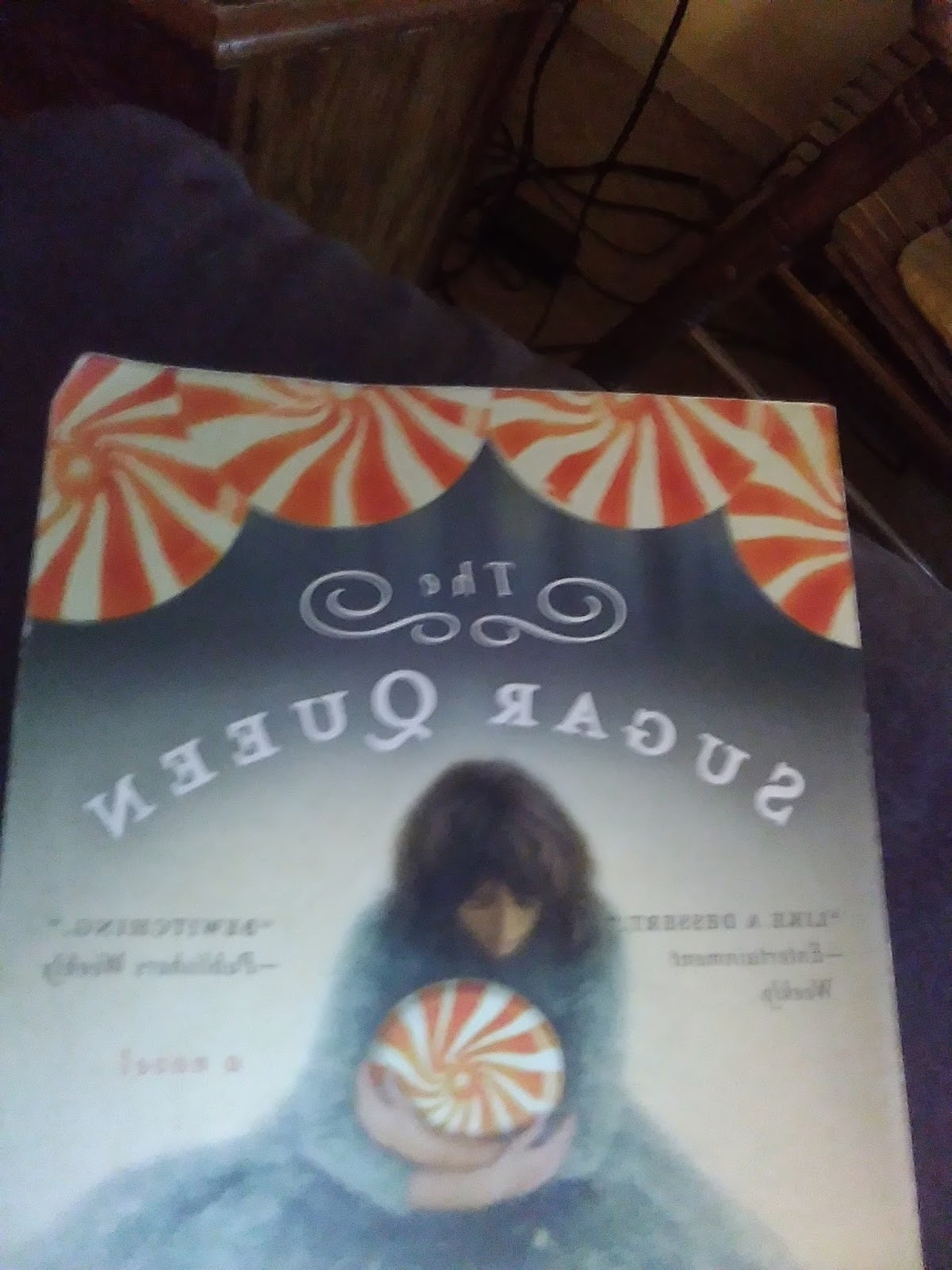
Weekly Reader: The Sugar Queen By Sarah Addison Allen; A Sweet Magical Chick Lit/Romance That Goes Down Like Fine Candy
Weekly Reader : The Sugar Queen by Sarah Addison Allen: A Sweet Magical Chick Lit/Romance That Goes Down Like Fine Candy
By Julie Sara Porter, Bookworm Reviews
Spoilers: The Sugar Queen is one of those books that's not for the cynical of heart. It's drenched in strange sweet little magical touches that bring a smile to the Reader's face: touches such as books that appear out of nowhere, favorite clothing that inspire romance, and advice from a very unusual woman that suggests one thing but lead to deeper resolutions. When all of this is done, the Reader is left with some sweet memories and a happy ending.
The very unusual woman with odd advice is Della Lee Baker, a tough talking waitress who arrives inside the closet of heiress, Josey Cirrini. Josey is naturally confused about why Della Lee is hiding inside her closet, reading Josey's carefully hidden romance paperback novels and indulging herself in Josey's hidden candies and chocolate snacks. After Della Lee explains she is on the run from her abusive boyfriend, she decides to make Josey into her personal project by giving her advice to make friends, have romance, an independent life, and to improve herself.
Josey is at first reluctant to follow Della Lee's advice and scoffs at her with some clever repartee ("I hear the closets at the Holiday Inn are fabulous. You should try them. "). But she also realizes that she could use some help.
At 27 years old, Josey feels metaphorically imprisoned by Margaret, a verbally abusive mother. Margaret wants to control every aspect of her life such as her clothing (Margaret insists that she should never wear red "because she looks horrible in it" even though it's Josey's favorite color), her weight and reading interests (Hence the hidden romance novels and snacks. Margaret thinks of her daughter as a fat daydreamer.), and her schedule. (She must always be on hand to chauffeur her mother around to her "emergency appointments" like trips to the manicurists, tea parties, weekly social events, etc.).
Josey also suffers from the reputation of her late father, Marco Cirrini, the man who built her hometown of Bald Slope, North Carolina and has an almost demi-god reputation of many who thought he could do no wrong (Though many women who had been at the opposite ends of his philandering would argue with that assessment.). When her father was alive, Josey was given to temper tantrums people still remember and call Josey to task on them even though they were over twenty years ago. This reputation causes Josey to retreat further into herself so any assertiveness could never be mistaken as a spoiled childish tantrum.
Because of her reputation as a once spoiled brat of a charming philandering father and an emotionally abusive Southern Belle mother, it is no wonder Josey needs all the help she can get. Thanks to Della Lee's influence, Josey begins to wear her favorite red sweater which draws Adam, the handsome mail carrier whom she long admired from afar. The two start to talk, resulting in a date.
Many Readers with parental problems and extremely introverted but longing personalities can understand Josey's growing frustration with her family, subtle acts of rebellion, and desire to escape. Maybe some Readers long for someone to come along and help shake them out of their dull complacent lives as Della Lee does for Josey. The two make for a wonderful team as Josey provides shelter from Della Lee's problems and Della Lee gives Josey a way out of hers.
Another chatacter who glows because of the friendship between Della Lee and Josey, is Chloe Finley, a diner waitress. Chloe has problems of her own, some typical one not so typical. Her typical problems consist of a long -time boyfriend who confessed to an affair and now wants to get back together, an attraction to a handsome but dangerous man whom Della Lee knows personally, and her desire to buy a specific dream house but little money to purchase it.
Chloe's not so typical problem would no doubt make her the envy of her Readers. Books follow her everywhere she goes. They appear out of thin air, newly made, usually when Chloe is at an emotional crossroads. The books pertain to whatever predicament that Chloe is in. After a fight with Chloe's boyfriend, Jake, a book appears titled Finding Forgiveness. After consulting with the home owners of her dream house, another book arrives: The Complete Home Owner's Guide.
Books appear as a conscience to Chloe giving advice to her, as Della Lee does for Josey. Sometimes Chloe is annoyed by their presence ("I said go away, " Chloe yells at one of her books in Josey's presence.) But Chloe's relationship with her books, as well as her new friendship with Josey, points to potential solutions to her predicaments.
Josey, Della Lee, and Chloe are a terrific trio of protagonists that become closer because of some interesting revelations that seem to come out of nowhere, but make sense the more the book continues as the Reader learns about the characters and their relationships.
The Sugar Queen is sweet, sugary, and filled with magic found in every day life, magic of reading, color, romance, and friendship. This is the type of book that goes down like fine candy, good to the last bite.
By Julie Sara Porter, Bookworm Reviews
Spoilers: The Sugar Queen is one of those books that's not for the cynical of heart. It's drenched in strange sweet little magical touches that bring a smile to the Reader's face: touches such as books that appear out of nowhere, favorite clothing that inspire romance, and advice from a very unusual woman that suggests one thing but lead to deeper resolutions. When all of this is done, the Reader is left with some sweet memories and a happy ending.
The very unusual woman with odd advice is Della Lee Baker, a tough talking waitress who arrives inside the closet of heiress, Josey Cirrini. Josey is naturally confused about why Della Lee is hiding inside her closet, reading Josey's carefully hidden romance paperback novels and indulging herself in Josey's hidden candies and chocolate snacks. After Della Lee explains she is on the run from her abusive boyfriend, she decides to make Josey into her personal project by giving her advice to make friends, have romance, an independent life, and to improve herself.
Josey is at first reluctant to follow Della Lee's advice and scoffs at her with some clever repartee ("I hear the closets at the Holiday Inn are fabulous. You should try them. "). But she also realizes that she could use some help.
At 27 years old, Josey feels metaphorically imprisoned by Margaret, a verbally abusive mother. Margaret wants to control every aspect of her life such as her clothing (Margaret insists that she should never wear red "because she looks horrible in it" even though it's Josey's favorite color), her weight and reading interests (Hence the hidden romance novels and snacks. Margaret thinks of her daughter as a fat daydreamer.), and her schedule. (She must always be on hand to chauffeur her mother around to her "emergency appointments" like trips to the manicurists, tea parties, weekly social events, etc.).
Josey also suffers from the reputation of her late father, Marco Cirrini, the man who built her hometown of Bald Slope, North Carolina and has an almost demi-god reputation of many who thought he could do no wrong (Though many women who had been at the opposite ends of his philandering would argue with that assessment.). When her father was alive, Josey was given to temper tantrums people still remember and call Josey to task on them even though they were over twenty years ago. This reputation causes Josey to retreat further into herself so any assertiveness could never be mistaken as a spoiled childish tantrum.
Because of her reputation as a once spoiled brat of a charming philandering father and an emotionally abusive Southern Belle mother, it is no wonder Josey needs all the help she can get. Thanks to Della Lee's influence, Josey begins to wear her favorite red sweater which draws Adam, the handsome mail carrier whom she long admired from afar. The two start to talk, resulting in a date.
Many Readers with parental problems and extremely introverted but longing personalities can understand Josey's growing frustration with her family, subtle acts of rebellion, and desire to escape. Maybe some Readers long for someone to come along and help shake them out of their dull complacent lives as Della Lee does for Josey. The two make for a wonderful team as Josey provides shelter from Della Lee's problems and Della Lee gives Josey a way out of hers.
Another chatacter who glows because of the friendship between Della Lee and Josey, is Chloe Finley, a diner waitress. Chloe has problems of her own, some typical one not so typical. Her typical problems consist of a long -time boyfriend who confessed to an affair and now wants to get back together, an attraction to a handsome but dangerous man whom Della Lee knows personally, and her desire to buy a specific dream house but little money to purchase it.
Chloe's not so typical problem would no doubt make her the envy of her Readers. Books follow her everywhere she goes. They appear out of thin air, newly made, usually when Chloe is at an emotional crossroads. The books pertain to whatever predicament that Chloe is in. After a fight with Chloe's boyfriend, Jake, a book appears titled Finding Forgiveness. After consulting with the home owners of her dream house, another book arrives: The Complete Home Owner's Guide.
Books appear as a conscience to Chloe giving advice to her, as Della Lee does for Josey. Sometimes Chloe is annoyed by their presence ("I said go away, " Chloe yells at one of her books in Josey's presence.) But Chloe's relationship with her books, as well as her new friendship with Josey, points to potential solutions to her predicaments.
Josey, Della Lee, and Chloe are a terrific trio of protagonists that become closer because of some interesting revelations that seem to come out of nowhere, but make sense the more the book continues as the Reader learns about the characters and their relationships.
The Sugar Queen is sweet, sugary, and filled with magic found in every day life, magic of reading, color, romance, and friendship. This is the type of book that goes down like fine candy, good to the last bite.
Tuesday, January 30, 2018
Weekly Reader: The Reading Group by Elizabeth Noble; A Great Book About the Importance of Reading and Friendship
By Julie Sara Porter, Bookworm Reviews
Spoilers Ahead: Reading Groups and Book Clubs are great ways to share a love of books and also great ways to build friendships based on a mutual love of reading. Elizabeth Noble captures that friendship in her novel which explores a year in the lives of five English women as they discuss books and deal with the problems with the men, children, and other family members in their lives.
Each chapter begins with a synopsis of the book that the women are discussing and their spirited discussions about the books. The books that are discussed vary from Heartburn by Nora Ephron, My Antonia by Willa Cather, I Capture the Castle by Dodie Smith, to The Girl with the Pearl Earring by Tracy Chevalier among others.
The women are honest, frank, and up front about the books, what they like and don't like, and how they relate to the books.
Their opinions differ from "I think she is definitely the most vivid, the most extraordinary woman character I can ever remember reading."(The Woman Who Walked Into Doors by Roddy Doyle) to "It had everything, drama, tension, mystery, rugged hero, arch villain." "You're making one of the great Gothic novels of all time sound like James Bond." (Rebecca by Daphne Du Maurier) to "I want a word with the twenty million people whose lives were changed by reading this book, according to the blurb on the back."(The Alchemist by Paulo Coelho-ouch).
Besides being simply a catalog of other books and other people's opinions of them, Noble doesn't lose track with her characters and their stories. The members of the group come to these books with their own baggage and concerns which they relate to the other members of the group.
There's Harriet, a mid-30's wife and mother who feels suffocated by her seemingly happy marriage and wondering for another life out there. Nicole, a stylish book editor and Harriet's best friend is suffering from an unhappy marriage with a frequent philandering husband. Polly is a 40ish single mother who has to deal with a rocky engagement and her daughter's pregnancy. Susan, Polly's best friend, is in conflict with her aging mother and estranged sister. Clare, the daughter of Susan's co-worker, is a midwife who longs for a child of her own.
Noble's characters are identifiable and relatable. They could be people we know like Harriet who has definite opinions about what she reads (Books about women by women) and the men in her life (exciting with some drama) and don't realize how good they have it until they are threatened with losing it from the injury of a child to the separation from a spouse. Harriet then makes the right decision to bring her family back together.
We may also know many people like Nicole who are attractive and seem to live a successful happy life and are determined to keep it that way despite all evidence to the contrary, such a having an unwise pregnancy to keep her husband who has no interest in staying. (The resolution to this conflict is both moving when the pregnancy is terminated and ultimately satisfying when she stands up to her husband). These are real characters going through these difficult times.
There are plot points that don't work so well. The resolution to Susan's conflicts with her mother and sister comes out from nowhere and asks more questions than provides answers, though brings Susan and her sister together.
Clare disappears halfway from the book. She drops out of the group after discovering her husband impregnated one of his students, who happens to be Polly's daughter, Cressida. While it is natural in real life for people to drop from book clubs (albeit usually for less dramatic reasons), in fiction, a character's disappearance cries out for a real solution to their problem that is offered more than just by second hand dialogue. (Though she does well for herself working in a Children's Hospital in Romania and starting her own Book Club.)
The final chapter rushes all of the relationships quickly in an almost mad dash to the altar or the maternity ward to give all the characters a happy ending.
However, the characters' lives are transformed by the power of their friendship and the books. This point is made when one of the characters observe that all the books they read feature women who take control of their lives. They learn that they-Harriet, Nicole, Polly, Susan, and Clare- are those women.
By Julie Sara Porter, Bookworm Reviews
Spoilers Ahead: Reading Groups and Book Clubs are great ways to share a love of books and also great ways to build friendships based on a mutual love of reading. Elizabeth Noble captures that friendship in her novel which explores a year in the lives of five English women as they discuss books and deal with the problems with the men, children, and other family members in their lives.
Each chapter begins with a synopsis of the book that the women are discussing and their spirited discussions about the books. The books that are discussed vary from Heartburn by Nora Ephron, My Antonia by Willa Cather, I Capture the Castle by Dodie Smith, to The Girl with the Pearl Earring by Tracy Chevalier among others.
The women are honest, frank, and up front about the books, what they like and don't like, and how they relate to the books.
Their opinions differ from "I think she is definitely the most vivid, the most extraordinary woman character I can ever remember reading."(The Woman Who Walked Into Doors by Roddy Doyle) to "It had everything, drama, tension, mystery, rugged hero, arch villain." "You're making one of the great Gothic novels of all time sound like James Bond." (Rebecca by Daphne Du Maurier) to "I want a word with the twenty million people whose lives were changed by reading this book, according to the blurb on the back."(The Alchemist by Paulo Coelho-ouch).
Besides being simply a catalog of other books and other people's opinions of them, Noble doesn't lose track with her characters and their stories. The members of the group come to these books with their own baggage and concerns which they relate to the other members of the group.
There's Harriet, a mid-30's wife and mother who feels suffocated by her seemingly happy marriage and wondering for another life out there. Nicole, a stylish book editor and Harriet's best friend is suffering from an unhappy marriage with a frequent philandering husband. Polly is a 40ish single mother who has to deal with a rocky engagement and her daughter's pregnancy. Susan, Polly's best friend, is in conflict with her aging mother and estranged sister. Clare, the daughter of Susan's co-worker, is a midwife who longs for a child of her own.
Noble's characters are identifiable and relatable. They could be people we know like Harriet who has definite opinions about what she reads (Books about women by women) and the men in her life (exciting with some drama) and don't realize how good they have it until they are threatened with losing it from the injury of a child to the separation from a spouse. Harriet then makes the right decision to bring her family back together.
We may also know many people like Nicole who are attractive and seem to live a successful happy life and are determined to keep it that way despite all evidence to the contrary, such a having an unwise pregnancy to keep her husband who has no interest in staying. (The resolution to this conflict is both moving when the pregnancy is terminated and ultimately satisfying when she stands up to her husband). These are real characters going through these difficult times.
There are plot points that don't work so well. The resolution to Susan's conflicts with her mother and sister comes out from nowhere and asks more questions than provides answers, though brings Susan and her sister together.
Clare disappears halfway from the book. She drops out of the group after discovering her husband impregnated one of his students, who happens to be Polly's daughter, Cressida. While it is natural in real life for people to drop from book clubs (albeit usually for less dramatic reasons), in fiction, a character's disappearance cries out for a real solution to their problem that is offered more than just by second hand dialogue. (Though she does well for herself working in a Children's Hospital in Romania and starting her own Book Club.)
The final chapter rushes all of the relationships quickly in an almost mad dash to the altar or the maternity ward to give all the characters a happy ending.
However, the characters' lives are transformed by the power of their friendship and the books. This point is made when one of the characters observe that all the books they read feature women who take control of their lives. They learn that they-Harriet, Nicole, Polly, Susan, and Clare- are those women.
Subscribe to:
Comments (Atom)